“D” is for Dunlin and Dark-eyed Junco: “D” Birds”, Part 2

“D” is for Dunlin and Dark-eyed Junco: “D” Birds”, Part 2

James J. S. Johnson
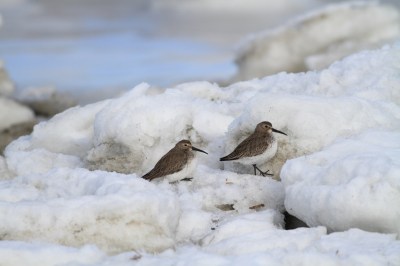
Dunlins-in-snow.photo

Dunlin (Calidris alpina) shorebirds, in winter snow!

For He saith to the snow: ‘Be thou on the earth’; likewise unto the small rain, and unto the great rain of His strength. JOB 37:6 

She is not afraid of the snow for her household; for all her household are clothed with scarlet. PROVERBS 31:21

“D” is for Dunlin and Dark-eyed Junco, as well as for Doves, Dippers, and Ducks (some being dabblers, some being divers) — plus other birds with names that begin with the letter D, such as Dickcissel, Darter, Dotterel, Doradito, Dollarbird, Dacnis, Drongo, Dunnock, Dapple-throat, and even Dodo! Regarding the earlier article on “D” birds, in this ongoing series, focusing mostly on Duck (both Dabblers and Divers), see “D” is for Ducks, Dabblers and Divers: “D” Birds, Part 1. But this review will focus only on two, the Dunlin (Calidris alpina) and the Dark-eyed Junco (Junco hyemalis).    And, as is noted below, there is a “snow” connection to both — (1) because the brown-and-grey Dunlin is a circumpolar migrant, breeding in the snow-blessed arctic and subarctic regions — and (2) because the migratory Dark-eyed Junco was formerly called (by Audubon and others) the “snowbird”.
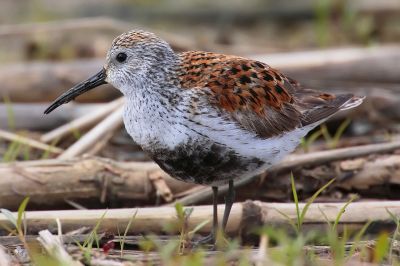
Dunlin.in-Canadian-marshland

Dunlin (Calidris alpina) adult

As noted elsewhere on Leesbird.com , the Dunlin is part of the short shorebird waders, called “Scolopacidae” (a subset of the “Charadriiformes”), that includes a mix of wading sandpipers, snipes, phalaropes, plovers, curlews, and the like. Part of an original sandpiper-like ancestral kind, Dunlins are reported to hybridize with North America’s White-rumped Sandpiper (Calidris fuscicollis) and Europe’s Purple Sandpiper (Calidris maritima).
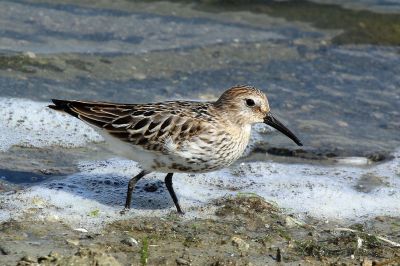
Dunlin-juvenile.Oxfordshire-beach

Dunlin (Calidris alpina) juvenile ©WikiC

These skinny-legged, starling-sized waders make a living, to a large degree, by probing and picking mudflat shorelines (including muddy estuaries, saltmarshes, sandy beaches, coastal lagoons, swampy coastlands, and sometimes rocky coastlines), for edible invertebrates — mostly insects (especially insect larvae) and worms (both polychaetes and oligochaetes), plus small crustaceans (like shrimp and amphipods) and molluscs (like snails, slugs, and small bivalves), and even some small fish — captured along seacoasts and/or at freshwater streambanks. The characteristic eating behavior of the thin-billed Dunlin has been likened to the rapid-feed pecking motion of an energetic sewing machine, as its slightly decurved bill jabs rapidly and repeatedly into mudflats, to pick at (and ingest) small animals captured on or under the shoreline surface. Dunlins sometimes dip their heads under water, as they wade belly-deep in coastal tidewaters. [For a short video clip of Dunlin feeding in shallow shorewaters,]
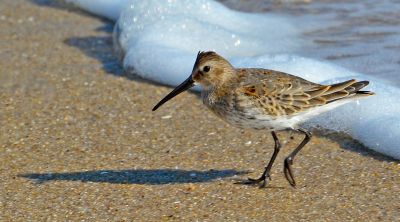
Dunlin.winter-NJ-beach

Dunlin (Calidris alpina) adult, wintering at a New Jersey beach ©WikiC

The Dunlin, like other sandpipers, is a gregarious migrant, as is illustrated by this photograph (taken in AD2015) of Dunlins in Sweden. Although the various Dunlin subspecies (which number 8 or 9, depending on taxonomic “lumping” and “splitting” preferences) are known to overlap (i.e., intermingle in) their ranges, especially in migratory passages and in wintering territories, they mostly breed within their respective subspecies populations. Dunlin breeding begins at one year of age; an entire Dunlin lifespan may reach 20 years.
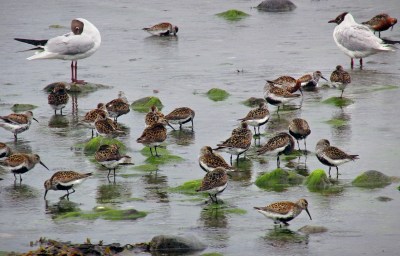
Dunlin-congregation-tidewaters

Dunlin (Calidris alpina) group, congregating in shoreline tidewaters ©WikiC

The overall range of the Dunlin is impressive – its migratory habits includes breeding (during the warmer months) within many of the coastlines of Alaska, Canada, Greenland, Iceland, the British Isles, Scandinavia, and Siberian Russia – as well as wintering in coastlands of Mexico, America’s Southeast, Europe’s western coasts, some of the coastlands of northwestern Africa, and some southern coastlands of Asia (including eastern China, Japan, some of the Indian subcontinent, and the coastlines of southwestern Asia). According to the Australian government’s statistics, the Chinese East Coast-trekking Dunlin (which is not routinely found in Australia) is the second-most common shorebird traveling the East Asian—Australasian Flyway. [Source: Australian Government, Dep’t of the Environment, posted at http://www.environment.gov.au/cgi-bin/sprat/public/publicspecies.pl?taxon_id=853 – under the heading “Global Distribution”. ]

Dunlin-range-map.global-migrations

=======================================================
Now for another “D” bird, the DARK-EYED JUNCO.
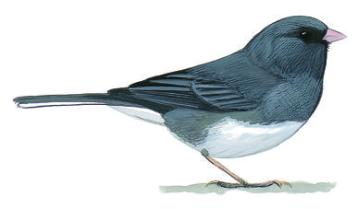
Darkeyed-Junco.NatlAudubonSocy-color-drawing

Dark-eyed Junco (Junco hyemalis), f/k/a “Snow Bird” ©Drawing Audubon

Regarding my personal encounters with Dark-eyed Junco migrants, who habitually wintered in my backyard (in southern Denton County, Texas), see “Here’s Seed for Thought” [posted at https://leesbird.com/2015/07/04/heres-seed-for-thought/ ] – and also see my defense of trusting juncos and English sparrows, from a bullying Blue Jay, in “Bird Brains, Amazing Evidence of God’s Genius (Sometimes the Logic of Bird Brains Puts Humans to Shame)” [posted at https://leesbird.com/?s=bird+brains ].

Darkeyed-Junco.with-berries-closeup-KimSmith

Dark-eyed Junco (Junco hyemalis) ©Kim Smith

The Dark-eyed Junco adult has a distinctively pink bill (which aptly consumes a lot of bugs and seeds, including seeds at bird-feeders!), the color of which contrasts with its black-to-dark-grey back feathers, and its snow-like (almost-white) under-plumage.   Regarding the wee bird’s wintering habits in Texas, ornithologist Stan Tekiela writes: “Spends the winter in the [Texas] foothills and plains after snowmelt. Nests in a wide variety of wooded habitats in April and May. Adheres to a rigid social hierarchy, with dominant birds chasing less dominant birds. Look for its white outer feathers flashing while in flight. Most comfortable on the ground [which is often a good place to forage for insects and seeds], juncos ‘double-scratch’ with both feet to expose seeds and insects. Eats many weed seeds. Usually seen on the ground in small flocks. Doesn’t nest [i.e., raise hatchlings] in Texas.” [Quoting Stan Tekiela, BIRDS OF TEXAS FIELD GUIDE (Adventure Publications, 2004), page 253.]

The migratory behavior of the Dark-eyed Junco, as its earlier nickname “Snow Bird” suggests, is appreciated by those who observe it during winter.   The ornithologist couple Donald and Lillian Stokes say: “Every fall we await the arrival of the ‘snow birds’ from the north where they breed. The name comes from the junco’s plumage, which has been described as ‘leaden skies above, snow below.’ This name more aptly describes the slate-colored form of junco. Ornithologists used to think there were four separate species of juncos, white-winged, slate-colored, Oregon, and gray-headed. Now they are all considered one species [that’s genetics for you!], the dark-eyed junco. We tend to think of them as ‘snow birds’ because we see them most when the snow is here. Juncos are a favorite at winter bird-feeding stations [such as my former home in southern Denton County, Texas – noted above] throughout the United States and lower Canada. Much of the study of juncos has been of their winter flock behavior. There is still a lot to be learned about their courtship and breeding behavior [which occurs farther north]. Juncos tend to winter at the same spot each year and stay in fixed flocks with a stable dominance hierarchy. …. At night juncos often roost in the same place. It is fun to follow the flock from your feeder to see where they will roost. Usually it will be in some dense conifer where they will be protected from cold and predators.” [Quoting Donald Stokes & Lillian Stokes, A GUIDE TO BIRD BEHAVIOR, VOLUME III (Little, Brown & Company, 1989), pages 327-328.]

Darkeyed-Junco.Arkive-photo

Dark-eyed Junco (Junco hyemalis), perching, as if posing for the camera!

God willing, the next contribution to this alphabetic series will be at least a couple of the “E“ birds – such as eiders, eagles, eagle-owls, egrets, emus, euphonias, elaenias, eremomelas, elepaios, earthcreepers, and/or emerald hummingbirds! Meanwhile, please stay tuned to Leesbird.com !  ><>  JJSJ

Fair Use Credit For Photos Used in Article (Click Links For Credits)

Dunlin (Calidris alpina) shorebirds, in winter snow! — New Jersey Audubon

Dunlin (Calidris alpina) adult —  ©Wikipedia

Dark-eyed Junco (Junco hyemalis), f/k/a “Snow Bird” —  ©National Audubon Society

Dark-eyed Junco (Junco hyemalis) ©Kim Smith

Dark-eyed Junco (Junco hyemalis), perching, as if posing for the camera! — ©Vicki J. Anderson / arkive.org
*
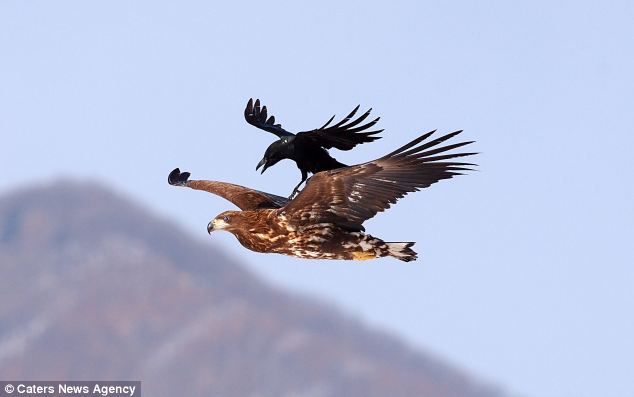
Lee’s Five Word Friday – 8/5/16

***

Crow on Eagles Back ©©

BORE YOU ON EAGLE’S WINGS

***


“‘You have seen what I did to the Egyptians, and how I bore you on eagles’ wings and brought you to Myself.” (Exodus 19:4 NKJV)

Crow on Eagle’s Back ©©

*

More Daily Devotionals

*

Lee’s Four Word Thursday – 8/4/16

***

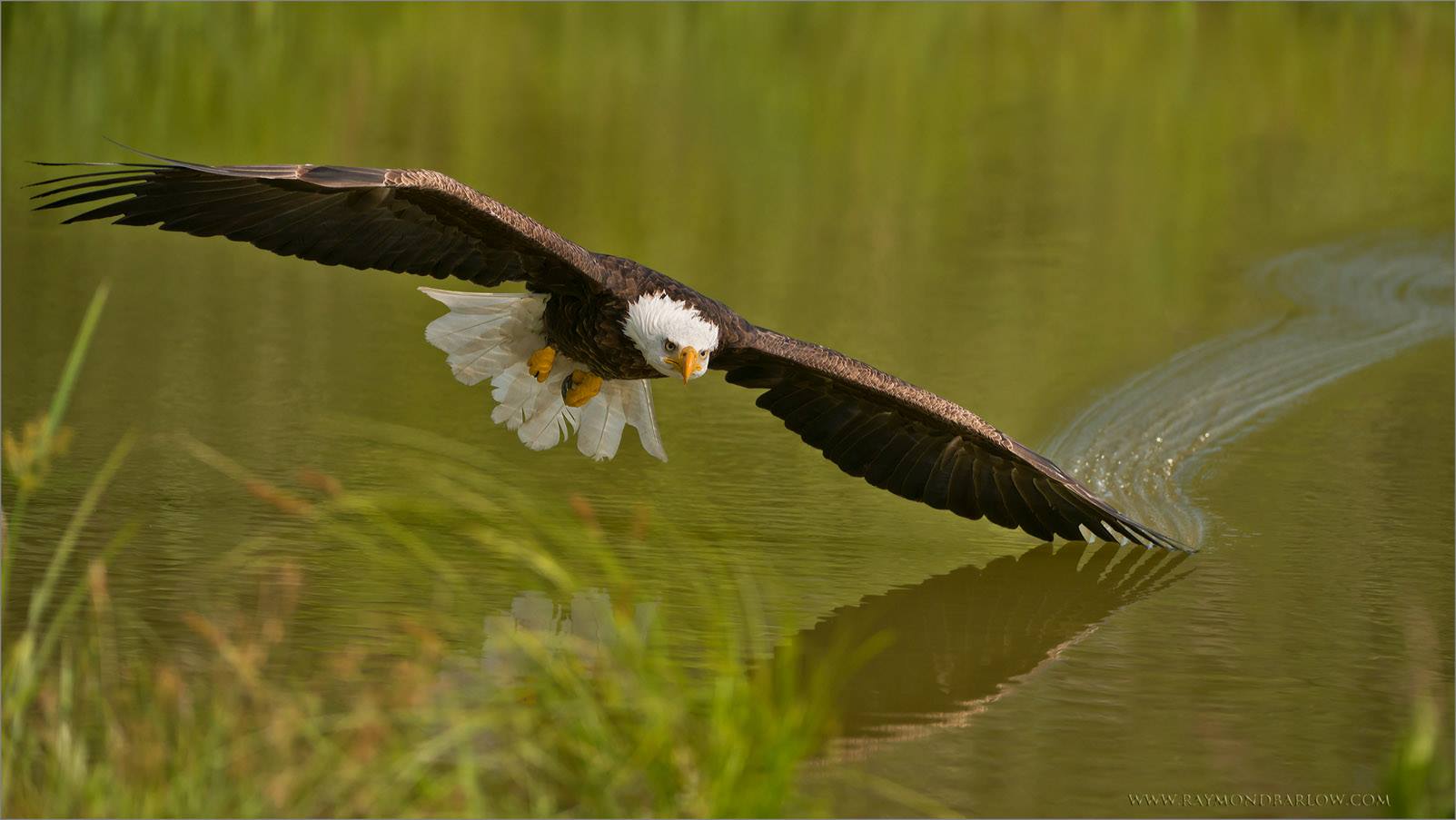
Bald Eagle (Haliaeetus leucocephalus) by Ray Barlow

THINGS WHICH ARE BEHIND

***


“Brethren, I do not count myself to have apprehended; but one thing I do, forgetting those things which are behind and reaching forward to those things which are ahead,” (Philippians 3:13 NKJV)

Bald Eagle (Haliaeetus leucocephalus) by Raymond Barlow

*

More Daily Devotionals

*

I. O. C. Version 6.3 Finished Updating

Emperor Goose (Anser canagicus) head ©USFWS

Emperor Goose (Anser canagicus) head ©USFWS

“I know that, whatsoever God doeth, it shall be for ever: nothing can be put to it, nor any thing taken from it: and God doeth it, that men should fear before him.” (Ecclesiastes 3:14 KJV)

All the pages and links (as far as I know) are correctly updated to the newest version of world bird names. A few of the changes were mentioned in Update to the Birds of the World,6.3. Here are some more of those changes and additions.

The Snow Goose, Ross’s Goose and the Emperor Goose had their genus changed from Chen to Anser. The Emperor Goose also had a gender name change from canagica to canagicus. There were several other birds that had those kind of changes:

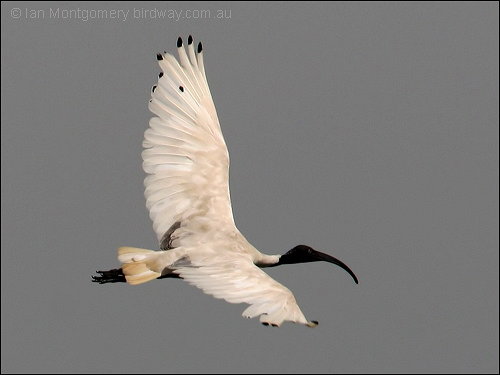
Australian White Ibis (Threskiornis moluccus to Threskiornis molucca)
Purple Gallinule (Porphyrio martinicus to Porphyrio martinica)
Brazilian Tanager (Ramphocelus bresilius to Ramphocelus bresilia)
Black Sunbird (Leptocoma sericea to Leptocoma aspasia)

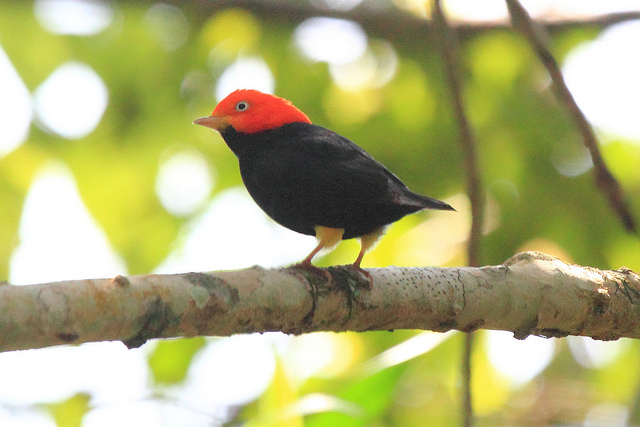
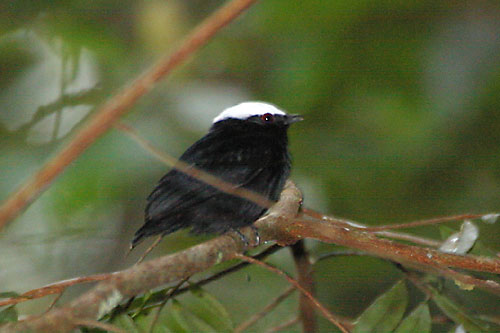
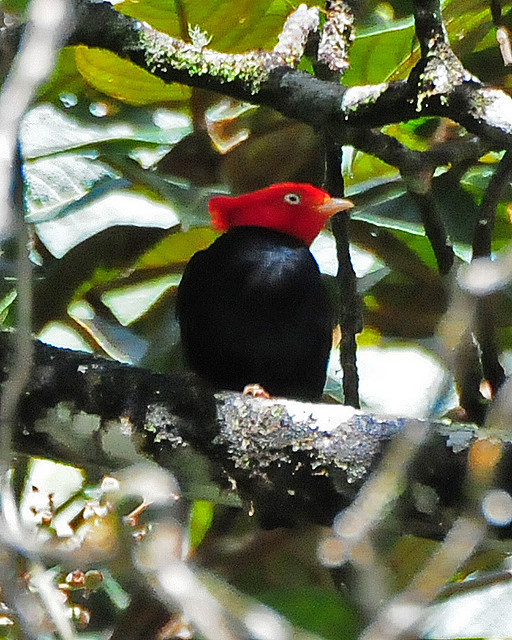
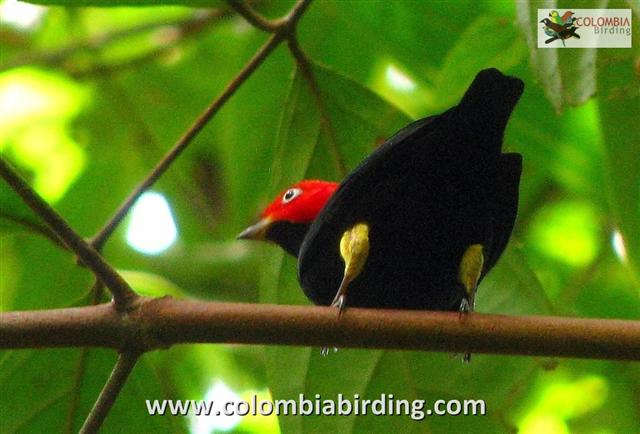
Red-capped Manakin (Ceratopipra mentalis) ©Flickr Dominic Sherony

Red-capped Manakin (Ceratopipra mentalis) ©Flickr Dominic Sherony

The Manakins had a huge change. Not only did they change the genera, but they also reshuffled the Pipridae – Manakins Family around. Here are those genera changes:

White-crowned Manakin (Dixiphia to Pseudopipra)
Scarlet-horned ManakinRed-capped Manakin, Round-tailed Manakin, Golden-headed Manakin, Red-headed Manakin (Dixiphia to Ceratopipra)
Green Manakin (Xenopipo to Cryptopipo)
Yellow-headed Manakin, and Jet Manakin (Xenopipo to Chloropipo)

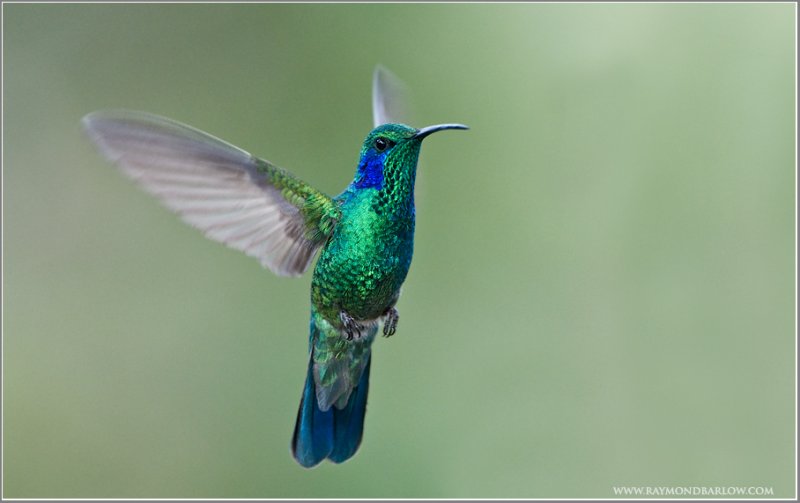
Mexican Violetear (Colibri thalassinus) by Raymond Barlow

Mexican Violetear (Colibri thalassinus) by Raymond Barlow

They made 12 English Name changes:
Snow Mountains Quail (Anurophasis monorthonyx) to Snow Mountain Quail
Auckland Merganser (Mergus australis) to New Zealand Merganser
White-bellied Wood Rail (Aramides albiventer) to Rufous-naped Wood Rail
Pomarine Skua (Stercorarius pomarinus) to Pomarine Jaeger
Green Violetear (Colibri thalassinus) to Mexican Violetear
Blue-diademed Motmot (Momotus lessonii) to Lesson’s Motmot
Stephens Island Wren (Traversia (Xenicus) lyalli) to Lyall’s Wren
Red-bellied Pitta (Erythropitta erythrogaster) to Philippine Pitta
Plain Wren (Cantorchilus modestus) to Cabanis’s Wren
Plain-backed Thrush (Zoothera mollissima) to Alpine Thrush
Blue Chaffinch (Fringilla teydea) to Tenerife Blue Chaffinch

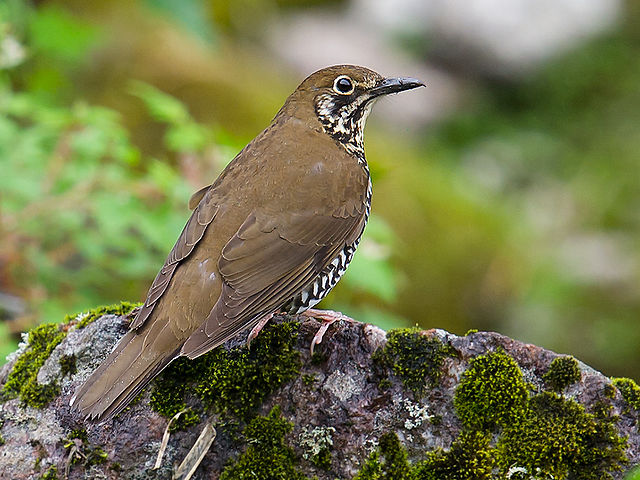
Himalayan Thrush (Zoothera salimalii) ©WikiC

Himalayan Thrush (Zoothera salimalii) ©WikiC

They added these new species and deleted the Coot with this update:

Grey-faced Petrel (Pterodroma gouldi)
Townsend’s Storm Petrel (Oceanodroma socorroensis)
Ainley’s Storm Petrel (Oceanodroma cheimomnestes)
Caribbean Coot (Fulica caribaea) Deleted (Now American Coot)
Cyprus Scops Owl (Otus cyprius)
Lesser Violetear (Colibri cyanotus)
Red-backed Flameback (Dinopium psarodes)
Puerto Rican Parakeet (Psittacara maugei)
Sula Pitta (Erythropitta dohertyi)
Sulawesi Pitta (Erythropitta celebensis)
Siao Pitta (Erythropitta palliceps)
Sangihe Pitta (Erythropitta caeruleitorques)
South Moluccan Pitta (Erythropitta rubrinucha)
North Moluccan Pitta (Erythropitta rufiventris)
Louisiade Pitta (Erythropitta meeki)
Bismarck Pitta (Erythropitta novaehibernicae)
Papuan Pitta (Erythropitta macklotii)
Ayacucho Thistletail (Asthenes ayacuchensis)
Aceh Bulbul (Pycnonotus snouckaerti)
Canebrake Wren (Cantorchilus zeledoni)
Isthmian Wren (Cantorchilus elutus)
Santa Marta Wood Wren (Henicorhina anachoreta)
Sichuan Thrush (Zoothera griseiceps)
Gran Canaria Blue Chaffinch (Fringilla polatzeki)

*

“For I am the LORD, I change not;” (Malachi 3:6a KJV)

Birds of the World contain Lee’s Birds of the World, based on the IOC World Bird List 6.3 contains 10,659 extant species (and 155 extinct species)  classified in 40 Orders,  238 Families (plus 2 Incertae Sedis) and 2292 Genera and 20,413 Subspecies.  All the ORDERs and the Families are listed. Please enjoy looking around at the references to the numerous birds that the Lord has created.

Update to the Birds of the World,6.3

Wordless Toucan

*

Lee’s Three Word Wednesday – 8/3/16

***

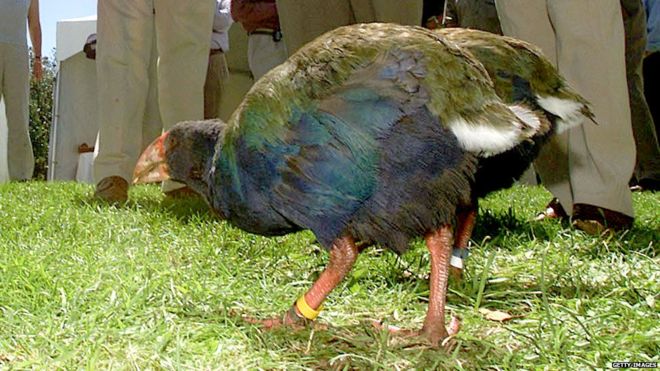
South Island Takahe (Porphyrio hochstetteri) ©BBC_Com

CREPT IN UNAWARES

***


“For there are certain men crept in unawares, who were before of old ordained to this condemnation, ungodly men, turning the grace of our God into lasciviousness, and denying the only Lord God, and our Lord Jesus Christ.” (Jude 1:4 KJV)

South Island Takahe (Porphyrio hochstetteri) ©BBC_Com

*

More Daily Devotionals

*

Update To The Birds of the World, 6.3

Recently they, the I. O. C., released version 6.3 and changes are being made to this site to reflect those updates.

There are now 10,659 species, up 22 since version 6.2. They actually added 23, but they merged one. The Caribbean Coot is now considered an American Coot (Fulica americana).

GRU-Rall American Coot (Fulica americana) (previous Caribbean ©WikiC

They have added another species to the Extinct species. Now there are 155 that have become extinct since the early 1500’s. The latest avian added to this list is the Puerto Rican Parakeet. It was also known as the Puerto Rican Conure and was a subspecies of the Hispaniolan Parakeet. (There is a nice turnaround video on that page)

Puerto Rican conure (Aratinga chloroptera maugei) ©Drawing WikiC

Puerto Rican Conure (Aratinga chloroptera maugei) ©Drawing WikiC

The eye of him who sees me will see me no more; While your eyes are upon me, I shall no longer be. (Job 7:8 NKJV)

Another big change this version, is the removal of a Bird Family, the Pelecanoididae – Diving Petrel Family was consolidated into the Procellariidae – Petrels, Shearwaters family.

Peruvian Diving Petrel (Pelecanoides garnotii) ©WikiC – Video
Magellanic Diving Petrel (Pelecanoides magellani) by DavesBP – Video
South Georgia Diving Petrel (Pelecanoides georgicus)Video
Common Diving Petrel (Pelecanoides urinatrix) by Daves BirdingPix

So now there are 40 Orders, 238 Families (plus 2 Incertae sedis). I’ll share more later as I update more. Stay Tuned!

Lee’s Two Word Tuesday – 8/2/16

***

Wilson's Storm Petrel (Oceanites oceanicus) ©WikiC

NOT SINK

***


“Deliver me out of the mire, and let me not sink: let me be delivered from them that hate me, and out of the deep waters.” (Psalms 69:14 KJV)

Wilson’s Storm Petrel (Oceanites oceanicus) ©WikiC

*

More Daily Devotionals

*

Lee’s One Word Monday – 8/1/16

***

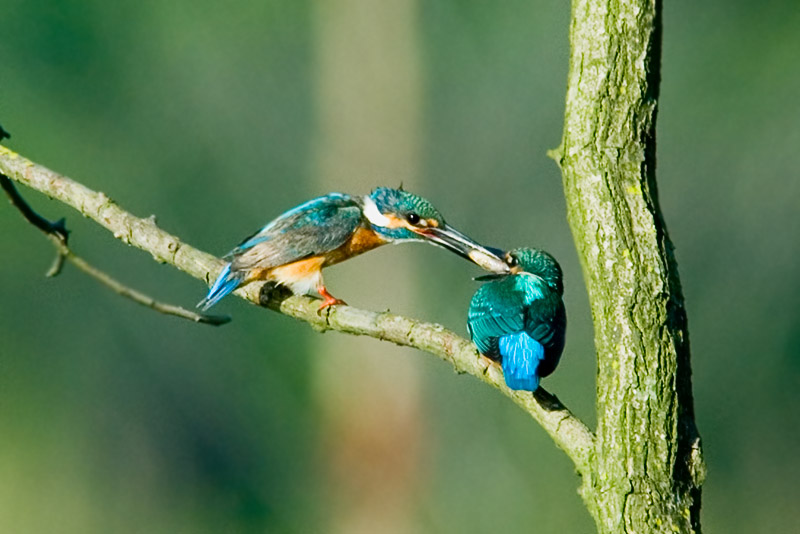
Kingfisher Feeding Young by Phil Kwong

NOURISHING

***


“And the king appointed them a daily provision of the king’s meat, and of the wine which he drank: so nourishing them three years, that at the end thereof they might stand before the king.” (Daniel 1:5 KJV)

Kingfisher Feeding Young by Phil Kwong

*

More Daily Devotionals

*

Lee’s Seven Word Sunday – 7/31/16

***

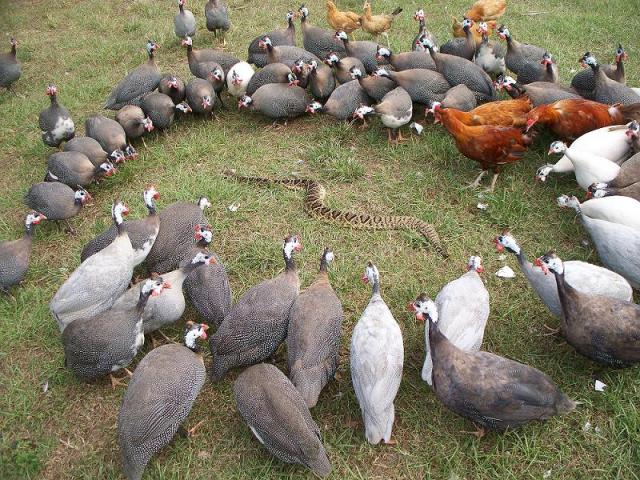
Guineas and Snake ©Workshopaddict

SURELY THE SERPENT WILL BITE

WITHOUT ENCHANTMENT

***


Surely the serpent will bite without enchantment; and a babbler is no better.” (Ecclesiastes 10:11 KJV)

Guineas and Snake ©Workshopaddict

*

More Daily Devotionals

*

Sunday Inspiration – Inca, Warbling and Various Finches

Uniform Finch (Haplospiza unicolor) ©WikiC

Uniform Finch (Haplospiza unicolor) ©WikiC

The whole earth is at rest, and is quiet: they break forth into singing. (Isaiah 14:7 KJV)

Trust you are enjoying seeing the avian beauties from this huge Thraupidae-Tanagers and Allies family (375). This is the seventh article from this family and this won’t be the last. Counting today’s group, there are 152 left to show you. It will most likely take this one and two more. The desire, of these Passerine Sunday Inspirations, is to let you SEE these fantastically created birds from the Lord. Unless you want me to play a symphony and put all 150+ birds in one slideshow, we will continue to give you “song sized” slideshows. With photos that allow permission to be used, so far, you’ve seen most of the species in the families.

First is a group of genera with only one or two species each.

Buff-throated Warbling Finch (Poospiza lateralis) ©WikiC

“The Inca finches (Incaspiza) are a genus of finch-like birds traditionally placed in the Emberizidae family, but it may be more closely related to the Thraupidae. Its current family status is incertae sedis. Both their scientific and common name refer to the Incan civilization. They are endemic to arid scrub in central and northern Peru. Buff-bridled, gray-winged and little Inca finches are restricted to the Marañón Valley. The rufous-backed Inca finch occurs either on the west slope of the Andes and both slopes of the Marañón Valley and is restricted to higher elevations, compared to great Inca finch which only occurs on the west slope of the Andes, but generally lower than the rufous-backed Inca finch. They are rather terrestrial, and typically forage within dense plant growth on the ground, but commonly perch higher, for example on the top of a tall cactus or in a small tree, when singing. They are typically seen singly or in pairs, but sometimes in small groups outside the breeding season. They normally do not take part in mixed-species flocks.” The problem is there are very few photos available for the six species in this genus.” (Wikipedia)

Black-and-rufous Warbling Finch (Poospiza nigrorufa) ©BirdPhotos.com

Black-and-rufous Warbling Finch (Poospiza nigrorufa) ©BirdPhotos.com

Poospiza is a genus of finch-like tanagers found in both the South American lowlands and the Andes mountains. Generally they are arboreal feeders in light woodland and scrub. All have extensive grey to their plumage, and have—often bold—white or rufous markings.” (Wikipedia)

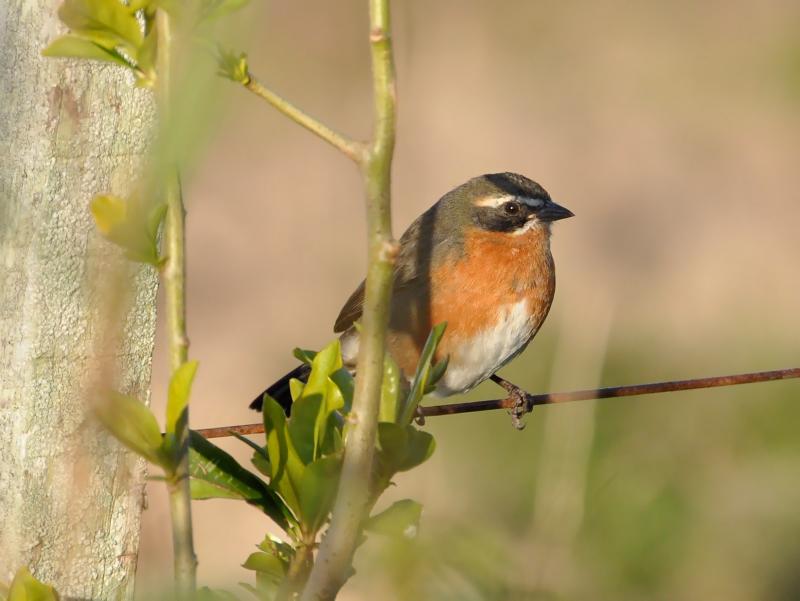
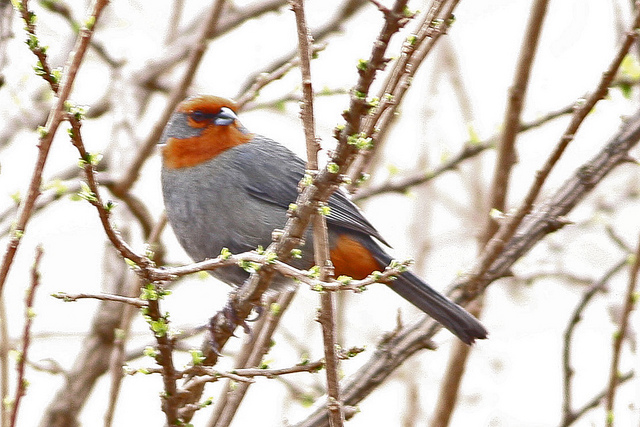
Tucuman Mountain Finch (Compsospiza baeri) ©Flickr Ron Knight

Compsospiza is a genus of South American birds known as mountain finches (a name shared with several other species such as Poospiza caesar and Leucosticte). The two species were previously included in the genus Poospiza, but in 2009 the South American Classification Committee unanimously agreed to resurrect Compsospiza based on plumage, ecology, morphology and genetic evidence. They are restricted to shrubby woodland in the Andes of Bolivia and Argentina, and both have a grey and rufous plumage.

This slideshow requires JavaScript.

The whole earth is at rest, and is quiet: they break forth into singing. (Isaiah 14:7 KJV)

“Quiet Rest” and “Sweet Hour of Prayer” ~  by Kathy Lisby – Nell Reese acc. on piano.

*

More Sunday Inspirations

Sunday Inspiration – Thraupidae – Tanagers and Allies I

Sunday Inspiration – Thraupidae – Tanagers and Allies II

Sunday Inspiration – Thraupidae – Tanagers and Allies III

Sunday Inspiration – Thraupidae – Tanagers and Allies IV

Sunday Inspiration – Thraupidae – Dacnis, Honeycreepers, Conebills

Sunday Inspiration – Thraupidae – Flowerpiercer, Sierra Finches, Plus

Traupidae Family – Tanagers and Allies

Falling Plates

*

Lee’s Six Word Saturday – 7/30/16

***

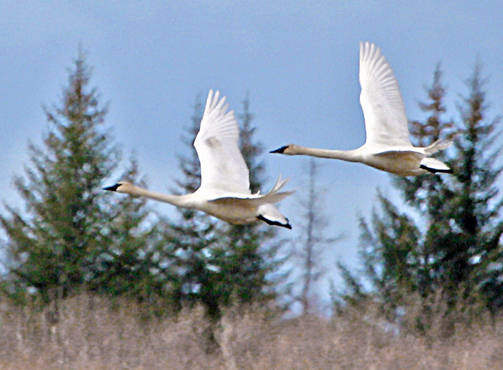
Trumpeter Swan (Cygnus buccinator) ©USFWS

AND THE WIND CARRIED THEM AWAY

***


“Then was the iron, the clay, the brass, the silver, and the gold, broken to pieces together, and became like the chaff of the summer threshingfloors; and the wind carried them away, that no place was found for them: and the stone that smote the image became a great mountain, and filled the whole earth.” (Daniel 2:35 KJV)

Trumpeter Swan (Cygnus buccinator) ©USFWS

*

More Daily Devotionals

*

Lee’s Five Word Friday – 7/29/16

***

Zebra Finch (Taeniopygia guttata) ©WikiC Female -2 young

APPLY THINE HEART

UNTO INSTRUCTION

***


Apply thine heart unto instruction, and thine ears to the words of knowledge. (Proverbs 23:12 KJV)

Zebra Finch (Taeniopygia guttata) ©WikiC Female & 2 young

*

More Daily Devotionals

*