Avian and Attributes – Blood

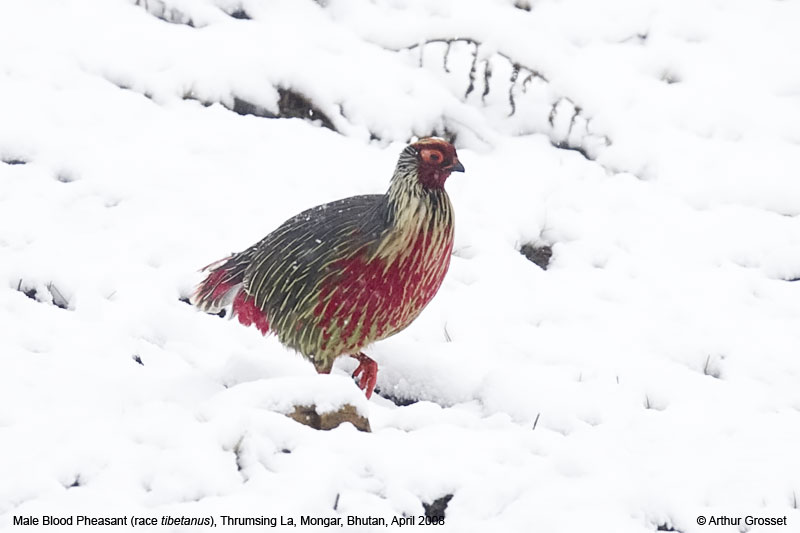
Blood Pheasant (Ithaginis cruentus) ©Arthur Grosset

Blood Pheasant (Ithaginis cruentus) ©Arthur Grosset

“And he said unto them, This is my blood of the new testament, which is shed for many.” (Mark 14:24 KJV)

“Take heed therefore unto yourselves, and to all the flock, over the which the Holy Ghost hath made you overseers, to feed the church of God, which he hath purchased with his own blood.” (Acts 20:28 KJV)


Avian and Attributes – Blood

BLOOD, n.
1. The fluid which circulates through the arteries and veins of the human body, and of other animals, which is essential to the preservation of life. This fluid is generally red. If the blood of an animal is not red, such animal is called exsanguious, or white-blooded; the blood being white, or white tinged with blue.

2. Kindred; relation by natural descent from a common ancestor; consanguinity.
God hath made of one blood, all nations of the earth. Acts 17.

3. Royal lineage; blood royal; as a prince of the blood.

5. Life.

10. A sacramental symbol of the blood of Christ.
For this is my blood of the new testament, which is shed for many for the remission of sins.” (Matthew 26:28 KJV)

11. The death and sufferings of Christ.
“Much more then, being now justified by his blood, we shall be saved from wrath through him.” (Romans 5:9 KJV)


Blood Pheasant (Ithaginis cruentus) ©WikiC

The Blood Pheasant (Ithaginis cruentus) is the only species in genus Ithaginis of the pheasant family. This relatively small, short-tailed pheasant is widespread and fairly common in eastern Himalayas, ranging across India, Nepal, Bhutan and China.

Blood pheasants have the size of a small fowl, about 17 in (43 cm) in length with a short convex, very strong black bill, feathered between bill and eye, and a small crest of various coloured feathers. The colour of the plumage above is dark ash, with white shafts, the coverts of the wings various tinged with green, with broad strokes of white through the length of each feather, the feathers of the chin deep crimson; on the breast, belly and sides feathers are lance-shaped, of various length, the tips green with crimson margins, collectively resembling dashes of blood scattered on the breast and belly. The tail consists of twelve sub-equal feathers, shafts white, rounded, the ends whitish, the coverts a rich crimson red.

Both males and females have red feet and a distinct ring of bare skin around the eye that typically is crimson colored, but is orange in a few subspecies. Member of the Phasianidae – Pheasants, Fowl & Allies Family

Blood-breasted Flowerpecker (Dicaeum sanguinolentum) ©WikiC

Blood-breasted Flowerpecker (Dicaeum sanguinolentum) ©WikiC

Here are links to all the “Blood” avian wonders:

Blond-crested Woodpecker (Celeus flavescens)
Blood Pheasant (Ithaginis cruentus)
Blood-breasted Flowerpecker (Dicaeum sanguinolentum)
Blood-colored Woodpecker (Veniliornis sanguineus)
Blood-eared Parakeet (Pyrrhura hoematotis)


More Avian and Attributes Articles

Birds whose first name start with “A”

Good News

*
[Definitions from Webster’s Dictionary of American English (1828), unless noted. Bird info from Wikipedia plus.]



Avian And Attributes – Bishop

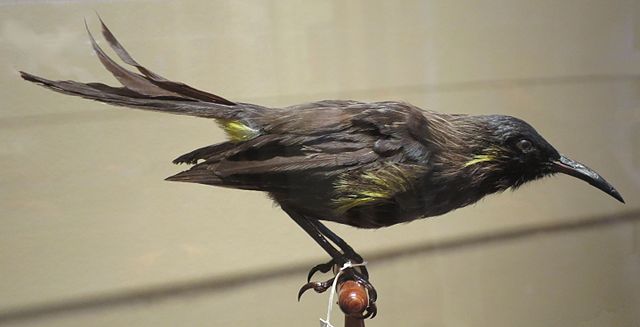
Bishop's Oo (Moho bishopi) WikiC

Bishop’s Oo (Moho bishopi) WikiC

“For ye were as sheep going astray; but are now returned unto the Shepherd and Bishop of your souls.” (1 Peter 2:25 KJV)


Avian and Attributes – Bishop

BISH’OP, n. [L. episcopus; Gr. of, over, and inspector, or visitor; to view, or inspect; whence, to visit; also, to view. This Greek and Latin word accompanied the introduction of christianity into the west and north of Europe.]

1. An overseer; a spiritual superintendent, ruler or director; applied to Christ.
Ye were as sheep going astray, but are now returned to the shepherd and bishop of your souls. 1. Pet.2.

2. In the primitive church, a spiritual overseer; an elder or presbyter; one who had the pastoral care of a church.


Bishop’s Oo (Moho bishopi) Specimen ©WikiC

Bishop’s Oo

The Bishop’s ‘ō‘ō or Molokai ‘ō‘ō (Moho bishopi) is a member of the extinct genus of the ‘ō‘ōs (Moho) within the extinct family Mohoidae. It was previously regarded as member of the Australo-Pacific honeyeaters (Meliphagidae). Lionel Walter Rothschild named it after Charles Reed Bishop, the founder of the Bishop Museum.

It was discovered in 1892 by Henry C. Palmer, a bird collector for Lord Rothschild. Its length was about 29 centimeters. The tail had reached a length of 10 centimeters. The plumage was general glossy black with yellow feather tufts on the maxillaries, beneath the wings and the undertail coverts. Their songs were simple two notes, took-took, which could be heard for miles.

Member of the Mohoidae – Oos Family


More Avian and Attributes

Birds whose first name start with “B”

Good News

*
[Definitions from Webster’s Dictionary of American English (1828), unless noted. Bird info from Wikipedia plus.]
Avian and Attributes – Apostle’s Teacher

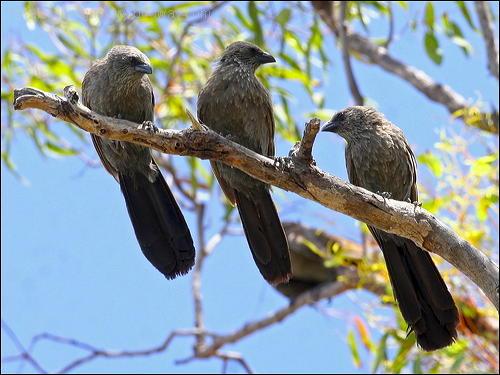
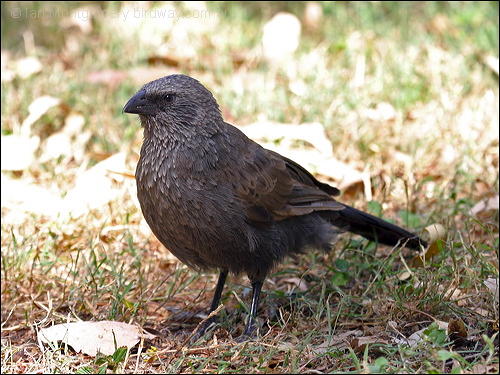
Apostlebird (Struthidea cinerea) by Ian

“And the apostles said unto the Lord, Increase our faith. And the Lord said, If ye had faith as a grain of mustard seed, ye might say unto this sycamine tree, Be thou plucked up by the root, and be thou planted in the sea; and it should obey you.” (Luke 17:5-6 KJV)


Avian and Attributes – Apostle’s Teacher

APOS’TLE, n. [L. apostalus; Gr. to send away, to sent.]

A person deputed to execute some important business; but appropriately, a disciple of Christ commissioned to preach the gospel. Twelve persons were selected by Christ for this purpose; and Judas, one of the number, proving an apostate, his place was supplied by Matthias. Acts 1.

The title of apostle is applied to Christ himself, Heb 3. In the primitive ages of the church, other ministers were called apostles, Rom 16; as were persons sent to carry alms from one church to another, Phil 2. This title was also given to persons who first planted the Christian faith. Thus Dionysius of Corinth is called the apostle of France; and the Jesuit Missionaries are called apostles.

“Wherefore, holy brethren, partakers of the heavenly calling, consider the Apostle and High Priest of our profession, Christ Jesus;” (Hebrews 3:1 KJV)


Apostlebird (Struthidea cinerea) by Ian

Apostlebird (Struthidea cinerea) by Ian

Apostlebird

The Apostlebird (Struthidea cinerea), also known as the grey jumperlousy jack or cwa bird is a quick-moving, gray or black bird about 13 inches (33 centimetres) long. It is a native to Australia where it roams woodlands, eating insects and seeds at, or near, ground level. Apostlebirds often travel in groups of about 12; for this reason they were named after the Biblical apostles, the twelve chief followers of Jesus Christ.

Measuring around 33 cm (13 in) in length, the apostlebird is a predominantly dark grey bird with a long black tail tinted greenish in sunlight. The grey feathers on the head, neck and breast are brushed with paler grey-white and the wings are brownish. The legs and bill are black and the eyes brown or white. They are members of the Corcoracidae – Australian Mudnesters Family.

“Until the day in which he was taken up, after that he through the Holy Ghost had given commandments unto the apostles whom he had chosen: To whom also he shewed himself alive after his passion by many infallible proofs, being seen of them forty days, and speaking of the things pertaining to the kingdom of God: And, being assembled together with them, commanded them that they should not depart from Jerusalem, but wait for the promise of the Father, which, saith he, ye have heard of me.” (Acts 1:2-4 KJV)


More Avian and Attributes

Birds whose first name start with “A”

Good News

*
[Definitions from Webster’s Dictionary of American English (1828), unless noted. Bird info from Wikipedia plus.]
Avian and Attributes – Admirable

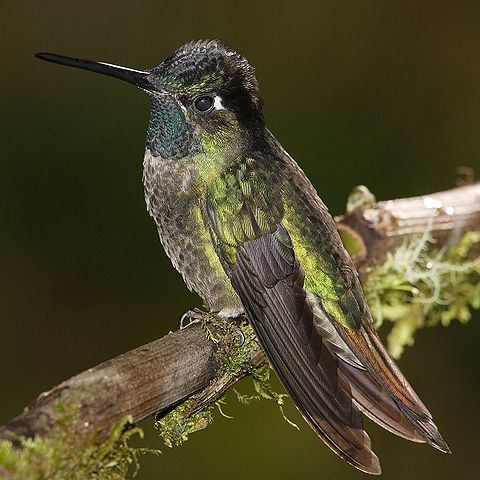
Admirable Hummingbird (Eugenes spectabilis) ©WikiC

“Touching the Almighty, we cannot find him out: he is excellent in power, and in judgment, and in plenty of justice: he will not afflict.” (Job 37:23 KJV)

“Remember his marvellous works that he hath done, his wonders, and the judgments of his mouth;” (1 Chronicles 16:12 KJV)


Avian and Attributes – Admirable

Admirable
(1): (a.) Fitted to excite wonder; wonderful; marvelous.
(2): (a.) Having qualities to excite wonder united with approbation; deserving the highest praise; most excellent; — used of persons or things.

“And the Jews marvelled, saying, How knoweth this man letters, having never learned? Jesus answered them, and said, My doctrine is not mine, but his that sent me.” (John 7:15-16 KJV)


Admirable Hummingbird (Eugenes spectabilis) ©WikiC

Admirable Hummingbird (Eugenes spectabilis)

The Admirable Hummingbird or Talamanca hummingbird (Eugenes spectabilis) is a large hummingbird. Some taxonomic authorities, such as the International Ornithological Committee, split the magnificent hummingbird into two species, in which case the nominate fulgens is renamed Rivoli’s hummingbird, and spectabilis is named the admirable hummingbird. Other taxonomic authorities have not recognized the split. The admirable hummingbird’s range is Costa Rica to Panama. Member of the Trochilidae – Hummingbirds Family.


More Avian and Attributes Articles

Birds whose first name start with “A”

Good News

*
[Definitions from Webster’s Dictionary of American English (1828), unless noted. Bird info from Wikipedia plus.]
Avian and Attributes – Ancient (of Days)

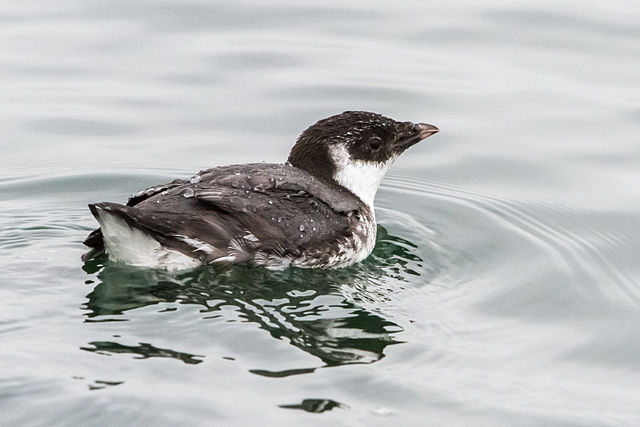
Ancient Murrelet (Synthliboramphus antiquus) ©WikiC

“I beheld till the thrones were cast down, and the Ancient of days did sit, whose garment was white as snow, and the hair of his head like the pure wool: his throne was like the fiery flame, and his wheels as burning fire.” (Daniel 7:9 KJV)

“Until the Ancient of days came, and judgment was given to the saints of the most High; and the time came that the saints possessed the kingdom.” (Daniel 7:22 KJV)


Avian and Attributes – Ancient

AN’CIENT, a.
1. Old; that happened or existed in former times, usually at a great distance of time; as, ancient authors, ancient days. Old, says Johnson, relates to the duration of the thing itself, as an old coat; and ancient to time in general, as an ancient dress. But this distinction is not always observed. We say, in old times, as well as ancient times; old customs, &c. In general, however, ancient is opposed to modern, and old to new, fresh or recent. When we speak of a thing that existed formerly, which as ceased to exist, we commonly use ancient, as ancient republics’ ancient heroes, and not old republics, old heroes. But when the thing which began or existed in former times, is still in existence, we use either ancient or old; as, ancient statues or paintings, or old statues or paintings; ancient authors, or old authors, meaning books. But in these examples ancient seems the most correct, or best authorized. Some persons apply ancient to men advanced in years still living; but this use is not common in modern practice, though found in scripture.
With the ancient is wisdom. Job.

“With the ancient is wisdom; and in length of days understanding.” (Job 12:12 KJV)

AN’CIENT, n. Generally used in the plural, ancients. Those who lived in former ages, opposed to moderns.
1. In scripture, very old men. Also, governors, rulers, political and ecclesiastical.
The Lord will enter into judgment with the ancients of his people. Isa 3. Jer 19.
God is called the Ancient of days from his eternal existence. Dan 7.


Ancient Murrelet (Synthliboramphus antiquus) by Ian

Ancient Murrelet

The Ancient Murrelet (Synthliboramphus antiquus) is a bird in the auk family. The genus name Synthliboramphus is from Ancient Greek sunthlibo, “to compress”, and rhamphos, “bill”, and antiquus is Latin for ancient. The English term “murrelet” is a diminutive of “murre”, a word of uncertain origins, but which may imitate the call of the common guillemot. Ancient murrelets are called “ancient” because they have grey on the back like a shawl, as worn by the elderly.

This small auk species is black on the head, throat and rear neck, grey-backed, and has white underparts. The yellow bill is short and stubby. It has a small rounded black tail. The summer adults have white head streaks giving an aged look and leading to the English name. Other plumages are similar, but lack the crown streaks and black on the throat.

Ancient murrelets tend to bank from side to side in flight to a greater extent than other small auks. They fly with fast wing beats due to their short wings.

It breeds from the Yellow Sea (islands off China), through the Russian Pacific coast and the Aleutian Islands to the Haida Gwaii archipelago of British Columbia, where about half of the world population breeds.

Alcidae – Auks Family

There is also an Ancient Antwren (Herpsilochmus gentryi), that is a species of bird in the family Thamnophilidae. It is found in northern Peru and southeastern Ecuador. Its natural habitat is subtropical or tropical moist lowland forests. It is threatened by habitat loss. [No photos available.]


More Avian and Attributes Articles

Birds whose first name start with “A”

Good News

*
[Definitions from Webster’s Dictionary of American English (1828), unless noted. Bird info from Wikipedia plus.]

The Eagles and Allies Have Landed

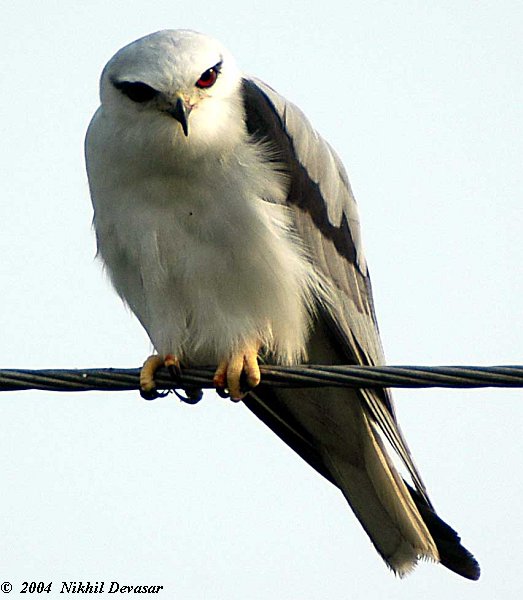
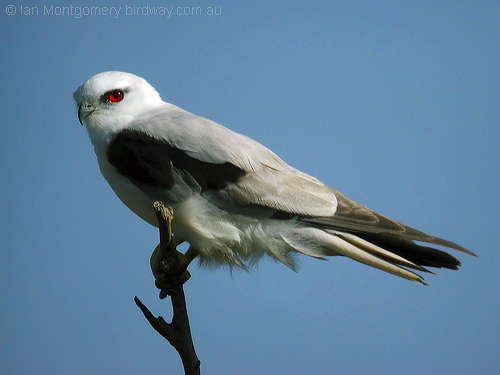
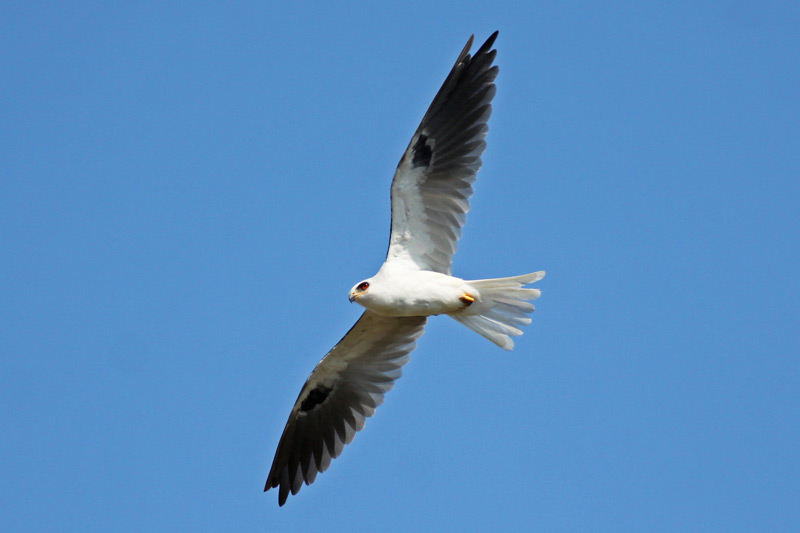
White-tailed Kite (Elanus leucurus) by Margaret Sloan

Finally, the Eagles and Allies have arrived and landed back on their Family Page. The Accipitridae – Kites, Hawks and Eagles family album has been giving me a fit. As you know from the last two post, An Apology, Plus Much Work At Hand and Rounding Up Those Eagles and Allies, I have been trying to fix 111 broken links on the page that lists the whole Accipitridae family.

WordPress is a great Blogging provider, yet, there are times a blogger feels like pulling their feathers (hair) out. After searching the forums and the internet for possible answers, there doesn’t seem to be a clear answer as to how 111 photos disappeared from the Media area. Many were downloaded back in 2011 through 2016, and have been working fine.

Life is like this at times. Problems arise out of nowhere, yet, how we handle them, is a test of our character. Thankfully, we have the Lord to lean on when we need wisdom. “The fear of the LORD is the beginning of knowledge: but fools despise wisdom and instruction.” (Proverbs 1:7 KJV)

Black Eagle (Ictinaetus malayensis) ©WikiC

Not so sure my “faith” is being tested, but the following verses are always a comfort when I am faced with challenges. Also, maybe, I am being challenged to review and rework parts of Lee’s Birdwatching Adventures. It is coming upon 10 years old after the New Year, and often items need to be repaired and painted. Even the birds go through a renewing of their feathers. Praying for the Lord’s wisdom on this issue.

“Knowing this, that the trying of your faith worketh patience. But let patience have her perfect work, that ye may be perfect and entire, wanting nothing. If any of you lack wisdom, let him ask of God, that giveth to all men liberally, and upbraideth not; and it shall be given him.” (James 1:3-5 KJV)

What else is there to show you today, but some of the rest of the birds that returned. Thankfully, most of the Family pages do not have such enormous clans of relatives.

Blue-gray Tanagers And Your Teenager


Blue-gray Tanager (Tangara azulada) ©Colombia Wildlife – Oswaldo Cortes

“For thou art my hope, O Lord GOD: thou art my trust from my youth.” (Psalms 71:5 KJV)

While watching this video of the Blue-gray Tanager youngster, my thoughts went to those of you who have teenagers. Many tell me that they, the teenagers, are difficult to fill up. Enjoy the video knowing that you are not alone in God’s Creation. Even the birds have to deal with filling up their offspring. :0)

Blue-gray Tanagers (Thraupis episcopus) are members of the Thraupidae Family. The tanager is a medium-sized South American songbird whose song is a squeaky twittering, interspersed with tseee and tsuup call notes. Its range is from Mexico south to northeast Bolivia and northern Brazil, all of the Amazon Basin, except the very south. It has been introduced to Lima (Peru). On Trinidad and Tobago, this bird is called blue jean.

Blue-grey Tanager (Thraupis episcopus) Reinier Munguia

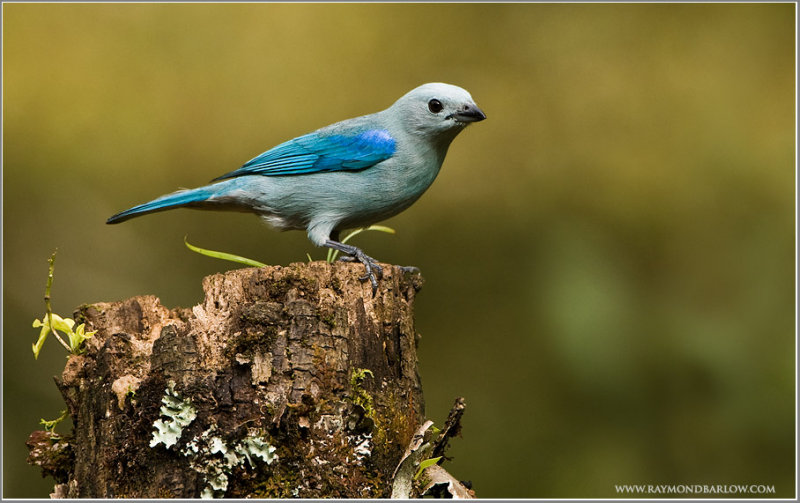
The Blue-gray Tanager is 16–18 cm (6.3–7.1 in) long and weighs 30–40 g (1.1–1.4 oz). Adults have a light bluish head and underparts, with darker blue upperparts and a shoulder patch colored a different hue of blue. The bill is short and quite thick. Sexes are similar, but the immature is much duller in plumage.

The breeding habitat is open woodland, cultivated areas and gardens. The Blue-gray Tanager lives mainly on fruit, but will also take some nectar and insects. This is a common, restless, noisy and confiding species, usually found in pairs, but sometimes small groups. It thrives around human habitation, and will take some cultivated fruit like papayas (Carica papaya).

(Information from Wikipedia)

Blue-grey Tanager (Thraupis episcopus) by Raymond Barlow

Blue-gray Tanager (Thraupis episcopus) by Raymond Barlow

“O God, thou hast taught me from my youth: and hitherto have I declared thy wondrous works.” (Psalms 71:17 KJV)

Thraupidae – Tanagers and Allies Family


Avian And Attributes – Willing

Avian And Attributes – Willing

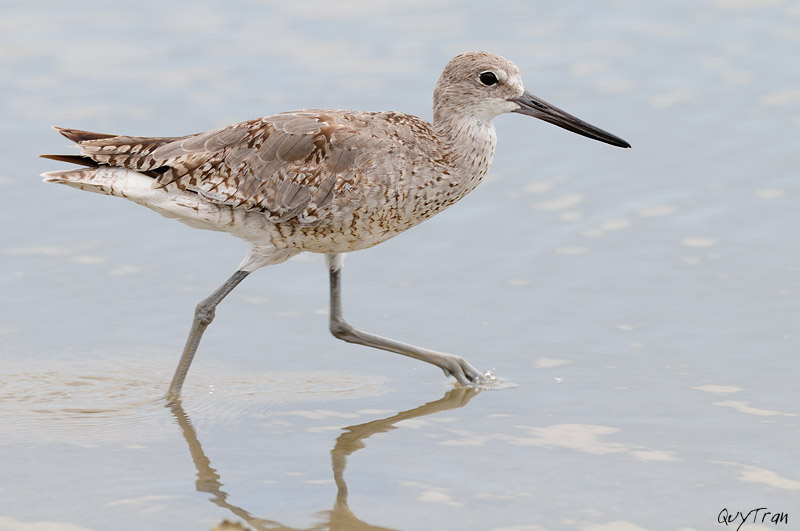
Willet (Tringa semipalmata) by Quy Tran

“Wherein God, willing more abundantly to shew unto the heirs of promise the immutability of his counsel, confirmed it by an oath:” (Hebrews 6:17 KJV)

The Lord is not slack concerning his promise, as some men count slackness; but is longsuffering to us-ward, not willing that any should perish, but that all should come to repentance.
(2 Peter 3:9 KJV)


Avian and Attributes – Willing

WILLING, ppr.
1. Determining; resolving; desiring.
2. Disposing of by will.
WILLING, a.

1. Free to do or grant; having the mind inclined; disposed; not averse. Let every man give, who is able and willing.
2. Pleased; desirous.
Felix, willing to show the Jews a pleasure. Acts 24.
3. Ready; prompt.
He stoopd with weary wings and willing feet.
4. Chosen; received of choice or without reluctance; as, to be held in willing chains.
5. Spontaneous.
6. Consenting.


Eastern Willet by Jim Fenton

Willet (Tringa semipalmata)

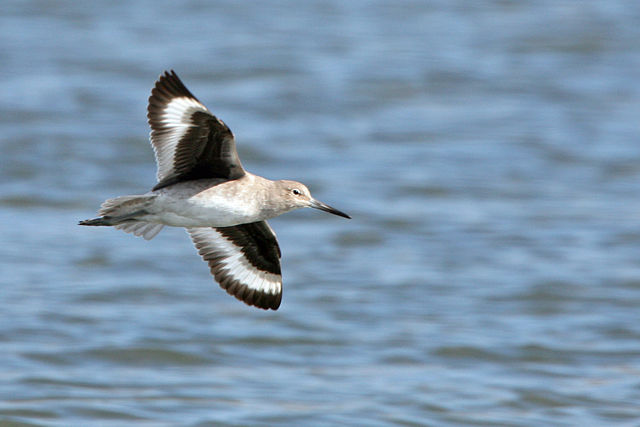
The Willet (Tringa semipalmata), formerly in the monotypic genus Catoptrophorus as Catoptrophorus semipalmatus, is a large shorebird in the sandpiper family. It is a relatively large and robust member sandpiper, and is the largest of the species called “shanks” in the genus Tringa. Its closest relative is the lesser yellowlegs, a much smaller bird with a very different appearance apart from the fine, clear, and dense pattern of the neck, which both species show in breeding plumage. It breeds in North America and the West Indies and winters in southern North America, Central America, the West Indies and South America.

The Willet’s name is onomatopoeic and refers to it loud peircing “pill-will-willet” territorial song., which is higherpicjed and repeated at a faster rate in Eastern willets than in Western birds. Other calls include a predator response call given by breeding birds which is a repeated, staccato “kleep“, while non breeding birds alarms include a high, pitched anxious “kip-kip=viek” call and a “kreei” call. They also have a distinctive call when crossing another willet’s territory and this “klay-dir” call is also used as a contact call when willets are migrating

Willet (Tringa semipalmata) ©WikiC

(Scolopacidae – Sandpipers, Snipes Family) (Willet – Wikipedia)


More Avian and Attributes

Birds whose first name starts with “W”

Good News

*
[Definitions from Webster’s Dictionary of American English (1828), unless noted. Bird info from Wikipedia plus.]
Avian And Attributes – (No) Variableness

Avian And Attributes – (No) Variableness

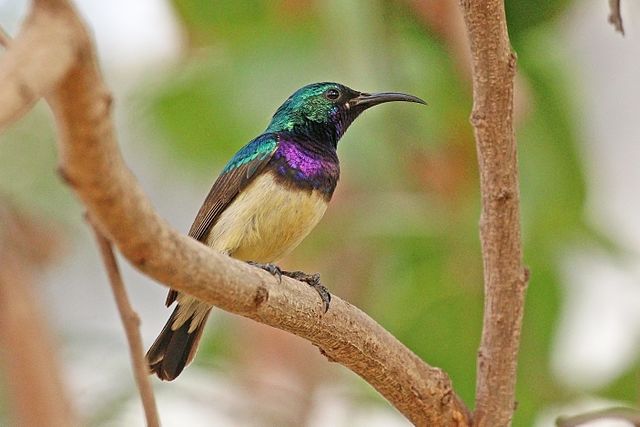
Variable Sunbird (Cinnyris venustus) Male ©WikiC

“Every good gift and every perfect gift is from above, and cometh down from the Father of lights, with whom is no variableness, neither shadow of turning.” (James 1:17 KJV)


Avian and Attributes – (No) Variableness

VA’RIABLENESS, n.
1. Susceptibility of change; liableness or aptness to alter; changeableness; as the variableness of the weather.
2. Inconstancy; fickleness; unsteadiness; levity; as the variableness of human passions.


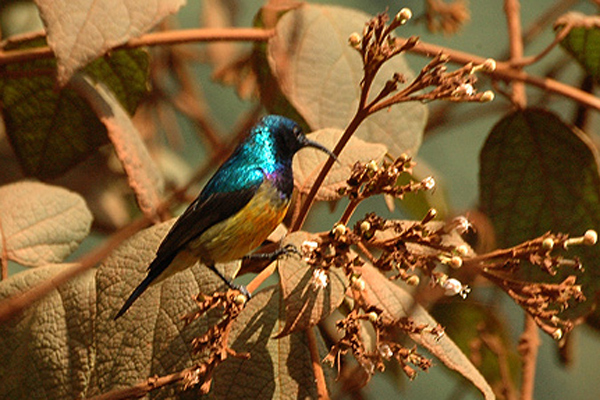
Variable Sunbird (Cinnyris venustus) by TomTarrant

Variable Sunbird

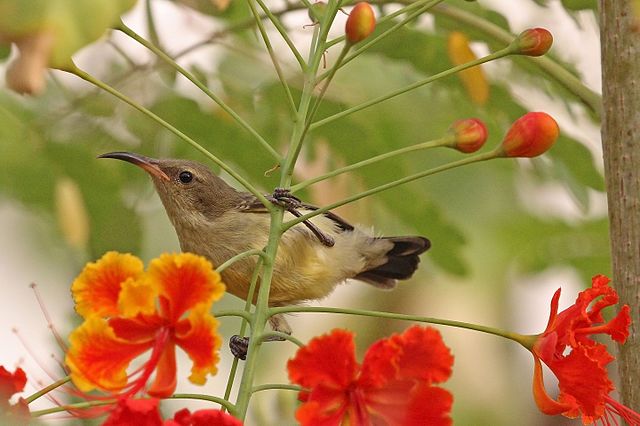
The Variable Sunbird (or yellow-bellied sunbird), Cinnyris venustus (formerly Nectarinia venusta), is a sunbird. The sunbirds are a group of small Old World passerine birds which feed largely on nectar, although they will also take insects, especially when feeding young. Flight is fast and direct on their short wings. Most species can take nectar by hovering like a hummingbird, but usually perch to feed most of the time.

The variable sunbird is a fairly common resident breeder in equatorial Africa. Two eggs are laid in a suspended nest in a tree. This species is found in open woodland and cultivation.

Variable sunbirds are small, only 10 cm long. They have medium-length thin down-curved bills and brush-tipped tubular tongues, both adaptations to their nectar feeding from their Creator.

Variable Sunbird (Cinnyris venustus) Female ©WikiC

(Variable Sunbird – Wikipedia, with editing) (Nectariniidae – Sunbirds Family)


More Avian and Attributes

Birds whose first name starts with “V”

Good News

*
[Definitions from Webster’s Dictionary of American English (1828), unless noted. Bird info from Wikipedia plus.]

Avian And Attributes – Unreprovable

Avian And Attributes – Unreprovable

Unspotted Saw-whet Owl (Aegolius ridgwayi) ©WikiC

“And you, that were sometime alienated and enemies in your mind by wicked works, yet now hath he reconciled In the body of his flesh through death, to present you holy and unblameable and unreproveable in his sight:” (Colossians 1:21-22 KJV)


Avian and Attributes – Unreproveable

Unreproveable
Col_1:22 (a) This word has a very interesting meaning for the Christian. It means that there will be no final examinations at the end of the journey. Our Lord JESUS is so effective in His work in the soul that the person is completely prepared in this life for the entrance into GOD’s presence. The Christian does not get an examination, when he dies, to see where he is going. That point is settled the moment JESUS CHRIST becomes the Lord and the Saviour of the believer.


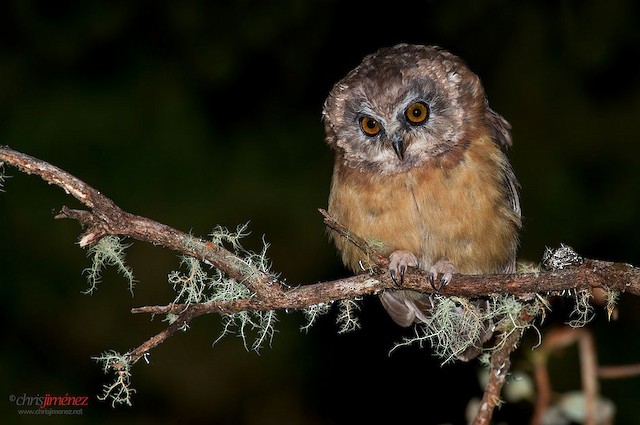
Unspotted Saw-whet Owl (Aegolius ridgwayi) Juvenile ©Chris Jimenez – Macaulay Library

Unspotted Saw-whet Owl

The unspotted saw-whet owl (Aegolius ridgwayi) is a small owl. It is a resident breeder in the highlands of Central America from southern Mexico south to western Panama, mainly above 2500 m. it has occasionally been considered conspecific with the northern saw-whet owl.

This nocturnal bird breeds in open mountain forests, in both the cloud forest and the higher oak woodland, laying its eggs in a tree hole. It takes rodents, shrews and other small mammals as its main prey, but will also feed on birds, bats and insects.

The unspotted saw-whet owl is a small, dumpy, short-tailed and broad-winged owl, 18 cm long and weighing 80 g. It is dark brown above with white markings on the wings. The underparts are unstreaked buff, becoming darker on the upper chest and facial disc. The head is large, with yellow eyes and a white-edged facial disc. The flight is fluttery and agile.

The voice of the unspotted saw-whet owl is a series of rhythmic toots. Reports of this owl at lower altitudes are invariably due to the extremely similar call of an Anotheca tree frog.

The scientific species name is for the American ornithologist Robert Ridgway.

Unspotted Saw-whet Owl (Aegolius ridgwayi) ©Knut Eisermann – Macaulay Library

(Strigidae – Owls Family) (Unspotted Saw-whet Owl – Wikipedia)

Extra

Unspotted
Jam_1:27 (b) This is a picture of the defilement which the Christian may encounter during his day’s duties as he mingles and mixes in a world filled with sin. The Lord would have us guard our lives daily lest we be contaminated by the evils that surround us.

“Pure religion and undefiled before God and the Father is this, To visit the fatherless and widows in their affliction, and to keep himself unspotted from the world.” (James 1:27 KJV)


More Avian and Attributes

Birds whose first name starts with “U”

Good News

*
[Definitions from Webster’s Dictionary of American English (1828), unless noted. Bird info from Wikipedia plus.]
Birds Taking A Sabbath Rest? – from Creation Moments

DO BIRDS TAKE A SABBATH REST? from Creation Moments

Re-posted from Creation Moments

“And God blessed the seventh day, and sanctified it: because that in it he had rested from all his work which God created and made.” Genesis 2:3

Myles Willard is an avid bird watcher, award-winning nature photographer and long-time friend of Creation Moments. Myles has given us hundreds of breathtaking nature photos, one of which accompanies the printed transcript of today’s program at the Creation Moments website.

The reason I’m telling you about him today is because of an unexpected discovery he made while looking out the window of his home in Michigan. Each fall he meticulously tracks and logs the number of migrating warblers that stop by for a rest in the big cedar tree in his yard. After tracking the activity of over 1,500 warblers for 18 years, he was surprised to see a statistically significant dip in the number of birds stopping by that occurred on every seventh day!

Did these migrating birds have a built-in instinct that somehow made them follow the biblical principle of a Sabbath rest? We are not saying, of course, that the warblers were knowingly obeying God’s fourth commandment. However, if God worked for six days and then rested on the seventh, why would it be hard to believe that God gave these birds a cycle of six days of work followed by a seventh day of rest?

According to the account given in the book Inspired Evidence: Only One Reality, “It would seem that Myles Willard, science teacher, nature photographer and bird watcher, has found and documented such a pattern.”

Prayer:
Oh Lord, thank You for doing all the work necessary for our salvation so we can rest securely in the knowledge that – by grace through faith – we can have eternal life! Amen.
Notes:
Myles Willard, The Rest Is History, monograph, 2008. Cited in Inspired Evidence: Only One Reality by Julie Von Vett and Bruce Malone, April 29 (Search for the Truth Publications, 2012). Photo: One of Myles Willard’s superb photos. Used with permission.

©Creation Moments 2017 – Used with permission

See:

More Interesting Things from Creation Moments

*

Avian And Attributes – Song

Avian And Attributes – Song

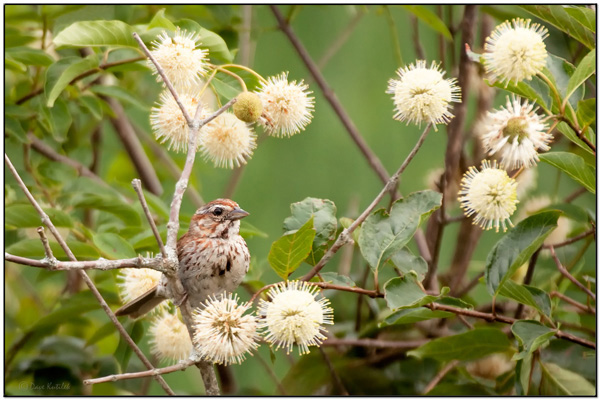
Song Sparrow in white flowers by Daves BirdingPix

Song Sparrow in white flowers by Daves BirdingPix

“The LORD is my strength and song, and he is become my salvation: he is my God, and I will prepare him an habitation; my father’s God, and I will exalt him.” (Exodus 15:2 KJV)

Behold, God is my salvation; I will trust, and not be afraid: for the LORD JEHOVAH is my strength and my song; he also is become my salvation.” (Isaiah 12:2 KJV)


Avian and Attributes – Song

SONG, n.
1. In general, that which is sung or uttered with musical modulations of the voice, whether of the human voice or that of a bird.
2. A little poem to be sung, or uttered with musical modulations; a ballad. The songs of a country are characteristic of its manners. Every country has its love songs, its war songs, and its patriotic songs.
3. A hymn; a sacred poem or hymn to be sung either in joy or thanksgiving, as that sung by Moses and the Israelites after escaping the dangers of the Arabian gulf and of Pharaoh; or of lamentation, as that of David over the death of Saul and Jonathan. Songs of joy are represented as constituting a part of heavenly felicity. [edited]
“Yet the LORD will command his lovingkindness in the daytime, and in the night his song shall be with me, and my prayer unto the God of my life.” (Psalms 42:8 KJV)


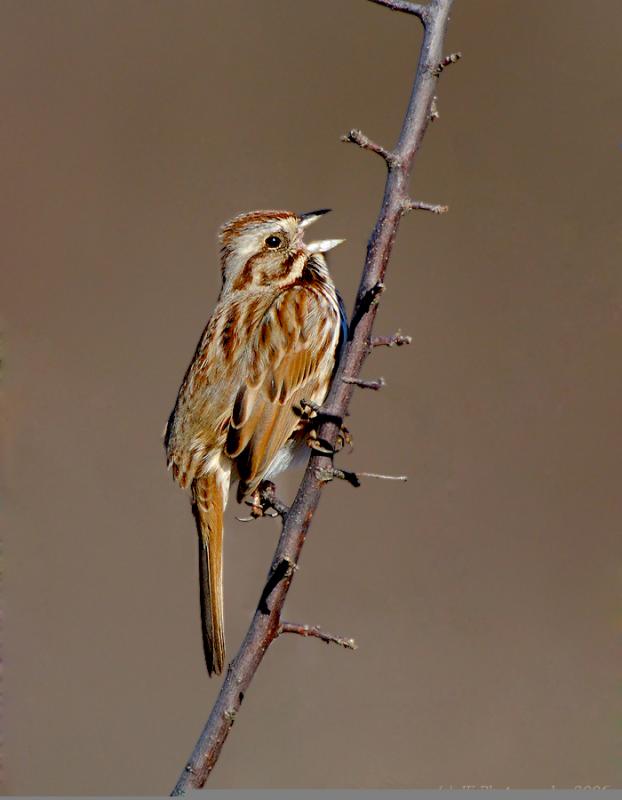
Song Sparrow (Melospiza melodia) by J Fenton

Song Sparrow

The Song Sparrow (Melospiza melodia) is a medium-sized American sparrow. Among the native sparrows in North America, it is easily one of the most abundant, variable and adaptable species.

Though a habitat generalist, the Song sparrow favors brushland and marshes, including salt marshes, across most of Canada and the United States. They also thrive in human dominated areas such as in suburbs, agricultural fields, and along roadsides. Permanent residents of the southern half of their range, northern populations of the song sparrow migrate to the southern United States or Mexico during winter and intermingle with the native, non-migratory population. The song sparrow is a very rare vagrant to western Europe, with a few recorded in Great Britain and Norway.

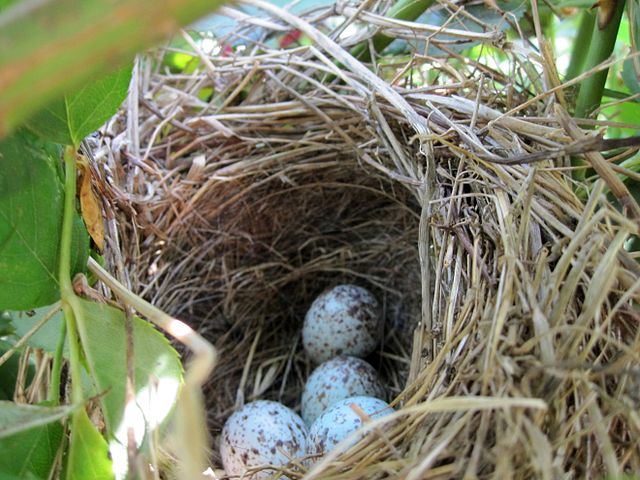
These birds forage on the ground, in shrubs or in very shallow water. They mainly eat insects and seeds. Birds in salt marshes may also eat small crustaceans. They nest either in a sheltered location on the ground or in trees or shrubs.

Song Sparrow (Melospiza melodia) Nest ©WikiC

The sparrow species derives it name from its colorful repertoire of songs. Enthusiasts report that one of the songs heard often in suburban locations closely resembles the opening four notes of Ludwig van Beethoven’s Symphony No. 5. The male uses a fairly complex song to declare ownership of its territory and attract females.

Singing itself consists of a combination of repeated notes, quickly passing isolated notes, and trills. The songs are very crisp, clear, and precise, making them easily distinguishable by human ears

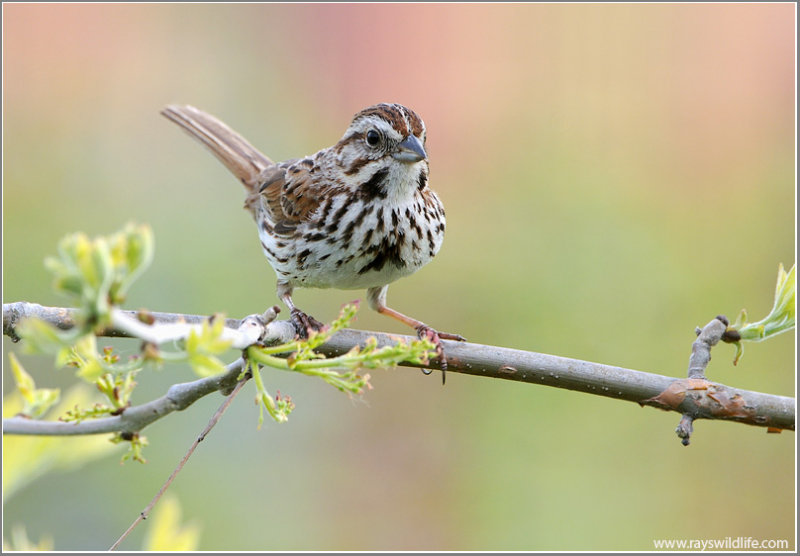
Song Sparrow by Ray

Song Sparrow by Ray

(Emberizidae – Buntings, New World Sparrows & Allies Family) (Song Sparrow – Wikipedia)


More Avian and Attributes

Birds whose first name starts with “S”

Good News

*
[Definitions from Webster’s Dictionary of American English (1828), unless noted. Bird info from Wikipedia plus.]