My friend, Jeanie, who wrote the poem, Hummingbird, sent me these photos. Enjoy!
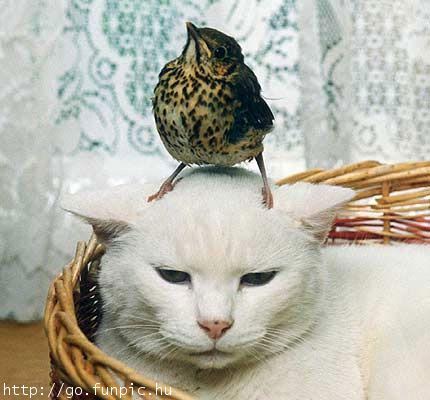
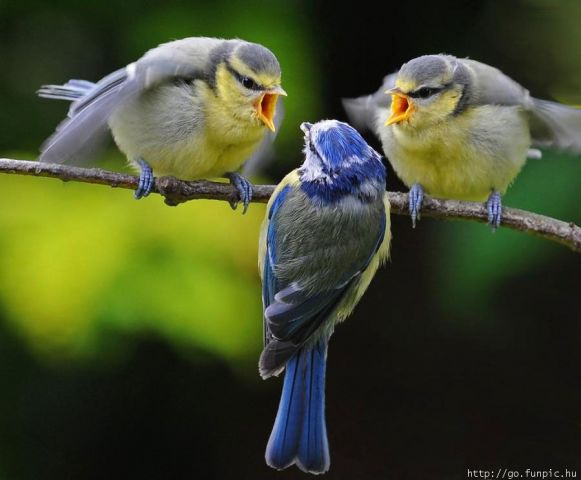
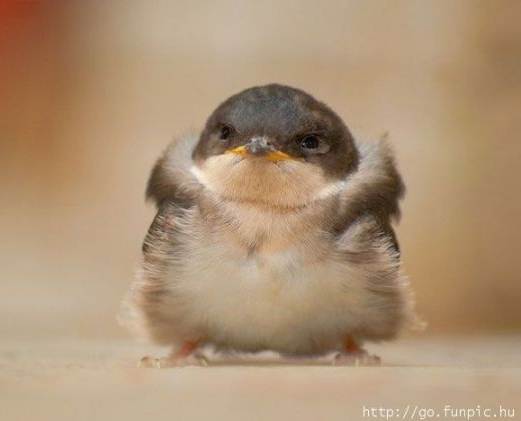
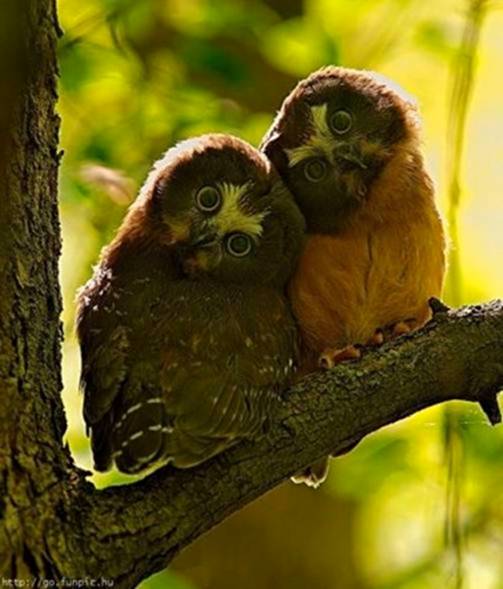
The photography is amazing, but the captions are priceless !!!!!
I hate it when he plays “Mount Everest …”
Who is “Sugar Lips”?
Those brownies were Far Out!!
NO! We Don’t want any Magazine Subscriptions!
There’s a ringer competing in the Hogtown Olympics.
I’m not Over-Weight, I’m Under-Height!!
You do have an odd perspective on things.
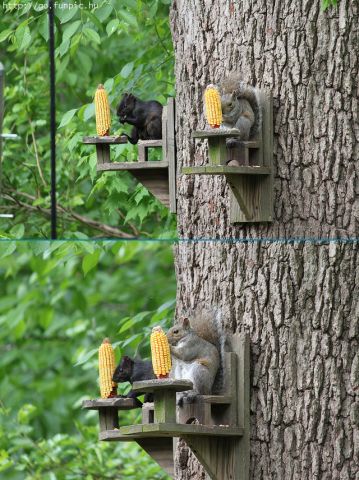
Lunchtime at the Corncob Cafe
Okay, I caught him, now what do I do with him?
I hate this game.
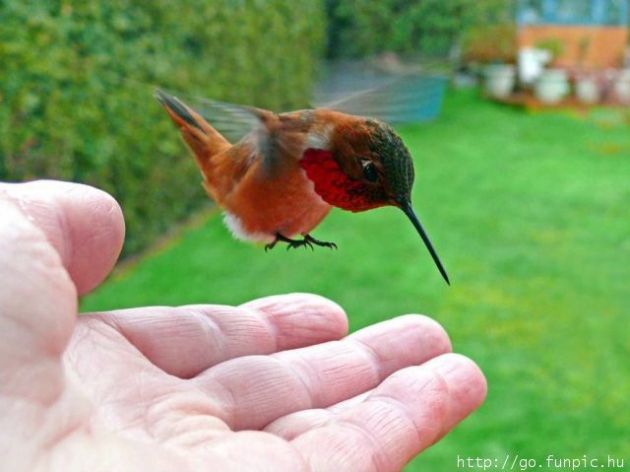
Flight ‘Hum-One’ coming in for a landing.
Just act natural and blend in.
Where’s my Coffee?
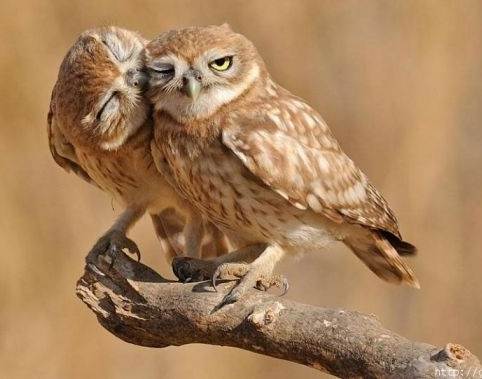
Whooo loves ya, Baby?
But above all these things put on love, which is the bond of perfection. And let the peace of God rule in your hearts, to which also you were called in one body; and be thankful. Let the word of Christ dwell in you richly in all wisdom, teaching and admonishing one another in psalms and hymns and spiritual songs, singing with grace in your hearts to the Lord. And whatever you do in word or deed, do all in the name of the Lord Jesus, giving thanks to God the Father through Him.
(Colossians 3:14-17 NKJV)
“Ye are all the children of light, and the children of the day: we are not of the night, nor of darkness.” (1 Thessalonians 5:5)
The best fishermen not only know where the fish are biting, but exactly what type of bait or lure is needed to catch the big ones. That’s why I say that the best fisherman of all is not a man but a bird.
The black heron knows exactly where and when the fish are biting. He goes fishing for his food by wading into shallow lakes and ponds. But there’s a problem. Fish avoid the water’s surface to avoid the bright rays of the sun. Even if a fish does come close to the surface, the black heron is unable to see it because he is blinded by the sun’s reflection.
But like I said, this bird is a master fisherman. What he does is shape his wings into a large black umbrella. He then crouches down until his wings are almost touching the water, effectively turning daylight into darkness, and attracting fish to the shade. Under cover of his umbrella, the black heron pokes his head into the water and comes out with a squirming fish in his beak.
This kind of fishing is known as canopy feeding. How did the black heron learn to fish like this? Creationists know, but evolutionists have no reasonable answer. They only have a term. Yes, evolutionists are good at coming up with terms like “canopy feeding”, but when it comes to explaining how such a thing originated in the first place, they are still very much in the dark.
Prayer: Heavenly Father, I ask You to make me a good fisherman – not of fish but of men. Use me to share the gospel so that my friends and family will turn to You for salvation. Amen.
Notes: http://thewebsiteofeverything.com/animals/birds/Ciconiiformes/Ardeidae/Egretta-ardesiaca. Photo: Black heron comes out of its feathered canopy after catching a fish. Courtesy of Steve Garvie. (CC-BY-SA 2.0 GENERIC)
What an amazing behavior that the Lord gave these Black Herons! Just as the Lord promised the Ravens, this verse is also true for the Black Herons:
Who provides food for the raven (or Black Herons), When its young ones cry to God, And wander about for lack of food? (Job 38:41 NKJV)
P.S.
Sorry I have not been as quick to answer your comments this last week, but we have had company. My sister and her husband, from the Denver area, are with us and are staying in the room that has my computer. :) We had the memorial service this last weekend for my other sister who went on to Glory several months ago. See:
Hope to be back to a more normal schedule soon. Yet, I wish they could stay longer. Heaven will be great when we can visit eternally with our whole Spiritual Family, which includes many of you, but most of all with our Savior, Eternal Brother, God the Father.
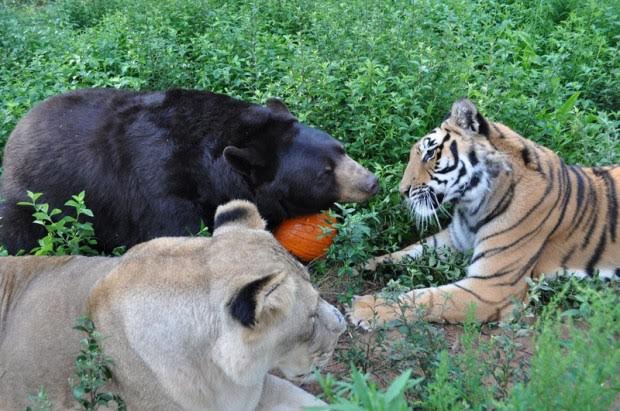
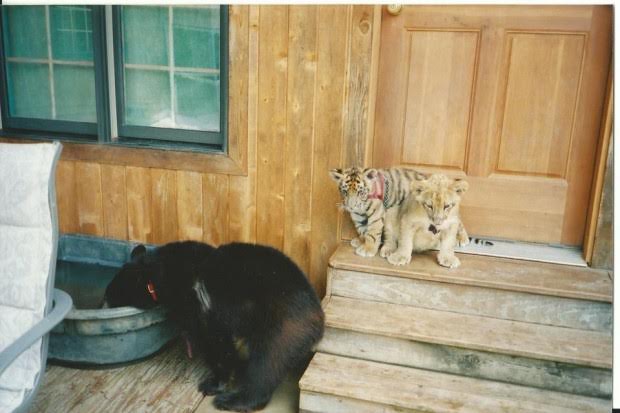
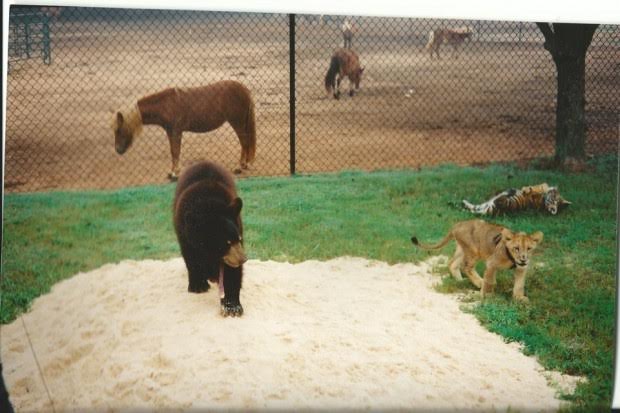
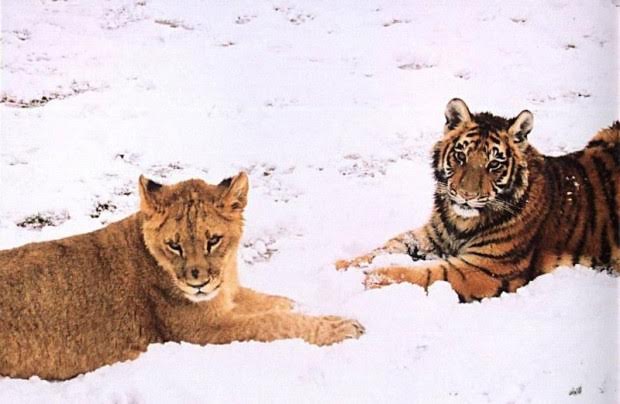
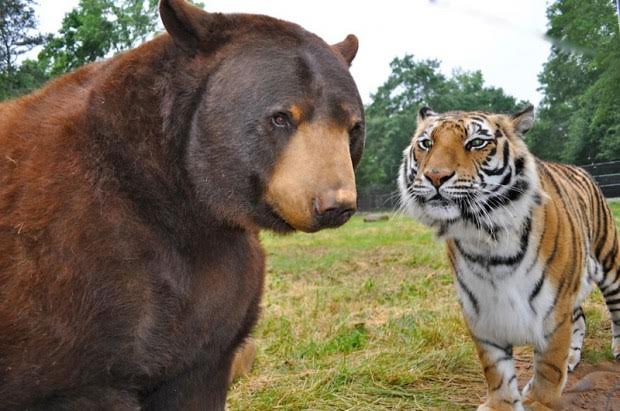
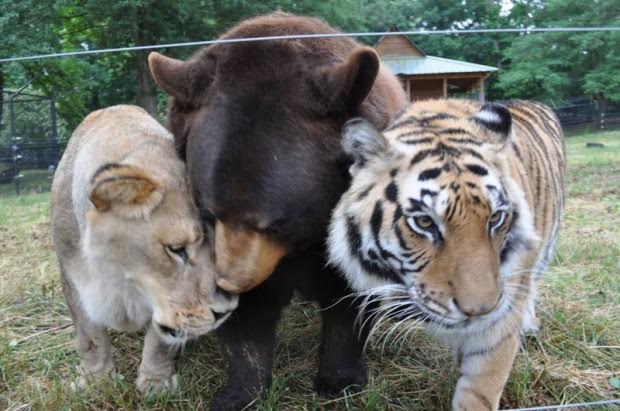
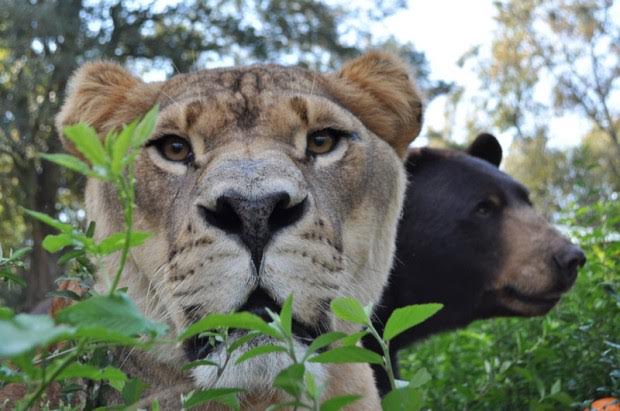
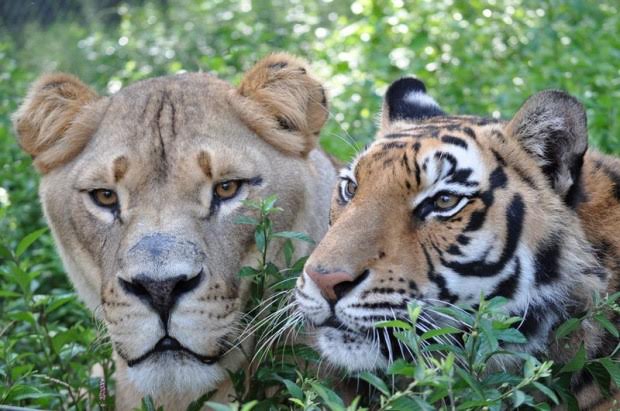
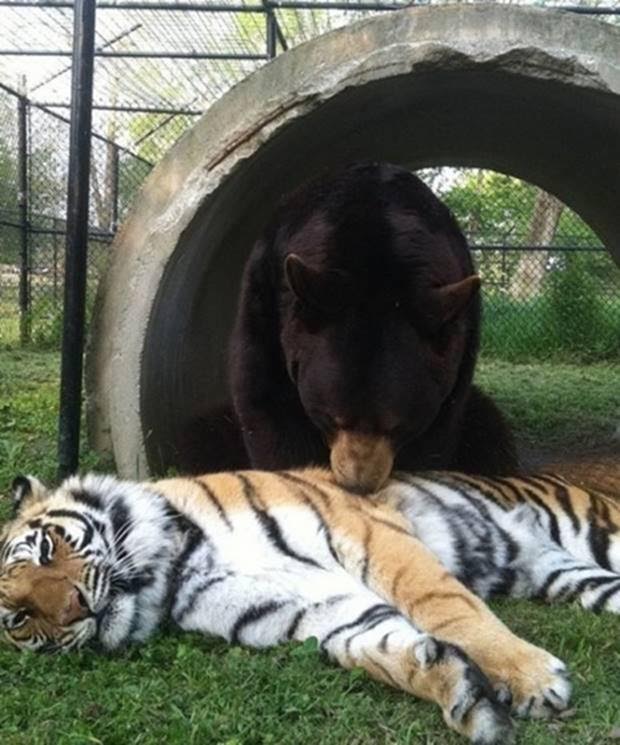
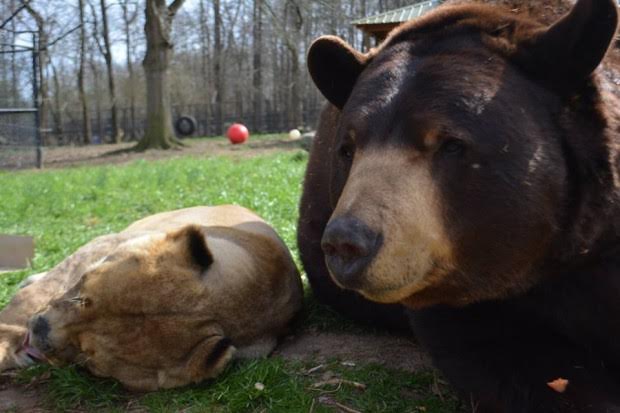
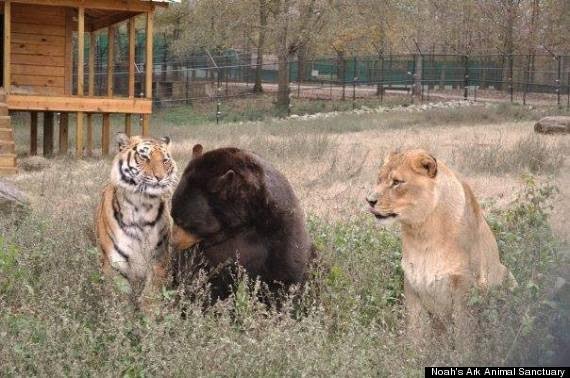
From another e-mail received, this one is about a Bear, Lion and a Tiger. They are affectionately known as “BLT” and housed at the Noah’s Ark Sanctuary in Georgia.
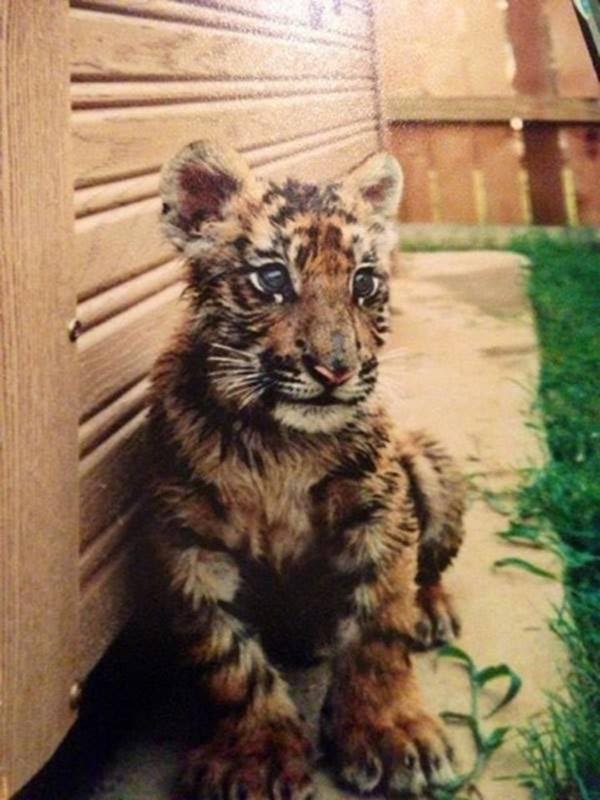
This is Leo the African Lion, Baloo the Black Bear, and Shere Khan the Bengal Tiger.
The threesome were rescued as babies from the basement of an Atlanta drug dealer’s home when it was raided by authorities.
They were starving, traumatized and had bacterial infections.
Since then, they were brought to Noah’s Ark Animal Sanctuary
… where they’ve lived in the same habitat together for 13 years.
The only time the three were separated was when Baloo was sent to surgery. [While at the drug dealer’s home, Baloo had been mistreated so profoundly that the harness that was put on him had grown into his skin.]
The two cats were distraught and cried for the bear’s return when he was at the vet’s. Since then no one has separated the group.
They clearly bonded during their earliest memories and never wanted to be apart.
Now they live together as if they were brothers of the same species.
They play together, nuzzle one another and are extremely affectionate.
The threesome are the only lion, tiger and bear living together in the world.
They’re just that exceptional.
Humans could really learn from the bond that these three have.
No one ever told them they couldn’t love one another, so they did just that.
And now, even all these years later, they continue to do so.
The trio are affectionately referred to as BLT, standing for bear, lion, and tiger. They might just be the most adorable sandwich ever!
That is the end of the e-mail I received. Their behavior reminds us that when the Lord returns, sets up His kingdom on earth and Isaiah is fulfilled:
“The wolf also shall dwell with the lamb, The leopard shall lie down with the young goat, The calf and the young lion and the fatling together; And a little child shall lead them. The cow and the bear shall graze; Their young ones shall lie down together; And the lion shall eat straw like the ox. The nursing child shall play by the cobra’s hole, And the weaned child shall put his hand in the viper’s den. They shall not hurt nor destroy in all My holy mountain, For the earth shall be full of the knowledge of the LORD As the waters cover the sea.” (Isaiah 11:6-9 NKJV)
Here are two videos found on the internet about them.
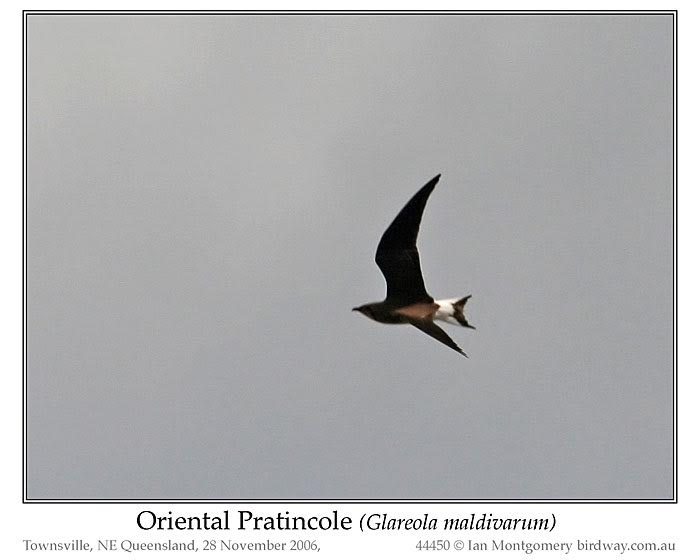
Ian’s Bird of the Week – Oriental Pratincole ~ by Ian Montgomery
Newsletter ~ 11/12/156
This post is a bit late, so you get two species by way of amends!
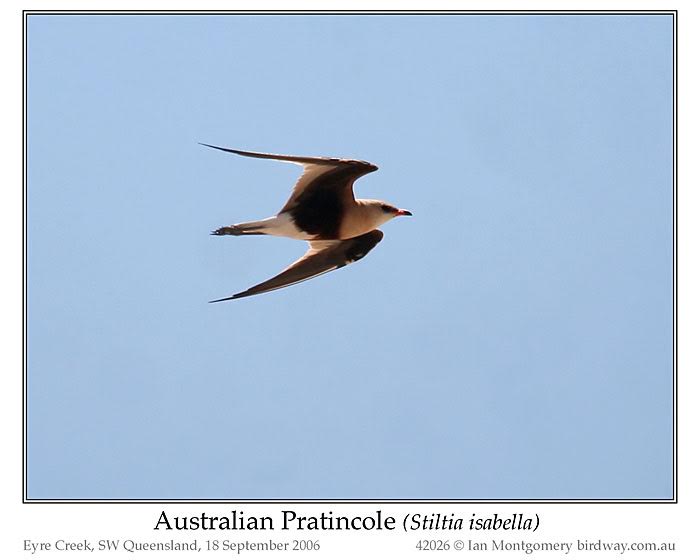
I was at the opening of an excellent exhibition of North Queensland ‘breeding birds and their dream homes’ called Nestled at the Museum of Tropical Queensland in Townsville on Tuesday and got talking to one of the local members of BirdLife Townsville about the bird of the week. He requested something unusual of local interest that might occur here at this time of the year and mentioned Oriental Cuckoo and Oriental Plover. Oriental Cuckoo was bird of the week in December 2007 and I don’t have any good photos of Oriental Plover. I’ve only ever seen it in airports (Lockhart River and Norfolk Island) and I’ve never risked the wrath of airport security to get close to the birds. So the best I could come up with, Bill, is Oriental Pratincole photographed at the Townsville Town Common where a flock appeared nine years ago. I can’t get more local than that!
Oriental Pratincoles breed in Asia with a patchy distribution from India to eastern Siberia, Mongolia and NE China. In the northern winter they migrate to Indonesia, Malaysia, New Guinea and northern Australia with perhaps 50,000 reaching our shores. They are late migrants arriving in the Top End of the Northern Territory during the build-up to the wet season (November) and their main Australian range is from the Gulf of Carpentaria in NW Queensland west to the north coast of Western Australia. They show a preference for dry inland plains with available water and feed mainly on insects such as grasshoppers. 2006 was, like this one, a very dry year in Townsville and these photos were taken on the dry bed of one of the wildlife observation ‘wetlands’ at the Common. They also turn up sometimes on the Atherton Tableland.
Pratincoles are unusual birds somewhere between plovers and terns in appearance and morphology. They belong to a small family, the Glareolidae, which consists of 8 species of pratincoles in Eurasia, Africa and Australia and 9 species of mainly African Coursers. The odd name pratincole means ‘inhabitant of meadows’ with the ‘prat’ bit having the same root as ‘pratensis’ in the European Meadow Pipit (Anthus pratensis). The family name comes from the Latin for gravel, and that’s actually closer to the mark when it comes to preferred habitat.
The Oriental Pratincole is distinguishable from the Australian Pratincole by its dumpier, shorter-tailed appearance, greyish-olive rather than buffish-brown plumage and by a black margin to the throat giving the appearance of a necklace. The Oriental Pratincole is normally in non-breeding plumage when in Australia, but both species have black-tipped bills with red bases when breeding. The Australian Pratincole has chestnut flanks and belly when breeding and the dark flanks are retained in non-breeding plumage.
Pratincoles look very tern-like in flight with their long pointed wings. Both the local species have white rumps and black-tipped tails, but the tail of the Australian Pratincole is square, while that of the Oriental is forked.
If you belonged to the bird of the week club a year ago, you may remember that the Cream-coloured Courser was, after the Crab Plover was my second most wanted bird in Dubai. Courser means ‘runner’, something they do very well and it was very appropriate to find them at the Polo Club and at the Al Asifa Endurance Stables. Incidentally, the bird of the week club currently has 981 members and you know I like milestones. Please encourage your friends to join so we can reach 1,000 either by signing up on the bird of the week page (recently redesigned for mobile devices) or by emailing me at ian@birdway.com.au.
Cream-colored Courser (Cursorius cursor) by Ian
Christmas is looming ever closer, so this wouldn’t be complete without the obligatory commercial. What do you give to the digitally-competent birder or nature-lover who has everything? An electronic book of course and both Apple and Kobo have facilities in their ebook stores for giving gifts. I’ve included a Giving Gifts section on the Publications page with help on how these stores let you give gifts. Google has facilities only for giving the equivalent of a gift token and not specific items. These book images are linked to their web pages:
Bread gained by deceit is sweet to a man, But afterward his mouth will be filled with gravel. (Proverbs 20:17 NKJV)
Thanks, Ian, for another interesting bird to introduce us to. Also glad you help distinguish several apart. Most of us that have never seen these birds could mix them up. Thanks for sharing these neat birds with us.
Now that Ian is a published writer, his book might well be a prized gift for yourself or others.
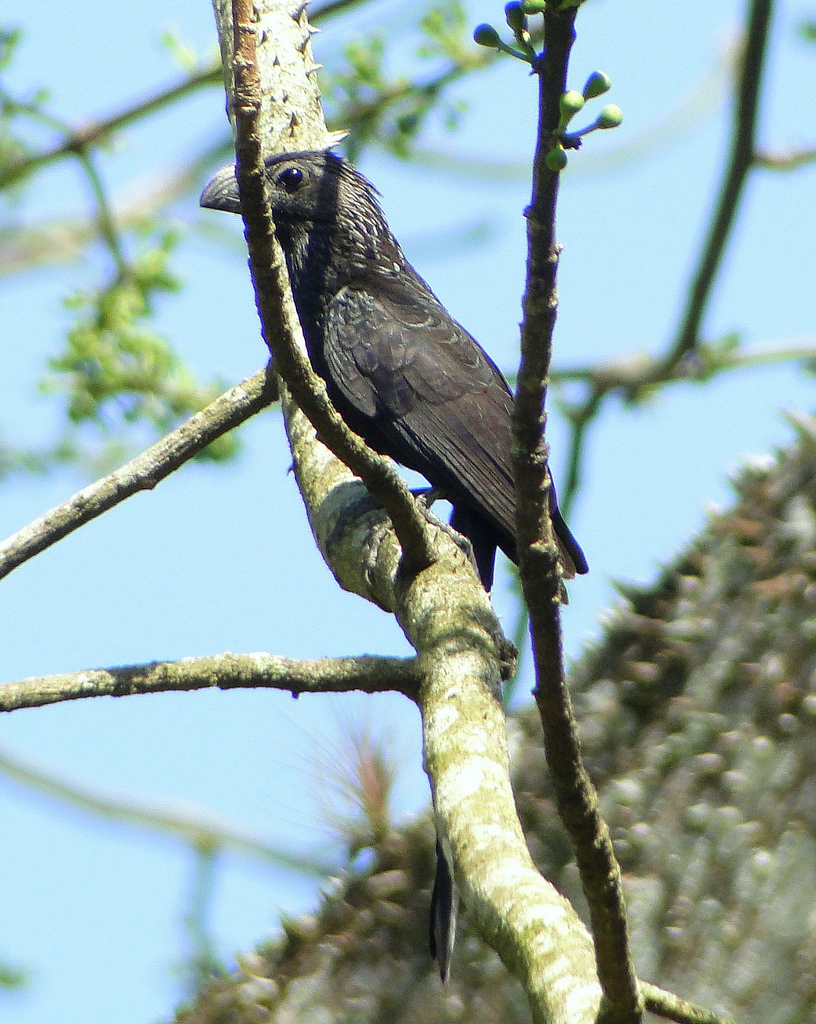
Groove-billed Ani (Crotophaga sulcirostris) by Michael Woodruff
“every raven after its kind, and the owl, and the night-hawk, and the cuckoo, and the hawk after its kind,” (Leviticus 11:15-16 YLT)
While browsing through some of the latest photos from photographers I follow on Flickr, I came across these photos by Michael Woodruff of the Groove-billed Ani. Then I found more by two others I follow; barloventomagico and Ross Tsai.
So what is a Groove-billed Ani anyway? The groove-billed ani (Crotophaga sulcirostris) is an odd-looking tropical bird in the Cuculidae – Cuckoos family with a long tail and a large, curved beak. It is a resident species throughout most of its range, from southern Texas, central Mexico and The Bahamas, through Central America, to northern Colombia and Venezuela, and coastal Ecuador and Peru. It only retreats from the northern limits of its range in Texas and northern Mexico during winter. Dan and I was able to see these birds in South Texas in 2001.
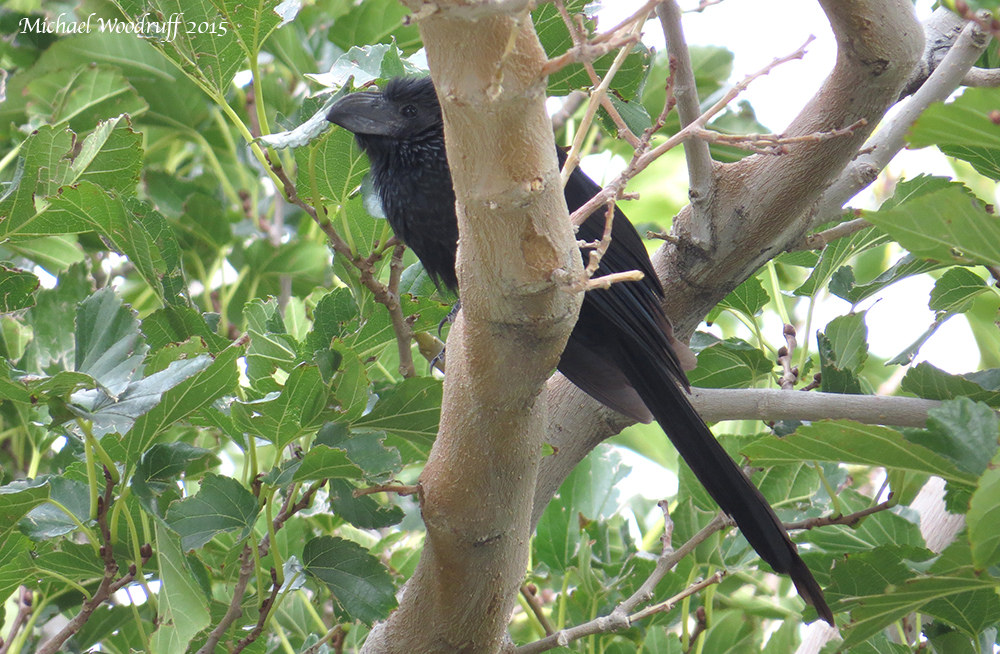
Groove-billed Ani (Crotophaga sulcirostris) by Michael Woodruff
The groove-billed ani is about 34 cm (13 in) long, and weighs 70–90 g (2.5–3.2 oz). It is completely black, with a very long tail almost as long as its body. It has a huge bill with horizontal grooves along the length of the upper mandible. It is very similar to the smooth-billed ani, some of which have bills as small as the groove-billed and with grooves on the basal half. The two species are best distinguished by voice and range. In flight, the ani alternates between quick, choppy flaps and short glides.
Groove-billed Ani (Crotophaga sulcirostris) by Michael Woodruff
Like other anis, the groove-billed is found in open and partly open country, such as pastures, savanna, and orchards. It feeds largely on a mixed diet of insects, seeds, and fruits.
The groove-billed ani lives in small groups of one to five breeding pairs. They defend a single territory and lay their eggs in one communal nest. All group members incubate the eggs and care for the young. (Wikipedia)
It’s a different kind of beak, but the Lord made the Ani like this so that he could eat the available food in its terrain. Bills are not an evolutionary after-thought, but the design of a Creator, that loves His critters and provides for them.
GBNA – Guide to Birds of North America eField Guide: Groove-billed Ani
Black overall with iridescent purple and green sheen
Long tail, very wide at end
Bulky bill with grooves (visible only at close range)
Bill does not extend above crown
Entirely black plumage
Sexes similar
Often found in small groups
Inhabits grassy, scrubby areas
Groove-billed Ani (Crotophaga sulcirostris) by Michael Woodruff
“and the owl, and the night-hawk, and the cuckoo, and the hawk after its kind;” (Deuteronomy 14:15 YLT)
The YLT and two other versions of the Bible, list the “Cuckoo” in the list of birds not to be eaten by the Israelites. Other versions use the word, “Cuckow.” Therefore this family of birds have been listed as Birds of the Bible.
As we continue through our Passerines, we come to seven families that have very few members in them. Just because their numbers are few, their Creator has not failed to give each a niche to fill and the ability and design to do so. They are all small birds, like the song, “His Eye Is On The Sparrow,” these bird are no less ignored by the Lord.
I am weary with my crying; My throat is dry; My eyes fail while I wait for my God. (Psalms 69:3 NKJV)
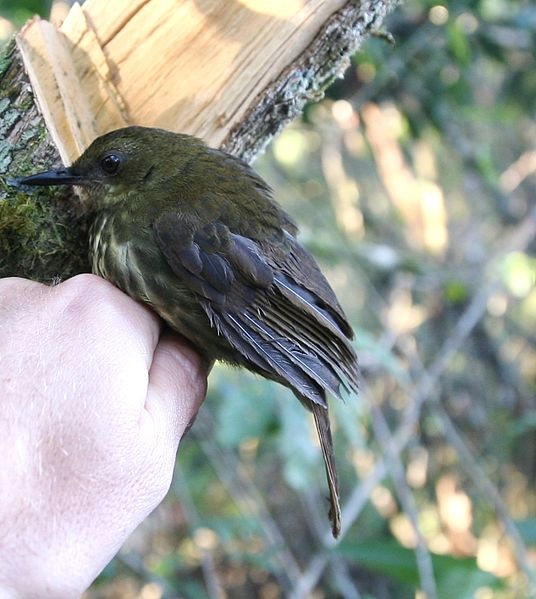
The Dapple-throat and allies – Modulatricidae family only has three species; Spot-throat, Dapple-throat and the Grey-chested Babbler. Internet says they are from Africa and that its natural habitat is subtropical or tropical moist montane forests. That is about the only information given.
More to be desired are they than gold, Yea, than much fine gold; Sweeter also than honey and the honeycomb. (Psalms 19:10 NKJV)
The Sugarbirds make up a small family, Promeropidae, of passerine birds which are restricted to southern Africa. The two species of sugarbird make up one of only two bird families restricted entirely to southern Africa, the other being the rock-jumpers Chaetopidae. In general appearance as well as habits they resemble large long-tailed sunbirds, but are possibly more closely related to the Australian honeyeaters. They have brownish plumage, the long downcurved bill typical of passerine nectar feeders, and long tail feathers.
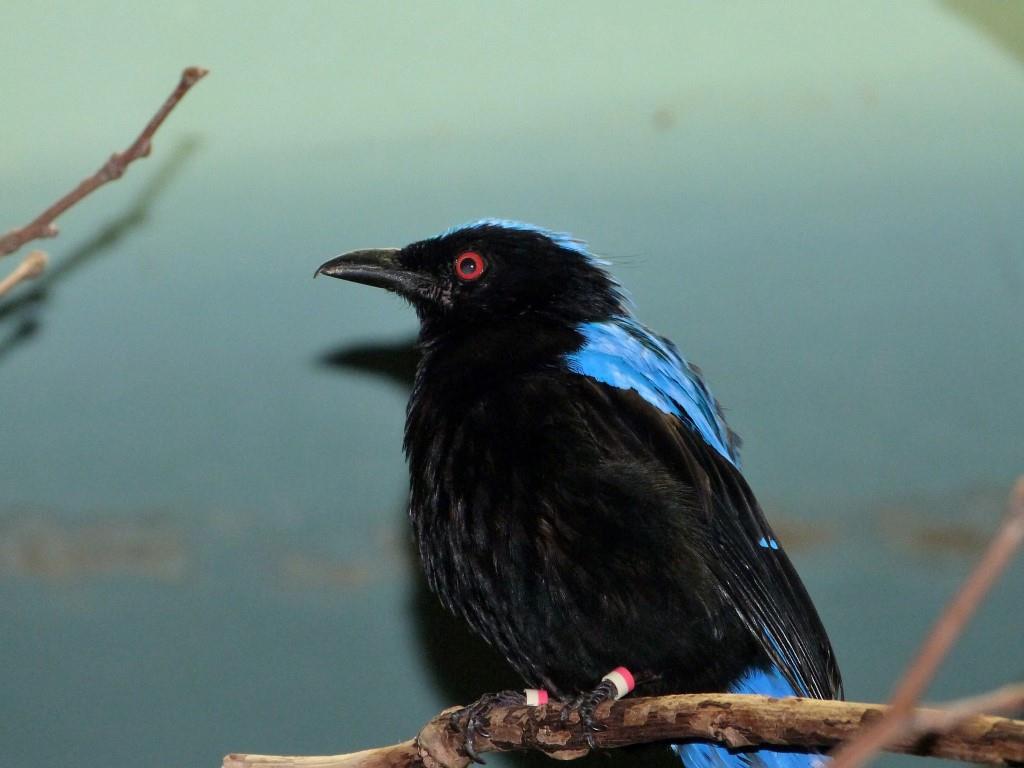
Asian Fairy-bluebird (Irena puella) at Cincinnati Zoo by Lee
“You shall make the robe of the ephod all of blue.” (Exodus 28:31 NKJV)
The two Fairy-bluebirds are small passerine bird species found in forests and plantations in tropical southern Asia and the Philippines. They are the sole members of the genus Irena and family Irenidae, and are related to the ioras and leafbirds.
These are bulbul-like birds of open forest or thorn scrub, but whereas that group tends to be drab in colouration, fairy-bluebirds are sexually dimorphic, with the males being dark blue in plumage, and the females duller green.
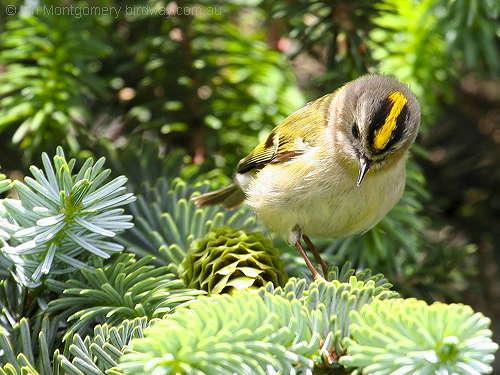
Goldcrest (Regulus regulus) by Ian
And thou shalt overlay it with pure gold, and make thereto a crown of gold round about. (Exodus 25:24 KJV)
Regulidae – Goldcrests, kingletsfamily has only six members. The kinglets or crests are a small group of birds sometimes included in the Old World warblers, but are frequently given family status because they also resemble the titmice. The scientific name Regulidae is derived from the Latin word regulus for “petty king” or prince, and comes from the coloured crowns of adult birds. This family has representatives in North America and Eurasia.
The Spotted Elachura (Elachura formosa (Elachuridae) is the only bird in its family they discovered recently through DNA studies. It is found in Bangladesh, Bhutan, China, India, Laos, Myanmar, Nepal, and Vietnam. Its natural habitat is subtropical or tropical moist montane forests. This species is found in undergrowth and dense thickets of this type of forest, with a preference for thick fern ground cover, mossy rocks and decaying trunks of fallen trees and brushwood (often near stream or creek) long grass and scrub.
Hyliotidae – Hyliota found in Angola, Cameroon, Democratic Republic of the Congo, Kenya, Malawi, Mozambique, South Africa, Tanzania, Uganda, Zambia, and Zimbabwe. Its natural habitats are subtropical or tropical moist lowland forests, subtropical or tropical moist montane forests, and plantations. It is threatened by habitat loss.
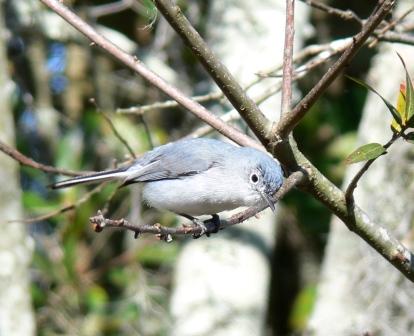
Blue-Gray Gnatcatcher at Circle B Reserve by Lee
Lift up your eyes to the heavens, and look upon the earth beneath; for the heavens shall be dissolved and vanish away like smoke, and the earth shall wax old like a garment, and they that dwell therein shall die in like manner [like gnats]. But My salvation shall be forever, and My rightness and justice [and faithfully fulfilled promise] shall not be abolished. [Matt. 24:35; Heb. 1:11; II Pet. 3:10.] (Isaiah 51:6 AMP)
(Wrens skipped until next week ) Our last group of very small birds are from the Polioptilidae – Gnatcatchers. The 18 species of small passerine birds in the gnatcatcher family occur in North and South America (except far south and high Andean regions). Most species of this mainly tropical and subtropical group are resident, but the Blue-gray Gnatcatcher of the USA and southern Canada migrates south in winter. They are close relatives of the wrens. (Wikipedia)
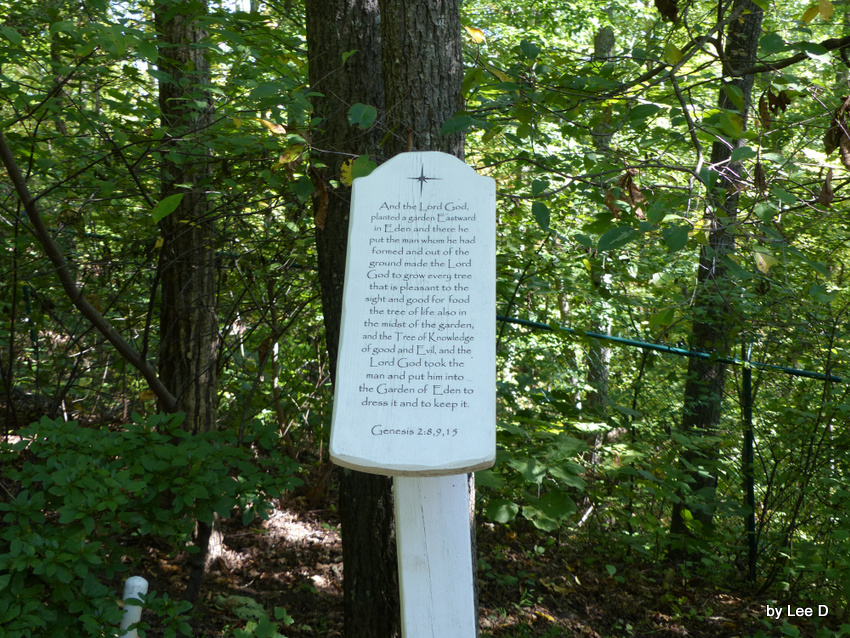
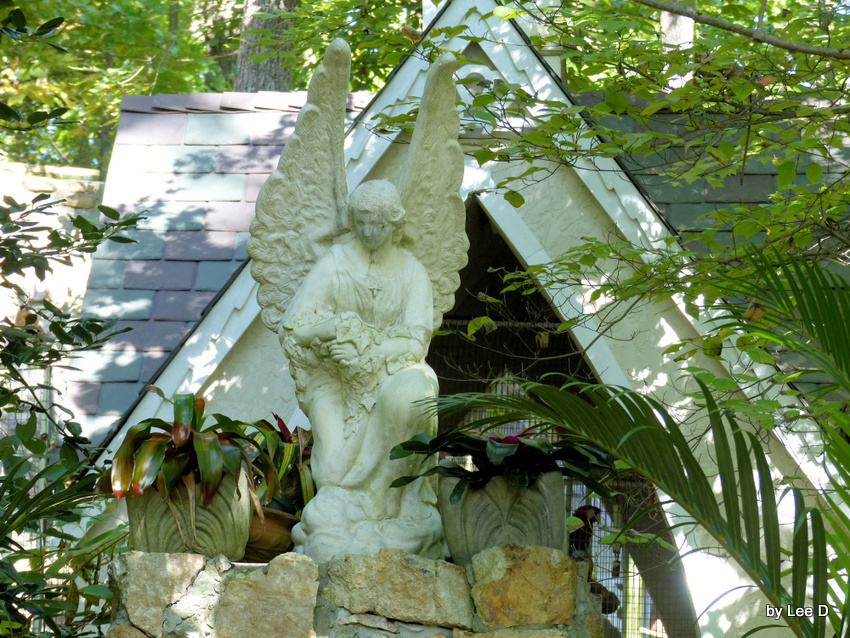
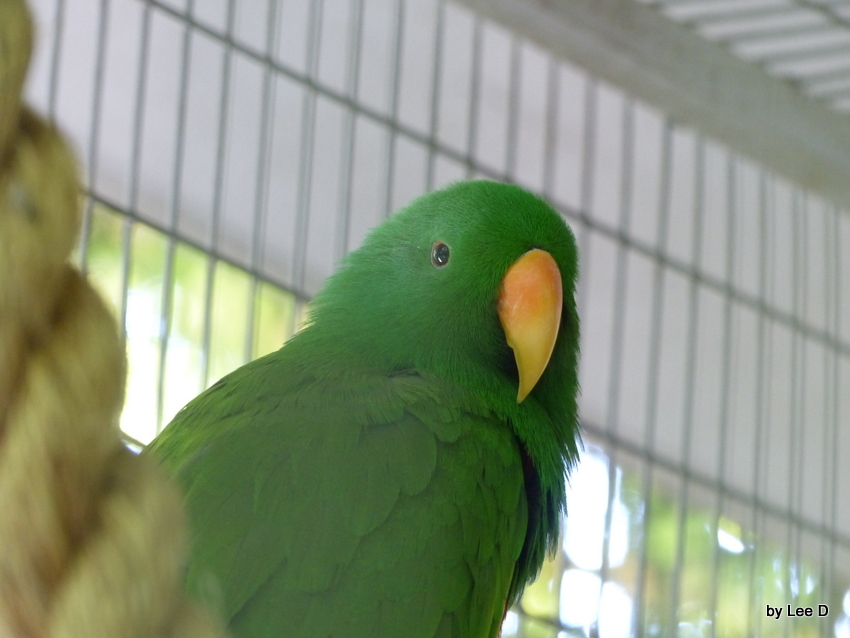
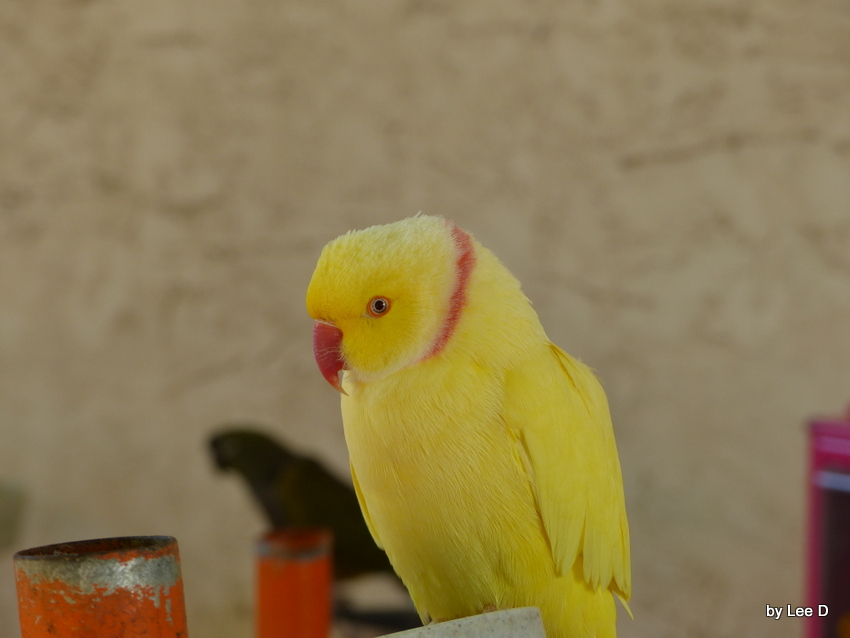
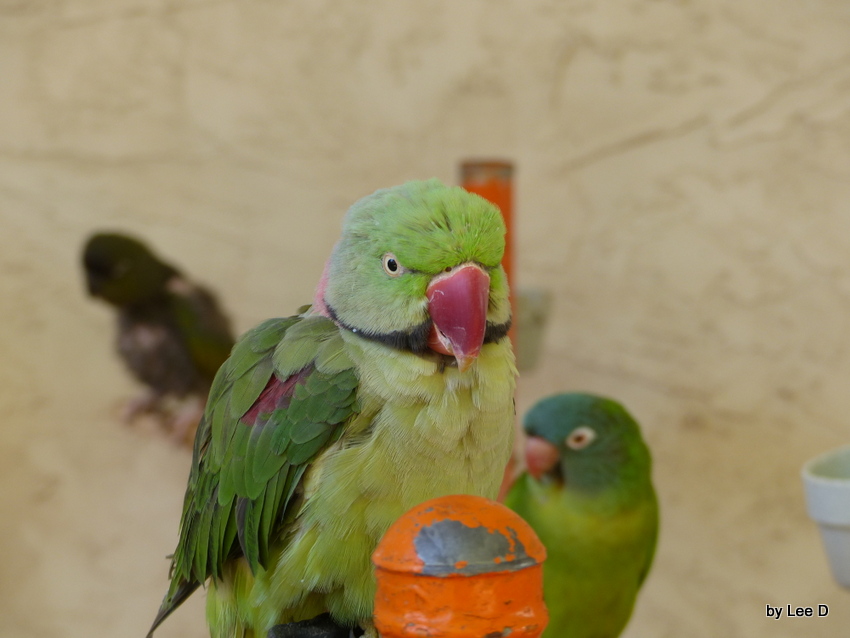
Parrot Mountain is a result of a vision the owner had in July 1995. He left Mississippi with his family and came to the mountains of Tennessee and was led to the land that is called Parrot Mountain and Garden of Eden.
The vision was to build a garden landscaped with flowers, plants, birds and most importantly with scriptures from the word. The scriptures are planted throughout like seeds through the gardens to be a testimonial that there is a Great God who reigns eternal in the heavens and that all things are made were made by Him and without Him was not anything made that was made that is to say in the beginning God created all things. As you stroll through the gardens not the beautiful color of the birds and flowers how their colors give Him glory and we believe that we, as His creation, should give him glory.
And so seven years after moving to the mountains the gardens were opened on August 28, 2002.
Landscape at Parrot Mountain
Our Mission here at Parrot Mountain and Garden of Eden.
Is to be a witness and declare His name that The Lord God is the Creator of the heavens and the earth. That all things were made by Him and without Him was not anything made that was made. For the perfecting of the saints, for the work of the ministry, for the edifying of the body of Christ.
To provide a shelter for abused or neglected birds and a home for birds that need a place for whatever reason.
For the propagation of endangered or threaten species. To increase the numbers so that they do not become extinct like the Passenger Pigeon and Carolina Parakeet once native to the United States. To educate the public about these magnificent creatures and keeping in harmony with the beauty and serenity of the mountains.
We were thoroughly blessed and enjoyed our time we spent at Parrot Mountain. I have already shared a couple of post with you about our visit. The Origin and Mission above was copied from a handout given when you enter. I trust they do not mind me recopying it here. Pictures were added by me. If you ever are up in the Pigeon Forge, Tennessee area, it will be well worth your effort to visit them.
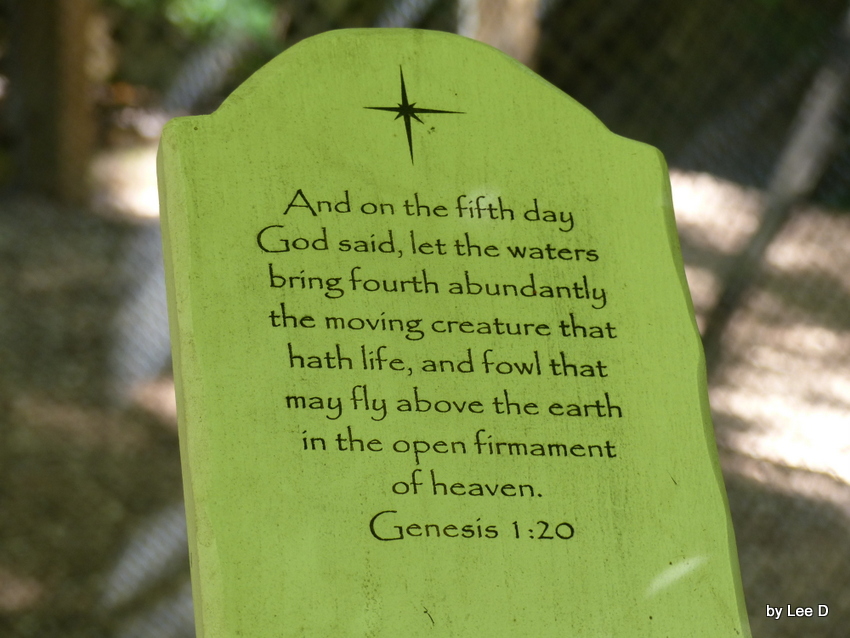
And on the fifth day God said, let the waters bring fourth abundantly the moving creature that hath life, and fowl that may fly above the earth in open firmament of heaven. Gen 1:20
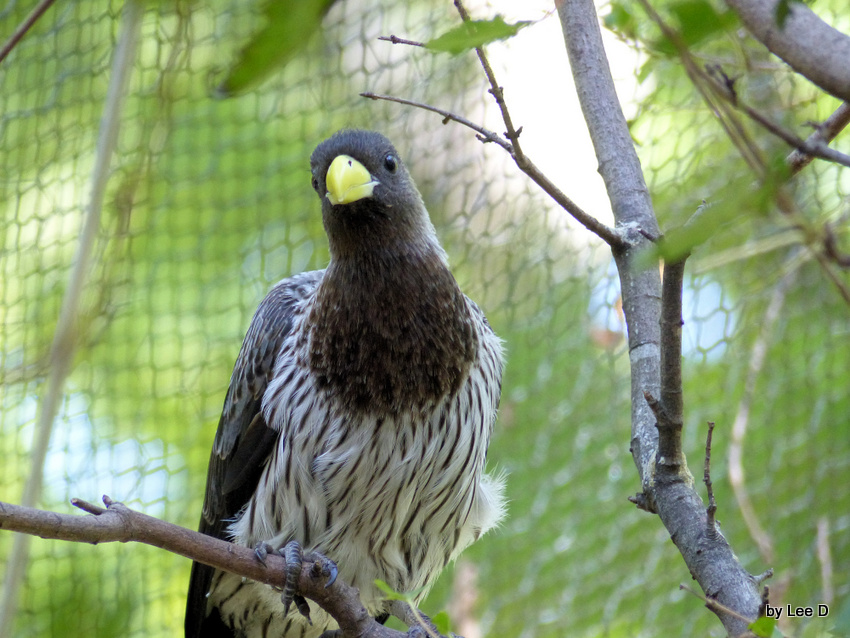
Western Plantain-eater (Crinifer piscator) at Parrot Mountain
Missing the tip of its beak
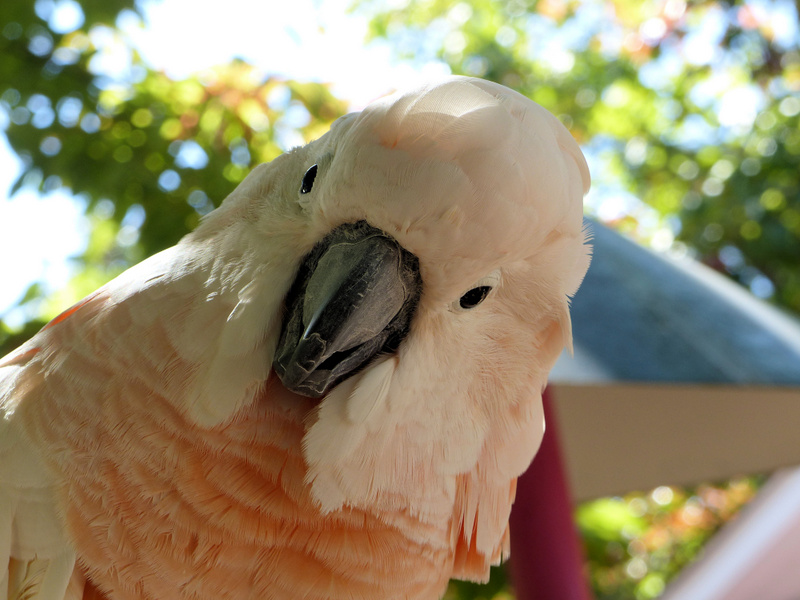
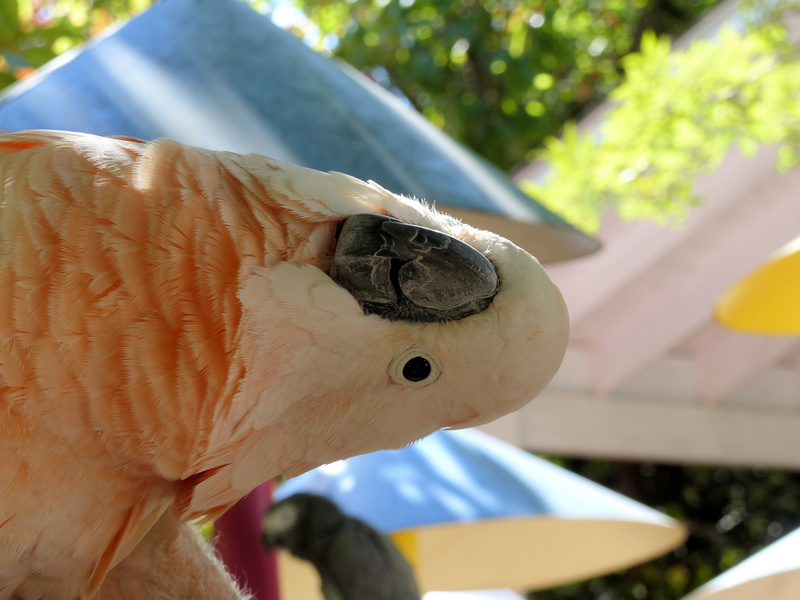
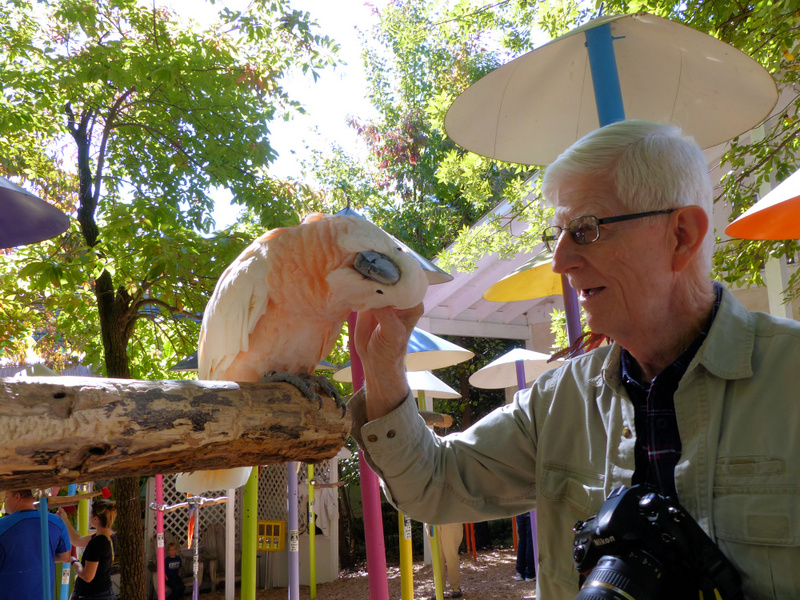
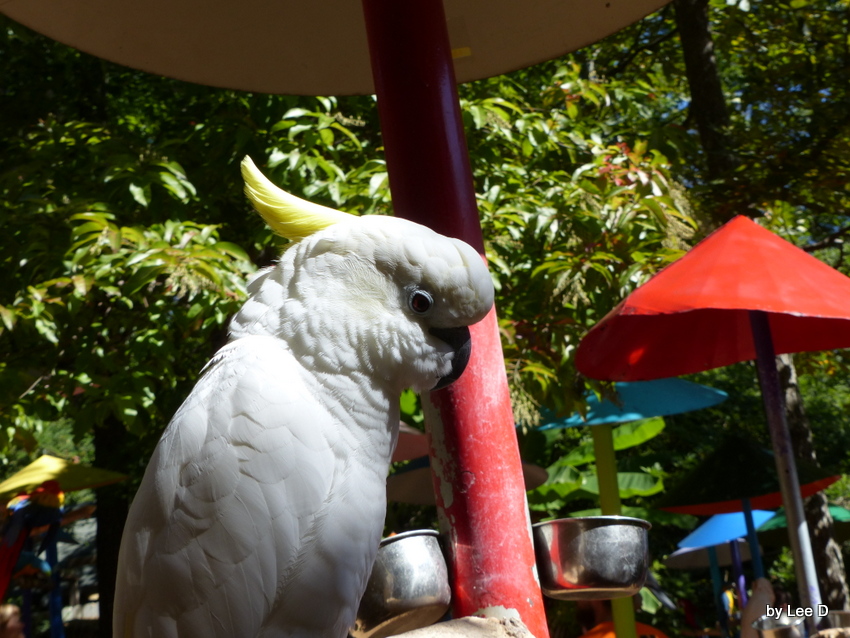
Salmon-crested Cockatoo (Cacatua moluccensis) at Parrot Mtn by Lee
Salmon-crested Cockatoo (Cacatua moluccensis) at Parrot Mtn by Lee
Salmon-crested Cockatoo (Cacatua moluccensis) at Parrot Mtn by Lee
Salmon-crested Cockatoo (Cacatua moluccensis) at Parrot Mtn by Lee
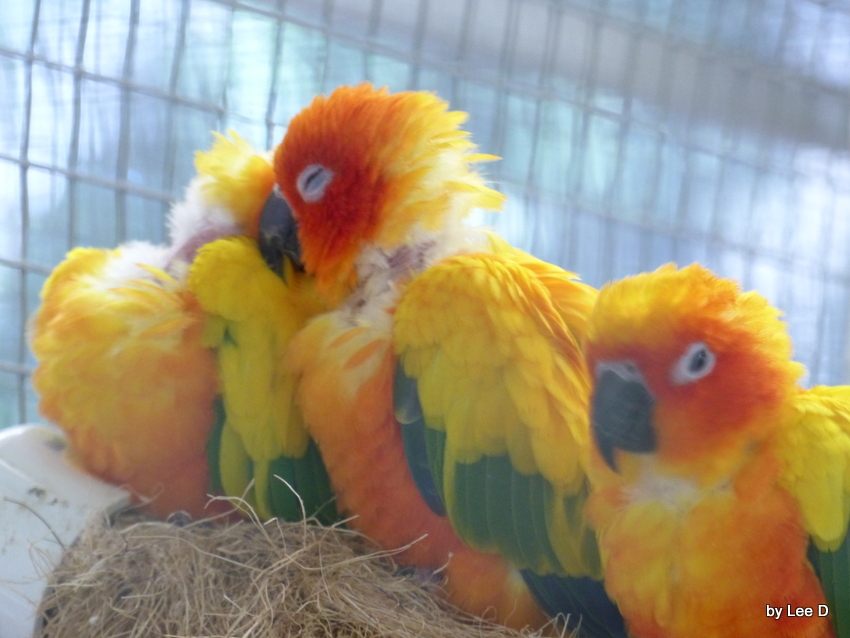
Sun Parakeet (Aratinga solstitialis) at Parrot Mtn by Lee
Cockatoo
(African) Grey Parrot (Psittacus erithacus lenne) at Parrot Mountain by Lee
“Deceit is in the heart of them that imagine evil: but to the counsellors of peace is joy.” (Proverbs 12:20)
A few years ago, a news release revealed the result of a poll on what Americans prefer to have taught in public schools about origins. The poll was done for an organization that favors a dogmatic teaching of evolution. The news release stated only that a huge majority of Americans, 83 percent, favor the teaching of evolution in the public schools. We at Creation Moments were led to investigate this poll more closely since this poll result runs contrary to other recent polls.
The professional polling organization polled 1,500 people about whether creation or evolution should be taught in the public schools. Indeed, 83 percent said they believe that the theory of evolution should be taught in the public schools. However, what was not included in the popular reporting of the poll was that 79 percent of those polled said that creation should also be taught in the schools. Only 20 percent of those polled felt that evolution only should be taught. Clearly, Americans prefer both creation and evolution presented to the students so that they can make up their own minds. Equally notable is that almost half of those polled agreed with the statement that evolution is “far from being proven to be scientific.”
While the statement that 83 percent of those polled favor evolution being taught is true, it leaves out the most important part of the poll’s findings. Clearly, ordinary people want to hear about God’s creation.
Prayer:
Dear Father, help us never to be deceived by the forces of darkness. Amen.
Simon Peter saith unto them, I go a fishing. They say unto him, We also go with thee. They went forth, and entered into a ship immediately; and that night they caught nothing. (John 21:3 KJV)
Hang on to your fish, here comes a whole new bunch of Kingfishers. With the I.O.C. Version 5.4 that came out a week or so ago, 21 new Kingfishers were added to the Alcedinidae – Kingfishers Family. Plus they renamed a few. No, they didn’t appear out of thin air, they split and raised some of the subspecies up into their own species. Kingfishers have been one of my favorite birds from our Creator.
These are from the Collard Kingfisher (Todiramphus chloris):
Torresian Kingfisher (Todiramphus sordidus)
Islet Kingfisher (Todiramphus colonus)
Mariana Kingfisher (Todiramphus albicilla)
Melanesian Kingfisher (Todiramphus tristrami)
Pacific Kingfisher (Todiramphus sacer)
Micronesian Kingfisher (Todiramphus cinnamominus) Houston Zoo 5-6-15 by Lee
The Micronesian Kingfisher (Todiramphus cinnamominus) is now the Guam Kingfisher
The Silvery Kingfisher (Ceyx argentatus) is now the Southern Silvery Kingfisher and they added:
Northern Silvery Kingfisher (Ceyx flumenicola)
Needless to say, it will take a while to obtain photos for all these new kingfishers, so stay tuned.
There are more changes in the Version 5.4, but more about that later. They list 10,612 extant species and 154 extinct species of birds of the world (Version 5.4), with subspecies (20,757).
Now as he walked by the sea of Galilee, he saw Simon and Andrew his brother casting a net into the sea: for they were fishers. And Jesus said unto them, Come ye after me, and I will make you to become fishers of men. (Mark 1:16-17 KJV)
“But when thou art bidden, go and sit down in the lowest room; that when he that bade thee cometh, he may say unto thee, Friend, go up higher: then shalt thou have respect in the presence of them that sit at meat with thee.” (Luke 14:10)
Orni-Theology
Is it really advantageous to be frequently noticed? Is having a “low profile” a prudent practice? Surely when someone gets a reputation, for being a “show-off”, the spotlight becomes a disadvantage.
When I was a teenager I was called “skinny as a rail”. Once I arrived at age 20, however, for some reason I stopped hearing that description. Of course, I blame my weight gain on getting married to a wonderful cook (who, for 3-dozen-plus years, has made eating an ongoing adventure!)! Actually, I am not too far from being double the weight that I had, 121 pounds, when I got married!
Hmmm – maybe exercise has something to do with it, too. It’s been a long time since someone said (of me), “he’s so skinny, if he turned sideways we couldn’t see him!” It is the literal truth that my wife has been with me “through thick and thin”.
So now we should consider something that Robert and Alice Lippson, both ecologists, have to say about being “skinny as a rail”.
“’As thin as a rail’—is it the narrow steel ribbon of a railroad track or the slim boards that make up a fence? Just where did that old saw come from, anyway? It pertains to certain members of the Rallidae family, the rails, which also includes coots and gallinules. The rails have thin, compressed bodies that allow them to thread their way through seemingly impenetrable thickets and literally to disappear into the marsh. … Rails are usually brown and patterned or mottled with white [feathers], while coots are slate or soot colored. Rails are found in the [Chesapeake] Bay wetlands year-round.”
[Quoting Alice Jane Lippson & Robert L. Lippson, LIFE IN THE CHESAPEAKE BAY: An Illustrated Guide to the Fishes, Invertebrates, Plants, Birds, and Other Inhabitants of the Bays and Inlets from Cape Cod to Cape Hatteras, 3rd Edition (Baltimore: The Johns Hopkins University Press, 2006), page 232.]
Perhaps the most prominent rail in the Chesapeake Bay region is the Marsh Hen, also called the “Clapper Rail” (Rallus crepitans, a/k/a Rallus longirostris), known for its harsh-sounding clattering vocalizations [klek-klek-klek-klek-klek] that almost sounds like rattling or rapid clapping.
The Clapper Rail is routinely found in salt marshes and some freshwater marshes on America’s East Coast, from Massachusetts to Florida, plus in wetlands bordering California’s inland Salton Sea, and even along the banks of the lower parts of the Colorado River. [See John Bull & John Farrand, Jr., NATIONAL AUDUBON SOCIETY FIELD GUIDE TO NORTH AMERICAN BIRDS, EASTERN REGION, revised edition (New York: Alfred A. Knopf, 1994), page 455.]
Have I ever seen one? Probably not. But that’s not unusual, according to Lippson & Lippson, who say that hearing one is more likely than seeing one, especially due to their habit of being more active at night. [Lippson & Lippson, page 232.] But, if you do see a Clapper Rail, it might not realize you are watching!
“Clapper rails are secretive birds and are usually not seen unless forced off the reed floor by high tides. Then they are frequently seen along the edge of the marsh and even along nearby roads. Even though they are in the open and quite visible, clapper rails apparently think they are still in the marsh, unseen and safe. Like the least bittern, they are reluctant fliers and when flushed will make brief [airborne] sorties, legs dangling, then drop and disappear into the marsh vegetation. Curiously enough, rails are capable of making long migratory flights. The best way to ‘see’ a rail is with your ears: listen for the clattering “kek-kek-kek”, especially in the early evening and at dawn. The clapper rail is widely distributed throughout the [Chesapeake] Bay.” [Quoting Lippson & Lippson, page 232.]
So much for keeping a low profile, especially when perils are near! If you can be inconspicuous, it’s usually to your advantage, — but, if not, it’s good to have a Plan B (like the Clapper Rail’s getaway response) if you need one.
Meanwhile, don’t forget the lesson of Luke 14:10. Routinely assume that you should take a “low profile”. If you are directed “up” (i.e., promoted to a “higher” responsibility), so be it, — trusting God to guide you, use the “high profile” opportunity to honor God. Yet don’t forget: the Clapper Rail strategy has its merits – if you are inconspicuous you are less likely to become somebody’s target!
Say not ye, There are yet four months, and then cometh harvest? behold, I say unto you, Lift up your eyes, and look on the fields; for they are white already to harvest. (John 4:35 KJV)
The Zosteropidae – White-eyes Family is passerine birds that live in the tropical and subtropical Sub-Saharan Africa, Australasia and eastern Asia. White-eyes inhabit most tropical islands in the Indian Ocean, the western Pacific Ocean, and the Gulf of Guinea. There are currently 127 members in the family. Most are White-eyes, a Silvereye, a Blackeye, a Darkeye, 4 Speirops, 11 Yuhinas, and about a dozen Babblers.
Silvereye (Zosterops lateralis) by Ian
As their common name implies, many species have a conspicuous ring of tiny white feathers around their eyes. The scientific name of the group also reflects this latter feature, being derived from the Ancient Greek for “girdle-eye”. They have rounded wings and strong legs. Like many other nectivorous birds, they have slender, pointed bills, and brush-tipped tongues. The size ranges up to 15 cm (6 inches) in length. (Wikipedia)
Ian’s Bird of the Week – Tomtit ~ by Ian Montgomery
Newsletter – 10/30/15
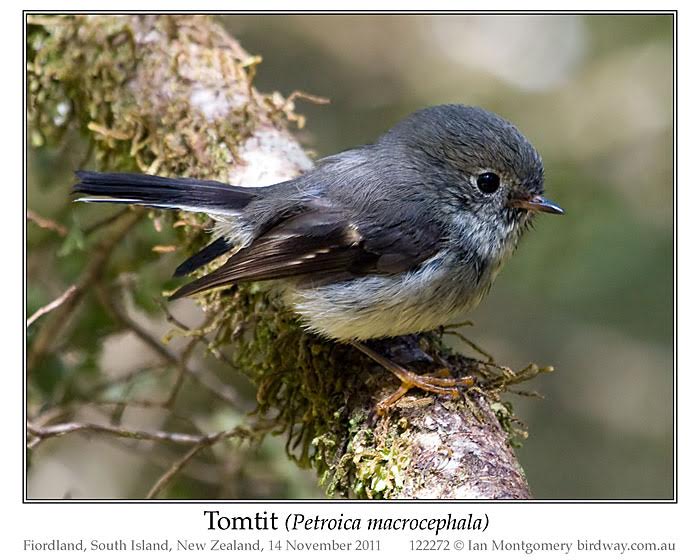
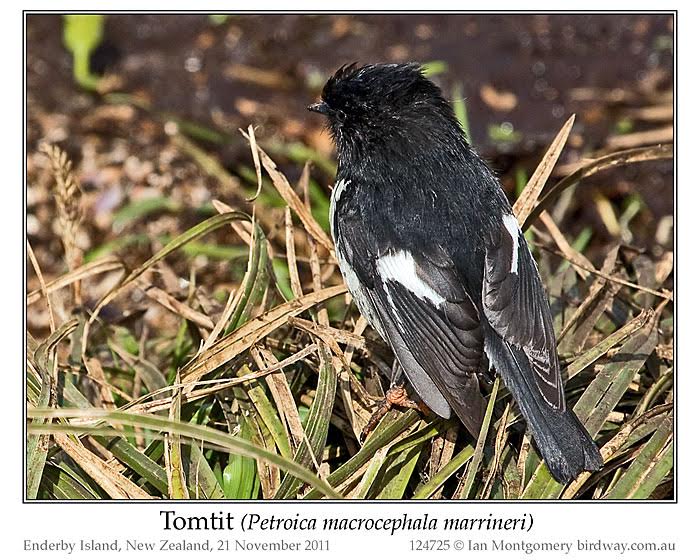
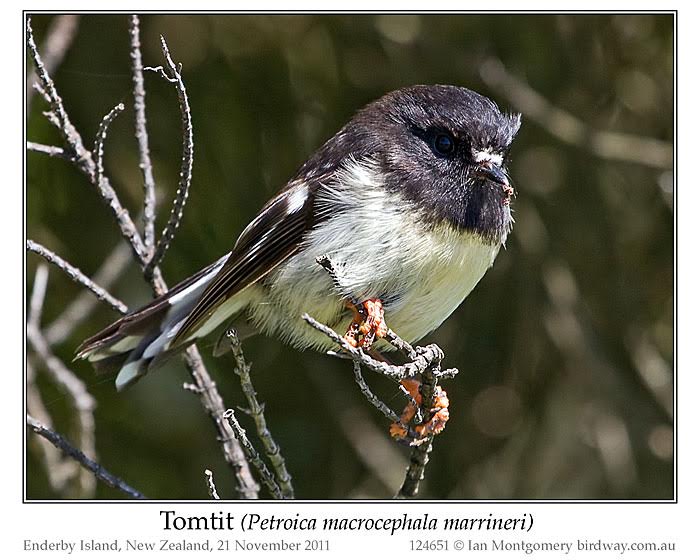
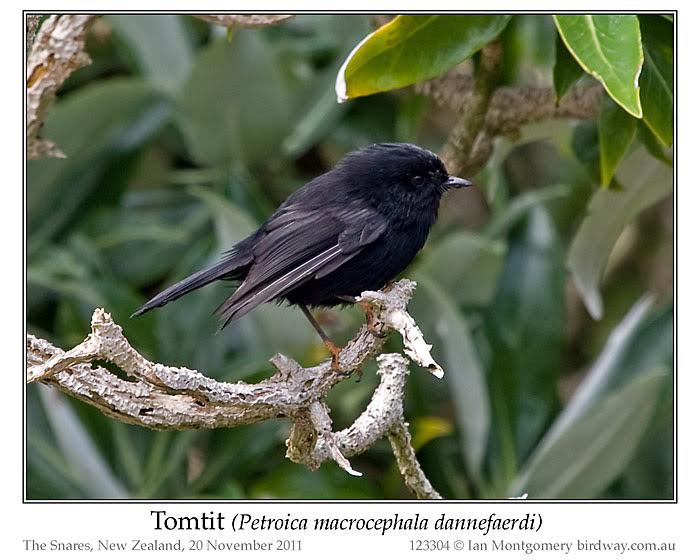
Last week we had the Snares Penguin and I made a passing reference to the locally endemic race of the Tomtit, so here is it and two of the other four New Zealand races of the Tomtit as this week’s choice. It’s called a Tit after the European Tits family Paridae which includes the North American Chicadees) but it’s not one of these but an Australasian Robin (Petroicidae), which in turn were named after the European Robin but don’t belong to its family either (Muscicapidae). The Tomtit’s closest relative is the Pacific Robin (Petroica multicolor) which in turn is very close related the Scarlet Robin of Australia.
A friend of mine who is a member of the bird of the week club but not a birdwatcher as such expressed confusion over subspecies (or races) and species, so I Googled a couple of references which might be useful: 1. a simple explanation; 2. Wikipedia and 3. a more scholarly one. I talk about them a lot as I’m interested in the classification of birds (taxonomy) and their evolution and biogeography (how they got to where they are) so here is a brief description.
A (biological) species is the fundamental unit (‘taxon’) of the classification of organisms, both plants and animals. It’s fundamental in the sense that it is considered reproductively isolated (genetic differences are supposed to be such that interbreeding across species boundaries isn’t possible or at least doesn’t produce fertile offspring). From a bird-watching point of view, a species is what you add to lists, whether your life list, your national list, your annual list, your yard list, or your annual bird list… The possibilities are endless but in the competitive world of ‘twitching’, a species is as important as a referees decision about a goal or score in football or tennis.
Nothing in biology is ever quite so simple, so the differences between various taxonomic levels (species, genus, family, order … going up and species, subspecies going down) are really part of a continuum. At the lower levels – genus, species and sub-species – the degree of genetic separation and therefore reproductive isolation varies a lot. Some groups are particularly troublesome as apparently quite different ‘species’ have a taxonomically irritating tendency to hybridise. Among birds, the diving ducks of the genus Aythya come to mind and among plants the orchids are notorious for spreading their genes around. Subspecies or races (using the terms interchangeably) are usually geographically isolated so they don’t get the chance to interbreed and are usually sufficiently different to be identifiable in the field. That means if you’re a birdwatcher, you can make lists of them too…
The eighteen century Swedish scientist and physician Carl Linnaeus is regarded as the father of modern taxonomy as he invented the binomial – double-name – system that is still in use today. This was a century before Darwin, so Linnaeus was concerned, lucky man, with only degree of similarity. He classified types of organisms as belonging to a genus (‘family’ in Latin) represented by the first name, e.g. Anas (Latin for ‘duck’) and a species, e.g. platyrhychos (Greek for ‘broad-billed’) to name the Mallard and distinguish it from say the similar Gadwall, Anas strepera, where ‘strepera’ is derived from the Latin for ‘noisy’. There is no linguistic rule to prevent mixing of languages but adjectival species names usually agree in gender with the genus, something of a challenge when one name comes from Greek and the other from Latin.
Needless to say, taxonomists have added many levels since, but orders, families, genera and species are the most important. To accommodate races or subspecies a third name was added the binomial system making it trinomial. The first race of a species to be named is called the nominate race, and the name of the race, if any, must be the same as the name of the species. So the nominate race of the Tomtit Petroica macrocephala is Petroica macrocephala macrocephala(Petroica is Greek for ‘rock-dwelling’ and macrocephala is Greek for ‘big-headed’). Any additional subspecies described later will be called Petroica macrocephala somethingelse.
Sorry, that was supposed to be a brief description so let’s get back to Tomtits. The first two photos show the nominate race which occurs on the South Island of New Zealand. The male is black and white with a yellow breast; the female is grey-brown with a white belly. This pair was in an Antarctic Beech forest – quite Lord of the Rings – near Cascade Creek in Fiordland and both birds were busy feeding nestlings. The male has a juicy green caterpillar and a large mosquito in his bill.
The third and fourth photos are male and female examples of the Auckland Islands race marrineri on Enderby Island one of the Auckland Islands group. Both males are females are mainly black and white, the male being glossier with only a trace of yellow on the breast. The race is named after New Zealand biologist George Marriner who took part in the 1907 Sub-Antarctic Islands Scientific Expedition.
The Snares race dannefaerdi is the most distinctive, photos 5 and 6, with both sexes being completely black, the male again being glossier than the female. It is named after Sigvard Dannefaerd who was a Danish collector and photographer based in New Zealand and the original specimen was from his collection but ended up with the second Baron Rothschild who described it.
The little birds (sparrows) have places for themselves, where they may put their young, even your altars, O Lord of armies, my King and my God. (Psalms 84:3 BBE)
What cute little birds. I am glad the Lord saw fit to create birds in so many different sizes. Looks like Ian has been busy working on his website. I am sure he would appreciate you looking around again for his improvements.























































 Lee's Birdwatching Adventures Plus