Photos from Honeymoon Island State Park

The same day went Jesus out of the house, and sat by the sea side. And great multitudes were gathered together unto him, so that he went into a ship, and sat; and the whole multitude stood on the shore. And he spake many things unto them in parables, saying, Behold, a sower went forth to sow; (Matthew 13:1-3 KJV)

We recently took a short visit to Honeymoon Island State Park in Dunedin, Florida. (See – Another Birdwatching TripGrey Kingbird at Honeymoon Island SP)

These are some of the photos taken that day. It was hot, summer and not many birds available to watch unfortunately. It was enjoyable just the same and we plan on going back again when the fall birds start migrating through or stopping for the winter.


*

This slideshow requires JavaScript.

*

And flocks shall lie down in the midst of her, all the beasts of the nations: both the cormorant and the bittern shall lodge in the upper lintels of it; their voice shall sing in the windows; desolation shall be in the thresholds: for he shall uncover the cedar work. (Zephaniah 2:14 KJV)

*

Picture Story – Coppersmith Barbet (Observations) – Re-post

Coppersmith Barbet (Megalaima haemacephala) ©One Happy Birder

Coppersmith Barbet (Megalaima haemacephala) ©One Happy Birder

According to studies, January to June is usually the breeding season of Coppersmith Barbets found in the Indian Subcontinent. I had seen a courtship display of this species last year where the female waited patiently for the male, the male kept returning to the female with food in its beak, the male used to puff himself up, start flapping its wings and then feed the female displaying his affection to her, and then the eventually they would mate.

Recently, I observed two Coppersmith Barbets indulge in an activity which looked…. Picture Story- Coppersmith Barbet (Observations).


Lee’s Addition:

Let your speech be alway with grace, seasoned with salt, that ye may know how ye ought to answer every man. (Colossians 4:6 KJV)

The article goes on to describe this behavior as “a term ‘allobilling’ trying to find out what this behavior meant. From what i read, ‘allobilling’ is mutual mouthing between two birds.”

This mouthing is what caught my interest as a Christian. What kind of “mouthing” are we doing?

A man hath joy by the answer of his mouth: and a word spoken in due season, how good is it! (Proverbs 15:23 KJV)

Coppersmith Barbets are members of the Megalaimidae – Asian Barbets Family.

*

*


Sunday Inspiration – “King” Birds

Grey Kingbird (Tyrannus dominicensis) by Lee at Honeymoon Is SP

Grey Kingbird (Tyrannus dominicensis) by Lee at Honeymoon Is SP

Rejoice greatly, O daughter of Zion! Shout, O daughter of Jerusalem! Behold, your King is coming to you; He is just and having salvation, Lowly and riding on a donkey, A colt, the foal of a donkey.
(Zechariah 9:9 NKJV)

‘TELL THE DAUGHTER OF ZION, ‘BEHOLD, YOUR KING IS COMING TO YOU, LOWLY, AND SITTING ON A DONKEY, A COLT, THE FOAL OF A DONKEY.’ ” (Matthew 21:5 NKJV)

Since writing about the Grey Kingbird last week, I have been thinking about birds that have “King” in their name. Here are some of the ones, plus many of the “King”fishers.

This slideshow requires JavaScript.

*

Both our Choir with the Orchestra and the Hyssongs did great and I couldn’t decide so here are both of them.

“The King is Coming” – Faith Baptist Choir and Orchestra. Intro by Pastor Osborne

Jesus answered, My kingdom is not of this world: if my kingdom were of this world, then would my servants fight, that I should not be delivered to the Jews: but now is my kingdom not from hence. Pilate therefore said unto him, Art thou a king then? Jesus answered, Thou sayest that I am a king. To this end was I born, and for this cause came I into the world, that I should bear witness unto the truth. Every one that is of the truth heareth my voice. (John 18:36-37 KJV)

“The King is Coming” – ©Hyssongs

*

The Gospel Message

More Sunday Inspirations

Faith Baptist Church

*

Intimidating Duets – ©Creation Moments

Magpie-lark (Grallina cyanoleuca) ©©J.J. Harrison

Magpie-lark (Grallina cyanoleuca) ©©J.J. Harrison

“… and he shall rise up at the voice of the bird, and all the daughters of musick shall be brought low…” Ecclesiastes 12:4b

Precision in communication is highly important. This is especially true of the type of communication called music, whether you are talking about Mozart or magpie-larks.

Only about three percent of bird species are known to sing duets. In a duet, one mate begins singing, and the other mate begins a half second later. Among Australian magpie-larks, pairs that are newly mated usually lack that precision. However, in pairs that have been together for two years, the lag time of the duet usually varies by only a few hundredths of a second.

Researchers also discovered that this precision serves a purpose. Male magpie-larks respond to perceived threats by increasing their singing. When they played the less-precise duets to 12 pairs of other magpie-larks, the males only responded in this way seven times in five minutes. However, the more-precise duets resulted in nine responses in five minutes. In short, other magpie-larks are more intimidated by pairs that sing with precision than by those who do not. This is important in preserving an established couple’s territory from invasion by new couples.

Communication with precision is yet another fingerprint of God on the creation. In Scripture, the ultimate in precise communication, God even points us to the birds as He urges us to recognize His involvement in the creation.

Prayer:

Thank You, Father, for taking care of all Your creation and especially for sending Your Son to save me. Amen.

Notes:
Science News, 6/9/07, p. 357, S. Milius, “Scary Singing.” Photo: Female magpie-lark. Courtesy of J.J. Harrison. Licensed under the Creative Commons Attribution-Share Alike 3.0 Unported license.  ©Creation Moments 2014


Magpie-lark (Grallina cyanoleuca) by W Kwong

Magpie-lark (Grallina cyanoleuca) by W Kwong

Lee’s Addition:

By them the birds of the heavens have their home; They sing among the branches. (Psalms 104:12 NKJV)

Magpie-larks are members of the Monarchs – Monarchidae Family, which has 99 species in it. There are only two larks in this family:

Magpie-lark (Grallina cyanoleuca)
Torrent-lark (Grallina bruijnii) WorldBirds – Photos

Here is a sound recording from xeno-canto of a duet.

*

*


Bible Birds – Mighty Hand of God!

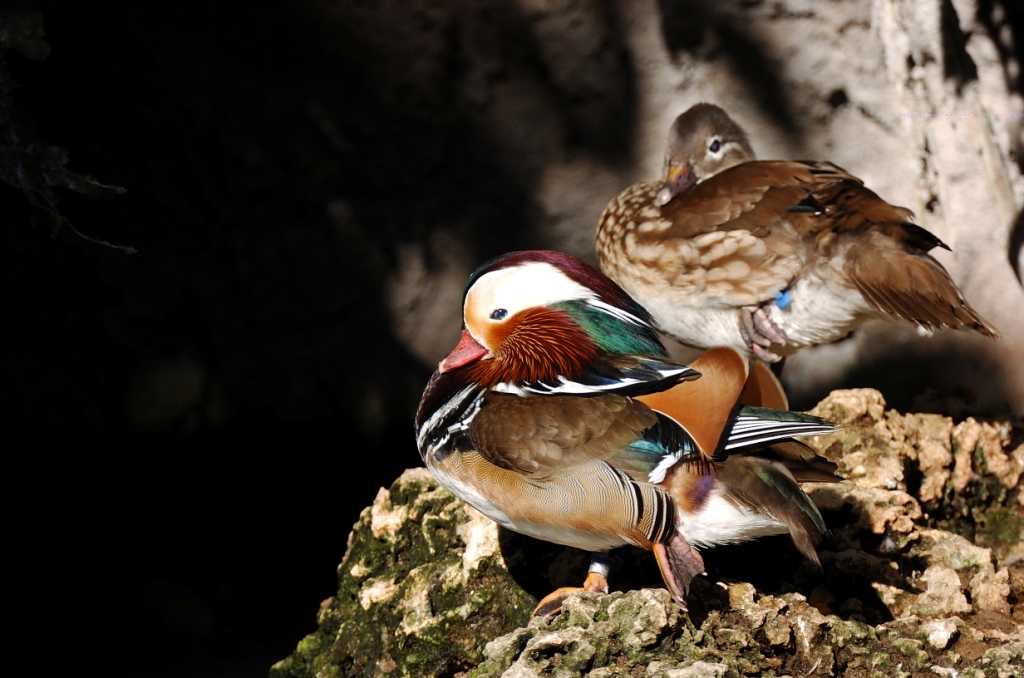
Mandarin Duck (Aix galericulata) by Dan at Zoo Miami

Mandarin Duck (Aix galericulata) by Dan at Zoo Miami

O Lord GOD, You have begun to show Your servant Your greatness and Your mighty hand, for what god is there in heaven or on earth who can do anything like Your works and Your mighty deeds? (Deuteronomy 3:24 NKJV)

What a beautiful duck. When we look around us, the Lord’s Hand is at work everywhere. Be thankful today for the Lord’s Blessing.

Brown-headed Barbet (Megalaima zeylanica) by Nikhil Devasar

Hang in there, today!

O taste and see that the LORD is good: blessed is the man that trusteth in him. (Psalms 34:8 KJV)

*

Bible Birds

*


Birds of the Bible – Mighty Hand of God

Mandarin Duck (Aix galericulata) by Dan at Zoo Miami

Mandarin Duck (Aix galericulata) by Dan at Zoo Miami

O Lord GOD, You have begun to show Your servant Your greatness and Your mighty hand, for what god is there in heaven or on earth who can do anything like Your works and Your mighty deeds? (Deuteronomy 3:24 NKJV)

What a beautiful duck. When we look around us, the Lord’s Hand is at work everywhere. Be thankful today for the Lord’s Blessing.

Brown-headed Barbet (Megalaima zeylanica) by Nikhil Devasar

Hang in there, today!

O taste and see that the LORD is good: blessed is the man that trusteth in him. (Psalms 34:8 KJV)

*

Birds of the Bible

*

Grey Kingbird at Honeymoon Island SP

Grey Kingbird by Lee at Honeymoon Is SP 7-4-2014

Grey Kingbird by Lee at Honeymoon Is SP 7-4-2014

All the kings of the earth will give thanks to You, O LORD, When they have heard the words of Your mouth. And they will sing of the ways of the LORD, For great is the glory of the LORD. (Psalms 138:4-5 NASB)

The Grey Kingbird (Tyrannus dominicensis) which we saw at Honeymoon Island SP last week was a Life Bird for me. Most Americans call it Gray, but the I.O.C. List of Birds use the Grey spelling. Either way, grey or gray, it is the same bird. That is one reason they use the Scientific name of Tyrannus dominicensis to ID the bird.

Recently I purchased the Latin for Bird Lovers book, because I have tried to see what these “scientific” mean on my own and thought this would be interesting. The book has over 3,000 bird names. I found it to be something quite useful, for me, at least. So let’s see what our Tyrannus dominicensis actually means.

  • Tyrannus “ti-RAN-nus” – “Tyrant, as in Tyanannus Allugularis, The White-throated Kingbird” [p.205]
  • dominicensis“doe-min-ib-SEN-sis-” – “After the Commonwealth of Dominica in the West Indies, as in Pluvialis dominica, the American Golden Plover, which passes through the West Indies during migrations.” [p.61]

So, we have a Tyrant that is from or passes through Dominica. The Kingbirds do belong to the Tyrannidae – Tyrant Flycatchers FamilyThere are 14 birds in the Tyrannus genus, which is the first part of the scientific name, Tyrannus Dominicensis, the second part of the name has 5 birds with that ending. That includes not only this Grey Kingbird, but also the Caribbean Martin (Progne dominicensis),  Antillean Siskin (Spinus dominicensis)Hispaniolan Oriole (Icterus dominicensis) and the Hispaniolan Spindalis (Spindalis dominicensis).

This was my 250th Life Bird record on eBird.

Grey Kingbird (Tyrannus dominicensis) by Lee at Honeymoon Is SP

Grey Kingbird (Tyrannus dominicensis) by Lee at Honeymoon Is SP

The bird also has found a house, And the swallow a nest for herself, where she may lay her young, Even Your altars, O LORD of hosts, My King and my God. (Psalms 84:3 NASB)

“The Grey or Gray Kingbird, also known as Pitirre (Tyrannus dominicensis) is a passerine bird. It breeds from the extreme southeast of the USA, mainly in Florida, through Central America, from Cuba to Puerto Rico as well as eastward towards all across the Lesser West Indies, south to Venezuela, Trinidad, Tobago the Guiana and Colombia. Northern populations are migratory, wintering on the Caribbean coast of Central America and northern South America.

Grey Kingbird by Dan

Grey Kingbird by Dan at HISP

This tyrant flycatcher is found in tall trees and shrubs, including the edges of savanna and marshes. It makes a flimsy cup nest in a tree. The female incubates the typical clutch of two cream eggs, which are marked with reddish-brown. Grey Kingbirds wait on an exposed perch high in a tree,which is where we found it, occasionally sallying out to feed on insects, their staple diet.

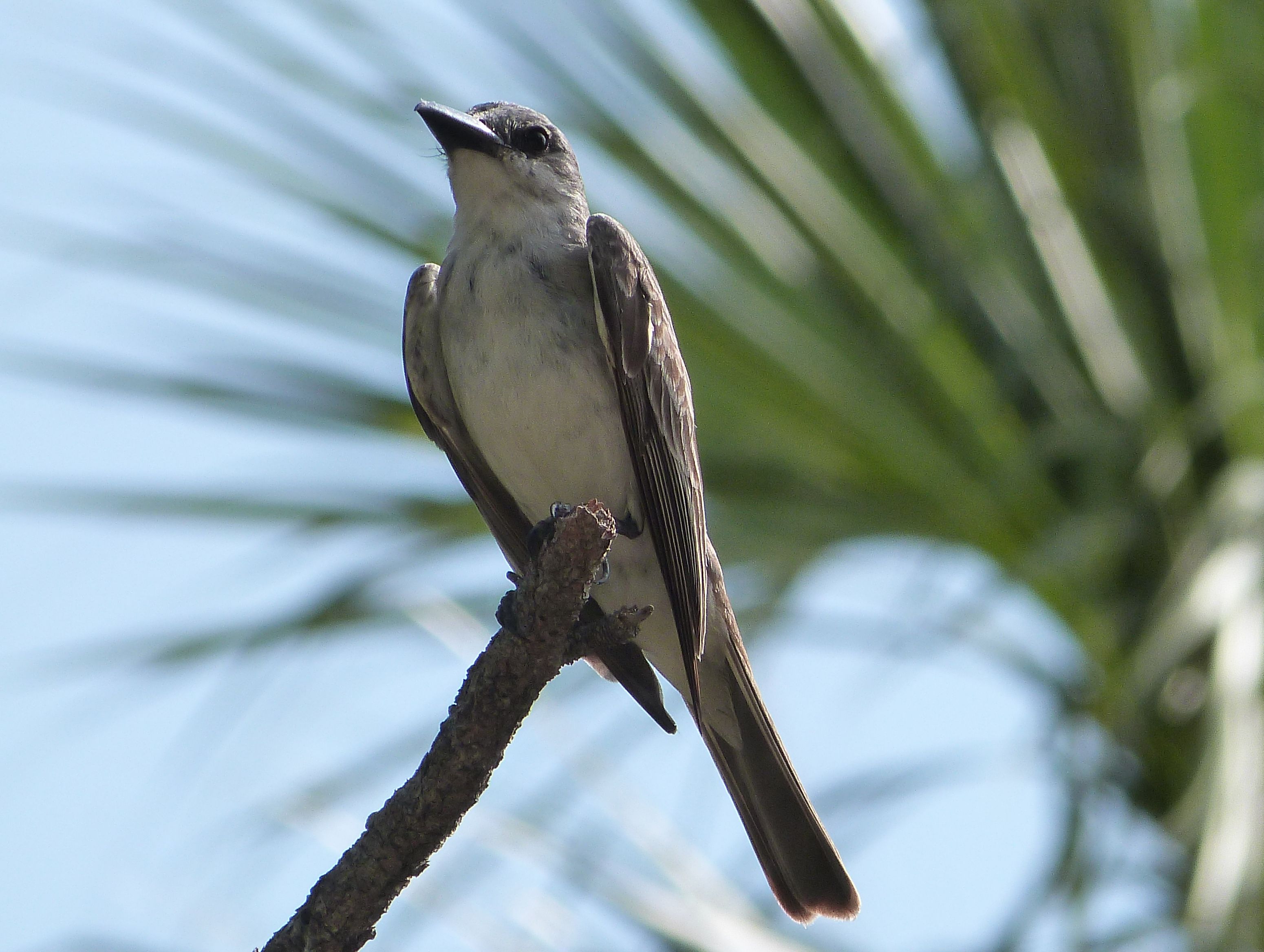
The adult Grey Kingbird is an average-sized kingbird. It measures 9.1 in (23 cm) in length and weighs from 1.3 to 1.8 oz (37 to 52 g). The upper parts are grey, with brownish wings and tail, and the underparts are white with a grey tinge to the chest. The head has a concealed yellow crown stripe, and a dusky mask through the eyes. The dark bill is heavier than that of the related, slightly smaller, Tropical Kingbird. The sexes are similar, but young birds have rufous edges on the wing coverts, rump and tail.

Grey Kingbird (Tyrannus dominicensis) by Lee at Honeymoon Is SP

The call is a loud rolling trill, pipiri pipiri, which is the reason behind many of its local names, like pestigre or pitirre, in the Spanish-speaking Greater Antilles, or “petchary” in some of the English-speaking zones.

(from xeno-canto)

Like other kingbirds, these birds aggressively defend their territory against intruders, including mammals and much larger birds such as caracaras and Red-Tailed Hawks. This phenomenon has led to the widespread adoption of the pitirre as a nationalist symbol (a sort of David vs. Goliath figure) in Puerto Rico.

It is found in increasing numbers in the state of Florida, and is more often found inland though it had been previously restricted to the coast. The species was first described on the island of Hispaniola, then called Santo Domingo, thus the dominicensis name.” (from Wikipedia with editing)

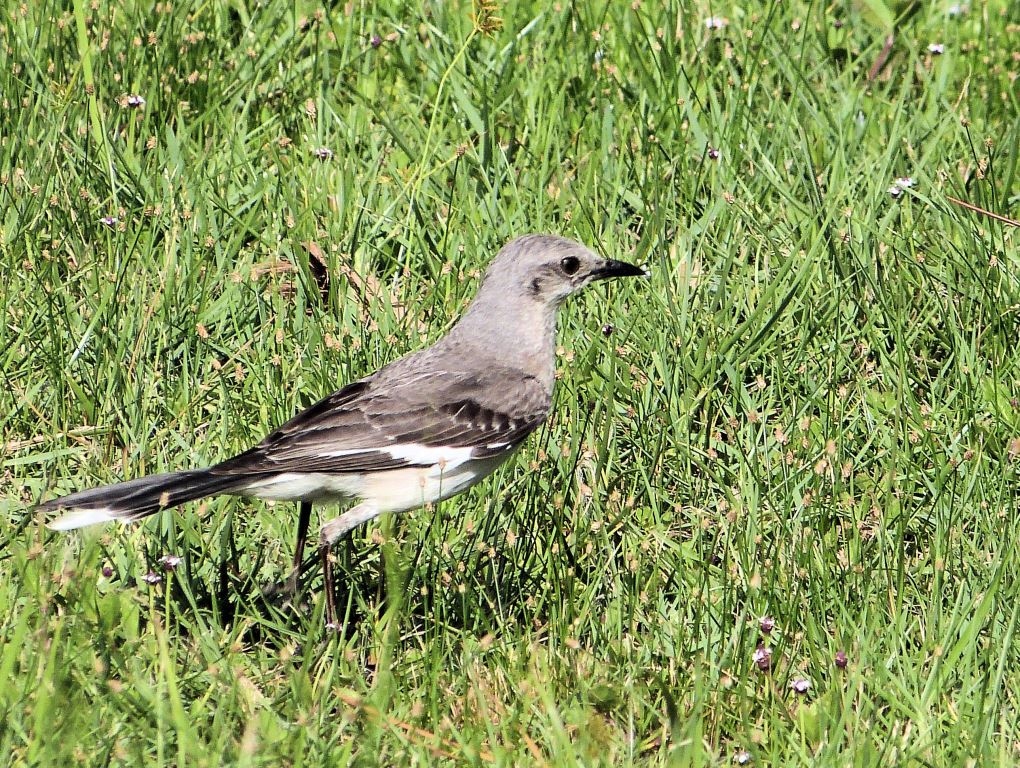
Northern Mockingbird (Mimus polyglottos) by Lee at Honeymoon Is SP

Northern Mockingbird (Mimus polyglottos) by Lee at Honeymoon Is SP

I added this Northern Mockingbird which was also there at the State Park. At first we kept thinking the Kingbird was a Mockingbird. If you compare the photos, you will notice the Mockingbird has a white spot on its wings and also a black spot near its ear. They are very close though. Also, Dan’s photo of the Kingbird came out more brownish. It may be that he caught a younger one. There were several at the park.

Isn’t the Lord great in that He makes us work for the IDs of these birds. As I have said, He should have put name tags on them, but then we wouldn’t learn about His creativity, would we? It is good for us to learn new things. Never get bored with learning.

Make me know Your ways, O LORD; Teach me Your paths. (Psalms 25:4 NASB)

I will instruct thee and teach thee in the way which thou shalt go: I will guide thee with mine eye. (Psalms 32:8 KJV)

*

*

Gideon

*

Sunday Inspiration – Thirst

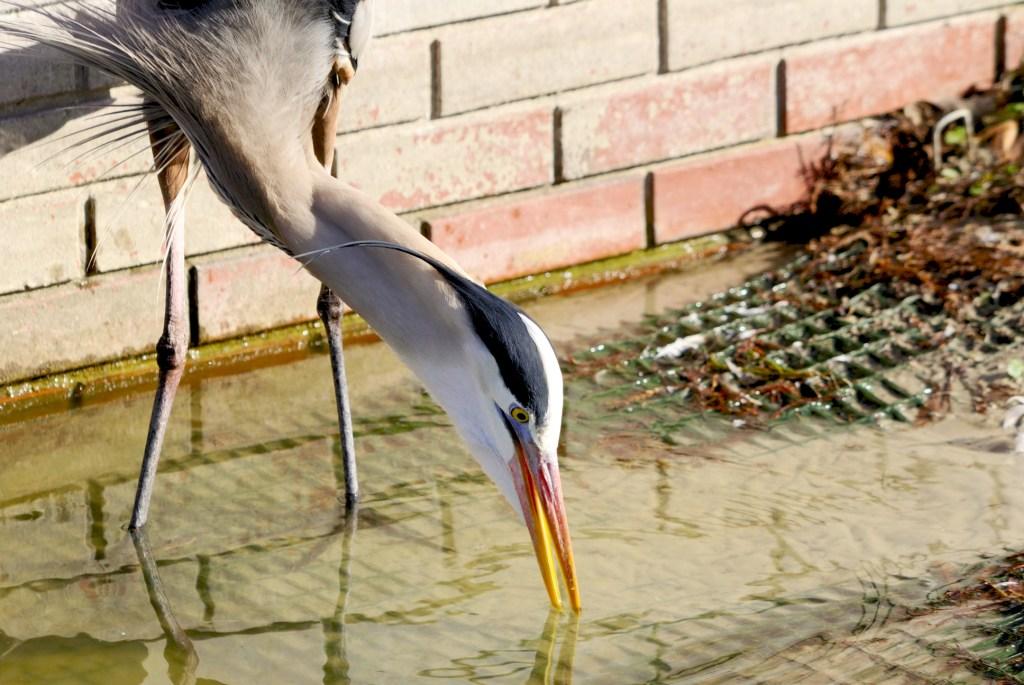
Great Blue Heron (Drinking) at Lake Morgan by Lee

Great Blue Heron (Drinking) at Lake Morgan

Jesus answered and said unto her, Whosoever drinketh of this water shall thirst again: But whosoever drinketh of the water that I shall give him shall never thirst; but the water that I shall give him shall be in him a well of water springing up into everlasting life. (John 4:13-14 KJV)

This slideshow requires JavaScript.

*

*
“Come Thou Fount Of Every Blessing” by Sean Fielder
*

More Sunday Inspiration

Gospel Message

*

Never Give Up

The steps of a good man are ordered by the LORD, And He delights in his way. Though he fall, he shall not be utterly cast down; For the LORD upholds him with His hand. I have been young, and now am old; Yet I have not seen the righteous forsaken, Nor his descendants begging bread. (Psalms 37:23-25 NKJV)

*

(From an email link)

*

Just got a notification from WordPress that today is my Sixth Anniversary here. Wow! Has it really been 6 years? Praise the Lord! Thanks all of you for the visits you have made to the blog. This blog started about 5 months earlier on another service.

1,151,195 visits and counting!

THANK YOU!!!

Another Birdwatching Trip

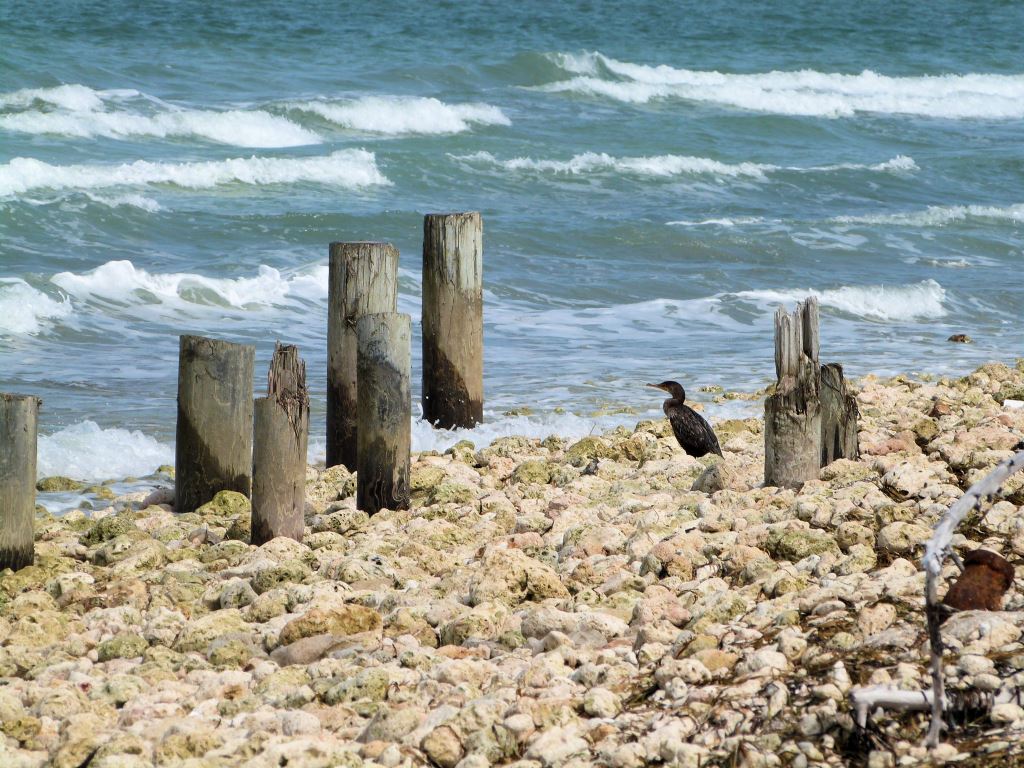
Double-crested Cormorant (Phalacrocorax auritus) by Lee at Honeymoon Is SP

Double-crested Cormorant (Phalacrocorax auritus) by Lee at Honeymoon Is SP

The birds of the air, And the fish of the sea That pass through the paths of the seas. O LORD, our Lord, How excellent is Your name in all the earth! (Psalms 8:8-9 NKJV)

We just got back from another birdwatching trip. This time we birded the Honeymoon Island State Park and MacDill AFB beach. Was gone overnight and have many photos to prep. Here are just a few photos for now.

These Double-crested Cormorants were just sitting along the Gulf shore and one was sleeping. They seem to be tired and may have decided to stay on shore because of Hurricane Arthur’s bands of rain that kept sweeping the area the last two days. A man walked between the two and they didn’t even move.

Grey Kingbird (Tyrannus dominicensis) by Lee at Honeymoon Is SP

Grey Kingbird (Tyrannus dominicensis) by Lee at Honeymoon Is SP

This photo of a Kingbird, which is the best shot I have ever had of one, was also at the state park. (Actually, just checked, these are the only ones I have taken of Grey Kingbirds. This was a LIFE BIRD for me. Yeah!)

Today, July 4th, we checked out the shore on Tampa Bay at the base. The birds were few, but enough to give us a chance to get some photos. Without so many species, maybe I’ll be able to ID them. My ID’s of shorebirds is still weak. I will pouring be over my bird books again. Praise the Lord for bird books. (I still think the Lord should have hung tags on them.)

Trust those of us celebrating the Fourth have had a good day. We have!

*

*

Honeymoon Island State Park

Birdwatching Trips

Birdwatching

*


King Solomon and The Birds – Part 3

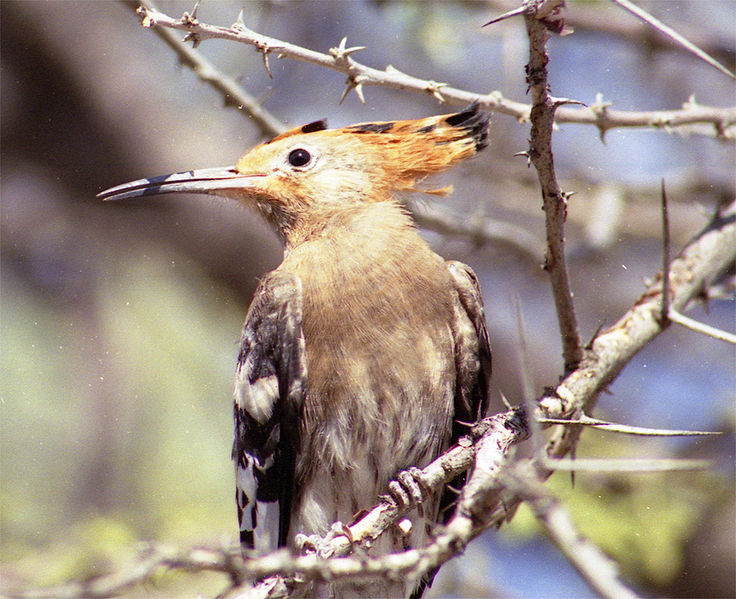
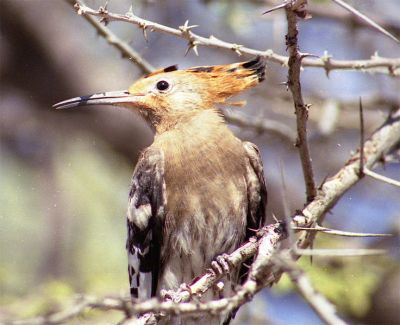
African Hoopoe (Upupa africana) ©WikiC

African Hoopoe (Upupa africana) ©WikiC

King Solomon and The Birds ~ from The Curious Book of Birds

KING SOLOMON AND THE BIRDS  – Part 3

Cur Book of Birds letter-kING SOLOMON was ever seeking to grow even wiser. The better to know the wonders of God’s world and the ways of all creatures, he undertook many journeys,—not as we ordinary poor mortals travel, in heavy wagons or clumsy boats, by dusty roads or stormy waves. It was in no such troublous ways that Solomon the all-powerful traversed space and reached the uttermost corners of the earth. Thanks to his great knowledge, he had discovered a means of locomotion compared to which the most magnificent railway coaches and the richest palanquins of Indian princes would seem poor indeed. He had caused his Genii to make a silken carpet of four leagues in extent. In the midst of this carpet was placed a magnificent throne for the royal traveler himself; and around it were seats of gold, of silver, of wood, for the multitude of persons of different rank whom he took with him. There was also no lack of the most gorgeous furniture and the necessary provisions for a king’s traveling banquet.

When all was ready Solomon was wont to seat himself upon his throne, and would command the winds to do their duty. Immediately they gently lifted the carpet and bore it rapidly through the air to the appointed spot. During the journey, above the aerial caravan fluttered a cloud of birds, who with their wings formed a splendid canopy to shield their beloved lord from the sun’s heat, as the Hoopoes had first done.

One day, while on such a journey, Solomon was shocked to feel a ray of sunlight piercing through this plumy dais (raised feathers) which overhung his head. Shading his eyes, the King glanced up and perceived that there was an opening in the canopy. One bird was missing from its post. In great displeasure Solomon demanded of the Eagle the name of the truant. Anxiously the Eagle called the roll of all the birds in his company; and he was horrified to find that it was Solomon’s favorite, the Hoopoe, who was missing. With terror he announced the bird’s desertion to the most wise King.

“Soar aloft,” commanded Solomon sternly, “and find the Hoopoe that I may punish him. I will pluck off his feathers that he may feel the scorching heat of the sun as his carelessness has caused me to do.”

The Eagle soared heavenward, until the earth beneath him looked like a bowl turned upside down. Then he poised on level wings and looked around in every direction to discover the truant. Soon he espied the Hoopoe flying swiftly from the south. The Eagle swooped down and would have seized the culprit roughly in his strong talons, but the Hoopoe begged him for Solomon’s sake to be gentle.

“For Solomon’s sake!” cried the Eagle. “Do you dare to name the King whom you have injured? He has discovered your absence and in his righteous anger will punish you severely.”

“Lead me to him,” replied the Hoopoe. “I know that he will forgive me when he hears where I have been and what I have to tell him.”

The Eagle led him to the King, who with a wrathful face was sitting on his throne. The Hoopoe trembled and drooped his feathers humbly, but when Solomon would have crushed him in his mighty fist the bird cried,—

“Remember, King, that one day you also must give an account of your sins. Let me not therefore be condemned unheard.”

“And if I hear you, what excuse can you have to offer?” answered Solomon, frowning. But this was his favorite bird and he hoped that there might be some reason for sparing him.

“Well,” said the Hoopoe, “at Mecca I met a Hoopoe of my acquaintance who told me so wonderful a tale of the marvelous Kingdom of Sheba in Arabia that I could not resist the temptation to visit that country of gold and precious stones. And there, indeed, I saw the most prodigious treasures; but best of all, O King, more glorious than gold, more precious than rare jewels, I saw Queen Balkis, the most beautiful of queens.”

“Tell me of this Queen,” said Solomon, loosening his rough grasp upon the Hoopoe. So it was, say the people, that a bird told Solomon of the great Queen whose journey to Jerusalem is described in the Bible.

The Hoopoe told of her power and glory, her riches, her wisdom, and her beauty, until Solomon sighed a great sigh and said, “It seems too good to be true! But we shall see.”

So the King wrote a letter to Balkis, bidding her follow the guidance of fate and come to the court of the wise King. This note he sealed with musk, stamped with his great signet, and gave to the Hoopoe, saying,—

“If now you have spoken truth, take this letter to Queen Balkis; then come away.”

The Hoopoe did as he was bid, darting off towards the south like an arrow. And the next day he came to the palace of the Queen of Sheba, where she sat in all her splendor among her counselors. He hopped into the hall and dropped the letter into her lap, then flew away.

Queen Balkis stared and stared at the great King’s seal upon the mysterious letter, and when she had read the brief invitation she stared and stared again. But she had heard the fame of Solomon and was eager to ask him some of her clever questions to prove his wisdom. So she decided to accept his invitation and come to Jerusalem.

She came with a great train of attendants, with camels that bore spices and treasures of gold and precious stones, gifts for the most wise King. And she asked him more questions than any woman had ever asked him before, though he knew a great many ladies, and they were all inquisitive.

But Solomon was so wise that he answered all her questions without any trouble.

And she said to him, “It was a true report that I heard of you in my own land, of your wisdom and of your glory. Only that which now I know and see is greater than what I heard. Happy are thy men and happy are thy servants who stand continually before thee and hear thy wisdom.”

And she gave the King a hundred and twenty talents of gold, which was a very rich treasure, besides great store of spices, and the most precious gifts; no one had ever seen such gifts as the Queen of Sheba gave to Solomon.

But he in turn was even more generous. For he gave to the fair Balkis all that she desired and everything she asked, because he admired so much this splendid Queen of whom the Hoopoe had first told him.

And so, the Bible says, the Queen of Sheba turned and went to her own country, she and her servants. But the People’s tales say that in later days she married Solomon and they lived happily ever after. And it was all the work of that little Hoopoe with a yellow crown, whom after that we may be sure Solomon loved better than ever.

***

Now King Solomon gave to the queen of Sheba all she desired, whatever she asked, much more than she had brought to the king. So she turned and went to her own country, she and her servants. (2 Chronicles 9:12 NKJV)

And that ends our story of King Solomon and the Birds.

See:

King Solomon and The Birds – Part 1

King Solomon and The Birds – Part 2

*

Links:

Eurasian Hoopoe (Upupa epops) by Peter Ericsson


  Hoopoes – Upupidae Family


Painted Bunting (Passerina ciris) ©©Flickr


  Bird Tales


Curious Book of Birds - Cover


  The Curious Book of Birds


Spanish Sparrow (Passer Hispaniolensis) female ©WikiC


  Wordless Birds


*

Latest Wood Stork Encounter

Wood Stork at Lake Morton by Lee

Wood Stork at Lake Morton by Lee

I know all the birds of the mountains (and Lake Morton) , And the wild beasts of the field are Mine. (Psalms 50:11 NKJV)

We finally had a chance to take a short birdwatching adventure to Lake Morton over in Lakeland. I have been battling a cold and cough for the last three weeks. Our trips to Lake Morton don’t require much walking and it is one of the few places that people feed the birds.

When someone parks their car, before they can get across the street, the birds start walking towards them. Needless to say, the birds are expecting something.

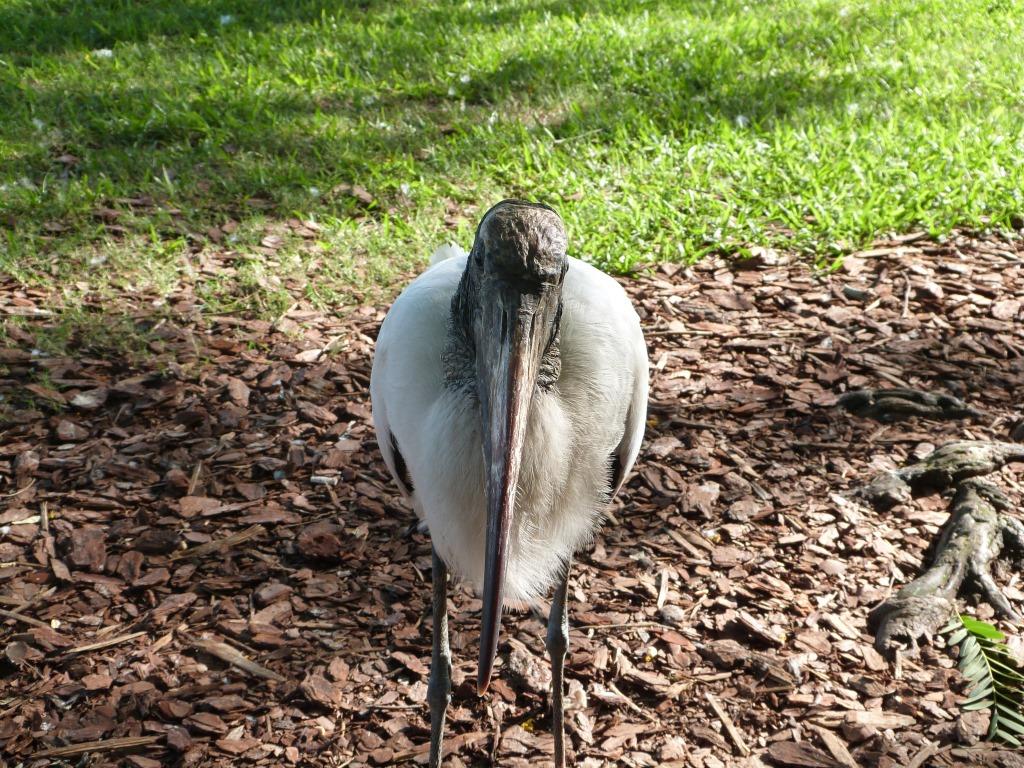
Wood Stork up close by Lee at Lake Morton

Wood Stork up close by Lee at Lake Morton

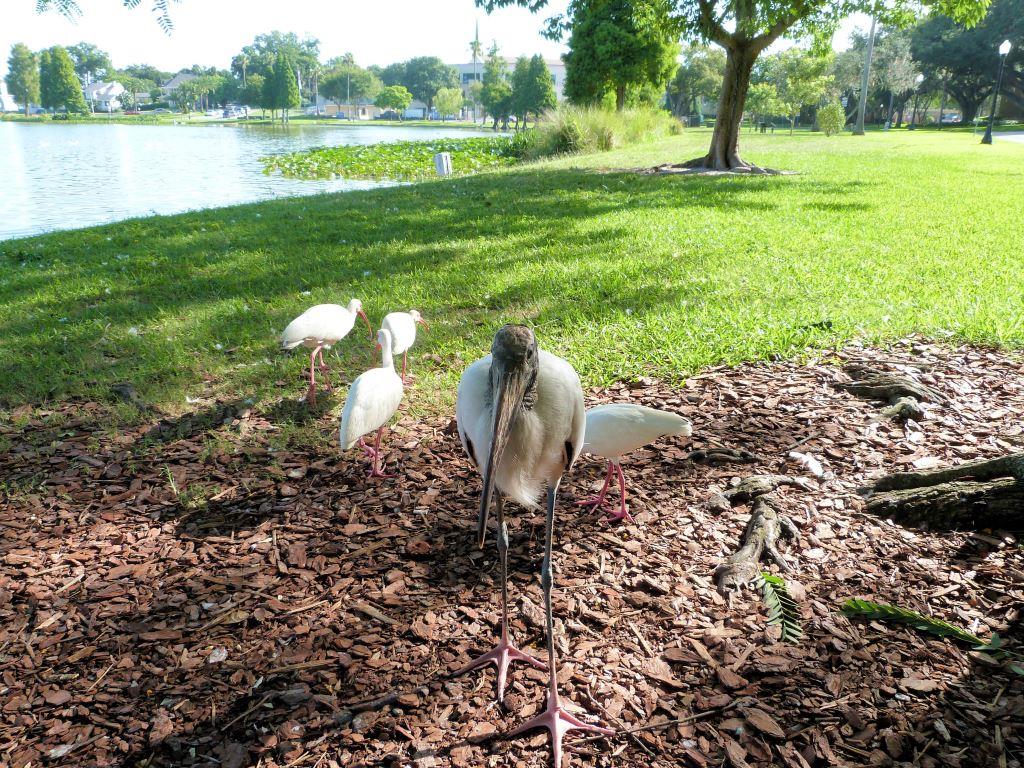
As I was walking across the street, here they came; Wood Stork in the lead because of its long legs, White Ibises next, followed by the waddling shorter legged birds – Mute Swans, Mallards, Muscovy Duck and then the fly-ins – Boat-tailed Grackles and the Gulls. The Wood Stork met me at the curb.

Of course when you have a treat for them, you become the “Pied Piper.” Apparently, someone must have recently fed them, because they were gathered loosely together. Once I got to the table and sat down, the group gathered around. I was enjoying them so much, I didn’t take many photos then.

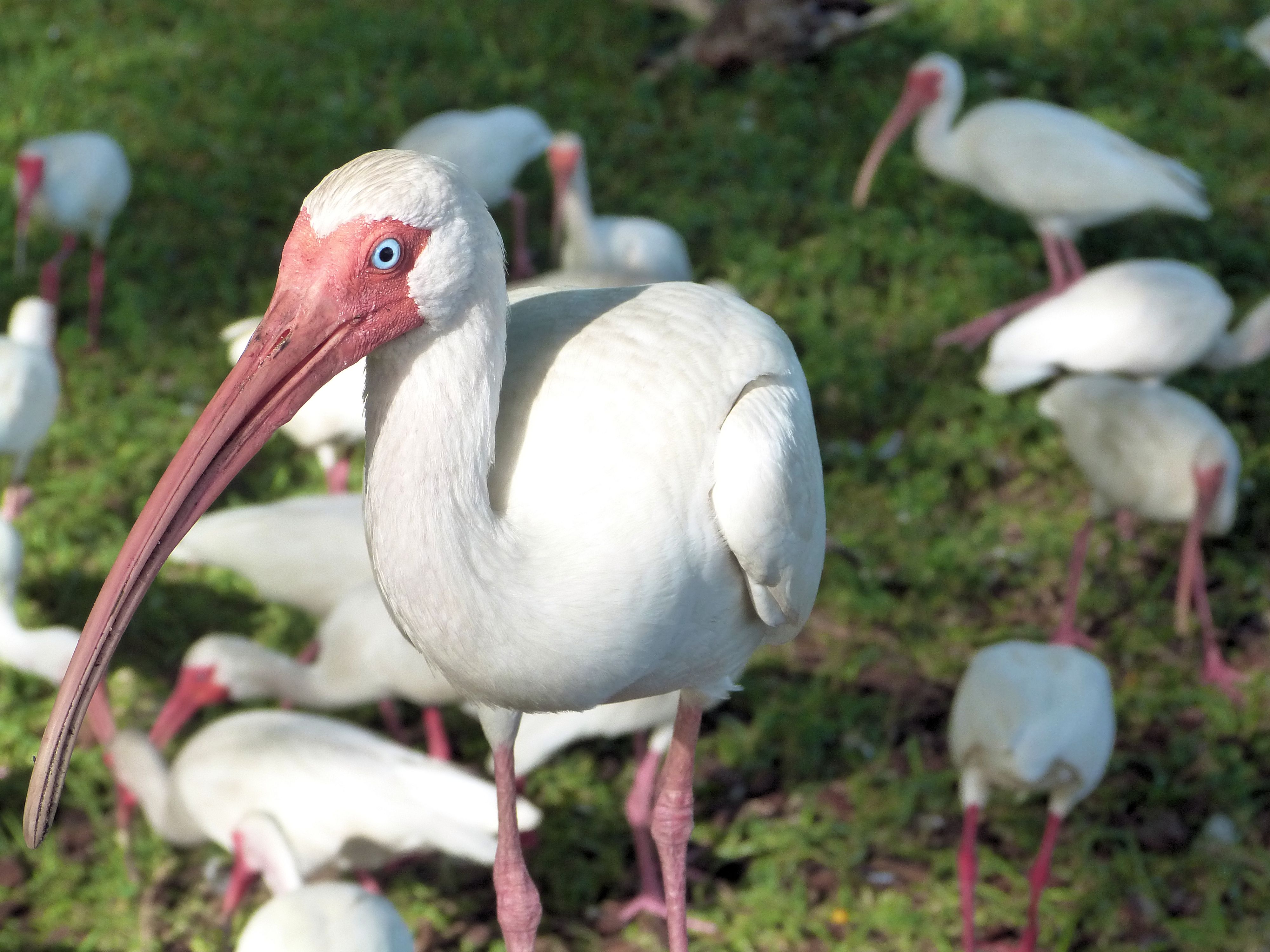
White Ibis on Table by Lee

American White Ibis on Table by Lee

Once the food gave out, of which I didn’t have much to begin with, they moseyed off to rest in the shade until the next visitor with a bag of goodies came. One White Ibis hopped upon the table behind me, but too late because the bag was empty. Took its photo, but it was almost too close.

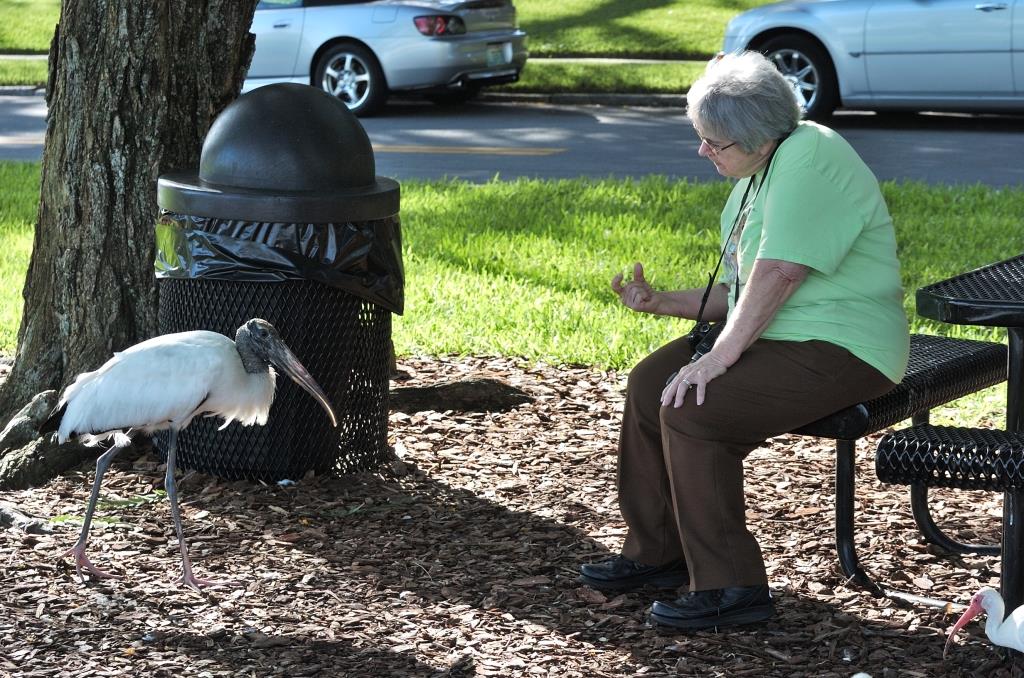
Woodstork & Lee by Dan at Lake Morton

Woodstork & Lee by Dan at Lake Morton

One of the resident Wood Storks walked up in front of me and stood there. I reassured him that I had nothing else, but he (or she) just stayed there. I started talking to it, motioned to come closer, and it did. I could have reached out and touched the Wood Stork, but chose not to with that long beak. Have you ever heard a Wood Stork’s beak “snap” when it grabs food? It is loud. No, I like my fingers!

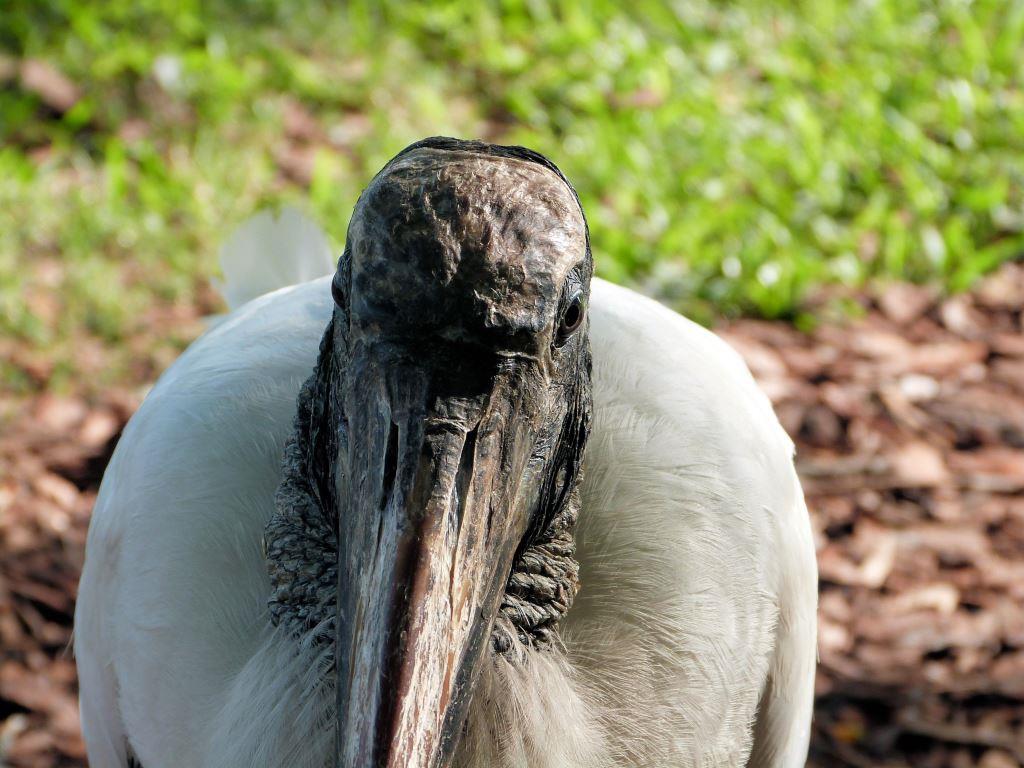
Wood Stork close-up by Lee at Lake Morton

Wood Stork close-up by Lee at Lake Morton

We sat face to face for about 4 minutes of so; me talking and him just standing there looking at me.

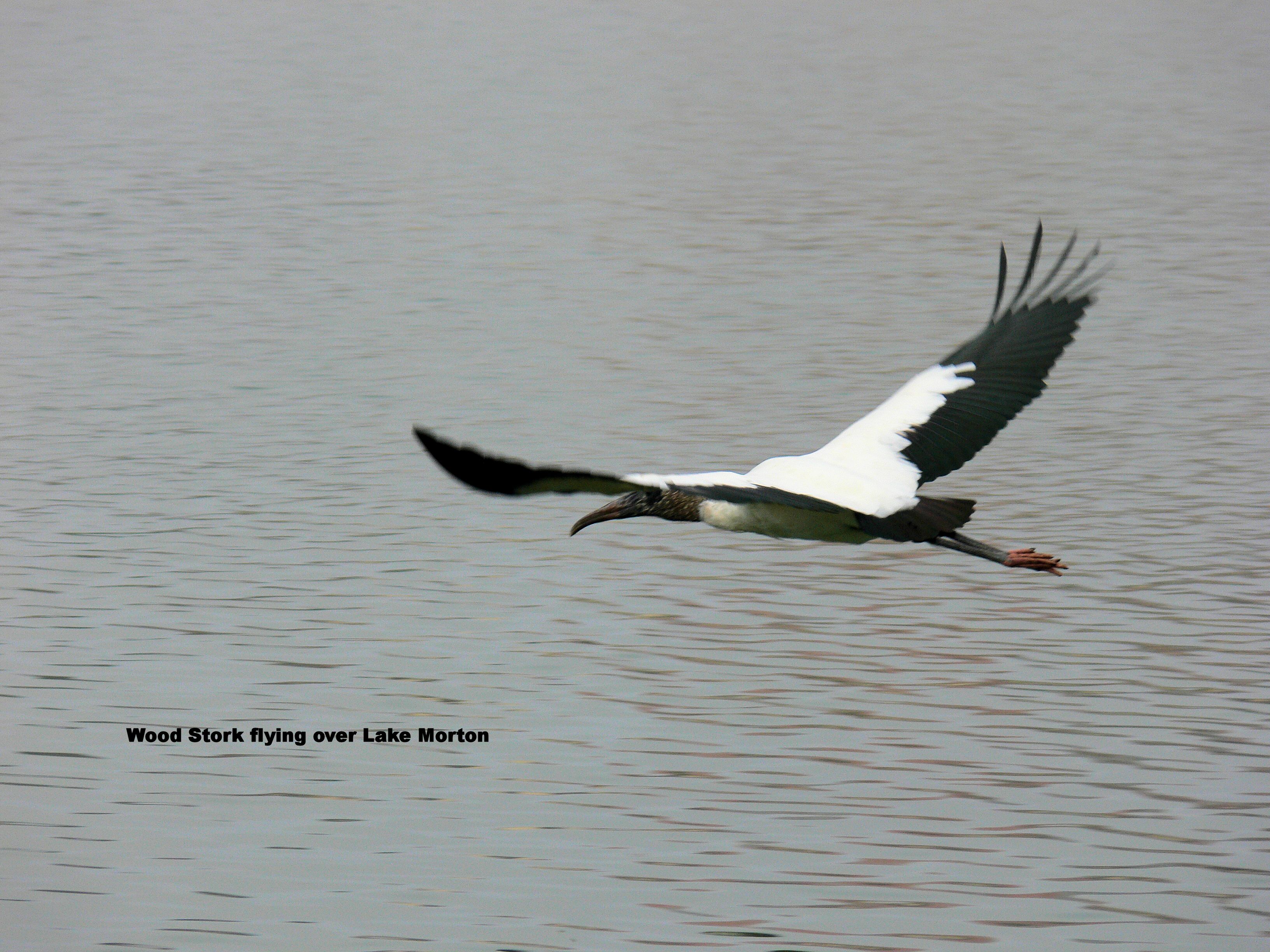
Even though they are “ugly,” they are really neat. Have you ever seen a Wood Stork in the air? They are so beautiful and graceful, but up this close? I assured him that the Lord had created him and that He makes no mistakes.

Great is our Lord, and mighty in power; His understanding is infinite. (Psalms 147:5 NKJV)

Wood Stork flying over Lake Morton by Lee 2009

Wood Stork flying over Lake Morton by Lee 2009

 The wings of the ostrich wave proudly, But are her wings and pinions like the kindly stork’s? (Job 39:13 NKJV)

Wood Storks belong to the Ciconiidae – Storks Family and are also one of our Birds of the Bible.

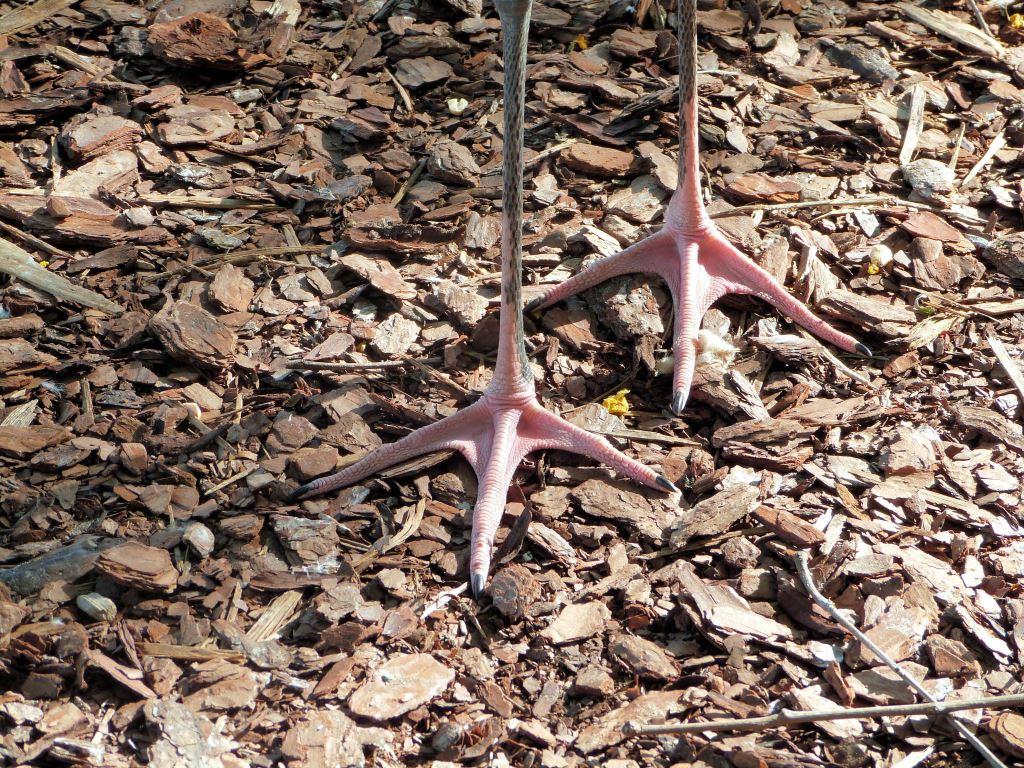
Oh, I almost forgot. Since the Wood Stork was so close, I took a close up of its feet.

Wood Stork's Feet by Lee

Wood Stork’s Feet by Lee

*

*