Ian’s Bird of the Moment – Masked Finch by Ian Montgomery
Surprise, surprise: a Bird of the Moment! I’ve been on a couple of camping trips in the last few months, so I have a few birds to share with you. The first trip was prompted by some birding friends who had found some Red-browed Pardalotes at a place called Cumberland Dam about half way between the Gulf of Carpentaria and both Cairns and Townsville. See the map below from the ebook Where to Find Birds in North-east Queensland.
At the time I was doing a major revision of the book and needed photos of both Cumberland Dam and Red-browed Pardalote, so I downed tools and set of with a couple of friends. The photo of the Dam proved easy enough (below) but the Pardalotes were more difficult. Cumberland was a gold mining town in the fourth quarter of the nineteenth century and at its peak in 1886 nearly 400 mine workers and their families lived there. Now all that is left is this square brick chimney and the dam, both built to serve the boilers that powered the batteries for crushing the gold-containing ore. See http://www.travelling-australia.info/Journal2011/22JulPtB.html.
Cumberland Dam is a well known birding spot. The area has a average annual rainfall of about 800mm/31in but 80% of that falls in the northern wet season from October to April so any persistent bodies of water in the dry season attract many birds. In addition, the region is on the western slopes of the Great Dividing Range – the Torresian Barrier of Schodde and Mason (1980) – so one can expect to find some species and races of birds different from those of coastal northeastern Queensland.
A striking example of these is the Cape York race of the Masked Finch, sometimes called the White-eared Finch. Cumberland is at the very southern tip of its range, shown below from The Directory of Australian Birds by Schodde and Mason (1999). The nominate race ranges from far northwestern Queensland to Broome in northern Western Australia and the ranges of the two races are disjoint.
When looking for the elusive Red-browed Pardalote, I found this pair of Masked Finches near the dam very busy gathering nesting material.
Their favourite material seemed to be what looked like thistle down but they also brought in feathers.
I assumed the nest was in a nearby clump of trees but on the second day they were still working away and I saw them taking the material into this clump of thick dried grass beside a barbed wire fence near where I’d first spotted them.
Here, incidentally is the nominate, western race of the Masked Finch so you can see why the Cape York race is called the White-eared Finch.
Pardalotes are easy to hear but hard to see as, unless you are lucky enough to find them at a nesting hollow on the ground, they spend their time in the outer foliage of trees. The Red-browed Pardalote has a distinctive call of about six notes, starting slow and low in pitch and then accelerating and rising. We heard three at Cumberland Dam and I went on a couple of wild-goose chases through forest and grazing country but got no more than a glimpse of one flying away and no photos. The Red-browed Pardalote quest ultimately succeeded on another camping trip: to be continued!
It has been some time since Ian Montgomery has produced on of his great articles. I trust you enjoy this latest one. Ian went from a Bird of the Week, to Bird of the Month, and now to the Bird of the Moment. Hew has been struggling with his health. We are always glad when he is able to produce a blog.
Ian, you are in our prayers that things are improving.
Ian’s searching for that Red-browed Paratote reminds me of the verse about seeking and searching with all your heart. In this case, it is a bird that is being searched for, yet we are to seek the Lord. He is the Creator of all these birds. He wants us to find Him and accept His gift of Salvation.
“And you will seek Me and find Me, when you search for Me with all your heart.” (Jeremiah 29:13 NKJV)
“The LORD is thy keeper: the LORD is thy shade upon thy right hand.” (Psalms 121:5 KJV)
Avian and Attributes – Shade
SHADE, n. [L. scutum, a shield.]
1. Literally, the interception, cutting of or interruption of the rays of light; hence, the obscurity which is caused by such interception. Shad differs from shadow, as it implies no particular form or definite limit. whereas a shadow represents in form the object which intercepts the light. Hence when we say, let us resort to the shade of a tree, we have no reference to its form; but when we speak of measuring a pyramid or other object by its shadow, we have reference to its extent.
2. Darkness; obscurity; as the shades of night.
3. An obscure place, properly in a grove or close wood, which precludes the sun’s rays; an hence, a secluded retreat.
4. A screen; something that intercepts light or heat.
5. Protection; shelter.
6. In painting, the dark part of the picture.
7. Degree or gradation of light.
White, red, yellow, blue, with their several degrees, or shades and mixtures, as green, come only in by the eyes. Locke.
8. A shadow.
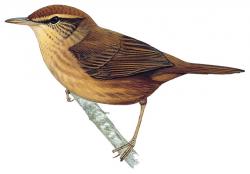
Shade Bush Warbler in Middle Drawing by John Anderton
Shade Bush Warbler (Horornis parens) or shade warbler (Horornis parens) is a species of bird in the family Cettiidae. It is found only in Solomon Islands, where it is endemic to the island of Makira (formerly San Cristobal Island). Its natural habitats are tropical moist lowland forests and tropical moist montane forest above 600m. It feeds on insects in the undergrowth and on the ground.
Reddy Fox wasted very little time waiting for Peter Rabbit to come out from under that pile of brush where he had hidden at Sammy Jay’s warning. After making some terrible threats just to try to frighten Peter, he trotted away to look for some Mice. Peter didn’t mind those threats at all. He was used to them. He knew that he was safe where he was, and all he had to do was to stay there until Reddy should be so far away that it would be safe to come out.
Just to pass away the time Peter took a little nap. When he awoke he sat for a few minutes trying to make up his mind where to go and what to do next. From ‘way over in the direction of the Old Pasture the voice of Blacky the Crow reached him. Peter pricked up his ears, then chuckled.
“Reddy Fox has gone back to the Old Pasture and Blacky has discovered him there,” he thought happily. You see, he understood what Blacky was saying. To you or me Blacky would have been saying simply, “Caw! Caw!” But to all the little people of the Green Forest and Green Meadows within hearing he was shouting, “Fox! Fox!”
“I wonder,” thought Peter, “where Blacky is nesting this year. Last year his nest was in a tall pine-tree not far from the edge of the Green Forest. I believe I’ll run over there and see if he has a new nest near the old one.”
So Peter scampered over to the tall pine in which was Blacky’s old nest. As he sat with his head tipped back, staring up at it, it struck him that that nest didn’t look so old, after all. In fact, it looked as if it had recently been fixed up quite like new. He was wondering about this and trying to guess what it meant, when Blacky himself alighted close to the edge of it.
There was something in his bill, though what it was Peter couldn’t see. Almost at once a black head appeared above the edge of the nest and a black bill seized the thing which Blacky had brought. Then the head disappeared and Blacky silently flew away.
“As sure as I live,” thought Peter, “that was Mrs. Blacky, and Blacky brought her some food so that she would not have to leave those eggs she must have up there. He may be the black-hearted robber every one says he is, but he certainly is a good husband. He’s a better husband than some others I know, of whom nothing but good is said. It just goes to show that there is some good in the very worst folks. Blacky is a sly old rascal. Usually he is as noisy as any one I know, but he came and went without making a sound. Now I think of it, I haven’t once heard his voice near here this spring. I guess if Farmer Brown’s boy could find this nest he would get even with Blacky for pulling up his corn. I know a lot of clever people, but no one quite so clever as Blacky the Crow. With all his badness I can’t help liking him.”
Twice, while Peter watched, Blacky returned with food for Mrs. Blacky. Then, tired of keeping still so long, Peter decided to run over to a certain place farther in the Green Forest which was seldom visited by any one. It was a place Peter usually kept away from. It was pure curiosity which led him to go there now. The discovery that Blacky the Crow was using his old nest had reminded Peter that Redtail the Hawk uses his old nest year after year, and he wanted to find out if Redtail had come back to it this year.
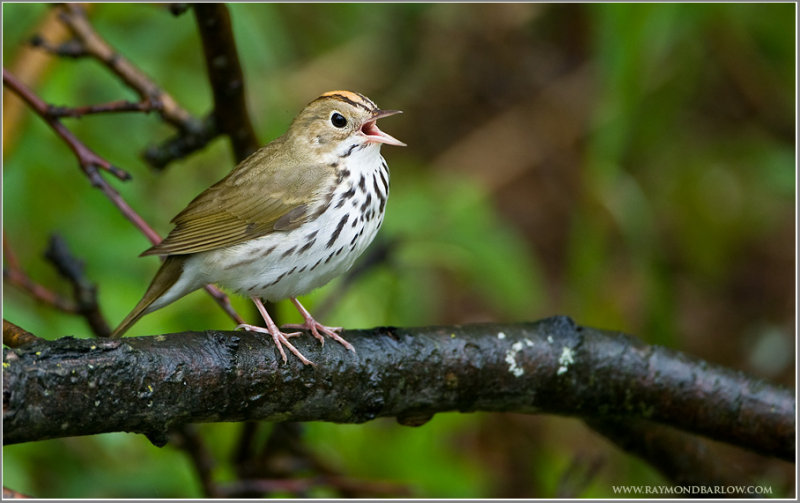
Halfway over to that lonesome place in the Green Forest a trim little bird flew up from the ground, hopped from branch to branch of a tree, walked along a limb, then from pure happiness threw back his head and cried, “Teacher, teacher, teacher, teacher, teacher!” each time a little louder than before. It was Teacher the Oven Bird.
Ovenbird (Seiurus aurocapilla) by Raymond Barlow
In his delight at seeing this old friend, Peter quite forgot Redtail the Hawk. “Oh, Teacher!” cried Peter. “I’m so glad to see you again!”
Teacher stopped singing and looked down at Peter. “If you are so glad why haven’t you been over to see me before?” he demanded. “I’ve been here for some time.”
Peter looked a little foolish. “The truth is, Teacher,” said he very humbly, “I have been visiting the Old Orchard so much and learning so many things that this is the first chance I have had to come ‘way over here in the Green Forest. You see, I have been learning a lot of things about you feathered folks, things I hadn’t even guessed. There is something I wish you’d tell me, Teacher; will you?”
“That depends on what it is,” replied Teacher, eyeing Peter a little suspiciously.
“It is why you are called Oven Bird,” said Peter.
“Is that all?” asked Teacher. Then without waiting for a reply he added, “It is because of the way Mrs. Teacher and I build our nest. Some people think it is like an oven and so they call us Oven Birds. I think that is a silly name myself, quite as silly as Golden Crowned Thrush, which is what some people call me. I’m not a Thrush. I’m not even related to the Thrush family. I’m a Warbler, a Wood Warbler.”
“I suppose,” said Peter, looking at Teacher thoughtfully, “they’ve given you that name because you are dressed something like the Thrushes. That olive-green coat, and white waistcoat all streaked and spotted with black, certainly does remind me of the Thrush family. If you were not so much smaller than any of the Thrushes I should almost think you were one myself. Why, you are not very much bigger than Chippy the Chipping Sparrow, only you’ve got longer legs. I suppose that’s because you spend so much time on the ground. I think that just Teacher is the best name for you. No one who has once heard you could ever mistake you for any one else. By the way, Teacher, where did you say your nest is?”
“I didn’t say,” retorted Teacher. “What’s more, I’m not going to say.”
“Won’t you at least tell me if it is in a tree?” begged Peter.
Teacher’s eyes twinkled. “I guess it won’t do any harm to tell you that much,” said he. “No, it isn’t in a tree. It is on the ground and, if I do say it, it is as well hidden a nest as anybody can build. Oh, Peter, watch your step! Watch your step!” Teacher fairly shrieked this warning.
Peter, who had just started to hop off to his right, stopped short in sheer astonishment. Just in front of him was a tiny mound of dead leaves, and a few feet beyond Mrs. Teacher was fluttering about on the ground as if badly hurt. Peter simply didn’t know what to make of it. Once more he made a movement as if to hop. Teacher flew right down in front of him. “You’ll step on my nest!” he cried.
Peter stared, for he didn’t see any nest. He said as much.
“It’s under that little mound of leaves right in front of your feet!” cried Teacher. “I wasn’t going to tell you, but I just had to or you certainly would have stepped on it.”
Very carefully Peter walked around the little bunch of leaves and peered under them from the other side. There, sure enough, was a nest beneath them, and in it four speckled eggs. “I won’t tell a soul, Teacher. I promise you I won’t tell a soul,” declared Peter very earnestly. “I understand now why you are called Oven Bird, but I still like the name Teacher best.”
Feeling that Mr. and Mrs. Teacher would feel easier in their minds if he left them, Peter said good-by and started on for the lonesome place in the Green Forest where he knew the old nest of Redtail the Hawk had been. As he drew near the place he kept sharp watch through the treetops for a glimpse of Redtail. Presently he saw him high in the blue sky, sailing lazily in big circles. Then Peter became very, very cautious. He tiptoed forward, keeping under cover as much as possible. At last, peeping out from beneath a little hemlock-tree, he could see Redtail’s old nest. He saw right away that it was bigger than it had been when he saw it last. Suddenly there was a chorus of hungry cries and Peter saw Mrs. Redtail approaching with a Mouse in her claws. From where he sat he could see four funny heads stretched above the edge of the nest.
“Redtail is using his old nest again and has got a family already,” exclaimed Peter. “I guess this is no place for me. The sooner I get away from here the better.”
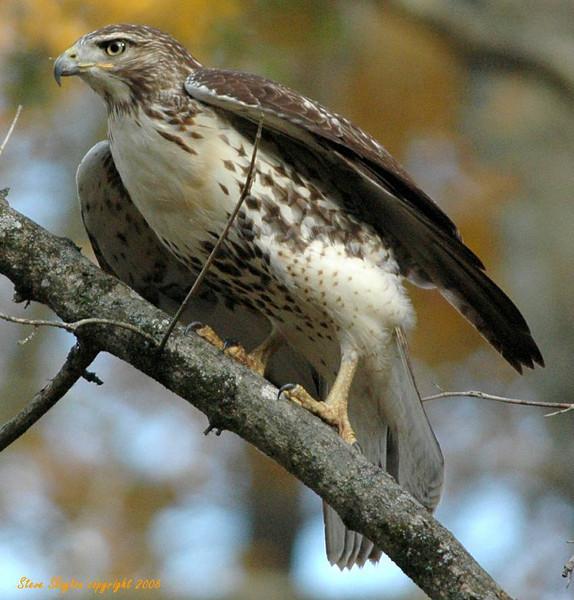
Red-tailed Hawk- Cochran Shoals Unit Chattahoochee River by SSlayton
Just then Redtail himself dropped down out of the blue, blue sky and alighted on a tree close at hand. Peter decided that the best thing he could do was to sit perfectly still where he was. He had a splendid view of Redtail, and he couldn’t help but admire this big member of the Hawk family. The upper parts of his coat were a dark grayish-brown mixed with touches of chestnut color. The upper part of his breast was streaked with grayish-brown and buff, the lower part having but few streaks. Below this were black spots and bars ending in white. But it was the tail which Peter noticed most of all. It was a rich reddish-brown with a narrow black band near its end and a white tip. Peter understood at once why this big Hawk is called Redtail.
It was not until Mr. and Mrs. Redtail had gone in quest of more food for their hungry youngsters that Peter dared steal away. As soon as he felt it safe to do so, he headed for home as fast as he could go, lipperty-lipperty-lip. He knew that he wouldn’t feel safe until that lonesome place in the Green Forest was far behind.
Yet if the truth be known, Peter had less cause to worry than would have been the case had it been some other member of the Hawk family instead of Redtail. And while Redtail and his wife do sometimes catch some of their feathered and furred neighbors, and once in a while a chicken, they do vastly more good than harm.
This story gives good examples of friends watching out for friends. Also, friends love their neighbors and go for visits now and then.
“But you be watchful in all things,…” (2 Timothy 4:5a NKJV)
*
Who was the one warning the animal and bird friends?
What is a call of the Crow?
Is it good for us to warn others of danger?
What does Peter really think it says?
Who was the little bird that Peter spotted up in the tree?
Why is he called by that name?
When Peter began to leave, why did the little bird become upset?
What bird was Peter looking for, yet had to make sure that bird didn’t see him?
Why didn’t Peter want to be seen?
Who sees us all the time? Can we hide from Him?
*
“A friend loveth at all times,…” (Proverbs 17:17a KJV)
“The same day went Jesus out of the house, and sat by the sea side.” (Matthew 13:1 KJV)
“And he began again to teach by the sea side: and there was gathered unto him a great multitude, so that he entered into a ship, and sat in the sea; and the whole multitude was by the sea on the land.” (Mark 4:1 KJV)
Avian and Attributes – Seaside
Sea-side
SE’A-SIDE, n. [sea and side.]
The land bordering on the sea; the country adjacent to the sea, or near it.
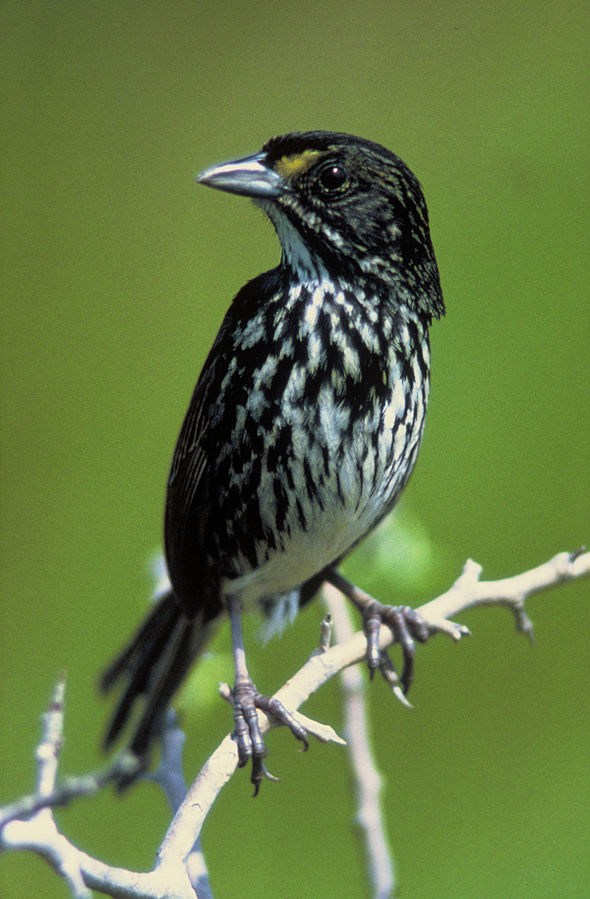
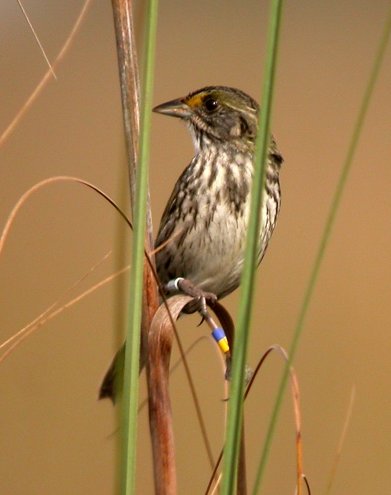
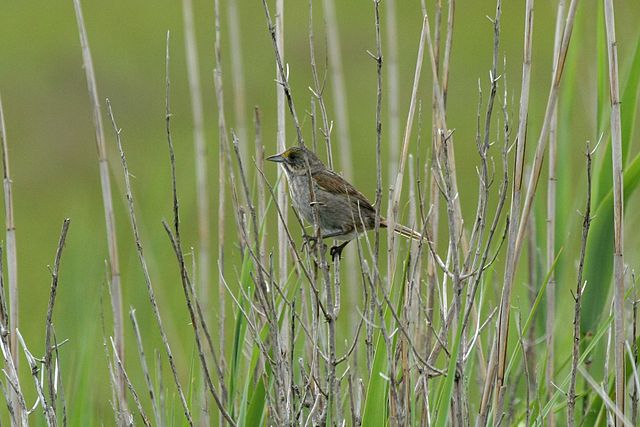
Seaside Sparrow (Ammodramus maritima) is a small American sparrow.
Adults have brownish upperparts with gray on the crown and nape, and a grayish-buff-colored breast with dark streaks; they have a dark face with gray cheeks, a white throat, and a short, pointed tail. Birds show a small yellow streak just above the eye.
Their breeding habitat is salt marshes on the Atlantic and Gulf coasts of the United States from southern New Hampshire to southern Texas. The nest is an open cup usually built in the salt marsh on tidal reeds and spartina grasses. Females lay two to five eggs.
Northern birds most often migrate further south along the eastern coast of the United States. They forage on the ground or in marsh vegetation, sometimes probing in mud. They mainly eat insects, marine invertebrates and seeds. Their feeding areas are often some distance away from the areas they choose to nest.
The song is a raspy buzz that closely resembles a distant red-winged blackbird.
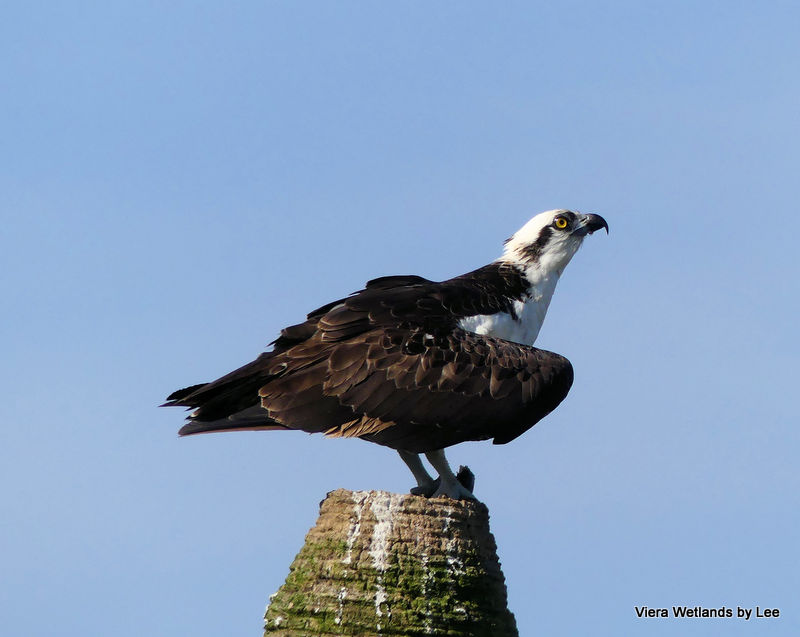
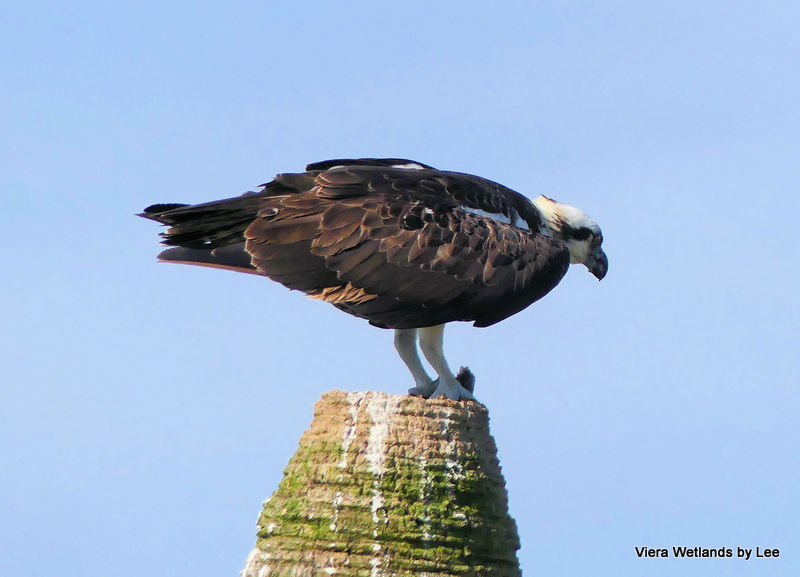
Osprey at Viera looking to the Creator and hopefully he is thanking Him for the fish.
“Who provideth for the raven [and Ospreys] his food? when his young ones cry unto God, they wander for lack of meat.” (Job 38:41 KJV)
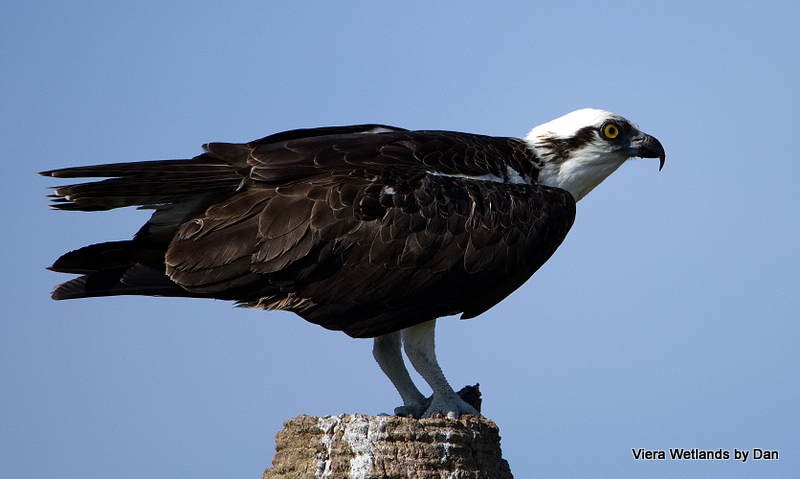
Dan took a couple of really nice photos of the hungry Osprey.
Now for Dan’s great photos.
Time to strip the innards! Yuck!
When we were last at Viera Wetlands, we caught an Osprey eating a fish. Apparently he doesn’t like the “guts.” We watched it pull them out and then drop them. Did that several times, and then started eating the fish.
“But God giveth it a body as it hath pleased him, and to every seed his own body. All flesh is not the same flesh: but there is one kind of flesh of men, another flesh of beasts, another of fishes, and another of birds.” (1 Corinthians 15:38-39 KJV)
I am thankful that the Lord let me be born as a human. I am also very thankful that He provided salvation for our fallen sinful human nature.
Today is our 55th Wedding Anniversary. On July 26, 1963 we said “I Do” and we would say it again today. I am thankful to the Lord for our Salvation #1, but also for His gift of Dan to me #2.
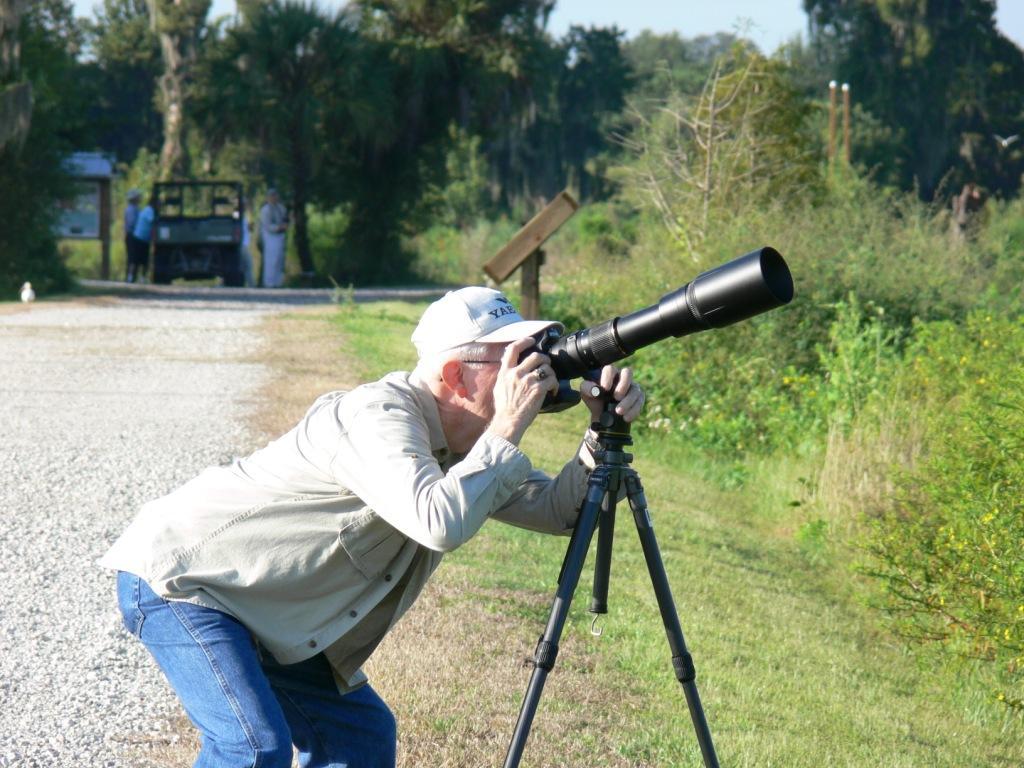
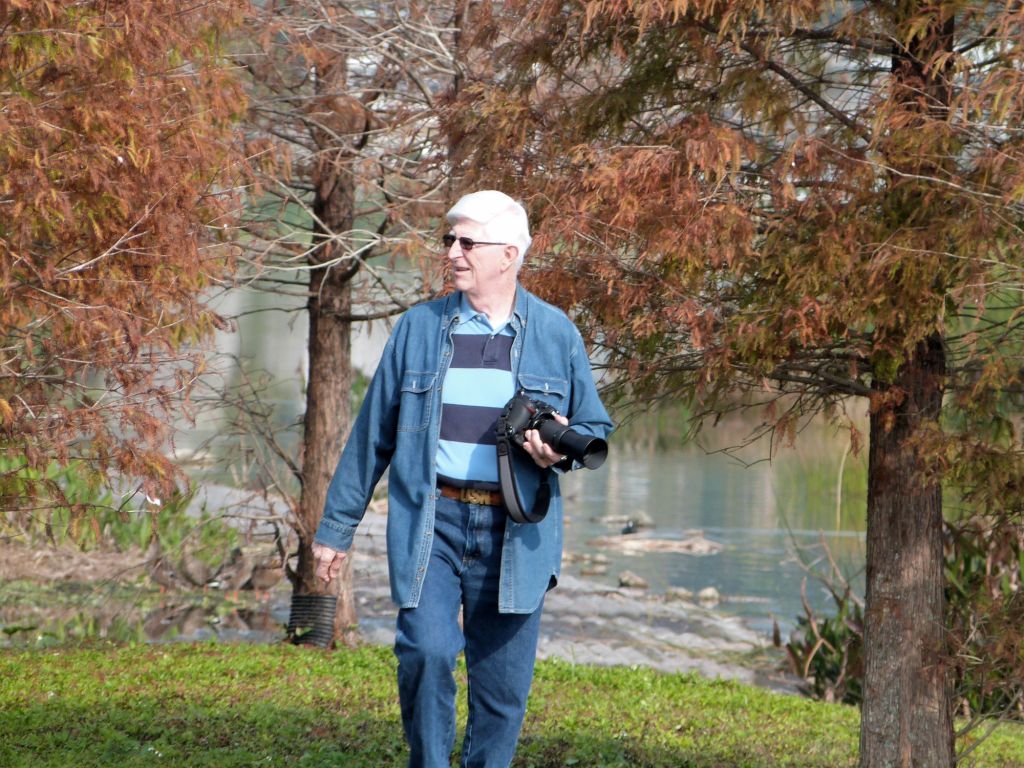
In honor of our anniversary, here are some of the photos I have caught of Dan as we have been out an about. My most recent one was taken July 16th this year. We were at the beach and he was busy taking a photo of something.
Dan at Atlantic Ocean
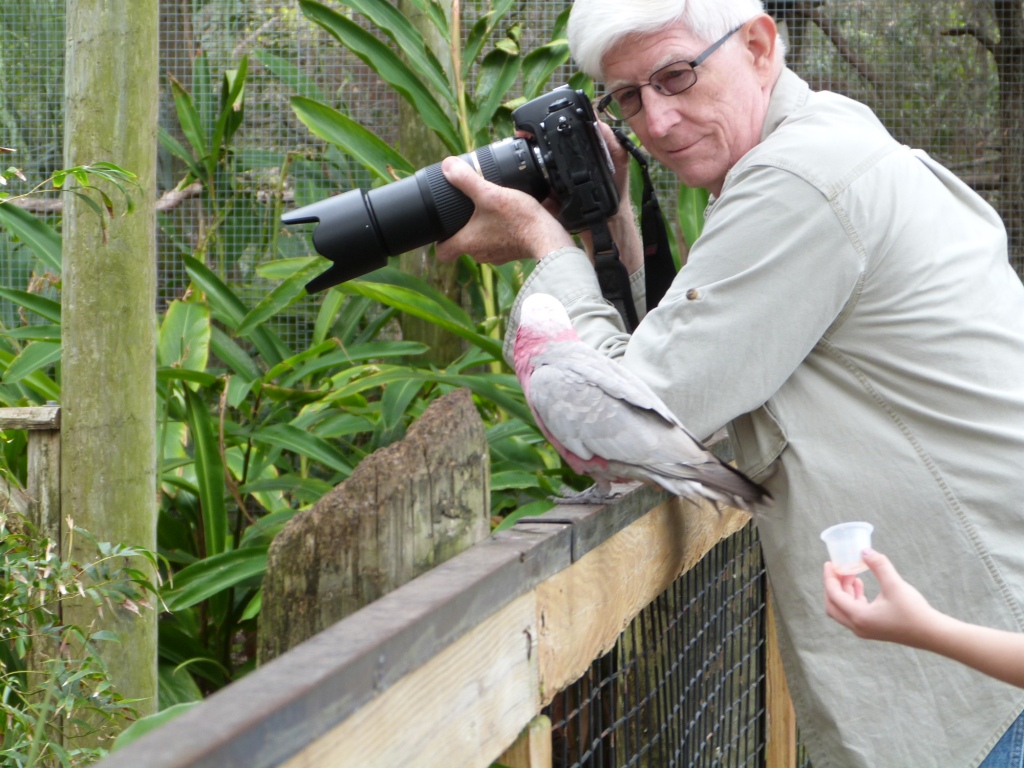
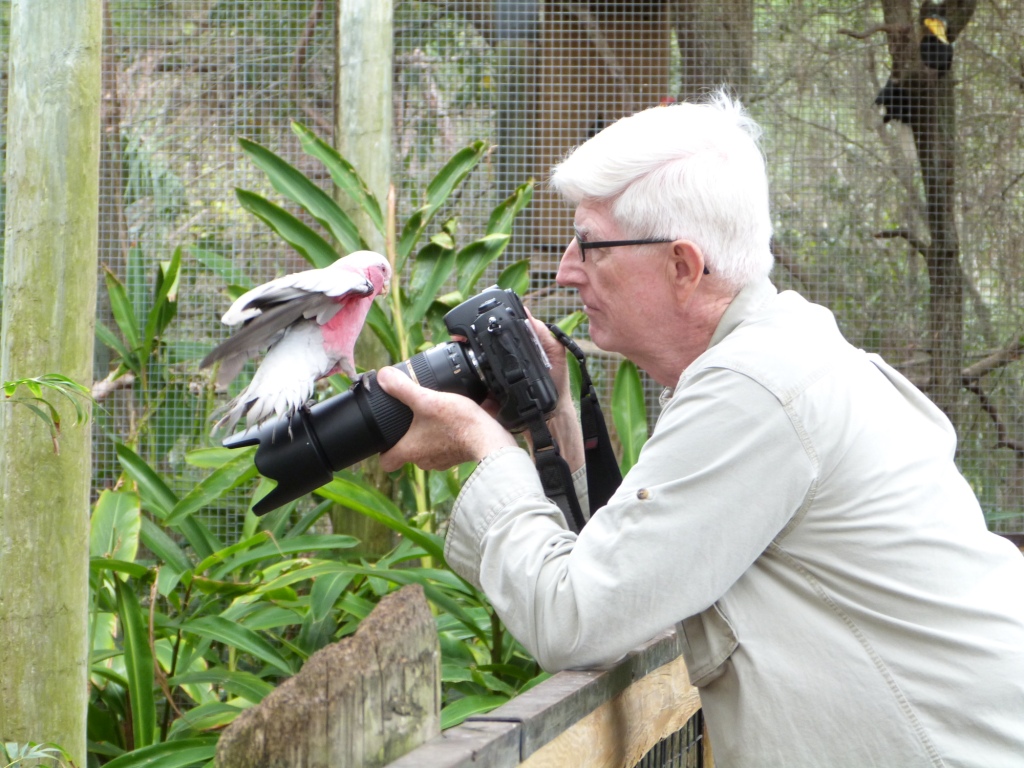
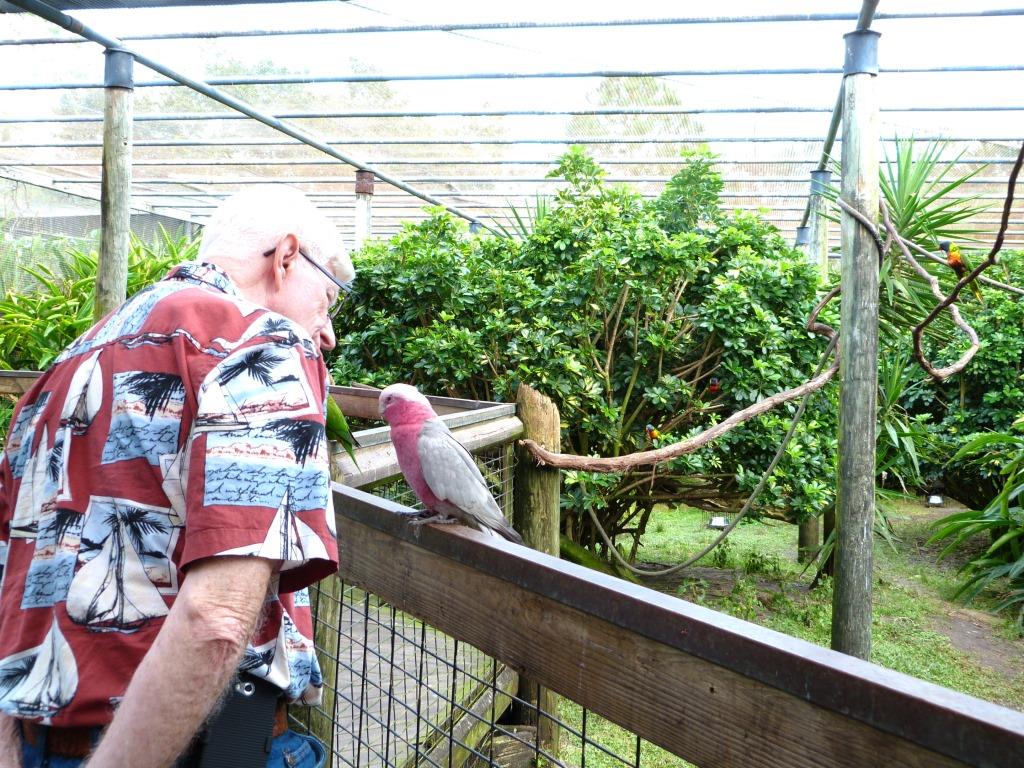
The photos leading up to the Galah and Dan
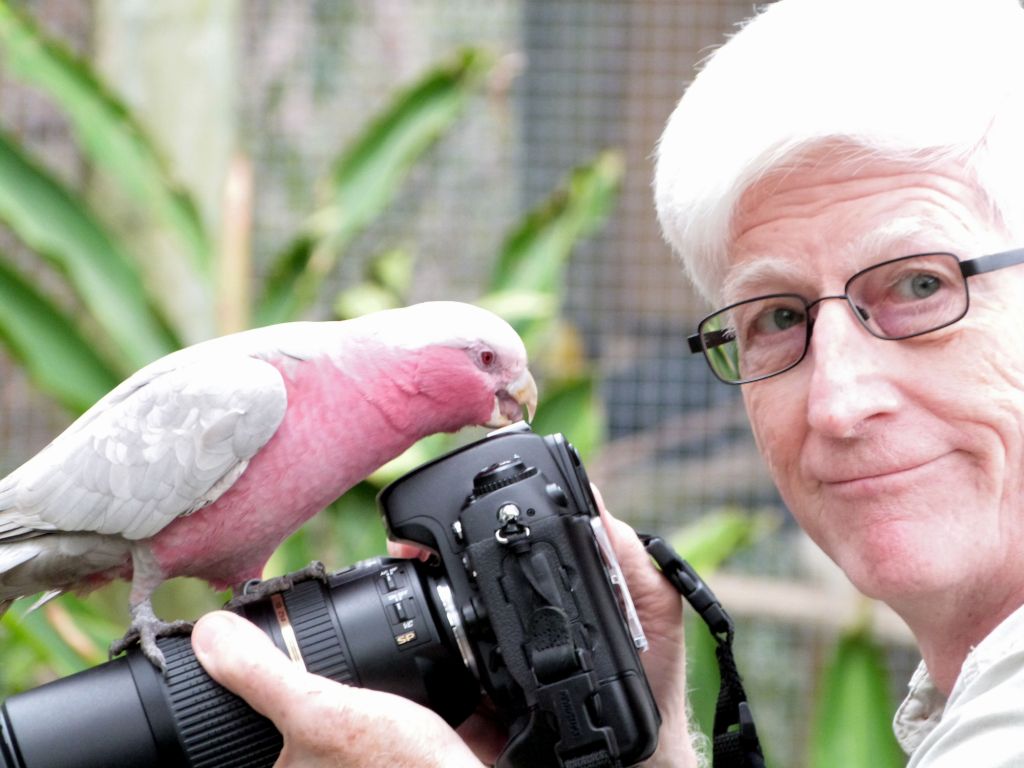
Galah (Eolophus roseicapilla) trying to offer juice.
Galah (Eolophus roseicapilla) Hopping on the camera
This is Birdwatching really close
Galah (Eolophus roseicapilla) and Dan
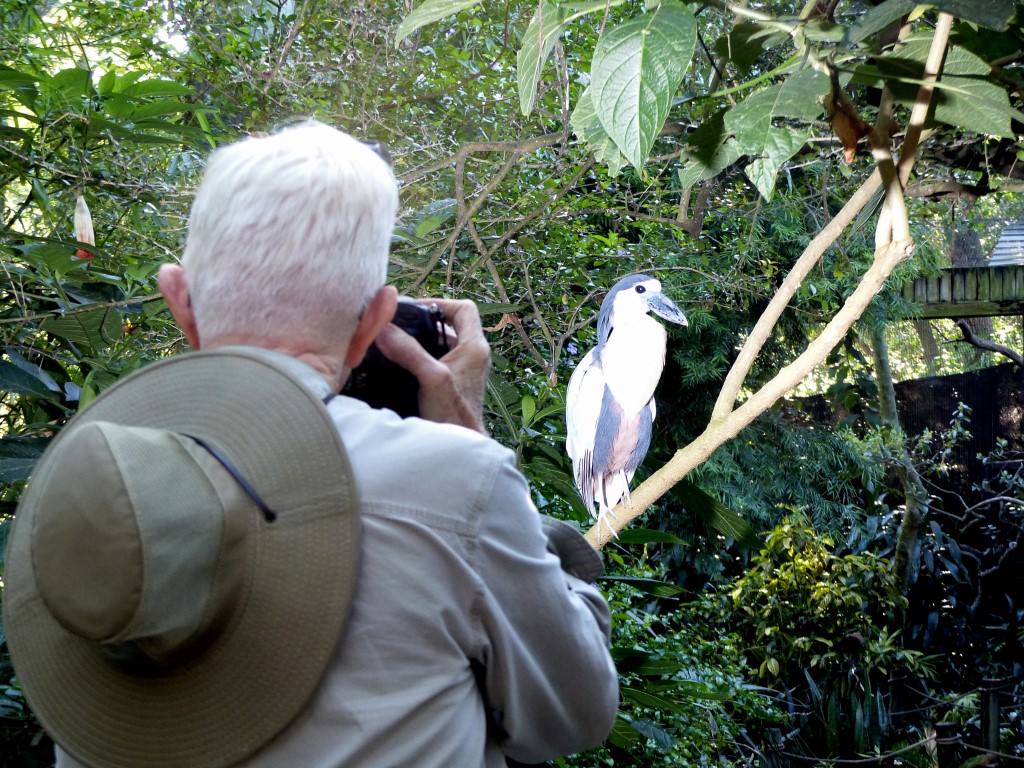
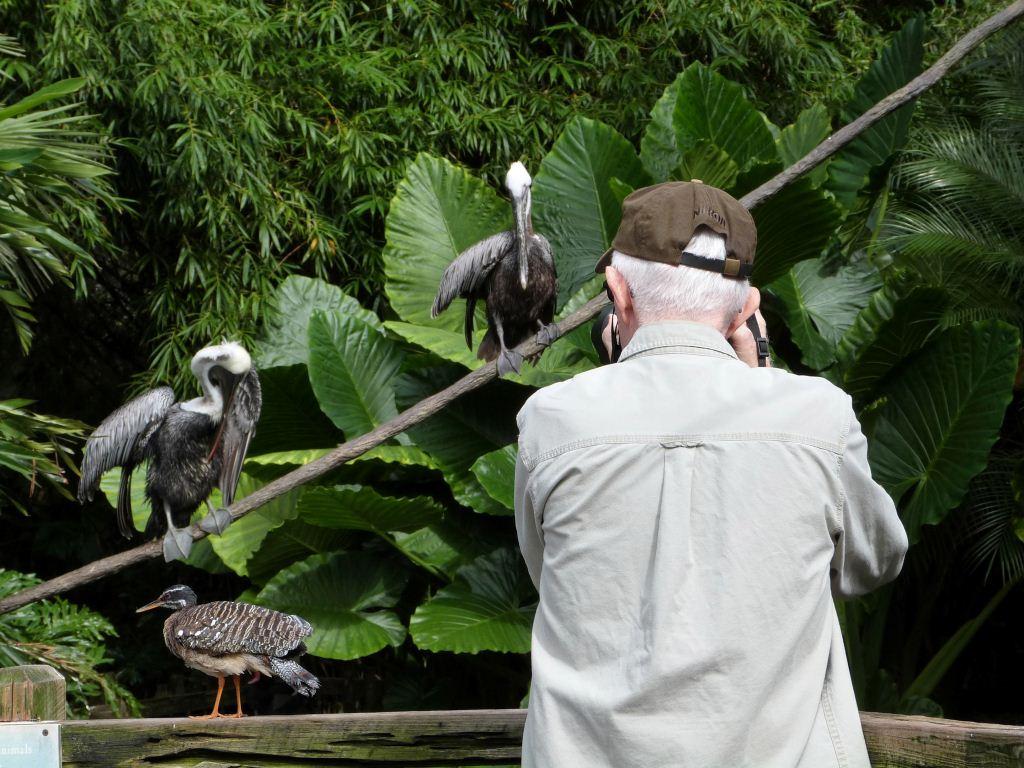
Boat-billed Heron over Dan’s Shoulder by Lee at LPZ
Dan photographing one of the Peacocks
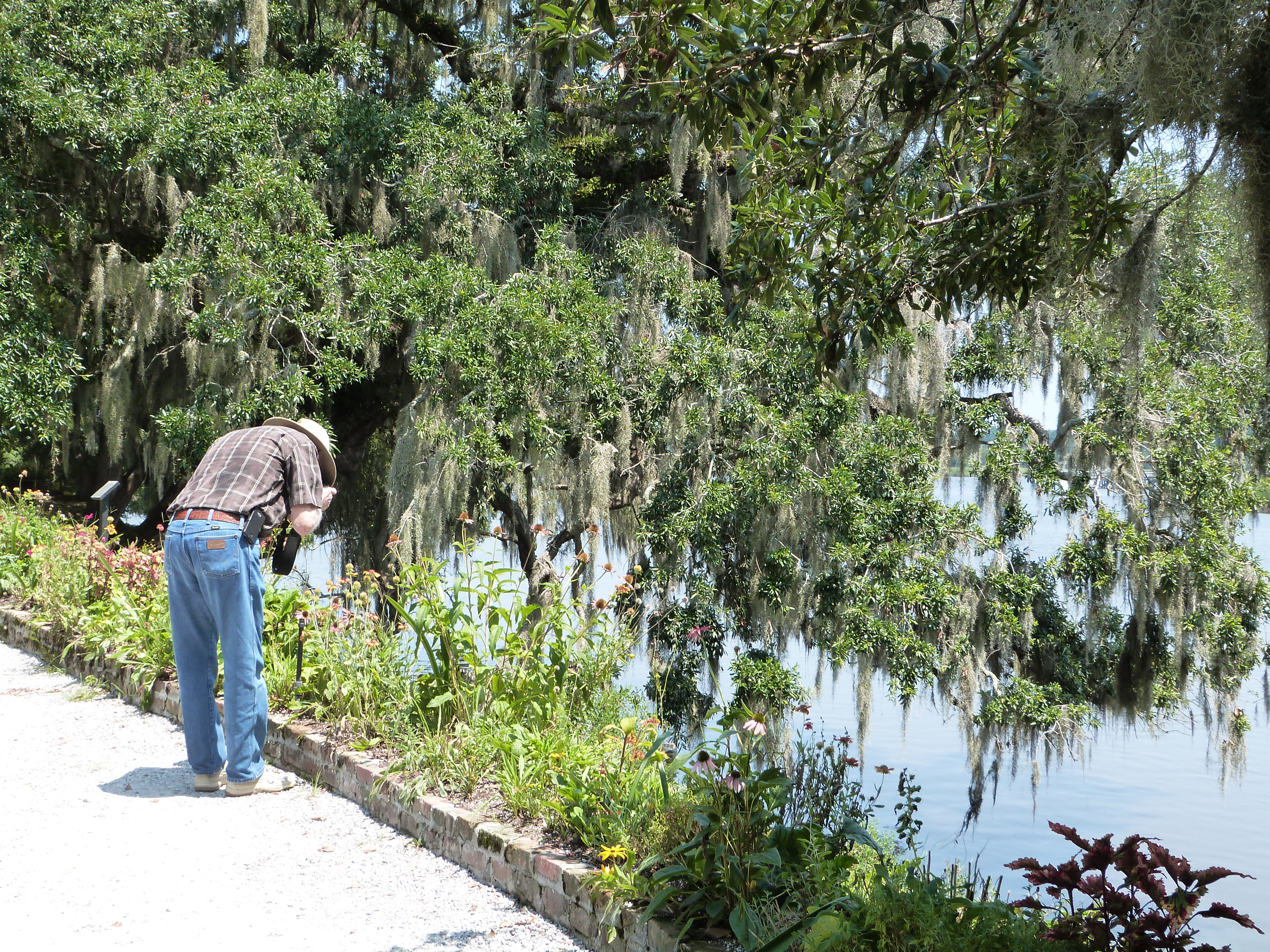
Dan at Magnolia Plantation
Retired Gunners Mate Dan at Patriots Point
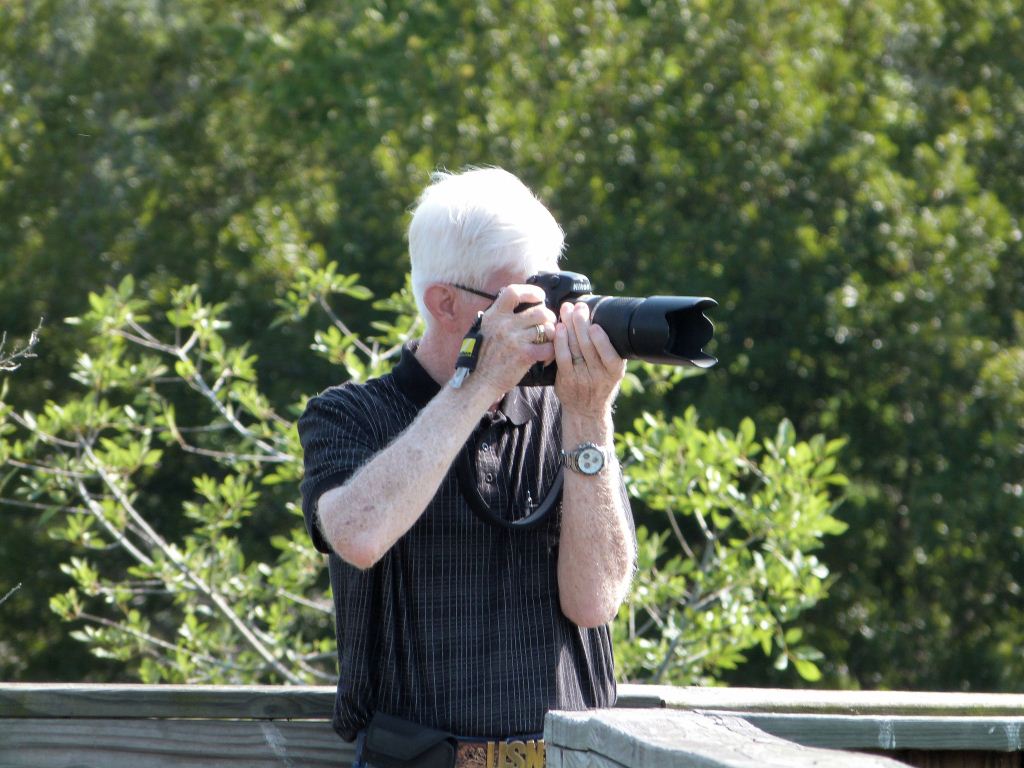
Dan at work
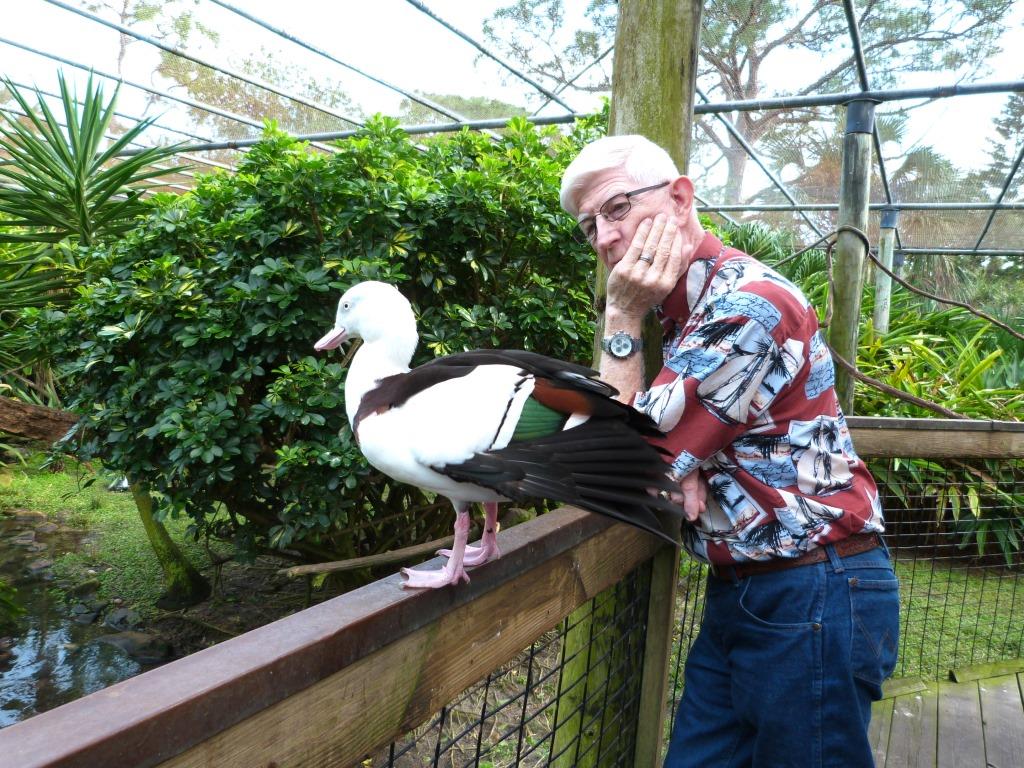
Dan and a Radjah Duck Brevard Zoo
Galah and Dan Brevard Zoo by Lee
Dan at Work at Jacksonville Zoo
Dan
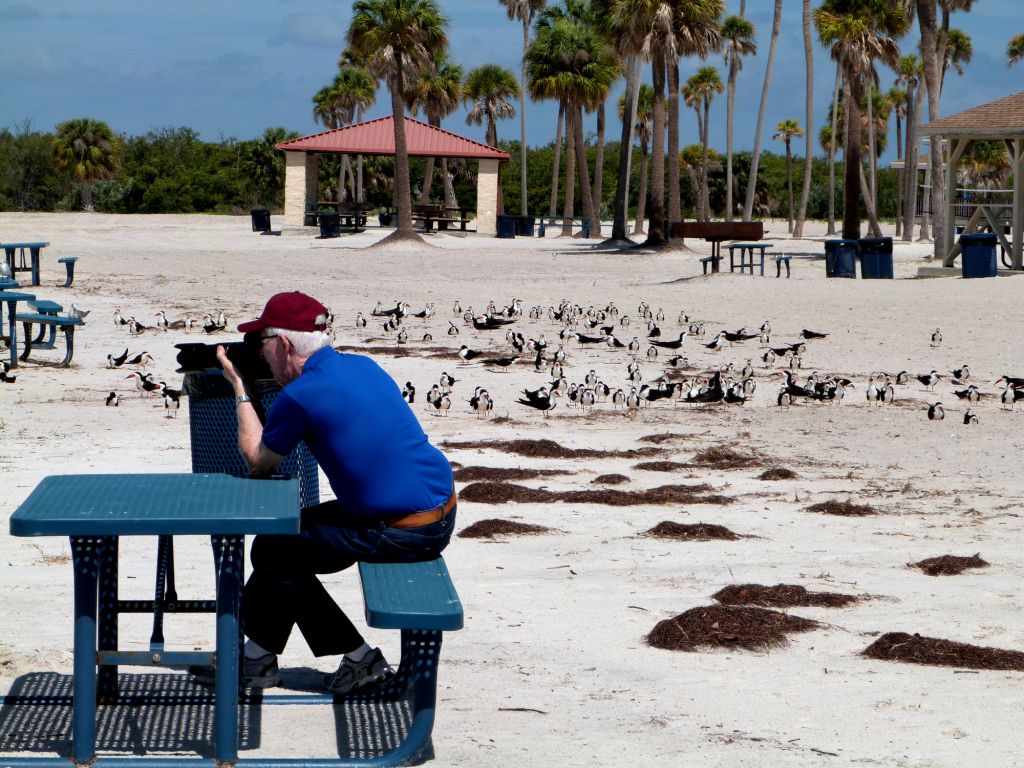
Dan and Black Skimmers
20090918 Circle B Dan at Work
Penguins being photographed by Dan
Dan searching for something to photograph
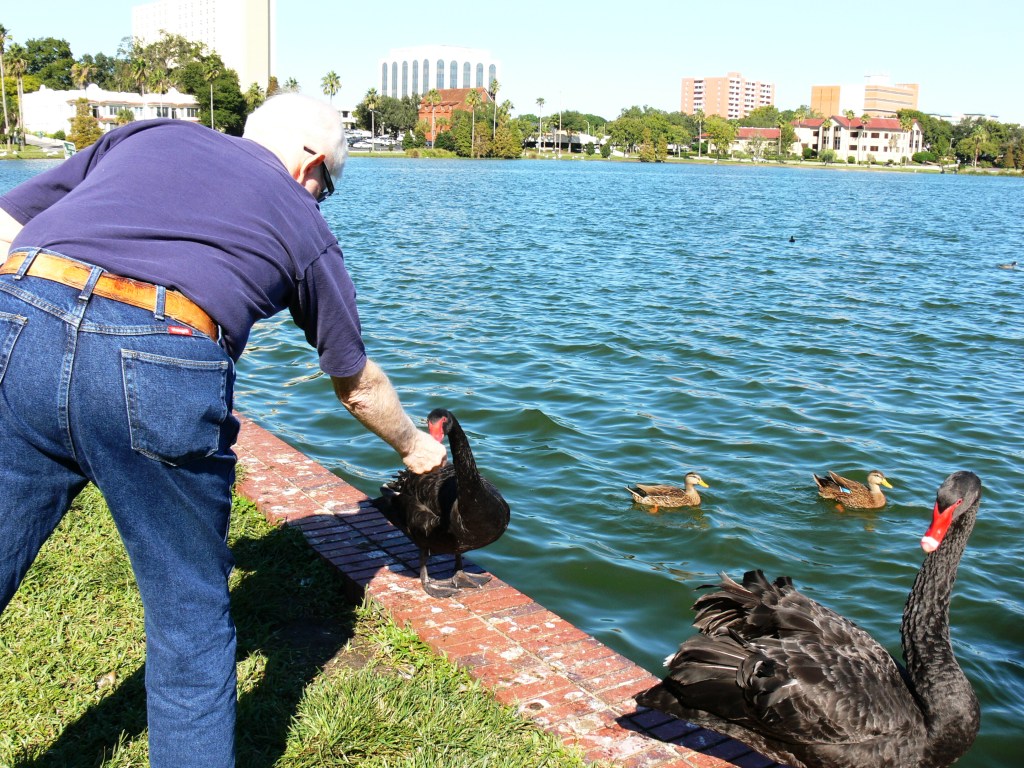
Dan feeding a Black Swan at Lake Morton
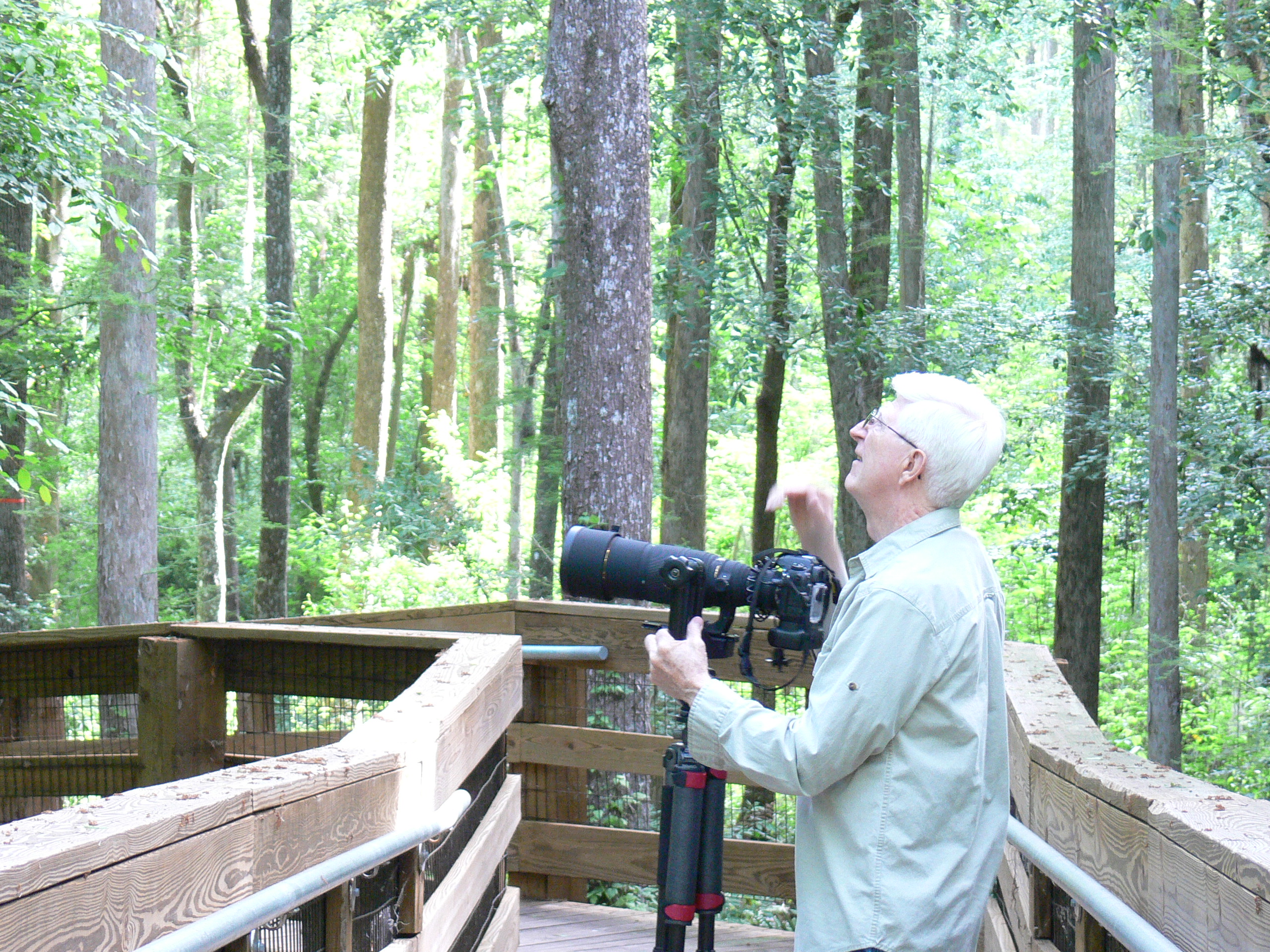
Caught Dan on the Boardwalk trying to find a bird
“Therefore shall a man leave his father and his mother, and shall cleave unto his wife: and they shall be one flesh.” (Genesis 2:24 KJV)
“And when the disciples saw Him walking on the sea, they were terrified and said, It is a ghost! And they screamed out with fright. But instantly He spoke to them, saying, Take courage! I AM! Stop being afraid!” (Matthew 14:26-27 AMP)
Jesus walked on the sea and they were terrified and might have screamed in fear.
Avian and Attributes – Scream
A scream, shout, yell, shriek, hoot, holler, vociferation, outcry, bellow, or raising one’s voice is a loud vocalization in which air is passed through the vocal folds with greater force than is used in regular or close-distance vocalization. This can be performed by any creature possessing lungs, including humans. There are slight differences in meaning among them; for example, “scream” and “shriek” generally refer to a higher-pitched, sharp sound, used by some birds and other animals, and a “hoot”, such as emitted by an owl, usually does not involve words.
A scream is often an instinctive or reflex action, with a strong emotional aspect, like fear, pain, surprise, joy, anger, etc. [This would describe what those in the boat most like did.]
Screaming Cowbird (Molothrus rufoaxillaris) is an obligate brood parasite belonging to the family Icteridae and is found in South America. It is also known commonly as the short billed cowbird.
Within South America, the screaming cowbird is found in north east and central Argentina, south east Bolivia, central Brazil and throughout Paraguay and Uruguay. Its natural habitat is pastureland where it forages amongst grazing animals such as cows, hence the name “cowbird”. Similar to other cowbirds, it forages predominantly on the ground, eating invertebrates that have been disturbed by grazing stock. The distribution of the screaming cowbird has increased significantly in recent decades due to habitat alteration caused by deforestation and by following its hosts into new areas.
Screaming Piha (Lipaugus vociferans) by AGrosset
Screaming Piha (Lipaugus vociferans) is a species of passerine bird in the family Cotingidae. It is found in humid forests in the Amazon and tropical parts of the Mata Atlântica in South America. It is adapting well to human settlement areas like gardens and parks.
Both sexes have dull grey plumage (wings and tail often somewhat browner) and a voice that is extraordinary loud. Males often gather in loose leks, where they sing to attract females.
The Cofan people of Ecuador call it the Pwe-pwe Yoh, which is a reference to its voice. Among the Ecuadorian Secoyas, the bird is known as the Kwow-kwee-yo. The sound is frequently used in movies, and also can be heard in the background of the popular game Angry Birds Rio.
And Elijah came unto all the people, and said, How long halt ye between two opinions? if the LORD be God, follow him: but if Baal, then follow him. And the people answered him not a word. (1 Kings 18:21 KJV)
Still Undecided As To Which Way To Go by Lee
Elijah went there and stood in front of the people. He said, “How long will it take you to make up your minds? If the LORD is the one and only God, follow him. But if Baal is the one and only God, follow him.” The people didn’t say anything. (1 Kings 18:21 NIrV)
Just About Decided
Elijah challenged the people: “How long are you going to sit on the fence? If GOD is the real God, follow him; if it’s Baal, follow him. Make up your minds!” Nobody said a word; nobody made a move. (1 Kings 18:21 MSG)
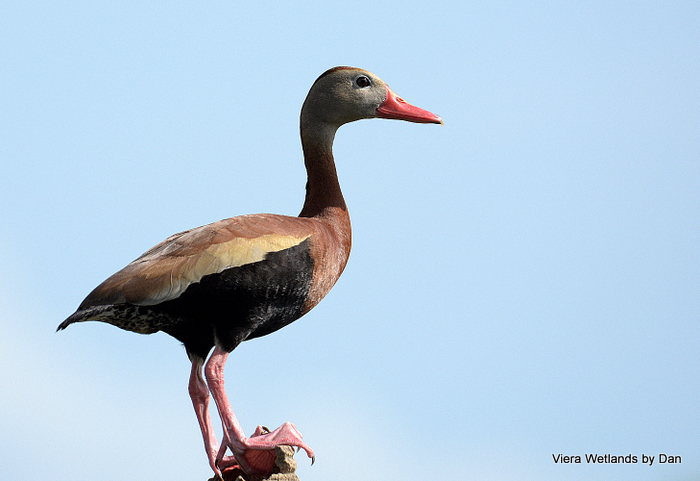
This Black-bellied Whistling-Duck was undecided about where to go. There were quite a few Whistling Ducks at Viera Wetlands, and they were playing “musical palm tree stubs.” They kept landing on these tree tops and chasing the other off. Yet, this verse comes to mind.
I trust all of us are decided about WHO we are going to follow.
Now for a picture of a Black-bellied Whistling-Duck by Dan [the much better photographer]
Black-bellied Whistling Duck by Dan
The Black-bellied Whistling-Duck is a large, gooselike duck with a long neck, long legs, and short tail. In flight, look for their broad wings, long neck, and hunched back.
Black-bellied Whistling-Ducks are dark overall: a chestnut breast and black belly are set off by a bright-pink bill and legs, grayish face, and broad white wing stripe, also visible in flight. Immatures are duller than adults, with a dark bill, pale breast, and mottled black belly. [Info from All About Birds]*
Atlantic Puffins by Bill Boothe, MD in the Isle of Mull Scotland
These Atlantic Puffin’s photo was taken by Bill Boothe, MD, in the Isle of Mull, Scotland. Dr. Boothe is a long time friend of Dr. James Johnson. It would have been nice to have been there also.
This puffin (Atlantic Puffin) has a black crown and back, pale grey cheek patches and white underparts. Its broad, boldly marked red and black beak and orange legs contrast with its plumage. It moults while at sea in the winter and some of the bright-colored facial characteristics are lost, with color returning again during the spring. The external appearance of the adult male and female are identical though the male is usually slightly larger. The juvenile has similar plumage but its cheek patches are dark grey. The juvenile does not have brightly colored head ornamentation, its bill is narrower and is dark-grey with a yellowish-brown tip, and its legs and feet are also dark. Puffins from northern populations are typically larger than in the south and it is generally considered that these populations are different subspecies.
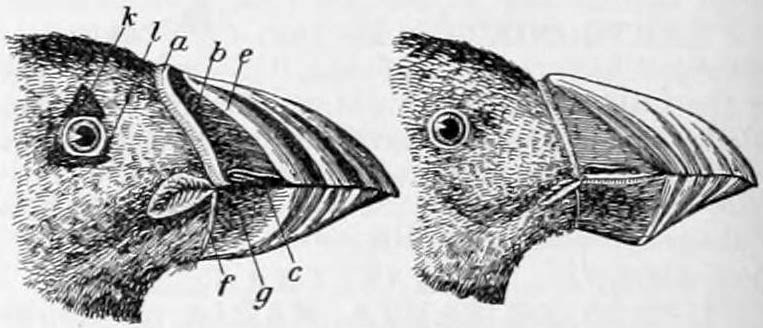
Puffin Beaks – Breeding L and non-breeding R – 1905 PubDom Drawing
Spending the autumn and winter in the open ocean of the cold northern seas, the Atlantic puffin returns to coastal areas at the start of the breeding season in late spring. It nests in clifftop colonies, digging a burrow in which a single white egg is laid. The chick mostly feeds on whole fish and grows rapidly. After about six weeks it is fully fledged and makes its way at night to the sea. It swims away from the shore and does not return to land for several years. [Wikipedia with editing]
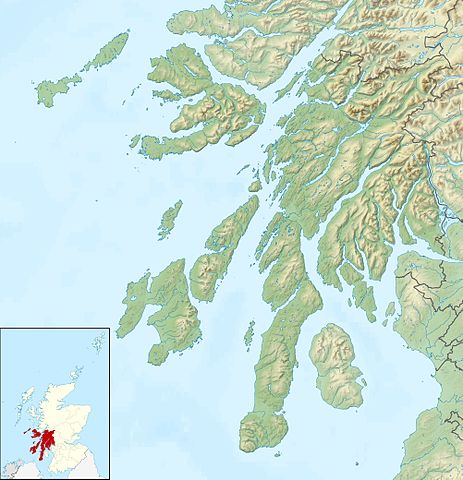
This photo was take in Mull, Scotland. “Mull (Scottish Gaelic: Muile, pronounced [ˈmulʲə]) is the second largest island of the Inner Hebrides (after Skye), off the west coast of Scotland in the council area of Argyll and Bute.
Argyll and Bute UK relief location map
With an area of 875.35 square kilometres (337.97 sq mi) Mull is the fourth largest Scottish island and the fourth largest island surrounding Great Britain (excluding Ireland). In the 2011 census the usual resident population of Mull was 2,800; a slight increase on the 2001 figure of 2,667; in the summer this is supplemented by many tourists. Much of the population lives in Tobermory, the only burgh on the island until 1973, and its capital.”
Lighter side verses: [yet very true]
“Love suffers long and is kind; love does not envy; love does not parade itself, is not puffed up;” (1 Corinthians 13:4 NKJV)
“We know that we all have knowledge. Knowledge puffs up, but love edifies.” (1 Corinthians 8:1 NKJV)
Dr. Jim, [aka J.J.S.Johnson] found this super video about Hummingbirds. It has amazing facts and nice music. Please watch. You will glad you did.
This is on Nature’s Invitation YouTube Channel. ‘Over 20 amazing Facts about Hummingbirds. Slow motion footage of the hummingbird in Full HD. Great for school nature projects. Watch hummingbirds fly in ULTRA slow motion. Watch the humming bird hover and fly backwards in slow motion. Videos of hummingbird babies (chicks) being fed and much more.”
“But where can wisdom be found? And where is the place of understanding? Man does not know its value, Nor is it found in the land of the living. The deep says, ‘It is not in me’; And the sea says, ‘It is not with me.’ It cannot be purchased for gold, Nor can silver be weighed for its price. (Job 28:12-15)
“From where then does wisdom come? And where is the place of understanding? It is hidden from the eyes of all living, And concealed from the birds of the air. (Job 28:20-21)
God understands its way, And He knows its place. For He looks to the ends of the earth, And sees under the whole heavens, To establish a weight for the wind, And apportion the waters by measure. When He made a law for the rain, And a path for the thunderbolt, Then He saw wisdom and declared it; He prepared it, indeed, He searched it out. And to man He said, ‘Behold, the fear of the Lord, that is wisdom, And to depart from evil is understanding.’ ” (Job 28:23-28 NKJV)
















 Lee's Birdwatching Adventures Plus