“And the foundations of the wall of the city were garnished with all manner of precious stones. The first foundation was jasper; the second, sapphire; the third, a chalcedony; the fourth, an emerald; (Revelation 21:19 KJV)
“And there sat in a window a certain young man named Eutychus, being fallen into a deep sleep: and as Paul was long preaching, he sunk down with sleep, and fell down from the third loft, and was taken up dead.” (Acts 20:9 KJV)
Sword-billed Hummingbird (Ensifera ensifera) by Michael Woodruff
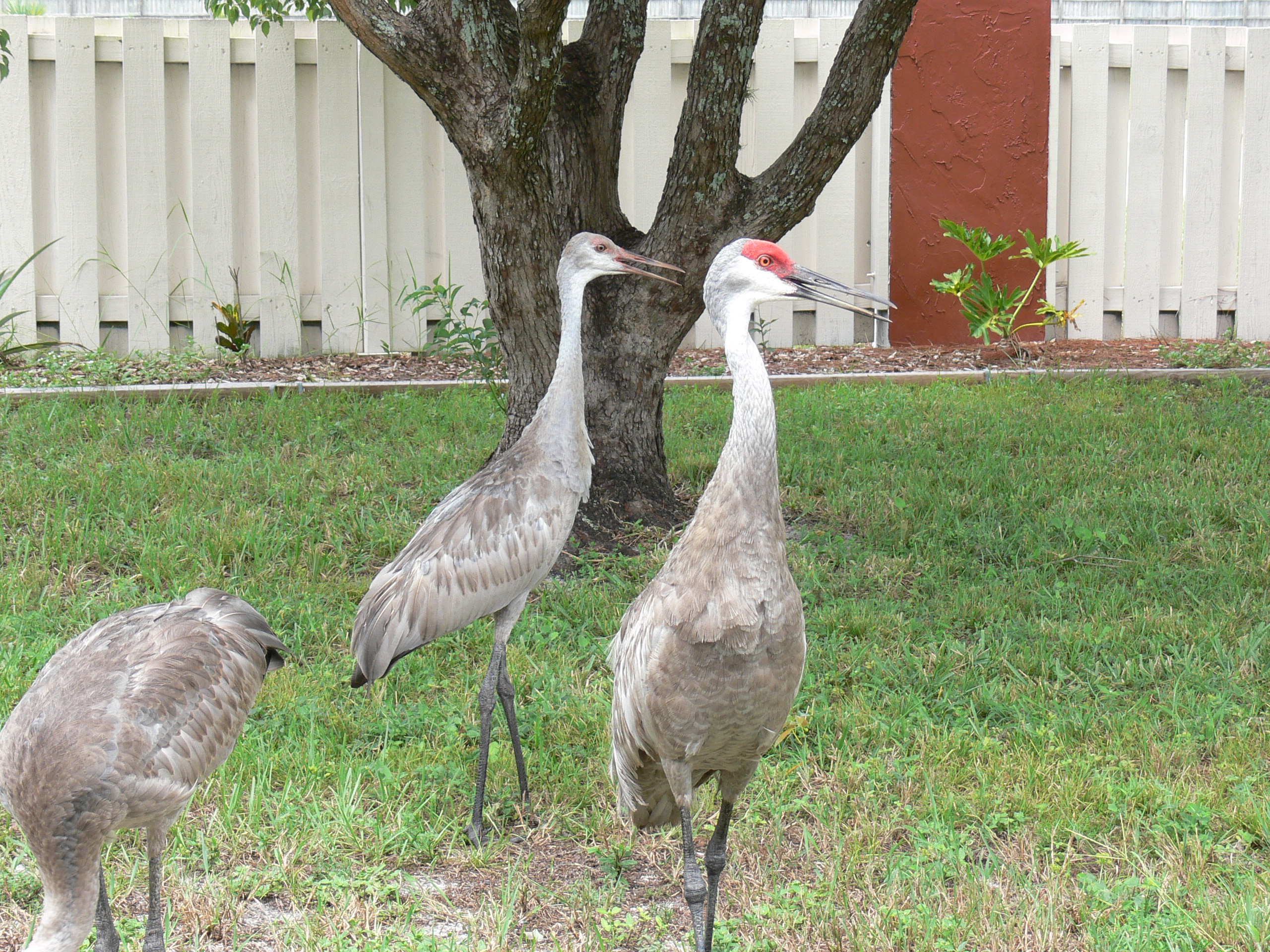
Sandhill Cranes – Adult and Juvenile in our yard 8/27/10
The latest I.O.C. Birds of the World Version 7.2 is now completed on this site. [As far as I know] Just finished updating all the Indexes for the birds by the First Name and by the Last Name. I trust this will continue to assist in finding just that bird you are looking for. [I find it easier to find the birds on Lee’s Birdwatching Adventures, than out in the field trying to find them. :0) ]
The last two articles, Latest I.O.C. Update is Version 7.2 – Name Changes and the Species Changes listed those changes. Today’s updates are in the Taxonomy. Some of these were changes in genera, a few were spelling corrections, a couple of them shuffled some birds around.
Sandhill Crane (Antigone canadensis) by Lee at Wings of Asia
Four Antwrens were changed from the Terenura genus to the Euchrepomis genus. They are the Rufous-rumped Antwren, Chestnut-shouldered Antwren, Yellow-rumped Antwren, and the Ash-winged Antwren.
Two Bulbuls; the Olive Bulbul had a spelling correction from virescens to viridescens, and the Buff-vented Bulbul is Iole crypta.
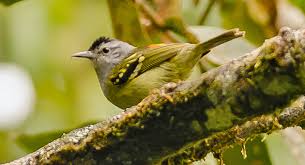
And last of all, two Laughingthrushes, the Black-chined and Kerala, have a new genus of Montecincla.
Most casual birdwatchers are not too concerned about these kinds of changes, but those who work with photos and life lists, etc. have an interest.
Until the next update, it is hoped that the indexes and information will be helpful.
“They are all plain to him who understands, And right to those who find knowledge.” (Proverbs 8:9 NKJV)
The latest update to the I.O.C.’s list of all the birds of the world was released near the end of April. This blog site, Lee’s Birdwatching Adventures Plus, is almost updated with this new version. All the indexes and the actual family pages are finished. The alphabetical list of names is all that is left for me to update.
One bird was deleted from the list with this version:
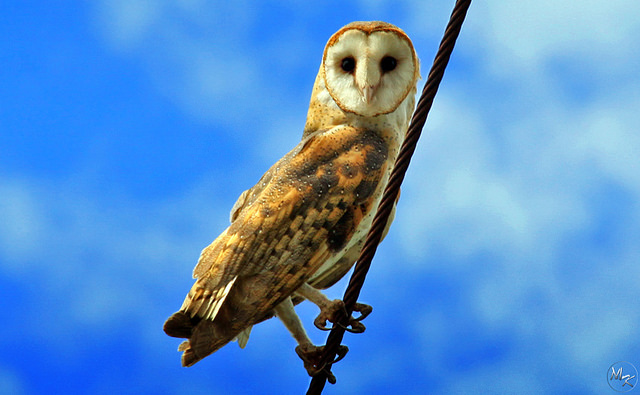
American Barn Owl (Tyto furcata) part of Barn Owls
Blue-vented Hummingbird (Amazilia hoffmanni) split from Steely-vented Hummingbird
Peruvian Racket-tail (Ocreatus peruanus) split from Booted Racket-tail (now White-booted)
Rufous-booted Racket-tail (Ocreatus addae) split from Booted Racket-tail (now White-booted)
Bermuda Flicker (Colaptes oceanicus) Extinct, not Pre-historic :o)
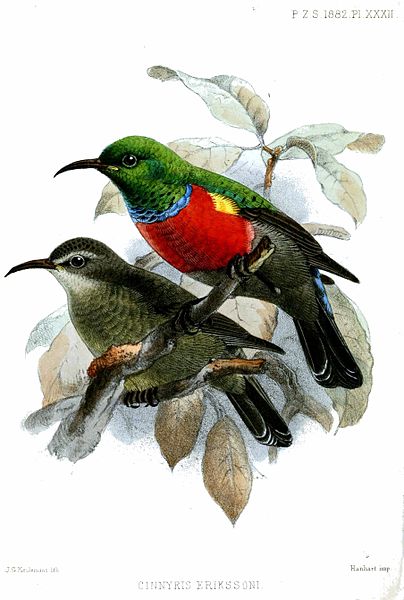
Whyte’s Double-collared Sunbird (Cinnyris whytei) split from Ludwig’s Double-collared Sunbird
Tomorrow, I’ll try to present rest of the changes. Still working on indexes.
The reason for the smiley face after the new extinct ones is because as most readers of this blog are aware, that this blog teaches Creation, not evolution. That means they now know the birds lived not soooooo far back in history.
Then God said, “Let the waters abound with an abundance of living creatures, and let birds fly above the earth across the face of the firmament of the heavens.” So God created great sea creatures and every living thing that moves, with which the waters abounded, according to their kind, and every winged bird according to its kind. And God saw that it was good. (Genesis 1:20-21 NKJV)
The latest update to the I.O.C.’s list of all the birds of the world was released near the end of April. This blogsite, Lee’s Birdwatching Adventures Plus, is almost updated with this new version. All the indexes and the actual family pages are finished. The alphabetical list of names is all that is left for me to update.
Here are the name and spelling changes made with this new Version:
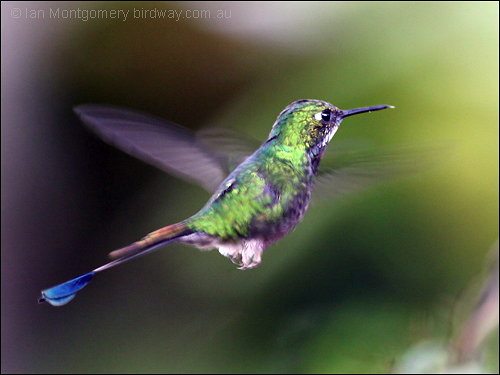
Booted now White-booted Racket-tail (Ocreatus underwoodii) by Ian
Rufous-bellied Hawk-Eagle (Lophotriorchis kienerii) now Rufous-bellied Eagle
Booted Racket-tail (Ocreatus underwoodi) now White-booted Racket-tail
Oriental Paradise Flycatcher (Terpsiphone affinis) now Blyth’s Paradise Flycatcher
Irrawaddy Bulbul (Pycnonotus blanfordi) now Ayeyarwady Bulbul
Santa Marta Wood Wren (Henicorhina anachoreta) now Hermit Wood Wren
White-bellied Thrush (Zoothera margaretae) now Makira Thrush
Henri’s Snowfinch (Montifringilla henrici) now Tibetan Snowfinch
Tibetan Snowfinch (Montifringilla adamsi) now Black-winged Snowfinch
Eurasian Crimson-winged Finch (Rhodopechys sanguineus) now Asian Crimson-winged Finch
Tomorrow, I’ll try to present some more of the changes.
And the king of Babylon made Mattaniah his father’s brother king in his stead, and changed his name to Zedekiah. (2 Kings 24:17 KJV)
“Praise the LORD from the earth, ye dragons, and all deeps: Fire, and hail; snow, and vapour; stormy wind fulfilling his word: Mountains, and all hills; fruitful trees, and all cedars: Beasts, and all cattle; creeping things, and flying fowl:” (Psalms 148:7-10 KJV)
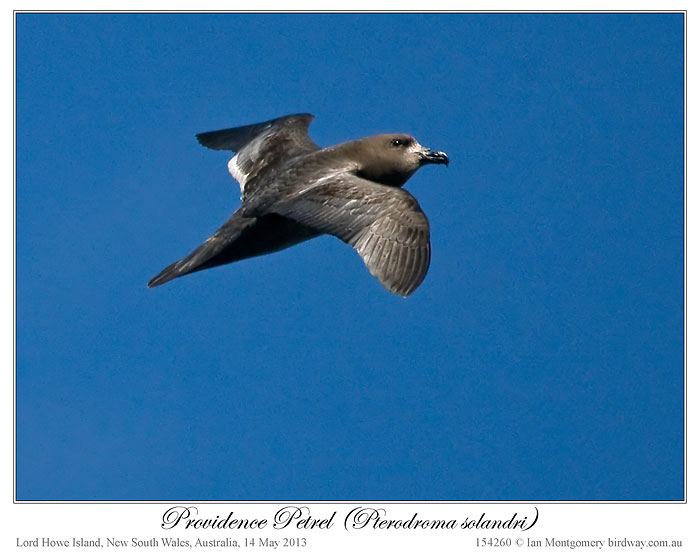
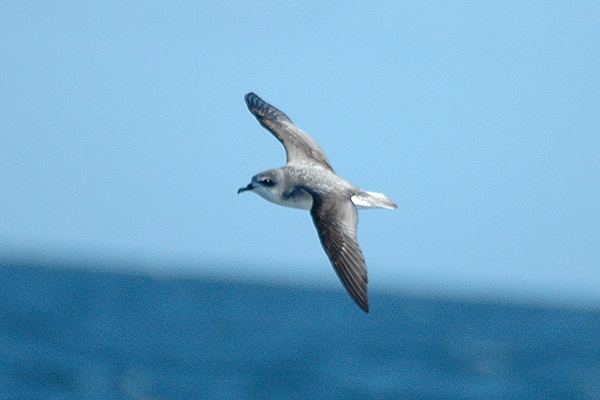
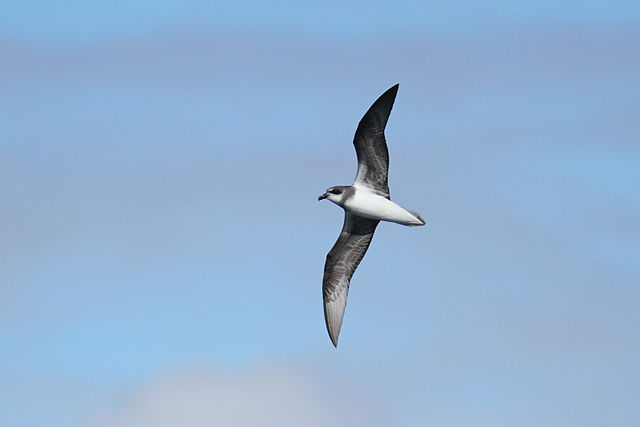
The Petrels in the Pterodroma genus has enough species to present them in their own post. Ian Montgomery, (Bird of the Week/Moment), has quite a few photos of this family on his Birdway Site.
“The gadfly petrels are seabirds in the bird order Procellariiformes. The gadfly petrels are named for their speedy weaving flight as if evading horseflies. The flight action is also reflected in the genus name Pterodroma, from Ancient Greek pteron, “wing” and dromos, “runner”.
“These medium to large petrels feed on food items picked from the ocean surface.”
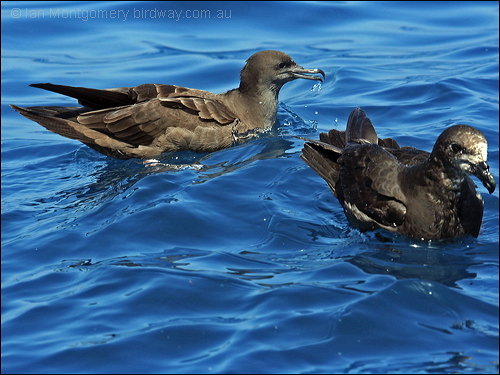
Great-winged Petrel (Pterodroma macroptera) by Ian
“The short, sturdy bills of the Pterodroma species in this group, about 35 altogether, are adapted for soft prey taken at the surface; they have twisted intestines for digesting marine animals which have unusual biochemistries.”
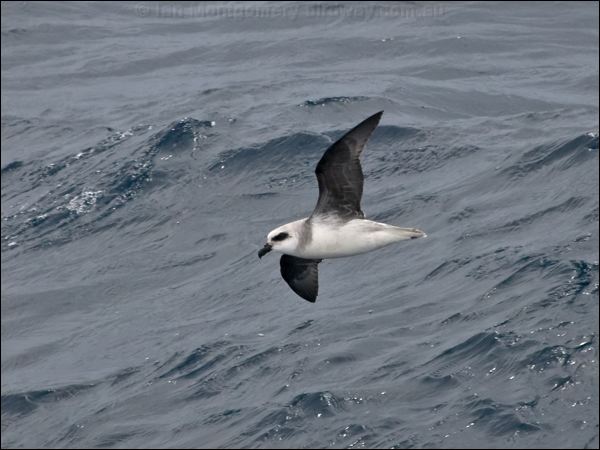
White-headed Petrel (Pterodroma lessonii) by Ian
“Their complex wing and face marking are probably for interspecific recognition.”
“These birds nest in colonies on islands and are pelagic when not breeding. One white egg is laid usually in a burrow or on open ground. They are nocturnal at the breeding colonies.”
“While generally wide-ranging, most Pterodroma species are confined to a single ocean basin (e.g. Atlantic), and vagrancy is not as common amongst Pterodromas as it is in some other seabird species (c.f. the Storm-Petrels Hydrobatidae).” (Information from Wikipedia)
This slideshow requires JavaScript.
*
“Praise ye the LORD. Praise God in his sanctuary: praise him in the firmament of his power. Praise him for his mighty acts: praise him according to his excellent greatness. Praise him with the sound of the trumpet: praise him with the psaltery and harp. Praise him with the timbrel and dance: praise him with stringed instruments and organs. Praise him upon the loud cymbals: praise him upon the high sounding cymbals. Let every thing that hath breath praise the LORD. Praise ye the LORD.” (Psalms 150:1-6 KJV)










 Lee's Birdwatching Adventures Plus