Orni-Theology and The Nest

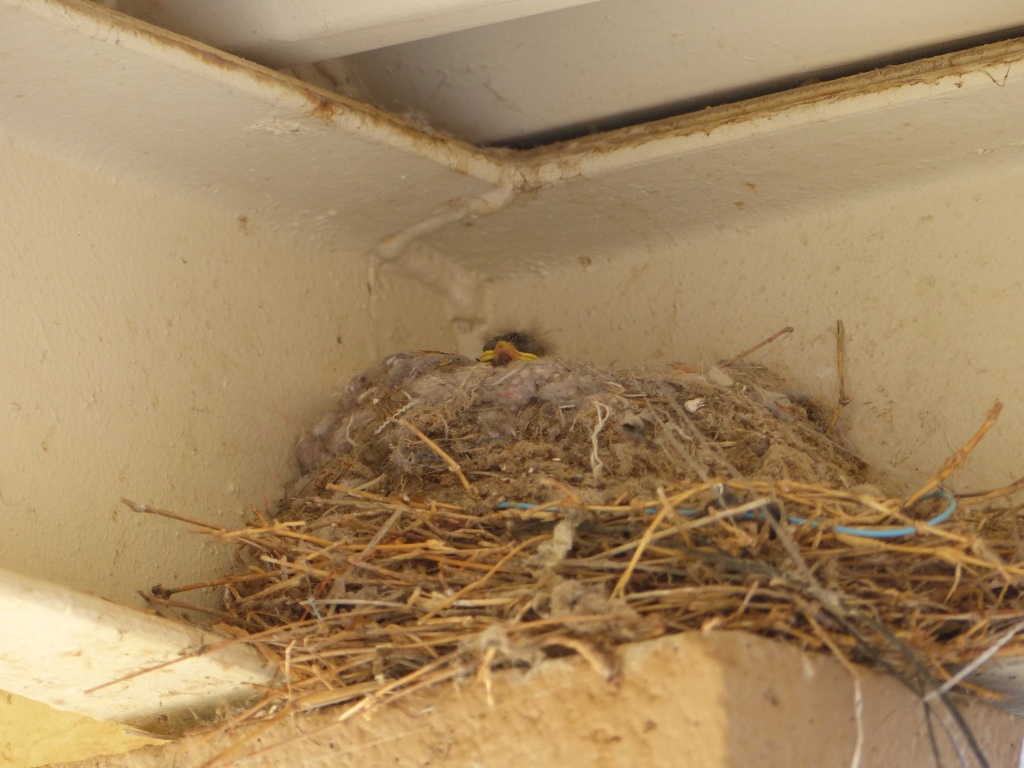
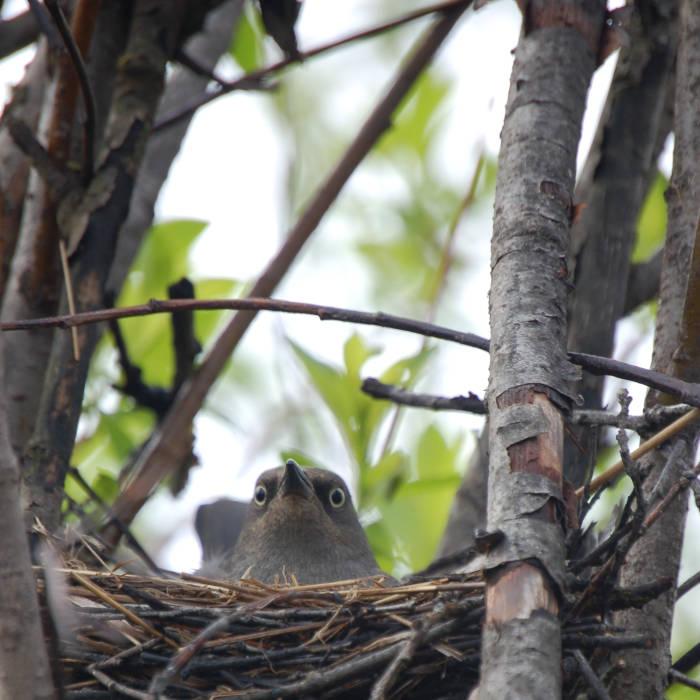
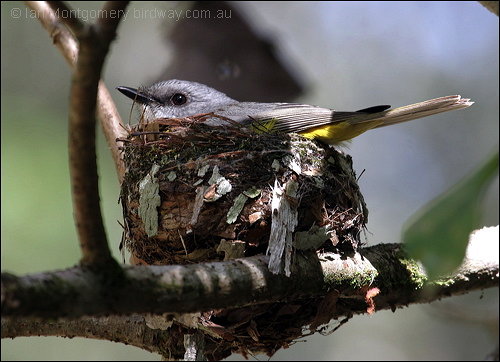
Say’s Phoebe Nest and Nestling

While working on that last post, Say’s Phoebe and Nest, I got to thinking about that nest. Did you really look at it? Click the photo to enlarge it and really LOOK at it.

Luzon Bleeding-heart by Dan

Orni-Theology

What do you see? All kinds of different material. There are weeds, pieces of paper, strings, lint, feathers, and even some “weed-eater” line (blue).

It is amazing what goes into a nest, yet it turns out to be quite comfortable for the baby birds. Each piece of “stuff,” though different, seems to blend together.

Our churches are the same way, or at least they should be. I Corinthians 12 has much to say about the body and the church.

Now there are diversities of gifts, but the same Spirit. And there are differences of administrations, but the same Lord. And there are diversities of operations, but it is the same God which worketh all in all. But the manifestation of the Spirit is given to every man to profit withal. (1 Corinthians 12:4-7 KJV)

Scripture goes on to name different gifts, then says, “But all these worketh that one and the selfsame Spirit, dividing to every man severally as he will. For as the body is one, and hath many members, and all the members of that one body, being many, are one body: so also is Christ. For by one Spirit are we all baptized into one body, whether we be Jews or Gentiles, whether we be bond or free; and have been all made to drink into one Spirit. For the body is not one member, but many. (1 Corinthians 12:11-14 KJV)

Weed-eater Line

Weed-eater Line

Just as there are different things making up that nest, the Lord gives us a part to do in the church. Some are good at one thing and others another. That weed-eater line reminds me of those willing to mow and clear out the weeds around the church. Some like to sew things and could have provided the strings. Not all of us can be preachers, deacons or teachers, but the Lord has some talents He has given all of us. It is up to us to be willing to use it for Him.

But now hath God set the members every one of them in the body, as it hath pleased him. And if they were all one member, where were the body? But now are they many members, yet but one body. (1 Corinthians 12:18-20 KJV)

Now ye are the body of Christ, and members in particular. (1 Corinthians 12:27 KJV)

I think that nest looks a mite “rag-tag” from my point of view, but to that little bird, it is “home” and he seems quite comfortable. We are fortunate that we have a great church “home” at Faith Baptist and I trust you have a great church “home” also. No matter our age or abilities, there must be something the Lord would like you to do. Just be willing and pray for His leading.

I can do all things through Christ which strengtheneth me. (Philippians 4:13 KJV)

*

*

Jacksonville Zoo’s Noisy Stork Tree

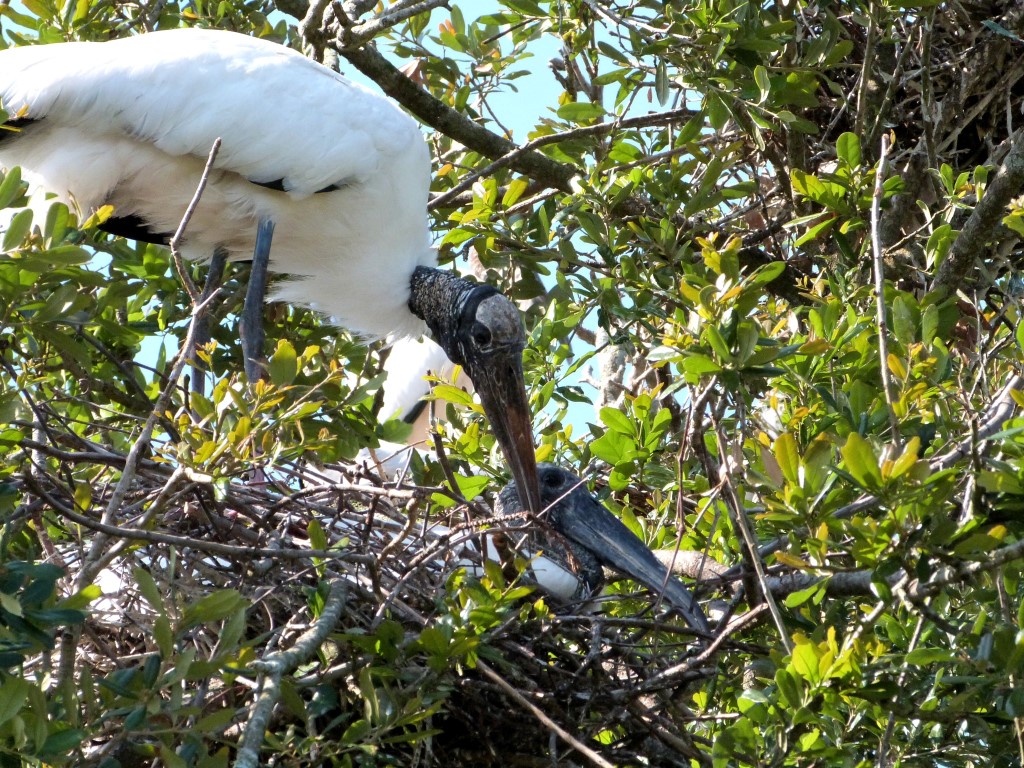
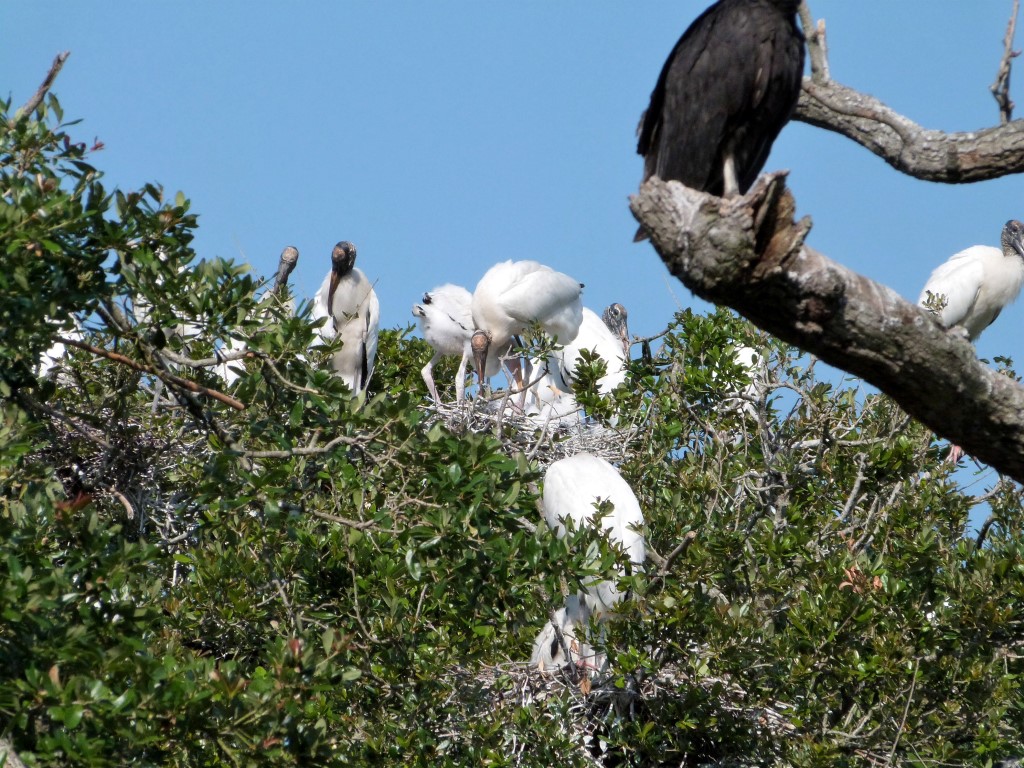
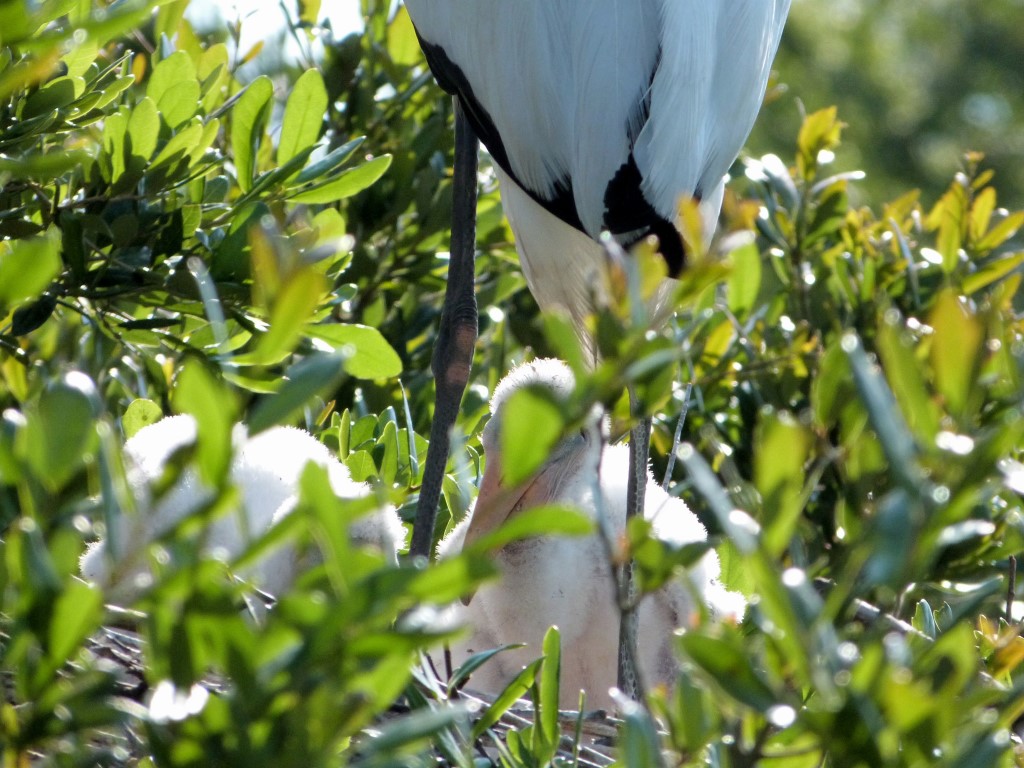
Wood Stork (Mycteria americana) with Chicks Jax Zoo by Lee

Wood Stork (Mycteria americana) with Chicks Jax Zoo by Lee

Yea, the stork in the heaven knoweth her appointed times; and the turtle and the crane and the swallow observe the time of their coming; but my people know not the judgment of the LORD. (Jeremiah 8:7 KJV)

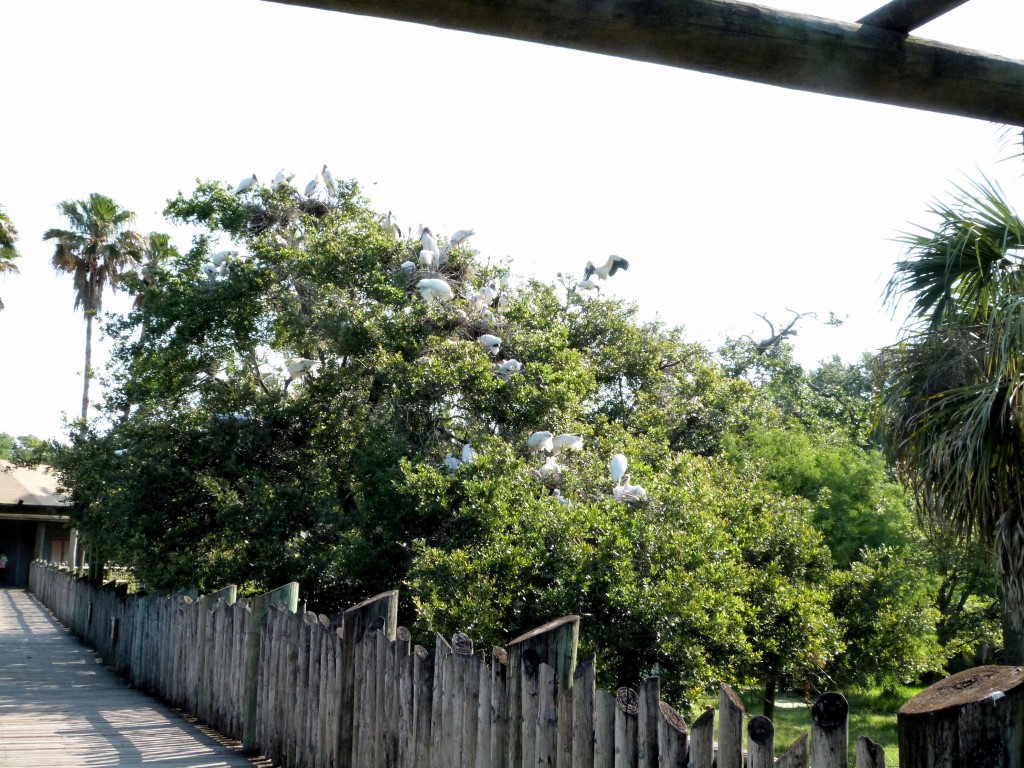
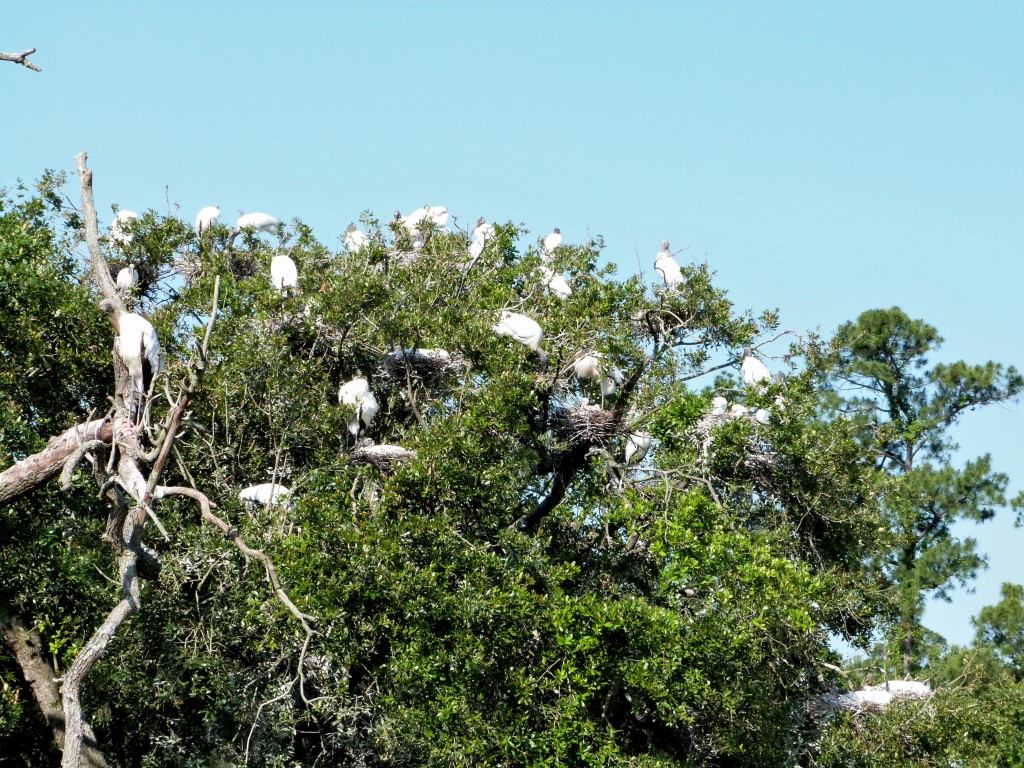
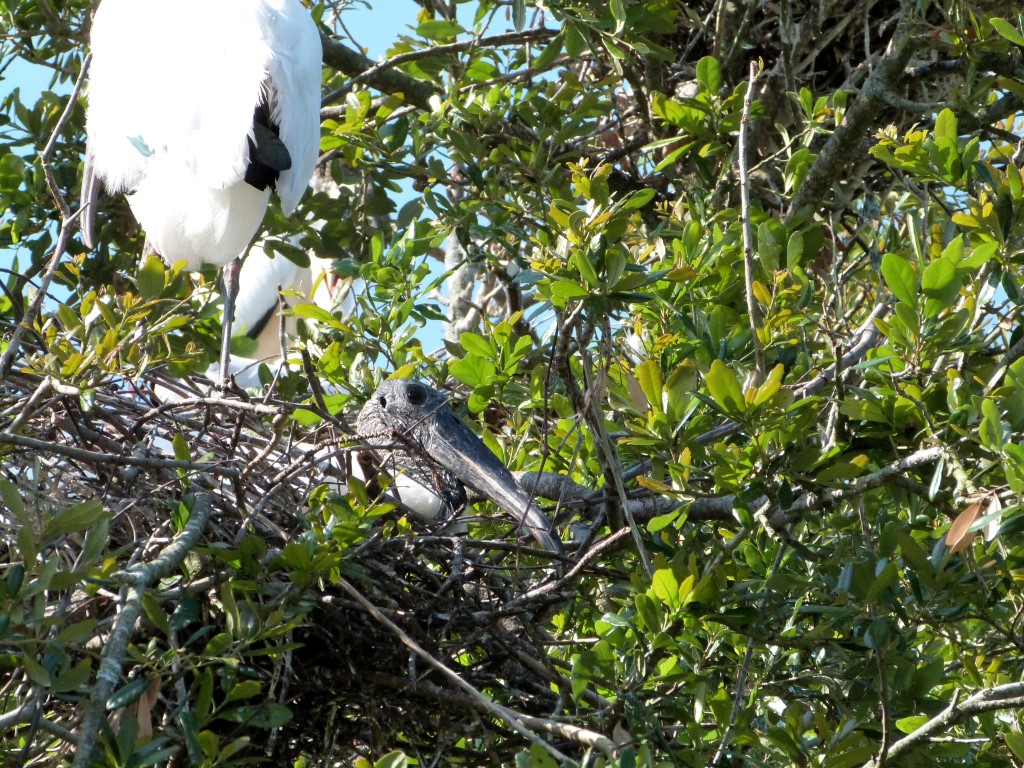
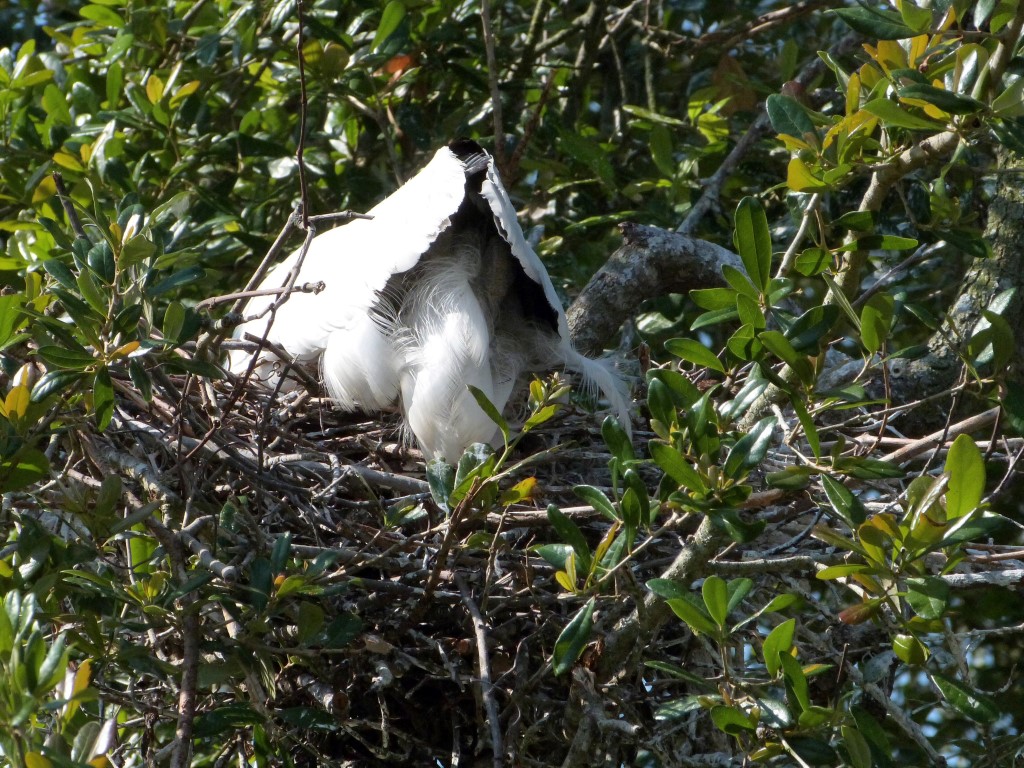
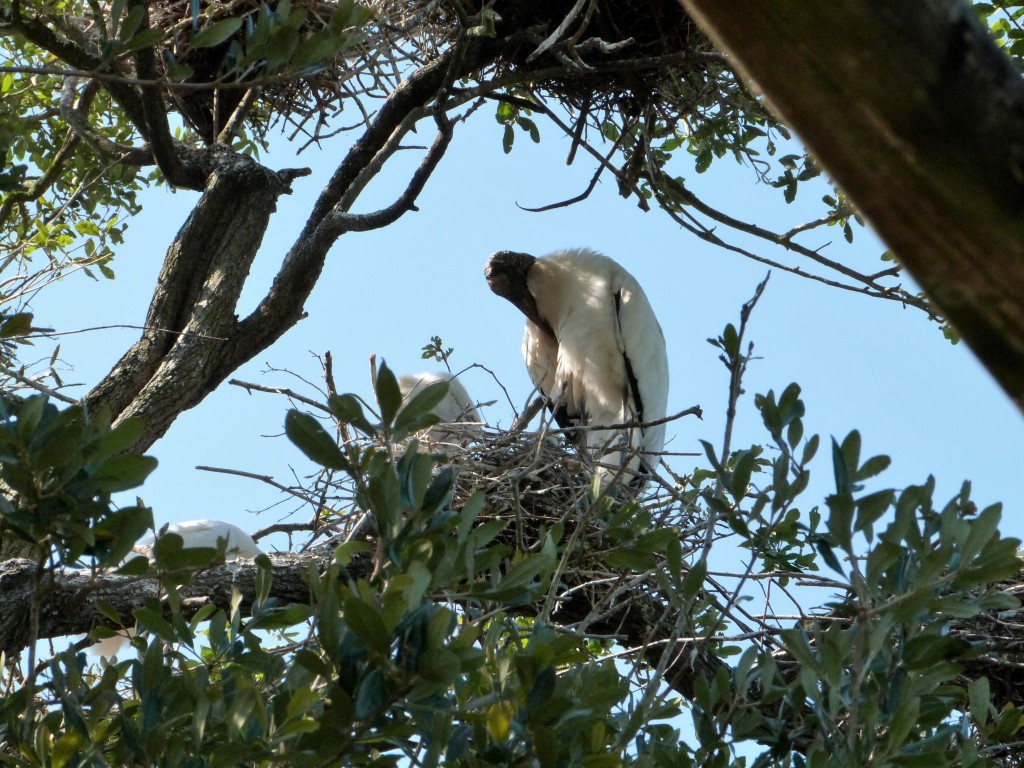
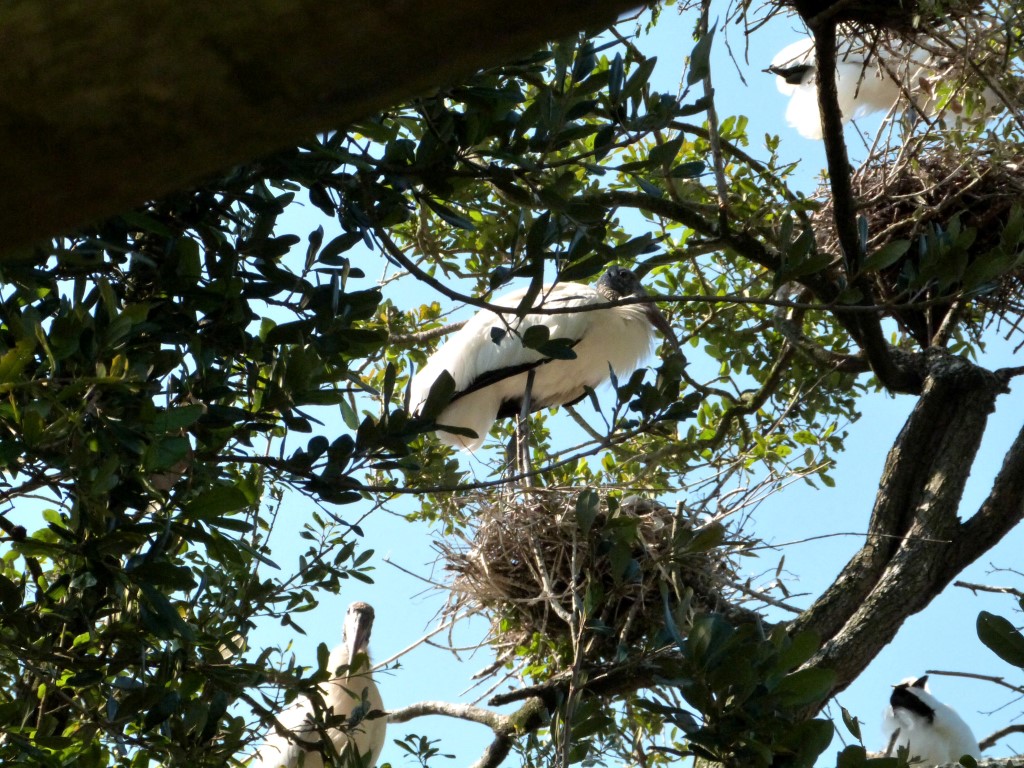
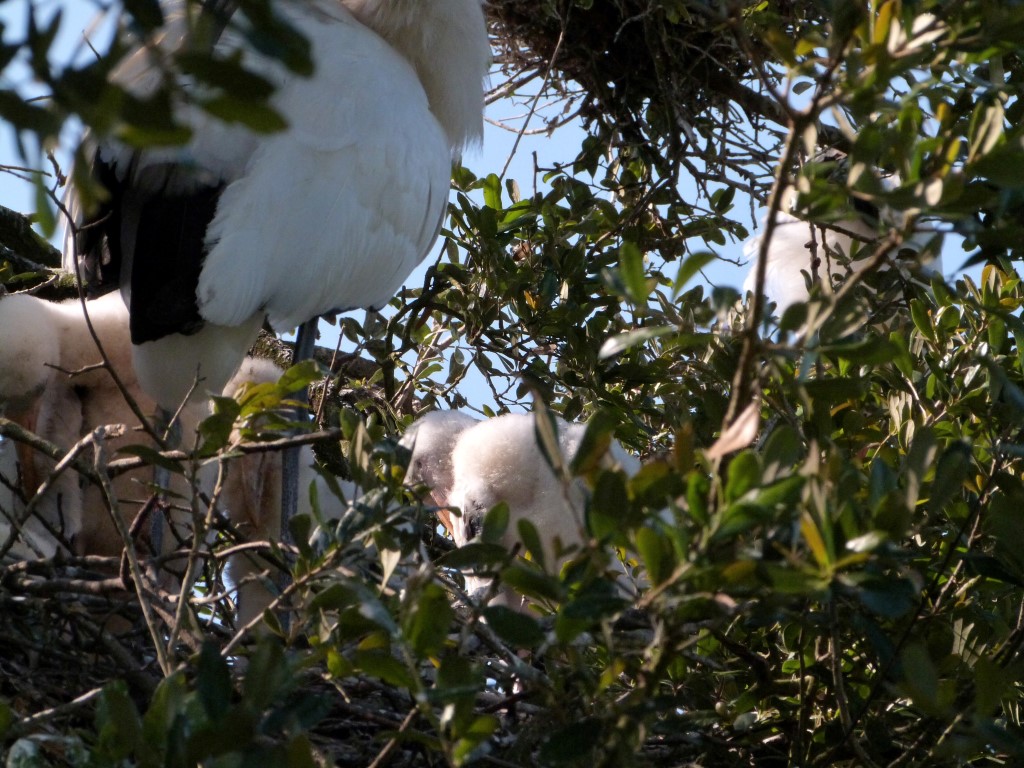
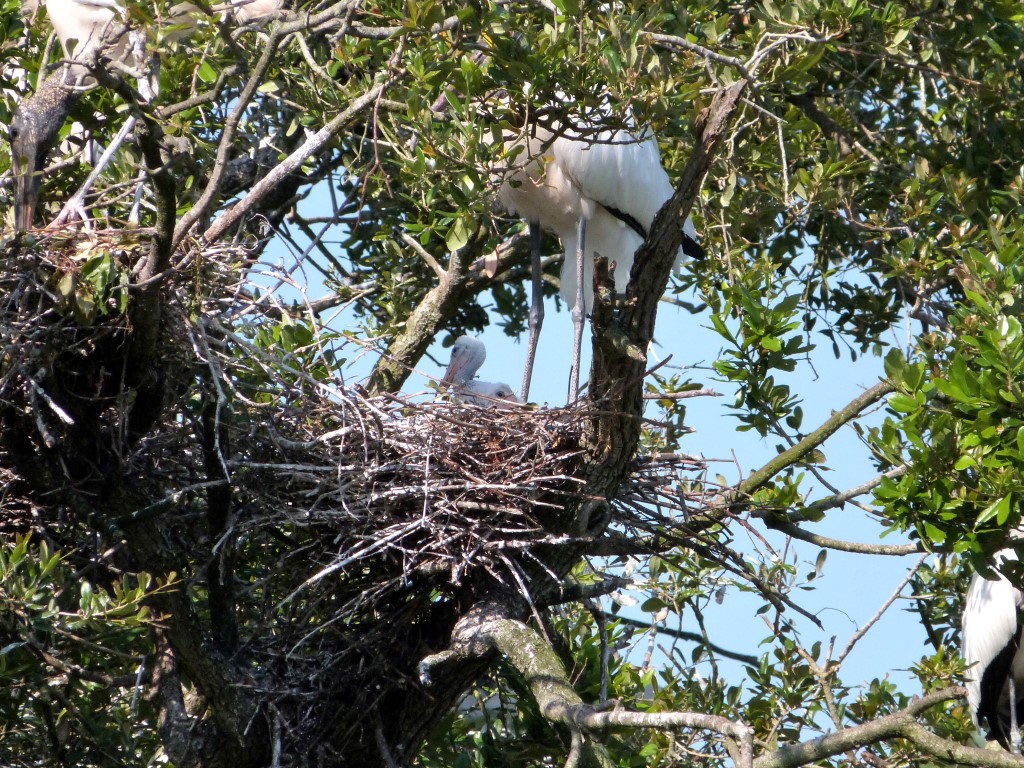
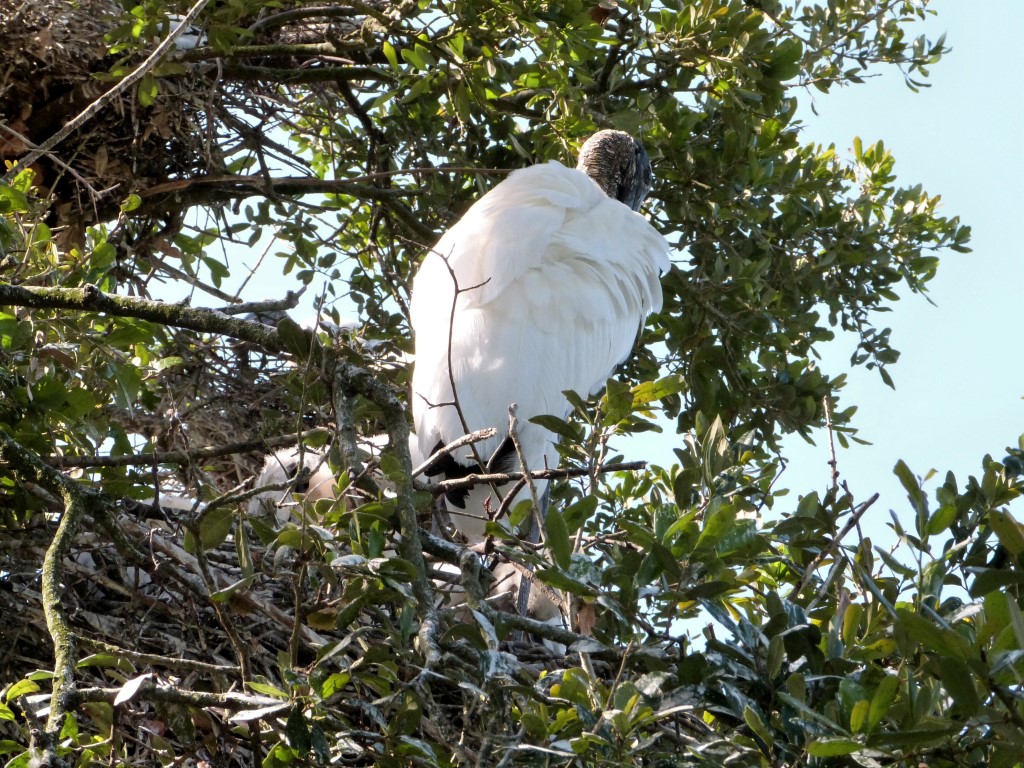
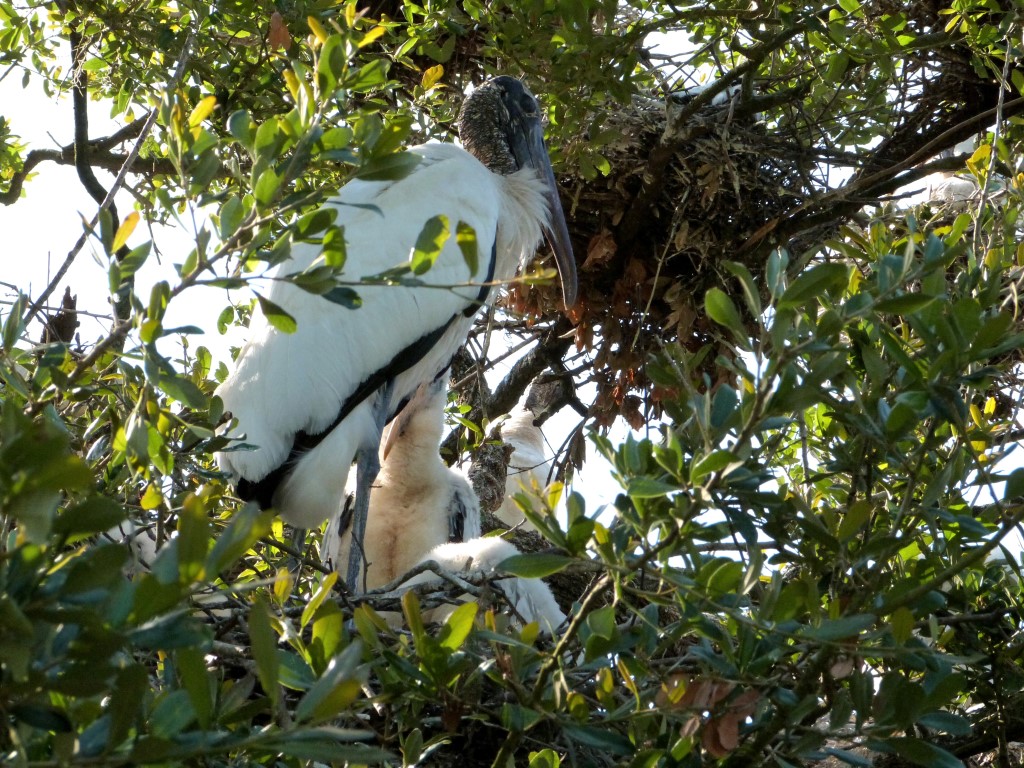
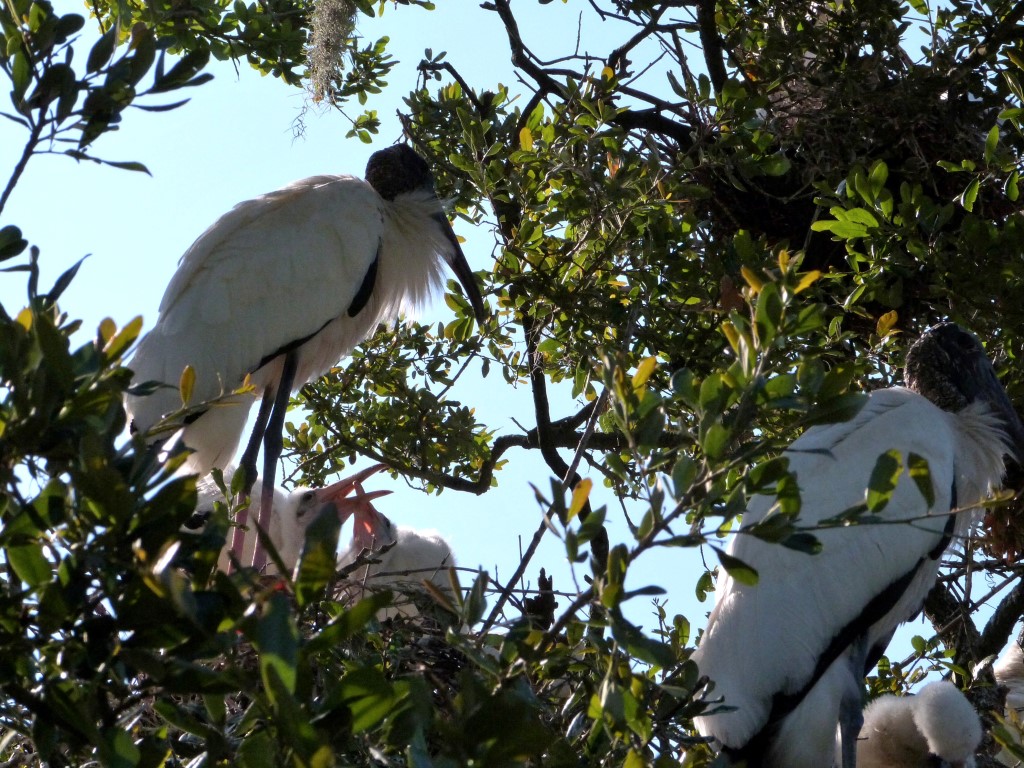
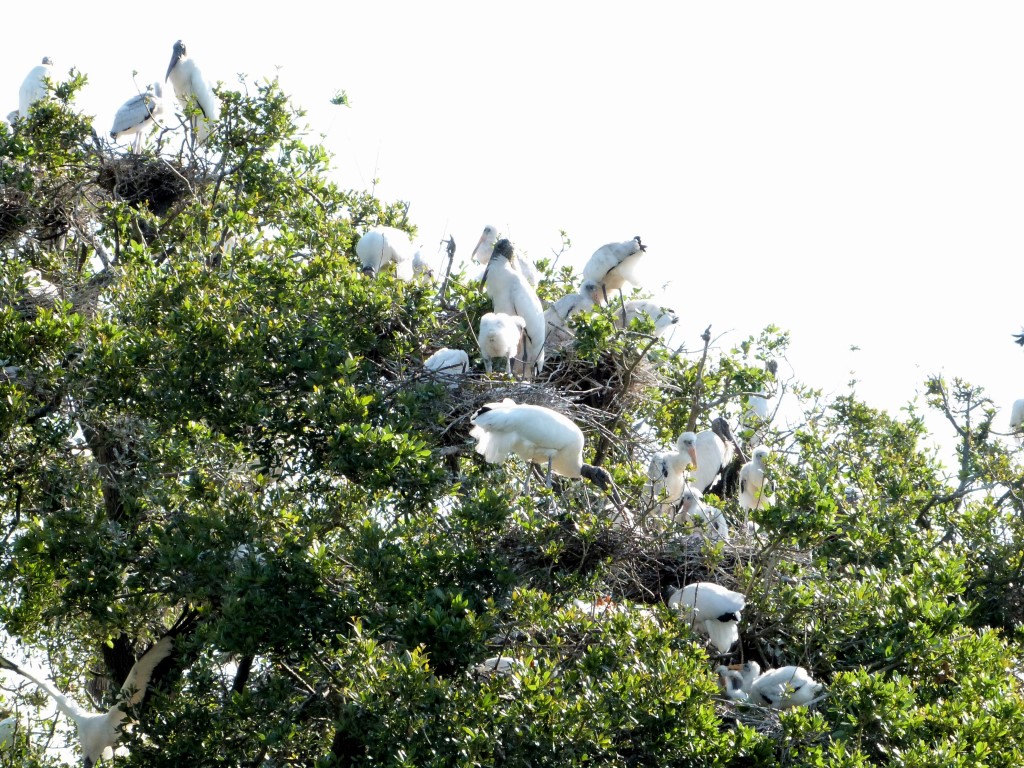
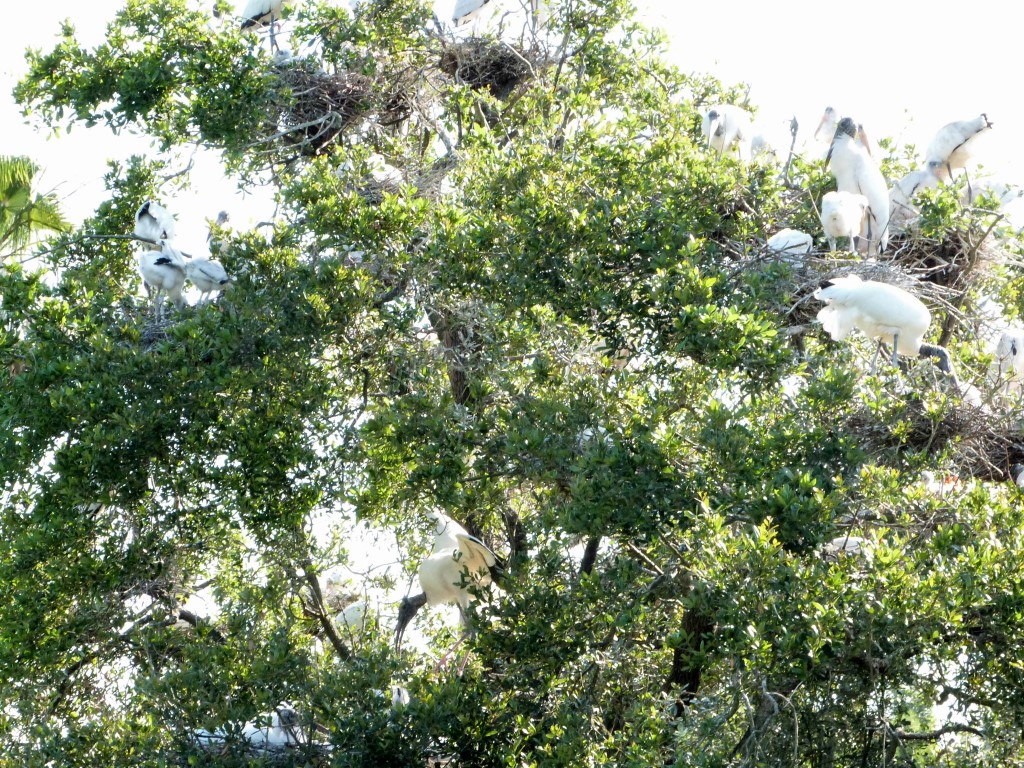
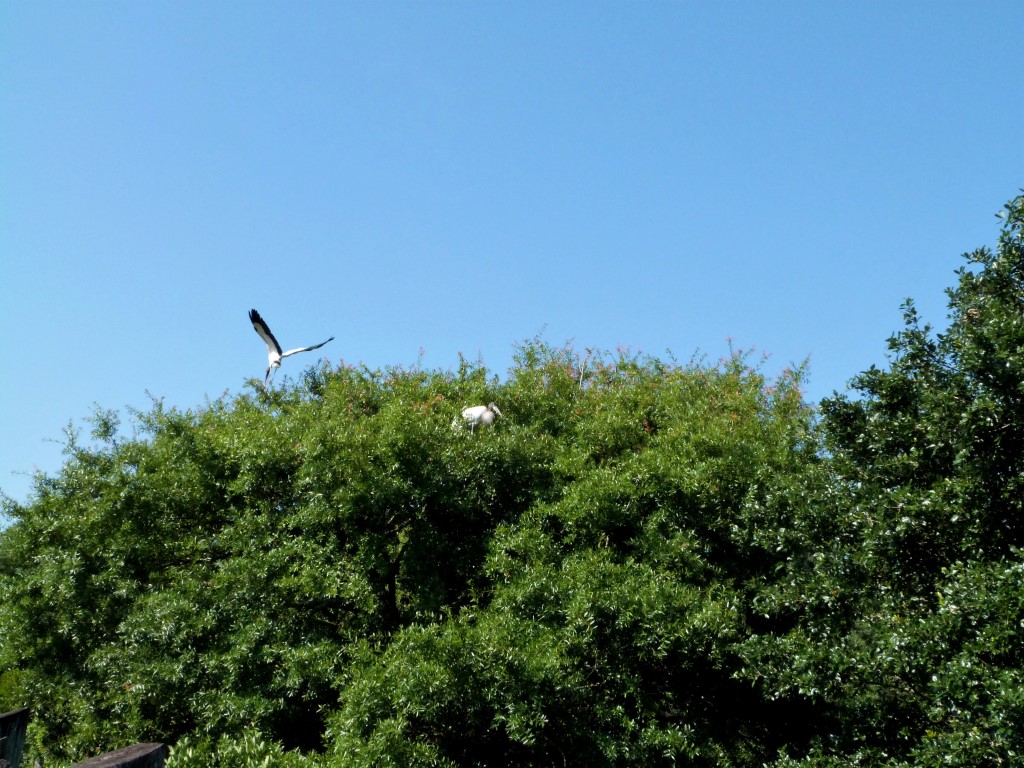
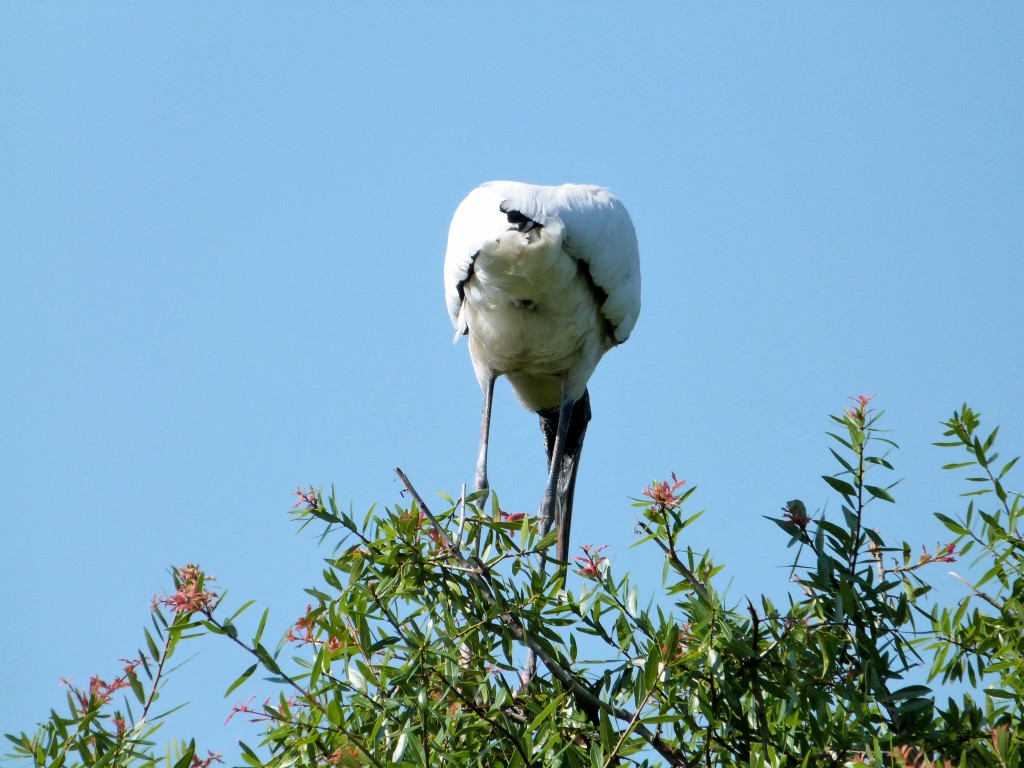
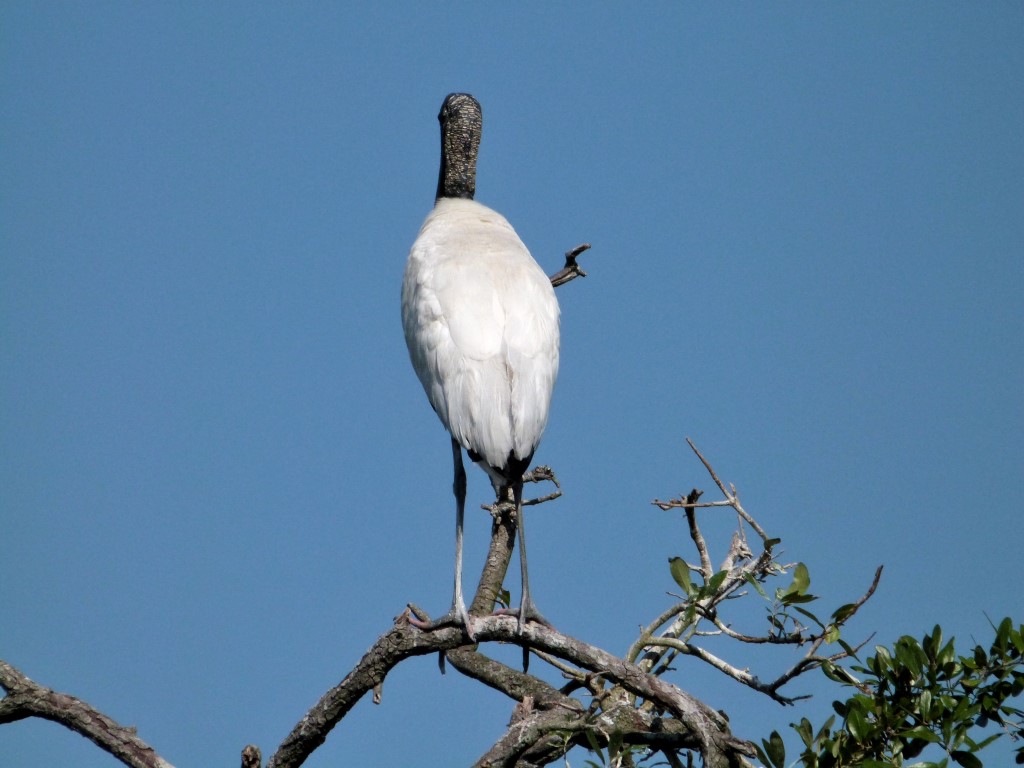
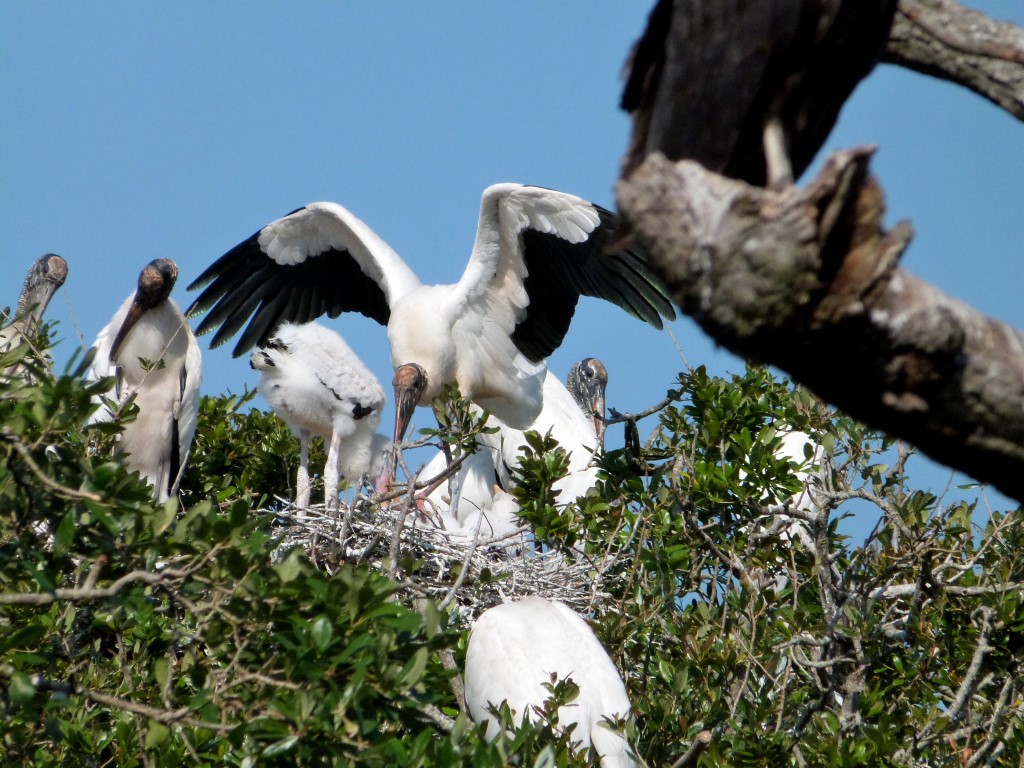
Last week while we were at the Jacksonville Zoo, we noticed a tree loaded with Wood Stork nests. It was hard to miss as you could hear it from far away. As you watch the videos, you will hear the noise coming from all the nest. The tree was right by the boardwalk, so we were very close to them.

Wood Stork (Mycteria americana) with Chicks Jax Zoo by Lee

 Where the birds make their nests: as for the stork, the fir trees are her house. (Psalms 104:17 KJV)

Wood Storks are part of the Ciconiidae – Storks Family and are also mentioned several times in Scripture. That makes them one of the Birds of the Bible – Storks. We are fortunate in that we get to see Wood Storks quite frequently here in Polk County, Florida, especially out at the Circle B Bar Reserve. Circle B is one of my favorite places to go birdwatching. Yet, I have never seen the nest up close like this.

Here is a combined video of the noisy tree: (Ignore the talking in the background, listen to the noisy birds.)

*

Sing unto him a new song; play skilfully with a loud noise. (Psalms 33:3 KJV)

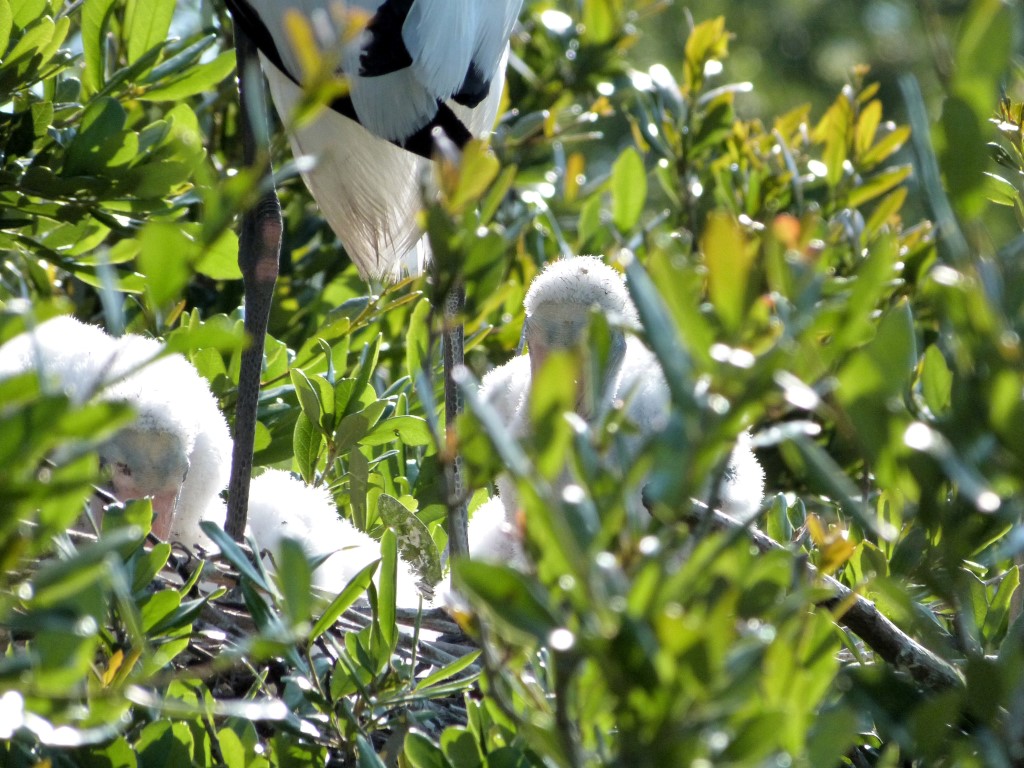
After taking photos and videos, I found three young one showing how the noise was produced. Now multiply that by all the other nest with young ones doing the same thing.

Error
This video doesn’t exist

O come, let us sing unto the LORD: let us make a joyful noise to the rock of our salvation. (Psalms 95:1 KJV)

*

Hope you don’t mind seeing some of the photos also. These are set up so you can see them larger. Enjoy the Lord’s Creation in the form of Wood Storks.

*

See:

*

Lesson From The Bird’s Nest

*

A week ago, we went to Lake Morton in Lakeland for half hour or so. Several of the Swans were sitting on nest and a Peking Duck or a White Mallard was working on her nest. She kept adding twigs and grass to the nest and then walked away.

Have you ever watched a bird build or work on a nest? They add the “walls” and a “floor” and some birds like Weavers, make a “roof” over their nest.

As I watched the bird working on her nest, it reminded me of what was going on at our house. As I mentioned last week, our house was in “disarray” while our “spare” bedroom and two other areas were being worked on. Many spare rooms become a collection of “stuff.” (At least our is)

Behold, the days come, that all that is in thine house, and that which thy fathers have laid up in store until this day, shall be carried to Babylon: nothing shall be left, saith the LORD. (Isaiah 39:6 KJV)

This was a warning to the Israelites. We all know that there are good things put in “store.”

Upon the first day of the week let every one of you lay by him in store, as God hath prospered him, that there be no gatherings when I come. (1 Corinthians 16:2 KJV)

Laying up in store for themselves a good foundation against the time to come, that they may lay hold on eternal life. (1 Timothy 6:19 KJV)

Back to our nest. This verse: “Even the stork in the sky knows her appointed seasons, and the dove, the swift and the thrush observe the time of their migration. But my people do not know the requirements of the LORD.” (Jeremiah 8:7 NIV)

Another lesson we can learn from our birds. They do not load their nest with stuff. Some add colorful threads now and then, but there are no hat racks or closets with different feathers hanging. They do not have to decide what color feather they to wear today. No cooking utensils to worry about. No suitcase ready to pack when it become time to migrate. When it is time to go, they go.

American Robin (Turdus migratorius) with youngstersby Raymond Barlow

American Robin (Turdus migratorius) with youngstersby Raymond Barlow

Must be a lesson there. I am a bit of a pack-rat and it has been interesting around here lately. Especially when all did not go as planned. A mix-up caused a delay, so the disarray has continued longer than expected. Now that the floor is finally completed, I am trying to de-clutter some as “things” are returned to the “spare” room. At least the computer is back up and running. Yeah!

Yep! The birds have the right idea. Lord bless you all as you face your challenges. Maybe the birds will have a hint to help you also.

*

Wordless Birds

*


Birds In Christmas Hymns – Thou Didst Leave Thy Throne (Re-post)

Red-eyed Vireo (Vireo olivaceus) ©WikiC in nest

Red-eyed Vireo (Vireo olivaceus) ©WikiC in nest

Who, being in the form of God, thought it not robbery to be equal with God: But made himself of no reputation, and took upon him the form of a servant, and was made in the likeness of men: (Philippians 2:6-7 KJV)

Words by Em­i­ly E. El­li­ott, 1864. This hymn was first used at St. Mark’s Church in Bright­on, Eng­land, where El­li­ott’s fa­ther was rec­tor. In 1870, it was pub­lished in the Church Mis­sion­a­ry Ju­ve­nile In­struct­or, which El­li­ott ed­it­ed.

Music: Margaret, Tim­o­thy R. Mat­thews, 1876

Birds in Christmas Hymns

Birds in Christmas Hymns

Thou Didst Leave Thy Throne

Thou didst leave Thy throne and Thy kingly crown,
When Thou camest to earth for me;
But in Bethlehem’s home was there found no room
For Thy holy nativity.

Refrain

O come to my heart, Lord Jesus,
There is room in my heart for Thee.

Heaven’s arches rang when the angels sang,
Proclaiming Thy royal degree;
But of lowly birth didst Thou come to earth,
And in great humility.

Refrain

O come to my heart, Lord Jesus,
There is room in my heart for Thee.

The foxes found rest, and the birds their nest
In the shade of the forest tree;
But Thy couch was the sod, O Thou Son of God,
In the deserts of Galilee.

Refrain

O come to my heart, Lord Jesus,
There is room in my heart for Thee.

Thou camest, O Lord, with the living Word,
That should set Thy people free;
But with mocking scorn and with crown of thorn,
They bore Thee to Calvary.

Refrain

O come to my heart, Lord Jesus,
There is room in my heart for Thee.

When the heavens shall ring, and the angels sing,
At Thy coming to victory,
Let Thy voice call me home,
Saying Yet there is room,
There is room at My side for thee.

My heart shall rejoice, Lord Jesus,
When Thou comest and callest for me.

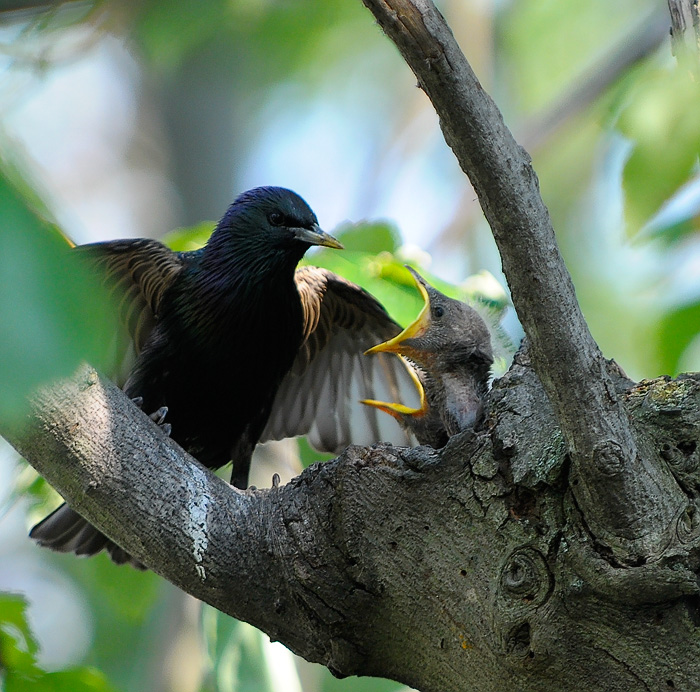
Starling feeding chicks

Protection and feeding at the nest by Anthony

Em­i­ly E. El­li­ott (1836-1897) – Emily’s fa­ther was Ed­ward Bi­shop El­li­ott, Rec­tor of St. Mark’s Church in Bright­on, and her aunt was hymn­ist Char­lotte El­li­ott. For six years, Em­i­ly served as ed­it­or of The Church Mis­sion­a­ry Ju­ve­nile In­struct­or.

Tim­o­thy R. Mat­thews (1826-1910) – Son of the rec­tor of Colm­worth, Matt­hews at­tend­ed the Bed­ford Gram­mar School and Gon­ville and Cai­us Coll­ege, Cam­bridge (MusB 1853). Or­dained the same year, he be­came pri­vate tu­tor to the fam­i­ly of Rev. Lord Wri­oth­es­ley Rus­sell, a can­on of St. George’s Cha­pel, Wind­sor Cast­le, where he stu­died un­der the or­gan­ist, George El­vey, sub­se­quent­ly a life­long friend.

Matthews served as Cur­ate (1853-1859) and Cur­ate-in-Charge (1859-1869) of St. Ma­ry’s Church, Not­ting­ham. Dur­ing this time he found­ed Not­ting­ham’s Work­ing Men’s In­sti­tute. In 1869, he be­came Rec­tor at North Coates, Lin­coln­shire. He re­tired in 1907 to live with his eld­est son at Tet­ney vi­car­age.

Matthews ed­it­ed the North Coates Sup­ple­ment­al Tune Book and The Vil­lage Or­gan­ist. He com­posed Morn­ing and Ev­en­ing Serv­ices, chants and re­sponses, and earned a rep­u­ta­tion for sim­ple but ef­fect­ive hymn tunes, writ­ing over 100. William How­ard re­quest­ed six tunes from him for a child­ren’s hym­nal, and Mat­thews com­plet­ed them with­in a day. Mat­thews al­so com­posed a Christ­mas car­ol and a few songs. His sons Nor­ton and Ar­thur Per­cy were al­so known as hymn tune com­pos­ers.

*

More Birds in Hymns

See ~ Wordless Birds

Most information from The Cyber HymnalThou Didst Leave Thy Throne

*

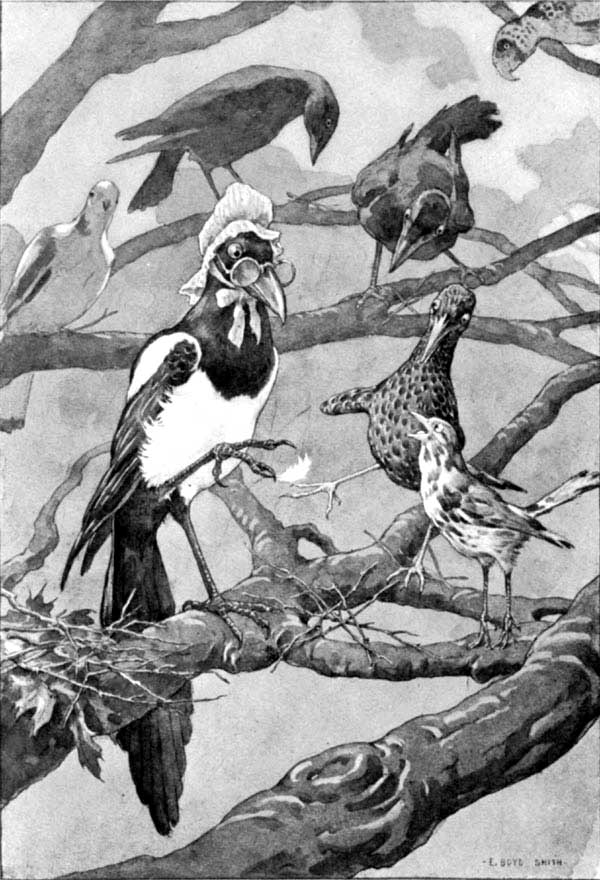
Mother Magpie’s Kindergarten

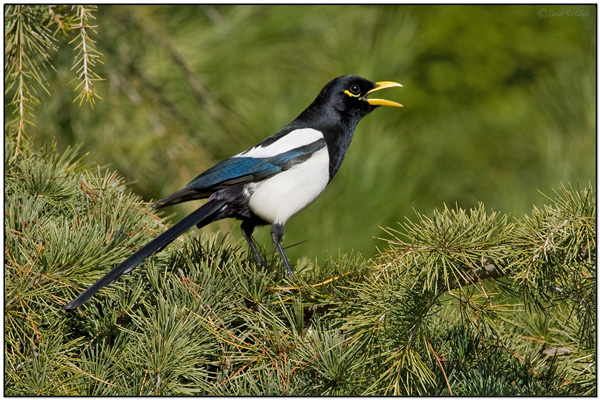
Yellow-billed Magpie (Pica nuttalli) by Daves BirdingPix

Yellow-billed Magpie (Pica nuttalli) by Daves BirdingPix

Mother Magpie’s Kindergarten ~ from The Curious Book of Birds

MOTHER MAGPIE’S KINDERGARTEN

Cur Book of Birds letter-dID you ever notice how different are the nests which the birds build in springtime, in tree or bush or sandy bank or hidden in the grass? Some are wonderfully wrought, pretty little homes for birdikins. But others are clumsy, and carelessly fastened to the bough, most unsafe cradles for the feathered baby on the treetop. Sometimes after a heavy wind you find on the ground under the nest poor little broken eggs which rolled out and lost their chance of turning into birds with safe, safe wings of their own. Now such sad things as this happen because in their youth the lazy father and mother birds did not learn their lesson when Mother Magpie had her class in nest-making. The clumsiest nest of all is that which the Wood-Pigeon tries to build. Indeed, it is not a nest at all, only the beginning of one. And there is an old story about this, which I shall tell you.

In the early springtime of the world, when birds were first made, none of them—except Mother Magpie—knew how to build a nest. In that lovely garden where they lived the birds went fluttering about trying their new wings, so interested in this wonderful game of flying that they forgot all about preparing a home for the baby birds who were to come. When the time came to lay their eggs the parents knew not what to do. There was no place safe from the four-legged creatures who cannot fly, and they began to twitter helplessly: “Oh, how I wish I had a nice warm nest for my eggs!” “Oh, what shall we do for a home?” “Dear me! I don’t know anything about housekeeping.” And the poor silly things ruffled up their feathers and looked miserable as only a little bird can look when it is unhappy.

All except Mother Magpie! She was not the best—oh, no!—but she was the cleverest and wisest of all the birds; it seemed as if she knew everything that a bird could know. Already she had found out a way, and was busily building a famous nest for herself. She was indeed a clever bird! She gathered turf and sticks, and with clay bound them firmly together in a stout elm tree. About her house she built a fence of thorns to keep away the burglar birds who had already begun mischief among their peaceful neighbors. Thus she had a snug and cosy dwelling finished before the others even suspected what she was doing. She popped into her new house and sat there comfortably, peering out through the window-slits with her sharp little eyes. And she saw the other birds hopping about and twittering helplessly.

“What silly birds they are!” she croaked. “Ha, ha! What would they not give for a nest like mine!”

But presently a sharp-eyed Sparrow spied Mother Magpie sitting in her nest.

“Oho! Look there!” he cried. “Mother Magpie has found a way. Let us ask her to teach us.”

Then all the other birds chirped eagerly, “Yes, yes! Let us ask her to teach us!”

So, in a great company, they came fluttering, hopping, twittering up to the elm tree where Mother Magpie nestled comfortably in her new house.

“O wise Mother Magpie, dear Mother Magpie,” they cried, “teach us how to build our nests like yours, for it is growing night, and we are tired and sleepy.”

The Magpie said she would teach them if they would be a patient, diligent, obedient class of little birds. And they all promised that they would.

She made them perch about her in a great circle, some on the lower branches of the trees, some on the bushes, and some on the ground among the grass and flowers. And where each bird perched, there it was to build its nest. Then Mother Magpie found clay and bits of twigs and moss and grass—everything a bird could need to build a nest; and there is scarcely anything you can think of which some bird would not find very useful. When these things were all piled up before her she told every bird to do just as she did. It was like a great big kindergarten of birds playing at a new building game, with Mother Magpie for the teacher.

She began to show them how to weave the bits of things together into nests, as they should be made. And some of the birds, who were attentive and careful, soon saw how it was done, and started nice homes for themselves. You have seen what wonderful swinging baskets the Oriole makes for his baby-cradle? Well, it was the Magpie who taught him how, and he was the prize pupil, to be sure. But some of the birds were not like him, nor like the patient little Wren. Some of them were lazy and stupid and envious of Mother Magpie’s cosy nest, which was already finished, while theirs was yet to do.

As Mother Magpie worked, showing them how, it seemed so very simple that they were ashamed not to have discovered it for themselves. So, as she went on bit by bit, the silly things pretended that they had known all about it from the first—which was very unpleasant for their teacher.

Mother Magpie took two sticks in her beak and began like this: “First of all, my friends, you must lay two sticks crosswise for a foundation, thus,” and she placed them carefully on the branch before her.

“Oh yes, oh yes!” croaked old Daddy Crow, interrupting her rudely. “I thought that was the way to begin.”

Mother Magpie snapped her eyes at him and went on, “Next you must lay a feather on a bit of moss, to start the walls.”

Western Jackdaw (Coloeus monedula) ©WikiC

Western Jackdaw (Coloeus monedula) ©WikiC

“Certainly, of course,” screamed the Jackdaw. “I knew that came next. That is what I told the Parrot but a moment since.”

Mother Magpie looked at him impatiently, but she did not say anything. “Then, my friends, you must place on your foundation moss, hair, feathers, sticks, and grass—whatever you choose for your house. You must place them like this.”

“Yes, yes,” cried the Starling, “sticks and grass, every one knows how to do that! Of course, of course! Tell us something new.”

"Next you must lay a feather"

“Next you must lay a feather”

Now Mother Magpie was very angry, but she kept on with her lesson in spite of these rude and silly interruptions. She turned toward the Wood-Pigeon, who was a rattle-pated young thing, and who was not having any success with the sticks which she was trying to place.

“Here, Wood-Pigeon,” said Mother Magpie, “you must place those sticks through and across, criss-cross, criss-cross, so.”

“Criss-cross, criss-cross, so,” interrupted the Wood-Pigeon. “I know. That will do-o-o, that will do-o-o!”

Mother Magpie hopped up and down on one leg, so angry she could hardly croak.

“You silly Pigeon,” she sputtered, “not so. You are spoiling your nest. Place the sticks so!”

“I know, I know! That will do-o-o, that will do-o-o!” cooed the Wood-Pigeon obstinately in her soft, foolish little voice, without paying the least attention to Mother Magpie’s directions.

Common Wood Pigeon (Columba palumbus) with newly hatched young ©WikiC

Common Wood Pigeon (Columba palumbus) with newly hatched young ©WikiC

“We all know that—anything more?” chirped the chorus of birds, trying to conceal how anxious they were to know what came next, for the nests were only half finished.

But Mother Magpie was thoroughly disgusted, and refused to go on with the lesson which had been so rudely interrupted by her pupils.

“You are all so wise, friends,” she said, “that surely you do not need any help from me. You say you know all about it,—then go on and finish your nests by yourselves. Much luck may you have!” And away she flew to her own cosy nest in the elm tree, where she was soon fast asleep, forgetting all about the matter.

But oh! What a pickle the other birds were in! The lesson was but half finished, and most of them had not the slightest idea what to do next. That is why to this day many of the birds have never learned to build a perfect nest. Some do better than others, but none build like Mother Magpie.

But the Wood-Pigeon was in the worst case of them all. For she had only the foundation laid criss-cross as the Magpie had shown her. And so, if you find in the woods the most shiftless, silly kind of nest that you can imagine—just a platform of sticks laid flat across a branch, with no railing to keep the eggs from rolling out, no roof to keep the rain from soaking in—when you see that foolishness, you will know that it is the nest of little Mistress Wood-Pigeon, who was too stupid to learn the lesson which Mother Magpie was ready to teach.

And the queerest part of all is that the birds blamed the Magpie for the whole matter, and have never liked her since. But, as you may have found out for yourselves, that is often the fate of wise folk who make discoveries or who do things better than others.


Lee’s Addition:

Let the wise hear and increase in learning, and the one who understands obtain guidance, (Proverbs 1:5 ESV)

(Photos added by me.)

Links:

Black-billed Magpie (Pica hudsonia) ©USFWS


  Corvidae – Crows, Jays, Ravens Family


Painted Bunting (Passerina ciris) ©©Flickr


  Bird Tales


Curious Book of Birds - Cover


  The Curious Book of Birds


Spanish Sparrow (Passer Hispaniolensis) female ©WikiC


  Wordless Birds


*
Ms. Theresa’s Thoughts – Nests

Rusty Blackbird (Euphagus carolinus) on nest ©USFWS

Rusty Blackbird (Euphagus carolinus) on nest ©USFWS

Ms. Theresa’s Thoughts – Nests

Where the birds make their nests; The stork has her home in the fir trees. (Psalms 104:17 NKJV)

How unique the wisdom God gave the birds to make their nests out of small twigs and such sort of reminds me of the Three Little Pigs Fable.

One of them built out of wood, one built out of straw and the wise one built out of bricks. Only the bricks withstood the Big Bad Wolf.

As the bird’s nest withstands all kinds of fowl (bad) weather (no pun intended), her nest stays there till her young are raised and ready to go on their own.

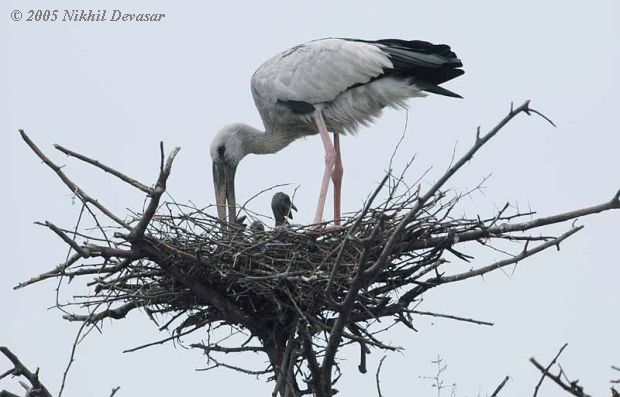
Asian Openbill (Anastomus oscitans) on nest by Nikhil Devasar

Asian Openbill (Anastomus oscitans) on nest by Nikhil Devasar

*

Wordless Birds

*
Birds Vol 1 #5 – Nesting Time

Mute Swan on Nest at Lake Morton

Mute Swan on Nest at Lake Morton

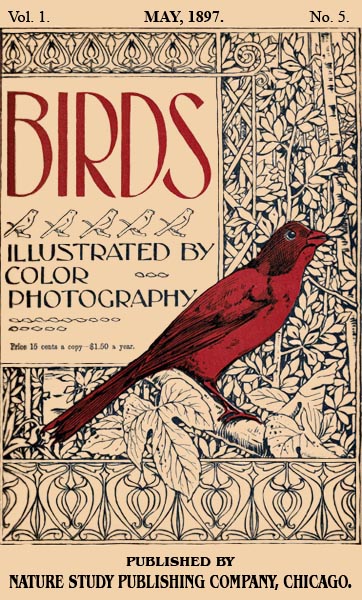
Birds Illustrated by Color Photography – Revisited

Vol 1. May, 1897 No. 5

*

NESTING TIME

“There swims no goose so gray, but soon or late, She takes some honest gander for a mate;” There live no birds, however bright or plain, But rear a brood to take their place again. —C. C. M.

imgq

UITE the jolliest season of the year, with the birds, is when they begin to require a home, either as a shelter from the weather, a defence against their enemies, or a place to rear and protect their young. May is not the only month in which they build their nests, some of our favorites, indeed, waiting till June, and even July; but as it is the time of the year when a general awakening to life and activity is felt in all nature, and the early migrants have come back, not to re-visit, but to re-establish their temporarily deserted homes, we naturally fix upon the first real spring month as the one in which their little hearts are filled with titillations of joy and anticipation. In May, when the trees have put on their fullest dress of green, and the little nests are hidden from all curious eyes, if we could look quite through the waving branches and rustling leaves, we should behold the little mothers sitting upon their tiny eggs in patient happiness, or feeding their young broods, not yet able to flutter away; while in the leafy month of June, when Nature is perfect in mature beauty, the young may everywhere be seen gracefully imitating the parent birds, whose sole purpose in life seems to be the fulfillment of the admonition to care well for one’s own.

Iceland Gull (Larus glaucoides) chick-egg nest ©USFWS

Iceland Gull (Larus glaucoides) chick-egg nest ©USFWS

There can hardly be a higher pleasure than to watch the nest-building of birds. See the Wren looking for a convenient cavity in ivy-covered walls, under eaves, or among the thickly growing branches of fir trees, the tiny creature singing with cheerful voice all day long. Observe the Woodpecker tunneling his nest in the limb of a lofty tree, his pickax-like beak finding no difficulty in making its way through the decayed wood, the sound of his pounding, however, accompanied by his shrill whistle, echoing through the grove. But the nest of the Jay: Who can find it? Although a constant prowler about the nests of other birds, he is so wary and secretive that his little home is usually found only by accident. And the Swallow: “He is the bird of return,” Michelet prettily says of him. If you will only treat him kindly, says Ruskin, year after year, he comes back to the same niche, and to the same hearth, for his nest. To the same niche! Think of this a little, as if you heard of it for the first time. But nesting-time with the birds is one of sentiment as well as of industry The amount of affectation in lovemaking they are capable of is simply ludicrous.

The British Sparrow which, like the poor, we have with us always, is a much more interesting bird in this and other respects than we commonly give him credit for. It is because we see him every day, at the back door, under the eaves, in the street, in the parks, that we are indifferent to him. Were he of brighter plumage, brilliant as the Bobolink or the Oriole, he would be a welcome, though a perpetual, guest, and we would not, perhaps, seek legislative action for his extermination. If he did not drive away Bluebirds, whose nesting-time and nesting-place are quite the same as his own, we might not discourage his nesting proclivity, although we cannot help recognizing his cheerful chirp with generous crumbs when the snow has covered all the earth and left him desolate. C. C. Marble.

Eastern Yellow Robin (Eopsaltria australis) on nest by Ian

Eastern Yellow Robin (Eopsaltria australis) on nest by Ian


Lee’s Addition:

I think I will just let the Scriptures tell about the nests.

If a bird’s nest happens to be before you along the way, in any tree or on the ground, with young ones or eggs, with the mother sitting on the young or on the eggs, you shall not take the mother with the young; you shall surely let the mother go, and take the young for yourself, that it may be well with you and that you may prolong your days. (Deuteronomy 22:6-7 NKJV)

All the birds of the heavens made their nests in its boughs; Under its branches all the beasts of the field brought forth their young; And in its shadow all great nations made their home. (Ezekiel 31:6 NKJV)

Even the sparrow has found a home, And the swallow a nest for herself, Where she may lay her young— Even Your altars, O LORD of hosts, My King and my God. Blessed are those who dwell in Your house; They will still be praising You. Selah (Psalms 84:3-4 NKJV)

As an eagle stirs up its nest, Hovers over its young, Spreading out its wings, taking them up, Carrying them on its wings, (Deuteronomy 32:11 NKJV)

You who dwell in Moab, Leave the cities and dwell in the rock, And be like the dove which makes her nest In the sides of the cave’s mouth. (Jeremiah 48:28 NKJV)

Another parable He put forth to them, saying: “The kingdom of heaven is like a mustard seed, which a man took and sowed in his field, which indeed is the least of all the seeds; but when it is grown it is greater than the herbs and becomes a tree, so that the birds of the air come and nest in its branches.” (Matthew 13:31-32 NKJV)

Where the birds make their nests; The stork has her home in the fir trees. (Psalms 104:17 NKJV)

And Jesus said to him, “Foxes have holes and birds of the air have nests, but the Son of Man has nowhere to lay His head.” (Luke 9:58 NKJV)

See also – Birds of the Bible – Bird Egg Facts

Birds Illustrated by Color Photograhy Vol 1 May, 1897 No 5 - Cover

Birds Illustrated by Color Photograhy Vol 1 May, 1897 No 5 – Cover

Birds Illustrated by Color Photography – Revisited – Introduction

The above article is the first article in the monthly serial that was started in January 1897 “designed to promote Knowledge of Bird-Live.” These include Color Photography, as they call them, today they are drawings. There are at least three Volumes that have been digitized by Project Gutenberg.

To see the whole series of – Birds Illustrated by Color Photography – Revisited

*

(Information from Wikipedia and other internet sources)

Next Article – National Council of Women

Previous Article – Amateur Photography

*

Ad for Birds Illustrated by Color Photography, 1897

Ad for Birds Illustrated by Color Photography, 1897

Baya Weaver – The Model Church

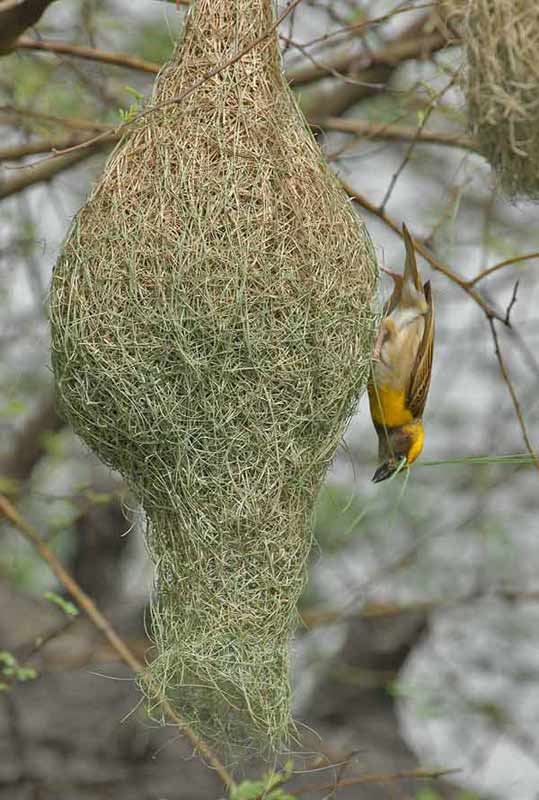
Baya Weaver (Ploceus philippinus) by Nikhil Devasar

Baya Weaver (Ploceus philippinus) by Nikhil Devasar

Baya Weaver – The Model Church ~ by a j mithra

The Baya Weaver (Ploceus philippinus) is a weaverbird found across South and Southeast Asia. These are sparrow-sized (15 cm) and in their non-breeding plumage, both males and females resemble female house sparrows. They have a stout conical bill and a short square tail.

Non-breeding males and females look alike, dark brown streaked fulvous buff above, plain (unstreaked) whitish fulvous below, eyebrow long and buff coloured, bill is horn coloured and no mask. Breeding males have a bright yellow crown, dark brown mask, blackish brown bill, upper parts are dark brown streaked with yellow, with a yellow breast and cream buff below.

Baya Weaver (Ploceus philippinus) by MAMuin

Baya Weaver (Ploceus philippinus) by MAMuin

Baya Weavers are social and gregarious birds. They forage in flocks for seeds, both on the plants and on the ground. Flocks fly in close formations, often performing complicated maneuvers. Their calls are a continuous chit-chit-… sometimes ending in a wheezy cheee-eee-ee that is produced by males in a chorus. A lower intensity call is produced in the non-breeding season.

Feeding together and flying together and singing together?
The church needs to take a leaf out from the lifestyle of these birds..
Is it not important, to be together as a one? We say that Christ is the head of the church. But how can Christ be the head of disintegrated choirs in disintegrated churches and indifferent individuals who make disoriented families?

These birds feed together…

  • How many Christian families spend time together in reading and meditating the Bible?
  • How many Christian families live together?

These birds even fly together performing complicated maneuvers…

  • How are our maneuvers as a team?
  • We are supposed to be the army of Jesus, but sadly each one facing different directions…

These birds sing together in chorus..

  • How do our family and church worship the Lord?
  • Do we sing in unity as one?

Its time for us to check ourselves and try learn to live like these birds…

Behold, how good and how pleasant it is for brethren to dwell together in unity!

It is like the precious ointment upon the head, that ran down upon the beard, even Aaron’s beard: that went down to the skirts of his garments; As the dew of Hermon, and as the dew that descended upon the mountains of Zion: for there the LORD commanded the blessing, even life for evermore. (Psalm 133:1-3 KJV)

Baya Weaver (Ploceus philippinus) by Nikhil Devasar

Baya Weaver (Ploceus philippinus) by Nikhil Devasar

Flocks of these birds are found in grasslands, cultivated areas, scrub and secondary growth and they are best known for their hanging retort shaped nests woven from leaves. These nest colonies are usually found on thorny trees or palm fronds and the nests are often built near water or hanging over water where predators cannot reach easily.

They are widespread and common within their range but are prone to local, seasonal movements mainly in response to rain and food availability.
Christ is mindful of us even unto death..
He did think of you and me even as He wore the crown of thorns…

These birds remind me of Psalm 23:2

He maketh me to lie down in green pastures: he leadeth me beside the still waters.

These birds choose to live in the grasslands and build their nests with green leaves over fresh water bodies…
The Lord is our Shepherd and the Living Water..
No doubt about it…
But, the question is, do we let Him makes us lie down in green pastures and lead us beside still waters?
If the answer is yes, then how come our soul is weak, weary and thirsty?
Lets seek His presence, for He is the God of abundance…

Thou wilt shew me the path of life: in thy presence is fulness of joy; at thy right hand there are pleasures for evermore. (Psalm 16:11)

Baya Weaver (Ploceus philippinus) 3 Male building by Nikhil Devasar

Baya Weaver (Ploceus philippinus) 3 Male building by Nikhil Devasar

The nest of the Baya Weaver bird is an engineering marvel…
These dull looking birds have a most interesting breeding season…
The breeding season of the Baya Weavers is during the monsoon..
The breeding condition is initiated by environmental characters such as day length and comes to an end after summer although this termination is not influenced by short day length as in temperate birds…

They nest in colonies typically of up to 20-30, close to the source of food, nesting material and water. Baya Weavers are best known for the elaborately woven nests constructed by the males. These pendulous nests are retort shaped, with a central nesting chamber and a long vertical tube that leads to a side entrance to the chamber. The nests are woven with long strips of paddy leaves, rough grasses and long strips torn from palm fronds. Each strip can be between 20–60cm in length. A male bird is known to make up to 500 trips to complete a nest.

Our Lord Jesus Christ made just one trip to the earth and is now building a mansion for us…

In my Father’s house are many mansions: if it were not so, I would have told you. I go to prepare a place for you. (John 14:2)

The birds use their strong beaks to strip and collect the strands, and to weave and knot them while building their nests. The nests are often built hanging over water from palm trees and often suspended from thorny Acacias and in some cases from telephone wires. Although thorny trees are preferred, they may sometimes use avenue trees in urban areas. Nests are often located on the eastern side of the tree where they are believed to provide shelter from the Southwest Monsoon, however late breeders are more likely to build their nests in other orientations relative to the trunk of the nest tree..

  • How do these birds know where and when to build their nests?
  • How do these birds know the direction where the nest has to be placed?

Is it cos they look up to God the directions in life?

  • A Meteorological expert knows about the weather…
  • A Botanist knows about the plants and trees…
  • A Hydrologist knows about water…

But how do these birds know about the season, the tree and the water?
Want to know everything under the sky? Just follow the following verses…

Evil men understand not judgment: but they that seek the LORD understand all things. (Proverbs 28:5)
The young lions do lack, and suffer hunger: but they that seek the LORD shall not want any good thing. (Psalm 34:10)

This male Baya Weaver is working on his nest. This is by Wondersf, which is one of the videographers who has given us permission to use his videos. Khong Tuck Khoon lives in Malaysia.

The males take about 18 days to construct the complete nest with the intermediate “helmet stage” taking about 8 days. The nests are partially built before the males begin to display to passing females by flapping their wings and calling while hanging from their nests.

When I read the above passage I was reminded of the famous picture of the cross where I read the following quote..

I asked Jesus how much He loved me
He answered “this much”
Then He stretched out His arms and died for me

The females inspect the nest and signal their acceptance of a male. Once a male and a female are paired, the male goes on to complete the nest by adding the entrance tunnel. Males are almost solely in charge of nest building, though their female partners may join in giving the finishing touches, particularly on the interiors. So much so, that even a snake would never be able to enter its nest. Females may modify the interiors or add blobs of mud.

Studies have shown that nest location is more important than nest structure for the female, when it selects the nest and mate…

When we build our lives above the Living Water, the serpent would never be able to enter our homes…

Instead we would walk over them..

Behold, I have given you authority to tread on serpents and scorpions, and over all the power of the enemy, and nothing will injure you. “Nevertheless do not rejoice in this, that the spirits are subject to you, but rejoice that your names are recorded in heaven. (Luke 10:19,20)

Have a blessed day!

Your’s in YESHUA,
a j mithra

Please visit us at:
Crosstree

ajmithra21


Lee’s Addition:

The Baya Weaver is in the Ploceidae – Weavers, Widowbirds Family of the Passeriformes (Songbirds) Order.

Here’s an amazing video to watch. It’s about 3 minutes long, but shows the weaving going on by the bird. By 

See also:
Birds the Engineers… by ajmithra
Master Builder’s Master Builders by ajmithra
*

Birds – The Engineers..

Birds – The Engineers.. ~ by a j mithra

Birds are capable of grand engineering feats. But are they engineers?  Not in the way you might think. Just as birds know how to fly, they know how to build a nest without instructions or apprenticeship. It’s a matter of instinct. Birds craft their nests without consciously thinking about it. How then did some species of birds develop such well-engineered, elaborate nests?

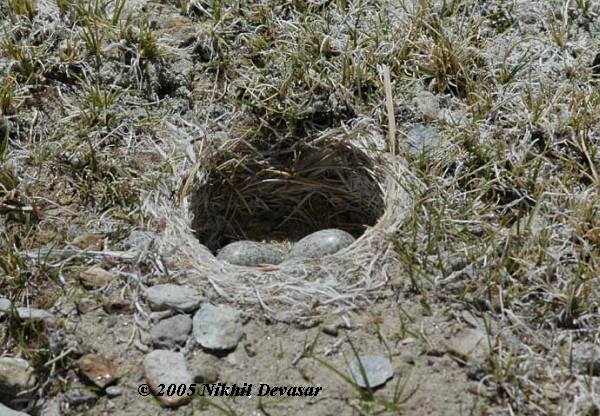
Horned Lark (Eremophila alpestris) Nest w/eggs by Nikhil Devasar

Horned Lark (Eremophila alpestris) Nest w/eggs by Nikhil Devasar

Horned Larks nests showed a significant northern bias in orientation angle and were 49% shaded in the early afternoon, the hottest part of the day. A northern nest orientation ensures maximal shading by the grass tuft to the south, may protect nests from cool evening winds, and provides increased daytime ventilation of the nest through exposure to prevailing winds. In addition, shade may also help conceal nests from predators.

  • From where did these birds learn to choose the location to build their nests?
  • Have we ever thought about the direction in which we need to have the front door of our house?
  • Is our choice based on location or direction of the house?

When JESUS becomes our direction, HE gives the best location..

I am the door: by me if any man enter in, he shall be saved, and shall go in and out, and find pasture. (John 10:9)

Pectoral Sandpiper (Calidris melanotos) ©WikiC

Pectoral Sandpiper (Calidris melanotos) ©WikiC

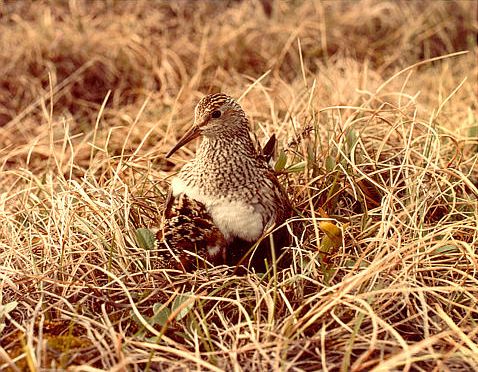
Pectoral Sandpipers nest on the arctic tundra, often near water. The nest is lined with grass, moss and lichens. They do not use lining materials according to local availability. Instead, relative use was correlated with a material’s insulative quality when wet and they therefore use lining materials appropriate to minimizing heat loss given their damp breeding environment.

And he shall be like a tree planted by the rivers of water, that bringeth forth his fruit in his season; his leaf also shall not wither; and whatsoever he doeth shall prosper. (Psalm 1:3)

Blue Tit (Parus caeruleus) by Robert Scanlon

Blue Tit (Parus caeruleus) by Robert Scanlon

Female Blue Tits gather lavender, yarrow, curry, mint and other scented plants for their nests shortly after laying eggs, and continue to do so until the chicks leave home. They are real botanists and do a great job exploiting their environment to protect their chicks. The birds make a pot-pourri of 10 aromatic plants from the 250 species in their habitat. Many of the chemicals in these plants ward off bacteria,
viruses, parasites, fungi and insects.

Our nest is covered by the blood of JESUS and no harm shall enter…

And the blood shall be to you for a token upon the houses where ye are: and when I see the blood, I will pass over you, and the plague shall not be upon you to destroy you, when I smite the land of Egypt. (Exodus 12:13)

Common Waxbill (Estrilda astrild) by Daves BirdingPix

Common Waxbill (Estrilda astrild) by Daves BirdingPix

Common Waxbills are small African finches select carnivore scat as a material to include in, on, and around their nests to reduce predation risk…

A South American Ovenbird may take months to fashion one nest from clay or mud mixed with bits of straw, hair, and fibers. The tropical sun bakes the walls brick-hard.

Bald Eagles, which use sticks, some two inches thick and several feet long, to make nests sturdy enough to support a human adult.

Chimney Swift using saliva as glue to help support its nest.


Baya Weaver (Ploceus philippinus) by Nikhil Devasar

Baya Weaver (Ploceus philippinus) by Nikhil Devasar

Baya Weaver nests in colonies of up to 20-30 pairs, usually in trees near freshwater and open ground. Their nests hang from a branch and look like an upside-down flask. A long tube leads to a side entrance,  making it difficult even for snakes to enter the nest. Nests are made entirely out of strips of grass
that the birds collect by cutting a notch in some tall grass, then stripping off a 30-60 cm long piece. A newly-made nest is green with fresh grass and turns brown as the grass dries. A bird may make up to 500 trips to complete a nest.

  • GOD has given us a home and a family with a purpose….
  • Most of us are trying hard to be like others and to live like others…
  • HE loves us as we are so; let us live the way HE wants us to live…

Sparrows never try to live like Eagles. Do they? If we are a sparrow, so be it and if we are an Eagle, so be it. After all, a sparrow cannot live like an Eagle and an Eagle cannot live like a Sparrow…

I will make a man more precious than fine gold; even a man than the golden wedge of Ophir. (Isaiah 13:12)

Bird nests vary from a simple accumulation of materials on the ground to elaborate refuges in or on secluded and elevated substrates. Nest construction and placement are correlated with flight ability. Some birds create a simple depression in the ground to harbor their incubating eggs. The progression of nest complexity moves from cryptic ground nests to simple elevated nests. Birds which construct elevated nests in a bush or tree or on a cliff or rock ledge tend to be better fliers than simple ground nesters.

  • You may be wondering why GOD has placed you as a ground nester while you desire to be an elevated nester…
  • You may be wondering why you have not got a place you feel that you deserve…
  • May be GOD feels that you would get hurt if you are an elevated nester..
  • Or maybe HE feels that you are not best equipped to be in a higher place…

Humble yourselves therefore under the mighty hand of God, that he may exalt you in due time: (1Peter 5:6)

  • GOD had HIS nest in heaven and because HE loved us so much,
  • HE stirred up HIS nest and wandered without a nest to be crucified for our sins…
  • So that HE may nest in us…
  • HE needs a nest that is why HE is knocking at the door of your heart….
  • Do you have a place for HIM to nest?

Please do not forget that HE is building an eternal nest for us live with HIM forever and ever.

Behold, I stand at the door, and knock: if any man hear my voice, and open the door, I will come in to him, and will sup with him, and he with me. (Revelation 3:2)

Have a blessed day!

Your’s in YESHUA,
a j mithra

Please visit us at: Crosstree


See:
Gospel Message

Wordless Birds

Birds of the Bible – Nests

*
Master Builder’s Master Builders… by AJ Mitra

Master Builder’s Master Builders…

Horned Lark (Eremophila alpestris) Nest w/eggs by Nikhil Devasar

Birds are capable of grand engineering feats.
But are they engineers?
Not in the way you might think.
Just as birds know how to fly,
they know how to build a nest without instructions
or apprenticeship. It’s a matter of instinct.

Birds craft their nests without consciously thinking about it.
How then did some species of birds develop
such well-engineered, elaborate nests?

Horned Larks nests showed a significant northern bias
In orientation angle and were 49% shaded in the early afternoon,
the hottest part of the day.
A northern nest orientation ensures maximal shading
By the grass tuft to the south,
May protect nests from cool evening winds,
And provides increased daytime ventilation of the nest
through exposure to prevailing winds.
In addition, shade may also help conceal nests from predators.

From where did these birds learn to choose the location to build their nests?
Have we ever thought about the direction in which we need to have
the front door of our house?
Is our choice based on location or direction of the house?

When JESUS becomes our direction, HE gives the best location..

I am the door: by me if any man enter in, he shall be saved, and shall go in and out, and find pasture. (John 10:9)

Pectoral Sandpipers nest on the arctic tundra, often near water. The nest is lined with grass, moss and lichens.
They do not use lining materials according to local availability.
Instead, relative use was correlated with a material’s insulative quality when wet and they therefore use lining materials
appropriate to minimizing heat loss
given their damp breeding environment.

And he shall be like a tree planted by the rivers of water, that bringeth forth his fruit in his season; his leaf also shall not wither; and whatsoever he doeth shall prosper. (Psalm 1:3)

Blue Tit (Parus caeruleus) by Robert Scanlon

Blue Tit (Parus caeruleus) by Robert Scanlon

Female Blue Tits gather lavender, yarrow, curry, mint
and other scented plants for their nests shortly after laying eggs,
and continue to do so until the chicks leave home.
They are real botanists and do a great job exploiting their environment to protect their chicks..
The birds make a pot-pourri of 10 aromatic plants from the 250 species in their habitat.
Many of the chemicals in these plants ward off bacteria, viruses, parasites, fungi and insects.

Our nest is covered by the blood of JESUS and no harm shall enter…

And the blood shall be to you for a token upon the houses where ye are: and when I see the blood, I will pass over you, and the plague shall not be upon you to destroy you, when I smite the land of Egypt. (Exodus 12:13)

Common Waxbill (Estrilda astrild) by Daves BirdingPix

Common Waxbill (Estrilda astrild) by Daves BirdingPix

Common Waxbills are small African finches
select carnivore scat as a material to include in, on,
and around their nests to reduce predation risk…

A South American Ovenbird may take months
to fashion one nest from clay or mud mixed
with bits of straw, hair, and fibers.
The tropical sun bakes the walls brick-hard.

Bald Eagles, which use sticks, some two inches thick
and several feet long,
to make nests sturdy enough to support a human adult.
Chimney Swift using saliva as glue to help support its nest.

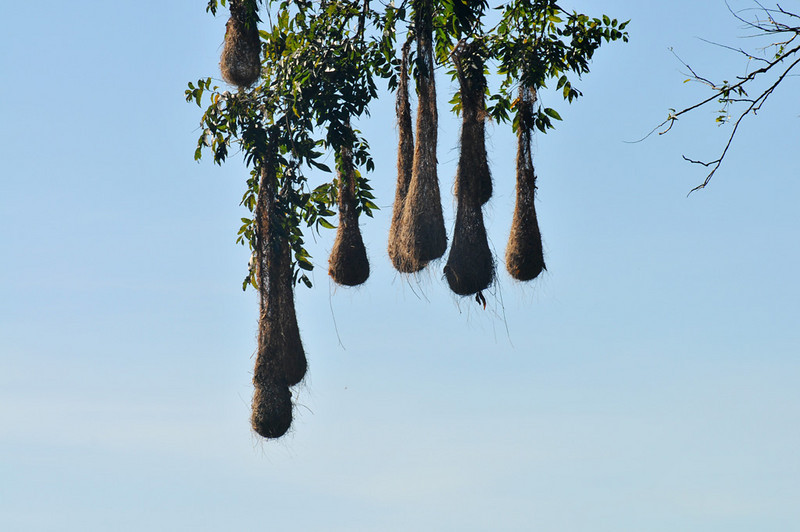
Crested Oropendola (Psarocolius decumanus) nests by Bob-Nan

Crested Oropendola (Psarocolius decumanus) nests by Bob-Nan

Baya Weaver nests in colonies of up to 20-30 pairs, usually in trees near freshwater and open ground. Their nests hang from a branch and look like an upside-down flask. A long tube leads to a side entrance, making it difficult even for snakes to enter the nest.
Nests are made entirely out of strips of grass that the birds collect by cutting
a notch in some tall grass, then stripping off a 30-60 cm long piece. A newly-made nest is green with fresh grass and turns brown as the grass dries. A bird may make up to 500 trips to complete a nest.

GOD has given us a home and a family with a purpose….
Most of us are trying hard to be like others and to live like others…
HE loves us as we are, so, let us live the way HE wants us to live…

Sparrows never try to live like Eagles. Do they?
If we are a sparrow, so be it and if we are an Eagle, so be it..
After all, a sparrow cannot live like Eagle and an Eagle cannot live like a Sparrow…

I will make a man more precious than fine gold; even a man than the golden wedge of Ophir. (Isaiah 13:12)

Bird nests vary from a simple accumulation of materials on the ground
to elaborate refuges in or on secluded & elevated substrates.
Nest construction and placement are correlated with flight ability.
Some birds create a simple depression in the ground to harbor their incubating eggs.

The progression of nest complexity moves from cryptic ground nests
to simple elevated nests..
Birds which constructs elevated nests in a bush or tree
or on a cliff or rock ledge tend to be better fliers than simple ground nesters.

You maybe wondering why GOD has placed you as a ground nester
while you desire to be an elevated nester…
You may be wondering why you have not got a place you feel that you deserve…
May be GOD feels that you would get hurt if you are an elevated nester..
Or maybe HE feels that you are not best equipped to be in a higher place…

Humble yourselves therefore under the mighty hand of God, that he may exalt you in due time: (1Peter 5:6)

GOD had HIS nest in heaven and because HE loved us so much,
HE stirred up HIS nest and wandered without a nest to be crucified for our sins…
So that HE may nest in us…

HE needs a nest, that is why HE is knocking at the door of your heart….
Do you have a place for HIM to nest?
Please note that HE is building an eternal nest for us live with HIM forever and ever.

Behold, I stand at the door, and knock: if any man hear my voice, and open the door, I will come in to him, and will sup with him, and he with me. (Revelation 3:20)

Your’s in YESHUA,

A. J. Mithra

Please visit us at: Crosstree

Birds of the Bible – Nests

Birds have been building nests since they were created and told to multiply and fill the earth. There are many verses (17 with “nest” and 4 with “nests”) telling about the nest in the Bible, and probably the one most know is either Matthew 8:20 or Luke 9:58:

And Jesus saith unto him, The foxes have holes, and the birds of the air have nests; but the Son of man hath not where to lay his head.

The other two verses with “nests” are Psalms 104:17
and Ezekiel 31:6 NKJV

Many of the verses about nests do not even apply to birds, one refers to a snake’s nest, but all of them have an application applied to them.
The aim here is not to go into all those verses, but to introduce the bird’s nest; where they are and how they are constructed through the slide presentation below. Later in other blogs, those applications will be emphasized.
*
This slideshow requires JavaScript.

*
The application I would like to make about these nests, is this; as you observe the nest, think about our homes. Some homes are huge, some are very tiny (hummingbirds), some are elaborate (weaver nests), some are so small with little square-footage (those on the ledge), some are only out in the open, etc. Notice that the birds have a task and that is to raise their young. They don’t seem to be complaining or whining because they want more. In other words, they are content. Are we?

Not that I speak in regard to need, for I have learned in whatever state I am, to be content: (Philippians 4:11 NKJV)
For we brought nothing into this world, and it is certain we can carry nothing out. And having food and clothing, with these we shall be content. (1 Timothy 6:7-8 NKJV)

Birds of the Bible – Mother and Her Chicks

Snow Goose (Chen caerulescens) at nest©USFWS

Snow Goose (Chen caerulescens) at nest©USFWS

If a bird’s nest happens to be before you along the way, in any tree or on the ground, with young ones or eggs, with the mother sitting on the young or on the eggs, you shall not take the mother with the young; you shall surely let the mother go, and take the young for yourself, that it may be well with you and that you may prolong your days. (Deuteronomy 22:6-7 NKJV)

Also in the with the animals, the Bible says,

Whether it is a cow or ewe, do not kill both her and her young on the same day. (Leviticus 22:28 NKJV)

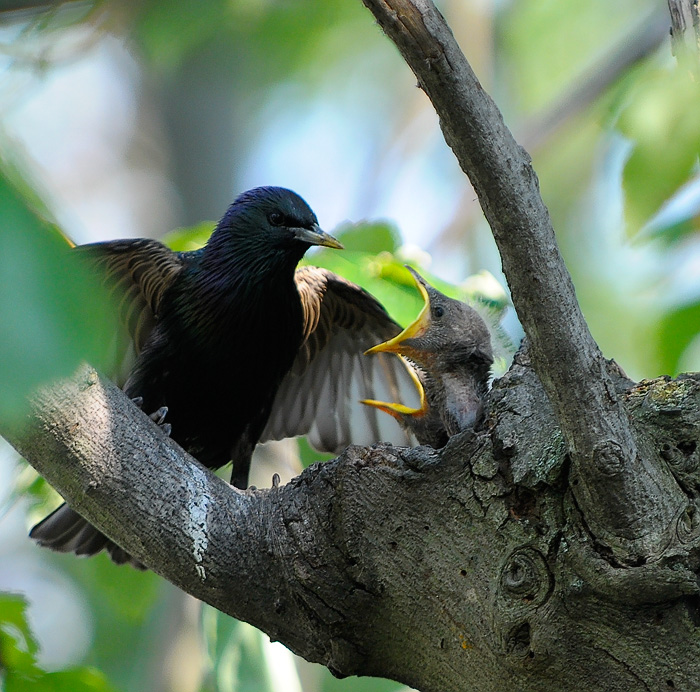
Common Starling (Sturnus vulgaris) at Nest by Anthony747

Common Starling (Sturnus vulgaris) at Nest by Anthony747

In Deuteronomy, the Israelites were being given some rules of things to do or not do. This passage about the mother bird and her chicks or eggs is among those commands. Notice that if they did this, it would be well with them and help prolong their days. There are many good characteristics for us to learn from this command. Below are some of the thoughts from the commentators.

Matthew Henry’s Commentary was the longest, but much insight. “II. In taking a bird’s-nest, the dam must be let go, Deu_22:6, Deu_22:7. The Jews say, “This is the least of all the commandments of the law of Moses,” and yet the same promise is here made to the observance of it that is made to the keeping of the fifth commandment, which is one of the greatest, that it may be well with thee, and that thou mayest prolong thy days; for, as disobedience in a small matter shows a very great contempt of the law, so obedience in a small matter shows a very great regard to it. He that let go a bird out of his hand (which was worth two in the bush) purely because God bade him, in that made it to appear that he esteemed all God’s precepts concerning all things to be right, and that he could deny himself rather than sin against God. But doth God take care for birds? 1Co_9:9. Yes, certainly; and perhaps to this law our Saviour alludes. Luk_12:6, Are not five sparrows sold for two farthings, and not one of them is forgotten before God? This law, 1. Forbids us to be cruel to the brute-creatures, or to take a pleasure in destroying them. Though God has made us wiser than the fowls of heaven, and given us dominion over them, yet we must not abuse them nor rule them with rigour. Let go the dam to breed again; destroy it not, for a blessing is in it, Isa_65:8. 2. It teaches us compassion to those of our own kind, and to abhor the thought of every thing that looks barbarous, and cruel, and ill-natured, especially towards those of the weaker and tender sex, which always ought to be treated with the utmost respect, in consideration of the sorrows wherein they bring forth children… It further intimates that we must not take advantage against any, from their natural affection and the tenderness of their disposition, to do them an injury. The dam could not have been taken if her concern for her eggs or young (unlike to the ostrich) had not detained her upon the next when otherwise she could easily have secured herself by flight. Now, since it is a thousand pities that she should fare the worse for that which is her praise, the law takes care that she shall be let go. The remembrance of this may perhaps, some time or other, keep us from doing a hard or unkind thing to those whom we have at our mercy.” (Matthew Henry’s Commentary)

Redwing Blackbird feeding young at Lake Hollingsworth

Redwing Blackbird feeding young at Lake Hollingsworth

“If a bird’s nest chance to be before thee — This is a beautiful instance of the humanizing spirit of the Mosaic law, in checking a tendency to wanton destructiveness and encouraging a spirit of kind and compassionate tenderness to the tiniest creatures. But there was wisdom as well as humanity in the precept; for, as birds are well known to serve important uses in the economy of nature, the extirpation of a species, whether of edible or ravenous birds, must in any country be productive of serious evils. But Palestine, in particular, was situated in a climate which produced poisonous snakes and scorpions; and the deserts and mountains would have been overrun with them as well as immense swarms of flies, locusts, mice, and vermin of various kinds if the birds which fed upon them were extirpated [Michaelis]. Accordingly, the counsel given in this passage was wise as well as humane, to leave the hen undisturbed for the propagation of the species, while the taking of the brood occasionally was permitted as a check to too rapid an increase.” (Jamieson, Faucett, and Brown Commentary)

If God detests cruelty done to little birds, how much more to man, made according to his image?” (Geneva Bible Translation Notes)

Redwing Blackbird young at Lake Hollingsworth

Redwing Blackbird young at Lake Hollingsworth

“..this law was made partly to preserve the species of birds, and prevent the decrease of them; for a dam let go might breed again, and to this purpose are the verses ascribed to Phocylides (y), which contain the substance of this law, and this reason of it: and partly, as Maimonides observes (z), that the dam might not be afflicted at the sight of the spoil of her young; for this law does not prohibit the taking of her in any other place but in her nest, nor after her young are taken, but not together; and, as the same writer remarks, if the law would have such care taken of beasts and birds, that they might be freed from sorrow and distress, how much more of man? Wherefore the intention of this law is to teach humanity, compassion, and pity in men to one another, and to forbid cruelty, covetousness, and such like vices; as also to instruct in the doctrine of Providence, which has a respect to birds; and our Lord may be thought to have this law in view, Luke 12:6.” (John Gill’s Exposition of the Whole Bible)

“The affectionate relation of parents to their young, which God had established even in the animal world, was also to be kept just as sacred. If any one found a bird’s nest by the road upon a tree, or upon the ground, with young ones or eggs, and the mother sitting upon them, he was not to take the mother with the young ones, but to let the mother fly, and only take the young. נִקְרָא for נִקְרָה, as in Exo_5:3. The command is related to the one in Lev_22:28 and Exo_23:19, and is placed upon a par with the commandment relating to parents, by the fact that obedience is urged upon the people by the same promise in both instances (vid., Deu_5:16; Exo_20:12).” (K & D Commentary on OT)

(Bolding is mine)

*