Lee’s Seven Word Sunday – 6/12/16

***

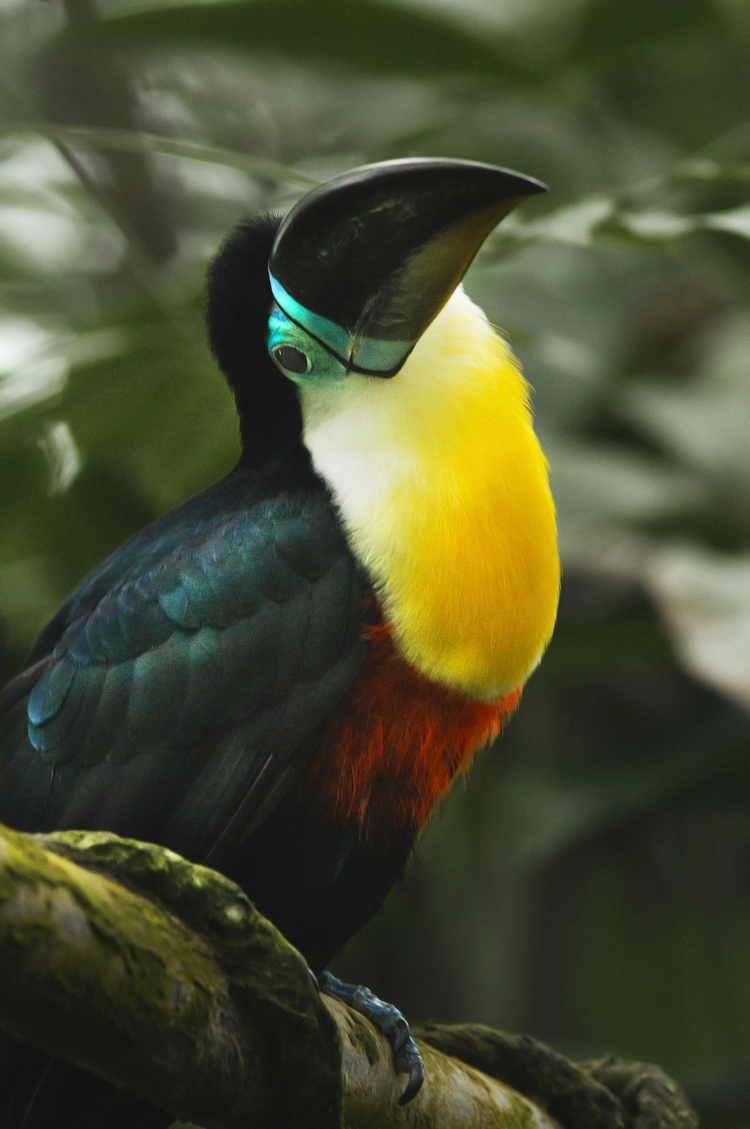
Toucan ©PixelFantasies by Lars Glausen

THY WONDERFUL WORKS WHICH

THOU HAST DONE

***


“Many, O LORD my God, are thy wonderful works which thou hast done, and thy thoughts which are to us-ward: they cannot be reckoned up in order unto thee: if I would declare and speak of them, they are more than can be numbered.” (Psalms 40:5 KJV)

Toucan ©PixelFantasies by Lars Glausen

*

More Daily Devotionals

*

Sunday Inspiration – Emberizidae Family Allies II

Ochre-breasted Brushfinch (Atlapetes semirufus) ©WikiC

That ye might walk worthy of the Lord unto all pleasing, being fruitful in every good work, and increasing in the knowledge of God; (Colossians 1:10 KJV)

We finally come to the last birds in the Emberizidae –  Buntings, New World Sparrows & Allies Family. This is the first family that we split up into four articles. With 181 species in this very common family, this gave you a chance to see more of them.

So, today, we will finish up the family by showing you last group of the “allies.” There is a Large-footed Finch in the Peropetes genus, the only one in the genus actually. Then the Atlapetes genus will be the bulk of the birds (31) and they are all Brushfinches, two finches from the Pselliophorus genus, a Yellow Cardinal from the Gubernatrix, and finish it off with 9 Bush Tanagers in the Chlorospingus genus. Forty-four amazing avian wonders from their Creator for us to enjoy.

Large-footed Finch (Pezopetes capitalis) ©WikiC

Large-footed Finch (Pezopetes capitalis) ©WikiC

The Large-footed Finch is found in the undergrowth of mountain forests, second growth, bamboo clumps, and scrubby pastures from 2150 m altitude to the scrubby páramo at 3350 m. It has a slender bill, a modestly sized tail and very large and powerful feet and legs.

White-naped Brushfinch (Atlapetes albinucha) by Kent Nickell

White-naped Brushfinch (Atlapetes albinucha) by Kent Nickell

The next genus, the Atlapetes with their Brushfinches are rather interesting and colorful. Most are found in forest in subtropical or tropical areas. The range from Mexico, Central America and throughout South America.

White-rimmed Brushfinch (Atlapetes leucopis) ©Dusan M Brinkhuizen

White-rimmed Brushfinch (Atlapetes leucopis)
©Dusan M Brinkhuizen

Looks like the Lord created that White-rimmed Brushfinch with glasses, which it is not wearing. I’m sure it has very good eyesight.

Yellow-thighed Finch (Pselliophorus tibialis) by Ian

Yellow-thighed Finch (Pselliophorus tibialis) by Ian

The Yellow-thighed Finch and the Yellow-green Finch of the Pselliophorus genus look like they are wearing short leggings on the top of their legs.

Yellow Cardinal (Gubernatrix cristata) ©WikiC

Yellow Cardinal (Gubernatrix cristata) ©WikiC

The Yellow Cardinal is another neat avian creation, Looks just like our Northern Cardinal, but is yellow and in a different family altogether.

Sooty-capped Bush Tanager (Chlorospingus pileatus) by Ian

Sooty-capped Bush Tanager (Chlorospingus pileatus) by Ian

The last genus in this family, is the Chlorospingus and contains 9 Bush Tanagers. With this last group, we finish up the Emberizidae Family. Trust you enjoyed seeing most of the 181 members over the last few weeks.

This slideshow requires JavaScript.

Thou art worthy, O Lord, to receive glory and honour and power: for thou hast created all things, and for thy pleasure they are and were created. (Revelation 4:11 KJV)

“Worthy The Lamb” ~ Choir and Orchestra at Faith Baptist Church (May 15, 1916)
*

More Sunday Inspirations

Sunday Inspiration – Emberizidae’s – Buntings – #1

Sunday Inspiration – Emberizidae – Part II – #2

Sunday Inspiration – Emberizidae Family Allies I – #3

Emberizidae –  Buntings, New World Sparrows & Allies Family

Gideon

*

Lee’s Six Word Saturday – 6/11/16

***

Birds At Sunrise ©PixelFantasies-by Lars Claussen

AND I WILL GIVE YOU REST

***


“Come unto me, all ye that labour and are heavy laden, and I will give you rest.” (Matthew 11:28 KJV)

Birds At Sunrise ©PixelFantasies-by Lars Clausen

*

More Daily Devotionals

*

Lee’s Five Word Friday – 6/10/16

***

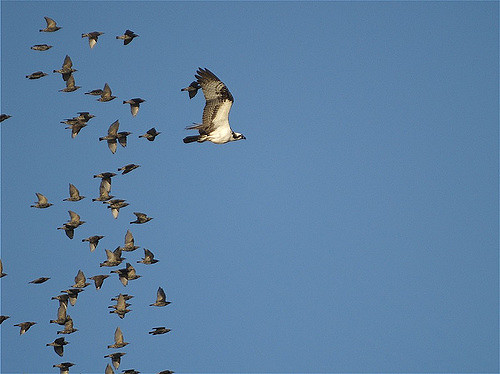
Western Osprey Being Chased Away ©Flickr John Dunstan

HE SHALL BE CHASED AWAY

***


“He shall fly away as a dream, and shall not be found: yea, he shall be chased away as a vision of the night.”  (Job 20:8)

Western Osprey Being Chased Away ©Flickr John Dunstan

*

More Daily Devotionals

*

An Elegant Quilt of Relationships – Creation Moments

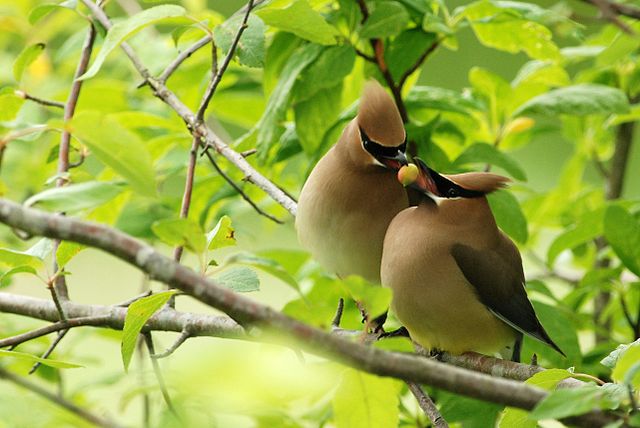
Cedar Waxwing (Bombycilla cedrorum) Passing Berries ©WikiC

Cedar Waxwing (Bombycilla cedrorum) Passing Berries ©WikiC

“The trees of the LORD are full of sap; the cedars of Lebanon, which he hath planted; Where the birds make their nests: as for the stork, the fir trees are her house.” (Psalm 104:16-17)

There are many incredible designs around us that are unlikely to exist if everything is the result of mindless chance. Many birds eat insects through the summer. While such high protein diets like this are good in mating and reproductive season, they do not prepare the birds to survive the cold weather of winter.

Alaska Wild Berries ©WikiC

An Elegant Quilt of Relationships – Alaska Wild Berries ©WikiC

Interesting Things from Smiley CentralWhat they need to do is build a layer of fat both for calorie storage as well as insulation. So, as winter nears, the berries that have been growing and ripening all summer on various shrubs become more numerous. The high sugar content of the berries’ juice helps the birds to quickly build up fat. The freeze on cold fall mornings even helps to increase the sugar concentration in the berries. Even more amazing is that the various types of berries eaten by the birds ripen in a staggered fashion so that berry season is long and the supplies are always available. For example, as the elderberry supply is just about consumed, highbush cranberries are in production. Often, the summer’s hatchlings’ plumage doesn’t reach full color until they eat the various pigments in the berries, and those pigments are incorporated into the new feathers. In exchange, the birds spread the seeds in the berries.

Cranberries ©Pixabay

Cranberries ©Pixabay

All of these complex, interrelated systems depend on each other in an elegant, fine-tuned design.

Prayer:
Father, thank You for the beauty and song of the birds which bless and enrich our lives. Amen.

Notes:
Val Cunningham, “Why bushes are better for birds.”

©Creation Moments 2016

*

More Interesting Things

Lee’s Four Word Thursday – 6/9/16

***

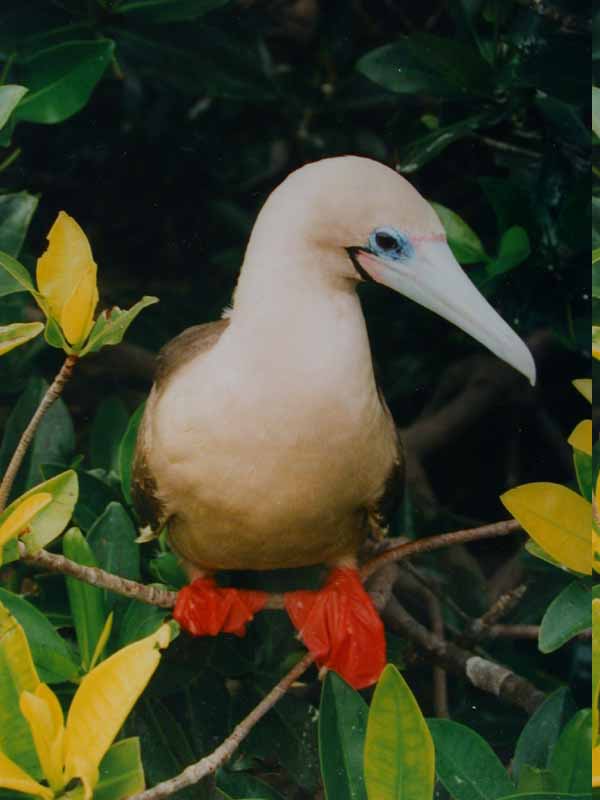
Red-footed Booby (Sula sula) by Bob-Nan

MY FOOT HATH HELD

***


“But he knoweth the way that I take: when he hath tried me, I shall come forth as gold. My foot hath held his steps, his way have I kept, and not declined.” (Job 23:10-11 KJV)

Red-footed Booby (Sula sula) by Bob-Nan

*

More Daily Devotionals

During Tropical Storm “Colin”, a young Red-footed Booby got blown off course and into a city. Unfortunately it was injured, and when sent to a rehab center, it did not survive.

*

Lee’s Three Word Wednesday – 6/8/16

***

Flock of Birds In The Valley - Bird Garden in Ninh Binh ©Crossingtravel

IN THE VALLEY

***


“And they of Beth-Shemesh were reaping their wheat harvest in the valley: and they lifted up their eyes, and saw the ark, and rejoiced to see it.”  (1st Samuel  6:13)

Flock of Birds In The Valley – Bird Garden in Ninh Binh ©Crossingtravel

*

More Daily Devotionals

*

The Sun Is Finally Back Out!

Magnificent Frigatebird (Fregata magnificens) by Lee at Ding Darling NWR

Magnificent Frigatebird (Fregata magnificens) by Lee at Ding Darling NWR

And he arose, and rebuked the wind, and said unto the sea, Peace, be still. And the wind ceased, and there was a great calm. And he said unto them, Why are ye so fearful? how is it that ye have no faith? (Mark 4:39-40 KJV)

Here in central Florida, we have been dealing with Tropical Storm Colin for the last few days. In fact, we had 3.31 inches of rain this morning and with yesterday’s count, we have had 4 inches of rain in two days. Our birds have been rather wet. Also, I stayed off of the computer because of the lightning in the rain storms. These are not my reports, because I have been home, out of the rain, still fighting my bronchitis.
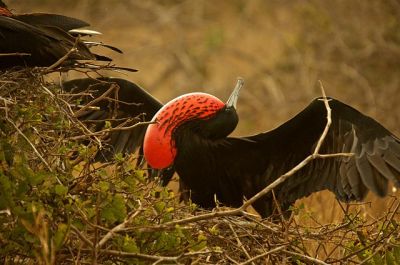
Magnificent Frigatebird (Fregata magnificens) ©WikiC

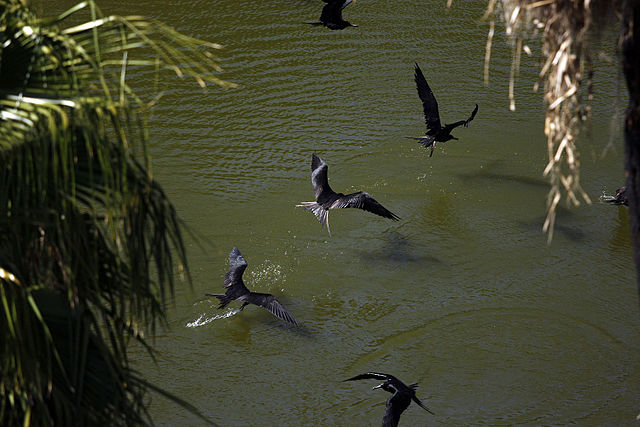
But, what I want to tell you about, is the reports that are coming in about sightings of Frigatebirds. Florida has a listing service where people report sightings of birds. Usually they are rare sightings. When storms like Colin are in the area, birds get blown off course and birdwatchers get the joy of seeing more rare birds. Many are pelagic, which means they normally fly out over the gulf and oceans. They are rarely seen in towns.
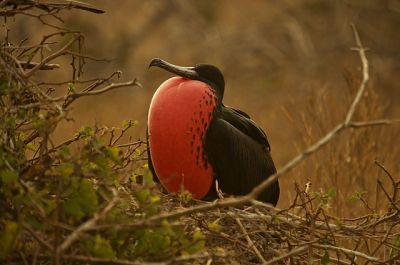
Magnificent Frigatebird (Fregata magnificens) ©WikiC

Magnificent Frigatebird (Fregata magnificens) ©WikiC

“Saw a lone Frigatebird at 9:30 am on B. B. Downes below Cross Creek Blvd.  Storm blown!” that is from a birder in North Hillsborough County, basically, North Tampa area. Here’s another report, “25 counted over Dunedin Causeway late yesterday afternoon between bands of rain. So cool they were flying at eye level on the bridge. M.R., Dunedin” Magnificent Frigatebirds report in Hernando and Pasco counties. And one more, “While stopped at the traffic light at Nebraska and Fowler. I noticed a group of ten frigatebirds circling just to the North about 8:30 this morning..”
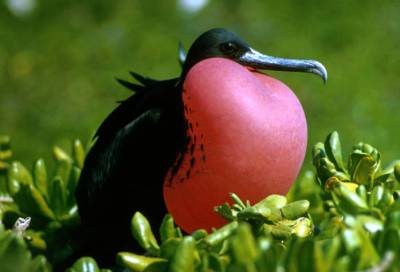
Magnificent Frigatebird (Fregata magnificens) ©USFWS

Magnificent Frigatebird (Fregata magnificens) ©USFWS

Across the state several sea-going birds were spotted. A Fea’s Petrel off Miami, European Storm-Petrel, and a Promarine Jaeger. Needless to say, there are some happy, though wet birdwatchers that have enjoyed these spottings.
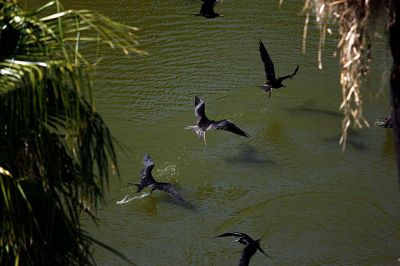
Magnificent Frigatebird (Fregata magnificens) Drinking Water ©WikiC

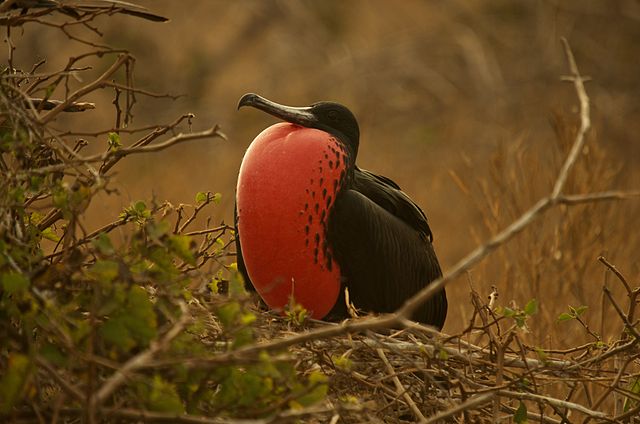
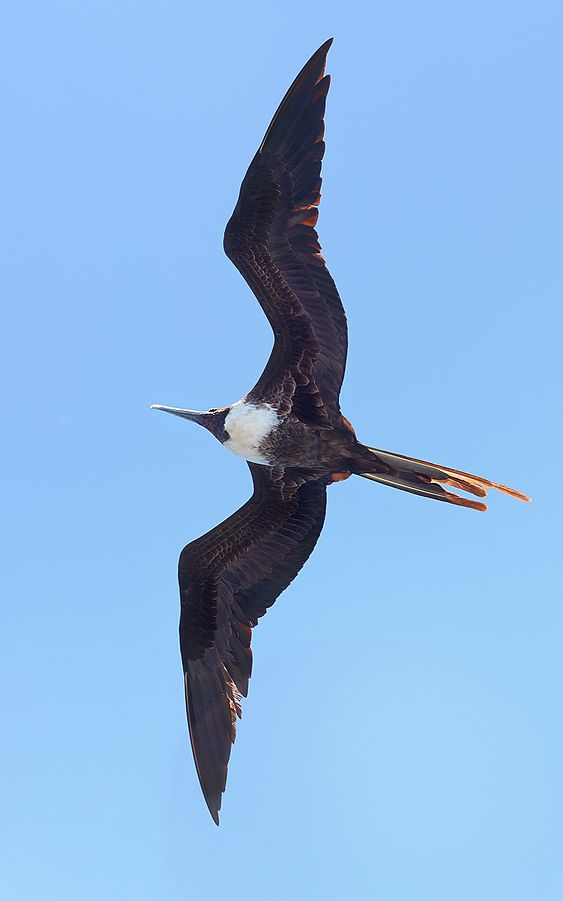
Back to the Frigatebirds. The top photo was one of the few times I have had the privilege of seeing one of the Frigatebirds. Frigatebirds are members of the Fregatidae Family of the Suliformes Order.
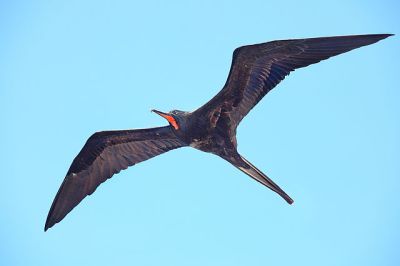
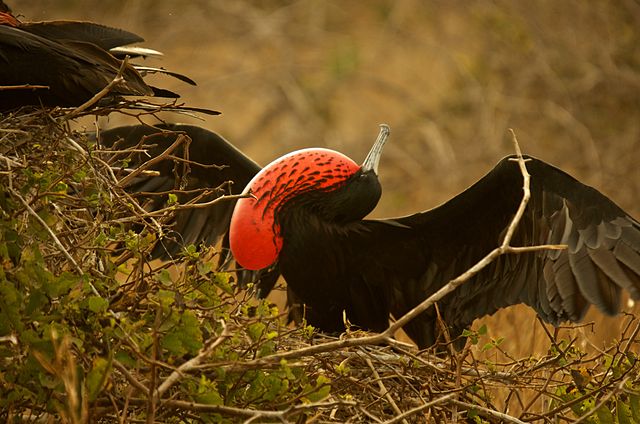
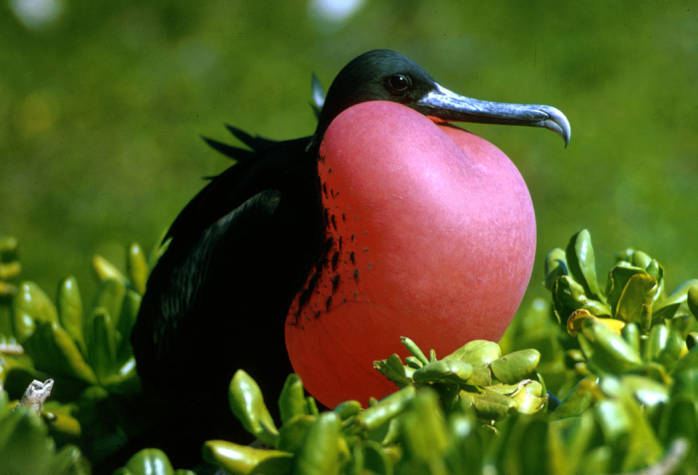
Magnificent Frigatebird (Fregata magnificens) Male ©WikiC

Magnificent Frigatebird (Fregata magnificens) Male ©WikiC

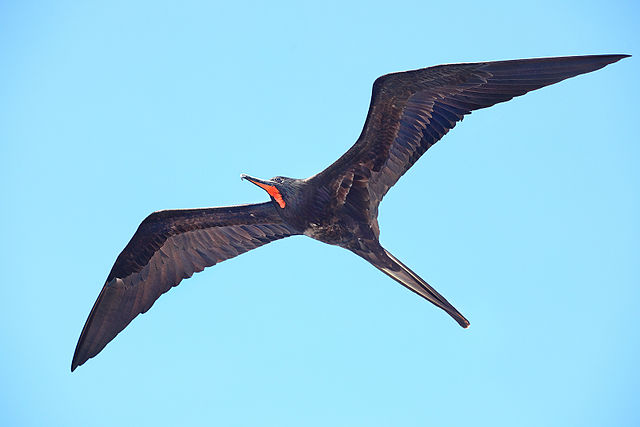
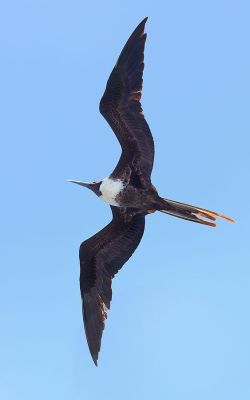
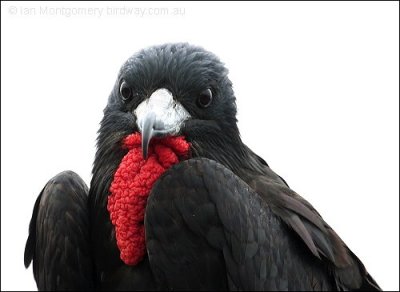
“All have predominantly black plumage, long, deeply forked tails and long hooked bills. Females have white underbellies and males have a distinctive red gular pouch, which they inflate during the breeding season to attract females. Their wings are long and pointed and can span up to 2.3 metres (7.5 ft), the largest wing area to body weight ratio of any bird.” (Wikipedia)
Magnificent Frigatebird (Fregata magnificens) Female ©WikiC

Magnificent Frigatebird (Fregata magnificens) Female ©WikiC

“Able to soar for days on wind currents, frigatebirds spend most of the day in flight hunting for food, and roost on trees or cliffs at night. Their main prey are fish and squid, caught when chased to the water surface by large predators such as tuna. Frigatebirds are referred to as kleptoparasites as they occasionally rob other seabirds for food, and are known to snatch seabird chicks from the nest. Seasonally monogamous, frigatebirds nest colonially. A rough nest is constructed in low trees or on the ground on remote islands. A single egg is laid each breeding season. The duration of parental care is among the longest of any bird species; frigatebirds are only able to breed every other year.” (Wikipedia)
Magnificent Frigatebird (Fregata magnificens) by Ian

Magnificent Frigatebird (Fregata magnificens) by Ian

“The magnificent frigatebird is the largest species of frigatebird. It measures 89–114 cm (35–45 in) in length, has a wingspan of 217–244 cm (85–96 in) and weighs 1,100–1,590 grams (2.43–3.51 lb).[12] Males are all-black with a scarlet throat pouch that is inflated like a balloon in the breeding season. Although the feathers are black, the scapular feathers produce a purple iridescence when they reflect sunlight, in contrast to the male great frigatebird’s green sheen. Females are black, but have a white breast and lower neck sides, a brown band on the wings, and a blue eye-ring that is diagnostic of the female of the species. Immature birds have a white head and underparts.” (Wikipedia)

These magnificent creations from the Lord, their Creator, have been written about before. Just wanted to share them again. Even though we have storms in life, “Colin”, the Lord always seems to give us blessings, if our eyes and heart are open to Him.

Then they cry unto the LORD in their trouble, and he bringeth them out of their distresses. He maketh the storm a calm, so that the waves thereof are still. Then are they glad because they be quiet; so he bringeth them unto their desired haven. Oh that men would praise the LORD for his goodness, and for his wonderful works to the children of men! (Psalms 107:28-31 KJV)

*

Our Daily Bread – Life’s Storm-Tossed Sea

“Flag That Bird!” Part 3

SULIFORMES – Gannets, Cormorants, Frigatebirds, Anhingas

Fregatidae-Frigatebirds Family

MagnificentFrigatebird – Wikipedia

Suliformes Order – Wikipedia
Lee’s Two Word Tuesday – 6/7/16

***

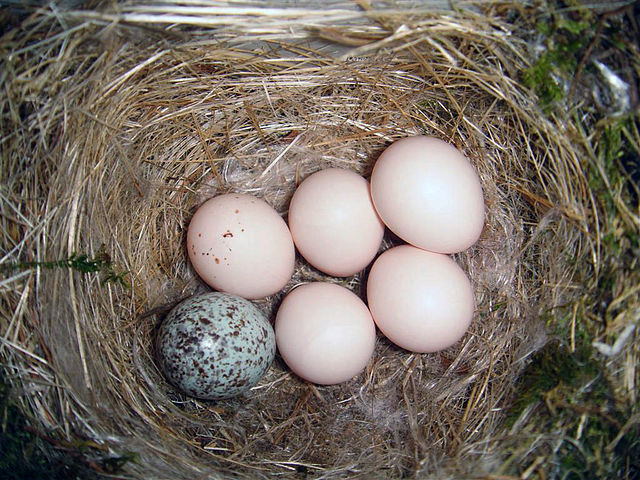
Brown-headed Cowbird (Molothrus ater) Egg in Eastern Phoebe Nest ©WikiC

NOT EMPTY

***


“And they said, “If ye send away the ark of the God of Israel, send it not empty; but in any wise return Him a trespass offering: then ye shall be healed, and it shall be known to you why His hand is not removed from you.”  (1st Samuel 6:3)

Brown-headed Cowbird (Molothrus ater) Egg in Eastern Phoebe Nest ©WikiC

*

More Daily Devotionals

*

One Word Monday – 6/6/16

***

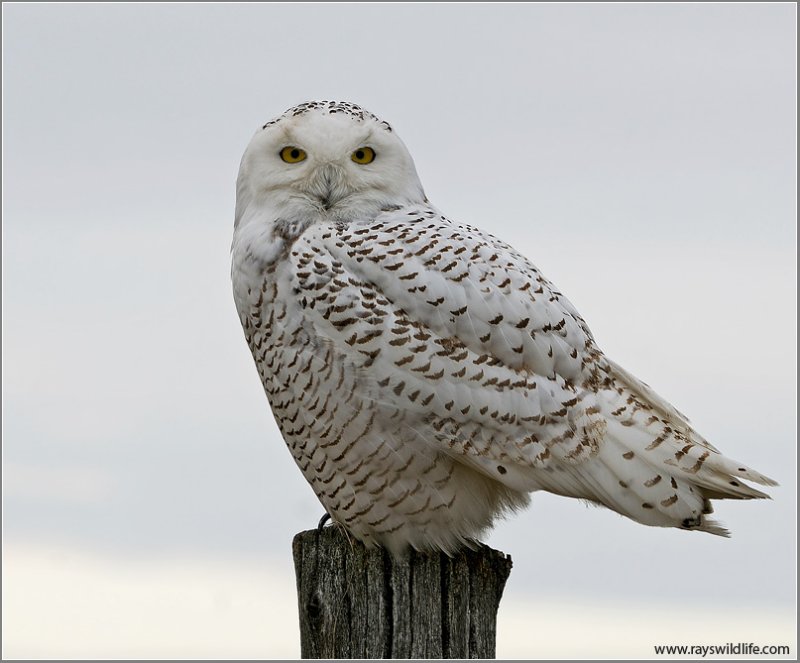
Snowy Owl (Bubo scandiacus) by Raymond Barlow

SNOW

***


“Come now, and let us reason together, saith the LORD: though your sins be as scarlet, they shall be as white as snow; though they be red like crimson, they shall be as wool.” Isaiah 1:18)

Snowy Owl (Bubo scandiacus) by Raymond Barlow

*

More Daily Devotionals

*

Lee’s Seven Word Sunday – 6/5/16

***

Geese Flying Early in the Morning ©©

THEY AROSE EARLY ON THE MORROW MORNING

***


“And when they arose early on the morrow morning, behold, Dagon was fallen upon his face to the ground before the ark of the Lord; and the head of Dagon and both the palms of his hands were cut off upon the threshold; only the stump of Dagon was left to him.  (1st Samuel  5:4)

Geese Flying Early in the Morning ©©

*

More Daily Devotionals

*

Sunday Inspiration – Emberizidae Family Allies I

Chestnut-capped Brushfinch (Arremon brunneinucha) ©WikiC

Chestnut-capped Brushfinch (Arremon brunneinucha) ©WikiC

Yea, the sparrow hath found an house, and the swallow a nest for herself, where she may lay her young, even thine altars, O LORD of hosts, my King, and my God. (Psalms 84:3 KJV)

Sunday is here again, and it’s time to continue with the Emberizidae Family of Buntings, New World Sparrows and their allies.  First, aren’t we thankful that the Lord has created the world and set up a seven day week. He set the pattern for us to rest after six days of work. He was tired, nor has he stopped working, He was just setting an example, because the human body needs rest. He ought to know, He created us.

“Thus the heavens and the earth were finished, and all the host of them. And on the seventh day God ended his work which he had made; and he rested on the seventh day from all his work which he had made. And God blessed the seventh day, and sanctified it: because that in it he had rested from all his work which God created and made.” (Genesis 2:1-3 KJV) (emphasis mine)

I for one look forward to Sundays. We rest and attend church, eat and fellowship with our friends, and attend the evening service and rest some more. These Sunday Inspirations, which have been going on for some time now, take several hours to put together, and then are scheduled for 1 or 2 minutes after midnight Sunday morning. When WordPress puts them up, I will already be resting in bed and enjoying the start of my Day of Rest. Enough of the personal information, let’s see what these birds are up to this week.

The first Sunday, we showed the Buntings in this family, last week, we showed most of the New World Sparrows in this Emberizidae family, so, let’s see who these “allies” are.

Eastern Towhee (Pipilo erythrophthalmus) by Ray

Eastern Towhee (Pipilo erythrophthalmus) by Ray

Towhees typically have longer tails than other emberizids. Most species tend to avoid humans, so they are not well known, though the eastern towhee P. erythrophthalmus is bolder. This species, and some others, may be seen in urban parks and gardens. Also, in with the Melozone genus are four Ground Sparrows.

Prevost's Ground Sparrow (Melozone biarcuata) ©Flickr Richard Gibbons

Prevost’s Ground Sparrow (Melozone biarcuata) ©Flickr Richard Gibbons

Arremon is a genus of neotropical birds in the Emberizidae family. With the exception of the green-striped brush finch, which is endemic to Mexico, all species are found in South America, with a few reaching Central America.

Chestnut-capped Brushfinch (Arremon brunneinucha) ©Flickr Amy McAndrews

  • (Wikipedia with editing)

This slideshow requires JavaScript.

“Where there is no vision, the people perish: but he that keepeth the law, happy is he.” (Proverbs 29:18 KJV)

“Be Thou My Vision” ~ by Ladies and Girls Choir on Mother’s Day

*

More Sunday Inspirations

Sunday Inspiration – Emberizidae’s – Buntings

Sunday Inspiration – Emberizidae – Part II

Emberizidae –  Buntings, New World Sparrows & Allies

Gospel Message

*