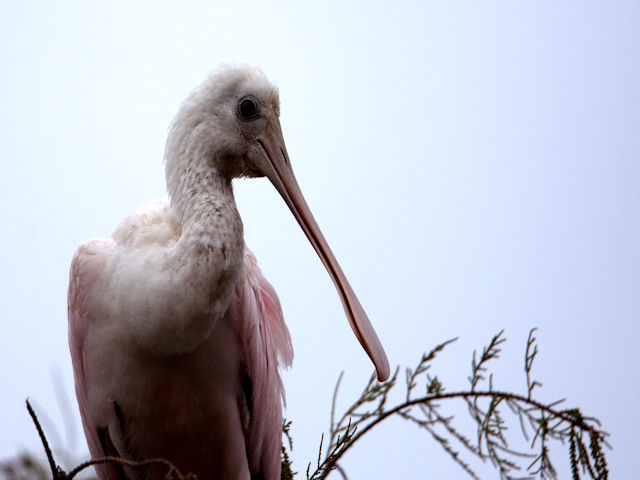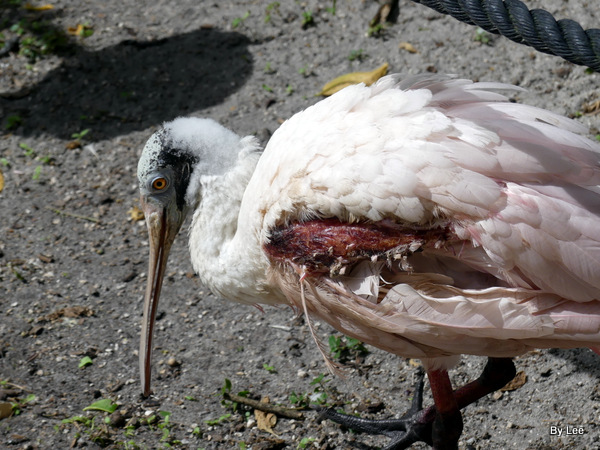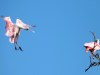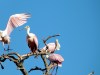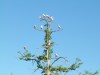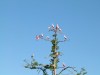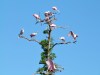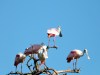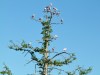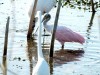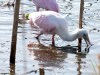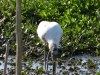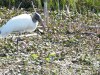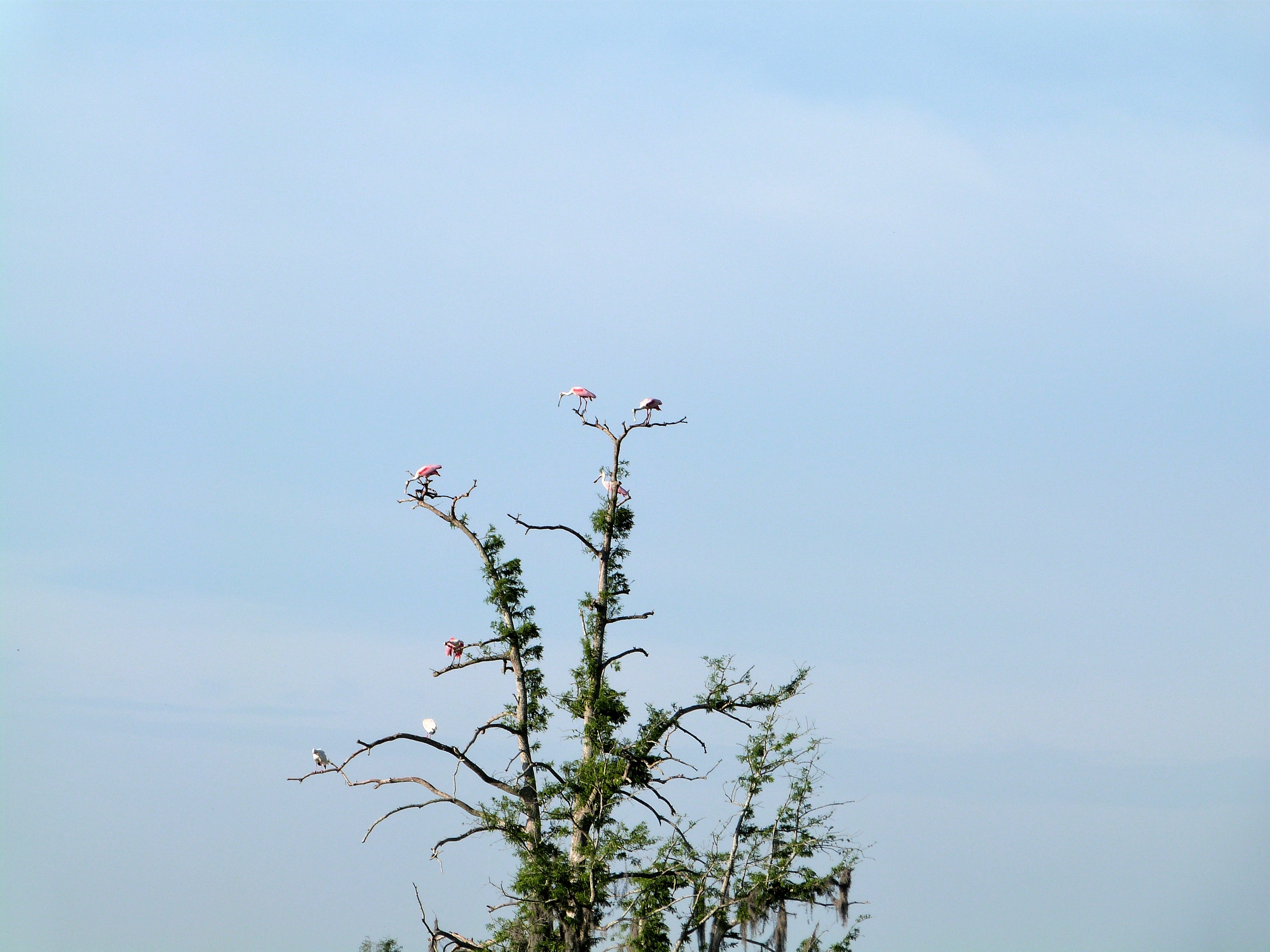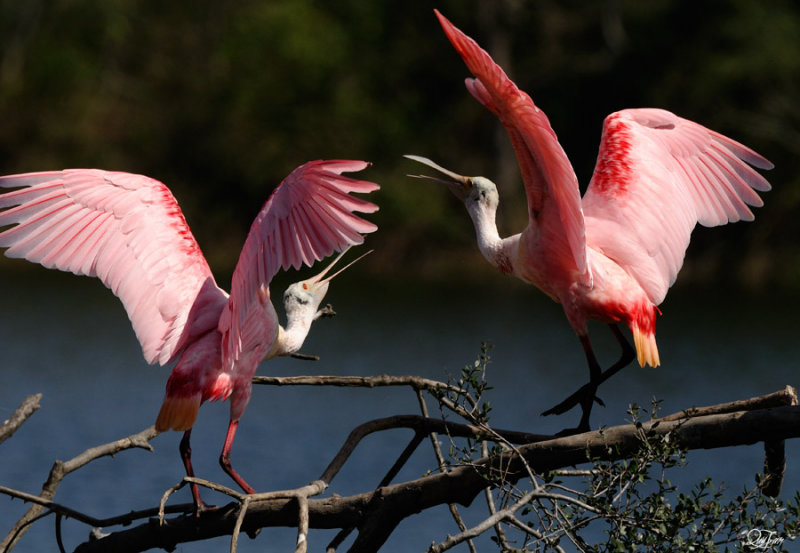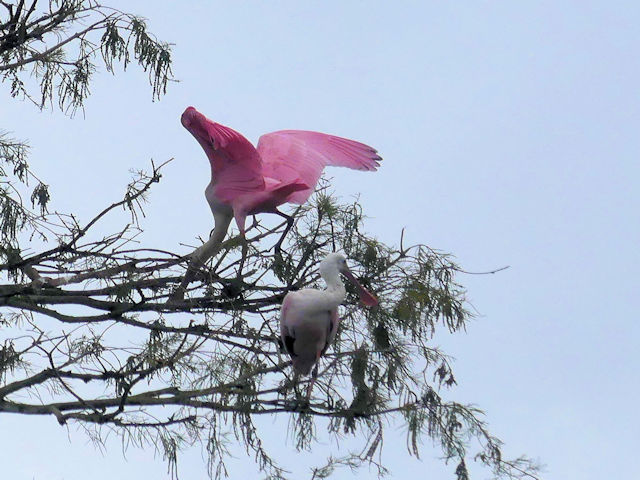
Roseate Spoonbill landing at Gatorland by Lee 11-21-17
Yesterday, I shared the Boat-tailed Grackle female. Today, here are a few photos of two Roseate Spoonbills that landed on one of the trees at Gatorland. [Plus a bonus at the end]
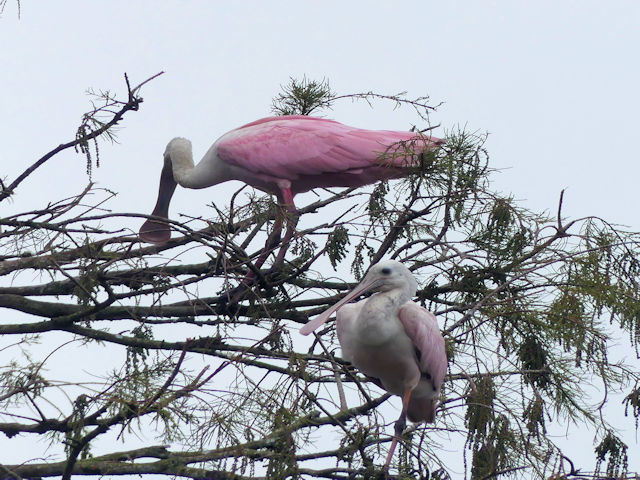
Didn’t realize that she was already there.
The Roseate Spoonbill (Platalea ajaja) is a gregarious wading bird of the ibis and spoonbill family, Threskiornithidae. It is a resident breeder in South America mostly east of the Andes, and in coastal regions of the Caribbean, Central America, Mexico, the Gulf Coast of the United States, and on central Florida’s Atlantic coast at Merritt Island National Wildlife Refuge, adjoined with NASA Kennedy Space Center. They are also found here in Central Florida. These were at Gatorland in Orlando on 11/21/17.
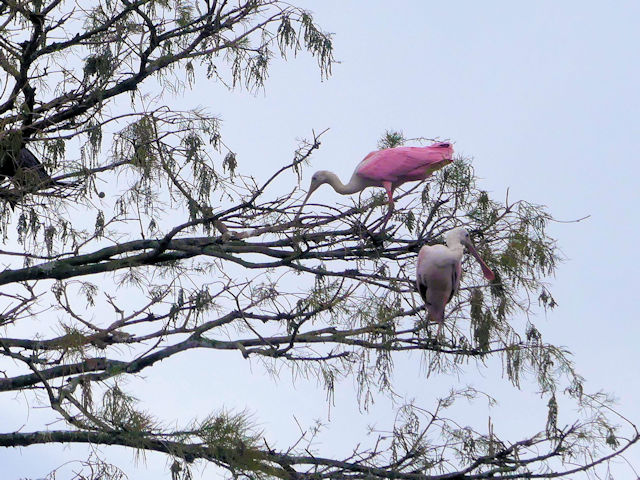
Zoomed in even on this photo. The first ones were also cropped.
The roseate spoonbill is 71–86 cm (28–34 in) long, with a 120–133 cm (47–52 in) wingspan. The tarsus measures 9.7–12.4 cm (3.8–4.9 in), the culmen measures 14.5–18 cm (5.7–7.1 in) and the wing measures 32.3–37.5 cm (12.7–14.8 in) and thus the legs, bill, neck and spatulate bill all appear elongated. Adults have a bare greenish head (“golden buff” when breeding) and a white neck, back and breast (with a tuft of pink feathers in the center when breeding), and are otherwise a deep pink. The bill is grey.
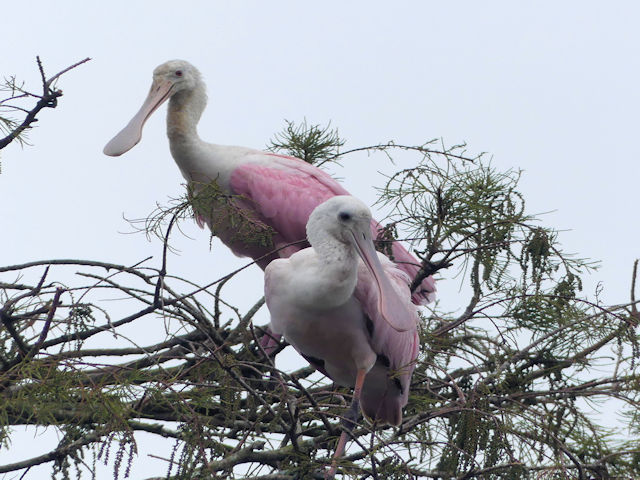
Roseate Spoonbilsl landing at Gatorland by Lee 11-21-17
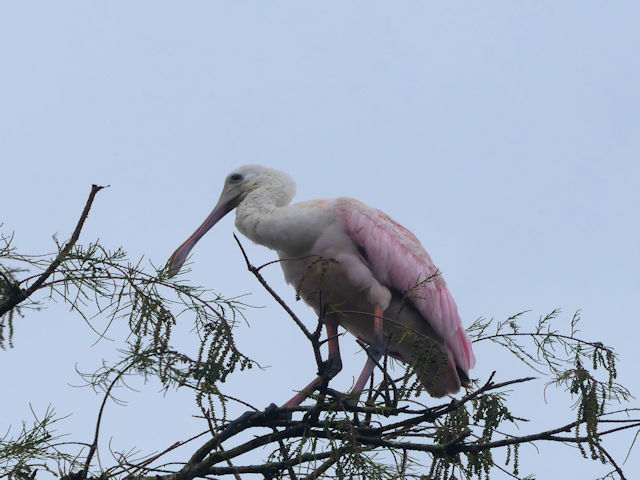
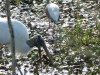
Roseate Spoonbills at Gatorland by Dan – Zoomed & Cropped
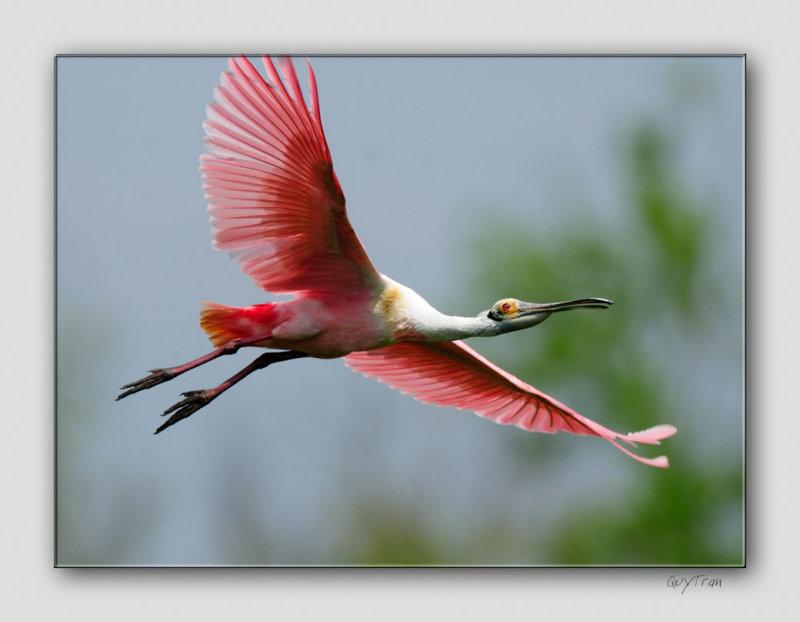
Like the American flamingo, their pink color is diet-derived, consisting of the carotenoid pigment canthaxanthin. Another carotenoid, astaxanthin, can also be found deposited in flight and body feathers. The colors can range from pale pink to bright magenta, depending on age, whether breeding or not, and location. Unlike herons, spoonbills fly with their necks outstretched. They alternate groups of stiff, shallow wingbeats with glides.
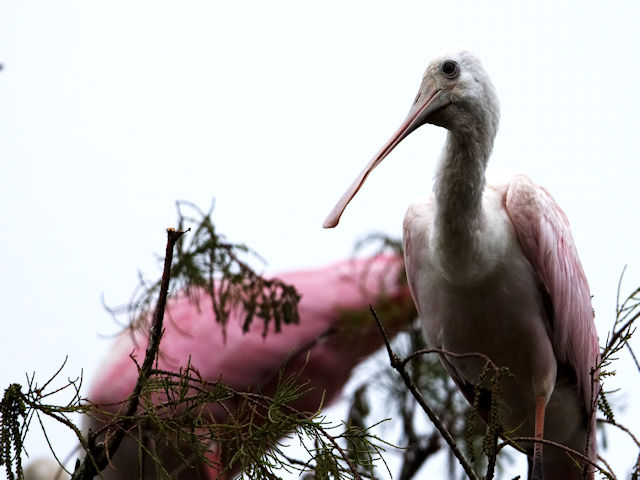
Roseate Spoonbills at Gatorland by Dan – Zoomed & Cropped
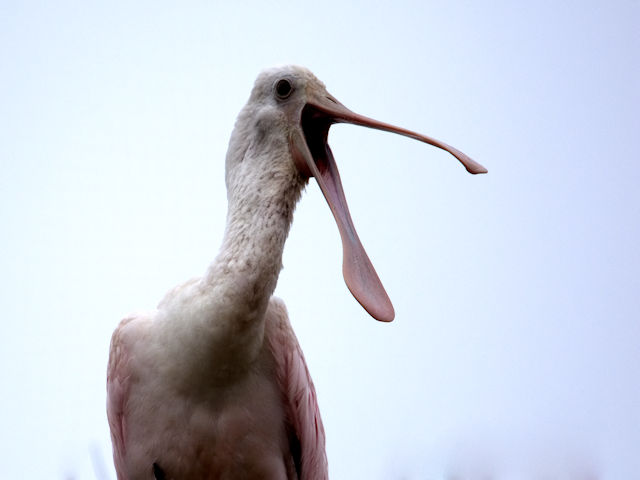
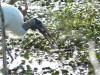
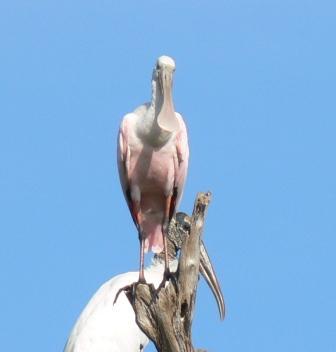
Roseate Spoonbills at Gatorland by Dan – Yawning
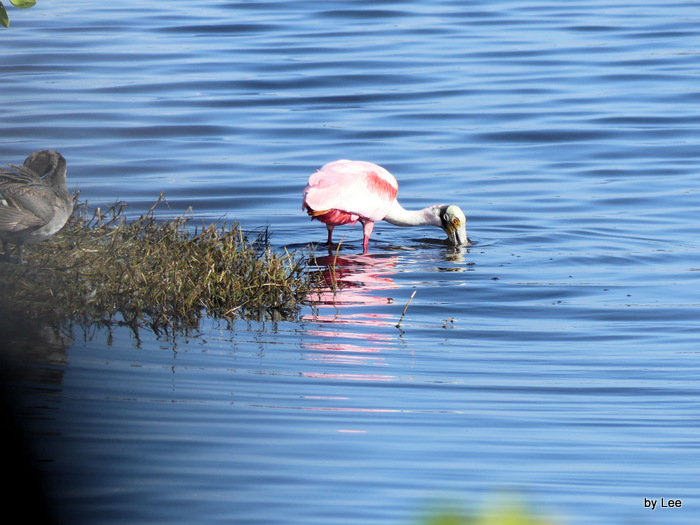
This species feeds in shallow fresh or coastal waters by swinging its bill from side to side as it steadily walks through the water, often in groups. The spoon-shaped bill allows it to sift easily through mud. It feeds on crustaceans, aquatic insects, frogs, newts and very small fish ignored by larger waders. In the United States, a popular place to observe roseate spoonbills is “Ding” Darling National Wildlife Refuge in Florida. Roseate spoonbills must compete for food with snowy egrets, great egrets, tricolored herons and American white pelicans. [Wikipedia, with editing] Threskiornithidae – Ibises, Spoonbills Family
***
“Out of the ground the LORD God formed every beast of the field and every bird of the air, and brought them to Adam to see what he would call them. And whatever Adam called each living creature, that was its name.” (Genesis 2:19 NKJV)
Bonus:
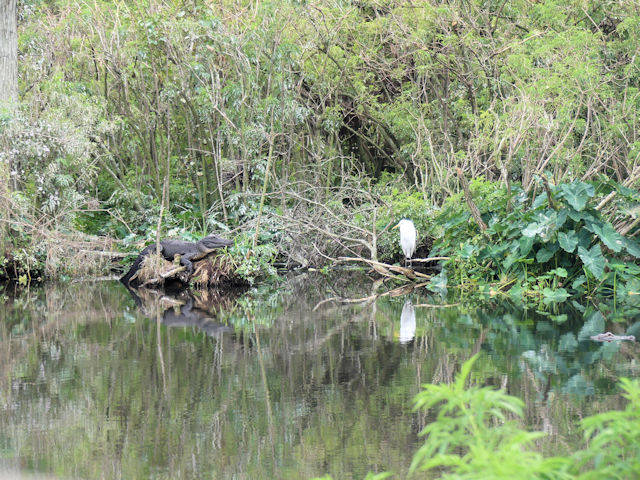
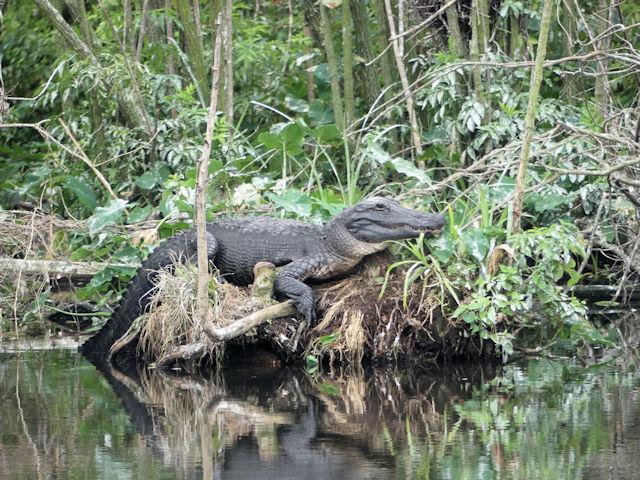
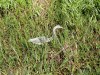
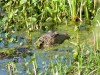
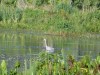
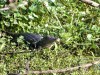
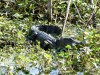
I found this Great Egret along the edge and an alligator nearby with quite a look on its face. They really weren’t that close, but thought you would enjoy this series of photos. [Click to enlarge]
Because the slideshow won’t allow larger photos, here are the photos for the Seeing Pink at Circle B Bar Reserve article in the Gallery format. Clicking any photo will begin an Image Gallery Carousel.
*
Heading for the Marsh at Circle B
Roseate Spoonbill
Roseate Spoonbill
Roseate Spoonbill
Roseate Spoonbill
Roseate Spoonbill
Roseate Spoonbill
Roseate Spoonbill
Roseate Spoonbill and a Snowy Egret
Roseate Spoonbill
Roseate Spoonbill
Roseate Spoonbill
Roseate Spoonbill
Roseate Spoonbill Getting Ready to Land
Roseate Spoonbill
Glossy Ibis Flying by
Snowy Egret Flying by
Roseate Spoonbill Landing
Roseate Spoonbill – Out of focus Landing
Roseate Spoonbill – Landing
Roseate Spoonbill
Roseate Spoonbill Now there are 11 up there
Roseate Spoonbill Number 12 landing
Roseate Spoonbill
Roseate Spoonbill
Roseate Spoonbill
Roseate Spoonbill 14 of them now
Roseate Spoonbill, by Lee at Circle B
Roseate Spoonbill Flying by with neck out front
Roseate Spoonbill 14 of them at Circle B
Roseate Spoonbil 15 Now
Roseate Spoonbill Another Landing
Roseate Spoonbill
Roseate Spoonbill in water
Limpkin
Tricolored Heron Looking
Great Blue Heron Flying by
Little Blue Heron Flying off
Snowy Egret holding on with yellow feet
Spoons-Egrets-Storks-Ibises
Great Egret in Breeding Plumage
Wood Stork
Bald Eagle Flying by
Ducks scattering after Eagle flew over
Limpkin
Little Blue Heron Immature
Red-winged Blackbird in tree
Bald Eagle Heading back the other way
Red-winged Blackbird Female
Common Gallinule
Royal Tern Flying by – I think
Alligator – Brownish
Common Grackle or Rusty Blackbird – Common most likely
Then God said, “Let the waters abound with an abundance of living creatures, and let birds fly above the earth across the face of the firmament of the heavens.” So God created great sea creatures and every living thing that moves, with which the waters abounded, according to their kind, and every winged bird according to its kind. And God saw that it was good. And God blessed them, saying, “Be fruitful and multiply, and fill the waters in the seas, and let birds multiply on the earth.” (Genesis 1:20-22 NKJV)
We spent a short time at Circle B Bar Reserve today and thought it would be the same old-same old. Well, it wasn’t. A lady we ran into said the same thing I was thinking, “I wasn’t expecting much today.”
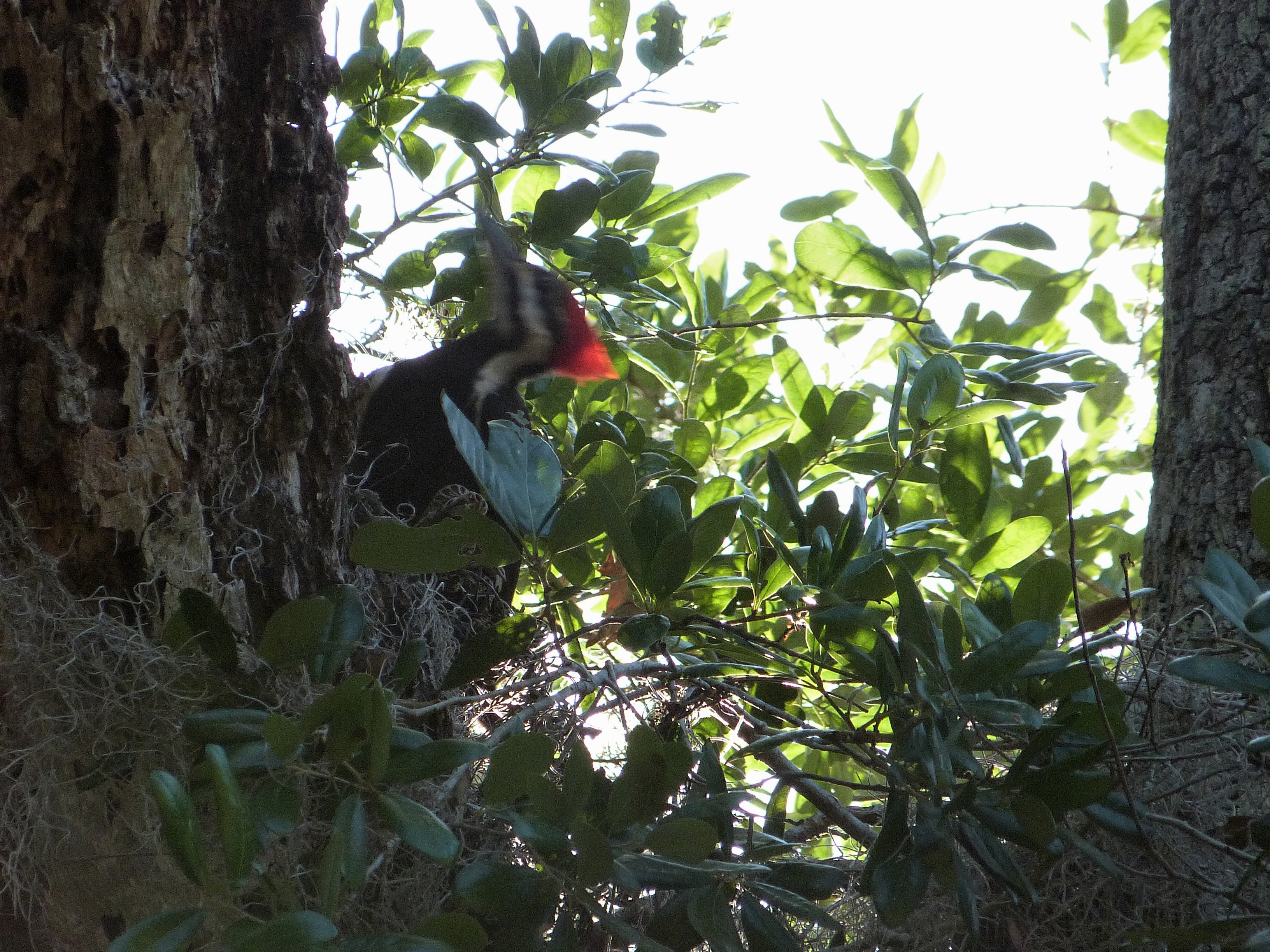
When we got out of the car, I spotted a bird landing in the tree nearby which turned out to be a Pileated Woodpecker. That got me excited right away.
As soon as we turned the corner to head to the marsh, which is extremely dry because there has not had much rain all winter, I saw “Pink.”
Roseate Spoonbill Tree
I am putting a Slideshow here so you can see why I got so excited. It turned out to be a fantastic birdwatching adventure today. Ignore some of the blurred photos, but were inserted to help tell the story of this adventure. The Roseate Spoonbills are spotted out there, but I have never seen so many and so close as today. They kept landing on that tree as you will see and it built up until there were 15 of them in that tree.
Not only did we see the Pileated Woodpecker and the Roseate Spoonbills, but we saw quite a few others also. They are included in the slideshow also. Enjoy!
The Roseate Spoonbill is a member of the Threskiornithidae – Ibises, Spoonbills Family. We see them quite often in this area, especially in the Fall and Winter time. I am always thrilled when we come upon them in our birdwatching adventures. Their cousins, Ibises, are a Bird of the Bible.
Then God said, “Let the waters abound with an abundance of living creatures, and let birds fly above the earth across the face of the firmament of the heavens.” So God created great sea creatures and every living thing that moves, with which the waters abounded, according to their kind, and every winged bird according to its kind. And God saw that it was good. And God blessed them, saying, “Be fruitful and multiply, and fill the waters in the seas, and let birds multiply on the earth.” So the evening and the morning were the fifth day. (Genesis 1:20-23 NKJV)
Since the Lord created all the birds, this is one of His neater creations, at least in my opinion. Their spoon-shaped bill is sort of unique to the birds. There are actually five other Spoonbills besides the Roseate.
The Roseate Spoonbill is 28–34 in (71–86 cm) long, with a 47–52 in (120–133 cm) wingspan and a weigh 2.6–4.0 lb (1.2–1.8 kg). The legs, bill, neck and spatulate bill all appear elongated. Adults have a bare greenish head (“golden buff” when breeding) and a white neck, back, and breast (with a tuft of pink feathers in the center when breeding), and are otherwise a deep pink. The bill is grey. There is no significant sexual dimorphism.
Like the American Flamingo, their pink color is diet-derived, consisting of the carotenoid pigment canthaxanthin. Another carotenoid, astaxanthin, can also be found deposited in flight and body feathers. The colors can range from pale pink to bright magenta, depending on age and location. Captive Spoonbill are fed their normal diets, plus some include juices made from carrots.
Unlike herons, spoonbills fly with their necks outstretched. They alternate groups of stiff, shallow wingbeats with glides.
Spoonbills feeding in a pond by the school. Cloudy day. Not the best, but you can see their eating behavior. Taken by me.
This species feeds in shallow fresh or coastal waters by swinging its bill from side to side as it steadily walks through the water, often in groups. The spoon-shaped bill allows it to sift easily through mud. It feeds on crustaceans, aquatic insects, frogs, newts and very small fish ignored by larger waders. In the United States a popular place to observe Roseate Spoonbills is “Ding” Darling National Wildlife Refuge in Florida. (Also at Circle B Bar Reserve as you can see by the list below of some of my sighting on e-Bird) Roseate Spoonbills must compete for food with Snowy Egrets, Great Egrets, Tricolored Herons, and American White Pelicans.
We came upon a group of them roosting at Ding” Darling National Wildlife Refuge. It was the first time I had seen that many in one place and so close to us.
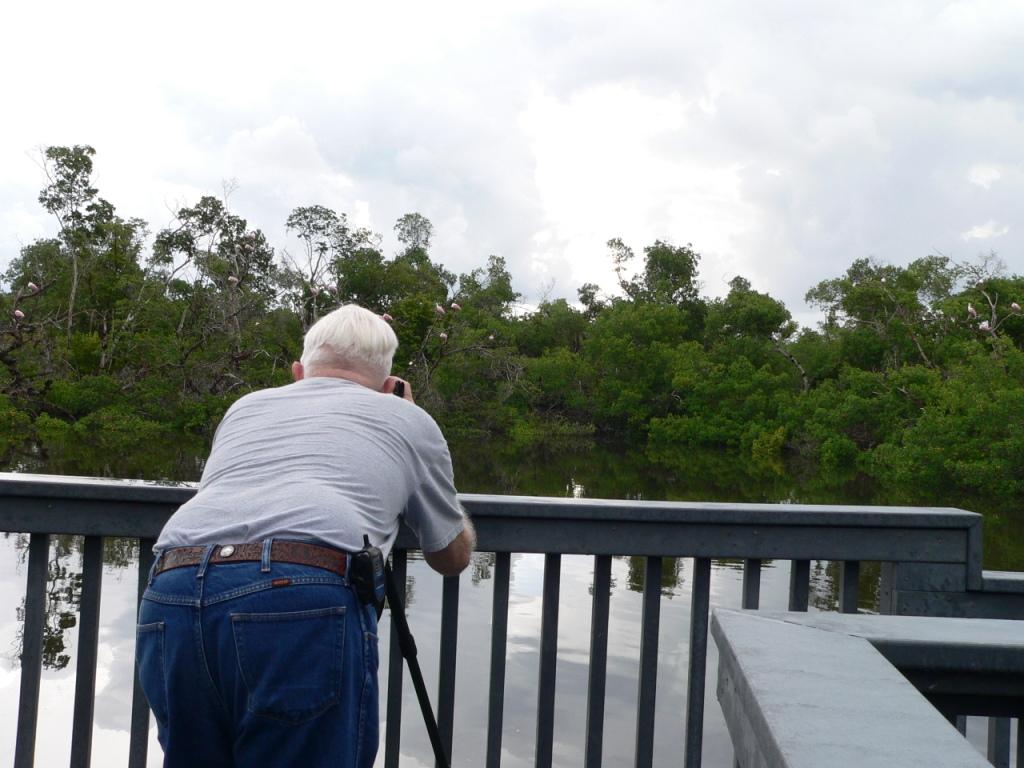
Roseate Spoonbills at Ding Darling NWR – Dan at work.
The Roseate Spoonbill nests in shrubs or trees, often mangroves, laying 2 to 5 eggs, which are whitish with brown markings. Immature birds have white, feathered heads, and the pink of the plumage is paler. The bill is yellowish or pinkish.
What prompted writing about one of the bird friends I always enjoy seeing, is an article about the Roseate Spoonbill in one of my latest additions of BirdWatching. It’s a great magazine and I am not condemning it. I am used to “reading around the evolutionary influences” in articles about birds. But I was offended by this remark, “It’s hard not to look at the Roseate Spoonbill in the Everglades and think, ‘What happened here:’ Amid the herons and cormorants, the spoonbill seems like an evolutionary hiccup, a failed experiment.”
One, the Roseate Spoonbill is far from an “evolutionary hiccup!” It hasn’t evolved, it was created by a loving all knowing Creator, that knew exactly what He was doing. Two, it definitely was not a “failed experiment.” The way the bill is designed and the sensitivity of its touch is amazing. The Lord promised to provide for all His creatures as well as His own people. Nor are we “hiccups.” We are all created by him, but there are differences and varieties in the birds just as there is in our talents and abilities.
I know all the birds of the mountains, And the wild beasts of the field are Mine. (Psalms 50:11 NKJV)
Look at the birds of the air, for they neither sow nor reap nor gather into barns; yet your heavenly Father feeds them. Are you not of more value than they? (Matthew 6:26 NKJV)
All the birds of the heavens made their nests in its boughs; Under its branches all the beasts of the field brought forth their young; And in its shadow all great nations made their home. (Ezekiel 31:6 NKJV)
(Wikipedia and other internet resources consulted)
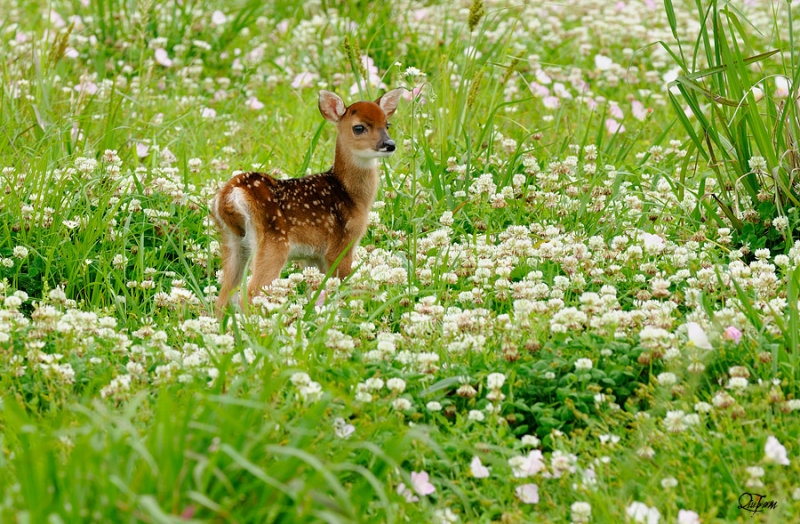
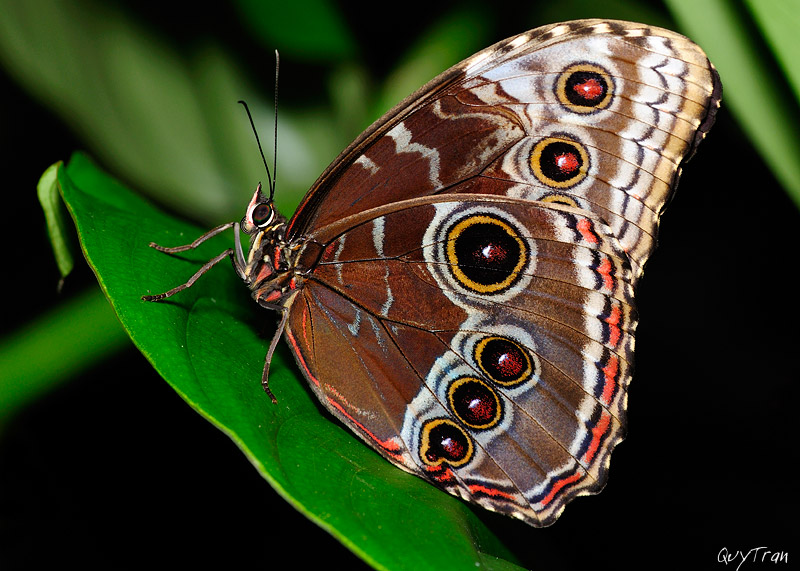
We have a new photographer who has given permission to use some of his photos. Quy Tran is an amazing photographer. He has quite an eye for capturing his subjects. Quy is fantastic in his compositions. Check out his Gallery at Quy Tran Galleries. Not only does he have wildlife photos, but his closeups are amazing.