Tickle Me Tuesday – Nesting Falcon

Barred Forest Falcon (Micrastur ruficollis) ©WikiC

Barred Forest Falcon (Micrastur ruficollis) ©WikiC

That path no bird knows, Nor has the falcon’s eye seen it. (Job 28:7 NKJV)

My brother-in-law sent me this photo recently. Had seen it before, but thought I would share it for a “tickle”.

For those of you who may not be familiar with our automobiles, the Falcon was quite popular, in its time.

Nesting Falcon

 Let the field be joyful, and all that is in it. Then all the trees of the woods will rejoice before the LORD. (Psalms 96:12 NKJV)

Other Tickle Me Tuesday’s

A Restful Song

He sends the springs into the valleys; They flow among the hills. They give drink to every beast of the field; The wild donkeys quench their thirst. By them the birds of the heavens have their home; They sing among the branches. He waters the hills from His upper chambers; The earth is satisfied with the fruit of Your works. (Psalms 104:10-13 NKJV)

Thought you just might enjoy a little song and restfulness from Our Creator.

Come to Me, all you who labor and are heavy laden, and I will give you rest. Take My yoke upon you and learn from Me, for I am gentle and lowly in heart, and you will find rest for your souls. For My yoke is easy and My burden is light.” (Matthew 11:28-30 NKJV)

*

Wordless Birds

*

Sabbath Rest Invitaional – Week 5

Wanted to share this from Hanging out with God

Radical About Jesus's avatarHangin' Out With God

Today is the final “Sabbath Rest Invitational” Post. I hope these March offerings have helped you relax and let the stress go for a while. If you have a picture or text of any kind that represents rest to you, please share it on this post. Just post it on your own blog and come over here to paste the link in the “Comments” window.

Here’s my restful gift for this week:

BLUE BIRD - JOHN, KAREN HOLLINGSWORTH - CROPPED # 2BE STILL AND KNOW

“Be Still and know that I am God.”  (Psalm 46:10)

I’ve come to the end of myself, Lord.
I’ve come to the end of my road.
To the place that my strength’s too depleted
To wield the sword of Your Word.

I’ve come to the end of my struggle,
And there’s no earthly place I can turn.
But Your strength’s made perfect in weakness;
That’s one lesson, Lord, I have learned.

So reach down…

View original post 45 more words

Sunday Inspiration – Honeyeaters

Bridled Honeyeater (Lichenostomus frenatus) by Ian

Bridled Honeyeater (Lichenostomus frenatus) by Ian

How sweet are thy words unto my taste! yea, sweeter than honey to my mouth! (Psalms 119:103 KJV)

The Meliphagidae – Honeyeaters are another of our beautifully created birds in the Passerine Order to highlight. Thought about changing the sequence because of Palm Sunday, but did Palm Birds previously with Lisa Brock singing from an Easter Musical. The Words of Christ that tell of this week, and they are sweeter than honey to those of us who have accepted the Lord Jesus Christ as our Savior.

The Lord did not have to stay on the cross, but because of His Love for us, he stayed there and paid the penalty for our sins. He offers us the gift of Salvation, but we have to admit and acknowledge our sinful condition, and accept that gift. Honey is a gift from the Lord for the Honeyeaters, and they could stand and look at it all day, but they need to partake of it to do them any good. Taste comes when they accept it.

And as Moses lifted up the serpent in the wilderness, even so must the Son of man be lifted up: That whosoever believeth in him should not perish, but have eternal life. For God so loved the world, that he gave his only begotten Son, that whosoever believeth in him should not perish, but have everlasting life. For God sent not his Son into the world to condemn the world; but that the world through him might be saved. He that believeth on him is not condemned: but he that believeth not is condemned already, because he hath not believed in the name of the only begotten Son of God. And this is the condemnation, that light is come into the world, and men loved darkness rather than light, because their deeds were evil. (John 3:14-19 KJV)

This slideshow requires JavaScript.

“Blood of Jesus Medley” ~ Faith Baptist Church Choir

*

Meliphagidae – Honeyeaters
Sunday Inspiration
Beautiful Australian Birds 4 – Honeyeaters
Gospel Message

*


Ian’s Bird of the Week – Greater Sooty Owl

Ian’s Bird of the Week – Greater Sooty Owl ~ by Ian Montgomery

Newsletter ~ 3/19/15

Here is the belated and sought-after bird of the week after a great trip to Victoria. I’ve been unwell since my return a week ago, but things are fine now and the wheels of my life are turning again.

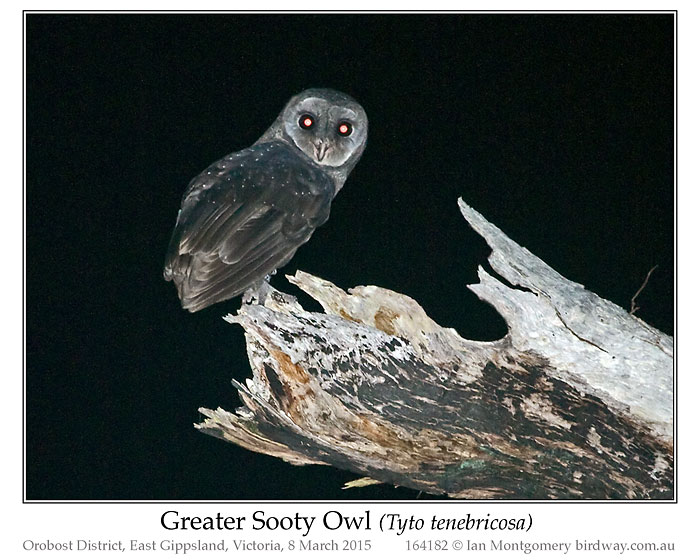
Your spiritual support and goodwill have done it again, so it’s another mission accomplished, though in English this time (having been Catalan and Spanish in the past). Actually, most credit should go to my sharp-eared, sharp-eyed, knowledgeable and passionate birding friends. With their hard work, the track record for target species in East Gippsland during our stay was fantastic. We went searching for owls on each of the three nights. The first night, we heard both Greater Sooty and Masked Owls – and the sharpest-eyed of the group saw a Masked Owl in flight. On the second night, at a different site we heard another Sooty Owl and eventually caught sight of it flying among the tall trees of the forest. It then flew over us and perched on a dead limb in the open high above us.
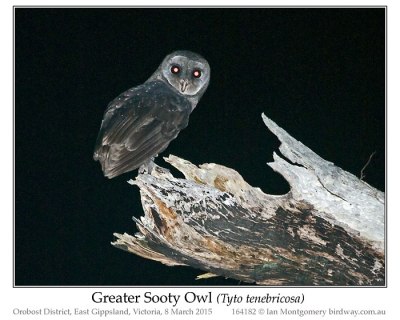
STI-Tyto Greater Sooty Owl (Tyto tenebricosa) by Ian

I got only this photo, discarding a second out of focus one. For the technically minded, I used manual focussing – it was too distant and the light and contrast too faint for auto focus – and guessed an exposure of 1/80sec at f5.6 and 1600 ISO using the 100-400mm zoom. As the passionate/obsessive birder would understand, it was worth travelling to Victoria for this one photo and, having taken it, misión completa (I have liked it in Spanish since finding the Resplendent Quetzel in Costa Rica in 2010) I was free to relax and enjoy whatever other gems came our way. In fact, one such, this Yellow-bellied Glider. sailed over our heads and landed in a nearby tree while we were trying to locate the calling Sooty Owl.
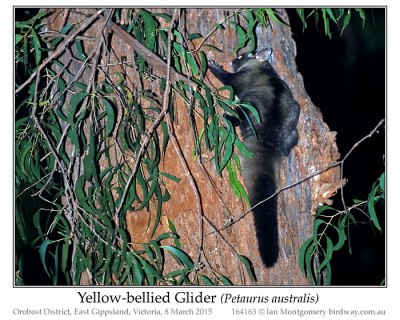
Yellow-bellied Glider (Petaurus australis) by Ian

These are fantastic, long-tailed, wrist-winged relatives of possums (the Striped Possum of Northeastern Queensland is in the same family, the Petauridae) and the Yellow-bellied can glide up to 150m/400ft. It is rabbit-sized with a huge bushy tail that it presumably uses as a rudder in flight. They’re called wrist-winged, to distinguish them from elbow-winged like the Great Glider, and if you look carefully in the photo you can see the black edge of the membrane attaching to the little finger of the left hand. This proved to be diagnostic as we were unsure of both its identify and of whether the large possum-like animal on the tree was the same creature as the pale form that glided over us.

They are reasonably common in suitable old growth forest in eastern Australia, though the northern race regina has a very restricted range in northeastern Queensland and is threatened by logging. Quite coincidentally, I received a request yesterday to support a petition to prevent the transferring of Tumoulin Forest Reserve near Ravenshoe to State Forest so that logging can resume. The petition is aimed directly at protecting the Yellow-bellied Glider, and if you think, like I do, that downgrading the status of nature reserves is disgraceful, then we should support it: http://www.thepetitionsite.com/851/727/614/protect-rare-possum-habitat-from-senseless-logging/.

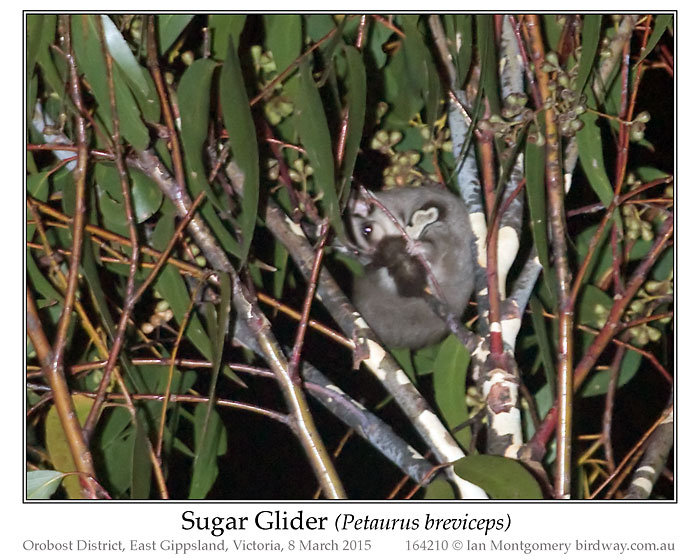
Later that evening, we returned to the Masked Owl site. We could hear one or two Masked Owls but they were wary, keeping their distance in the forest and moving away when spotlights were shone in their direction. We did, however, see one in flight and, having already photographed the Sooty Owl, I was satisfied with that, even though we did try again for photographs without success on the third night. We did, however, find this Sugar Glider, a small relative of the Yellow-bellied. It seemed to be keeping a low profile, very sensible given the presence of calling owls. Later still, we came across a juvenile Southern Boobook which flew up in front of us into a small tree beside the road. It didn’t dally for a photo, but that made it a three-owl evening which we all thought was special.

Sugar Glider (Petaurus briviceps) by Ian

I’ve barely mentioned Sooty Owls, as so much else happened that evening. There are two Australian forms: the Lesser Sooty in the wet tropics of northeastern Queensland and the Greater Sooty in eastern Australia from Eungella National Park near Mackay in Queensland to the Dandenong and Strzelecki Ranges in Victoria, both reasonably common in suitable habitat of wet, gully, forest but rarely seen. Another race, supposedly of the Greater Sooty, occurs throughout New Guinea. Currently the Lesser and Greater are treated as separate species by most authorities, though Christidis and Boles lumped them in 2008. Having one species with a disjoint range in New Guinea and eastern Australia and a closely-related separate one in between should make any student of biogeography laugh out loud, but that’s the way it is. Sooty Owls feed mainly on arboreal mammals, though they will take other prey such as birds.
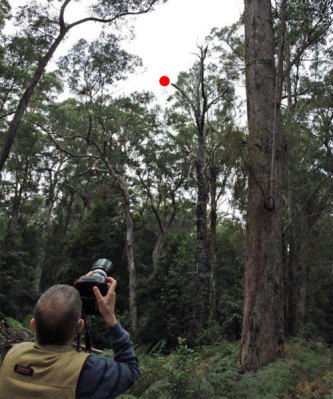
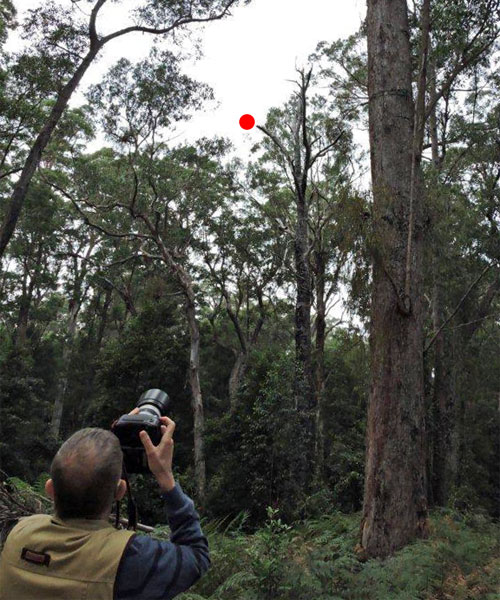
Ian at work photographing Owl

Ian at work photographing Owl

On the following day we returned to the Sooty Owl site and here is a photograph of me photographing it, the red spot showing where the bird in the photo was perched. I was surprised at how far up it was and felt very fortunate to have got the one reasonable photo. This forest also produced for us Tawny Frogmouth, Australian Owlet-Nightjar, Brush-tailed Possums, a bandicoot, a wombat and Black or Swamp Wallabies leaving us in no doubt about the value of old growth forests (reminder http://www.thepetitionsite.com/851/727/614/protect-rare-possum-habitat-from-senseless-logging/).

A few people have requested location information about the owls, but I have been sworn to secrecy by my friends as they don’t want them being disturbed too much or subjected to tapes of owl calls. So please understand my reticence.

Greetings
Ian

**************************************************
Ian Montgomery, Birdway Pty Ltd,
454 Forestry Road, Bluewater, Qld 4818
Tel 0411 602 737 ian@birdway.com.au
Bird Photos http://www.birdway.com.au/
Where to Find Birds in Northern Queensland: iTunes; Google Play Kobo Books
Recorder Society http://www.nqrs.org.au


Lee’s Addition:

the little owl, the fisher owl, and the screech owl; (Leviticus 11:17 NKJV)

What an adventure. Some birds just don’t want to be found. Thanks again, Ian, for sharing another trip with us. Glad you are feeling better.

Sooty Owls belong to the Tytonidae – Barn OIwls family which has 19 speciesIan’s Owls can be found at

http://birdway.com.au/tytonidae/index.htm and

http://birdway.com.au/strigidae/index.htm.

*

Ian’s Bird of the Week

Ian’s Birdway 

Tytonidae – Barn Owl Family

*


Thank You

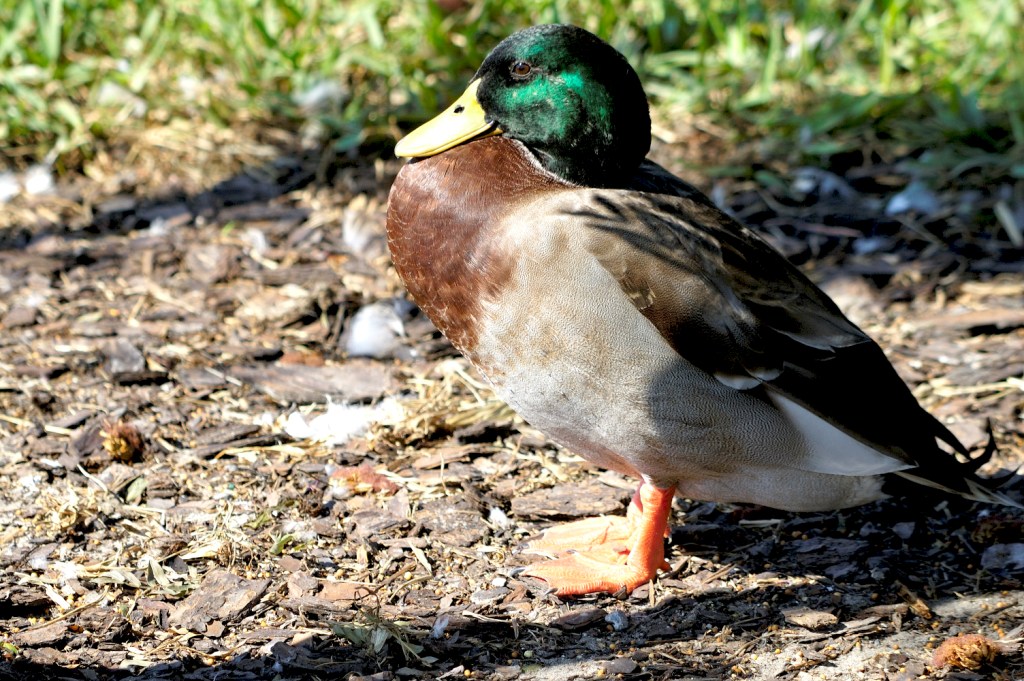
Mallard (Anas platyrhynchos) at Lake Parker By Dan'sPix

Mallard Back up on Feet. By Dan’sPix

And let the peace of God rule in your hearts, to which also you were called in one body; and be thankful. (Colossians 3:15 NKJV)

Thank you for all your prayers and thoughts. I never dreamed that when I went to the hospital last Thursday, 19th, that they would keep me a week.

Finally got released last evening. This was the worst case of bronchitis I have had to deal with. Was on oxygen the whole week. Many of you were praying for me and those prayers were felt. Our Lord is great.

Not only did I get “rest,” (who rest in the hospital?) but multiple opportunities came available to encourage others around me. We were originally suppose be at a Bible Conference this week in South Carolina, but had decided to stay home and watch some of it on Livestream. With Hospital internet and electronic gadgets, I saw more of the conference than if we had driven up. The Lord knew ahead of time all about what would happen here.

Did get in a few bird sighting out my window. Fish Crows, Ospreys and a Mockingbird flew by to make part of my day.

Will try to get some articles rolling again. Had two waiting to be worked up before I went to hospital, but just didn’t feel up to doing them. Will get Ian’s Bird of the Week out soon and have one waiting from James J S Johnson.

Thanks again for all your thoughts and prayers. I still have more healing to do, but way on the mend.

Lee

Update – In Hospital

Duck slipping on Ice from the Telegraph

Oops! – (from the Telegraph)

Just an upstate. Was admitted to the hospital yesterday and they are going to keep me a few more days. The bronchitis is sever, but praise the Lord there is no pneumonia!

Thanks for those who have prayed for me, because they were felt, Especially when multiple needle attempts were made. I stayed calm while they made them.

Will be a few days with no blogs as sending from IPad not as easy, harder to do with photos. Please keep me in you prayers and thanks in advance.

(Rejoicing in hope; patient in tribulation; continuing instant in prayer; (Romans 12:12)

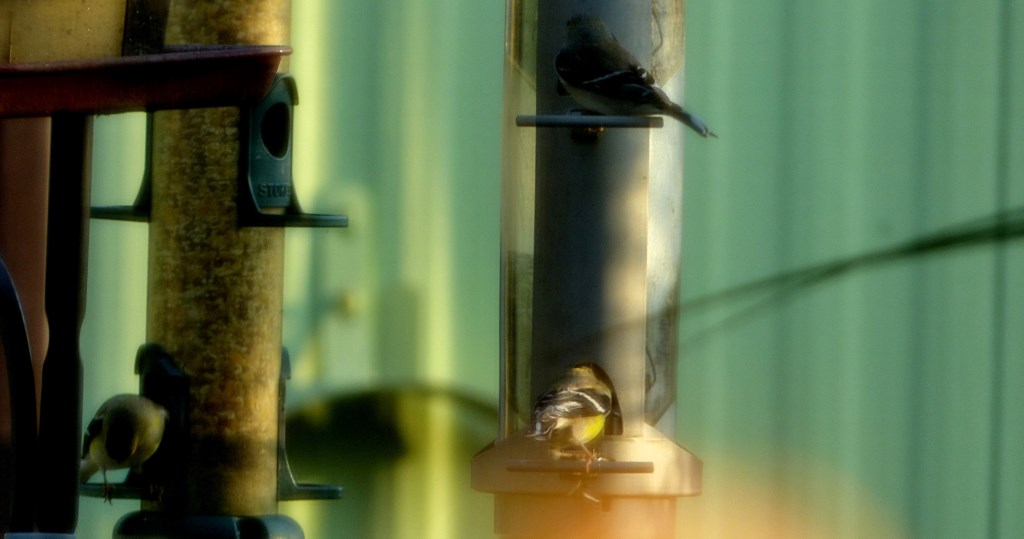
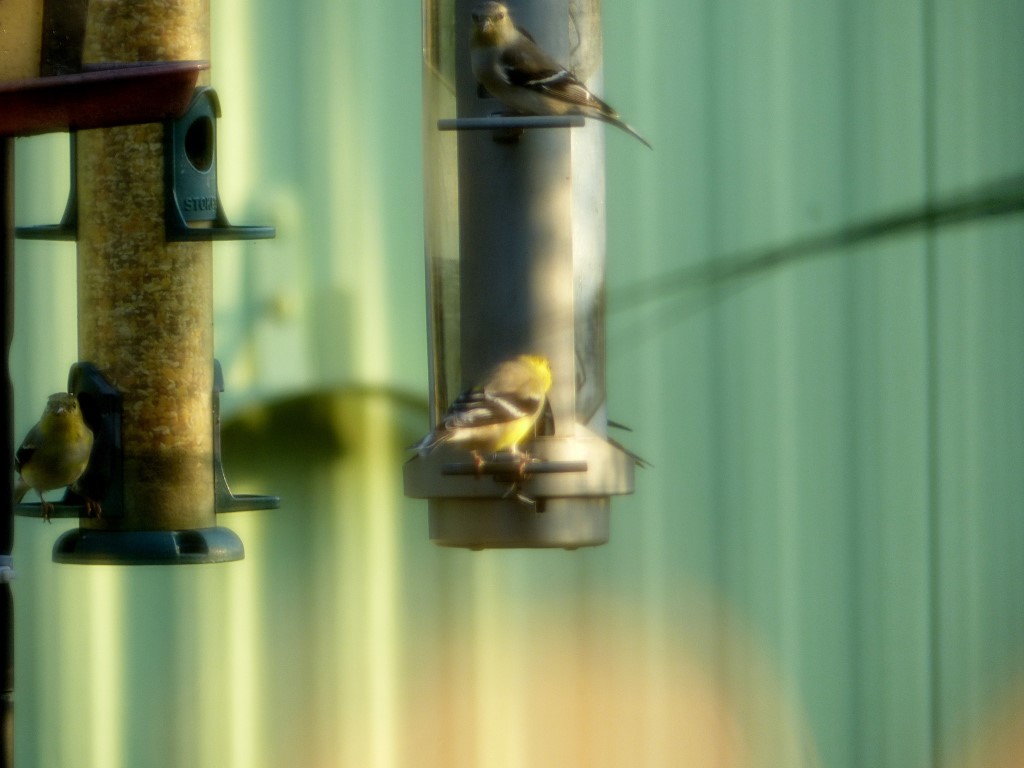
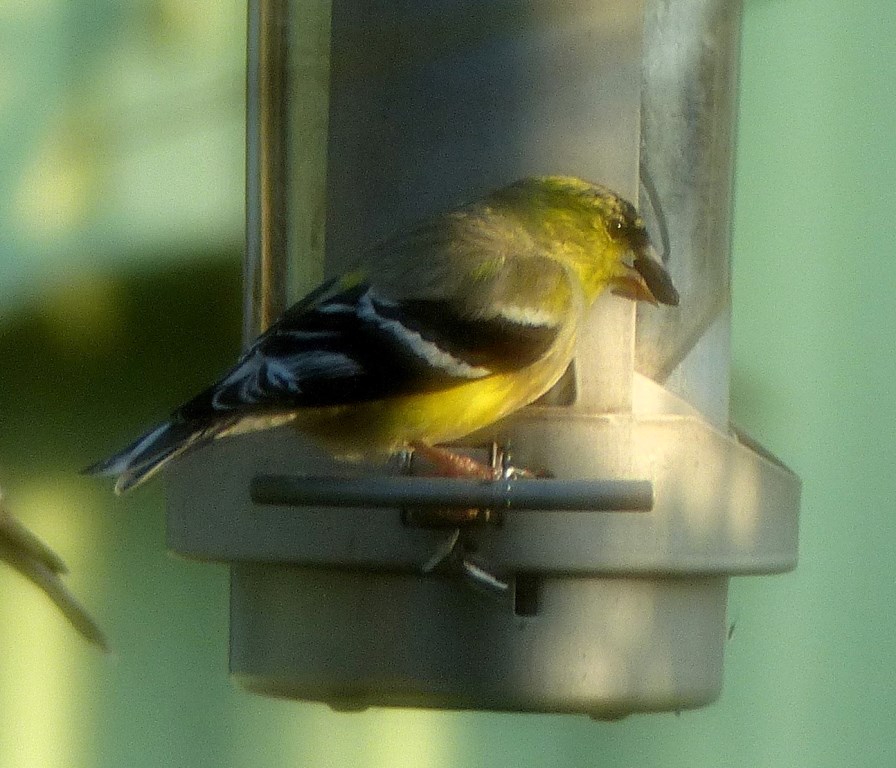
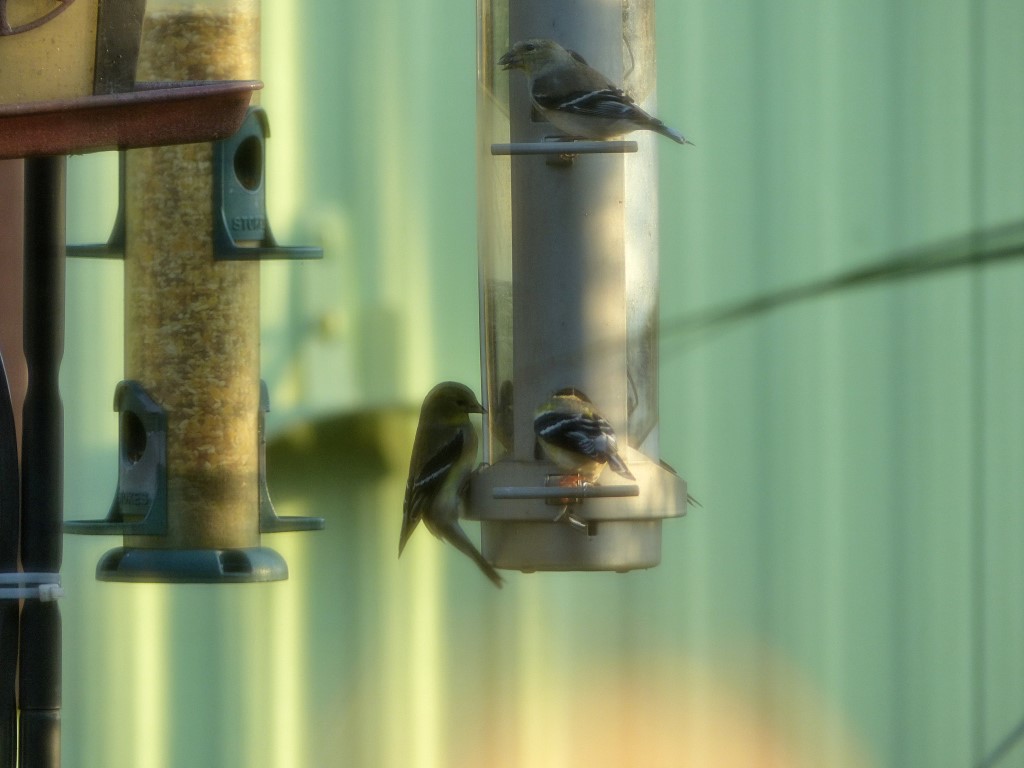
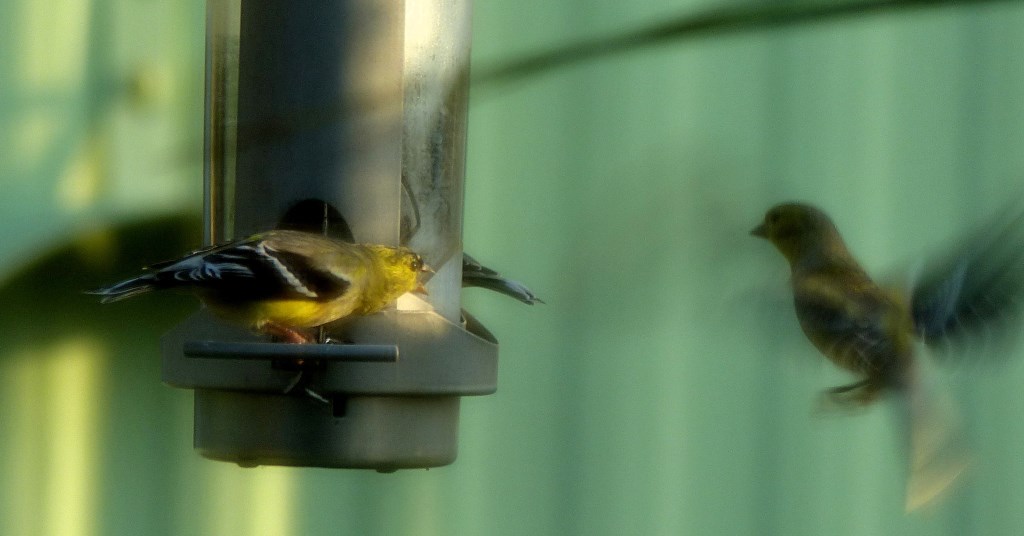
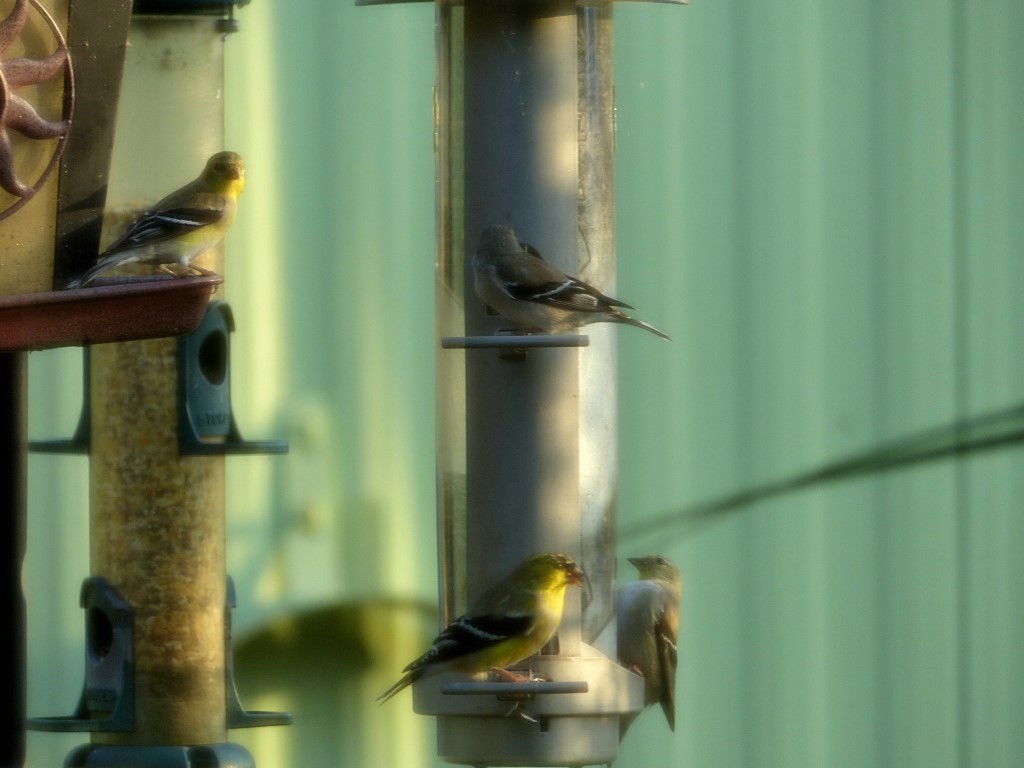
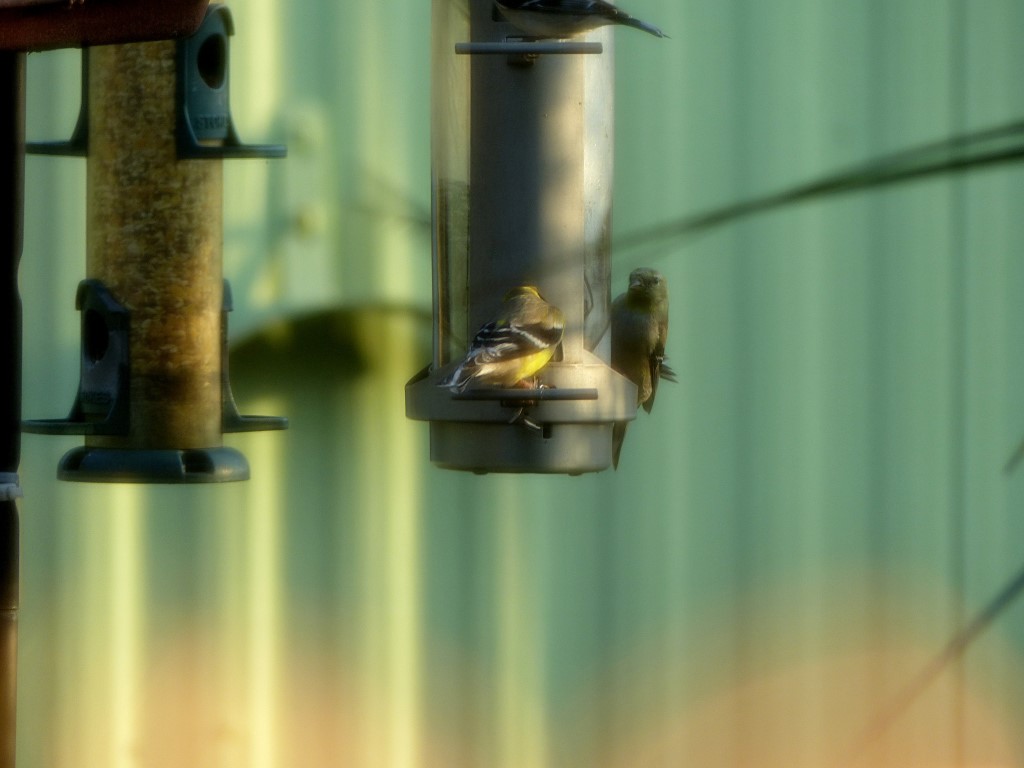
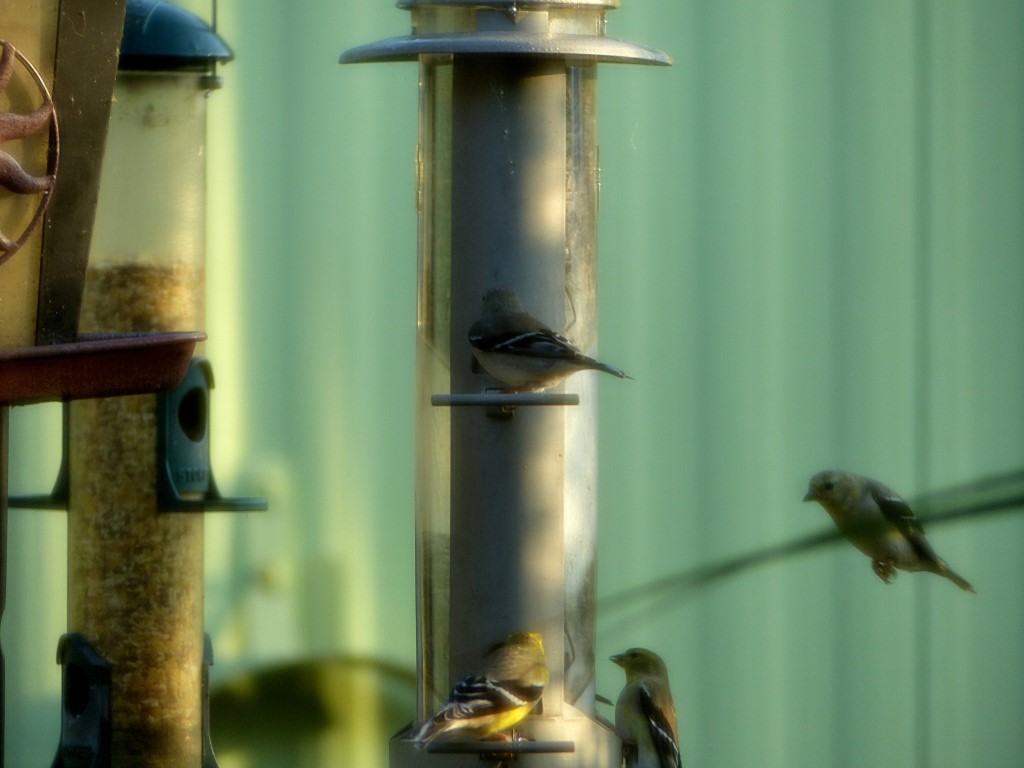
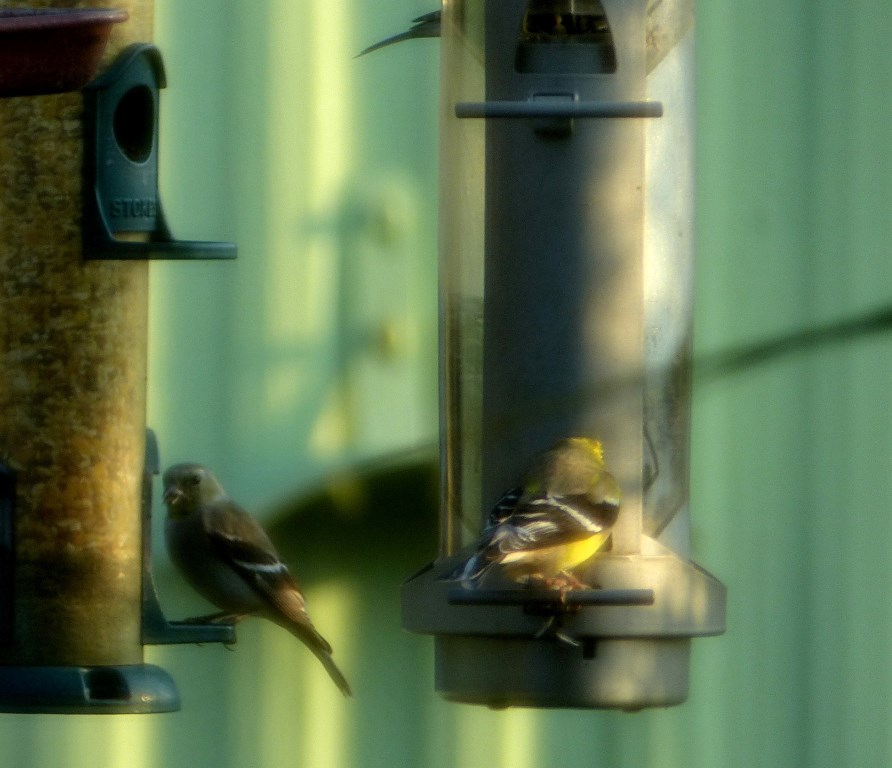
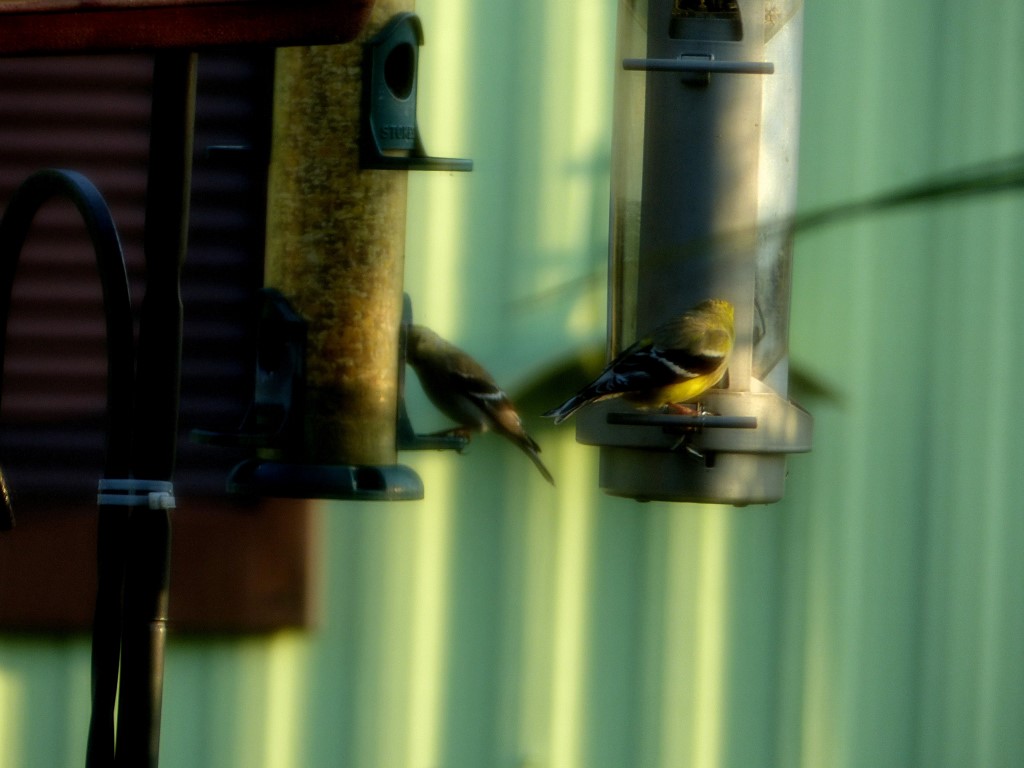
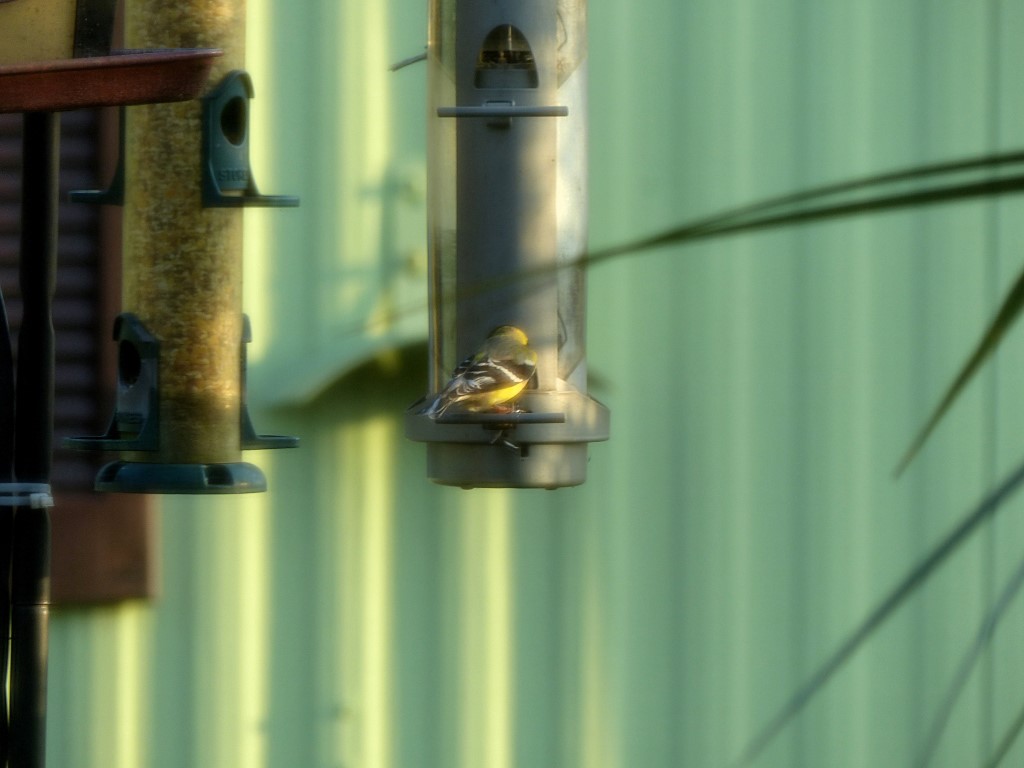
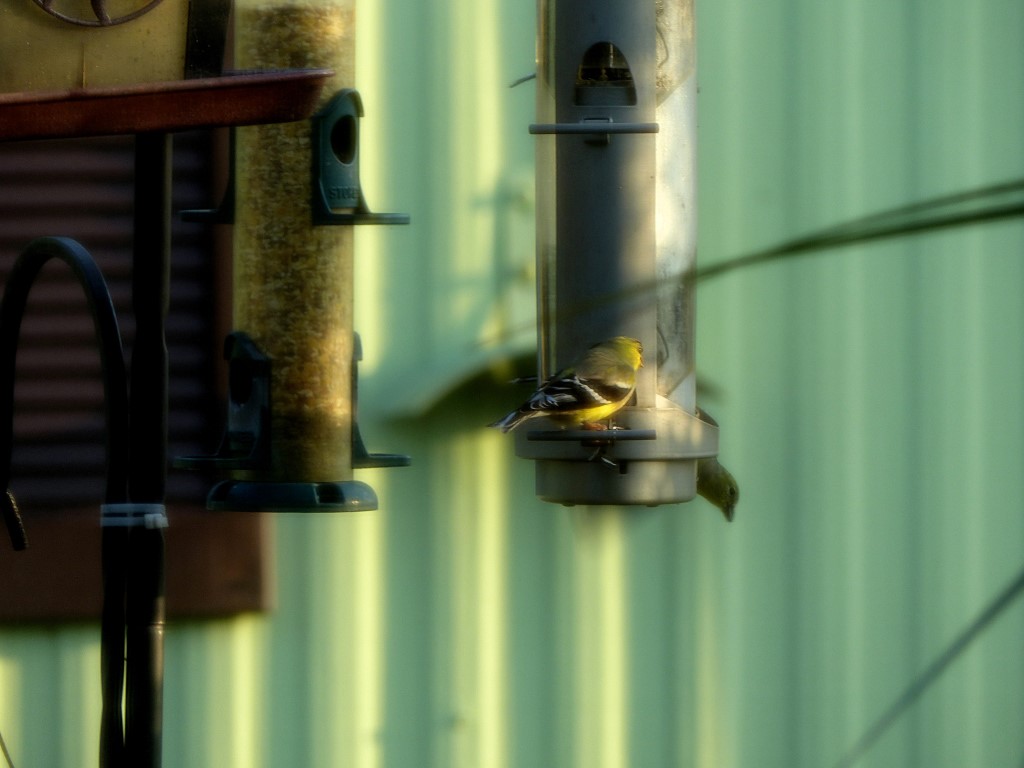
Finches at Feeder This Morning

Goldfinches at Feeder

Goldfinches at Feeder

The blessing of the LORD, it maketh rich, and he addeth no sorrow with it. (Proverbs 10:22 KJV)

What a great surprise and blessing when I looked out the kitchen window this morning. Spotted an American Goldfinch at my feeder. Haven’t seen any in months. So it was neat to watch them. They kept coming and before long there were at least six. Went to get the camera when the first one showed up and recorded them as they kept coming in.

These photos are through the screen, so forgive the quality, but just wanted to share them with you. I have been battling another round of bronchitis, third one this winter, hence not many birdwatching adventures to report lately. They almost put me in hospital yesterday with possible pneumonia, because of a low oxygen reading. Because of this, I have not been to many of your sites lately to stop by. Your prayers are again appreciated and always welcome.

Goldfinches at Feeder - avoiding the crowd

Goldfinches at Feeder – avoiding the crowd

Wordless Birds

*

Tickle Me Tuesday – Burrowing Owls

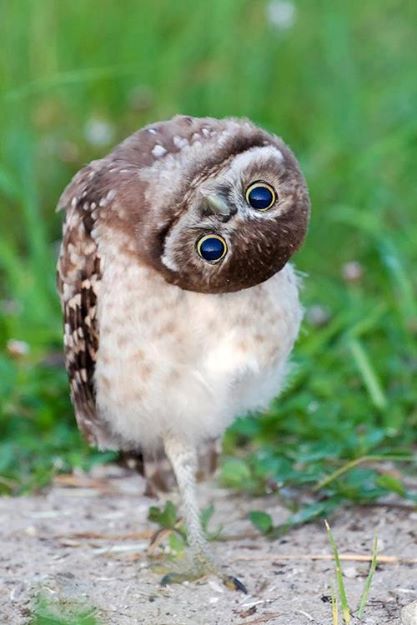
Burrowing Owl from Dusky's Wonders

Burrowing Owl from Dusky’s Wonders


One was posted several years back, but it is worth seeing again and getting a “tickle.”

The LORD opens the eyes of the blind; The LORD raises up those who are bowed down; The LORD loves the righteous; (Psalms 146:8 NASB)

The burrowing owl (Athene cunicularia) is another of the Lord’s creation, It is a small, long-legged owl found throughout open landscapes of North and South America. Burrowing owls can be found in grasslands, rangelands, agricultural areas, deserts, or any other open dry area with low vegetation. They nest and roost in burrows, such as those excavated by prairie dogs (Cynomys spp.). Unlike most owls, Burrowing Owls are often active during the day, although they tend to avoid the midday heat. But like many other kinds of owls, burrowing owls do most of their hunting from dusk until dawn, when they can use their night vision and hearing to their advantage

Burrowing owls have bright eyes; their beaks can be dark yellow or gray depending on the subspecies. They lack ear tufts and have a flattened facial disc. The owls have prominent white eyebrows and a white “chin” patch which they expand and display during certain behaviors, such as a bobbing of the head when agitated.

Adults have brown heads and wings with white spotting. The chest and abdomen are white with variable brown spotting or barring, also depending on the subspecies. Juvenile owls are similar in appearance, but they lack most of the white spotting above and brown barring below. The juveniles have a buff bar across the upper wing and their breast may be buff-colored rather than white. Burrowing owls of all ages have grayish legs longer than other owls.

Bonus:

If I say, “My foot slips,” Your mercy, O LORD, will hold me up. (Psalms 94:18 NKJV)

Duck slipping on Ice from the Telegraph

Duck slipping on Ice from the Telegraph

Kind of goes with the Tickle Me Tuesday – Birds and Ice

*

Tickle Me Tuesday –

Gideon

*


Sunday Inspiration – Australian Birds

Here are three more families of Passerine birds. Today’s three families live mostly in the Austro-Papuan (Australia, New Guinea, Paupa) vicinity.

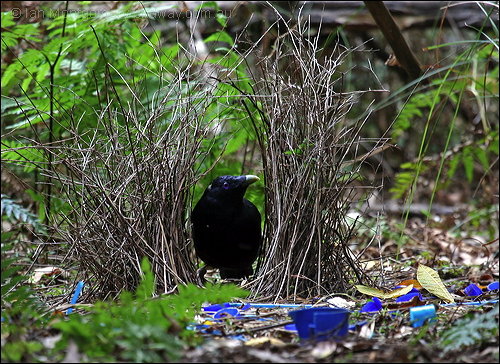
Satin Bowerbird (Ptilonorhynchus violaceus) in bower by Ian

Satin Bowerbird (Ptilonorhynchus violaceus) in bower by Ian

My son, if sinners entice you, Do not consent. (Proverbs 1:10 NKJV)

The Ptilonorhynchidae – Bowerbirds are renowned for their unique courtship behaviour, where males build a structure and decorate it with sticks and brightly coloured objects in an attempt to attract a mate.

Their diet consists mainly of fruit but may also include insects (especially for nestlings), flowers, nectar and leaves in some species. The satin and spotted bowerbirds are sometimes considered agricultural pests due to their habit of feeding on introduced fruit and vegetable crops and have occasionally been killed by affected orchardists.

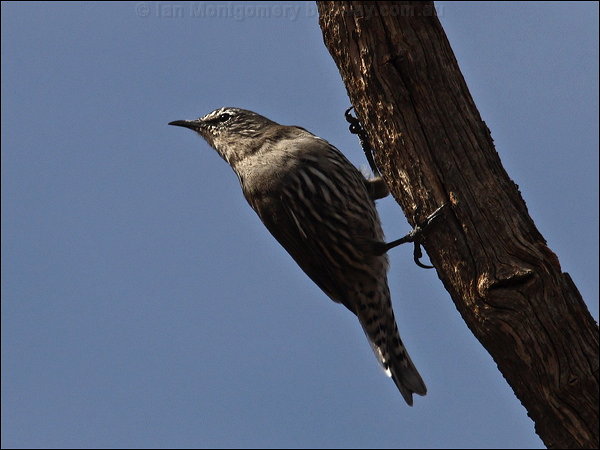
White-browed Treecreeper (Climacteris affinis) by Ian

White-browed Treecreeper (Climacteris affinis) by Ian

Let love be without hypocrisy. Abhor what is evil. Cling to what is good. (Romans 12:9 NKJV)

The Climacteridae – Australasian Treecreepers are separate from the European Treecreeper family, which will be highlighted later. As their name implies, treecreepers forage for insects and other small creatures living on and under the bark of trees, mostly eucalypts, though several species also hunt on the ground, through leaf-litter, and on fallen timber. Unlike the Holarctic treecreepers they do not use their tail for support when climbing tree trunks, only their feet.

Variegated Fairywren (Malurus lamberti) ©WikiC

Variegated Fairywren (Malurus lamberti) ©WikiC

Let them praise the name of the LORD, For He commanded and they were created. (Psalms 148:5 NKJV)

The Maluridae – Australasian Wrens are a family of small, insectivorous passerine birds endemic to Australia and New Guinea. Commonly known as wrens, they are unrelated to the true wrens of the Northern Hemisphere. The family includes 14 species of fairywren, 3 emu-wrens, and 10 grasswrens.

Malurids are small to medium birds, inhabiting a wide range of environments, from rainforest to desert, although most species inhabit grassland or scrub. The grasswrens are well camouflaged with black and brown patterns, but other species often have brilliantly coloured plumage, especially in the males. They are insectivorous, typically foraging in underbrush. They build domed nests in areas of dense vegetation, and it is not unusual for the young to remain in the nest and assist in raising chicks from later clutches.

This slideshow requires JavaScript.

“How Can I Keep From Singing” ~ Pastor Jerry Smith, Jessie and Caleb Padgett and Reagan Osborne

*

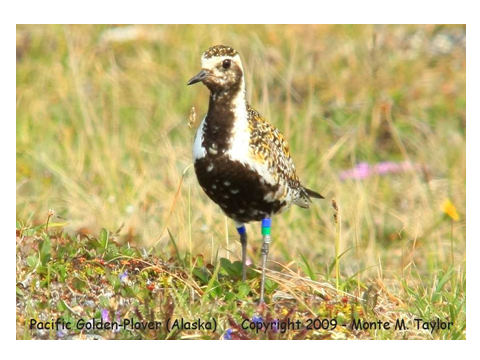
Pacific Golden Plover’s Teamwork

Pacific Golden Plover

Pacific Golden Plover

James J. S. Johnson

“For which of you, intending to build a tower, sitteth not down first, and counteth the cost [psêphizei tôn dapanên], whether he have sufficient to finish it?  Lest haply, after he hath laid the foundation, and is not able to finish it, all that behold it begin to mock him, saying, ‘This man began to build, and was not able to finish’.”  (Luke 14:28-30)

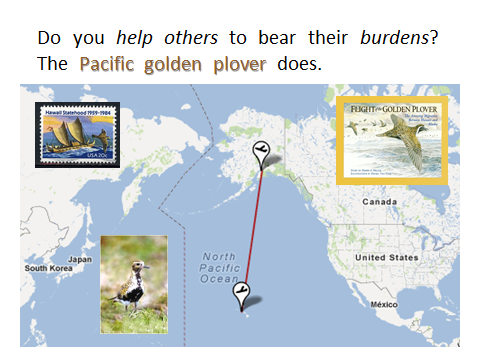
Imagine how inconvenient it would be for a bird to emigrate from Alaska, to Hawaii, only to run out of fuel en route, fall out of the sky from exhaustion, only to drown in the Pacific Ocean, somewhere north of Hawaii.  What a shame that would be!  And yet the Golden Plover’s pre-winter migratory mission, each year, would seem doomed from the start for that very reason – yet the little sandpiper-like migrant survives the journey on less fuel than seems possible.  How do they do it?

Pacific Golden Plover (Pluvialis fulva) by Ian

“The average weight of the golden plover before it leaves Alaska to fly to Hawaii is 200 grams.  It is a small bird about the size of a pigeon.  It is also a bird that does not swim!  Researchers have concluded that 70 grams of its 200 grams is burnable energy. The rate at which the bird burns fuel when flying is about one gram per hour.  This means right at 70 hours of flight is possible. Now we have a potentially disastrous situation.  The flight to Hawaii takes 88 hours of  continuous, non-stop flight!  The little bird must fly for 3 days and 4 nights without food or rest or stopping at all. Impossible! How does it do this?  The birds fly in a formation that breaks the wind, taking [~1/4] less energy to fly.  New leaders are constantly rotating in and out. Formation flight saves energy and when the birds arrive in Hawaii, they have as much as 6 grams of fuel left over.  God must have built the reserve fuel supply into the plover in case of a strong head wind along the way.   Scientists are not certain how the plovers navigate from Alaska to Hawaii and back, since there is no land under their flight path.   Utilization of earth’s magnetic field seems to be the best solution at this point.  Some have suggested that they use the sun and stars.  And how do the young birds find their way to Hawaii without an experienced adult guide, weeks after their parents have already flown back to Hawaii?  A one degree mistake in navigation over the more than 4,000 kilometer flight and the birds miss Hawaii completely!  But they never miss!”

[Quoting Dr. Jobe Martin, The Evolution of a Creationist, rev. ed. (Rockwall, TX: Biblical Discipleship Publishers, 2004), page 203, emphasis added.]

Pacific Golden Plover Map

That’s amazing!  Due to their instinctive behavior to “take turns” as “point man”, the migrating plovers use only ¾ of the food energy they would need to use if flying solo.  Birds display God’s providential programming in their anatomies and physiologies!  Why is that?  Because God carefully planned them before He created their original ancestors on Day 5 of Creation Week (Genesis 1:21).  God planned their genetics, their bio-diversity potentials and limits, their developmental biologies, and all of the bio-engineering needed to accomplish all the contingent details, —  and God has been actively participating in and regulating their lives and world ever since.

As humans we often need to plan out projects before we undertake them; we need to “count the cost” before embarking on an expensive and risky undertaking.  Yet God has already done this for the Pacific Golden Plover, to ensure its successful migrations twice a year.   And notice how God designed teamwork to be part of His plan – and that teamwork involves bearing one another’s burdens.

Bear  ye  one  another’s  burdens,  and  so fulfil  the  law  of  Christ.        (Galatians 6:2)

In sum, collaborating with teammates is usually a good idea, — so long as your colleagues are aimed at the same goal as you (see Amos 3:3.)

Dr. James J. S. Johnson has served as a lecturer (on ecology, geography, and history of Alaska) aboard 4 cruise ships visiting Alaska and the Inside Passage (Norwegian Wind, Norwegian Sky, Radiance of the Seas, and Rhapsody of the Seas).  During those trips he tried valiantly to (and did) eat lots of finfish, such as Pacific salmon and halibut, and shellfish, such as Dungeness crabs – but no Golden Plover.

*

I asked Dr. Jim to post this article because of the devotional emphasis he used. We have used the Plover before, see Incredible Pacific Golden Plover, which is all about the science and creation aspect of this remarkable Plover. Just wanted to review for you an amazing bird our Creator has created for us to learn about and from.

Orni-Theology

Incredible Pacific Golden Plover

Charadriidae – Plovers

Wordless Birds

*

Are You Entangled?

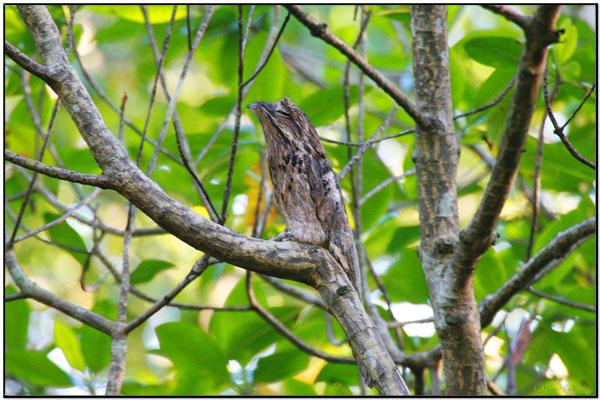
Common Potoo (Nyctibius griseus) ©Jullan Iondono

Common Potoo (Nyctibius griseus) ©Jullan Iondono

Luzon Bleeding-heart by Dan

Orni-Theology

I came across this photo again yesterday and it reminded me of a recent devotional, blog or sermon I heard. It had to do with how Christians become entangled with the world. This Common Potoo is so blended into its surroundings that it is hard to spot.

Do we as Christians so entangle ourselves with the world that we act no different from the unsaved?

The Lord warns us through His Word to not become re-entangled with the yoke of bondage.

Stand fast therefore in the liberty by which Christ has made us free, and do not be entangled again with a yoke of bondage. (Galatians 5:1 NKJV)

Common Potoo (Nyctibius griseus) ©Jullan Iondono

Common Potoo (Nyctibius griseus) ©Jullan Iondono

For if, after they have escaped the pollutions of the world through the knowledge of the Lord and Savior Jesus Christ, they are again entangled in them and overcome, the latter end is worse for them than the beginning. (2 Peter 2:20 NKJV)

Common Potoo (Nyctibius griseus) by Daves BirdingPix

Common Potoo (Nyctibius griseus) by Daves BirdingPix

For this reason it says, “Awake, sleeper, And arise from the dead, And Christ will shine on you.” Therefore be careful how you walk, not as unwise men but as wise, making the most of your time, because the days are evil. So then do not be foolish, but understand what the will of the Lord is. (Ephesians 5:14-17 NASB)

Common Potoo (Nyctibius griseus) by Dario Sanches

Common Potoo (Nyctibius griseus) by Dario Sanches

*
Nyctibiidae – Potoos

Orni-theology

Falling Plates

*