***

SHE BRINGETH HER FOOD FROM AFAR
***
“She is like the merchants’ ships; she bringeth her food from afar.” Proverbs 31:14
Common Kingfisher (Alcedo atthis) ©Kidwings
*
*
“She is like the merchants’ ships; she bringeth her food from afar.” Proverbs 31:14
Common Kingfisher (Alcedo atthis) ©Kidwings
*
*
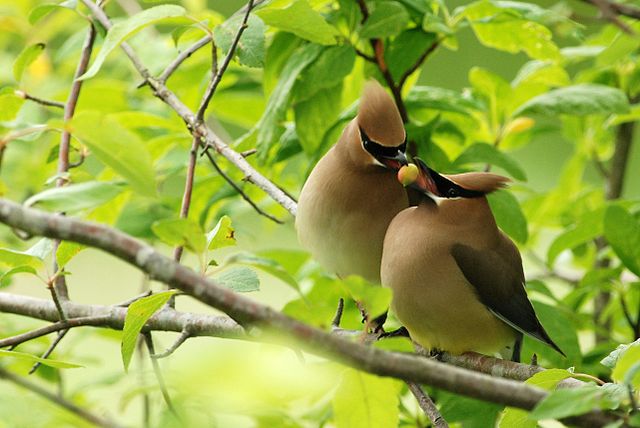
“Give her of the fruit of her hands; and let her own works praise her in the gates.” Proverbs 31:1
Cedar Waxwing (Bombycilla cedrorum) Passing Berries ©WikiC
*
*
Dr. James J. S. Johnson

Verreaux’s Eagle (Aquila verreauxii)
Fair Use photo credit: Mike Haworth
The pride of thine heart hath deceived thee, thou that dwellest in the clefts of the rock, whose habitation is high; that saith in his heart, Who shall bring me down to the ground? Though thou exalt thyself as the eagle, and though thou set thy nest among the stars, thence will I bring thee down, saith the LORD. (Obadiah 1:3-4)
“E” is for Eagles, Eiders, Egrets, Emus, Earthcreepers, Eagle-owls, Euphonias, Elaenias, Eremomelas, Elepaios, and/or Emerald hummingbirds — plus whatever other birds there are, that have names that begin with the letter E.
This present study (i.e., “‘E’ Birds, Part 1”) will focus on Eagles and Eiders.
But first, because this blogpost-article calmly continues an alphabet-based series on birds, we look at Psalm 119:33-40, — thereafter we review two categories of birds that start with the letter “E”, namely, Eagles and Eiders.
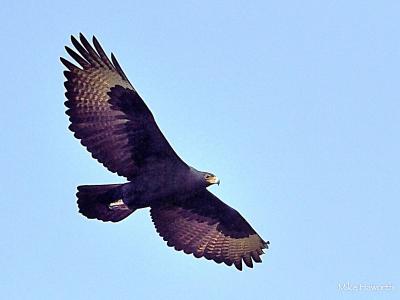
Verreaux’s Eagle (Aquila verreauxii)
Fair Use photo credit: Mike Haworth
THE ALPHABET HELPS TO TEACH US ABOUT GOD’S TRUTH
Using alphabet letters, to order a sequence of information, has Biblical precedent, as is noted in the four earlier articles in this series of “alphabet birds” — i.e., “A birds”; “B birds”; and “C birds”; and “D birds”.
The perfect example is the “acrostic” pattern of Psalm 119, the longest psalm (having 176 verses!), which psalm has 22 sections (comprised of 8 verses per section), representing the 22 letters of the Hebrew alphabet. (Compare that to the English alphabet, which has 26 alphabet letters, and/or to the Norwegian alphabet, which has 29 alphabet letters.) The sentences in each section start with the same Hebrew letter: Verses 1-8 start with ALEPH, Verses 9-16 with BETH, Verse 17-24 with GIMEL, and so forth.

Fair Use Image Credit: 4.bp.blogspot.com
In this serial study’s lesson, the fifth octet of verses in Psalm 119 (i.e., Psalm 119:33-40), each sentence starts with HÊ (pronounced “hay”, like what horses eat), the Hebrew consonant equivalent to the English “H”.
The word based upon this letter is HÊ’, (also pronounced “hay”, like what horses eat), which is routinely translated as a “Behold!” (or “Lo!”) in the Old Testament (see YOUNG’S ANALYTICAL CONCORDANCE, Index-Lexicon to the Old Testament, page 18, column 4), such as in Ezekiel 16:43 & Genesis 47:23.
Because thou hast not remembered the days of thy youth, but hast fretted me in all these things, behold! — therefore, I also will recompense thy way upon thine head, saith the Lord GOD: and thou shalt not commit this lewdness above all thine abominations. (Ezekiel 16:43)
Then Joseph said unto the people, Behold, I have bought you this day and your land for Pharaoh: Lo! — here is seed for you, and ye shall sow the land. (Genesis 47:23)
The Aramaic equivalent, HÂ’ (pronounced “Ha!”) appears in Daniel 3:25, when King Nebuchadnezzar was shocked to see what surprisingly happened in the fiery furnace, after Shadrach, Meshach and Abednego were unjustly thrust therein.

In King James English, one alerted others by exclaiming, “behold!” – meaning something like our modern expressions “Hey! Look!” and/or “Hey! Watch out!” In other words, ironically, the modern English exclamation “Hey!” means about the same thing as the ancient Hebrew exclamation “HÊ’!” – which is pronounced the same as is the English “Hey!”
Exclamations — like “Hey!” — alert us, to pay attention to something, to behold something, to watch out for something, that is very important. In the New Testament, the Greek equivalent is an imperative form of a verb meaning “look”, i.e., the New Testament’s equivalents (of “Behold!” or “Lo!”) likewise call someone to “Look!”
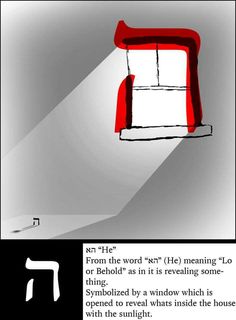
Fair Use image Credit: Pinterest
So, because HÊ’ is the fifth letter in the Hebrew alphabet, each verse (in Psalm 119:33-40) literally starts with that letter as the first letter in the first word (although the first Hebrew word may be differently placed in the English translation’s sentence):
33 Teach-me [hôrênî], O LORD, the way of Thy statutes; and I shall keep [a form of nâtsar] it unto the end.
34 Give-me-understanding [habînēnî], and I shall keep [a form of nâtsar] Thy law; yea, I shall observe [a form of shâmar] it with my whole heart.
35 Make-me-to-go [hadrîkēnî] in the path of Thy commandments; because therein do I delight [a form of ].
36 Incline [haṭ] my heart unto Thy testimonies, and not to covetousness.
37 Turn-away [ha‘abēd] mine eyes from beholding vanity; and quicken Thou me in Thy way.
38 Stablish [haqēm] Thy word unto thy servant, who is devoted to Thy fear.
39 Turn-away [ha‘abēd] my reproach which I fear: for Thy judgments are good.
40 Behold [hinnēh] ! — I have longed after Thy precepts; quicken me in Thy righteousness.
As noted before, Psalm 119 is all about God’s revelation of truth – especially truth about Himself – to mankind (in a comprehensive “A to Z” panorama). The most important revelation of truth that God has given to us, and the most authoritative form of truth that we have, is the Holy Bible – the Scriptures (2nd Peter 1:16-21). Here, the octet of verses in Psalm 119:33-40 is dominated by references to the Scriptures, using the terms “Thy statutes” (verse 33), “Thy law” (verse 34), “Thy commandments” (verse 35), “Thy testimonies” (verse 36), “Thy way” (verse 37), Thy Word” (verse 38), “Thy judgments” (verse 39), and “Thy precepts” (verse 40).
Notice how the “theme” of the Hebrew noun hê’ appears frequently in this section of Psalm 119 – because when you behold a “window” of valuable/relevant information, provided by God, you “watch out!” — i.e., you look and see what is important for you to learn about, that helps you with your God-designed destiny.
Accordingly, the Hebrew letter HÊ’ alerts our attention to vitally important information – such as the sobering cause-and-effect logic of God’s punishment of wickedness (Ezekiel 16:43), or the providential opportunity to live and thrive in a well-provided-for situation (Genesis 47:23), or the astounding sight of a miracle happening inside a burning fiery furnace (Daniel 3:25).
But what about the running theme of alertness in Psalm 119:33-40? Behold!
In Psalm 119:33, the psalmist requests teaching from the LORD, in order that the psalmist “keep” God’s way completely. A person cannot practice God’s truth, in daily living, with first learning what God’s truth is — this is practical logic that Ezra exemplified in his life (Ezra 7:10).

Israel’s armored cavalry “chariot” [Merkava 3], firing projectile (public domain)
Two Hebrew verbs appear in Verse 33, “teach” (a causative active imperative form of YÂRÂH, which refers to the action of projecting, i.e., casting a projectile such as an arrow or spear) and “keep” (a simple active imperfect form of NÂTSAR, which refers to guarding, preserving, conserving, protecting). The idea here is that the psalmist is alert to his need to vigorously dive into – like an arrow being forcibly shot into God’s assigned missions in life – which involve the spiritual pathway of God’s statutes, in order for the psalmist to guard those statutes (in daily living) “to the end”. This is not a relaxed scenario! If God’s Word was like a swimming pool, the psalmist is asking God to “throw him into the deep end”, so that the psalmist is confronted with challenges needful for “finishing strong” in his spiritual journey!
Psalm 119:34 is similar in meaning to Verse 33, because the psalmist again is seeking to “keep” (NÂTSAR) God’s Word, which this time is called God’s “law” (TÔRÂH), so that the psalmist can be careful in attending to (SHÂMAR) God’s law with his “whole heart”, like a watchman on a city wall. To do this, the psalmist asks God to give him “understanding” (a causative active imperative form of the Hebrew verb BÎN — literally exhorting God to cause the psalmist to understand what is needful, to achieve the goal of carefully living by God’s Word, with his “whole heart”. This too is no relaxed scenario – very serious understanding, discernment, judgment is needed. So this verse shows the psalmist being watchful, living life with “eyes open”, to know what is really going on in life.

Fair Use Credit: JohnFanPhotography.com
In Psalm 119:35, the psalmist requests God to “lead” [a causative active imperative form of DÂRAK] him in the proper pathway, namely, the pathway of proper living – this verse resembles a later verse, Psalm 119:105, that likens life’s spiritual journey as needing the enlightenment of God’s Word, “a lamp to my feet” and “a light unto my path”. Notice the psalmist’s purpose for this — he has “delighted” [a simple active perfect form of CHÂPHĒTS] in God’s commandments. The verb CHÂPHĒTS (which appears as “delighted” in Psalm 119:35) denotes the action of being delighted, favoring, enjoying, being pleased with – i.e., having a positive attitude toward someone or something. Remember the Westminster Confession? “Man’s chief end is to glorify God, and to enjoy Him forever.”
This reminds me of something my granddaughter Sydney said, when she was about 5 years old, when her mom told her that “we love God”. “Yeah”, Sydney agreed, “and we like God, too!” (Accordingly, we like and enjoy His Word, too!)

Sydney (photo at about age 2), who loves God, and who likes Him too!
In Psalm 119:36, the psalmist asks God to “incline” his heart toward God’s “testimonies”. The word translated “incline” is a causative active imperative form of the Hebrew verb NÂṬÂH, which refers to the action of stretching or spreading out (e.g., spreading/stretching out a tent in Genesis 33:19 & Exodus 33:7, and arching a spear in Joshua 8:18 & 8:26), so the psalmist is beseeching God to stretch his heart toward God’s testimonies. This is no lackadaisical request! Of course, the testimonies of God’s witnesses were not of slight importance – the fate of families, communities, and even and nations would depend upon how such testimonies were received (or not received) — see, e.g., Deuteronomy 8:9 & 32:46; 2nd Kings 17:13-15; Nehemiah 9:26-34; Psalm 78:56; Isaiah 8:20; Amos 3:13; John 3:32 & 4:44; Acts 1:8; 1st Corinthians 15:15; Ephesians 4:17; 1st Thessalonians 4:6; Hebrews 12:1; 1st Peter 1:11; 1st John 4:14; Rev 22:16 & 22:20. In other words, watch out! — God’s testimony, provided by God’s witnesses, is never to be trifled with. The psalmist wants the opposite of shying away from God’s testimonies; the psalmist wants to stretch toward God’s testimonies.
In fact, the psalmist is actually pleading with God, asking God to make the psalmist to stretch him toward God’s testimonies, as opposed to the psalmist being inclined (i.e., “stretched”) toward seeking worldly “gain”. This cannot be a passive enterprise – in order for us to stretch toward God, and toward what honors God (i.e., what Colossians 3:2 calls “the things above”), we must affirmatively pull our hearts away from the worldly “treasures” that all-too-often compete with God, as our heart’s affection.

Fair Use Credit: Felicia Starks
In Psalm 119:37, the psalmist asks God to turn the psalmist’s eyes from visons of vanities, as the psalmist recognizes that real life is experienced only in the ways of God. The verb translated “turn away” (in Psalm 119:37) is a causative active imperative form of the Hebrew verb ‘ÂBAR (literally, “to pass through”). Thus, the psalmist is imploring God to make the psalmist to “pass through” (or “pass over”) the lying sights of worldly temptation and folly. In other words, the psalmist does not expect divine deliverance, from worldly vanities, to come in the form of escape so much as to come in the form of a successful endurance (see 1st Corinthians 10:13). To achieve this result, the psalmist (and we) must pay alert attention to what is reliable and true — and (likewise) refuse to be distracted by what is ultimately illusory and false.
[Regarding the inherent distractiveness of deceit, see “Staying on Track, Despite Deceptive Distractions”.
In Psalm 119:38, the psalmist asks God to make what He says to “arise” (using a causative active imperative form of the Hebrew verb QÛM) – i.e., whatever God’s promises He must establish. As mere mortals we cannot, by ourselves, establish God’s will on earth. God must make His own Word happen — and He is ready, willing, and able to do just that (see Isaiah 14:24 & 14:27)! Yet notice who the intended beneficiaries of God promises are: “those who fear Thee”, i.e., those with reverential awe of God, those who worshipfully fear His power and holiness – and that should describe us. Obviously this is not a lackadaisical matter – this is something we must pay close and sober attention to, especially if we hope to be on the “good side” of God’s promises.
In Psalm 119:39, the psalmist begins with the same Hebrew verb that Verse 37 began with, ‘ÂBAR (literally, “to pass through”), this time asking God to cause the psalmist’s self-dreaded “reproach” to pass through, i.e., the psalmist is fearful of his own fallibility and faultiness, and rightfully so – as we all should be. The psalmist’s prayer is a prayer of dependence — God needs to protect us form ourselves. The old saying is true: we are our own worst enemies. Accordingly, we need for God to take/pull us through our own shameful sinfulness, overruling our inherent sin-nature (which we inherited form Adam our first forefather), so that we can freely live for Him. But only God’s truth can free us from our sinful selves; only the Scriptures give us the truth that sets us free (see John 8:31-32). Thus, God’s Word is liberating. As the psalmist here says, God’s ordinances are “good” – they are the real daily nutrition that our lives must have, spiritually speaking (Matthew 4:4) — see “Real Freedom Only Comes from Real Truth”, posted at (from the April AD2013 issue of ACTS & FACTS).
In Psalm 119:40, the psalmist starts the verse with the exclamation “Behold!” (Hebrew: HĪNĒH), which repeats the tone of this octet of verses. The last word in this verse is an intensive active imperative form of the Hebrew verb CHAYAH (meaning “to live” or “to have life”). Thus, the psalmist is beseeching God to give him life “in Thy [i.e., God’s] righteousness”, because the psalmist “has longed for” (simple active perfect form of the verb TÂ’AB) a life that harmonizes with God’s ordinances/judgments. In other words, the psalmist connects real living to God’s gift of His own righteousness, that fits the worthy goal of living according to God’s judgments. This is no careless approach to daily living! This requires careful dependence upon God — only He can give us a good life.
In sum, Scripture-based living is not easy – it requires watchfulness, alertness, caution, sobriety, and complete dependence upon God’s Word-based guidance.
Thus we see the theme, woven throughout the octet of HÊ’ verses (Psalm 119:33-40), is that we need to be alert while living life on earth (i.e., “Watch out! Beware! Hey! Pay attention!”) — and that God’s Word is what equips us to be properly alerted to what is really happening in and around us.
After that lesson (from Psalm 119:33-40), about the value of careful attentiveness, it is appropriate to consider some EAGLES, those huge raptors that illustrate super-keen eyesight, telescopic eyes that they routinely use for the serious business of catching prey on land, in air, and even at the water’s surface.
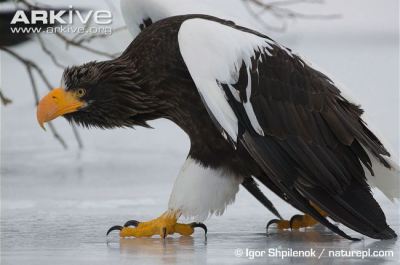
EAGLES
Regarding Eagles, see Lee Dusing’s “Sunday Inspiration: Eagles”, as well as her “Bible Birds: Eagles”.
The best known eagle, for Americans, is the USA’s national bird, the BALD EAGLE. Frequenting saltwater shorelines, these hawk-like fish-eating raptors are well-populated in coastal Alaska, as is reported in “Alaska’s Bald Eagle”, which is quoted below.

Photo credit: SkagwayExcursion.com
BALD EAGLE pair (Alaska)
Bald eagles may enjoy abundant fishing opportunities, in Alaska and in other coastwater and riverine areas, but life has not been easy for these carnivores, due to the accumulation of poisons in food chains they depend upon.
Driven to near extinction due to DDT [via its byproduct DDE] poisoning and illegal killing. Now making a comeback in North America. Returns to same nest each year, adding more sticks, enlarging it to massive proportions, at times up to 1,000 pounds (450 kg). In the midair mating ritual, one eagle will flip upside down and lock talons with another. Both tumble, then break apart to continue flight. Thought to mate for life, but will switch mates if not successful reproducing. Juvenile attains the white head and tail at about 4-5 years of age.
[Quoting Stan Tekiela, BIRDS OF TEXAS FIELD GUIDE (Adventure Publications, 2004), page 81.]
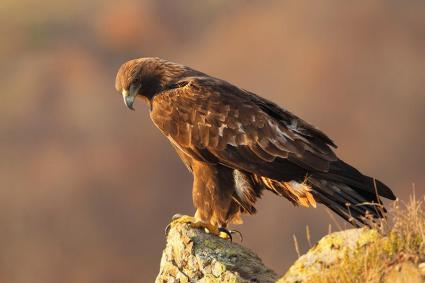
GOLDEN EAGLE (photo credit: WildEchoTours.com)
The other major variety of eagle, in North America, is the GOLDEN EAGLE, which lives off of prey it seizes from the ground, or from the air.
Large and powerful bird of prey that has no trouble taking larger prey such as jackrabbits. Hunts by perching or soaring and watching for movement [on the ground below]. Inhabits mountainous terrain, requiring large territories to provide large supply of food. Thought to mate for life, renewing pair bond late in winter with spectacular high-flying courtship displays. Usually nests on cliff faces, rarely in trees. Uses well-established nest that has been used for generations. Not uncommon for it to add thing to nest such as antlers, bones and barbed wire.
[Quoting Stan Tekiela, BIRDS OF TEXAS FIELD GUIDE (Adventure Publications, 2004), page 239.]
Golden Eagles are actually well distributed throughout the Northern Hemisphere, not just in North America, as the range map (below) indicates.

Golden Eagle Range Map (Wikipedia)
But would you expect there to be many more examples of “eagles” than just the Bald Eagle (Haliaeetus leucocephalos) and the Golden Eagle (Aquila chrysactos)?
The varieties of Eagles – besides North America’s Bald Eagle and Golden Eagle – are many [see Accipitridae – Kites, Hawks, Eagle ], such as: Indian Black Eagle [found in tropical Africa], Black-and-chestnut Eagle, Bonelli’s Eagle, Chaco Eagle, Crested Eagle, Crowned Eagle, Gurney’s Eagle, Harpy Eagle, Eastern Imperial Eagle, Spanish Imperial Eagle, Little Eagle, Long-crested Eagle, Martial Eagle, Papuan Eagle, Philippine Eagle, Pygmy Eagle, Grey Sea Eagle [a/k/a Ørn and White-tailed Sea-Eagle], Sanford’s Sea Eagle, Steller’s Sea Eagle, White-bellied Sea Eagle, Andaman Serpent Eagle, Congo Serpent Eagle, Crested Serpent Eagle, Madagascan Serpent Eagle, Mountain Serpent Eagle, Great Nicobar Serpent Eagle, Philippine Serpent Eagle, Sulawesi Serpent Eagle, Southern Banded Snake Eagle, Western Banded Snake Eagle, Beaudouin’s Snake Eagle, Black-chested Snake Eagle, Brown Snake Eagle, Short-toed Snake Eagle, Solitary Eagle, African Fish Eagle, Madagascan Fish Eagle, Pallas’s Fish Eagle, Lesser Fish Eagle, Grey-headed Fish Eagle, Changeable Hawk-Eagle, Flores Hawk-Eagle, Mountain Hawk-Eagle, Legge’s Hawk-Eagle, Blyth’s Hawk-Eagle, Javan Hawk-Eagle, Sulawesi Hawk-Eagle, Philippine Hawk-Eagle, Pinsker’s Hawk-Eagle, Wallace’s Hawk-Eagle, Black Hawk-Eagle, Black-and-white Hawk-Eagle, Ornate Hawk-Eagle, Rufous-bellied Hawk-Eagle, Ayre’s Hawk-Eagle, Cassin’s Hawk-Eagle, African Hawk-Eagle, Booted Eagle, Lesser Spotted Eagle, Greater Spotted Eagle, Indian Spotted Eagle, Wahlberg’s Eagle, Tawny Eagle, Wedge-tailed Eagle, Verreaux’s Eagle [a/k/a African Black Eagle], Black-chested Buzzard Eagle, and Steppe Eagle!
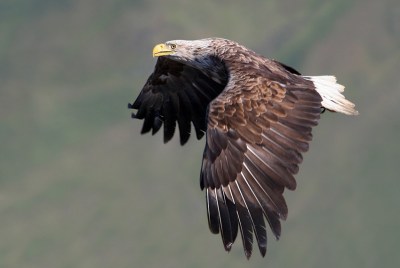
Grey Sea Eagle, a/k/a Ørn and White-tailed Sea-Eagle
Fair Use Credit: Sindri Skulason
Consider the following information about eagles, a raptor often mentioned in Holy Scripture:
Eagles are such heavy birds that they don’t build their houses, called “nests”, near the ground. Eagles build their nests high up in trees or on top of rocky mountains or cliffs, so that they can jump out into the air and glide on rising warm air currents. Some air currents are made of warm rising air, so an eagle can jump into such warm air and “ride” it up like an elevator, then the eagle can glide from one air current to another , until it wants to fly down. These rising air currents are called “thermals”. The eagle that soars on a thermal is mostly at rest, because he is trusting the thermal to carry him along for a “ride” in the air. The eagle soaring on such a thermal air current is a reminder of how we should trust and depend upon God to carry us through life’s adventures, as we travel from one day to the next. By “riding” on upwardly spiraling thermal air currents eagles can save their energy, because too much wing-flapping can waste an eagle’s energy and cause it to get too tired to fly. Like eagles, we can waste a lot of energy if we fail to depend on God, because worrying and distrusting God wastes a lot of mental energy and emotions! (See Isaiah 40:31, quoted below.)
But they that wait upon the LORD shall renew their strength; they shall mount up with wings as eagles; they shall run, and not be weary; and they shall walk, and not faint. (Isaiah 40:31)
By conserving (carefully using, not wasting) his energy, the bald eagle can flap his wings only when he needs to, and he can rise to very high places in the air, which also means that the eagles can reach high places on top of mountains or cliffs that other animals cannot reach. So an eagles’ nest (called an “eyrie”) can be far away from egg-eating animals that might bother parent eagles and try to eat their eggs before they have a chance to hatch into baby eaglets (the baby eaglets are called “hatchlings” when they first hatch). Bald eagles, like other kinds of eagles, often live in rocky places in high places, so it is not surprising that people (including Biblical authors) compare highness with flying and nesting behaviors of eagles.
One example of highness being compared to the nesting habits of eagles is found in the Bible, in the Book of Obadiah (at Obadiah 1:3-4), where the eagle is described as a creature that lives in high places, much closer to the stars than do most other animals (or people).
Another Old Testament book in the Bible, the Book of Job, refers (at Job 39:27) to the eagle as mounting up into the air by God’s command (because God programs eagles to fly up into the air the way that they do), and as nesting in high places (because God programs eagles to do this also).
“The pride of thine heart hath deceived thee, thou that dwellest in the clefts of the rock, whose habitation is high; that saith in his heart, ‘Who shall bring me down to the ground?’ Though thou exalt thyself as the eagle, and though thou set thy nest among the stars, thence will I bring thee down, saith the LORD.” (Obadiah 1:3-4)
“Doth the eagle mount up at thy command, and make her nest on high?” (Job 39:27)
Eagles are good parents, training their sons and daughters to live like eagles (see Deuteronomy 32:11). Eagles can fly, like dive-bombing airplanes, at great speeds (see 2nd Samuel 1:23 and Lamentations 4:19). Their strength is renewed from time to time, as their feather-cover adjusts to their growing bodies (see Isaiah 40:31 and Psalms 103:5). Eagles are known for their gracefulness and dignity (see Proverbs 30:19). In fact, eagles fly very high in the air as a matter of habit – above most other birds (see Proverbs 23:5).
[Quoting from James J. S. Johnson, “Alaska’s Bald Eagle”].

Flag of MEXICO (displaying Golden Eagle)
Eagles are favorite birds on national flags and in official coat-of-arms emblems. For a just a few examples, consider these “flagged” eagles:
Consider – for just a few representative examples – the eagles that appear on the flags – some present, some past — of these national and state/provincial flags: Albania; American Samoa; Austria (armorial flag); Brandenburg, Germany; Ecuador (armorial banner); Egypt; Geneva, Switzerland; Germany (armorial flag ); Iowa; Italian president’s flag (AD1880-AD1946); Jordan (armorial banner); Mexico; North Dakota; Oregon (front side of state flag); Pennsylvania; Poland (armorial flag); Prussia (armorial banner, AD1819-AD1850); (Moldova; Mount Athos (autonomous Greek protectorate); Russian Czar’s banner (18th century A.D.); Serbia (during AD1882-AD1918); Silesia (until absorption by Prussia in AD1742 – parts of Silesia now lay within Poland, Germany, and the Czech Republic); United States Coast Guard and Marine Corps; Utah; Virgin Islands (of the USA); Zambia; etc.
[Quoting from James J. S. Johnson, “’Flag that Bird!’ (Part 1)”

Golden Eagle in flight
(Fair Use Credit: NETNS Wildlife Zone)
No wonder so many countries choose to include an eagle in their official coat-of-arms — these birds are truly regal!
Now for another category of “E” birds, the eiders.

Steller’s Eider in icy seawater (Wikipedia)
EIDERS
Eiders are large sea-ducks, the largest wild ducks in North America and Europe – with the exception of the Muscovy Duck (which, in parts of Texas and Florida, occurs in the wild). Examples of eiders include the Common Eider (Somateria mollissima), King Eider (Someteria spectabilis), and Spectacled Eider (Somateria fischeri), and Steller’s Eider (Polysticta stelleri), all four of which varieties are found in Alaskan waters. Eiders in the wild (including Steller’s Eider, misleadingly classified as a “different genus” of eider) are known to hybridize, so (obviously) all eiders descend from the same created kind.
Regarding downy-feather-famous Eiders, see, Lee Dusing’s “The Eider: The Cushion Makers (Nuggets Plus)”. Eiders are true mariners, “sea ducks”, a term that includes mergansers, oldsquaw (a/k/a “long-tailed duck”), bufflehead, goldeneyes, and (of course) eiders.

King Eider male near Barrow, Alaska (by Gregg Thompson)
Ornithologist Steve Madge describes eiders as cold-water ducks of the North. ”
Large sea-ducks of northern coastal waters. Adult males distinctive [in physical appearance], but other plumages similar; immatures take two or more years to reach maturity, males having confusing variety of piebald plumages [i.e., the usual colored feathering is modified by partial leucism, so that the usual black plumage is whitish, yet feathers of rainbow colors are not whitewashed]. Head-and-bill shape important [for identification], especially extent of feathering onto bill-base.
[Quoting Steve Madge & Hilary Burn, WATERFOWL: AN IDENTIFICATION GUIDE TO THE DUCKS, GEESE AND SWANS OF THE WORLD (Houghton Mifflin, 1988), page 104.]
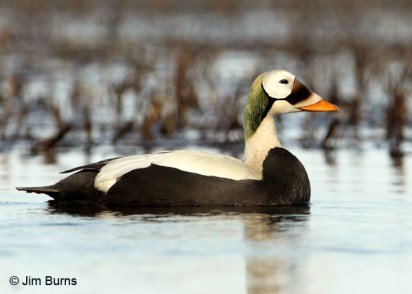
Spectacled Eider male (photo by Jim Burns)
The Eider’s down feathers are especially well-designed for efficiently insulating the body heat of these North-dwelling ducks, so it is no surprise that eider feathers are prized as down for pillow-making. As, as the Nordic Store (Iceland) advises, “Eiderdown is the softest and lightest down in the world … extremely rare, in great demand and highly prized (accounting for its high price)”. [Quoting Nordic Store, with an (apparently) informative YouTube video, narrated in Icelandic, at Eiderdown Duvets and Pillows — showing beautiful eiders at sea and on land, in colonial activities.]
================================
God willing, the next contribution to this alphabetic series will be some more “E” birds – perhaps Egrets, Emus, and Earthcreepers!
Meanwhile, in accordance with Psalm 119:33-40, use God’s Word as you attentively and alertly live life, daily, with its opportunities to follow Christ. (Hey!) Carefully interpret whatever you see, by the wisdom of God’s Word, as you keep your eyes open, like the observant eagle!
><> JJSJ profjjsj@verizon.net
e
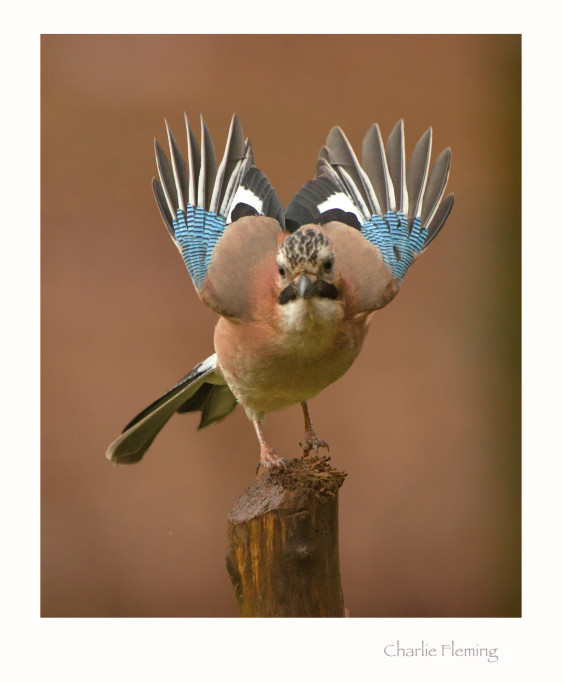
“And he [Abraham] lifted up his eyes and looked, and, lo, 3 men stood by him: and when he saw them, he ran to meet them from the tent door, and bowed himself toward the ground.” (Genesis 18:2)
Eurasian Jay ©Charlie Fleming
*
*
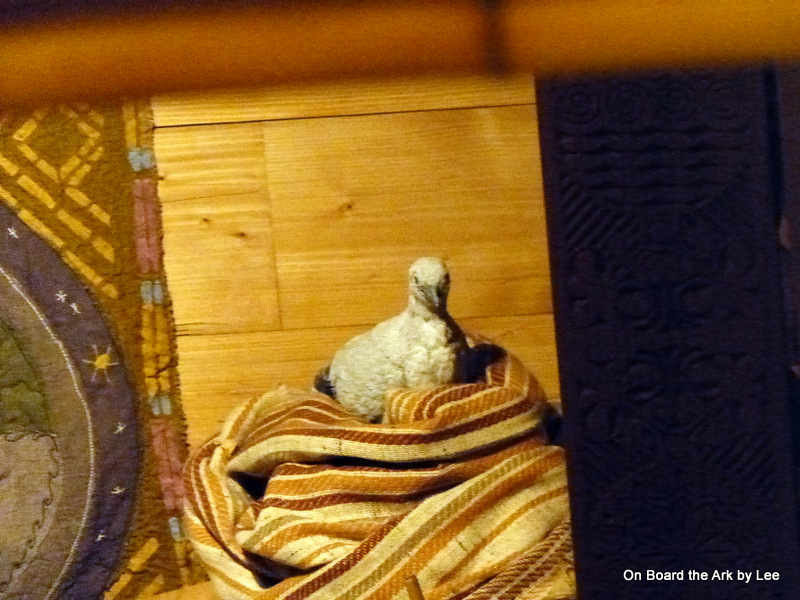
“But the dove found no rest for the sole of her foot, and she returned unto him into the ark, for the waters were on the face of the whole earth: then he put forth his hand, and took her, and pulled her in unto him into the ark.” (Genesis 8:9 KJV)
Dove resting on board the Ark Encounter by Lee
*
*
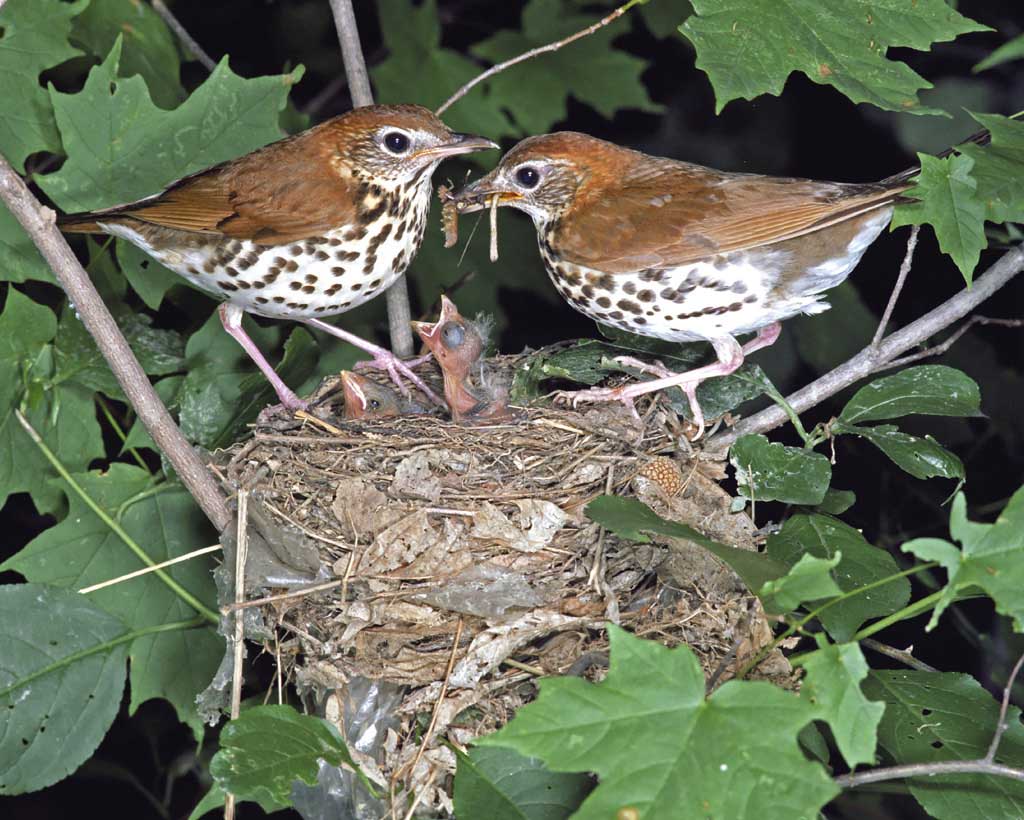
“These wait all upon Thee; that Thou mayest give them their meat in due season.” (Psalm 104:27)
Wood Thrush. Nest ©Audubon Society
*
*

“The sun ariseth, they gather themselves together, and lay them down in their dens.” (Psalm 104:22)
Gathering of Parrots ©I.Ytimg
*
*

“Thou makest darkness, and it is night wherein all the beasts of the forest do creep forth.” (Psalm 104:20)
Birds at Night – ©BirdFeeders.com
*
*

“Where the birds make their nests: as for the stork, the fir trees are her house.” (Psalm 104:17)
Storks At Their Nest ©Science Photo Library
*
*
*
Dr. James J. S. Johnson

EURASIAN JAY (photo by Richard Steel)
And Joshua wrote these words in the book of the law of God, and took a great stone, and set it up there under an oak that was by the sanctuary of the LORD. (Joshua 24:26)

Oak Leaves (southern Finland – public domain)
Oaks are well-known for foliage that provides shade from sunlight. However, for birds, oak trees are probably more appreciated for their branches and their acorns – branches for nesting and perching, and acorns for eating.
One bird that loves acorns, for eating, is the Eurasian Jay (Garrulus glandarius). These jays are called Geai des chênes in French, meaning “jay of the oaks”.
For some youtube footage, showing some Eurasian Jays eating quite energetically, see https://www.youtube.com/watch?v=Kkx2mDE4pGc — “Crazy Jays” by Paul Dinning), one group photo from which youtube video is shown (below).

Eurasian Jays foraging (from Paul Dinning’s “Crazy Jays” youtube)
Busy, busy, busy! There is nothing lackadaisical about how these jays hunt for food!
A fairly shy but common woodland bird seen in highest numbers in autumn; Jays shuttle between the ‘home wood’ and the district’s oak trees to gather in supplies of acorns for the winter. In longer flights the wingbeats are fluttering and the flight course slow and unsteady. Flying along a woodland edge it glides in gentle undulations. … Breeds in both deciduous and coniferous trees favouring coppice and stands of young spruce or pine trees, has also colonized parks and suburban areas. Feeds on insects, tree fruits, eggs and young of passerines etc.
[Quoting Lars Jonsson, BIRDS OF EUROPE WITH NORTH AFRICA AND THE MIDDLE EAST (Princeton University Press, 1993), page 488, emphasis added.] These jays are called Geai des chênes in French, meaning “jay of the oaks”.

Eurasian Jay (Garrulus glandarius) / credit: Nat’l Geo
Acorns are the nuts produced by oak trees. As seeds, they are ready for planting, capable of producing a new generation of oak trees. Like other nuts, acorns are often eaten, by animals (including birds and squirrels) and some humans! Nuts are even mentioned in Scripture as food worthy of cultivation, valuable enough to be used in gift-giving (see Genesis 43:11 & Song of Solomon 6:11).

Eurasian Jay with acorn (by Hans-Jorg Hellwig)
On the 7th of July AD2006, in a park-like tall-treed area next to a restaurant at Haikko Manor, Finland (about 3-to-4 miles from Porvoo, on Finland’s southern coast), my wife and I watched an energetic Eurasian Jay, hopping about, foraging – then it decided, for a moment, to perch upon a rock. (A passer-by took a photograph of my wife and me, just before we walked through the parking lot toward the restaurant, by which we saw the busy “Jay of the Oaks” – the Eurasian Jay.)

JJSJ & wife Sherry, July 7th 2006 (Haikko Manor, near Porvoo, Finland)
But when I tried to photograph the Eurasian Jay, using the same camera, it hopped sideways, flitting about, so quickly I missed getting a focus – and then it then flew away. Was it camera-shy? Or was it just humans-shy, regardless of any camera? (It didn’t say.) But busy it was, and it appeared to find a few bugs to eat, just before it flew off.

Eurasian Jay in flight (by Lennart Hessel)
Regardless, it was fun while it lasted – watching the colorful Jay hop and hunt for acorns (and bugs), then rest briefly upon a rock, then flit away, to somewhere under the huge, dark, old-growth oak trees (mixed with occasional clusters of birch and evergreen trees) that shaded the lawn, in the garden-like area next to the Finnish restaurant.
Suffice it to say: southern Finland is stunningly, refreshingly, relaxingly beautiful, beyond words — and a wonderful, clean, marvelous, splendid, country for birding.
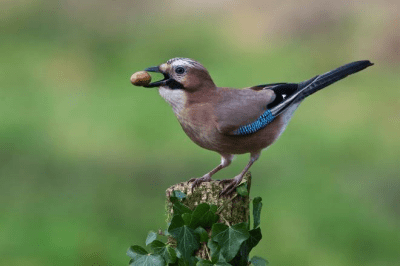
Eurasian Jay with acorn (by Phil Winter)
The Jay of Eurasia is a permanent resident of virtually all but the northern-most parts of Europe, plus various swaths of Asia (see range map below), so it is no surprise to see one hopping sideways under shady oak trees, in a wooded park, near coastal Porvoo.

Eurasian Jay range map (Wikipedia)
This oak-loving corvid is colorful, matching this bird-book’s description:
Pigeon-sized [i.e., about 13 inches long]. Colourful woodland corvid, notoriously shy and wary – generally glimpsed as a coloured bird with black tail and white rump [who] flashes through the trees, screeching its harsh warning. Typical call is a dry, rasping skaak, a familiar woodland sound. Adult: Overall pinkish-brown coloration is relieved by the beautiful shining blue shoulder patch and thick black moustache. All plumages similar. Noisy and excitable; short crest is readily erected, exposing dark streaking. Flight: Action is hesitantly undulating on broad, blunt wings; rising birds initially show black tail contrasting with white rump and wing flashes, and bright blue shoulder patches. Unlikely to be confused [with any other local bird], but compare similar-sized Hoopoe. From below, the black tail contrast with pinkish-brown body.
• Common woodland bird, but especially with oaks – acorns a favourite food
• In recent decades, has moved increasingly into towns; in many city parks, has become bold and fearless
• Feeds on ground, jauntily hopping sideways as it searches for acorns [or insects or berries, such as blackberries]
• Their long persecution by gamekeepers as an egg-thief [i.e., snatching eggs of other birds] belies their importance as a planter of forests; Jays bury acorns throughout the autumn – indeed a single Jay can plant 3,000 acorns in a month
• Rarely seen far from the shelter of trees, a party usually breaks cover one at a time, hurriedly flapping across a clearing or valley
• As well as its angry screeches, wide repertoire of calls includes a buzzard-like mewing note [as well as other calls demonstrating mimicry].
[Quoting Chris Kightley, Steve Madge, & Dave Nurney, POCKET GUIDE TO THE BIRDS OF BRITAIN AND NORTH-WEST EUROPE (Yale University Press, 1998), page 264, emphasis added.]
Thus, as both an eater and planter of oak-seeds (which is what acorns are), the Eurasian Jay’s behavior is not unlike that of the Pinyon Jay, which both eats and plants Pinyon Pine seeds, in America’s Great West. [See “Providential Planting: The Pinyon Jay”, CREATION EX NIHILO, 19(3):24-25 (June 1997), posted at http://creation.com/providential-planting .]

Eurasian Jay perching (by Luc Viatour)
What clever birds God has made these busy woodland-dwelling corvids to be!
Who knows? Maybe my wife and I will get to re-visit Scandinavia, sometime, for more birdwatching. If so, I hope to see another Eurasian Jay – that colorful character that the French rightly call Geai des chênes: “jay of the oaks”. ><> JJSJ profjjsj@aol.com

Eurasian Jay, taking a bow (by Charlie Fleming)
*
More article from James J. S. Johnson
*

“By them shall the fowls of the heaven have their habitation, which sing among the branches.” (Psalms 104:12 KJV)
Birds Singing from BeliefNet
*
*
James J. S. Johnson
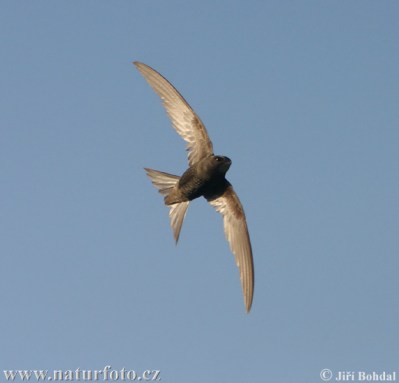
COMMON SWIFT (Apus apus) photo credit: Jiri Bohdal
Make a joyful noise unto the LORD, all ye lands. (Psalm 100:1)
What is making a “joyful noise”? It is commanded is Scripture, whatever it is – see Psalm 66:1; 81:1; 95:1-2; 98:4; 98:4; 100:1.
To many, the noise of circuitous swifts is just that, a screeching-like screaming noise — not the kind of “music” that King David would have included in his orchestra-supported choir (1st Chronicles 15:16). But to a bird-lover, the aerial call of this air-zooming insectivore is a “joyful noise”, installed and directed by the Composer and Giver of all birdsong (and other avian vocalizations).
Yes, as other ignore them, I enjoy hearing the energetic calls of Common Swifts (Apus apus), as they zip around, in hunting packs, de-bugging the lower airspace during the bug-filled days of summer.

COMMON SWIFT flock in air (photo credit: Biopix; J C Schou)
On July 10th of AD2006 I was watching a flock of swifts circling above the rooftops in Old Town, Tallinn, Estonia. The flock’s high-speed-choreography included swerving, veering, soaring, turning, rolling, and circling maneuvers — always in graceful curves, yet nonetheless amazingly quick – in a word, “swift”. It was done so fluidly that it compares, though at a smaller-group level, with the carefully choreographed flock-flights of starling murmurations (which are described elsewhere at “Choreographed Choir on the Wing: Birds of a Feather Flock Together:).
It was a privilege to see such a lively and speedy display of God’s bioengineering, a fly-by performance, like a high-speed aerial parade. And the quaint old-town venue, Tallinn’s “Old Town”, still includes walls and towers from the Hanseatic League era (some 2 or 3 centuries older than the Protestant Reformation), providing an air of calm busyness that matched the swifts’ quick-turning air-dance.
The COMMON SWIFT (Apus apus) is, as its name suggests, a bird that is both common and quick. As a true “swift”, having wings curved like a parenthesis (or boomerang, or crescent-sliver), it somewhat resembles a short-legged version of a Barn Swallow or Purple Martin, colored in black and grey, although its wings are narrower and more sickle-shaped in flight. When viewed from beneath, a swift’s silhouette (against the sky) almost looks like an anchor, as it glides. And swifts often glide, often circling above or near rooftops and other objects. When they want to accelerate, their wingbeats are thorough and (unsurprisingly) swift. The super-short legs are used for clinging to walls and other vertical surfaces, matching the German name for this bird, Mauersegler (“wall-glider”). Don’t expect to see this bird sitting on the ground – if it is “grounded” there is probably an involuntary explanation.
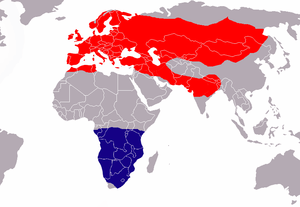
COMMON SWIFT range map (Wikipedia)
And “common” it is, in summer, all over Europe (and ranging from west to east across the middle band of Asia, as well as much of the Mideast and India). This insect-gobbling bird is a migrant, going where the bugs are plentiful — before the “bug famine” of Eurasia’s winter months the Common Swift migrates to the southern half of Africa, where bugs teem (during Africa’s summer months). Swifts and swiftlets are found all over the inhabited words, i.e., anywhere that flying insects are available for “eating on the fly”. Consider these illustrative examples: Black Swift (all over North America, from Canada to Costa Rica and Brazil), White-fronted Swift (forests in Mexico), Great Dusky Swift (many forests of South America), Sooty Swift (many forests of South America), White-chinned Swift (Central and South America), Cave Swiftlet (caves and woods of India, Indonesia, and Malaysia), Himalayan Swiftlet (common to the Himalayan range and Southeast Asia) — just to list a few. One of the rarest swifts is the Seychelles Swiftlet (a subspecies or cousin of the smaller Mascarene Swiftlet of Mauritius and Reunion (both being east-of-Madagascar islands in the Indian Ocean). The Seychelles Swift is found only on the Seychelles Islands east of Africa (and north of Madagascar), in the Indian Ocean. (See postage stamp – public domain image)

SEYCHELLES SWIFTLET [public domain]
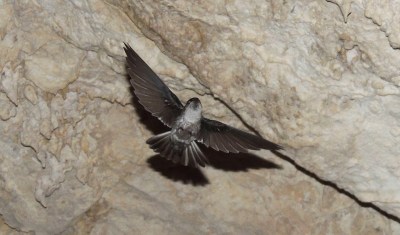
Atiu Swiftlet (photo credit: Wikipedia)
Now back to the COMMON SWIFT, such as those who circled the air near the rooftops of Old Town, Tallinn (Estonia), that summer afternoon in AD2006.
The Common Swift’s visible physical and behavioral traits have been aptly summarized by the co-authors whose bird-book I used on that summer afternoon in Tallinn:
Dark, scythe-winged aerial feeder seen careening through sky in characteristic noisy, screaming parties. Flies in lower airspace early and late in day [when flying insects are out and about], and in wet weather. Spends virtually entire life … on the wing, coming to land only to nest. Larger than Barn Swallow, unlike which it never perches on wires or vegetation. Adult [has] uniform blackish-brown plumage relieved only by whitish chin. Very long, narrow, swept-back wings and [relatively] fat, cigar-shaped body give illusion that bird is bigger than it really is. Clearly forked tail lacks Swallow’s streamers and is often held tightly closed. Bill tiny. Sexes alike; similar juvenile has narrow pale feather edgings.
Nest colonially beneath eaves of buildings, less often in caves or hollow trees.
Enters site at breakneck speed and is only rarely seen perched below, clinging to walls with tiny legs and feet (unusually, all four toes face forwards). Breeds commonly in built-up areas, but travels huge distances to feed. Typically seen in parties of 10—100 birds, but congregates in massive swarms on spring and autumn migration, especially over wetlands and reservoirs. Flight action varied: either very fast with twinkling wingbeats or slower, with sudden flurries of wingbeats and glides on wings stiffly outstretched and slightly bowed down. Jinks, rises and falls with quick flick of wings and briefly spread tail as it gulps insect prey in [relatively] huge, gaping mouth.
Shrill, piercing screaming call, sree, is the essence of warm summer evenings.
[Quoting Chris Kightley, Steve Madge, & Dave Nurney, POCKET GUIDE TO THE BIRDS OF BRITAIN AND NORTH-WEST EUROPE (Yale University Press, 1998), page 174.]
And what kind of town is Estonia’s Tallinn? It is the main port and capital of Estonia, a land weary of foreign occupations.
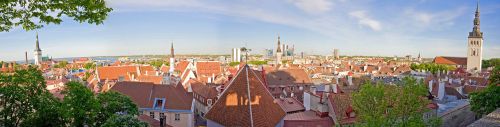
Old Town, Tallinn, Estonia (photo credit: Wikipedia)
The native Estonians (who maybe felt like helpful bugs, trying to escape hungry predators), century after century, has been parasitized (and preyed upon) by many opportunists who — like busy Common Swifts — swiftly (or sometimes slowly) inserted themselves onto Estonia’s Baltic coastland, sometimes colonizing and sometimes content with controlling the flow of trade.
A quick [i.e., “swift”] summary of Estonia’s serial occupations by neighboring armies follows. Perhaps the reader can consider these back-and-forth conquests of the Estonian lands, and imagine how the “caught-in-the-middle” Estonians, of generation after generation after generation, lived, as their land changed from colony to battlefield to colony, etc.
Estonia’s sequence of political phases may be condensed to 24 episodes, namely: (1) the Viking era … (800s through 1200); (2) wars with Germany’s Bishop Albert of Livonia and the Sword Brethren (1208-1227); (3) Denmark intervenes and begins to rule Tallinn [from taani linn, meaning “Dane fort”, with the city continuing to be called by its German name, “Reval”], due to Danish King Valdemar II’s conquest … [resulting in] Estonia being occupied by a mix of Danes and Germans by 1220); (4) political decline of the ethnic-German “Sword Brethren” of Livonia, due to Lithuanian militarism … followed by merger of the Livonian Sword Brethren with Prussia’s Teutonic Knights [as Lithuania flourished]; (5) Danish-German domination of Estonia [with the Hanseatic League controlling Estonia’s economy] ; (6) decline of the militaristic Prussian Teutonic Knights, due to Russian militarism aided by Estonian and Latvian conscripted soldiers … [e.g., Alexandr Nevskii’s “Battle on the Ice” victory in AD1242]; (7) political association with, and domination by, the plutocratic “super-merchants” of Germany’s Hanseatic League (with Lübeck Law adopted for Tallinn in 1248, with Tallinn’s trade featuring Estonian rye [!], barley, oats, honey, bearskins and other furs, exchanged for imported herring, salt, precious metals, and clothing materials); (8) Danish relinquishment of troublesome Estonia (prompted by the bloody Jüriöö Mäss rebellion of 1343-1345 … resulting in Denmark’s “sale” of Estonia to the Prussian Teutonic Knights in 1346 … [so Estonia and Latvia were ruled by ethnic-Germans form the mid-AD1300s through the mid-AD1400s]; (9) Old Livonia declines, as Prussia’s Teutonic Knights decline, due to military defeats [e.g., Tannenberg, in AD1410] by the rising empire of Poland-Lithuania … {and Russia unsuccessfully tries, in AD1502, to grab Estonia from Poland-Lithuania]; (10) Estonia is touched by the Reformation, with Luther’s “use-of-the-language-of-the-common-people” policy beginning to change Estonia, planting the first seeds of Estonian cultural identity restoration (Reformation first arrives in Estonia during the 1520s; 1525 sees first book printed in Estonian language [and during that year Walter von Plettenburg, Rome’s “Master of the Livonian Order”, converts to Lutheran Christianity, heavily impacting the launching of the Protestant Reformation in Estonia]; first-Estonian-language church services in the 1530s); (11) the Livonian Wars (1558-1583) reveal Russia’s ambitions for the Baltic lands … followed by Estonia being “sold” to Denmark, who opposed the Russians (1560); (12) Old Livonia disintegrates, as the Swedes arrive to oppose Russia, and Tallinn becomes a Swedish land … (1561); (13) meanwhile, the Livonian lands south of Tallinn become Polish possessions (1561); (14) Livonian resistance to Russia, well into the mid-1500s, permitted the Germany-based Reformation to take root among the Estonian people (often aided by Swedish military action, combined with Lutheran education reforms led by Swedes, Germans, and Finns … for example, Tartu University [was founded] by Swedish King Gustav Adolphus, in 1632, to promote Lutheran education and culture); (15) Russia competed with Sweden for Estonia … complicated by Poland joining the fray (in 1579), resulting in Sweden successfully holding onto Estonia [AD1586]; (16) however, Sweden and Russia resumed war in the 1590s … as tension between Sweden and Poland, regarding who gets Estonia, continued to rise; (17) Sweden continued to dominate the Baltic lands … (from 1600-1629), somewhat resolved by the “Peace of Altmark” [AD1629]; (18) Denmark increased its ascendancy in the region … Denmark’s remaining portion of Estonia [i.e., Saaremaa] was transferred to Sweden (1645); (19) [Estonia suffers, due to war-ravaged agriculture] the Great Hunger of the 1690s (1695-1697); (20) Sweden’s domination in the Baltic [is lost in] the “Great Northern War” of 1700-1721 (with the last fighting of this war, on Estonian soil, occurring in 1710); (21) 300+ years of domination by Russia, with the last portion (from the mid-1800s onward) seeing a growth of national patriotism and a recovered sense of the Estonian language and cultural identity (1710-1918); (22) the first taste of Estonian independence (1918-1940); (23) interrupted by Soviet Russia’s re-conquest and cultural suppression of Estonia (1940-1991); and (24) Estonia’s post-Soviet experience of national independence [which was triggered by Estonia’s “Singing Revolution”], which is ongoing (1991 to present).
[Quoting James J. S. Johnson, “Heritage Highlights: Estonia”, BALTIC HERITAGE REVIEW (June AD2006), pages 2-4.] Surely you became weary (if not also wary), if you actually read all of that listing of 2-dozen political turnovers (flying over 12 centuries of political history), so imagine what native Estonians must feel like – having been occupied and re-occupied by foreigners, generation after generation.
Maybe the Estonians feel like little flying insects, the easy-prey targets for ever-hungry (and fleet-flying) Swifts, coming at them, from all directions, chasing what could have been tranquility from Tallinn’s lower airspace.

Olaf’s Church [Oleviste kirik] in Tallinn:
Roman Catholic, later Lutheran, now Baptist
(photo credit: Wikipedia)
And that description well fits the memory that I still retain, of the speedy, quick-turning, aerial acrobatics — of noisy Common Swifts — that I saw near the rooflines and rooftops of the ancient-looking building in Tallinn’s Old Town, likely displaying what those same birds’ ancestors did centuries before, when Tallinn (then called “Reval”) was an old Hanseatic League trading port city.
When it comes to bird behavior, some things don’t change all that much. Of course, European trade has now returned to the old Hanseatic port-city of Reval – or Tallinn (as it is called today, and has been for centuries) — and much of that trade comes today in the form of cruise ship passengers and European Union commerce.
If you are ever in the neighborhood (of Tallinn), check it out; there is a lot of history to see there, and to appreciate, as you think about what all has occurred there, century after century. So visit Tallinn at a relaxed pace – don’t just whizz by, like a Common Swift.
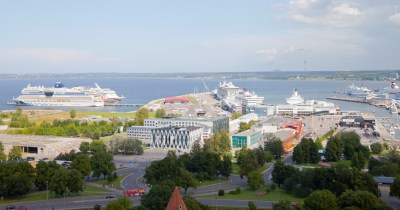
Tallinn port, where cruise ships visit Estonia (photo credit: Wikipedia)
But this nostalgic report began with a quote from Psalm 100, about singing. There is one habit that the Estonians are especially famous for, maybe moreso than any other habit – despite their long years (and centuries) of being suppressed as a Baltic people, they never gave up their songs.

Estonian choir in Tallinn
(photo credit: JJSJ in AD2006, actually a photo of a large sign in Tallinn)
Estonians love to sing, especially in their own native Estonian language. And now, years after the tense days of Estonia’s “Singing Revolution”, they can sing with a freedom that is relatively new to their land. May God bless them – and may He keep their songs in their hearts, as they look up to Him — because He alone is the ultimate Giver of all good songs, even the diverse songs (and chirps, and other vocal noises) of the busy feathered creatures whom we call “songbirds”.
And may each of us, who has the Lord Jesus Christ as our personal Redeemer, live each day with a song in our hearts, singing with grace and gratitude (Colossians 3:16).
Make a joyful noise unto the Lord, all the earth: make a loud noise, and rejoice, and sing praise. (Psalm 98:4)
*
Apodidae – Swifts Family
*
 Lee's Birdwatching Adventures Plus