How Do You Bird Watch?

Black-bellied Whistling Ducks

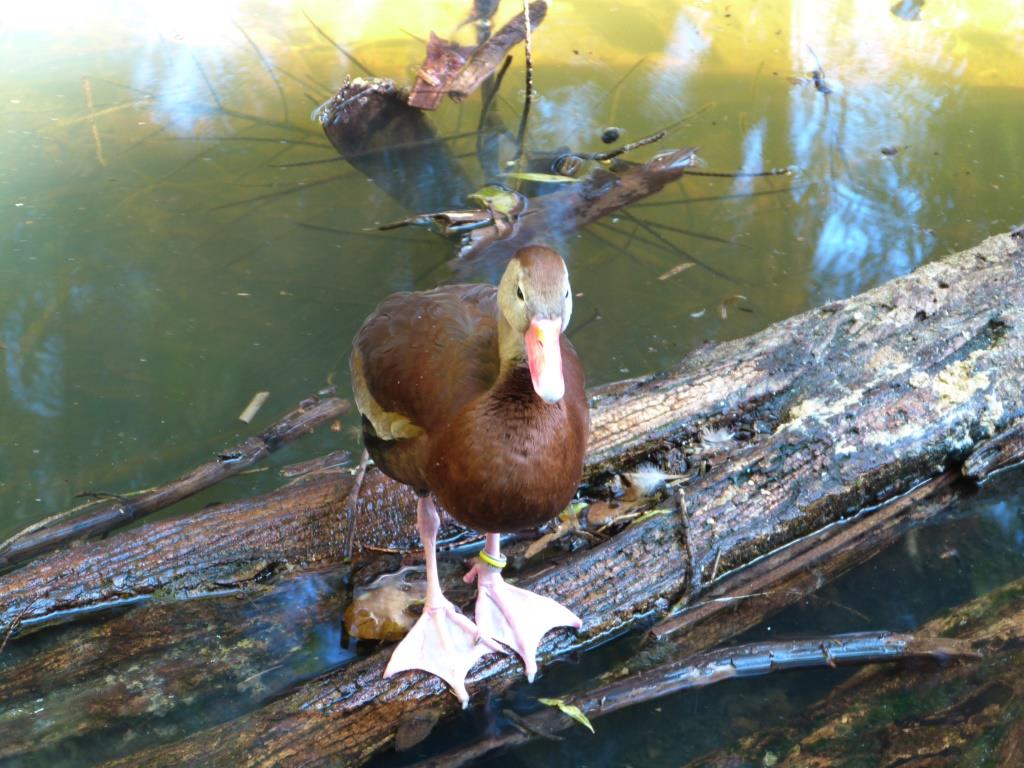
Black-bellied Whistling Ducks at Circle B by Lee

Observe and consider the ravens; for they neither sow nor reap, they have neither storehouse nor barn; and [yet] God feeds them. Of how much more worth are you than the birds!
(Luke 12:24 AMP)

It would be interesting to hear from those readers who go birdwatching or watch birds, even if it is only from your window. Consider leaving comments so that we can understand that there are various methods.

As for me, my ways of birdwatching have changed over the years. First, I became more aware of the birds around me by a naturalist at a local park in south Florida. We started with simple things like not staring at a tree, but use “soft eyes” to watch for movement. After that, she showed me how to hold and adjust the binoculars. What a difference that made. Notes and a good bird book came next. The rest is history. I love birds and enjoy seeing how beautifully they were created.

Over time, I wanted to see how many birds I could get on a list. Many people like to birdwatch this way. They will go to great heights (literally) to find a new bird for their list. I would put Ian in that category. Don’t you just enjoy reading about his birdwatching adventures.

Dan searching for something to photo

Dan searching for something to photograph

Many like Dan, Ian, and our other photographers enjoy the challenge of photography. It is not always easy to get a great photo, especially when the birds don’t wait for you to get all the settings right.

Lee at Lake Morton by Dan

Lee at Lake Morton by Dan

Some like to feed the wildlife at home or a park and watch whoever shows up at that location.

Then you have every thing in between. Some enjoy going on birdwatching trips with other birders. This can be very helpful when you are just learning about the birds.

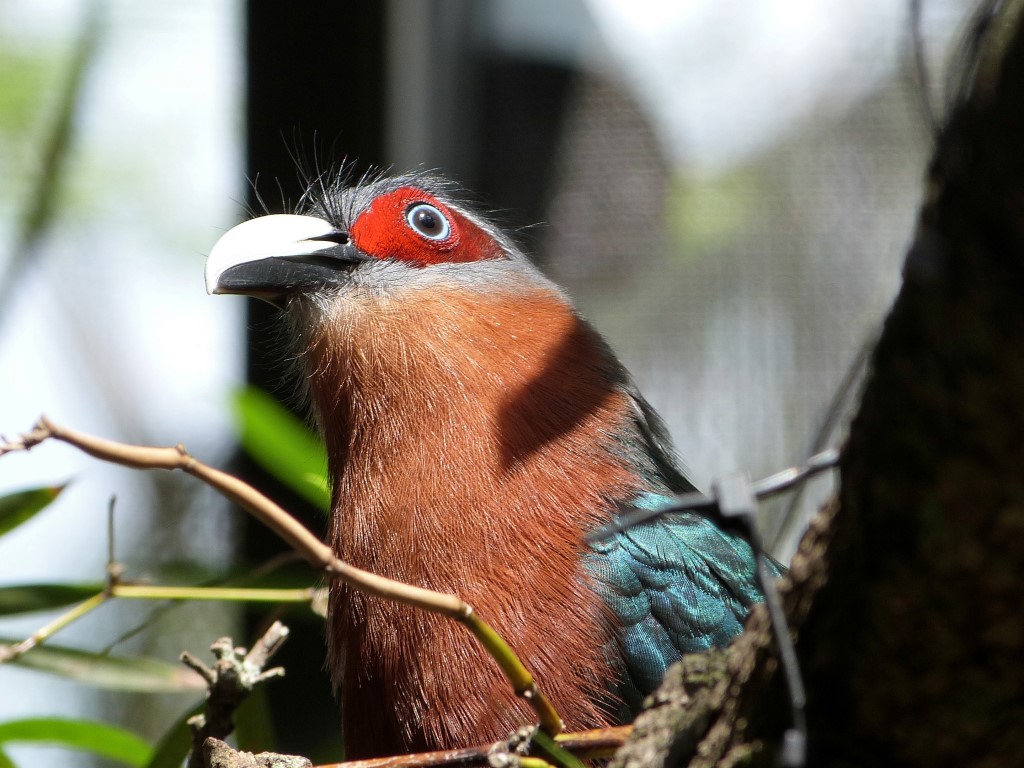
Chestnut-breasted Malkoha (Phaenicophaeus curvirostris) Palm Beach Zoo by Lee

Chestnut-breasted Malkoha (Phaenicophaeus curvirostris) Palm Beach Zoo by Lee

Today, I have mellowed somewhat. Between an issue with my feet and legs, I can no longer walk great distances. My age is also becoming a factor. I enjoy watching birds wherever they are including the Zoos. Those are easier for me to handle and actually, get to see the birds for longer periods of time and at closer ranges. That also allows me to see birds from other areas that I will never be able to get to.

I think I am actually becoming a bird “watcher.” I enjoy just seeing what they are up to or how they are put together. Like those feet I mentioned in the last article. Finding Birds in the Bible and Birds in Hymns are also pleasurable for me.

Black-bellied Whistling Duck (Dendrocygna autumnalis) Feet by Lee at PB Zoo

Black-bellied Whistling Duck Feet by Lee at PB Zoo

Is any one way of birdwatching any better than another? Not to my way of thinking. They are all fine methods and there are plenty of birds out there for all of us to enjoy.

What is your method or what gives you the most enjoyment when you are out on a “birdwatching adventure”?

*

Ian’s Bird of the Week

A J Mithra’s way of mixing birds and Scripture.

Check out our photographers down the sidebar.

Our Guest Writers

Most of the rest are my adventures plus the –

Birds in the Bible and Birds in Hymns

*

Birds of the Bible – Whistling Ducks

Black-bellied Whistling Ducks forming V

Black-bellied Whistling Ducks forming V

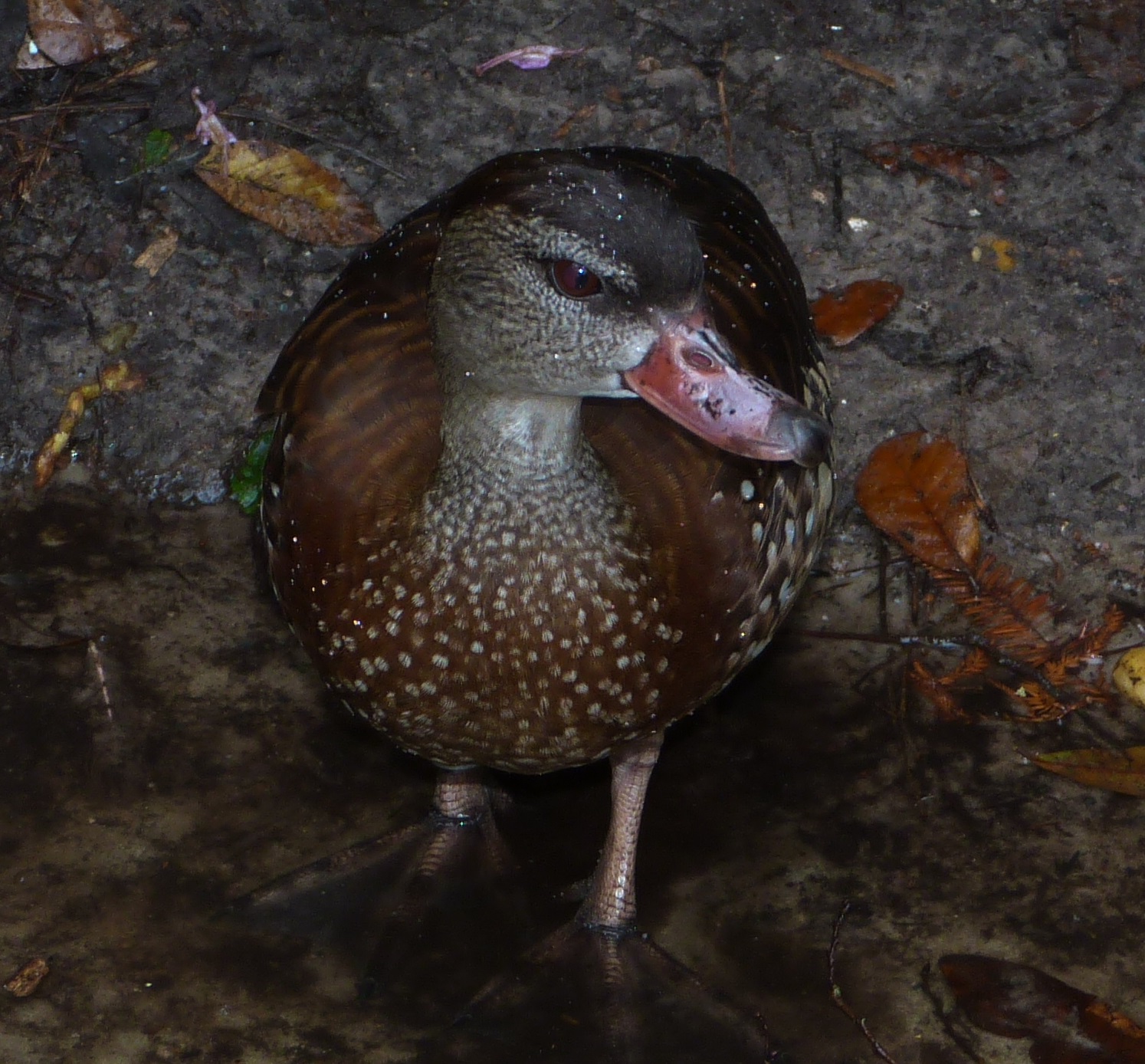
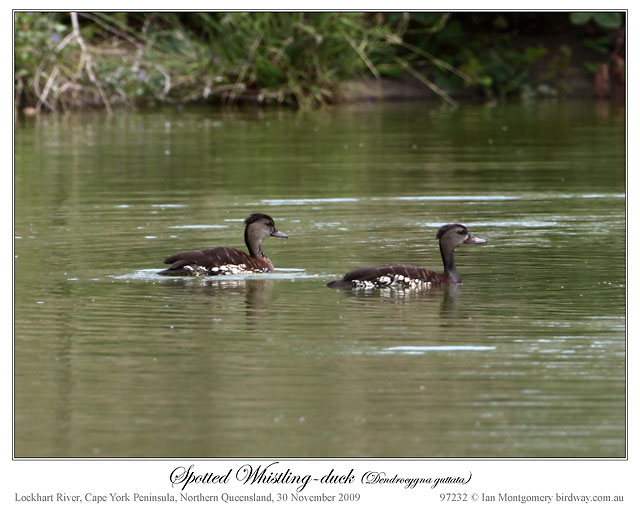
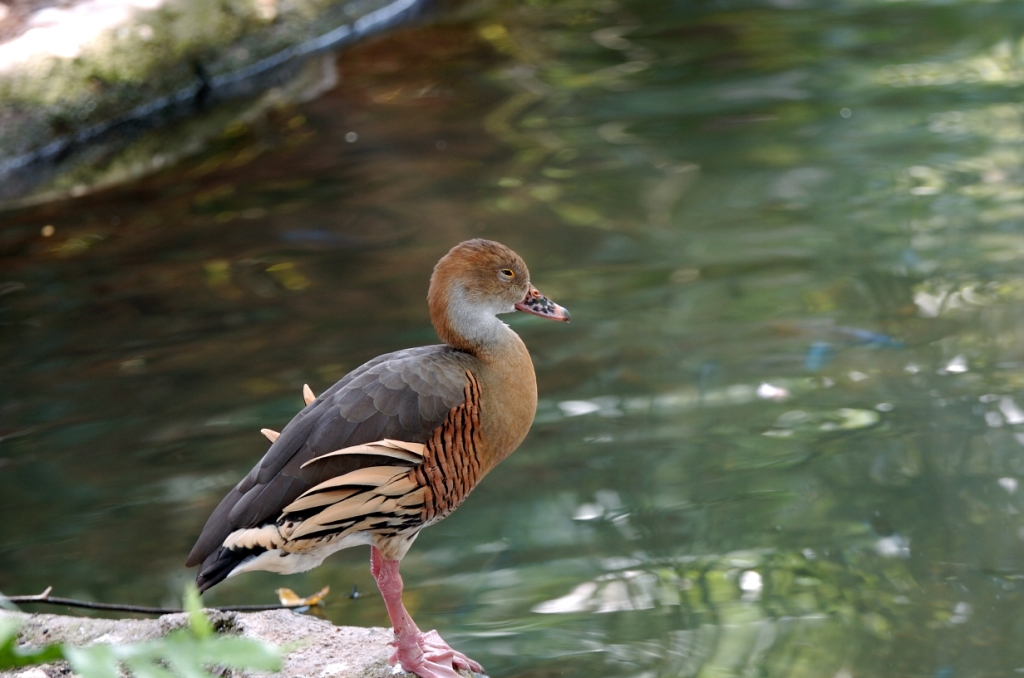
We keep encountering Whistling Ducks as we visit the zoos and as we go birdwatching, especially at Circle B Bar Reserve. There we get to see the Black-bellied Whistling Ducks quite frequently. At Palm Beach Zoo, I got tickled at the feet of the Black-bellieds. This week at Lowry Park Zoo, we took photos of their Spotted Whistling Duck which are fairly new residents.

Spotted Whistling Duck by Lee at LPZ Cropped

Spotted Whistling Duck (Dendrocygna guttata) by Lee at LPZ

I checked the e-Sword Bible program and can not find any “Ducks” or “Waterfowl” in Scripture by name, only in references to all birds being created, etc. They are still neatly created birds and are a joy to watch.

Black-bellied Whistling Duck Feet by Lee at PB Zoo

Black-bellied Whistling Duck Feet by Lee at PB Zoo

There are three verses that refer to a “whistle” and in all of them it is the Lord who is doing the whistling.

He will lift up a banner to the nations from afar, And will whistle to them from the end of the earth; Surely they shall come with speed, swiftly. (Isaiah 5:26 NKJV) (For judgment)

And it shall come to pass in that day That the LORD will whistle for the fly That is in the farthest part of the rivers of Egypt, And for the bee that is in the land of Assyria. (Isaiah 7:18 NKJV) (For judgment)

I will whistle for them and gather them, For I will redeem them; And they shall increase as they once increased. (Zechariah 10:8 NKJV) (for redemption)

Whistling ducks are found in the tropics and subtropics. As their name implies, they have distinctive whistling calls. The whistling ducks have long legs and necks, and are very gregarious, flying to and from night-time roosts in large flocks. Both sexes have the same plumage, and all have a hunched appearance and black underwings in flight.

The first whistling ducks were described by Carl Linnaeus in the 10th edition of Systema Naturae in 1758: the Black-bellied Whistling Duck (then Anas autumnalis) and the West Indian Whistling Duck (then Anas arborea). In 1837, William John Swainson named the genus Dendrocygna to distinguish whistling ducks from the other waterfowl.

The whistling ducks or tree ducks are a subfamily, Dendrocygninae of the duck, goose and swan family of birds, Anatidae. They are not true ducks. In other taxonomic schemes, they are either considered a separate family Dendrocygnidae, or a tribe Dendrocygnini in the goose subfamily Anserinae. The subfamily has one genus, Dendrocygna, which contains eight living species, and one undescribed extinct species from Aitutaki of the Cook Islands.

The eight species of whistling duck are currently recognized in the genus Dendrocygna. However, Johnsgard considers the White-backed Duck (Thalassornis leuconotus) from Africa and Madagascar to be distinct ninth species, a view first proposed in 1960 and initially supported by behavioral similarities. Later, similarities in anatomy, duckling vocalizations, and feather proteins gave additional support. Molecular analysis in 2009 also suggested that the White-backed Duck was nested within the whistling duck clade. (Wikipedia with editing)

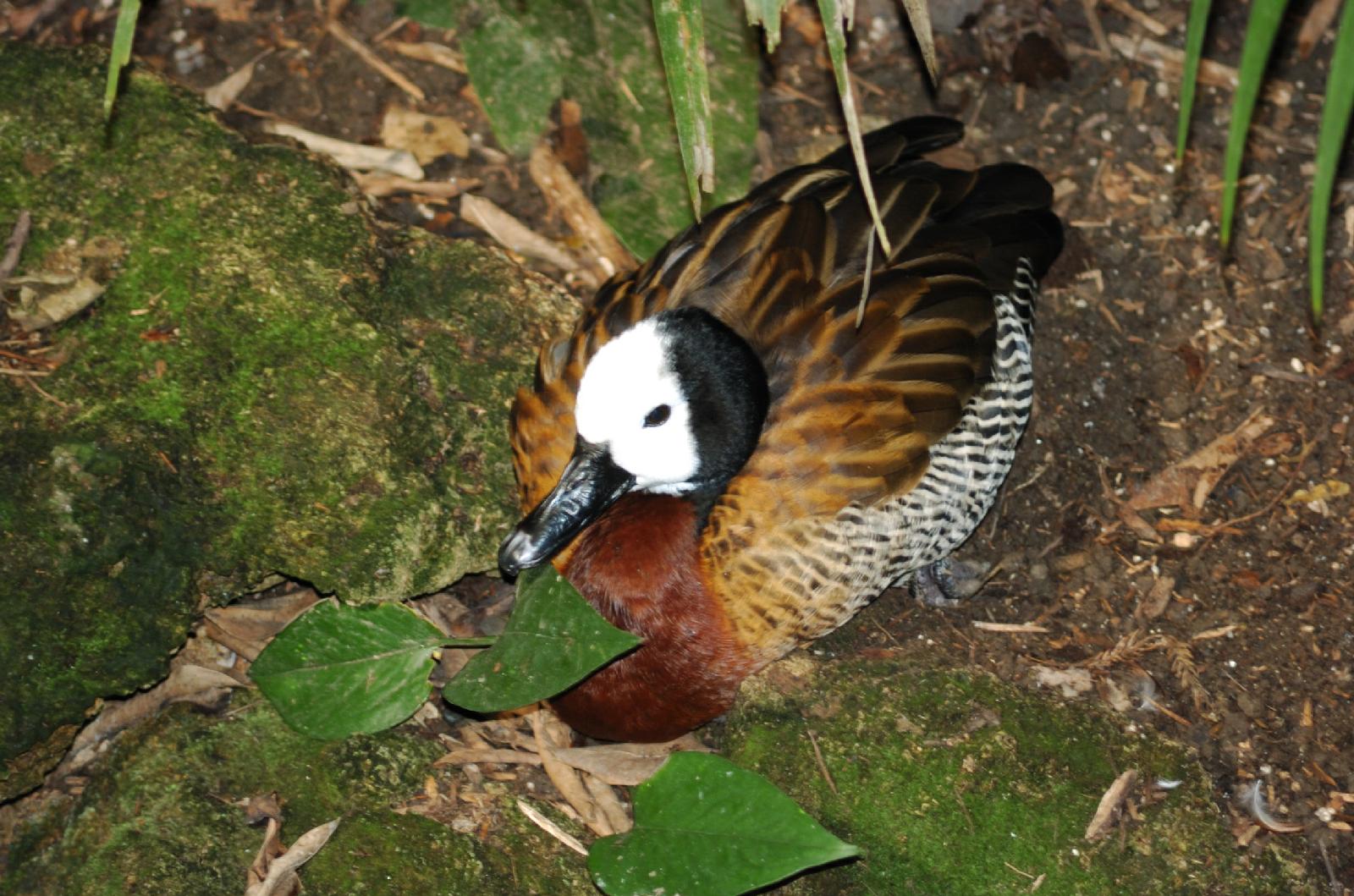
White-faced Whistling Duck (Dendrocygna viduata) by Dan

Black-bellied Whistling Duck (Dendrocygna autumnalis)

Spotted Whistling Duck (Dendrocygna guttata) by Ian

West Indian Whistling Duck (Dendrocygna arborea)

Fulvous Whistling Duck (Dendrocygna bicolor)

Plumed Whistling Duck (Dendrocygna eytoni) Zoo Miami’s by Dan

Wandering Whistling Duck (Dendrocygna arcuata) – Video by Nick

Lesser Whistling Duck (Dendrocygna javanica) Zoo Miami’s by Dan

White-backed Duck (Thalassornis leuconotus) ©WikiC

(All sounds are from xeno-canto, but they didn’t have an audio for the White-backed Duck)

*

Anatidae – Ducks, Geese & Swans Family Page

Wikipedia’s pages for the Whistling Ducks and the White-backed Duck

*

Birds of the Bible – Barred Owl (at Lowry)

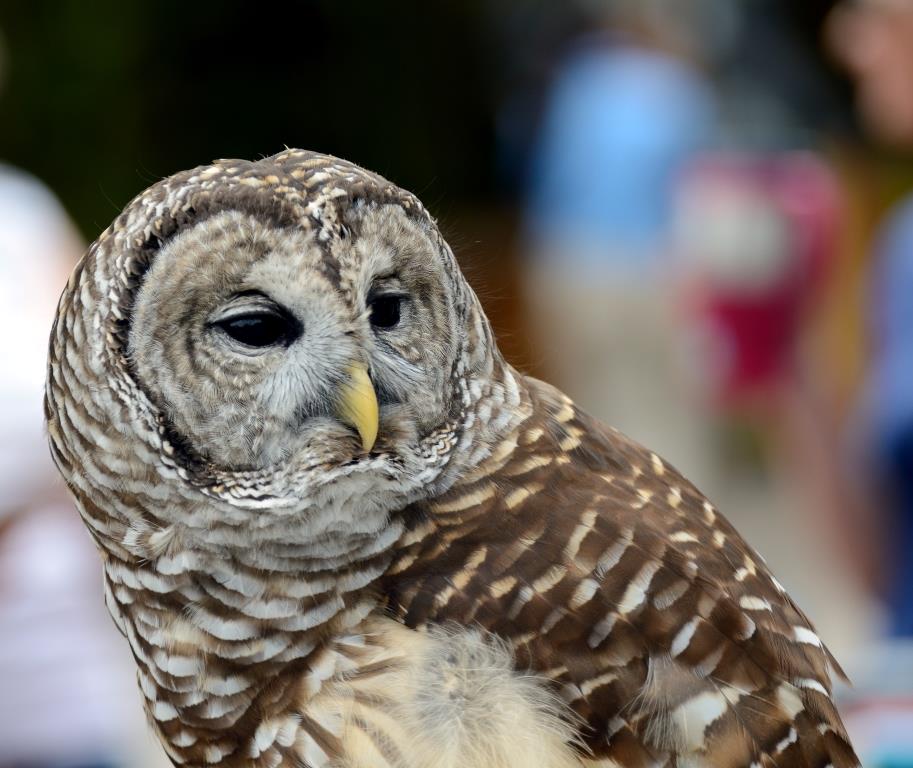
Northern Barred Owl (Strix varia) LPZ by Dan 2014

Northern Barred Owl (Strix varia) LPZ by Dan 2014

When we entered the Lowry Park Zoo today, we were greeted by the Barred Owl being displayed on a handler’s gloved hand. What a beautiful owl. She was so calm as all the kids and us older ones enjoyed seeing her so close.

It was time to renew our annual pass, so off we went to the zoo even, though it was a dreary light rainy day. We didn’t have lots of snow like many of you up north, so, I am not complaining, and the Barred Owl was a nice addition to the visit. We have introduced the Barred Owl several years ago, but am sharing her again.

Identification Tips:

  • Length: 17 inches Wingspan: 44 inches
  • Sexes similar
  • Rather large owl
  • Dark eyes and yellow bill
  • Back brown, mottled with pale spots and dark bars
  • Underparts pale with long, brown streaks
  • Chest pale with brown barring
  • Face pale with dark concentric rings surrounding eye

*

Here are all the verses in the King James Version of the Bible that mention owls.

*

Owl

Leviticus 11:16 And the owl, and the night hawk, and the cuckow, and the hawk after his kind,
Leviticus 11:17 And the little owl, and the cormorant, and the great owl,
Deuteronomy 14:15 And the owl, and the night hawk, and the cuckow, and the hawk after his kind,
Deuteronomy 14:16 The little owl, and the great owl, and the swan,
Psalm 102:6 I am like a pelican of the wilderness: I am like an owl of the desert.
Isaiah 34:11 But the cormorant and the bittern shall possess it; the owl also and the raven shall dwell in it: and he shall stretch out upon it the line of confusion, and the stones of emptiness.
Isaiah 34:14 The wild beasts of the desert shall also meet with the wild beasts of the island, and the satyr shall cry to his fellow; the screech owl also shall rest there, and find for herself a place of rest.
Isaiah 34:15 There shall the great owl make her nest, and lay, and hatch, and gather under her shadow: there shall the vultures also be gathered, every one with her mate.

Owls

Job 30:29 I am a brother to dragons, and a companion to owls.
Isaiah 13:21 But wild beasts of the desert shall lie there; and their houses shall be full of doleful creatures; and owls shall dwell there, and satyrs shall dance there.
Isaiah 34:13 And thorns shall come up in her palaces, nettles and brambles in the fortresses thereof: and it shall be an habitation of dragons, and a court for owls.
Isaiah 43:20 The beast of the field shall honour me, the dragons and the owls: because I give waters in the wilderness, and rivers in the desert, to give drink to my people, my chosen.
Jeremiah 50:39 Therefore the wild beasts of the desert with the wild beasts of the islands shall dwell there, and the owls shall dwell therein: and it shall be no more inhabited for ever; neither shall it be dwelt in from generation to generation.
Micah 1:8 Therefore I will wail and howl, I will go stripped and naked: I will make a wailing like the dragons, and mourning as the owls.

*

References to check out:

{This is a little short due to being involved in another project, but wanted to share these photos.)

*

Watched the Ken Ham vs Bill Nye Debate

Sorry I didn’t put a blog up last evening, but was occupied watching the Ken Ham vs Bill Nye Debate on Livestream. It was very interesting. Here is the YouTube of it, if you missed it. I believe it is only going to be available for a few days. (At least on Answers page)

In the beginning, God created the heavens and the earth. Genesis 1:1 ESV)

*

*

Here is another YouTube of a Post-debate Show by Creationtoday. It is a little shaky at first, but settles down after a minute or so.

*

*

Answers in Genesis

*

The Common Potoo – Video

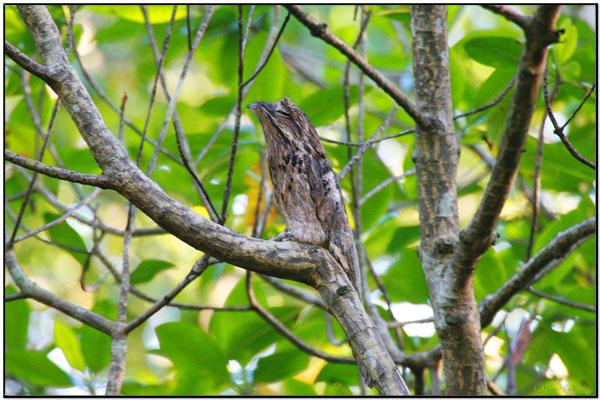
Common Potoo (Nyctibius griseus) by Daves BirdingPix

Common Potoo (Nyctibius griseus) by Daves BirdingPix

Thought I would share this video with you. A friend suggested that I watch it. It is really good.

Also, I didn’t do the usual Sunday Inspiration today because of honoring A J Mithra. It has affected me greatly. He had become a dear friend and I will miss him. I know he is enjoying the Lord’s presence, but there is still sadness here.

The world’s most brazenly hidden bird — the Common Potoo by jonnytropics

*

Potoos are members of the Nyctibiidae – Potoos Family. There are seven species and the Lord has given them an appearance of wood or some camouflaged look.

This verse is out of context, but it describes our bird.

It stood still, but I could not discern its appearance. A form was before my eyes; there was silence, ….. (Job 4:16)

*

Nyctibiidae – Potoos Family

Wordless Birds

*

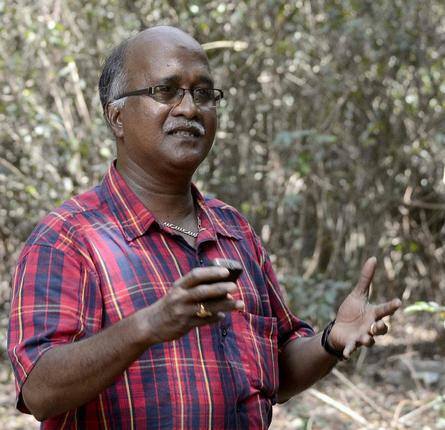
A J Mithra – Now With His Lord

A J Mithra

A J Mithra

We are confident, yes, well pleased rather to be absent from the body and to be present with the Lord. (2 Corinthians 5:8)

I just received word that A. J. Mithra passed away yesterday, Friday, January 31, 2014, of a cardiac arrest. They had the funeral today. A J was 54 and is survived by his wife and two children. He knew the Lord as his personal Saviour and we know that He is in the presence of the Lord.

The Times of India has this article: Chronicler of birdsong Mithra falls silent. His Facebook page, Aj Mithra, is still active for now.

I knew he has not sent many articles lately and when I contacted him recently, he told me that he was not feeling well. Here is an excerpt for that e-mail.

So many things had happened during the past few months.. Our son had a fall while playing basketball and developed a hairline crack. Then my wife’s vocal chord got so bad that she was asked to stop talking for two months.. She is still having pain and is on medical leave. Our daughter was down with fever and now since a week I’m unwell too.

Please keep A. J.’s family in your prayers as I know we will. His articles were always such a joy to receive and place on here. He had a way of watching birds and then coming up with his applications. It always made one stop and think, and then want to correct a behavior that the Lord might not be pleased with.

His articles are posted on his page here at: A J Mithra

I, personally am going to miss him greatly. We have become good friends over the years. He had recently gotten a nice camera and was having a great time photographing birds, which he loved. Here are a few from his Facebook page.

*

Here are some of his articles:

*

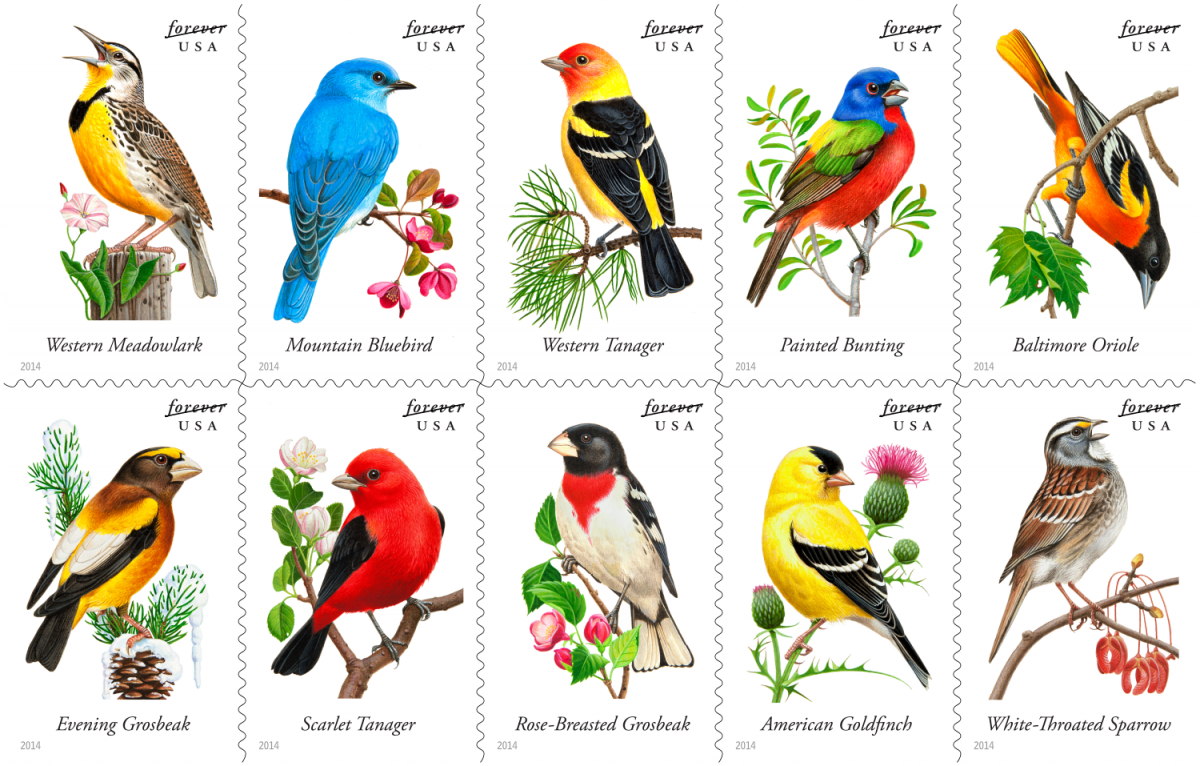
United States Songbirds On Stamps – Re-post from Dear Kitty

Songbirds_Block_0

The U.S. Postal Service celebrates ten melodic voices with the Songbirds stamps: the western meadowlark (Sturnella neglecta), the mountain bluebird (Sialia currucoides), the western tanager (Piranga ludoviciana), the painted bunting (Passerina ciris), the Baltimore oriole (Icterus galbula), the evening grosbeak (Coccothraustes vespertinus), the scarlet tanager (Piranga olivacea), the rose-breasted grosbeak (Pheucticus ludovicianus), the American goldfinch (Spinus tristis), and the white-throated sparrow (Zonotrichia albicollis).

Each colorful bird is shown perching on a fence post or branch … (The rest of the article)
This is from Dear Kitty. Some Blog

See United States songbirds on stamps.

*

Birds of the Bible – Patience Of…. A Duck?

Ferruginous Duck (Aythya nyroca) and Pintail by Lee at ZM 2014

Ferruginous Duck (Aythya nyroca) and Pintail by Lee at ZM 2014

But no one says, ‘Where is God my Maker, Who gives songs in the night, Who teaches us more than the beasts of the earth, And makes us wiser than the birds of heaven?’ (Job 35:10-11)

We know that God has given us more insight and wisdom than the animals and birds. Unfortunately, sometimes we need to observe the birds to see how we should behave. There are many times we can learn from watching their behaviors.

“But now ask the beasts, and they will teach you; And the birds of the air, and they will tell you; (Job 12:7)

While at the Zoo Miami’s Wings of Asia aviary, this behavior was captured on video. It’s between Ferruginous Ducks and a Mandarin Duck.

Can you think of some lessons that can be observed and learned? Are those ducks patient? Was one, the Mandarin Duck, jumping the line? What can be seen in their behaviors? Did you notice the eyes of the waiting duck? He wants it, but he is waiting. He even keeps his beak shut. Do we complain when things don’t go right? etc.

Here are some verses about patience, waiting and kindness that we can be taught from the birds.

Patience:

These all wait for You, That You may give them their food in due season. (Psalms 104:27)

Let integrity and uprightness preserve me, For I wait for You. (Psalms 25:21)

Kindness:

Therefore, my brethren, when you come together to eat, wait for one another. (1 Corinthians 11:33)

Breaking in Line – Mandarin:

Rest in the LORD, and wait patiently for Him; Do not fret because of him who prospers in his way, Because of the man who brings wicked schemes to pass. Cease from anger, and forsake wrath; Do not fret—it only causes harm. (Psalms 37:7-8)

*

The Ferruginous Duck, also Ferruginous Pochard (Aythya nyroca) is a medium-sized diving duck from Eurasia. The species is known colloquially by birders as “Fudge Duck”. They are members of the Anatidae – Ducks, Geese & Swans Family.

Their breeding habitat is marshes and lakes with a metre or more water depth. These ducks breed in southern and eastern Europe and southern and western Asia. They are somewhat migratory, and winter farther south and into north Africa.

The adult male is a rich chestnut colour with a darker back and a yellow eye. The pure white undertail helps to distinguish this species from the somewhat similar Tufted Duck. The female is similar but duller, and with a dark eye.

These are gregarious birds, forming large flocks in winter, often mixed with other diving ducks, such as Tufted Ducks and Pochards.

These birds feed mainly by diving or dabbling. They eat aquatic plants with some molluscs, aquatic insects and small fish. They often feed at night, and will upend (dabble) for food as well as the more characteristic diving.

*

Birds of the Bible – Chestnut-breasted Malkoha

Chestnut-breasted Malkoha (Phaenicophaeus curvirostris) Palm Beach Zoo by Lee

Chestnut-breasted Malkoha (Phaenicophaeus curvirostris) Palm Beach Zoo by Lee

And the owl, and the night hawk, and the cuckoo, and the hawk after his kind, (Deuteronomy 14:15 KJV)
And the owl, and the night hawk, and the cuckoo, and the hawk after his kind, (Leviticus 11:16 KJV)

While we were on our trip last week, we stopped by the Palm Beach Zoo. I now have another bird that I have fallen in love with. The Chestnut-bellied Malkoha is a beautiful bird and we were able to see him (or her) up close.

They are members of the Cuculidae – Cuckoos Family. When that was realized, that gave another Bird of the Bible article. There have been other Cuckoo articles written:

In those articles the Cuckoos and the Couas were introduced. Now I want to introduce you to another group within the Cuculidae Family, the Malkohas.

Malkohas are large birds in the cuckoo family Cuculidae, all in the genus Phaenicophaeus. The group name is derived from the Sinhala word for the Red-faced Malkoha; Mal-Koha meaning flower-cuckoo. These are all Asian tropical species. The genus name is derived from the Ancient Greek phoiniko– “crimson”, and phaes “eyes” or “face”, referring to the Red-faced Malkoha. However, the ‘œ’ was mistranscribed as ‘æ’.

Raffles’s Malkoha (“P.” chlorophaeus) is a highly distinct species and may not even be as closely related to malkohas as long believed. Its placement in a monotypic genus Rhinortha is supported by a morphological, molecular and behavioral evidence.
The Green Malkoha or Yellowbill seems also distinct from the typical malkohas; it is placed in the monotypic genus Ceuthmochares. (Wikipedia)

We encountered the Chestnut-breasted Malkoha a few years ago when we visited Wings of Asia (Zoo Miami) and then again on this trip at both the Wings of Asia and Palm Beach Zoo. This time there is a video to share and some close-ups. What a beautiful creation from the Lord. I love the eyes especially. They remind me of the Egyptian painting with their eyes. Maybe they saw the Malkohas and painted their eyes like them. Oh, by the way, the Cuckoos are on the “do not list.” Who would want to eat a beautiful bird like these? According to this sign at Zoo Miami, it says the male has blue eyes and the female has yellow eyes.

Chestnut-breasted Malkoha (Phaenicophaeus curvirostris) Sign by Lee at ZM 2014

Chestnut-breasted Malkoha (Phaenicophaeus curvirostris) Sign by Lee at ZM 2014

This video was taken at the Palm Beach Zoo 2014.

*

Other Malkohas in the Cuckoo Family:

Raffles’s Malkoha (Rhinortha chlorophaea)
Blue Malkoha (Ceuthmochares aereus)
Green Malkoha (Ceuthmochares australis)
Sirkeer Malkoha (Taccocua leschenaultii)
Red-billed Malkoha (Zanclostomus javanicus)
Yellow-billed Malkoha (Rhamphococcyx calyorhynchus)
Chestnut-breasted Malkoha (Phaenicophaeus curvirostris)
Red-faced Malkoha (Phaenicophaeus pyrrhocephalus)
Chestnut-bellied Malkoha (Phaenicophaeus sumatranus)
Blue-faced Malkoha (Phaenicophaeus viridirostris)
Black-bellied Malkoha (Phaenicophaeus diardi)
Green-billed Malkoha (Phaenicophaeus tristis)
Rough-crested Malkoha (Dasylophus superciliosus)
Scale-feathered Malkoha (Dasylophus cumingi)

This slideshow requires JavaScript.

*

Gospel Presentation

*

Sunday Inspiration – Hummingbirds

Rufous-tailed Hummingbird (Amazilia tzacatl) by Judd Patterson

Rufous-tailed Hummingbird (Amazilia tzacatl) by Judd Patterson

How excellent is thy lovingkindness, O God! therefore the children of men put their trust under the shadow of thy wings. They shall be abundantly satisfied with the fatness of thy house; and thou shalt make them drink of the river of thy pleasures. For with thee is the fountain of life: in thy light shall we see light. O continue thy lovingkindness unto them that know thee; and thy righteousness to the upright in heart. (Psa 36:7-10)

*

This slideshow requires JavaScript.

Come Thou Fount by the Faith Baptist Orchestra. (Used With Permission of Faith Baptist Church)

(Music and photos are used by permission. If copied, you must obtain permission also.)

Hummingbirds are one of the most beautiful and delicate creations from our Lord. Enjoy seeing what He Hath Made.

*

And he said unto me, It is done. I am Alpha and Omega, the beginning and the end. I will give unto him that is athirst of the fountain of the water of life freely.
(Rev 21:6)

*

More Sunday Inspiration

*

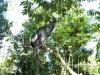
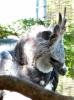
Birds of the Bible – Harpy Eagle

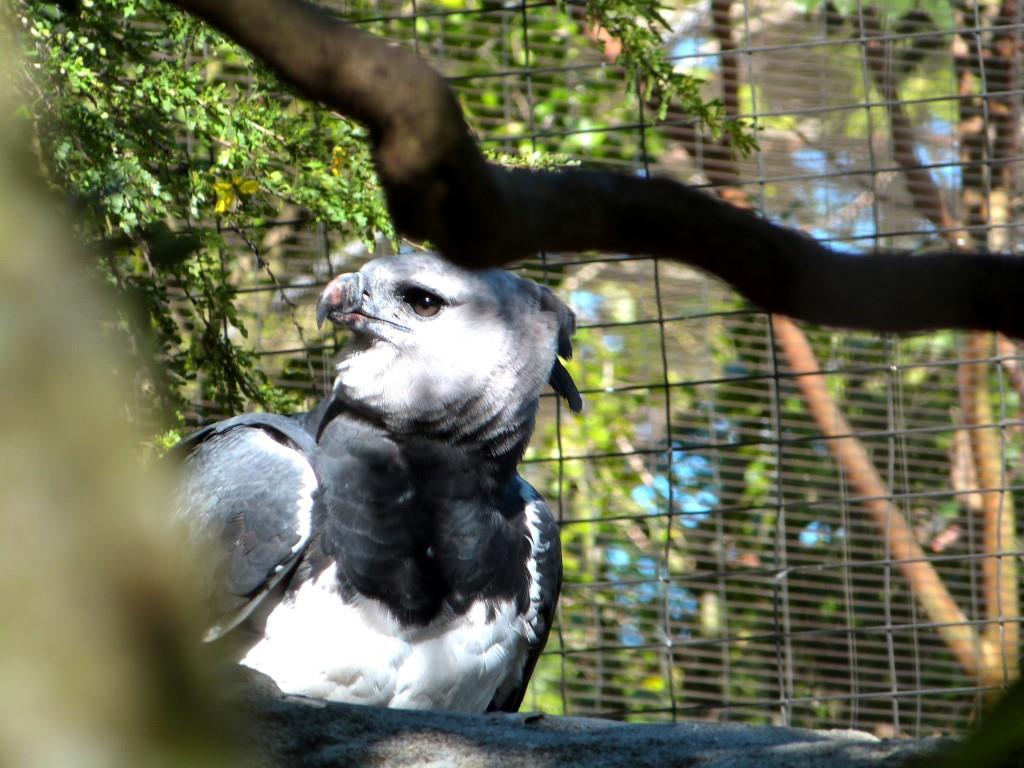
Harpy Eagle (Harpia harpyja) by Lee at ZM 2014

Harpy Eagle (Harpia harpyja) by Lee at ZM 2014

And say, Thus saith the Lord GOD; A great eagle with great wings, longwinged, full of feathers, which had divers colours, came unto Lebanon, and took the highest branch of the cedar: (Eze 17:3)

Dan and I were off on a birdwatching adventure this week. This time we visited the Zoo Miami’s Wings of Asia aviary and the Palm Beach Zoo. With over a thousand photos to sort through, I have some new photos to share. Because of the number, it will also be awhile before they are sorted and cleaned up.

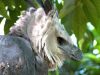
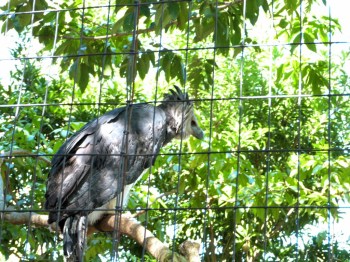
At Zoo Miami we encountered a Harpy Eagle and its young one. As far as I know, this is a first for seeing this Eagle. Its holding area is quite large and has a fly area right over the walk path. The biggest problems were a fence and it was very shady there which made photographing them challenging. But what an amazing creation by the Lord. Love that “hair do”.

And say, Thus saith the Lord GOD; A great eagle with great wings, longwinged, full of feathers, which had divers colours, came unto Lebanon, and took the highest branch of the cedar: (Eze 17:3)

Harpy Eagle (Harpia harpyja) by Lee at Zoo Miami 2014

Harpy Eagle (Harpia harpyja) by Lee at Zoo Miami 2014

I was able to get a few shots through the fence. I am not complaining about the fence being between me and that eagle. Looking at that beak makes one very thankful for a barrier between us.

Wikipedia says, “On occasion, larger prey such as capybaras, peccaries and deer are taken and they are usually taken to a stump or low branch and partially eaten, since they are too heavy to be carried whole to the nest. Red brocket deer, a species commonly weighing over 30 kg (66 lb), have been reportedly predated and, in such cases, the eagle may have to tear it into pieces or feed on at the killing site rather than fly with as it would be too heavy. The Harpy have been recorded as taking domestic livestock, including chickens, lambs, goats and young pigs, but this is extremely rare under normal circumstances. They control population of mesopredators such as capuchin monkeys which prey extensively on bird’s eggs and which (if not naturally controlled) may cause local extinctions of sensitive species.”

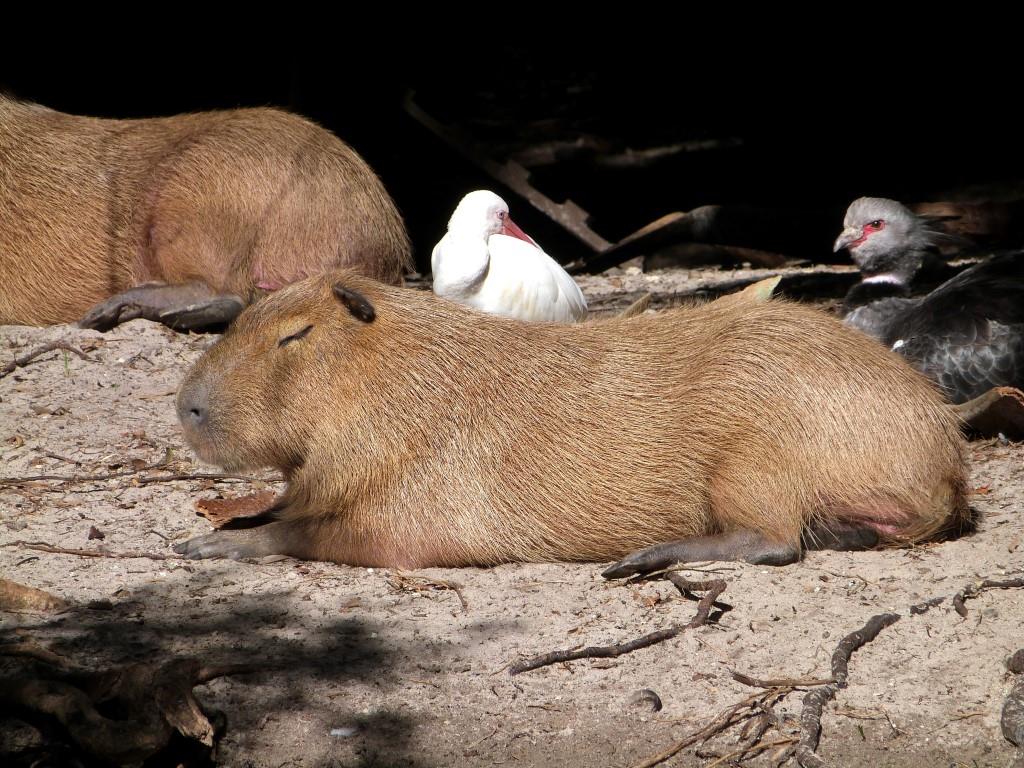
Here is a Capybara resting alongside a White Ibis and a Crested Screamer. It gives you an idea how large a critter the Harpy can take as prey. (The Capybara is problem happy it is at Palm Beach and not down in Miami with the Hapry.)

Capybara with White Ibis and Crested Screamer by Lee at PB Zoo

Capybara with White Ibis and Crested Screamer by Lee at PB Zoo 2014

Our persecutors are swifter than the eagles of the heaven: they pursued us upon the mountains, they laid wait for us in the wilderness. (Lam 4:19)

The Harpy Eagle (Harpia harpyja) is a Neotropical species of eagle. They are one of the 256 members of the Accipitridae – Kites, Hawks & Eagles Family. It is sometimes known as the American Harpy Eagle to distinguish it from the Papuan Eagle which is sometimes known as the New Guinea Harpy Eagle or Papuan Harpy Eagle. It is the largest and most powerful raptor found in the Americas, and among the largest living species of eagles in the world. It usually inhabits tropical lowland rainforests in the upper (emergent) canopy layer. Destruction of its natural habitat has seen it vanish from many parts of its former range, and it is nearly extirpated in Central America. In Brazil, the Harpy Eagle is also known as Royal-Hawk (in Portuguese: Gavião-Real).

Because of its endangerment, zoos are keeping them to help in breeding. In fact, there is a second Harpy in this enclosure. They have been successful in having chicks born. One was born in 2009 and again in 2013. I assume this young Harpy Eagle is the one born last year.

Harpy Eagle (Harpia harpyja) by Lee at Zoo Miami

Harpy Eagle (Harpia harpyja) by Lee at Zoo Miami

It is sometimes cited as the largest eagle alongside the Philippine Eagle, that is somewhat longer on average and the Steller’s Sea Eagle, that is slightly heavier on average. The wingspan of the Harpy Eagle is relatively small, an adaptation that increases maneuverability in forested habitats and is shared by other raptors in similar habitats. The wingspan of the Harpy Eagle is surpassed by several large eagles who live in more open habitats, such as those in the Haliaeetus and Aquila genera.

Additional Facts: (From Nature PBS)

  • The harpy was first described by Linnaeus in his 1758 Systema Naturae as the Vultur harpyja, after the Greek mythological spirit that had the body of an eagle and the face of a human.
  • The harpy eagle is most closely related to the crested eagle (Morphnus guianesis) and the New Guinea harpy eagle (Harpyopsis novaeguineae).
  • The harpy eagle is Panama’s national bird.
  • Its talons can be as large as the claws of a grizzly bear.
  • As an apex predator, the harpy eagle is often believed to be a key indicator of the health of the forest ecosystem. Where there are healthy numbers of harpy eagles, there are healthy numbers of the species it preys upon.
  • The exact number of harpies is not known. Birdlife International estimated that there were between 20,000 and 50,000 birds in 2009, but those numbers are far from definitive.

The Harpy Eagle is on the Coat of Arms of Panama – Harpy Eagle at Top – Wikipedia

To find out more about the Harpy see the links below. There a numerous verses in the Bible about Eagles and these are just a few more of them.

Wilt thou set thine eyes upon that which is not? for riches certainly make themselves wings; they fly away as an eagle toward heaven. (Pro 23:5)

The same hour was the thing fulfilled upon Nebuchadnezzar: and he was driven from men, and did eat grass as oxen, and his body was wet with the dew of heaven, till his hairs were grown like eagles’ feathers, and his nails like birds’ claws. (Dan 4:33)

Doth the eagle mount up at thy command, and make her nest on high? She dwelleth and abideth on the rock, upon the crag of the rock, and the strong place. (Job 39:27-28)

See:

*


*
ABA 2014 Bird of the Year – Rufous Hummingbird

Rufous-tailed Hummingbird (Amazilia tzacatl) by Judd Patterson

Rufous-tailed Hummingbird (Amazilia tzacatl) by Judd Patterson

For who hath despised the day of small things? for they shall rejoice, … (Zec 4:10a KJV)

The Birding Bunch left me a comment and reminded me that the ABA Bird of the Year for 2014 has been announced. So, I have updated the Badge on the Sidebar. The bird they chose this year is another beautiful creation from the Lord.

ABA Bird of the Year

The Rufous Hummingbird (Selasphorus rufus) is a small hummingbird, about 3 inches  long (8 cm) with a long, straight and very slender bill. The female is slightly larger than the male.

Rufous Hummingbird (Selasphorus rufus) by Africaddict

Rufous Hummingbird (Selasphorus rufus) by Africaddict

The adult male, (shown in the photo), has a white breast, rufous face, upperparts, flanks and tail and an iridescent orange-red throat patch (gorget). Some males have some green on back and/or crown. The female has green upperparts with some white, some iridescent orange feathers in the center of the throat, and a dark tail with white tips and rufous base. Females and the rare green-backed males are extremely difficult to differentiate from Allen’s Hummingbird.

They feed on nectar from flowers using a long extendable tongue or catch insects on the wing. These birds require frequent feeding while active during the day and become torpid at night to conserve energy.

Because of their small size, they are vulnerable to insect-eating birds and animals.

He will bless them that fear the LORD, both small and great. The LORD shall increase you more and more, you and your children. Ye are blessed of the LORD which made heaven and earth. (Psalm 115:13-15 KJV)

Read more about this beautifully created Hummingbird at:

*