Formed By Him – Plants and Pollinator Birds

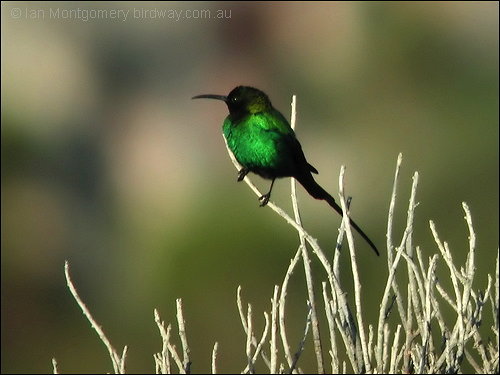
Malachite Sunbird (Nectarinia famosa) by Ian

Malachite Sunbird (Nectarinia famosa) by Ian

And to every beast of the earth, and to every fowl of the air, and to every thing that creepeth upon the earth, wherein there is life, I have given every green herb for meat: and it was so. (Genesis 1:30 KJV)

God has created an amazing bird, the Malachite Sunbird, and a beautiful flower, Babiana Ringens or “Rat’s Tail,” that both need one another to help meet their needs. The bird wants the nectar the flower produces and the flower needs to pollinate and is helped by the birds feathers. To help the two, the flower was created with a perch for the “long-tailed” bird to perch on while drinking nectar.

“Babiana ringens has a bright red floral display situated close to ground level . Its red colour , long corolla tubes and copious nectar supply make it attractive to sunbirds, which seem to be the primary pollinators of this plant. A strange, fleshy, twig-like structure projects above the plant giving it the common name of “rotstert ” or “rat’s tail.” The sole function of this twig-structure is that it provides a perching platform for sunbirds, which presumably “feel more comfortable” pollinating the plant from this vantage point than from the ground (Anderson et al. 2005). Having this perch increases outcrossing rates and positions birds correctly for efficient pollen transfer (Anderson et al. 2005). Anderson et al. (2005) also showed that male sunbirds were more particular about the presence or absence of a perch which they ascribed to territoriality or perhaps because using a perch is less likely to damage the long tail sported only by males than if they used the ground. This is arguably the most specialized bird perch in the world.” (To see whole article – Click Here)

Malachite Sunbird - plant for - Rats Tail (babiana ringens) ©©JG in SF

Malachite Sunbird – plant for – Rats Tail (babiana ringens) ©©JG in SF – (see the stem at left)

From Creation Moments:

Plants with Perches for Pollinator Birds –  Copyright © 2011, Creation Moments, PO Box 839, Foley, MN 56329, www.creationmoments.com.

Praise the LORD from the earth, ye dragons, and all deeps … Beasts, and all cattle; creeping things, and flying fowl… (Psalm 148:7, 10)

Could a plant devise a special growth for itself so that it becomes inviting to its only pollinator? If evolution was true, how could such a plant survive until it could learn enough about its pollinator, and about genetics, to evolve a special growth just for that pollinator.

Those sound like silly questions, but if evolution is true, they must be answered, and answered scientifically. A South African plant called the “Rat’s Tail” grows a seemingly purposeless spear that extends near its flowers. Theorizing that the spear might be a bird-perch for a pollinator, scientists closely watched some of the plants in the wild. They learned that the only bird that seems interested in pollinating the plant is a bird called the “Malachite Sunbird.” The scientists then removed the spikes from some of the plants. The result was that male sunbirds were far less likely to visit and pollinate those plants. As a result, perchless-plants only produced half as many seeds as plants with perches. Researchers pointed out that this arrangement makes sense because male sunbirds have long tails that can be damaged by ground landings.

However, if we conclude that the Rat’s Tails were created for the sunbirds, and the sunbirds for the Rat’s Tails, we don’t have to find natural explanations for such silly questions. This is simply another of God’s clever designs.

Prayer:
Lord, Your caring hand is all around us. I thank You especially for caring for me by forgiving my sins. Amen.
Notes:
Science News, 6/4/05, p. 365, “Built-in bird perch spreads the pollen.”
___

Malachite Sunbird (Nectarinia famosa) ©©Rainbirder

Malachite Sunbird (Nectarinia famosa) ©©Rainbirder

The Malachite Sunbird is in the Nectariniidae – Sunbirds Family of the Passeriformes Order or Perching Birds and are found across Africa, the Middle East and into South-east Asia.

The breeding male Malachite Sunbird, which has very long central tail feathers, is 25cm long, and the shorter-tailed female 15 cm. The adult male is metallic green when breeding, with blackish-green wings with small yellow pectoral patches. In non-breeding (eclipse) plumage, the male’s upperparts are brown apart from the green wings and tail, the latter retaining the elongated feathers. The underparts in eclipse plumage are yellow, flecked with green.

The female has brown upperparts and dull yellow underparts with some indistinct streaking on the breast. Her tail is square-ended. The juvenile resembles the female.

This species, like most sunbirds, feed mainly on nectar, although they will also take insects, especially when feeding young. This sunbird may hunt in a similar manner to a flycatcher, hawking for insect prey from a perch.  Most sunbird species can take nectar by hovering like a hummingbird, but usually perch to feed most of the time. As a fairly large sunbird, the Malachite Sunbird is no exception. They have long thin down-curved bills and brush-tipped tubular tongues, both adaptations to nectar feeding.

Wordless Birds

*

Formed By Him – Hornbills, Monkeys and Eagles

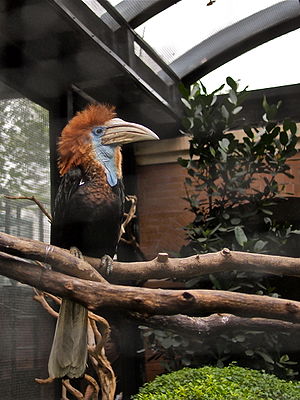
Yellow-casqued Hornbill (Ceratogymna elata) ©Wiki

Yellow-casqued Hornbill (Ceratogymna elata) ©Wiki

Oh, the depth of the riches both of the wisdom and knowledge of God! How unsearchable are His judgments and unfathomable His ways! (Romans 11:33 NASB)

Hornbills that Understand Monkey

The Yellow-casqued Hornbill (Ceratogymna elata) is found in the primeval rain forest of coastal regions of West Africa, for example in Côte d’Ivoire.

Yellow-casqued Hornbills are one of the largest birds of the forest, with adults weighing up to 2 kg. They live mainly in the forest canopy, feeding on the ground only rarely. They live in small family groups containing at least one adult male and female, with one or two immature birds, though they sometimes gather in larger flocks to exploit a major food supply such as an ant or termite nest.

Crowned Eagle (Stephanoaetus coronatus) ©WikiC

Crowned Eagle (Stephanoaetus coronatus) ©WikiC

“The birds are occasionally preyed upon by Crowned Eagles, and they respond to the presence of an eagle (sometimes indicated by its characteristic shriek) by mobbing, i.e. approaching it and emitting calls. Since the eagles depend on surprise to make a catch, this frequently causes them to leave the area.” (Wikipedia edited)

“With the exception of basic messages such as aggression, communication between two entirely different species has seldom been observed among animals in the wild. We know that many animals among the same species give each other specific warnings about an impending danger.” One example is “researchers have found that a downy woodpecker responds to alarm calls from chickadees.” “However, scientists have never noted one species recognizing the specific warning given by a second species.

Diana Monkey at the Henry Doorly Zoo ©WikiC

Diana Monkey at the Henry Doorly Zoo ©WikiC

Diana monkeys on the Ivory Coast of Africa face two primary threats, leopards and crowned eagles. When one of these threats appears, the spotter gives a very specific bark-like call depending on the type of threat. Of course, the monkeys need to respond differently to each threat whether it comes from the leopard below or the eagle above. So it helps them to know what they are facing. On the other hand, a bird named the yellow hornbill is threatened only by the crowned eagles. Researchers noted that these birds ignored the monkeys’ warning about the leopards. But when the monkeys signaled danger from the eagle, the bird took defensive measures. Researchers confirmed their observations using tape recorded monkey calls. The researchers were amazed that these birds understood the monkey warnings in an intelligent manner.”

Such intelligence comes from the Creator, Who has given the gift of such intelligence to His creatures in a way that provides for their survival. This shows His loving care for His creation.

Sources:
Science News, 3/20: 2004, p. 188  Science News, “Hornbills know which monkey calls to heed.”
Copyright © 2011, Creation Moments, PO Box 839, Foley, MN 56329, http://www.creationmoments.com/ and from Wikipedia

Yellow-casqued Hornbills are in the Hornbill-Bucerotidae Family of the Bucerotiformes Order which includes the Hoopoes, Wood Hoopoes, and the Ground Hornbills. Crowned Eagles are found in the Kites, Hawks and Eagles – Accipitridae Family.

Birds of the Bible – Ospreys in the Storm

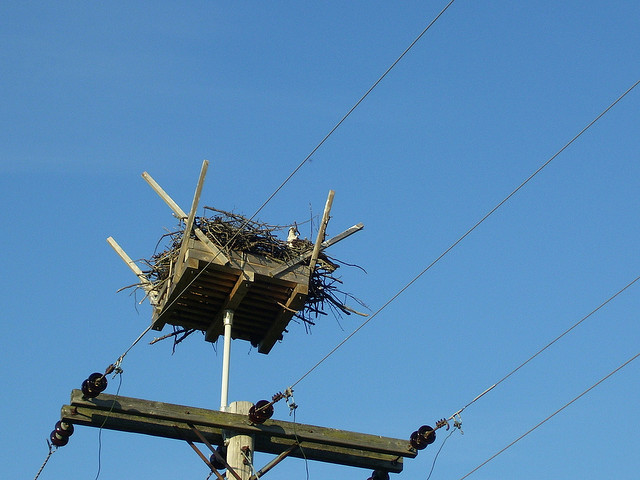
Western Osprey (Pandion haliaetus) ©©Mike Bowler

Western Osprey (Pandion haliaetus) ©©Mike Bowler

Yesterday we had very heavy rain and wind. We were under Tornado Warnings most of the day. In the afternoon, it turned very bad as a tornado was being tracked just south of our house. Our flagpole went down as well as the concrete sign at the entrance to our community. There were plenty of trees and branches strewn around and planes tossed around at the Fun n Sun festival in Lakeland, Florida.

We went down to Bartow this afternoon and took the Old Bartow road, that I have renamed, the “Osprey Road.” There are many Osprey nest in the power lines down through there and also the electric companies have placed platforms for the Osprey to raise their babies.

One of the main food source for the Osprey is fish. We have had several very cold snaps these last two winters and many of the fish were killed off. Without a good source of food to raise their young, the numbers of Osprey have decreased in this area.

Osprey Road by Dan - (Old Bartow Road)

Osprey Road by Dan – (Old Bartow Road) 2007

This year we had already seen fewer Osprey’s raising their young. Now many of those nests were destroyed or left bedraggled by the storm yesterday. What a shame. Then again, had there been lots of active nest, there would have been more killed or injured birds.

We are reminded through Scripture that:

Are not two sparrows sold for a farthing? and one of them shall not fall on the ground without your Father. (Matthew 10:29 KJV)

They were not Sparrows, but I know that promise applied to them also. God, the Father, knows all about what happened to them. He is not so busy that He doesn’t take notice of such things. That is why that passage is so special, because, it goes on to say:

Fear ye not therefore, ye are of more value than many sparrows. Whosoever therefore shall confess me before men, him will I confess also before my Father which is in heaven. (Matthew 10:31-32 KJV)

Osprey with Fish by Jim Fenton

Osprey with Fish by Jim Fenton

Another thing about Ospreys as well as the other birds is that they were commanded to “multiply and fill the earth.” What I haven’t mentioned is that on the way down and back we saw four different sets of birds mating. I imagine that they lost their young and are busy planning the next clutch of birds to raise. Birds have emotions, and I am sure they feel the loss, but they have picked themselves back up and have begun repairing nests and starting new families.

May we be reminded that the Lord knows all about the things that happen to us. Sometimes the events aren’t so much “fun.” How do we handle situations when this happens. Do we keep our eyes on the Lord and trust Him to see us through it, or do we blame Him and become angry and miserable?
___
Ospreys are in the Pandionidae Family of the Accipitriformes Order. There is an Eastern Osprey (Pandion cristatus) and a Western Osprey (Pandion haliaetus).

See also:

Birds of the Bible – Osprey
Birds of the Bible – Osprey II
Birds of the Bible – Osprey III

*

I.O.C. Version 2.8 World Bird List Released Today

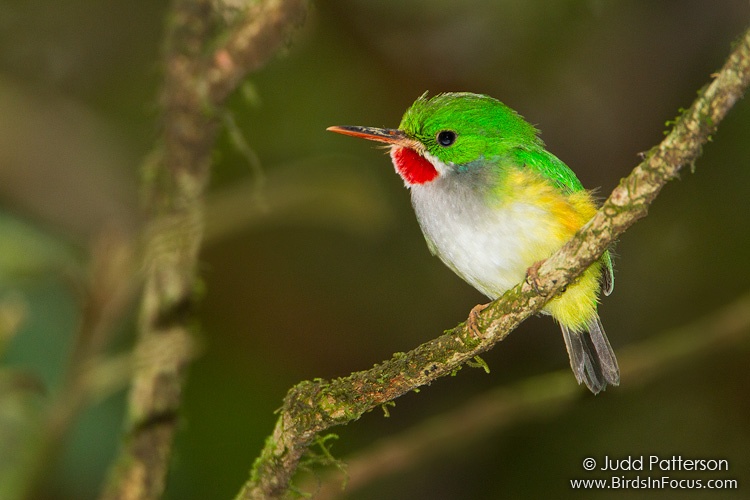
Puerto Rican Tody (Todus mexicanus) by Judd Patterson

Puerto Rican Tody (Todus mexicanus) by Judd Patterson

The I.O.C. Version 2.8 World Bird List was released today and this time I am going to get with it immediately. In fact, I knew it was going to be available on March 31st, so I halted the 2.7 work and began the 2.8 Version two days ago. It’s back to the changes on the 233 Families, but this time it will be easier. (I hope!)

And further, by these, my son, be admonished: of making many books there is no end; and much study is a weariness of the flesh. (Ecclesiastes 12:12 KJV)

This Version of the International Ornithological Congress (IOC), now the International Ornithologists’ Union, has added 15 Species, deleted 3, changed the names of 9 and the ranges of 27 birds. They made changes to the Taxonomy “32 of which 29 are changes of Genera, especially resurrection of Antrostomus for 11 species of New World Caprimulgus and revisions of Aimophila sparrows to follow AOU.” All of this amounts to: “The IOC World Bird List 2.8 contains 10,438 species classified in 40 Orders, 233 Families (including 5 Incertae Sedis) and 2232 Genera.” (from the IOC World Bird List site) The 233 Families is why there are 233 pages to maintain every time a new update comes out.

Blue-winged Teal by Dan at Circle B

Blue-winged Teal by Dan at Circle B

Some changes were made to the new pages completed. There are links at the bottom of the page to the websites of the photographers who have given their permission to use their fantastic photos used on that page. They are already listed in the sidebar, but this might encourage you to also visit their sites. We are thankful for each one who has given permission. If you are a bird photographer and would be willing to let your photos be used, please send an e-mail to:  Lee@leesbird.com. It is a desire to have a photo of each bird species of the world on this site.

The list of species is quite long now, because of the listing of the subspecies. You might find it useful to go to the Find feature of your browser to help locate the bird you are searching for. Here is how to do so:

Use the Ctrl+F keyboard shortcut.
This works on Firefox (shows up at bottom of page), Internet Explorer and Chrome (shows up at top of page).

As previously stated, Adam had it a whole lot easier naming the birds.

Out of the ground the LORD God formed every beast of the field and every bird of the air, and brought them to Adam to see what he would call them. And whatever Adam called each living creature, that was its name. So Adam gave names to all cattle, to the birds of the air, and to every beast of the field. (Genesis 2:19-20a NKJV)

Southern Cassowary (Casuarius casuarius)y by Ian Montgomery

Southern Cassowary (Casuarius casuarius)y by Ian Montgomery

Here are links to the Version 2.8 lists that are completed:

More Birds of the World
*

Birds in Hymns – When Spring Unlocks The Flowers

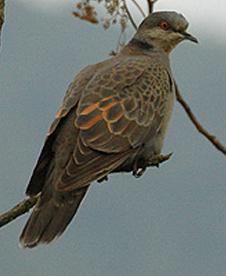
Dusky Turtle Dove (Streptopelia lugens) ©WikiC

Dusky Turtle Dove (Streptopelia lugens) ©WikiC

Based On:

The flowers appear on the earth, the time of singing has come, and the voice of the turtledove is heard in our land. (Song of Solomon 2:12 ESV)

Words by Re­gi­nald He­ber (1783-1826).
Music – Gos­ter­wood, Eng­lish mel­o­dy, ar­ranged by Ralph Vaugh­an Will­iams
In The Eng­lish Hymn­al (Lon­don: Ox­ford Un­i­ver­si­ty Press, 1906), num­ber 299

When Spring Unlocks The Flowers

When spring unlocks the flowers to paint the laughing soil;
When summer’s balmy showers refresh the mower’s toil;
When winter binds in frosty chains the fallow and the flood;
In God the earth rejoiceth still and owns his maker good.

The birds that wake the morning and those that love the shade;
The winds that sweep the mountain or lull the drowsy glade;
The sun that from his amber bower rejoiceth on his way,
The moon and stars their master’s name in silent pomp display.

Shall man, the lord of nature, expectant of the sky,
Shall man alone, unthankful, his little praise deny?
No; let the year forsake his course, the seasons cease to be,
Thee, Master, must we always love, and Savior, honor Thee.

The flowers of spring may wither, the hope of summer fade,
The autumn droop in winter, the birds forsake the shade;
The winds be lulled, the sun and moon forget their old decree;
But we, in nature’s latest hour, O Lord, will cling to Thee!

________

See More Birds In Hymns

*

Birds in Hymns – Being His

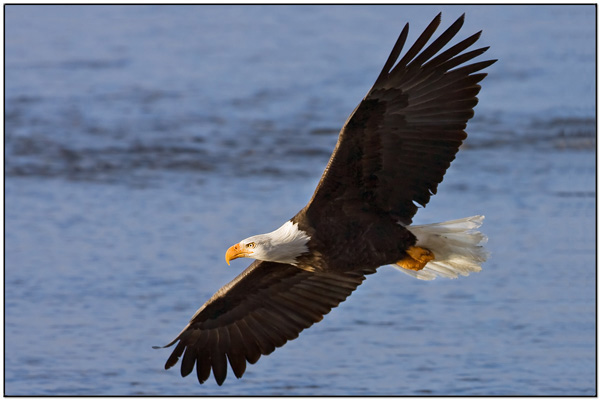
Bald Eagle flying by Dave's BirdingPix

Bald Eagle flying by Dave's BirdingPix

Based on:

Now therefore, if ye will obey my voice indeed, and keep my covenant, then ye shall be a peculiar treasure unto me above all people: for all the earth is mine: (Exodus 19:5 KJV)

Words by Neil Bar­ham, 2005. (1962-)

Music – Pro­tect­ion – from A Com­pil­a­tion of Gen­u­ine Church Mu­sic, by Jo­seph Funk (Win­ches­ter, Vir­gin­ia: J. W. Holl­is, 1832)

Alternate Tune – St. Den­io, by John Ro­berts, 1839

Being His

His oceans all rumble and batter His shore,
But He will be new when its waves are no more.
His mountains reach skyward to touch His sweet face;
His forests burst forth as He showers their place.

The mighty Leviathan leaps in His seas,
The eagle mounts up on the joy of His breeze.
The creatures of earth borrow life from His hand,
Their days are all numbered by His firm command.

Eternity springs from His Infinite Mind—
All time and all space from His fingers unwind,
His intricate, limitless, unbounded skill
Spins threads of His sovereign, inscrutable will.

The thunder of Sinai resounds in our ears,
The judgment of God stirs the deepest of fears!
But, awesome and wondrous—more staggering still—
The flashes of lightning from Calvary’s hill!

But O! How mighty, how perfect, how free,
How blessèd, how precious, how lovely is He!
And O! How grand, and how sweet to behold
The trophies of grace He has won from of old!

A radiant triumph illumines His face!
He strides to His throne, the Colossus of Grace!
He sits, and His Father proclaims Him True Son!
His strife is now over; His battle is done.

We bow, we adore, we fall down at His throne,
He gathers us into His arms as His own!
He seats us in glory beside Him above,
To crown His achievement with splendors of love!

_____
What a great old hymn that tells of the Lord’s grace to us and the Worship that is due Him.

Neil Barham grew up in Lou­i­si­a­na and has lived all over the south­ern Unit­ed States. He was trained as a Pres­by­ter­i­an pas­tor and served as a teach­er in Christ­ian schools in Georg­ia, Ten­nes­see, and Lou­i­si­a­na. As of 2005, he lived in Mi­a­mi, Flor­i­da, where he, his wife Ju­lie, and his child­ren Han­nah, Seth, and Le­ah are mem­bers of the Ken­dall Pres­by­ter­i­an Church.

Inspired by the ex­am­ple of Will­iam Cow­per, Neil be­gan writ­ing hymns to com­bat spir­it­u­al de­press­ion. He has 19 hymns on Cyber Hymnal.

For an article about Neil Barham – Click Here

More Birds in Hymns

*

Bible Conference and Birds in South Carolina

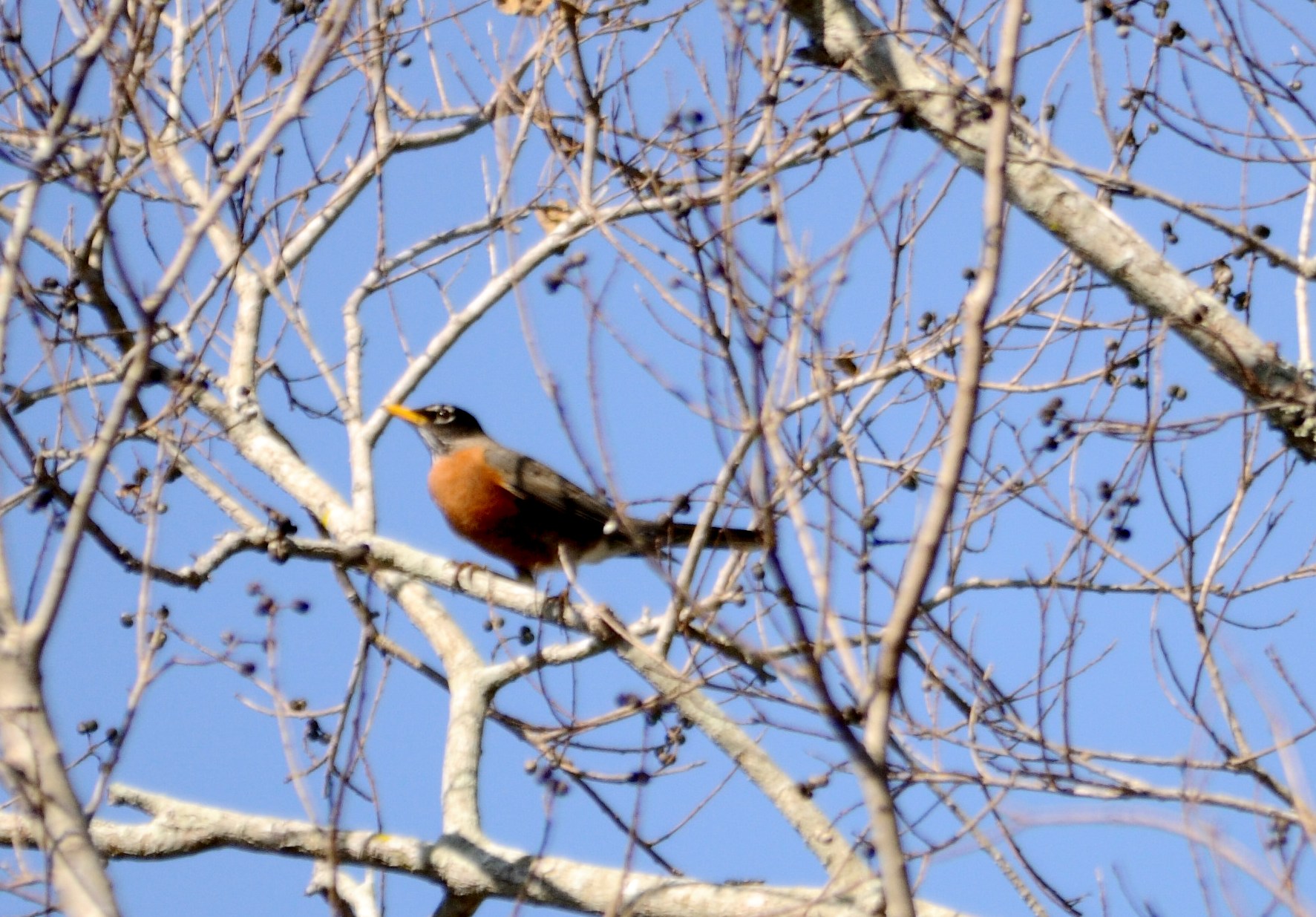
American Robin by Dan

American Robin by Dan

All scripture is given by inspiration of God, and is profitable for doctrine, for reproof, for correction, for instruction in righteousness: (2Ti 3:16)

An American Robin, two Cardinals and a Mockingbird greeted us here in South Carolina. We also saw a Red-tailed Hawk circling over the campus of Bob Jones University (our Alma mater) and a Red-shouldered Hawk sitting in a tree. Spring is blooming out all around.

We came up here for the Bible Conference and have thoroughly enjoyed and received blessings from all five messages we were able to attend. We are now headed home and will arrive back in Florida soon.

Dr. Sam Horn, from Wisconsin, challenged us to “cast all our cares on the Lord” and to remember that, “we have a Father that knows our need.” His other message was to challenge us to “right living” through the “Divine enablement from God.”

Dr. David Innes, from California, taught on the “Greatness of God.” Two quotes I liked were; “All genuine ministry of life is the overflow of our walk with Christ.” and “God is uniquely Uncreated, Infinite, Triune, and Holy.” His second message was about the “Greatness of God’s Word.”

Dr. Bruce Compton, from Michigan, spoke on the “Relationship between a living faith and God’s Word.

It is good to sit under the ministry of Godly men who teach the Word of God in a concentrated time period, like a Bible Conference. Sometimes it is hard to get away to one, but it is worth the effort. Your soul will be refreshed and challenged.

It was also good to travel to a different state to try to get a glimpse of the birds that they have there. Didn’t see too many, but it was a very profitable trip. The Lord is always gracious.

This trip is why there has not been many articles from me lately. I will soon be back at the keyboard after I get the binoculars out to spot some more birds to write about.

*

Birds of the Bible – Thrushes II

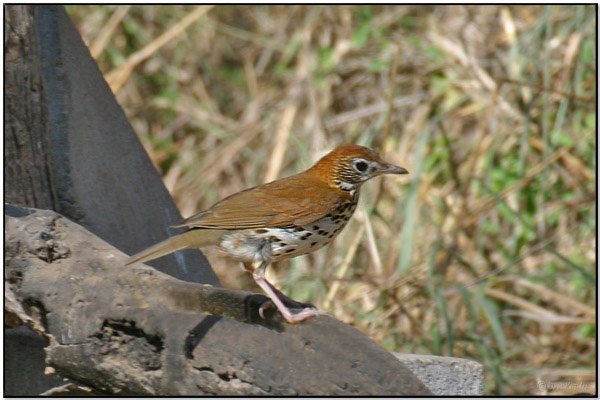
Wood Thrush (Hylocichla mustelina) by Daves BirdingPix

Wood Thrush (Hylocichla mustelina) by Daves BirdingPix

Storks, doves, swallows, and thrushes all know when it’s time to fly away for the winter and when to come back. But you, my people, don’t know what I demand. (Jeremiah 8:7 CEV)

I recently added the Birds of the Bible – Thrushes page. It now appears in the Sidebar and in the Birds of the Bible List. While comparing the Scripture on Jeremiah 8:7, I decided that the Thrushes deserved to be a Bird of the Bible on this blog. As you know, all birds are “Birds of the Bible,” because the Lord created them all. Mainly the ones named in particular have been given their own page. Since Jeremiah 8:7 is translated “thrush” in six Bible versions, it now has its own page.

So God created great sea creatures and every living thing that moves, with which the waters abounded, according to their kind, and every winged bird according to its kind. And God saw that it was good. (Genesis 1:21 NKJV)

Here is part of the new Birds of the Bible – Thrushes page:


CLASS – AVES, Order – PASSERIFORMES, Family:

Turdidae – Thrushes

Muscicapidaehas Palm & Rock Thrushes

Other Families with Thrushes:

Formicariidae – Antthrushes – Antthrushes

Pachycephalidae – Whistlers and Allies – Shrikethrushes

Psophodidae – Whipbirds, Jewel-babblers, quail-thrushes – Quail-thrushes


Not all versions of the Bible list the Thrush in this verse, but because so many versions do, the Thrush is being added to the Birds of the Bible. The following versions and the verse are listed below:

(CEV) Storks, doves, swallows, and thrushes all know when it’s time to fly away for the winter and when to come back. But you, my people, don’t know what I demand.
(ERV) Even the birds in the sky know the right time to do things. The storks, doves, swifts, and thrushes know when it is time to fly to a new home. But my people don’t know what the LORD wants them to do.
(GNB) Even storks know when it is time to return; doves, swallows, and thrushes know when it is time to migrate. But, my people, you do not know the laws by which I rule you.
(LITV) Also the stork in the heavens knows her seasons, and the turtledove and the swallow and the thrush observe the time of their coming. But My people do not know the judgment of Jehovah.
(NAS77) “Even the stork in the sky Knows her seasons; And the turtledove and the swift and the thrush Observe the time of their migration; But My people do not know The ordinance of the LORD.
(NASB) “Even the stork in the sky Knows her seasons; And the turtledove and the swift and the thrush Observe the time of their migration; But My people do not know The ordinance of the LORD.

See also the following articles:

Birds of the Bible – The Thrush

Birds of the Bible – Thrushes II (this article)

Birds in Hymns – How Great Thou Art

Birds in Hymns – The Bird With The Broken Wing

When The Robins Came by Dorothy Belle Malcolm

Return of the Robins by Dorothy Belle Malcolm

Ian’s Bird of the Week – Bassian Thrush

The Mountain Bluebird – The Zealous Bridegroom.. by a j mithra


A video by Nick Talbot of a Song Thrush singing.

*

Birdwatching and Still Kicking Up Dust

Chipping Sparrow (Spizella passerina) shot thru window with screen by Lee

Chipping Sparrow (Spizella passerina) shot thru window with screen by Lee

You will show me the path of life; In Your presence is fullness of joy; At Your right hand are pleasures forevermore. (Psalms 16:11 NKJV)

Some birdwatching has been going on around the yard and neighborhood. Every once in a while, I do get away from the computer and look around, though only nearby. Yet, I have been seeing some interesting birds, especially some I have never seen in the yard. I was watering a new tree when I heard a sound I didn’t recognize at first. After searching and praying that it would come into view, I spotted a Pileated Woodpecker on a power pole. Been here 5 years and it is the first one spotted from the yard. Then I spotted 2 Chipping Sparrows yesterday and 3 today. (also a yard first) Today an American Goldfinch showed up on my feeder. All 3 of those species were new to the yard. They were kept company by 2 Cardinals, Boat-tailed Grackles, Brown-headed Cowbirds, Eurasian Collarded Doves, Mourning Doves and Red-winged Blackbirds.

Blue-winged Teal by Dan at Circle B

Blue-winged Teal by Dan at Circle B

Dan took some photos today out at Circle B Bar Reserve while I was busy. He said there was lots of activity and many photographers taking advantage of that activity. One photo in particular caught my interest and I have included it. He also had some neat photos of an immature Black-crowned Night-Heron, but they aren’t available yet.

I am still working on updating the Birds of the World section to the IOC World Bird List, ver. 2.7. I have over 91 Families updated and started working on the Index also. The Species List of the First Name of the Birds and Genus is updated “A” through” Z”. So at least you can find the birds.

American Goldfinch (Carduelis tristis) by Lee thru window

American Goldfinch (Carduelis tristis) by Lee thru window

As I have been updating, I have been adding photos to some of the families. Some of the Families that we have written about lately have also been updated even though they are beyond the 91 completed.

Thrush – Turdidae was updated when Return Of The Robins was written.

Meliphagidae Family mentioned in Ian’s Bird Of The Week – Yellow-spotted Honeyeater

Strigopidae Family mentioned in Formed By Him – Kakapo

Since the last update, Birdwatching and Still Updating, I have now completed these bird species:

Kingfishers are next on the agenda.

*

New Finch Species Shows Conservation

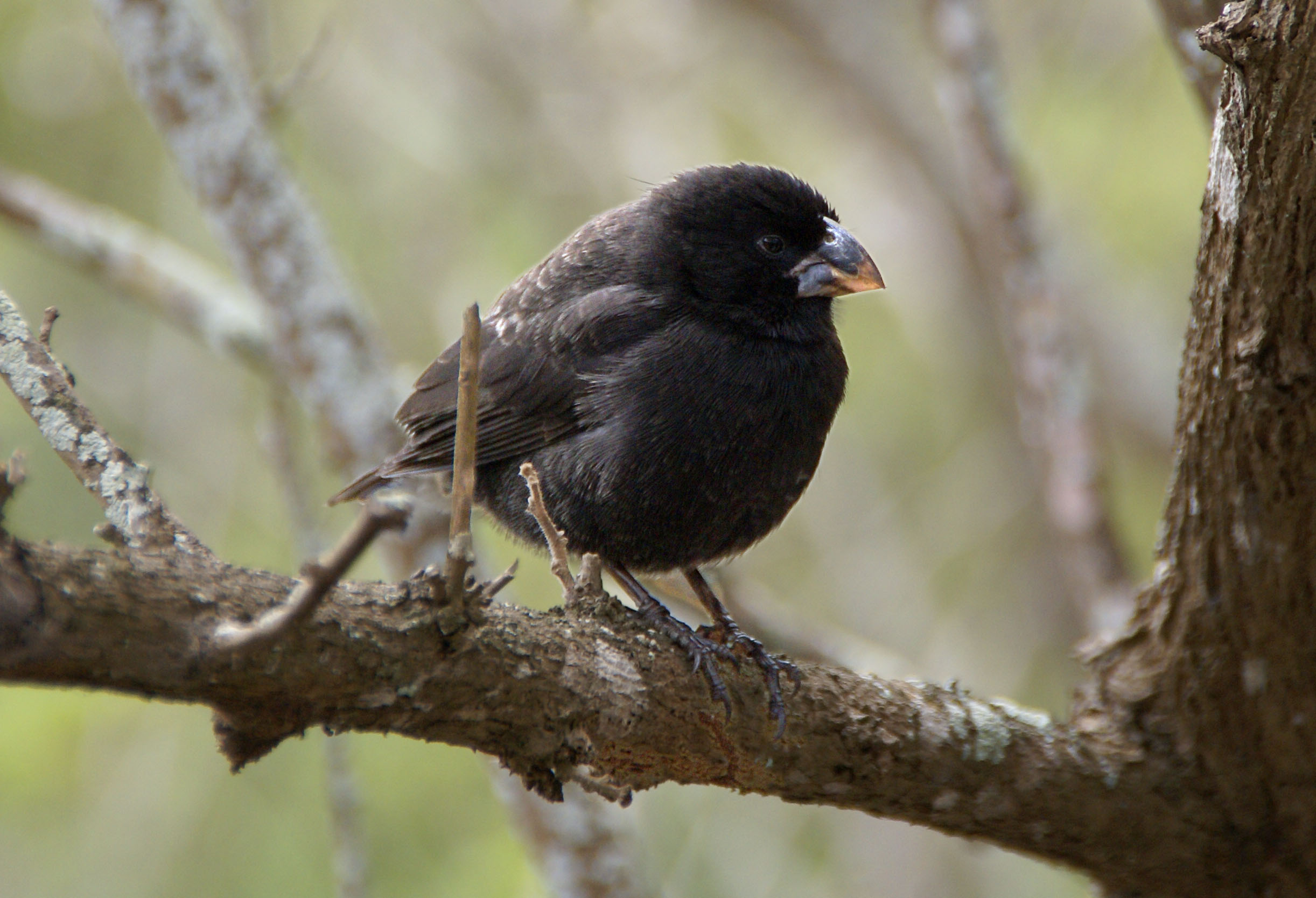
Medium Ground Finch (Geospiza fortis) ©Wiki

Medium Ground Finch (Geospiza fortis) ©Wiki

New Finch Species Shows Conservation, Not Macroevolution
by Brian Thomas, M.S. *

“Darwin’s finches” are a variety of small black birds that were observed and collected by British naturalist Charles Darwin during his famous voyage on the H.M.S. Beagle in the early 1800s. Years later, Darwin argued that subtle variations in their beak sizes supported his concept that all organisms share a common ancestor (a theory known as macroevolution). The finches, whose technical name is Geospiza, have since become classic evolutionary icons.
…..
In the fourth generation, “after a severe drought, the lineage was reduced to a single brother and sister, who bred with each other.”1 Their descendants have carried on the family traits. The Grants reported in a study on the birds published in Proceedings of the National Academy of Sciences that “our observations provide new insight into speciation and hence, into the origin of a new species.”2 But the details show that this new “species” is just a variation within the finch kind, and is therefore irrelevant to big-picture evolution.


Large Cactus Finch (Geospiza conirostris) ©WikiC

Large Cactus Finch (Geospiza conirostris) ©WikiC

Genus Geospiza contains six species, and these are usually distinguished by the songs that the males sing primarily to attract breeding partners. However, if a father bird dies while his chicks are young, and all they hear is the neighboring song of a different species, for example, young birds can learn the wrong songs. When these mature, they sing the song of, and breed with, the foster father’s species. Other scenarios result in crossbreeding between Geospiza species. ……”

To read the whole the article – CLICK HERE

From Institute for Creation Research

Do Migratory Birds Practice Preventative Medicine?


Cedar Waxwing (Bombycilla cedrorum) by Daves BirdingPix

Cedar Waxwing (Bombycilla cedrorum) by Daves BirdingPix

Do Migratory Birds Practice Preventative Medicine?
by Brian Thomas, M.S. *

“Before a long migration, certain birds shift from an insect diet to eating fruits such as berries. Researchers once thought that this added carbohydrate reserves as fuel for the journey. But a new study out of the University of Rhode Island suggests that the birds are interested in the fruits’ antioxidants, not their sugars.

Antioxidants are chemicals that are packed within richly colored fruit skins and are known to stabilize cellular processes. Based on research presented at the March 24th American Chemical Society meeting in San Francisco, it appears that the birds fill up on berry antioxidants for the medicinal benefits they provide to tissues that will undergo stress during the upcoming flight.

But this implies that birds use preventative medicine by instinct,….”
To read the rest of the article – CLICK HERE

Thought this was quite interesting and that you might enjoy reading the article from Institute for Creation Research.

*

Formed By Him – The Kakapo

Kakapo (Strigops habroptila) ©Dept of Conservation

Kakapo (Strigops habroptila) ©Dept of Conservation

And wild animals shall meet with hyenas; the wild goat shall cry to his fellow; indeed, there the night bird settles and finds for herself a resting place. (Isaiah 34:14 ESV)

The Kakapo (Strigops habroptila) is another unique bird Formed by the Creator. The following articles will introduce you to a New Zealand bird that is extremely endangered with only about 90-120 left in the world (depending on sources). They belong to the Strigopidae Family, of which it is the only bird in the Strigops genus and keeps company with the Kea and New Zealand Kaka of the Nestor genus. The three are classified as New Zealand Parrots and belong to the Psittaciformes Order of Parrots and Cockatoos.

From Creation Moments: A Truly Strange Bird

Many, O LORD my God, are thy wonderful works which thou hast done, and thy thoughts which are to us-ward: they cannot be reckoned up in order unto thee: if I would declare and speak of them, they are more than can be numbered. (Psalms 40:5 KJV)

Though God created the entire living kingdom in only a few days, the variety and creativity of what He made seems nearly unlimited by our standards. One of the more unusual creatures He made was thought extinct until it was rediscovered in 1958.

Kakapo (Strigops habroptila) ©WikiC showing whiskers around beak

Kakapo (Strigops habroptila) ©WikiC showing whiskers around beak

The kakapo parrot lives in New Zealand. The most unusual parrot on Earth, it is one of only a few known parrots that prefers to sleep during the day and becomes active at night. Weighing in at five pounds, it is also the world’s heaviest parrot. It is, perhaps not surprisingly, the world’s only non-flying parrot.

The Creator’s unusual expression of inventive creativity in designing the kakapo did not end here. The mating habits of the kakapo are especially peculiar for birds. In mating season, the males gather in locations that are used year after year for mate selection. Female parrots come to these places to inspect the males to select a mate. However, in most un-bird-like fashion, the males provide absolutely no help building the nest or rearing the young.

The kakapo is remarkable because of its many strange traits, most of which would make it least fit for survival. In other words, not only is it an unusual creature, but its more unusual characteristics seem to put it at a disadvantage as far as evolution is concerned. So while evolution would not have made the kakapo, our inventive Creator did, perhaps as a witness against evolution.
Prayer:
Dear Father in heaven, I thank You for the beauty and creativity You have placed into Your work of creation and for the blessings these gifts add to life. In Jesus’ Name. Amen.
Notes:
Discover, Mar. 1985. p. 36. ©Creation Moments 3/10/11

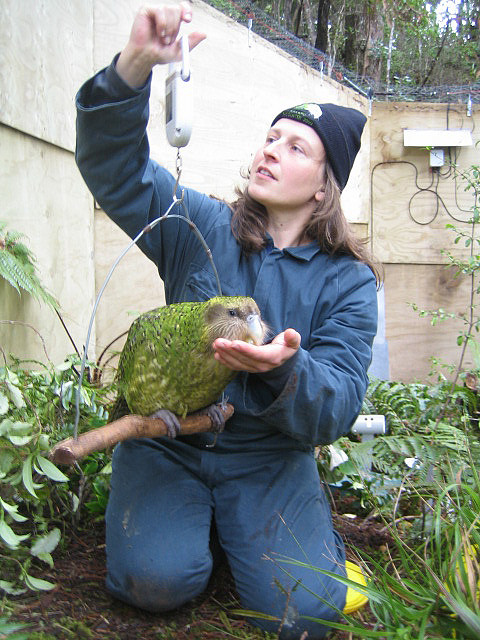
Kakapo (Strigops habroptila) ©Dept of Conservation-To See Relative Size

This is what Wikipedia (with editing) has to say about the Kakapo:

“The Kakapo (Māori: kākāpō, meaning night parrot), Strigops habroptila, also called owl parrot, is a species of large (60 cm, 24 in), flightless nocturnal parrot endemic to New Zealand. It has finely blotched yellow-green plumage, a distinct facial disc of sensory, vibrissa-like feathers, a large grey beak, short legs, large feet, and wings and a tail of relatively short length. A certain combination of traits makes it unique among its kind—it is the world’s only flightless parrot, the heaviest parrot (2-4 kg, 4.5-9 lb), nocturnal, herbivorous, visibly sexually dimorphic in body size, has a low basal metabolic rate, no male parental care, and is the only parrot to have a polygynous lek breeding system. It is also possibly one of the world’s longest-living birds. Its anatomy typifies the tendency of bird evolution on oceanic islands, with few predators and abundant food: a generally robust physique, with accretion of thermodynamic efficiency at the expense of flight abilities, reduced wing muscles, and a diminished keel on the sternum.

The Kakapo is critically endangered; as of February 2010, only 120 living individuals are known, most of which have been given names.

The Kakapo has a well-developed sense of smell, which complements its nocturnal lifestyle. It can discriminate among odours while foraging; a behaviour reported for only one other parrot species. One of the most striking characteristics of the Kakapo is its pleasant and powerful odour, which has been described as musty. Given the Kakapo’s well-developed sense of smell, this scent may be a social chemosignal.”

More about the Kakapo from Wikipedia

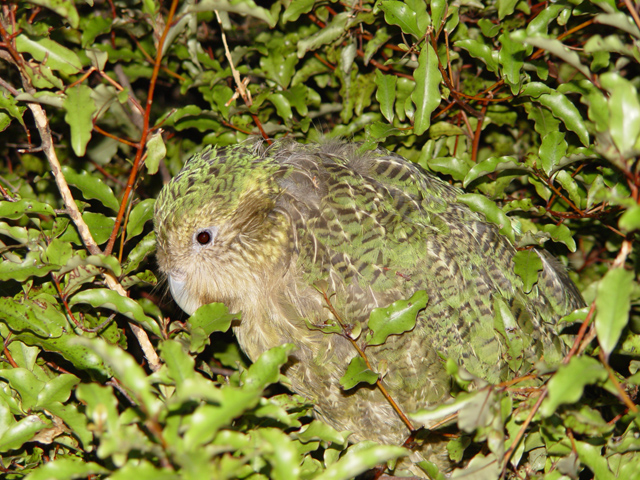
Kakapo (Strigops habroptila) ©WikiC showing camaflage

Kakapo (Strigops habroptila) ©WikiC Showing The Lord’s Design of Camaflage

Facts about the Kakapo from New Zealand’s Dept of Conservation:
* It is the heaviest parrot in the world. Males can weigh over two kilograms. Unique among land birds, it can store large amounts of energy as body fat.
* It is the only parrot to have a ‘lek’ mating system: males compete for ‘calling posts’ specially dug-out bowls in the earth and call (“boom”) each night in summer months for a female. The male’s low-frequency mating boom travels over several kilometres. It is the only parrot to have an inflatable thoracic air sac.
* Kākāpō breed every three to four years.
* A bird can range several kilometres in one night.
* Although it cannot fly, it is good at climbing trees.
* The birds are herbivores and eat variety of foods such as roots, leaves and fruit
* Kākāpō once ranged from near sea level to high in the mountains.
* Possibly as defence against its ancient predator – the giant eagle – the kākāpō became nocturnal and learned to remain still (‘freeze’) at times of danger.

More about the Kakapo from the New Zealand Department of Conservation

Kakapo Release by Spokebird

*
To see more of the Formed By Him Articles – CLICK HERE

*