Formed By Him – Birds of Peru and Chile – I

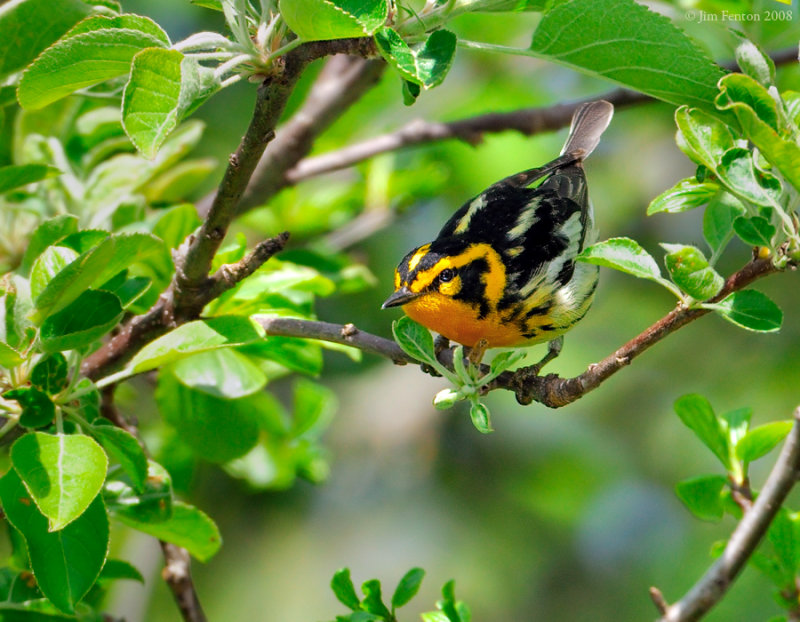
Blackburnian Warbler (Dendroica fusca) by J Fenton

Blackburnian Warbler (Dendroica fusca) by J Fenton

Beside them the birds of the heavens dwell; they sing among the branches. (Psalms 104:12 ESV)

Two of our church members, a pastor and his helper, have gone on a two week trip to assist and train preachers down there. So, here is a survey of some of the birds in those countries that they might encounter. Just the trip on the Amazon should give them some interesting views of our feathered friends. Let’s see what we can discover:

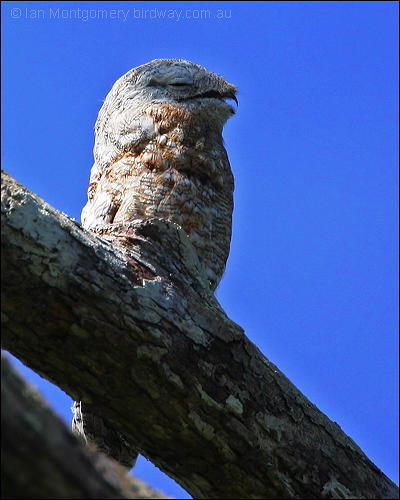
Great Potoo (Nyctibius grandis) by Ian's Birdway

Great Potoo (Nyctibius grandis) by Ian’s Birdway

Since there are so many to consider, see the numbers below, I have picked out some of the most interesting (at least to me) that you might enjoy seeing God’s Designing Hand at work. To start off, there is the Potoo – Nyctibiidae Family, which is related to nightjars and frogmouths (Whip-poor-will or Chuck-will’s-widow). They are nocturnal and hunt insects, but lack the bristles around the mouth. What is so neat about these is how they appear in the daytime. They sit on branches and look like the bark or a stump. Peru has the Great, Long-tailed, Common, Andean, White-winged and Rufous Potoo. See an article about them and their Family page.

Blue-footed Booby (Sula nebouxii) by Ian

Blue-footed Booby (Sula nebouxii) by Ian

Another interesting set of birds they could encounter would be ones from the Sulidae Family which Peru has; the Blue-footed, Peruvian, Masked, Nazca, Red-footed and Brown Booby. Chile has those minus the Red-footed Booby. The family also include the Cape Gannet found in Peru. We did an article about the Blue-footed Booby.

Sunbittern (Eurypyga helias) by Dan

Sunbittern (Eurypyga helias) by Dan at LP Zoo

Our team may also get a chance to spot the beautiful Sunbittern while in Peru. See Birds of the Bible – Sunbittern. They could also see the “The Stinker” or Hoatzin  and the Oilbird also in Peru.

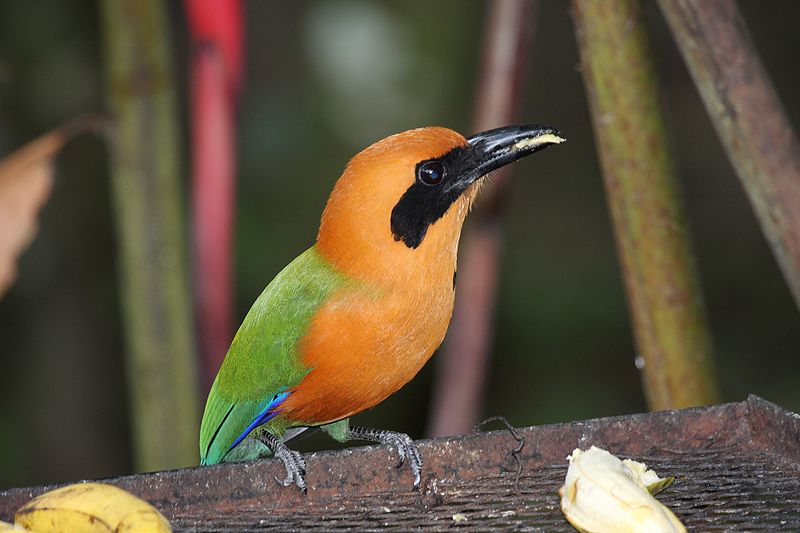
Rufous Motmot (Baryphthengus martii) ©WikiC

Rufous Motmot (Baryphthengus martii) ©WikiC

Of the 14 Motmots in the Momotidae Family, 5 of them can be found in Peru, but none in Chile. The Whooping, Amazonian, Andean, Rufous and the Broad-billed Motmots live in Peru.

Screaming Piha (Lipaugus vociferans) ©AGrosset

Screaming Piha (Lipaugus vociferans) ©AGrosset

The Cotingas – Cotingidae Family has 30 species in Peru and 1 in Chile. Some articles about them are:
The Pompadour Cotinga – Concealed incubators…

Andean Cock-of-the-rock – The Changer… Both by a j mithra

The Cotingas in Peru are the Red-crested, Chestnut-crested, White-cheeked, Bay-vented, Black-necked Red, Plum-throated, Purple-breasted, Spangled, Black-faced, Purple-throated, Pompadour. Chile only has the Rufous-tailed Plantcutter and Peru has the Peruvian Plantcutter. Peru also has 8 Fruiteaters, 2 Fruitcrows, 4 Pihas and the Andean Cock-of-the-rock.

Peru has 1782 species, with 110 only found in that area, 89 species are globally threatened. Peru List of Birds
Chile has 485 species, with 14 only found in that area, 35 species are globally threatened. Chile List of Birds

See – Formed By Him – Birds of Peru and Chile – II
*

Introducing New Videographers

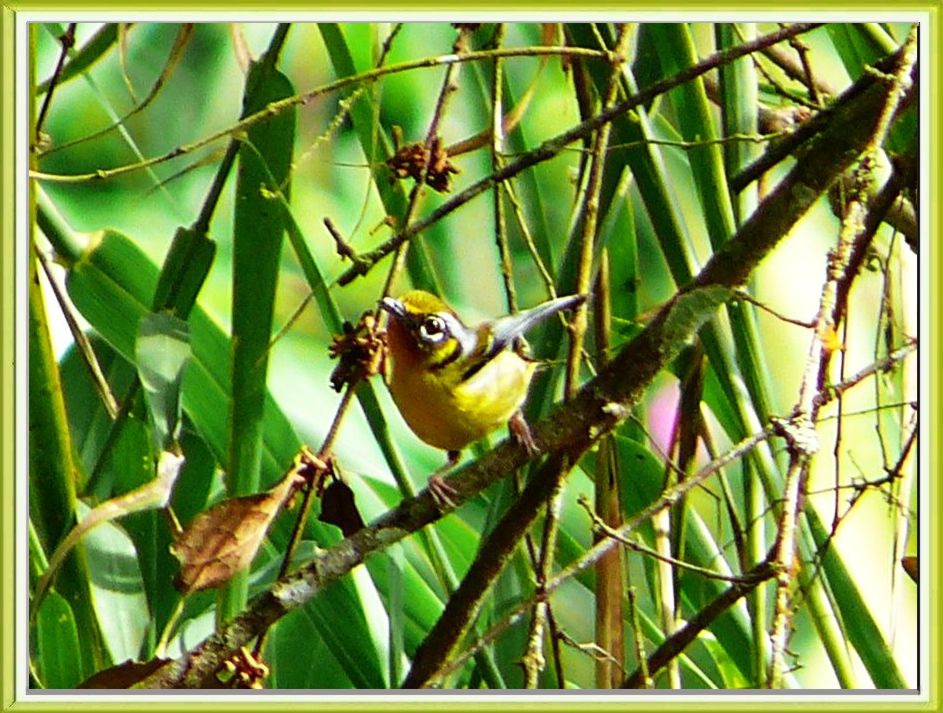
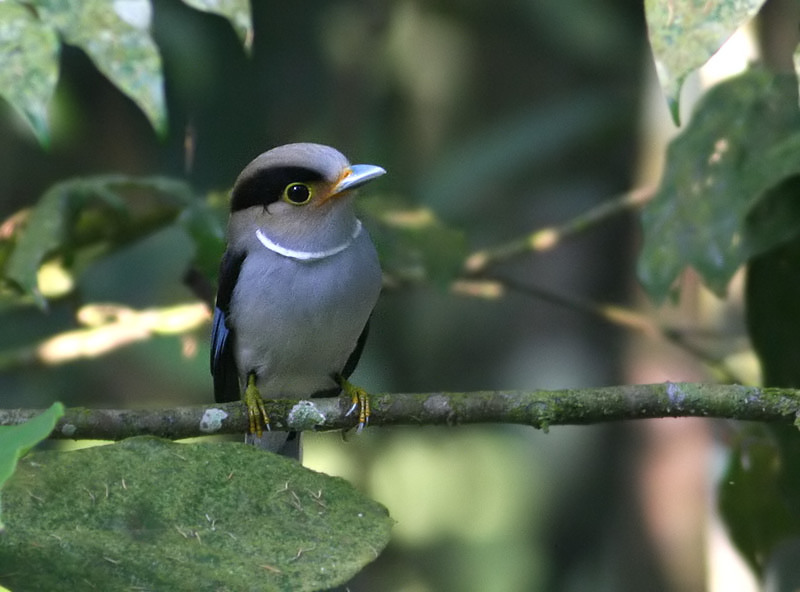
Black-eared Shrike-babbler (Pteruthius melanotis) by Khong T Khoon

Black-eared Shrike-babbler (Pteruthius melanotis) by Khong T Khoon

From time to time we are blessed to receive the permission to use material from Photographers and/or Videographers. Recently, Khong Tuck Khoon gave his permission to use his videos and photographs. Khong is known as “wondersf” on YouTube and has over 800 video on his Birds of Malaysia channel.

Khong T Khoon’s  video of a Silver-breasted Broadbill (Serilophus lunatus)

Khong also has his regular website, Malaysian Birds, which has “Birds photos, Bird lists, Bird Calls & tips on birding in Malaysia.” There he has over 7,000 photos of birds from Malaysia. He has them listed from A to Z and by 57 Families. He is from Penang, Malaysia and is retired.

One of the interesting parts of his site is about the Nesting Birds stories he shows with photos. I really enjoyed the story of the Flameback and the Coppersmith, though part of the ending was sad.

Also, prior to “wondersf” giving his permission, “redshouldervids” gave us the honor of using his videos also. Both have been added to the sidebar, but I had failed to introduce Derek.

Long-eared Owl (Asio otus) by Derek

Long-eared Owl (Asio otus) by Derek or “redshouldervid”

Derek’s YouTube Channel is called “Birds, Other Wildlife and The World Around Us“, or “redshouldervids’s Channel“. Derek lives in Winchester, Hampshire, United Kingdom and is retired. Apparently he also spends his free time out videoing birds and other things.

Here is his video of a Singing Western Meadowlark.

Thanks to both of you for letting your photos and videos being made available for our readers to enjoy your views through your lens. Please visit their sites for many more delights.

If you would like to allow permission to use your handiwork and be added to our photographers and videographers, leave a comment or write us at: Lee@leesbird.com

*

Birds in Hymns – The Son of God Goes Forth to War

Bald Eagle (Haliaeetus leucocephalus) by Quy Tran

Bald Eagle (Haliaeetus leucocephalus) by Quy Tran

But Jesus answered and said, Ye know not what ye ask. Are ye able to drink of the cup that I shall drink of, and to be baptized with the baptism that I am baptized with? They say unto him, We are able. (Matthew 20:22 KJV)

Words: Reginald He­ber, 1812.
(This hymn was sung in the 1975 mo­vie The Man Who Would Be King, which was nom­in­at­ed for sev­er­al Acad­e­my Awards.)

Music: All Saints, Hen­ry S. Cut­ler, in The Hymn­al with Tunes Old and New, by John Ire­land Tuck­er, 1872

Al­ter­nate tunes:

Old 81st, Day’s Psal­ter, 1562

St. Anne, Will­iam Croft, 1708

Warrior, Ar­chi­bald Mac­Don­ald, 1877

In Mrs. Ew­ing’ Sto­ry of a Short Life it is the favorite hymn in the bar­racks, where the sol­diers call it the ‘tug of war’ hymn. The of­fi­cer’s son, who had been crip­pled for life by an ac­ci­dent, begs just be­fore his death that the sol­diers will sing it again. They go un­der his win­dow, and when in the midst of the verse, ‘A no­ble ar­my, men and boys,’ a hand is seen at the win­dow pull­ing down the blind. The brave suf­fer­er is gone. The sto­ry made the hymn wide­ly pop­u­lar among child­ren as the ‘tug of war’ hymn. Telford, p. 410

The Son of God Goes Forth to War

*

The Son of God goes forth to war,
A kingly crown to gain;
His blood red banner streams afar:
Who follows in His train?
Who best can drink His cup of woe,
Triumphant over pain,
Who patient bears his cross below,
He follows in His train.

That martyr first, whose eagle eye
Could pierce beyond the grave;
Who saw his Master in the sky,
And called on Him to save.
Like Him, with pardon on His tongue,
In midst of mortal pain,
He prayed for them that did the wrong:
Who follows in his train?

A glorious band, the chosen few
On whom the Spirit came;
Twelve valiant saints, their hope they knew,
And mocked the cross and flame.
They met the tyrant’s brandished steel,
The lion’s gory mane;
They bowed their heads the death to feel:
Who follows in their train?

A noble army, men and boys,
The matron and the maid,
Around the Savior’s throne rejoice,
In robes of light arrayed.
They climbed the steep ascent of Heav’n,
Through peril, toil and pain;
O God, to us may grace be giv’n,
To follow in their train.
*

Birds of the Bible – Sea Gulls

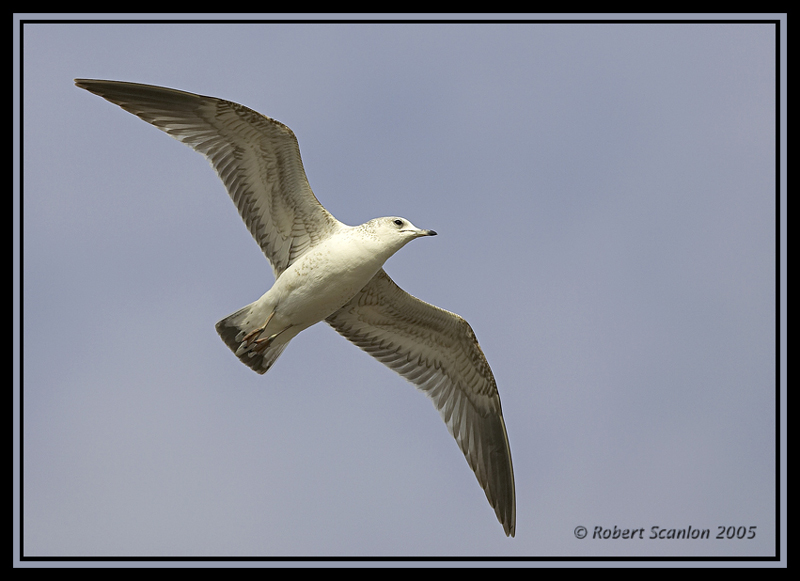
Mew Gull (Larus canus) by Robert Scanlon

Mew Gull (Larus canus) by Robert Scanlon

the ostrich, the short-eared owl, the sea gull, and the hawk after its kind; (Leviticus 11:16 NKJV)

The Sea Gull has been upgraded to an official Bird of the Bible here on this blog. The article “Birds of the Bible – A Gull?” was written when I first discovered the Gull in my reading, per article. The Gull now has it’s own Birds of the Bible – Sea Gulls page and it shows up in the sidebar along with the others birds mentioned in the Scriptures.

After updating my E-sword program and loading every English Bible Translation they have available, (for free and a few paid ones) I have been comparing the Leviticus 11:13-19 and the Deuteronomy 14:12-18 sections with a spreadsheet. That is the list of unclean birds that the Israelites were told not to eat. (Just because the different versions are being compared does not mean that this writer is in agreement with all of them or their stand.)

Iceland Gull (Larus glaucoides) chick-egg nest ©USFWS

Iceland Gull (Larus glaucoides) chick-egg nest ©USFWS

Here is an analysis of words used in those verses for the Sea Gull:
(Mouse over initials for full name of translation)

Leviticus 11:15 or 16:

gull – ABP+, MKJV
sea-gull or sea gull – DARBY, ESV, NAS77, NASB, NKJB
sea gulls – ERV, GW
seamew – ASV
sea-mew – BRENTON, JPS
sea meaw – RV
sea-hawk – BBE
larus – DRB
Different bird used –
(cuckow) – KJV & WEBSTER ,
(cuckoo) – YLT

Deuteronomy 14:15:

The word was use the same in both verses except in these translations:
LITV used – “gull” in Lev. and “sea gull” in Deut.
MKJV used – “gull” in Lev. and “cuckoo” in Deut.

Ring-billed Gull (Larus delawarensis) Lk Hollingsworth by Lee

Ring-billed Gull (Larus delawarensis) Lk Hollingsworth by Lee

Why bother in the first place to compare them, you ask? I still find it amazing how different translations vary in their description of the birds. The differences do not affect the doctrines of the Word of God, nor will they affect my faith in the Lord. So far, none of the differences have affected my appetite to eat any of the birds listed. Whether they are Sea Gulls or a Cuckoos, they still won’t end up on my dinner plate.

What it does do though is to give good reason to make the Gull a Bird of the Bible and give them their own page.

And the ostrich, and the owl, and the larus, and the hawk according to its kind: (Deuteronomy 14:15 DRB)
and the ostrich, and the night-hawk, and the sea-mew, and the hawk after its kind, (Deuteronomy 14:15 ASV)

One of the words used was “larus” which happens to be one of the Genus of Gulls and contains a Mew Gull which sounds similar to a “sea mew or seameaw”. Interesting.  Also the Laridae is the Gulls, Terns & Skimmers Family name.

The Larus Genus includes:
Pacific Gull (Larus pacificus)
Belcher’s Gull (Larus belcheri)
Olrog’s Gull (Larus atlanticus)
Black-tailed Gull (Larus crassirostris)
Heermann’s Gull (Larus heermanni)
Mew Gull (Larus canus)
Ring-billed Gull (Larus delawarensis)
California Gull (Larus californicus)
Great Black-backed Gull (Larus marinus)
Kelp Gull (Larus dominicanus)
Glaucous-winged Gull (Larus glaucescens)
Western Gull (Larus occidentalis)
Yellow-footed Gull (Larus livens)
Glaucous Gull (Larus hyperboreus)
Iceland Gull (Larus glaucoides)
European Herring Gull (Larus argentatus)
American Herring Gull (Larus smithsonianus)
Vega Gull (Larus vegae)
Caspian Gull (Larus cachinnans)
Yellow-legged Gull (Larus michahellis)
Armenian Gull (Larus armenicus)
Slaty-backed Gull (Larus schistisagus)
Lesser Black-backed Gull (Larus fuscus)

The voice of thy thunder was in the heaven: the lightnings lightened the world: the earth trembled and shook. Thy way is in the sea, and thy path in the great waters, and thy footsteps are not known. (Psalms 77:18-19 KJV)

European Herring Gull (Larus argentatus) by Keith Blomerley – An adult on the sea trying to steal food from a Common Eider

*

Birds In Hymns – When The Lord Of Love Was Here

Silver-breasted Broadbill (Serilophus lunatus) by Peter Ericsson

Silver-breasted Broadbill (Serilophus lunatus) by Peter Ericsson

We love him, because he first loved us. (1 John 4:19 KJV)

Here is another hymn from the past. This time written by Stopford A. Brooke (1832-1916) and composed by George W. Chadwick (1854-1931)

Words by Stop­ford A. Brooke, Christ­ian Hymns, 1881.

Music is called “Arm­strong” (Chad­wick) by George W. Chad­wick , 1888

When The Lord Of Love Was Here

**

When the Lord of Love was here,
Happy hearts to Him were dear,
Though His heart was sad;
Worn and lonesome for our sake,
Yet he turned aside to make
All the weary glad.

Meek and lowly were His ways,
From His loving grew His praise,
From His giving, prayer;
All the outcast thronged to hear,
All the sorrowful drew near
To enjoy His care.

When he walked the fields, He drew
From the flowers and birds and dew
Parables of God;
For within His heart of love
All the soul of man did move,
God had His abode.

Lord, be ours Thy power to keep
In the very heart of grief,
And in trial, love;
In our meekness to be wise,
And through sorrows to arise
To our God above.

Fill us with Thy deep desire
All the sinful to inspire
With the Father’s life;
Free us from the cares that press
On the heart of worldliness
From the fret and strife.

And, when in the fields and woods
Were are filled with Nature’s moods,
May the grace be given
With Thy faithful heart to say,
“All I see and feel today
Is my Father’s Heaven.”

Most information from The Cyber Hymnal

See ~ Wordless Birds

More ~ Birds in Hymns

*

My I.O.C. World Bird List – Ver. 2.8 Finally Finished

Red-necked Tanager (Tangara cyanocephala) by Dario Sanches

Red-necked Tanager (Tangara cyanocephala) by Dario Sanches

Be glad in the LORD, and rejoice, ye righteous: and shout for joy, all ye that are upright in heart. (Psalms 32:11 KJV)

Seems like it has been forever  that I have been reworking all the Family pages of the Birds of the World. The 233 pages were given a complete work-over. When they release the major 3.0 Version sometime this year, these pages should only take minor changes. (I trust) All the indexes and pages are also up to date.

It took a lot of persistence and praise to the Lord for helping me to keep “plugging away.” This verse helps describe my happiness of “finishing the job.”

Make a joyful noise unto the LORD, all the earth: make a loud noise, and rejoice, and sing praise. (Psalms 98:4 KJV)

In the mean time, I have been adding some new photos as the pages were being updated. This morning I just added many pictures to the Thraupidae – Tanagers and Allies Family. Recently Dario Sanches gave permission to use his photos. He has some really neat ones of Tanagers, and they have been linked to the lists. Thanks, Dario.

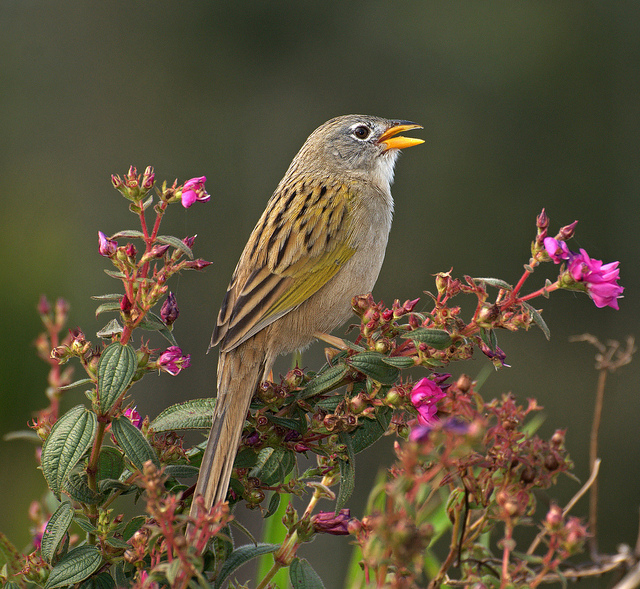
Wedge-tailed Grass Finch (Emberizoides herbicola) by Dario Sanches

Wedge-tailed Grass Finch (Emberizoides herbicola) by Dario Sanches

Because of all the Subspecies being added to the list of birds, you may find it helpful when viewing a list to use the “Find” on your browser. Some families have only one member, but a few have 300-400 species listed.

Dan asked me recently why I am taking all this effort to even have the Birds of the World pages in the first place, when they are already on the internet. Was I not wasting my time that could be spent on doing other things on this blog. I have to admit, that the thought had crossed my mind. But, as I work on these pages, I am exposed to birds that I would never see or even know of. When I work on finding photos for them, I just sit back in awe of the Lord’s creative hand in each and every one of these feathered friends. Some are pretty, some are dull, some look funny, and all so well designed, from the tip of the tail to the tip of their beaks. Just seeing how He, the Creator, colored them is beyond description.

And, many of my readers first arrive here at the blog while searching for a specific bird of the world. Those pages are the entry point for many to come here. I trust they enjoy what they find and may they find more than they expected and will linger and look at other pages, which many do. Thanks for reading this yourself. Glad you are visiting, no matter which page brought you here.

Thou art worthy, O Lord, to receive glory and honour and power: for thou hast created all things, and for thy pleasure they are and were created. (Revelation 4:11 KJV)

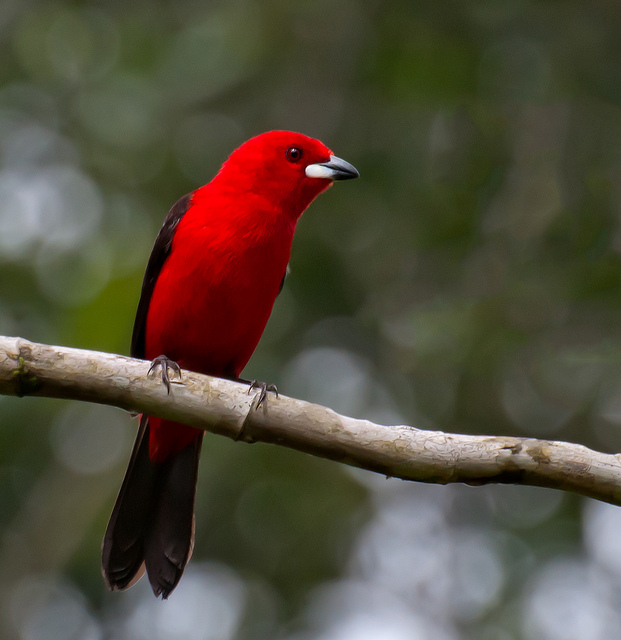
I will leave you with one more of Dario’s fantastic photos, this one of the Brazilian Tanager.

Brazilian Tanager (Ramphocelus bresilius) by Dario Sanches

Brazilian Tanager (Ramphocelus bresilius) by Dario Sanches

P. S. I am still looking for photographers and videographers who would be willing to let their photos be posted here. See our list of Photographers in the sidebar and visit their sites for fantastic photos of birds plus whatever else interests them.

*

Interesting Things – The Leaf With An Appetite

SmileyCentral.com

From – The Hungry Leaf ©Creation Moments, 2011

(Thought you might enjoy reading this interesting fact from the Lord’s Creative Hand. What love He shows to us and to the world of critters and nature. Omnipotence and omniscience is definitely seen all around us, if we but look and give the credit to Whom it is do.)

Leaf Fish (Monocirrhus_polyacanthus) ©WikiC

Leaf Fish (Monocirrhus_polyacanthus) ©WikiC

For we are his workmanship, created in Christ Jesus unto good works, which God hath before ordained that we should walk in them. (Ephesians 2:10)

“It’s a warm day on the Amazon River. A small fish swims near the surface, looking among the natural floating river debris for some food. As he looks among the occasional leaf or twig in the water, he sees no danger. At the same time, one of the floating “leaves” is waiting for the little fish to move just a bit closer. Then, without warning, the floating “leaf” comes to life, grabs the fish and eats it!

What the little fish thought was simply another floating leaf was actually another fish. The Amazonian leaf fish is carefully designed not only to look like a leaf, but to act like one as well. It has a flat body, very much like a leaf. A black line runs the length of its body, giving the appearance of the midrib of a leaf. A fleshy growth in its lower jaw looks like a leaf stem.

Beyond looking like a leaf, the leaf fish also acts like a leaf. It lies still in the water, drifting with the current. To hide its identity further, it draws its fins close to its body, removing any last hint that it is indeed a hungry fish looking for lunch.

The leaf fish combines deceptive coloring, appearance and behavior into one design so that it, too, can make its living. In this, the leaf fish shows that the Creator makes nothing without also designing a special purpose for that creature. According to the Bible, the same can be said even more emphatically for each human being He has made. Your Creator has a special purpose for you, too, and it begins with His plan of salvation for you through His Son, Jesus Christ.
Prayer:
Dear Father in heaven, through the instruction of Your Word, help me to better learn how to define who and what I am more completely in the knowledge of Your forgiving love to me in Jesus Christ. Amen.”
Notes:
Hanson, Jeanne K., and Deane Morrison. 1990. “The wonderful weird of flora and fauna.” Star Tribune First Sunday, Dec. 2. p. 17.


Lee’s Addition:

“Leaffishes are small freshwater fishes of the Polycentridae family, from South America.

They usually have large heads, cryptic colors and very large protractile mouths. Those features, along with their peculiar movements help them to catch fairly large prey for the size of their bodies, including small fish, aquatic insects and other invertebrates. Their odd leaf-like appearance make them interesting fishes for aquarium hobbyists. That is likely because of their unique lifestyle, hanging around in the upper story of the tank imitating the leaves that commonly fall in temperate rivers were it typically lives. They are extremely agile hunters, capable of consuming prey within a quarter of a second (0.2 seconds) making them one of the worlds fastest fish.” (Wikipedia)

“Asian leaffishes are small freshwater fishes of the Nandidae family, from Southern Asia. There are only four genera in this group. These fish usually have small heads, coloration that appears to resemble leaves and very large protractile mouths. Those features, along with their peculiar movements (seemingly intended to resemble a leaf innocently moving through the water) help them to catch fairly large prey compared to their body size, including small fish, aquatic insects and other invertebrates. They tend to stay in one place and wait for prey–they are “lie-in-wait-predators.” (Wikipedia with editing)

Here is an interesting video about the leaffish from VinLWJ

See more Interesting Things in the Plus section.

*

Birdwatching at Circle B – 4/22/11

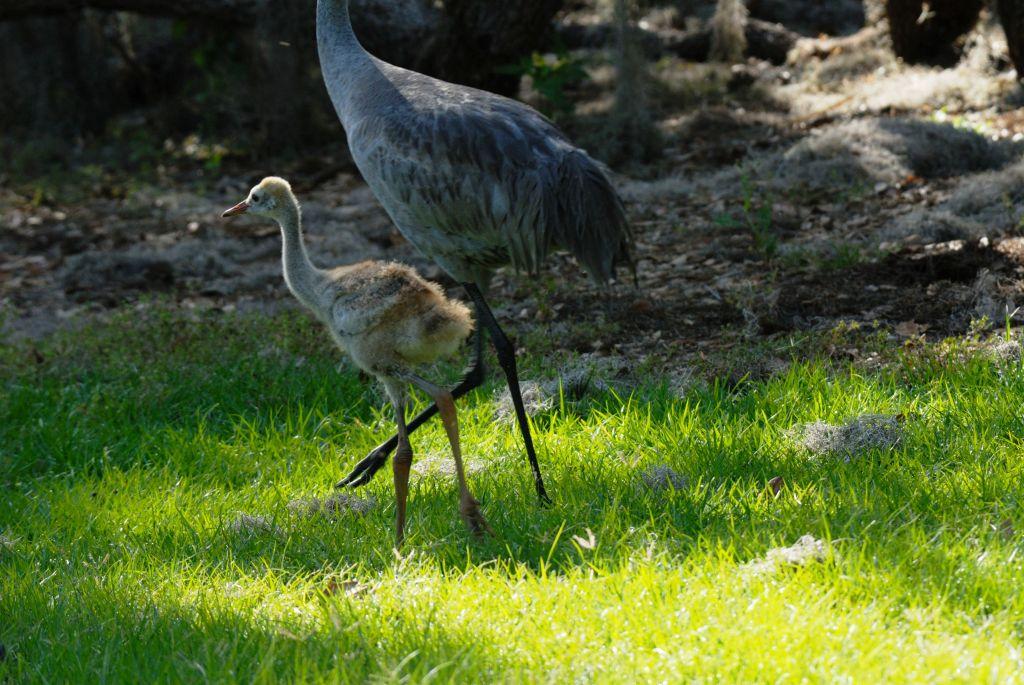
Sandhill Crane (Grus canadensis) and young by Dan's Pix

Sandhill Crane (Grus canadensis) and young by Dan’s Pix

Yea, the stork in the heaven knoweth her appointed times; and the turtle and the crane and the swallow observe the time of their coming; but my people know not the judgment of the LORD. (Jeremiah 8:7 KJV)

We were finally able to find a little bit of time to go birdwatching the other day. Our adventure took us back out to the Circle B Bar Reserve in Lakeland, FL. It was a cloudless morning, around 64 degrees, when we arrived. Dan had his camera along, but I only used my binoculars. One thing nice about the Circle B is its closeness to home. With fuel prices rising, birdwatching nearer to your local areas may become more necessary.

Glossy Ibis (Plegadis falcinellus) by Dan's Pix

Glossy Ibis (Plegadis falcinellus) by Dan’s Pix

We are fortunate, because Circle B is becoming a premier birding spot here in Florida. With 1,267 acres to roam, there is plenty to see. Unfortunately, many of our “winter visiting birds” have packed their bags and gone back North. Fortunately, we still have our “residents” that keep any trip out there interesting.

Anhinga (Anhinga anhinga) by Dan's Pix

Anhinga (Anhinga anhinga) by Dan’s Pix

One of my surprises was the lack of Wood Storks this trip. Usually there are plenty of them hanging out in the trees early in the morning. Never spotted a one, yet two days later in town we spotted one flying over. They are here, but just wanted to make themselves scarce that Friday.

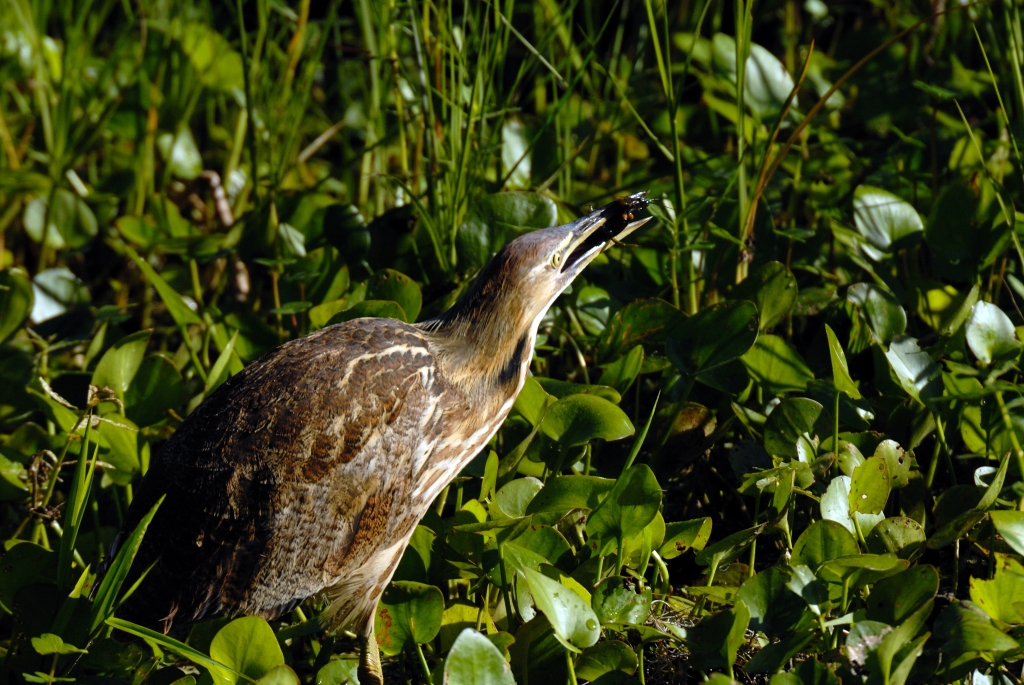
American Bittern (Botaurus lentiginosus) by Dans Pix

American Bittern (Botaurus lentiginosus) by Dans Pix

Another surprise was finding the American Bittern. We knew there were some out there, but kept missing them. This time I spotted one, whipped out my phone, and called Dan to bring his camera to my location while I kept the Bittern in view. He got one shot just as it had caught something.

Little Blue Heron (Egretta caerulea) imm by Dan's Pix

Little Blue Heron (Egretta caerulea) imm by Dan’s Pix

One of my favorite birds was an immature Little Blue Heron. When they are young, they are white instead of blue. As they mature, the become “blotchy” as the blue starts to come in. This one was right along the walk path and we were able to view it very well.

Black-bellied Whistling Duck (Dendrocygna autumnalis) with young

Black-bellied Whistling Duck (Dendrocygna autumnalis) with young

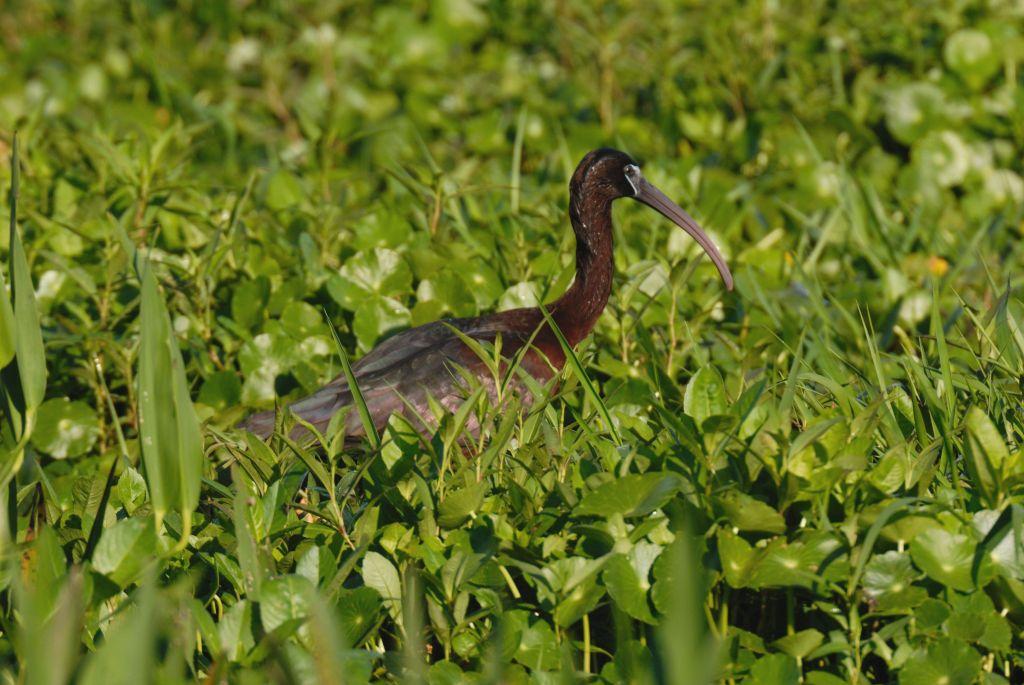
We also found some Glossy and White Ibises, Tricolored Herons, Great Blue Heron, more Little Blue Herons, Great Egrets, a Snowy Egret, Cattle Egrets, the American Bittern, Green Heron, Limpkins, Mourning Doves, Cardinals, Tufted Titmouce, Carolina Wren and maybe a House Wren, Red-bellied, Pileated and Downy Woodpeckers, Common Gallinules, American Coots, Black-bellied Whistlers with young ones, 3 sets of Sandhill Cranes with young, Red-shouldered Hawk (light phase), Anhingas and Double-crested Cormorants, Redwing Blackbirds and Boat-tailed Grackles.

All in all it was a great morning to be out enjoying God’s Creation of birds and other critters. We also observed 4 young alligators about 2-3 feet long and a Black Racer about 4 feet long stretched out along some bushes.

See our other birdwatching trips to Circle B – Click Here

*

Formed By Him – “Stone” Birds

Siberian Stonechat (Saxicola maurus) by Peter Ericsson

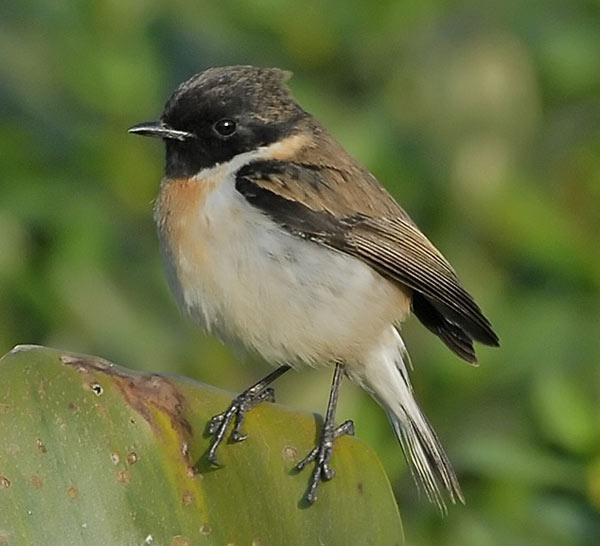
Siberian Stonechat (Saxicola maurus) by Peter Ericsson

Happy Easter to All. He is Risen! He is Alive!

All week we have been posting articles about names of birds that are the same as items that are mentioned in the Scripture that lead up to the Crucifixion and then to today’s bodily Resurrection of the Lord Jesus Christ.

As Christians, these events and the meaning of them are very important. Without the event that is celebrated today, we might as well be any other religion, but Christ is not a religion. Christ was the Son of God, who came to earth, born of a virgin, lived a sinless life because He was sinless, offered Himself to be crucified for the sins of man. He could have called legions of angels to get Him of the cross, but He had come to die for us. He stayed and when He was ready, He died of His own choosing.

When Jesus therefore had received the vinegar, he said, It is finished: and he bowed his head, and gave up the ghost. (John 19:30 KJV)

There are four “religions” that had a “person” as their leader. Three of those bodies are still in the grave and their bones are deteriating, but Jesus’ body is not in the tomb. He is risen by His own power because He is God, the great I AM. The stone was rolled back, the disciples went inside, Mary looked in, and they were met will the greatest message of all time.

For as yet they knew not the scripture, that he must rise again from the dead. Then the disciples went away again unto their own home. But Mary stood without at the sepulchre weeping: and as she wept, she stooped down, and looked into the sepulchre, And seeth two angels in white sitting, the one at the head, and the other at the feet, where the body of Jesus had lain. And seeth two angels in white sitting, the one at the head, and the other at the feet, where the body of Jesus had lain. And they say unto her, Woman, why weepest thou? She saith unto them, Because they have taken away my Lord, and I know not where they have laid him. And when she had thus said, she turned herself back, and saw Jesus standing, and knew not that it was Jesus. Jesus saith unto her, Woman, why weepest thou? whom seekest thou? She, supposing him to be the gardener, saith unto him, Sir, if thou have borne him hence, tell me where thou hast laid him, and I will take him away. Jesus saith unto her, Mary. She turned herself, and saith unto him, Rabboni; which is to say, Master. Jesus saith unto her, Touch me not; for I am not yet ascended to my Father: but go to my brethren, and say unto them, I ascend unto my Father, and your Father; and to my God, and your God. Mary Magdalene came and told the disciples that she had seen the Lord, and that he had spoken these things unto her. Then the same day at evening, being the first day of the week, when the doors were shut where the disciples were assembled for fear of the Jews, came Jesus and stood in the midst, and saith unto them, Peace be unto you. And when he had so said, he shewed unto them his hands and his side. Then were the disciples glad, when they saw the Lord.
(John 20:9-20 KJV)

I am letting Scripture speak for itself. It is God’s Word. It is men and women’s choice to believe, but as for Dan and I, we like what Joshua stated:

Now therefore fear the LORD, and serve him in sincerity and in truth: and put away the gods which your fathers served on the other side of the flood, and in Egypt; and serve ye the LORD. And if it seem evil unto you to serve the LORD, choose you this day whom ye will serve; whether the gods which your fathers served that were on the other side of the flood, or the gods of the Amorites, in whose land ye dwell: but as for me and my house, we will serve the LORD. (Joshua 24:14-15 KJV)

They placed a stone in front of the tomb and placed a seal on it to make sure no one entered. I doubt they expected someone to exit. But exit He did! What a Savior!

Satan had tempted him and a stone is mentioned:

Then the devil taketh him up into the holy city, and setteth him on a pinnacle of the temple, And saith unto him, If thou be the Son of God, cast thyself down: for it is written, He shall give his angels charge concerning thee: and in their hands they shall bear thee up, lest at any time thou dash thy foot against a stone. Jesus said unto him, It is written again, Thou shalt not tempt the Lord thy God. (Matthew 4:5-7 KJV)

It was a stone where the angel sat when:

In the end of the sabbath, as it began to dawn toward the first day of the week, came Mary Magdalene and the other Mary to see the sepulchre. And, behold, there was a great earthquake: for the angel of the Lord descended from heaven, and came and rolled back the stone from the door, and sat upon it. His countenance was like lightning, and his raiment white as snow: And for fear of him the keepers did shake, and became as dead men. And the angel answered and said unto the women, Fear not ye: for I know that ye seek Jesus, which was crucified. He is not here: for he is risen, as he said. Come, see the place where the Lord lay. (Matthew 28:1-6 KJV)

“Formed By Him” this week has been remembering the events that led up to the death of Jesus Christ, the Son of God, on the cross. As we think of this time, maybe seeing birds with names of things that happened will help us not forget the events as we see those birds in the future. All the birds were formed through the Lord Jesus Christ omniscience and omnipotence.

In the beginning was the Word, and the Word was with God, and the Word was God. The same was in the beginning with God. All things were made by him; and without him was not any thing made that was made. (John 1:1-3 KJV)

The “Stone” Birds – Birds with “stone” in their names:

The New World Quail  – Odontophoridae Family has the:

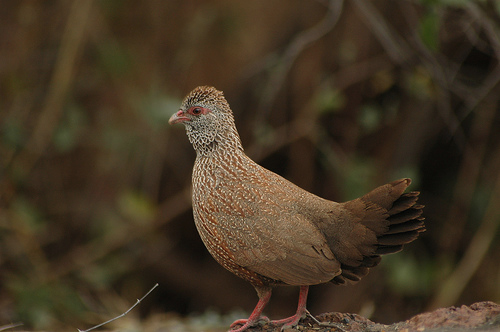
Stone Partridge (Ptilopachus petrosus) ©WikiC

The Stone-curlews, Thick-knees – Burhinidae Family has five Stone-curlews:

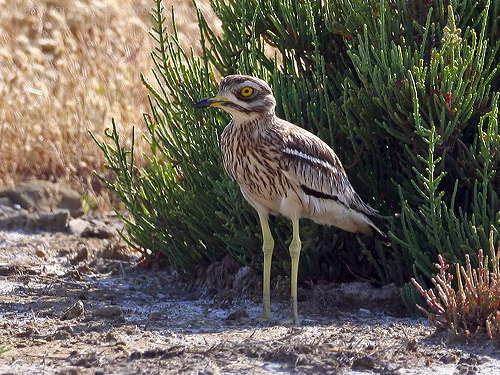
Eurasian Stone-curlew (Burhinus oedicnemus) by Ian
Indian Stone-curlew (Burhinus indicus) ©©
Bush Stone-curlew (Burhinus grallarius) with young by Ian
Great Stone-curlew (Esacus recurvirostris)
Beach Stone-curlew (Esacus magnirostris)

The Sandpipers, Snipes – Scolopacidae Family has two Turnstones:

Ruddy Turnstone (Arenaria interpres)
Black Turnstone (Arenaria melanocephala)

The Pachycephalidae – Whistlers and Allies Family only has a:

Sandstone Shrikethrush (Colluricincla woodwardi)

The Phylloscopidae – Leaf warblers and allies Family has a:

Limestone Leaf Warbler (Phylloscopus calciatilis)
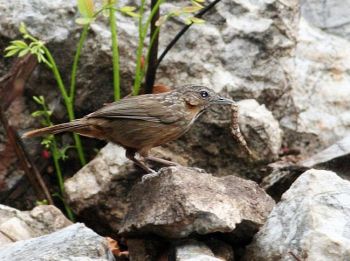
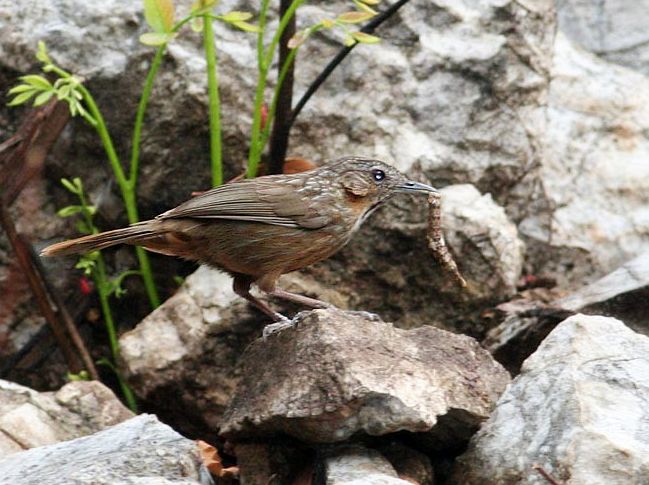
Limestone Wren-Babbler (Napothera crispifrons) by Peter Ericsson

Limestone Wren-Babbler (Napothera crispifrons) by Peter Ericsson

The Pellorneidae – Fulvettas, Ground Babblers Family only has one bird:

Limestone Wren-Babbler (Napothera crispifrons) by Peter Ericsson

Whereas the Muscicapidae – Chats, Old World Flycatchers Family has eight Stonechats:

Canary Islands Stonechat (Saxicola dacotiae)
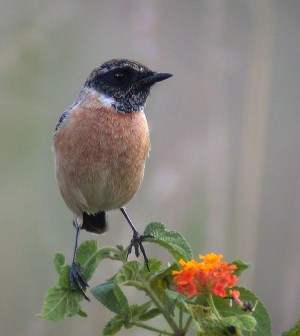
European Stonechat (Saxicola rubicola)
Siberian Stonechat (Saxicola maurus) by Peter Ericsson
Stejneger’s Stonechat (Saxicola stejnegeri)
African Stonechat (Saxicola torquatus) (Common)
Madagascar Stonechat (Saxicola sibilla)
Reunion Stonechat (Saxicola tectes) female
White-tailed Stonechat (Saxicola leucurus) by Nikhil Devasar

And the Fringillidae – Finches Family has a:

Brimstone Canary (Crithagra sulphurata)

Think about the events that we celebrate as “Easter.” Is He your Savior?

Romans 3:10 KJV
(10)  As it is written, There is none righteous, no, not one:

Romans 5:8-12 KJV
(8)  But God commendeth his love toward us, in that, while we were yet sinners, Christ died for us.
(9)  Much more then, being now justified by his blood, we shall be saved from wrath through him.
(10)  For if, when we were enemies, we were reconciled to God by the death of his Son, much more, being reconciled, we shall be saved by his life.
(11)  And not only so, but we also joy in God through our Lord Jesus Christ, by whom we have now received the atonement.
(12)  Wherefore, as by one man sin entered into the world, and death by sin; and so death passed upon all men, for that all have sinned:

Romans 10:9-13 KJV
(9)  That if thou shalt confess with thy mouth the Lord Jesus, and shalt believe in thine heart that God hath raised him from the dead, thou shalt be saved.
(10)  For with the heart man believeth unto righteousness; and with the mouth confession is made unto salvation.
(11)  For the scripture saith, Whosoever believeth on him shall not be ashamed.
(12)  For there is no difference between the Jew and the Greek: for the same Lord over all is rich unto all that call upon him.
(13)  For whosoever shall call upon the name of the Lord shall be saved.

May this be the best Easter you ever had.
________
If you missed the “Easter Bird” mini-series, here are the links to the other articles.

“Palm” Birds
“Whip” Birds
“Thorn” and the
“Sword and Piercer” Birds
“Blood” Birds

See:

Gospel Message

Wordless Birds
___
More Formed By Him Articles

*
Formed By Him – “Blood” Birds

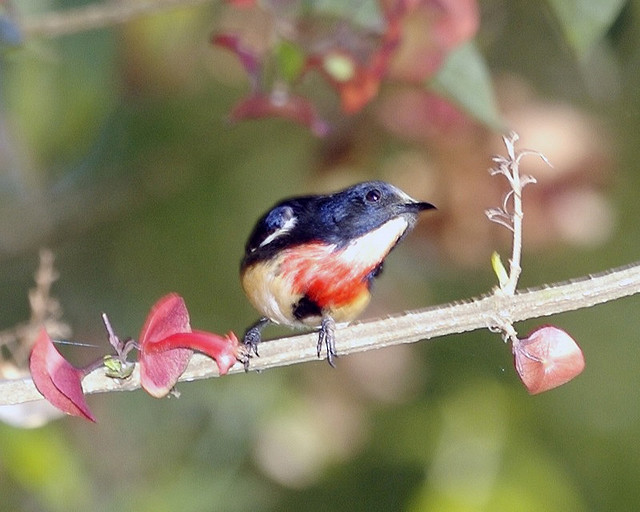
Blood-breasted Flowerpecker (Dicaeum sanguinolentum) ©©LipKee

Blood-breasted Flowerpecker (Dicaeum sanguinolentum) ©©LipKee

And almost all things are by the law purged with blood; and without shedding of blood is no remission. (Hebrews 9:22 KJV)

As we continue the mini-series of the “Easter Birds”, today we look at the blood that was shed by Jesus Christ on the cross. When we see these “Blood” Birds, may we be reminded of Christ’s sacrifice on the cross for us.

Just before being taken by the soldiers, Christ has been praying:

And being in an agony he prayed more earnestly: and his sweat was as it were great drops of blood falling down to the ground. (Luke 22:44 KJV)

John tells us:

But one of the soldiers with a spear pierced his side, and forthwith came there out blood and water. (John 19:34 KJV)

The Bible teaches all through the Old Testament about the sacrifices that were carried out for the forgiveness of sin. They had to do this time after time because, as Hebrews 9 explains:

Hebrews 9:6-15 KJV
(6) Now when these things were thus ordained, the priests went always into the first tabernacle, accomplishing the service of God.
(7) But into the second went the high priest alone once every year, not without blood, which he offered for himself, and for the errors of the people:
(8) The Holy Ghost this signifying, that the way into the holiest of all was not yet made manifest, while as the first tabernacle was yet standing:
(9) Which was a figure for the time then present, in which were offered both gifts and sacrifices, that could not make him that did the service perfect, as pertaining to the conscience;
(10) Which stood only in meats and drinks, and divers washings, and carnal ordinances, imposed on them until the time of reformation.
(11) But Christ being come an high priest of good things to come, by a greater and more perfect tabernacle, not made with hands, that is to say, not of this building;
(12) Neither by the blood of goats and calves, but by his own blood he entered in once into the holy place, having obtained eternal redemption for us.
(13) For if the blood of bulls and of goats, and the ashes of an heifer sprinkling the unclean, sanctifieth to the purifying of the flesh:
(14) How much more shall the blood of Christ, who through the eternal Spirit offered himself without spot to God, purge your conscience from dead works to serve the living God?
(15) And for this cause he is the mediator of the new testament, that by means of death, for the redemption of the transgressions that were under the first testament, they which are called might receive the promise of eternal inheritance.

There are many verses that speak about the need of Christ shedding His blood, dying, and Praise the Lord, for rising from the tomb. (Opps, that is for tomorrow.) Here are few of those verses:

Much more then, being now justified by his blood, we shall be saved from wrath through him. (Romans 5:9 KJV)

To the praise of the glory of his grace, wherein he hath made us accepted in the beloved. In whom we have redemption through his blood, the forgiveness of sins, according to the riches of his grace; (Ephesians 1:6-7 KJV)

Blood-colored Woodpecker (Veniliornis sanguineus)

But now in Christ Jesus ye who sometimes were far off are made nigh by the blood of Christ.
(Ephesians 2:13 KJV)

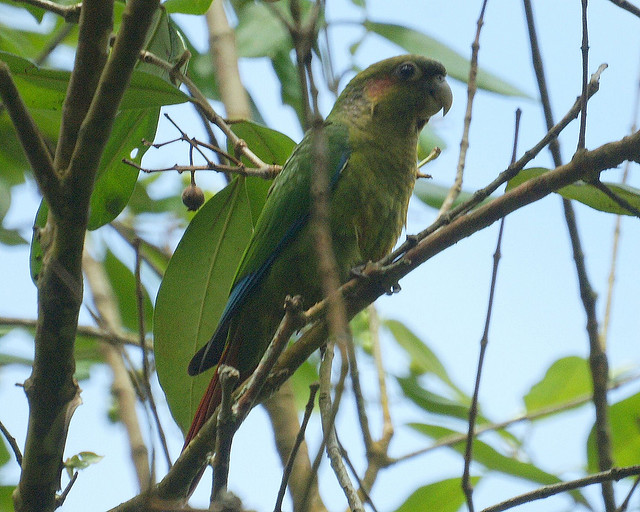
Blood-eared Parakeet (Pyrrhura hoematotis) ©©barloventomagico

Blood-eared Parakeet (Pyrrhura hoematotis) ©©barloventomagico

In whom we have redemption through his blood, even the forgiveness of sins: Who is the image of the invisible God, the firstborn of every creature: For by him were all things created, that are in heaven, and that are in earth, visible and invisible, whether they be thrones, or dominions, or principalities, or powers: all things were created by him, and for him: And he is before all things, and by him all things consist. (Colossians 1:14-17 KJV)

Forasmuch as ye know that ye were not redeemed with corruptible things, as silver and gold, from your vain conversation received by tradition from your fathers; But with the precious blood of Christ, as of a lamb without blemish and without spot: (1 Peter 1:18-19 KJV)

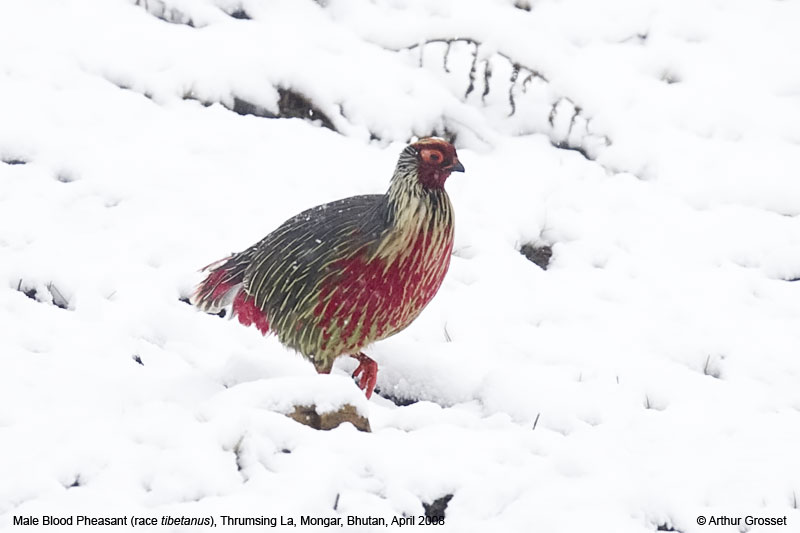
Blood Pheasant (Ithaginis cruentus) ©Arthur Grosset

Blood Pheasant (Ithaginis cruentus) ©Arthur Grosset

The “Cross” birds were considered, but the Crossbills, which are in the Finches – Fringillidae Family, were the only birds with “cross” in their name. Also, “Crown” Birds were considered, but there were too many. If you missed the mini-series, they are the “Palm”, “Whip”, “Thorn” and the “Sword and Piercer” Birds.

See:

Gospel Message

Wordless Birds
___
More Formed By Him Articles
*
Formed By Him – “Sword and Piercer” Birds

Two Edges by wrdpico

When Jesus was taken to the temple for His dedication, Simeon met Mary and Joseph and told Mary:

And Simeon blessed them, and said unto Mary his mother, Behold, this child is set for the fall and rising again of many in Israel; and for a sign which shall be spoken against; (Yea, a sword shall pierce through thy own soul also,) that the thoughts of many hearts may be revealed. (Luke 2:34-35 KJV)

When Judas came to betray Christ in the garden, Peter took out his sword and cut of the right ear of one of them, but Jesus touched his ear and healed it.

And while he yet spake, lo, Judas, one of the twelve, came, and with him a great multitude with swords and staves, from the chief priests and elders of the people… And one of them smote the servant of the high priest, and cut off his right ear. And Jesus answered and said, Suffer ye thus far. And he touched his ear, and healed him. (Luke 22:47, 50-51 KJV)

Most know the facts about the death of Christ on the cross. It was prophesied before the Lord ever came to earth that He would die on the cross. Then:

When Jesus therefore had received the vinegar, he said, It is finished: and he bowed his head, and gave up the ghost. The Jews therefore, because it was the preparation, that the bodies should not remain upon the cross on the sabbath day, (for that sabbath day was an high day,) besought Pilate that their legs might be broken, and that they might be taken away. Then came the soldiers, and brake the legs of the first, and of the other which was crucified with him. But when they came to Jesus, and saw that he was dead already, they brake not his legs: But one of the soldiers with a spear pierced his side, and forthwith came there out blood and water. And he that saw it bare record, and his record is true: and he knoweth that he saith true, that ye might believe. For these things were done, that the scripture should be fulfilled, A bone of him shall not be broken. And again another scripture saith, They shall look on him whom they pierced. (John 19:30-37 KJV)

Throughout this week, the Scripture has been presented that tells of the events that were unfolding during the week of Christ’s sacrifice on the Cross. We have come to the “sword” and the fact that Christ’s side was “pierced,” as was Mary’s heart. Any mother’s heart would be pierced to see their son crucified, but Jesus was no ordinary son. She had the privilege of being His earthly mother, by way of the virgin birth, BUT, His Father was God, and He was, as the centurion stated:

Now when the centurion, and they that were with him, watching Jesus, saw the earthquake, and those things that were done, they feared greatly, saying, Truly this was the Son of God. (Matthew 27:54 KJV)

Sword-billed Hummingbird (Ensifera ensifera) by Robert Scanlon

Sword-billed Hummingbird (Ensifera ensifera) by Robert Scanlon

If you have been following along this week, the “Palm” Birds, “Whip” Birds, and the “Thorn” Birds have been presented along with the events of Christ’s crucifixion. Now it is the “Sword” Birds and the “Piercer” Birds. A connection between the events and the names of the birds is being made to help us remember the Lord Jesus Christ. What love He has shown to us by laying down His life to purchase our salvation.

He created and loves the birds so, that when the little sparrow falls, He knows all about it. How much do you think He cares about me and you?

Are not two sparrows sold for a farthing? and one of them shall not fall on the ground without your Father. But the very hairs of your head are all numbered. Fear ye not therefore, ye are of more value than many sparrows. Whosoever therefore shall confess me before men, him will I confess also before my Father which is in heaven. But whosoever shall deny me before men, him will I also deny before my Father which is in heaven. (Matthew 10:29-33 KJV)

Birds with “Sword” in their name:

There is only one bird in the list used here that has “sword” in its name, the Sword-billed Hummingbird. We have done an article on it already in – Formed By Him – Sword-billed Hummingbird.

Sword-billed Hummingbird (Ensifera ensifera) by Michael Woodruff

Birds with “Piercer” in their name:

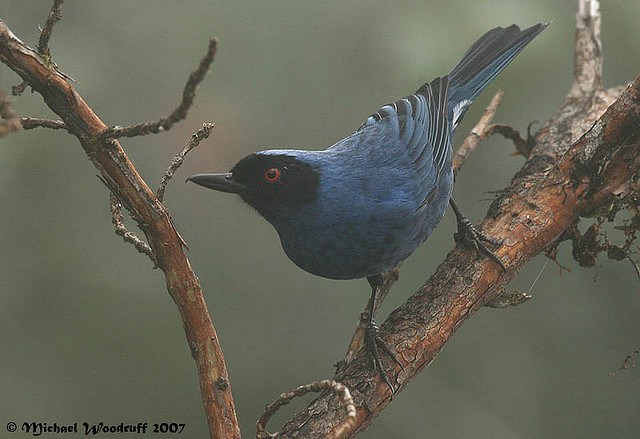
Masked Flowerpiercer (Diglossa cyanea) by Michael Woodruff

Masked Flowerpiercer (Diglossa cyanea) by Michael Woodruff

The Tanagers and Allies – Thraupidae has a Genus of Flowerpiercers, called Diglossa. The Lord has created another facinating bird. The Flowerpiercer’s  common name refers to their habit of piercing the base of flowers to access nectar that otherwise would be out of reach. This is done with their highly created bills, although this is less obvious in the Bluish Flowerpiercer, which has an almost “normal” bill. Most flowerpiercers are restricted to highlands, especially the Andes, in South America, but two species occur in Central America.

Genus Diglossa
Cinnamon-bellied Flowerpiercer (Diglossa baritula)
Slaty Flowerpiercer (Diglossa plumbea)
Rusty Flowerpiercer (Diglossa sittoides)
Chestnut-bellied Flowerpiercer (Diglossa gloriosissima)
Glossy Flowerpiercer (Diglossa lafresnayii)
Moustached Flowerpiercer (Diglossa mystacalis)
Merida Flowerpiercer (Diglossa gloriosa)
Black Flowerpiercer (Diglossa humeralis)
Black-throated Flowerpiercer (Diglossa brunneiventris)
Grey-bellied Flowerpiercer (Diglossa carbonaria)
Venezuelan Flowerpiercer (Diglossa venezuelensis)
White-sided Flowerpiercer (Diglossa albilatera)
Scaled Flowerpiercer (Diglossa duidae)
Greater Flowerpiercer (Diglossa major)
Indigo Flowerpiercer (Diglossa indigotica)
Golden-eyed Flowerpiercer (Diglossa glauca)
Bluish Flowerpiercer (Diglossa caerulescens)
Masked Flowerpiercer (Diglossa cyanea)

Black Flowerpiercer by Keith Blomerley of a bird moving around in a bush.


I trust you are enjoying and being blessed by the “Formed by Him” series this week. To see more  articles – Click Here

See:

The Gospel Message and the Wordless Birds

*