***

MY FACE IS FLUSHED FROM WEEPING
***
“My face is flushed from weeping, And on my eyelids is the shadow of death;” (Job 16:16 NKJV)
Eastern Golden Weaver (Ploceus subaureus) ©WikiC
*
*
“My face is flushed from weeping, And on my eyelids is the shadow of death;” (Job 16:16 NKJV)
Eastern Golden Weaver (Ploceus subaureus) ©WikiC
*
*
The following video, “Three males on the perch, 3/16/2017—Lance-tailed Manakin Cam” was taped yesterday.
“The male Lance-tailed Manakin has an interesting breeding display, unusual in that it is cooperative rather than competitive. Two males perch next to each other on a bare stick and jump up and down alternately, sometimes giving short flights. Groups of birds may perform together, with a different stick for each pair of displaying males. The female builds a cup nest in a tree; two brown-mottled cream eggs are laid, and incubated entirely by the female for about 20 days.
The lance-tailed manakin has a number of calls, including a Toe-LEE-do, a curry-ho, and a frog-like buzzing croak given by displaying males. These manakins eat fruit and some insects. (Wikipedia)
“You shall take with you seven each of every clean animal, a male and his female; two each of animals that are unclean, a male and his female; also seven each of birds of the air, male and female, to keep the species alive on the face of all the earth.” (Genesis 7:2-3 NKJV)
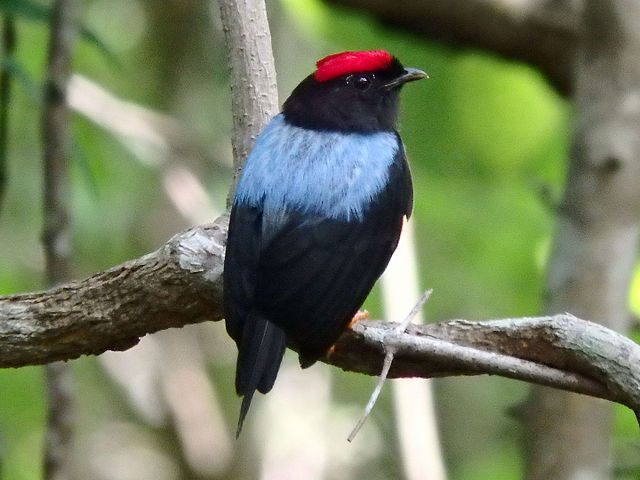
Lance-tailed Manakin (Chiroxiphia lanceolata) ©WikiC
From the email:
On the small Panamanian island of Boca Brava, male Lance-tailed Manakins are beginning to compete for mates—which they do by working together. You’ll have a front row seat when you watch our live cam.
The Cornell Lab has partnered with Dr. Emily DuVal to bring this live view of manakins to your screen. She has been studying these cooperative displays since 1999, unraveling the mystery of why males form alliances and work together to woo females—even though only one male typically gets to mate.
Here’s what to look for: The live cam shows a display perch used by one pair of males, within a larger area with up to 30 “alpha” males and their partners. Throughout the day, the males perform coordinated displays featuring leaps and butterfly-like flights on the display perch. Occasionally, a brownish female stops by to watch. If she seems interested and receptive, the beta male typically leaves the area and the alpha male starts displaying on his own.
Through much of the day the perch may appear empty; but you can often hear the sweet calls of the male manakins singing a duet, trying to entice a female to check out one of their meticulously maintained display perches (they also have two other display areas off-cam). When the manakins aren’t around, other species (like this antshrike, this wren, or even this wood-rail!) may wander into the frame, and in the mornings and evenings the roaring of howler monkeys echoes through the forest.
You also might want to watch the other videos listed on the Live Came site. Especially the Great Courtship Display and Dance by Alpha/Beta Male Pair
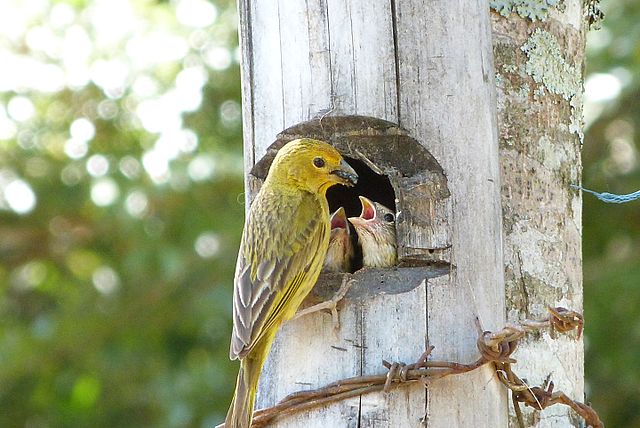
“Behold the fowls of the air: for they sow not, neither do they reap, nor gather into barns; yet your heavenly Father feedeth them. Are ye not much better than they?” (Matthew 6:26 KJV)
Saffron Finch (Sicalis flaveola) Female ©WikiC
*
*
Here is an interesting video about some the Raven family members. They are quite productive. Enjoy! Maybe that is how they were able to accomplish what this verse mentions:
And it will be that you shall drink from the brook, and I have commanded the ravens to feed you there.” (1 Kings 17:4 NKJV)
Also, read Dr. James J. S. Johnson’s Article “Clever Creatures: ‘Wise from Receiving Wisdom’”.
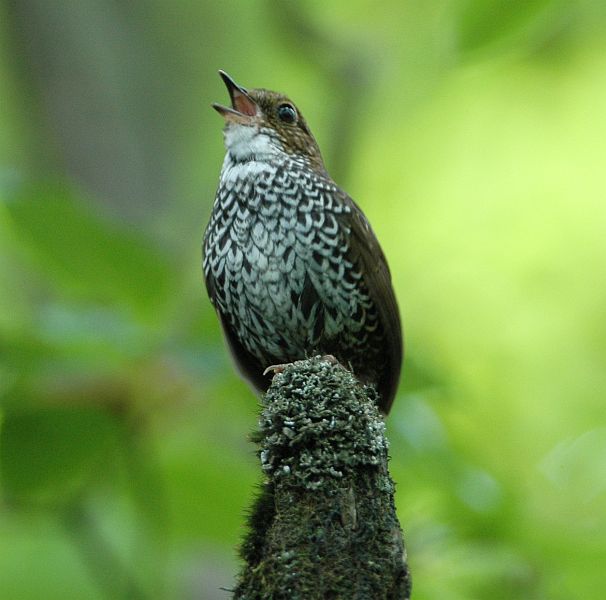
“O Timothy! Guard what was committed to your trust, avoiding the profane and idle babblings and contradictions of what is falsely called knowledge—” (1 Timothy 6:20 NKJV)
Scaly-breasted Wren-babbler (Pnoepyga albiventer) ©©
*
*
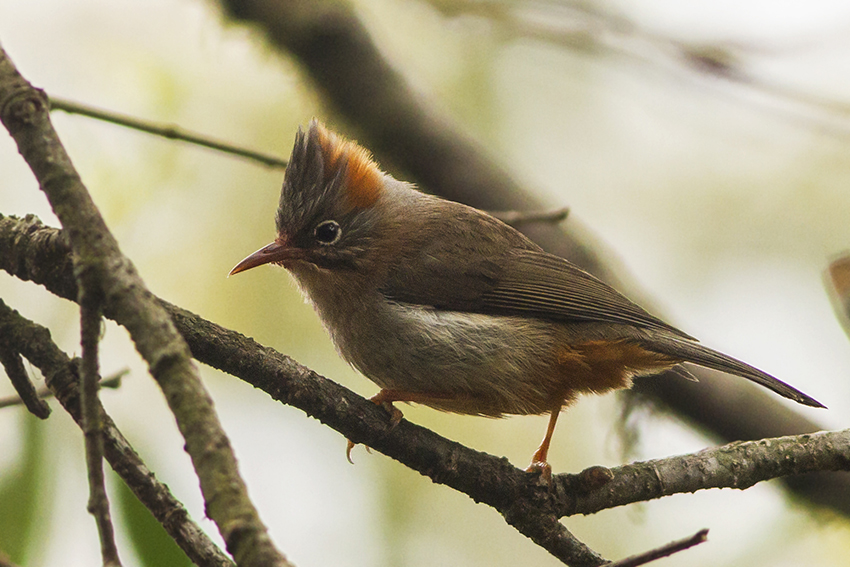
“For whosoever shall keep the whole law, and yet offend in one point, he is guilty of all.
(James 2:10 KJV)
Rufous-vented Yuhina (Yuhina occipitalis) ©WikiC
*
*
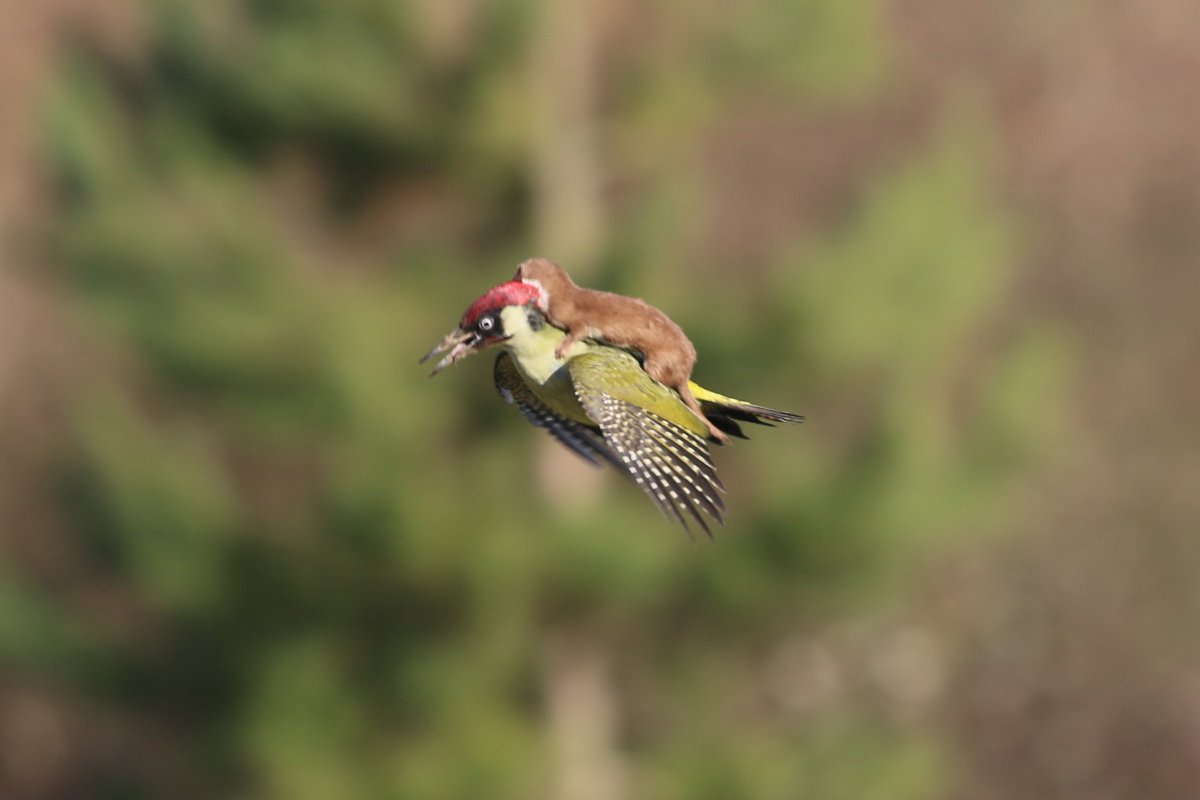
“For mine iniquities are gone over mine head: as an heavy burden they are too heavy for me.” (Psalms 38:4 KJV)
Green Woodpecker with Weasel On Its Back ©Martin Le-May
*
*
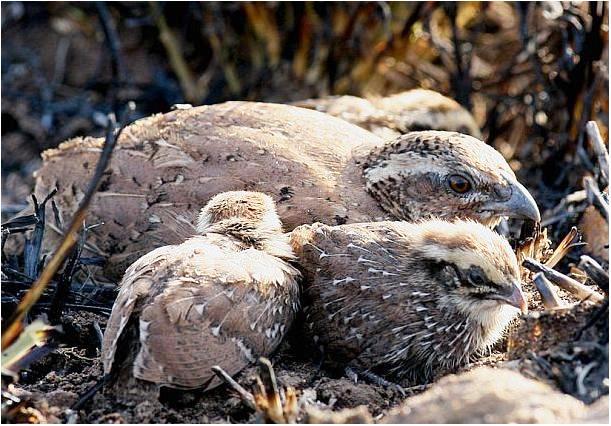
“And it came to pass, that at even the quails came up, and covered the camp: and in the morning the dew lay round about the host.
(Exodus 16:13 KJV)
Rock Bush Quail (Perdicula argoondah) ©WikiC Family
*
*

“Upon the first day of the week let every one of you lay by him in store, as God hath prospered him, that there be no gatherings when I come.” (1 Corinthians 16:2 KJV)
Osprey Eating – Viera Wetlands by Dan
*
*
“And it came to pass, that at even the quails came up, and covered the camp: and in the morning the dew lay round about the host.” (Exodus 16:13 KJV)
As we continue our journey through the Phasianidae Family of Pheasants and Allies, our next encounter is with more Partridges and Quails.

Grey Partridge (Perdix perdix) ©WikiC
The Perdix genus has the Grey Partridge, Daurian Partridge, and the Tibetan Partridges. Perdix is a genus of Galliform gamebirds known collectively as the ‘true partridges’. The genus name is the Latin for “partridge”, and is itself derived from Ancient Greek perdix. These birds are unrelated to the subtropical species that have been named after the partridge due to similar size and morphology. There are representatives of Perdix in most of temperate Europe and Asia. One member of the genus, the grey partridge, has been introduced to the United States and Canada for the purpose of hunting. They are closely related to grouse, koklass, quail and pheasants.
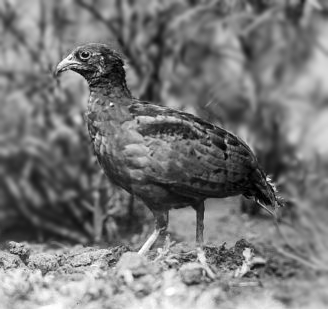
Long-billed Partridge (Rhizothera longirostris) ©WikiC
Long-billed Partridge and Hose’s Partridge belong to the Rhizothera genus. Rhizothera is a genus of bird native to Malaysia. Established by George Robert Gray in 1841.

Madagascar Partridge (Margaroperdix madagarensis) ©Drawing WikiC
Madagascan Partridge (Margaroperdix madagarensis) found only in Madagascar. Its natural habitats are subtropical or tropical moist lowland forests and subtropical or tropical moist montane forests.

Black Partridge are in genus Melanoperdix. The black partridge occurs in lowland rainforests of Peninsular Malaysia, Borneo and Sumatra in southeast Asia. It was formerly found but is long extinct on Singapore. The female usually lays five to six white eggs.

Harlequin Quail (Coturnix delegorguei) ©WikiC
The Coturnix genus has seven Quail including the Common, Japanese, Rain, Harlequin, Stubble, New Zealand and the Brown Quails.

King Quail (Excalfactoria chinensis) by Kent Nickel
The King Quail and Blue Quail are in the Excalfactoria genus.
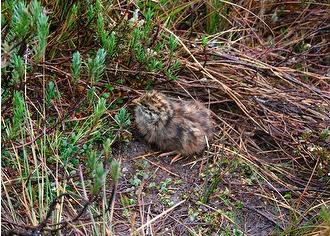
Snow Mountain Quail (Anurophasis monorthonyx) ©WikiC
The Snow Mountain Quail (Anurophasis monorthonyx) is the only one in its genus.

Painted Bush Quail (Perdicula erythrorhyncha) ©WikiC
Perdicula is made up of the Jungle Bush Quail, Rock Bush Quail, Painted Bush Quail, and the Manipur Bush Quail.
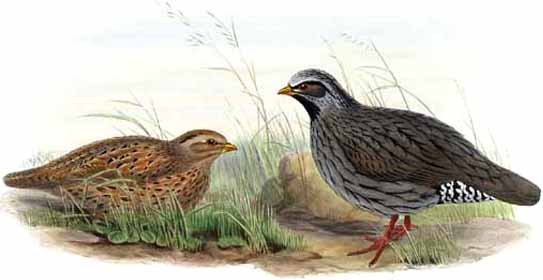
Himalayan Quail (Ophrysia superciliosa †) ©Drawing WikiC
Himalayan Quail (Ophrysia superciliosa) is another loner.
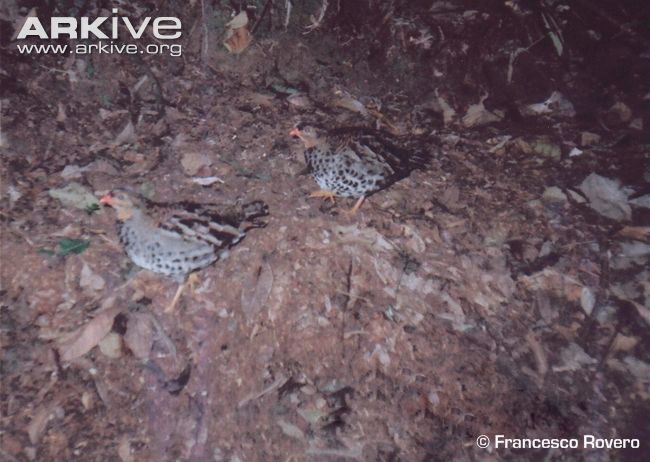
Udzungwa Forest Partridge (Xenoperdix udzungwensis) ©ARKive
The two Forest Partridges are the Udzungwa Forest Partridge and the Rubeho Forest Partridge (Xenoperdix). Both species have boldly barred plumage and a red bill. Xenoperdix are found only in forests of the Udzungwa Mountains and the Rubeho Highlands of Tanzania.
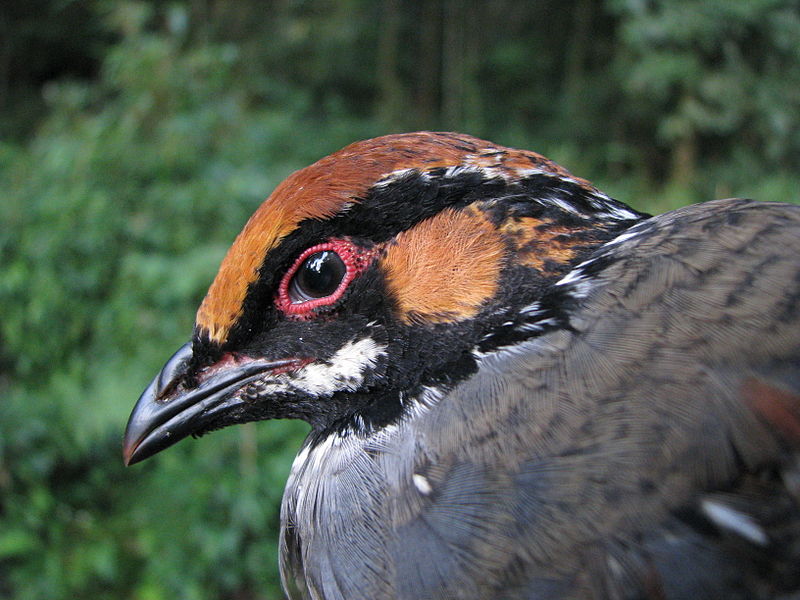
Hill Partridge (Arborophila torqueola) ©WikiC
The largest genus today are Partridges in the Arborophila group. They are the Hill, Rufous-throated, White-cheeked, Taiwan Partridge, Chestnut-breasted, Bar-backed, Sichuan, White-necklaced, Orange-necked, Chestnut-headed, Siamese, Malaysian, Roll’s, Sumatran, Grey-breasted, Chestnut-bellied, Red-billed, Red-breasted, Hainan Partridge, Chestnut-necklaced , and the Green-legged Partridge. The genus has the second most members within the Galliformes after Francolinus although Arborophila species vary very little in bodily proportions with different species varying only in colouration/patterning and overall size. These are fairly small, often brightly marked partridges found in forests of eastern and southern Asia
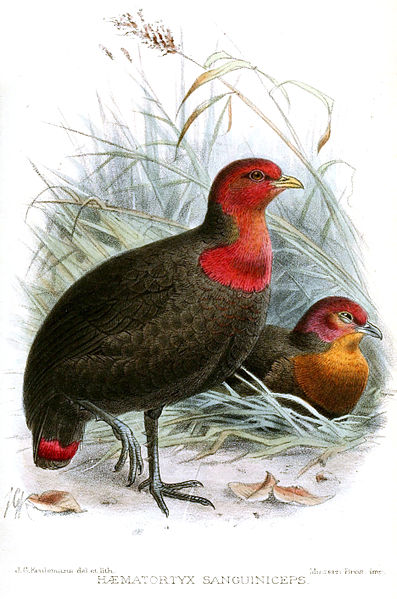
Crimson-headed Partridge (Haematortyx sanguiniceps) ©Drawing WikiC
There are three more genera with only one bird; Ferruginous Partridge (Caloperdix oculeus), Crimson-headed Partridge (Haematortyx sanguiniceps), and the Crested Partridge (Rollulus rouloul.
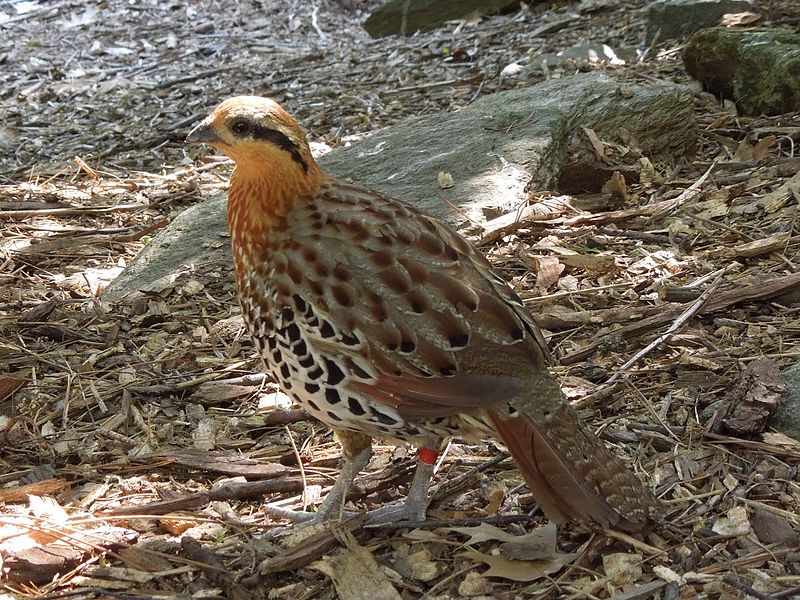
Mountain Bamboo Partridge (Bambusicola fytchii) ©WikiC at National Zoo
We finish off this week’s Avian Wonders from the Lord with the Bambusicola genus with the Mountain Bamboo Partridge, Chinese Bamboo Partridge, and the Taiwan Bamboo Partridge.
“And, Thou, Lord, in the beginning hast laid the foundation of the earth; and the heavens are the works of thine hands:” (Hebrews 1:10 KJV)
“God’s Still In Control” ~ ©Hyssongs
*
Sunday Inspiration – Pheasants and Allies I
Sunday Inspiration – Pheasants and Allies II
Sunday Inspiration – Pheasants and Allies III
Pheasants and allies – Phasianidae
Assurance: The Certainty of Salvation
*
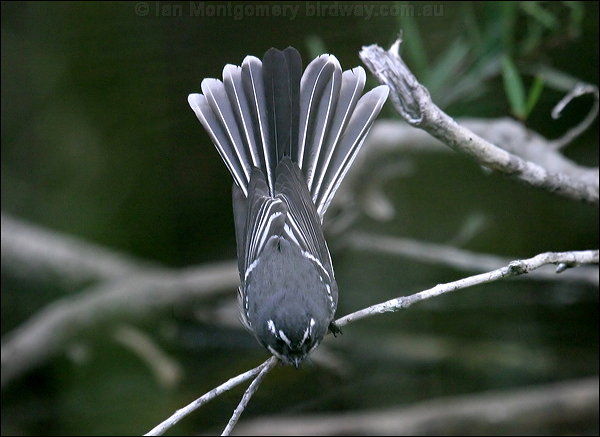
“Whose fan is in his hand, and he will throughly purge his floor, and gather his wheat into the garner; but he will burn up the chaff with unquenchable fire.
(Matthew 3:12 KJV)
Grey Fantail (Rhipidura fuliginosa) by Ian
[In this bird, his fan is in his tail.]
*
*
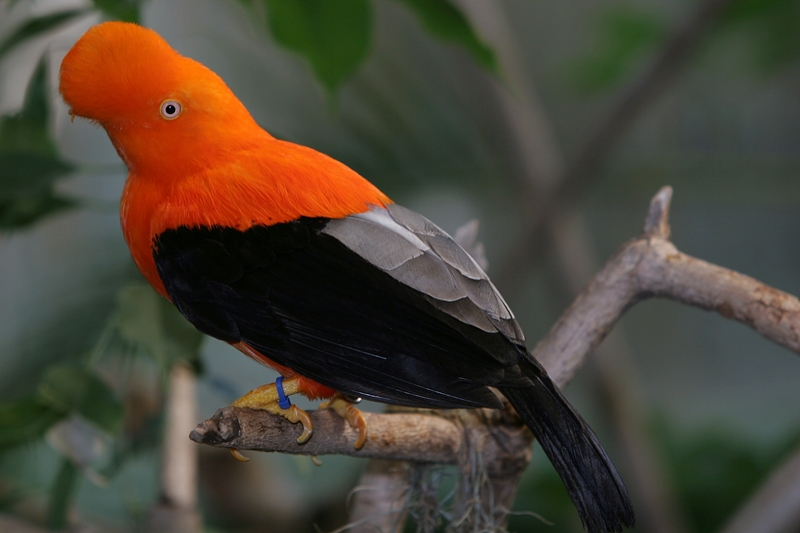
“LORD, by thy favour thou hast made my mountain to stand strong: thou didst hide thy face, and I was troubled.” (Psalms 30:7 KJV)
Andean Cock-of-the-rock (Rupicola peruvianus) by SanDiegoZoo
*
*
 Lee's Birdwatching Adventures Plus