“But the LORD said unto Samuel, Look not on his countenance, or on the height of his stature; because I have refused him: for the LORD seeth not as man seeth; for man looketh on the outward appearance, but the LORD looketh on the heart.” (1 Samuel 16:7 KJV)
“For by him were all things created, that are in heaven, and that are in earth, visible and invisible, whether they be thrones, or dominions, or principalities, or powers: all things were created by him, and for him:” (Colossians 1:16 KJV)
Pheasants and their cousins have kept us interested for four weeks already. Today, even though there are 54 of these Avian Creations from our Lord left in this family, we will finish. The Pheasants and allies – Phasianidae Family has interesting and colorful members. With Partridges, Pheasants, Peafowls, Tragopan, Monals, and other members, the similarities are obvious, yet they all have their differences. One thing about their Creator, He enjoys variety. The Partridge is one of the many Birds of the Bible as listed in I Samuel 26:20 and Jeremiah 17:11. They are also on the clean fowl and are permissible to be eaten. I trust you have enjoyed seeing this large family of 187 members.
Painted Spurfowl (Galloperdix lunulata) by Nikhil
Galloperdixis a genus of three species of birds in the pheasant family, Phasianidae. These terrestrial birds are restricted to the Indian Subcontinent, with the Red Spurfowl and Painted Spurfowl in forest and scrub in India, and the Sri Lanka Spurfowl in forests of Sri Lanka. They share the common name “spurfowl” with the African members of the genus Pternistis.
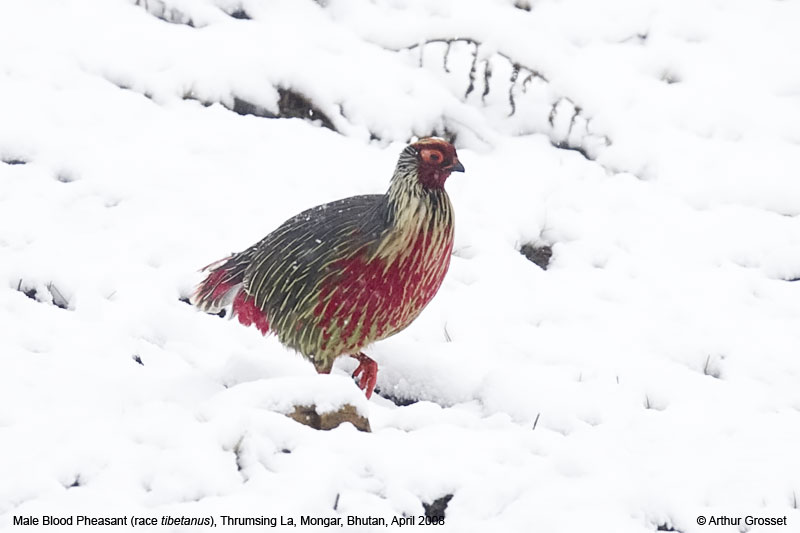
The blood pheasant (Ithaginis cruentus) is the only species in genus Ithaginis of the pheasant family. This relatively small, short-tailed pheasant is widespread and fairly common in the eastern Himalayas, ranging across India, Nepal, Bhutan, and China. The blood pheasant is the state bird of the Indian state of Sikkim.
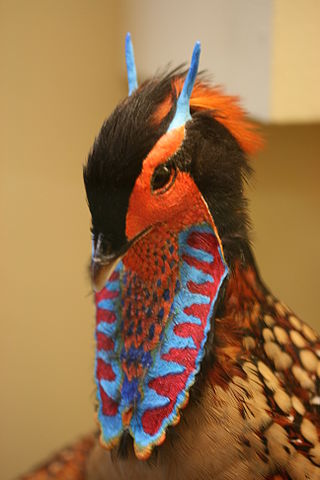
Tragopanis a genus of bird in the family Phasianidae. These birds are commonly called “horned pheasants” because of two brightly colored, fleshy horns on their heads that they can erect during courtship displays. The scientific name refers to this, being a composite of tragus (billy goat) and the ribald half-goat deity Pan (and in the case of the satyr tragopan, adding Pan’s companions for even more emphasis). Their habit of nesting in trees is unique among phasianids.
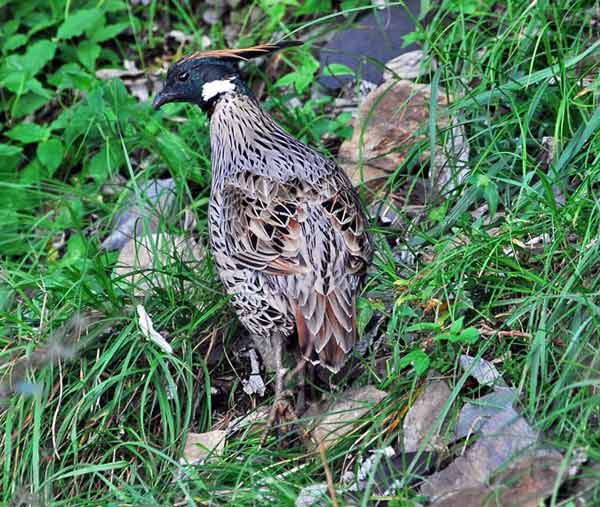
Koklass Pheasant (Pucrasia macrolopha) by Nikhil Devasar
The koklass pheasant is a medium-sized elusive bird confined to high altitude forests from Afghanistan to central Nepal, and in northeastern Tibet to northern and eastern China. Upper parts of male koklass pheasant are covered with silver-grey plumage streaked velvety-black down the centre of each feather, and it has the unique feature of a black head, chestnut breast and prominent white patches on the sides of the neck.
A monal is a bird of genus Lophophorus of the pheasant family, Phasianidae. There are three species and several subspecies: Himalayan Monal, Sclater’s Monal, and the Chinese Monal.
Junglefowl are the four living species of bird from the genus Gallus in the Gallinaceous bird order, which occur in India, Sri Lanka and Southeast Asia. These are large birds, with colourful male plumage, but are nevertheless difficult to see in the dense vegetation they inhabit. As with many birds in the pheasant family, the male takes no part in the incubation of the egg or rearing of the precocial young. These duties are performed by the drab and well-camouflaged female. The junglefowl are seed-eaters, but insects are also taken, particularly by the young birds.
One of the species in this genus, the red junglefowl, is of historical importance as the likely ancestor of the domesticated chicken, although it has been suggested the grey junglefowl was also involved. The Sri Lankan junglefowl is the national bird of Sri Lanka.
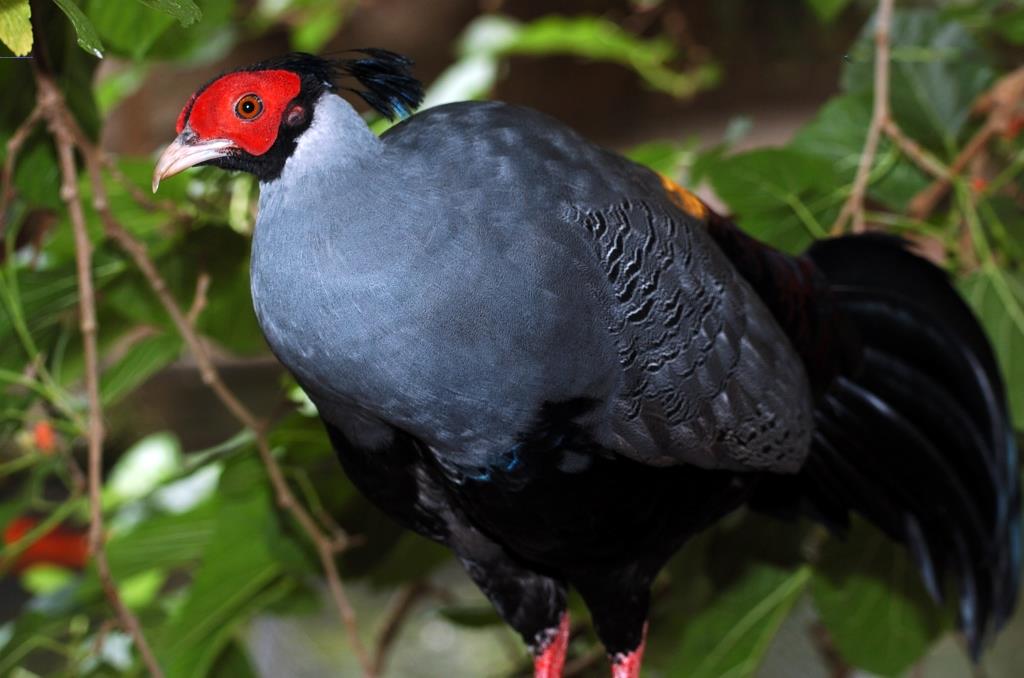
Siamese Fireback (Lophura diardi) at Wings of Asia by Dan
The gallopheasants (genus Lophura) are pheasants of the family Phasianidae. The genus comprises 12 species and several subspecies.
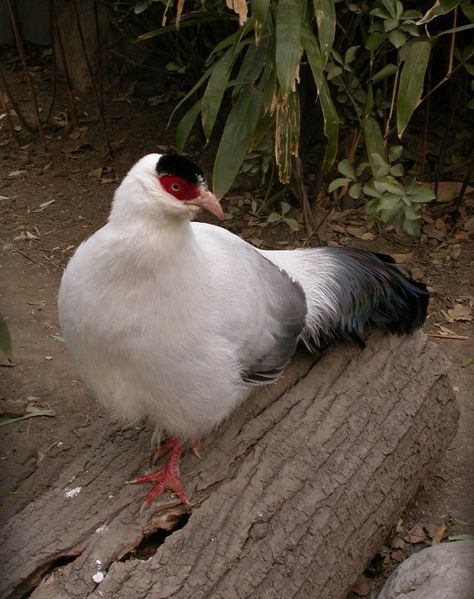
The name Crossoptilonis a combination of the Greek words krossoi, meaning “fringe” and ptilon, meaning “feather”— a name Hodgson felt particularly applied to the white eared pheasant “distinguished amongst all its congeners by its ample fringe-like plumage, the dishevelled quality of which is communicated even to the central tail feathers”. All are large, sexually monomorphic and found in China.
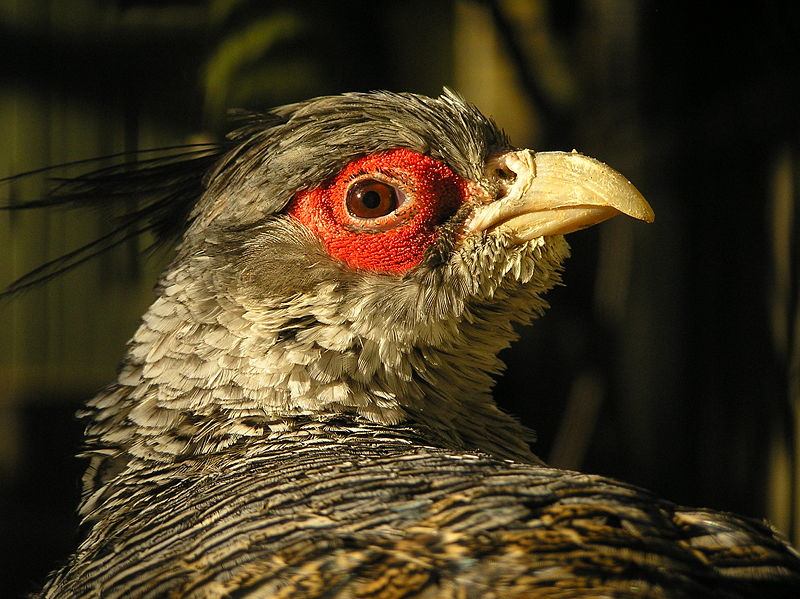
Cheer Pheasants lack the color and brilliance of most pheasants, with buffy gray plumage and long gray crests. Its long tail has 18 feathers and the central tail feathers are much longer and the colour is mainly gray and brown. The female is slightly smaller in overall size.
Reeves’s Pheasant (Syrmaticus reevesii) Memphis Zoo by Dan
The genus Syrmaticus contains the five species of long-tailed pheasants. The males have short spurs and usually red facial wattles, but otherwise differ wildly in appearance. The hens (females) and chicks pattern of all the species have a rather conservative and plesiomorphic drab brown color pattern
Common Pheasant (Phasianus colchius) by Robert Scanlon
The “typical” pheasant genus Phasianus in the family Phasianidae consists of twp species. The genus name comes from Latin phasianinus “pheasant-like” (from phasianus, “pheasant”).[1] Both Phasianus and “pheasant” originally come from the Greek word phāsiānos, meaning “(bird) of the Phasis”. Phasis is the ancient name of the main river of western Georgia, currently called the Rioni.
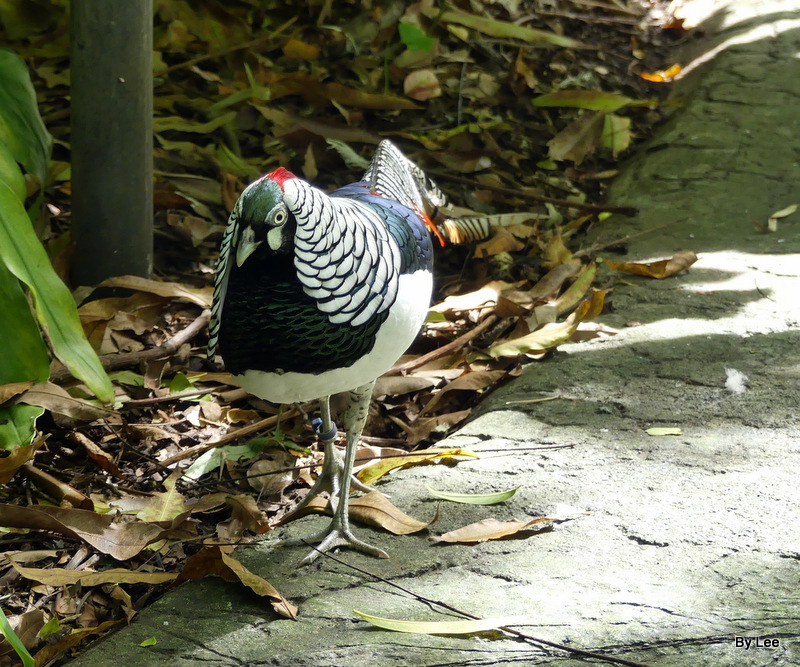
Lady Amherst’s Pheasant (Chrysolophus amherstiae) Zoo Miami by Lee
The genus name is from Ancient Greek khrusolophos, “with golden crest”. These are species which have spectacularly plumaged males. The golden pheasant is native to western China, and Lady Amherst’s pheasant to Tibet and westernmost China, but both have been widely introduced elsewhere.
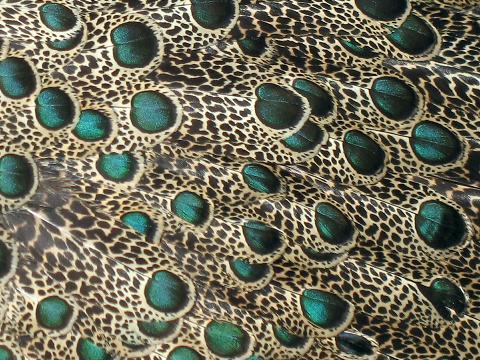
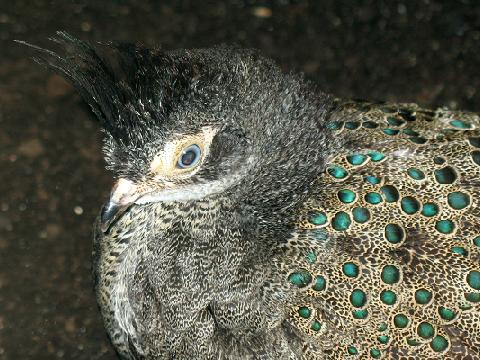
The peacock-pheasants are a bird genus, Polyplectron, of the family Phasianidae, consisting of eight species. They are colored inconspicuously, relying on heavily on crypsis to avoid detection. When threatened, peacock-pheasants will alter their shapes utilising specialised plumage that when expanded reveals numerous iridescent orbs. The birds also vibrate their plume quills further accentuating their aposematism. Peacock-pheasants exhibit well-developed metatarsal spurs. Older individuals may have multiple spurs on each leg. These kicking thorns are used in self-defense.
Little is known about this species in the wild. A shy and elusive bird, the crested argus is found in submontane Vietnam, Laos, and Malaysia in Southeast Asia. The diet consists mainly of invertebrates, mollusks, amphibians, small reptiles, bamboo shoots, leaves, fruits, and fungi
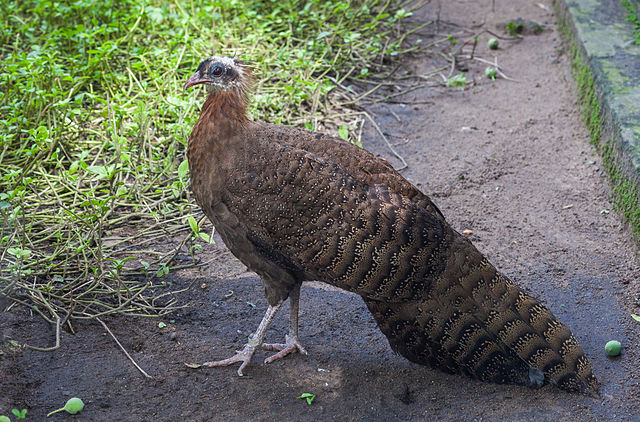
The scientific name of the Great Argus was given by Carl Linnaeus in reference to the many eyes-like pattern on its wings. Argus is a hundred-eyed giant in Greek mythology. There are two subspecies recognized: Nominate argus of the Malay peninsula and Sumatra, and A. a. grayi of Borneo. William Beebe considered the two races to be distinct species, but they have since been lumped.
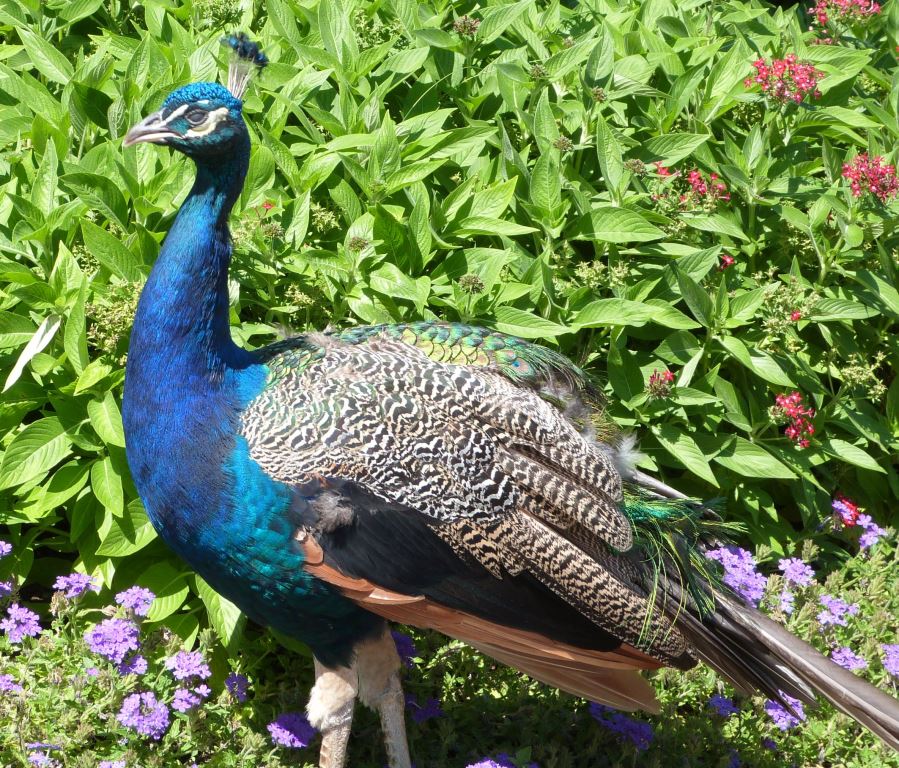
Indian Peafowl (Pavo cristatus) at Cincinnati Zoo by Lee
Pavo is a genus of two species in the pheasant family. The two species, along with the Congo peacock, are known as peafowl.
The Congo peafowl (Afropavo congensis), known as the mbulu by the Congolese, is a species of peafowl native to the Congo Basin. It is one of three extant species of peafowl, the other two being the Indian peafowl (originally of India and Sri Lanka) and the green peafowl (native to Burma and Indochina).
(Information from Wikipedia, with editing)
This slideshow requires JavaScript.
“Let the word of Christ dwell in you richly in all wisdom, teaching and admonishing one another in psalms and hymns and spiritual songs, singing with grace in your hearts to the Lord.” (Colossians 3:16 NKJV)
“How Can I Keep From Singing” ~ Three + One Quartet (Pastor Smith, Reagan, Jessie, and Caleb)
The following video, “Three males on the perch, 3/16/2017—Lance-tailed Manakin Cam” was taped yesterday.
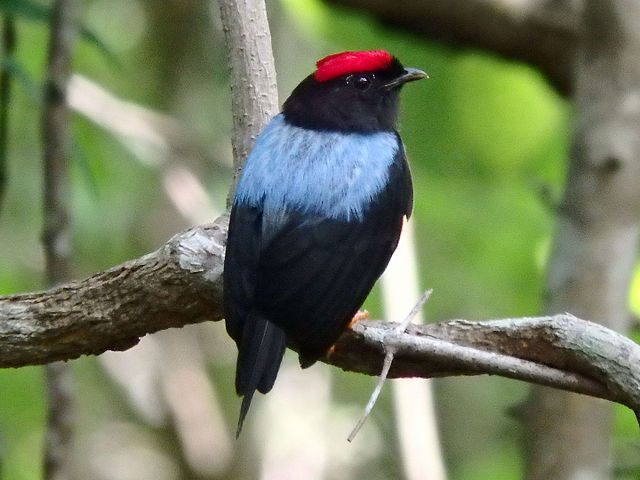
“The male Lance-tailed Manakin has an interesting breeding display, unusual in that it is cooperative rather than competitive. Two males perch next to each other on a bare stick and jump up and down alternately, sometimes giving short flights. Groups of birds may perform together, with a different stick for each pair of displaying males. The female builds a cup nest in a tree; two brown-mottled cream eggs are laid, and incubated entirely by the female for about 20 days.
The lance-tailed manakin has a number of calls, including a Toe-LEE-do, a curry-ho, and a frog-like buzzing croak given by displaying males. These manakins eat fruit and some insects. (Wikipedia)
“You shall take with you seven each of every clean animal, a male and his female; two each of animals that are unclean, a male and his female; also seven each of birds of the air, male and female, to keep the species alive on the face of all the earth.” (Genesis 7:2-3 NKJV)
On the small Panamanian island of Boca Brava, male Lance-tailed Manakins are beginning to compete for mates—which they do by working together. You’ll have a front row seat when you watch our live cam.
The Cornell Lab has partnered with Dr. Emily DuVal to bring this live view of manakins to your screen. She has been studying these cooperative displays since 1999, unraveling the mystery of why males form alliances and work together to woo females—even though only one male typically gets to mate.
Here’s what to look for: The live cam shows a display perch used by one pair of males, within a larger area with up to 30 “alpha” males and their partners. Throughout the day, the males perform coordinated displays featuring leaps and butterfly-like flights on the display perch. Occasionally, a brownish female stops by to watch. If she seems interested and receptive, the beta male typically leaves the area and the alpha male starts displaying on his own.
Through much of the day the perch may appear empty; but you can often hear the sweet calls of the male manakins singing a duet, trying to entice a female to check out one of their meticulously maintained display perches (they also have two other display areas off-cam). When the manakins aren’t around, other species (like this antshrike, this wren, or even this wood-rail!) may wander into the frame, and in the mornings and evenings the roaring of howler monkeys echoes through the forest.
You also might want to watch the other videos listed on the Live Came site. Especially the Great Courtship Display and Dance by Alpha/Beta Male Pair
“Behold the fowls of the air: for they sow not, neither do they reap, nor gather into barns; yet your heavenly Father feedeth them. Are ye not much better than they?” (Matthew 6:26 KJV)
Here is an interesting video about some the Raven family members. They are quite productive. Enjoy! Maybe that is how they were able to accomplish what this verse mentions:
And it will be that you shall drink from the brook, and I have commanded the ravens to feed you there.” (1 Kings 17:4 NKJV)
“O Timothy! Guard what was committed to your trust, avoiding the profane and idle babblings and contradictions of what is falsely called knowledge—” (1 Timothy 6:20 NKJV)









 Lee's Birdwatching Adventures Plus