***

WASH ME
***
“Wash me throughly from mine iniquity, and cleanse me from my sin.” (Psalms 51:2 KJV)
Saffron Finch Zoo Miami by Dan
*
*
“Wash me throughly from mine iniquity, and cleanse me from my sin.” (Psalms 51:2 KJV)
Saffron Finch Zoo Miami by Dan
*
*
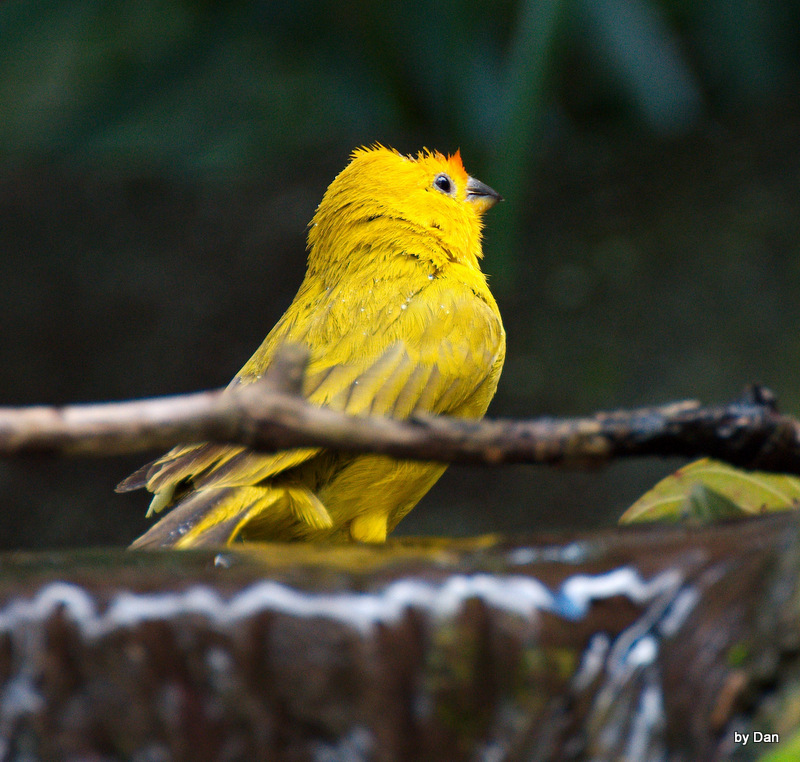
Saffron Finch – Male at Zoo Miami by Dan (Cropped by Lee)
“…covered with silver, and her (his) feathers with yellow gold.” (Psalms 68:13b KJV) (modified)
Dan and I took a ride down to Miami last week. A 200 mile ride. We stayed two nights before heading back home via Flamingo Gardens in Davie, Florida. We really have not been birdwatching too much lately, so this makes up for a very hot summer and health reasons. Monday and Tuesday we spent at Zoo Miami. On Monday, because we didn’t get there until 2 PM, we visited their Cloud Forrest and Amazon and Beyond Area. We spent all day Tuesday in the fantastic Wings of Asia Aviary. So, let the tales begin:
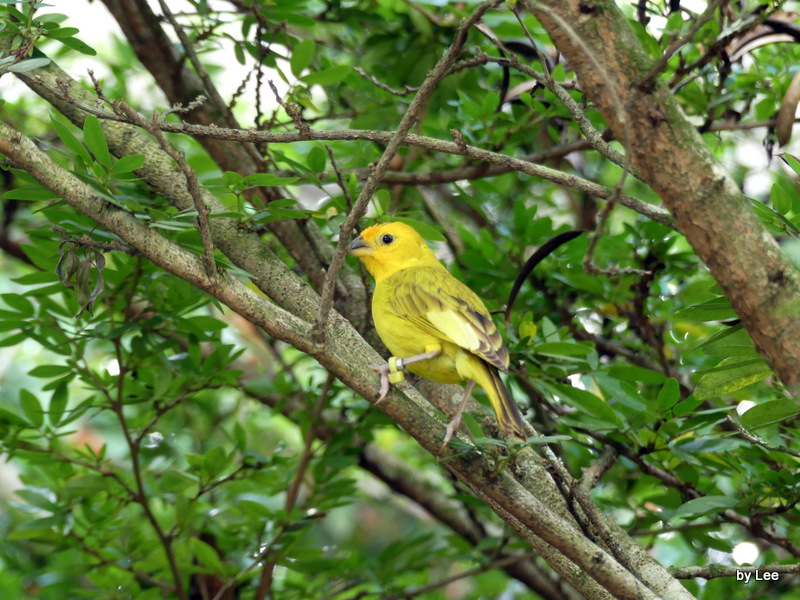
Saffron Finch (Sicalis flaveola) by Lee
I want to introduce you to the Saffron Finch (Sicalis flaveola). They are actually Tanagers from the Amazon Basin of South America. The Saffron Finch likes the open and semi-open lowlands and are widely distributed in “Columbia, northern Venezuela (where it is called “canario de tejado” or “roof canary”), western Ecuador, western Peru, eastern and southern Brazil (where it is called “canário da terra” or “native canary”), Bolivia, Paraguay, Uruguay, northern Argentina, and Trinidad and Tobago. It has also been introduced to Hawaii, Puerto Rico and elsewhere.”
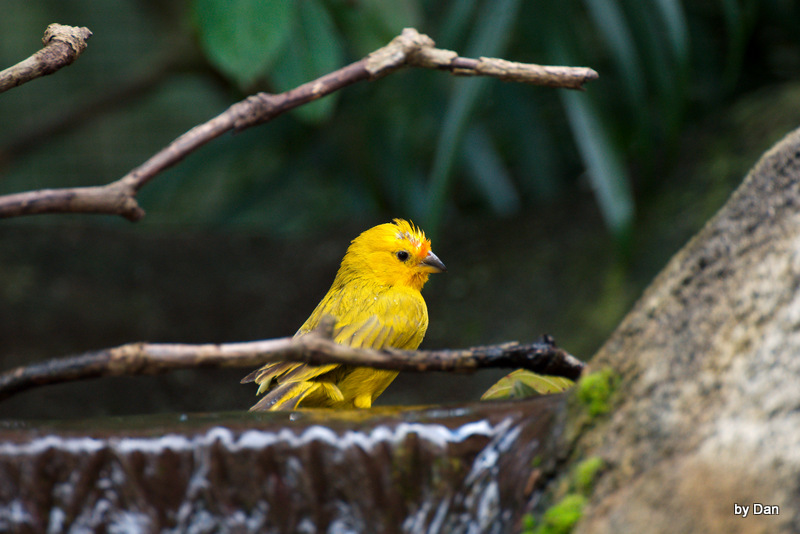
Saffron Finch Zoo Miami by Dan
“Although commonly regarded as a canary, it is not related to the Atlantic canary. Formerly, it was placed in the Emberizidae but it is close to the seedeaters. The male is bright yellow with an orange crown which distinguishes it from most other yellow finches (the exception being the orange-fronted yellow finch). The females are more confusing and are usually just a slightly duller version of the male, but in the southern subspecies S. f. pelzelni they are olive-brown with heavy dark streaks.”
Saffron Finch Zoo Miami by Dan
“Typically nesting in cavities, the saffron finch makes use of sites such as abandoned rufous hornero (Furnarius rufus) nests, bamboo branches and under house roofs – this species is tolerant of human proximity, appearing at suburban areas and frequenting bird tables. They have a pleasant but repetitious song which, combined with their appearance, has led to them being kept as caged birds in many areas.” (quotes are from Wikipedia’s Saffron Finch)
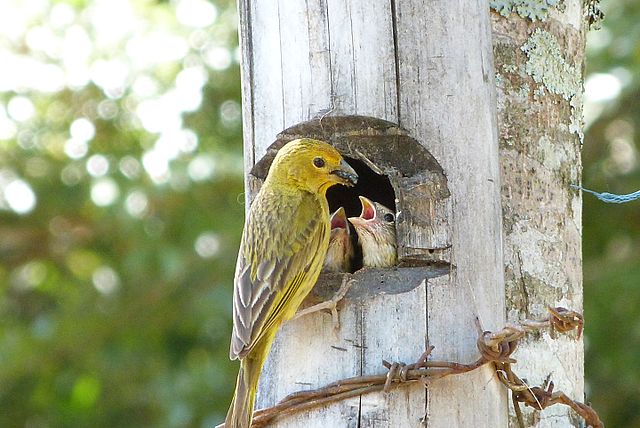
Saffron Finch (Sicalis flaveola) Female ©WikiC
I didn’t see the female, if they had one, but thought you might like to see the difference between the male and the female.
Interesting Facts from WhatBird.com
Here is some video that I shot of this beauty. I tried to catch him in the trees and that is a challenge, as any birdwatcher knows. But then, to my surprise, he just decided that he needed a bath. Wow!
We have lots of photos from the trip, so stay tuned!
“Purge me with hyssop, and I shall be clean: wash me, and I shall be whiter than snow.” (Psalms 51:7)
*
Zoo Miami and the Wings of Asia FL
Thraupidae Family – Tanagers and Allies
*
“That he might present it to himself a glorious church, not having spot, or wrinkle, or any such thing; but that it should be holy and without blemish.” (Ephesians 5:27)
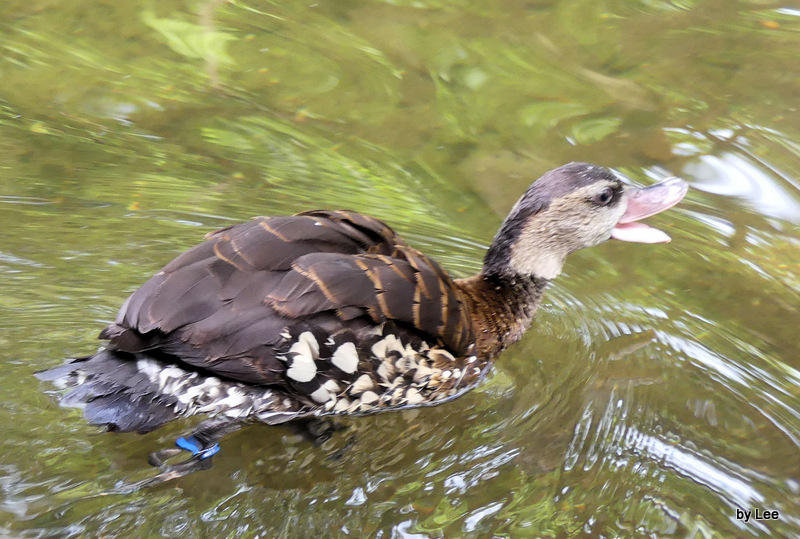
Spotted Whistling Duck (Dendrocygna guttata) by Lee at Zoo Miami
We were at Zoo Miami last week and I was able to take this photo.
*
*
“How hast thou helped him that is without power? how savest thou the arm that hath no strength?” (Job 26:2)
A friend sent me this email, and then I was able to find a video about it. Thought you all might enjoy this.
Officer James Givens has served with the Cincinnati Police Department for over 26 years, but has never quite experienced anything like this before. He was sitting in his patrol car in a parking lot when he got an unexpected visitor. A goose came up to his car and started pecking on the side of it. He threw out a bit of food for her, thinking that’s what she wanted, but she didn’t take it.
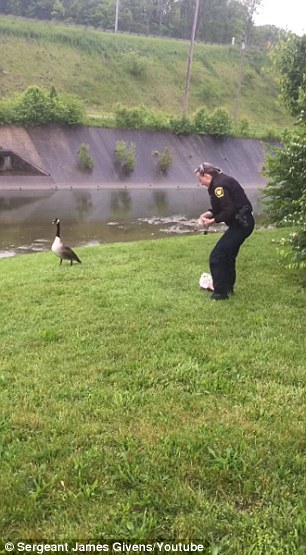
She continued to peck and quack, then walked away, stopped, and looked back at Officer Givens. Then she came back to his car and pecked at it again. She made it very obvious that she wanted Officer Givens to follow her, so he finally got out of his car and did just that.
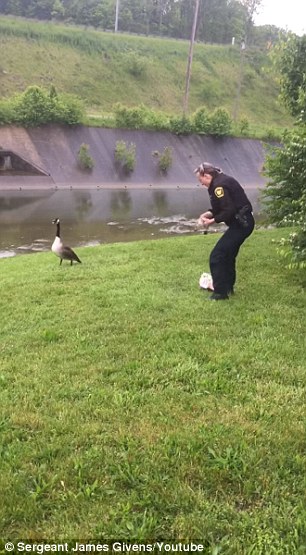
The goose led him 100 yard away to a grassy area near a creek. Sitting there was one of her babies, tangled up in a balloon string. He was kicking his feet, desperate for help. He was wary of helping the baby on his own, worried that the goose might attack him, so he called for help from the SPCA, but no wildlife rescuers were available at the moment.

Luckily, Given’s colleague, Officer Cecilia Charron, came to help. She began to untangle the baby, and the mother goose just stood there and watched, quacking. She didn’t become aggressive, and just let Officer Charron do what she had to do to set the baby free. It’s like the mother goose knew they were helping. Once she untangled the baby, she put her down and she ran right to her mom and they went back to swimming in the creek. Charron teared up and said it was the highlight of her 24 years on the force.
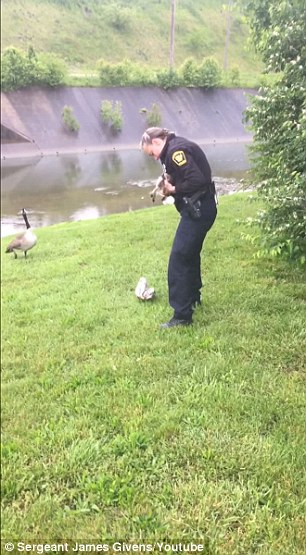
“It seems like something made up. It was just incredible,” Givens said. “I honestly don’t know why I decided to follow her, but I did. It makes me wonder – do they know to turn to humans when they need help?
We may never know the answer to this question, but what we do know is that Officer Givens was in the right place at the right time to help this mother and her baby!
“Life is precious because it is vulnerable, like a little bird. To love life means to love its vulnerability, asking for care, attention, guidance, and support.” — Fr. Henri Nouwen
“The only thing necessary for evil to triumph is for good men to do nothing.” – Edmund Burke (1729-97)
“They helped every one his neighbour; and every one said to his brother, Be of good courage.” (Isaiah 41:6)
*
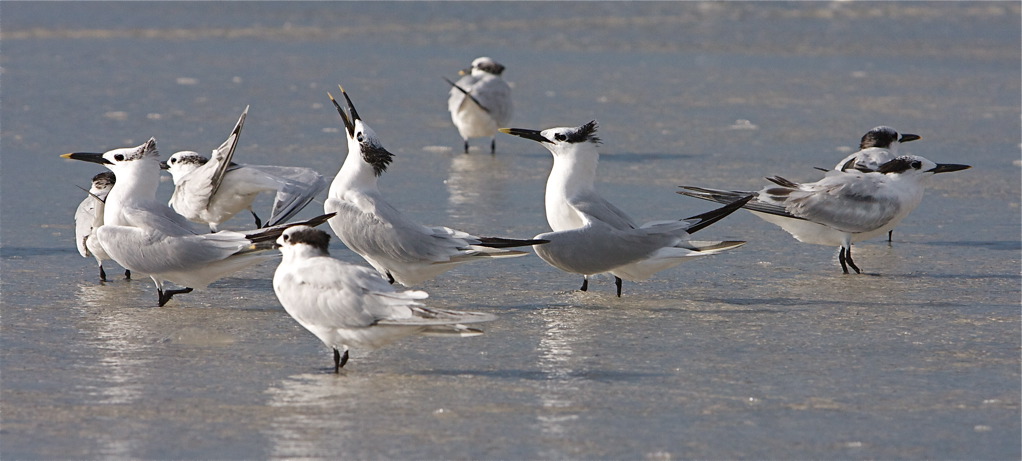
“The pastures are clothed with flocks; The valleys also are covered with grain; They shout for joy, they also sing.” (Psalms 65:13)
Sandwich Tern Singing (calling) By Mike Bader
*
*
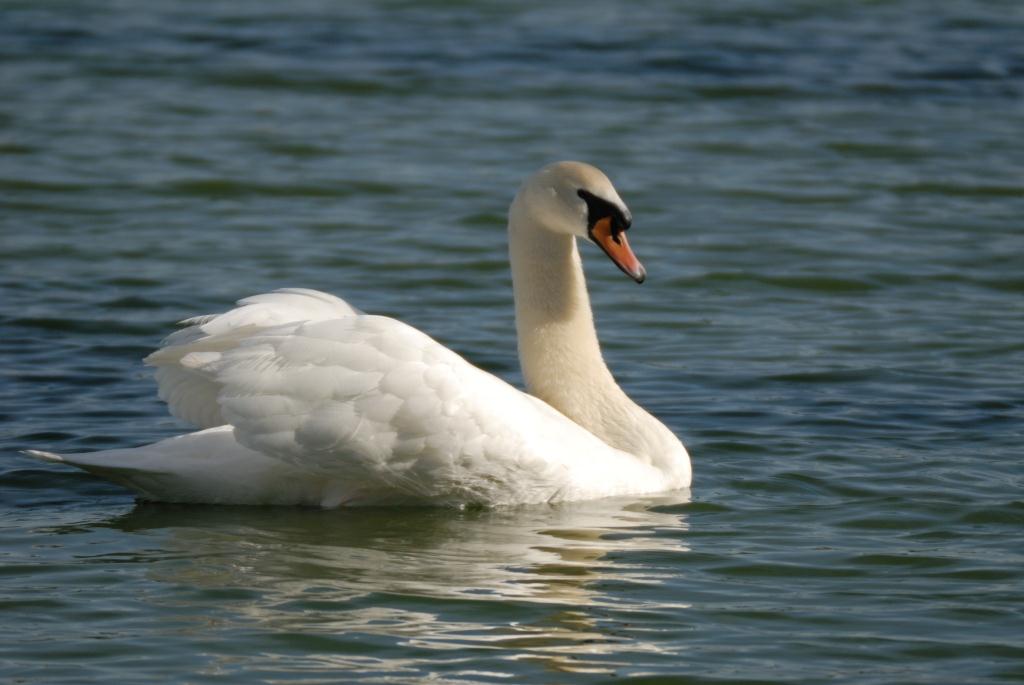
Mute Swan (Cygnus olor) by Dan
“And the swan, and the pelican, and the gier eagle,” (Leviticus 11:18)
As we continue in the Anatidae Family of Ducks, Geese and Swans, this week we will introduce you to four genera. The Branta, the Anser, and the Coscorba genera are made up of Geese. The Cygnus genus are Swans.
Anserinae is a subfamily of swans and geese (three to seven extant genera with 25–30 living species, mainly cool temperate Northern Hemisphere, but also some Southern Hemisphere species, with the swans in one genus, and the geese in three genera. Some other species are sometimes placed herein, but seem somewhat more distinct.
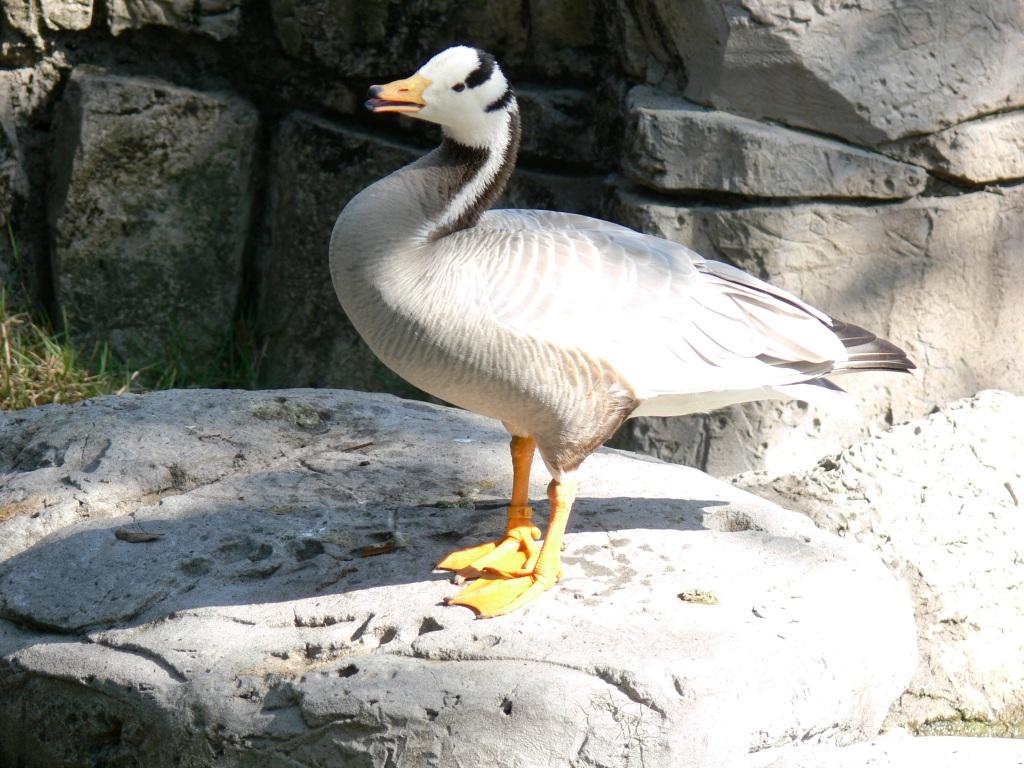
Bar-headed Goose (Anser indicus) Lowry Park Zoo by Lee
This blog follows the I.O.C. list of birds and below are the birds in their listing:
There are also links to articles here written about these different birds.
Bar-headed Goose (Anser indicus) – See Dr. Jim’s Article
Emperor Goose (Anser canagicus – was Chen)
Ross’s Goose (Anser rossii – was Chen)
Snow Goose (Anser caerulescens – was Chen)
Greylag Goose (Anser anser) – See Article
Swan Goose (Anser cygnoides)
Taiga Bean Goose (Anser fabalis)
Pink-footed Goose (Anser brachyrhynchus) – See Article
Tundra Bean Goose (Anser serrirostris)
Greater White-fronted Goose (Anser albifrons) – See Article
Lesser White-fronted Goose (Anser erythropus) – See Article
Coscoroba Swan (Coscoroba coscoroba) – See Lee’s Article
Black Swan (Cygnus atratus) – See Article & Dr. Jim’s Article
Black-necked Swan (Cygnus melancoryphus) – Ian’s Article
Mute Swan (Cygnus olor) – See Article
Trumpeter Swan (Cygnus buccinator) – See Dr. Jim’s Article
Tundra Swan (Cygnus columbianus) – See Article
Whooper Swan (Cygnus cygnus) – See Article
“For which cause we faint not; but though our outward man perish, yet the inward man is renewed day by day. For our light affliction, which is but for a moment, worketh for us a far more exceeding and eternal weight of glory; While we look not at the things which are seen, but at the things which are not seen: for the things which are seen are temporal; but the things which are not seen are eternal.” (2 Corinthians 4:16-18)
“Moment By Moment” ~ Faith Baptist Orchestra
*
Sunday Inspiration – Whistling, White-backed Ducks and Geese
ANSERIFORMES Order
Anatidae – Ducks, Geese & Swans Family
*
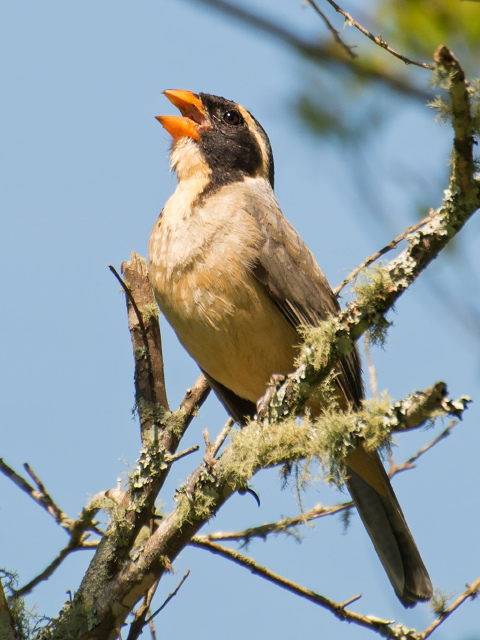
Golden-billed Saltator (Saltator aurantiirostris parkesi) ©Flickr Claudio Dias Timm
“Now go, write it before them in a table, and note it in a book, that it may be for the time to come for ever and ever:” (Isaiah 30:8)
I have been updating the site for the newest changes to the Birds of the World. They demoted 3 species down to subspecies, and raised 4 subspecies up to full species status. Overall, that made for a gain of 1 species. So, now there are 10,660 living avian species in the world. All the indexes are complete and all the updates are done also. These updated comments is at the top of all the main Birds of the World pages:
These pages contain Lee’s Birds of the World, based on the IOC World Bird List 6.4 contains 10,660 extant species (and 155 extinct species) classified in 40 Orders, 238 Families (plus 2 Incertae Sedis) and 2294 Genera and 20,358 Subspecies. All the ORDERs and the Families are listed. Please enjoy looking around at the references to the numerous birds that the Lord has created.
One major change is that they took the Saltators out of the Cardinalidae Family (53 species) and put them in the Thraupidae Family (391). Here is a slideshow of the birdies, that have flown the nest over to the Thraupidae clan:
Slate-colored Grosbeak (Saltator grossus )
Black-throated Grosbeak (Saltator fuliginosus )
Black-headed Saltator (Saltator atriceps )
Buff-throated Saltator (Saltator maximus )
Black-winged Saltator (Saltator atripennis )
Green-winged Saltator (Saltator similis )
Greyish Saltator (Saltator coerulescens )
Orinoco Saltator (Saltator orenocensis )
Thick-billed Saltator (Saltator maxillosus )
Black-cowled Saltator (Saltator nigriceps )
Golden-billed Saltator (Saltator aurantiirostris )
Masked Saltator (Saltator cinctus )
Black-throated Saltator (Saltator atricollis )
Lesser Antillean Saltator (Saltator albicollis )
Streaked Saltator (Saltator striatipectus )
This fellow not only changed Families, but they also changed its genus from Saltator to Pseudosaltator. They also made him a Mountain Saltator.
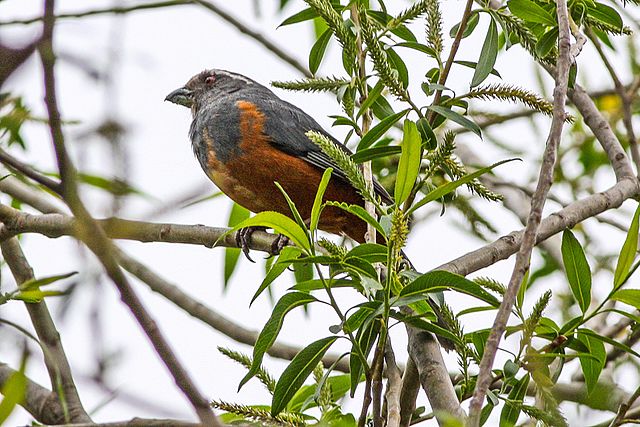
Rufous-bellied Mountain Saltator (Pseudosaltator rufiventris) ©Flickr Ron Knight
Some of the other changes were the three birds they made subspecies, were all Toucanets. They are in the Ramphastidae – Toucans Family.
Blue-throated Toucanet (Aulacorhynchus caeruleogularis)
White-throated Toucanet (Aulacorhynchus albivitta)
To finish up, other than some minor male (-us), or female (-a) endings to a few names, there were four birds given the full species status. They are so new that there are no photos available yet that aren’t copyrighted.
*
“And further, by these, my son, be admonished: of making many books there is no end; and much study is a weariness of the flesh.” (Ecclesiastes 12:12)
*
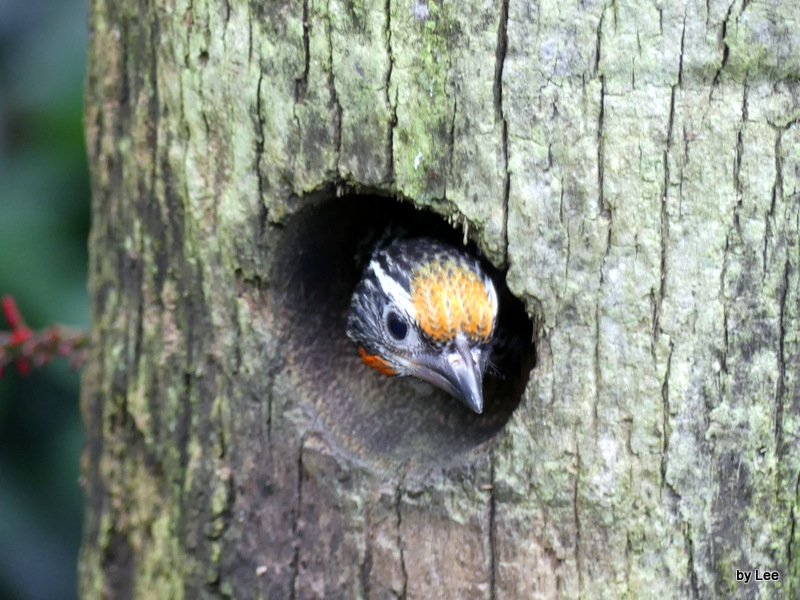
“So we are always confident, knowing that while we are at home in the body we are absent from the Lord.” (2 Corinthians 5:6)
Black Spotted Barbet (Capito niger) Juvenile at Zoo Miami by Lee 10-2016
*
*

“Behold, the Assyrian was a cedar in Lebanon with fair branches, and with a shadowing shroud, and of an high stature; and his top was among the thick boughs.” (Ezekiel 31:3)
Sarus Crane (Grus antigone) by Lee at Wings of Asia – Standing at a height of up to 1.8 m (5 ft 11 in).
*
*

“It is like a grain of mustard seed, which a man took, and cast into his garden; and it grew, and waxed a great tree; and the fowls of the air lodged in the branches of it.” (Luke 13:19 KJV)
Greater Yellownape (Chrysophlegma flavinucha) female Zoo Miami by Dan
*
*
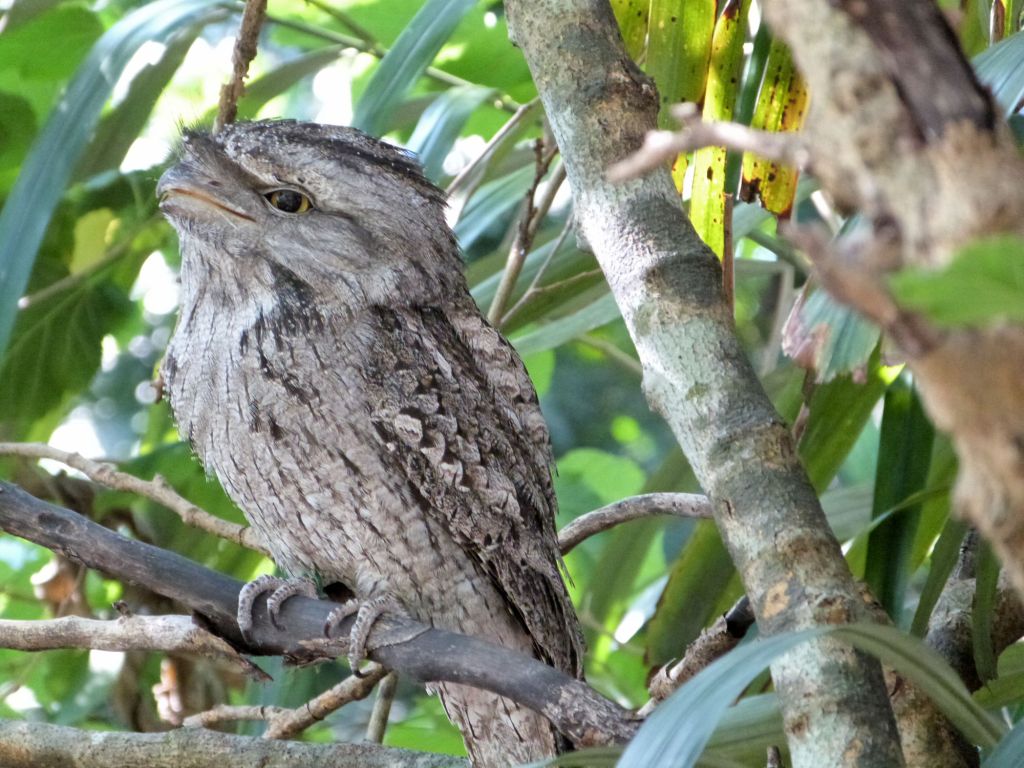
“But we speak the wisdom of God in a mystery, even the hidden wisdom, which God ordained before the world unto our glory:” (1 Corinthians 2:7 KJV)
Tawny Frogmouth (Podargus strigoides) at Wings of Asia by Lee
*
*
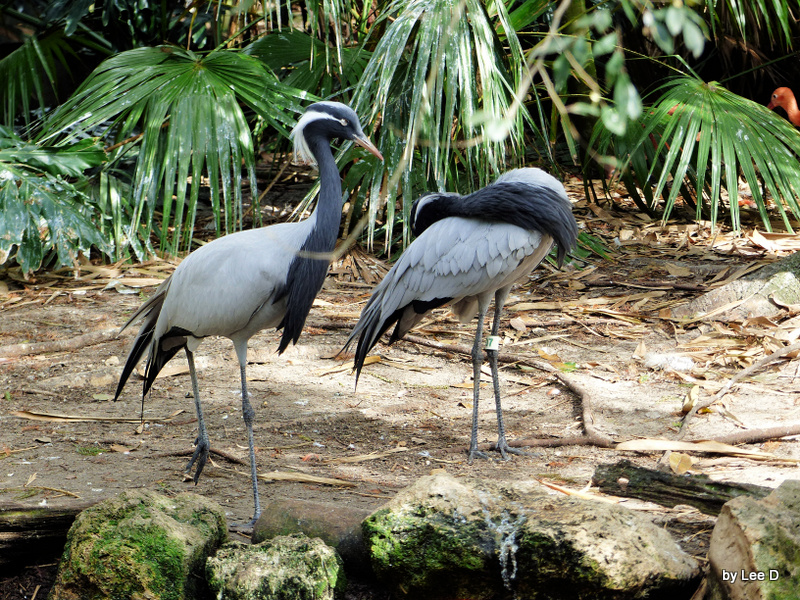
“Yea, the stork in the heaven knoweth her appointed times; and the turtle and the crane and the swallow observe the time of their coming; but my people know not the judgment of the LORD.” (Jeremiah 8:7 KJV)
Demoiselle Crane Lowry Park Zoo by Lee
*
*
 Lee's Birdwatching Adventures Plus