***
SWORD SHALL PIERCE THROUGH
THY OWN SOUL
***
“(Yea, a sword shall pierce through thy own soul also,) that the thoughts of many hearts may be revealed.” (Luke 2:35 KJV)
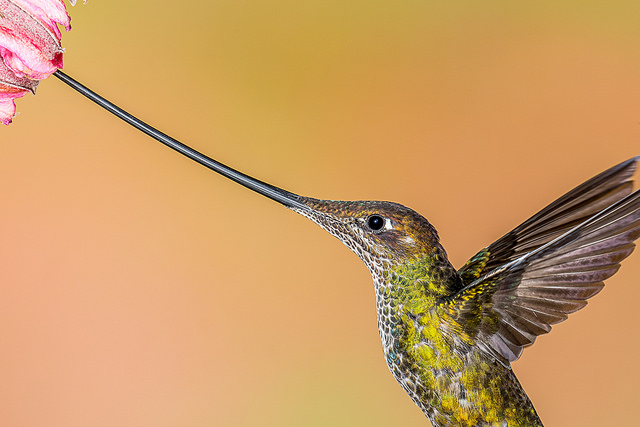
Sword-billed Hummingbird (Ensifera ensifera) ©Flickr Andy Morffew
*
*
“(Yea, a sword shall pierce through thy own soul also,) that the thoughts of many hearts may be revealed.” (Luke 2:35 KJV)
Sword-billed Hummingbird (Ensifera ensifera) ©Flickr Andy Morffew
*
*
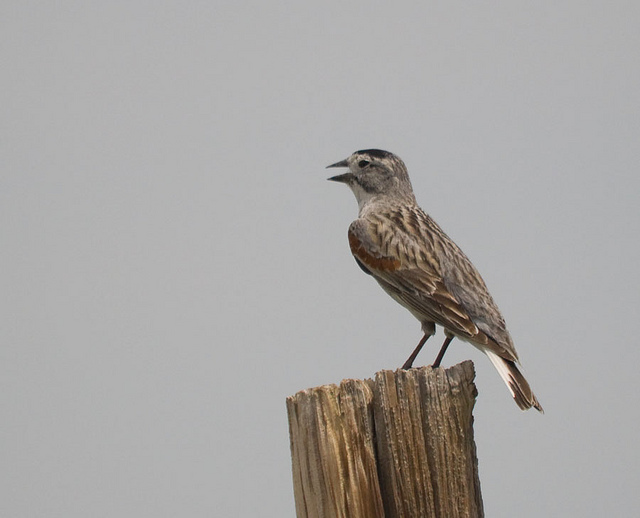
McCown’s Longspur (Rhynchophanes mccownii) ©Flickr oldbilluk
“Therefore whosoever heareth these sayings of mine, and doeth them, I will liken him unto a wise man, which built his house upon a rock:” (Matthew 7:24)
After the many postings for the Thraupidae Family, nine to be exact, this week’s family only has six species. This is the next to last avian family in the Passeriformes Order. Since there are so few, more information will be given. [Added a video of a small kid’s choir to accompany the slideshow.]
McCown’s Longspur (Rhynchophanes mccownii) is a small ground-feeding bird from the family Calcariidae, which also contains the longspurs and snow buntings. McCown’s was named after Captain John P. McCown, an American army officer.
This longspur has a large cone-shaped bill, a streaked back, a rust-coloured shoulder and a white tail with a dark tip. In breeding plumage, the male has a white throat and underparts, a grey face and nape and a black crown. Other birds have pale underparts, a dark crown and may have some black on the breast. The male’s song is a clear warble. The call is a dry rattle.
In winter, they migrate in flocks to prairies and open fields in the southern United States and northern Mexico. They prefer areas with sparser vegetation than those chosen by the Chestnut-collared Longspur. These birds forage on the ground, gathering in flocks outside of the nesting season. They sometimes make short flights in pursuit of flying insects. They mainly eat seeds, also eating insects in summer. Young birds are mainly fed insects. This bird breeds in dry short grass prairies in central Canada, (the Canadian Prairies), and the north central United States. The female lays 3 or 4 eggs in a grass cup nest in a shallow scrape on the ground. The male sings and flies up to defend his territory. Both parents feed the young birds.
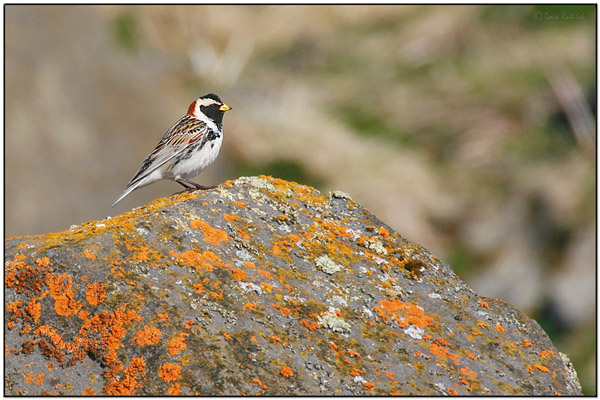
Lapland Longspur (Calcarius lapponicus) by Daves BirdingPix
Lapland Longspur (Calcarius lapponicus) is a robust bird, with a thick yellow seed-eater’s bill. The summer male has a black head and throat, white eyestripe, chestnut nape, white underparts, and a heavily streaked black-grey back. Other plumages have a plainer orange-brown head, a browner back and chestnut nape and wing panels.
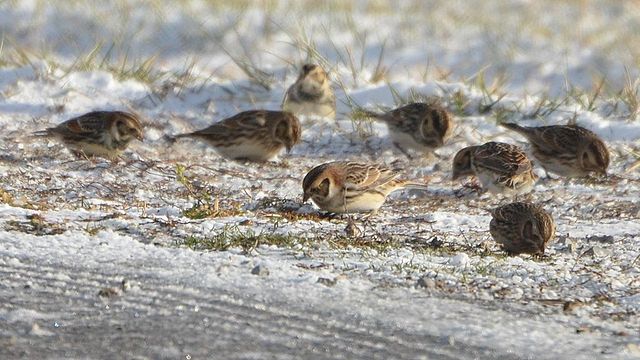
Lapland Longspur (Calcarius lapponicus) ©WikiC
It breeds across Arctic Europe and Asia and in Canada and the northernmost United States. It is migratory, wintering in the Russian steppes, the southern United States, Northern Scandinavian arctic areas and down to coastal Southern Sweden, Denmark and Great Britain. This is the only Eurasian species of the longspur buntings.
The bird is often seen close to the tree line, and likes to feed in mixed-species flocks in winter. They pick them on the ground, rarely feeding directly on plants. Its natural food consists of insects when feeding young, and otherwise seeds. The nest is on the ground. 2–4 eggs are laid. During the breeding season, the birds migrate to the north, where their diet switches to arthropods. Nestlings are only fed arthropods, which also constitute the diet of the parents at that time of the year (June to July). The birds often catch insects in mid-air, but do forage through vegetation when conditions prevent the insects from flying. Longspurs can consume between 3000 and 10,000 prey items (insects or seeds) per day, depending on their energy needs.
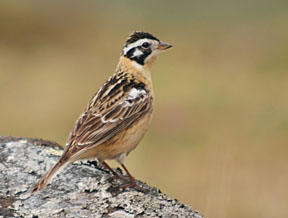
Smith’s Longspur (Calcarius pictus) USFWS
Smith’s Longspur (Calcarius pictus) have short cone-shaped bills, streaked backs, and dark tails with white outer retrices. In breeding state plumage (mostly formed by worn basic plumage), the male has a pumpkin-orange throat, nape, and underparts contrasting with an intricate black-and-white face pattern. The white lesser coverts are quite pronounced on a male in spring and early summer. Females and immatures have lightly streaked buffy underparts, dark crowns, brown wings with less obvious white lesser coverts, and a light-colored face. The tail is identical at all ages. Audubon named this bird after his friend Gideon B. Smith.
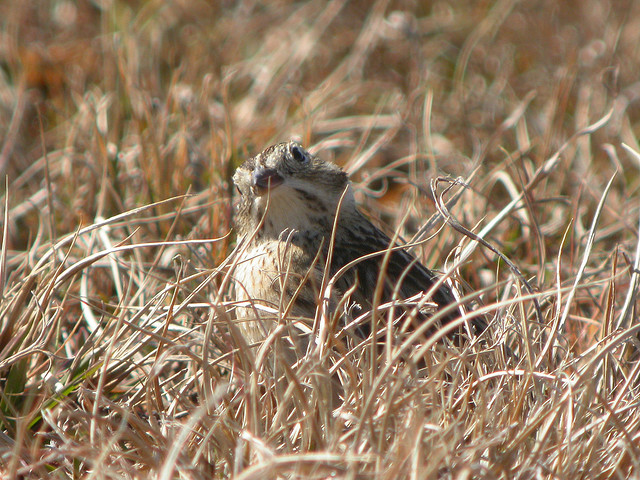
Smith’s Longspur (Calcarius pictus) cc rgibbo3
This bird breeds in open grassy areas near the tree line in northern Canada and Alaska. The female lays three to five eggs in a grass cup nest on the ground. These birds nest in small colonies; males do not defend territory. In winter, they congregate in open fields, including airports, in the south-central United States.
Migration is elliptical, with northbound birds staging in Illinois in the spring and southbound birds flying over the Great Plains in the fall. These birds forage on the ground, gathering in flocks outside of the nesting season. They mainly eat seeds, also eating insects in summer. Young birds are mainly fed insects.
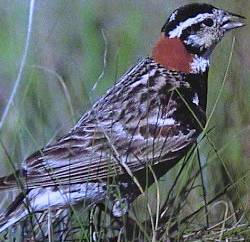
Chestnut-collared Longspur (Calcarius ornatus) WikiC
Chestnut-collared Longspur (Calcarius ornatus) is a small ground-feeding bird that has a short conical bill, a streaked back and a white tail with a dark tip. In breeding plumage, the male has black underparts, a chestnut nape, a yellow throat and a black crown. Other birds have light brown underparts, a dark crown, brown wings and may have some chestnut on the nape.
This bird breeds in short and mixed grass prairies in central Canada and the north central United States. The female lays 4 or 5 eggs in a grass cup nest in a shallow scrape on the ground. The male sings and flies up to defend his territory. Both parents feed the young birds. In winter, they migrate in flocks to prairies and open fields in the southern United States and Mexico and they forage on the ground, gathering in flocks in winter. They mainly eat seeds, also eating insects in summer. Young birds are mainly fed insects.
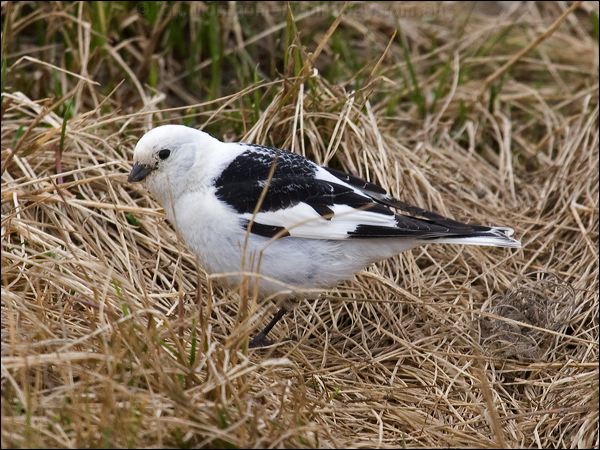
Snow Bunting (Plectrophenax nivalis) by Ian
Snow Bunting (Plectrophenax nivalis) is sometimes colloquially called a snowflake, is apasserine bird in the Calcariidae family It is an Arctic specialist, with a circumpolar Arctic breeding range throughout the northern hemisphere. There are small isolated populations on a few high mountain tops south of the Arctic region, including the Cairngorms in central Scotland and the Saint Elias Mountains on the southern Alaska-Yukon border, and also Cape Breton Highlands. The snow bunting is the most northerly recorded passerine in the world.
They are a medium size, ground-dwelling species that walks, runs and could potentially jump if needed. It is fairly large and long-winged for a bunting. The bill is yellow with a black tip, and is all black in summer for males. The plumage is white in the underparts and the wings and back have black and white on them. The female and male have a different plumage. During the mating season: the male is completely black and white with black tips in the wings, while the female will have the same coloration than the male in the wings but will have a red-brownish color in her back. During the winter season they will both have a rufous coloration in the back. In the spring, the buntings will not go through a molt as other passerines birds do, instead the breeding coloration comes with the wearing and abrasion of the feathers. Unlike most passerines, it has feathered tarsi, an adaptation to its harsh environment. No other passerine can winter as far north as this species apart from the common raven.
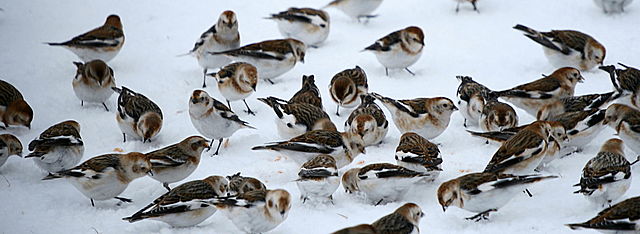
Snow Bunting (Plectrophenax nivalis) Flock ©WikiC
The snow buntings migrate to the Arctic to reproduce and they are the first migrant species that arrives to these territories. They must gain at least 30% of body mass before migration. The males will arrive first at the beginning of April, when temperature could reach -30 degrees Celsius. This early migration could be explained by the fact that this species is highly territorial and the quality of the nesting area is crucial to their reproductive success. Females will arrive four to six weeks later, when the snow starts to melt.
The range of the family is extensive. Of the six species within the family, the snow bunting and Lapland longspur are found both in both North America and Eurasia; the other four species are found only in North America. The snow bunting breeds in northern latitudes in an extensive breeding range which consists of northern Alaska and Canada, the western and southern coasts of Greenland, and northern Scandinavia and Russia. The snow bunting winters throughout southern Canada and the northern United States in North America, and its Eurasian range includes the northern United Kingdom and a large band extending from Germany west through Poland and Ukraine to Mongolia and China.[9][10] Additionally, the snow bunting has been recorded as a vagrant to Algeria and Morocco in North Africa, the Balkans, Greece and Turkey, and Malta. The Lapland longspur’s range is similar to that of the snow bunting, breeding in northern Canada, Scandinavia, and Siberia, and coastal Alaska and Greenland and wintering in the northern United States and Canada, and in a band between approximately 45° and 55° latitude across Russia, Kazakhstan, China, and Mongolia to the Sea of Japan.

McKay’s Bunting (Plectrophenax hyperboreus) ©USFWS
McKay’s bunting (Plectrophenax hyperboreus) is most closely related to the snow bunting (P. nivalis). Hybrids between the two species have been observed, leading some authorities to treat McKay’s as a subspecies of snow bunting. As the Plectrophenax buntings are nested within the Calcarius clade, their closest relatives are the longspurs. McKay’s bunting breeds on two islands in the Bering Sea, St. Matthew and Hall islands, and winters on the western coast of the U.S. state of Alaska. The name honors the American naturalist Charles McKay.
This species closely resembles Snow Bunting in all plumages, but is whiter overall. The breeding plumage of the male is almost purely white, with only small areas of black on the wingtips and tail. The breeding female has a streaked back. Non-breeding birds also have warm brown patches on cheeks, crown, and the sides of the neck. McKay’s bunting is larger on average than the snow bunting. It is 18 cm (7.1 in) long and weighs from 38 to 62 g (1.3 to 2.2 oz), with an average of 54.5 g (1.92 oz). It nests on shingle beaches in hollow drift logs and rock crevices. Winters on coastal marshes, shingle beaches, and agricultural fields. Feeding habits are thought to be similar to snow bunting, which in winter consumes seeds from weeds and grasses, and in summer has a mixed diet of seeds, buds, and insects. (Information taken from Wikipedia with editing.)
“He is like a man which built an house, and digged deep, and laid the foundation on a rock: and when the flood arose, the stream beat vehemently upon that house, and could not shake it: for it was founded upon a rock. But he that heareth, and doeth not, is like a man that without a foundation built an house upon the earth; against which the stream did beat vehemently, and immediately it fell; and the ruin of that house was great.” (Luke 6:48-49)
“House on A Rock” ~ by the Summer Kid’s Choir (They are not very loud, so I decided to let you watch them)
A small choir to go with this small family.
Calcariidae – Longspurs, Snow Buntings
*
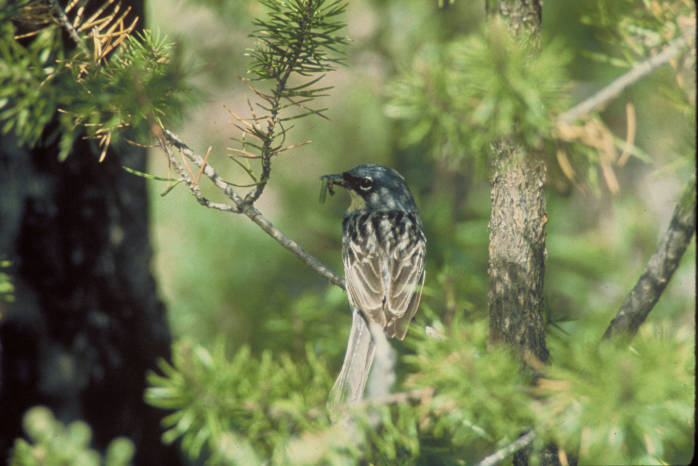
Kirtland’s Warbler (Setophaga kirtlandii) ©USFWS
“And God blessed the seventh day, and sanctified it: because that in it he had rested from all his work which God created and made.” (Genesis 2:3)
Myles Willard is an avid bird watcher, award-winning nature photographer and long-time friend of Creation Moments. Myles has given us hundreds of breathtaking nature photos, one of which accompanies the printed transcript of today’s program at the Creation Moments website.
The reason I’m telling you about him today is because of an unexpected discovery he made while looking out the window of his home in Michigan. Each fall he meticulously tracks and logs the number of migrating warblers that stop by for a rest in the big cedar tree in his yard. After tracking the activity of over 1,500 warblers for 18 years, he was surprised to see a statistically significant dip in the number of birds stopping by that occurred on every seventh day!

From Article – Do Birds Take a Sabbath Rest ©Myles Willard
Did these migrating birds have a built-in instinct that somehow made them follow the biblical principle of a Sabbath rest? We are not saying, of course, that the warblers were knowingly obeying God’s fourth commandment. However, if God worked for six days and then rested on the seventh, why would it be hard to believe that God gave these birds a cycle of six days of work followed by a seventh day of rest?
According to the account given in the book Inspired Evidence: Only One Designer, “It would seem that Myles Willard, science teacher, nature photographer and bird watcher, has found and documented such a pattern.”
Prayer:
Oh Lord, thank You for doing all the work necessary for our salvation so we can rest securely in the knowledge that – by grace through faith – we can have eternal life! Amen.
Notes:
Myles Willard, The Rest Is History, monograph, 2008. Cited in Inspired Evidence: Only One Reality by Julie Von Vett and Bruce Malone, April 29 (Search for the Truth Publications, 2012). Photo: One of Myles Willard’s superb photos. Used with permission.
Creation Moments ©2016 (Used with persmission)

Great Blue Heron (Ardea herodias) Sleeping at Circle B by Lee
Huh? Maybe this Great Blue Heron was off on his schedule. It was not taken on a Sunday, as we don’t go birdwatching on Sundays. We rest on Sunday and attend church, so, why wouldn’t the birds rest also? This article is very interesting. I am sure “evolutionists” would discount it, but those records that Myles kept, are worth considering, and I doubt he just made these statistics up.
*
*
“God looked down from heaven upon the children of men, to see if there were any that did understand, that did seek God.” (Psalms 53:2 KJV)
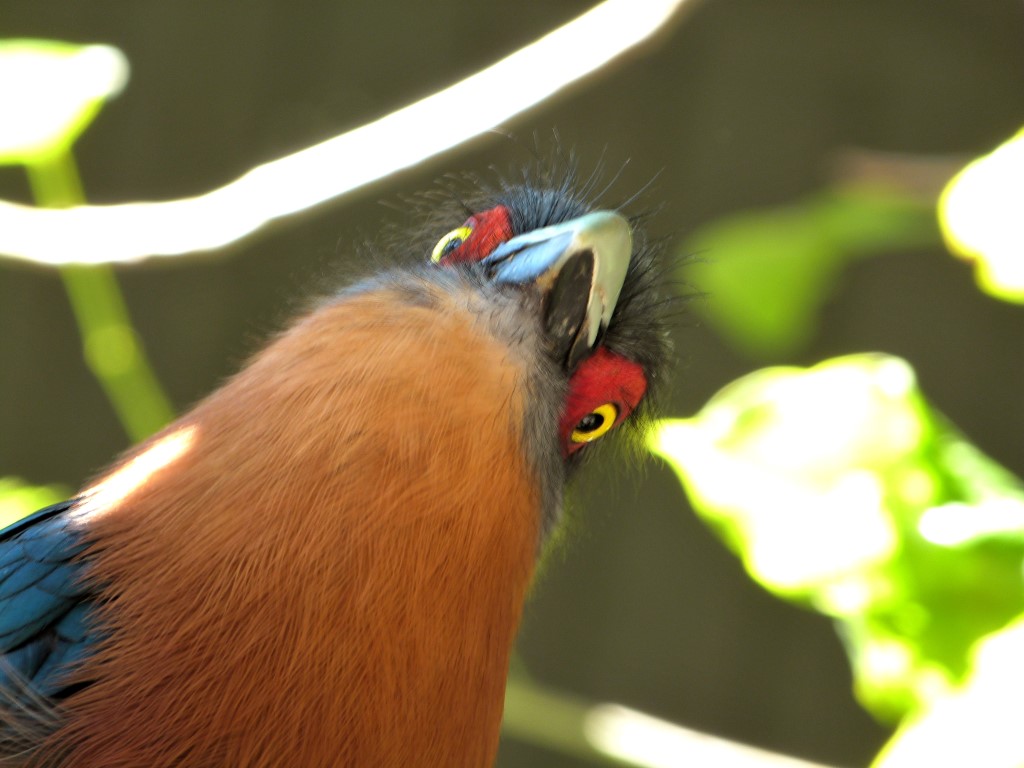
Chestnut-breasted Malkoha (Phaenicophaeus curvirostris) at Palm Beach Zoo by Lee
*
*
“Them hath he filled with wisdom of heart, to work all manner of work, of the engraver, and of the cunning workman, and of the embroiderer, in blue, and in purple, in scarlet, and in fine linen, and of the weaver, even of them that do any work, and of those that devise cunning work.” (Exodus 35:35 KJV)
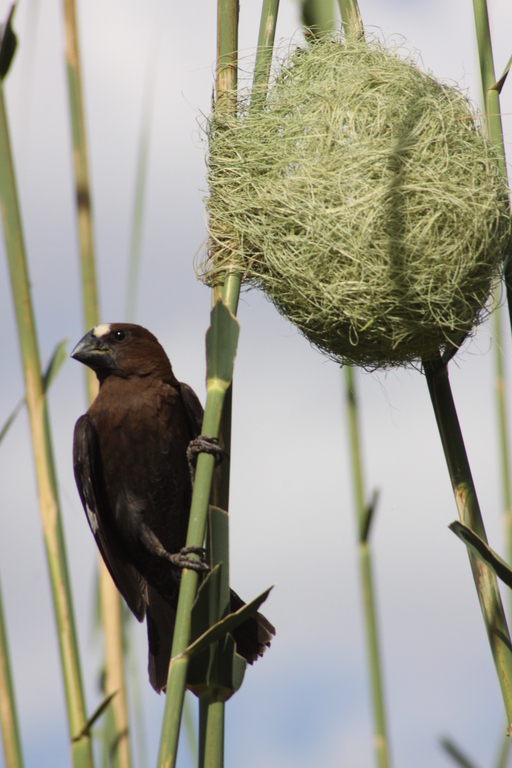
Thick-billed Weaver (Amblyospiza albifrons) – male with nest
*
*
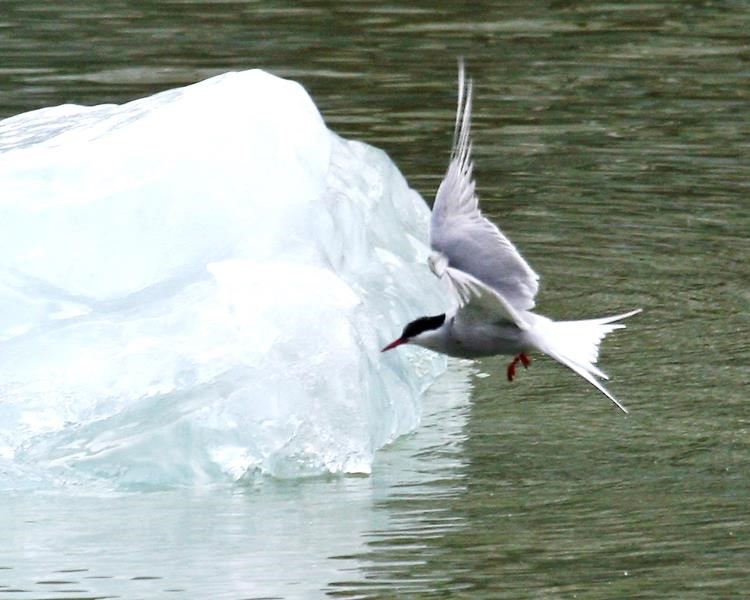
Arctic Tern near Iceberg
Unbelievable Migrations from Creation Moments
“For the Son of man is as a man taking a far journey, who left his house, and gave authority to his servants, and to every man his work, and commanded the porter to watch.” Mark 13:34
If you have ever traveled to a distant city on vacation, you know how much planning you have to do before you leave. And, of course, you need to know where you are going and the route you must follow to get there. But the creatures we’ll be talking about today know exactly how to get where they are going. In fact, they were born with an internal GPS system to show them the way.
In his book, Billions of Missing Links, Dr. Geoffrey Simmons devotes an entire chapter to the topic of migration. He begins by telling how baby loggerhead turtles migrate 8,000 miles across the Atlantic Ocean. But that’s a short trip compared to the staggering 25,000 miles that arctic terns fly each year. That’s like flying completely around the Earth at the equator!
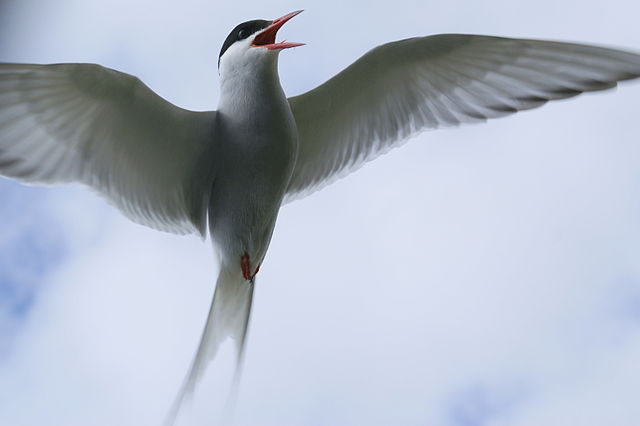
Arctic Tern (Sterna paradisaea) ©WikiC
As Dr. Simmons points out, “Every species seems to know how to prepare for the arduous trip far in advance, but no one knows how they acquire the capability.” After describing all the preparations migrating birds must take care of, he writes: “One would think all these preparations had to have come as a whole package. There is way too much purposeful change for random mutations.”
How true! And even though Dr. Simmons is not a creationist, we have come to the exact same conclusion – namely, that animal migrations could not have come about slowly by trial and error, as Darwinian theory would have us believe.
Prayer:
Oh Lord, though I may get lost while going on a long trip, Your creatures never seem to lose their way. You have boggled my mind once again! Amen.
Notes:
Geoffrey Simmons, M.D., Billions of Missing Links, pp. 165-169 (Harvest House Publishers, 2007).
***
Previous articles about the Arctic Tern:
*
“And the angel of the LORD appeared unto him in a flame of fire out of the midst of a bush: and he looked, and, behold, the bush burned with fire, and the bush was not consumed.” (Exodus 3:2 KJV)
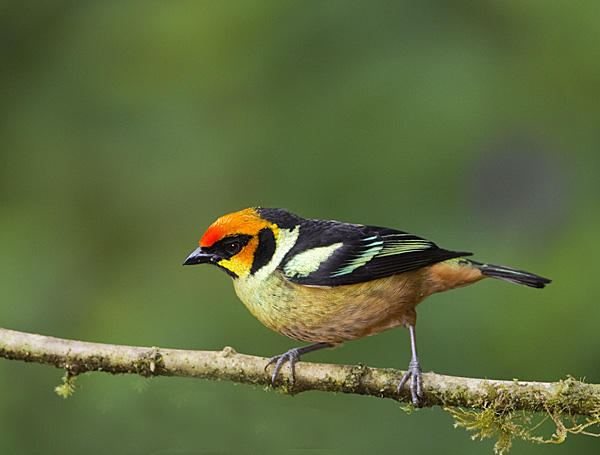
Flame-faced Tanager (Tangara parzudakii) ©WikiC
*
*

Roseate Spoonbill at MacDill AFB by Dan
“But as for me, I will walk in mine integrity: redeem me, and be merciful unto me. (Psalms 26:11 KJV)
Roseate Spoonbill at MacDill AFB, FL by Dan
*
*
Band-tailed Seedeater (Catamenia analis) Male ©WikiC
“Jesus saith unto them, My meat is to do the will of him that sent me, and to finish his work.” (John 4:34 KJV)

Cuban Bullfinch (Melopyrrha nigra) ©WikiC
We have arrived at the last the Thraupidae family of Tanagers and close family relatives. We begin with the Cuban Bullfinch (Melopyrrha nigra) is a songbird species of the monotypic genus Melopyrrha. Sometimes classified in the bunting and American sparrow family (Emberizidae), more recent studies have shown it to be part of the tanager family (Thraupidae). Therein, it belongs to the lineage of tholospizan “finches”, which also includes the famous Darwin’s finches. They are found in the Cayman Islands, there only on Grand Cayman, and Cuba. Its natural habitats are subtropical or tropical moist lowland forests, subtropical or tropical moist montane forests, and heavily degraded former forest.
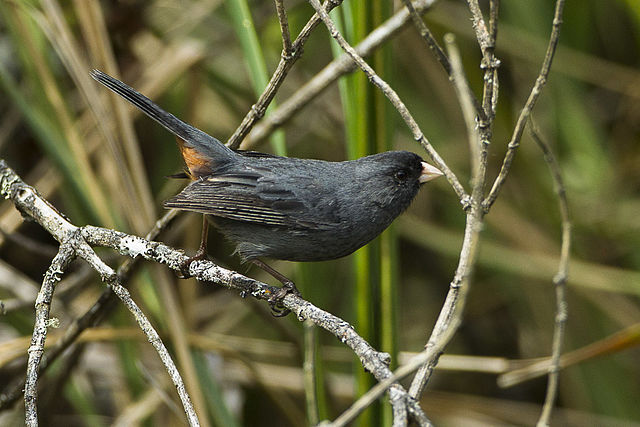
Paramo Seedeater (Catamenia homochroa) ©WikiC
The next two genera, Dolospingus, found in Brazil, Colombia, and Venezuela. Its natural habitat is subtropical or tropical dry shrubland, and Catamenia also from South America, are Seedeaters.

Yellow-faced Grassquit (Tiaris olivaceus) by Kent Nickell
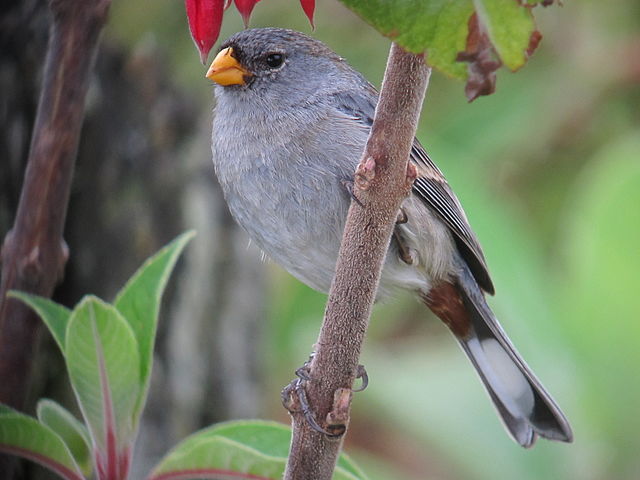
Six Grassquits, from Tiaris and Loxipasser genera are from Central and South America. The Yellow-faced Grassquits are interesting because “During courtship, the male vibrates his wings as he sings his subdued song, sitting only 1–2 in (2.5–5.1 cm) away so the female can properly hear him. The roughly globular nest, built by the female, is made of grass and weed stems compacted into a thick mass, and lined with pieces of grass inflorescences and bast fibre. It has a side entrance and is placed usually less than 30 cm (12 in) above the ground, often among grass or weeds on a road or river embankment.” (Wikipedia) Grassquits are known for making covered nests.
Most of the rest of the family are similar in that just a few birds are in each genus. The the Bullfinches, Loxigilla; Ground Finches, Geospiza; Cactus Finches, Geospiza; Tree Finches, Camarhynchus; Warbler-Finches, Certhidea; and then five Tanagers in three genera.
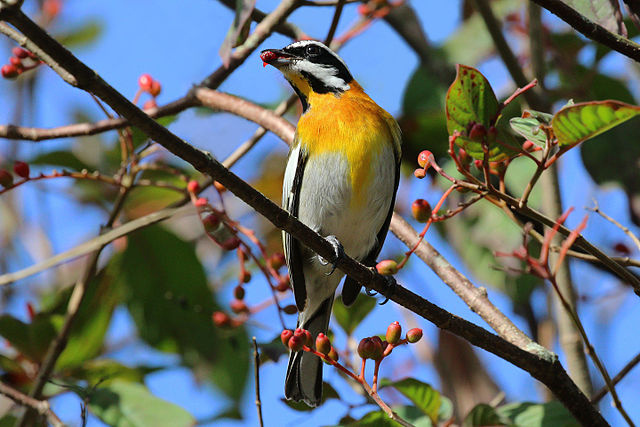
Western Spindalis (Spindalis zena pretrei) Male ©WikiC
There are four “Spindalis is a genus consisting of four non-migratory bird species. The genus is considered endemic to the Greater Antilles; a population on Cozumel Island, off the Yucatán Peninsula’s east coast, is part of that island’s West Indian fauna. Spindalis males are characterized by bright plumage while females are duller and have a different coloration. (Wikipedia) As usual, this helps hide her while sitting on the nest. Also shows the Lord’s concern for all of His Creation.

Plushcap (Catamblyrhynchus diadema) ©WikiC
The next to last bird in the Thraupidae Family is an very interesting bird and I’ll let Wikipedia give the details. “The plushcap is one of the most distinctive of all Neotropical passerines in terms of both its appearance and behavior. The plushcap (Catamblyrhynchus diadema) was in its own family until recently when it was grouped with the tanagers. It is very distinct both physically and in terms of behavior. The bill is broad and black. The body is a chestnut color with a bright golden-yellow forecrown. The forecrown is made up of stiff feathers. It has been speculated that these short, dense feathers are less susceptible to feather wear and more resistant to moisture than typical feathers. This may be an adaptation for its specialized feeding mode [sounds like Wisdom from their Creator], in which it probes into dense whorls of bamboo for its prey items (Hilty et al. 1979). Juveniles are just duller versions of their parents. They are found at high elevations from northern Venezuela south to Argentina, including the coastal mountains of Venezuela and the Andes of Colombia, Ecuador, Peru, Bolivia, and extreme northwestern Argentina. They live in montane forests and secondary forests near bamboo. They forage for insects inside the bamboo. They will eat small insects, berries, and small plant matter. The overall length averages 14 cm (5.5 in) and weigh averages 14.1 grams (0.5 oz).”
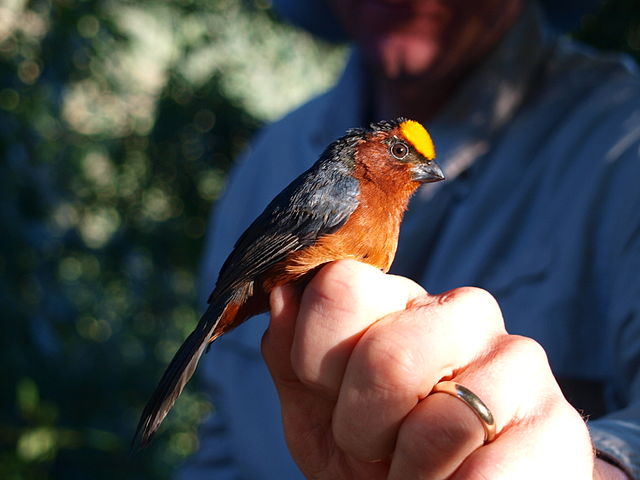
Plushcap (Catamblyrhynchus diadema) ©WikiC
“The bird is very distinct and is not confused with many other birds. It stands out from the other tanagers, only possibly being confused with the golden-crowned tanager despite the golden-crowned tanager being blue. The species is found in Argentina, Bolivia, Colombia, Ecuador, Peru, and Venezuela. Its natural habitat is humid montane forests and it is always found in close association with Chusquea bamboo. It is typically found at an elevation 1,800 to 3,500 m.”
But none of these things move me, neither count I my life dear unto myself, so that I might finish my course with joy, and the ministry, which I have received of the Lord Jesus, to testify the gospel of the grace of God. (Acts 20:24 KJV)
“Hallelujah For The Cross” ~ by Jessie Padgett
*
Thraudidae Family – Tanagers, Finches and Allies
Sunday Inspiration – Thraupidae – Tanagers and Allies I
Sunday Inspiration – Thraupidae – Tanagers and Allies II
Sunday Inspiration – Thraupidae – Tanagers and Allies III
Sunday Inspiration – Thraupidae – Tanagers and Allies IV
Sunday Inspiration – Thraupidae – Dacnis, Honeycreepers, Conebills
Sunday Inspiration – Thraupidae – Flowerpiercer, Sierra Finches, Plus
Sunday Inspiration – Inca, Warbling and Various Finches
Sunday Inspiration – Thraupidae Tanagers and Allies VIII
*

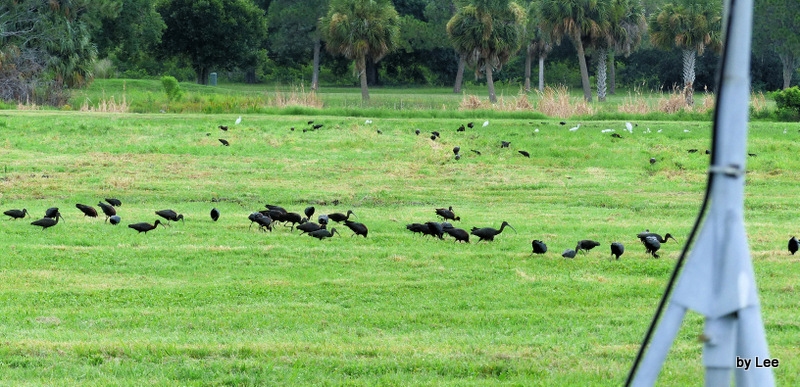
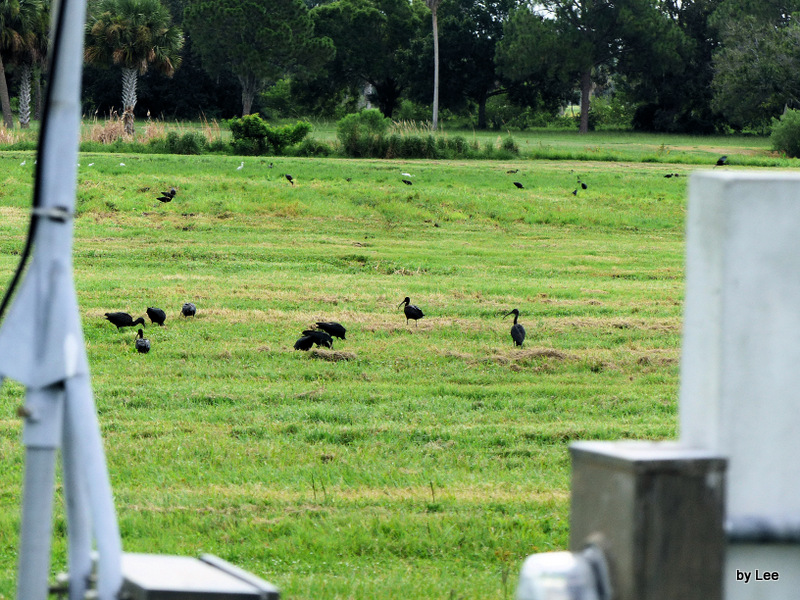
About 60 in this group of Glossy Ibis(Plegadis falcinellus) at MacDill 7-29-16 by Lee
“and for a long time birds and hedgehogs, and ibises and ravens shall dwell in it: and the measuring line of desolation shall be cast over it, and satyrs shall dwell in it.” (Isaiah 34:11 Brenton)
A week or so ago, while in Tampa, we spotted a huge flock of Glossy Ibises. One or two, three maybe, but well over 90? That was a total SURPRISE!

Glossy Ibis – about 60 in this batch
That is one of the joys of going birdwatching. You never know what may appear to when you think it will just be like last time. We go over to MacDill AFB every couple of months and half the time we take our cameras. They have a beach on the tip of the peninsula it sits on, and there usually is some avian wonders down there to observe. [As I’ve mentioned previously, my back has been acting up and we haven’t done much birding.] We can park just a few yards from the beach, which doesn’t require a lot of walking for me. This time of the year, there is usually not a lot of activity.
A little that a righteous man hath is better than the riches of many wicked. (Psalms 37:16 KJV)
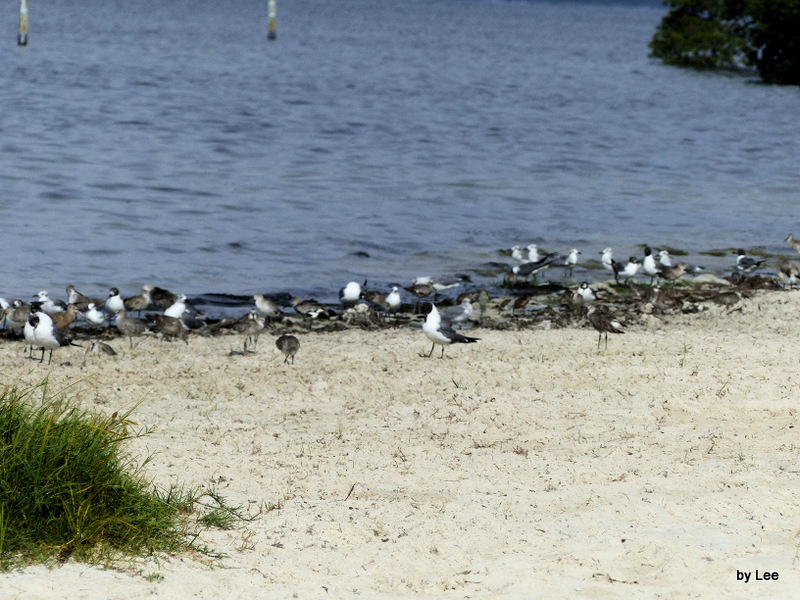
Birds at the Shore at MacDill
I did catch Dan who had walked over to where most of the birds were. I only concentrated on a small shore bird near me.


Western Sandpiper, I Think.
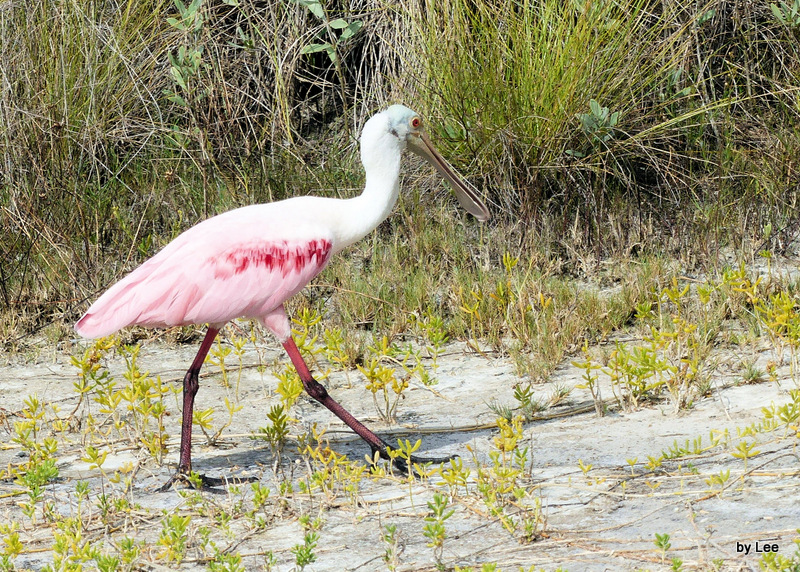
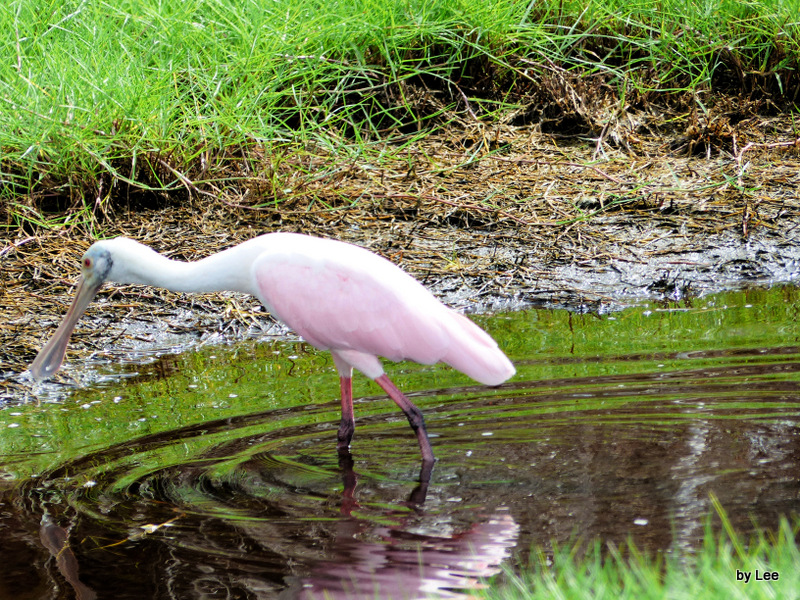
We had spotted all the Glossy Ibises in the field along the road to the beach and were hoping that they were still there when we returned from the beach. We were almost back to them when we were delighted to spot two Roseate Spoonbills.

Roseate Spoonbill
Not far past them, we arrived where the Ibises had been and sure enough, they were waiting for us. My thinking is that they were on their way somewhere, in migration, and had landed to rest and feed. Possible to avoid a coming storm. Right after these photos were taken, we got soaked by a rainstorm as we were entering the commissary (Grocery).
Wikipedia has this to say about the “glossy ibis (Plegadis falcinellus) is a wading bird in the ibis family Threskiornithidae. The scientific name derives from Ancient Greek plegados and Latin, falcis, both meaning “sickle” and referring to the distinctive shape of the bill.”
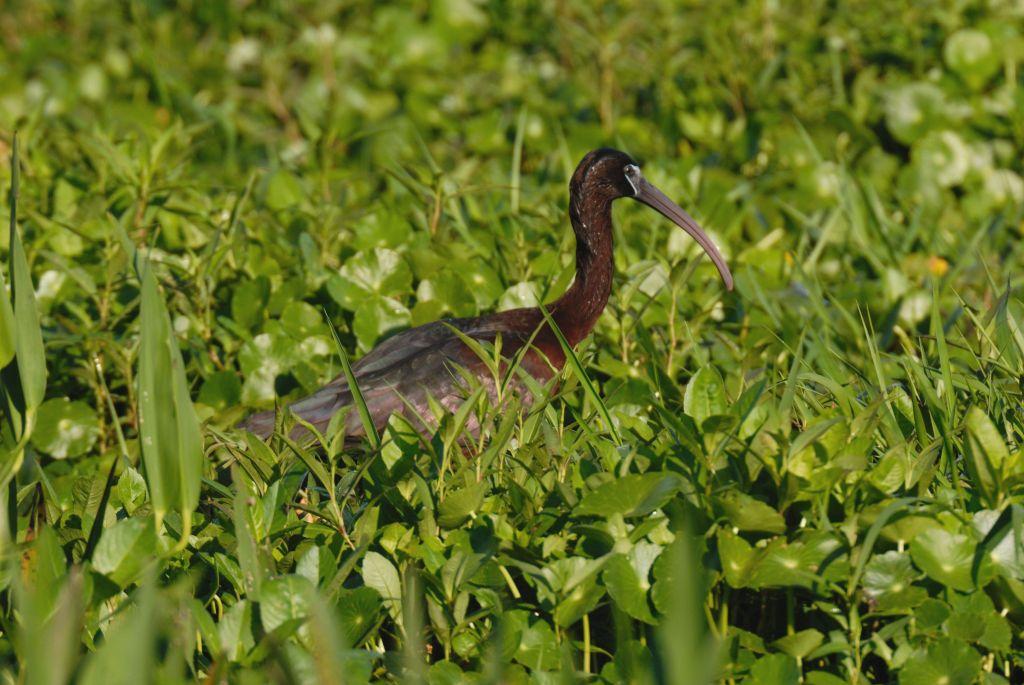
Glossy Ibis (Plegadis falcinellus) in breeding plumage taken previously by Dan’s Pix
But still, why so many? Here is an answer, again from Wikipedia, “Populations in temperate regions breed during the local spring, while tropical populations nest to coincide with the rainy season. Nesting is often in mixed-species colonies. When not nesting, flocks of over 100 individuals may occur on migration, and during the winter or dry seasons the species is usually found foraging in small flocks. Glossy ibises often roost communally at night in large flocks, with other species, occasionally in trees which can be some distance from wetland feeding areas.” (bolding mine)
I’ve included a gallery of photos so you can see them better. If you look in the background, you will see many more of them. Also mixed in is another Roseate Spoonbill, Great Egrets, White Ibises and at least one Snowy Egret. When I zoomed in, the photos aren’t all that clear, but you can see the species.








Birds of the World – Threskiornithidae – Ibises, Spoonbills
Birds of the Bible – Isaiah 34:11
Glossy Ibis – Wikipedia
Glossy Ibis – All About Birds
Glossy Ibis – Audubon
Glossy Ibis – WhatBird
*

“I laid me down and slept; I awaked; for the LORD sustained me.” (Psalms 3:5 KJV)
Raja Shelduck (Tadorna radjah) Brevard Zoo by Dan
*
*

Black Heron (Egretta ardesiaca) ©WikiC San Diego Zoo
And the stork, and the heron after her kind, and the lapwing, and the bat. (Deuteronomy 14:18 KJV)
The Black Heron (Egretta ardesiaca) is also know as the Black Egret. They belong to the Ardeidae – Herons, Bitterns Family. “This medium-sized (42.5–66 cm in height), black-plumaged heron with black legs and yellow feet. It is found south of the Sahara Desert, including Madagascar, and prefers shallow open waters, such as the edges of freshwater lakes and ponds. It may also be found in marshes, river edges, rice fields, and seasonally flooded grasslands. In coastal areas, it may be found feeding along tidal rivers and creeks, in alkaline lakes, and tidal flats. Its breeding range is between Senegal and Sudan and to the south. It is found mainly on the eastern half of the continent. It has also been observed in Greece.”

Black heron (Egretta ardesiaca)map) Range Map
“The nest of the black heron is constructed of twigs placed over water in trees, bushes, and reed beds, forming a solid structure. The heron nests at the beginning of the rainy season, in single or mixed-species colonies that may number in the hundreds. The eggs are dark blue and the clutch is two to four eggs.” (Quotes from Wikipedia)
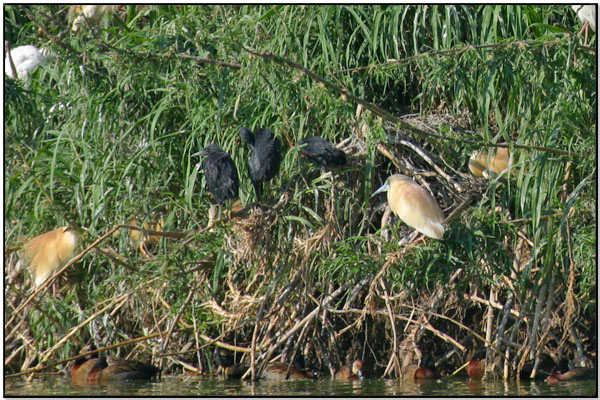
Black Heron (Egretta ardesiaca) by Daves BirdingPix
“Keep me as the apple of the eye, hide me under the shadow of thy wings,” (Psalms 17:8 KJV)

Black Heron (Egretta ardesiaca) ©WikiC
What is so amazing about this heron is how it searches out its food. They stretch out their wings to form an umbrella or canopy. This creates shade which attracts fish and the canopy also allows the heron to see their future meal better by blocking the reflection of the sun, giving them better visibility.

Black Heron (Egretta ardesiaca) ©WikiC
Because that which may be known of God is manifest in them; for God hath shewed it unto them. For the invisible things of him from the creation of the world are clearly seen, being understood by the things that are made, even his eternal power and Godhead; so that they are without excuse: Because that, when they knew God, they glorified him not as God, neither were thankful; but became vain in their imaginations, and their foolish heart was darkened. Professing themselves to be wise, they became fools, (Romans 1:19-22 KJV)

Black Heron (Egretta ardesiaca) ©WikiC
Are we trying to shield the corruption of this world, so we can see the clear truth of God’s Word? Are we looking for the good things to see and think about as Philippians 4:8 tells us.
“Finally, brethren, whatsoever things are true, whatsoever things are honest, whatsoever things are just, whatsoever things are pure, whatsoever things are lovely, whatsoever things are of good report; if there be any virtue, and if there be any praise, think on these things.” (Philippians 4:8 KJV)
*
*
 Lee's Birdwatching Adventures Plus