Birds of the Bible – Coat of Many Colors II

Sunset Lorikeet (Trichoglossus forsteni) ©WikiC

Sunset Lorikeet (Trichoglossus forsteni) ©WikiC

Now Israel loved Joseph more than all his children, because he was the son of his old age: and he made him a coat of many colours. (Genesis 37:3 KJV)

After I finished the Birds of the World – Kingfishers, Australasian Warblers, White-Eyes and Doves article last week, I decided to finish up the Psittacidae – Parrots Family. I still needed 150 photos or drawings to complete the 363 species needed. Well, last night, it was finished and at 100% for images.

Looking at all those Parrots and others in the family, they definitely have “Coats of Many Colors” also. Just wanted to share their beautifully created plumage also. Most of us are familiar with parrots and parakeets. Many have them as pets or have seen them in the wild. So you are sort of familiar with them, but I am sure as you view the slideshow, you will see many that you haven’t seen before.

I also want to share the only birds I had personally. My preference is that the birds roam free, or are being kept from extinction in zoos or other similar situation. There is nothing wrong with having a pet, but I am just stating my preference. We ended up with two Monk Parakeets when we lived in south Florida. They are wild down there (up here also), but one day the neighbor boys came to my door and told me about an injured Monk Parakeet. A teenager had shot it out of a tree and the smaller boys found it. They said, “You love birds and you will know what to do.” That began the adventure with my bird. I had never kept a bird in my life, but knew that my veterinarian was also a bird vet. Long story short, I ended up with a one-winged bird that could never go back to the wild. My “free bird” ended up costing over $200 for vet bills. (This was over 20 years ago). Dan wanted to call it “One-armed Bandit” because it cost me so much, but I took the “t” off of “Bandit” and it became “Bandi.” I think it was a “she” because she was so sweet.

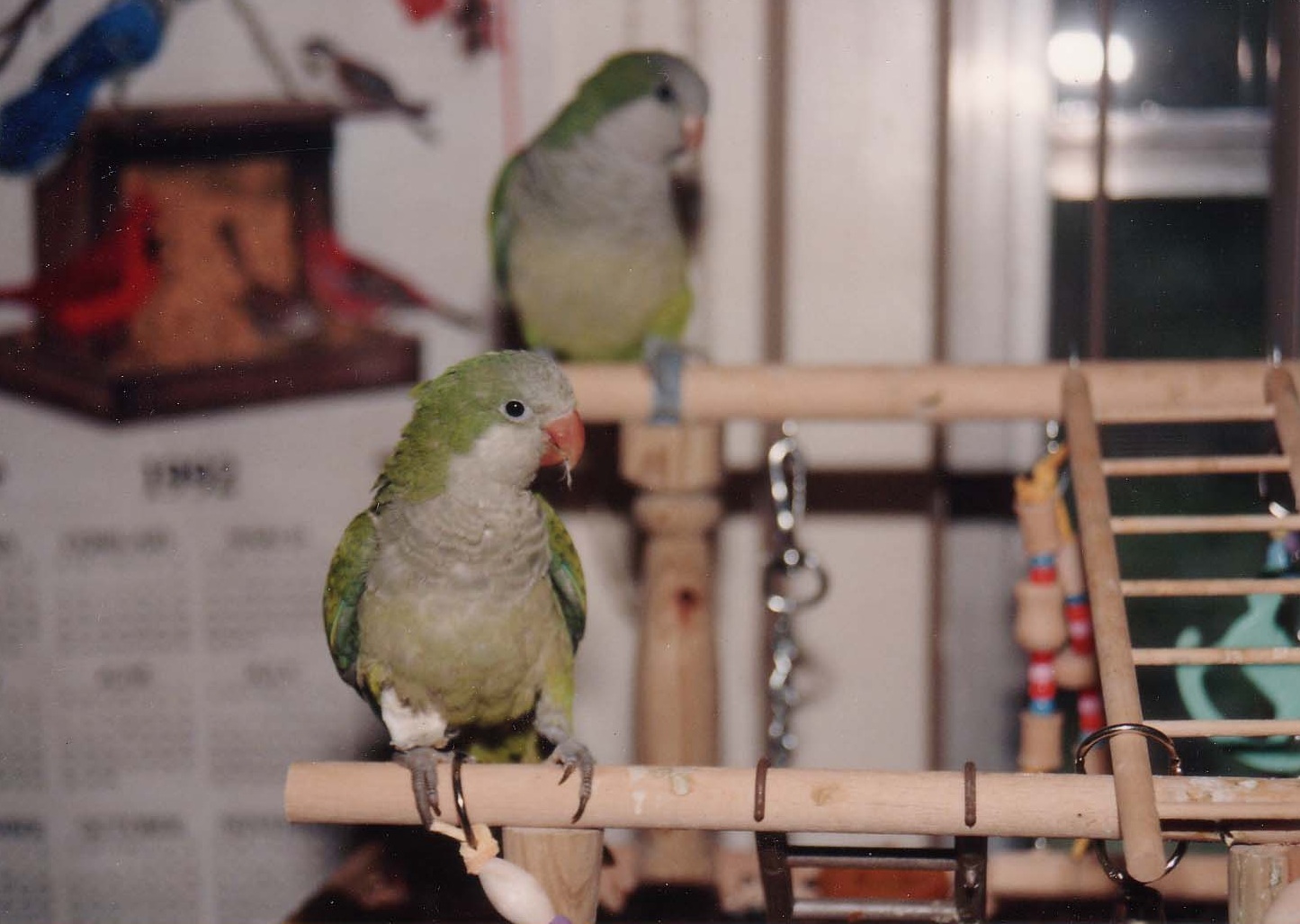
Well a year later, my friend bought two Monks and told me there was one more, but it had a deformed leg. Another long story short, I bought “Hoppy” for $25 and ended up spending another $200 getting a broken leg repaired. It was an amazing surgery the vet performed. “Hoppy” had to be a male, because he could be mischievous at times, but he learned to talk and was quite enjoyable (most of the time). The picture shows “Hoppy” with the bandage in front and “Bandi” in the background.

Monk Parakeet (Myiopsitta monachus) Hoppy & Bandi

Hoppy in front, Bandi in back – Monk Parakeet (Myiopsitta monachus)

The only two verses in Scripture, that I know of, that would apply to this would be:

For every kind of beasts, and of birds, and of serpents, and of things in the sea, is tamed, and hath been tamed of mankind: (James 3:7 KJV)

As a cage is full of birds, so are their houses full of deceit: therefore they are become great, and waxen rich. (Jeremiah 5:27 KJV)

Back to the Coats of Many Colors, below is a slideshow showing some of our beautiful and personable members of the Psittacidae – Parrots Family.

*

This slideshow requires JavaScript.

See Also:

Psittacidae – Parrots Family

Birds of the Bible – Coat of Many Colors I

Birds of the Bible 

Birds of the World

*

Birds of the Bible – Coat of Many Colors

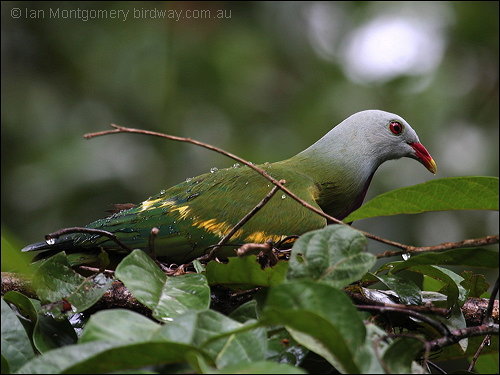
Many-colored Fruit Dove (Ptilinopus perousii) ©WikiC

Many-colored Fruit Dove (Ptilinopus perousii) ©WikiC

While working on the Columbidae – Pigeons, Doves Family, I was enjoying the Fruit Doves and their beautiful colors. Of course the verse about Joseph’s Coat of Many Colors kept crossing my mind. Then I actually found the Many-colored Fruit Dove.

Now Israel loved Joseph more than all his children, because he was the son of his old age: and he made him a coat of many colours. (Genesis 37:3 KJV)

The Fruit Doves belong to the Ptilinopus genus. There are 53 Fruit Doves at present (I.O.C. 3.3) They eat fruit mostly and they may help enhance their colours, at least that is one opinion. “These small- to medium-sized doves generally have short, fan-shaped tails, and are remarkable for their colorful and often glossy plumage, as evidenced in the aptly named Orange Fruit Dove, Flame-breasted Fruit Dove, and Pink-headed Fruit Dove. Males and females of many fruit dove species look very different. For example, the female Many-coloured Fruit Dove shares the male’s crimson crown and deep pink undertail feathers, but is otherwise green, whereas the male has a crimson on the upper back and has areas of yellow, olive, cinnamon, and grey.

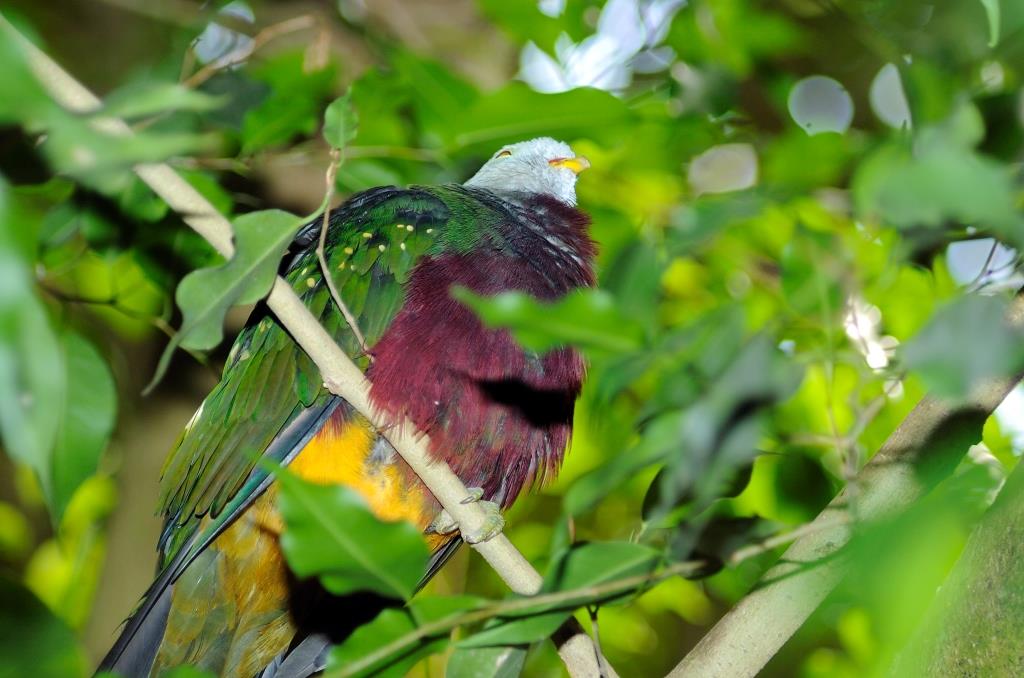
Wompoo Fruit Dove (Ptilinopus magnificus) by Dan at National Aviary

Wompoo Fruit Dove (Ptilinopus magnificus) by Dan at National Aviary

This is a large genus, most diverse in and around the island of New Guinea, in the Philippines, and in the biogeographical region of Wallacea. Some species have ranges as far west as the Sunda Islands, others north to Taiwan, south to Australia, and east into Polynesia.

Fruit doves, as their name implies, eat fruit — ficus is especially important — and live in various kinds of forest or woodland. Some species are restricted to primary forest, such as lowland rainforest, montane forest, or monsoon forest, while others prefer secondary forest or disturbed areas. Some species specialize in particular habitats, from lowland coastal forest to the cloud forest or moss forest of high altitudes. Some species of fruit doves are only found in habitats dominated by particular plants, such as mangrove, eucalyptus, or pandanus. Only a few species can commonly be seen around human habitation, these include the Knob-billed Fruit Dove, Makatea Fruit Dove, and Black-naped Fruit Dove, which are known to visit gardens and such.

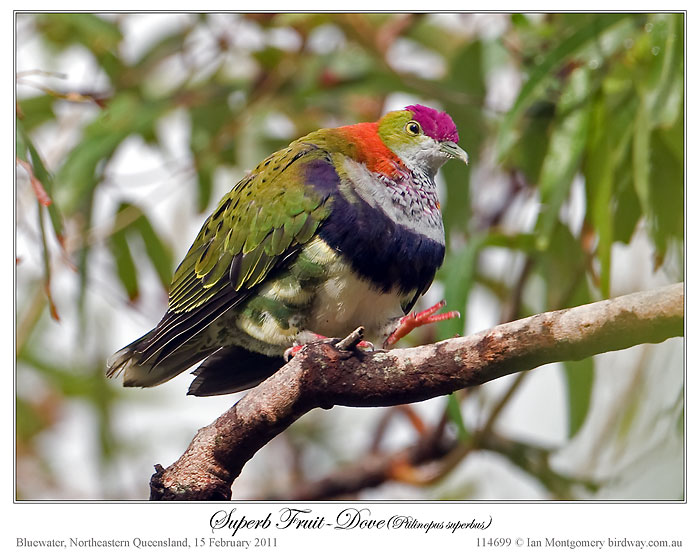
Superb Fruit Dove (Ptilinopus superbus) by Ian

Superb Fruit Dove (Ptilinopus superbus) by Ian

Much is still to be learned about fruit doves. Many species are shy and difficult to observe in their natural habitat. For example, there are several species in the Philippines, and for most of them, little or nothing is known of their breeding or nesting behavior.” (Wikipedia with editing)

We have had the privilege of seeing several of the Fruit Doves at the Zoos we have visited. They are so beautiful and colorful. Isn’t the Lord great in His providing them the ability to show off all their “coats of many colors?” I trust you will enjoy looking at the slideshow below and seeing them. These are the ones that I have permission to show. I am putting the whole list of them from the Family pages so that you can view the others.

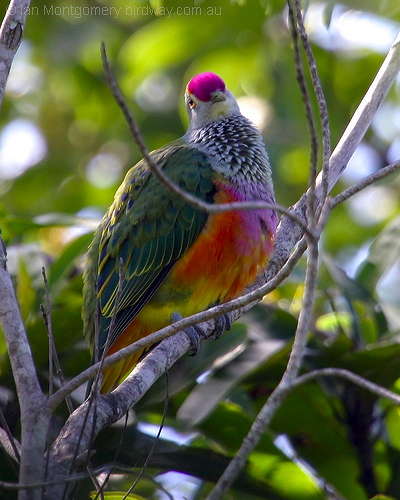
Rose-crowned Fruit Dove (Ptilinopus regina) by Ian

Rose-crowned Fruit Dove (Ptilinopus regina) by Ian

Divers colours is only associated with one bird in Scripture and that is with an eagle:

And say, Thus saith the Lord GOD; A great eagle with great wings, longwinged, full of feathers, which had divers colours, came unto Lebanon, and took the highest branch of the cedar: (Ezekiel 17:3 KJV)

“Divers colours” is used 6 times in the King James Version, others translate that phrase as; various colors, beautiful feathers, long, colorful feathers , full of varicolored feathers, of variety,  feathers covered with spots, rich in plumage of many colors, full of plumage of embroidery, having different colors to him, multi-colored plumage, or in full plumage and bright colors.

I think those descriptions can well describe our feather colors  the Creator placed on these Fruit Doves. Doves are mentioned many times in the Bible. See the Birds of the Bible – Dove and Pigeon page.

This slideshow requires JavaScript.

****

Columbidae – Pigeons, Doves Family

Birds of the Bible – Dove and Pigeon

*

P.S. I’ll be adding more of our as I find them.

*

Birds of the Bible – Goldfinches Are On The Way

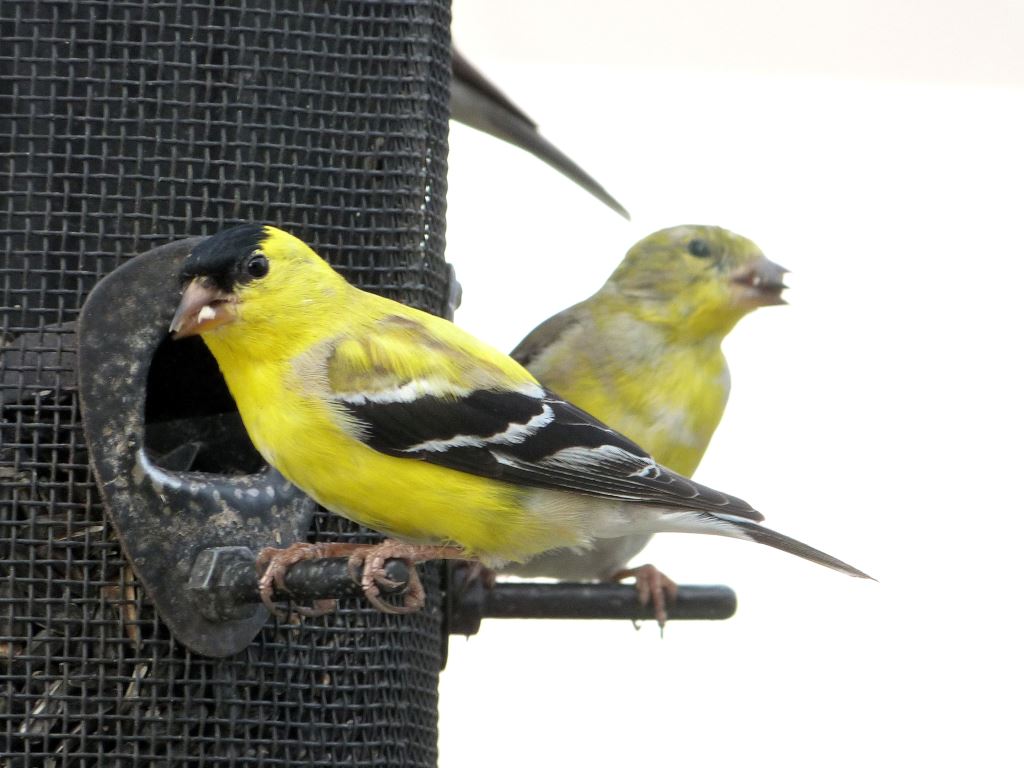
Goldfinches 4-1-13 No screen clean window (7)

Even the stork in the sky knows her seasons. The turtledove, swallow, and crane are aware of their migration, but My people do not know the requirements of the LORD. (Jeremiah 8:7 HCSB)

We have been having American Goldfinches at the feeders for the last few weeks. Don’t see them often, so was enjoying their presence. They kept building in numbers from 6 at first, then 12 about a week ago, then Easter Sunday there were at least 20 of them. It even motivated me to wash the window and take out the screen on Monday to get better photos of them.

Yesterday morning, Wednesday, I checked out the window to see how many there were now. Not a one! So throughout the morning I kept checking, NONE! When we went out, there was no singing in the trees that we have been hearing lately. Needless to say, I was a little disappointed, but it didn’t take long to figure out where they were. GONE!!!

Keep your eyes open up north, the Goldfinches are on the way. This is a spring occurrence down here. The birds fold up their lounge chairs, pack the bellies full of my sunflower seed and head back home. They have territories to claim, nest to build, broods to raise and give you now the pleasure of viewing them and listening to their songs. ENJOY!

It’s your turn to enjoy the Lord’s beautiful American Goldfinches as they migrate up to you. Treat them nice and when fall comes, send them back, please.

This slideshow requires JavaScript.

*
Birds of the Bible Articles

Bible Birds
*

Birds of the Bible – Wing Survey

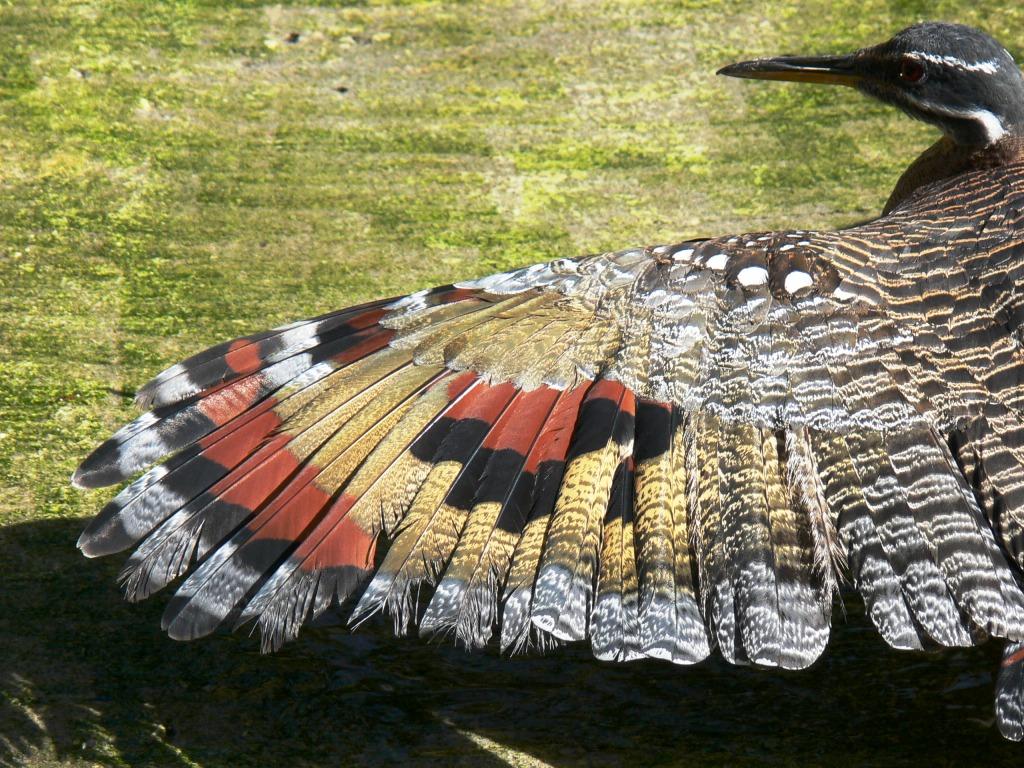
Sunbittern (Eurypyga helias) Left Wing by Lee at Lowry Park Zoo

Sunbittern (Eurypyga helias) Left Wing by Lee at Lowry Park Zoo

While reading in Exodus 25 this week, I noticed that the plan for the Ark is written out in quite specific details. The plans for the mercy seat was to be covered by the outstretched wings of the cherubims of gold.

And the cherubims shall stretch forth their wings on high, covering the mercy seat with their wings, and their faces shall look one to another; toward the mercy seat shall the faces of the cherubims be. (Exodus 25:20 KJV)

I wondered if I had written much about “wings”, so I checked and found only three articles, so far:

I am curious about what can be found, so, let’s see what we can find. Of course my e-Sword is fired up and ready for the searching. Searching first with just “wing”, only 6 verses show up. I Kings 6:24, 6:27; 2 Chronicles 3:11-2 all refer to the wing of the cherub. Isaiah 10:14 actually mentions a bird having its eggs taken and not moving its wing, opening its mouth or peeping. It is used as an illustration.

And my hand hath found as a nest the riches of the people: and as one gathereth eggs that are left, have I gathered all the earth; and there was none that moved the wing, or opened the mouth, or peeped. (Isaiah 10:14 KJV)

Ezekiel 17:23 is the verse used in Fowl (Birds) of Every Wing.

Searching again with “wings” this time shows 64 verses (KJV). Again the cherubims are mentioned in Exodus 25:20, 37:9; I Kings 6:26, 8:6, 8:7; 1 Chronicles 28:18; 2 Chronicles 3:11, 3:13, 5:7-8. Cherubim and serephim wings are again mentioned later in the prophecies of Isaiah (Isa 6:2, 8:8, 18:1, and 40:31), Ezekiel (Exe 1:6-11, 1:23-25, 3:13, 10:5-21, 11:22) and Daniel.  Ezekiel 17:3 & 7 mention “A great eagle with great wings, longwinged, full of feathers” and “another great eagle with great wings and many feathers” Daniel 7:4 and 6 mention “eagle’s wings” and “wings of a fowl

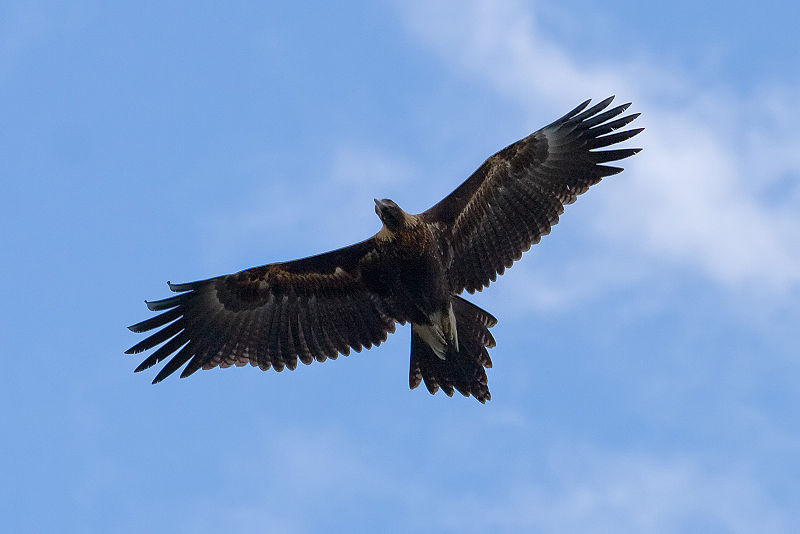
Wedge-tailed Eagle (Aquila audax) ©WikiC

Wedge-tailed Eagle (Aquila audax) ©WikiC

Eagles’ wings are mentioned several more times:

Ye have seen what I did unto the Egyptians, and how I bare you on eagles‘ wings, and brought you unto myself. (Exodus 19:4 KJV)

As an eagle stirreth up her nest, fluttereth over her young, spreadeth abroad her wings, taketh them, beareth them on her wings: (Deuteronomy 32:11 KJV)

Wilt thou set thine eyes upon that which is not? for riches certainly make themselves wings; they fly away as an eagle toward heaven. (Proverbs 23:5 KJV)

But they that wait upon the LORD shall renew their strength; they shall mount up with wings as eagles; they shall run, and not be weary; and they shall walk, and not faint. (Isaiah 40:31 KJV)

For thus saith the LORD; Behold, he shall fly as an eagle, and shall spread his wings over Moab. (Jeremiah 48:40 KJV)

Behold, he shall come up and fly as the eagle, and spread his wings over Bozrah: and at that day shall the heart of the mighty men of Edom be as the heart of a woman in her pangs. (Jeremiah 49:22 KJV)

Indian Peafowl (Pavo cristatus) by Nikhil Devasar

Indian Peafowl (Pavo cristatus) by Nikhil Devasar

Of course other birds are named such as:

Gavest thou the goodly wings unto the peacocks? or wings and feathers unto the ostrich? (Job 39:13 KJV)

Doth the hawk fly by thy wisdom, and stretch her wings toward the south? (Job 39:26 KJV)

And I said, Oh that I had wings like a dove! for then would I fly away, and be at rest. (Psalms 55:6 KJV)

Though ye have lien among the pots, yet shall ye be as the wings of a dove covered with silver, and her feathers with yellow gold. (Psalms 68:13 KJV)

Then lifted I up mine eyes, and looked, and, behold, there came out two women, and the wind was in their wings; for they had wings like the wings of a stork: and they lifted up the ephah between the earth and the heaven. (Zechariah 5:9 KJV)

O Jerusalem, Jerusalem, thou that killest the prophets, and stonest them which are sent unto thee, how often would I have gathered thy children together, even as a hen gathereth her chickens under her wings, and ye would not! (Matthew 23:37 KJV)

O Jerusalem, Jerusalem, which killest the prophets, and stonest them that are sent unto thee; how often would I have gathered thy children together, as a hen doth gather her brood under her wings, and ye would not! (Luke 13:34 KJV)

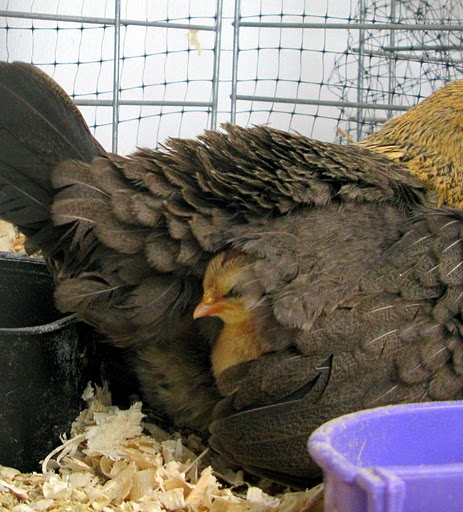
Baby Chick Peeping Out From Under His Mom's Wing - ©©

Baby Chick Peeping Out From Under His Mom’s Wing – ©©

Other references to wings:

  • wings of the wind – 2 Samuel 22:11
  • under whose wings thou art come to trust. – Ruth 2:12
  • hide me under the shadow of thy wings – Psalm 17:8
  • fly upon the wings of the wind – Psalm 18:10
  • trust under the shadow of thy wings. – Psalm 36:7
  • in the shadow of thy wings will I make my refuge – Psalm 57:1
  • rust in the covert of thy wings – Psalm 61:4
  • in the shadow of thy wings will I rejoice – Psalm 63:7
  • He shall cover thee with his feathers, and under his wings shalt thou trust – Psalm 91:4
  • the wings of the wind – Psalm 104:3
  • If I take the wings of the morning – Psalm 139:9
  • for a bird of the air shall carry the voice, and that which hath wings shall tell the matter. – Ecclesiastes 10:20
  • stretching out of his wings – Isaiah 8:8
  • shadowing with wings – Isaiah 18:1
  • Give wings unto Moab, that it may flee and get away – Jeremiah 48:9
  • The wind hath bound her up in her wings – Hosea 4:19
  • healing in his wings – Malachi 4:2

That is an interesting survey of the verses with wing or wings in them. Now I will have to get busy and use this information in some future articles. There are definitely some trends that can be seen. Do you see them? Shadow, wind, healing and trust, just to name a few.

*

Birds of the Bible

Wordless Birds

*

Birds of the Bible – Name Study ~ Ossifrage

Black Vulture by Birdway (Ian)

Black Vulture by Birdway (Ian)

And these are they which ye shall have in abomination among the fowls; they shall not be eaten, they are an abomination: the eagle, and the ossifrage, and the ospray, (Leviticus 11:13 KJV)

We have looked into this bird before in Birds of the Bible – Ossifrage and the Birds of the Bible Ossifrage Page. Since we have been looking at the actual meanings of the names in the Name Studies, maybe we can discover something else of interest. I hope this long list below of the different translations that are shown are a blessing and not a curse. They were cut down to just show the three birds, except for the translations that like to put all the verses in one verse. (from my e-Sword)

Scanning down through the list the Eagle seems to be no real problem. Most translate it as an Eagle. The last bird, most show as the Osprey or Sea-eagle. Wikipedia says, “The Osprey (Pandion haliaetus), sometimes known as the sea hawk, fish eagle or fish hawk,” A few make this last bird one of the vultures. The middle bird is our concentration in this article.

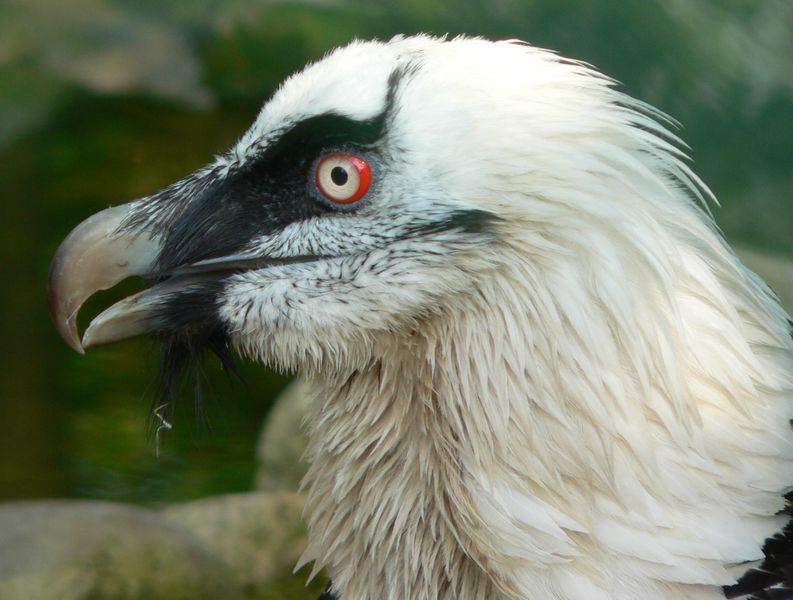
Ossifrage - Lammergier

Ossifrage – Lammergier

Looking down this list you will find these birds:

  • Vulture
  • Ossifrage
  • Gier-eagle
  • Goshauke or Goshawk
  • Griffon
  • Bearded Vulture
  • Black Vulture
  • Latin – grypem or gryphem = griffon
  • Spanish – el buitre – (from translator)

(Ornitología) vulture
buitre alimoche Egyptian vulture
buitre leonado griffon vulture

  • or quebrantahuesos – “In 1960, the Mexican ornithologist Rafael Martín del Campo identified the eagle in the pre-Hispanic codex as the Northern Caracara or “quebrantahuesos“, a species common in Mexico (although the name “eagle” is taxonomically incorrect, as the Caracara is in the falcon family). The golden eagle is considered the official bird of Mexico.
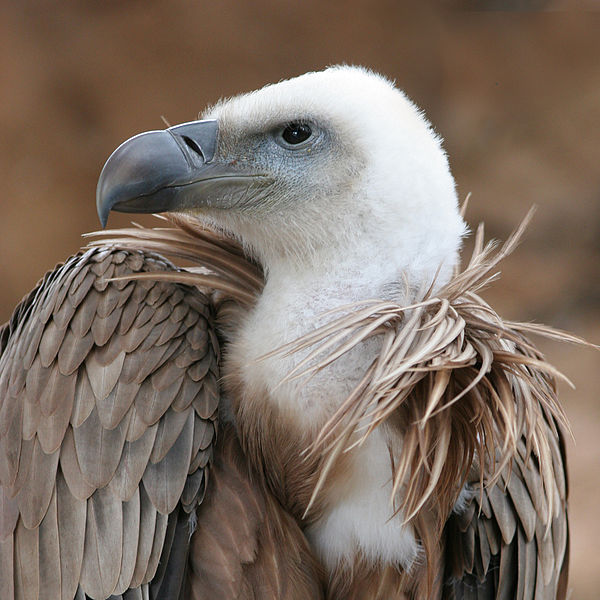
Griffon Vulture (Gyps fulvus) ©WikiC

Griffon Vulture (Gyps fulvus) ©WikiC

What is the Hebrew word for this bird?

H6538
פּרס
peres
peh’-res
From H6536; a claw; also a kind of eagle: – claw, ossifrage.

Many of the online Bible Commentaries and Dictionaries use “bone-breaker” and lean toward Lammergeir. See: Bible Encyclopedia, Net Bible, OED, Bible Suite,and Bible Study Tools.

English

  • (ACV) : the eagle, and the vulture, and the osprey,
  • (AKJV) …: the eagle, and the ossifrage, and the ospray,
  • (AMP) …: the eagle, the ossifrage, the ospray,
  • (ASV) …: the eagle, and the gier-eagle, and the ospray,
  • (BBE) …: the eagle and the gier-eagle and the ospray;
  • (Bishops) …: The Egle, the Goshauke, and the Ospray,
  • (Brenton) …: the eagle and the ossifrage, and the sea-eagle.
  • (CEV) Eagles, vultures, buzzards, crows, ostriches, hawks, sea gulls, owls, pelicans, storks, herons, hoopoes, and bats are also disgusting, and you are forbidden to eat any of them.
  • (CJB) …: the eagle, the vulture, the osprey,
  • (Darby) …: the eagle, and the ossifrage, and the sea-eagle,
  • (DRB) …: The eagle, and the griffon, and the osprey.
  • (ERV) …: eagles, vultures, buzzards,
  • (ESV)..: the eagle, the bearded vulture, the black vulture,
  • (ECB)…: the eagle and the ossifrage and the ospray
  • (Geneva) … the egle, and the goshauke, and the osprey:
  • (GNB) You must not eat any of the following birds: eagles, owls, hawks, falcons; buzzards, vultures, crows; ostriches; seagulls, storks, herons, pelicans, cormorants; hoopoes; or bats.
  • (GW) …. They are eagles, bearded vultures, black vultures,
  • (HCSB) …: the eagle, the bearded vulture, the black vulture,
  • (HRB) …: the eagle, and the black vulture and the bearded vulture,
  • (IAV) …: the eagle, and the ossifrage, and the ospray,
  • (ISV) …: the eagle, vulture, osprey,
  • (LITV-TSP) …: the eagle, and the black vulture and the bearded vulture,
  • (JPS) …: the great vulture, and the bearded vulture, and the ospray;
  • (KJ2000) …: the eagle, and the vulture, and the osprey,
  • (KJV) …: the eagle, and the ossifrage, and the ospray,
  • (KJV-1611) …: The Eagle, and the Ossifrage, and the Ospray,
  • (LITV) …: the eagle, and the black vulture and the bearded vulture,
  • (MKJV) …: the eagle, and the black vulture, and the bearded vulture,
  • (MSG) …: eagle, vulture, osprey,
  • (NAS77) …: the eagle and the vulture and the buzzard,
  • (NASB) ‘…: the eagle and the vulture and the buzzard,
  • (NET) … the griffon vulture, the bearded vulture, the black vulture,
  • (NIrV) …”‘They include eagles, vultures and black vultures.
  • (NIV) …: the eagle, the vulture, the black vulture,
  • (NKJV)…: the eagle, the vulture, the buzzard,
  • (NRSV) …: the eagle, the vulture, the osprey,
  • (RV) …: the eagle, and the gier eagle, and the ospray;
  • (The Disciple’s Bible) …: the eagle, and the gier-eagle, and the ospray,
  • (TRC) …The eagle, the goshawk, the cormorant, the kite,
  • (Tyndale) … The egle, the gooshauke, the cormoraunte, the kyte,
  • (UKJV) …: the eagle, and the vulture, and the buzzard,
  • (Webster) …: the eagle, and the ossifrage, and the ospray,
  • (WEB (R)) …: the eagle, and the vulture, and the black vulture,
  • (YLT) …: the eagle, and the ossifrage, and the ospray,

Latin

  • (Vulgate) … aquilam et grypem et alietum
  • (clVulgate) …: aquilam, et gryphem, et haliæetum,

Spanish

  • (LBLA) …: el águila, el buitre y el buitre negro,
  • (NBLH)…: el águila, el buitre y el buitre negro,
  • (SRV) …: el águila, el quebrantahuesos, el esmerejón,

Hebrew or Greek #s (with some editing)

  • (KJV+) …: the eagle,H5404 and the ossifrage,H6538 and the ospray,H5822
  • (NASB+) …: the eagle H5404 and the vulture H6538 and the buzzard H5822,
  • (Translit+) … . nesher H5404 . . perec H6538 . . ‘ozniyah H5822
  • (ABP+) … the G3588 eagle, G105 and the griffin,G1127.3 and the osprey,G230.1
  • (HSB) וְאֶת…; like אֶת־ H853 ‘et- הַנֶּ֙שֶׁר֙ H5404 han·Ne·sher the eagle וְאֶת־ H853 ve·’Et הַפֶּ֔רֶס H6538 hap·Pe·res, and the ossifrage וְאֵ֖ת H853 ve·’Et הָעָזְנִיָּֽה׃ H5822 ha·’a·ze·ni·Yah. and the ospray
  • (HSB2) … the eagle וְאֶת־ H853 הַפֶּ֔רֶס H6538 and the ossifrage וְאֵ֖ת H853 הָעָזְנִיָּֽה׃ H5822 and the ospray
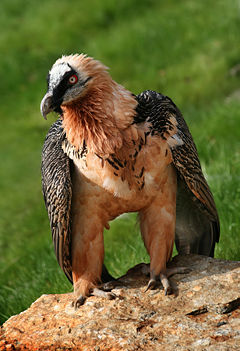
Ossifrage - Lammergeier

Bearded Vulture (Gypaetus barbatus)

The Bearded Vulture is in the Gypaetus genus, which is similar to the Vulgate term for it. There are many Old World Vultures in the Accipitridae – Kites, Hawks and Eagles family and most likely it is one of them. A black or bearded one. The Black Vulture above is a New World Vulture and is in the Cathartidae – New World Vultures Family. That “black vulture” is not likely to be the one in this Scriputure.

The Bearded Vulture, like other vultures it is a scavenger, feeding mostly on animal matter from dead animals. It usually disdains the actual meat, however, and lives on a diet that is typically compromised at 85-90% by bone marrow. This is the only living bird species that specializes in feeding on marrow. The Lammergeier can swallow whole or bite through brittle bones up to the size of a lamb’s femur and its powerful digestive system quickly dissolves even large pieces. The Lammergeier has learned to crack bones too large to be swallowed by carrying them in flight to a height of 50–150 m (160–490 ft) above the ground and then dropping them onto rocks below, which smashes them into smaller pieces and exposes the nutritious marrow. They can fly with bones up to 10 cm (3.9 in) in diameter and weighing over 4 kg (8.8 lb), or nearly equal to their own weight. After dropping the large bones, the Bearded Vulture spirals or glides to down to inspect them and may repeat the act if the bone is not sufficiently cracked. This learned skill requires extensive practice by immature birds and takes up to seven years to master. Its old name of Ossifrage (“bone breaker”) relates to this habit. More seldom, these birds have been observed to try to break bones (usually of a medium size) by hammering them with their bill directly into rocks while perched. (from Wikipedia with editing)

Sounds like a “bone-breaker” and also look at its claws. As I said in the other article “Only God knows which bird was really indicated.” Whichever one it is, they are Birds of Prey and being on the “do not eat” list, they definitely would not end up on my table even though that law was for then. Praise the Lord that the Law was fulfilled through the sinless crucifixion of the Lord Jesus Christ on the cross.

Think not that I am come to destroy the law, or the prophets: I am not come to destroy, but to fulfil. For verily I say unto you, Till heaven and earth pass, one jot or one tittle shall in no wise pass from the law, till all be fulfilled.  (Matthew 5:17-18 KJV)

And he said unto them, These are the words which I spake unto you, while I was yet with you, that all things must be fulfilled, which were written in the law of Moses, and in the prophets, and in the psalms, concerning me. (Luke 24:44 KJV)

Gospel Presentation

Birds of the Bible – Prayer

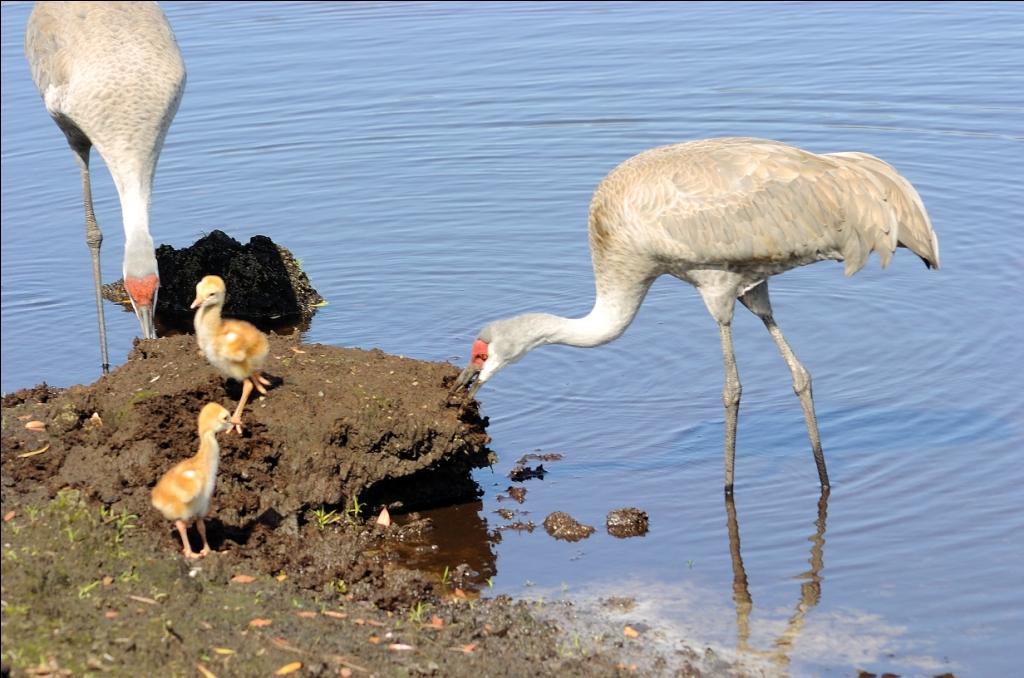
Sandhill Cranes with "Colts"

Sandhill Cranes with “Colts”

“Ah, Soul, God does listen to the chattering of cranes! I know He does, for I have read in His Word what is tantamount to that in the text [Isaiah 38:14],

Like a crane or a swallow, so did I chatter: I did mourn as a dove: mine eyes fail with looking upward: O LORD, I am oppressed; undertake for me. (Isaiah 38:14 KJV)

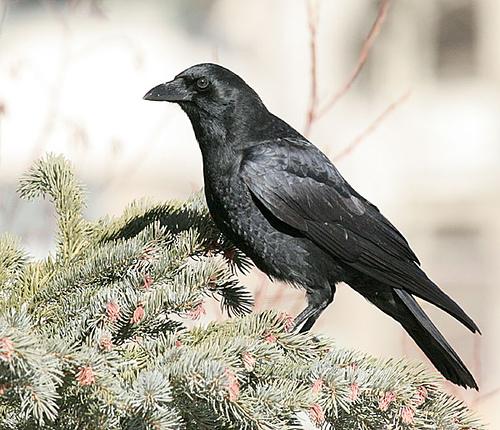
Northern Raven (Corvus corax) by Kent Nickell

Northern Raven (Corvus corax) by Kent Nickell

“He hears the young ravens when they cry.”

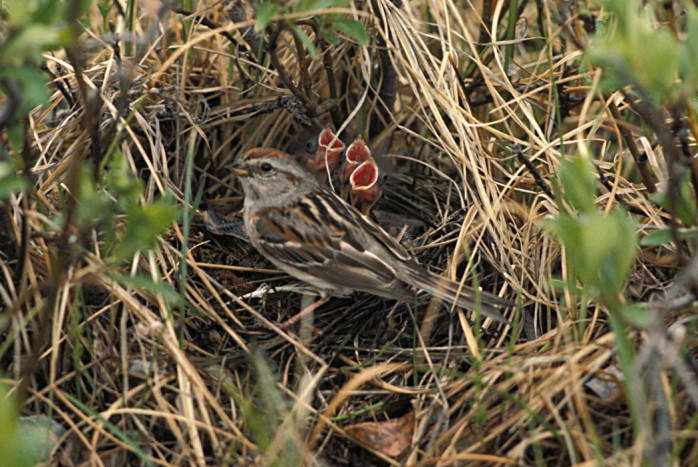
And surely if He hears a raven’s cry and if not a sparrow falls to the ground without our Father, your prayer, though it may be very indistinct and the language, itself, may be very unworthy of the Divine ear, yet it shall command an audience and will bring down a blessing from above!”

American Tree Sparrow (Spizella arborea) w chicks ©USFWS

American Tree Sparrow (Spizella arborea) w chicks ©USFWS

Above is a quote from C. H. Spurgeon’s Notable Quotes: —Volume 61, Sermon #3468

 Give ear to my words, O LORD, consider my meditation. Hearken unto the voice of my cry, my King, and my God: for unto thee will I pray. My voice shalt thou hear in the morning, O LORD; in the morning will I direct my prayer unto thee, and will look up. (Psalms 5:1-3 KJV)

See all the:

Birds of the Bible

*

Birds of the Bible – Get Off My Back

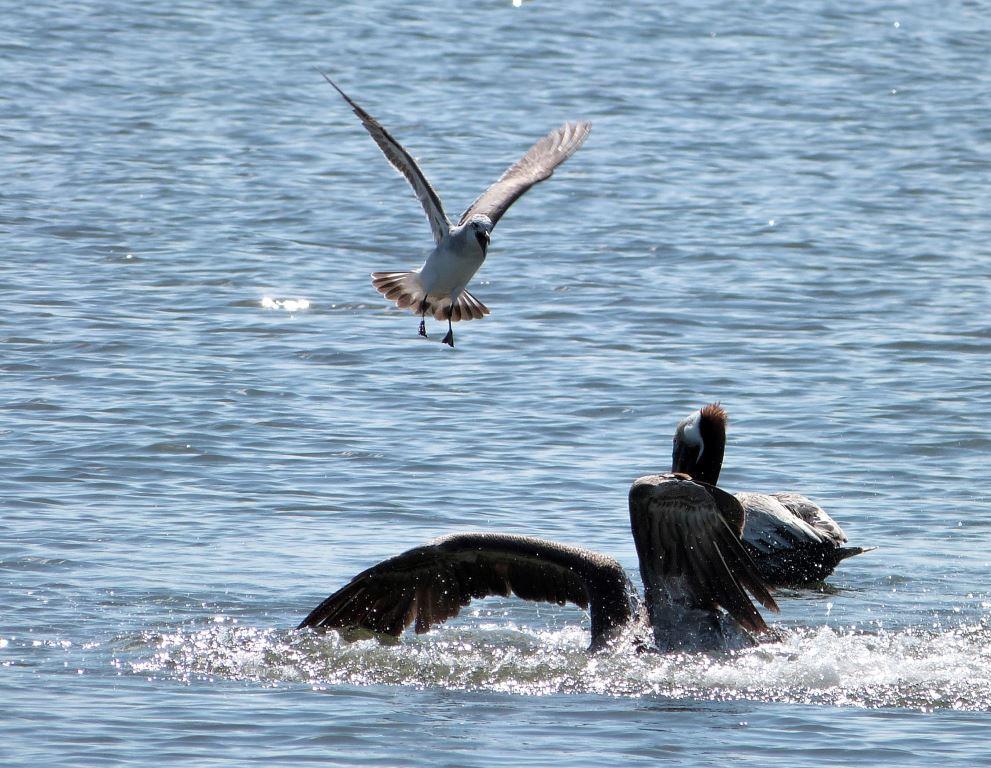
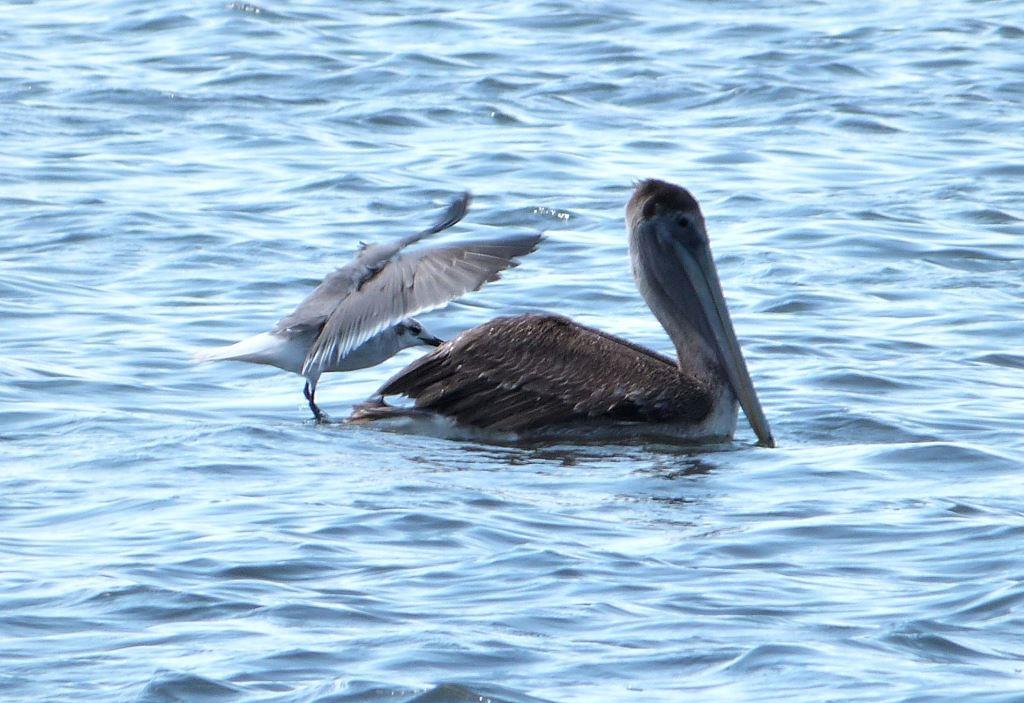
Laughing Gull landing on Brown Pelican

Laughing Gull landing on Brown Pelican

I am like a pelican of the wilderness; I am like an owl of the desert. (Psalms 102:6 NKJV)

Yesterday we were at the beach at MacDill AFB in Tampa. Apparently the fish were numerous, because the Brown Pelicans, Forster’s Tern, Laughing Gulls, Ospreys and others were diving in.

Laughing Gull landing on Brown Pelican

Laughing Gull landing on Brown Pelican

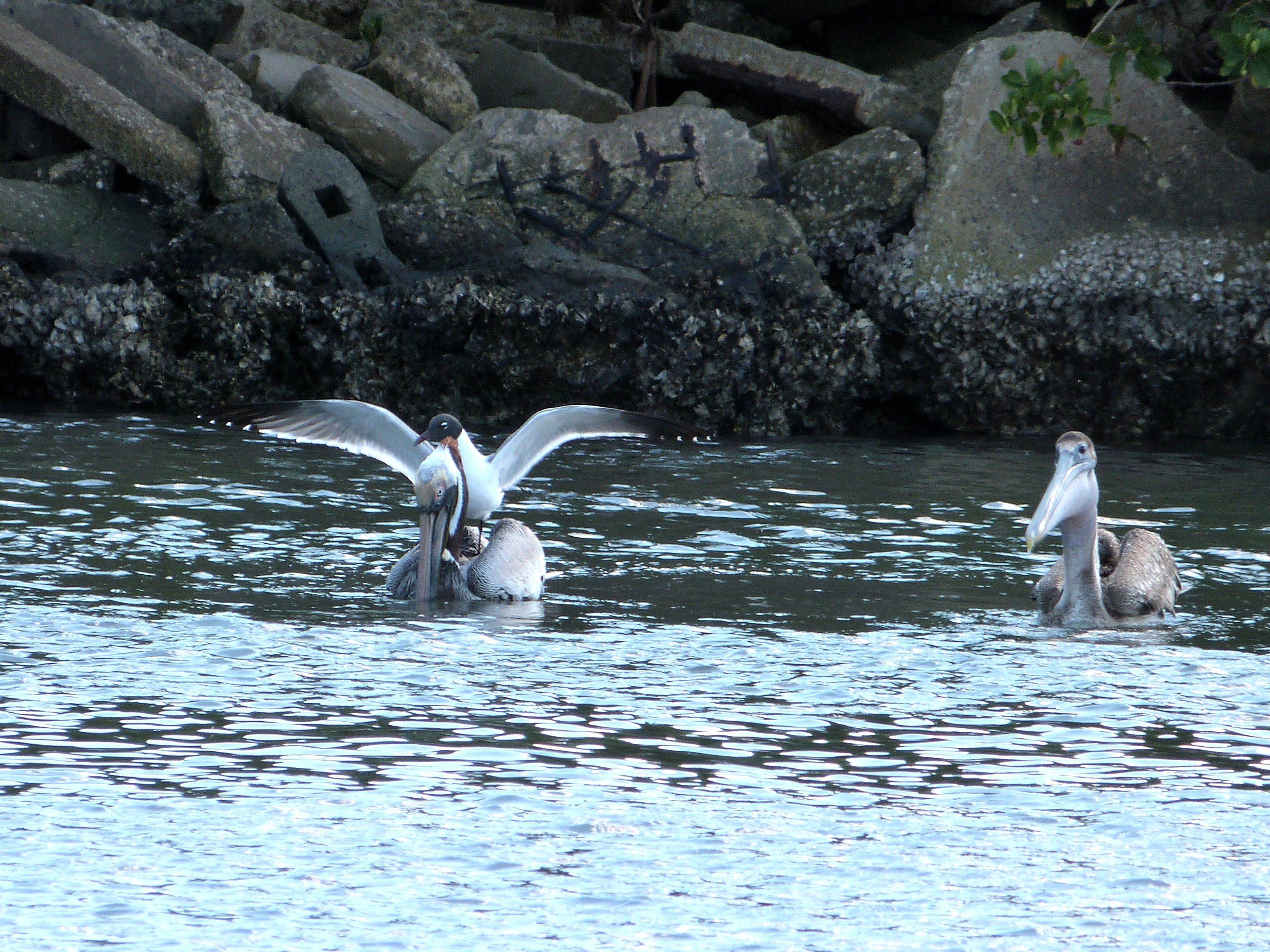
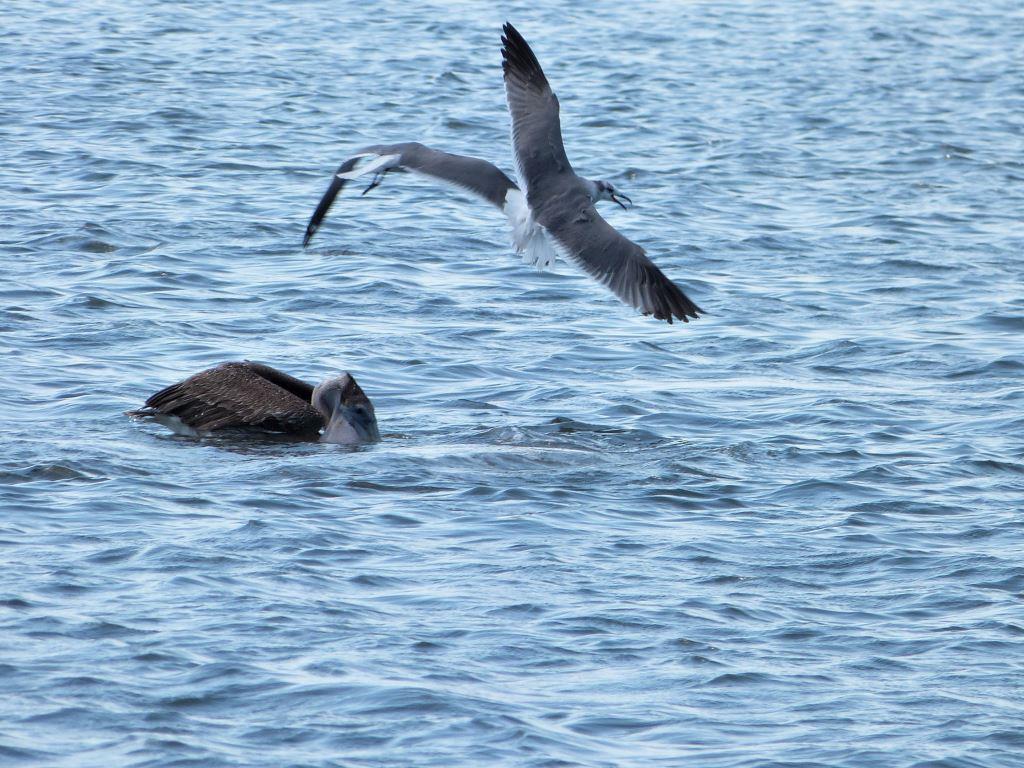
What really amazed me were the Laughing Gulls landing on the backs of the Brown Pelicans. Checking the internet to find out about this, I came across this very interesting article, The Pelican and the Gull. It appears this is a common practice for the Laughing Gull to steal some of the Pelicans food.

Here are some excerpts from that article:

One method the laughing gull has of getting food is to steal fish from another seabird that inhabits the region, the brown pelican. The laughing gull accomplishes this larceny by waiting for the brown pelican to make a successful dive….

When the pelican has a bill full of fish and water, it transfers the fish to the pouch that hangs below its bill. The pelican cannot fly away or swallow the fish until the water is drained from the pouch. Laughing gulls either circle closely above the pelican or land on the pelican’s bill or head. The gull may even give the pelican a sharp peck or two. If the pelican pays too much attention to the antics of the laughing gull and not enough attention to the delicate draining and swallowing process, the pelican may lose some of the trapped fish. The gull then swoops down and scoops up the pelican’s hard-earned catch, flying away at top speed from the scene of the crime and makes short work of his ill-gotten gains.

Of course, I could make all kinds of applications about not stealing, pecking someone on the head, or getting on their backs without permission. Because of the curse we are all under, the birds included, this kind of things happen. Eagles steal from Ospreys, Cuckoos lay eggs in other species nest, etc. For us, we know that stealing is wrong and I trust we don’t. Also, we are supposed to “love one another.” Not so sure this is being displayed here.

And be ye kind one to another, tenderhearted, forgiving one another, even as God for Christ’s sake hath forgiven you. (Ephesians 4:32 KJV)

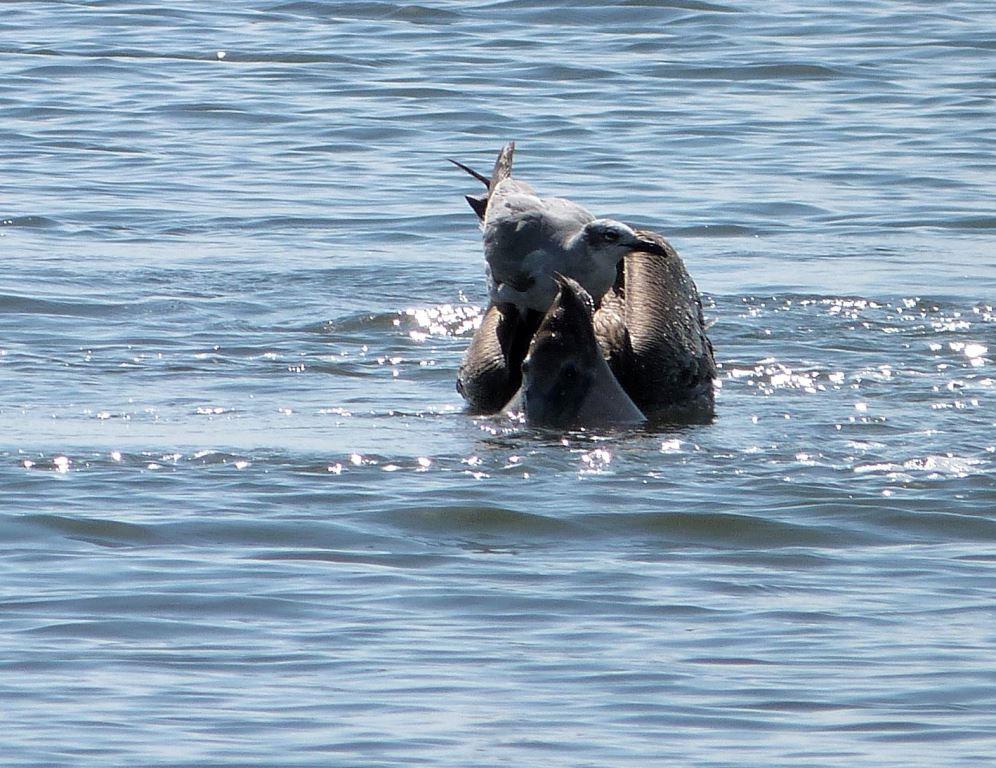
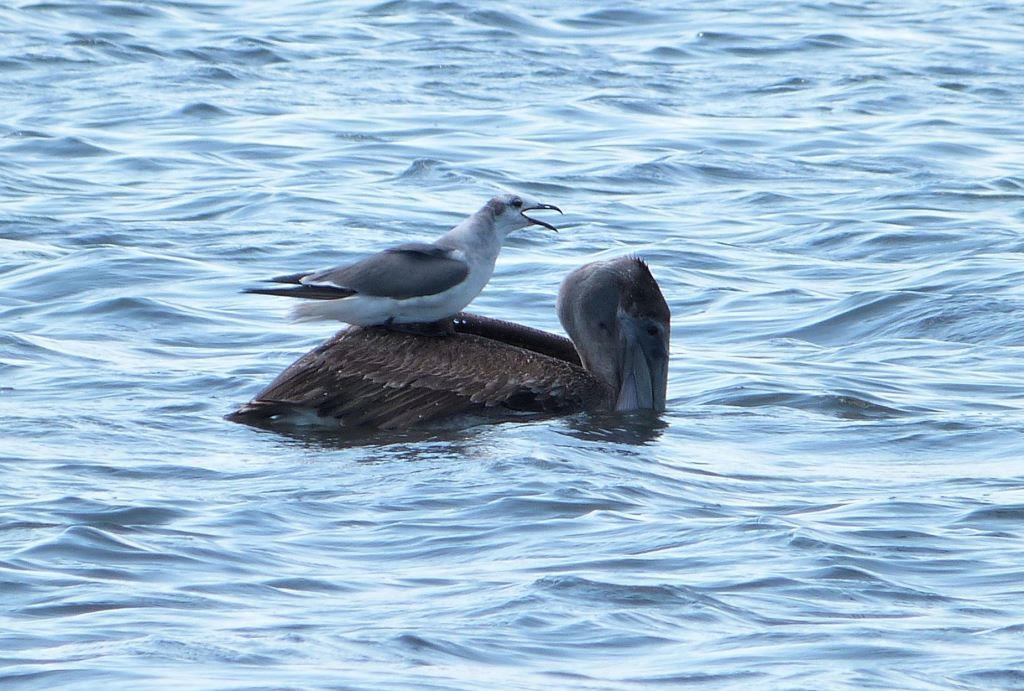
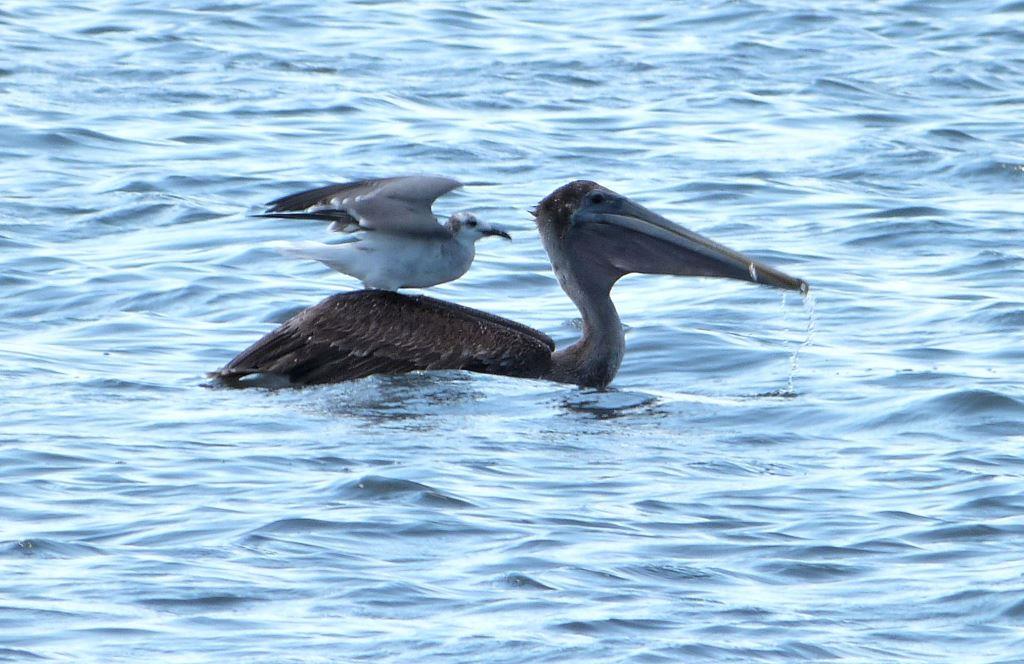
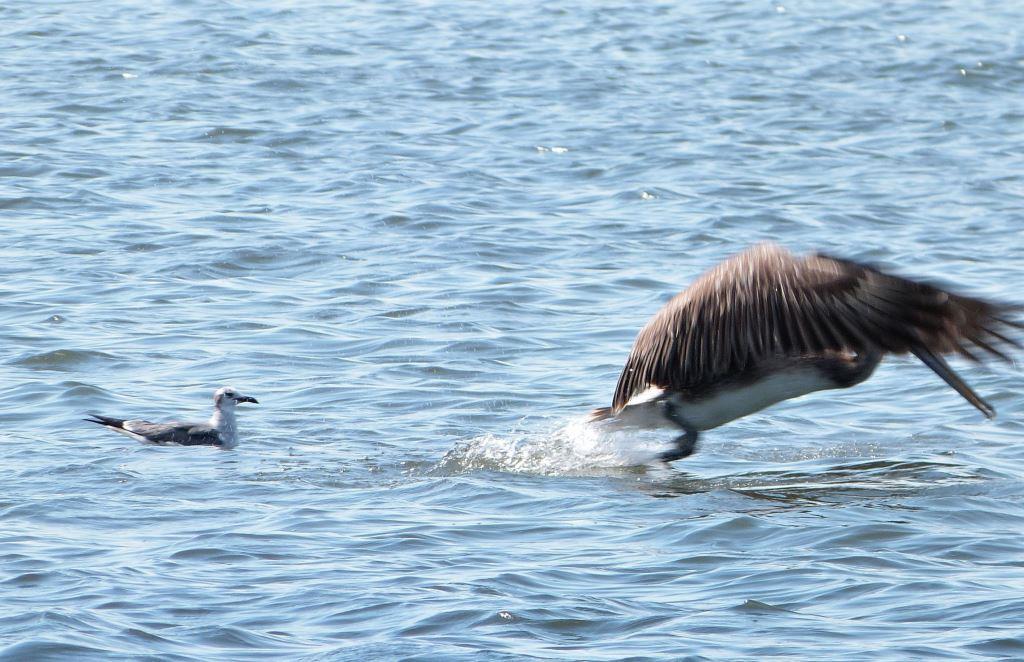
Here is another sequence of photos I took of an exchange between the Gull and the Pelican (cropped):

Pelican catching fish and Gull circling

Pelican catching fish and Gull circling

Laughing Gull watching Brown Pelican preparing to land

Laughing Gull watching Brown Pelican preparing to land

Laughing Gull lands on Pelican as he comes up

Laughing Gull lands on Pelican as he comes up

Would you hurry up

Would you hurry up

Brown Pelican and Laughing Gull - Waiting

Waiting

Brown Pelican and Laughing Gull - Slipping Off

Slipping Off

Brown Pelican leaving Laughing Gull

Watching His Food Source Leave

Maybe I can catch him

Maybe I can catch him

These photos were taken with my zoom because they were out quite a way from the shore. The following two photos were closer up as they both posed on posts for us.

Pelicans belong to the Pelecanidae – Pelicans Family and are on of the Birds of the Bible.

Mature Brown Pelican by Dan at MacDill

Mature Brown Pelican by Dan at MacDill

The Brown Pelican is the smallest of the eight species of pelican, although it is a large bird in nearly every other regard. It is 42–54 in (106–137 cm) in length, weighs from 6.1 to 12 lb (2.75 to 5.5 kg) and has a wingspan from 6.0 to 8.2 ft (1.83 to 2.5 m). Through most of its range, the brown pelican is an unmistakable bird. Like all pelicans, this species has a very large bill, 11 to 13.7 in (28 to 34.8 cm) long in this case, with a gular pouch on the bottom for draining water when it scoops out prey. The head is white but often gets a yellowish wash in adult birds. The bill is grayish overall in most birds, though breeding birds become reddish on the underside of the throat. The back, rump, and tail are streaked with gray and dark brown, sometimes with a rusty hue. In adult pelicans, the breast and belly are a blackish-brown and the legs and feet are black. The juvenile is similar but has a brownish-gray neck and white underparts.

This bird is readily distinguished from the American White Pelican by its non-white plumage, smaller size and its habit of diving for fish from the air, as opposed to co-operative fishing from the surface. The Peruvian Pelican, previously considered a subspecies of Brown Pelican, is now considered to be a separate species. It has very similar plumage to the Brown, but it is noticeably larger. The Brown and Peruvian pelicans may overlap in some areas along the Pacific coast of South America.

the ostrich, the short-eared owl, the sea gull, and the hawk after their kinds; (Deuteronomy 14:15 NKJV)

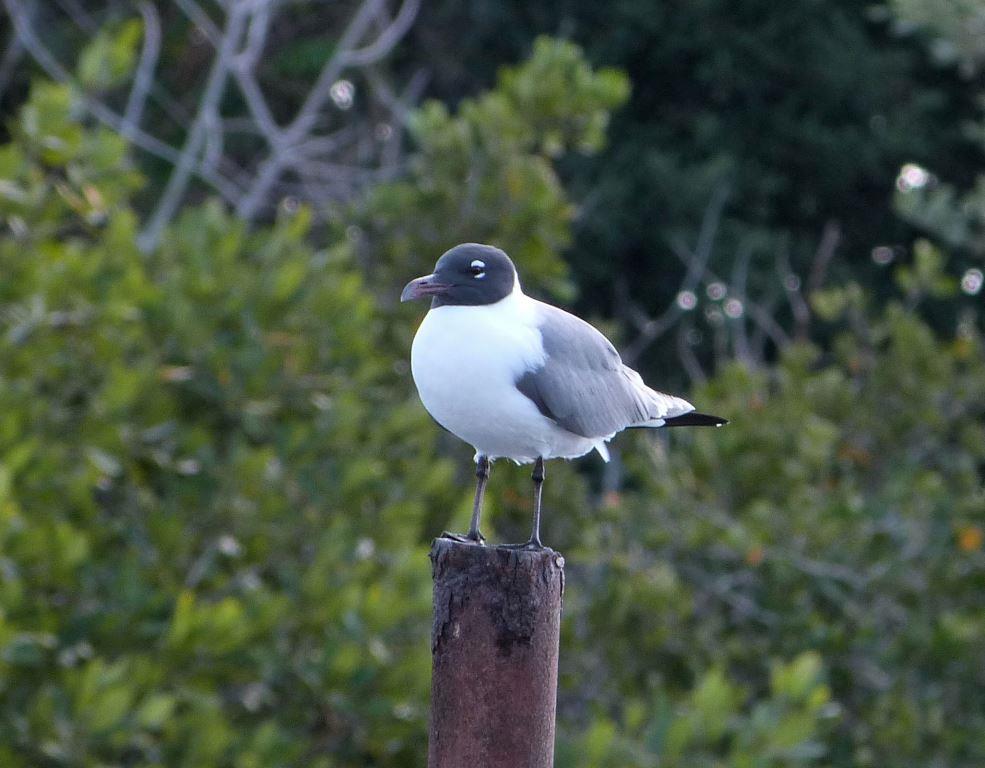
Laughing Gull on post

Laughing Gull on post by Lee

The Laughing Gull is a member of the Laridae – Gulls, Terns and Skimmers Family and is a Bird of the Bible also. The Laughing Gull (Leucophaeus atricilla) is a medium-sized gull of North and South America. It breeds on the Atlantic coast of North America, the Caribbean, and northern South America. Northernmost populations migrate further south in winter, and this species occurs as a rare vagrant to western Europe. The Laughing Gull’s English name is derived from its raucous kee-agh call, which sounds like a high-pitched laugh “ha… ha… ha…”.

This species is easy to identify. It is 14–16 in (36–41 cm) long with a 39–43 in (98–110 cm) wingspan. The summer adult’s body is white apart from the dark grey back and wings and black head. Its wings are much darker grey than all other gulls of similar size except the smaller Franklin’s Gull, and they have black tips without the white crescent shown by Franklin’s. The beak is long and red. The black hood is mostly lost in winter.

Laughing Gulls take three years to reach adult plumage. Immature birds are always darker than most similar-sized gulls other than Franklin’s. First-year birds are greyer below and have paler heads than first-year Franklin’s, and second-years can be distinguished by the wing pattern and structure. Laughing Gulls breed in coastal marshes and ponds in large colonies. The large nest, made largely from grasses, is constructed on the ground. The 3 or 4 greenish eggs are incubated for about three weeks. These are omnivores like most gulls, and they will scavenge as well as seeking suitable small prey. Like most other members of the genus Leucophaeus, the Laughing Gull was long placed in the genus Larus. (Wikipedia with editing)

Interesting Links:

*

Fifth Blog Anniversary

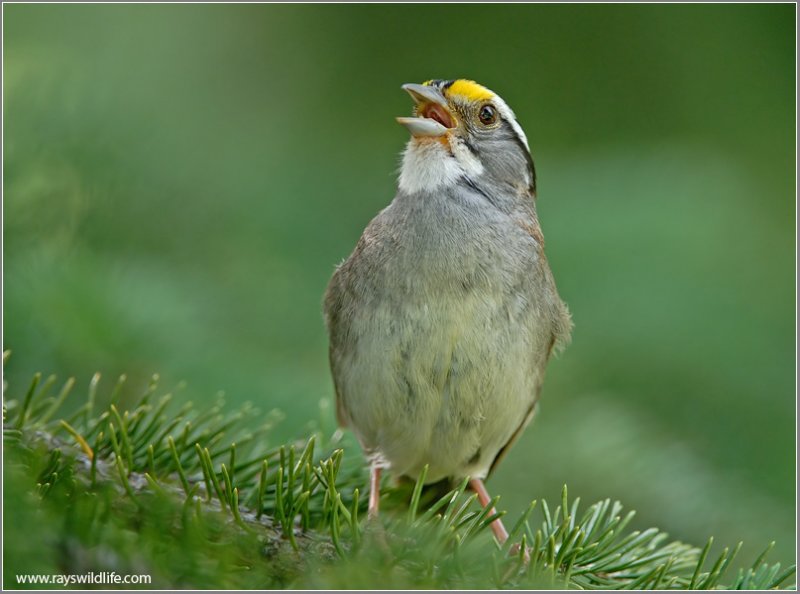
White-throated Sparrow by Ray

White-throated Sparrow by Ray Barlow

“Are not five sparrows sold for two copper coins? And not one of them is forgotten before God. (Luke 12:6 NKJV)

I just realized that this blog, Lee’s Birdwatching Adventures Plus, is now 5 years old. On February 15, 2008 I posted the first article on our church blog, The Fountain. At that time I began my own blog on Blogspot and then moved everything over here to WordPress and have been here since then. It was named Lee’s Birdwatching Adventures (original site) and later added the Plus as more articles about other topics were added.

The Fountain was a printed newsletter produced at church and it eventually became only an online version. It has developed over the years, just as this blog has. Stephen, our Assistant to the Pastor, is the reason that this blog exists. He invited me to write there and the rest is history.

When I brought the blog here, I moved all the originals also and this is that First article, Birds of the Bible Introduction. The One Year AnniversarySecond Anniversary of Blog,

In July of 2009, Ian Montgomery gave permission to reproduce his newsletters and also to use his photos. That started the Ian’s Bird of the Week series. In March of 2010, A J Mithra started doing articles for the blog. Ian is Australian and A J is Indian. We have other guest writers who add articles for the blog also.

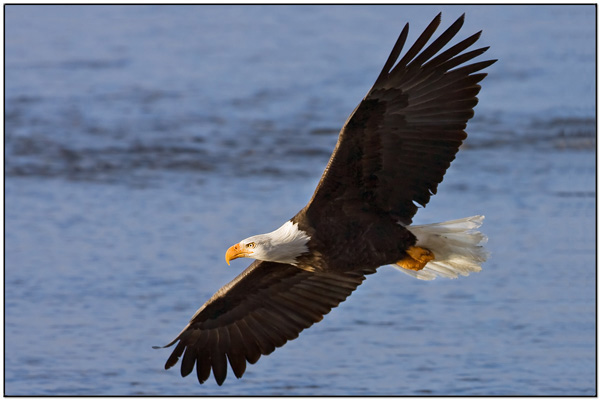
Bald Eagle flying by Dave's BirdingPix

Bald Eagle flying by Dave’s BirdingPix

Is it at your command that the eagle mounts up and makes his nest on high? (Job 39:27 ESV)

The other off-shoot blog:

The Birds of the Bible For Kids was begun in July of 2012 and is still developing. It has already had almost 5,800 views. My hearts desire is to get busy on this and show young people God’s Creative Hand though the Birds of the Bible, but written more to their level. (Update 10/3/14 – Move to Kid’s Section)

The Lord has blessed these sites way beyond what I ever imagined or prayed about when it began. The main site right now has had 868,500 views since moving it in July of 2008. All three of them added together is over a million views. Wow! Praise the Lord!

Wompoo Fruit-Dove (Ptilinopus magnificus) by Ian

Wompoo Fruit-Dove (Ptilinopus magnificus) by Ian

Though you lie down among the sheepfolds, You will be like the wings of a dove covered with silver, And her feathers with yellow gold. (Psalms 68:13 NKJV)

What about the future? Lord willing, I hope to keep finding neat things about the birds in the Bible and in the world to write about. Maybe some more writers will contribute to this adventure. Maybe more photographers and videographers will give their permission to use their images of these fantastic birds. (Of course, I really love one of my photographers, my husband, Dan) Only the Lord know the end from the beginning.

Without all of you, who stop by to read these articles and see the amazing birds, it would be useless. Thank you from the bottom of heart and may you receive a blessing from something you see and read.

I am so thankful that He has enabled me to write about His beautiful and delightful avian wonders.

give thanks in all circumstances; for this is the will of God in Christ Jesus for you. (1 Thessalonians 5:18 ESV)

Bible Birds – Thrush Introduction Article

Chestnut-bellied Rock Thrush by Peter Ericsson

Chestnut-bellied Rock Thrush by Peter Ericsson

Even the stork in the sky Knows her seasons; And the turtledove and the swift and the thrush Observe the time of their migration; But My people do not know The ordinance of the LORD. (Jeremiah 8:7 NASB)

See – Thrush Introduction)

This was duplicated by mistake.

Birds of the Bible – Names Study – Plover

American Golden Plover (Pluvialis dominica) at National Aviary by Lee

American Golden Plover (Pluvialis dominica) at National Aviary by Lee

From the article on Kosher Animals that we have been looking at with our Bird Name Study, the Plover is listed. I haven’t added a page for this bird so far, so let’s see what we can learn about this bird.

Under the Birds section they give a list of birds from the Septuagint and that is where we find the plover listed:

“The Septuagint versions of the lists are more helpful, as in almost all cases the bird is clearly identifiable:

charadrios (plover)”

They show that it appears in the LXX in Deuteronomy 14:18 and in Leviticus 11:19. Of course I can’t read it, but here it is from the LXX-BYZ on my e-Sword.

Deu 14:18 kaiG2532 CONJ pelekana N-ASM kaiG2532 CONJ charadrion N-ASM kaiG2532 CONJ taG3588 T-APN omoiaG3664 A-APN autoG846 D-DSM kaiG2532 CONJ porphuriona N-ASM kaiG2532 CONJ nukterida N-ASF

I do see the word charadrion in it though. Looking at my database of birds from IOC Version 3.2, the CHARADRIIFORMES Order came up. That is the Shorebirds and Allies Order. The Plover is definitely in that group. The Plovers are in the Charadriidae Family. The Plovers are there and also the Lapwings. Yet, checking the compare mode of all the Bible versions loaded, the Plover is not in any other translation. (at least in my English versions that I can read)

That bird is either translated as Lapwing or Hoopoe. This is going to take some more digging. I have already written about both of those birds.

The KJV+ uses H1744

And the stork, H2624 and the heron H601 after her kind, H4327 and the lapwing, H1744 and the bat. H5847 (Deuteronomy 14:18 KJV+)

H1744
דּוּכּיפת
dûkı̂yphath
doo-kee-fath’
Of uncertain derivation; the hoopoe or else the grouse: – lapwing.
Strong’s Hebrew and Greek Dictionaries

*

The BTSCTVM (which combines Brown Driver Briggs, Thayers, the KJV Concordance, and Strong’s TMV) has:

– Original: דּוּכּיפת
– Transliteration: Duwkiyphath
– Phonetic: doo-kee-fath’
– Definition:
1. unclean bird (probably hoopoe)
– Origin: of uncertain derivation
– TWOT entry: 414
– Part(s) of speech: Noun Feminine

– Strong’s: Of uncertain derivation; the hoopoe or else the grouse: – lapwing.
Total KJV Occurrences: 2
• lapwing, 2
Lev_11:19; Deu_14:18

From what is above, there is really no need to make a new Plover page. Since Plovers and Lapwings are in the same family, Charadriidae and many of the Scriptures say frequently, “their kind,” that is exactly what they are. “Same Kinds” (Oh, no! Did you notice they threw the “grouse” into that last definition. Later.)

We have also written about the Hoopoe, which is a totally different Order and Family.

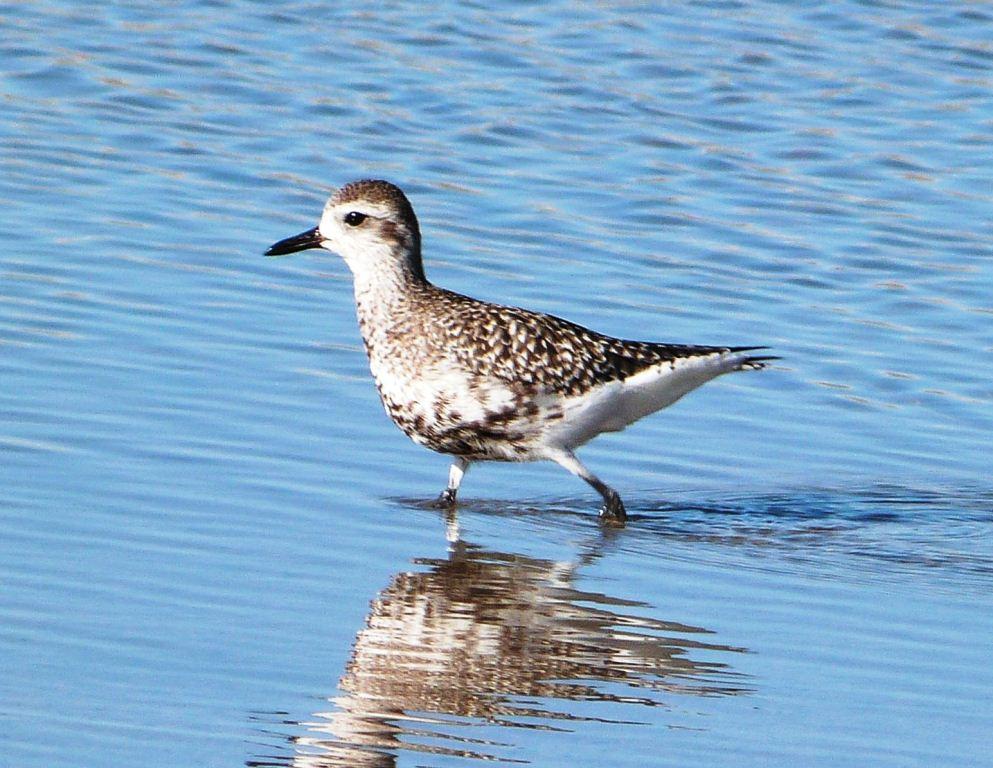
Black-bellied Plover - Ft DeSoto 11-22-12 Thanksgiving by Lee

Black-bellied Plover – Ft DeSoto 11-22-12 Thanksgiving

Plovers are a widely distributed group of wading birds belonging to the subfamily Charadriinae. There are about 40 species in the subfamily, most of them called “plover” or “dotterel”. The closely related lapwing subfamily, Vanellinae, comprises another 20-odd species.

Plovers are found throughout the world, and are characterised by relatively short bills. They hunt by sight, rather than by feel as longer-billed waders like snipes do.

They feed mainly on insects, worms or other invertebrates, depending on habitat, which are obtained by a run-and-pause technique, rather than the steady probing of some other wader groups.

The plover group of birds has a distraction display subcategorized as false brooding, pretending to change position, to sit on an imaginary nest site.

A group of plovers may be referred to as a stand, wing, or congregation. A group of dotterels may be referred to as a trip. (Wikipedia)

Northern Lapwing (Vanellus vanellus) by Nik

Northern Lapwing (Vanellus vanellus) by Nikhil Devasar

The versions of the Bible that list the Lapwing are: AKJV, Bishops, ECB, IAV, KJV, TRC, Tyndale, UKJV, Webster and the YLT.

Here is a very interesting version of Deut. 14:16:

The bittern, and the charadrion, every one in their kind: the houp also and the bat. (Deuteronomy 14:18 DRB)

That version actually mentions the Charadrion and the “houp,” which is the Hoopoe.

If you look through the birds in the Charadriidae Family you will find that the Lord was gracious and omniscient in his creative design of those species. I trust you never tire of studying God’s Word.

In your studies about the birds and other topics in the Bible, don’t forget one of the most important verses:

For God so loved the world, that he gave his only begotten Son, that whosoever believeth in him should not perish, but have everlasting life. (John 3:16 KJV)

*
See:
Birds of the Bible

Gospel Message
*

Birds of the Bible – Name Study – Swamphen or Waterhen

Purple Gallinule by Lee at Lake Hollingsworth by Lee

Purple Gallinule by Lee at Lake Hollingsworth by Lee

And the swan, and the bittern, and the porphyrion. (Leviticus 11:18 DRB)

And the swan, and the pelican, and the gier eagle, (Leviticus 11:18 KJV)

the white owl, the jackdaw, and the carrion vulture; (Leviticus 11:18)

et cygnum, et onocrotalum, et porphyrionem, (Leviticus 11:18 clVulgate)

A quote from the article mentioned in Birds of the Bible – Names of Birds Study Introduction from Kosher Animals – Birds about the “porphyrion”:

“An additional complexity arises from the fact that the porphyrion has not yet been identified, and classical Greek literature merely identifies a number of species that are not the porphyrion, including the peacock, grouse, and robin, and implies that the porphyrion is the cousin of the kingfisher; from these meagre clarifications, the porphyrion can only be identified as anything from the Lilac-breasted Roller, Indian Roller, or Northern Carmine Bee-eater, to the flamingo.”

This caused studying to find out more about this. Working so much with the names of birds of the world that I list, a search of that database came up with these Latin named birds with similar spelling and the Waterhen listed in some Bible translations, so it is listed also.:

Purple Swamphen (Porphyrio porphyrio)
African Swamphen (Porphyrio madagascariensis)
White Swamphen (Porphyrio albus) † Extinct
Mohoau (Porphyrio mantelli) † Extinct
Takahe (Porphyrio hochstetteri)
Allen’s Gallinule (Porphyrio alleni)
Purple Gallinule (Porphyrio martinicus)
Azure Gallinule (Porphyrio flavirostris)

Purple-throated Cotinga (Porphyrolaema porphyrolaema)  ©Cincinnati Zoo
Blue Finch (Porphyrospiza caerulescens) Wikipedia

White-breasted Waterhen (Amaurornis phoenicurus)

Interesting. The Cotinga and the Finch, I believe could be eliminated as birds not on the unclean list. The birds left are all part of the Rails, Crakes and Coots-Rallidae Family. Also looking back over previous posts, the Water-hen was written about in Birds of the Bible – Water-hen or Water hen. Some insight was discovered in that article.

Which bird is intended by the Bible? I have no definite answer. But, for the sake of learning more about birds, let’s look at the ones left on the list above. Notice that “purple” does show up in most of these birds.
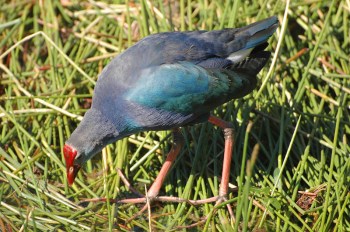
Purple Swamphen (Porphyrio porphyrio) by Bob-Nan

Purple Swamphen (Porphyrio porphyrio) by Bob-Nan

The Purple Swamphen (Porphyrio porphyrio), also known as the Pūkeko, African Purple Swamphen, Purple Moorhen, Purple Gallinule or Purple Coot, is a large bird in the family Rallidae (rails). From its name in French, talève sultane, it is also known as the Sultana Bird. This chicken-sized bird, with its huge feet, bright plumage and red bill and frontal shield is easily-recognisable in its native range. It should not be confused with the American Purple Gallinule, Porphyrio martinica.

There are 13 or more subspecies of the Purple Swamphen (depending on the authority) which differ mainly in plumage colour.
The species makes loud, quick, bleating and hooting calls, which are hardly bird-like in tone. It is particularly noisy during the breeding season. Despite being clumsy in flight it can fly long distances, and it is a good swimmer, especially for a bird without webbed feet.

The Purple Swamphen is occasionally recorded as an escape from captivity in Britain and elsewhere. An introduced population exists in Florida, though state wildlife biologists are trying to eradicate the birds.

The Purple Swamphen was introduced to North America in the late 1990s due to avicultural escapes in the Pembroke Pines, Florida area. The birds multiplied and can now be found in many areas of southern Florida. Ornithological authorities consider it likely that the swamphen will become an established part of Florida’s avifauna.

The Florida birds are mostly or entirely of the gray-headed race poliocephalus, native to the area around the Caspian Sea.

The most common call from the Florida birds is a loud, high-pitched “creek,” often doubled.

**********

White Swamphen (Lord Howe) (Porphyrio albus) † Extinct ©WikiC

White Swamphen (Lord Howe) (Porphyrio albus) † Extinct ©WikiC

The Lord Howe Swamphen or White Gallinule, Porphyrio albus, was a large bird in the family Rallidae endemic to Lord Howe Island, Australia. It was similar to the Purple Swamphen, but with shorter and more robust legs and toes. Its plumage was white, sometimes with a few blue feathers, and it was probably flightless, like its other close relative the Takahe. Similar, entirely blue birds were also described, but it is not clear if they belong to this species or are simply Purple Swamphens (which can also be found on the island). The feathers on the two extant skins are white.

This bird was first described by John White in his Journal of a Voyage to New South Wales (1790), which also contained an illustration. It was not uncommon when the bird was first described, but was soon hunted to extinction by whalers and sailors.
There are two skins of the bird in existence, one in the collection of the World Museum in Liverpool and the other in the Naturhistorisches Museum Wien in Vienna. There are also several paintings, and some subfossil bones.
************
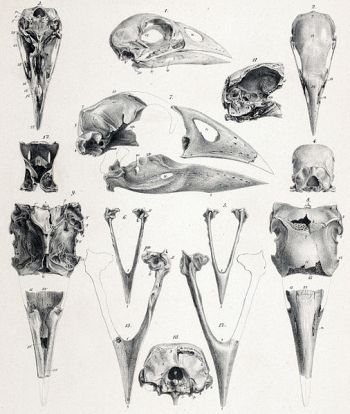
Mohoau (Porphyrio mantelli) † Extinct (North Island Takahē) ©WikiC

Mohoau (Porphyrio mantelli) † Extinct (North Island Takahē) ©WikiC

The North Island Takahē or Mōho, or Mohoau (Porphyrio mantelli) is an extinct rail that was found in the North Island of New Zealand. This flightless species is known from subfossils from a number of archeological sites and from one possible 1894 record (Phillipps, 1959). It appeared to have been even larger than the South Island Takahē and, if it did survive until the 1890s, would have been the largest rail in historic times. The decline of the species has generally been attributed to the increasing incursion of forest into the alpine grasslands through the Holocene, although hunting by the Māori also played a major role.

Traditionally the North Island Takahē was considered conspecific with the threatened South Island Takahe P. hochstetteri. Trewick (1996) presented evidence that the two taxa were independently derived from flying ancestors, so proved to be separate species.
*************************
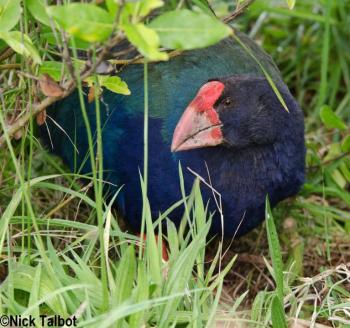
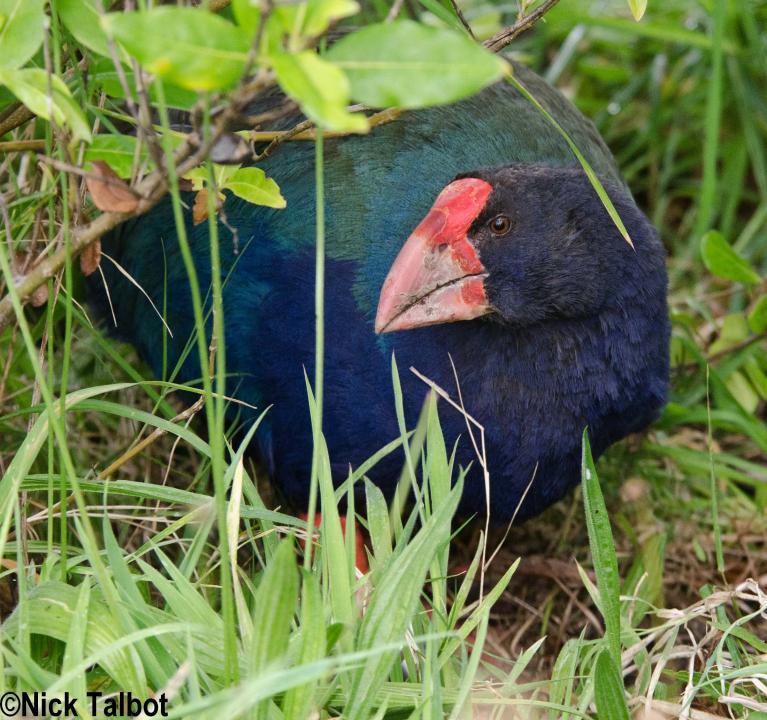
Takahe (Porphyrio hochstetteri) by Nick Talbot

Takahe (Porphyrio hochstetteri) by Nick Talbot

The Takahē (Porphyrio hochstetteri) or South Island Takahē (Porphyrio hochstetteri) is a flightless bird indigenous to New Zealand and belonging to the rail family. It was thought to be extinct after the last four known specimens were taken in 1898. However, after a carefully planned search effort the bird was rediscovered by Geoffrey Orbell near Lake Te Anau in the Murchison Mountains, South Island, on 20 November 1948.

The Takahē is the largest living member of the Rallidae family. Its overall length averages 63 cm (24.8 in) and its average weight is about 2.7 kg (6 lbs) in males and 2.3 kg (5 lb) in females, ranging from 1.8-4.2 kg (4-9.2 lbs).  The standing height is around 50 cm (20 in). It is a stocky bird, with reduced wings, strong legs and a massive bill.

The adult Takahē is mainly purple-blue in colour, with a greenish back and inner wings. It has a red frontal shield and red-based pink bill. The legs are pink. This is a noisy species with a loud clowp call. Contact call is easely confused with that of the Weka (Gallirallus australis), but is generally more resonant and deeper.
***********
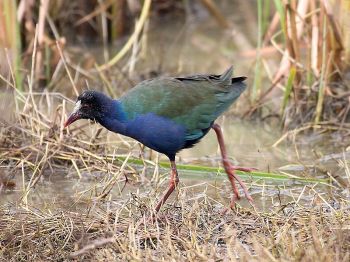
Allen's Gallinule (Porphyrio alleni) ©WikiC

Allen’s Gallinule (Porphyrio alleni) ©WikiC

The Allen’s Gallinule (Porphyrio alleni), formerly known as the Lesser Gallinule is a small waterbird of the family Rallidae. Its former binomial name is Porphyrula alleni.
Its breeding habitat is marshes and lakes in sub-Saharan Africa. They build a floating nest in marshes and swamps, laying 2-5 eggs. This species is partially migratory, undertaking seasonal movements.
Remarkably, this apparently weakly flying bird is not only the only species with a purely sub-Saharan African range to have reached Great Britain, but has done so twice. It has also occurred as a vagrant in several other European countries.

They are similar in size to the only slightly larger Water Rail. The Allen’s Gallinule has a short red bill, greenish back and purple upperparts. They have red legs with long toes, and a short tail which is white with a dark central bar underneath. Breeding males have a blue frontal shield, which is green in the female. Immature Allen’s Gallinules are sandy brown with a buff undertail. The downy chicks are black, as with all rails.
These birds probe with their bill in mud or shallow water, also picking up food by sight. They mainly eat insects and aquatic animals. They nod their heads as they swim.

Allen’s Gallinules are very secretive in the breeding season, particularly in the dense swamps they favour, and are mostly heard rather than seen. They are then rather noisy birds, with a sharp nasal pruk call. They can be easier to see on migration or when wintering.

This bird is named after British naval officer Rear-Admiral William Allen (1770-1843).

******************
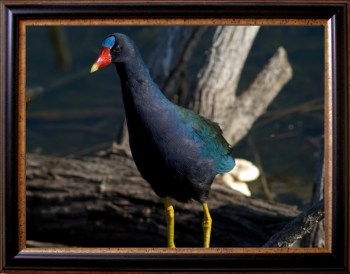
Framed Purple Gallinule by Dan

Framed Purple Gallinule by Dan

The (American) Purple Gallinule (Porphyrio martinicus) is a “swamp hen” in the rail family Rallidae. This is a medium-sized rail, measuring 26–37 cm (10–15 in) in length, spanning 50–61 cm (20–24 in) across the wings and weighing 141–305 g (5.0–10.8 oz). Males, averaging 257 g (9.1 oz) in mass, are slightly larger than females, at 215 g (7.6 oz) on average. The adult Purple gallinule has big yellow feet, purple-blue plumage with a green back, and red and yellow bill. It has a pale blue forehead shield and white undertail. Darkness or low light can dim the bright purple-blue plumage of the adult to make them look dusky or brownish, although the forehead shield color differentiates them from similar species such as Common Gallinules.

Juveniles are brown overall with a brownish olive back. These gallinules will fly short distances with dangling legs. Their breeding habitat is warm swamps and marshes in southeastern states of the United States and the tropical regions of Central America, the Caribbean and northern South America. This species is resident in southern Florida and the tropics, but most American birds are migratory, wintering south to Argentina. The nest is a floating structure in a marsh. Five to ten eggs are laid. Their coloration is buff with brown spots.

The diet of these rails is omnivorous, being known to include a wide variety of plant and animal matter, including seeds, leaves and fruits of both aquatic and terrestrial plants, as well as insects, frogs, snails, spiders, earthworms and fish. They have also been known to eat the eggs and young of other birds.

This species is a very rare vagrant to western Europe and southwestern Africa. There is a similar species in southern Europe, the Purple Swamphen, Porphyrio porphyrio, but that bird is much larger.

This species is sometimes referred to by the alternative name, Yellow-legged Gallinule.
***********
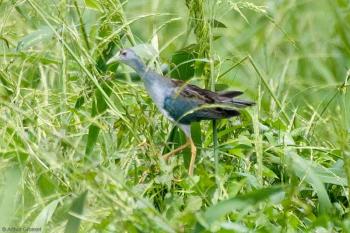
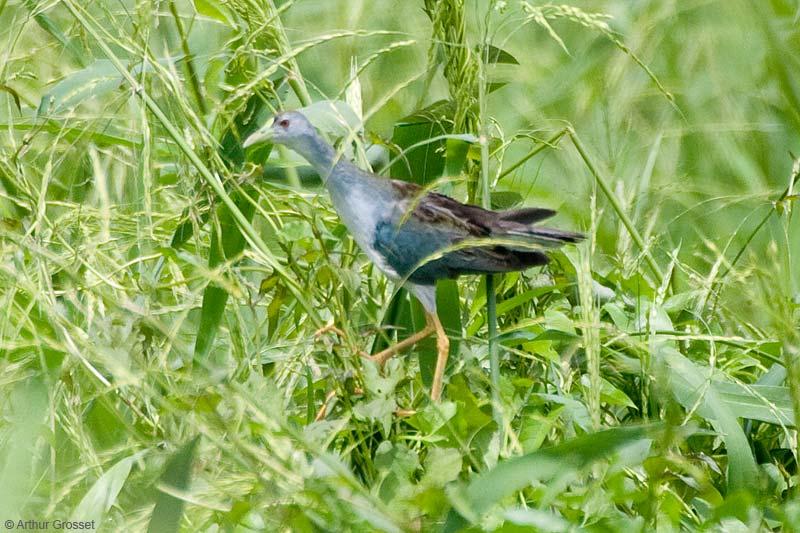
Azure Gallinule (Porphyrio flavirostris) ©Arthur Grosset

Azure Gallinule (Porphyrio flavirostris) ©Arthur Grosset

The Azure Gallinule (Porphyrio flavirostris) is a species of bird in the Rallidae family. It is found in Argentina, Bolivia, Brazil, Colombia, Ecuador, French Guiana, Guyana, Paraguay, Peru, Suriname, Trinidad and Tobago, the United States, and Venezuela.

The bill and frontal shield is a pale greenish-yellow.The wing coverts are greenish-blue while the back and tail are browner. The throat and underparts are white while the legs are yellow.

It is found in freshwater marshes where there is floating vegetation and this includes marshy edges of rivers and lakes. Nest is an open cup of leaves concealed in dense marsh vegetation. Clutch size is 4-5 eggs, incubated by both parents. Diet consists of invertebrates, insects and seeds taken from water and vegetation. Climbs in reed stems to bend them over water to pick up food.
***************
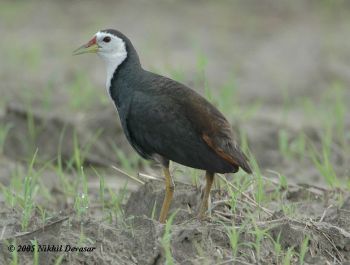
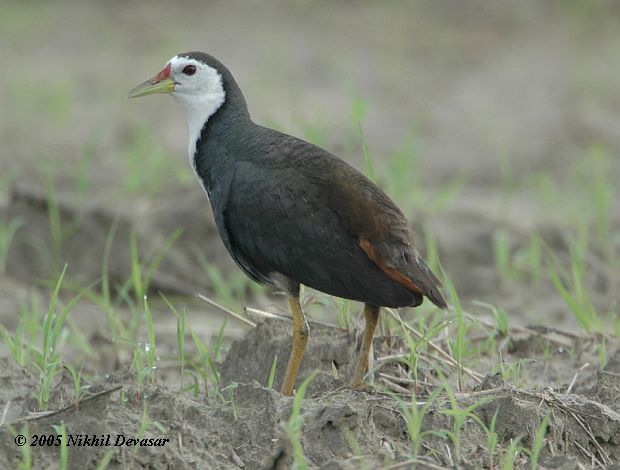
White-breasted Waterhen (Amaurornis phoenicurus) by Nikhil Devasar

White-breasted Waterhen (Amaurornis phoenicurus) by Nikhil Devasar

The White-breasted Waterhen (Amaurornis phoenicurus) is a waterbird of the rail and crake family Rallidae that is widely distributed across Southeast Asia and the Indian Subcontinent. They are dark slaty birds with a clean white face, breast and belly. They are somewhat bolder than most other rails and are often seen stepping slowly with their tail cocked upright in open marshes or even drains near busy roads. They are largely crepuscular in activity and during the breeding season, just after the first rains, make loud and repetitive croaking calls.

Adult White-breasted Waterhens have mainly dark grey upperparts and flanks, and a white face, neck and breast. The lower belly and undertail are cinnamon coloured. The body is flattened laterally to allow easier passage through the reeds or undergrowth. They have long toes, a short tail and a yellow bill and legs. Sexes are similar but females measure slightly smaller. Immature birds are much duller versions of the adults. The downy chicks are black, as with all rails.

************

The other reference to the Porphyrion is found in Deuteronomy 14:16 with that list of unclean birds. Again, the translations give a wide variation in which bird is meant. Swan, owl, water-hen,

The little owl and the great owl and the water-hen; (Deuteronomy 14:16 BBE)

the little owl and the great owl, the water hen (Deuteronomy 14:16 NRSVA)

and G2532 heronG2064.1 and G2532 swanG2945.2 and G2532 ibisG2395.1 (Deuteronomy 14:16 ABP+)

The little owl, the great owl, the horned owl, (Deuteronomy 14:16 AMP)

The litle Owle, the great Owle, nor the Redshanke. (Deuteronomy 14:16 Bishops)

Neither the litle owle, nor the great owle, nor the redshanke, (Deuteronomy 14:16 Geneva)

and the heron, and the swan, and the stork, (Deuteronomy 14:16 Brenton)

herodium ac cygnum, et ibin, (Deuteronomy 14:16 clVulgate) (Cygnus is the Latin word for swan, the romanized form of the ancient Greek κύκνος (kyknos) “swan”.)
the little owl, and the eared owl, and the barn owl, (Deuteronomy 14:16 LITV-TSP)

The little owl, and the great owl, and the swan, (Deuteronomy 14:16 KJV)

(H853) The little owl,H3563 and the great owl,H3244 and the swan,H8580 (Deuteronomy 14:16 KJV+)

the little H3563b owl H3563b, the N1great H3244 owl H3244, the white H8580 owl H8580, (Deuteronomy 14:16 NASB+) (This translation of H8580 amazes me. They translate it white owl yet here is what it says in H8580)

H8580 (Strong’s LXX)
תּנשׁמת
tanshemeth
tan-sheh’-meth
From H5395; properly a hard breather, that is, the name of two unclean creatures, a lizard and a bird (both perhaps from changing color through their irascibility), probably the tree toad and the water hen: – mole, swan.

_____

But, if you look at some of the others:

H8580 (Brown-Driver-Briggs)
תּנשׁמת
tanshemeth
BDB Definition:
1) an unclean animal of some kind
1a) an unclean bird
1a1) perhaps the ibis, water-hen, species of owl, barn owl
1b) an unclean lizard
1b1) perhaps the chameleon
1c) perhaps an extinct lizard or bird, exact meaning unknown
Part of Speech: noun feminine
A Related Word by BDB/Strong’s Number: from H5395
Same Word by TWOT Number: 1433b

_____

H8580 (This is a combo of many BTSCTVM+)

– Original: תּנשׁמת
– Transliteration: Tanshemeth
– Phonetic: tan-sheh’-meth
– Definition:
1. an unclean animal of some kind
a. an unclean bird
1. perhaps the ibis, water-hen, species of owl, barn owl
b. an unclean lizard
1. perhaps the chameleon
c. perhaps an extinct lizard or bird, exact meaning unknown
– Origin: from H5395
– TWOT entry: 1433b
– Part(s) of speech: Noun Feminine

– Strong’s: From H5395; properly a hard breather that is the name of two unclean creatures a lizard and a bird (both perhaps from changing color through their irascibility) probably the tree toad and the water hen: – mole swan.
Total KJV Occurrences: 3
• mole, 1
Lev_11:30

• swan, 2
Lev_11:18; Deu_14:16

_____

Well, I don’t know about you, but I still don’t have a definite answer. Though, isn’t it enjoyable to study God’s Word. Like it was posted before, what ever bird it was is not as important as the obedience that was involved. They knew which birds they were not to eat and they were expected to obey. Today, when we read the Bible, we come across clear commands and we are expected to obey. (Bonus – I was birdwatching in Scripture)

And Samuel said, Hath the LORD as great delight in burnt offerings and sacrifices, as in obeying the voice of the LORD? Behold, to obey is better than sacrifice, and to hearken than the fat of rams. (1 Samuel 15:22 KJV)

Know ye not, that to whom ye yield yourselves servants to obey, his servants ye are to whom ye obey; whether of sin unto death, or of obedience unto righteousness? (Romans 6:16 KJV)

**********

See also:

Birds of the Bible

Birds of the Bible – Water-hen

Birds of the Bible – Swans

Birds of the World – Rallidae – Rails, Crakes & Coots

List of animals in the Bible – Wikipedia

Porphyrion (Greek Mythology) – Wikipedia

(Information from Wikipedia and other internet sources, plus the e-Sword program)

*

Birds of the Bible – Names of Birds Study – Preparation

Where do we start? (See the Introduction to this study) I personally just re-read the following articles:

I had forgotten that I have been so busy. This is being composed as I am doing my study and will describe my actions as I do them. My e-Sword program is running, plus I have the internet available. There are other great Bible programs out there, but e-Sword is easy to use and it’s free. I have purchased some various versions and commentaries to use with over the years. Also, if you go to the Links section of e-Sword, there you will find places for more additions to add to your e-Sword program. My favorite is Bible Support.

List of all my Bibles in e-Sword

List of all my Bibles in e-Sword

Needless to say, I don’t use them all, but like to have them for when I compare the different versions as you have read in other articles.

Menu Bar for e-Sword

Menu Bar for e-Sword

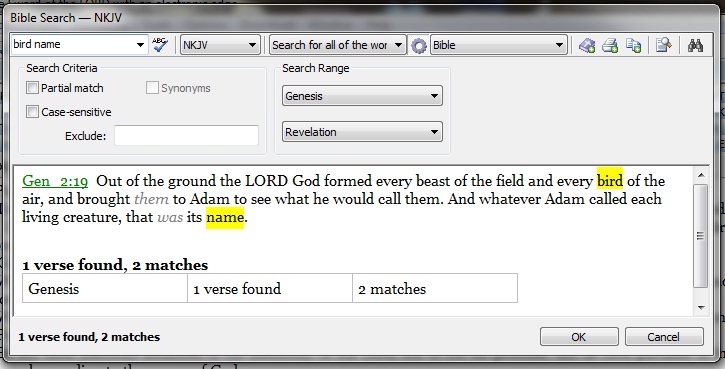
This is the best place to start. The menu bar has the Binoculars close to the center of the photo. (All true birdwatchers know what those are) When the Search (binocular) is pressed a dialog box pops up. I put in “bird name” and then pressed the “OK” button. Here is what comes up.

Bible Search - bird name

Bible Search – bird name

When I did that first with the KJV nothing came up because that verse uses “fowl” not “bird” so the NKJV was selected and this is the result. The first place where birds were named and by whom.

Out of the ground the LORD God formed every beast of the field and every bird of the air, and brought them to Adam to see what he would call them. And whatever Adam called each living creature, that was its name. (Genesis 2:19 NKJV)

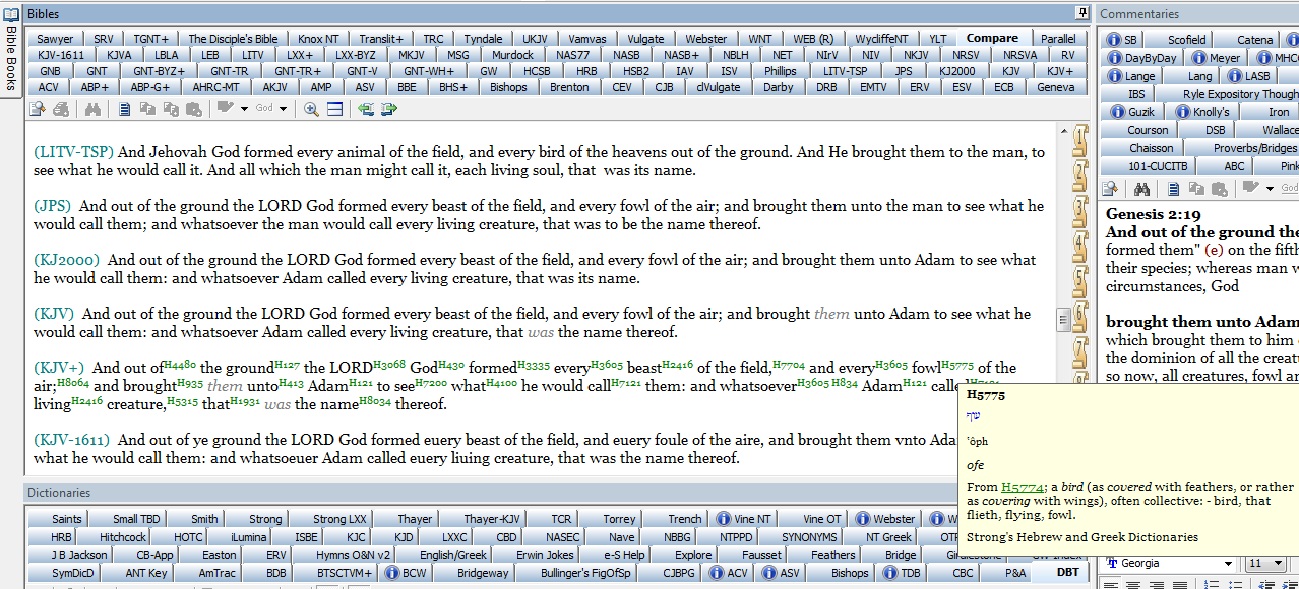
Using compare opens with all the different versions showing that verse. The KJV+ in the photo shows the Strong’s numbers and when the mouse is placed on the numbers a box appears. Now you can see the words in the original languages. If we are going to study about the different names for the clean and unclean birds and other birds throughout the Bible, this will be very handy. Whether you are studying about birds or whatever, this is very useful.

Compare of Genesis 2:19 with Hebrew 5775 for fowl open.

Compare of Genesis 2:19 with Hebrew 5775 for fowl open.

Okay for now. If you do not have a Bible program, try loading one and you can always use e-Sword. There are other Bible programs for the Tablets that will let you do searches also. I also have Study Bibles and my Bird Books handy. Get prepared and this will be continued. Don’t forget to ask for the Lord’s help.

In the mean time, my real binoculars are calling to me to aim them at some birds.