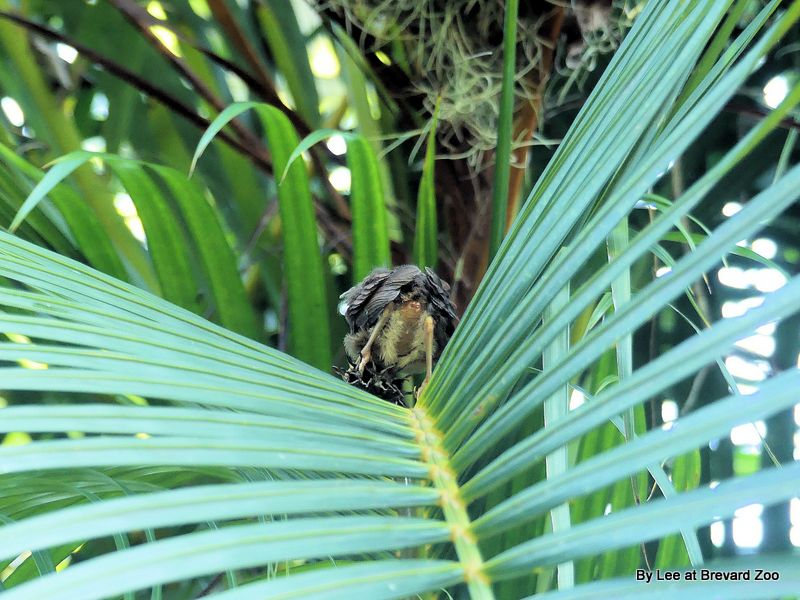
Cardinals Watching Out For Fallen Baby

Cardinal Brevard Zoo

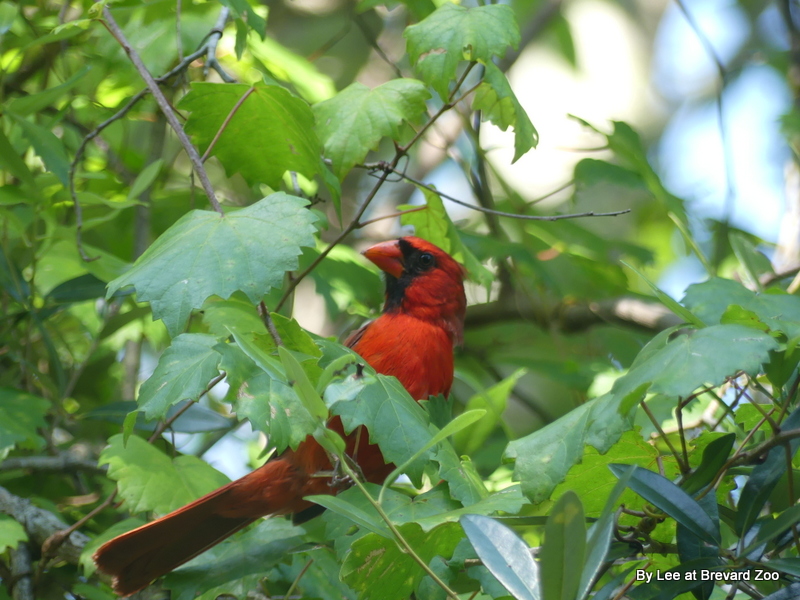
At the Brevard Zoo today, we saw some Northern Cardinals flying really close to where I was standing.

Cardinal Brevard Zoo 7-3-18

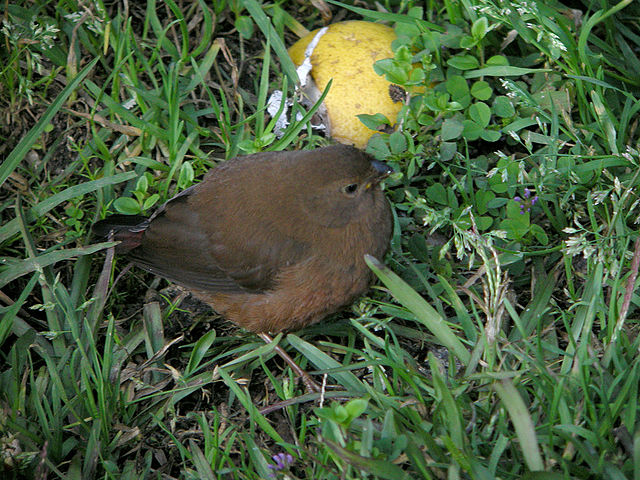
I was enjoying getting some photos, when we noticed that they were feeding a youngster who had fallen out of the nest. It had landed on a palm leaf right above the walkway where I was standing.

Cardinal Baby Brevard Zoo 7-3-18

That is when I realized the Momma Cardinal was also keeping an eye on the situation.

Momma Cardinal Brevard Zoo 7-3-1

We were quite concerned that it might fall into the walkway and someone would step on it accidentally. At the next exhibit, we told the keeper. He asked if it was the one in the palm tree. Yes. Well, he had just put it back in the nest about 10 minutes before. Said he would go back and put it back in again.

We sure hope it makes it and quits getting out of the nest. It is too small to survive on its own and can’t fly yet. He also told us that there were no other little ones in the nest. I am sure that those concerned Cardinals will do their best.

“I know all the fowls of the mountains: and the wild beasts of the field are mine.” (Psalms 50:11 KJV)

I know the Lord, who Created Cardinals, knows all about the situation. If He cares about the littlest baby Cardinal, rest assured, He cares about you and I.

Photos aren’t the best, but I am writing this on my laptop and away from the editing program.

An Amazing Osprey Out Fishing!

Received this from an email and needs to be shared! Enjoy!

Osprey with his catch!

But these are they of which ye shall not eat: the eagle, and the ossifrage, and the osprey, (Deuteronomy 14:12 KJV)
BOTH THE BIRD AND THE PHOTOGRAPHY
Hard to believe this Osprey got 5-6 fish at a time,  then got a ‘flounder’ under 3 feet of water and finally made off with what looks to be a 5+ lbs steel head.
Have you ever seen a bird shake water off like a dog does?
Wouldn’t want to get in its way when its eyes are locked onto you and talons in the “load” position! It’s talons are amazing!
There are 3 sequences in this one video:
1st sequence – catches half a dozen fish in one strike.
2nd sequence – plunges talons into deep water to grab the prey.
3rd sequence – captures a big old fish that looks as if it weighs more than he does!
This is incredible to watch!

CLICK: OSPREY

*

I.O.C. World Bird List Version 8.2 – Updated

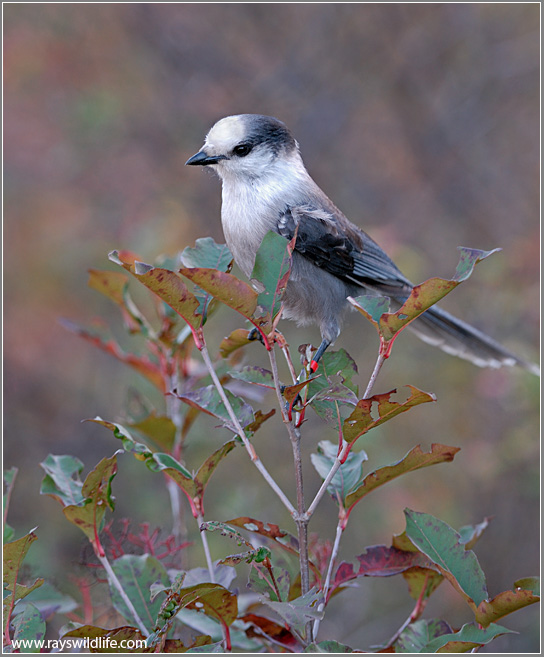
Canada Jay (Perisoreus canadensis) by Raymond Barlow

Gray Jay now Canada Jay (Perisoreus canadensis) by Raymond Barlow

“For by him were all things created, that are in heaven, and that are in earth, visible and invisible, whether they be thrones, or dominions, or principalities, or powers: all things were created by him, and for him: And he is before all things, and by him all things consist.” (Colossians 1:16-17 KJV)

I finally finished updating the Birds of the World pages to reflect the newest version, 8.2. of the IOC’s bird list. The family pages and the indexes have been modified. Since the photos on the site were hacked last year, the family pages were changed. Now the photos are at the bottom of the pages instead of with each name.

With this version, I added the Genera in with Green. Many of the new changes are in red and a few in blue. The red are spelling or Genera changes. Blue seems to represent reshuffled positions within a family. [I think – this is from their Excel spreadsheet]

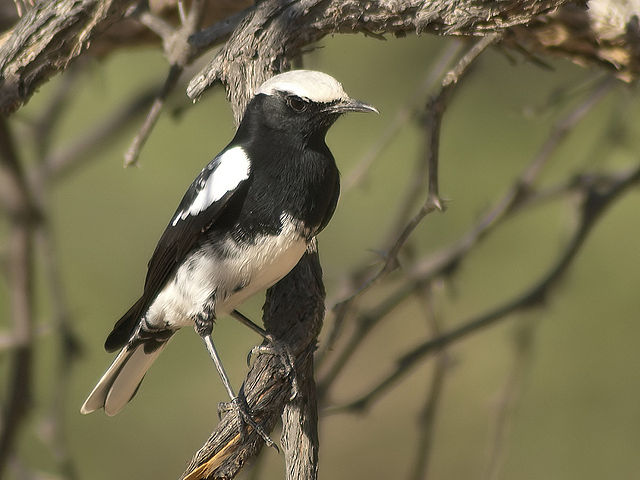
White-crested Helmetshrike (Prionops plumatus) ©WikiC

Two families were moved into the Vangidae – Vanga and Allies family.

Here is the over update:

The IOC World Bird List 8.2 contains 10,711 extant species (and 158 extinct species)  classified in 40 Orders,  246 Families (plus 1 Incertae Sedis) and 2,313 Genera.  The list also includes 20,055 subspecies, their ranges and authors.

Changes include:

SPECIES ADDED:                15 

SPECIES DELETED:             3

ENGLISH NAMES:               18

TAXONOMY:                         18 incl revisions of  Campephagidae, Phylloscopidae and Locustellidae, and expansion of Vangidae to include helmetshrikes, woodshrikes, and shrike-flycatchers

Large woodshrike (Tephrodornis gularis) ©WikiC

The three articles listed in the Time For Another Update From The I.O.C. explain the changes and saves me rewriting the same information.

2018 AOS Supplement is Out!

2018 checklist changes include few splits

David Sibley: How to make peace with changes to your checklist

The Indexes, Alphabetical Pages and Family Pages are all current here on the site:

Birds of the World

Alphabetical List of the Birds.

ORDER

Family

Families – Alphabetical (Scientific)

Families – Alphabetical (English)

Families – Taxonomic (Scientific – English)

Families – Taxonomic (English – Scientific)

Species Index

Time For Another Update From The I.O.C.

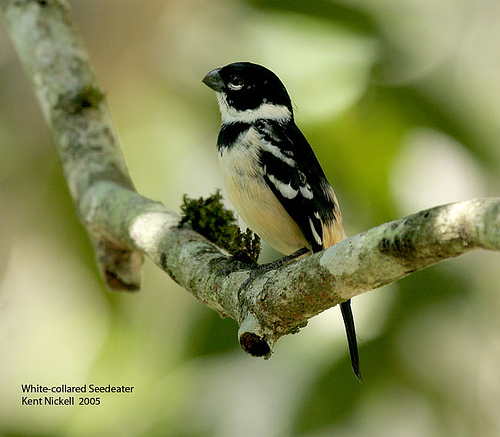
White-collared Seedeater (Sporophila torqueola) male by Kent Nickell

White-collared Seedeater (Sporophila torqueola) male by Kent Nickell Now Split

The latest update from the I.O.C. [8.2] just came out yesterday. Thankfully, they are only doing two a year now, not four. So, while I dig in and rearrange and update this site, here are a couple of articles about the latest changes that might interest you.

If you are new to this blog, several times a year, the birding authorities accept and reject proposals for splits, lumps and new species. Some are accepted and many are rejected for now. These articles help explain that procedure better than I can. So, look them over. They reveal the hows and whys of the latest changes.

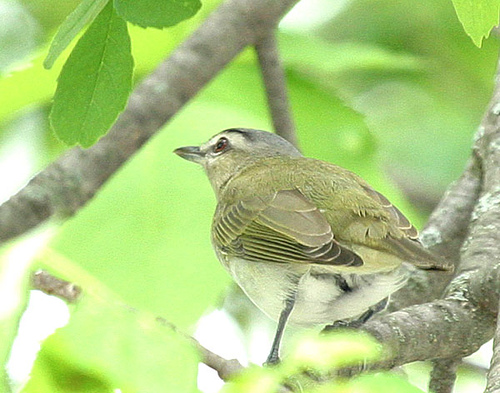
Red-eyed Vireo (Vireo olivaceus) by Kent Nickell

Red-eyed Vireo (Vireo olivaceus) by Kent Nickell Now Split

This first one shows the changes very well and may save me doing the same.

2018 AOS Supplement is Out!

BirdWatching magazine has this article:

2018 checklist changes include few splits

This next article by David Sibley is really good and helps us understand these changes from a personal level:

David Sibley: How to make peace with changes to your checklist

***

Latest update online here is the IOC 8.1. Stay tuned, I’m on it!

“My son, fear thou the LORD and the king: and meddle not with them that are given to change:” (Proverbs 24:21 KJV)

I.O.C. Version 8.1 Update Completed

Dividing the Buntings and Sparrows – I.O.C. 8.1

Hang On To Your Hat – I.O.C. 8.1 Update Underway

Scissor-tailed Birds

In JJSJ’s [Dr. Jim] article, Scissor-Tailed Flycatcher, Oklahoma’s Long-tailed State Bird, he introduced you to the beautiful Scissor-Tailed Flycatcher. Today, I would like to show you three more “scissor-tailed” birds.

The word “Scissor” is not mentioned in the Bible, at least that I can find. Yet, God told us in His Word:

“This shall be written for the generation to come: and the people which shall be created shall praise the LORD.” (Psalms 102:18 KJV)

“Let them praise the name of the LORD: for he commanded, and they were created.” (Psalms 148:5 KJV) [Refers to the heavens and these beautiful birds fly in the sky, which was created.


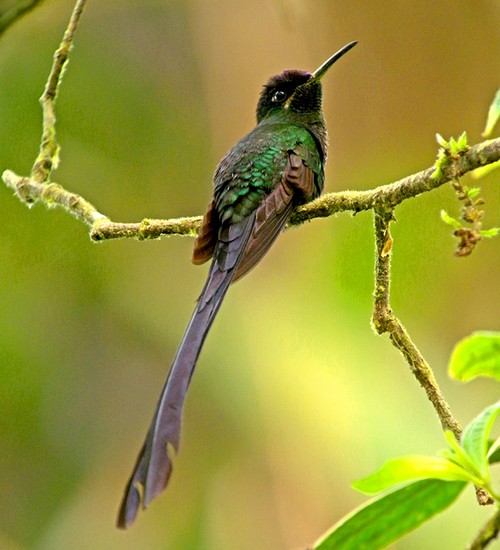
Scissor-tailed Hummingbird (Hylonympha macrocerca)

Scissor-tailed Hummingbird from Speak up for the Voices

Scissor-tailed Hummingbird (Hylonympha macrocerca) Endangered

Speak Up For The Voices Article About Scissor-tailed Hummingbird


Scissor-tailed Kite (Chelictinia riocourii) ©WikiC

Scissor-tailed Kite (Chelictinia riocourii) ©WikiC

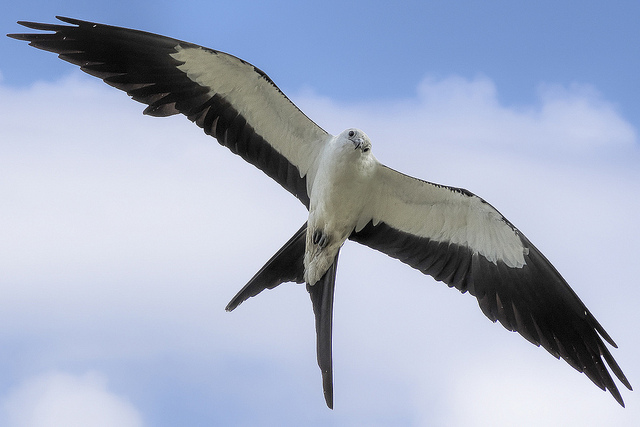
Scissor-tailed Kite (Chelictinia riocourii)

Today we rode over to Melbourne, Florida (90 miles) for the one-year checkup of my back surgery. We were blessed to see one of the Scissor-tailed Kites flying along in the field. They are here in Florida for a few months, starting in April or May. We always enjoy watching them, especially when they turn and you get a glimpse of the “scissor” tail.

Scissor-tailed Kite (Chelictinia riocourii) ©Flickr Lawrence C

Scissor-tailed Kite (Chelictinia riocourii) ©Flickr Ron Knight


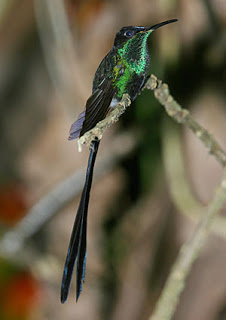
Scissor-tailed Nightjar (Hydropsalis torquata)

Scissor-tailed Nightjar (Hydropsalis torquata) by ©AGros

Scissor-tailed Nightjar (Hydropsalis torquata) ©WikiC

Scissor-tailed Nightjar (Hydropsalis torquata) ©WikiC


See:

Scissor-tailed Nightjar (Hydropsalis torquata)

Scissor-tailed Hummingbird (Hylonympha macrocerca)

Scissor-tailed Kite (Chelictinia riocourii)

Scissor-tailed Flycatcher (Tyrannus forficatus)

Bird of the Bible – Great Grey Owl

“Finally, brethren, whatsoever things are true, whatsoever things are honest, whatsoever things are just, whatsoever things are pure, whatsoever things are lovely, whatsoever things are of good report; if there be any virtue, and if there be any praise, think on these things.” (Philippians 4:8 KJV)

This video is great. If you do not chuckle, then you should.

“A merry heart doeth good like a medicine: but a broken spirit drieth the bones.” (Proverbs 17:22 KJV)

“The little owl, and the great owl, and the swan,” (Deuteronomy 14:16 KJV)

This Great Grey Owl is a “great owl” for sure. Love those eyes. “The Great Grey Owl or Great Gray Owl (Strix nebulosa) is a very large owl, documented as the world’s largest species of owl by length. It is distributed across the Northern Hemisphere, and it is the only species in the Strix genus found in both Eastern and Western Hemispheres. In some areas it is also called Phantom of the North, cinereous owl, spectral owl, Lapland owl, spruce owl, bearded owl, and sooty owl.’

“Adults have a large rounded head with a grey face and yellow eyes with darker circles around them. The underparts are light with dark streaks; the upper parts are grey with pale bars. This owl does not have ear tufts and has the largest facial disc of any raptor. There is a white collar or “bow tie” just below the beak. The long tail tapers to a rounded end.”

Great Grey Owl (Strix nebulosa) WikiC

Great Grey Owl (Strix nebulosa) WikiC

“In terms of length, the great grey owl is believed to exceed the Eurasian eagle-owl and the Blakiston’s fish owl as the world’s largest owl. The great grey is outweighed by those two species as well as several others, including most of the Bubo genus. Much of its size is deceptive, since this species’ fluffy feathers, large head and the longest tail of any extant owl obscure a body lighter than that of most other large owls. The length ranges from 61 to 84 cm (24 to 33 in), averaging 72 cm (28 in) for females and 67 cm (26 in) for males. The wingspan can exceed 152 cm (5 ft 0 in), but averages 142 cm (4 ft 8 in) for females and 140 cm (4 ft 7 in) for males. The adult weight ranges from 580 to 1,900 g (1.28 to 4.19 lb), averaging 1,290 g (2.84 lb) for females and 1,000 g (2.2 lb) for males. The males are usually smaller than females, as with most owl species.”

“They breed in North America from as far east as Quebec to the Pacific coast and Alaska, and from Finland and Estonia across northern Asia. They are permanent residents, although northerly populations may move south and southeast when food is scarce. In Europe, they are found breeding in Norway and Sweden and more numerously through Finland and Russia. Even though the species occurs in Europe, the first great grey owl recognized by science was found in Canada in the late 18th century.”

Information from Wikipedia with editing. See more about them: Great Grey Owl – Wikipedia

The Video was from Paul Dinning Wildlife.

The Owl is a bird that is mentioned in the Bible 10 times. [Leviticus 11:16, 17; Deuteronomy 14:15, 16; Psalm 102:6; Isaiah 34:11, 14, 15]

See:

Gideon

*

Avian And Attributes – Mountain

Mountain Wagtail (Motacilla clara) ©WikiC

“A Song and Psalm for the sons of Korah. Great is the LORD, and greatly to be praised in the city of our God, in the mountain of his holiness.” (Psalms 48:1 KJV)

“And it shall come to pass in the last days, that the mountain of the LORD’S house shall be established in the top of the mountains, and shall be exalted above the hills; and all nations shall flow unto it.” (Isaiah 2:2 KJV)


Avian and Attributes – Mountain

MOUNT’AIN, n. [L. adjective, montanus.] A large mass of earth and rock, rising above the common level of the earth or adjacent land, but of no definite altitude. We apply mountain to the largest eminences on the globe; but sometimes the word is used for a large hill. In general, mountain denotes an elevation higher and larger than a hill; as the Altaic mountains in Asia, the Alps in Switzerland, the Andes in South America,the Allegheny mountains in Virginia, the Catskill in New York, the White mountains in New Hampshire, and the Green mountains in Vermont. The word is applied to a single elevation, or to an extended range.

“And after six days Jesus taketh Peter, James, and John his brother, and bringeth them up into an high mountain apart, And was transfigured before them: and his face did shine as the sun, and his raiment was white as the light. And, behold, there appeared unto them Moses and Elias talking with him.” (Matthew 17:1-3 KJV)


There are numerous birds whose first name starts with Mountain. The links below will take you to their family pages. Below I am adding photos for many of them.

Mountain Avocetbill (Opisthoprora euryptera)
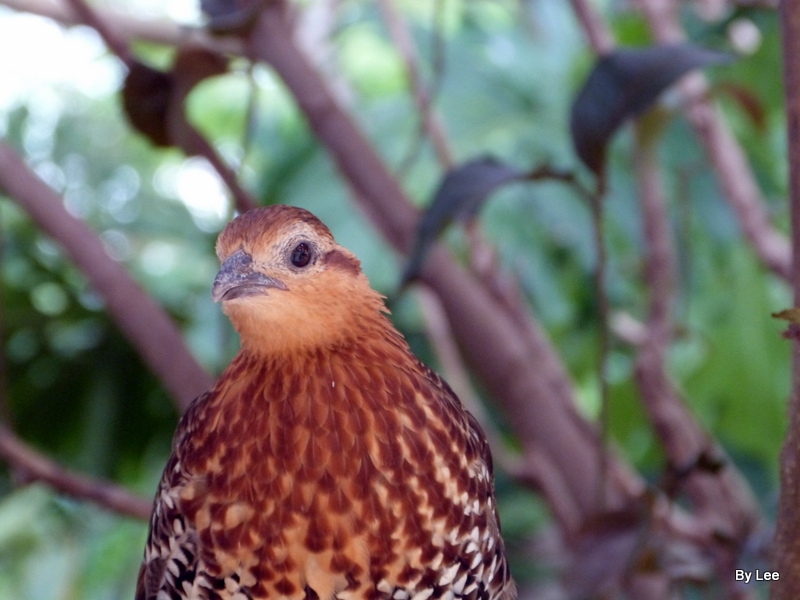
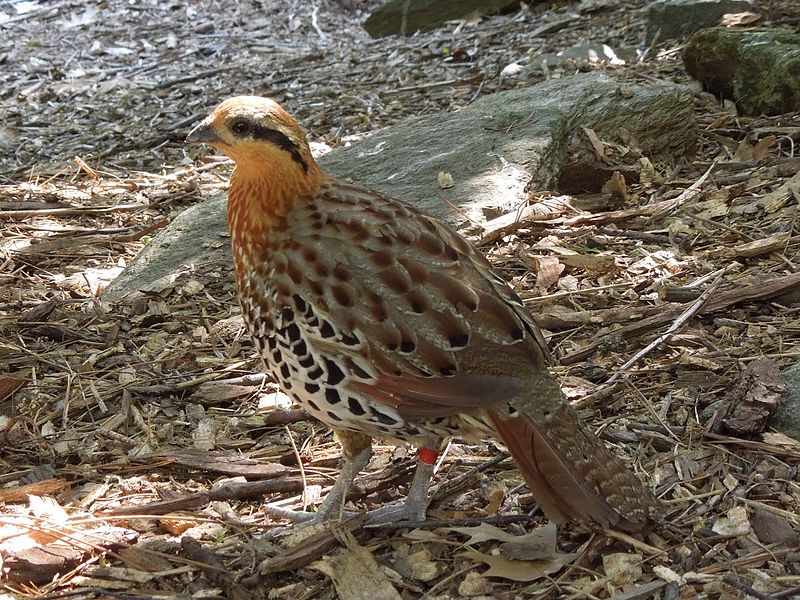
Mountain Bamboo Partridge (Bambusicola fytchii)
Mountain Barbet (Psilopogon monticola)
Mountain Blackeye (Chlorocharis emiliae)
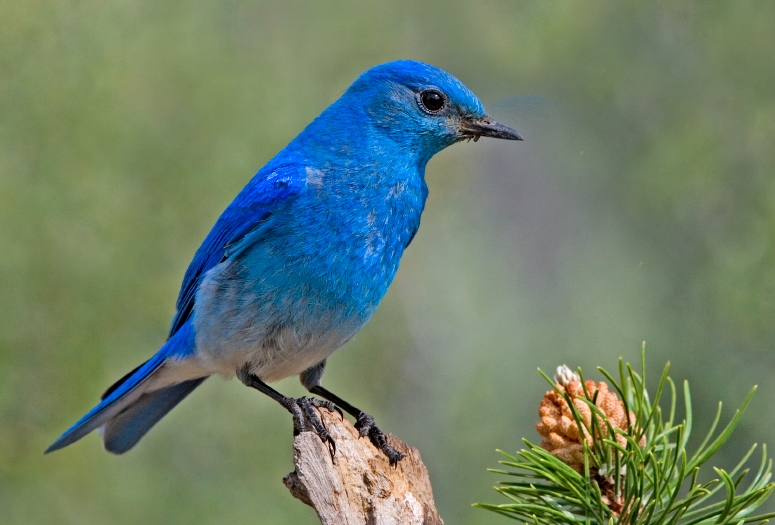
Mountain Bluebird (Sialia currucoides)
Mountain Bulbul (Ixos mcclellandii)
Mountain Buzzard (Buteo oreophilus)
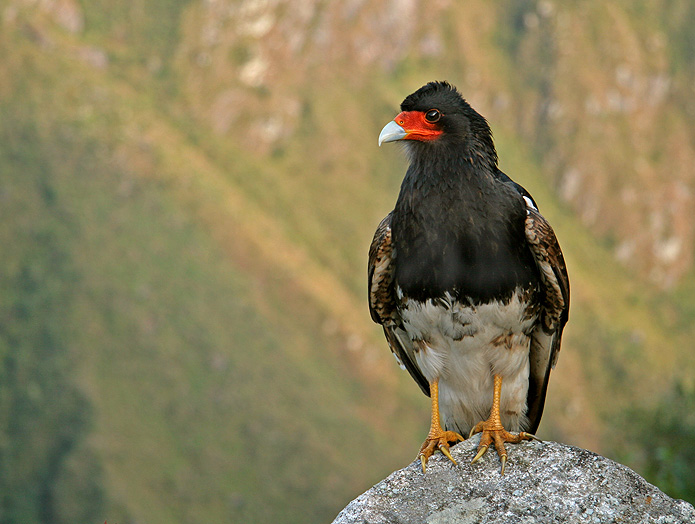
Mountain Caracara (Phalcoboenus megalopterus)
Mountain Chickadee (Poecile gambeli)
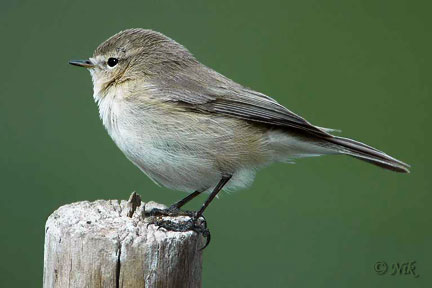
Mountain Chiffchaff (Phylloscopus sindianus)
Mountain Elaenia (Elaenia frantzii)
Mountain Firetail (Oreostruthus fuliginosus)
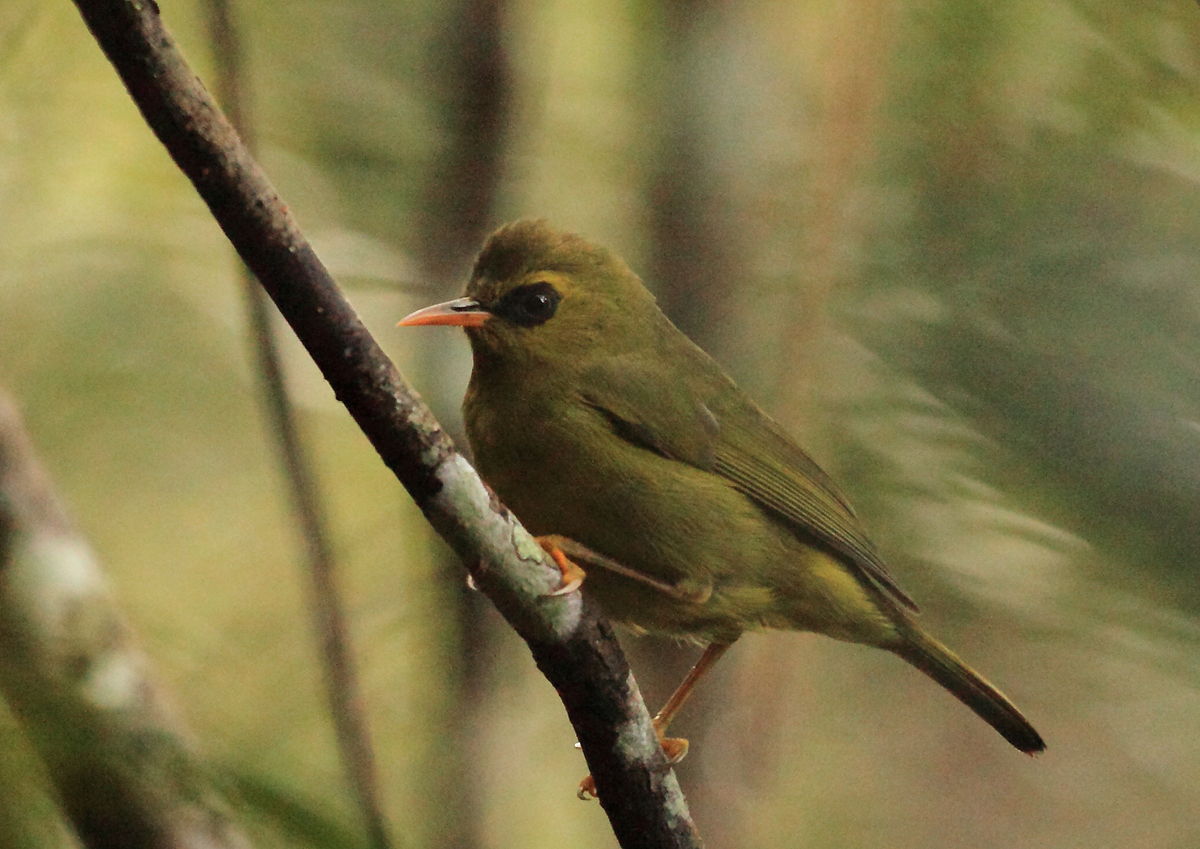
Mountain Fulvetta (Alcippe peracensis)
Mountain Greenbul (Arizelocichla nigriceps)
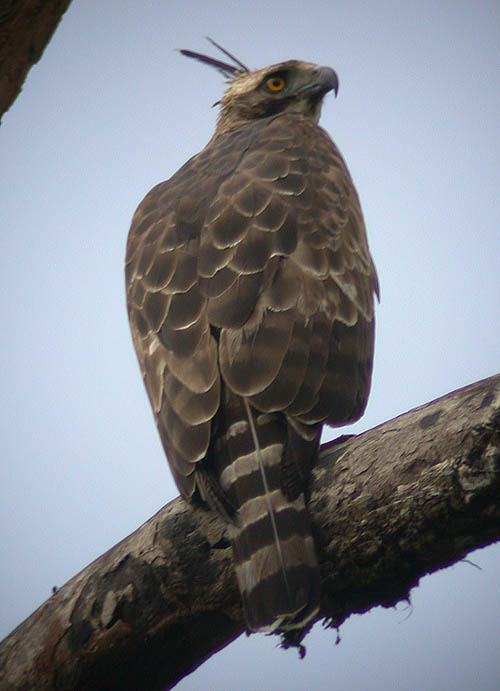
Mountain Hawk-Eagle (Nisaetus nipalensis)
Mountain Honeyeater (Meliphaga orientalis)
Mountain Illadopsis (Illadopsis pyrrhoptera)
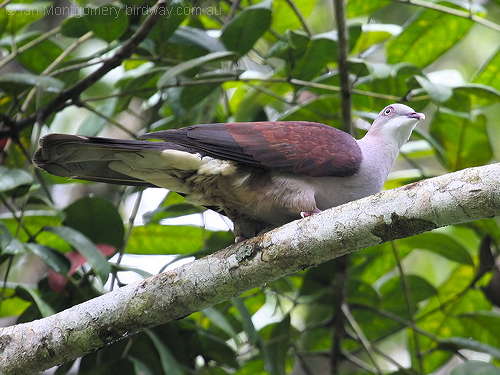
Mountain Imperial Pigeon (Ducula badia)
Mountain Kingfisher (Syma megarhyncha)
Mountain Leaf Warbler (Phylloscopus trivirgatus)
Mountain Masked Apalis (Apalis personata)
Mountain Mouse-warbler (Crateroscelis robusta)
Mountain Myzomela (Myzomela adolphinae)
Mountain Oriole (Oriolus percivali)
Mountain Owlet-nightjar (Aegotheles albertisi)
Mountain Parakeet (Psilopsiagon aurifrons)
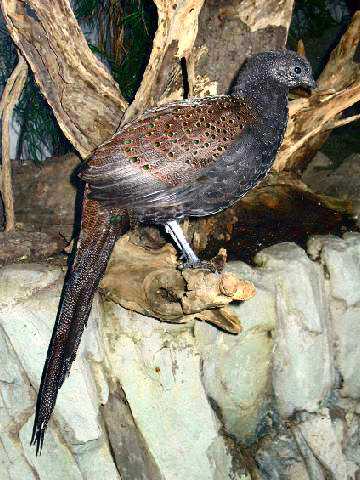
Mountain Peacock-Pheasant (Polyplectron inopinatum)
Mountain Peltops (Peltops montanus)
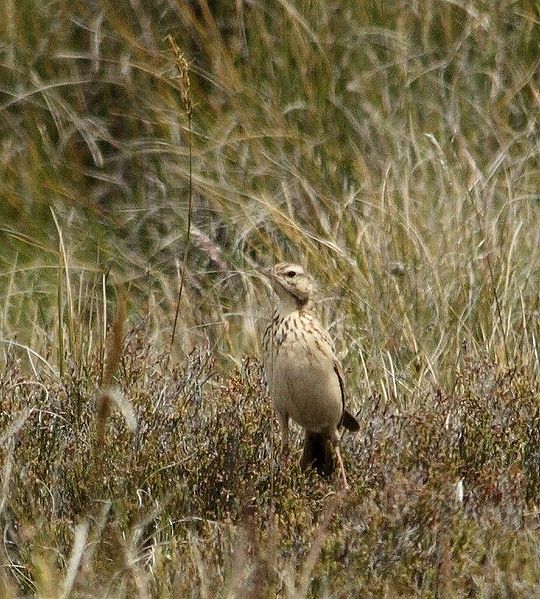
Mountain Pipit (Anthus hoeschi)
Mountain Plover (Charadrius montanus)
Mountain Pygmy Owl (Glaucidium gnoma)
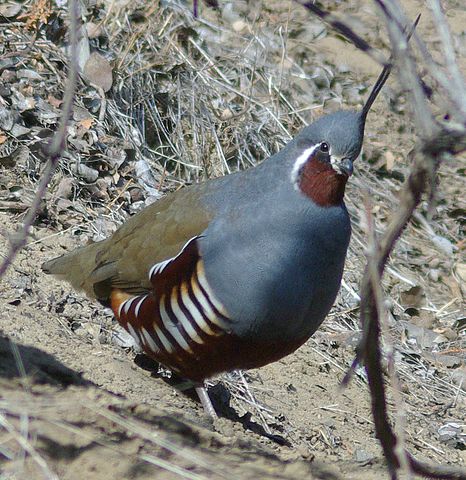
Mountain Quail (Oreortyx pictus)
Mountain Robin (Petroica bivittata)
Mountain Robin-Chat (Cossypha isabellae)
Mountain Saw-wing (Psalidoprocne fuliginosa)
Mountain Scops Owl (Otus spilocephalus)
Mountain Serin (Chrysocorythus estherae)
Mountain Serpent Eagle (Spilornis kinabaluensis)
Mountain Shrike (Lanius validirostris)
Mountain Sooty Boubou (Laniarius poensis)
Mountain Starling (Aplonis santovestris)
Mountain Swiftlet (Aerodramus hirundinaceus)
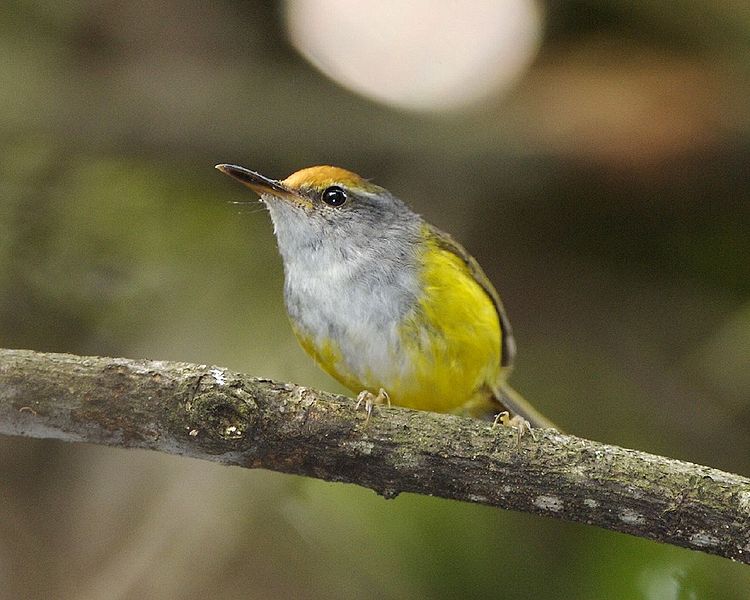
Mountain Tailorbird (Phyllergates cucullatus)
Mountain Thornbill (Acanthiza katherina)
Mountain Thrush (Turdus plebejus)
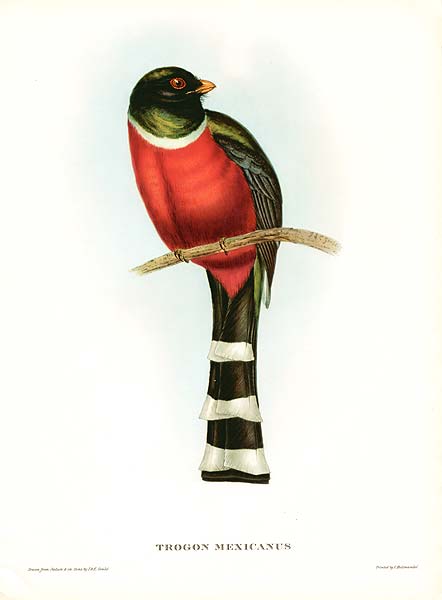
Mountain Trogon (Trogon mexicanus)
Mountain Velvetbreast (Lafresnaya lafresnayi)
Mountain Wagtail (Motacilla clara)
Mountain Wheatear (Myrmecocichla monticola)
Mountain White-eye (Zosterops montanus)
Mountain Wren (Troglodytes solstitialis)
Mountain Wren-Babbler (Napothera crassa)
Mountain Yellow Warbler (Iduna similis)


More Avian and Attributes

Birds whose first name starts with “M”

Good News

*
[Definitions from Webster’s Dictionary of American English (1828), unless noted. Bird info from Wikipedia plus.]

“That if thou shalt confess with thy mouth the Lord Jesus, and shalt believe in thine heart that God hath raised him from the dead, thou shalt be saved.” (Romans 10:9 KJV)

Avian And Attributes – Mount

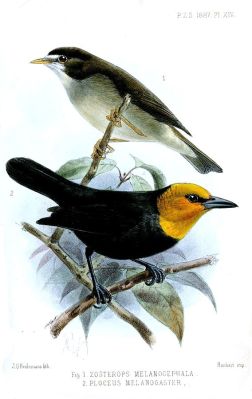
Mount Cameroon Speirops (Zosterops melanocephalus) ©WikiC

And I looked, and, lo, a Lamb stood on the mount Sion, and with him an hundred forty and four thousand, having his Father’s name written in their foreheads. And I heard a voice from heaven, as the voice of many waters, and as the voice of a great thunder: and I heard the voice of harpers harping with their harps:
(Revelation 14:1-2 KJV)

And he came out, and went, as he was wont, to the mount of Olives; and his disciples also followed him. And when he was at the place, he said unto them, Pray that ye enter not into temptation. And he was withdrawn from them about a stone’s cast, and kneeled down, and prayed, Saying, Father, if thou be willing, remove this cup from me: nevertheless not my will, but thine, be done.
(Luke 22:39-42 KJV)


Avian and Attributes – Mount

MOUNT, n. [L. mons, literally a heap or an elevation.]
1. A mass of earth, or earth and rock, rising considerably above the common surface of the surrounding land. Mount is used for an eminence or elevation of earth, indefinite in highth or size, and may be a hillock, hill or mountain. It is applied in Scripture to the small hillocks on which sacrifice was offered as well as to Mount Sinai. Jacob offered sacrifice on the mount or heap of stones raised for a witness between him and Laban. Gen 31.
2. A mound; a bulwark for offense or defense.
Hew ye down trees and cast a mount against Jerusalem. Jer 6.
3. Formerly, a bank or fund of money.
MOUNT, v.i.
1. To rise on high; to ascend; with or without up.
Doth the eagle mount up at thy command? Job 39.
The fire of trees and houses mounts on high.
2. To rise; to ascend; to tower; to be built to a great altitude.
Though Babylon should mount up to heaven. Jer 51.
3. To get on horseback.
4. To leap upon any animal.
5. To amount; to rise in value.
Bring then these blessings to a strict account,
Make fair deductions, see to what they mount.
MOUNT, v.t. To raise aloft; to lift on high.
What power is it which mounts my love so high?
1. To ascend; to climb; to get upon an elevated place; as, to mount a throne.
2. To place one’s self on horseback; as, to mount a horse.
3. To furnish with horses; as, to mount a troop. The dragoons were well mounted.
4. To put on or cover with something; to embellish with ornaments; as, to mount a sword.
5. To carry; to be furnished with; as, a ship of the line mounts seventy four guns; a fort mounts a hundred cannon.
6. To raise and place on a carriage; as, to mount a cannon.
To mount guard, to take the station and do the duty of a sentinel.
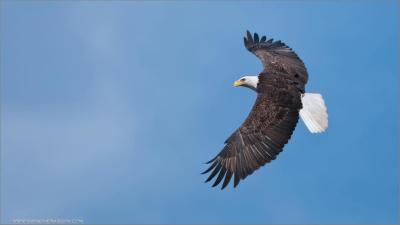

Bald Eagle (Haliaeetus leucocephalus) by Ray Barlow

There are four “Mount” birds, but surprisingly, only one photo available to use. [shown at top]

Mount Cameroon Francolin (Pternistis camerunensis) is a bird species in the family Phasianidae. It is found only in Cameroon.

Mount Cameroon Speirops (Zosterops melanocephalus) is a species of bird in the disputed family Zosteropidae, which might be included in the Timaliidae. It is endemic to Cameroon.  Its natural habitats are subtropical or tropical moist montane forests and subtropical or tropical high-altitude shrubland.

Mount Kupe Bushshrike (Telophorus kupeensis) is a species of bird in the family Malaconotidae. It is endemic to Cameroon, where it is found in the Bakossi Forest Reserve and in particular on Mount Kupe.

Mount Victoria Babax (Babax woodi) is a species of passerine bird of the family Leiothrichidae typical of the mountains of the northeast of the Indian subcontinent . Previously it was considered a subspecies of Chinese babax .

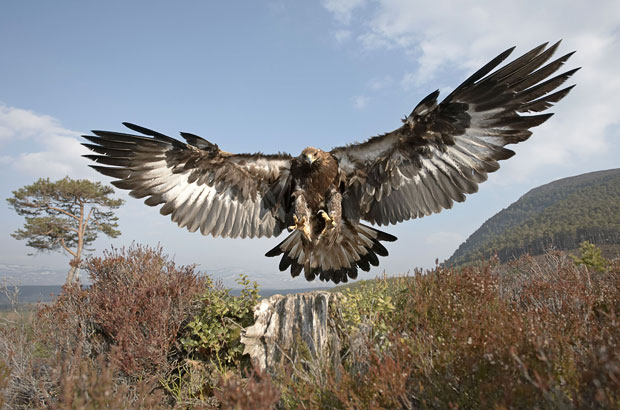
Golden Eagle (Aquila chrysaetos) Swooping Down ©Netns Wildlifezone

“Hast thou not known? hast thou not heard, that the everlasting God, the LORD, the Creator of the ends of the earth, fainteth not, neither is weary? there is no searching of his understanding. He giveth power to the faint; and to them that have no might he increaseth strength. Even the youths shall faint and be weary, and the young men shall utterly fall: But they that wait upon the LORD shall renew their strength; they shall mount up with wings as eagles; they shall run, and not be weary; and they shall walk, and not faint.” (Isaiah 40:28-31 KJV)

“And in the day time he was teaching in the temple; and at night he went out, and abode in the mount that is called the mount of Olives.” (Luke 21:37 KJV)

One of the attributes of Christ, that I think about, is his going up to the Mount to pray. Like us, He became weary in His human body, even though He is 100% God, while on earth, He was also 100% human. Therefore He needed rest and refreshment of body as we do.


More Avian and Attributes

Birds whose first name starts with “M”

Good News

*
[Definitions from Webster’s Dictionary of American English (1828), unless noted. Bird info from Wikipedia plus.]

In the beginning was the Word, and the Word was with God, and the Word was God. The same was in the beginning with God. All things were made by him; and without him was not any thing made that was made. (John 1:1-3 KJV)
 

Avian And Attributes – Morning

Morningbird (Colluricincla tenebrosa) by Margaret Sloan

Morningbird (Colluricincla tenebrosa) by Margaret Sloan

“And in the morning, rising up a great while before day, he went out, and departed into a solitary place, and there prayed.” (Mark 1:35 KJV)

“Watch ye therefore: for ye know not when the master of the house cometh, at even, or at midnight, or at the cockcrowing, or in the morning:” (Mark 13:35 KJV)

“And early in the morning he came again into the temple, and all the people came unto him; and he sat down, and taught them.” (John 8:2 KJV)

I Jesus have sent mine angel to testify unto you these things in the churches. I am the root and the offspring of David, and the bright and morning star.” (Revelation 22:16 KJV)


Avian and Attributes – Morning

MORN’ING, n.
1. The first part of the day, beginning at twelve o’clock at night and extending to twelve at noon. Thus we say, a star rises at one o’clock in the morning. In a more limited sense, morning is the time beginning an hour or two before sunrise, or at break of day, and extending to the hour of breakfast and of beginning the labors of the day. Among men of business in large cities, the morning extends to the hour of dining.
2. The first or early part.
In the morning of life, devote yourself to the service of the Most High.
MORN’ING, a. Pertaining to the first part or early part of the day; being in the early part of the day; as morning dew; morning light; morning service.
She looks as clear
As morning roses newly washed with dew.


Morningbird (Colluricincla tenebrosa) by Margaret Sloan

Morningbird (Colluricincla tenebrosa) by Margaret Sloan

Morningbird (Pachycephala tenebrosa)

The Mmorningbird (Pachycephala tenebrosa) is a songbird species in the family Pachycephalidae. It is endemic to the islands of Babelthuap, Koror, Garakayo, Peleliu and Ngabad in Palau. Its natural habitat is deep primary tropical moist lowland forests. The species is non-migratory. It is apparently commoner on the smaller islands in its range.

Morningbirds feed principally on insects, but also take snails, berries, fruit and seeds. They feed on or around the ground.


More Avian and Attributes

Birds whose first name starts with “M”

Morningbird – A Voice In The Morning

Good News

*
[Definitions from Webster’s Dictionary of American English (1828), unless noted. Bird info from Wikipedia plus.]

“My voice shalt thou hear in the morning, O LORD; in the morning will I direct my prayer unto thee, and will look up.” (Psalms 5:3 KJV)
Avian And Attributes – Mocking

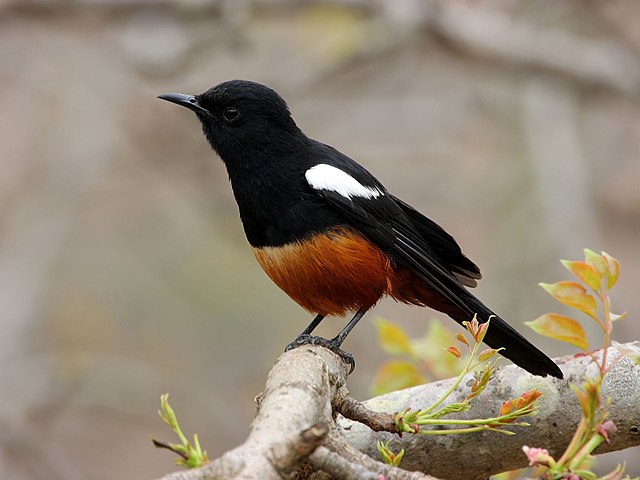
Mocking Cliff Chat (Thamnolaea cinnamomeiventris) Female ©WikiC

“Likewise also the chief priests mocking him, with the scribes and elders, said, He saved others; himself he cannot save. If he be the King of Israel, let him now come down from the cross, and we will believe him. He trusted in God; let him deliver him now, if he will have him: for he said, I am the Son of God.” (Matthew 27:41-43 KJV) [While the were mocking Christ, He did not say anything.]

Avian and Attributes – Mocking

MOCK’ING, ppr. Imitating in contempt; mimicking; ridiculing by mimicry; treating with sneers and scorn; defeating; deluding.
MOCK’ING, n. Derision; insult.


Mocking Cliff Chat (Thamnolaea cinnamomeiventris) Male ©WikiC

The Mocking Cliff Chat, mocking chat or cliff chat, (Thamnolaea cinnamomeiventris) is a species of chat in the family Muscicapidae which occurs in rocky habitats in much of eastern Sub-Saharan Africa.

The mocking cliff chat is a large chat with distinctive colouration. The male has a glossy black with a chestnut belly, vent, and rump and white shoulder patches. The shoulder patches vary in size geographically. The female is dark grey with a chestnut lower breast, belly, and vent. The mocking cliff chat has a length of 19–21 cm and weighs 41–51g.

The mocking cliff chat inhabits rocky and boulder-strewn areas, well-wooded rocky ravines, cliffs, gullies, boulder-strewn hillsides and watercourses in valley bottoms with scattered rocks.

A loud fluty melodious warbling song which often contains many rapid-fire phrases mimicking other species, with some harsher phrases interspersed.


More Avian and Attributes

Birds whose first name starts with “M”

Good News

*
[Definitions from Webster’s Dictionary of American English (1828), unless noted. Bird info from Wikipedia plus.]

“For the scripture saith, Whosoever believeth on him shall not be ashamed. For there is no difference between the Jew and the Greek: for the same Lord over all is rich unto all that call upon him. For whosoever shall call upon the name of the Lord shall be saved.” (Romans 10:11-13 KJV)
Avian And Attributes – Magnificent

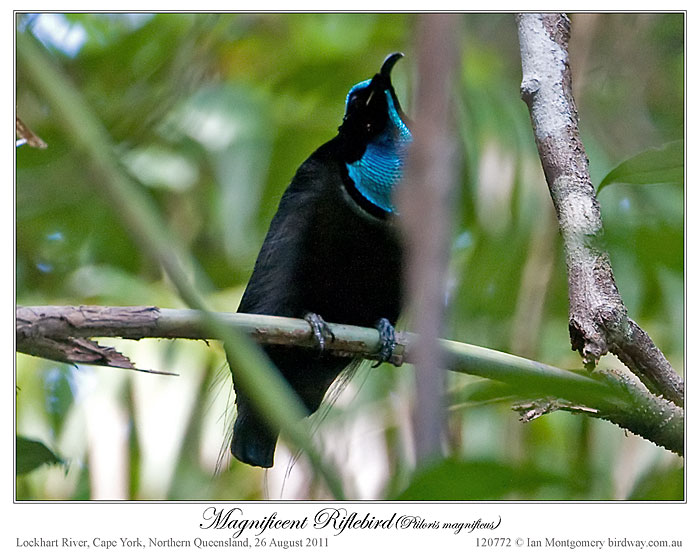
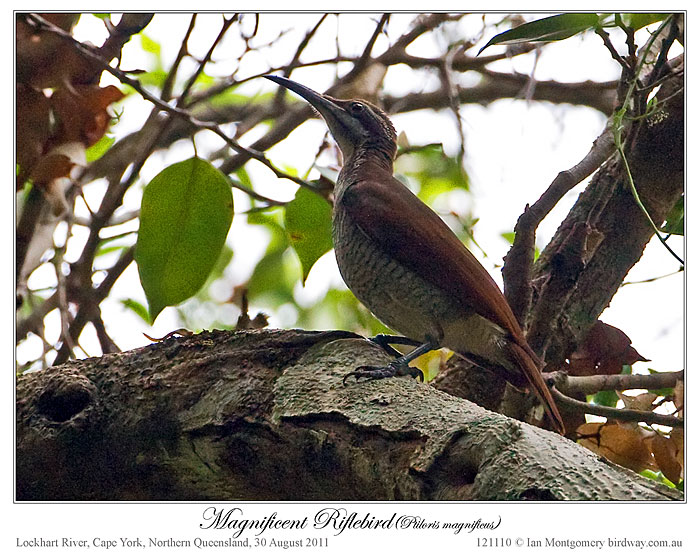
Magnificent Riflebird (Ptiloris magnificus) by Ian

“For by these He has granted to us His precious and magnificent promises, so that by them you may become partakers of the divine nature, having escaped the corruption that is in the world by lust.” (2 Peter 1:4 NASB)


Avian and Attributes – Magnificent

MAGNIF’ICENT, a. Grand in appearance; splendid; pompous.
Man he made, and for him built
Magnificent this world.
1. Exhibiting grandeur.

“Whereby are given unto us exceeding great and precious promises: that by these ye might be partakers of the divine nature, having escaped the corruption that is in the world through lust.” (2 Peter 1:4 KJV)

EXCEE’DING, ppr. Going beyond; surpassing; excelling; outdoing.
1. Great in extent, quantity or duration; very extensive.
2. adv. In a very great degree; unusually; as exceeding rich.
I am thy shield, and thy exceeding great reward. Gen 15.
EXCEE’DING, n. Excess; superfluity.


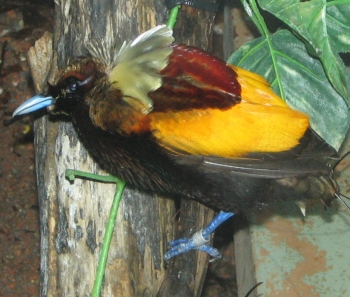
Magnificent Bird-of-paradise (Diphyllodes magnificus) ©WikiC

Magnificent Bird-of-paradise (Diphyllodes magnificus) is distributed amongst the hill and mid-mountain forests of New Guinea and surrounding islands. Their diet consists mainly of fruits. Like most members of the family Paradisaeidae, the male is polygamous and performs an elaborate courtship display.

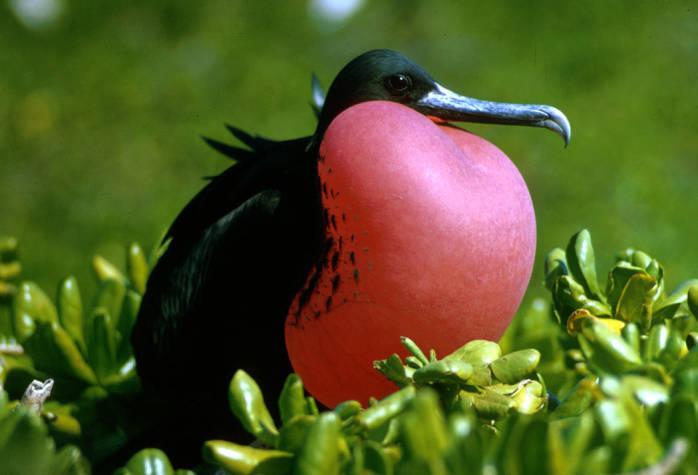
Magnificent Frigatebird (Fregata magnificens) ©USFWS

Magnificent Frigatebird (Fregata magnificens) is a seabird of the frigatebird family Fregatidae. With a length of 89–114 centimetres (35–45 in) it is the largest species of frigatebird. It occurs over tropical and subtropical waters off America, between northern Mexico and Ecuador on the Pacific coast and between Florida and southern Brazil along the Atlantic coast. There are also populations on the Galápagos Islands in the Pacific and the Cape Verde islands in the Atlantic.

The magnificent frigatebird is a large, lightly built seabird with brownish-black plumage, long narrow wings and a deeply forked tail. The male has a striking red gular sac which it inflates to attract a mate. The female is slightly larger than the male and has a white breast and belly. Frigatebirds feed on fish taken in flight from the ocean’s surface (often flying fish), and sometimes indulge in kleptoparasitism, harassing other birds to force them to regurgitate their food.

Magnificent Riflebird (Ptiloris magnificus) by Ian

Magnificent Riflebird (Ptiloris magnificus) by Ian

Magnificent Riflebird (Ptiloris magnificus) is a species of passerine bird of the Paradisaeidae family. The magnificent riflebird is widely distributed throughout lowland rainforests of western New Guinea and the northern Cape York Peninsula.
Medium-sized (up to 34 cm long). the male is velvet-black bird-of-paradise with elongated black filamental flank plumes, an iridescent blue-green crown, a wide, triangle-shaped breast shield, and on central tail feathers. It has a black curved bill, yellow mouth, blackish feet and a dark brown iris. The female is brownish with dark spots and buff bars below with a white brow. The immature male resembles the male but with less tail plumes.

Males perform solitary courtship displays on a ‘dancing perch’. During these displays, the male fully extends his wings and raises his tail; he hops upward while swinging his head from side to side, showing off his metallic blue-green breast shield. Multiple females will observe these displays. Mated females subsequently build nests, incubate, brood, and feed young without male assistance.

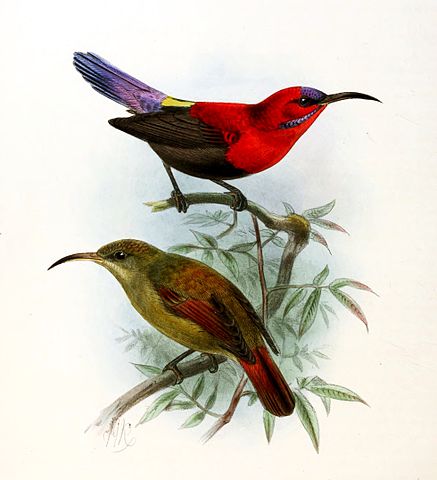
Magnificent Sunbird (Aethopyga magnifica) ©WikiC Drawing

Magnificent Sunbird (Aethopyga magnifica) is a species of bird in the sunbird family which feed largely on nectar, although they will also take insects, especially when feeding young. Flight is fast and direct on their short wings. Most species can take nectar by hovering like a hummingbird, but usually perch to feed most of the time. It is endemic to the western Philippines and was once considered a subspecies of the crimson sunbird.


More Avian and Attributes

Birds whose first name starts with “M”

Good News

*
[Definitions from Webster’s Dictionary of American English (1828), unless noted. Bird info from Wikipedia plus. Both with editing]

“That if thou shalt confess with thy mouth the Lord Jesus, and shalt believe in thine heart that God hath raised him from the dead, thou shalt be saved. For with the heart man believeth unto righteousness; and with the mouth confession is made unto salvation.” (Romans 10:9-10 KJV)
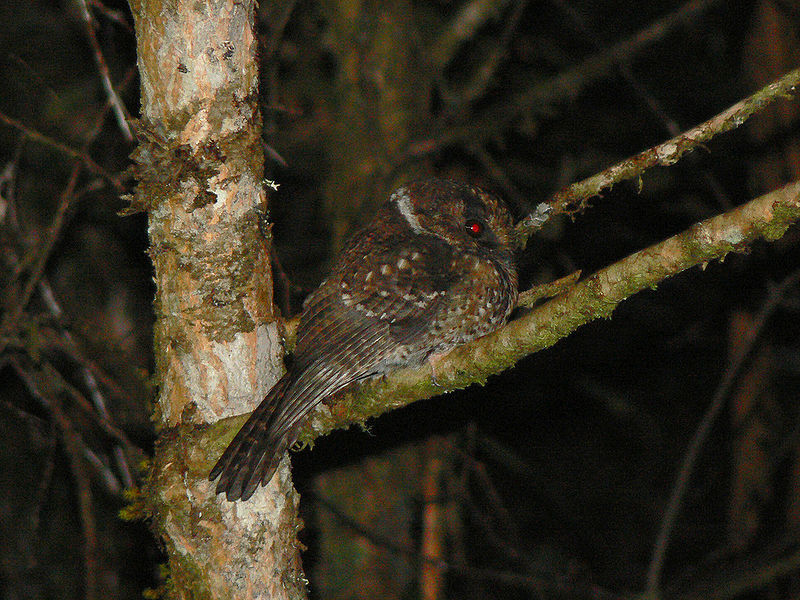
Learning from our Birds – The Leap of Faith – Re-post

My Christian friends I have met through blogging, Aussiebirder, just put out a very interesting and applicable application for faith. Please check out this blog:

The most interesting observation as a scientist that I have made over my years of birding and photographing birds is that of capturing what is termed the leap of faith. This phenomena is usually only observed in small passerines (tree perching birds) and not so much in larger species where much more effort is required to become airborne. The above photo was my first observation, taken of a Lord Howe Island Golden Whistler male leaping off a branch, into the air, quite confidently, with wings closed. My camera had caught something my limited human eye had not.