Ian’s Bird of the Moment – Island Thrush

When preparing editions of the Irregular Bird, I enjoy researching the natural history of the species in question. However, as anyone who goes on such a quest on the internet would know, this often proves to be a bit of a rabbit hole leading in unpredictable directions and taking up lots of time.

island_thrush_39679_pp.jpg
Such was the case this time round as I had decided, given our current travel-free situation, to take us on a trip to Christmas Island with photos of about ten of the most interesting species. This led me down endless rabbit holes and the weeks ticked by. One of these that I found particularly interesting, biogeographically and taxonomically, was the Island Thrush and, unlike most of the others, it hasn’t featured previously as an Irregular Bird, or Bird of the Week as it was in 2006.
island_thrush_39685_pp.jpg
This rather smart thrush is one of the typical thrushes comprising the genus Turdus, the members of which are widespread throughout Eurasia, Africa and the Americas and includes such well-known species as the Common Blackbird, the Song and Mistle Thrushes of Eurasia and the American Robin. The Island Thrush is about the same size as the Common Blackbird, to which it is closely related and is also a fine songster with a similar flutey song (listen to it here https://www.xeno-canto.org/204160).
island_thrush_39675_pp.jpg
This particular subspecies erythropleurus (meaning red-sided, or literally red-ribbed) is endemic to Christmas Island and was originally described as a full species Turdus erythropleurus by Sharpe in 1887. Subsequently it was found to be a race of the Island Thrush which is widespread but local through Southeast Asia from Sumatra and the Philippines and tropical Australasia and Oceania as far east as Samoa. Christmas Island is indicated by the brown arrow on the map below.
Island_thrush_distribution.jpg
The first race of the species was described by Latham in 1801. He called it the Grey-headed Blackbird, Turdus poliocephalus (polios is Greek for grey). It occurred only on Norfolk Island (horizontal black arrow on the map) and is now extinct, while another ‘species’ the Vinous-tinted Blackbird Turdus vinitinctus, also now extinct, was described on Lord Howe Island (vertical black arrow). The Christmas Island race is the sole surviving one on Australia territory.
mathews_1928_p27.jpg
You may be struck by the different plumages of the various races, so it isn’t surprising that they were originally treated as different species. The colour plate above was created by the Danish artist Henrik Gronvold, and published in this book, below, an appendix to the Birds of Australia, by Gregory Mathews in 1928. 
mathews_1928.jpg
In fact, all the various populations of the Island Thrush differ greatly from each other in appearance. Below, stolen from Guy Dutson’s Birds of Melanesia, are two other races, one completely black (efatensis on Efate, an island of Vanuatu) and the other with a white head (albifrons on Erromango, another island of Vanuatu). In some race, the sexes are similar, in others they are different and the plumages of the juveniles are quite variable too. In fact the Island Thrush’s main claim to fame is that it is globally the most variable species of bird with nearly 50 subspecies. DNA studies show that the subspecies  appear to be all closely related with one exception: the northernmost one on Taiwan, niveiceps, is considered a candidate for elevation to species rank.
birds_of_melanesia_dutson_7653.jpg
The variability and wide range of the Island Thrush is paradoxical from the point of view of biogeography. On the one hand, varability and divergent subspecies indicates isolation with a lack of genetic flow among populations, i.e. the birds don’t move between islands. On the other hand, the wide range suggests that the Island Thrush is or was very good at getting from one place to another. This apparent contradiction is another mystery waiting to be solved.
turdus_poliocephalus_vinitinctus.jpg
John Gould also illustrated the Vinous-tinted Blackbird on Lord Howe. Like the Grey-headed nominate race of Norfolk Island, the sexes were similar so the browner bird in the plate presumably represents a juvenile. In the background are the two high mountains on Lord Howe, Mount LIdgbird (left) and the flat-topped Mount Gower. This species was quite common until a shipwreck introduced rats to the island in 1918 with fatal consequences for this ground-nesting bird.
mt_lidgbird_mt_gower_lord_howe_3184_900-ps.jpg
Here are the two mountains on Lord Howe in 2013, photographed from the other side of the island from the John Gould illustration. So, we did sort of do a trip even if we ended up on Lord Howe instead of Christmas Island. I will prepare the rest of the photos for a trip to Christmas Island and try not to get too diverted by avian rabbit holes.
 
Spending a lot of time in isolation has given me the opportunity to work on the website not only adding birds and mammals from the trip to Brazil and Chile last year (about 120 species at last count), but also digging up neglected photos of other wildlife from earlier trips. If you are interested in checking these out, you can do so via the thumbnails on the Recently Added Photos page: http://www.birdway.com.au/recent_additions.php.
 
Greetings and stay safe,
Ian

Ian Montgomery,
454 Forestry Road, Bluewater, Qld 4818
Phone: 0411 602 737 +61-411 602 737
Preferred Email: ian@birdway.com.au

Recorder Society http://www.nqrs.org.au


Lee’s Addition:

I am always grateful when I get the surprise Birds of the “Moment” from Ian. When he used to do the Bird of the Week, they were very regular. Now, I love being surprised by Ian. [He is becoming almost as “off-schedule” as I am.] At any rate, what a beautiful and neat looking Thrush. Thanks, Ian for sharing another avian wonder with us.

“Even the stork in the sky Knows her seasons; And the turtledove and the swift and the thrush Observe the time of their migration; But My people do not know The ordinance of the LORD.” (Jeremiah 8:7 NASB)

Birds of the Bible – Thrushes

Ian’s Birds of the Week/Moment

Jesus And Birds – 1st Cleansing Of Temple

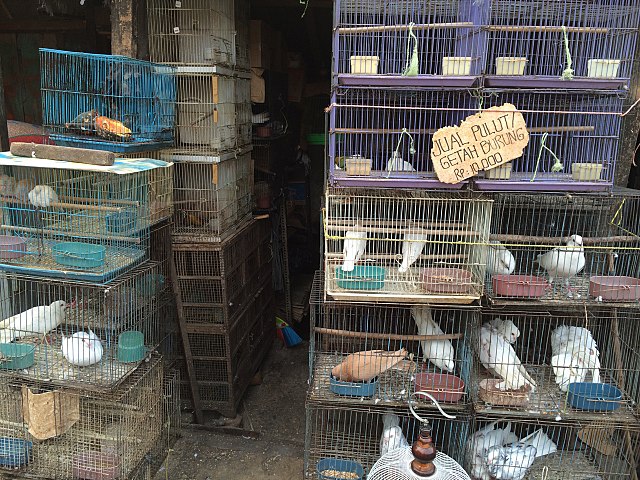
Doves in Cages ©WikiC

Back to our long-delayed series of “Jesus and Birds.” The last one, “Jesus and Birds – His Dedication was completed not long before everything changed. This Corvid-19 ordeal has left me a bit “discombobulated.” [Discombobulate is a fun, fancy word for “confuse.” If something has put you in a state where you don’t know up from down and you can’t spell your own name, you may be discombobulated.” – vocabulary.com] Anyway, thanks to Dr. Jim (J.J.S .Johnson) and William Wise for continuing to add articles for the blog.

When I first started looking into this cleansing of the Temple sellers, it appeared that there were two cleansings, yet there was a debate. Did Jesus cleanse the Temple once or twice? As you may remember, I am using a Harmony of the Gospels to trace the Lord Jesus’s reactions to birds while in His incarnated body. Here are some of the questions:

This first cleansing is only mentioned only by John.

“And the Jews’ passover was at hand, and Jesus went up to Jerusalem, And found in the temple those that sold oxen and sheep and doves, and the changers of money sitting: And when he had made a scourge of small cords, he drove them all out of the temple, and the sheep, and the oxen; and poured out the changers’ money, and overthrew the tables; And said unto them that sold doves, Take these things hence; make not my Father’s house an house of merchandise. And his disciples remembered that it was written, The zeal of thine house hath eaten me up.” (John 2:13-17 KJV)

The second cleansing is mentioned by the other three gospel writers, but not John.

Mathew 21:12-13, Mark 11:15-17, and Luke 19:45-46 [This will be covered in the 2nd Cleansing of Temple post.]

After checking many of the commentaries in the BibleGateway helps, even though Jesus spoke some of the same similar words, the belief is that there are two cleansings. I will cover more about this in the later post.

The main point is that when Christ entered the Temple area, sellers had set up for business. Worshipers needed animals and birds for sacrifices, but they were not supposed to be selling them inside the compound area. Had they been selling outside the area, there would not have been a problem.

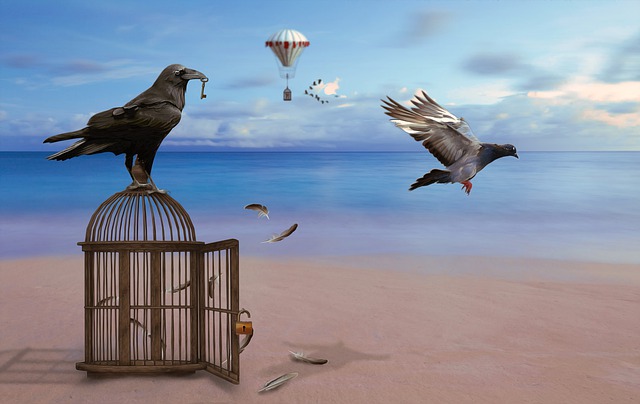
In His disgust for what was going on, he threw over the tables, etc. and opened the cages of doves to let the go free.

Freedom – Bird leaving cage ©Pixabay


The Eagle has Landed, in Fact Many of Them!

The Eagle has Landed, in Fact Many of Them!

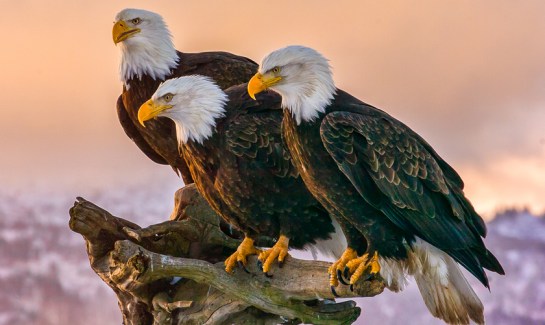
Eagles have Repopulated the Chesapeake Bay Watershed Range

Dr. James J. S. Johnson

Who satisfieth thy mouth with good [things; so that] thy youth is renewed like the eagle’s. (Psalm 103:5)

BaldEagle-SanDiegoZoo

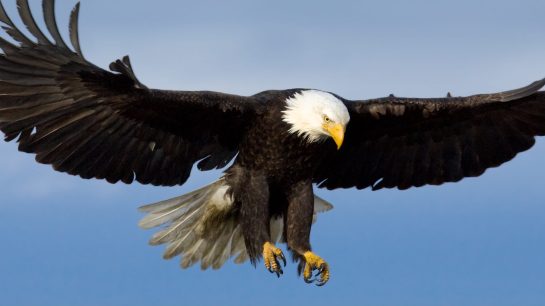
Bald Eagle – San Diego Zoo

God satisfies our real needs, from time to time, from season to season, just as He sustains the ongoing needs of the eagle. Recovering strength is good for an individual–and also for a population, including eagle populations.

Recovering from a “ghost town” shutdown is worth the effort.  Ask a Bald Eagle.

Whitney Pipkin recently reported, in the Chesapeake Bay Journal , that Bald Eagles have made a comeback along Virginia’s James River.(1),(2)

This avian population illustrates how a pessimistic situation can, if the right actions are taken, be reversed—eventually producing a happier result.

First, the bad news:

In the late 1970s, the treetops of the James River looked like a ghost town. Despite plenty of suitable habitat where bald eagles could have been nesting and had before, the waterway was the only major tributary in the Chesapeake Bay whose nesting population of the iconic American predator had plummeted to zero.(1)

Now, the good news:

Imagine biologists’ surprise when, four decades later, that same river became the staging ground for the eagles’ astonishing comeback. Aerial surveys tallied more than 300 breeding pairs of [bald] eagles along the James River for the first time in 2019—a number that had been the species’ recovery goal for the entire Chesapeake Bay watershed.(1)

When it comes to the Chesapeake Bay, the majestic bald eagle has come back from the dead. Driven from historic nesting strongholds like the James River by pesticides in the 1970s, the national bird has become a success story.(2)

BaldEagles-BirdWatchingHQ

3 Bald Eagles – Bird Watching HQ

Furthermore, the big-picture news is even better:

Biologists estimate there are now close to 3,000 nesting pairs Baywide [i.e., in the Chesapeake Bay watershed], but surveys of the entire region no longer occur annually. Maryland stopped surveying bald eagles in 2004 when they hit nearly 400 breeding pairs statewide, surpassing population goals.(1)

Moreover, it’s not just eagles that are flourishing in the Chesapeake Bay area:

“We are just in an amazing time right now,” said Bryan Watts, co-founder and director of the Center for Conservation Biology at the College of William and Mary. … Not just bald eagles, but fish-eaters like osprey and blue heron also once died out on the James.

Today, [these riparian fish-eating birds—like eagles, ospreys, and herons—have ] swelled to numbers Watts believes are well above what even Capt. John Smith encountered on the cusp of the 17th century. “In terms of eagles,” said Watts, “we are protecting them. We’re not shooting them like we did in the late 1800s and early 1900s. We don’t consider them competitors for muskrats or for fish, and so we’re not killing them.”(2)

For conservationists, birdwatchers, and other wildlife enthusiasts, these large-scale recoveries are very good news. After all, eagles are America’s official bird.

Beyond that, eagles are amazing creatures that display God’s genius in bioengineering.(3)

One example of highness being compared to the nesting habits of eagles is found in the Bible, in the Book of Obadiah 1:3-4, where the eagle is described as a creature that lives in high places, much closer to the stars than do most other animals (or people). Another Old Testament book in the Bible, the Book of Job, refers (at 39:13) to the eagle as mounting up into the air by God’s command (because God programs eagles to fly up into the air the way that they do), and as nesting in high places (because God programs eagles to do this also).

Eagles are good parents, training their sons and daughters to live like eagles (see Deuteronomy 32:11). Eagles can fly, like dive-bombing airplanes, at great speeds (see 2nd Samuel 1:23 and Lamentations 4:19). Their strength is renewed from time to time, as their feather-cover adjusts to their growing bodies (see Isaiah 40:31 and Psalms 103:5). Eagles are known for their gracefulness and dignity (see Proverbs 30:19). In fact, eagles fly very high in the air as a matter of habit – above most other birds (see Proverbs 23:5).(4)

Meanwhile, the Bald Eagles’ recovery—in the Chesapeake Bay area–illustrates how a bad situation can be overcome, with the prioritized concern and problem-solving management practices, plus patience.

But this is not the first time that an endangered or threatened wild bird (or other wildlife category) has been rescued from the brink of population failure. Consider the amazing recovery of the Trumpeter Swan, which nearly sang its own swan song.(5)

Likewise, Tri-colored Herons (also called “Louisiana Herons”) have recently reclaimed (and repopulated) ranges that previously they had lost.(6)

It’s not just the birds. American bison have made a comeback.(7) The list goes on, but the list could be longer than what it is.

Wildlife populations often face critical perils, sometimes facing population failure, range contraction, or habitat loss. Sometimes they recover.(1),(2),(5),(6)

The same is true for humans. For example, it is well worth praying for America to recover from its many political (socialism-pushing) problems in the wake of pandemic perils and propaganda.(8)

Problematic situations, including disasters, don’t fix themselves—real solutions (to real problems) don’t accidentally “evolve”. There is much good work needed, to recover lost ground in America. Human responsibility is the key to much of what is needed; yet God’s providential blessings are needed even more, much more.(8)

So we need to pray fervently for God’s blessings, daily—not just on the National Day of Prayer.(8)

References   

  1. Pipkin, W. 2020. Bald Eagles’ Recovery Along James River Soars to New Heights: Area’s 300 Breeding Pairs Surpass Goal for Entire Chesapeake Watershed. Chesapeake Bay Journal. 30(3):17-18.
  2. Dietrich, T. 2019. Bald Eagles Enter ‘Golden Age’ in Chesapeake Bay. Daily Press. Posted (July 9, 2019) on DailyPress.com at http://www.dailypress.com/news/dp-nws-bald-eagles-recovery-20190709-story.html (accessed May 9, 2020).
  3. Eggleton, M. 2016. The American Bald Eagle: On Eagle’s Wings. 38(2):34-37, posted at https://creation.com/on-eagles-wings . See also Johnson, J. J. S. 2018. Hawks and Eagles Launching Skyward. Acts & Facts, 47(4):21, posted at https://www.icr.org/article/hawks-eagles-launching-skyward .
  4. Johnson, J. J. S. 2008. Alaska’s Coastal Rainforests and Two of its Rangers, the Bald Eagle and the Alaska Moose. Dallas: NWD Press/RCCL’s Radiance of the Seas (July 2008), pages 10-11.
  5. Johnson, J. J. S. 2020. Post-Coronavirus Comeback or Swan’s Song? Creation Science Update. Posted (April 23, 2020) at https://www.icr.org/article/post-coronavirus-comeback-or-swans-song .
  6. Johnson, J. J. S. 2019. Does Global Warming Threaten Bird Habitats? Acts & Facts. 48(6):21, posted at https://www.icr.org/article/does-global-warming-threaten-bird-habitats .
  7. Whitaker Jr., J. O. 1998. National Audubon Society Field Guide to North American Mammals, revised edition. New York, NY: Alfred A. Knopf, 850-854, Plates # 329-333.
  8. James 5:16; 1 Timothy 2:1-3. See also Johnson, J. J. S. 2020. Prayers for America and our Divine Editor. ICR News. Posted (May 7, 2020) at https://www.icr.org/article/prayers-for-america-and-our-divine-editor .

Satisfying Shallows and Delightful Depths

“He led me through water to the ankles…, he led me through water to the knees…, he led me through water that was up to the waist. He measured off another thousand, and it was a river that I could not pass over.” Ezekiel 47:1-5

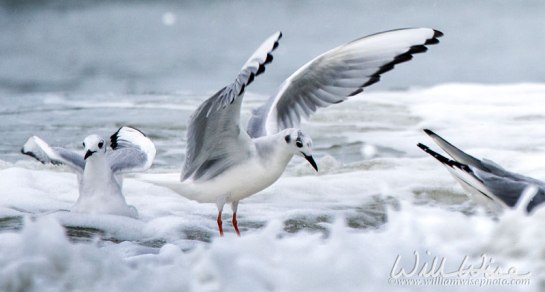
Bonaparte`s Gulls frolicking in ocean surf, Myrtle Beach, South Carolina. March 2019. ©www.williamwisephoto.com

Birdwatching. Birding. Ornithology. In most minds, those three terms conjure differing depths of avian appreciation. Bird enthusiasm ranges from the simple enjoyment of backyard birds, to submerging in state lists and big years, and even deeper into the intellectual fathoms of anatomy and natural history. The books upon the shelf range from Your Backyard Feeder to Latin Terms for Taxonomists.

In the same manner, the Bible is book of unending fathomage. From inspiring daily devotionals, to word studies and commentaries, and into the depths of theology, the Sacred Writ can be enjoyed and experienced on so many different levels.

Stack of Antique New Testament Bibles. ©www.williamwisephoto.com

But is one level of devotee better than another? Is the ornithologist more serious or dedicated than a birder? Is the theologian more important than the lay congregant? Are we only dipping in our toes when we should be swimming deeper? Are we drowning in the depths and neglecting the satisfaction of the shallows?

In reality, one can be all things, or be what one desires! In his chapter of Good Birders Still Don’t Wear White, David A. La Puma writes, “Find out what you love about birds and dive in; the pool of knowledge is deep and rich and full of others happy to help you along the way.” An ornithologist can still enjoy birdwatching just as a theologian should still delight in daily devotionals.

Our Christian life and experience, just like birding, should enjoy the shallows, wade into the depths, dive the deep ocean trenches, and swim back again. Just as you would enjoy cardinals and chickadees at your backyard feeder, or decide to tackle identifying the gulls, sparrows and peeps, enjoy your yearly reading plan through the New Testament and Psalms, and simultaneously sound the depths of Biblical wisdom and application. Find out what you love about the Word of God in this season of life and dive in. The only wrong thing to do is to completely dry up!


Hi, I’m wildlife photographer and nature writer William Wise. I was saved under a campus ministry while studying wildlife biology at the University of Georgia. My love of the outdoors quickly turned into a love for the Creator and His works. I’m currently an animal shelter director and live in Athens, Georgia with my wife and two teenage daughters, who are all also actively involved in ministry. Creation Speaks is my teaching ministry that glorifies our Creator and teaches the truth of creation.  — “What a wildly wonderful world, God! You made it all, with Wisdom at Your side, made earth overflow with your wonderful creations.” Psalms 104, The Message.

Clyde and Benny by Emma Foster

Clyde and Benny by Emma Foster

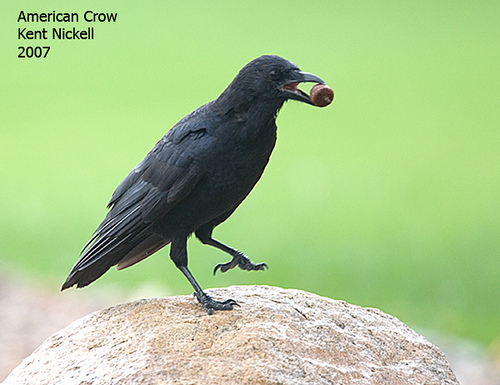
American Crow (Corvus brachyrhynchos) by Kent Nickell

American Crow (Corvus brachyrhynchos) by Kent Nickell

Clyde was an old crow who lived in a tall pine tree in the darkest part of the woods. Because preferred to spend time away from all the other birds and forest animals, he didn’t have any friends. Many of the other birds avoided him because they were afraid of him.

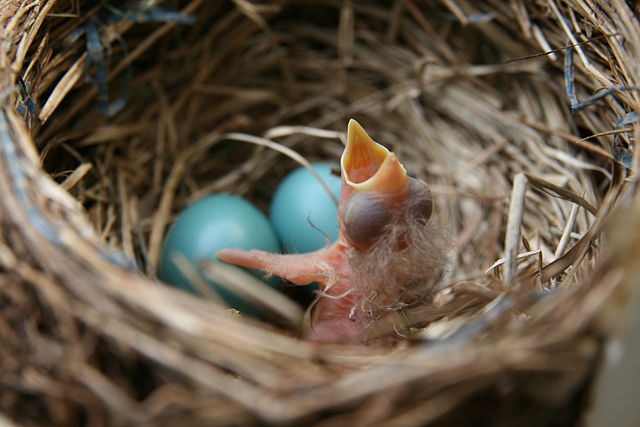
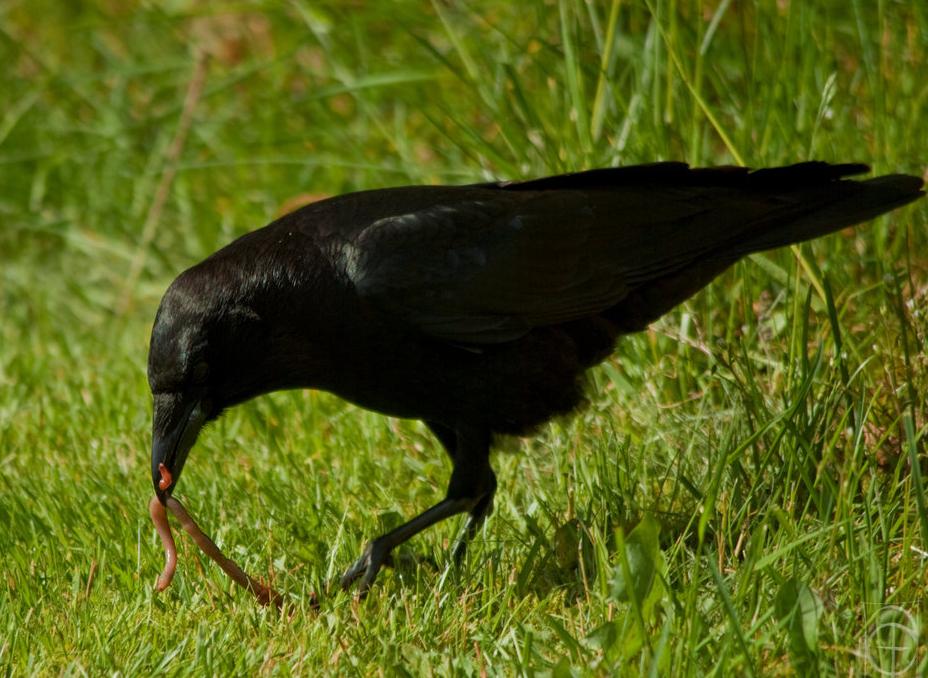
But one day Clyde returned with a large worm in his mouth to his nest to find something in his nest. That something was a little white egg. Clyde had no idea where the egg had come from or how it had gotten there, but he knew he did not want the egg in his nest. While he was thinking about what to do with it, the egg started shaking. A few moments later, a tiny robin chick popped out, peeping loudly.

American Robin (Turdus migratorius) Hatching ©WikiC

Now Clyde really didn’t know what to do. He wanted to be left alone, but the tiny robin flopped out of the egg and stared at him, thinking that Clyde was his mother. Clyde thought for a long time, thinking that he should find another nest somewhere else, but the chick looked too helpless for him to leave. Instead, he reluctantly gave the chick the worm he found and went to look for its mother.

Clyde searched all through the forest, but he couldn’t find any other family of robins. Many of the birds were surprised at seeing Clyde, and most of them hid in the trees to keep away from him. Clyde returned to his nest, back to the chick, and he decided that he would have to keep him. Eventually Clyde decided to call him Benny.

Even though Clyde gave Benny his name, he still did not want Benny around. Clyde begrudgingly found extra worms for Benny and himself. However, once Benny was old enough to fly out of the nest, Clyde showed him how to find the worms for himself so he wouldn’t bother him so much.

Crow Getting Worm ©PxHere

Crow Getting Worm ©PxHere

Unfortunately, teaching Benny how to fly took what felt like hours to Clyde. Benny was a very clumsy little robin. The first time, Benny fluttered out of the nest, dropped, and flopped onto the branch below them. Clyde had to set Benny on his back, take him back up to the nest, then start all over again. Finally, Benny was able to fly a few feet to the next branch, which was a great relief to Clyde.

Once Benny, learned how to fly, however, Benny would not leave Clyde alone. He followed Clyde wherever he went, even after Clyde showed Benny where to actually find food. Whenever Clyde passed other birds or animals, they wondered who the tiny robin was because they had no idea where he came from.

Clyde became so tired of Benny following him around that one day, he took Benny to an unfamiliar part of the forest. Now that he thought Benny could take care of himself, he figured he could lose Benny somewhere in the woods. When they reached a small river, Clyde waited for Benny to start searching for food like he had been told. Once Benny was distracted, Clyde flew off, not looking back until he was far away from the river.

Clyde returned to his nest, but he realized it felt empty and quiet. It was just like before Benny arrived, when all the other birds were afraid of him and he had no one to talk to. Clyde started to feel very lonely, and he realized he shouldn’t have left Benny all by himself. Clyde immediately wanted to fly back to the river.

As Clyde made his way back, he realized he had taken a wrong turn. All of the trees looked unfamiliar. Clyde sat down on a branch and thought for a long time on where to go. He worried abut Benny, since he was lost as well. He cawed for Benny for a long time, but he never received an answer. Finally, Clyde heard a rustling of branches a little way off.

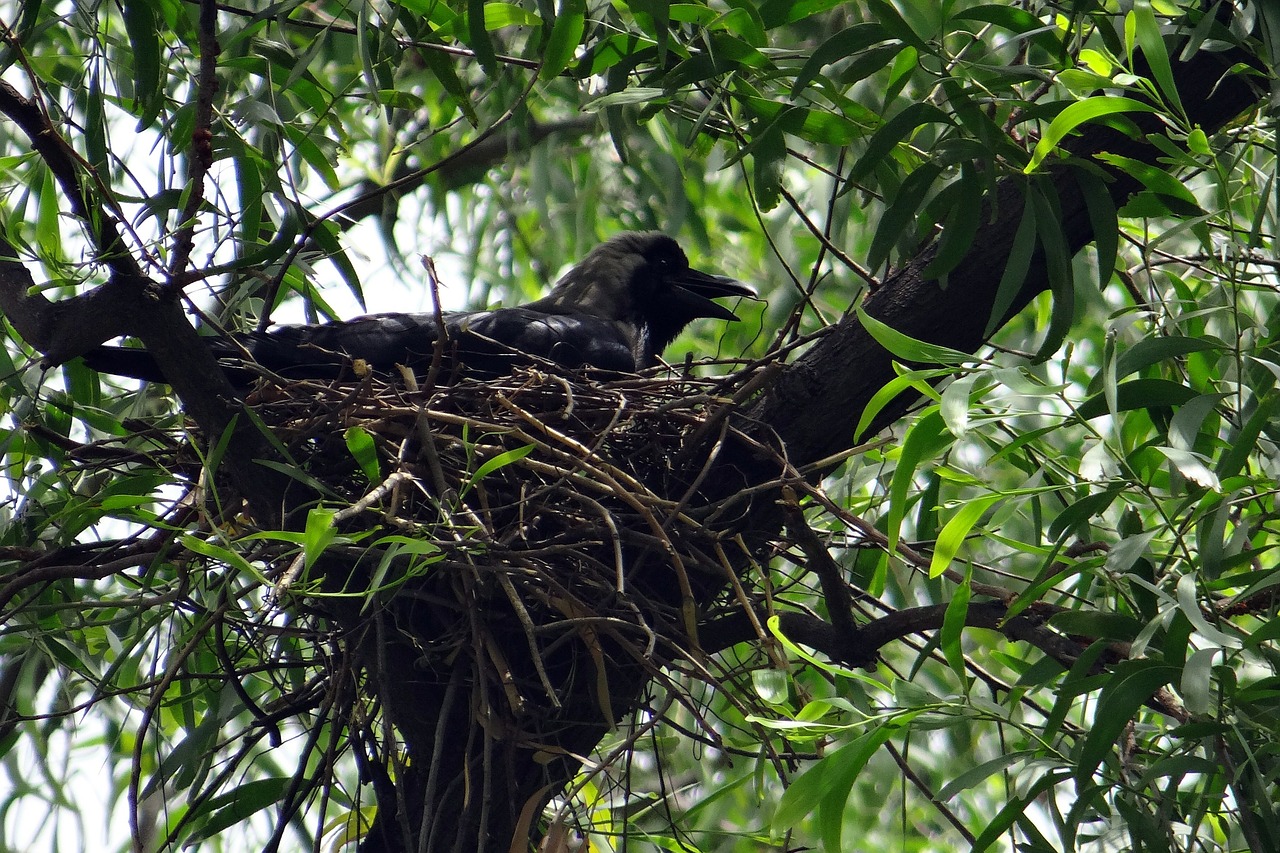
Crow in Nest ©NeedPix

Clyde the Crow in Nest ©NeedPix

When Clyde rounded the corner he saw something flapping from branch to branch, shaking the leaves. Clyde realized that the bird was Benny, and that he couldn’t fly well because he had found the largest worm Clyde had ever seen.

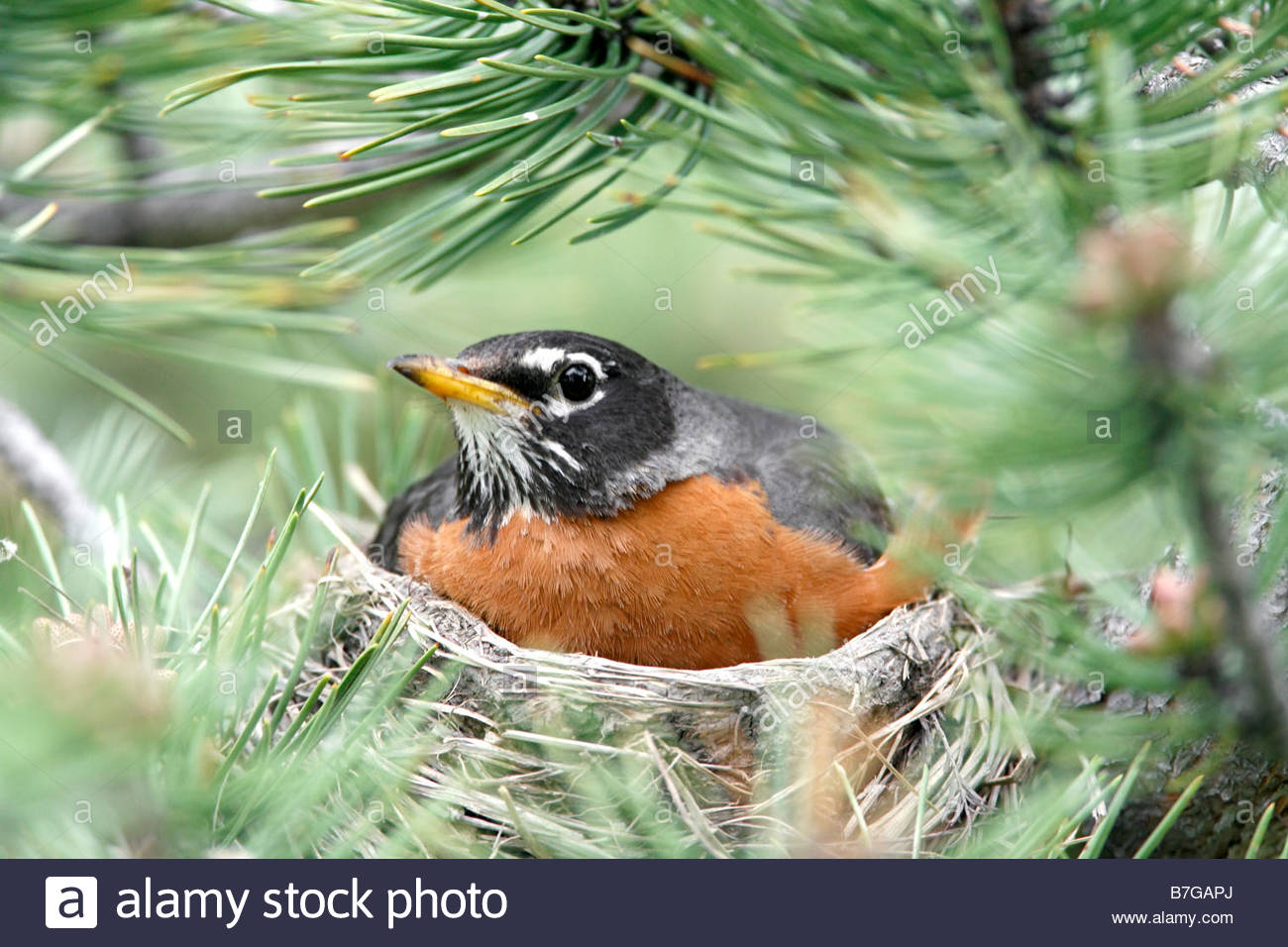
American Robin on Nest ©Alarmy

Benny the American Robin inn Nest ©Alarmy

Clyde returned to Benny, who dropped the worm, surprised that Clyde was so frantic. Benny hadn’t even known that Clyde had gone, but Clyde still apologized. He helped Benny take the worm back to the nest. Every day after that, Clyde and Benny spent all their time together. Even after Benny grew up. Benny placed his nest directly in the tree beside Clyde’s.


“Here’s my concern: that you care for God’s flock with all the diligence of a shepherd. Not because you have to, but because you want to please God. Not calculating what you can get out of it, but acting spontaneously.” (1 Peter 5:2 MSG)

Lee’s Addition:

Emma sent this delightful story to me recently. I trust you will enjoy it as much as I have putting the photos in. She, like many students, college or younger, has been finishing her classes at home.

The verse above has to do with pastors, but the principles apply to this story. Not so sure Clyde was so willing at first, but he came around. Thanks again,Emma, for another tale for us.

See All Of Emma’s Stories Here


McGuffey’s Reader – 1st Grade Lessons LVI and LVII

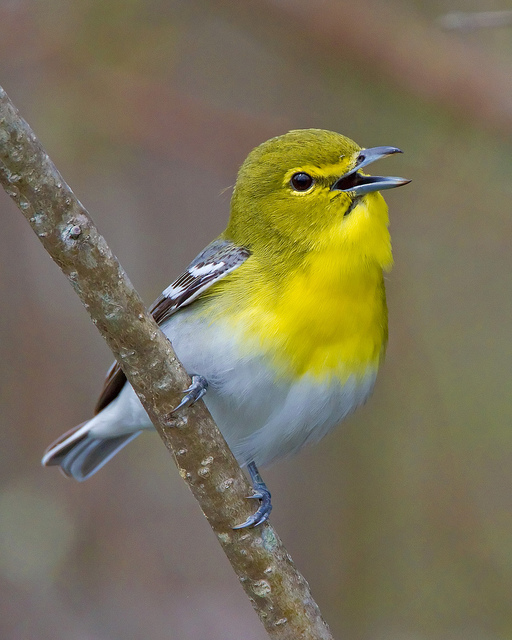
Yellow-throated Vireo (Vireo flavifrons) singing ©nebirdsplus

Yellow-throated Vireo (Vireo flavifrons) singing ©nebirdsplus

These lessons start off with words, then the story. You can practice writing with the Slate Work.

“The flowers appear on the earth; the time of the singing of birds is come, …” (Song of Solomon 2:12a KJV)

LESSON LVI.

strong round dry bill worked

sends claws flit God spring

“How does the bird make the nest so strong, Willie?”

“The mother bird has her bill and her claws to work with, but she would not know how to make the nest if God did not teach her. Do you see what it is made of?”

“Yes, Willie, I see some horse-hairs and some dry grass. The old bird must have worked hard to find all the hairs, and make them into such a pretty, round nest.”

“Shall we take the nest, Rose?”

“Oh no, Willie! We must not take it; but we will come and look at it again, some time.”

Verdin (Auriparus flaviceps) Building Nest 1 ©Earle Robinson

SLATE WORK.

[Illustration: Script Exercise:]

God made the little birds to sing,
And flit from tree to tree;
‘Tis He who sends them in the spring
To sing for you and me.


LESSON LVII.

feathers a go’ fly worm crumb feed’ing

ug’ly off feed brown guess things

Grey Jay (Perisoreus canadensis) Feeding at Nest WikiC

Grey Jay (Perisoreus canadensis) Feeding at Nest WikiC

“Willie, when I was feeding the birds just now, a little brown bird flew away with a crumb in its bill.”

“Where did it go, Rose?”

“I don’t know; away off, somewhere.”

“I can guess where, Rose. Don’t you know the nest we saw some days ago?
What do you think is in it now?”

“O Willie, I know! Some little brown birds. Let us go and see them.”

“All right; but we must not go too near. There! I just saw the old bird fly out of the bush. Stand here, Rose. Can you see?”

“Why, Willie, what ugly little things! What big mouths they have, and no feathers!”

“Keep still, Rose. Here comes the old bird with a worm in her bill. How hard she must work to feed them all!”


McGuffey’s First Grade Reader

The Wordless Book

Laughing Is Good For The Soul

Kookaburra Lowry Park Zoo 12-31-15 by Lee

Laughing Kookaburra Lowry Park Zoo 12-31-15 by Lee

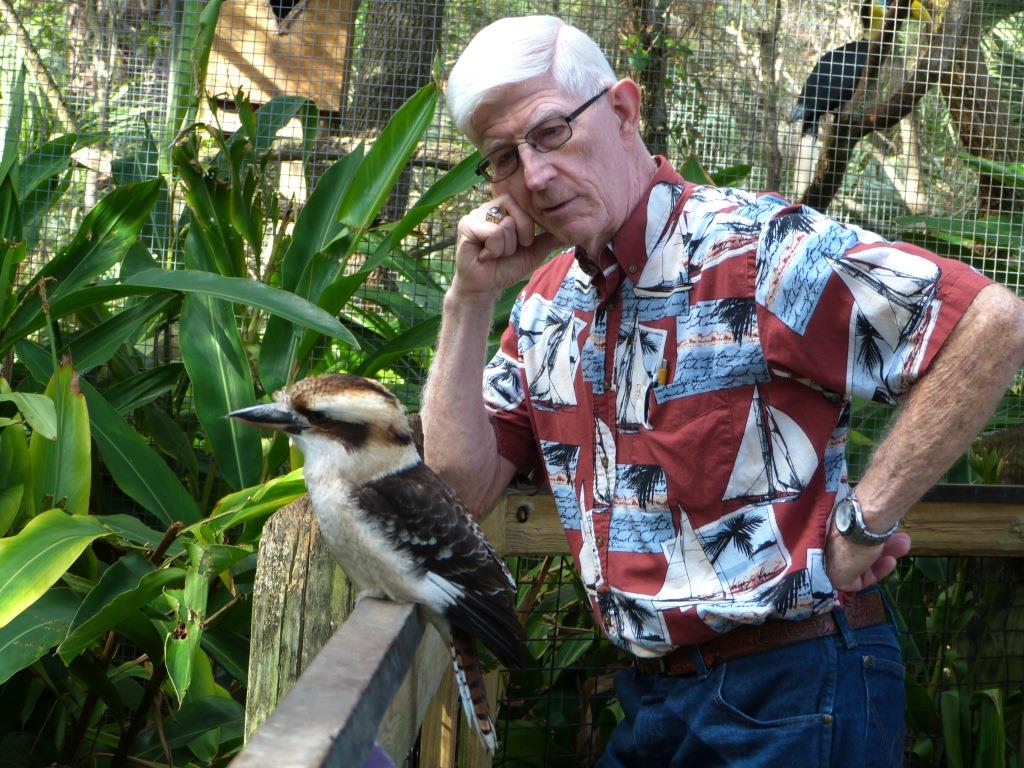
A friend sent me a message with a Kookaburra video. and was wondering if this is a Kookaburra. In response, I reminded her of these previous articles here. We all need to laugh and let off some of our pent up boredom, fustration, idleness, loneliness, or just Need A Good Laugh for our soul’s Well-being.

A merry heart maketh a cheerful countenance: but by sorrow of the heart the spirit is broken. (Proverbs 15:13 KJV)

Meet Merlin, from the Orlando Sea World:

Here are some of the articles from the past with these good-natured birds:

Kookaburra – Chattery Birds With A Merry Heart – 2010

Ian’s Bird of the Week – Laughing Kookaburra -2011

Kookaburra Encounter – 2014

Tickle Me Tuesday Revived – Laughing Kookaburras – 2019

Kingfishers And Kookaburras – From Creation Moments – 2020

Kookaburra at Brevard Zoo by Dan

Laughing Kookabura Brevard Zoo

Laughing Kookabura Brevard Zoo

Lee and Kookaburra at Brevard Zoo by Dan

Have a great day, and may you keep a smile on your face and in your heart.


Interesting Visitor To Our Feeder

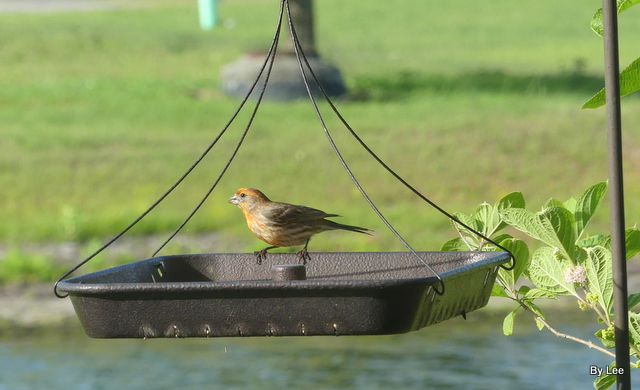
House Finch on Feeder by Lee

House Finch on Feeder by Lee

Do you know what a House Finch looks like? We have been fortunate to have several families of these Finches visit our bird feeders lately. It is always enjoyable to have these little birds come by for breakfast, lunch, or dinner. In fact, these little flying avian wonders come by for snacks also. In other words, keep your eye on the feeders.

You can check out the Identification of House Finches as All About Birds – House Finch ID

When a Finch with a different color lands on your feeder, you get excited and question yourself, “What is this?” This happened lately, and out came the bird guides and a search of the internet bird sites, like All About Birds and others.

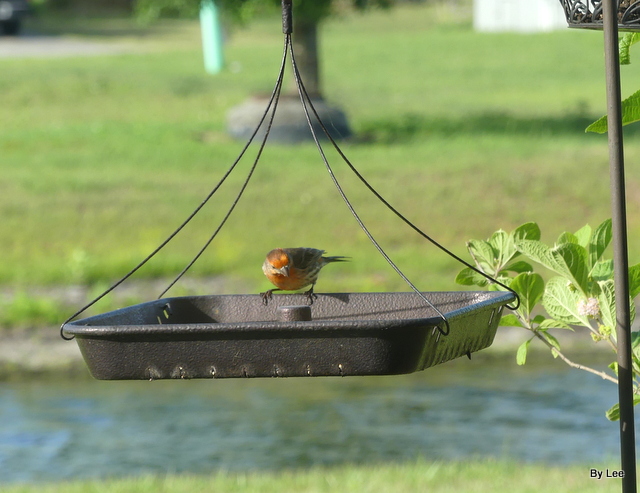
This eye opener landed on our feeder last week:

Varient House Finch on Feeder by Lee

Variant House Finch on Feeder by Lee

Varient House Finch on Feeder by Lee

Variant House Finch on Feeder by Lee

“He gives to the beast its food, And to the young ravens [or Finches] that cry.” (Psalms 147:9 NKJV)

Varient House Finch on Feeder by Lee

Variant House Finch on Feeder by Lee

What happened to this fellow? Apparently, diet or what the bird eats, affects its color. “Male House Finches are generally red, but under certain certain circumstances they may be orange or yellow instead. Different subspecies may show color variations, but differences in color are also attributed to diet.” From this article, I Saw A House Finch That Was Orange Or Yellow Instead Of Red.

“Who provides food for the raven [or Finch], When its young ones cry to God, And wander about for lack of food?” (Job 38:41 NKJV)
Keep your eyes open while bird watching. You never know what might show up! Stay Tuned!

Who Paints The Leaves?


Words and Birds of Encouragement: Habitat Restoration

Self-isolation blues, financial troubles, loved ones fallen ill, fear of contracting coronavirus… these weights are burdening many. On top of that, we may be unable to congregate in our churches or visit our favorite birding spots. Although a pale substitute for both, I pray you are uplifted by this short series of Words and Birds of Encouragement. For what can be more encouraging than the birds of this world and words of the world to come! William

Snowy Egret wading in a salt marsh tidal flat at Mitchelville Fish Haul Beach Park on Hilton Head Island, South Carolina. May 2019. ©www.williamwisephoto.com.

But the day of the Lord will come as a thief in the night; in the which the heavens shall pass away with a great noise, and the elements shall melt with fervent heat, the earth also and the works that are therein shall be burned up. Nevertheless we, according to his promise, look for new heavens and a new earth, wherein dwelleth righteousness. 2 Peter 3:10, 13

Things aren’t that bad (yet). But even if they were, and all upon this earth were destroyed, God has promised a divine habitat restoration project. Think of how our beautiful egrets and herons suffered, senselessly extirpated by plume hunters and habitat destruction. Yet human efforts restored their populations.

How much more our heavenly Creator will restore all things in the New Heaven and the New Earth… no matter how bad things become. Yes, we look forward to paradise with a new heaven and new earth, and with new bodies, but you can also have “new” here now: “Therefore if any man be in Christ, he is a new creature: old things are passed away; behold, all things are become new” (2 Corinthians 5:17).


Hi, I’m wildlife photographer and nature writer William Wise. I was saved under a campus ministry while studying wildlife biology at the University of Georgia. My love of the outdoors quickly turned into a love for the Creator and His works. I’m currently an animal shelter director and live in Athens, Georgia with my wife and two teenage daughters, who are all also actively involved in ministry. Creation Speaks is my teaching ministry that glorifies our Creator and teaches the truth of creation. William Wise Nature Notes is my wildlife and birding photo blog documenting the beauty, design and wonder of God’s creation.  — “What a wildly wonderful world, God! You made it all, with Wisdom at Your side, made earth overflow with your wonderful creations.” Psalms 104, The Message.

Words and Birds of Encouragement: Overcomer

Self-isolation blues, financial troubles, loved ones fallen ill, fear of contracting coronavirus… these weights are burdening many. On top of that, we may be unable to congregate in our churches or visit our favorite birding spots. Although a pale substitute for both, I pray you are uplifted by this short series of Words and Birds of Encouragement. For what can be more encouraging than the birds of this world and words of the world to come! William

Male Yellow-rumped Warbler in bright breeding plumage. Athens, Clarke County, Georgia, USA. April 2018. ©www.williamwisephoto.com.

He that hath an ear, let him hear what the Spirit saith unto the churches; To him that overcometh will I give to eat of the tree of life, which is in the midst of the paradise of God. Revelation 2:7

We are called to make it through the days of trial and adversity. But we aren’t supposed to just grit our teeth and endure, coming out the other side angrier than we went in, like Godzilla breaking from the rubble of a building collapsed upon him. Instead, we are to be overcomers; we are to pass through trial and adversity with our testimony intact!

And to the overcomer there is a reward: like the Yellow-rumped Warblers that eat the late winter fruits of the holly and Wax Myrtle, we will dine upon the fruit of the tree of life in the paradise of God! This virus quarantine will end in a harvest of souls into the church as the doors re-open. So keep your chin up, overcomer, greater days approach… in this world and the next!


Hi, I’m wildlife photographer and nature writer William Wise. I was saved under a campus ministry while studying wildlife biology at the University of Georgia. My love of the outdoors quickly turned into a love for the Creator and His works. I’m currently an animal shelter director and live in Athens, Georgia with my wife and two teenage daughters, who are all also actively involved in ministry. Creation Speaks is my teaching ministry that glorifies our Creator and teaches the truth of creation. William Wise Nature Notes is my wildlife and birding photo blog documenting the beauty, design and wonder of God’s creation.  — “What a wildly wonderful world, God! You made it all, with Wisdom at Your side, made earth overflow with your wonderful creations.” Psalms 104, The Message.

Words and Birds of Encouragement: Reverse the Curse

Self-isolation blues, financial troubles, loved ones fallen ill, fear of contracting coronavirus… these weights are burdening many. On top of that, we may be unable to congregate in our churches or visit our favorite birding spots. Although a pale substitute for both, I pray you are uplifted by this short series of Words and Birds of Encouragement. For what can be more encouraging than the birds of this world and words of the world to come! William

Healthy male House Finch; Clarke County, Georgia. April, 2015. ©www.williamwisephoto.com.

“Then the angel showed me the river of the water of life, as clear as crystal, flowing from the throne of God and of the Lamb down the middle of the great street of the city. On each side of the river stood the tree of life, bearing twelve crops of fruit, yielding its fruit every month. And the leaves of the tree are for the healing of the nations. No longer will there be any curse.” Revelation 22:1-3

Coronavirus is a curse. All viruses that bring sickness and death are a result of the curse. And that curse pronounced in Genesis 3 didn’t affect man alone, but “this thing all things devours: birds, beasts, trees, flowers.” I’ve seen the curse of disease first-hand as a House Finch confusedly flew through my backyard unable to find the feeder.

House Finch Eye Disease infection.

But God promises a reverse of the curse and a restoration of paradise! One day, we will walk along the river among the fruiting trees. We, and all the other creatures, bird and beast alike, will be free of disease. Without a coronavirus face mask to block our view, we will adoringly look upon the Lamb seated upon the throne!


Hi, I’m wildlife photographer and nature writer William Wise. I was saved under a campus ministry while studying wildlife biology at the University of Georgia. My love of the outdoors quickly turned into a love for the Creator and His works. I’m currently an animal shelter director and live in Athens, Georgia with my wife and two teenage daughters, who are all also actively involved in ministry. Creation Speaks is my teaching ministry that glorifies our Creator and teaches the truth of creation. William Wise Nature Notes is my wildlife and birding photo blog documenting the beauty, design and wonder of God’s creation.  — “What a wildly wonderful world, God! You made it all, with Wisdom at Your side, made earth overflow with your wonderful creations.” Psalms 104, The Message.

Count It All Joy!

Joyful Greenbul (Chlorocichla laetissima) Flickr Dave Curtis

Our pastor had another encouraging message for our Wednesday night service. One day we will be able to attend a regular prayer meeting again, but, thankfully, our church is using YouTube and other means of keeping the Lord’s Word before us. This week was no exception.

“My brethren, count it all joy when you fall into various trials, knowing that the testing of your faith produces patience. But let patience have its perfect work, that you may be perfect and complete, lacking nothing. If any of you lacks wisdom, let him ask of God, who gives to all liberally and without reproach, and it will be given to him. But let him ask in faith, with no doubting, for he who doubts is like a wave of the sea driven and tossed by the wind.” (James 1:2-6 NKJV)

I trust you will enjoy Pastor Osborne’s message.

Wordless Birds