Avian and Attributes – Star

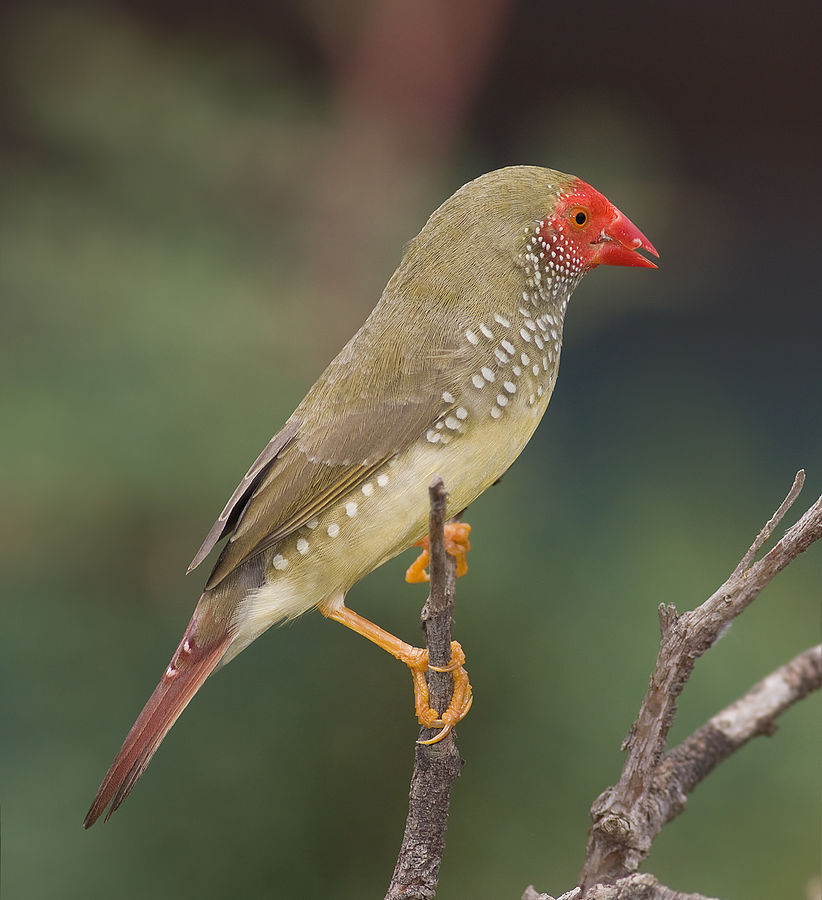
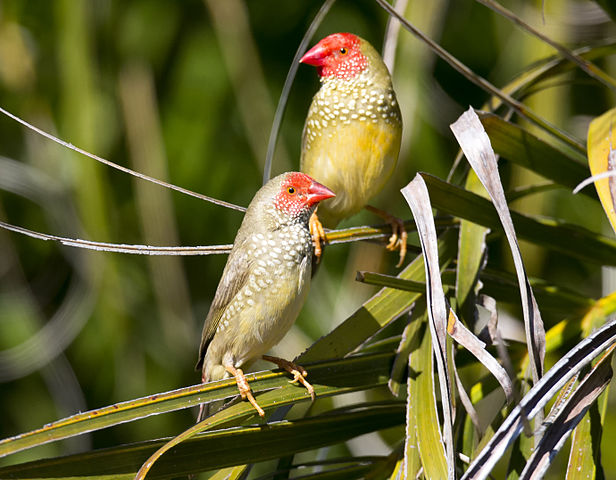
Star Finch (Neochmia ruficauda) ©WikiC

“I see Him, but not now; I behold Him, but not near; A Star shall come out of Jacob; A Scepter shall rise out of Israel, And batter the brow of Moab, And destroy all the sons of tumult. (Numbers 24:17 NKJV)

Avian and Attributes: Star

STAR, n.
1. An apparently small luminous body in the heavens, that appears in the night, or when its light is not obscured by clouds or lost in the brighter effulgence of the sun. Stars are fixed or planetary. The fixed stars are known by their perpetual twinkling, and by their being always in the same position in relation to each other. The planets do not twinkle, and they revolve about the sun. The stars are worlds, and their immense numbers exhibit the astonishing extent of creation and of divine power.

5. In Scripture, Christ is called the bright and morning star, the star that ushers in the light of an eternal day to his people. Revelations 22. Ministers are also called stars in Christs right hand, as, being supported and directed by Christ, they convey light and knowledge to the followers of Christ. Revelations 1. The twelve stars which form the crown of the church, are the twelve apostles. Revelations 12.
6. The figure of a star; a badge of rank; as stars and garters.
The pole-star, a bright star in the tail of Ursa minor, so-called from its being very near the north pole.
Star of Bethlehem, a flower and plant of the genus Ornithogalum. There is also the star of Alexandria, and of Naples, and of Constantinople, of the same genus.
STAR, v.t. To set or adorn with stars or bright radiating bodies; to bespangle; as a robe starred with gems.

Star Finch (Neochmia ruficauda) Female front-Male back ©WikiC

Star Finch (Neochmia ruficauda), an estrildid finch, between 4.5—5 inches in length, with crimson fore-parts of the head and a scarlet bill. The upper and lower plumage is yellow-green, white spotted on the underparts, the belly more yellow. The upper tail coverts are scarlet, tail feathers are brownish scarlet. The female has less crimson on the head, and generally duller than the male, the immature star finch is olive to brownish with a grey face and head.

Found in northern coastal regions of Australia, occurring at sparsely wooded habitat of tall grass or rushes around creeks and swamps

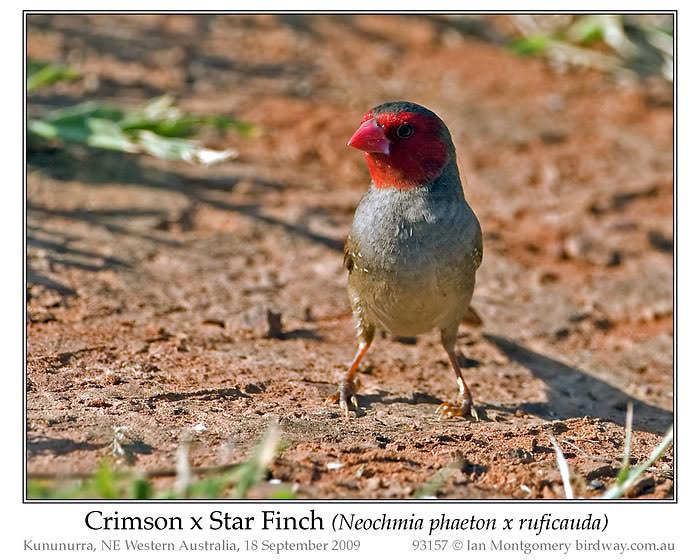
Crimson Finch (Neochmia phaeton) X Star Hybrid by Ian

saying, “Where is He who has been born King of the Jews? For we have seen His star in the East and have come to worship Him.” (Matthew 2:2 NKJV)

Star-chested Treerunner (Margarornis stellatus)

Star-chested Treerunner (Margarornis stellatus)

The Star-chested Treerunner (Margarornis stellatus or Fulvous-dotted Treerunner is a species of bird in the family Furnariidae. It is found in Colombia and Ecuador.

Its natural habitat is subtropical or tropical moist montane forests. It is threatened by habitat loss.

When they saw the star, they rejoiced with exceedingly great joy. And when they had come into the house, they saw the young Child with Mary His mother, and fell down and worshiped Him. And when they had opened their treasures, they presented gifts to Him: gold, frankincense, and myrrh. (Matthew 2:10-11 NKJV)
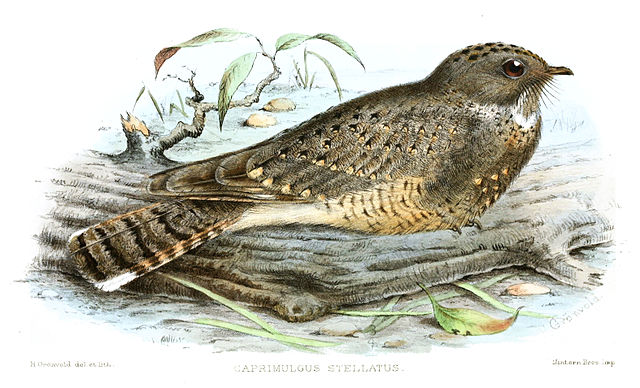
Star-spotted Nightjar (Caprimulgus stellatus) ©WikiC

“For He received from God the Father honor and glory when such a voice came to Him from the Excellent Glory: “This is My beloved Son, in whom I am well pleased.” And we heard this voice which came from heaven when we were with Him on the holy mountain. And so we have the prophetic word confirmed, which you do well to heed as a light that shines in a dark place, until the day dawns and the morning star rises in your hearts; knowing this first, that no prophecy of Scripture is of any private interpretation, for prophecy never came by the will of man, but holy men of God spoke as they were moved by the Holy Spirit.” (2 Peter 1:17-21 NKJV)
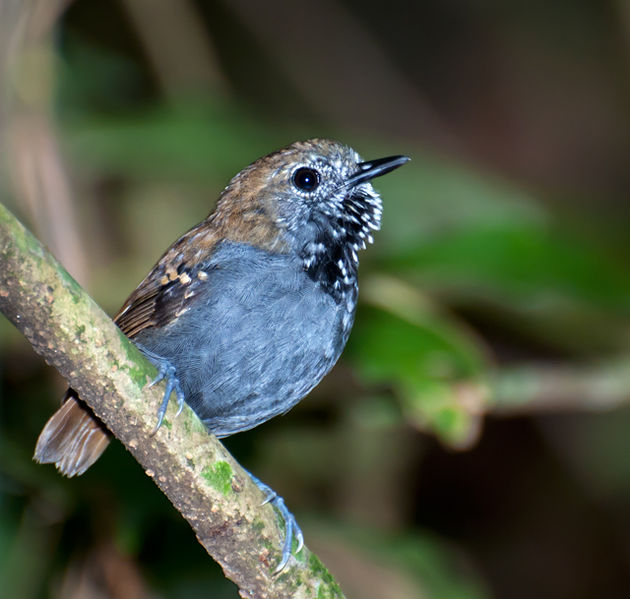
Star-throated Antwren (Rhopias gularis) ©WikiC

“I, Jesus, have sent My angel to testify to you these things in the churches. I am the Root and the Offspring of David, the Bright and Morning Star.” And the Spirit and the bride say, “Come!” And let him who hears say, “Come!” And let him who thirsts come. Whoever desires, let him take the water of life freely.” (Revelation 22:16-17 NKJV)
Avian and Attributes

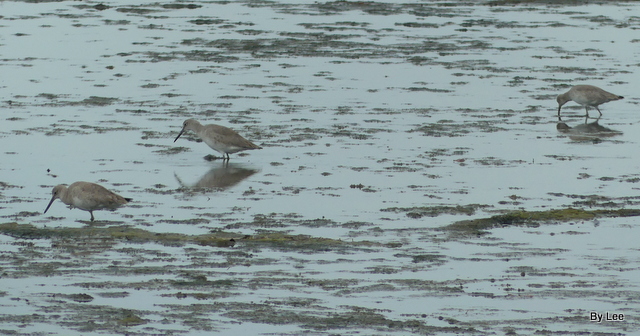
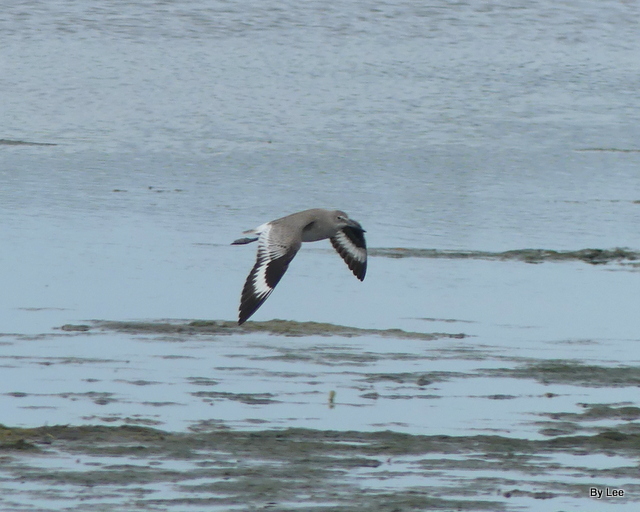
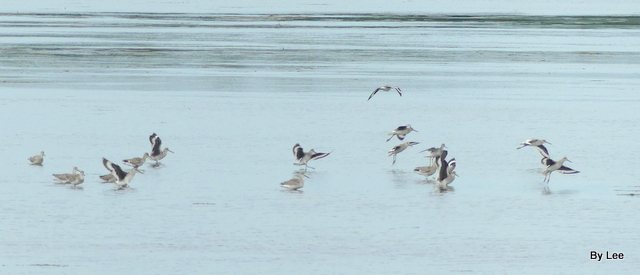
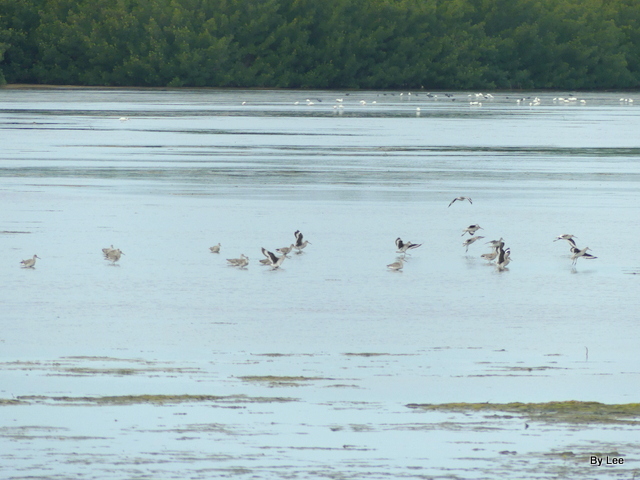
Willets At Ding Darling NWR

Willet at Ding Darling NWR by Lee 01-26-2019

“But now ask the beasts, and they will teach you; And the birds of the air, and they will tell you;” (Job 12:7 NKJV)

Previously, we were at Merritt Island NWR and had seen some Willets and I needed help identifying some birds. One of them turned out to be a Willet. I have seen them before, but not very often. Today, we went to Ding Darling NWR over on Sanibel Island, right nearby Fort Myers, Florida.

Today was very cool, around 48-50 degrees, overcast, and very windy. Not a great day for birdwatching, if you have a small temperature range like I do. :) My range is between 65 and 80 degrees. Anyway, back to the adventure.

The birds were few and not really close in. Most of my photos were taken using my zoom. The Willets were feeding and I happened to be standing by a lady with a nice camera that had a long lens on it. Wanting to show of my new Willet identity skills, I said, “those are Willets, right.?” [That is how you ask when you really aren’t 100% sure.]

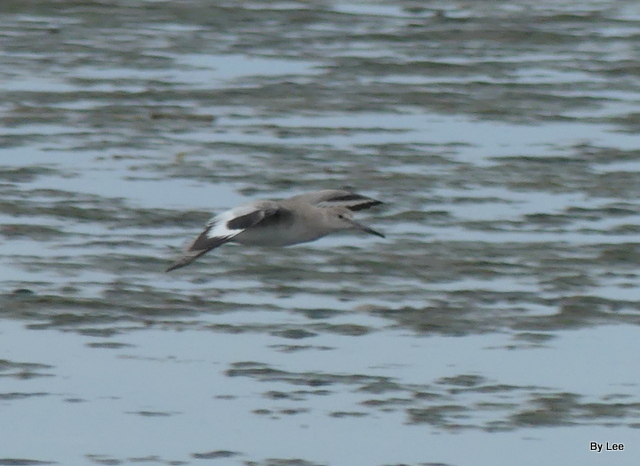
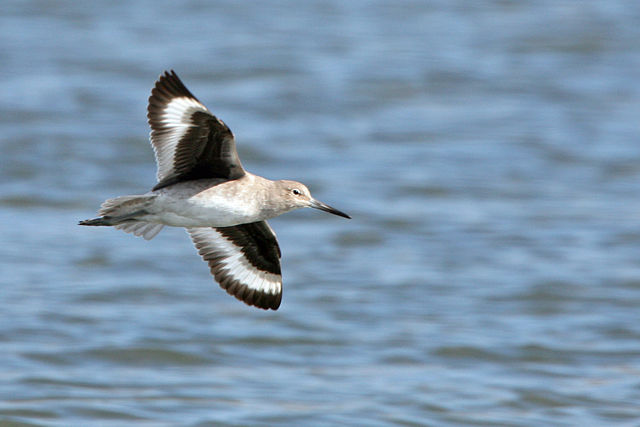
“Yes, they are.” Then she said, “I am a biologist and a Shorebird specialists.” About that time, one of the Willets from another group flew by us and she told me that the black and white wing bars are a great clue. Also, they are one of the largest shorebirds in this area.

Willet (Tringa semipalmata) at Ding Darling NWR by Lee 01-26-2019

One of the great things about birdwatching is the helpfulness of other birders. Most are willing to share their experience and knowledge about these Avian Wonders from our Creator. Now I have another way to help figure out that I am looking at a Willet.

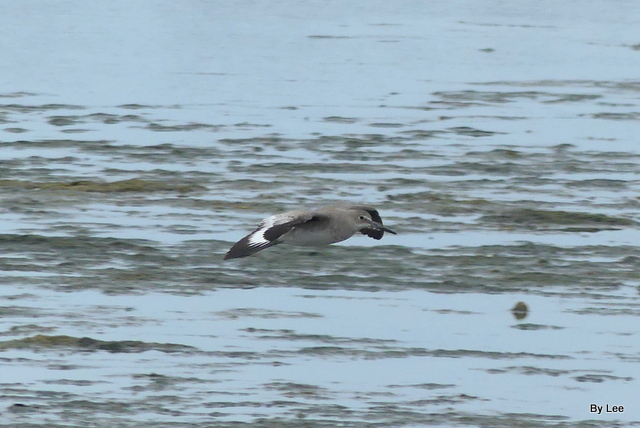
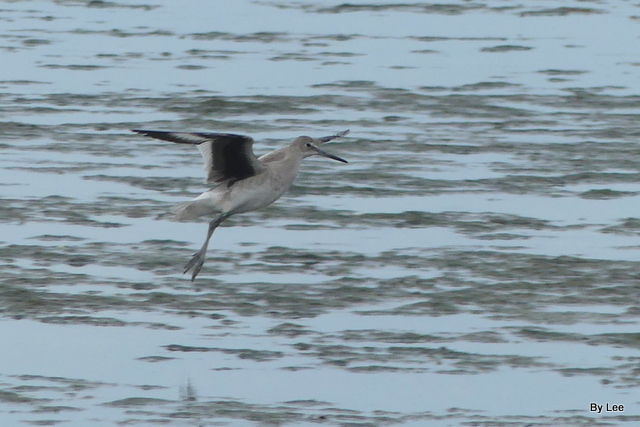
Here are a few more photos as he flew by:

Willet (Tringa semipalmata) at Ding Darling NWR by Lee

Willet (Tringa semipalmata) at Ding Darling NWR

Willet (Tringa semipalmata) at Ding Darling NWR

Willet (Tringa semipalmata) at Ding Darling NWR by Lee

When the bird landed, you could still see the black at the back of its wings. [far left bird]

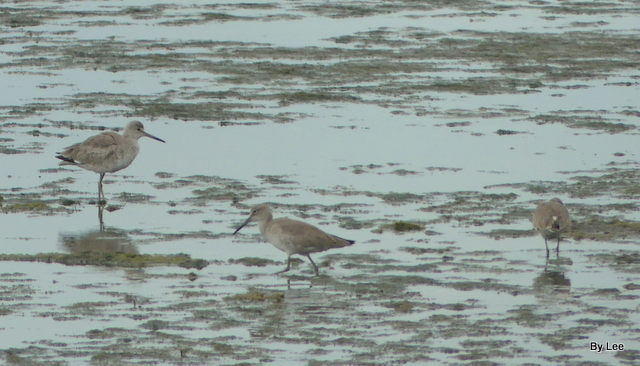
As we continued to watch and talk, a group of the Willets flew over and landed. It was nice to see all those black and white markings. Once they settled down, close their wings, all that “clue” is again hid. Oh, the joys and challenges of birdwatching.

Willet (Tringa semipalmata) at Ding Darling NWR by Lee 01-26-2019

Willet (Tringa semipalmata) at Ding Darling NWR by Lee 01-26-2019

By the way, looking back over previous photos, we were last at Ding Darling in July of 2008. It has been some time since we were there and there were many more birds. Could it be because it was in July and WARMER???

The verse quoted above, “But now ask the beasts, and they will teach you; And the birds of the air, and they will tell you;” (Job 12:7 NKJV), reminds us that the Lord has made each species just a bit different. If we study them, “they will tell us.”


Ding Darling NWR – FWS

Ding Darling NWR – Wikipedia

Willet – All About Birds

  • Because they find prey using the sensitive tips of their bills, and not just eyesight, Willets can feed both during the day and at night.

Willet – Wikipedia

Willet (Tringa semipalmata) ©WikiC

White-Eye Changes from I.O.C. Ver 9.1

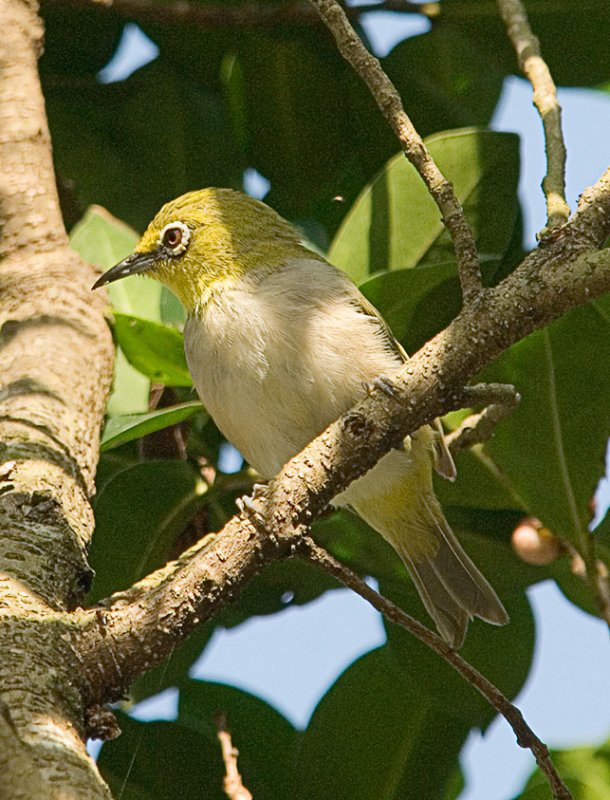
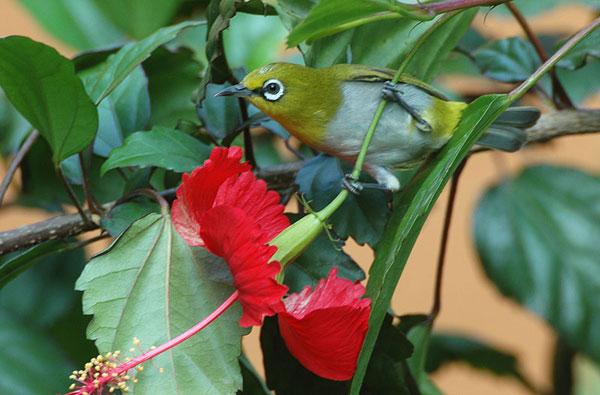
Japanese White-eye (Zosterops japonicus) by W Kwong

Japanese White-eye now the Warbling White-eye (Zosterops japonicus) by W Kwong

“Keep me as the apple of the eye, hide me under the shadow of thy wings,” (Psalms 17:8 KJV)

Now that all the indexes are updated, I thought you might find it interesting what they did to the White-eye family. The they are part of the Zosteropidae family. Wikipedia gives this about them:

“White-eyes are mostly of undistinguished appearance, the plumage being generally greenish olive above, and pale grey below. Some species have a white or bright yellow throat, breast or lower parts, and several have buff flanks. As their common name implies, many species have a conspicuous ring of tiny white feathers around their eyes.[1] The scientific name of the group also reflects this latter feature, being derived from the Ancient Greek for “girdle-eye”. They have rounded wings and strong legs. Like many other nectivorous birds, they have slender, pointed bills, and brush-tipped tongues.[1] The size ranges up to 15 cm (5.9 in) in length.

All the species of white-eyes are sociable, forming large flocks which only separate on the approach of the breeding season. They build tree nests and lay two to four unspotted pale blue eggs.[citation needed] Though mainly insectivorous, they eat nectar and fruits of various kinds. The silvereye can be a problem in Australian vineyards, through piercing the grape allowing infection or insect damage to follow.

White-eyes are the city bird of Kurayoshi City, in Tottori, Japan.”

Oriental now Indian White-eye (Zosterops palpebrosus) by Nikhil Devasar

“I will instruct thee and teach thee in the way which thou shalt go: I will guide thee with mine eye.” (Psalms 32:8 KJV)

Below are all the White-eyes and their new names or species. This is not the whole Zosteropidae Family. There is one Black-eye in here. [As of the 9.1 Version Update]

Megazosterops
Giant White-eye (Megazosterops palauensis)
Apalopteron
Bonin White-eye (Apalopteron familiare)
Cleptornis
Golden White-eye (Cleptornis marchei)
Rukia
Teardrop White-eye (Rukia ruki)
Long-billed White-eye (Rukia longirostra)
Tephrozosterops
Rufescent Darkeye (Tephrozosterops stalkeri)
Lophozosterops
Grey-hooded White-eye (Lophozosterops pinaiae)
Mindanao White-eye (Lophozosterops goodfellowi)
Streak-headed White-eye (Lophozosterops squamiceps)
Mees’s White-eye (Lophozosterops javanicus)
Cream-browed White-eye (Lophozosterops superciliaris)
Crested White-eye (Lophozosterops dohertyi)
Heleia
Spot-breasted Heleia (Heleia muelleri)
Thick-billed Heleia (Heleia crassirostris)
Oculocincta
Pygmy White-eye (Oculocincta squamifrons)
Woodfordia
Bare-eyed White-eye (Woodfordia superciliosa)
Sanford’s White-eye (Woodfordia lacertosa)
Zosterops
Marianne White-eye (Zosterops semiflavus)
Karthala White-eye (Zosterops mouroniensis)
Mauritius Olive White-eye (Zosterops chloronothos)
Reunion Olive White-eye (Zosterops olivaceus)
Mauritius Grey White-eye (Zosterops mauritianus)
Reunion Grey White-eye (Zosterops borbonicus)

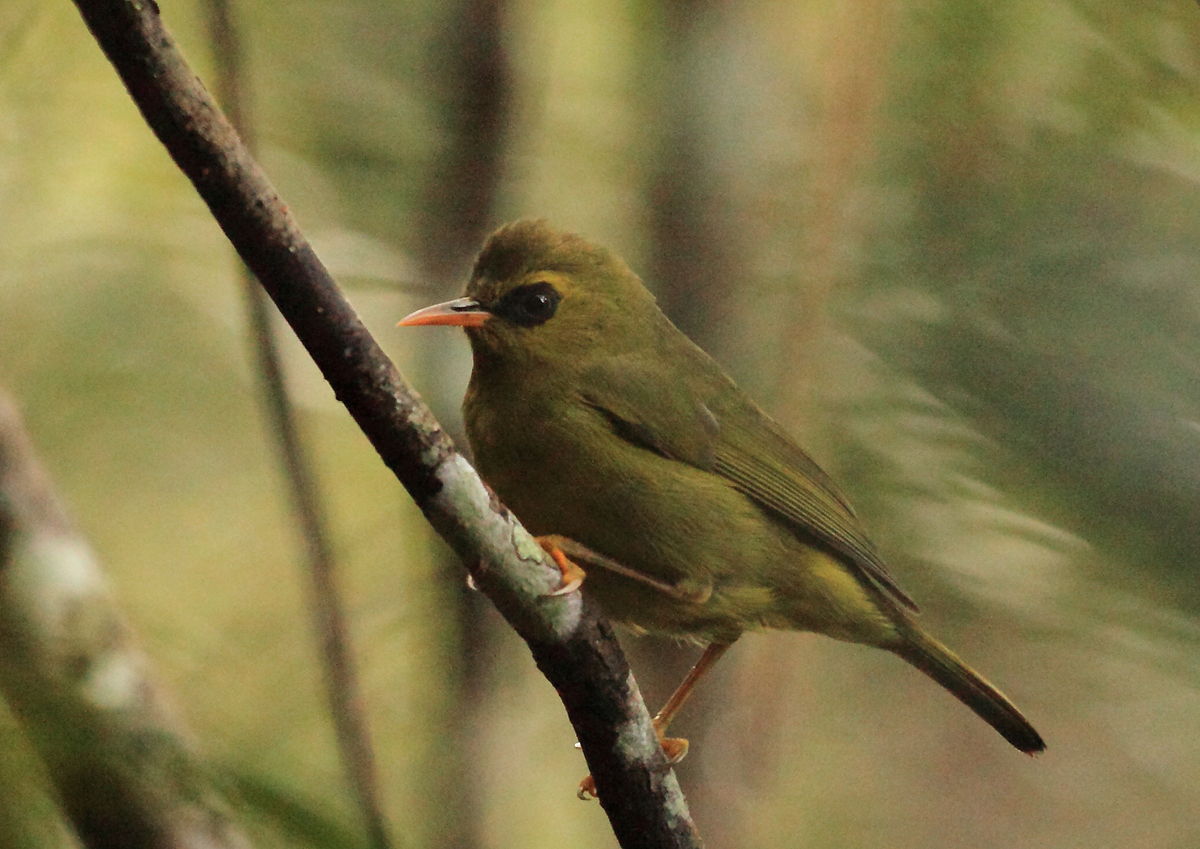
Mountain Blackeye (Chlorocharis emiliae) ©WikiC

“He that planted the ear, shall he not hear? he that formed the eye, shall he not see?” (Psalms 94:9 KJV)

Mountain Blackeye (Zosterops emiliae)
Chestnut-flanked White-eye (Zosterops erythropleurus)
Warbling White-eye (Zosterops japonicus) was Japanese White-eye
Swinhoe’s White-eye (Zosterops simplex) Added
Hume’s White-eye (Zosterops auriventer) Added
Lowland White-eye (Zosterops meyeni)
Indian White-eye (Zosterops palpebrosus) was Oriental White-eye
Sangkar White-eye (Zosterops melanurus) Added
Sri Lanka White-eye (Zosterops ceylonensis)
Rota White-eye (Zosterops rotensis)
Bridled White-eye (Zosterops conspicillatus)
Citrine White-eye (Zosterops semperi)
Plain White-eye (Zosterops hypolais)
Black-capped White-eye (Zosterops atricapilla)
Everett’s White-eye (Zosterops everetti)
Yellowish White-eye (Zosterops nigrorum)
Yellow-ringed White-eye (Zosterops wallacei)
Javan White-eye (Zosterops flavus)
Lemon-bellied White-eye (Zosterops chloris)
Ashy-bellied White-eye (Zosterops citrinella)
Pale-bellied White-eye (Zosterops consobrinorum)
Pearl-bellied White-eye (Zosterops grayi)
Golden-bellied White-eye (Zosterops uropygialis)
Black-ringed White-eye (Zosterops anomalus)
Cream-throated White-eye (Zosterops atriceps)
Sangihe White-eye (Zosterops nehrkorni)
Black-crowned White-eye (Zosterops atrifrons)
Togian White-eye (Zosterops somadikartai)
Seram White-eye (Zosterops stalkeri)
Black-fronted White-eye (Zosterops minor)
Tagula White-eye (Zosterops meeki)
Bismarck White-eye (Zosterops hypoxanthus)
Biak White-eye (Zosterops mysorensis)
Capped White-eye (Zosterops fuscicapilla)
Buru White-eye (Zosterops buruensis)
Ambon White-eye (Zosterops kuehni)
Papuan White-eye (Zosterops novaeguineae)
Yellow-throated White-eye (Zosterops metcalfii)
Christmas White-eye (Zosterops natalis)
Canary White-eye (Zosterops luteus)
Louisiade White-eye (Zosterops griseotinctus)
Rennell White-eye (Zosterops rennellianus)
Vella Lavella White-eye (Zosterops vellalavella)
Gizo White-eye (Zosterops luteirostris)
Ranongga White-eye (Zosterops splendidus)
Solomons White-eye (Zosterops kulambangrae)
Dark-eyed White-eye (Zosterops tetiparius)
Kolombangara White-eye (Zosterops murphyi)
Grey-throated White-eye (Zosterops rendovae)
Malaita White-eye (Zosterops stresemanni)
Santa Cruz White-eye (Zosterops sanctaecrucis)
Vanikoro White-eye (Zosterops gibbsi)
Samoan White-eye (Zosterops samoensis)
Fiji White-eye (Zosterops explorator)
Vanuatu White-eye (Zosterops flavifrons)
Small Lifou White-eye (Zosterops minutus)
Green-backed White-eye (Zosterops xanthochroa)
Silvereye (Zosterops lateralis)
Slender-billed White-eye (Zosterops tenuirostris)
Robust White-eye (Zosterops strenuus)
White-chested White-eye (Zosterops albogularis)
Large Lifou White-eye (Zosterops inornatus)
Kosrae White-eye (Zosterops cinereus)
Grey-brown White-eye (Zosterops ponapensis)
Olive-colored White-eye (Zosterops oleagineus)
Dusky White-eye (Zosterops finschii)
Socotra White-eye (Zosterops socotranus) Added
Principe White-eye (Zosterops ficedulinus)
Annobon White-eye (Zosterops griseovirescens)
Sao Tome White-eye (Zosterops feae)
Black-capped Speirops (Zosterops lugubris)
Principe Speirops (Zosterops leucophaeus)
Mbulu White-eye (Zosterops mbuluensis) Added
Abyssinian White-eye (Zosterops abyssinicus)
Pale White-eye (Zosterops flavilateralis) Added
Seychelles White-eye (Zosterops modestus)
Aldabra White-eye (Zosterops aldabrensis)Added
Kirk’s White-eye (Zosterops kirki)
Mayotte White-eye (Zosterops mayottensis)
Malagasy White-eye (Zosterops maderaspatanus)
Taita White-eye (Zosterops silvanus)
South Pare White-eye (Zosterops winifredae) Added
Orange River White-eye (Zosterops pallidus)
Cape White-eye (Zosterops virens)
Southern Yellow White-eye (Zosterops anderssoni) Added
Mount Cameroon Speirops (Zosterops melanocephalus)
Fernando Po Speirops (Zosterops brunneus)
Forest White-eye (Zosterops stenocricotus)
Heuglin’s White-eye (Zosterops poliogastrus) was Montane White-eye
Kikuyu White-eye (Zosterops kikuyuensis)

Montane White-eye (Zosterops poliogastrus eurycricotus) subspecies now the Broad-ringed White-eye (Zosterops eurycricotus) ©WikiC

“The hearing ear, and the seeing eye, the LORD hath made even both of them.” (Proverbs 20:12 KJV)

Broad-ringed White-eye (Zosterops eurycricotus) Added
Northern Yellow White-eye (Zosterops senegalensis) was African Yellow White-eye
Green White-eye (Zosterops stuhlmanni) Added
Pemba White-eye (Zosterops vaughani)


I.O.C. Version 9.1 (Last Name First List, Now updated)

*


Zosteropidae Family

Woodstock and the I.O.C. 9.1 Update

World Bird Names – I.O.C. Version 9.1


Woodstock and the I.O.C. 9.1 Update

Woodstock Trying To Find His Identity

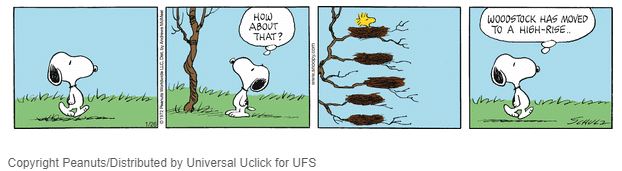
Today’s Woodstock and Snoopy agrees with the latest I.O.C. 9.1 Update. Snoopy is not sure what kind of bird he is and this update has been shuffling birds from one Genus to another, making new birds from subspecies, etc.

Mauritius Olive White-eye (Zosterops chloronothos) ©WikiC

With all the ongoing DNA studies, birds are being moved around quite a bit. This time, they rearranged the White-eyes around and added several new Drongos. The Laughingthrushes were also shaken up.

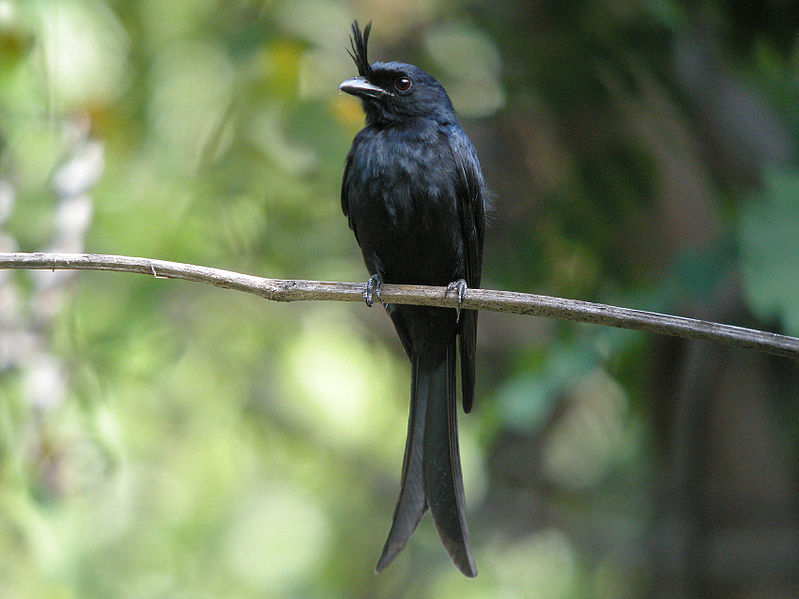
Crested Drongo (Dicrurus forficatus) ©WikiC

I am still working on updating my site, but have most of it completed. All the main indexes, and the bird names alphabetical [first, last] lists are completed. Today I hope to finish up the bird names [last, first] pages. That should finish most of it. Eventually, photos will need to be renamed, but, that is not my main priority.

It takes a good three to four days of work to do these pages. That explains why there hasn’t been a new post up. I’m on it. Stay tuned! My favorite verse for these updates is from the NASB this time.

“But beyond this, my son, be warned: the writing of many books is endless, and excessive devotion to books is wearying to the body.” (Ecclesiastes 12:12 NASB)

Joe Cool

(Black and White) Sumatran Laughingthrush (Garrulax bicolor) by Lee

These pages are finished:

Birds of the World

Orders – Scientific Order

Orders – Alphabetical Order

Family Indexes:

Indexes by First Name of Bird

World Bird Names – I.O.C. Version 9.1

Australian Boobook (Ninox boobook) by Ian Montgomery

Southern now Australian Boobook (Ninox boobook) by Ian Montgomery

The new version of the World Bird Names from the I. O. C. raised the count to “10,738 extant species and 158 extinct species of birds of the world (Version 9.1), with subspecies (20,046) and annotations.” These birds are classified into Classification of 40 Orders, 245 Families (plus 1 Incertae sedis), 2313 Genera (World Bird Names)

Version 8.2 had 10, 711 birds listed. That is a total gain of 27 birds. This is one of the largest increases I have noticed since starting to keep track of the versions. With the DNA studies ongoing, they are finding enough differences to raise these birds to species status.

In August of 2009, about the time I started the Birds of the World pages and doing these updates, I wrote: “Considering that there are over 10,300 birds, I may be awhile. Actually, the 224 bird families are the most important. So, that will be the starting place.” That is over 400 new birds that have been added in that time span.

It also helps me understand why the Lord didn’t need to place one pair of every living species in the world on the Ark. We know that the birds and creatures were created “after their kind or families.” They have been reproducing after their kinds and the variations are showing up, but yet a Stork kind is still a Stork kind. Looking through these additions and changes, it appears the “White-eye” kind/family group have been very busy.

“Every animal, every creeping thing, every bird, and whatever creeps on the earth, according to their families, went out of the ark.” (Genesis 8:19 NKJV)

Did every species of White-eyes or Storks need to be on the ark?

Reunion Olive White-eye (Zosterops olivaceus) ©WikiC

Reunion Olive White-eye (Zosterops olivaceus) ©WikiC

I’ll be busy for a while updating my pages again in the Birds of the World section. The Taxonomic changes haven’t even been looked at yet. Updates will be given as they are changed. Stay tuned!

Additions and Deletions:

The code indicates whether the bird was raised from a subspecies (AS), or (NEW), or (DEL) which is usually placed back as a subspecies.

ENGLISH NAME  (SCIENTIFIC NAME) CHANGE  CODE
Chaco Nothura (Nothura chacoensis) DEL AL
Rote Boobook (Ninox rotiensis) ADD AS
Timor Boobook (Ninox fusca) ADD AS
Alor Boobook (Ninox plesseni) ADD AS
Buru Boobook (Ninox hantu) ADD AS
Green-backed Hillstar (Urochroa leucura) ADD AS
Dry-forest Sabrewing (Campylopterus calcirupicola) ADD NEW
Chiriqui Foliage-gleaner (Automolus exsertus) ADD AS
Rufous-breasted Antpitta (Grallaricula leymebambae) ADD AS
Tapajos Antpitta (Myrmothera subcanescens) ADD AS
Spotted Scrubwren (Sericornis maculatus) ADD AS
Erlanger’s Lark (Calandrella erlangeri) DEL SSP
Rufous-capped Lark  (Calandrella eremica) ADD AS
Albertine Sooty Boubou (Laniarius holomelas) ADD AS
Steppe Grey Shrike (Lanius pallidirostris) DEL AL
Chivi Vireo (Vireo chivi) ADD AS
Western Square-tailed Drongo (Dicrurus occidentalis) ADD NEW
Sharpe’s Drongo (Dicrurus sharpei) ADD AS
Fanti Drongo (Dicrurus atactus) ADD AS
Glossy-backed Drongo  (Dicrurus divaricatus) ADD AS
Rote Leaf Warbler (Phylloscopus rotiensis) ADD NEW

Montane White-eye (Zosterops poliogastrus eurycricotus) ©WikiC

Mountain White-eye (Zosterops montanus) DEL AL
Swinhoe’s White-eye (Zosterops simplex) ADD AS
Enganno White-eye (Zosterops salvadorii) DEL AL
Hume’s White-eye (Zosterops auriventer) ADD AS
Sangkar White-eye (Zosterops melanurus) ADD AS
Socotra White-eye (Zosterops socotranus) ADD AS
Mbulu White-eye (Zosterops mbuluensis) ADD AS
Pale White-eye (Zosterops flavilateralis) ADD AS
Aldabra White-eye  (Zosterops aldabrensis) ADD AS
South Pare White-eye  (Zosterops winifredae) ADD AS
Southern Yellow White-eye (Zosterops anderssoni)  ADD AS
Broad-ringed White-eye  (Zosterops eurycricotus) ADD AS
Green White-eye (Zosterops stuhlmanni)  ADD AS
Chattering Gnatwren (Ramphocaenus sticturus) ADD AS
Himalayan Shortwing (Brachypteryx cruralis) ADD AS
Chinese Shortwing (Brachypteryx sinensis) ADD AS
Taiwan Shortwing (Brachypteryx goodfellowi) ADD AS
Cherrie’s Tanager (Ramphocelus costaricensis) DEL AL

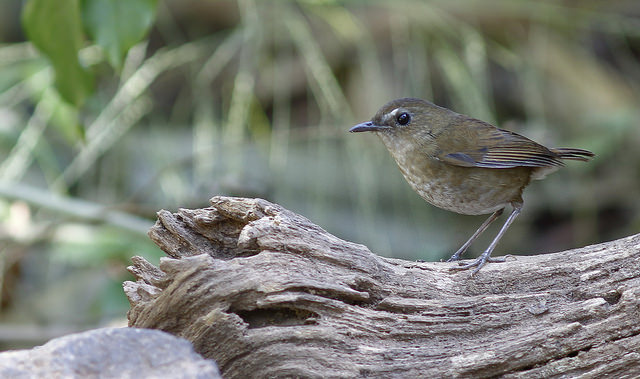
Lesser Shortwing (Brachypteryx leucophris) ©Flickr Dave Curtis

Additions and Deletions – Version 9.1

Name Changes

PREVIOUS IOC LISTS SCIENTIFIC NAME IOC LIST V9.1
Southern Boobook (Ninox boobook) – Australian Boobook
Hantu Boobook (Ninox squamipila) –  Seram Boobook
Bicolored Mouse-warbler (Aethomyias nigrorufus) –  Bicolored Scrubwren
White-tailed Hillstar (Urochroa bougueri) – Rufous-gaped Hillstar
Square-tailed Drongo (Dicrurus ludwigii)  – Common Square-tailed Drongo
Japanese White-eye (Zosterops japonicus)  – Warbling White-eye
Oriental White-eye (Zosterops palpebrosa) – Indian White-eye
Montane White-eye (Zosterops poliogastrus) – Heuglin’s White-eye
African Yellow White-eye (Zosterops senegalensis) – Northern Yellow White-eye
Long-billed Gnatwren (Ramphocaenus melanurus) – Trilling Gnatwren
Yellow-throated Petronia (Gymnoris superciliaris) – Yellow-throated Bush Sparrow
Bush Petronia (Gymnoris dentata) – Sahel Bush Sparrow
Yellow-spotted Petronia (Gymnoris pyrgita) – Yellow-spotted Bush Sparrow
Passerini’s Tanager (Ramphocelus passerinii) – Scarlet-rumped Tanager

Name Changes – Version 9.1

Yellow-spotted Petronia Now Yellow-spotted Bush Sparrow (Gymnoris pyrgita) ©WikiC

Plus, there were numerous changes in Taxonomy. Here is the link to those changes and why they were changed:

Taxonomic Updates Version 9.1

Birds of the World

Birds of the Bible – Preying Mountain Birds III

Mountain Pygmy Owl (Glaucidium gnoma) ©WikiC

Mountain Pygmy Owl (Glaucidium gnoma) ©WikiC

The verses below, quoted from the Bible Gateway – Isaiah 18:6 for Isaiah 18:6

KJV
Isaiah 18:6 “They shall be left together unto the fowls of the mountains, and to the beasts of the earth: and the fowls shall summer upon them, and all the beasts of the earth shall winter upon them.” (KJV)

They will be left together for the mountain birds of prey And for the beasts of the earth; The birds of prey will summer on them, And all the beasts of the earth will winter on them.
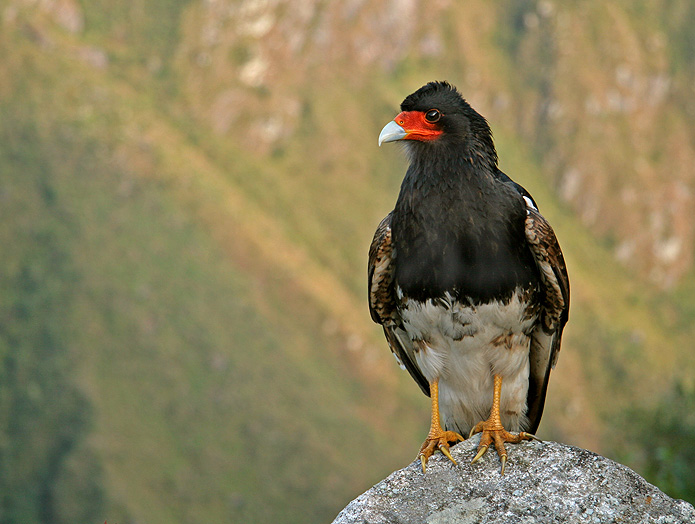
Mountain Caracara (Phalcoboenus megalopterus) ©WikiC

Mountain Caracara (Phalcoboenus megalopterus) ©WikiC

They will all be left for the birds of prey on the hills and for the wild animals of the land. The birds of prey will spend the summer feeding on them, and all the wild animals the winter.
They will all be left to the vultures in the mountains and to the wild animals in the fields; the vultures will feed on them in summer, and the wild animals of the fields in winter.
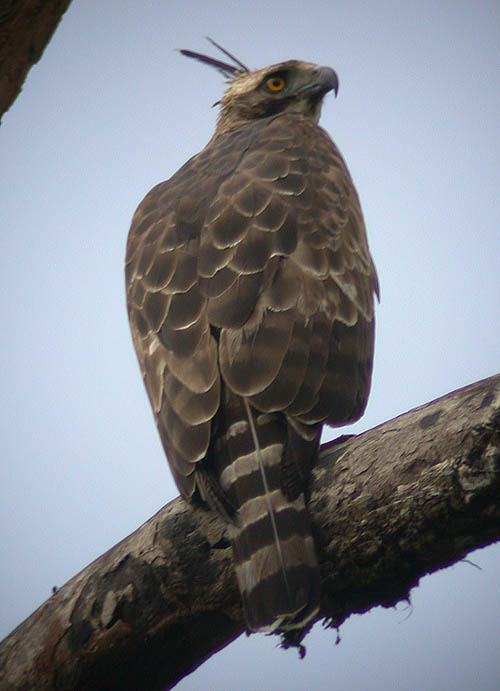
Mountain Hawk-Eagle (Nisaetus nipalensis) by Peter Ericsson

Mountain Hawk-Eagle (Nisaetus nipalensis) by Peter Ericsson

They shall be left together unto the mountain birds of prey, and to the beasts of the earth; and the birds of prey shall summer upon them, and all the beasts of the earth shall winter upon them.
They shall all of them be left to the birds of prey of the mountains and to the beasts of the earth. And the birds of prey will summer on them, and all the beasts of the earth will winter on them.
Mountain Buzzard (Buteo oreophilus) ©WikiC

Mountain Buzzard (Buteo oreophilus) ©WikiC

And they will all be left for birds of prey that live on the mountains and for wild animals. Birds of prey will pass the summer feeding on them, and all the wild animals will pass the winter feeding on them.
They will be left for the birds of prey on the mountains and the wild animals. The birds of prey will feed on them in the summer, and all the wild animals on earth will feed on them in the winter.
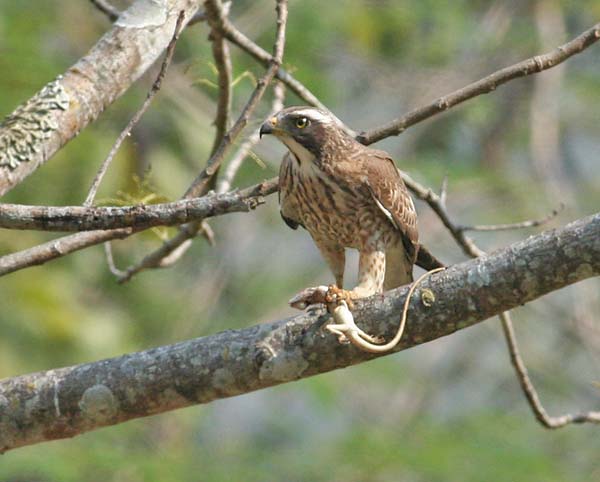
Grey-faced Buzzard (Butastur indicus) by Peter Ericsson

Grey-faced Buzzard (Butastur indicus) by Peter Ericsson

They shall all be left to the mountain vultures and to the beasts of the earth; The vultures shall summer on them, all the beasts of the earth shall winter on them.
***
It looks like the birds of prey, whether vultures, or mountain birds of prey, birds of prey on the hills, or fowls of prey are going to be eating something. What is the “they“? The three translations below begin to give a clue as to the “they” is.
White-eyed Buzzard (Butastur teesa) by Nikhil Devasar

White-eyed Buzzard (Butastur teesa) by Nikhil Devasar

They (warriors) will be left together for the mountain birds of prey, And for the beasts of the earth; And the birds of prey will [spend the] summer feeding on them, And all the beasts of the earth will spend harvest time on them
Ethiopians will be food for mountain buzzards during the summer and for wild animals during the winter.
Your mighty army will be left dead on the field for the mountain birds and wild animals to eat; the vultures will tear bodies all summer, and the wild animals will gnaw bones all winter.

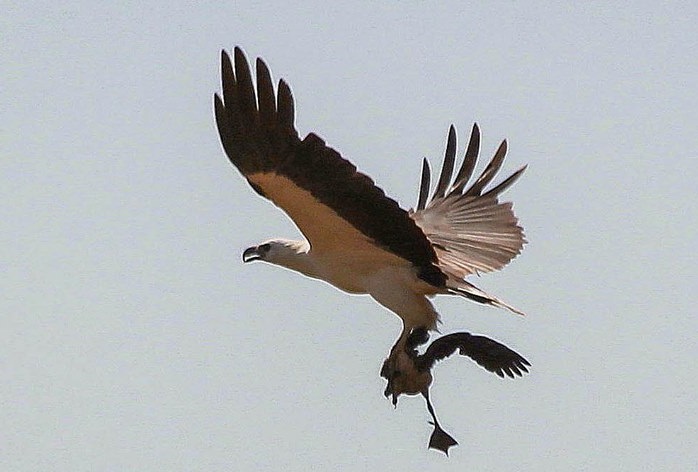
White-bellied Sea Eagle captured a Lesser Whistling Duck ©WikiC

When we back up several verses, we begin to understand what the birds are dealing with. God has been dealing with Cush. God only deals with men and nations so long, and then, if they don’t repent and change their evil ways, He gives judgment. Today many people believe that if God is a loving God, he will not hand out judgments. That is not what Scriptures says repeatedly throughout His Word.
The flood came about because man refused to repent of their evil ways and The Lord destroyed all but eight souls. He also provided a means of “salvation” to Noah and his family.
Bonelli's Eagle (Aquila fasciata) by Ian

Bonelli’s Eagle (Aquila fasciata) by Ian

Here, the people of “Cush” or Assyria, finally received their judgment. All the bodies were left on the mountains and the birds of prey and the beast of the mountains, feasted on the corpses. Not a pretty picture, but God Almighty was justified in this punishment.
“2. He will reckon with his and their enemies, Isa. 18:56. When the Assyrian army promises itself a plentiful harvest in the taking of Jerusalem and the plundering of that rich city, when the bud of that project is perfect, before the harvest is gathered in, while the sour grape of their enmity to Hezekiah and his people is ripening in the flower and the design is just ready to be put in execution, God shall destroy that army as easily as the husbandman cuts off the sprigs of the vine with pruning hooks, or because the grape is sour and good for nothing, and will not be cured, takes away and cuts down the branches. This seems to point at the overthrow of the Assyrian army by a destroying angel, when the dead bodies of the soldiers were scattered like the branches and sprigs of a wild vine, which the husbandman has cut to pieces. And they shall be left to the fowls of the mountains, and the beasts of the earth, to prey upon, both winter and summer; for as God’s people are protected all seasons of the year, both in cold and heat (Isa. 18:4), so their enemies are at all seasons exposed; birds and beasts of prey shall both summer and winter upon them, till they are quite ruined.” [Matthew Henry’s Commentary]
Mountain Chickadee (Poecile gambeli) ©WikiC

Mountain Chickadee (Poecile gambeli) ©WikiC

It is more enjoyable to write about the Birds of the Mountains and point out God, their Creator’s care for them. Yet, Isaiah 18:6 is also part of The Bible. Our Savior has provided salvation to those who repent and accept the Lord Jesus Christ as their personal savior. Yet, many people today, do not want to believe that God would condemn anyone to Hell. That is a lie, straight from Satan.
John 3:16, plus, still gives us the answer for this. Also, if you followed the 28 Chapters of Matthew last month, you would have read the whole of the Gospel. Jesus, God, came to earth in the flesh, to teach us and to provide salvation for us buy his death on the cross. Then, He defeated death and rose again, and is now at the right hand of the Father.
“For God so loved the world, that he gave his only begotten Son, that whosoever believeth in him should not perish, but have everlasting life. For God sent not his Son into the world to condemn the world; but that the world through him might be saved. He that believeth on him is not condemned: but he that believeth not is condemned already, because he hath not believed in the name of the only begotten Son of God. And this is the condemnation, that light is come into the world, and men loved darkness rather than light, because their deeds were evil. For every one that doeth evil hateth the light, neither cometh to the light, lest his deeds should be reproved. But he that doeth truth cometh to the light, that his deeds may be made manifest, that they are wrought in God.” (John 3:16-21 KJV)

Rollers Robed in Rainbows!

Rollers Robed in Rainbows!

Dr. James J. S. Johnson

The heavens declare the glory of God; and the firmament shows His handiwork.  (Psalm 19:1)

Who teaches us more than the beasts of the earth, and makes us wiser than the fowls of heaven?  (Job 35:11)

lilac-breasted-roller-spread-wings.answersafrica

LILAC-BREASTED ROLLER   (Answers Africa photo)

The beauty shown above is a LILAC-BREASTED ROLLER (Coracias caudatus), what you might call a “roller robed in rainbows”, living mostly in sub-Saharan Africa.  This roller is also known as “Mosilikatze’s Roller” (an allusion to the African king Mzilikazi, who once ruled what later became known as Rhodesia and now Zimbabwe  —  King Mzilikazi was noted in the writings of Dr. David Livingstone, the famous missionary).

“Rollers” are classified by taxonomists (i.e., biological category “groupies”) as Coraciiformes, a fancy word meaning “raven-form”(i.e., outwardly resembling a raven or crow), which suggests that rollers appear to be kin to (or at least superficially similar to) other Coraciiformes, such as bee-eaters, kingfishers, motmots, and todies – many of which, like rollers, are also very colorful insect-eaters.  (These rollers love to eat insects, yet they also eat lizards, arachnids, snails, little birds, and even tiny rodents.)

The name “roller” refers to the airborne acrobatics that these birds perform during courtship displays and showy territorial flights. Rollers are also known for their monogamy, i.e., being loyal to their respective mates.  Rollers usually live in warm parts of the Eastern Hemisphere, especially parts of Africa.

lilac-breasted-roller-posing.wikipediacommons

LILAC-BREASTED ROLLER   (Wikipedia Commons)

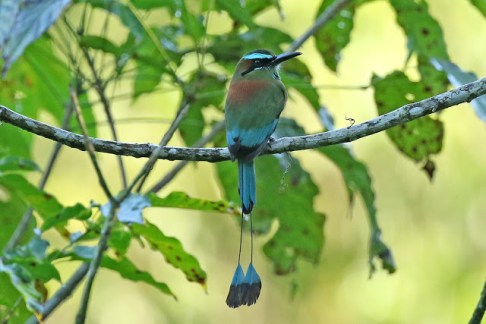
This blog’s readers may recall an earlier post about a different Coraciiforme, the splendidly painted Turquoise-browed Motmot, (Eumomota superciliosa) of Mexico’s Yucatan Peninsula  — see “Hidden-in-Plain-View Lesson from a Motmot:  God’s Beauty Outshines Human Ugliness” [https://leesbird.com/2013/12/24/hidden-in-plain-view-lesson-from-a-motmot-by-james-j-s-johnson/ ].

turquoise-browed-motmot.dominicmitchell

TURQUOISE-BROWED MOTMOT   (Dominic Mitchell photograph)

The Turquoise-browed Motmot’s bright cyan/turquoise and pale blue plumage, offset by green and cinnamon pastels, is brightened by brilliant cobalt/peacock blue/indigo parts, presenting very conspicuous coloring easy to see and to appreciate, especially if one is a birdwatcher.  However, as shown above, the African Lilac-breasted Roller is well attired with its own color-blended plumage! .  Look (below) at the Rollers’ pastel greens, cyan, and lilac/lavender plumage, contrasted with their brilliant peacock blue plumage on their backs!  Obviously God enjoys using bright colors on bird feathers!

lilacbreasted-rollers-perching-kunduchitanzania.robellis-ad2019

LILAC-BREASTED ROLLERS   (photograph by Rob Ellis, Tanzania)

The magnificently colored LILAC-BREASTED ROLLER picture (above) was taken by Rob Ellis (of New Tribes Mission), in Kunduchi, Tanzania.   Rob Ellis has thus documented a small yet glamorous example of God’s glorious creativity  —  what elegantly painted rollers they are, as they perch using utility structures!  (Thanks, Rob!)

Although Coraciiformes are not classified taxonomically as “passerines” (whereas crows and ravens are deemed “passerines”), rollers certainly know the skill of perching (illustrated above), as they watch for their next insect prey.

The psalmist told us that “the heavens declare the glory of God”(Psalm 19:1; see also Psalm 97:6) –  and they do!  Yet also recall that the ancient Hebrews considered the skies (i.e., the air-filled atmosphere above the land and seas) as part of the “heavens” (Genesis 1:20; Genesis 7:23; Job 35:11; Psalm 104:12; Jeremiah 4:25; Ezekiel 31:13; Daniel 4:12; etc.),  —  so it should not surprise us when we see God’s creative glory displayed in such beautiful birds as the Lilac-breasted Rollers, in Tanzania, that Rob Ellis has photographed for us to see.

lilac-breasted-roller.earthtrekkers

LILAC-BREASTED ROLLER   (Earth Trekkers)


ROCK WREN: Living Life upon the Rock

ROCK WREN:  Living Life upon the Rock

Dr. James J. S. Johnson

rockwren.discoverlife

ROCK WREN (credit: DiscoverLife.org)

“And, I [Jesus] say also unto thee, that thou art Peter [petros = little stone/rock, a masculine noun in Greek], and upon this rock [petra = large rock formation, a feminine noun in Greek, such as is used as in Matthew 7:24-27, to denote a rock formation large enough to serve as a stable foundation for a building  —  see Matthew 7:24-27, where a form of the Greek noun petra is translated “rock”]  I will build My church; and the gates of Hell shall not prevail against it.  (Matthew 16:18)

matthew16.18-interlinear

Rocks are important.

Simon Peter himself was a little rock, yet his God-given faith in what God revealed about Jesus  –  namely, that Jesus is the divine Messiah-Savior (i.e., see Matthew 7:24 & 16:16)  — was comparable to a huge boulder-sized rock formation (see Matthew 7:24-27 & Luke 6:46-49), was the truth foundation of the Christianity (see also John 20:31).

In other words, to understand the Greek wordplay that Christ used (in Matthew chapter 16), it is necessary to see how Christ used the term “rock” (i.e., the feminine noun PETRA) in Matthew 7:24-27, in His parable about the wise man building his house upon the “rock” (PETRA).  Simon Peter came to believe in Jesus as the Scripture-defined Messiah, and Peter’s belief in that Messianic truth is the equivalent of Peter wisely building his core faith (and thus also life) upon the right “Rock”.

chapel-built-upon-rock-jross-video.com-allensparkcolorado

Chapel Built Upon Rock, Allenspark, Colorado ( jross-video.com photo )

In fact, even birds appreciate the value of rocks!

Albeit birds are known for habituating trees (Daniel 4:14; Matthew 13:19) and mountains (Psalm 11:1; Psalm 50:11; Psalm 104:12; Isaiah 18:6), some birds are famous for living in rocky habitats (Job 39:27-29; Jeremiah 49:16; Obadiah 1:4).

Consider the following birds: Rock Ptarmigan (Lagopus muta), Rock Partridge (Alectoris graeca), Rock Bush Quail (Perdicula argoondah), Southern Rockhopper Penguin (Eudyptes chrysocome), Northern Rockhopper Penguin (Eudyptes moseleyi),  Rock Shag (Phalacrocorax magellanicus), Rock Kestrel (Falco rupicolus), Rock Sandpiper (Calidris/Erolia ptilocnemis), Rock Pratincole (Glareola nuchalis), Rock Dove (Columba livia —  a/k/a “common pigeon”), Chestnut-quilled Rock Pigeon (Petrophassa rufipennis), White-quilled Rock Pigeon (Petrophassa albipennis), New Zealand Rock Wren (Xenicus gilviventris), Andean Cock-of-the-Rock (Rupicola peruvianus —  a/k/a “tunki”), Cape Rockjumper (Chaetops frenatus — a/k/a Rufous Rockjumper), Rock Wren (Salpinctes obsoletus), Common Rock Thrush (Monticola saxatilis, — a/k/a rufous-tailed rock thrush), Rock Sparrow (Petronia petronia).

rock-wren-with-horse-hair-fbo-nest.hbw-alive

ROCK WREN, with nest-building material (photo credit: HBW Alive)

The ROCK WREN (Salpinctes obsoletus) is a small yet hearty passerine that often dwells in habitats devoid of thick forests, such as some of the rock-dominated deserts of America’s Great West, including canyonlands sprinkled with pinyon pine and mesquites.

It was Friday, March 3rd in AD2018, when I spied a Rock Wren inside Palo Duro Canyon, a huge canyonland featuring rocky wilderness within the Texas Panhandle.

paloduro-lighthousetrail-wikipedia

LIGHTHOUSE, Palo Duro Canyon   (Wikipedia photo)

The sighting occurred during a hike along Lighthouse Trail, in an area dominated by canyon rocks sprinkled by scrubby pines and mesquite trees. The Rock Wren was perched in the branches of a mesquite tree  —  a welcome sign of life in an otherwise fairly desolate and dry desert.  In the photograph (below) you can see that I had my binoculars, for sighting birds, although the woolly mammoth in the background was photo-shopped into the picture by my cousin Don Barber.

jjsj-palodurocanyon-mastodon

JJSJ  in  PALO DURO CANYON   (woolly mammoth inserted by Don Barber)

The hike and the Rock Wren sighting were the occasion for composing this limerick:

ROCK WRENS ARE TOUGH ENOUGH FOR PALO DURO CANYON

In the canyon, near Lighthouse Trail,

‘Twas a bird, with an upturned tail;

In weather-worn mesquite,

It sang out a trill-tweet —

Though petite, Rock Wrens aren’t frail!

In other words, Rock Wrens are tough enough to survive (and even thrive) in the hot wilderness canyonland of Palo Duro Canyon, where the wildlife must tolerate months without any precipitation  —  and (non-winter) temperatures well above 100 degrees Fahrenheit.

(At this point, based on personal experience, I have a practical tip, for hiking Lighthouse Trail in Palo Duro Canyon:  take extra bottles of drinkable water; don’t expect any cell-phone coverage inside the canyon; use sun-screen on your exposed skin, but don’t put sun-screen on your forehead  —  because the hot sun quickly causes sunscreen [on your forehead] to drip down into your eyes, and that can painfully burn your eyes for hours afterwards, especially when there is no available source of running water for flushing it out of your eyes.)

To sum it up, there are quite a few birds (including the Rock Wren) that thrive in rocky habitats, like Palo Duro Canyon  —  you might say those resilient birds really rock!

rockwren-with-grasshopper.wikipedia

ROCK WREN with grasshopper (Wikipedia photo)


Birds of the Bible – Mountain Birds II

Bar-headed Goose (Anser indicus) by Lee LPZ

Bar-headed Goose (Anser indicus) Lowry Park Zoo by Lee

While you were reading Birds of the Bible – Psalm 50:11’s Mountain Birds I, did you notice where the birds/fowls are?

Most of them are from the mountains. Where else are they mentioned?

They are:

  • “in the mountains”
  • “of the mountains”
  • “on the mountains”
  • “of the hills”
  • “upon the mountains”
  • “living in the fields”
  • “every mountain bird”
  • “of the air”
  • “in the sky”
  • flying over the mountains” [more on this later]
Common Crane (Grus grus) by Nikhil Devasar

Common Crane (Grus grus) by Nikhil Devasar

Whose birds are they? What did the Creator say about these birds?

  • “I know all the birds, every bird”
  • “I know and am acquainted with all the birds”
  • “all the wild birds are mine”
  • “I keep track of every bird”
  • “I know every movement of the birds”
  • “I have known every fowl”
  • “I see all the birds”
  • “I know every mountain bird by name”

This reminds us of “Are not two sparrows sold for a copper coin? And not one of them falls to the ground apart from your Father’s will.”
(Matthew 10:29 NKJV)

At the end of these verses from Psalm 50:11, what does the Word say about them?

  • “are/is mine/Mine”
  • “are Mine and are with Me, in My mind”
  • “is in my care”
  • “is with me”
  • “indeed, everything that moves… is mine”
  • “All creation and its bounty are mine…”
  • “belong to me”
  • “are at my commandment”
  • “are in my sight”
  • ” is in my thoughts. The entire world and everything it contains is mine.”

Alpine Chough, in snowy French Alps ©Static1-Philip Braude

WOW! 

As my pastor would say, let those words sink in. If God, the Creator, cares that much about the birds and animals, how much more does He care about us.

Psalm 50:11 refers to all the birds living in and around the mountains. One of those translations caught my attention when it mentioned the birds “flying over the mountains“. I have never heard of the VOICE translation, but this is how it reads:

Bar-headed Goose (Anser indicus) Zoo Miami by Lee

Bar-headed Goose (Anser indicus) Zoo Miami by Lee

Every bird flying over the mountains I know; every animal roaming over the fields belongs to Me.”

Yes, they all fly over the mountains, but the Bar-headed Goose, that we saw at the zoo, is known to fly over the “peaks of the Himalayas on their migratory path.” At an altitude of 29,000 feet/8,800 meters. But this Goose isn’t the highest flying bird.

An article from Institute for Creation Research mentions high flying birds. “What about high-flying birds that have no such oxygen mask? How can they survive elevations of 15,000 feet and sometimes higher without a supplemental source of oxygen? Many bird migrations occur at extremely high elevations: 21,000 feet for the mallard duck, 27,000 feet for swans, even 36,000 feet for vultures!The article goes on to explain about the Creators design of such birds:

“A bird’s lungs function according to the through-flow principle: the inspired [inhaled] air collects in the bird’s posterior air-sacs and flows through the lungs to the anterior air-sacs before it passes back out. In the lungs the blood is oxygenated by fine air capillaries, where air and blood flow in opposite directions. Owing to this counterflow, the oxygenated blood that leaves the bird lung acquires a higher oxygen concentration than that corresponding to the oxygen pressure in the expired [exhaled] air.

In addition to flow-through lungs, birds have hearts that are proportionately larger to their bodies than those of mammals—from 0.8 to 1.5% of total body mass, compared to mammals, which average around 0.6%. The birds’ larger hearts enable speedy blood transport and intensive oxygen renewal.”

Which is the highest flying bird? The Ruppell’s Vulture (Gyps rueppellii). One was hit by a plane at 11,300 metres (37,100 feet).

Rüppell’s Vulture (Gyps rueppellii) ©WikiC

I have a tendency, at times, to just read a verse and then move on. Yet, sometimes it is good to check out some of the other translations. [Read my disclaimer in the last article.] The last article showed photos of some of the birds that live in the mountains, but how about these that fly over the mountains. Only a Creator could design them with those capabilities. Chance molecules, evolution, or whatever theory man devises does not explain the Wisdom that comes Only from the Lord Jesus Christ, their Creator.


High Altitude Flying For Birds – I.C.R.

List of Birds by Flight Heights – Wikipedia

Top 10 Highest Flying Birds in the World – TMW

Birds of the Bible

Birds of the Bible – Psalm 50:11’s Mountain Birds

Gideon

Birds of the Bible – Psalm 50:11’s Mountain Birds I

Mountain Wheatear (Myrmecocichla monticola) ©WikiC

“I know all the birds of the mountains, And the wild beasts of the field are Mine.” (Psalm 50:11) NKJV

Hooded Mountain Tanager (Buthraupis montana) ©BirdPhotos.com

This is Part I. Shown are the many translations of Psalm 50:11. God is speaking and telling us that He knows all these birds and cares about them. How much more does God the Creator care about us?
In the next post, there will be more facts about the Birds of the Mountains.
This list of verses came from the Bible Gateway when searching for Birds of the “mountain/s”. Psalm 50:11 was one of them., this is a list of all their translations for that verse. The version links will take you to the verse in that translation.
I know all the fowls of the mountains, and the wild beasts of the field are Mine.
I know all the birds of the mountains; And the wild beasts of the field are mine.
“I know every bird of the mountains, And everything that moves in the field is Mine.
I know and am acquainted with all the birds of the mountains, and the wild animals of the field are Mine and are with Me, in My mind.

Mountain Blackeye (Chlorocharis emiliae) ©WikiC

I know all the fowls of the mountains: and the wild beasts of the field are mine.
I know every bird of the mountains, and the creatures of the field are mine.
I know every mountain bird; even the insects in the fields are mine.
I know all the birds in the mountains; whatever moves in the fields is mine.

Mountain Bluebird (Sialia currucoides) ©Elaine R Wilson WikiC

I know all the birds in the mountains, and every wild creature is in my care.
I know all the fowl of the mountains, and the roaming creatures of the field are mine:
I know every bird in the mountains. Everything that moves in the fields is mine.
I know every bird in the mountains, and everything that moves in the field is with me.

Mountain Bamboo Partridge (Bambusicola fytchii) by Lee Zoo Miami

I know all the birds of the hills, and all that moves in the field is mine.
I know every bird on the mountains, and every living thing in the fields is mine.
I know all the fowls on the mountains, and the wild beasts of the field are mine.

Mountain Quail (Oreortyx pictus) ©WikiC

I know every bird in the mountains. Everything that moves in the fields is mine.
All the wild birds are mine and all living things in the fields.
I know every bird of the mountains, and the creatures of the field are Mine.
I know every bird on the mountains. Every living thing in the fields is mine.

Rufous-bellied Mountain Saltator (Saltator rufiventris)©Flickr Ron Knight

I know all the birds in the mountains; indeed, everything that moves in the field is mine.
I know all the fowls of the mountains; and the wild beasts of the field are with me.
I know all the fowls of the mountains: and the wild beasts of the field are mine.
I know all the fowls of the mountains: and the wild beasts of the field are mine.

Tucuman Mountain Finch (Compsospiza baeri) ©Flickr Ron Knight

I know every bird of the mountains, and every moving creature in the field is mine.
For all the animals of field and forest are mine! The cattle on a thousand hills! And all the birds upon the mountains!
“…Every creature in the forest is mine, the wild animals on all the mountains. I know every mountain bird by name; the scampering field mice are my friends. If I get hungry, do you think I’d tell you? All creation and its bounty are mine….”
I know every bird of the mountains, and the creatures that move in the field are Mine.

Blue-winged Mountain Tanager (Anisognathus somptuosus) ©Flickr Lip Kee Yap

I know every bird in the mountains. Everything that moves in the fields is mine.
I know every bird in the heights; whatever moves in the wild is mine.
“I know every bird of the mountains, And everything that moves in the field is Mine.
I know every bird on the mountains, and every living thing in the fields is mine.

Scarlet-bellied Mountain Tanager (Anisognathus igniventris) ©Flickr Joao Quental

I keep track of every bird in the hills, and the insects of the field are mine.
I own every bird in the mountains. The insects in the fields belong to me.
I know every bird in the mountains, and the insects in the fields are mine.

Mountain Tailorbird (Phyllergates cucullatus) by© Wiki

I know all the birds of the mountains, And the wild beasts of the field are Mine.
I know every bird of the mountains. And all things that move in the field are Mine.
I know every bird on the mountains, and all the animals of the field are mine.
I know all the birds of the air, and all that moves in the field is mine.
Mountain Pygmy Owl (Glaucidium gnoma) ©WikiC

Mountain Pygmy Owl (Glaucidium gnoma) ©WikiC

I know all the birds of the air, and all that moves in the field is mine.
I know kol oph (every bird) of the harim; and the animals of the wild are Mine.
Mountain Caracara (Phalcoboenus megalopterus) ©WikiC

Mountain Caracara (Phalcoboenus megalopterus) ©WikiC

Every animal of field and forest belongs to me, the Creator. I know every movement of the birds in the sky, and every animal of the field is in my thoughts. The entire world and everything it contains is mine.
I know all the birds of the air, and all that moves in the field is mine.
I know every bird of the mountains. Everything moving in the field is Mine.
Mountain Imperial-Pigeon (Ducula badia) by Ian

Mountain Imperial-Pigeon (Ducula badia) by Ian

Every bird flying over the mountains I know; every animal roaming over the fields belongs to Me.
I know all the birds of the mountains. The wild animals of the field are mine.
I have known all the volatiles of the firmament; and the fairness of the field is with me. (I know all the birds on those hills; and the wild beasts of the fields be mine.)
I have known every fowl of the mountains, And the wild beast of the field [is] with Me.

Green-crowned Brilliant and Purple-throated Mountain-Gem by Ray

Additional Psalms 50:11 verses from e-Sword versions loaded [no links]:
(ACV)  I know all the birds of the mountains, and the wild beasts of the field are mine.
(AKJV)  I know all the fowls of the mountains: and the wild beasts of the field are mine.
(ASV)  I know all the birds of the mountains; And the wild beasts of the field are mine.
(BBE)  I see all the birds of the mountains, and the beasts of the field are mine.
Mountain Hawk-Eagle (Nisaetus nipalensis) by Peter Ericsson

Mountain Hawk-Eagle (Nisaetus nipalensis) by Peter Ericsson

(Bishops)  I knowe all the foules vpon the mountaynes: and the wylde beastes of the fielde are at my commaundement.
(Brenton)  I know all the birds of the sky; and the beauty of the field is mine.
(DRB)  I know all the fowls of the air: and with me is the beauty of the field.
(ECB)  I know all the flyers of the mountains and the creatures of the field with me.
Mountain Chiffchaff (Phylloscopus sindianus) by Nikhil Devasar

Mountain Chiffchaff (Phylloscopus sindianus) by Nikhil Devasar

(Geneva)  I knowe all the foules on the mountaines: and the wilde beastes of the fielde are mine..
(HRB)  I know all the birds of the mountains; and all moving in My fields are Mine;
(IAV)  I know all the fowls of the mountains: and the wild beasts of the field are mine.
(Phillips) No verse
Brandt's Mountain Finch (Leucosticte brandti) by Nikhil

Brandt’s Mountain Finch (Leucosticte brandti) by Nikhil

(LITV-TSP)  I know all the birds of the mountains; and all moving in My fields are Mine;
(JPS)  I know all the fowls of the mountains; and the wild beasts of the field are Mine.
(KJ2000)  I know all the fowls of the mountains: and the wild beasts of the field are mine.
(KJV)  I know all the fowls of the mountains: and the wild beasts of the field are mine.
White-throated Mountaingem (Lampornis castaneoventris) by Ian

White-throated Mountaingem (Lampornis castaneoventris) by Ian

(KJV-1611)  I know all the foules of the mountaines: and the wild beasts of the field are mine.
(KJVA)  I know all the fowls of the mountains: and the wild beasts of the field are mine.
(KJV-BRG)  I know all the fowls of the mountains: and the wild beasts of the field are mine.
(LITV)  I know all the birds of the mountains; and all moving in My fields are Mine;
Mountain Thornbill (Acanthiza katherina) by Ian

Mountain Thornbill (Acanthiza katherina) by Ian

(MKJV)  I know all the birds of the mountains; and the wild beasts of the field are Mine.
(NAS77)  “I know every bird of the mountains, And everything that moves in the field is Mine.
(RV)  I know all the fowls of the mountains: and the wild beasts of the field are mine.
(The Disciple’s Bible)  I know all the birds of the mountains; And the wild beasts of the field are mine.
Plate-billed Mountain Toucan (Andigena laminirostris) by Michael Woodruff

Plate-billed Mountain Toucan (Andigena laminirostris) by Michael Woodruff

(TRC)  I know all the fowls upon the mountains, and the wild beasts of the field are in my sight.
(TS2009)  “I know all the birds of the mountains, And all moving in My field are Mine.
(UKJV)  I know all the fowls of the mountains: and the wild beasts of the field are mine.
(Webster)  I know all the fowls of the mountains: and the wild beasts of the field are mine.

Colombian Mountain Grackle (Macroagelaius subalaris) ©WikiC

Birds of the Bible – Birds of the What??

Birds of the Bible

Gospel Message

Birds of the Bible – Birds of the What??

Wood Stork flying over Lake Morton by Lee 2009

Wood Stork flying over Lake Morton by Lee 2009

In my last post, Birds of the Bible – Birds of the Air Updated, I mentioned that I was going to search my many versions of the Bible. WELL!! I may just have bit off more than I can chew or have more material for articles than I have years left on this earth. :0)

So far in my searching through the two sources that I am using, [e-Sword and Bible Gateway] I have been busy for the last several days, just trying to find verses with “Birds of the“[in English versions]. Have I ever been surprised! There have been translations with “0” (Zero) verses up to several with over 50 verses.

Mallards flying off by Ian

Mallards flying off by Ian

Before you get too upset with me using so many versions, let me place a disclaimer here. I believe God inspired the original manuscripts, and that they have been preserved through diligent copying of those. He promised: “For verily I say unto you, Till heaven and earth pass, one jot or one tittle shall in no wise pass from the law, till all be fulfilled.” Matthew 5:18, KJV. I use the KJV, but also use a few other Bibles that I believe are very close to those original scripts. I do use other versions occasionally, like this, to find verses about the birds. Some versions today are questionable as to the way it was translated.

Thousands of Snow Geese flying ©Hager Mannwr-moreno

Along with all the “Birds of the”; sky, heavens, heaven, trees, air, mountains, waste land, sky lodge, and hills, some versions use fowl and fowls. My next search is of the fowls, so the verses can be matched.

What are they doing? Why are they there? What lessons can we learn from them, etc.? That is where the Birds of the What?? is heading. Stay turned.

For a starter, almost all of the versions list Genesis 1:26. They all mention God creating man, and then giving them rule over the “birds of the …”

And God said, Let us make man in our image, after our likeness: and let them have dominion over the fish of the sea, and over the fowl of the air, and over the cattle, and over all the earth, and over every creeping thing that creepeth upon the earth.
Then God said, “Let Us make man in Our image, according to Our likeness; and let them rule over the fish of the sea and over the birds of the sky and over the cattle and over all the earth, and over every creeping thing that creeps on the earth.”
Then God said, “Let Us make man in Our image, according to Our likeness; let them have dominion over the fish of the sea, over the birds of the air, and over the cattle, over all the earth and over every creeping thing that creeps on the earth.”
Then God said, “Let Us (Father, Son, Holy Spirit) make man in Our image, according to Our likeness [not physical, but a spiritual personality and moral likeness]; and let them have complete authority over the fish of the sea, the birds of the air, the cattle, and over the entire earth, and over everything that creeps and crawls on the earth.”

    Vermilion-Flycatcher-male-flying ©Brent Paull

Owls in Flight: Being Quiet on Purpose

Owls in Flight:  Being Quiet on Purpose

Dr. James J. S. Johnson

And that ye study to be quiet, and to do your own business, and to work with your own hands, as we commanded you.   (1st Thessalonians 4:11)

Image result for barn owl flight

Barn Owls, like other owls, are aerial predators who hunt by night — quietly.  This airborne silence arms hunting owls with the element of surprise, as has been proven by acoustical studies documented in a BBC video YouTube recording:

[ “Experiment!  How Does an Owl Fly So Silently?  Super Powered Owls”  BBC ]

One of the stellar creation biologists/ecologists, nowadays, is Dr. David Catchpoole, from down under — with years of service as a scientist for the Queensland (Australia) Department of Primary Industries, specializing in tropical fruit tees (especially mango), as well as years of service teaching tropical horticulture at James Cook University.

Once an atheist evolutionist, Dr. Catchpoole is now (and has been for decades) a Bible-believing creation scientist, quick to glorify God for His magnificent creatures.  In a recent article Dr. Catchpoole described how God has designed and bioengineered owls, because they are nocturnal birds of prey, to fly quietly.

If you watch an owl flapping or gliding, it’s like viewing film footage with the sound on ‘mute’ — they are so silent.  That’s because their wings have velvety surfaces, comb-like serrations at the leading edge, and trailing-edge fringes which dramatically suppress the sound of air rushing over the wings.  Therefore the owl’s prey (mice and voles) can be taken by surprise.  Also, with wing noise suppressed to a level below the owl’s own hearing range, they can better hear (and thus locate) prey while flying — crucial for hunting at night. …

Owl wings have already inspired quieter fan blades in computers.  More recently, [biomimetics technology] researchers using wind tunnel facilities have explored these noise suppression characteristics in more detail, especially the leading-edge [single-barb-tipped] serrations.  The owl wing design also efficiently resolves the trade-off between effective sound suppression [needs for surprising prey] and aerodynamic force production [needed for flying]. In striving to understand how, [biomimetics technology] researchers see an ultimate goal of mimicking those design aspects across many man-made technologies.  For example, so the blades of multi-rotor drones can ‘chop’ the air more quietly, without unduly sacrificing lift; similarly in other aircraft, wind turbines, and fluid machinery in general.

[Quoting David Catchpoole, “As Silent as a Flying Owl”, CREATION, 40(2):56 (April-June 2018).]   Although the night-flying Barn Owl doesn’t put out much sound, it does take sound in, through its sensitive hearing system.  In fact, short feathers (near its ears) are designed into grooves (by each ear) that facilitates efficient reception of airborne sound waves (revealing where its prey is) into the owl’s ears!

These owls hear prey well, but their prey do not hear the owls (usually until it’s too late)!

barnowl-wildwatchcams-wa-gov

BARN OWL (Washington Dep’t of Fish & Wildlife)

What can I add to those insights?  Like an owl on the wing, I’ll just be quiet!