Birdwatching at the Jacksonville Zoo by Dan’s Pix

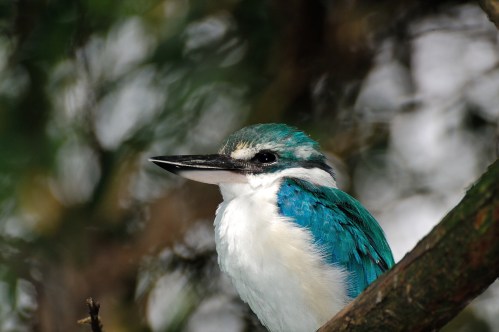
 White-collared Kingfisher by Dan's Pix

Collared Kingfisher by Dan’s Pix

As soon then as they were come to land, they saw a fire of coals there, and fish laid thereon, and bread. Jesus saith unto them, Bring of the fish which ye have now caught. Jesus saith unto them, Come and dine. And none of the disciples durst ask him, Who art thou? knowing that it was the Lord. (John 21:9-12 KJV)

We went on a trip last year and we stopped by the Jacksonville Zoo on the way. Dan recently posted his favorite photos of the zoo on his webpage, Dan’s Pix. I place my photos up on line right away, but he takes time to get them just right before they are posted. That is why his are so much better and the fact that he uses much better photography gear than I do.

I trust you will enjoy them.

Dan at Work at Jacksonville Zoo

Dan at Work at Jacksonville Zoo

Feel free to check out his other great photos – Dan’s Pix home page.

*

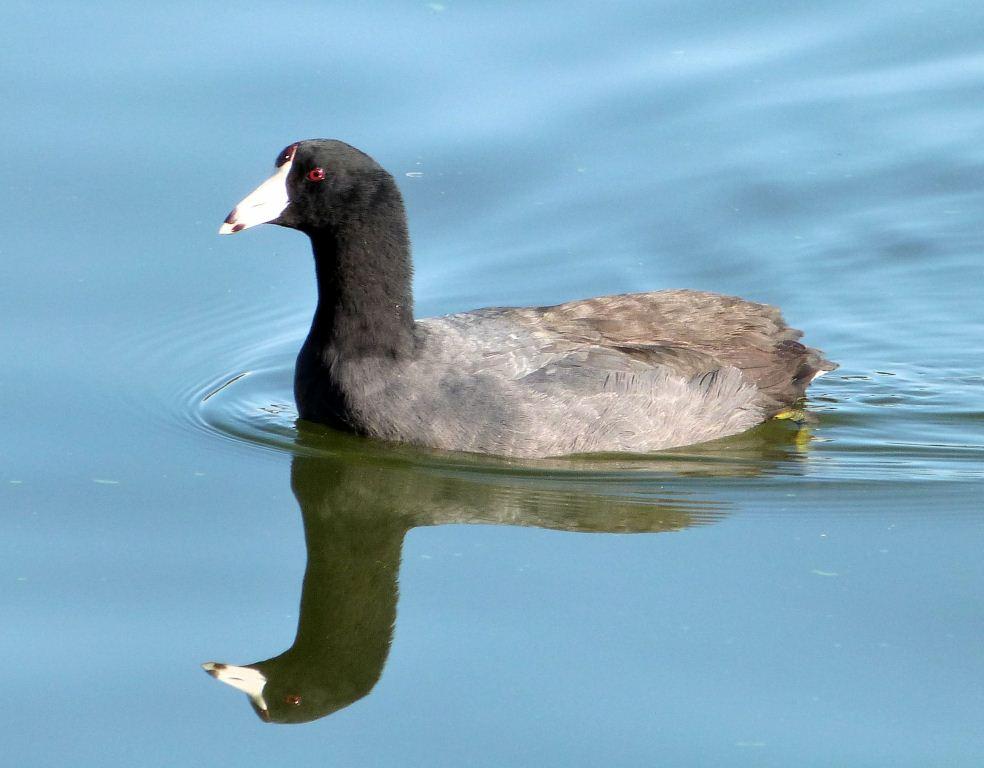
Birdwatching – American Coot

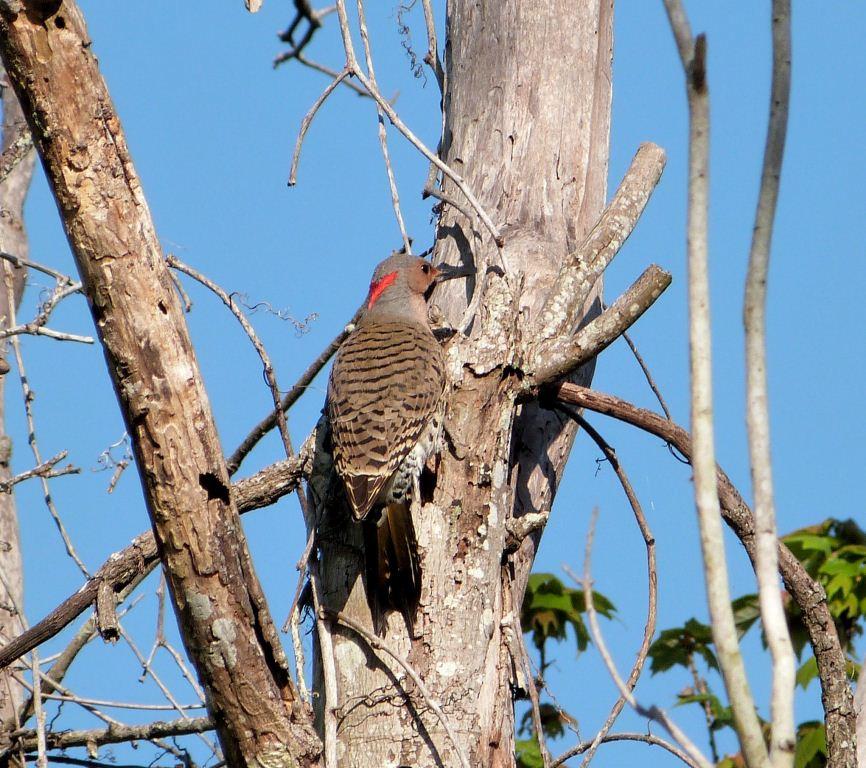
Northern Flicker cropped

Northern Flicker at S. Lake Howard by Lee

Dan and I went birdwatching last week at South Lake Howard Nature Park here in Winter Haven. We just stopped by on the way home from an errand. Captured a Northern Flicker with the camera, but the video is of the Coot’s feet. I have trying to get a photo of them because they are so different from other bird’s feet. Their feet are not webbed, but sort of flattened out. We only see them down here in the winter. See the Wikipedia information below. Apparently it helps them walk on the land, but it seems that a soft soil just under the water would be “squishy” and that may help their footing. Isn’t it neat how the Lord, in Him wisdom, provided for them in such a way.

O LORD, how manifold are your works! In wisdom have you made them all; the earth is full of your creatures. (Psalms 104:24 ESV)

The American Coot (Fulica americana) is a bird of the Rallidae – Rails, Crakes & Coots Family. Though commonly mistaken to be ducks, American Coots come from a distinct family. Unlike ducks, Coots have broad lobes of skin that fold back with each step in order to facilitate walking on dry land. They live near water, typically inhabiting wetlands and open water bodies in North America. Groups of these black-feathered, white-billed birds are called covers or rafts. The oldest known Coot lived to be 22 years old.

The American coot is a migratory bird that occupies most of North American. They live in the Southwestern United States, Mexico, and the pacific coast year round, and only occupy the northeastern regions during the summer breeding season. In the winter they can be found as far south as Panama. They generally build floating nests and lay 8-12 eggs per clutch. American coots eat primarily algae and other aquatic plants but they do eat animals (both vertebrates and invertebrates) when available.

Much research has been done on the breeding habits of American Coots. Studies have found that mothers will preferentially feed offspring with the brightest plume feathers, a characteristic known as chick ornaments. American coots are also susceptible to conspecific brood parasitism, and identify which offspring are theirs and which are from parasitic females.

The American Coot measures 13–17 in (34–43 cm) in length and 23–28 in (58–71 cm) across the wings. Adults have a short thick white bill and white frontal shield, which usually has a reddish-brown spot near the top of the bill between the eyes. Males and females look alike, but females are smaller. Juvenile birds have olive-brown crowns and a gray body. They become adult-colored around 4 months of age

The American Coot has a variety of repeated calls and sounds. Male and female Coots make different types of calls to similar situations. Male alarm calls are “puhlk” while female alarm calls are “poonk”. Also, stressed males go “puhk-cowah” or “pow-ur” while females call “cooah”

See the Sounds page of All About Birds for the American Coot.

American Coots are found near water—reed-ringed lakes and ponds, open marshes, and sluggish rivers. They prefer freshwater environments, but may temporarily live in saltwater environments during the winter months.

The American Coot’s breeding habitat extends from marshes in southern Quebec to the Pacific coast of North America and as far south as northern South America. Birds from temperate North America east of the Rocky Mountains migrate to the southern United States and southern British Columbia. It is often a year-round resident where water remains open in winter. The number of birds that stay year-round near the northern limit of the species’ range seems to be increasing.

Autumn migration occurs from August to December, with males and non-breeders moving south before the females and juveniles. Spring migration to breeding ranges occurs from large February to mid-May, with males and older birds moving North first. There has been evidence of birds travelling as far north as Greenland and Iceland. It is a rare but regular vagrant to Europe. The American Coot is a highly gregarious species, particularly in the winter, when its flocks can number in the thousands. The picture below is just of one group of hundreds at Viera Wetlands that day (2012)
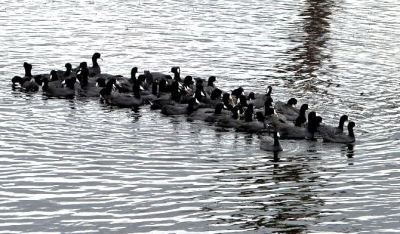
American Coot (Fulica americana) at Viera Wetlands by Lee

American Coot (Fulica americana) at Viera Wetlands by Lee

The American Coot can dive for food but can also forage and scavenge on land. It is omnivorous, eating plant material, arthropods, fish, and other aquatic animals. Its principal source of food is aquatic vegetation, especially algae. During breeding season, Coots are more likely to eat aquatic insects and mollusks—which constitute the majority of a chick’s diet.

The American Coot is a prolific builder and will create multiple structures during a single breeding season. It nests in well-concealed locations in tall reeds. There are three general types of structures: display platforms, egg nests and brood nests. Egg nests are typically 12 inches in diameter with a 12-15 inch ramp that allows the parents to enter and exit without tearing the sides of the nests. Coots will often build multiple egg nests before selecting one to lay their eggs in. Brood nests are nests that are either newly constructed or have simply been converted from old egg nests after the eggs hatch. They are simply larger egg nests. Egg and brood nests are actually elaborate rafts, and must be constantly added to in order to stay afloat. Females typically do the most work while building.

Females deposit one egg a day until the clutch is complete. Eggs are usually deposited between sunset and midnight. Typically, early season and first clutches average two more eggs than second nesting and late season clutches. Early season nests see an average of 9.0 eggs per clutch while late clutches see an average of 6.4 eggs per clutch. There is an inverse relationship between egg weights and laying sequence, wherein earlier eggs are larger than eggs laid later in the sequence. It is possible to induce a female Coot to lay more eggs than normal by either removing all or part of her clutch. Sometimes, a female may abandon the clutch if enough eggs are removed. Coots, however, do not respond to experimental addition of eggs by laying fewer eggs.

Incubation start time in the American Coot is variable, and can begin anywhere from the deposition of the first egg to after the clutch is fully deposited. Starting incubation before the entire clutch has been laid is an uncommon practice among birds. Once incubation starts it continues without interruption. Male and female Coots share incubation responsibility, but males do most of the work during the 21-day incubation period. Females will begin to re-nest clutches in an average of six days if clutches are destroyed during incubation.

Hatch order usually follows the same sequence as laying order. Regardless of clutch size, eight is the typical maximum size of a brood. Egg desertion is a frequent occurrence among Coots because females will often deposit more than eight eggs. Brood size limits incubation time, and when a certain number of chicks have hatched the remaining eggs are abandoned. The mechanism for egg abandonment has not yet been discovered. Food resource constraints may limit the number of eggs parents let hatch, or the remaining eggs may not provide enough visual or tactile stimulation to elicit incubation behavior. An American Coot can be forced to hatch more eggs than are normally laid. These additional offspring, however, suffer higher mortality rates due to inadequacy in brooding or feeding ability.
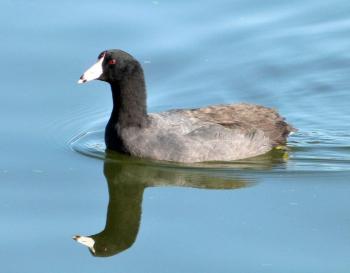
American Coot (Fulica americana) by Lee at Lk Morton

American Coot (Fulica americana) by Lee at Lk Morton

The American Coot, unlike other parasitized species, has the ability to recognize and reject conspecific parasitic chicks from their brood. Parents aggressively reject parasite chicks by pecking them vigorously, drowning them, preventing them from entering the nest, etc. They learn to recognize their own chicks by imprinting on cues from the first chick that hatches. The first-hatched chick is a reference to which parents discriminate between later-hatched chicks. Chicks that do not match the imprinted cues are then recognized as parasite chicks and are rejected.

Chick recognition reduces the costs associated with parasitism, and Coots are one of only three bird species in which this behavior has been observed. This is because hatching order is predictable in parasitized Coots—host eggs will reliably hatch before parasite eggs. In other species where hatching order is not as reliable, there is a risk of misimprinting on a parasite chick first and then rejecting their own chicks. In these species, the cost of accidentally misimprinting is greater than the benefits of rejecting parasite chicks.

The first evidence for parental selection of exaggerated, ornamental traits in offspring was found in American Coots. Black American Coot chicks have conspicuously orange-tipped ornamental plumes covering the front half of their body that are known as “chick ornaments” that eventually get bleached out after six days. This brightly colored, exaggerated trait makes Coot chicks more susceptible to predation and does not aid in thermoregulation, but remains selected for by parental choice. These plumes are not necessary for chick viability, but increased chick ornamentation increases the likelihood that a chick will be chosen as a favorite by the parents. Experimental manipulation of chick ornamentation by clipping the bright plumes have shown that parents show clear preferences for ornamented chicks over non-ornamented ones.

The American Coot is fairly aggressive in defense of its eggs and, in combination with their protected nesting habitat, undoubtedly helps reduce losses of eggs and young to all but the most determined and effective predators. American Crows, Black-billed Magpies and Forster’s Tern can sometime take eggs. Mammalian predators (including red foxes, coyotes, skunks and raccoons) are even less likely to predate coot nests, though nests are regularly destroyed in usurpation by muskrats. Conversely, the bold behavior of immature and adult coots leads to them falling prey with relative regularity once out of the breeding season. Regular, non-nesting-season predators include Great Horned Owls, Northern Harriers, Bald Eagles, Golden Eagles, American alligators, bobcats, Great Black-backed and California Gulls. In fact, Coots may locally comprise more than 80% of the Bald Eagle diet.

In culture – On the Louisiana coast, the Cajun word for coot is pouldeau, from French for “coot”, poule d’eau – literally “water hen”. Coot can be used for cooking; it is somewhat popular in Cajun cuisine, for instance as an ingredient for gumbos cooked at home by duck hunters.

(From Wikipedia and All About Birds with editing)

See also:

Birdwatching Trips

Rallidae – Rails, Crakes & Coots Family

American Coot – What Bird

American Coot – All About Birds

American Coot – Wikipedia

Birds of the World

*
Birdwatching Behavior – Illustration

American Robin (Turdus migratorius) eating by Jim Fenton

American Robin (Turdus migratorius) eating by Jim Fenton

“A few years ago my mom began feeding the birds on a regular basis in our backyard. At first, some of the birds were greedy. They weren’t sure if there would be enough food to go around. The starlings were especially mean, which doesn’t surprise anyone familiar with birds. They would attack the robins, cardinals, and sparrows that came to get a taste. This situation continued for several months until one day there was a noticeable change in the bird’s behavior.

After years of regular feeding from the unlimited supply, the birds appeared to be less greedy with the food. Now they were feeding at their leisure—realizing there would be more food when their current supply was finished. Then, last month, something even more remarkable happened. After all these months of hording, greed, and then cautiously enjoying, the birds began to demonstrate a nobler characteristic. They began calling for one another at mealtime.

Today, when the seed is spread for the birds, one will call for the others to share what they’ve discovered. The greed is less frequent. The jealous pecking is rare. The trees seem fuller these days with the joy of satisfaction from birds that have learned to share. The music of multiple species fills the air. Now they know the supply is unlimited. And as far as their appetite is concerned, it’s inexhaustible.

Just this morning, I noticed a sparrow feeding right beside a starling. Miracles never cease.

Why can’t this happen in the church?

God’s grace is inexhaustible and we ought to be calling other sinners to the fount where we’ve found refreshment and renewal.”

Charles K. Grant (An Illustration from SermonCentral.com)

All the earth will worship You, And will sing praises to You; They will sing praises to Your name.” Selah. Come and see the works of God, Who is awesome in His deeds toward the sons of men. (Psalms 66:4-5 NASB)

*

Bible Birds – Cranes I

Sarus Crane (Grus antigone) by Lee at Wings of Asia

Sarus Crane (Grus antigone) by Lee at Wings of Asia

The 15 species of Cranes worldwide are: Black Crowned, Black-necked, Brolga, Demoiselle, Eurasian, Grey Crowned, Hooded, Red-Crowned, Sandhill, Sarus(tallest flying bird-6’ tall), Siberian, Wattled, White-naped, and the Whooping Crane (tallest N. American flying bird-5’ tall). The Cranes belong to the Gruidae – Cranes Family.

Cranes are tall birds from 3 to 6 feet tall, with wingspans over 6 feet. The tallest Crane is the Sarus and the shortest is the Demoiselle. They fly with their neck straight out and their long legs trailing. They chatter and call when flying. We have plenty of Sandhill Cranes here in Central Florida walking around the neighborhoods. They seem pretty tame sometimes and will eat out of your hand. They were bringing a small flock of Whooping Cranes to Florida every fall that followed an Ultra Light Aircraft from Wisconsin. We have a few non-migratory Whooping Cranes in the area that I have seen in a cow field off US 27.

Sandhill Cranes and Babies in yard

Sandhill Cranes and Babies in yard

There are only two verses in the Bible that mention the Crane.

Cranes migrate by following known paths taught them by their parents, or substitutes. Migrating birds know when and where to go and when to come. When God created them, He put that information in them.

Like a crane or a swallow, so did I chatter: I did mourn as a dove: mine eyes fail with looking upward: O LORD, I am oppressed; undertake for me. (Isaiah 38:14 KJV)

“So did I chatter – … The idea here is doubtless that of pain that was expressed in sounds resembling that made by birds – a broken, unmeaning unintelligible sighing; or quick breathing, and moaning. ” Barnes Commentary

Yea, the stork in the heaven knoweth her appointed times; and the turtle and the crane and the swallow observe the time of their coming; but my people know not the judgment of the LORD. (Jeremiah 8:7 KJV)

“The instinct of the migratory birds leads them with unfailing regularity to return every spring from their winter abodes in summer climes (Song of Solomon 2:12); but God’s people will not return to Him even when the winter of His wrath is past, and He invites them back to the spring of His favor.” Jameison, Faussett, and Brown Commentary

As you watch the following video notice that the two Bible verses are being demonstrated. Notice the chattering as they fly about and also that they are heading out for their migration to warmer climates. Migration means travel to another area. Usually here in America, the birds go south in the winter and then return north in the spring as it warms back up. This is God’s way of protecting birds that cannot survive in the cold.

Sandhill Cranes(grey) at the Plate River and some Whooping Cranes (white)

See:

On Our Main Site See:

*

Birds of the Bible – The Common Ostrich


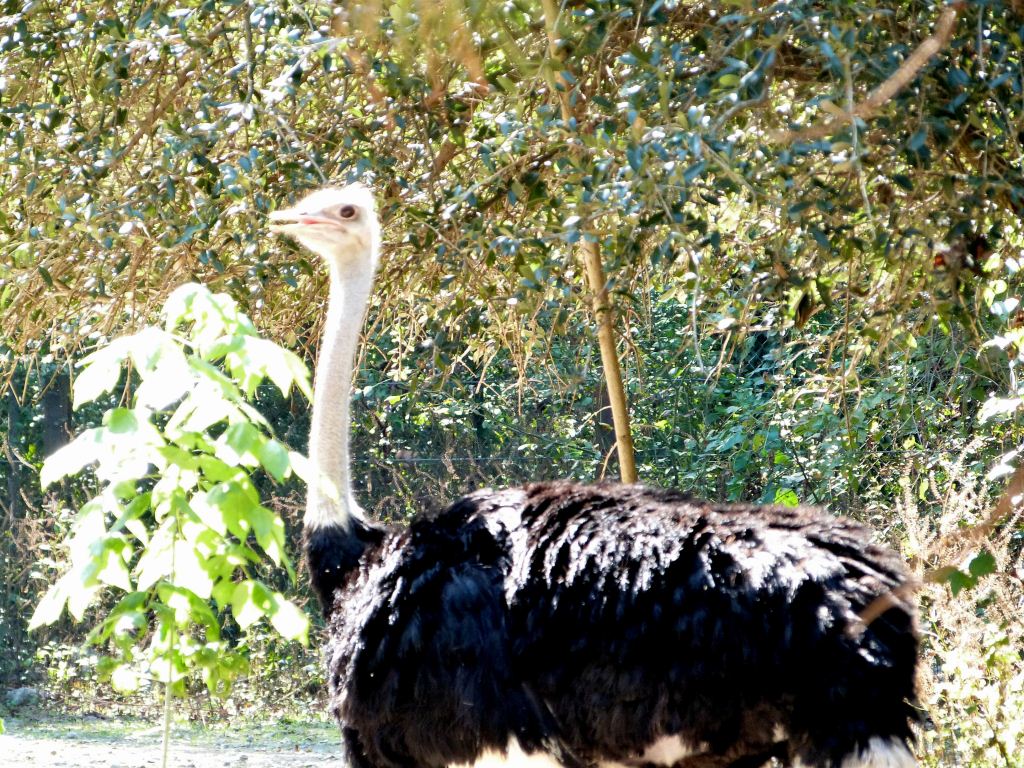
Common Ostrich (Struthio camelus) at Riverbanks Zoo SC by Lee

Common Ostrich (Struthio camelus) at Riverbanks Zoo SC by Lee

Dan and I just recently were on vacation and stopped by the Riverbanks Zoo and Gardens in Columbia, SC. I have see Ostriches before, but it has been awhile. We see the Emus at Zoo Tampa often, but they are not nearly as tall as the Ostrich. I had forgotten that the Lord had created such a huge bird.

The wings of the ostrich wave proudly, But are her wings and pinions like the kindly stork’s? For she leaves her eggs on the ground, And warms them in the dust; She forgets that a foot may crush them, Or that a wild beast may break them. She treats her young harshly, as though they were not hers; Her labor is in vain, without concern, Because God deprived her of wisdom, And did not endow her with understanding. When she lifts herself on high, She scorns the horse and its rider. (Job 39:13-18 NKJV)

The Ostrich does belong to the Struthionidae Family. Currently there are two; the Common Ostrich (Struthio camelus) and the Somali Ostrich (Struthio molybdophanes). The one we saw was the Common. The Ostrich is the largest bird in the world! They are omnivorous flightless birds but make up for their inability to fly with the powerful legs they possess. These birds were built for speed. That is why the reference to the horse and rider. Ostriches can give a horse competition for at least a burst of speed.

Common Ostrich (Struthio camelus) Foot at Riverbanks Zoo SC by Lee

Common Ostrich (Struthio camelus) Foot back at Riverbanks Zoo SC by Lee

“Ostriches usually weigh from 140–320 lb (63 to 145 kilograms), Ostriches of the East African race (S. c. massaicus) averaged 250 lb (115 kg) in males and 220 lb (100 kg) in females, while the nominate subspecies was found to average 240 lb (111 kg) in unsexed adults. At sexual maturity (two to four years), male ostriches can be from 6 ft 11 in to 9 ft 2 in (2.1 to 2.8 m) in height, while female ostriches range from 5 ft 7 in to 6 ft 7 in (1.7 to 2 m) tall. New chicks are fawn with dark brown spots. During the first year of life, chicks grow about 10 in (25 cm) per month. At one year of age, ostriches weigh around 100 lb (45 kilograms). Their lifespan is up to 40 or 45 years.” (Wikipedia with editing)

Common Ostrich (Struthio camelus) Foot at Riverbanks Zoo SC by Lee

Common Ostrich (Struthio camelus) Foot front at Riverbanks Zoo SC by Lee

I am not sure how tall these were, but they had to be close to 8 feet. As I was observing them, I was trying to remember all that the verses said about them. That is one reason I took pictures of their feet. I knew that their feet and legs helped  them run, but also that those same feet were a danger to their young ones. They do have big feet and with an interesting shape as you can see from the photos.

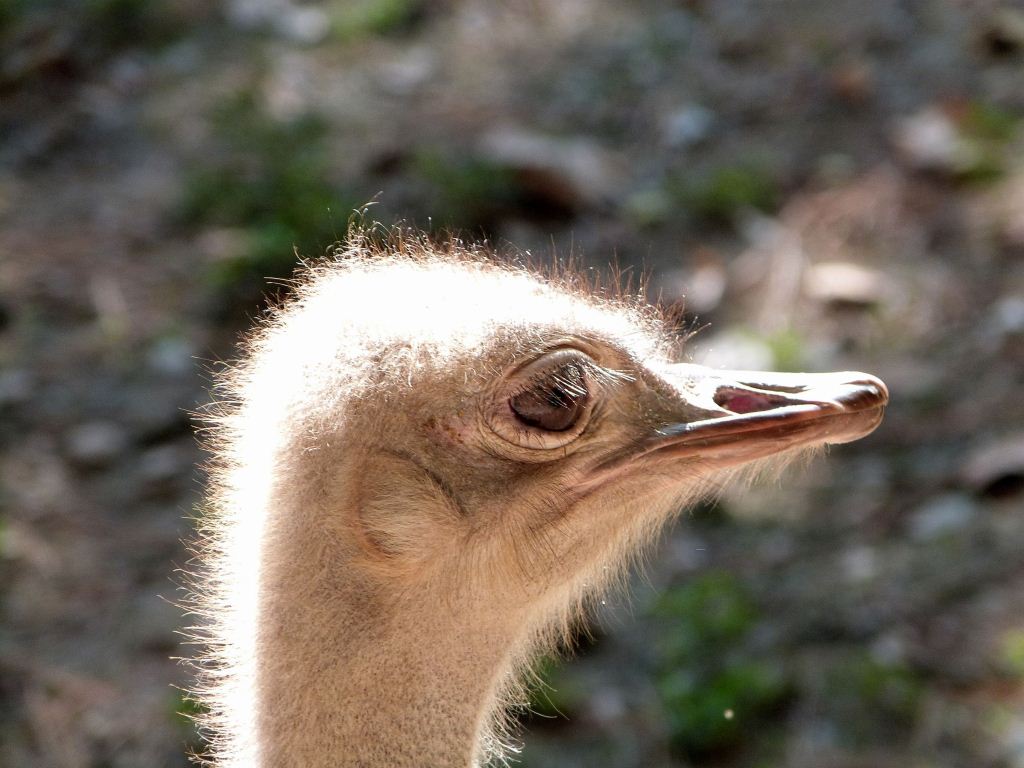
If you notice the size of their head to their body, maybe that is how the Lord “did not endow her with understanding.” The head is interesting though because they are one of the few birds that have eyelashes. They have acute eyesight and hearing, the long neck and legs keep their head up to 9 ft (2.8 m) above the ground, and their eyes are said to be the largest of any land vertebrate – 2.0 in (50 mm) in diameter; they can therefore perceive predators at a great distance. The eyes are shaded from sun light falling from above. However, the head and bill are relatively small for the birds’ huge size”

Common Ostrich (Struthio camelus) Head at Riverbanks Zoo SC by Lee

Common Ostrich (Struthio camelus) Head at Riverbanks Zoo SC by Lee

Oh, sing to the LORD a new song! Sing to the LORD, all the earth. Sing to the LORD, bless His name; Proclaim the good news of His salvation from day to day. Declare His glory among the nations, His wonders among all peoples. For the LORD is great and greatly to be praised; He is to be feared above all gods. (Psalms 96:1-4 NKJV)

Links:

Birds of the Bible – Ostrich

Bible Birds – Ostrich

Struthionidae – Ostriches

Ostrich – Creation Wiki

Ostrich – Wikipedia

Ostrich – The Largest Bird with the Biggest Eyes

*

Bible Birds – Sparrows I

Russet Sparrow (Passer rutilans) by Nikhil Devasar

Russet Sparrow (Passer rutilans) by Nikhil Devasar

In the Bible, the Sparrows are mentioned in 7 verses. Check out these from the NKJV:

Even the sparrow has found a home, And the swallow a nest for herself, Where she may lay her young— Even Your altars, O LORD of hosts, My King and my God. (Psalms 84:3 NKJV)

I lie awake, And am like a sparrow alone on the housetop. (Psalms 102:7 NKJV)

Like a flitting sparrow, like a flying swallow, So a curse without cause shall not alight. (Proverbs 26:2 NKJV)

Are not two sparrows sold for a copper coin? And not one of them falls to the ground apart from your Father’s will. (Matthew 10:29 NKJV)

Do not fear therefore; you are of more value than many sparrows. (Matthew 10:31 NKJV)

Are not five sparrows sold for two copper coins? And not one of them is forgotten before God. (Luke 12:6 NKJV)

But the very hairs of your head are all numbered. Do not fear therefore; you are of more value than many sparrows. (Luke 12:7 NKJV)

Sparrows are not always thought of very highly. Many people think they are just “little brown birds” and are of no use. But is that what the Scriptures says in those verses? No.

What can you learn from those verses?

The sparrow has found a ____________

The sparrow is found on the __________________

How does the sparrow fly? (see Proverbs 26:2) _______________

Who is aware of or allows a sparrow to fall to the ground? ______________

Are sparrows forgotten by God? ______________

How many sparrows were sold for one copper coin? ________

For two copper coins? ___________

Who is more valuable, you or a sparrow? _____________

We will talk more about Sparrows in the next Bible Birds – Sparrows II. For now, here are a few pictures of different Sparrows around the world.

This slideshow requires JavaScript.

*

Bible Birds – Sparrows

Wordless Birds

*

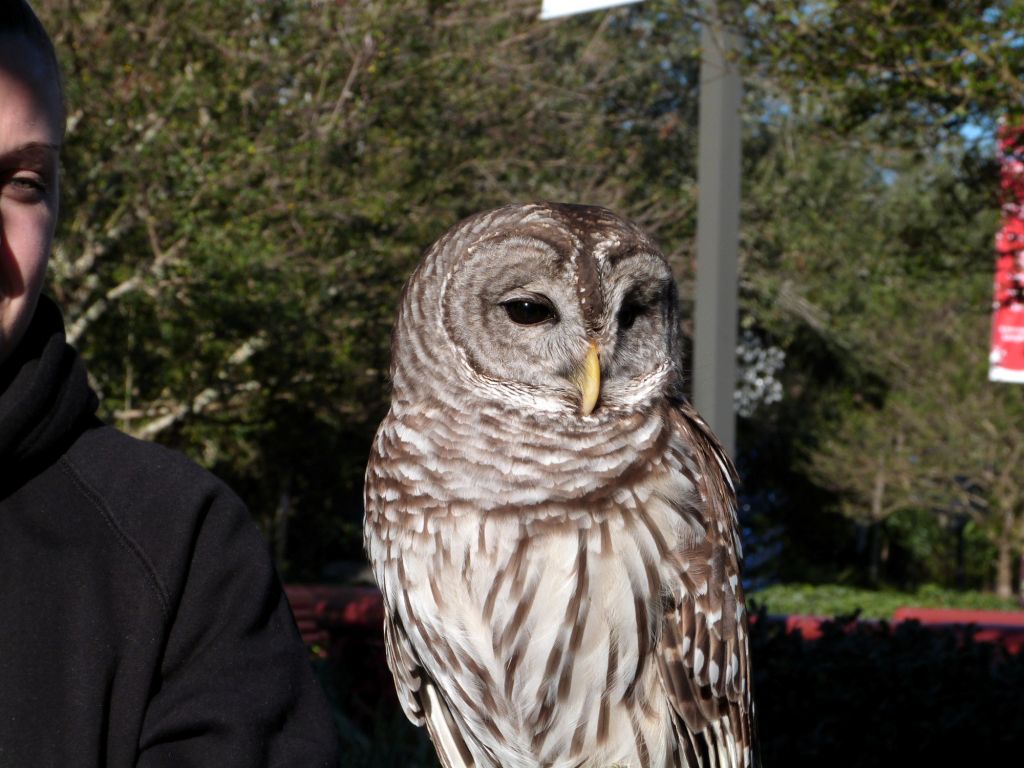
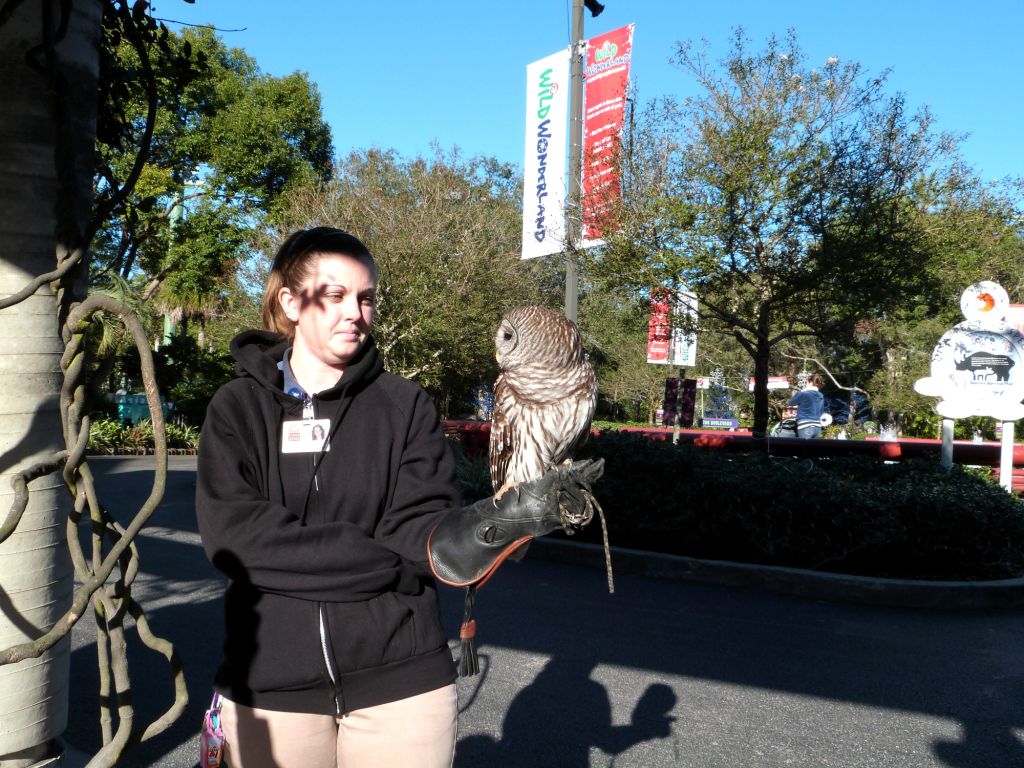
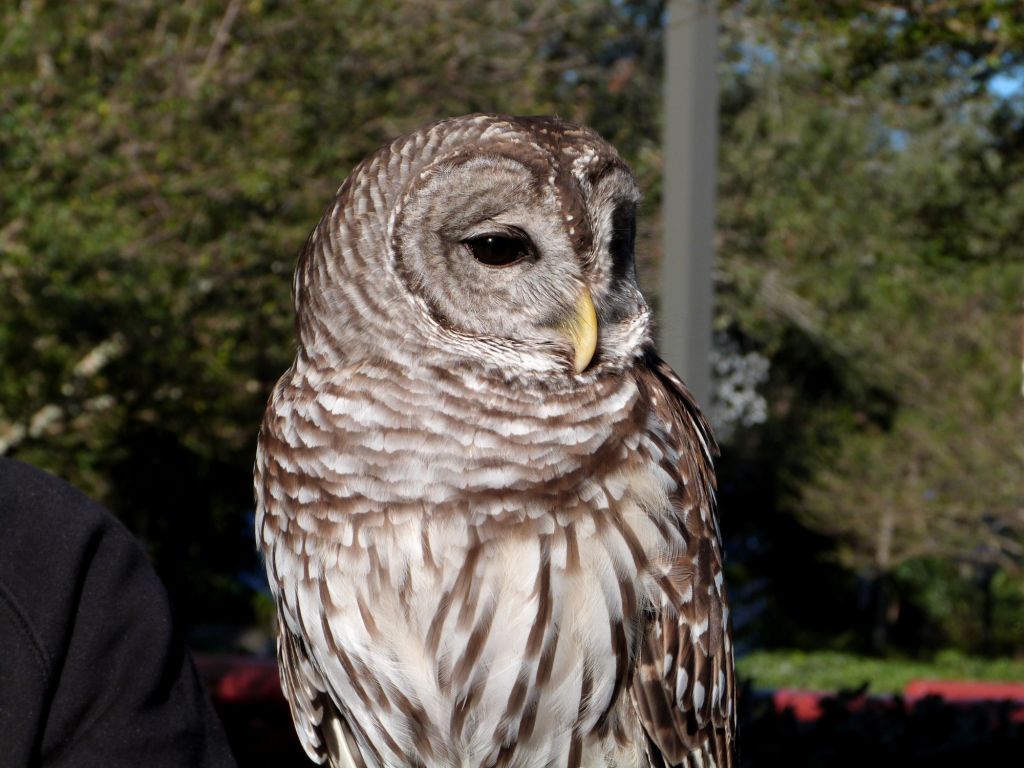
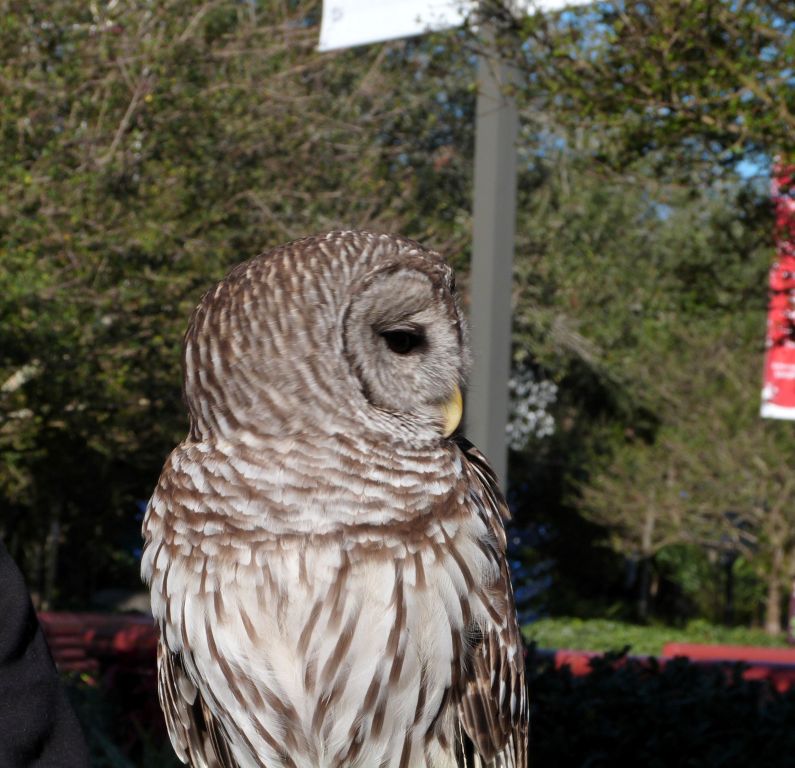
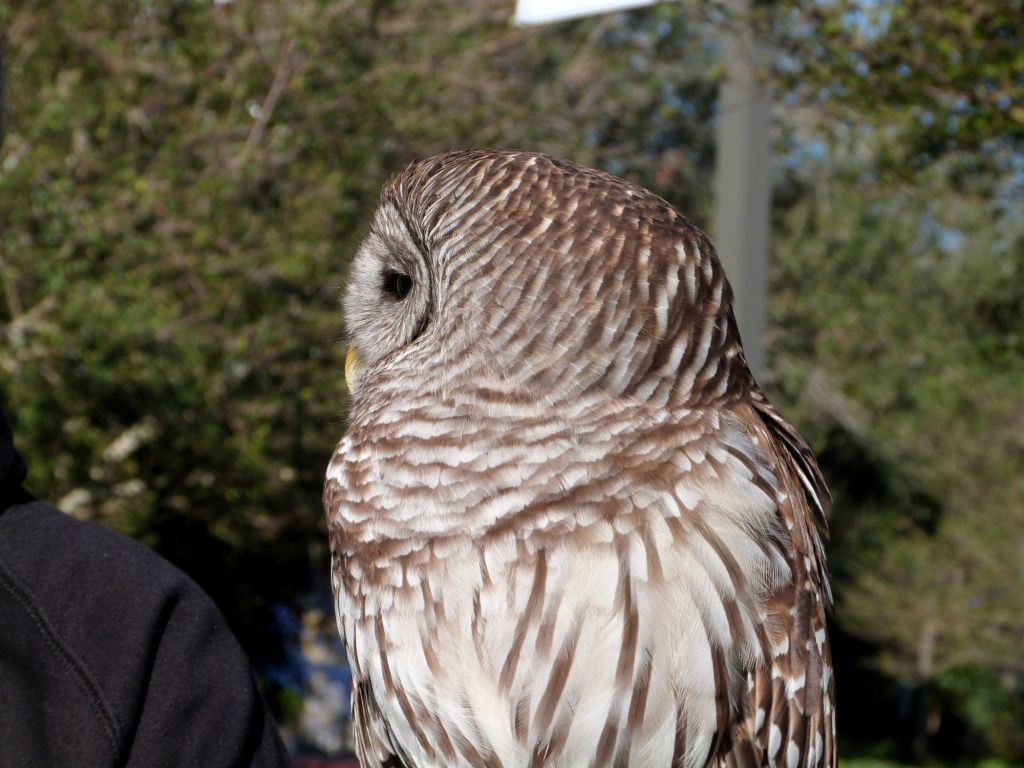
Barred Owl at Lowry Park Zoo Today

Northern Barred Owl (Strix varia) LPZ by Dan 2014

Northern Barred Owl (Strix varia) LPZ by Dan 2014

Northern Barred Owl (Strix varia) LPZ by Lee

Northern Barred Owl (Strix varia) LPZ by Lee

And thorns shall come up in her palaces, nettles and brambles in the fortresses thereof: and it shall be an habitation of dragons, and a court for owls. (Isaiah 34:13 KJV)

Dan and I went over to the Lowry Park Zoo/Zoo Tampa in Tampa again today. I was wanting to check out my Christmas present of a new camera. Enjoying learning to use it and retaking a lot of photos of birds to compare the old ones with the new ones on this camera. (It is still a point-and-shoot, but it has an improved “program mode.” Dan is our good photographer.)

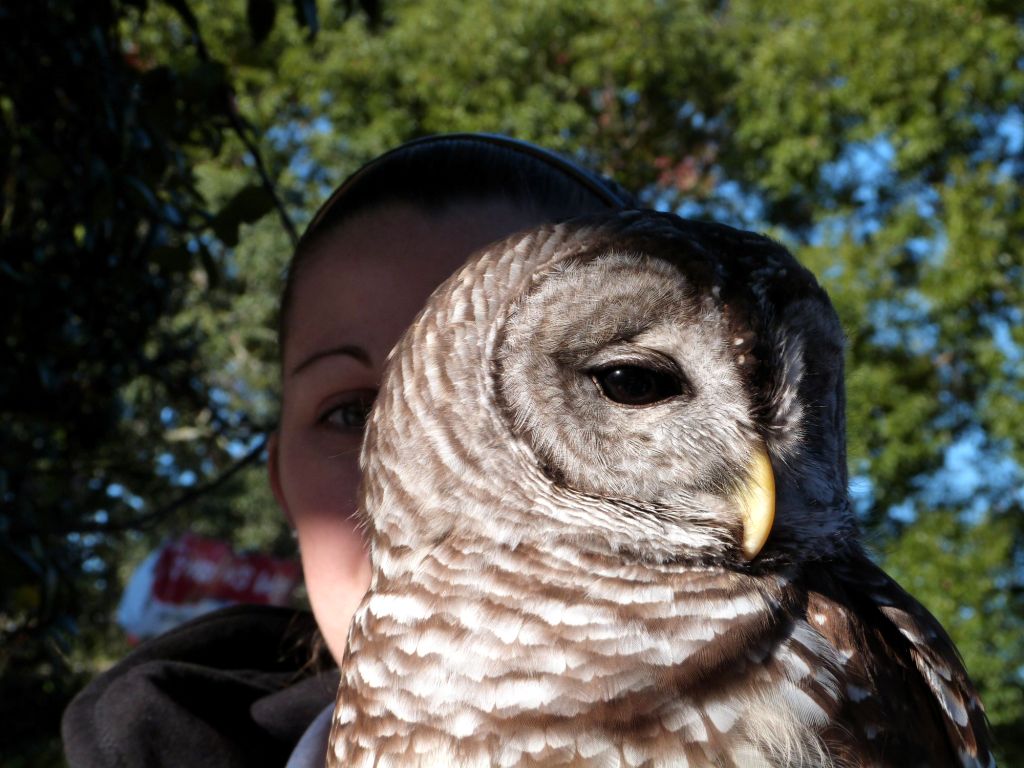
But when we entered the zoo, we were met by one of the zookeepers holding a beautiful Barred Owl. We had not encountered this Owl in our previous trips. While sharing some of the photos, I thought you might like to learn a little about them.

Northern Barred Owl (Strix varia) LPZ by Lee

Northern Barred Owl (Strix varia) LPZ by Lee

Facts from the U.S. Geological Service

Identification Tips:

  • Length: 17 inches Wingspan: 44 inches
  • Sexes similar
  • Rather large owl
  • Dark eyes and yellow bill
  • Back brown, mottled with pale spots and dark bars
  • Underparts pale with long, brown streaks
  • Chest pale with brown barring
  • Face pale with dark concentric rings surrounding eye

Similar species:

The Spotted Owl is most similar, but can be separated with attention to its barred, not streaked, underpart coloration. Short-eared Owl is similar in size, but is not barred on the chest nor is as heavily streaked below, does not share the concentric rings in the facial disks, has yellow eyes and a dark bill, and is found in quite different habitat. Great Gray Owl is superficially similar, but much larger, gray rather than brown below, and has differently patterned underparts.”

Northern Barred Owl (Strix varia) LPZ by Lee

Northern Barred Owl (Strix varia) LPZ by Lee

“The Barred Owl (Strix varia) is a large typical owl native to North America. It goes by many other names, including Eight Hooter, Rain Owl, Wood Owl, and Striped Owl, but is probably best known as the Hoot Owl based on its call.

The usual call is a series of eight accented hoots ending in oo-aw, with a downward pitch at the end. The most common mnemonic device for remembering the call is “Who cooks for you, who cooks for you all.” It is noisy in most seasons. When agitated, this species will make a buzzy, rasping hiss. While calls are most common at night, the birds do call during the day as well.” (Wikipedia)

(From xeno-canto.org)

Northern Barred Owl (Strix varia) LPZ by Lee

Northern Barred Owl (Strix varia) LPZoo by Lee

Looking the other way. No, they cannot turn their heads all the way around. Notice also that this owl does not have ear tufts like some owls.

Northern Barred Owl (Strix varia) LPZ by Lee - Side of head

Northern Barred Owl (Strix varia) LPZ by Lee – Side of head

“Breeding habitats are dense woods across Canada, the eastern United States, and south to Mexico; in recent years it has spread to the western United States. Recent studies show suburban neighborhoods can be ideal habitat for barred owls. Using transmitters, scientists found that populations increased faster in the suburban settings than in old growth forest. The main danger to owls in suburban settings is from cars. The increased offspring offset the death rate due to impacts from cars and disease.”

The Barred Owl’s nest is often in a tree cavity, often ones created by pileated woodpeckers; it may also take over an old nesting site made previously by a red-shouldered hawk, cooper’s hawk, crow, or squirrel. It is a permanent resident, but may wander after the nesting season. If a nest site has proved suitable in the past they will often reuse it as the birds are non-migratory. In the United States, eggs are laid from early-January in southern Florida to mid-April in northern Maine, and consist of 2 to 4 eggs per clutch. Eggs are brooded by the female with hatching taking place approximately 4 weeks later. Young owls fledge four to five weeks after hatching. These owls have few predators, but young, unwary owls may be taken by cats. The most significant predator of Barred Owls is the Great Horned Owl. The Barred Owl has been known to live up to 10 years in the wild and 23 years in captivity.” (Wikipedia)

Northern Barred Owl (Strix varia) LPZ by Lee

Northern Barred Owl (Strix varia) LPZ by Lee

“Owl” is mentioned 8 times in the King James Bible and “Owls” is mentioned 6 times. So that makes our friend here a “Bird of the Bible” and of course a “Bird of the World.” Owls are another of the Lord’s great creations.

It was a great birdwatching day at the Zoo. Cool, but the sun was bright and no clouds. I had some other great finds today, but will save them for later.

References to check out:

*