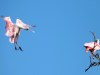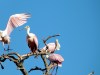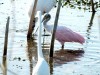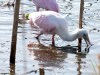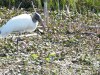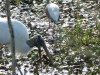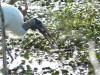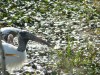
Strutting Greater Flamingos at the Zoo

Greater Flamingo (Phoenicopterus roseus) at Cincinnati Zoo by Dan First walk

Greater Flamingo (Phoenicopterus roseus) at Cincinnati Zoo by Dan – First walk

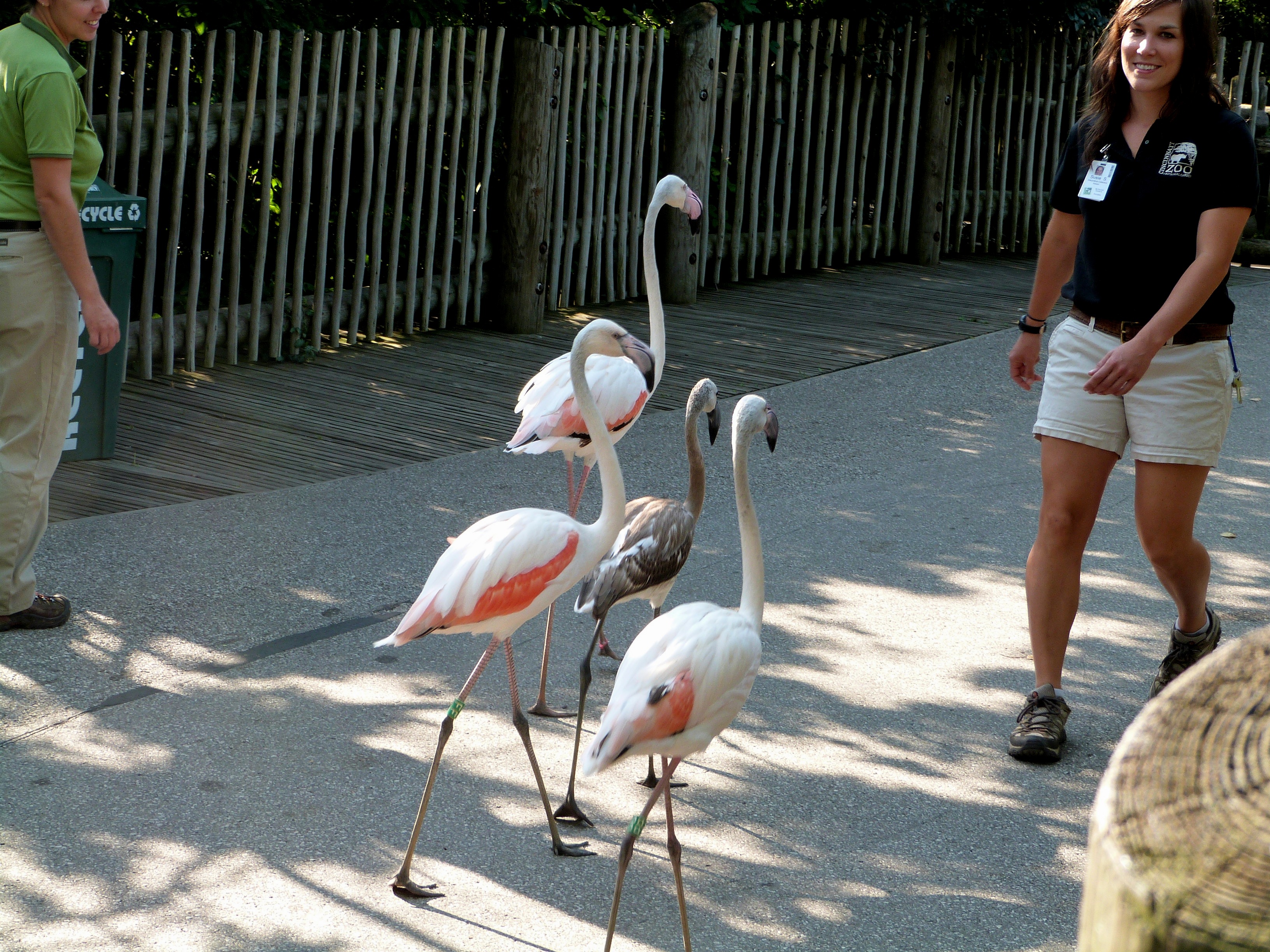
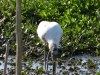
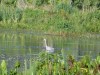
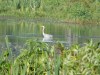
The Cincinnati Zoo has the Greater Flamingo (Phoenicopterus roseus) species, another beautiful creation from God, that they take for a walk. They walked past us twice so close you could touch them, which we didn’t.

It was really neat to watch them just strolling along as if you were walking your dogs or whatever. The Bible says:

For every kind of beast and bird, of reptile and creature of the sea, is tamed and has been tamed by mankind. (James 3:7 NKJV)

Well, the strolls were definitely an indication that these Greater Flamingos were in control of their trainers.

Greater Flamingo (Phoenicopterus roseus) at Cincinnati Zoo by Lee

Greater Flamingo (Phoenicopterus roseus) at Cincinnati Zoo by Lee

The Greater Flamingo (Phoenicopterus roseus) is the most widespread species of the flamingo family. They belong to the Phoenicopteridae – Flamingos Family. It is found in parts of Africa, southern Asia (coastal regions of Pakistan and India), and southern Europe (including Spain, Albania, Turkey, Greece, Cyprus, Portugal, Italy and the Camargue region of France). Some populations are short distance migrants, and sightings north of the breeding range are relatively frequent; however, given the species’ popularity in captivity, whether or not these are truly wild individuals is a matter of some debate.

This is the largest species of flamingo, averaging 43–60 in (110–150 cm) tall and weighing 4.4–8.8 lbs (2–4 kg). The largest male flamingos have been recorded at up to 74 in (187 cm) tall and 10 lbs (4.5 kg).[2] It is closely related to the American Flamingo and Chilean Flamingo.

Greater Flamingo (Phoenicopterus roseus) at Cincinnati Zoo by Lee

Greater Flamingo (Phoenicopterus roseus) at Cincinnati Zoo by Lee

Like all flamingos, this species lays a single chalky-white egg on a mud mound. Most of the plumage is pinkish-white, but the wing coverts are red and the primary and secondary flight feathers are black. The bill is pink with a restricted black tip, and the legs are entirely pink. The call is a goose-like honking. Sub-adult flamingos are whitish-grey and only attain the pink coloration several years into their adult life.

The bird resides in mudflats and shallow coastal lagoons with salt water. Using its feet, the bird stirs up the mud, then sucks water through its bill and filters out small shrimp, seeds, blue-green algae, microscopic organisms and mollusks. The Greater Flamingo feeds with its head down and its upper jaw is movable and not rigidly fixed to its skull.

Greater Flamingo (Phoenicopterus roseus) Juvenile at Cincinnati Zoo by Lee

Greater Flamingo (Phoenicopterus roseus) Juvenile at Cincinnati Zoo by Lee

The average lifespan in captivity, according to Zoo Basel, is over 60 years.

The oldest known Greater Flamingo, a resident of the Adelaide Zoo in Australia, is at least 77 years old. The bird’s exact age is not known; however, he was already a mature adult when he arrived in Adelaide in 1933, and he was still there as of 2011.

Here is a short video of them walking through the Cincinnati Zoo.

(Wikipedia with editing)

This slideshow requires JavaScript.

*

See:

*

Birdwatching at the Cincinnati Zoo II

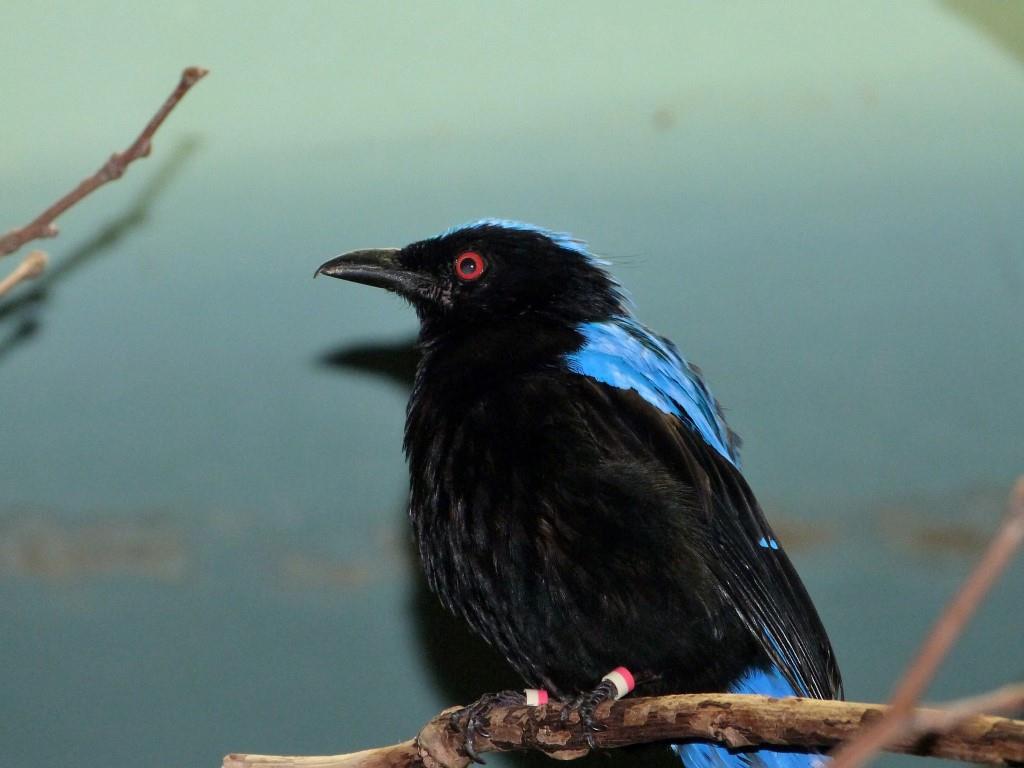
Asian Fairy-bluebird (Irena puella) at Cincinnati Zoo by Lee

Asian Fairy-bluebird (Irena puella) at Cincinnati Zoo by Lee

Declare His glory among the nations, His wonders among all peoples. (Psalms 96:3 NKJV)

In Birdwatching at the Cincinnati Zoo I, you were introduced to the outside of the Wings of the World exhibit where the different birds are presented according to their habitats. Birds of the Bible – The Bat Revisited was about the two species of Bats at the Zoo. Today, I like to introduce two more species that the Lord created. The Asian Fairy-bluebird and the Blue-crowned Laughingthrush which were sharing the same aviary and the same tree.

The Asian Fairy-bluebird (Irena puella) is a medium-sized, arboreal passerine bird. They are members of the Irenidae – Fairy-bluebirds Family.

This fairy-bluebird is found in forests across tropical southern Asia from the Himalayan foothills, India and Sri Lanka east through Indochina, the Greater Sundas and Palawan (Philippines). Two or three eggs are laid in a small cup nest in a tree. The only other member of the genus and family is the Philippine Fairy-bluebird, I. cyanogastra, which replaces the Asian Fairy-bluebird in most of the Philippines.

Asian Fairy-bluebird (Irena puella) at Cincinnati Zoo by Lee

Asian Fairy-bluebird (Irena puella) at Cincinnati Zoo by Lee

The male has glossy, iridescent blue upperparts, and black underparts and flight feathers. The female and first year male are entirely dull blue-green.

The Asian Fairy Bluebird eats fruit, nectar and some insects. Its call is a liquid two note glue-it.

The name of this bird commemorates the French missionary Frédéric Courtois.

*

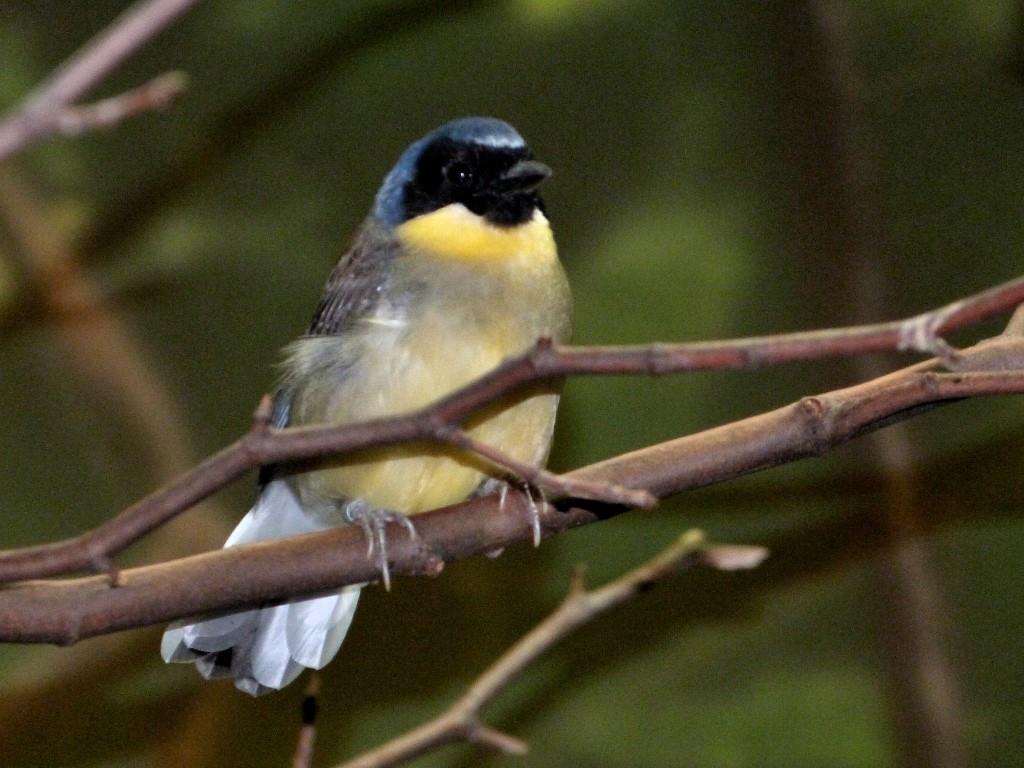
Blue-crowned Laughingthrush (Garrulax courtoisi) at Cincinnati Zoo by Lee

Blue-crowned Laughingthrush (Garrulax courtoisi) at Cincinnati Zoo by Lee

He will yet fill your mouth with laughter And your lips with shouting. (Job 8:21 NASB)

The other bird keeping him company is a Blue-crowned Laughingthrush. The Blue-crowned Laughingthrush or Courtois’s Laughingbird (Garrulax courtoisi) is a Chinese species of bird in the Leiothrichidae – Laughingthrushes Family. Until recently, this critically endangered species was generally treated as a subspecies of the Yellow-throated Laughingthrush, but that species has a pale grey (not bluish) crown.

It feeds principally on fruit and is generally found on the larger forest-trees.

Blue-crowned Laughingthrush (Garrulax courtoisi) at Cincinnati Zoo by Lee

Blue-crowned Laughingthrush (Garrulax courtoisi) at Cincinnati Zoo by Lee

It breeds from February to April, constructing a shallow cup-shaped nest, sometimes of moss and sometimes of small twigs, in a sapling or small tree. The eggs, which are generally two in number, are greenish white marked with brown.

*

Here are three short videos of them that I took. Sorry for the shakiness.

(Information from Wikipedia and other internet resources)

See Also:

*

Birdwatching Term – Lobed Feet

Giant Coot (Fulica gigantea) Loped Feet ©©Flickr

Giant Coot (Fulica gigantea) Loped Feet ©©Flickr

Lobed Feet

Thou hast enlarged my steps under me, that my feet did not slip. (Psalms 18:36 KJV)

In the Coot article  they said: “Like other rails, they have long, lobed toes that are well adapted to soft, uneven surfaces. Coots have strong legs and can walk and run fast.”

Answers gives this definition: “Feet that have toes with stiff scale-covered flaps that extend to provide a surface analogous to webbing on a duck as an aid in swimming.”

The Lord designed these “lobed feet” to help the birds walk over uneven ground, in and out of water. He cares about all His creatures.

American Coot - from Color Key To North American Birds

American Coot – from Color Key To North American Birds

This Drawing from Color Key To North American Birds helps you to see their feet better.

It is neat to watch them walk around and see those “big feet.”

This video I took shows their feet.

*

*

See:

*

Birdwatching Term – Dabbling Duck

Blue-Winged-Teal-Dabbling ©Flyways USFWS

Blue-Winged-Teal-Dabbling ©Flyways USFWS

Dabbling Duck

What does it mean when a duck “dabbles” or is a “dabbling duck”?

This group of ducks has been so named because its members feed mainly on vegetable matter by upending on the water surface, or grazing, and only rarely dive. These are mostly gregarious ducks of freshwater or estuaries. These birds are strong fliers and northern species are highly migratory. Compared to other types of duck, their legs are placed more towards the centre of their bodies. They walk well on land, and some species feed on land.

Puddle ducks generally feed on the surface of the water or feed on very shallow bottoms. They are not equipped to dive down several feet like their diving counterparts. The most predominant difference between puddle ducks and divers are the size of the feet. A puddle duck’s feet are generally smaller because they do not need the extra propulsion to dive for their forage.

Another distinguishing characteristic of puddle ducks when compared to diving ducks is the way in which they take flight when spooked or are on the move.

Puddle ducks spring straight up from the water, and diving ducks need to gain momentum to take off, so they must run across the water a short distance to gain flight.

These Ducks belong to the Anatine sub-family of the Swans, Geese, and Duck Family.

Mallard-Takes-Off ©Flyways USFWS

Mallard-Takes-Off ©Flyways USFWS

For the younger reader:

What does it mean when a duck “dabbles” or is a “dabbling duck”?

They are called that because these ducks feed mainly on vegetable matter (plants) by upending on the water surface (They put their head in the water to eat and their tail section is all that is seen above the water.) or grazing, and only rarely dive.

When they take flight, they spring straight up from the water. The Diving ducks have to sort of run to take-off.

(Wikipedia with editing)

Look at the birds of the air; they neither sow nor reap nor gather into barns, and yet your heavenly Father keeps feeding them. Are you not worth much more than they? (Mat 6:26 AMP)

*

See:

Swans, Geese, and Duck Family.

Dabbling Ducks – Flyways.us

Dabbling Ducks – Wikipedia

More Birdwatching Terms

Wordless Birds

*

Birdwatching – Anting

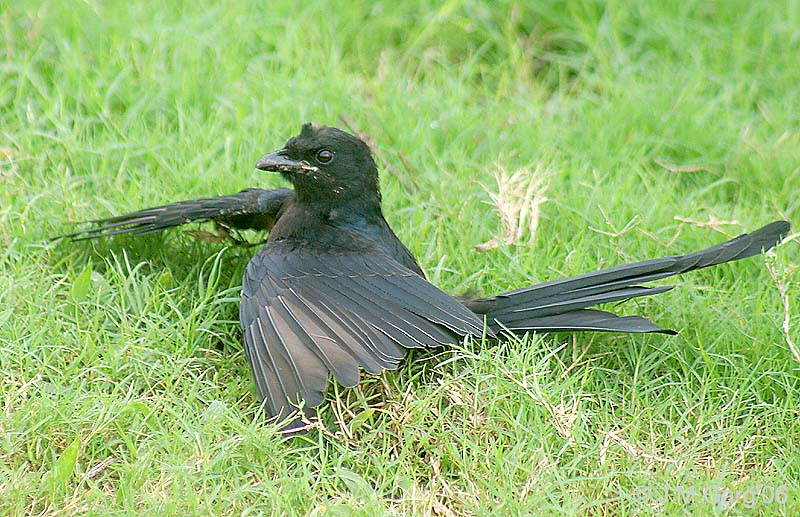
Black Drongo (Dicrurus macrocercus) Anting ©WikiC

Black Drongo (Dicrurus macrocercus) Anting ©WikiC

Consider the ravens, for they neither sow nor reap, which have neither storehouse nor barn; and God feeds them. Of how much more value are you than the birds? (Luk 12:24 NKJV)

“For animals in the wild, the medicine cabinet seems at first glance to be pretty bare, and you might think they’re just left out in the cold when it comes to finding remedies. But even with the fallen nature of our world, the Creator hasn’t left untamed creatures, like the ravens that neither sow nor reap (Luke 12:24), defenseless against all the things that ail them. In fact, He’s stocked their “closets” with a cornucopia of cures.” (From Jungle Doctors)

One of those cures is the birds “Anting” behaviour.

Anting (Excerpts from The Birder’s Handbook, p.487)

“Many different songbird species have been observed picking up single ants or small groups and rubbing them on their feathers. Less commonly, other songbirds “ant” by spreading their wings and lying on an anthill, and squirming or otherwise stimulating the ants to swarm up among their feathers.

Because the seasonal timing of anting and molting (spring and summer) often correspond, some have suggested that anting may soothe the skin during feather replacement. It seems more likely that the seasonal relationship simply reflects the greater activity of ants during those periods.”

Anting (Excerpts from Wikipedia)

In the behavior called anting, birds rub insects on their feathers, usually ants, which secrete liquids containing chemicals such as formic acid, that can act as an insecticide, miticide, fungicide, bactericide, or to make them edible by removing the distasteful acid. It possibly also supplements the bird’s own preen oil. Instead of ants, birds can also use millipedes. Over 250 species of bird have been known to ant. Most of those are Passerines.

Many theories exits as to why the birds “ant.”

It has been suggested that anting acts as way of reducing feather parasites such as mites or in controlling fungi or bacteria, although there has been little convincing support for any of the theories. It is possible that the use of certain kinds of ants indicates the importance of the chemicals they release. Some cases of anting involved the use of millipedes or caterpillars, and these too are known to release powerful defensive chemicals.

Another suggested function, based on observation of Blue Jays, is that the bird makes the insects edible, by discharging the harmful acid onto their feathers. The birds were found to show anting behaviour only if the ants had a full acid sac, and with subjects whose acid sacs had been experimentally removed, the behaviour was absent.

Finally, it has also been suggested that anting is related to feather moulting. However, the correlation may also be attributed to the greater activity of ants in summer.

Dusting with soil from ant-hills has been considered by some as equivalent to anting.

Some birds like Antbirds and Flickers not only ant, but also consume the ants as an important part of their diet. Other opportunist ant-eating birds include Sparrows, Wrens, Grouse and Starlings.

*

*

Anting (Excerpts from Audubon Society Encyclopedia of North American Birds, pps 19-20)

“John James Audubon published the first known reference to this habit in his Ornithological Biography (1831), in which he wrote of watching wild turkeys roll in ants’ nests ‘to clear their growing feathers of loose scales, and prevent ticks and other vermin from attacking them, these insects being unable to bear the odor of the earth in which ants have been.’ ”

Here are some of the birds listed in this section:

The turkeys mentioned, plus “crows; starlings and Indian mynas, magpie lark, gray thrush, Pekin robin, house sparrow, manakin and apostlebird in Australia; a Magpie in Britain; Grackles, Blue Jay, pekin robin, gray catbird, American robin, wood thrush, hermit thrush, veery, cedar waxwing, bobolink, Baltimore oriole, cardinal, rose-breasted grosbeak, black-headed grosbeak, indigo bunting, dark-eyed junco, Harris’ sparrow, white-crowned sparrow, fox sparrow, and song sparrow in America”;

“Others seen in the wild anting are: scarlet tanagers, summer tanagers, towhees…, others.” (Lack off capitalization is from the book)

Lee’s Additon:

But now ask the beasts, and they will teach you; And the birds of the air, and they will tell you; (Job 12:7 NKJV)

It appears that the birds were given instincts or knowledge, by their Creator, to protect themselves from pests and irritation. That would be a possible answer they might give us, if we were to question them. If these birds evolved, then it appears that they had to develop this habit in each country and area where the birds “ant.” Huh? As for me, I opt for a Creator giving them that knowledge rather than a chance behaviour happening in so many places.

*

*

See:

Anting – Wikipedia

Jungle Doctors (Scroll down to “Rubbing It In”) – Answers in Genesis

Birdwatching

Birds of the Bible

*

Updated The Birdwatching Page 8/8/13

The Birdwatching Page was updated to add this video and links to photos of the birds shown. Here is the video and the photo links are on the Birdwatching Page.

And out of the ground the Lord God formed every [wild] beast and living creature of the field and every bird of the air and brought them to Adam to see what he would call them; and whatever Adam called every living creature, that was its name. (Genesis 2:19 AMP)

*

*

Birdwatching Tips – Herons, Egrets, Bitterns

Little Blue Heron at Lake Hollingsworth

Little Blue Heron at Lake Hollingsworth

Lev 11:19  And the stork, the heron after her kind, and the lapwing, and the bat.

Peterson’s Field Guide Videos have great information about how to identify birds in the Heron, Egrets and Bittern Family. This is a very good video.
*

*

See the other video in this series:

Peterson Field Guide-Videos

*

Ardeidae- Herons, Bitterns

Birds of the Bible – Herons

Wordless Birds

*

The Rock Ptarmigan – The Crown

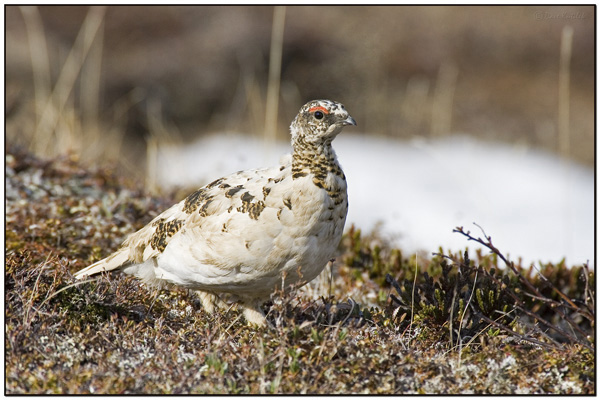
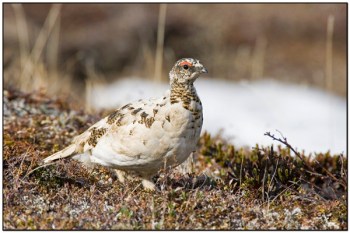
Rock Ptarmigan (Lagopus muta) by Daves BirdingPix

Rock Ptarmigan (Lagopus muta) by Daves BirdingPix

The Rock Ptarmigan – The Crown ~ by a j mithra

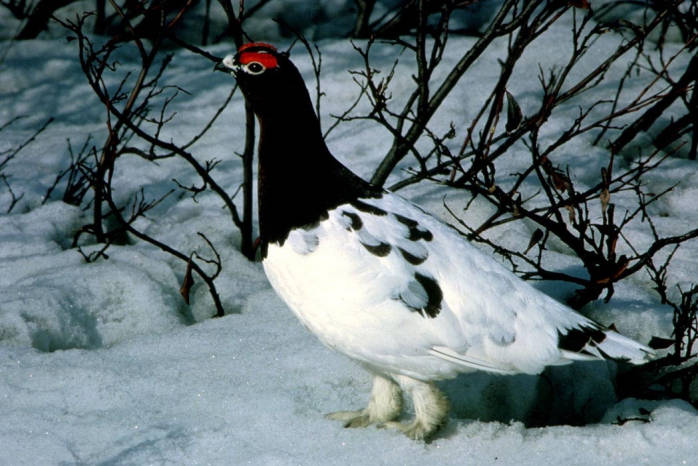
The Rock Ptarmigan is seasonally camouflaged; its feathers moult from white in winter to brown in spring or summer. The breeding male has greyish upper parts with white wings and under parts. In winter, its plumage becomes completely white except for the black tail. It can be distinguished from the winter Willow Ptarmigan (Willow Ptarmigan in North America) by habitat—the Rock Ptarmigan prefers higher elevations and more barren habitat; it is also smaller with a more delicate bill.
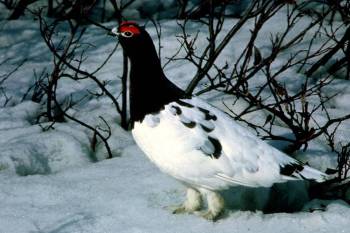
Willow Ptarmigan (Lagopus lagopus) ©USFWS

Willow Ptarmigan (Lagopus lagopus) ©USFWS

A bird that is smaller and with more delicate bill prefers higher elevation…

Interesting isn’t it?

It is when we become smaller, subdued and humble that God takes us to higher elevation.

He brought me up also out of a horrible pit, out of the miry clay, and set my feet upon a rock, and established my goings. (Psalm 40:2)

The higher elevation maybe more barren and it may have delicate bills but still this bird prefers higher elevation…

Most of us judge ourselves by what we have, failing to understand that in our weakness

“And he said unto me, My grace is sufficient for thee: for my strength is made perfect in weakness. Most gladly therefore will I rather glory in my infirmities, that the power of Christ may rest upon me.” (2 Corinthians 12:9)

His strength is complete and that is the reason He chooses the weak.
So that His name shall be glorified

  • Not in strength but in weakness’
  • Not in abundance but in want..
  • Not through the wise but through the fools.

But God has chosen the foolish things of the world to confound the wise; and God has chosen the weak things of the world to confound the things which are mighty; (1 Corinthians 1:27)

Rock Ptarmigan (Lagopus Muta) in winter plumage ©WikiC

Rock Ptarmigan (Lagopus Muta) in winter plumage ©WikiC

The small population living on Franz Josef Land in the Russian High Arctic, overwinter during the polar night, and survives by feeding on rich vegetation on and underneath high cliffs where seabird colonies are located in summer. The Rock Ptarmigan feeds primarily on birch and willow buds and catkins when available. It will also eat various seeds, leaves, flowers and berries of other plant species. Insects are eaten by the developing young.

Apart from the comb, the male Rock Ptarmigan has no ornaments or displays that are typical for grouses in temperate regions. Studies on other grouses have shown that much variation in comb size and colour exists
between the species, and that the comb is used in courtship display and aggressive interactions between males.

This reminds us of how the colorful garment of Jesus was stripped, torn into twelve pieces and shared among the soldiers right under the cross, even as the Rock was grieving in pain for our sins..

Jesus did not have any ornaments or displays on the cross except the crown of thorns.

He bore not the crown of thorns but bore the brunt of mockery to give us the crown of eternal life isn’t it?

And after twisting together a crown of thorns, they put it on His head, and a reed in His right hand; and they knelt down before Him and mocked Him, saying, “Hail, King of the Jews!” (Matthew 27:29)
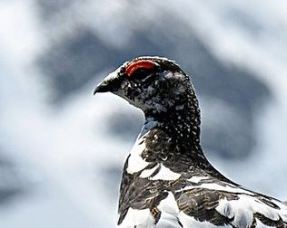
Rock Ptarmigan (Lagopus Muta) ©Wiki

Rock Ptarmigan (Lagopus Muta) ©Wiki

Many studies have shown that there is a strong correlation between the comb size and the level of testosterone in males; one report from 1981 showed that the amount of testosterone is correlated to aggressiveness against other males. The male’s comb has been the focus of studies regarding sexual selection. Studies of a population of male Rock Ptarmigans in Scarpa Lake, Nunavut, have shown that during the first year, mating success among males was influenced by comb size and condition, and bigamous males had larger combs than monogamous males. The correlation to size disappeared after the first year, but the correlation to comb
condition remained.

This is consistent with another study of the same population of L. muta that showed that mating success overall is correlated to comb condition. Exceptions were first-time breeders, in which the size of the comb influenced mating success. The mating success is correlated to comb condition..

There is a strong correlation between the life we live for Christ and the crown that God has kept for us.

  • We need to receive a crown not just to show off but to live eternally with the King..
  • Our King wore a crown of thorns so that His Queen, the Church shall wear the Crown of Life and reign with Him forever and ever.

What kind of a crown would God give us?

Here are a those five crowns that God had kept for us..

God has got an “IMPERISHABLE CROWN” for those who run a faithful, unselfish race, crucifying all their earthly desires and focusing on just the cross.

Did Jesus asked us to carry our cross for this?

Know ye not that they which run in a race run all, but one receiveth the prize? So run, that ye may obtain. And every man that striveth for the mastery is temperate in all things. Now they do it to obtain a corruptible crown; but we an incorruptible. (1 Corinthians 9:24-25)

“THE CROWN OF JOY” is there for those who bring souls into His kingdom. Working towards standing as a living testimony for others to follow Christ through our selfless Christ-like lifestyle…

Are we working selflessly to bring souls to His kingdom?

For what is our hope, or joy, or crown of rejoicing? Are not even ye in the presence of our Lord Jesus Christ at his coming? For ye are our glory and joy. (1 Thessalonians 2:19-20)

Here is another crown that awaits us, that is the “THE CROWN OF RIGHTEOUSNESS”

Are you waiting anxiously for the Lord? In that case you will surely receive this crown, when Jesus, the King returns.

  • How are we waiting?
  • Patiently?
  • Diligently?
  • Anxiously?

Henceforth there is laid up for me a crown of righteousness, which the Lord, the righteous judge, shall give me at that day: and not to me only, but unto all them also that love his appearing. (2 Timothy 4:8)

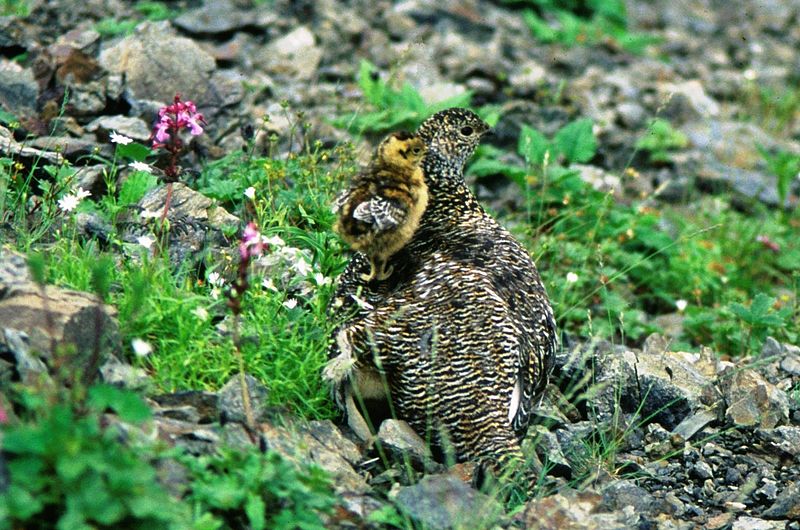
Rock Ptarmigan (Lagopus Muta) ©WikiC mother and chick

Rock Ptarmigan (Lagopus Muta) ©WikiC mother and chick

There is another crown for us, “THE CROWN OF LIFE”.

It is for those who endure temptations, trials, pain and agony for the sake of the Lord.

  • People around you may live a life of luxury and abundance.
  • But we are called to overcome earthly desires.
  • Do we deserve this crown?

Blessed is the man that endureth temptation: for when he is tried, he shall receive the crown of life, which the Lord hath promised to them that love him. (James 1:12)

This crown, “THR CROWN OF GLORY” has a long price tag.

Pay and receive. Here is the bill..

The elders which are among you I exhort, who am also an elder, and a witness of the sufferings of Christ, and also a partaker of the glory that shall be revealed:
Feed the flock of God which is among you, taking the oversight thereof, not by constraint, but willingly; not for filthy lucre, but of a ready mind;
Neither as being lords over God’s heritage, but being examples to the flock.
And when the chief Shepherd shall appear, ye shall receive a crown of glory that fadeth not away. (1 Peter 5:1-4)

Now, it’s time for us to switch on our search lights to see what kind of crown do we deserve..

Have a blessed day!
Yours in YESHUA,
a j mithra

Please visit us at:
CrossTree

ajmithra21

Seeing Pink at Circle B Bar Reserve – Gallery

Because the slideshow won’t allow larger photos, here are the photos for the Seeing Pink at Circle B Bar Reserve article in the Gallery format. Clicking any photo will begin an Image Gallery Carousel.

*

Seeing Pink at Circle B Bar Reserve

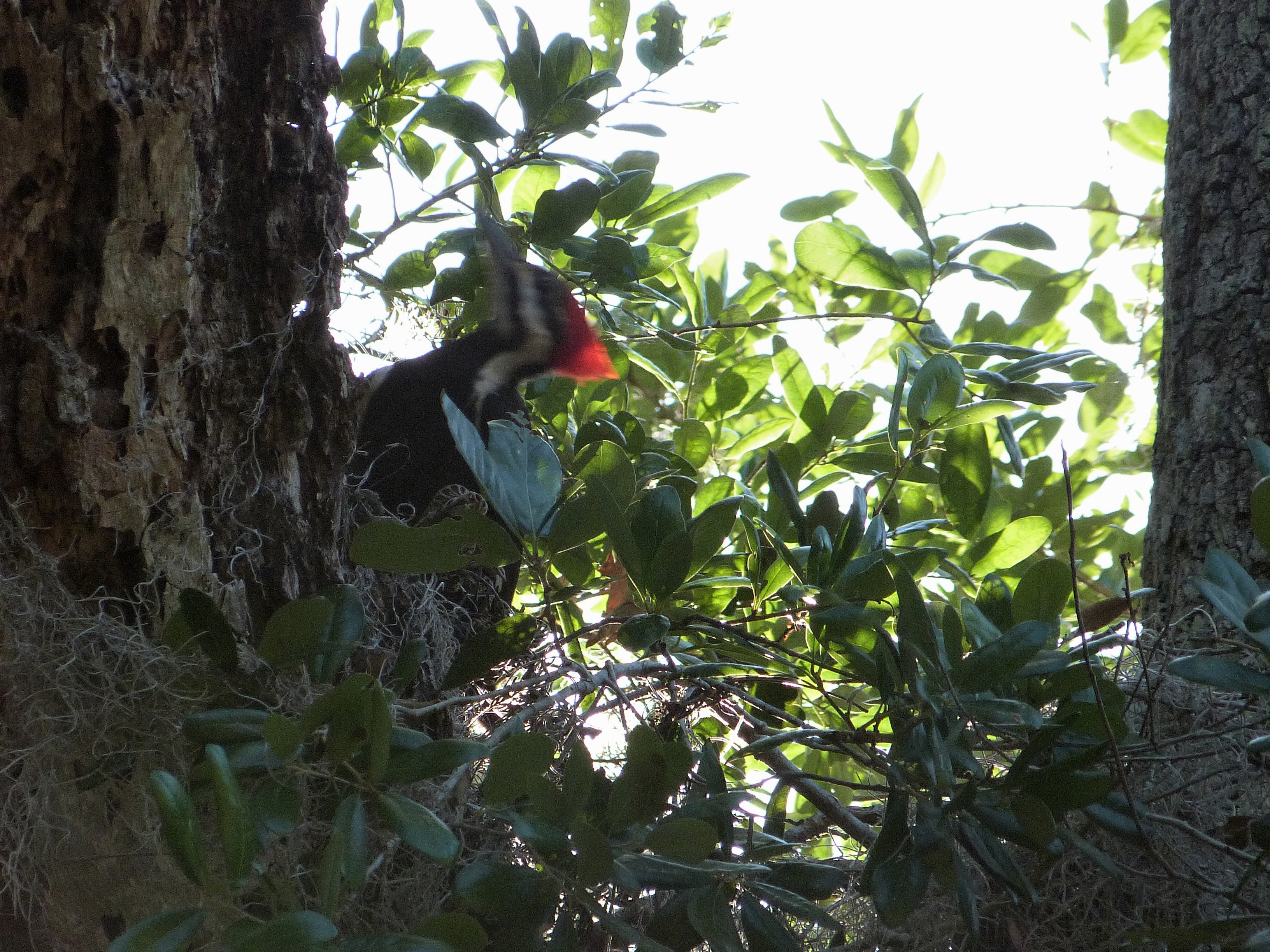
Pileated Woodpecker by Lee at Circle B

Pileated Woodpecker by Lee at Circle B 4-9-2013

Then God said, “Let the waters abound with an abundance of living creatures, and let birds fly above the earth across the face of the firmament of the heavens.” So God created great sea creatures and every living thing that moves, with which the waters abounded, according to their kind, and every winged bird according to its kind. And God saw that it was good. And God blessed them, saying, “Be fruitful and multiply, and fill the waters in the seas, and let birds multiply on the earth.” (Genesis 1:20-22 NKJV)

We spent  a short time at Circle B Bar Reserve today and thought it would be the same old-same old. Well, it wasn’t. A lady we ran into said the same thing I was thinking, “I wasn’t expecting much today.”

When we got out of the car, I spotted a bird landing in the tree nearby which turned out to be a Pileated Woodpecker. That got me excited  right away.

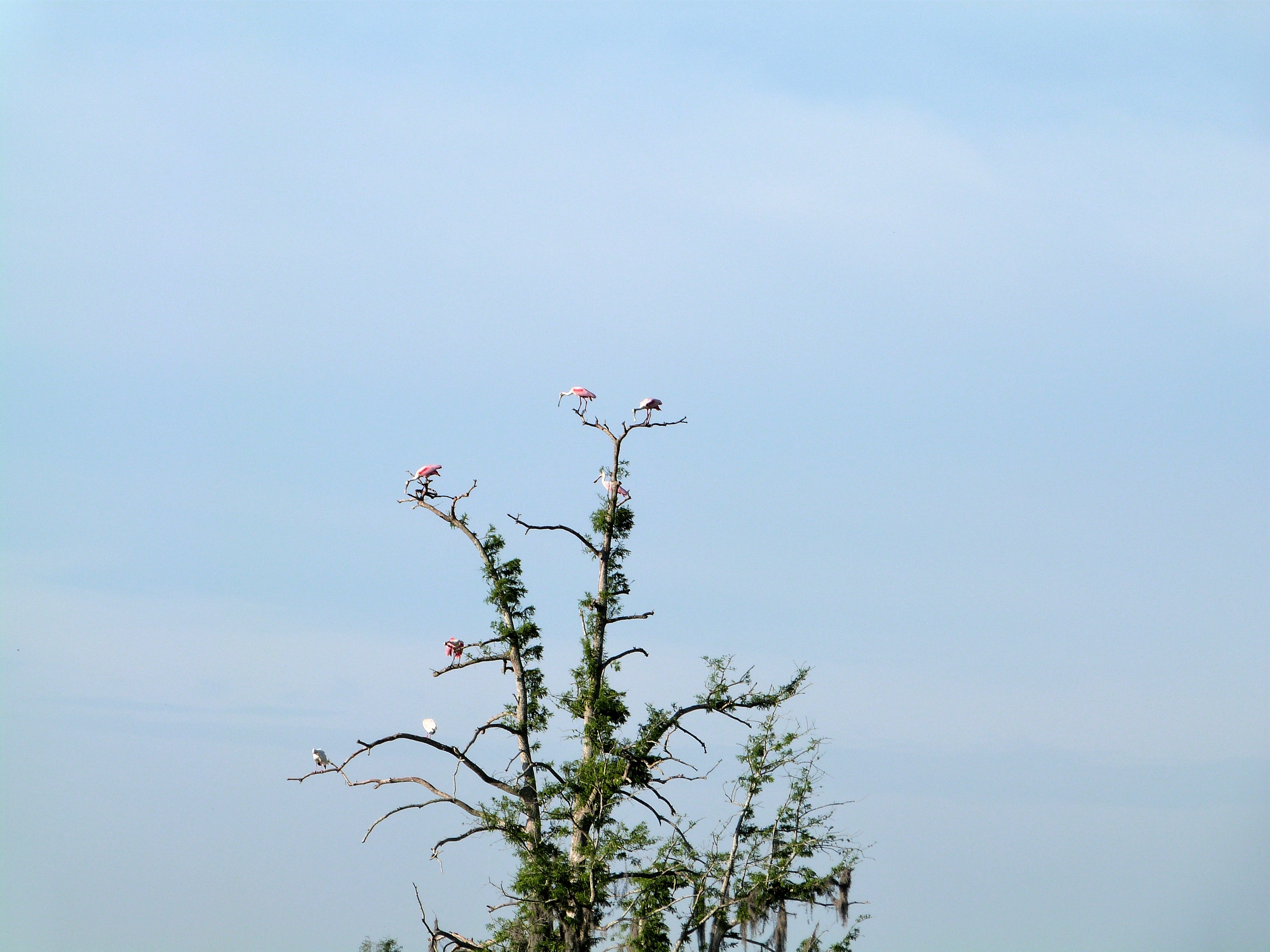
As soon as we turned the corner to head to the marsh, which is extremely dry because there has not had much rain all winter, I saw “Pink.”

Roseate Spoonbill Tree

Roseate Spoonbill Tree

I am putting a Slideshow here so you can see why I got so excited. It turned out to be a fantastic birdwatching adventure today. Ignore some of the blurred photos, but were inserted to help tell the story of this adventure. The Roseate Spoonbills are spotted out there, but I have never seen so many and so close as today. They kept landing on that tree as you will see and it built up until there were 15 of them in that tree.

Not only did we see the Pileated Woodpecker and the Roseate Spoonbills, but we saw quite a few others also. They are included in the slideshow also. Enjoy!

This slideshow requires JavaScript.

To See these photos in a Gallery – Click Here

Other Birdwatching Trips

*

New Project – Our Birdwatching Photos

Wood Duck - Lake Morton by Lee

Wood Duck – Lake Morton by Lee

O LORD, how manifold are thy works! in wisdom hast thou made them all: the earth is full of thy riches. (Psalms 104:24 KJV)

While working on Family pages, it dawned on me that very few of our photos have been used. We, Dan and I, do take quite a few photos while on our birdwatching adventures into the wild and at the zoos. Actually, I take about 4-5 more than he does on each adventure (more like 10-1). He spends his time trying to compose his shots and do all that sort of stuff. Me, I have a Program mode Panasonic Lumix that I shoot, shoot, shoot. Of course, his photos are always better and he knows how to prep them better, but I get more “action” photos. I have action of the bird moving (blurred), flying off (blurred), turning around (blurred), behind a fence (bird-blurred, fence-clear), in a tree (bird-blurred, branch with leaves-clear). Every once in a while I get a nice photo that isn’t too blurred that could be shared with you.

Another thing he has tried to teach me is the 1/3rd thing. Me, I want that bird right in the middle of my shot so that when I get home I can try to find it behind those clear fences and branches. To me, my photos are for “proof” that the bird was seen and also to try to figure out what it really was. You see, I am a “birdwatcher” and he is a “photographer.” There is a difference! You can blend the two, but there IS a different attitude at work here.

Yesterday the Our Birdwatching Photos page was created and a new tab was placed up at the top. Now, I am working on creating pages, by families, of our photos. Most will be mine, because I take more and he already has a website for his photos at Dan’s Pix. I will be copying some of his over here of course and maybe I can get some of his “unpublished” ones also.

Elegant Crested Tinamou (Eudromia elegans) Cloud Forest at Zoo Miami by Lee

Elegant Crested Tinamou (Eudromia elegans) at Zoo Miami by Lee

Don’t expect the greatest photos, because I am not a great photographer, but I enjoy “watching” the birds. The Lord has created so many birds that are just so beautiful and unique. The variety is amazing. The colors are  breathtaking at times. The birds are adorable, cute, ugly, big, little, tall, short, evasive, calm, fidgety, graceful, etc. They sing some of the most beautiful songs and some have terrible tunes, but don’t you just enjoy watching and listening to them?

O Lord, how many and varied are Your works! In wisdom have You made them all; the earth is full of Your riches and Your creatures. (Psalms 104:24 AMP)

O the depth of the riches both of the wisdom and knowledge of God! how unsearchable are his judgments, and his ways past finding out! (Romans 11:33 KJV)

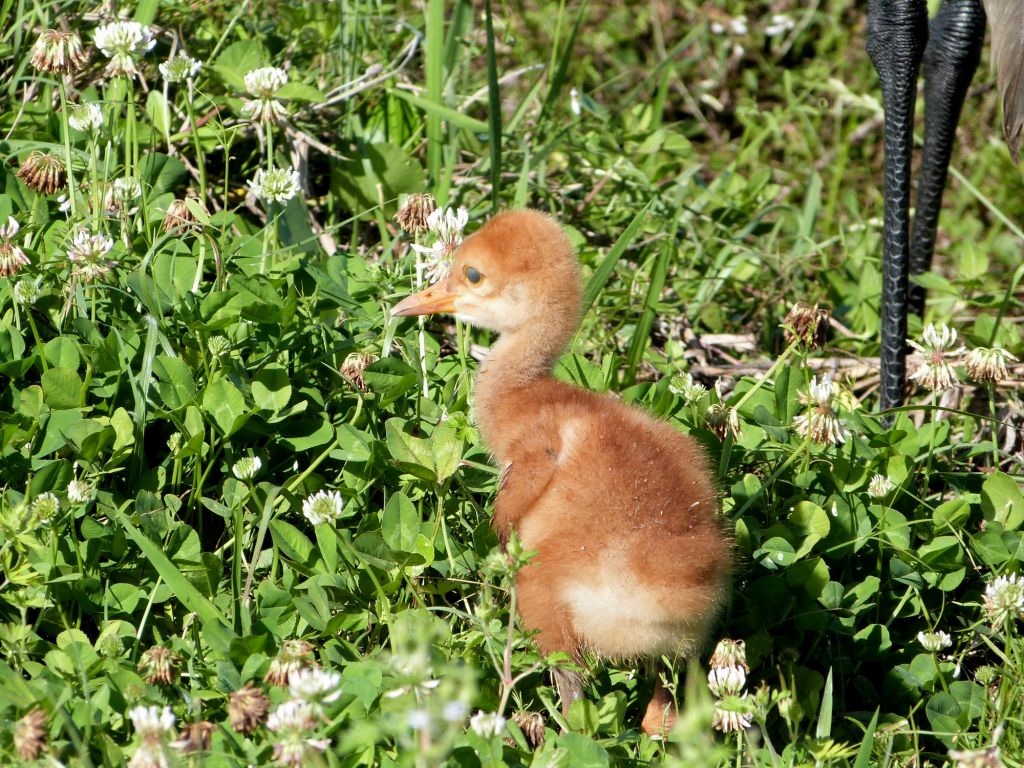
Blurred, but isn't it cute?

Sandhill Crane Chick at Circle B by Lee – Blurred, but isn’t it cute?

*

Our Birdwatching Photos

Dan’s Pix

*

Bible Birds – Swallow Introduction

Red-rumped Swallow (Cecropis daurica) by Nikhil Devasar

Red-rumped Swallow (Cecropis daurica) by Nikhil Devasar

Even the stork in the heavens Knows her appointed times; And the turtledove, the swift, and the swallow Observe the time of their coming. But My people do not know the judgment of the LORD. (Jeremiah 8:7 NKJV)

Previously, we introduced the Thrush and used the above verse. Today, we will look at that same verse, but from a different version of Scripture that translates the bird as a Swallow. Here is the same little Greek study for you: The Greek word (the OT was written mostly in Greek) gives the word (H5693) עגוּר -or – ‛âgûr (aw-goor’) An unused root meaning to twitter; probably the swallow: – swallow. Translations using the word Swallow, have more than one verse that refers to the bird. The New King James Version has these other verses:

Even the sparrow has found a home, And the swallow a nest for herself, Where she may lay her young— Even Your altars, O LORD of hosts, My King and my God. (Psalms 84:3 NKJV) Like a flitting sparrow, like a flying swallow, So a curse without cause shall not alight. (Proverbs 26:2 NKJV) Like a crane or a swallow, so I chattered; I mourned like a dove; My eyes fail from looking upward. O LORD, I am oppressed; Undertake for me! (Isaiah 38:14 NKJV)

So there are at least four verses with the Swallow listed. The Swallows belong to the Hirundinidae – Swallows, martins Family. There are 88 members in the family at present. Many times in the Bible they mention a bird‘s name and then say “after its kind.” For now, let’s just same that it means all of those species in that family. The Swallows also have Saw-wings and Martins in the family. They live on all the continents except Antarctica.

This family is known for their aerial feeding. taking flying insects on the wing. Swallows hunt insects on the wing because they were designed with a slender, streamlined body and long pointed wings, which allow great maneuverability and endurance, as well as frequent periods of gliding. Their body shape allows for very efficient flight, which costs 50-75% less for swallows than equivalent passerines of the same size. Swallows usually forage at around 18.6-25 mph (30–40 km/h), although they are capable of reaching speeds of between 31-40 mph (50–65 km/h) when traveling.

The legs are short, and their feet were created for perching rather than walking, as the front toes are partially joined at the base. Swallows are capable of walking and even running, but they do so with a shuffling, waddling gait. The leg muscles of the river martins (Pseudochelidon) are stronger and more robust than those of other swallows.

The most common plumage is glossy dark blue or green above and plain or streaked underparts, often white or rufous. Species which burrow or live in dry or mountainous areas are often matte brown above (e.g. Sand Martin and Crag Martin). The typical song of swallows is a simple, sometimes musical twittering.

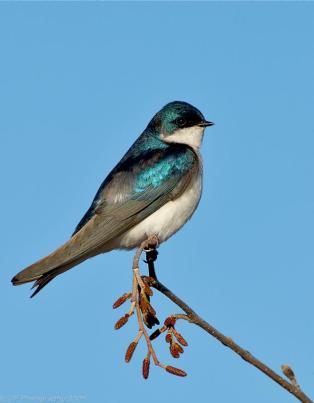
Tree Swallow (Tachycineta bicolor) by J Fenton

Tree Swallow (Tachycineta bicolor) by J Fenton

Our verse above mentions the birds and how they KNOW when it is time to migrate, but what about the end of the verse? The Lord uses birds and other critters as an example, BUT He is mainly trying to teach us something.

Let’s see what some of the different versions say about what we are supposed to learn from these birds.

(HCSB)  ”are aware of their migration, but My people do not know the requirements of the LORD.”

(MSG) …know when it’s time to move south for winter… know when it’s time to come back again. But my people? My people know nothing, not the first thing of GOD and his rule.

(NET) …knows when it is time to move on…recognize the normal times for their migration. But my people pay no attention to what I, the LORD, require of them.

Do you know what the Lord wants you to do? Do you know Him as your Savior? If you do, are you doing what the Bible tells us we should do? Are you obeying your parents? And doing what the Lord wants you to do?.

The Lord loves us, just as your parents do. When you obey them you are happier and blessed. When you do not obey, are you happy or sad? The same is true with obeying the Word that the Lord has given us through His Word, the Bible.

See:

*