Jesus And Birds – 1st Cleansing Of Temple

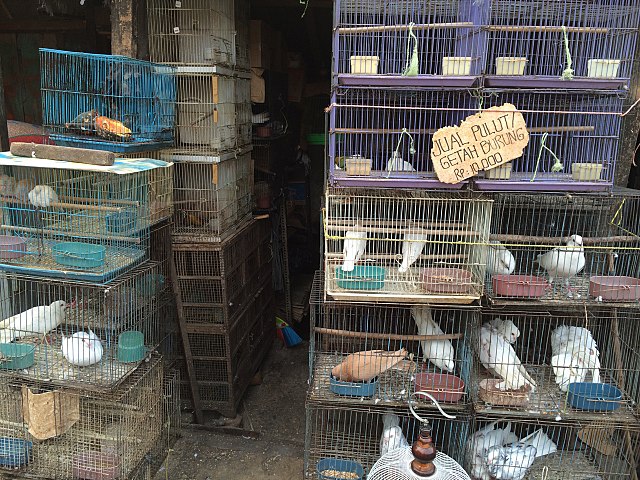
Doves in Cages ©WikiC

Back to our long-delayed series of “Jesus and Birds.” The last one, “Jesus and Birds – His Dedication was completed not long before everything changed. This Corvid-19 ordeal has left me a bit “discombobulated.” [Discombobulate is a fun, fancy word for “confuse.” If something has put you in a state where you don’t know up from down and you can’t spell your own name, you may be discombobulated.” – vocabulary.com] Anyway, thanks to Dr. Jim (J.J.S .Johnson) and William Wise for continuing to add articles for the blog.

When I first started looking into this cleansing of the Temple sellers, it appeared that there were two cleansings, yet there was a debate. Did Jesus cleanse the Temple once or twice? As you may remember, I am using a Harmony of the Gospels to trace the Lord Jesus’s reactions to birds while in His incarnated body. Here are some of the questions:

This first cleansing is only mentioned only by John.

“And the Jews’ passover was at hand, and Jesus went up to Jerusalem, And found in the temple those that sold oxen and sheep and doves, and the changers of money sitting: And when he had made a scourge of small cords, he drove them all out of the temple, and the sheep, and the oxen; and poured out the changers’ money, and overthrew the tables; And said unto them that sold doves, Take these things hence; make not my Father’s house an house of merchandise. And his disciples remembered that it was written, The zeal of thine house hath eaten me up.” (John 2:13-17 KJV)

The second cleansing is mentioned by the other three gospel writers, but not John.

Mathew 21:12-13, Mark 11:15-17, and Luke 19:45-46 [This will be covered in the 2nd Cleansing of Temple post.]

After checking many of the commentaries in the BibleGateway helps, even though Jesus spoke some of the same similar words, the belief is that there are two cleansings. I will cover more about this in the later post.

The main point is that when Christ entered the Temple area, sellers had set up for business. Worshipers needed animals and birds for sacrifices, but they were not supposed to be selling them inside the compound area. Had they been selling outside the area, there would not have been a problem.

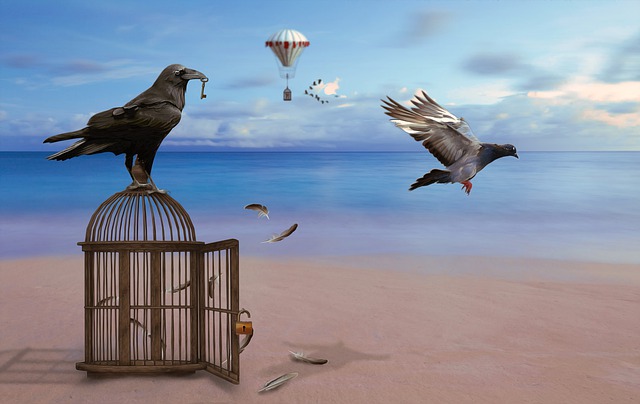
In His disgust for what was going on, he threw over the tables, etc. and opened the cages of doves to let the go free.

Freedom – Bird leaving cage ©Pixabay


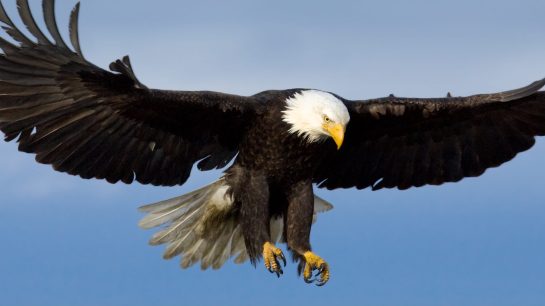
The Eagle has Landed, in Fact Many of Them!

The Eagle has Landed, in Fact Many of Them!

Eagles have Repopulated the Chesapeake Bay Watershed Range

Dr. James J. S. Johnson

Who satisfieth thy mouth with good [things; so that] thy youth is renewed like the eagle’s. (Psalm 103:5)

BaldEagle-SanDiegoZoo

Bald Eagle – San Diego Zoo

God satisfies our real needs, from time to time, from season to season, just as He sustains the ongoing needs of the eagle. Recovering strength is good for an individual–and also for a population, including eagle populations.

Recovering from a “ghost town” shutdown is worth the effort.  Ask a Bald Eagle.

Whitney Pipkin recently reported, in the Chesapeake Bay Journal , that Bald Eagles have made a comeback along Virginia’s James River.(1),(2)

This avian population illustrates how a pessimistic situation can, if the right actions are taken, be reversed—eventually producing a happier result.

First, the bad news:

In the late 1970s, the treetops of the James River looked like a ghost town. Despite plenty of suitable habitat where bald eagles could have been nesting and had before, the waterway was the only major tributary in the Chesapeake Bay whose nesting population of the iconic American predator had plummeted to zero.(1)

Now, the good news:

Imagine biologists’ surprise when, four decades later, that same river became the staging ground for the eagles’ astonishing comeback. Aerial surveys tallied more than 300 breeding pairs of [bald] eagles along the James River for the first time in 2019—a number that had been the species’ recovery goal for the entire Chesapeake Bay watershed.(1)

When it comes to the Chesapeake Bay, the majestic bald eagle has come back from the dead. Driven from historic nesting strongholds like the James River by pesticides in the 1970s, the national bird has become a success story.(2)

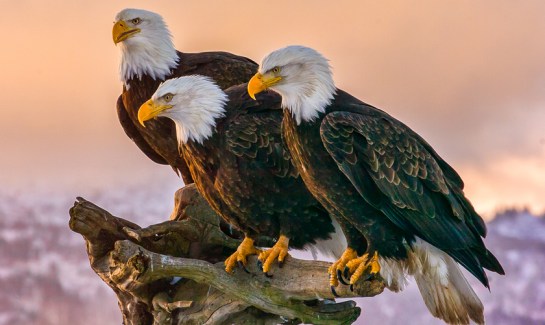
BaldEagles-BirdWatchingHQ

3 Bald Eagles – Bird Watching HQ

Furthermore, the big-picture news is even better:

Biologists estimate there are now close to 3,000 nesting pairs Baywide [i.e., in the Chesapeake Bay watershed], but surveys of the entire region no longer occur annually. Maryland stopped surveying bald eagles in 2004 when they hit nearly 400 breeding pairs statewide, surpassing population goals.(1)

Moreover, it’s not just eagles that are flourishing in the Chesapeake Bay area:

“We are just in an amazing time right now,” said Bryan Watts, co-founder and director of the Center for Conservation Biology at the College of William and Mary. … Not just bald eagles, but fish-eaters like osprey and blue heron also once died out on the James.

Today, [these riparian fish-eating birds—like eagles, ospreys, and herons—have ] swelled to numbers Watts believes are well above what even Capt. John Smith encountered on the cusp of the 17th century. “In terms of eagles,” said Watts, “we are protecting them. We’re not shooting them like we did in the late 1800s and early 1900s. We don’t consider them competitors for muskrats or for fish, and so we’re not killing them.”(2)

For conservationists, birdwatchers, and other wildlife enthusiasts, these large-scale recoveries are very good news. After all, eagles are America’s official bird.

Beyond that, eagles are amazing creatures that display God’s genius in bioengineering.(3)

One example of highness being compared to the nesting habits of eagles is found in the Bible, in the Book of Obadiah 1:3-4, where the eagle is described as a creature that lives in high places, much closer to the stars than do most other animals (or people). Another Old Testament book in the Bible, the Book of Job, refers (at 39:13) to the eagle as mounting up into the air by God’s command (because God programs eagles to fly up into the air the way that they do), and as nesting in high places (because God programs eagles to do this also).

Eagles are good parents, training their sons and daughters to live like eagles (see Deuteronomy 32:11). Eagles can fly, like dive-bombing airplanes, at great speeds (see 2nd Samuel 1:23 and Lamentations 4:19). Their strength is renewed from time to time, as their feather-cover adjusts to their growing bodies (see Isaiah 40:31 and Psalms 103:5). Eagles are known for their gracefulness and dignity (see Proverbs 30:19). In fact, eagles fly very high in the air as a matter of habit – above most other birds (see Proverbs 23:5).(4)

Meanwhile, the Bald Eagles’ recovery—in the Chesapeake Bay area–illustrates how a bad situation can be overcome, with the prioritized concern and problem-solving management practices, plus patience.

But this is not the first time that an endangered or threatened wild bird (or other wildlife category) has been rescued from the brink of population failure. Consider the amazing recovery of the Trumpeter Swan, which nearly sang its own swan song.(5)

Likewise, Tri-colored Herons (also called “Louisiana Herons”) have recently reclaimed (and repopulated) ranges that previously they had lost.(6)

It’s not just the birds. American bison have made a comeback.(7) The list goes on, but the list could be longer than what it is.

Wildlife populations often face critical perils, sometimes facing population failure, range contraction, or habitat loss. Sometimes they recover.(1),(2),(5),(6)

The same is true for humans. For example, it is well worth praying for America to recover from its many political (socialism-pushing) problems in the wake of pandemic perils and propaganda.(8)

Problematic situations, including disasters, don’t fix themselves—real solutions (to real problems) don’t accidentally “evolve”. There is much good work needed, to recover lost ground in America. Human responsibility is the key to much of what is needed; yet God’s providential blessings are needed even more, much more.(8)

So we need to pray fervently for God’s blessings, daily—not just on the National Day of Prayer.(8)

References   

  1. Pipkin, W. 2020. Bald Eagles’ Recovery Along James River Soars to New Heights: Area’s 300 Breeding Pairs Surpass Goal for Entire Chesapeake Watershed. Chesapeake Bay Journal. 30(3):17-18.
  2. Dietrich, T. 2019. Bald Eagles Enter ‘Golden Age’ in Chesapeake Bay. Daily Press. Posted (July 9, 2019) on DailyPress.com at http://www.dailypress.com/news/dp-nws-bald-eagles-recovery-20190709-story.html (accessed May 9, 2020).
  3. Eggleton, M. 2016. The American Bald Eagle: On Eagle’s Wings. 38(2):34-37, posted at https://creation.com/on-eagles-wings . See also Johnson, J. J. S. 2018. Hawks and Eagles Launching Skyward. Acts & Facts, 47(4):21, posted at https://www.icr.org/article/hawks-eagles-launching-skyward .
  4. Johnson, J. J. S. 2008. Alaska’s Coastal Rainforests and Two of its Rangers, the Bald Eagle and the Alaska Moose. Dallas: NWD Press/RCCL’s Radiance of the Seas (July 2008), pages 10-11.
  5. Johnson, J. J. S. 2020. Post-Coronavirus Comeback or Swan’s Song? Creation Science Update. Posted (April 23, 2020) at https://www.icr.org/article/post-coronavirus-comeback-or-swans-song .
  6. Johnson, J. J. S. 2019. Does Global Warming Threaten Bird Habitats? Acts & Facts. 48(6):21, posted at https://www.icr.org/article/does-global-warming-threaten-bird-habitats .
  7. Whitaker Jr., J. O. 1998. National Audubon Society Field Guide to North American Mammals, revised edition. New York, NY: Alfred A. Knopf, 850-854, Plates # 329-333.
  8. James 5:16; 1 Timothy 2:1-3. See also Johnson, J. J. S. 2020. Prayers for America and our Divine Editor. ICR News. Posted (May 7, 2020) at https://www.icr.org/article/prayers-for-america-and-our-divine-editor .

Clyde and Benny by Emma Foster

Clyde and Benny by Emma Foster

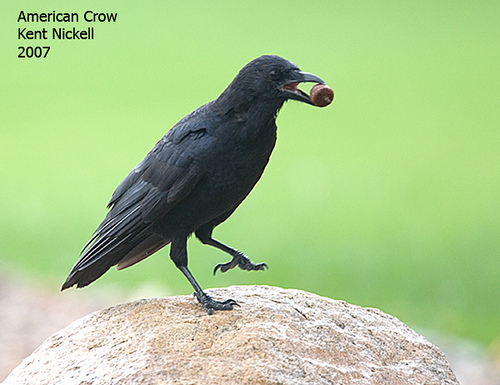
American Crow (Corvus brachyrhynchos) by Kent Nickell

American Crow (Corvus brachyrhynchos) by Kent Nickell

Clyde was an old crow who lived in a tall pine tree in the darkest part of the woods. Because preferred to spend time away from all the other birds and forest animals, he didn’t have any friends. Many of the other birds avoided him because they were afraid of him.

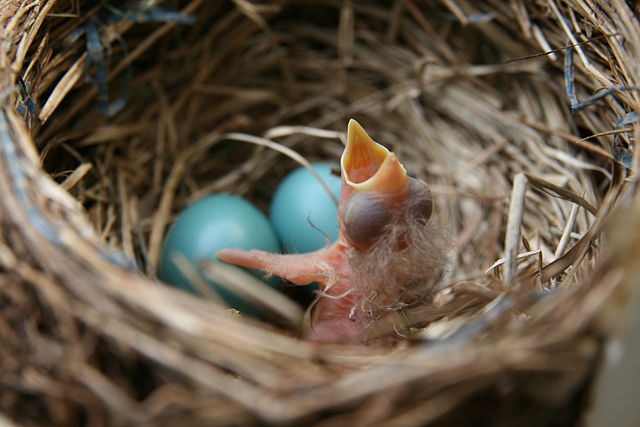
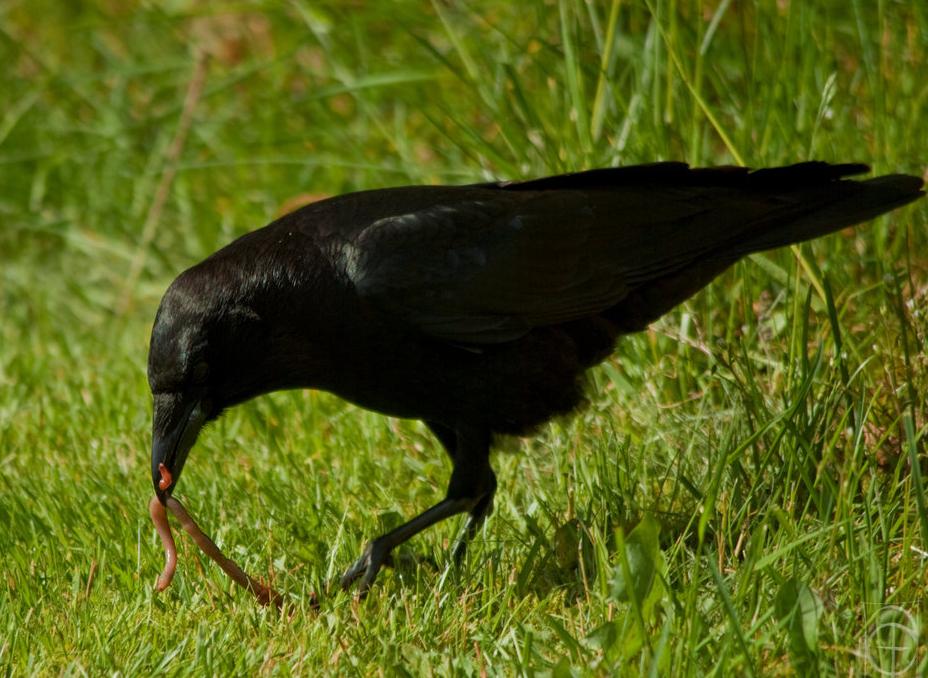
But one day Clyde returned with a large worm in his mouth to his nest to find something in his nest. That something was a little white egg. Clyde had no idea where the egg had come from or how it had gotten there, but he knew he did not want the egg in his nest. While he was thinking about what to do with it, the egg started shaking. A few moments later, a tiny robin chick popped out, peeping loudly.

American Robin (Turdus migratorius) Hatching ©WikiC

Now Clyde really didn’t know what to do. He wanted to be left alone, but the tiny robin flopped out of the egg and stared at him, thinking that Clyde was his mother. Clyde thought for a long time, thinking that he should find another nest somewhere else, but the chick looked too helpless for him to leave. Instead, he reluctantly gave the chick the worm he found and went to look for its mother.

Clyde searched all through the forest, but he couldn’t find any other family of robins. Many of the birds were surprised at seeing Clyde, and most of them hid in the trees to keep away from him. Clyde returned to his nest, back to the chick, and he decided that he would have to keep him. Eventually Clyde decided to call him Benny.

Even though Clyde gave Benny his name, he still did not want Benny around. Clyde begrudgingly found extra worms for Benny and himself. However, once Benny was old enough to fly out of the nest, Clyde showed him how to find the worms for himself so he wouldn’t bother him so much.

Crow Getting Worm ©PxHere

Crow Getting Worm ©PxHere

Unfortunately, teaching Benny how to fly took what felt like hours to Clyde. Benny was a very clumsy little robin. The first time, Benny fluttered out of the nest, dropped, and flopped onto the branch below them. Clyde had to set Benny on his back, take him back up to the nest, then start all over again. Finally, Benny was able to fly a few feet to the next branch, which was a great relief to Clyde.

Once Benny, learned how to fly, however, Benny would not leave Clyde alone. He followed Clyde wherever he went, even after Clyde showed Benny where to actually find food. Whenever Clyde passed other birds or animals, they wondered who the tiny robin was because they had no idea where he came from.

Clyde became so tired of Benny following him around that one day, he took Benny to an unfamiliar part of the forest. Now that he thought Benny could take care of himself, he figured he could lose Benny somewhere in the woods. When they reached a small river, Clyde waited for Benny to start searching for food like he had been told. Once Benny was distracted, Clyde flew off, not looking back until he was far away from the river.

Clyde returned to his nest, but he realized it felt empty and quiet. It was just like before Benny arrived, when all the other birds were afraid of him and he had no one to talk to. Clyde started to feel very lonely, and he realized he shouldn’t have left Benny all by himself. Clyde immediately wanted to fly back to the river.

As Clyde made his way back, he realized he had taken a wrong turn. All of the trees looked unfamiliar. Clyde sat down on a branch and thought for a long time on where to go. He worried abut Benny, since he was lost as well. He cawed for Benny for a long time, but he never received an answer. Finally, Clyde heard a rustling of branches a little way off.

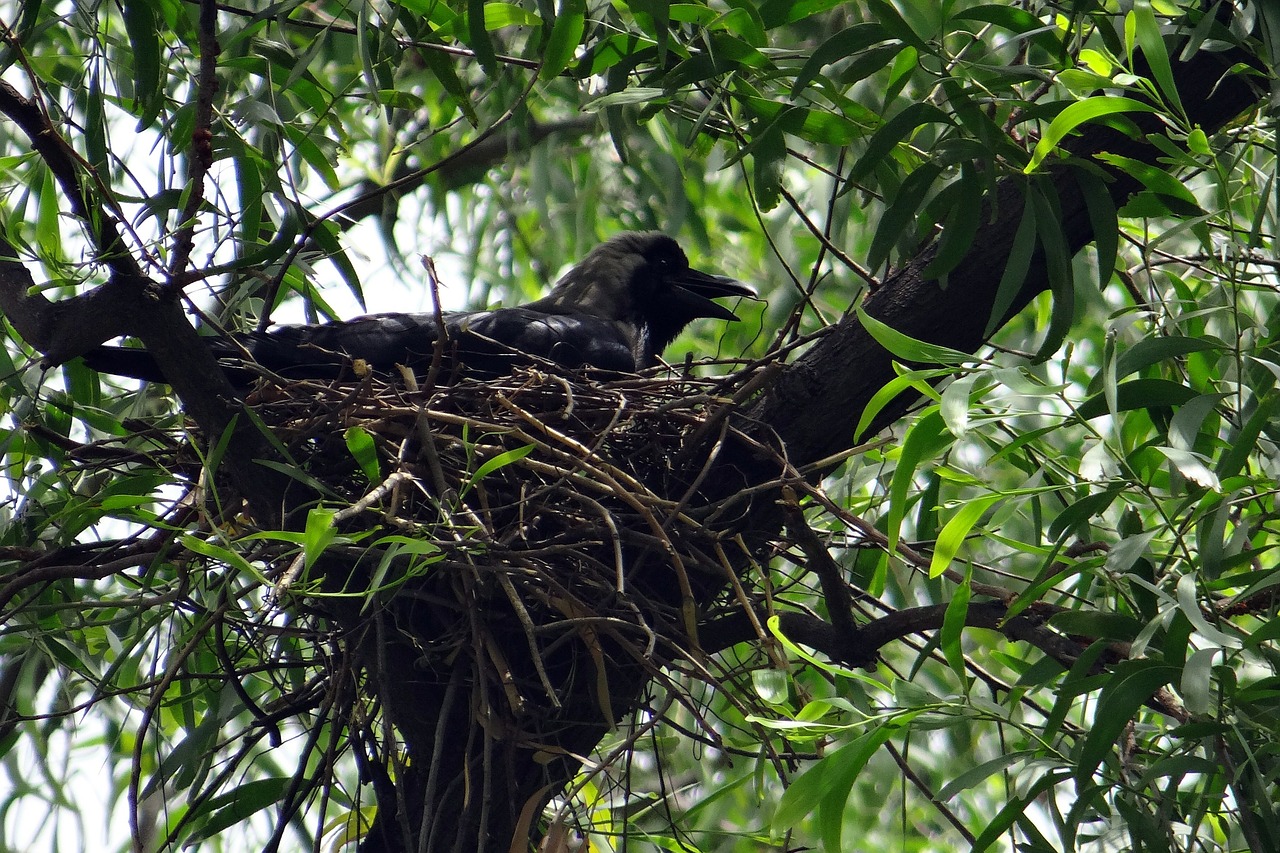
Crow in Nest ©NeedPix

Clyde the Crow in Nest ©NeedPix

When Clyde rounded the corner he saw something flapping from branch to branch, shaking the leaves. Clyde realized that the bird was Benny, and that he couldn’t fly well because he had found the largest worm Clyde had ever seen.

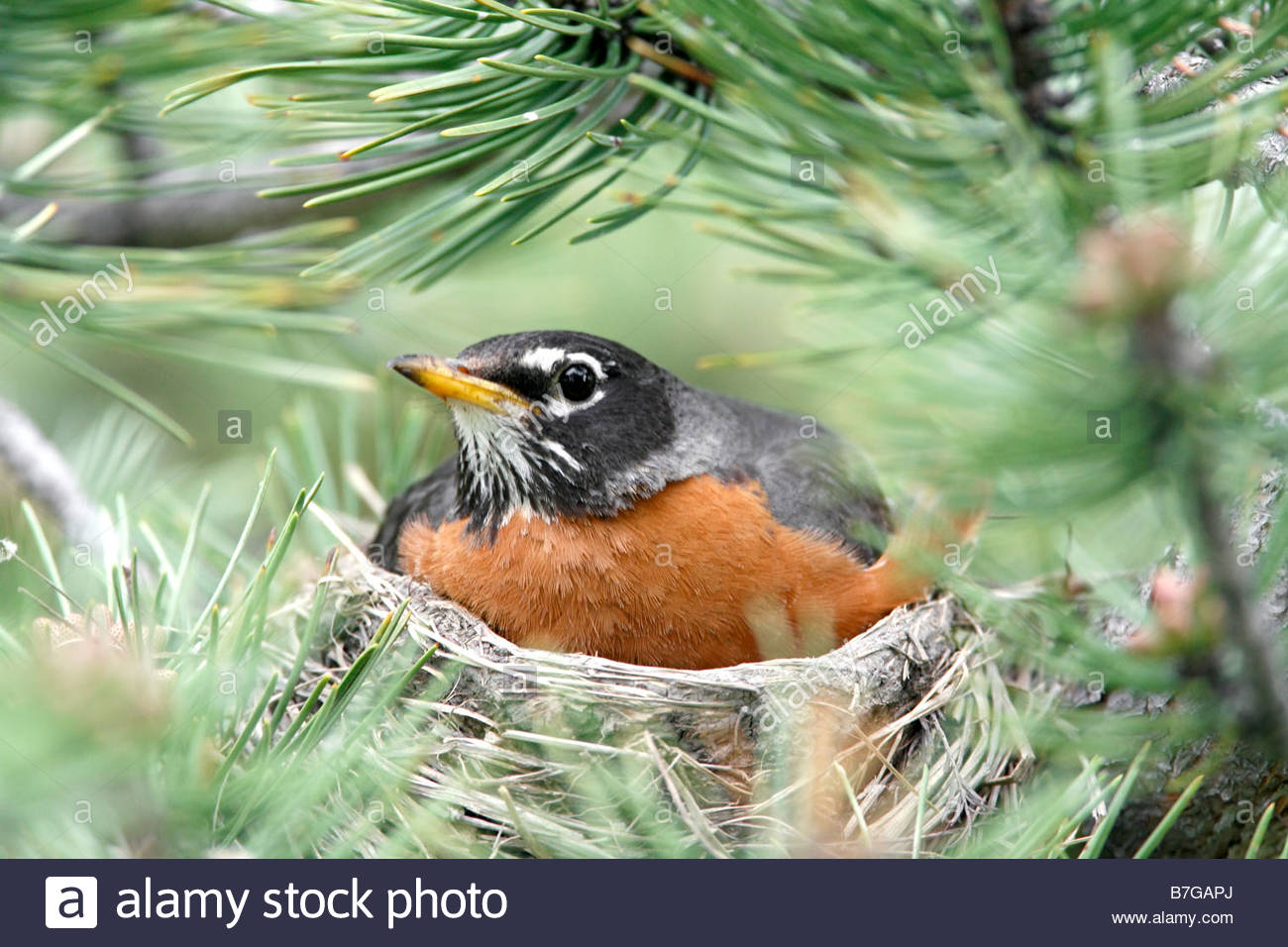
American Robin on Nest ©Alarmy

Benny the American Robin inn Nest ©Alarmy

Clyde returned to Benny, who dropped the worm, surprised that Clyde was so frantic. Benny hadn’t even known that Clyde had gone, but Clyde still apologized. He helped Benny take the worm back to the nest. Every day after that, Clyde and Benny spent all their time together. Even after Benny grew up. Benny placed his nest directly in the tree beside Clyde’s.


“Here’s my concern: that you care for God’s flock with all the diligence of a shepherd. Not because you have to, but because you want to please God. Not calculating what you can get out of it, but acting spontaneously.” (1 Peter 5:2 MSG)

Lee’s Addition:

Emma sent this delightful story to me recently. I trust you will enjoy it as much as I have putting the photos in. She, like many students, college or younger, has been finishing her classes at home.

The verse above has to do with pastors, but the principles apply to this story. Not so sure Clyde was so willing at first, but he came around. Thanks again,Emma, for another tale for us.

See All Of Emma’s Stories Here


McGuffey’s Reader – 1st Grade Lessons LVI and LVII

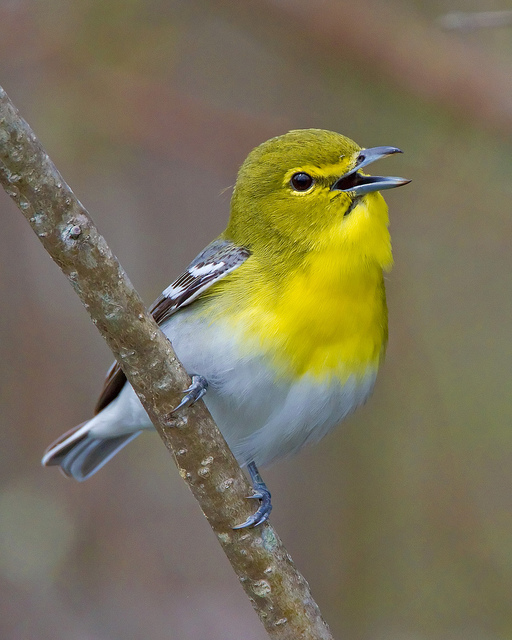
Yellow-throated Vireo (Vireo flavifrons) singing ©nebirdsplus

Yellow-throated Vireo (Vireo flavifrons) singing ©nebirdsplus

These lessons start off with words, then the story. You can practice writing with the Slate Work.

“The flowers appear on the earth; the time of the singing of birds is come, …” (Song of Solomon 2:12a KJV)

LESSON LVI.

strong round dry bill worked

sends claws flit God spring

“How does the bird make the nest so strong, Willie?”

“The mother bird has her bill and her claws to work with, but she would not know how to make the nest if God did not teach her. Do you see what it is made of?”

“Yes, Willie, I see some horse-hairs and some dry grass. The old bird must have worked hard to find all the hairs, and make them into such a pretty, round nest.”

“Shall we take the nest, Rose?”

“Oh no, Willie! We must not take it; but we will come and look at it again, some time.”

Verdin (Auriparus flaviceps) Building Nest 1 ©Earle Robinson

SLATE WORK.

[Illustration: Script Exercise:]

God made the little birds to sing,
And flit from tree to tree;
‘Tis He who sends them in the spring
To sing for you and me.


LESSON LVII.

feathers a go’ fly worm crumb feed’ing

ug’ly off feed brown guess things

Grey Jay (Perisoreus canadensis) Feeding at Nest WikiC

Grey Jay (Perisoreus canadensis) Feeding at Nest WikiC

“Willie, when I was feeding the birds just now, a little brown bird flew away with a crumb in its bill.”

“Where did it go, Rose?”

“I don’t know; away off, somewhere.”

“I can guess where, Rose. Don’t you know the nest we saw some days ago?
What do you think is in it now?”

“O Willie, I know! Some little brown birds. Let us go and see them.”

“All right; but we must not go too near. There! I just saw the old bird fly out of the bush. Stand here, Rose. Can you see?”

“Why, Willie, what ugly little things! What big mouths they have, and no feathers!”

“Keep still, Rose. Here comes the old bird with a worm in her bill. How hard she must work to feed them all!”


McGuffey’s First Grade Reader

The Wordless Book

Laughing Is Good For The Soul

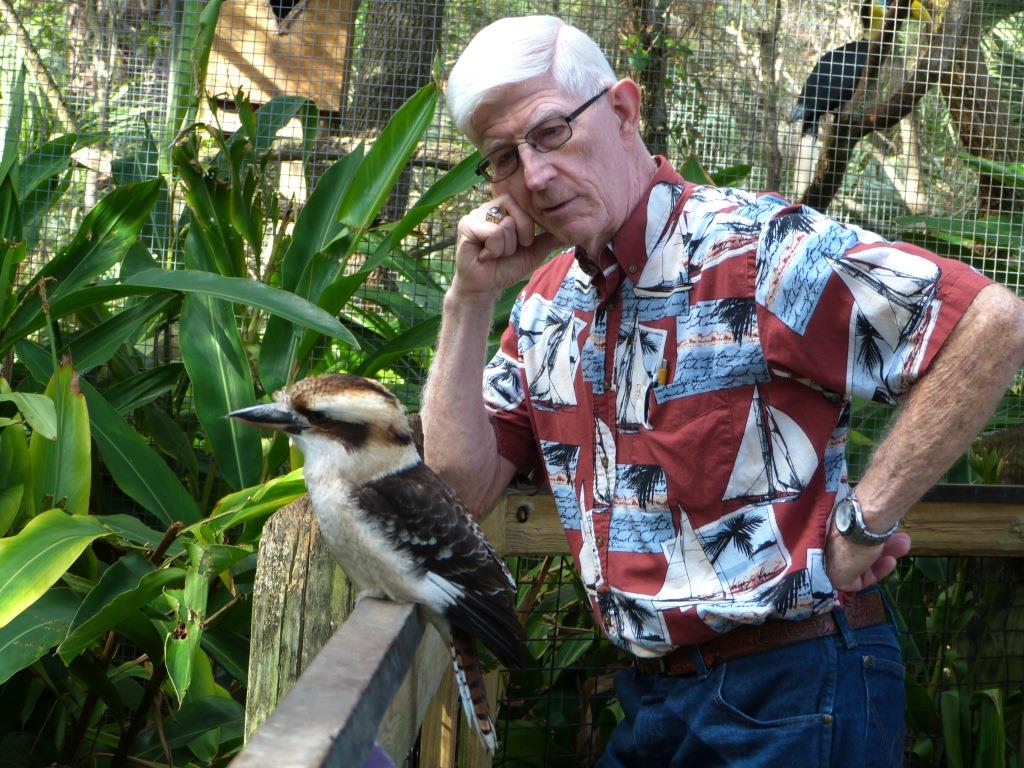
Kookaburra Lowry Park Zoo 12-31-15 by Lee

Laughing Kookaburra Lowry Park Zoo 12-31-15 by Lee

A friend sent me a message with a Kookaburra video. and was wondering if this is a Kookaburra. In response, I reminded her of these previous articles here. We all need to laugh and let off some of our pent up boredom, fustration, idleness, loneliness, or just Need A Good Laugh for our soul’s Well-being.

A merry heart maketh a cheerful countenance: but by sorrow of the heart the spirit is broken. (Proverbs 15:13 KJV)

Meet Merlin, from the Orlando Sea World:

Here are some of the articles from the past with these good-natured birds:

Kookaburra – Chattery Birds With A Merry Heart – 2010

Ian’s Bird of the Week – Laughing Kookaburra -2011

Kookaburra Encounter – 2014

Tickle Me Tuesday Revived – Laughing Kookaburras – 2019

Kingfishers And Kookaburras – From Creation Moments – 2020

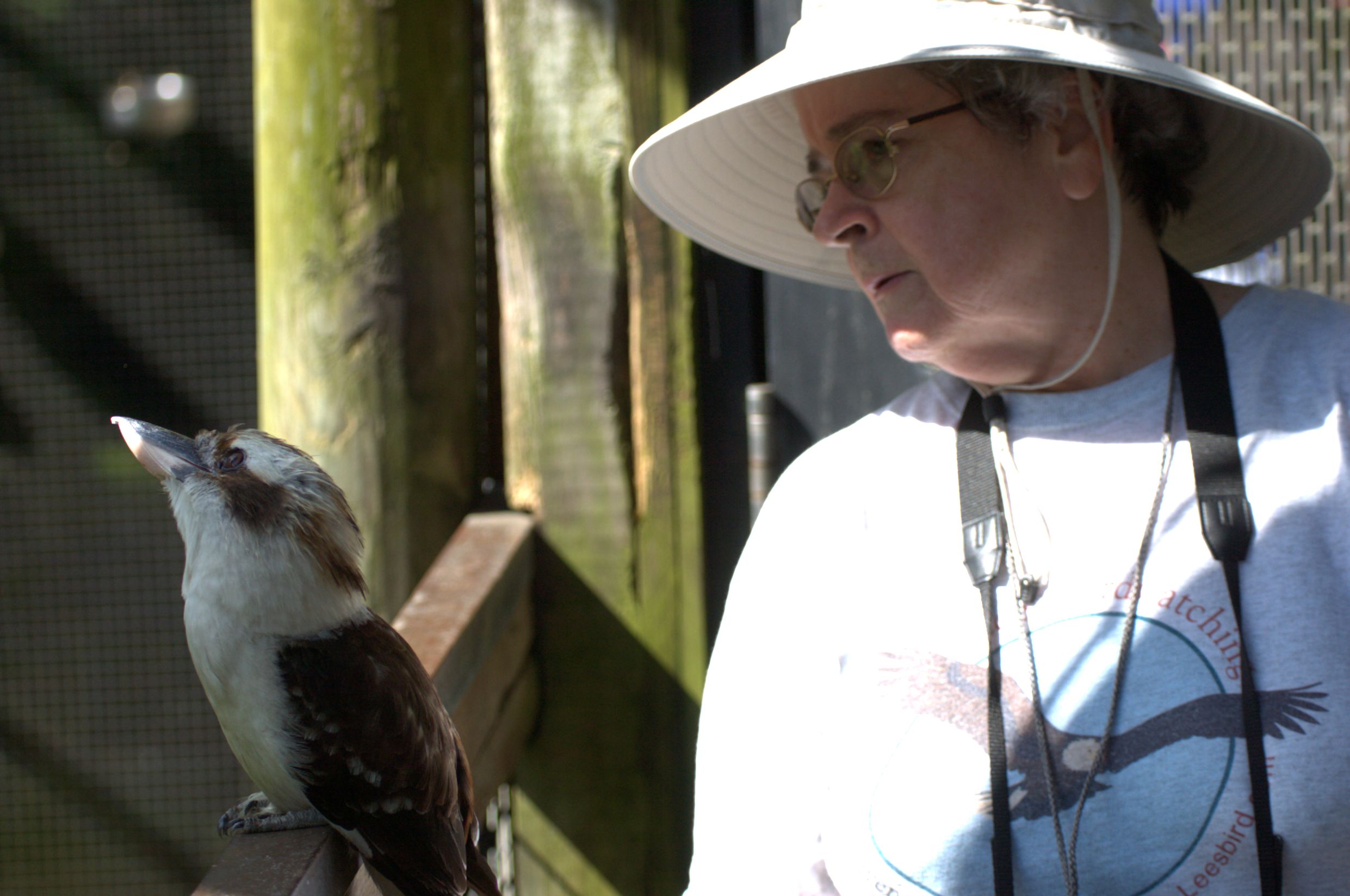
Kookaburra at Brevard Zoo by Dan

Laughing Kookabura Brevard Zoo

Laughing Kookabura Brevard Zoo

Lee and Kookaburra at Brevard Zoo by Dan

Have a great day, and may you keep a smile on your face and in your heart.


Interesting Visitor To Our Feeder

House Finch on Feeder by Lee

House Finch on Feeder by Lee

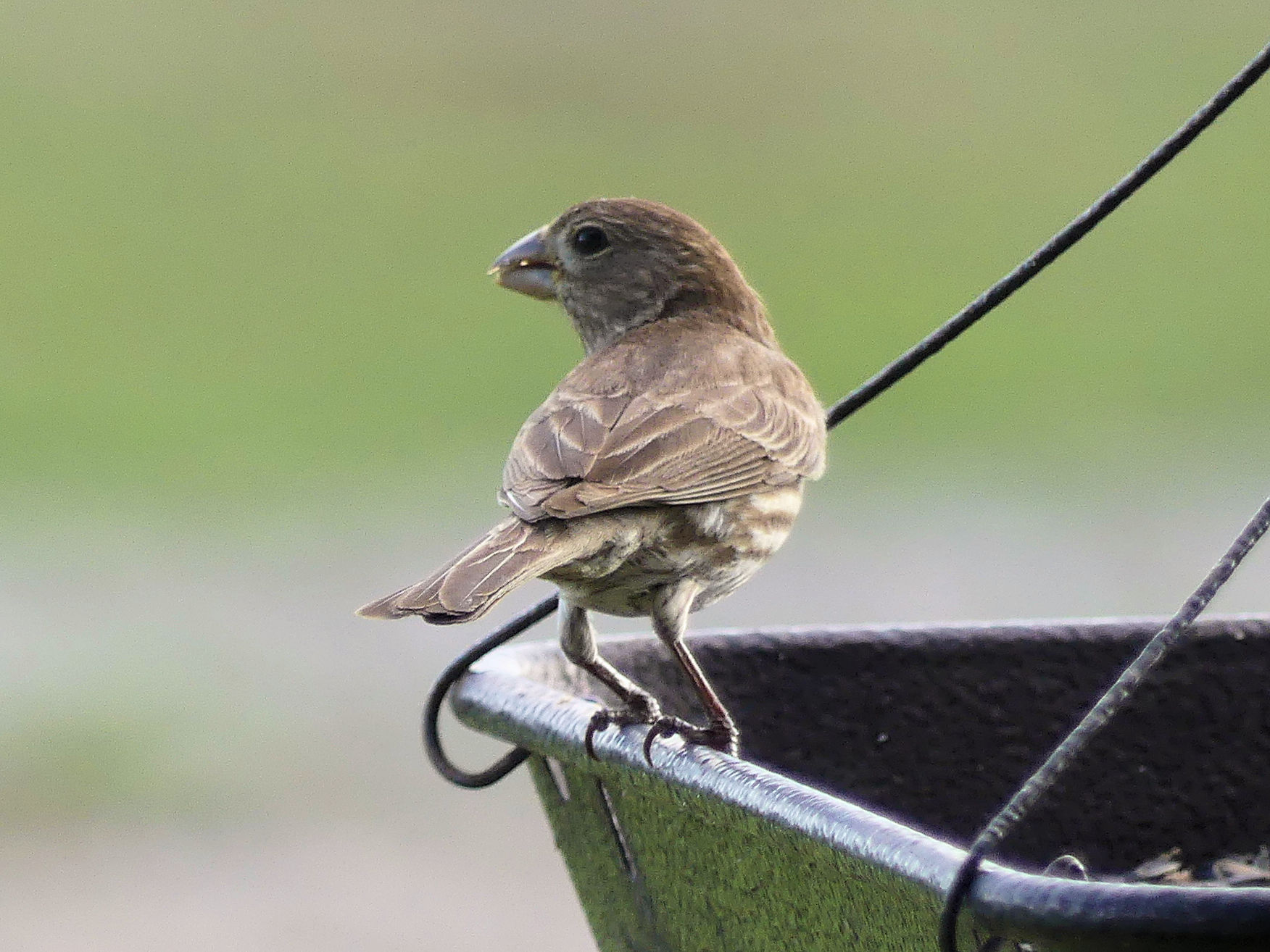
Do you know what a House Finch looks like? We have been fortunate to have several families of these Finches visit our bird feeders lately. It is always enjoyable to have these little birds come by for breakfast, lunch, or dinner. In fact, these little flying avian wonders come by for snacks also. In other words, keep your eye on the feeders.

You can check out the Identification of House Finches as All About Birds – House Finch ID

When a Finch with a different color lands on your feeder, you get excited and question yourself, “What is this?” This happened lately, and out came the bird guides and a search of the internet bird sites, like All About Birds and others.

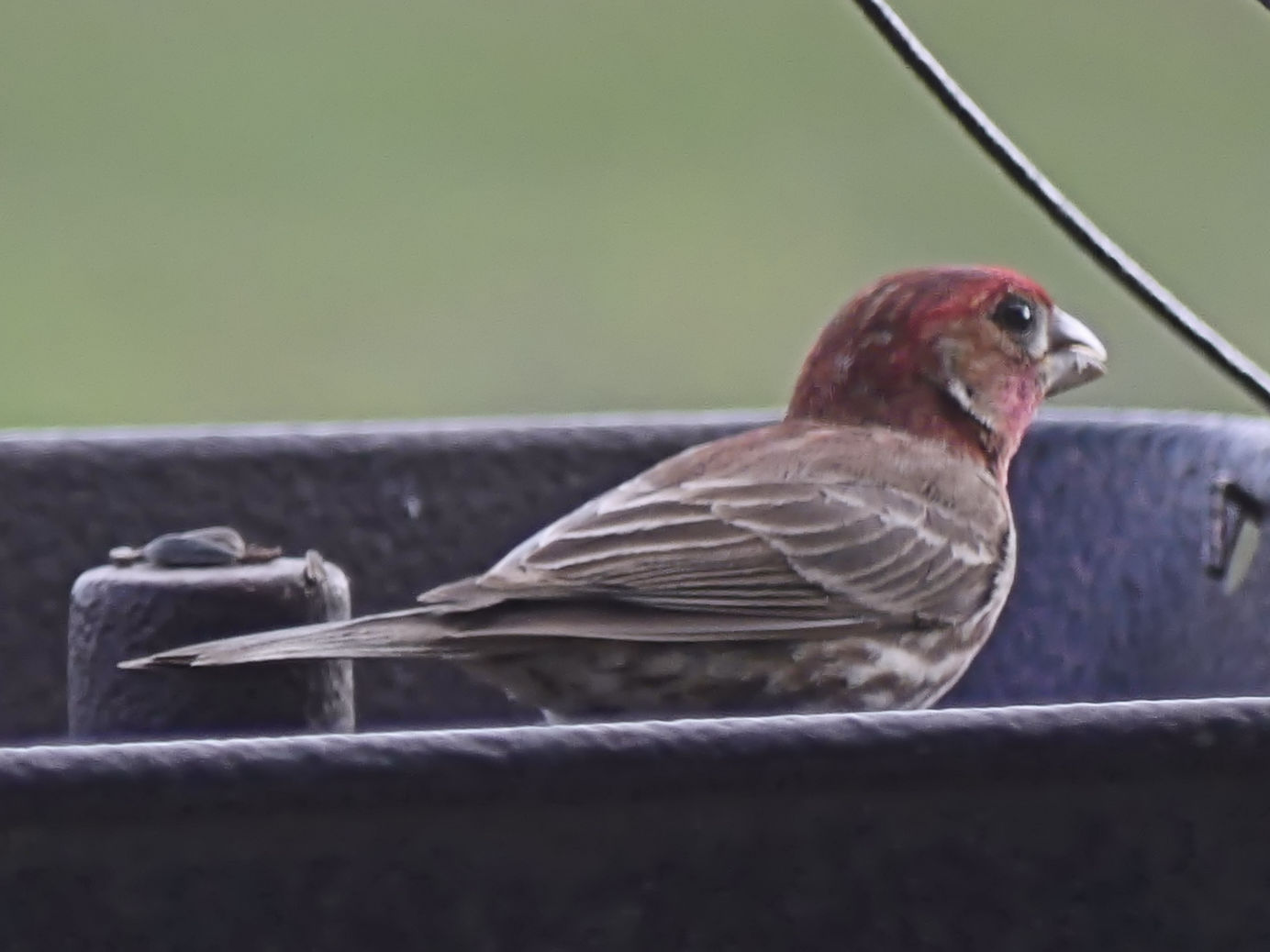
This eye opener landed on our feeder last week:

Varient House Finch on Feeder by Lee

Variant House Finch on Feeder by Lee

Varient House Finch on Feeder by Lee

Variant House Finch on Feeder by Lee

“He gives to the beast its food, And to the young ravens [or Finches] that cry.” (Psalms 147:9 NKJV)

Varient House Finch on Feeder by Lee

Variant House Finch on Feeder by Lee

What happened to this fellow? Apparently, diet or what the bird eats, affects its color. “Male House Finches are generally red, but under certain certain circumstances they may be orange or yellow instead. Different subspecies may show color variations, but differences in color are also attributed to diet.” From this article, I Saw A House Finch That Was Orange Or Yellow Instead Of Red.

“Who provides food for the raven [or Finch], When its young ones cry to God, And wander about for lack of food?” (Job 38:41 NKJV)

Keep your eyes open while bird watching. You never know what might show up! Stay Tuned!

Who Paints The Leaves?


Count It All Joy!

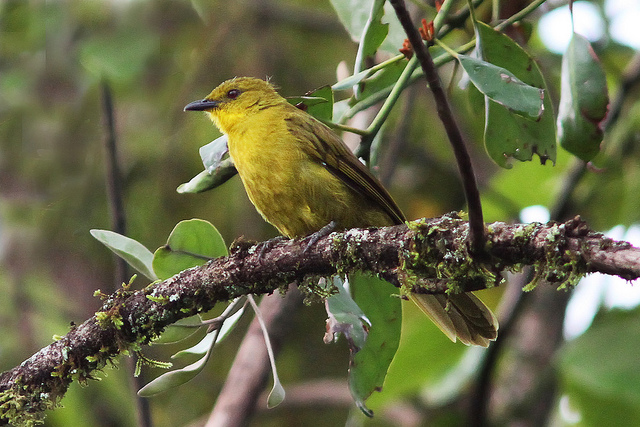
Joyful Greenbul (Chlorocichla laetissima) Flickr Dave Curtis

Our pastor had another encouraging message for our Wednesday night service. One day we will be able to attend a regular prayer meeting again, but, thankfully, our church is using YouTube and other means of keeping the Lord’s Word before us. This week was no exception.

“My brethren, count it all joy when you fall into various trials, knowing that the testing of your faith produces patience. But let patience have its perfect work, that you may be perfect and complete, lacking nothing. If any of you lacks wisdom, let him ask of God, who gives to all liberally and without reproach, and it will be given to him. But let him ask in faith, with no doubting, for he who doubts is like a wave of the sea driven and tossed by the wind.” (James 1:2-6 NKJV)


I trust you will enjoy Pastor Osborne’s message.

Wordless Birds


Chicken, Magpie, and Easter Greetings

*

“Christ is risen! He is risen indeed!” For centuries, Christians have used this greeting to celebrate Resurrection Day, better known as Easter.1 Ironically, there are two birds that can remind us of the historicity and importance of Christ’s rising from the dead, three days after His death and burial.

CHICKENS

Amazingly, the Lord Jesus once compared His own willingness and ability to care and protect humans to that of a chicken—specifically, a mother hen—who uses her own body to protectively care for her own hatchling baby chicks.2 How good it is to belong to the Lord Jesus Christ forever! When He offers to take us in and protect us, we should be eager and grateful to accept His care and security.

But we more closely associate a male chicken (rooster) with the arrest, trials, torture, and sacrificial death of Jesus Christ.

Readers might have already guessed that male chickens are associated with Christ’s death, burial, and resurrection because of the rooster who crowed after Peter ignominiously denied the Lord Jesus, thrice, in fulfillment of Christ’s prophecy.3 In fact, this incident is so important that it is reported by all four gospel writers.3

For example, Mark reports this disappointing failure of Peter, involving the tattletale fowl, a sad chapter in the life of the usually bold apostle: Peter’s triple failure to stand up for Christ, as predicted by Christ Himself. This display of Peter’s imperfect courage and loyalty (even though his inward belief never failed) is linked to the twice-crowing of a rooster.

A second time the rooster crowed. Then Peter called to mind the word that Jesus had said to him, “Before the rooster crows twice, you will deny Me three times.” And when he thought about it, he wept.4

What a sad note to end with! Except, as proven three days later, that wasn’t really the end.5

MAGPIES

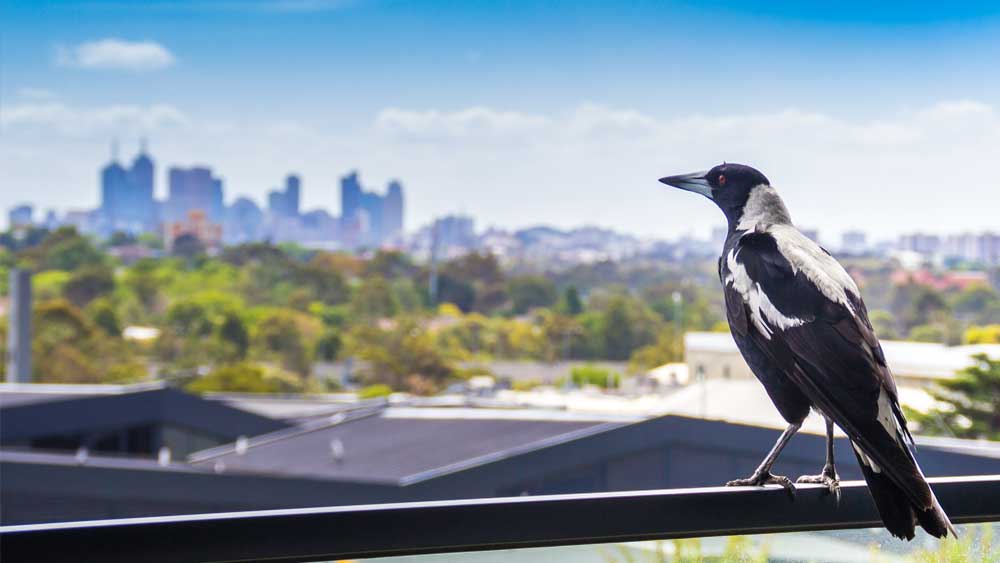
Most people are unlikely to guess that magpies—such as the Australian magpie (Cracticus tibicen6)—can be associated with Christ’s death, burial, and resurrection. How so?

The most famous variety of this “butcherbird,” formerly called the “piping shrike” or “white-backed crow shrike,” is now called the white-backed magpie (Cracticus tibicen telonocua). But many call it the Australian magpie because it appears on the official state flag of South Australia.

Whatever you want to call it, it is famous for its flute-like call, entertaining with a complex repertoire of vocalizations. The black-and-white opportunist has habituated to human-dominated habitats, such as the agricultural fields of farms, gardens, and even wooded parklands.6

The Australian magpie is not timid. It will defend its territory against raptors trespassing therein, such as brown goshawks. The Australian magpie is not a picky eater. Its diet includes both plants and animals. Its preferred diet, however, is dominated by a variety of larval and adult invertebrates, such as insects (like ants, moths, beetles, bees, wasps, cockroaches) and arachnids (like spiders and stinger-wielding scorpions!), as well as earthworms and millipedes. The Australian magpie is also known to eat some small vertebrates, such as mice, skinks, frogs, and toads.6

Some compare the problem-solving resourcefulness and the brash cockiness of this bird to the national reputation displayed by many Aussie ex-patriots.

The Australian magpie is quite a clever problem-solver. It has been observed breaking off the stingers of bees and wasps before swallowing such dangerous bugs!7

By now you’ve likely guessed why this bird reminds us of Resurrection Day—the Australian magpie’s power to neutralize a dangerous stinger.

But insect or arachnid stingers are nothing compared to the powerful sting of death. Yet, Christ’s bodily resurrection on the third day defeated death’s “stinger.”

For this corruptible must put on incorruption, and this mortal must put on immortality. So when this corruptible has put on incorruption, and this mortal has put on immortality, then shall be brought to pass the saying that is written: “Death is swallowed up in victory.” “O Death, where is your sting? O Hades, where is your victory?” The sting of death is sin, and the strength of sin is the law. But thanks be to God, who gives us the victory through our Lord Jesus Christ.8

Hallelujah! Christ is risen! He is risen indeed!

References
1. Morris, H. M. 2006. Christ Is Risen. Days of Praise. Posted on ICR.org April 16, 2006, accessed April 7, 2020.
2. Matthew 23:37; Luke 13:34. Cansdale, G. S. 1976. All the Animals of the Bible Lands. Grand Rapids, MI: Zondervan Publishing House, 163-165.
3. Matthew 26:34, 26:74-75; Mark 14:30, 14:68-72; Luke 22:34, 22:60-61; John 13:38, 18:27.
4. Mark 14:72.
5. Matthew 12:39-40; 1 Corinthians 15:1-4; Romans 10:9; Psalm 16:9-10.
6. Taxonomists have also labeled the Australian Magpie as the Australian Magpie Gymnorhina tibicen (meaning “trumpeting bare-nose”). Regarding the physical and behavioral traits of the Australian Magpie, see Veltman, C. J., and R. E. Hickson. 1989. Predation by Australian Magpies (Gymnorhina tibicen) on Pasture Invertebrates: Are Non-territorial Birds Less Successful? Australian Journal of Ecology. 14(3): 319-326; Cake, M., A. Black, L. Joseph. 2018. The Generic Taxonomy of the Australian Magpie and Australo-Papuan Butcherbirds Is Not All Black and White. Bulletin of the British Ornithologists’ Club. 138(4): 346-359; Brown, E. D., and C. J. Veltman. 1987. Ethnogram of the Australian Magpie (Gymnorhina tibicen) in Comparison to Other Cracticidae and Corvus Species. Ethology (International Journal of Behavioural Biology). 76(4): 309-333. This author also appreciatively thanks Fiona Smith, M.C.Ed.—ICR SOBA graduate and Australian creation science educator/author—for her help with research and perspectives on Australian magpies.
7. Dr. Amy L. Adams notes: “Magpies will walk along the ground searching for food by overturning debris or probing their bills into the dirt. They eat insects, larvae and other invertebrates. Magpies are known to remove the stingers of wasps and bees before eating them.” Adams, A. 2016. Gymnorhina tibicen Australian Magpie. Museums Victoria Collections. Posted on collections.museumvictoria.com, accessed April 7, 2020.
8. 1 Corinthians 15:53-57, quoting Messianic prophecy in Hosea 13:14.

*Dr. Johnson is Associate Professor of Apologetics and Chief Academic Officer at the Institute for Creation Research.


James J. S. Johnson Articles Here

Article at I.C.R. https://www.icr.org/article/chicken-magpie-and-easter-greetings/
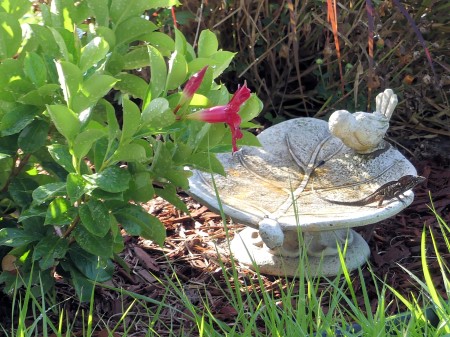
Garden Longing

“And Lot lifted up his eyes, and beheld all the plain of Jordan, that it was well watered every where… even as the garden of the Lord” Genesis 13:10

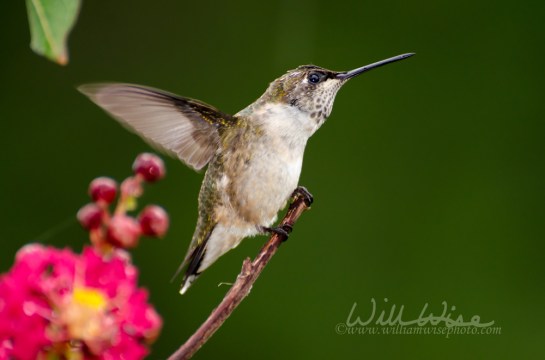
All winter, we long for spring and the day we can get back to dressing and keeping our backyard gardens. We feel a strong inward desire to rejuvenate our backyard bird sanctuaries for the return of our beloved hummingbirds and other avian friends. But why is there such an affinity within us for gardens?

Ruby-throated Hummingbird in my backyard garden; Clarke County, Georgia. July, 2014. ©www.williamwisephoto.com.

In the Old Testament book of Genesis, the nomads Abraham and his nephew decide to split up and settle down. In making his choice of a new homeland, Lot looks towards the plains of Jordan and sees a fertile land “like the garden of the Lord” (Genesis 13:10). That same internal “garden longing” in his heart was triggered and leads Lot east.

I believe our love of gardens stems from a longing to return to Eden, that perfect state of beauty and fellowship with our Creator that man enjoyed in the beginning; where man walked with God “in the garden in the cool of the day”. When Adam’s eyes were opened, his first sight was a garden with “every tree that is pleasant to the sight, and good for food; the tree of life also in the midst of the garden.” Our love of gardens stems from a desire to return to Eden, to return to a place that place of paradise that was lost through sin.

Even though we see disease, decay and corruption in this world today, one day we will return to paradise. As the story of this present age comes to its final chapter, a new book will be written. One where we will see a new heaven and a new earth brought forth (Isaiah 65:17, 2 Peter 3:13, Revelation 21:1). Until then, let us enjoy our backyard gardens as a small piece of Eden; as a reminder of the blessed and perfect garden in world yet to come. As you till your soil with your hands, remember in your heart that one day, “thou shalt be with me in paradise.”

“He that hath an ear, let him hear what the Spirit saith unto the churches; To him that overcometh will I give to eat of the tree of life, which is in the midst of the paradise of God.” Revelation 2:7


Hi, I’m wildlife photographer and nature writer William Wise. I was saved under a campus ministry while studying wildlife biology at the University of Georgia. My love of the outdoors quickly turned into a love for the Creator and His works. I’m currently an animal shelter director and live in Athens, Georgia with my wife and two teenage daughters, who are all also actively involved in ministry. Creation Speaks is my teaching ministry that glorifies our Creator and teaches the truth of creation. William Wise Nature Notes is my wildlife and birding photo blog documenting the beauty, design and wonder of God’s creation.  — “What a wildly wonderful world, God! You made it all, with Wisdom at Your side, made earth overflow with your wonderful creations.” Psalms 104, The Message.

Today’s Visitor To The Feeder – House Finch

Male House Finch 3-28-20 by Lee

Well, as we all stay home and keep our distances, what is there to do? Like many of you, it seems that the chores around the house seem to take up more time. Cooking, especially seems more time consuming. An occasional meal out, saves time, but, that isn’t happening. At least around here.

We have pretty well stayed close to home. Drive through McDonald’s was a treat.

Thankfully, the birds have not changed their behavior and keep stopping by for free handouts. Today’s visitors were a pair of House Finches. They just started stopping by recently.

Female House Finch 3-28-20 by Lee

“You shall take with you seven each of every clean animal, a male and his female; two each of animals that are unclean, a male and his female; also seven each of birds of the air, male and female, to keep the species alive on the face of all the earth.” (Genesis 7:2-3 NKJV)

I also had a “baby dinosaur” stop by. Actually, it is some sort of chameleon or lizard. I have no idea.

Baby Dinosaur - Chamilian or Lizard by Lee 3-28-20

Baby Dinosaur – Chameleon or Lizard by Lee 3-28-20

Baby Dinosaur - Chamilian or Lizard by Lee 3-28-20

Baby Dinosaur – Chameleon or Lizard by Lee 3-28-20

There have be a few other stopping by and giving us something to do. Stay Tuned!


Ian’s Bird of the Whatever – Bare-faced Curassow

The Irregular Bird, formerly Bird of the Moment, formerly Bird of the Week, #600: Bare-faced Curassow
[This is how Ian titled his email. He is celebrating his 600 article. That is quite a milestone. Congratulations, Ian, Keep them coming. They are always so interesting.]
Bird number 600 after 18 years is a bit of a landmark, so here is something suitably celebratory: the best dressed award for the South American trip: the Bare-faced Curassow. They also win the worst named award as I have to think every time I write it so I don’t say ‘assed’ but that’s probably a reflection on me, not the species.
The most beautiful bird award went to the Hyacinth Macaw, #592; the most interesting went to the Sunbittern, #591; the most spectacular went to the Andean Condor, #593; the most beautiful mammal award went predictably to the Jaguar which also featured briefly in #592; the most unusual mammal to the Armadillo;  the least elegant went to the Collared Peccary; the most amusing and ugliest went to the Capybara, and the most delightful to the Giant Otter; the most beautiful lizard went to the Green Iguana; and the most beautiful snake went to the Yellow Anaconda.
If you can think of any categories I’ve left out let me know and I’ll see what I can do in the next Irregular Bird. A former colleague of mine, the world expert on the different pelagic behaviour of right- and left-footed thongs/jandals/flipflops recently called it Bird of the Undefined Time, which I like very much and set me thinking, but I’m going to settle on The Irregular Bird.
bare_faced_curassow_203516_pp.jpg
The Curassows also won the best hairstyle award so I’ll deal with that first. The male’s is all black, quite original in a dapper and restrained sort of way, very suitable for evening dress/tuxedo. The female couldn’t resist a two-tone look, also restrained and very dignified. I think the black curly tip on a white base is gorgeous and the little black fringe/bang is the perfect finishing touch. Both have the suitably haughty look of famous models and you might be surprised to find that this male is married to this female: it could be an interesting household with two prima donnas, even before any kids come along.
bare_faced_curassow_203186_pp.jpg
Here’s the male in his dinner jacket/tuxedo on the way to the Rio Claro masked ball. He’s wearing a special yellow face mask which doesn’t cover his eyes. It’s partially for epidemiological reasons but fame is important to him and he wants everyone to recognised him and know that he too was invited to this special event. Very suave and practising his red carpet walk, but he doesn’t really need to as he naturally has the sort of elegant, pouty walk that is widely admired by on the cat-walk.
bare_faced_curassow_202985_pp.jpg
The female is wearing a tan-coloured silk ball gown with a brownish black cape and train. Both of these are hand embroidered with stripes consisting of thousands of large pearls and diamonds. Consequently they’re rather heavy and she hopes she doesn’t trip or fall on the way and is secretly looking forward to discarding them with a flourish in front of the cameras of the paparazzi. She’s walking past the resort swimming pool on the way to the ballroom. Those of you familiar with Australian flora will recognised the trunk of the tree and the leaves on the ground as belonging to a rare species of Eucaplyptus specially imported at great expense from a boutique nursery in Humpty Doo, 40km from Darwin in the Northern Territory, a small town better known by ordinary folk for its barramundi (an over-rated freshwater fish with a wonderful name). The climate there is similar to that in the Pantanal, hot and dry for much of the year with a very wet wet season.
bare_faced_curassow_203196_pp.jpg
Masked balls can lead to unexpected results and this mother Curassow is paying the price. She sadly remembers the party times well, don’t we all, but is quite fond of her two chicks. She’s pleased to have both a daughter (centre foreground) and a son, trying to hide under mother’s skirts in the background on the left. He is already sporting a yellow face mask like his dad, is developing a precocious crest and wearing a black waistcoat, unbuttoned to show off his tan. Curassows are vegans naturally, and these ones are looking for the seeds of some super-food they’ve been told about. They also visit salt-licks as they believe that it’s makes their plumage very lustrous. It also leads to high blood pressure but they are young and don’t worry about such matters.
bare_faced_curassow_202135_pp.jpg
Bare-faced Curassows range through central Brazil, eastern Bolivia, most of Paraguay and northern Argentina. Like the rest of us they are regarded as Vulnerable, suffering from hunting by left-wing elements, and are extinct in Rio de Janeiro as they found the Carnival much too vulgar and moved to the provinces particularly the Pantanal in Mato Grosso, a well-known retreat for the rich and famous.
Like all news now whether official or on social media, subject this article to the scrutiny of your b*llsh*t meter.
Stay safe, practise acceptance (very difficult I know) and keep cheerful,
Ian
PS Here is the only prize winner that hasn’t yet made it to the website. I must rectify that today. They’re king of the Iguanas, very large to 2 metres long, perfect for social distancing, with a noble heritage having been described by Carl Linnaeus in 1758 during the reign of Louis XV and when the United States were still British colonies. Like Louis XIV and Bare-faced Curassows, they’re into extravagant balls. This one is lounging on a freshwater beach on a sunny day near the fashionable resort of Porto Jofre in the Southern Pantanal, improving its green tan.
green_iguana_205307-pp.jpg

—

Ian Montgomery,
454 Forestry Road, Bluewater, Qld 4818
Phone: 0411 602 737 +61-411 602 737
Preferred Email: ian@birdway.com.au

Recorder Society http://www.nqrs.org.au

Lee’s Addition:

See my comments above, plus we have posted quite a few of those 600 articles here. Ian gave me permission years ago to use these newsletters. Thank, Ian. And for the great photos of birds you have shared with us.
“Bring out with you every living thing of all flesh that is with you: birds and cattle and every creeping thing that creeps on the earth, so that they may abound on the earth, and be fruitful and multiply on the earth.” (Genesis 8:17 NKJV)
“I know all the birds of the mountains, And the wild beasts of the field are Mine.” (Psalms 50:11 NKJV)

Ian’s Bird of the Week, Moment, Whenever

Ian Montgomery Offers Free eBooks During Pandemic

Diary of a Bird Photographer, Vol 2 by Ian Montgomery

Just received an email from Ian Montgomery, Ian’s Bird of the Week, who is offering free downloads of his three eBooks. This is only being offered for a short time.

Here is his email:

Given the strange times we live in now, I’m thinking of all the other people isolated at home and looking for things to do. I’ve decided to make all my eBooks free for the time being.
Two of these are Diary of a Bird Photographer, Volumes 1 and 2, which are compilations of the Bird of the Week/Moment from #1 to #341, and #342 to #585, respectively, i.e. from 2002 to 2009 and 2010 to 2018.
The third is guide Where to Find Birds in North-east Queensland. This is a guide to the more than 400 species of birds that occur in this region and the 200 or so locations in which to look for them, and there are about 700 bird photos, and 200 of locations.
All the books is comprehensively indexed so you can jump around all over the place. If your stuck at home, and even if you’re not, you can take a virtual bird tour of NE Queensland at zero cost in Where to Find Birds in North-east Queensland – much better than having to worry about to getting home after your trip. Maybe you could use it to teach your kids about the joys of bird watching.
Given the current pandemic, Ian has decided to give his ebooks free to anyone interested in nature. If you already now about ebook formats such as pdfs, epub and mobi, then go straight to the Birdway Store on the Payhip website where I’ve made the books available for download.
If you’re a bit vague about ebook formats, go first to the Quick Guide to eBooks, check it out to see which one is best or you and then got to the Birdway Store on the Payhip website which you can do from that page.
None of the books is copyright protected, so you can distribute them as you wish.
birdway_store_on_payhip_400_free.jpg
Happy reading and happy virtual travelling,
Stay safe,
Ian

—

Ian Montgomery,
454 Forestry Road, Bluewater, Qld 4818
Phone: 0411 602 737 +61-411 602 737
Preferred Email: ian@birdway.com.au

Recorder Society http://www.nqrs.org.au

Lee’s Addition:

I followed his links and was able to download all three ebooks.
Thanks, Ian, for giving us something to do while we are staying close/in our homes.
“Who has put wisdom in the mind? Or who has given understanding to the heart?” (Job 38:36 NKJV)