“And he hath violently taken away his tabernacle, as if it were of a garden; He hath destroyed his places of the assembly: the Lord hath caused the solemn feasts and sabbaths to be forgotten in Zion, and hath despised in the indignation of his anger the king and the priest. (Lamentations 2:6)
Wattled Curassow (Crax globulosa) by Lee at National Aviary
“Looking unto Jesus the author and finisher of our faith; who for the joy that was set before him endured the cross, despising the shame, and is set down at the right hand of the throne of God.” (Hebrews 12:2 KJV)
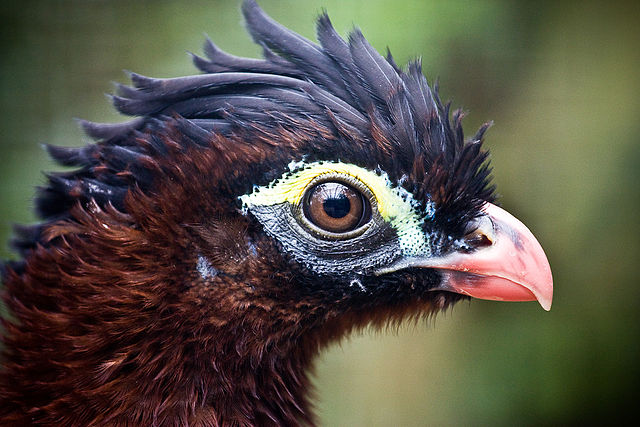
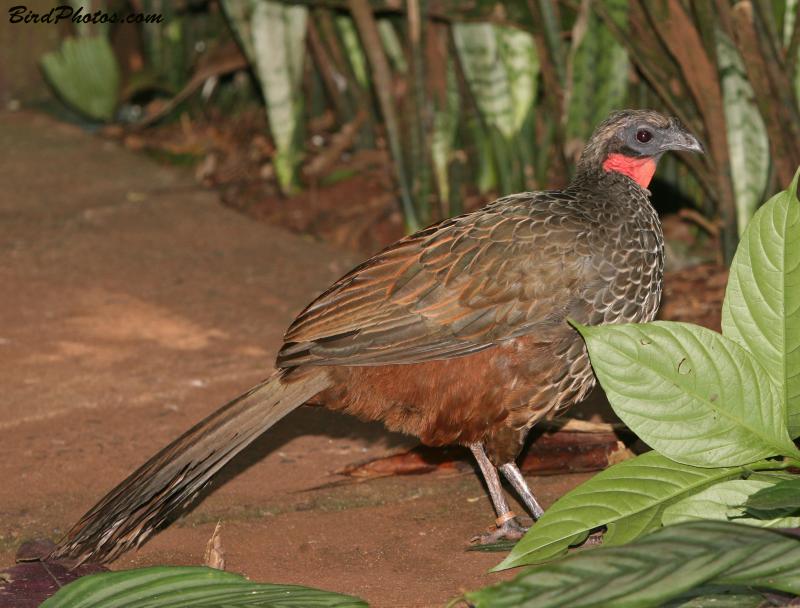
Today we will finish up the Cracidae family by introducing you to the last 15 species. The are the Curassows in four genera. I love their curly hairdo on most of them. We see them in the different zoo quite frequently. “Curassows are one of the three major groups of cracid birds. Three of the four genera are restricted to tropical South America; a single species of Crax ranges north to Mexico.
The Nocturnal Curassow (Nothocrax urumutum) is the only one in his genus. They are found in Brazil, Colombia, Ecuador, Peru, and Venezuela. Its natural habitats are subtropical or tropical moist lowland forests and subtropical or tropical swamps.
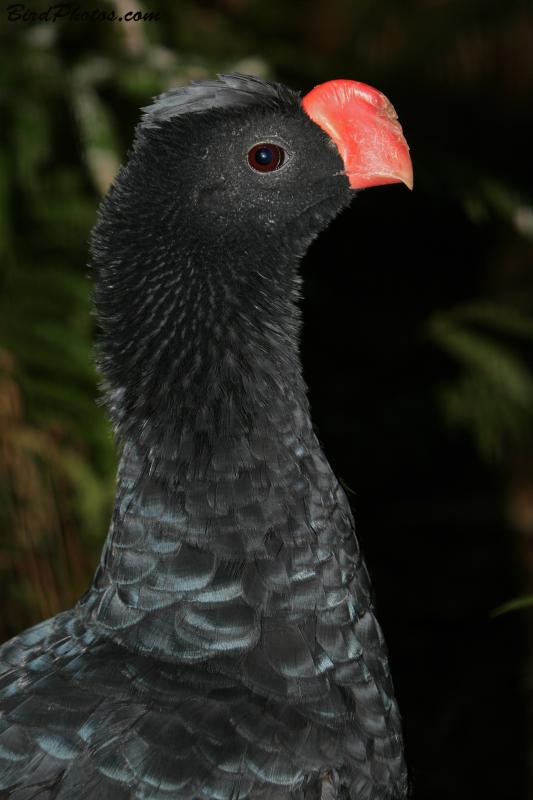
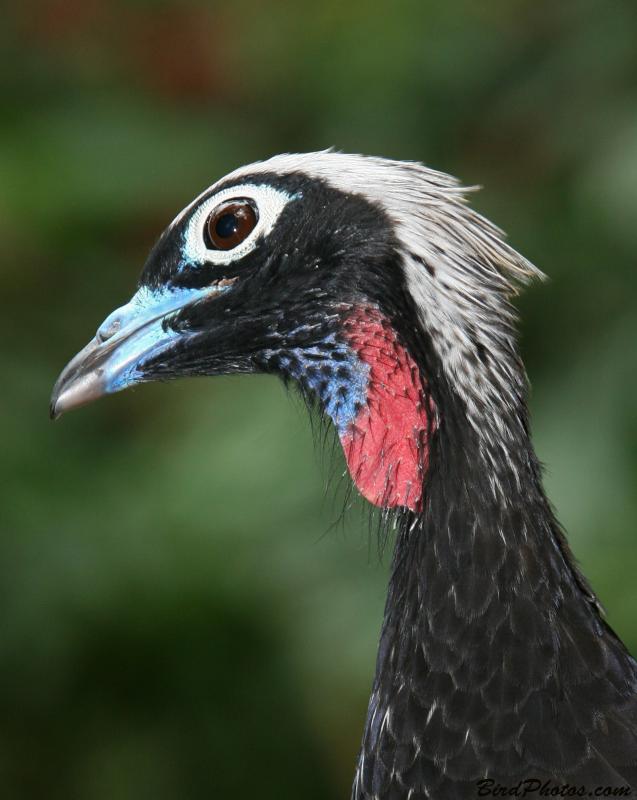
The next genus of Curassows are the Mitu, of which there are four. They are found in humid tropical forests in South America. Their plumage is iridescent black with a white or rufous crissum and tail-tip, and their legs and bills are red. The genders are alike. These are the Crestless, Alagoas, Salvin’s, and the Razor-billed Curassows.
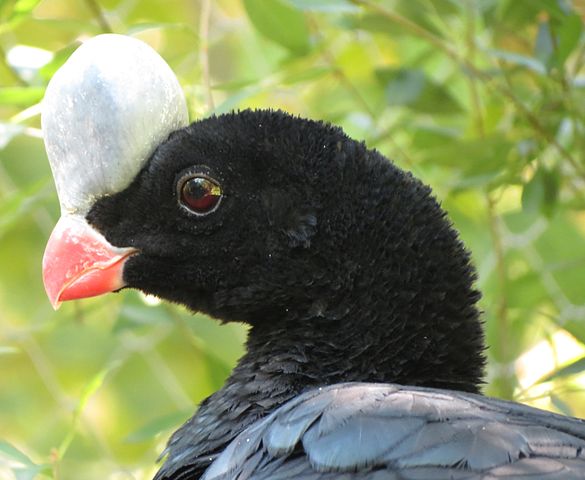
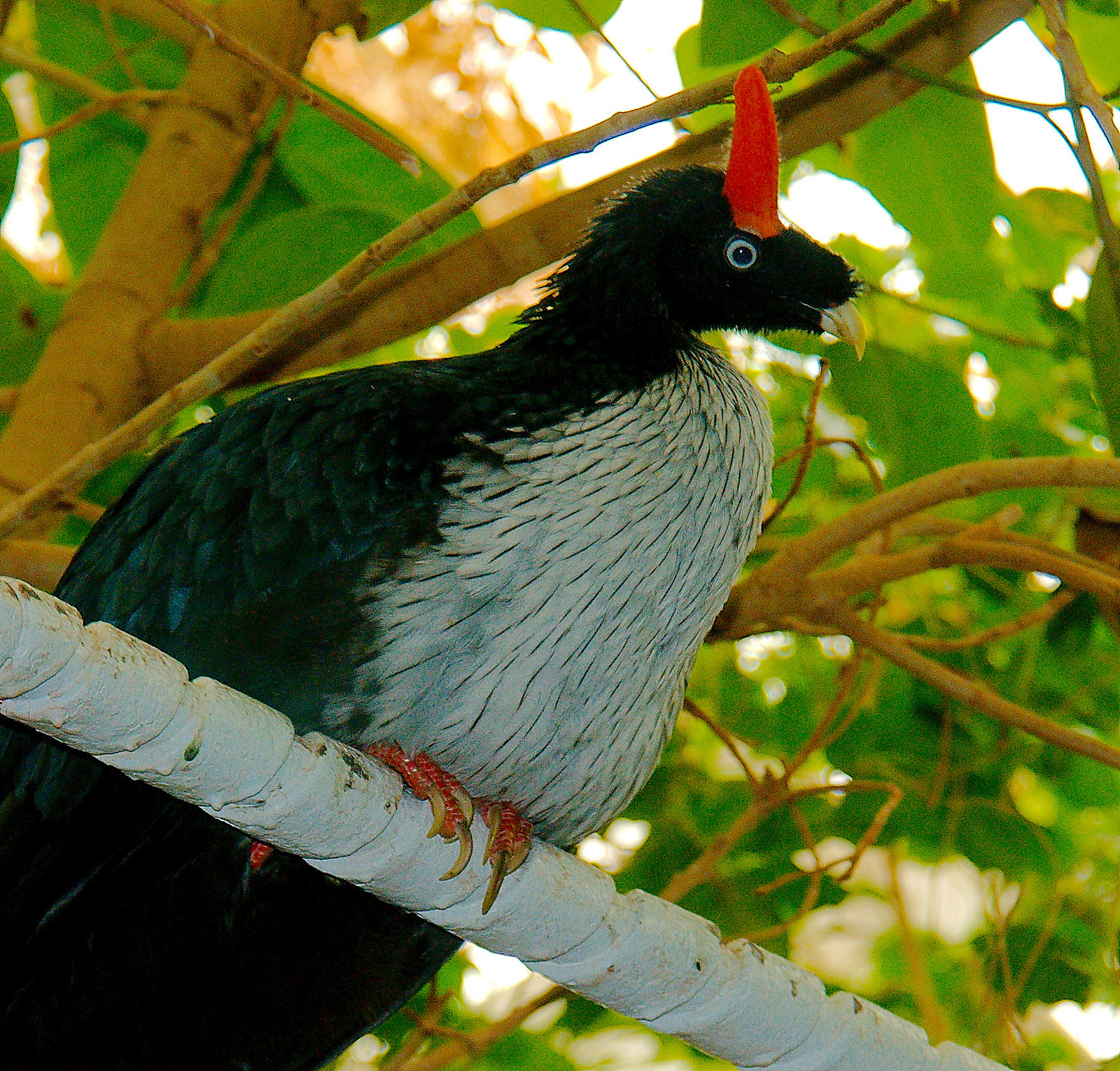
The next Genus Pauxi – are called Helmeted Curassows. The Helmeted, Horned and Sira Curassows make up this group. They are terrestrial black fowl with ornamental casque on their heads. All are found in South America.
The last genus in this Cracidae Family are the Crax. Seven of them finish off with their curly hairdos. “Crax is a genus of curassows in the order Galliformes, a clade of large, heavy-bodied, ground-feeding birds. They are known from tropical South America with one species, the great curassow, ranging northwards through Central America as far as Mexico. The currasows in this genus are noted for their sexual dimorphism; males are more boldly coloured than females and have facial ornamentation such as knobs and wattles. They are also characterised by curly crests and contrastingly-coloured crissums.” (Most information from Wikipedia with editing)
This slideshow requires JavaScript.
*
“For the preaching of the cross is to them that perish foolishness; but unto us which are saved it is the power of God.” (1 Corinthians 1:18 KJV)
“My son, fear thou the LORD and the king: and meddle not with them that are given to change:” (Proverbs 24:21 KJV)
Updates
Below are summaries of quarterly updates to the IOC World Bird List. We strive to track taxonomic advances in ornithology in a timely way. All of the updated information and species changes are included in the latest version of the list on this website.
Please click on one of the tabs on the pull down Updates Menu above for particular sets of updates, i.e. Species, Subspecies etc. Also see edits of the nomenclature authorities.
Version 7.1 (Jan 8, 2017 )
The IOC World Bird List 7.1 contains 10,672 extant species (and 156 extinct species) classified in 40 Orders, 238 Families (plus 2 Incertae Sedis) and 2,294 Genera. The list also includes 20,344 subspecies, their ranges and authors.
Changes include:
SPECIES ADDED:13 including one extinct (San Cristobal Flycatcher)
TAXONOMY:10 including resequence of Ratites, Draft revision of Orders.
The IOC was busy at work putting out their newest version, and we were too incumbered [crashed computer, bronchitis, on-line course] to really get to it. I trust this blog will be updated in the next few days to reflect these changes.
Stewart [Island] Shag (Leucocarbo chalconotus) to Otago Shag
Wedge-billed Hummingbird (Schistes geoffroyi) to Geoffroy’s Wedgebill
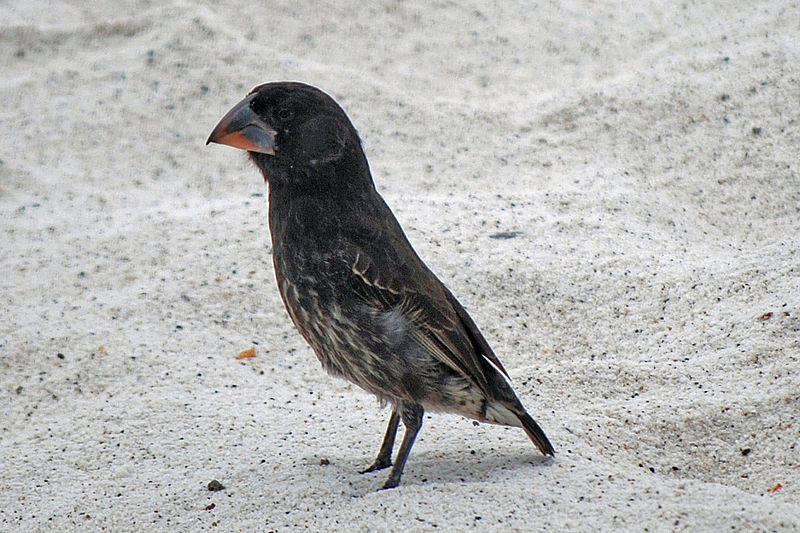
Large Cactus Finch (Geospiza conirostris Espanola) to Ground Finch
They also changed the sequence of the first six Orders. They were in this order:
“Our persecutors are swifter than the eagles of the heaven: they pursued us upon the mountains, they laid wait for us in the wilderness.” (Lamentations 4:19 KJV)
“Remember, I pray, the word that You commanded Your servant Moses, saying, ‘If you are unfaithful, I will scatter you among the nations; but if you return to Me, and keep My commandments and do them, though some of you were cast out to the farthest part of the heavens, yet I will gather them from there, and bring them to the place which I have chosen as a dwelling for My name.’ ” (Nehemiah 1:8-9 NKJV)
African Fish Eagle (Haliaeetus vocifer) by Africaddict
“Ye have seen what I did unto the Egyptians, and how I bare you on eagles’ wings, and brought you unto myself.” (Exodus 19:4 KJV)
One of the first videos shown on the blog was of the African Fish Eagle. That was back when this blog first started up. I have repeatedly shown it over the years.
First my favorite one with the music:
“For thus saith the LORD; Behold, he shall fly as an eagle, and shall spread his wings over Moab.” (Jeremiah 48:40 KJV)
Now here is a great one to show in slow motion.
“They are passed away as the swift ships: as the eagle that hasteth to the prey.” (Job 9:26 KJV)
Here is the second group of birds in the Cracidae Family. Last weeks Chachalacas were rather plain, but an interesting group. Today’s second set of species has 20 Guans and 4 Piping Guans. You will notice a little more variety and coloring in these Guans, yet the overall shapes are similiar to the Chachalacas. “The guans are a number of bird genera which make up the largest group in the family Cracidae. They are found mainly in northern South America, southern Central America, and a few adjacent Caribbean islands. There is also the peculiar horned guan (Oreophasis derbianus) which is not a true guan, but a very distinct and ancient cracid with no close living relatives (Pereira et al. 2002).”
These are distributed through 6 genera. These are the birds in the Penelope genera; Band-tailed Guan, Bearded Guan, Baudo Guan, Andean Guan, Marail Guan, Rusty-margined Guan, Red-faced Guan, Crested Guan, Cauca Guan, White-winged Guan, Spix’s Guan, Dusky-legged Guan, White-crested Guan, Chestnut-bellied Guan, and White-browed Guan
Wattled Guan is in Aburria, Black Guan and Sickle-winged Guan are in the Chamaepetes genus, Highland Guan in the Penelopina and the Horned Guan in the Oreophasis generas.
I found this additional remark in Wikipedia rather amazing. “This indicates that the guans’ origin is in the northern Andes region, in the general area of Colombia or perhaps Ecuador; the date of their initial radiation is not well resolved due to the lack of fossil evidence but can be very roughly placed around 40–25 mya (Oligocene, perhaps some time earlier). The two basal lineages diverged during the Burdigalian, around 20–15 mya.(Pereira et al. 2002)” They have no proof or fossil evidence, yet they came up with these millions of years. Their initial radiation was the day they came off of the ark., which was not millions of years ago.
“Bring forth with thee every living thing that is with thee, of all flesh, both of fowl, and of cattle, and of every creeping thing that creepeth upon the earth; that they may breed abundantly in the earth, and be fruitful, and multiply upon the earth. And Noah went forth, and his sons, and his wife, and his sons’ wives with him: Every beast, every creeping thing, and every fowl, and whatsoever creepeth upon the earth, after their kinds, went forth out of the ark.” (Genesis 8:17-19 KJV)
This slideshow requires JavaScript.
*
“For in the time of trouble he shall hide me in his pavilion: in the secret of his tabernacle shall he hide me; he shall set me up upon a rock.” (Psalms 27:5 KJV)







 Lee's Birdwatching Adventures Plus
