Scripture Alphabet of Animals: The Eagle

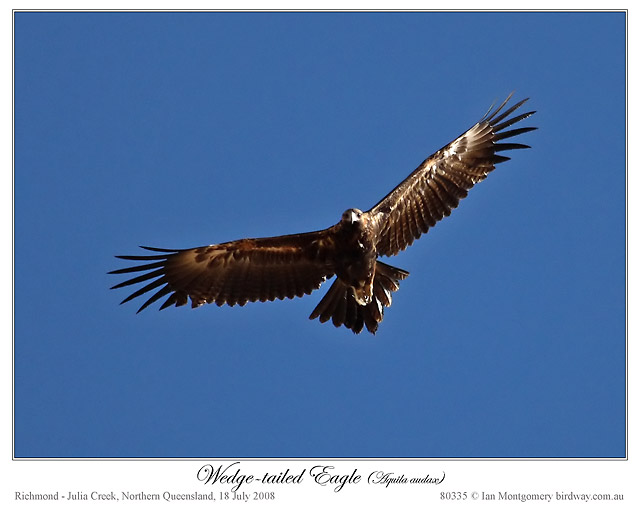
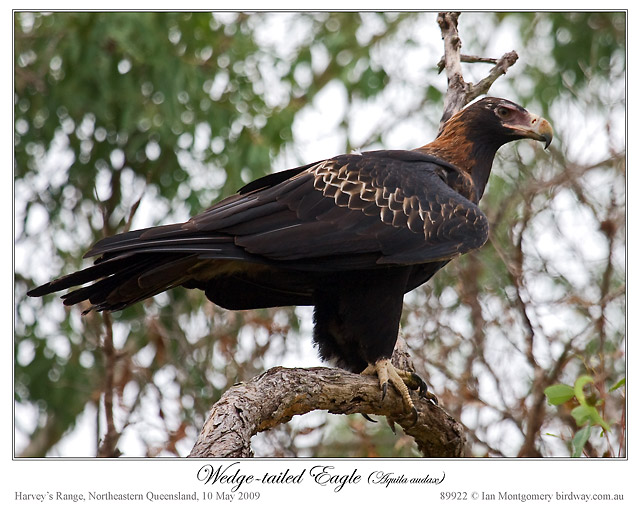
Wedge-tailed Eagles (Aquila audax) by Ian

Wedge-tailed Eagles (Aquila audax) by Ian

Scripture Alphabet of Animals: The Eagle

By Harriet N. Cook (1814-1843)

Bald Eagle (Haliaeetus leucocephalus) by AestheticPhotos

Did you ever see an eagle? There were once a great many among the rocks and mountains of our own country, but they will not stay where there are many people; so they are seldom seen here now. They like to make their nests in high and rocky places, where nobody can find them; as a verse in the Bible says,

“Though thou shouldest make thy nest on high as the eagle, yet will I bring thee down from thence.”

Their nests are not usually made in trees like those of many other birds, neither are they shaped in the same way: they are nothing but a layer of sticks spread flat upon the rock, and covered with some hay or straw. The care of the eagle for her young is spoken of in Deut. 32:11.

“As an eagle stirreth up her nest, fluttereth over her young, spreadeth abroad her wings, taketh them, beareth them on her wings; so the Lord alone did lead him.”

This beautifully describes God’s care over the children of Israel while they were passing through the wilderness; does it not also well express his kindness to us?

These birds fly very swiftly, and you will find verses in the Bible that speak of this. One is the forty-ninth verse of the twenty-eighth chapter of Deuteronomy. “The Lord shall bring a nation against thee from far, as swift as the eagle flieth.” In another place it is said, “His horses are swifter than eagles.” Job says,

“My days are swifter than a post, (or post-rider;) they are passed away as the swift ships, as an eagle that hasteth to the prey.”

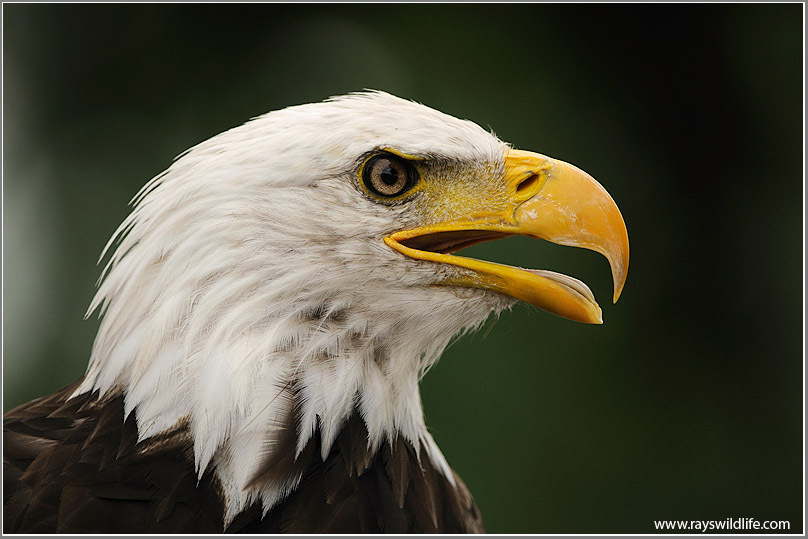
Bald Eagle by Raymond J Barlow

Bald Eagle by Ray

The eye of the eagle is very curious. It has something like an inner eyelid, only it is very thin; and the eagle can draw this over its eye, like a curtain, whenever there is too much light. You have heard perhaps that it can look directly at the bright sun; and this is the reason. It can see a great deal farther than we can; and when it is very high in the air, so that it would look to you but little larger than a speck, it often sees some small animal on the ground and flies down to catch it.

See how well this bird was described a great many years ago: these are the last verses of the thirty-ninth chapter of Job:

“Doth the eagle mount up at thy command and make her nest on high? She dwelleth and abideth upon the rock, upon the crag of the rock, and the strong place. From thence she seeketh the prey, and her eyes behold afar off. Her young ones also suck up blood; and where the slain are, there is she.”

Wedge-tailed Eagles (Aquila audax) by Ian

Wedge-tailed Eagles (Aquila audax) by Ian

The eagle lives a great many years; sometimes more than seventy, I believe. It sheds its feathers every spring, and new ones come out; then it looks like a young bird. This is why David says in the Psalms,

“Who satisfieth thy mouth with good things, so that thy youth is renewed, (or comes again,) like the eagle’s.”

There is this beautiful verse in Isaiah,

“They that wait upon the Lord shall renew their strength; they shall mount up on wings as eagles; they shall run and not be weary, they shall walk and not faint.”

How blessed and happy a thing it is to be a Christian indeed! to “wait upon the Lord” every day for the strength we need; and to be always preparing for that world where the inhabitants are for ever young, for ever active, for ever holy, for ever happy.

(Blog formatted by Lee)

See:

Harriet Newell Cook -Scripture Alphabet of Animals

Birds of the Bible

Eagles

Accipitridae Family – Kites, Hawks & Eagles

Nave’s Topical Bible – Eagle

Torrey’s Topical Textbook – Eagle

*

Scripture Alphabet of Animals: The Dog

Sleeping Pubs ©WikiC

Scripture Alphabet of Animals: The Dog

By Harriet N. Cook (1814-1843)

There are many dogs in the countries where the Bible was written, but the people do not like them as well as we do, and do not let them live about their yards and houses. So the dogs go wandering about without any master, and live on whatever they can find in the streets or around the markets. In the fifty-ninth Psalm you will find the verse:

They return at evening; they make a noise like a dog, and go round about the city,

-and a little farther on you will see,

Let them wander up and down for meat, and grudge if they be not satisfied.

Military Dog©WikiC

Military Dog©WikiC

These verses show that the dogs wandered about in those days just as they do now. Sometimes when they do not find enough to eat, they become very fierce and cruel, so that you would be afraid to meet one of them.

There is a sad story in some of the chapters of the two books of Kings, in which you will find these dogs mentioned. There was a very proud and wicked queen, named Jezebel, and she tried to make her husband, king Ahab, do all the evil she could. Once Ahab wanted a piece of ground that was near his palace, so that he might have it made into a garden, and he asked the owner of it, whose name was Naboth, to sell it to him. But Naboth was not willing, because he used it for his vineyard, and because his father had given it to him before he died. Then Ahab was very angry about it, and acted just as I have seen some foolish children do when they were not pleased. He went into his great splendid house, and laid himself down on the bed; then he turned his face towards the wall, and when it was dinner time he would not get up or eat any thing. So his wife Jezebel asked him what was the matter; and when she found out, she told him that he need not be troubled, for she could get that vineyard for him. Then she contrived to have Naboth killed by stoning, and when he was dead king Ahab took the vineyard.

Now you may be sure God was displeased with such wickedness as this, and you will think it was very right that he should punish the cruel Jezebel. Do you think her husband Ahab ought to be punished too? I do; because he knew that his wife was going to kill Naboth, and yet he did not try to keep her from doing it. I think he was as wicked as she. After Ahab had taken the vineyard, God sent to him the prophet Elijah to say to him these words,

Thus saith the Lord, In the place where dogs licked the blood of Naboth, shall dogs lick thy blood, even thine.” And of Jezebel he said, “The dogs shall eat Jezebel by the wall of Jezreel.

Now see how the word of God was fulfilled, just as he had said. Pretty soon after this, king Ahab went out to fight with his enemies, and as he was riding along in his carriage a man drew his great, strong bow, and shot an arrow which pierced the king and almost killed him. He lived a few hours, until nearly night, and then he died. The blood had run down from his wound into the carriage, and after the king was dead they took it to the pool of Samaria to wash it: there the dogs came and licked up the blood of Ahab.

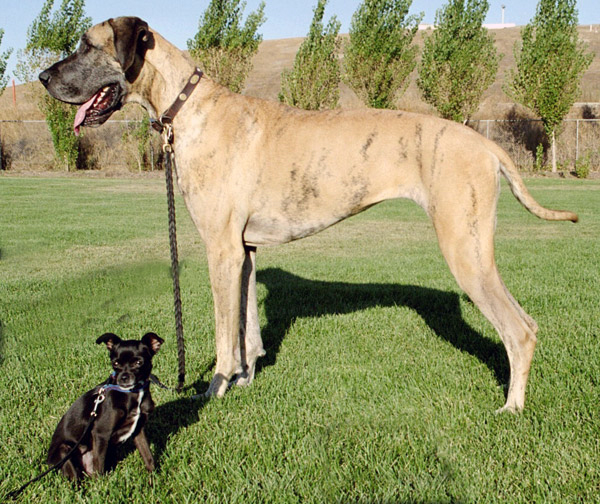
Mutt and Jeff ©WikiC

Mutt and Jeff ©WikiC

The wicked Jezebel lived some years after this, and one of her sons became king; but God raised up another king, named Jehu, who slew this son, and then went to Jezreel, the city where Jezebel lived. She heard he was coming, and feared that he meant to put her to death; but she determined that, instead of begging him to spare her life, she would act as though she was still a queen, and then perhaps he would not dare to injure her. So she put ornaments on her head, and painted her face, and then sat down by an upper window in all the splendor of a queen. When Jehu came near, she called out to him in great anger and scorn, to reproach him for having put her son to death. When Jehu heard her voice and saw her sitting at the window, he cried out,

Who is on my side?

and two or three of the queen’s officers looked out at the windows. Then he said to them,

Throw her down.

They were very glad to get rid of the proud and cruel queen, and so they threw her down, as he had said. It was so far to the ground that she was killed immediately, and her blood was sprinkled upon the walls. But Jehu did not care for this; he went into the house to eat and drink. After he had taken his dinner, he thought of Jezebel, and told some of his servants that they must go and bury her: but in the mean time a terrible thing had happened. The dogs had seized and devoured the body, and nothing was left of it but the feet, and the palms of the hands, and part of the bones of the head. So God’s word came to pass,

The dogs shall eat Jezebel.

___

See:

Harriet Newell Cook – Scripture Alphabet of Animals

Nave’s Topical Bible – Dog

Torrey’s Topical Textbook – Dog

(Photos ©WikiC)

*

Scripture Alphabet of Animals: The Camel

Camel Side Head Neck

Camel Side Head Neck

Scripture Alphabet of Animals: The Camel

By Harriet N. Cook (1814-1843)

There are two or three varieties of the camel, but they do not differ from each other much more than our horses, some of which, the stout and strong, we use to draw heavy loads; others, more slender and graceful, we use for riding. The swift camel is called a Dromedary; it will carry its rider a hundred miles a day. Dromedaries are mentioned in the book of Esther, where messages were to be sent in haste to all parts of a vast kingdom; the messengers rode

on mules, and camels, and young dromedaries.

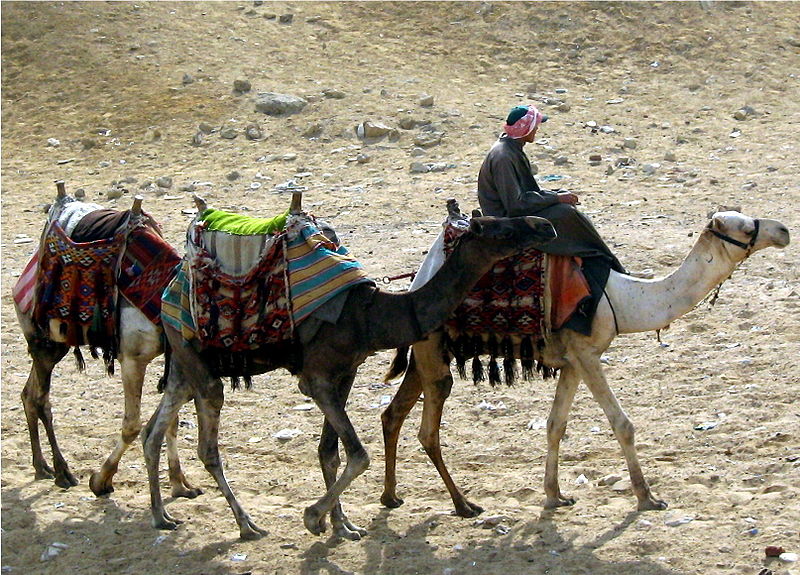
Camels at Giza

Camels at Giza

This is a very large animal and is mentioned a great many times in the Bible. I think you will like to find all these places, and see what is said about the camel. It seems as though God made it to live in just such countries as it does, for it can go a great many days without drinking any water; and if it were not for this, it would die of thirst, because the wells and springs are so far apart. If the people of those countries had not the camel they could not travel; so you see how kind God is to them.

Camel - Foot

Camel – Foot

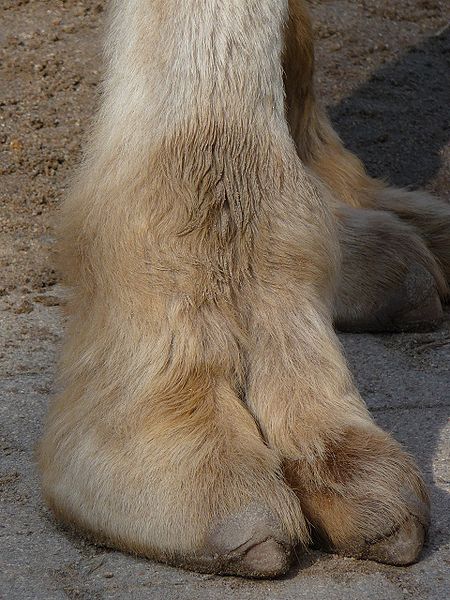
The foot of the camel is curious. It is very broad, having two divisions with a horny tip at the end of each; and underneath is a sort of elastic cushion, like a sponge, on which the animal treads. It is very strange to see a dozen or twenty large and heavy camels pass along almost without any noise; so still that you would hardly know they were coming if you did not look up.

There is a very beautiful story in the twenty-fourth chapter of Genesis, in which there is something about camels. I will tell you part of it. In the country where it happened a man does not generally choose a wife for himself, but his father or some other friend chooses for him. You have heard about Abraham, and know that he was a good man and a friend of God. When his son Isaac was forty years old, Abraham wished to find a wife for him, but he was not willing to take one from among the people where he lived, because they were very wicked. So he called a good old servant that he had-a gray-headed man-and told him that he wished him to go to a distant country and bring a wife for Isaac from there. Then Eliezer, the servant, took several other servants, and ten of his master’s camels, and many presents, and started on his journey. After they had travelled a great many days, they came near to the city where Abraham had told them to go. It was just before night, and that was the time when the young women used to go out of the city to draw water. I have told you that there are not many wells in that country, so that a great many persons draw water at one place. It is the custom for females to go for it, and they usually carry it in pitchers on their heads.

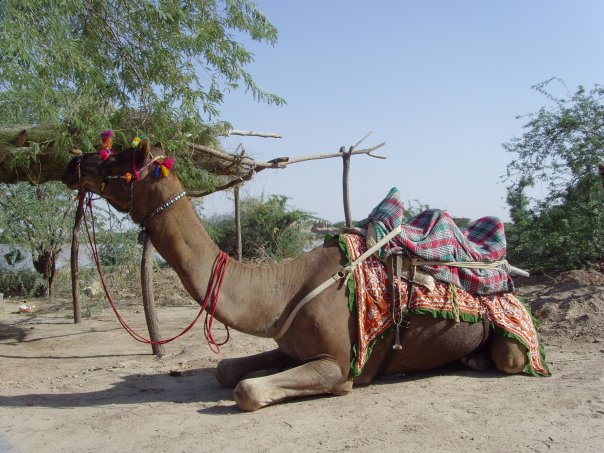
Camel Resting in the Cholistan Desert

Camel Resting in the Cholistan Desert

Eliezer made his camels lie down by this well, because they had come to the end of their journey and were very tired. But how was he to know who would be a good wife for Isaac, among all the women of this large city? He did not know; but he was a good man, and he prayed to God to choose one for him, and let him know which she was. And he asked God to let him know in this way which I will tell you. When the young women came out to the well, he was going to ask them for some water, and he prayed that the one who answered him kindly, and gave him drink, might be the right one for Isaac’s wife. Pretty soon he saw a young woman coming with her pitcher on her head, and she was very fair and handsome; but this alone did not satisfy Eliezer. He waited till she had drawn some water and placed it upon her head. Then he said to her,

I pray thee let me drink a little water from they pitcher;”-and she took it down and resting it on her hand, answered very pleasantly and kindly, “Drink, my lord.”

While he was drinking, she saw that he looked like a stranger, and that his camels seemed tired with the journey, and she was sorry from them. So she said,

I will draw water for the camels too;

– and she did draw enough for all the ten camels, though she must have been pretty tired when it was done, for these animals drink a great deal. From all these circumstances Eliezer felt sure that God had heard his prayer; and it gave him pleasure to think that if this young woman was willing to take so much trouble for a traveller whom she did not know, she would be a very kind and good wife.

I cannot tell you all; but Eliezer found that the young woman, whose name was Rebekah, was willing to go with him to be Isaac’s wife. When all was ready for the journey she was seated upon one of the ten camels, and her nurse upon another, and some of her female servants upon others. After they had been riding some days, they came, just at evening, near the place where Isaac lived, and saw him walking in the field. He came to meet Rebekah, and was very glad to see her, and when she became his wife he loved her very much.
___

See:

Harriet Newell Cook – Scripture Alphabet of Animals

Nave’s Topical Bible – Camel

Torrey’s Topical Textbook – Camel

(Photos ©WikiC)

*

Scripture Alphabet of Animals: The Bee

Bee - Apoidea on Trifolium

Bee – Apoidea on Trifolium

Scripture Alphabet of Animals: The Bee

By Harriet N. Cook (1814-1843)

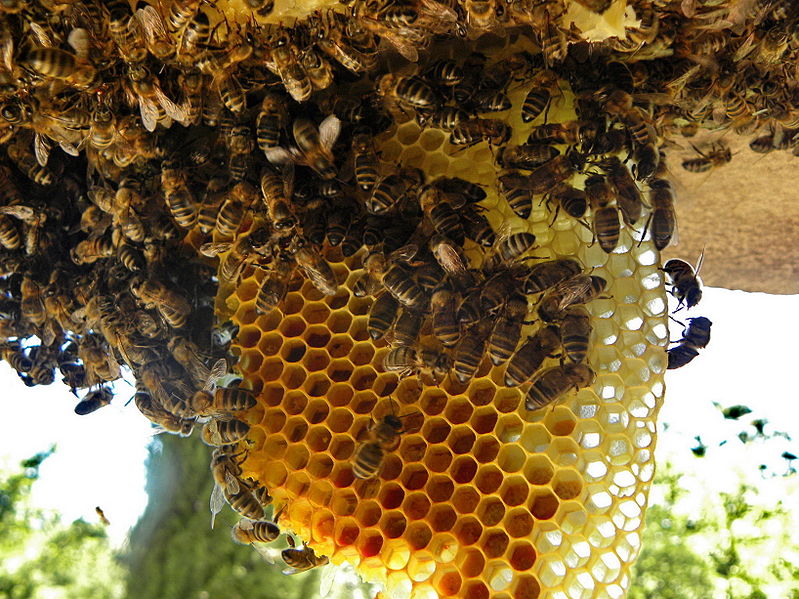
Although the bee is so small an animal, it is very well known; and many learned men have spent a great deal of time in observing it, and have written many very curious things about it. They tell us that there is in every hive a queen, larger than the rest, whom they all follow and obey; and that if she dies or is carried away, they all leave their work and unless the queen is restored or another one provided, they refuse to eat, and soon die. Only one queen is allowed in a hive at a time. She does not go out to gather honey, but those who attend upon her bring to her cell as much as she wants.

Bees on Comb©WikiC

Bees on Comb©WikiC

It is very pleasant to watch the bees at their work, for they are quite as busy as the ants, and as they are so much larger, it is more easy to see what they are doing. Every thing about them seems curious and beautiful; their waxen cells, their manner of gathering honey and storing it up, their neatness and order, all are admirable. They are perfectly harmless when left to themselves; but if they are attacked, they fly around the person who disturbs them, in great numbers, and sometimes sting him very severely. David once said of his enemies,

They compassed me about like bees.

Honey is often spoken of in the Bible. When Jacob wished his sons to go down into Egypt a second time to buy food, he said to them,

Take of the best fruits of the land in your vessels, and carry down the man (Joseph) a present; a little balm and a little honey, spices and myrrh, nuts and almonds.

God told the children of Israel that he would give them

a land flowing with milk and honey,

meaning one that was beautiful and fertile, producing abundantly every thing that would be needed for their comfort. When David had been obliged to flee from Jerusalem to escape his wicked son Absalom, he was in great want of provisions for himself and his followers. After a long and fatiguing march he reached a certain city; and there three rich men who were friendly to him, sent

wheat, and barley, and flour, and parched corn, and beans, and honey, and butter, and sheep, and cheese,”besides beds for them to rest on; “for they said, The people is hungry, and wary, and thirsty in the wilderness.”

Perhaps no man ever loved the commandments of God more truly than king David. He says in the Psalms,

How sweet are thy words unto my taste! yea, sweeter than honey to my mouth!

and again he says of God’s judgments,

More are they to be desired than gold, yea, than much fine gold; sweeter also than honey and the honey-comb.

Bees cluster©WikiC

Bee cluster©WikiC

Besides the bees that live in hives, there are many called wild bees, which live in the woods, and put their honey in the clefts of rocks, or in old trees and other similar places. In the fourteenth chapter of Judges you will find this story: There was a very strong man named Samson, and once when he was travelling by himself in a lonely place, a young lion came roaring along in the very path where he was going. Would you not have been afraid? I suppose Samson was, at first, for the lion was very strong and very hungry, and Samson had nothing in his hand to kill him with. But God gave him strength, and when the lion came up, Samson caught hold of him and tore him in pieces, as you would tear a piece of cloth. Then he left him dead on the ground. Sometime after he came back the same way, and thought he would look after the lion that he had killed. He soon found the skeleton, that is, the dry bones without any flesh on them; and when he looked at the parts of the dead lion he found that a swarm of bees had been there, and laid up a great plenty of honey. So he took some of it in his hands to eat as he went along.

You can learn of the little bee to try to be useful, and to resolve in the words of the hymn which I dare say you have learned:

“In works of labor or of skill
“I would be busy too;
“For Satan finds some mischief still
“For idle hands to do.

“In books, or work, or healthful play,
“Let my first years be past;
“That I may give for every day
“Some good account at last.”
___

See:

Harriet Newell Cook – Scripture Alphabet of Animals

Nave’s Topical Bible – Bee

Nave’s Topical Bible – Honey

Torrey’s Topical Textbook – Honey

(Photos ©WikiC)

Scripture Alphabet of Animals: The Bear

Brown Bear ©WikiC

Scripture Alphabet of Animals: The Bear

By Harriet N. Cook (1814-1843)

Did you ever hear children say, “He is as cross as a bear? I hope it will never be said of you, for nobody loves a child who is selfish and unkind, or who speaks cross and angry words. The bear is certainly a very cross animal; the name that was given to it in Bible times means a grumbler or growler. It does not even like other bears, excepting its own young ones, but chooses to live by itself in the gloomiest woods- often in a dark cave, or in the hollow part of some great old tree. When winter begins, it lies down to sleep, and does not wake up till warm weather comes again; then it creeps out of its retreat, lean and hungry enough-and cross enough, too. It is not a handsome animal; its hair is rough and almost as close as wool, and its limbs are thick and clumsy. It eats nuts, juicy leaves, and such fruits and berries as grow in the woods; it is fond of honey, and will climb the highest trees to reach it; and when it is very hungry, it will kill any animal that comes in its way and is not too strong for it to conquer.

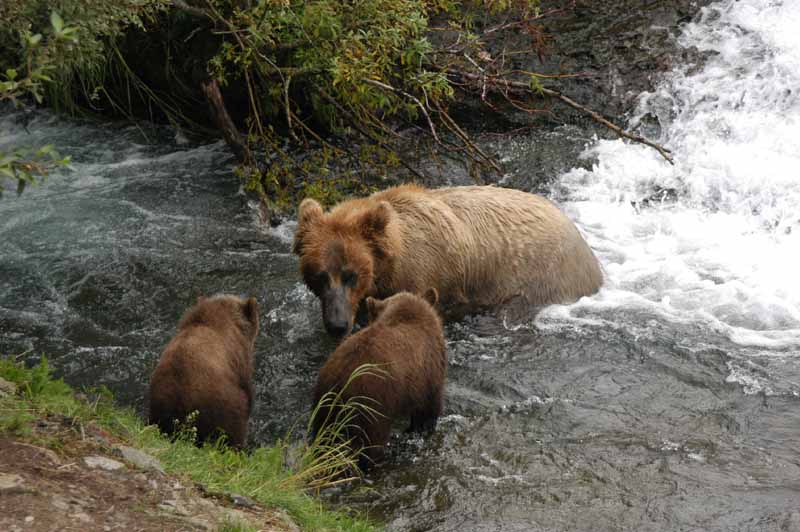
Bear Mom and two Cubs by Bob-Nan

Bear Mom and two Cubs by Bob-Nan

The bear loves its young ones more than almost any other animal does, as this little story will show you. A bear with two cubs or young ones once came over the ice near to a ship where the sailors had just killed a large animal. The bears were very hungry, and the sailors threw over some pieces of flesh for them; the old bear would tear them up, giving most of the meat to the cubs, and keeping but little for herself. Presently some one in the ship cruelly shot both the young ones-then their mother was full of sorrow. She had been hurt herself by the guns, but she crawled along to her cubs, put her paw upon them, and tried to have them get up; and when she found that they did not move, she went a few steps off, and then looked back with a sad, moaning noise, as though she expected them to get up and follow her. When she saw that all her efforts were useless, she walked around them several times, turned towards the vessel with a terrible growl-for she was angry enough to tear in pieces the men who had killed her young-and then lay down between her cubs and died. Does not his help you to understand this verse in the 17th chapter of 2d Samuel?

For thou knowest thy father and his men, that they are mighty men, and they are chafed in their minds, as a bear robbed of her whelps (or cubs) in the field;

-and this also, Hosea 13:8,

I will meet them as a bear bereaved of her whelps.

Such verses as these show that the writers of the Bible were acquainted with the habits of different animals: we never find any mistakes in what they say about them. Solomon says in his Proverbs,

As a roaring lion and a ranging bear, so is a wicked ruler over the poor people.

American Black Bear, Ursus americanus ©WikiC

American Black Bear, Ursus americanus ©WikiC

You have often read or heard the sad story in the 2d of Kings, how forty -two children were killed at one time by two bears out of the wood. Do you understand why God allowed this? Elijah, a holy servant of God, had just been taken up to heaven in a bright chariot with horses of fire; and these rude and wicked children called out to Elisha,

Go up, thou bald head!”-that is, “Go up, as Elijah did, to heaven.

This mockery would have been very wrong, even if Elisha had not been a holy prophet, for God has said,

Thou shalt rise up before the hoary head, and Honour the face of the old man

but the children were really dishonoring God in their treatment of his servant, and it was for this reason that He was so displeased with them.

Do you remember what David said when he was trying to persuade king Saul to let him go and fight with the great giant Goliath? Saul thought he was too young, and by no means strong enough; but David said,

Thy servant was keeping his father’s sheep, and there came a lion and a bear, and took a lamb out of the flock, and thy servant slew both the lion and the bear.” He said also, “The Lord that delivered me out of the paw of the lion and out of the paw of the bear, he will deliver me out of the hand of this Philistine

You see why David was not afraid to meet the giant. It was not because he felt strong of himself, but he believed that God would be near to help him; and it was the same feeling that led him to say afterwards,

Though I walk through the valley of the shadow of death, I will fear no evil; for Thou art with me.

Happy will it be for you, dear child, if you can say the same words, with peace in your heart, when you lie down to die.

Harriet Newell Cook – Scripture Alphabet of Animals

Nave’s Topical Bible – Bear

Torrey’s Topical Textbook – Bear

Scripture Alphabet of Animals: The Ass (Donkey)

Scripture Alphabet of Animals: The Ass (Donkey)

By Harriet N. Cook (1814-1843)

Perhaps you may have seen the ass, though it is not very common in this country. It has some resemblance to a horse, but is not as large, and generally seems rather sleepy and dull. In some countries, such as those where the Bible was written, it is a fine large animal, and the people use it for riding. Some persons mentioned in the Bible owned a great many asses. Abraham had sheep, and oxen, and asses and camels; and Job had at one time five hundred asses, and afterwards he had a thousand. A great many years ago, long before Christ came into the world, the rich men and the judges used to ride upon asses: so we read in the 10th verse of the 5th chapter of Judges,

Speak, ye that ride upon white asses, ye that sit in judgment.

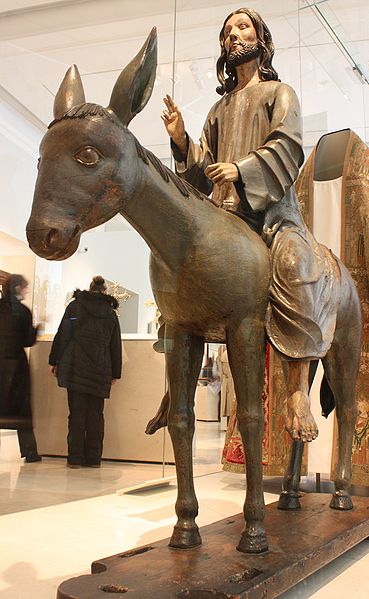
Statue of Christ Riding on the Ass at Victoria and Albert Museum©WikiC

Statue of Christ Riding on the Ass at Victoria and Albert Museum©WikiC

After this time many fine horses were brought into those countries, and the kings and great men liked them for riding: so the ass was used by the poorer people who could not buy a horse. You remember that when our blessed Savior was entering Jerusalem a few days before his death, he rode upon an ass; thus showing his meekness and humility, even while the multitude were shouting his praises, and spreading their garments in the way to do him honor. How shall we be like our Savior, if we let pride stay in our hearts?

The ass is very gentle and patient, and does not seem angry even when he has a very heavy load to carry. I should be very sorry to have him treated unkindly. Though he seems so dull, he loves his master, and will sometimes find him out and run to him even when he is in a crowd of men. God says, in the Bible,

The ox knoweth his owner, and the ass his master’s crib; but Israel doth not know, my people doth not consider.

Is it not a sad thing that the dull ass should be more grateful than we are?

Baudet Donkey - Shaky and Brown

Baudet Donkey – Shaky and Brown

Would it not seem to you very wonderful to hear a dog or a horse speak, so that you could understand what he said? It would be a strange thing indeed-a miracle; but you will find in the 22d chapter of Numbers that an ass once spoke to his master. The master’s name was Balaam. He was a wicked man, and he was riding on an ass to a place where he knew God did not wish him to go. As they were journeying an angel with a drawn sword in his hand stood in the way, but Balaam did not see him. The ass saw him, and was so afraid that she turned aside out of the road, and went into a field; then Balaam was angry and tried to drive her back into the way. They had now come to a path of the vineyards, having a wall on each side, and there the ass saw the bright angel again. In trying to avoid the angel, the ass crushed Balaam’s foot against the wall; and he was more angry and struck her again. Then the angel went forward a little distance, and stood where the path was so narrow that it was impossible to pass him. The ass was now so much frightened that she would go no farther, and fell down in the road; and Balaam beat her in a great passion. Then the ass spoke to Balaam and said,

What have I done to thee that thou hast smitten me these three times?” And when Balaam exclaimed, “I wish there were a sword in my hand, for now would I kill thee,” she only replied, “Am I not thine ass upon which thou hast ridden ever since I was thine unto this day? Was I ever wont to do so unto thee?”

Can we not learn, even from the ass, a lesson of meekness and patience?

The wild ass is often mentioned in the Bible, as in Psalm 104:11.

They (the springs) give drink to every beast of the field; the wild asses quench their thirst.

They live in desert places, and go about in great companies with one for their leader. You will find these words about them in the 39th chapter of Job:

Who hath sent out the wild ass free ? or who hath loosed the bands of the wild ass? Whose house I have made the wilderness, and the barren land his dwellings. He scorneth the multitude of the city, neither regardeth he the crying of the driver. The range of the mountains is his pasture, and he searcheth after every green thing.

Travellers who have seen great herds of wild asses say that the beautiful animal agrees exactly with this fine description, written so many years ago.

Harriet Newell Cook -Scripture Alphabet of Animals

See Also:

Torrey’s Topical Textbook – Ass, the Domestic

Torrey’s Topical Textbook – Ass, the Wild

Donkey – Wikipedia

Scripture Alphabet of Animals: The Ant

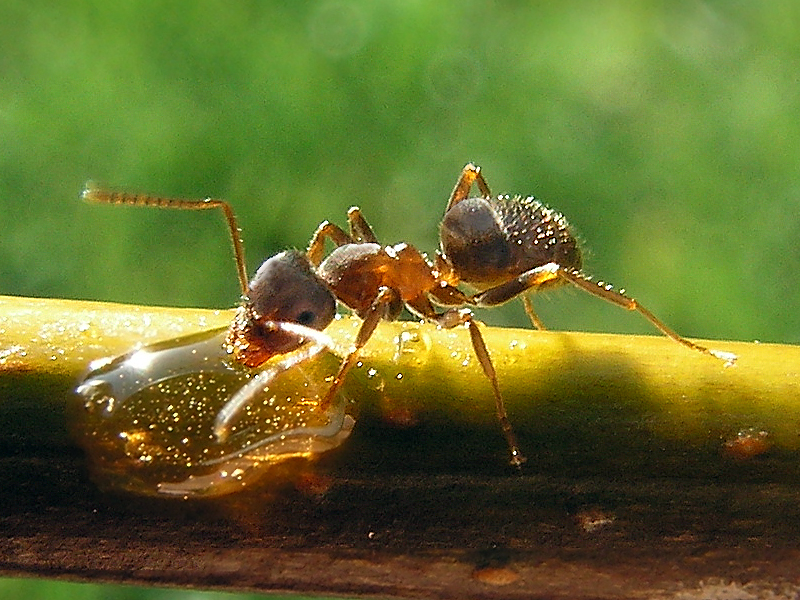
Lasius Niger ©WikiC

Scripture Alphabet of Animals: The Ant

By Harriet N. Cook (1814-1843)

If you look at the sixth verse of the sixth chapter of Proverbs, you will read,

Go to the ant, thou sluggard; consider her ways, and be wise.

A sluggard, you know, is a man, or woman, or child, who does not love to read or to do any kind of work, but likes to sleep or be idle all the day long. Do you think you were ever acquainted with one?

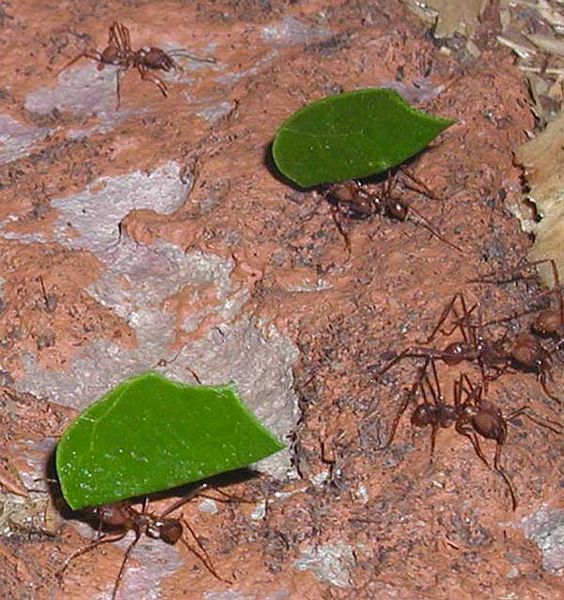
Leaf Cutting Ant©WikiC

Leaf Cutting Ant©WikiC

Now see what the Bible tells the sluggard to do. It bids him go to the little ant, and “consider her ways,” that is, look on and see what she does. Have you ever watched the ants when they were busy at work? It will give you very pleasant employment for half an hour on a summer’s day. In some places you may see small ant-hills scattered about, so close together that you can hardly step without treading on them; and you may find other places where there are not so many, but where the hills are much larger. I have seen them so large that you could hardly step over one of them without touching it with your foot and breaking some part of it. And then how busy the little creatures are! Just kneel down on the grass beside them, and notice how they work! You will see one little fellow creeping along as fast as he can go, with a grain of sand in his mouth, perhaps as large as his head. He does not stop to rest, but when he has carried his grain to help build the hill, away he goes for another. You may watch them all day and never see them idle at all.

Ant Hill in Germany ©WikiC

Ant Hill in Germany ©WikiC

You see why God tells the sluggard to go and look at the little ants: it is that when he sees them so busy, he may be ashamed of himself for being idle, and learn to be “wise,” or diligent in whatever he undertakes. I should not think he could help going to work, after he had looked at them a little while. The ants seem to be very happy, and I think it is because they are so busy. God has put nobody in this world to be idle: even children have something to do. The inside of an ant-hill is very curious, but it is not easy to examine it without destroying all the work that the little insects have taken so much pains to finish. There is a kind of ant in warm climates that builds for itself hills as high as a man. They are not made of sand, but of a kind of clay; and have a great many cells or apartments, and many winding passages leading from one part to another. All this is done, as the Bible says, without “guide, overseer or ruler;” that is, they have no one to direct them how to do it. God gives them skill just as he does to the honey-bees in building the beautiful cells which you have so often admired; all His works are wonderful.

Harriet Newell Cook -Scripture Alphabet of Animals

See also:

Naves Topical Bible – Ant

Ant – Wikipedia

Updating Lee’s Birdwatching Site

Under Construction Check Back Later

Not to worry, I’m doing a major reconstruction on Lee’s Birdwatching site. To accomplish this, there will be, hopefully, a lot of post coming up. I am in the process of closing down the Birds of the Bible for Kids blog. I am moving everything back over here for the last time.

Due to health, age, and the new editor that WordPress is forcing on us, my plans are to put everything into this blog.

Beware of possible broken links for awhile, but will clear them up as soon as I become aware of them. There are around 800 plus pages over there, and some of those are already here. Might take me some time to sort it all out.

Besides that, many of these were produced years ago and will give you a chance to read them again, or maybe find some you missed.

“Turn us back to You, O LORD, and we will be restored; Renew our days as of old,” (Lamentations 5:21 NKJV)

I don’t mean to be disrespectful of God’s Word, but while looking at this verse in other translations, the MSG caused me to chuckle a bit.

So why do you keep forgetting us? Why dump us and leave us like this? Bring us back to you, GOD—we’re ready to come back. Give us a fresh start.”

(Lamentations 5:20-21 MSG)

STAY TUNED!!

Catching Crayfish, a Lesson in Over-Reacting

Originally posted Nov 13, 2015 on Bibleworld Adventures:

by James J. S. Johnson

Large Tropical Blue Crayfish - Captive ©Dave Wilson

Tropical Blue Crayfish – Captive ©Dave Wilson

During my junior high years, living in a rural part of Maryland, I learned and enjoyed the art of catching crayfish.   (Nowadays I just eat them at restaurants!)   As a teenager, I was neither an astacologist (crayfish scientist) nor a serious catcher of crayfish (which is the same crustacean known to some as “mudbug” and in Louisiana as “crawfish”), so I did not use a “crayfish trap”.  Rather, as described below, I used a homemade dipping net, to catch those greenish critters that looked like lobsters.

Crayfish like drainage ditches and slow-moving streams, especially those with banks that are shaped in ways that provide hiding places for crayfish (and habitat for what crayfish eat), including underwater rocks or logs or roots.

After a heavy rainfall the velocity of stream currents may increase, as it drains, but crayfish can act to maintain their position at the edge of such drainage:  “Crayfish … help maintain position [in face of faster current flow] by altering body posture to counteract the effect of drag when exposed to an increase in current velocity.”  [Quoting from Paul S. Giller & Björn Malmqvist, THE BIOLOGY OF STREAMS AND RIVERS (Oxford University Press, 2008), page 122.]  Crayfish care about staying and defending their “home turf”  –  i.e., they are territorial, and some will fight to defend a favorite streambank crevice.  [Giller & Malmqvist, pages 131-132.]

Crayfish

Crayfish

Crayfish are omnivores – they emerge from their hiding places, especially when it is dark (from “dusk to dawn”, to borrow an old TNT expression from Chaplain Bob Webel – or on days when it is cloudy), to find and feed on freshwater snails, fish eggs, tadpoles, worms, algae, grains, and other plant material. The dominating influence of crayfish, as “keystone predators” in the food webs of drainage ditches and sluggish stream-waters (where they live), is produced directly, as predators, and indirectly, by eating riparian plant cover used by aquatic invertebrates.  [Giller & Malmqvist, page 204.]

Drainage ditches are a favorite habitat of crayfish, not just in Maryland.  “Ditches are of course just man-made sloughs [pooled streamwater that only moves slowly], but they are important to the survival of many species of life in the state.  Ditches are necessary for allowing rain runoff much of the year, and wherever water is present for half the year or more there are likely to be populations of crawfishes  and other invertebrates, as well as their predators such as frogs, snakes, and turtles.  Even shallow ditches may be home to several species of crawfish, some quite uncommon and localized in distribution.”  [Quoting Jerry G. Walls, CRAWFISH OF LOUISIANA (Louisiana State University Press, 2009), pages 35-36.]

Where I (then) lived, in rural Baltimore County,  there was a bridge with a huge drainage pipe that allowed streamwater to flow in irregular patterns, around large and small rocks, so that the stream bank had indentations and crevices where the waterflow was somewhat shielded, providing places for small creatures (like baby fish and insect larvae) to avoid being swept downstream, though crayfish lurked nearby, always hungry for something small to eat, whether it be plant material or aquatic invertebrates.

When moving on land crayfish crawl, using their legs.  But, when underwater, they  “swim” or “paddle”, using their legs and when needed, the tail fan.  Rapid flipping of the crayfish tail enables the crayfish to suddenly propel itself backward  — it appears to “jump backwards” in the water.  This can provide a quick exit from anything facially threatening the crayfish.

Of course, the crayfish themselves were shy about large disturbances in the water, so wading into the stream (which might be ankle-deep to knee-deep) would scare crayfish into hiding places, some of which were located under the bridge or in underwater burrows nearby.

If you splash a stone into the water directly in front of a crayfish it would jet backwards to escape.  The escape maneuver was so reflexive and quick that the crayfish never looked before it “jumped” backward in the water, to escape whatever the perceived danger was in front of it.  After learning this crayfish habit it became apparent that crayfish could be easily caught, by taking advantage of this “knee-jerk” reaction, with a home-made “net”.  So how did we catch crayfish, down by the drainage pipe that conveyed streamwater under the bridge?

Shasta Crayfish

Shasta Crayfish

First, make a “net” to catch the crayfish with.  Reshape (by bending) a coat hanger into the shape of a lollipop profile, i.e., a straight line (for a handle) that is curved into a circle.  The resulting shape of the coat hanger resembles a somewhat small version of the frame of a tennis racquet (or badminton racquet), with the “loop” (circle or oval) part being about the size (circumference) of a soccer ball, easily enough room for catching a large or small crayfish.  The largest crayfishes that I caught were about the size of lobsters that you can eat at a Red Lobster restaurant.   But the metal frame needs a net  –  so you tear apart an expendable T-shirt, then you thread it onto the circular “loop” part of the reshaped coat hanger.  Ideally the result is somewhat like a dipping net for an aquarium.

The coat-hanger “dipping net” is the tool to be used for catching (netting) the crayfish, but keep in mind that a crayfish will try to exit if caught, so you need a bucket of water to “land” your catch if and when you catch one.  So you need to bring a bucket (or a pail will do!) that is half-filled with water, and it must be positioned near the spot where you expect to net your crayfish.

The next trick is to get a crayfish to “jump” into your net, in the streamwater, just before you jerk the net up and out of the water (so the crayfish can’t exit your net, upon realizing that he or she is caught!).

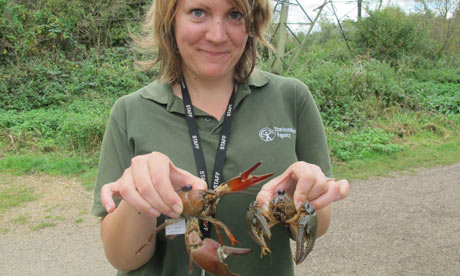
But how do you entice a shy crayfish to “jump” into your net?  Actually, it’s not very difficult, although it requires sequenced (and quick) timing as you perform two rapid movements.  With your net ready to “stab” the water just behind the crayfish (i.e., where his or her tail is located), drop a clod of dirt (or a small rock) about 6 inches in front of the crayfish’s head and front claws.  Instantly plunge your net behind the crayfish – which is now “jumping” backward to avoid whatever you dropped into the water.  Then quickly jerk the net up out of the water – you should have the crayfish secured inside your net, for a moment at least, so now you quickly dump the net into your bucket of water, and shake the crayfish loose from the net.

Catching in a Net

Catching in a Net

[ Fair Use image credit: https://i.ytimg.com/vi/fHaQJN4LmGM/hqdefault.jpg ]

If your bucket is deep enough the crayfish is now covered in water, yet the water level needs to be low enough that the crayfish cannot swim to the top and then crawl out over the brim, to escape involuntary confinement.  Ironically, it was the crayfish’s reflex habit  —  the automatic “jump-back” reaction  —  that got the crayfish captured!

Captured!

Captured!

[ Fair Use image credit: http://static.guim.co.uk/sys-images/Guardian/About/General/2011/12/29/1325169553221/A-virile-right-and-a-sign-007.jpg ]

Now that you have a captive crayfish you need to feed it, to keep it alive, or else eat it (!) as you might a lobster, or just release it.  “Catch and release” is what I recommend.

But what does catching a crayfish have to do with the adventure of living the Christian life? 

The crayfish illustrates the danger of carelessly over-reacting to a perceived danger.  Because the crayfish is startled by the rock dropped (into water facing the crayfish), it automatically reacts by “jumping” backward  –  without checking to see if a net is waiting there, to capture it! Since the Christian life involves a lot of balancing, we need to be careful about over-reacting to this or that.  Regarding the need to avoid over-reacting, as a Christian who strives to honor God in this life, see Charles C. Ryrie’s indispensable guidebook, BALANCING THE CHRISTIAN LIFE (Chicago: Moody Press, 1994), 252 pages.  [Thankfully, this book was provided to me, when I was a teenager, by my youth/college pastor, Chaplain Bob Webel.]

Over-reacting involves moving recklessly from one extreme to its opposite.  For an example of such over-reacting  —  “jumping” from one imbalanced extreme to another — consider how to teach children to inculcate a responsible “work ethic”.

In one Christian family, that I know, the parents were very concerned about raising children who might be lazy, unfocused, and/ or unresourceful.  (So far, so good.)   In other words, the parents wanted their children to have a “good work ethic”  –  self-initiative, goal-oriented diligence, and an entrepreneurial spirit,   —  to learn and practice practical life skills, so that they could be self-starters, as adults, who economically support themselves.

Of course, who would oppose teaching children a “good work ethic”?  Shouldn’t children learn to take the initiative, to recognize (and acquire) useful opportunities, to have productive ambitions, to focus on practical successes?

Yet promoting an entrepreneurial spirit, with an inner drive to ambitiously succeed in profitable work, can swing to an extreme that neglects altruistic service.  Without the balance of some commitment to altruistic service, however, the profit-motive-based ethic selfishly degrades to:  “If I don’t get paid money to do it, I won’t do it.”  That refusal to blend altruistic service (which the apostle Paul role-modeled in Acts 20:33-35) with a for-profit “work ethic” quickly uglifies into ordinary greed.  Is selfish greed better than selfish laziness?  Neither habit honors the Lord.  Both are wickedly sinful.  Both sins are ugly to look at  –  and, sad to say, we have many examples of both of those vices, lived out in front of us.

The Holy Bible provides a proper balance:  yes, we should work for profit and self-sustenance (2nd Thessalonians 3:10-12); however, some of the profit acquired should be used non-selfishly, to further the Lord’s work on earth (Matthew 6:19-21) and to compassionately “support the weak” (Acts 20:35).

Cooked Crayfish

Crayfish served at IKEA

So next time you catch a crayfish, or eat a plateful at a Swedish crayfish party, or eat one at a Cajun restaurant, remember this lesson: don’t carelessly over-react!   —   review the big picture, and maintain a Biblical balance in whatever you are doing (1st Corinthians 10:31).

><> JJSJ
Ducks “Social Distancing”

Black-bellied Whistling Ducks by Lee 3-15-20

Recently we were visited by a small flock of Black-bellied Whistling Ducks. Not sure who told them to “Social Distance,” but they seem to be doing it.

A few years ago, we were at the shore where these birds were not practicing this. Then again, who had ever heard of “Social Distancing” until recently?

Crowded Shore at MacDill by Lee

These shorebirds definitely are NOT “Social Distanced.” We are trusting and praying that you are staying safe and finding things to do while staying home. Check the links along the sides of this page. There are many things and birds you can read about.

Remember that the Lord never wants us to “Social distance” from Him.

“But it is good for me to draw near to God; I have put my trust in the Lord GOD, That I may declare all Your works.” (Psalms 73:28 NKJV)

Spend some of your time at home checking out these topics:

Indecisive Black-bellied Whistling-Ducks

Bible Birds – Whistling Ducks

Bible Birds

Scriptural Alphabet

Watching Birds

Golden Eagle

Bird Tales

Orni-Theology

Wordless Birds


Are You Personally On An Adventure?

Originally posted Aug 8, 2015 on Bibleworld Adventures:

Balloon Adventure ©WikiC

Balloon Adventure ©WikiC

Bibleworld Adventures

Hello to all of you out there! What is this Bibleworld Adventures blog about? The purpose for this blog is to help us see the big picture of life. Why are you on planet Earth? Where did you and I come from? While we are here, what are we supposed to do? Where can I find truth? What is truth? We will discuss some current events. We will discuss History sometimes, and at other times we will discuss Science. We will state right at the start that everybody makes assumptions each and everyday. When we drive our automobiles and go down the right side of the road, we expect that the other driver coming towards us will stay on his or her side of the road. When you turn the light switch on, you assume that the light in the room will come on. We will assume that the Bible is indeed the very “Word of God.” We will discuss many and varied subjects pertaining to real life situations. This blog will examine these things with an “open Bible.” Thanks for visiting this blog and please stay with me as we take this exciting adventure together!

I once had a college professor, Dr. Jim Johnson, who said that life with Jesus Christ is an “adventure.” This is so true! I remember when I was at the young age of ten or there about: I remember thinking that life on this planet made no sense whatsoever. Was I to grow up and learn things a t school? Was I to grow up and have a family and then work all of my life? Was I to eventually die and leave it all behind in 100 years or less. This made no sense then and makes no sense today apart from the Word of God, the BIBLE

God tells us in the Bible that there is a purpose for everything!

“To everything there is a season, and a time to every purpose under the heaven.” (Ecclesiastes 3:1) God has “made everything beautiful in his time: also he hath set the world (eternity) in their hearts…I know that, whatsoever God doeth, it shall be forever: nothing can be put to it, nor anything taken from it: and God doeth it, that men should fear before him.” (Ecclesiastes 3:11-14)

Each of you knows, down in the depths of your soul, that there is a God and there is a bigger purpose than just “me” in this vast Universe. This blog will help point us in the right direction! Each choice that we make, each action that we live out, and each thought that we think will affect our own eternity! God is eternal and He has created us with eternal souls and spirits and personalities. Good choices bring good results, bad choices bring bad results. The best choice is to accept the precious gift of “eternal life.” This means to believe and “trust” in what Jesus Christ did on the cross about 2000 years ago.

“For when we were yet without strength, in due time Christ died for the ungodly.” (Romans 5:6)

“But God commendeth (demonstrated) his love towards us, in that, while we were yet sinners, Christ died for us.” (Romans 5:8)

In fact, buy a Bible and read Romans chapter five. Remember, this Bibleworld Adventures blog will use an “open Bible” concept as we continue on with our own personal adventures. We are destined for the skies and beyond to the third Heaven, which is Paradise! You and I have started on this adventurous road and we will live somewhere forever! God is eternal and He has created us in “His image,” We also will live FOREVER!

*

Please read these previous articles by Golden Eagle that have been reproduced here. These can be found in the Golden Eagle section.

Golden Eagle

Articles on Birds of the Bible For Kids blog:

Greetings From …?

But now, he has decided that he wants to be called:

Golden Eagle Takes A Name

Noah and the Dove

Eagle’s Eyesight

Birds Are Free

Coming For A Meal 

The Father Feedeth Us 

Universe: Life Anywhere Else?

Fly Like A Bird? 

Goodness of God

You’re Invited To Supper

Bird-Brain Might Be a Compliment! 

Fly With An Open Bible!

Merry Christmas From Golden Eagle

Golden Eagle Lands Here Again

*

McGuffey’s Reader – 1st Grade Lessons LVI and LVII

Yellow-throated Vireo (Vireo flavifrons) singing ©nebirdsplus

Yellow-throated Vireo (Vireo flavifrons) singing ©nebirdsplus

These lessons start off with words, then the story. You can practice writing with the Slate Work.

“The flowers appear on the earth; the time of the singing of birds is come, …” (Song of Solomon 2:12a KJV)

LESSON LVI.

strong round dry bill worked

sends claws flit God spring

“How does the bird make the nest so strong, Willie?”

“The mother bird has her bill and her claws to work with, but she would not know how to make the nest if God did not teach her. Do you see what it is made of?”

“Yes, Willie, I see some horse-hairs and some dry grass. The old bird must have worked hard to find all the hairs, and make them into such a pretty, round nest.”

“Shall we take the nest, Rose?”

“Oh no, Willie! We must not take it; but we will come and look at it again, some time.”

Verdin (Auriparus flaviceps) Building Nest 1 ©Earle Robinson

SLATE WORK.

[Illustration: Script Exercise:]

God made the little birds to sing,
And flit from tree to tree;
‘Tis He who sends them in the spring
To sing for you and me.


LESSON LVII.

feathers a go’ fly worm crumb feed’ing

ug’ly off feed brown guess things

Grey Jay (Perisoreus canadensis) Feeding at Nest WikiC

Grey Jay (Perisoreus canadensis) Feeding at Nest WikiC

“Willie, when I was feeding the birds just now, a little brown bird flew away with a crumb in its bill.”

“Where did it go, Rose?”

“I don’t know; away off, somewhere.”

“I can guess where, Rose. Don’t you know the nest we saw some days ago?
What do you think is in it now?”

“O Willie, I know! Some little brown birds. Let us go and see them.”

“All right; but we must not go too near. There! I just saw the old bird fly out of the bush. Stand here, Rose. Can you see?”

“Why, Willie, what ugly little things! What big mouths they have, and no feathers!”

“Keep still, Rose. Here comes the old bird with a worm in her bill. How hard she must work to feed them all!”


McGuffey’s First Grade Reader

The Wordless Book