To the rock flies the cony, the stork to her nest,
When tempests are gathering and black is the west;
So swift, by life’s trials o’erwhelmed and oppressed,
I fly to my refuge, Jehovah, my rest!
The nest, whither speedeth the storm beaten bird,
Aloft, on the fir top by tempests is stirred;
But the nest of my refuge no storm wind can smite;
’Tis the breast of Jehovah; I’m safe from afright.
The rock where the cony securely may hide
Is set in the mountain’s cold, pitiless side;
But the rock of my safety, the home of my quest,
’Tis the heart of my Savior: How warm and how blest!
Then blow, thou wild tempest, I fear not thy might,
Tho’ blackly thou lowerest, my prospect is bright;
Jehovah, my Savior, I fly to Thy breast;
Dear rock of my refuge! Dear sheltering nest!
Storks Shadowing Baby in Lakeland by Dan
In God is my salvation and my glory: the rock of my strength, and my refuge, is in God. (Psalms 62:7 KJV)
He that dwelleth in the secret place of the most High shall abide under the shadow of the Almighty. I will say of the LORD, He is my refuge and my fortress: my God; in him will I trust. (Psalms 91:1-2 KJV)
Alice Boise Wood (?-1919) was the daughter of Professor James R. Boise, Wood was the first woman to graduate from Chicago University. She went on to teach Greek there, and was known as a poet.
Is it by your understanding that the hawk soars and spreads his wings toward the south? (Job 39:26 ESV)
Job was being asked by the Lord if he knew how and why the Hawk knows that it needs to go south for the winter. The Lord is smarter than we are and when He created the birds, He gave them instincts (knowledge) to do certain tasks. He put within the Hawks and other birds that migrate (travel to other areas) the knowledge of when and where to go.
Why do they migrate? There are various reasons why they travel, many great distances, for the winter or summer. The weather turns cold in the northern part of the world (northern hemisphere) in the winter and many birds cannot survive in really cold weather. In the summer, those birds go back north, because it gets cold down where they spent the winter. (The seasons are reversed in the northern and southern hemispheres.) So, some birds just keep going north and south each year so they can live in warm weather.
Other birds move around or migrate because their food supply ends and they go to the next area to be able to feed themselves. The Lord promised the birds and animals to provide for them, but He does not “spoon-feed” them. They have to go where He has provided for them.
And to all the animals on the earth and to every bird of the air and to everything that creeps on the ground–to everything in which there is the breath of life–I have given every green plant for food. And it was so. (Genesis 1:30 AMP)
A tree in Daniel has this promise given about it:
Its leaves were fair and its fruit abundant, and in it was food for all. The living creatures of the field found shade under it, and the birds of the sky dwelt in its branches; and all flesh was fed from it. (Daniel 4:12 AMP)
Look at the birds of the air; they neither sow nor reap nor gather into barns, and yet your heavenly Father keeps feeding them. Are you not worth much more than they? (Matthew 6:26 AMP)
Those are very good promises by the Lord, the Creator, that He will provide for them. That last verse also gives you and I the promise that He will also provide for us, because we are worth more. He loves us and has given us much more. See The Wordless Birds.
We will tell more things about the Hawks in other Bible Bird – Hawks articles.
Short-tailed Hawk (Buteo brachyurus) by Daves BirdingPix
Is it by your wisdom [Job] that the hawk soars and stretches her wings toward the south [as winter approaches]? (Job 39:26 AMP)
In the Birds of the Bible – Hawk Migration, written in 2008, this verse was introduced. Job was being addressed and the questions started coming:
THEN THE Lord answered Job out of the whirlwind and said, Who is this that darkens counsel by words without knowledge? [Job 35:16.] Gird up now your loins like a man, and I will demand of you, and you declare to Me. (Job 38:1-3 AMP)
Questions of Where…?; Who…?; When…?; Have you commanded…, explored…, entered…?; Can you …?; Do you…? etc. These question run all through Job 38 and 39. That is where we find our question about the hawk.
Barnes – “Doth the hawk fly by thy wisdom – The appeal here is to the hawk, because it is among the most rapid of the birds in its flight. The particuIar thing specified is its flying, and it is supposed that there was something special in that which distinguished it from other birds. Whether it was in regard to its speed, to its manner of flying, or to its habits of flying at periodical seasons, may indeed be made a matter of inquiry, but it is clear that the particular thing in this bird which was adapted to draw the attention, and which evinced especially the wisdom of God, was connected with its flight. The word here rendered “hawk,” (נץ nêts) is probably generic, and includes the various species of the falcon or hawk tribe, as the jet-falcon, the goshawk, the sparrow, hawk, the lanner, the saker, the hobby, the kestril, and the merlin. Not less than one hundred and fifty species of the hawk, it is said, have been described, but of these many are little known, and many of them differ from others only by very slight distinctions.
They are birds of prey, and, as many of them are endowed with remarkable docility, they are trained for the diversions of falconry – which has been quite a science among sportsmen. The falcon, or hawk, is often distinguished for fleetness. One, belonging to a Duke of Cleves, flew out of Westphalia into Prussia in one day; and in the county of Norfolk (England) one was known to make a flight of nearly thirty miles in an hour. A falcon which belonged to Henry IV. of France, having escaped from Fontainebleau, was found twenty-four hours after in Malta, the space traversed being not less than one thousand three hundred and fifty miles; being a velocity of about fifty-seven miles an hour, on the supposition that the bird was on the wing the whole time. It is this remarkable velocity which is here appealed to as a proof of the divine wisdom. God asks Job whether he could have formed these birds for their rapid flight. The wisdom and skill which has done this is evidently far above any that is possessed by man.
And stretch her wings toward the south – Referring to the fact that the bird is migratory at certain seasons of the year. It is not here merely the rapidity of its flight which is referred to, but that remarkable instinct which leads the feathered tribes to seek more congenial climates at the approach of winter. In no way is this to be accounted for, except by the fact that God has so appointed it. This great law of the winged tribes is one of the clearest proofs of divine wisdom and agency.”
Grey Goshawk ( novaehollandiae) by Ian
Pulpit Commentary – ” Doth the hawk fly (or, soar) by thy wisdom? The hawk”s strength of wing is extraordinary, and one of the greatest of natural marvels. Can Job claim to have contrived it? Many as have been the attempts made, human ingenuity has not yet devised anything that can fly. And stretch her wings toward the south? Migrate, i.e. , when winter approaches, to the warmer southern regions. Few things in nature are more remarkable than the instinct of migratory birds.
Red Sholdered Hawk by Ray
Matthew Henry – “All these beautiful references to the works of nature, should teach us a right view of the riches of the wisdom of Him who made and sustains all things. The want of right views concerning the wisdom of God, which is ever present in all things, led Job to think and speak unworthily of Providence.
Harris’s Hawk at National Aviary by Lee
Wesley – Fly – So strongly, constantly, unweariedly, and swiftly. South – At the approach of winter, when wild hawks fly into warmer countries, as being impatient of cold. The birds of the air are proofs of the wonderful providence of God, as well as the beasts of the earth. God instances in two stately ones.
Red-shouldered Hawk (Buteo lineatus) Brevard Zoo by Lee
Lange – “… If even the book of nature transcends our ability to decipher it fully, how much more incomprehensible and mysterious will the book of Holy Scripture be for us.—von Gerlach: The fundamental thought of these representations which God here puts forth is that only He who can create and govern all things, who superintends everything and adjusts all things in their relation to each other, can also comprehend the connection of human destinies. Inasmuch however as feeble short-sighted man cannot understand and fathom the created things which are daily surrounding him, how can he assume to himself any part of God’s agency in administering the universe?”
Red-tailed Hawk by Ray
Believers Bible Commentary – “39:26-30 Did Job give wisdom to the hawk to migrate south? And was he the one who taught the eagle to fly, to nest on the high rocky crag, to spy out carrion from a great distance, and to train its young ones to find their food?”
Red-backed Hawk – Argentina
Biblical Illustrator – “The higher teaching of Nature The intent of all these beautiful references to the works of Nature is to teach us, from the wisdom, skill, and curious designs discoverable in the formation and the instincts of various birds and beasts, to impress ourselves with a worthy notion of the “riches of the wisdom” of Him that made and sustaineth all things. These impressions we are to carry with us when we consider the dealings of God in the way of Providence, and in His ordering of all events, as the great Governor of the universe. Can we suppose that there is anything wrong here, or without the design of the most consummate wisdom, when He has put forth so much of His skill and contrivance in the formation and ordering of these inferior animals? May He not be trusted to do all things well, concerning the destiny of man, the greatest of His works? In this higher economy, are we to suppose there is less wisdom and design to be manifested, than in this, which displays itself so visibly in these inferior works of His hand? Thus would our blessed Lord increase the confidence of His disciples in His providential care of them, by observing, “Are not two sparrows sold for a farthing, and not one of them falleth to the ground without your Father?” “Fear not,” “are ye not much better than they?—of more value than many sparrows.” It was the want of such due impressions concerning the designing wisdom of God, ever present, and ever operating in all things, that had led Job to think and speak unworthily of that dispensation of Providence under which he now lived, as being altogether arbitrary, discovering no design and discriminating wisdom, nor manifesting the righteous Governor of all things….”
If any of you lack wisdom, let him ask of God, that giveth to all men liberally, and upbraideth not; and it shall be given him. (James 1:5 KJV)
My the Lord continue his blessings as we observe His Wisdom through the birdwatching of His Hawks.
Southern Giant Petrel (Macronectes giganteus) by Ian
Ian’s Bird of the Week – Southern Giant-Petrel ~ by Ian Montgomery
Newsletter ~ 8/7/2013
I’ve been neglecting the bird of the week list lately, so here is a big bird and a big posting to make up. My excuse for the neglect is my recent involvement with organising a recorder workshop and the involvement of the North Queensland Recorder Society in Benjamin Britten’s opera Noye’s Fludde – Noah’s Flood – at the Australian Festival of Chamber Music in Townsville. Anyway, the musical dust is settling now and it’s back to the birds.
A Shearwater and a Petrel have featured as bird of the week recently (Providence Petrel, Flesh-footed Shearwater). They’re closely related, belonging to the family Procellariidae, so here’s one to illustrate, perhaps grossly, the difference between them. Shearwaters are slender, more elegant and have finer bills then their dumpier counterparts, the Petrels. The dumpiest of the lot is the Southern Giant-Petrel, comparable in size to the smaller Albatrosses (or Mollymawks) with a length of 85-100cm/33-39in , a wingspan of 150-210cm/59-83in and a weight of 3.8-5.0Kg/8.4-11lbs.
Southern Giant Petrel (Macronectes giganteus) by Ian
They are the vultures of the Southern Ocean, dealing with the unsavoury task of cleaning up offal in bird and marine mammal colonies, a job they tackle with unsubtle enthusiasm. They’re also not above killing young and or weak chicks of penguins, so it’s not surprising that they are often regarded with some distaste. On land, they appear clumsy like other members of the family, but, as the first photo, can be surprisingly agile. this bird is a young adult with a restricted amount of off-white on the face and neck. Juveniles are brownish-black and the adults get progressively paler on the head and neck as they age. The one in the second photo is an older adult.
Southern Giant Petrel (Macronectes giganteus) by Ian
The most important field-mark for distinguishing Southern and Northern Giant-Petrels is the colour of the bulbous tip to the bill: this is greenish in the Southern and pinkish-red in the Northern. This might seem an inconspicuous feature, but the contrast between the otherwise pinkish bill and greenish tip of the Southern species is fairly obvious, even at a distance and the field-mark holds true for juvenile birds as well. The other field-mark is the pale leading edge to the wing of adult Southern Giant-Petrels, visible in the third photo of a bird concentrating very hard on making a gentle landing on the beach at Macquarie Island. This particular bird looked very pleased with itself after landing as you can see by following this link.
Southern Giant Petrel (Macronectes giganteus) by Ian
Both species nest on islands all around the Southern Ocean, and their distributions overlap, though only the Southern breeds on the coast of Antarctica and only the Northern breeds on the Sub-Antartic Islands of New Zealand. Both nest on Macquarie Island, so there seems to be no doubt that they are different species despite their similarities, even though there is a population on Gough Island that is intermediate and may be hybrid (Northern plumage with greenish bill-tip). About 10% of the adult Southern population on Macquarie Island belong to a white morph and have almost complete white plumage with a few dark spots, fourth and fifth photos. With a little imagination, this looks like ermine and makes these birds look almost regal compared with their decidedly grungy relatives. Interestingly, about 1% of the juveniles fledged on Macquarie are albino with completely white plumage and pink bill, legs and feet, but they don’t appear to survive to adulthood. The Northern Giant-Petrel doesn’t have a white morph.
Southern Giant Petrel (Macronectes giganteus) by Ian
Both species occur in mainland Australian waters but usually offshore and usually as juveniles. The juveniles have silky dark plumage and look quite dapper. The sixth photo shows one of each species off the coast of Victoria, and you can see the difference in bill colour.
Southern Giant Petrel (Macronectes giganteus) and Northern Giant Petrel (Macronectes halli) juv by Ian
The seventh photo shows a juvenile in flight south of New Zealand. The pale leading edge to the wing of the Southern species is absent in juveniles, but this photo illustrates the point I made earlier that the bill colour is visible even in birds at a distance.
Southern Giant Petrel (Macronectes giganteus) by Ian
If you’re observant, you may have noticed that I’ve tried changing the font of the species English and scientific names – the seventh photo shows the old font. I chose this originally to copy the style of 19th Century bird artists such as the French-America John James Audubon (below). Recently a member of the list made the point that the scientific name in particular was hard to read in the old font (Edwardian Script). The new one (Apple Chancery) is italic-looking and doesn’t have a separate italic style, so I’ve need to underline the scientific name instead to conform to scientific naming conventions. If you feel strongly about either the old or new fonts, let me know ian@birdway.com.au so I can make a decision whether to make the change permanent.
Audubon’s Shearwater (Puffinus lherminieri) Drawing Ian
The Dusky Shearwater, incidentally, is now known as Audubon’s Shearwater (Puffinus lherminieri) and is part of the Little Shearwater species complex. He encountered it off the coast of Florida: it breeds in the Caribbean and on Cape Verde Is and has been recorded in Australia.
The birds of the air, and the fish of the sea, and whatever passes along the paths of the seas. (Psalms 8:8 AMP)
Here is a hint for the photo that has the two juveniles in it; the bulbous tip of the front one is green and the back one is pink. Thanks, Ian, for introducing us to more interesting birds. Their beaks are quite interesting. See Formed By Him – Sea Birds That Drink Seawater, for an article for an explanation of that beak.
Wikipedia, with editing, also has this to say about this bird: The Southern Giant Petrel (Macronectes giganteus), also known as the Antarctic Giant Petrel, Giant Fulmar, Stinker, and Stinkpot, is a large seabird of the southern oceans. Its distribution overlaps broadly with the similar Northern Giant Petrel, though it overall is centered slightly further south.
It, like all members of the Procellariiformes have certain features that set them apart from other birds. First, they have nasal passages that attach to the upper bill called naricorns. Although the nostrils on the Petrels are on the top of the bill. The bills of all Procellariiformes are also unique in that they are split into between 7 and 9 horny plates. Finally, they produce a stomach oil made up of wax esters and triglycerides that is stored in the proventriculus. This is used against predators as well as an energy rich food source for chicks and for the adults during their long flights. They also have a salt gland that is situated above the nasal passage and helps desalinate their bodies, due to the high amount of ocean water that they imbibe; it excretes a concentrated saline solution from the nostrils.
The Southern Giant Petrel achieves maturity at six or seven years of age; however the average age of first breeding is ten years. Its breeding season begins in October. Its nest is a mound of moss, grass, and stones with a depression in the center and located on bare or grassy ground. They form loose colonies except in the Falkland Islands where the colonies are much larger. One egg is laid and is incubated for 55–66 days. When the white chick is born it is brooded for two to three weeks and it fledges at 104–132 days.
Just finished the Bible Birds – Owls page. A Photo gallery and some Fun Facts were added.
This slideshow requires JavaScript.
Bible Birds are the Birds of the Bible Birds written with to Younger Folks and those who are “Young at Heart”. As other pages are updated, a post will announce them also.
“Yea, the stork in the heaven knoweth her appointed times; and the turtle and the crane and the swallow observe the time of their coming; but my people know not the judgment of the LORD.” Jeremiah 8:7
Wood Stork by Dan at Lake Morton
The stork in the heaven knoweth her appointed times
Well, here is another reason why God prefers to make a covenant with the birds. The stork knows her appointed time. Every bird keeps up to the appointed time from dawn to dusk. Their breeding and migration are also set to an appointed time. Birds neither breed nor migrate as and when they wish. Even their nests are built on an appointed time at the appointed direction using the appointed material.
Storks build their nests where others would never dream of spending their nights. Its choice of nesting site that ranges from a high tension electric wire to a high-rise building. They prefer high places so that it would be easier for them to locate a stupendous meal for their ravenous chicks that eat almost 60% of their body weight. Why should they risk their lives and build their nests in such dangerous places? The storks know their appointed places as well as they know their appointed breeding time.
Some of the oldest stork nests in Europe are more than seven feet wide and ten feet deep has been in use for hundreds of years and still are being used by storks as breeding homes when they begin to arrive in April from their African wintering grounds. How well they organize themselves before migration is quite amazing. Male storks arrive a few days earlier, mend their nests and then would wait for his mate to arrive.
Our Bridegroom, Jesus Christ had left us more than 2000 years back; not to mend an old depleted castle in heaven but to build a new mansion with streets of Gold, from where we would reign with Him for years to follow. He is not going to wait for the arrival of His bride like the male stork that awaits its mate but would descend like a thief to take His bride with Him. No clocks, no calendars yet, the birds prepare for their rigorous seasonal excursion weeks in advance and return to the same nest every year.
We are not going for a yearly excursion to heaven. This is going to be a once in a lifetime journey, that would take us to rest with Him forever and ever. How well are we preparing for this eternal journey? How do the birds do this every year? They should know their appointed time isn’t it? Do we know our appointed time? If only we had known our appointed time, God would’ve made a covenant with us isn’t it? We need to pray like David for God to reveal to us our appointed time…
“LORD, make me to know mine end, and the measure of my days, what it is; that I may know how frail I am.” Psalm 39:4
Oriental Turtle Dove (Streptopelia orientalis) by Nikhil
The turtle……. observe the time of their coming..
“Yea, the stork in the heaven knoweth her appointed times; and the turtle and the crane and the swallow observe the time of their coming; but my people know not the judgment of the LORD.” Jeremiah 8:7
When do the turtles come?
Where do they come?
Why do they observe the time of their coming?
Earth’s magnetic fields and astronomical cues are a couple of the many different hypothesis found to influence turtle’s migration. Though the usage of astronomical cue hypothesis among turtles doesn’t have concrete evidence, the earth’s magnetic field hypothesis should stand good since scientific evidence proves that turtles do have magnetic interceptors. They may not see the sun, moon and the stars while they are in the ocean but still, the reason that they are able to time their migration to perfection. Wikipedia explains the magnetic field hypothesis like this.
“In regards to the magnetic field hypothesis, there are three main concepts that should be considered. The concepts include electromagnetic induction, magnetic field chemical reactions, and magnetite. In regards to electromagnetic induction, it is assumed that the sea turtles have electroreceptor. Although evidence has been found in other species such as rays and sharks, no evidence has shown that there are electroreceptors in sea turtles making this hypothesis invalid. A second concept from the experimentation by Irwin involves chemical reactions which are commonly found in a variety of species of newts and birds. The strength of the magnetic field affects the chemical reactions within the bodies of the newts and birds. The final concept includes the magnetic crystals that form during the magnetic pulses from the earth’s magnetic fields. These magnetic crystals formed by magnetite give the turtles directional information and guides in migration. The magnetite affects the cells of the nervous system of the sea turtle by producing a signal that references the forces of the magnetic field and the direction and magnitude that is applied. If this magnetite is used in the migration, when the earth’s magnetic poles reverse at the dipole moment, they signal that the sea turtle nervous system receives will change the migration direction. Regardless of the hypothesis, hatchling turtles have the ability to determine the direction and inclination angle of which they are swimming with aide from magnetic fields” (Wikipedia)
Science says that if the earth’s magnetic field is stronger, the electromagnetic storms would be too severe and if the earth’s magnetic field is weaker, the ozone shield and life on land would be inadequately protected from stellar and solar radiation. In other words, God controls the magnetic field of the earth so well that it has turned earth to be the fittest planet for lives to survive. While God controls the magnetic field, the turtles rely on this magnetic field to ignite its migration. Don’t we see how turtles observe the time of their coming?
Turtles migrate, so they need to know the time of their coming. You may wonder what does this have to do with us, humans. Do we observe time when we go to church? Or do we go as when we please. We rush to school, college or office on time. At times we are not bothered to even skip our breakfast in order to reach on time. We don’t seem to understand that God would be eagerly waiting for us in church even before the service starts. Jesus is not only preparing a mansion for us in heaven, He even waits for the last soul to come into His flock. Don’t we have a God who waits eagerly for His lost son?
…..But when he was yet a great way off, his father saw him and had compassion, and ran and fell on his neck and kissed him.” Luke 15:20
Out of the ten servant maids, only five were ready for the appointed time to meet the Bride, while the rest had gone out to but oil. If they had observed the timing of Jesus, they would’ve filled their lamps long ago with oil and wouldn’t have waited for the last-minute isn’t it? God says that He knows our going out and coming in. Can we say the same? How well do we observe God’s time? The turtle’s body is in tune with the earth’s magnetic field. How well is our body, the temple of the true Living God tuned to do His will? Is this the reason why God preferred to choose the wildlife to make covenant I wonder…
“For the vision is yet for an appointed time, but at the end it shall speak, and not lie: though it tarries, wait for it; because it will surely come, it will not delay.” Habakkuk 2:3
Common Crane (Grus grus) by Nikhil Devasar
The crane…… observe the time of their coming
“Yea, the stork in the heaven knoweth her appointed times; and the turtle and the crane and the swallow observe the time of their coming; but my people know not the judgment of the LORD.” Jeremiah 8:7
The migration of cranes are another good example of how these feathered friends time their migration based on the angle of sunlight , length of the day and the hormonal changes that happen before migration. The hormonal changes allow them to gain weight by way of fat reserves that they gain due to change of diet. Whooping crabs feed on lots of blue crabs to gain weight before migration. These maybe the real reasons for cranes to migrate.
We will soon have to depart on a permanent migration to heaven; but not before we have a mid-air meet with the King of kings Lord Jesus Christ. How many of us truly believe or surely have the assurance that we will meet our creator before we embark on our journey to heaven? We all want to go to heaven but we don’t want to die. Many out there are bent on somehow going to heaven. They worship, they pray, they tithe, they willing and fervently do almost all that the Bible asks us to do. But, they are scared to die. Isn’t it strange? Should we not prepare for the date and the time of our departure?
“Whereas ye know not what shall be on the morrow. For what is your life? It is even a vapour, that appeareth for a little time, and then vanisheth away.” James 4:14
But, the actual take off of cranes happens on days that are very sunny. This sunny weather warms some areas more than the others like the walkway is hotter than the lawn and the land is hotter than lakes and streams. This difference in temperature causes air to rise from the warmer areas and causes an air thermal. These airs thermal not only causes the cranes to stay aloft for longer durations but also helps them fly hundreds of miles in a single day using very little or no energy at all. They will also wait for the right day and will not depart until the day has the right length before their marathon journey. The cranes know its appointed time, if only we know our appointed time God would have surely made a covenant with us instead of wildlife species isn’t it?
The church is eagerly (?)waiting to depart to meet the King. No one knows the time that God has slated for this major space schedule. But still, though we don’t know the moment of actual occurrence, why most of us have set up benchmarks and some are even trying to raising their spiritual bench mark to measure up to the yardsticks spread by the rulebook of God? We take the following verse as a supporting document to lay emphasis on our fickle faith. “Therefore you also must be ready, for the Son of Man is coming at an hour you do not expect.” Mathew 24:44.
But then, there is another verse which says, “Surely the Lord GOD will do nothing, but he revealeth his secret unto his servants the prophets.” Amos 3:7. If a crane could know their coming, do we not have the privilege to seek dispensation from God? He did not give His precious life on the cross for the cranes isn’t it? Since He bore the cross for us, He is sure to reveal our going out from this world, in other words His coming in to this world to transfigure us in order to make us worthy citizens of heaven. Before Jesus left for His heavenly sojourn,”….. He said unto them, Go ye into all the world, and preach the gospel to every creature.” Mark 16:15. Do we spread the gospel as was told by His? Did we the person who sits next to us at office? Or have we spread His good news to our classmate in school or college? Well, it is still uncertain if we have reached the person who lives next door to spread the gospel. How dare do we expect God to reveal His coming in when we do not find the courage to even talk about Jesus in public? Go back to the first sentence of this paragraph. God clearly says, “Surely the Lord GOD will do nothing, but he revealeth his secret unto his servants the prophets.” Amos 3:7.. Does it not mean that God expects us to serve Him and in return He shall reveal His secrets I wonder…
Barn Swallow by Dan
The swallows observe the time of their coming
“Yea, the stork in the heaven knoweth her appointed times; and the turtle and the crane and the swallow observe the time of their coming; but my people know not the judgment of the LORD.” Jeremiah 8:7
European swallows spend the winter in Africa south of the Sahara, in Arabia and in the Indian sub-continent. While the British swallows spend their winter in South Africa: travelling through western France, across the Pyrenees, down eastern Spain into Morocco, and across the Sahara. Some birds follow the west coast of Africa avoiding the Sahara, and other European swallows travel further east and down the Nile Valley. Outside of the breeding season some species may form large flocks, and may also roost communally. This is thought to provide protection from predators such as sparrow-hawks and hobbies. These roosts can be enormous; one winter roosting site of Barn Swallows in Nigeria attracted 1.5 million individuals, says Wikipedia.
“For where two or three are gathered together in my name, there am I in the midst of them” Mathew 18:20
God did not give the Bible for swallows but still how did they know that communal roosting would give them protection from predators. The church had proliferated endlessly from the first congregation of hundred twenty members at the upper room to millions under thousands of denomination and doctrines around the world. In spite of this phenomenal growth, the church is being targeted and thrashed in so many countries. If only the church had unity, the whole world would have known about the power of a united church. The power of unity is thus shown in the following verse. “And five of you shall chase an hundred, and an hundred of you shall put ten thousand to flight: and your enemies shall fall before you by the sword.” Leviticus 26:8. Do we ever have a chance of witnessing those days in our life time?
The upper room congregations of those hundred and twenty disciples were touched by tongues of heavenly fire, Contemporary Churches gather in so many different places from a small upper room to a gigantic stadium. Yet nothing quite stunning as that had happened as it did on the day of the Pentecost. Though the churches are not on fire for God, church buildings and believers are being set on fire for following Christ. Why? Is it ‘cause of lack of faith in God or lack of oneness of mind among churches?
“Two are better than one; because they have a good reward for their labour.
For if they fall, the one will lift up his fellow: but woe to him that is alone when he falleth; for he hath not another to help him up.
Again, if two lie together, then they have heat: but how can one be warm alone?
And if one prevail against him, two shall withstand him; and a threefold cord is not quickly broken.” Ecclesiastes 4:9-12
For Christ’s sake let us stand united like swallows so that God would make covenant with us…
While leading the Israelites in the wilderness, Moses never moved forward till the Pillar of Cloud moved from the Tabernacle. He moved when the Pillar moved and camped where the Pillar stood. God has not given us the Pillar of Cloud; instead He has sent His own spirit to guide us. The Pillar of Cloud resembles the anointing of God. Do we wait for the Spirit of God to lead us in all that we do? There are times we start doing things without asking for God’s direction and life turns miserable. If only we had listened to the voice God…
“For the Holy Ghost shall teach you in the same hour what ye ought to say.” Luke 12:12
Emu Lowry Pk Zoo by Lee
Emu needs lots of water every day and they run behind rain clouds in the hope that they would get water. Do we really run behind the Living Water? Do we still have the thirst that was found during the initial days when we gave our life to the Lord? Most of us would certainly answer in the negative. So, let us start learning from the beasts and the birds in particular, so that God would make a covenant with each one of us. And that’s what Prophet Job prescribes for us in his book…
“But ask now the beasts, and they shall teach thee; and the fowls of the air, and they shall tell thee:
Or speak to the earth, and it shall teach thee: and the fishes of the sea shall declare unto thee.” Job 12:7-8
*
Birds of the Bible – The Hidden Covenant ~ by AJ Mithra
Hosea 2:14 says, “Therefore, behold, I will allure her, and bring her into the wilderness, and speak comfortably unto her” Did He not allure us and bring us from the wilderness of sin? He has been so kind to us that He still comforts us with His words, songs and above all with His presence and peace that passeth all understanding. What does this verse got to with the covenant? Hosea 2:16 has the answer to it. “And I will give her vineyards from there, and the valley of Achor for a door of hope: and she shall sing there, as in the days of her youth,and as in the day when she came up out of the land of Egypt.”
So? Does it not mean that we need to sing as in the days of our youth and as we sang when we came out of Egypt? Do we sing and worship the way we used to when we first met Jesus? Who would forget the day of salvation! The day when our hearts overflowed with the joy and peace that had never been experienced ever before! Do we have the same joy over the years?
Life has not been too kind for most of us. Battered and bruised we still are trying to come to terms with living a life that is pleasing unto God. During times of trouble, murmuring and self-pity takes our priority above singing and worshipping God. Look at the fowls of the air. Rain or shine they still keep singing like preset robots. No matter what kind of weather it is, the birds never stop their concert. Is God expecting this bird-kind of worship from us? Some of us may not know this bird-kinda worship. Here is how the birds sing.
Sombre Hummingbird (Aphantochroa cirrochloris) By Dario Sanches
“Early Singer”
Dawn Chorus is part of every bird’s daily routine. They never venture out in search of food before they finish their dawn chorus. Do we dawn chorus everyday or just the morn-chorus every Sunday? Do we know why birds dawn chorus?
Since they use most of their energy in singing and flying, birds have to eat once in every ten minutes like the hummingbirds, to once in couple of hours like raptors, depending upon the species,. How much energy do we use in singing for God is another question which we may have to ponder a little late! Coming back to where we left, birds do not eat from dusk to dawn, which can be called as an everyday hibernation period. If birds don’t eat well the previous evening, the chances of staying alive to deliver the dawn chorus the next morn is very minimal. So they need to eat well to stay fit to render their dawn chorus so as to advertise that they are still alive.We boast that we worship Jesus – The Life, the way and the truth. But, do we advertise every dawn that we are still alive? God says, “I love those who love me; And those who seek me early shall find me” Proverbs 8:17.
“Those who seek me early shall find me”, which means those who don’t seek early shall not find isn’t it? How early do we seek Him? The Israelites had to collect the dew wrapped manna before sunrise, else manna would melt and they may have to starve for the day. “In the beginning was the Word, and the Word was with God, and the Word was God…… And the Word was made flesh, and dwelt among us, full of grace and truth.” John 1:1 & 14. The word of God is our daily manna. In other words, Jesus is our manna. Well, how many of us collect our daily manna before sunrise? Most of us are starving in spirit, is it because we seek God when the sun is over our heads? “Seek ye the LORD while he may be found, call ye upon him while he is near:” Isaiah 55:6
God expects a dawn chorus from us and not a morn chorus. Each new morn would be a great blessing, when we kneel before God before our feet touches the ground. And it would be even more blessing when we open our mouth wide to praise and worship our eternal Father before we actually utter the first word for the day. Light is better seen in the dark. Remember, that Jesus is the Light. He expects us to seek Him early and not yearly. May be God will make a covenant with us if we too start singing not just the Sunday morn chorus but the dawn chorus like birds,.
“Awake, psaltery and harp: I myself will awake early.” Psalm 108:2
Spectacled Spiderhunter (Arachnothera flavigaster) by Peter Ericsson
“High voltage Singer”
Coming back to the question, “How much energy do we use in singing for God?” posted in the previous paragraph; it isn’t fair, yet, there is no other choice but to compare our singing with the singing of the birds. The song of a 5-gram Black-bellied Sunbird or that of a 45-gram Spectacled Spiderhunter can be heard as far as 300 to 400 meters. If they are as big as the Homo sapiens, their songs can be heard as far as 3 to 4 kilometers. If at all we sing, how loud do we sing for God? Paul and Silas sang and the earth shook inside the jail. But, these days, the singing inside a church doesn’t seem to even reach the roof of the church.
The secret lies in the noise that we make for God. All those who shouted for the Lord found immense favour from the Him. The noise of Joshua and his men tore down the walls of Jericho. We should know the size of the walls of this mighty for, to comprehend the real power of praise. The Archeologists who excavated the burnt city, explain the walls of Jericho like this,
The fortifications of Jericho were massive.
These walls were structured on a three-tiered plan. The walls started with an earthen rampart, or embankment, which ran from ground level, upwards on an incline to a stone retaining wall. The stone retaining wall stood 12 to 15 feet in height (4-5m).
On top of the stone wall, stood another wall made of mud-bricks, 6 feet (2m) thick, and 20 to 26 feet (6-8m) high. Together, these two walls combined to form a fortification 32 to 41 feet high.
To put this into perspective, envision a 4 story tall building. Such was the height of the walls of Jericho.
On the other side of the double wall, the embankment continued to climb upwards. At the summit of the embankment, another mud-brick wall stood.
At their base, the walls of Jericho stood 46 feet (14m) above ground level outside the retaining wall. To the Israelites below, Jericho seemed impenetrable.
The illusion created by the two walls on the bottom, and the large wall at the crest of the embankment, seemed to stand nearly 10 stories in height from ground level! From this height, the Israelites must have seemed like ants, and surely were deemed no threat whatsoever.”
None of us would have faced an enemy as big as this fort of Jericho in all our life. In other words, our trials and tribulations would look much smaller compared to the walls of Jericho. If a mighty fort can buckle under the power of praise, will not our shouts of praise melt away our miseries and misfortunes? Sadly we don’t seem to use it to good effect: but birds do it with what little energy they have and that maybe the reason God chose to make covenant with them,
Maybe God will make a covenant with us if we too start singing loud like these little avian singers.
Shout to the Lord, all the earth. Psalm 100:1
Oriental Magpie-Robin (Copsychus saularis) by Nikhil Devasar
“LP (Long Play) Singer”
There are birds that sing for long durations. Birds like grasshopper warbler’s solo may last for over two minutes, nightjars may “chur” nonstop for eight minutes, a skylark may belt an unbroken heartfelt song for 18 minutes and an Oriental Magpie Robins would practice singing for more than half an hour to woo a potential female. To establish territories and to court females there is a bird called Dickcissels that would spend about 70 percent of the day singing while establishing territories and courting females. How long do we sing and worship every day to woo God’s presence. For God loves to dwell among our praises and the Bible says it too.
But thou art holy, O thou that inhabitest the praises of Israel. Psalm22:3
From dawn to dusk to summer to winter, every little movement of the planets and the billions of stars, the blooming of the flowers and the fruiting of the trees, every tiny creation under the sky are set in perfect motion each following different rhythmic patterns ensuing perfect harmony. There can be no better musician that God Himself. He orchestrates the whole universe like only He alone can. And that is the reason God assigned Moses to do something which he has never done before.
Before bidding goodbye for the last time to the people whom he led from Egypt through the wilderness, Moses was entrusted the job of teaching a song to the Israelites that God had personally composed.
Now therefore write ye this song for you, and teach it the children of Israel: put it in their mouths, that this song may be a witness for me against the children of Israel.
For when I shall have brought them into the land which I swore unto their fathers, that floweth with milk and honey; and they shall have eaten and filled themselves, and waxen fat; then will they turn unto other gods, and serve them, and provoke me, and break my covenant.
And it shall come to pass, when many evils and troubles are befallen them, that this song shall testify against them as a witness; for it shall not be forgotten out of the mouths of their seed: for I know their imagination which they go about, even now, before I have brought them into the land which I swore.
Moses therefore wrote this song the same day, and taught it the children of Israel. Deuteronomy 31:19-22
Moses did teach God’s real big song immediately to his people and that can be found in Deuteronomy 32. How would our church respond if our pastor taught us that same big song? Faces frown when worship session extends beyond the stipulated time by a few minutes and if still continues for another few more minutes, worship turn to murmur. That is ‘cause most people find themselves so restless when it comes to spending that extra few minutes in the presence of God. We measure our praise and worship but we want immeasurable blessings from God.
Maybe God wants us to sing for longer durations like our flying friends so as to make a covenant with us…
“I will bless the Lord at all times: his praise shall continually be in my mouth.”Psalm 34:1
Northern Mockingbird (Mimus polyglottos) by Dan
“All Season Singer”
“Above it stood the seraphims: each one had six wings; with twain he covered his face, and with twain he covered his feet, and with twain he did fly.
And one cried unto another, and said, Holy, holy, holy, is the LORD of hosts: the whole earth is full of his glory” Isaiah 6:2-3
Since creation the Cherubs and Seraphs had been singing Holy, Holy, Holy, non-stop 24×7. I wonder how they don’t get bored singing the same song for thousands of years. Most birds sing the same family song generation after generation after generation. The Northern Mocking birds sing all through the day and many a time can be heard even during the night. These slender birds never seem to get bored with singing. They also continue to add new sounds to their repertoires all through their lives. Don’t be surprised if someone says that a male Northern Mocking bird would learn more than 200 songs in its lifetime. That is their lifestyle, singing new songs all through the day and even during nights. A single male would sing longer than a male that has a family.
We prefer to worship only when life is on a rollercoaster. Do we sing and praise God at all times, during dark times in particular? May be that is the reason why God had not made a covenant with us yet is it? The Catholic Bible says that Shadrach, Meshach and Abednego worshipped right inside the fiery furnace that was set to heat seven times more than normal. And our God who loves to dwell among praises descended down and took the three young men for a stroll right in the middle of the furnace. Wear on the garment of Praise and worship, for it is fire-proof you know! Think of Paul and Silas, who were battered and bruised for no fault and was thrown into the prison. Undeterred, they preferred to sing and praise God at the darkest hour. That’s when God shook the foundation of the prison, broke their bondage and also of the other inmates of the prison. Wear the garment of Praise and Worship and you will find that no chain can bind you or jail you…Hundreds of years passed between these two significant incidents. Sandwiched between those two incidents is another great worshipper is King David, who knew the secret of Praise and Worship and that is the reason he says, “I will bless the Lord at all times: his praise shall continually be in my mouth.” Psalm 34:1
Maybe God is waiting to hear us sing at all times to make a covenant with us..
“In every thing give thanks: for this is the will of God in Christ Jesus concerning you.” 1 Thessalonians 5:18
Brown Thrasher (Toxostoma rufum) By Dan’sPix
“New Song Singer”
Some birds sing just one song all through their lives. But there are birds that have vast repertoires of over thousands songs too… Brown thrasher can sing 2,000 songs while an Red-eyed Vireo had been recorded to have sung 20.000 songs in a day. Northern mocking birds often learn new songs. Sometimes it may end up learning about 200 new songs every year, during adulthood the male needs to improvise its singing capabilities by practicing for hours together to impress upon its probable mate. The male that sings the most complex songs are in demand among the eligible females. Most female prefer to mate with the male which sings the most complex songs since, she thinks that the male that sings the most complex songs is best suited to raise and look after the family.
Male Black-throated blue warblers that had bred and reproduced successfully would sing to its offspring to influence their vocal development. If young birds fail to learn songs from their fathers, they would starve to death. Bird vocalization is absolutely necessary for the young birds to grow into a successful adult.
How many parents take time to teach new songs to their children? How many parents feel that children should go to Sunday school regularly? Raising a child is not about feeding clothing and sheltering alone . It is about teaching them survival traits which would help them rise into a successful parent in future. Those survival traits include worship, prayer, tithing, knowledge in the word of God and so on. Do we teach them to sing for God? If we as parents fail to teach them the power of worship and how it can change any bad situation, who else would? We don’t have to be musically trained to teach them new songs. The least could be family prayer both at dawn and dusk. Wherein we have the habit of singing hymns and choruses that would help parents expose their children to new songs. If a father smokes in front of his children, he is sure to see one of them smoke in the near future. And if a mother gossips in front of her child, she would surely end up seeing her child gossip too. Do we want to define machismo and femininity by smoking and gossiping? What we are is what our children are going to be. The ones who learn to worship God singing new songs even in times of trouble are the ones who are capable of overcoming any situation, bad or worse.
God doesn’t expect us to sing the same song over and over again; we have a better choice to sing new songs every day. Our God says, “Behold, I will do a new thing; now it shall spring forth; shall ye not know it? I will even make a way in the wilderness, and rivers in the desert.” Isaiah 43:19. David knew the secret of touching God’s heart. Maybe that is the reason he made it a point to sing new songs for God. We may not sing thousands of song, do but do we have the habit of singing a few new songs for God? Is that the reason why God chose to make a covenant with birds instead?
“O sing unto the Lord a new song: sing unto the Lord, all the earth.” Psalm 96:1
Birds neither have a worship leader nor a worship team to lead them in singing. They know God’s plan in their lives. They also know that God had created them to sing and so they sing. No matter what, rain or shine, they never cease to sing. They sing on time, the time that God had set for each one of them. They do not overlap their singing instead they share space even in their singing. Homo Sapiens love to talk, talk and talk 24×7. We talk about our family and finance, sports and corruption, love and sex, marriage and divorce. At the end of the day most of all that we spoke through the day is found to be just rubbish. But birds always talk about global warming, climate change and natural disaster.
Duetting among birds not only help them stay close to each other but also to locate each other in dense foliage. Initially this behavior was thought be a battle of sexes, where duetting behavior reflects the struggle between bonding pair. But recent studies show that duetting is not about singing romantic duets but it is all about aggressive audio warfare, where it bonds a potential pair in defending territorial invasion by other bonding pairs.
Jesus said, “For where two or three are gathered together in my name, there am I in the midst of them” Mathew 18:20. When two are three gather in His name do they fill the air with “gossip” or “worship?”
This people have I formed for myself; they shall shew forth my praise.” Isaiah 43:21
God created man to just worship. But, we do every other thing except worshipping. Worse still, man’s priorities shifted from worshipping the One to be worshipped to worshipping the worship or the worship leader or the choir or the musician. Most churches feel that it’s the talent of the worship leader or the worship team or the selection of songs that is crucial in pulling off a successful worship session. It is time for us to switch on the search lights and check on how we worship God. Do we worship God in truth and in spirit? Don’t we prefer this worship leader than that worship leader? Don’t we feel that this worship team is better than the other worship team? Did we not say that the presence of God is mightier when that guy sings or plays the keyboard? Are we spiritual Christians or emotional Christians? Most believers treat church as a concert hall rather than a place of worship. That must be the reason why they prefer to listen to worship rather than to participate in worship. The reason they give, “I don’t have a good voice” God doesn’t look for a good voice but for a joyful noise.
“Make a joyful noise unto the LORD, all the earth: make a loud noise, and rejoice, and sing praise.” Psalm 98:4
Pale-yellow Robin (Tregellasia capito) in nest by Ian
“Silent Singer”
Most birds do not sing all through the day. As told earlier, they have a set time for their everyday concert, what researchers call as “Bird clock”. They know when to sing and when to stay silent. Do we know when to stay still and when to worship? The Bible calls us as the “Royal Priesthood”. Bible explains the robe of the Royal Priest like this.
“Make the robe of the ephod entirely of blue cloth,
with an opening for the head in its center. There shall be a woven edge like a collararound this opening, so that it will not tear.
Make pomegranatesof blue, purple and scarlet yarn around the hem of the robe, with gold bells between them.
The gold bells and the pomegranates are to alternate around the hem of the robe.” Exodus 28:31-34
The gold bells and the pomegranates that alternate around the hem of the robe show us how to live the life of a true worshipper. Bells make noise and pomegranates stay quite. In other words the alternate arrangement of gold bells and pomegranates seems to say that we need to know when to make a joyful noise and when to keep quite. Music is also an amalgamation of notes and pause. In other words music is not complete without pause. The birds know it well and help them sync so well with the bird clock. A royal priest also ought to know when to make noise and when to give a pause.
“And it shall be upon Aaron to minister: and his sound shall be heard when he goeth in unto the holy place before the Lord, and when he cometh out, that he die not.” Exodus 28:35
The sound of the bell should keep ringing while the priest is inside the holy place before the Lord. The sounds of the bells would die only if God slays the priest only after having found him to have sinned. This only substantiates the fact that we, the so-called royal priesthood need to make a joyful noise in His presence and if we don’t, it sounds like we are dead. We need to remember that, “The dead praise not the LORD, neither any that go down into silence.” Psalm 115:17.
Of all the languages, silence is the most powerful language on the face of the earth. Now that we know when to make noise, we also need to know when to pause too. The life of Jesus itself shows us importance of being still in silence. On more than one occasion Jesus did show us what silence can do. Jesus echoed the language of silence in the most profound mode on the cross of Calvary. If not for His silence, we would still be waiting for redemption. It was His silence that broke the shackles of sin to set us free from the clutches of satan. How silent are we in His presence? Do we take time to listen to Him or just go blah-blah in His presence?
Birds know when to sing their mating songs and when not to. They have a specific season for mating; unlike human beings whose birthday fall on every single day from January through December and that includes February 29th, the leap day too. Romancing for birds is seasonal, purposeful and decisive: whereas for Homo sapiens, it is more of lust than of commitment, a commitment to God’s eternal plans, per se. There is a season for everything. Do we adhere to God’s timing? In His time He makes all things beautiful and not in our time. Birds must be intrinsic to God’s time. That must be the reason for God to make a covenant with these feathered singers isn’t it?
“a time to tear and a time to mend, a time to be silent and a time to speak,” Ecclesiastes 3:7
*
Birds of the Bible – The Hidden Covenant ~ by AJ Mithra
(Written by A J – layout, photos, and sounds added by Lee)
Eurasian Collared Dove (Streptopelia decaocto) by Dan
(The first of a three part article.)
The Hidden Covenant
“Berith” the Hebrew word for covenant means “a coming together” in English, appears 280 times in the Bible. Covenants may include a treaty, agreement, mutual understanding, pact, deal, alliance, pledge, promise and so on. Marriage is a covenant between two individuals. Treaty is a covenant between two states or nations. The Last will that is written by an ailing individual to pass on his /her property to his surviving spouse or children is also a covenant. We are bound by so many covenants in our everyday life. Housing and vehicle loans, debit and credit cards, driving license are all covenants.
Though each one of us is bound by a direct or an indirect covenant with an individual, an organization or a government, we long for God to make a covenant with us. Bible shows us so many covenants between individuals, kings and between leaders of a group of men; but the covenants that God made with individuals and a group of individuals are the ones which were widely meditated, preached and written about.
Somewhere down the line, over centuries after centuries after centuries, there is one covenant that was either unintentionally hopped or deliberately overlooked. This covenant may look irrelevant and immaterial, trivial and trifling; but an in-depth study of this covenant would unveil a big secret that God has for the peace and tranquility of the whole universe.
That “Berith – Covenant” is as follows…
“And in that day will I make a covenant for them with the beasts of the field, and with the fowls of heaven, and with the creeping things of the ground: and I will break the bow and the sword and the battle out of the earth, and will make them to lie down safely.” Hosea 2:18
When does God make a covenant with them?
Why would God want to make a covenant with the beasts of the field, with the fowls of the air and with the creeping things of the ground?
How could a covenant with wildlife break the bow and the sword and the battle out of the earth?
Is it possible for a covenant with wildlife, help us lie down safely?
These were the queries that rose from my mind when I read the above verse from Hosea. While I was pondering over this attention-grabbing episode of God, He slowly unraveled the crucial presence of wildlife, not just for food and clothing but for the survival of mankind as a whole.
Sitting on the balcony one morning, trying hard to gulp those recent unpleasant happenings along with her morning coffee, watching a squirrel jump from a coconut tree to a custard apple tree like a seasoned pro, my wife probed, “God could have created us like these animals. Why should we suffer like this? See how they enjoy life” Just as she was lamenting, I felt God say, “They are sinless, whereas man was born of sin”
I thought this conversation not only opened avenues of thought but also made sense on this new covenant that God uncovered a few days back. Ever since God clothed Adam and Eve with animal skin and accepted the sacrifice of Abel. God did express how imperative animals and birds are in His creation. Abel knew that there is no redemption without shedding blood. So he chose from the best among wildlife and sacrificed. And we all know how God accepted his sacrifice and rejected the sacrifice of Cain.
Northern Raven (Corvus corax) by Ray
Noah also had to seek the help of birds to get the weather report after the flood isn’t it? And God made a covenant with Noah but not before he sacrificed from every clean beast and from every clean animal. Remember, if not for the beasts and birds God wouldn’t have placed the beautiful rainbow in the sky. If not for rainbow, we wouldn’t have studied prism in school.
God also taught Moses and Aaron, His appointed servants. about how to sacrifice, when to sacrifice and what to sacrifice. God gave them a list of clean animals and birds for sacrifice. In fact birds were sacrificed when Jesus was brought to the temple of Jerusalem after the days of purification.
“And when eight days were accomplished for the circumcising of the child, his name was called Jesus, which was so named of the angel before he was conceived in the womb.
And when the days of her purification according to the law of Moses were accomplished, they brought him to Jerusalem, to present him to the Lord;
(As it is written in the law of theLord, Every male that openeth the womb shall be called holy to the Lord;)
And to offer a sacrifice according to that which is said in the law of the Lord, A pair of turtledoves, or two young pigeons.” Luke 2:21-24
The birds seem to have handed over the entry ticket for the Creator when He entered the temple of Jerusalem for the first time is His life on earth.
So? Does it mean that only clean beasts and birds are sinless? I thought. If it is so, why should God send an unclean raven to feed Prophet Elijah? I wondered. Anyway, there should be a strong central theme for God to make a covenant with the beasts and the birds instead of man, whom He created in His own image.
Birds of the Bible – The Hidden Covenant ~ by A J Mithra
Flesh-footed Shearwater (Puffinus carneipes) by Ian 1
Ian’s Bird of the Week – Flesh-footed Shearwater ~ by Ian Montgomery
Newsletter – 7/16/13
One night when we were in our room on Lord Howe Island, we heard a scratching noise at the front door. On investigation this proved to be a juvenile Flesh-footed Shearwater from a nearby nesting colony attracted by the light. This one, first photo, is almost complete fledged with traces of fluffy down still apparent.
In the region of 20,000 to 40,000 pairs of Flesh-footed Shearwaters nest on Lord Howe. They dig nesting burrows in the sandy soil of the forest, mainly in the lowland area where the settlement is situated. Adults come ashore under cover of darkness to nest, change incubation shifts and feed their partners and young. They make their presence known by making loud crooning noises that sometimes sound like cats fighting but during daylight, they are silent and there is usually little sign of them on the island.
Flesh-footed Shearwater (Puffinus carneipes) by Ian 2
We were there at the end of the breeding season. When the juveniles are fledged, their cosseted existence comes to an abrupt end as the adults stop coming ashore and the young are abandoned to fend for themselves. Eventually, they wander out of their burrows and (mostly) make their way to the sea to start an independent pelagic life. Lord Howe is the only colony of this species on the east coast of Australia, but there are other colonies on islands off South Australia (one), Southwest Western Australia (several), New Zealand and St Paul Island in the South Atlantic.
The following day, we found another fledged juvenile when we went to Ned’s beach for a snorkel, photos 2 and 3. This one seemed to have failed to make it down the beach and was presumably waiting for darkness. The Flesh-footed is one of several rather similar, mainly dark shearwaters breeding in Australian waters and the third photo shows its two-toned bill – horn-coloured with a dark tip which is its most obvious field mark.
Flesh-footed Shearwater (Puffinus carneipes) by Ian 3
Outside the breeding season, Wedge-tailed Shearwaters are pelagic and range widely in both the Pacific and Indian Ocean. Birds from Lord Howe and New Zealand migrate north to the waters off South Korea and also appear off the coast of North America. The two in the fourth photo were off Wollongong, south of Sydney, in the deep water beyond the continental shelf. In this photo you can see the two-tone bills and the pink legs and feet.
Flesh-footed Shearwater (Puffinus carneipes) by Ian 4
Here, photo 5, for comparison is a Wedge-tailed Shearwater. Note the grey bill and longer, more pointed tail. The third common species in Australia is the Short-tailed, but, true to its name, the feet extend beyond the tip of the tail in flight.
Wedge-tailed Shearwater (Puffinus pacificus) by Ian
All these species are collectively called “muttonbirds” and were harvested in large numbers by early settlers for their eggs and oily, rather salty flesh. Clumsy on land and foolishly trusting, they were never rated as very bright. They are, however, masters of the air and sea and their annual movements around the oceans of the world ending up on tiny specks of land like Lord Howe are impressive feats of both navigation and endurance.
the birds of the heavens, and the fish of the sea, whatever passes along the paths of the seas. O LORD, our Lord, how majestic is your name in all the earth! (Psalms 8:8-9 ESV)
The family Procellariidae is a group of seabirds that comprises the fulmarine petrels, the gadfly petrels, the prions, and the shearwaters. This family is part of the bird order Procellariiformes (or tubenoses), which also includes the albatrosses, the storm-petrels, and the diving petrels.
The Flesh-footed Shearwater, Puffinus carneipes, is a small shearwater. Its plumage is black. It has pale pinkish feet, and a pale bill with a black tip. Together with the equally light-billed Pink-footed Shearwater, it forms the Hemipuffinus group, a superspecies which may or may not have an Atlantic relative in the Great Shearwater. These are large shearwaters which are among those that could be separated in the genus Ardenna.
It breeds in colonies, and has two main breeding areas: one in the South West Pacific Ocean includes Lord Howe Island (20,000 to 40,000 pairs) and northern New Zealand (50,000 to 100,000 pairs); the other is along the coast of Western Australia from Cape Leeuwin to the Recherche Archipelago. Another 600 pairs breed on St Paul Island in the Indian Ocean, as well in the Astola Island of Pakistan in the Arabian Sea. It occurs as a summer visitor in the North Pacific Ocean as far north as British Columbia. Flesh-footed shearwaters have been sighted in the Central-North Pacific, above the main Hawaiian Islands as well. (Wikipedia, with editing)
One of my readers of the blog had this in his post. After checking the internet, I found that it was free to use. So, now I am sharing it. I think it is adorable. Not sure who originally put it together, but, thank you.
When I showed it to Dan and ask him what I could write about it, he gave me the following example:
All those birds are from different species, yet they are all heading in the same direction. The Bible tells us:
And He has made from one blood every nation of men to dwell on all the face of the earth, and has determined their preappointed times and the boundaries of their dwellings, (Acts 17:26 NKJV)
Then I saw another angel flying in the midst of heaven, having the everlasting gospel to preach to those who dwell on the earth to every nation, tribe, tongue, and people—saying with a loud voice, “Fear God and give glory to Him, for the hour of His judgment has come; and worship Him who made heaven and earth, the sea and springs of water.” (Revelation 14:6-7 NKJV)
And they sang a new song, saying: “You are worthy to take the scroll, And to open its seals; For You were slain, And have redeemed us to God by Your blood Out of every tribe and tongue and people and nation, (Revelation 5:9 NKJV)
Praise the Lord that it matters not where you are from, the Lord Jesus Christ has made salvation available to “whosoever.”
May you enjoy your day and may you remember our founders and their sacrifices to form our country. More than that, may you remember the Lord and His Word which provided the principles to govern this country.
Unfortunately, many today are trying to remove those principles from our laws and morality. Today, many are:
“You shall not at all do as we are doing here today—every man doing whatever is right in his own eyes— (Deuteronomy 12:8 NKJV)
The way of a fool is right in his own eyes, But he who heeds counsel is wise. (Proverbs 12:15 NKJV)
Every way of a man is right in his own eyes, But the LORD weighs the hearts. (Proverbs 21:2 NKJV)
Our leaders are more worried about being “politically correct” instead of doing what is right based on the Word of God. Chunk by chunk, Christianity and it’s principles, which guided our Founding Fathers, are being removed from our country. In place, things that are clearly taught as sin are now the “right” of the people to do, while the “rights” of Christians are being taken away. We are on the way to becoming a pagan nation. So this year, the 4th of July is sadder than last year.
Yet, the Lord has still allowed us to live in the greatest nation, because of those great Founding Fathers that believed in God. They applied the principles found in God’s Word to found this great nation. I am thankful that, so far, we still have the privilege to openly worship our Lord in our churches. I am thankful the Lord let me be born here.
The Bald-headed Eagle (Bald Eagle) – Birds Illustrated by Color Photography, 1897
George Washington
1st U.S. President
“While we are zealously performing the duties of good citizens and soldiers, we certainly ought not to be inattentive to the higher duties of religion. To the distinguished character of Patriot, it should be our highest glory to add the more distinguished character of Christian.”
--The Writings of Washington, pp. 342-343.
John Adams
2nd U.S. President and Signer of the Declaration of Independence
“Suppose a nation in some distant Region should take the Bible for their only law Book, and every member should regulate his conduct by the precepts there exhibited! Every member would be obliged in conscience, to temperance, frugality, and industry; to justice, kindness, and charity towards his fellow men; and to piety, love, and reverence toward Almighty God … What a Eutopia, what a Paradise would this region be.”
--Diary and Autobiography of John Adams, Vol. III, p. 9.
“The general principles, on which the Fathers achieved independence, were the only Principles in which that beautiful Assembly of young Gentlemen could Unite, and these Principles only could be intended by them in their address, or by me in my answer. And what were these general Principles? I answer, the general Principles of Christianity, in which all these Sects were United: And the general Principles of English and American Liberty, in which all those young Men United, and which had United all Parties in America, in Majorities sufficient to assert and maintain her Independence.
“Now I will avow, that I then believe, and now believe, that those general Principles of Christianity, are as eternal and immutable, as the Existence and Attributes of God; and that those Principles of Liberty, are as unalterable as human Nature and our terrestrial, mundane System.”
--Adams wrote this on June 28, 1813, excerpt from a letter to Thomas Jefferson.
Thomas Jefferson
3rd U.S. President, Drafter and Signer of the Declaration of Independence
“God who gave us life gave us liberty. And can the liberties of a nation be thought secure when we have removed their only firm basis, a conviction in the minds of the people that these liberties are of the Gift of God? That they are not to be violated but with His wrath? Indeed, I tremble for my country when I reflect that God is just; that His justice cannot sleep forever; That a revolution of the wheel of fortune, a change of situation, is among possible events; that it may become probable by Supernatural influence! The Almighty has no attribute which can take side with us in that event.”
--Notes on the State of Virginia, Query XVIII, p. 237.
“I am a real Christian – that is to say, a disciple of the doctrines of Jesus Christ.”
--The Writings of Thomas Jefferson, p. 385.
John Hancock
1st Signer of the Declaration of Independence
“Resistance to tyranny becomes the Christian and social duty of each individual. … Continue steadfast and, with a proper sense of your dependence on God, nobly defend those rights which heaven gave, and no man ought to take from us.”
--History of the United States of America, Vol. II, p. 229.
Benjamin Franklin
Signer of the Declaration of Independence and Unites States Constitution
“Here is my Creed. I believe in one God, the Creator of the Universe. That He governs it by His Providence. That He ought to be worshipped.
“That the most acceptable service we render to him is in doing good to his other children. That the soul of man is immortal, and will be treated with justice in another life respecting its conduct in this. These I take to be the fundamental points in all sound religion, and I regard them as you do in whatever sect I meet with them.
“As to Jesus of Nazareth, my opinion of whom you particularly desire, I think the system of morals and his religion, as he left them to us, is the best the world ever saw, or is likely to see;
“But I apprehend it has received various corrupting changes, and I have, with most of the present dissenters in England, some doubts as to his divinity; though it is a question I do not dogmatize upon, having never studied it, and think it needless to busy myself with it now, when I expect soon an opportunity of knowing the truth with less trouble. I see no harm, however, in its being believed, if that belief has the good consequence, as probably it has, of making his doctrines more respected and more observed; especially as I do not perceive, that the Supreme takes it amiss, by distinguishing the unbelievers in his government of the world with any peculiar marks of his displeasure.”
--Benjamin Franklin wrote this in a letter to Ezra Stiles, President of Yale University on March 9, 1790.
Then Jesus said … “If you abide in My word, you are My disciples indeed. And you shall know the truth, and the truth shall make you free.” (John 8:31-32 NKJV)
For God so loved the world that He gave His only begotten Son, that whoever believes in Him should not perish but have everlasting life. For God did not send His Son into the world to condemn the world, but that the world through Him might be saved. “He who believes in Him is not condemned; but he who does not believe is condemned already, because he has not believed in the name of the only begotten Son of God. And this is the condemnation, that the light has come into the world, and men loved darkness rather than light, because their deeds were evil. For everyone practicing evil hates the light and does not come to the light, lest his deeds should be exposed. But he who does the truth comes to the light, that his deeds may be clearly seen, that they have been done in God.” (John 3:16-21 NKJV)
It has been several years since the Raven was featured in the Birds of the Bible. Let’s review the Raven’s part in the Scripture and see if we can add more details about this fantastic bird and his family members.
Ravens are mentioned eleven times in the Bible:
Then he sent out a raven, which kept going to and fro until the waters had dried up from the earth. (Genesis 8:7)
every raven after its kind, (Leviticus 11:15)
every raven after its kind; (Deuteronomy 14:14)
You shall drink from the brook, and I have commanded the ravens to feed you there.” 1Kings 17:4)
And the ravens brought him bread and meat in the morning, and bread and meat in the evening, and he drank from the brook. (1Kings 17:6)
Who provides food for the raven, When its young ones cry to God, And wander about for lack of food? (Job 38:41)
He gives to the beasts their food, and to the young ravens that cry. (Psalms 147:9)
The eye that mocks a father and scorns to obey a mother will be picked out by the ravens of the valley and eaten by the vultures. (Proverbs 30:17)
His head is like the finest gold; His locks are wavy, And black as a raven. (Song of Solomon 5:11)
But the pelican and the porcupine shall possess it, Also the owl and the raven shall dwell in it. And He shall stretch out over it The line of confusion and the stones of emptiness. (Isaiah 34:11) Consider the ravens: they neither sow nor reap, they have neither storehouse nor barn, and yet God feeds them. Of how much more value are you than the birds! (Luke 12:24)
As you can see, the Raven is one of the more mentioned birds in God’s Word, therefore it deserves to be studied again. The Corvidae – Crows, Jays, Ravens Family is where you will find the Raven and their kind, such as Ravens, Crows, Jackdaw, Magpies, Jays, Magpie-Jays and Ground-Jays, Treepies, Choughs and Nutcrackers. At present, there are 130 species in the family. The Raven is one of several larger-bodied members of the genus Corvus—but in Europe and North America the Northern (Common) Raven is normally implied. They have black plumage and large beaks. They are considered the most intelligent of the birds, and among the most intelligent of all animals. It appears that the Lord used the intelligence He created in the Raven to help find the food that was needed to feed Elijah, the prophet, and also to help Noah discern when the waters had dried up.
And Elijah the Tishbite, of the inhabitants of Gilead, said to Ahab, “As the LORD God of Israel lives, before whom I stand, there shall not be dew nor rain these years, except at my word.” Then the word of the LORD came to him, saying, “Get away from here and turn eastward, and hide by the Brook Cherith, which flows into the Jordan. And it will be that you shall drink from the brook, and I have commanded the ravens to feed you there.” So he went and did according to the word of the LORD, for he went and stayed by the Brook Cherith, which flows into the Jordan. The ravens brought him bread and meat in the morning, and bread and meat in the evening; and he drank from the brook. (1 Kings 17:1-6 NKJV)
Today there are thirteen (11) Ravens plus several subspecies. (IOC 3.4) There are also two extinct; the Chatham and New Zealand Ravens.
The Northern (Common) Raven, which is North America’s main Raven, began in the Old World and crossed the Bering land bridge into North America. Recent genetic studies, which examined the DNA of Northern Ravens from across the world, have determined that the birds fall into at least two clades: a California clade, found only in the southwestern United States, and a Holarctic clade, found across the rest of the northern hemisphere. Birds from both clades look alike, but the groups are genetically distinct and began to diverge.
The findings indicate that based on mitochondrial DNA, Northern Ravens from the rest of the United States are more closely related to those in Europe and Asia than to those in the California clade, and that Northern Ravens in the California clade are more closely related to the Chihuahuan Raven (C. cryptoleucus) than to those in the Holarctic clade. Ravens in the Holarctic clade are more closely related to the Pied Crow (C. albus) than they are to the California clade. Thus, the Northern Raven species as traditionally delimited is considered to be paraphyletic.
One explanation for these surprising genetic findings is that Northern Ravens settled in California and became separated from their relatives in Europe and Asia during an ice age. A group from the California clade became into a new species, the Chihuahuan Raven. Other members of the Holarctic clade arrived later in a separate migration from Asia.
A recent study of raven mitochondrial DNA showed that the isolated population from the Canary Islands is distinct from other populations. The study did not include any individuals from the North African population, and its position is therefore unclear, though its morphology is very close to the population of the Canaries (to the extent that the two are often considered part of a single subspecies). (Wikipedia with editing)


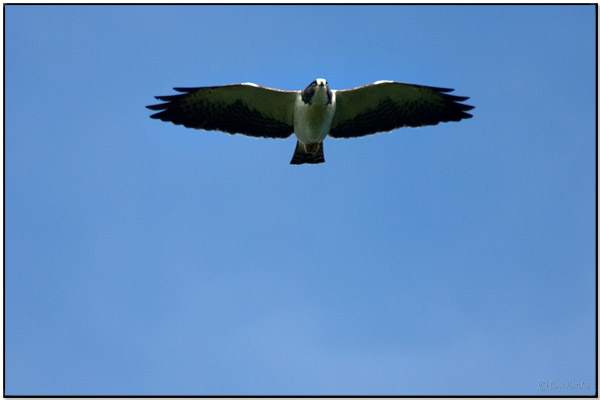


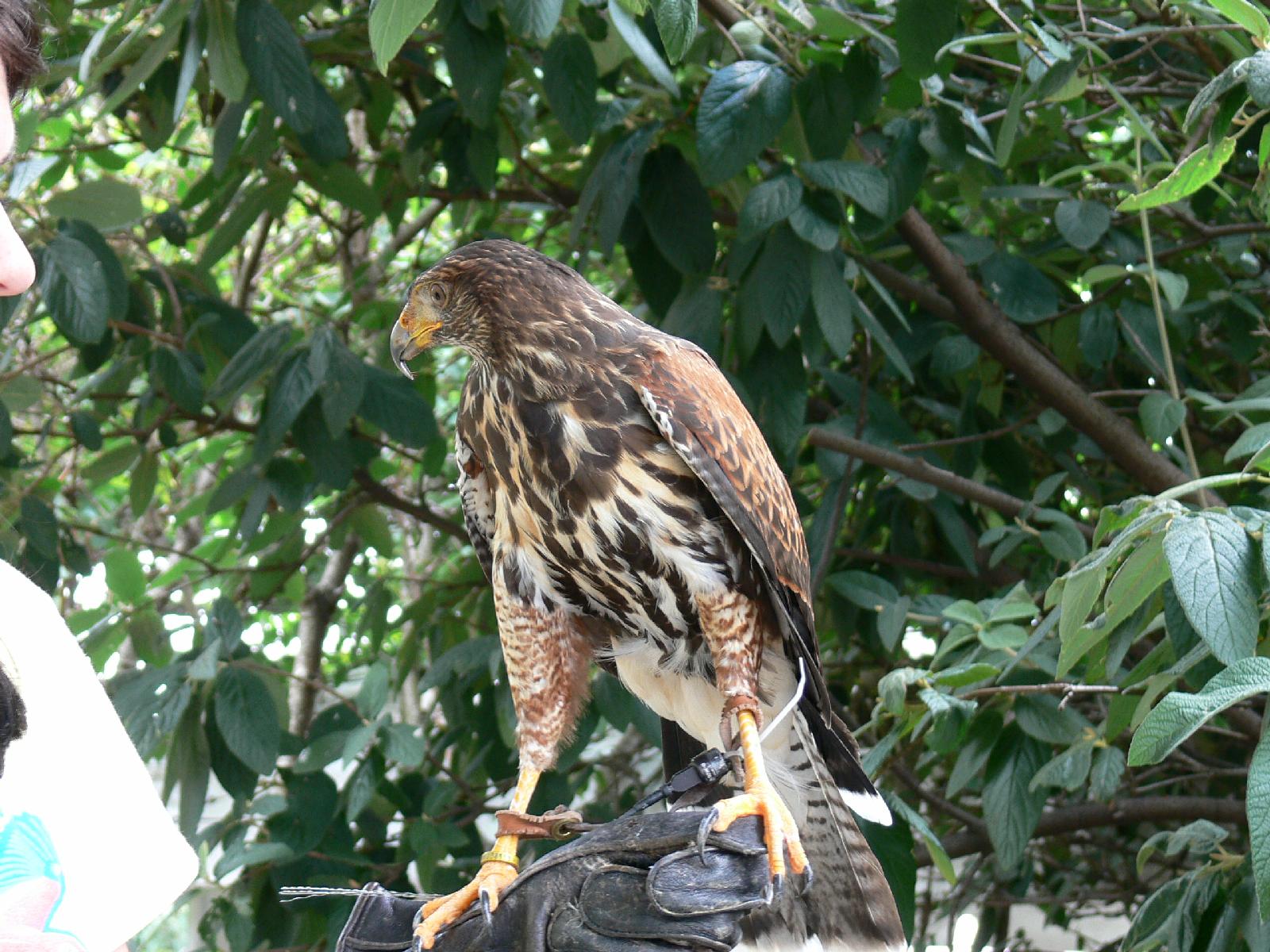
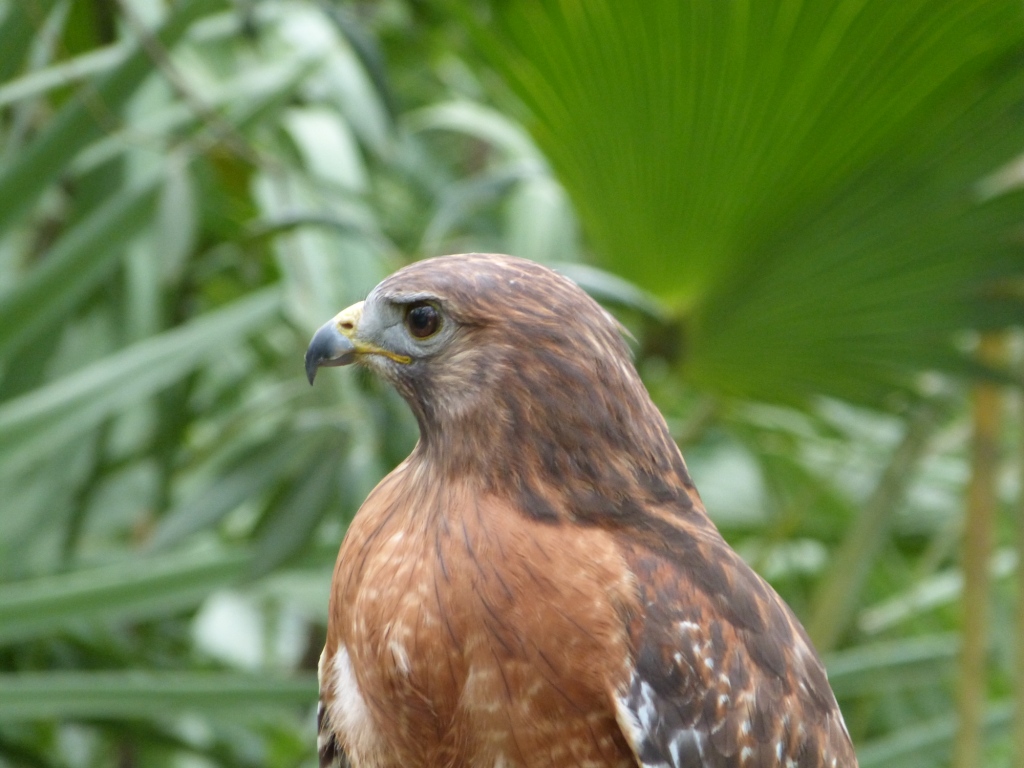
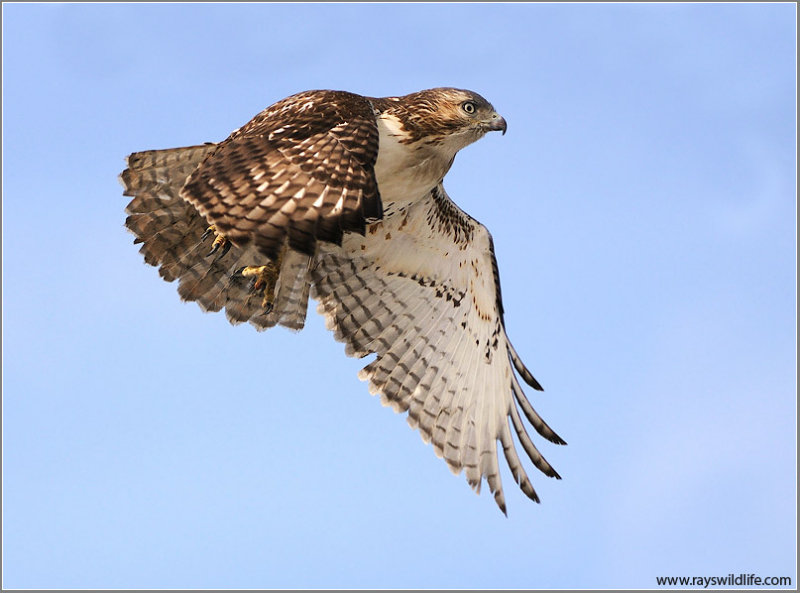


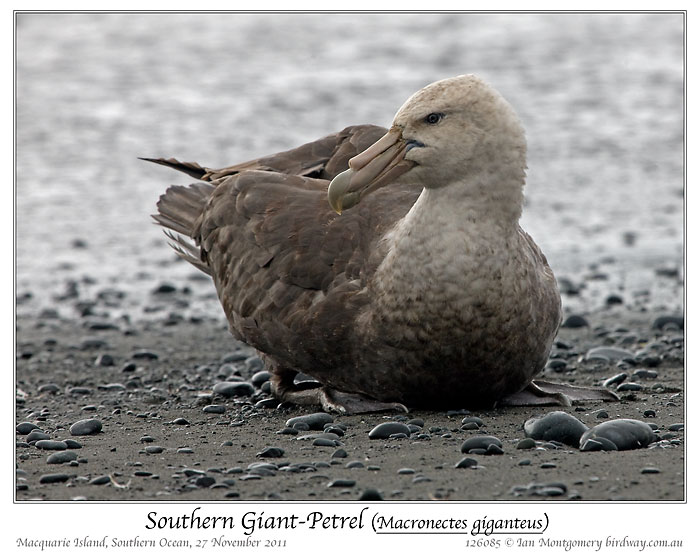

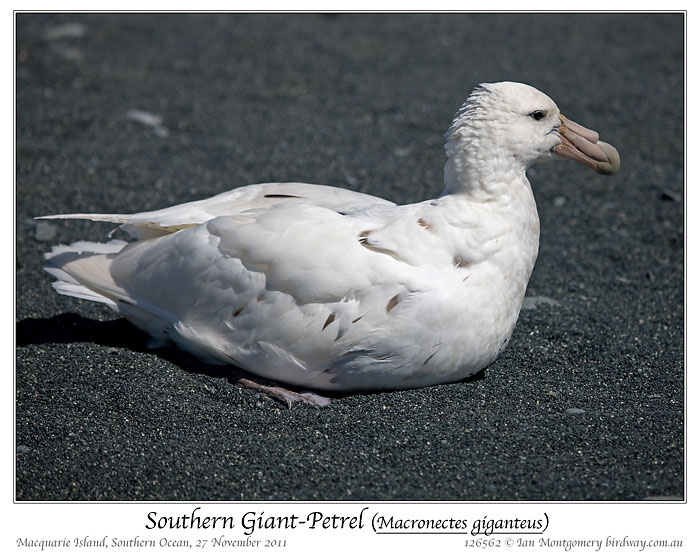
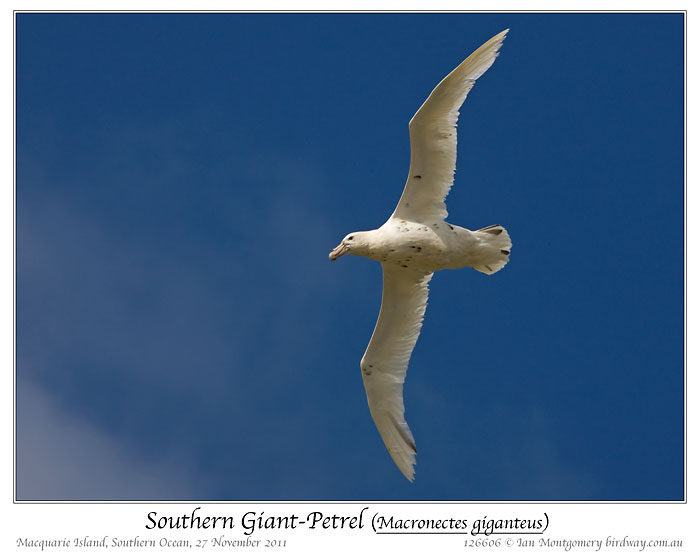


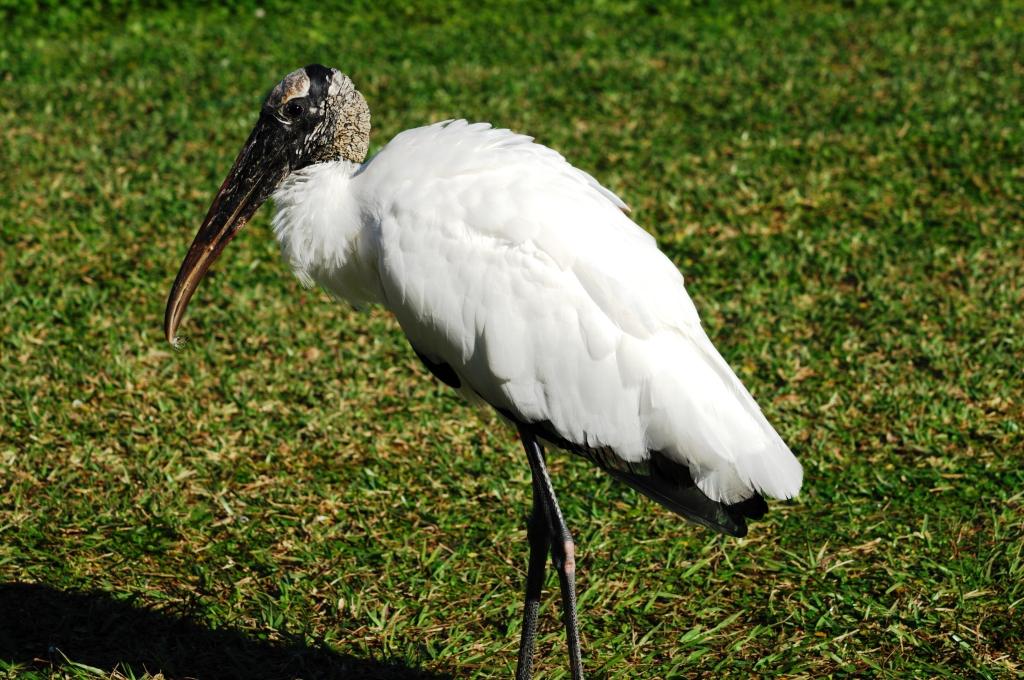
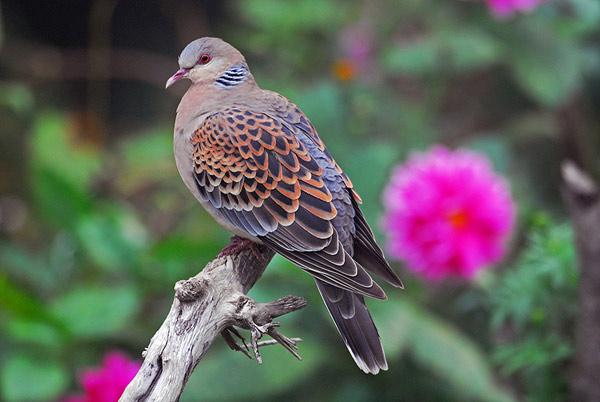

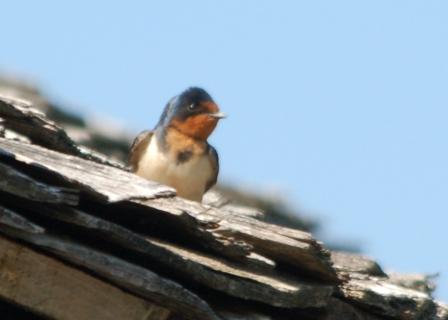
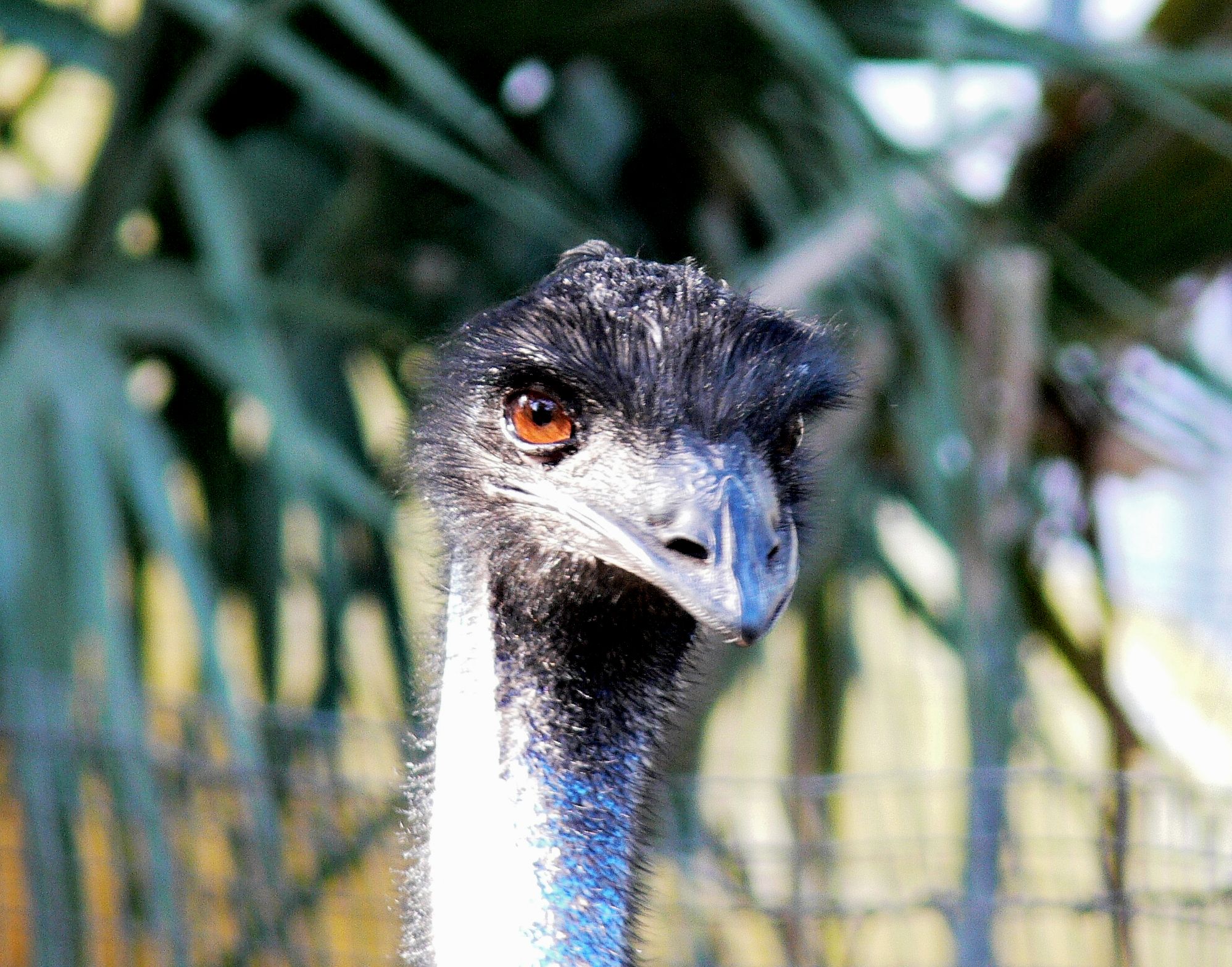
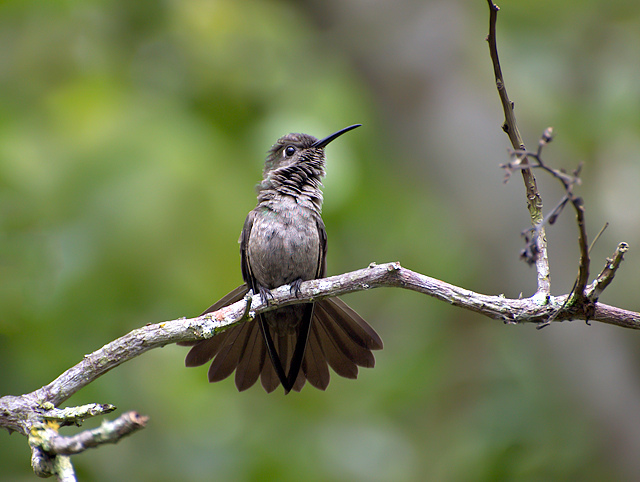
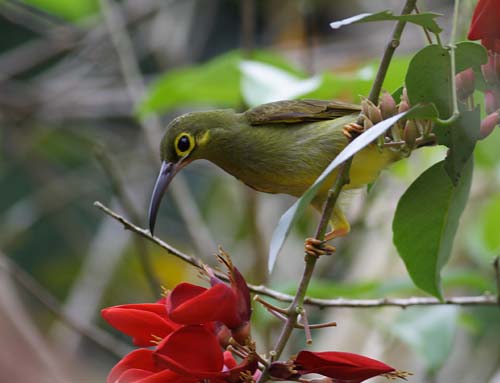
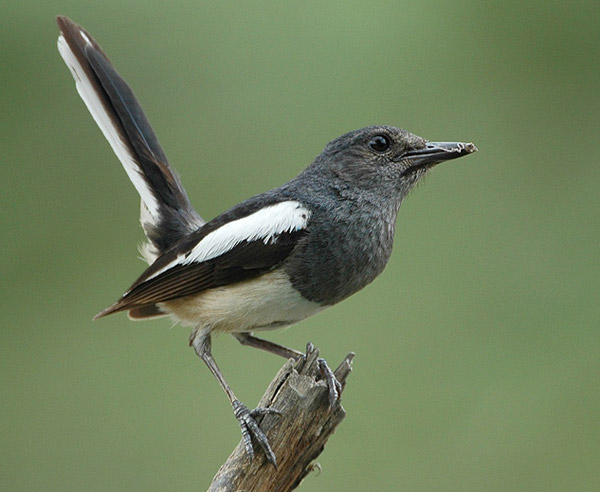
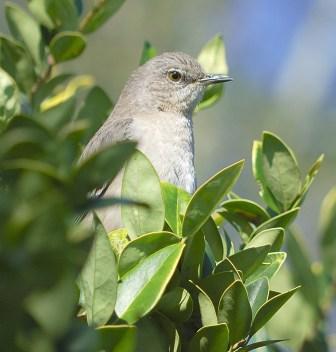


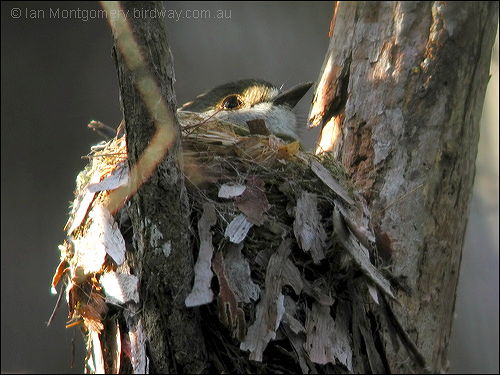
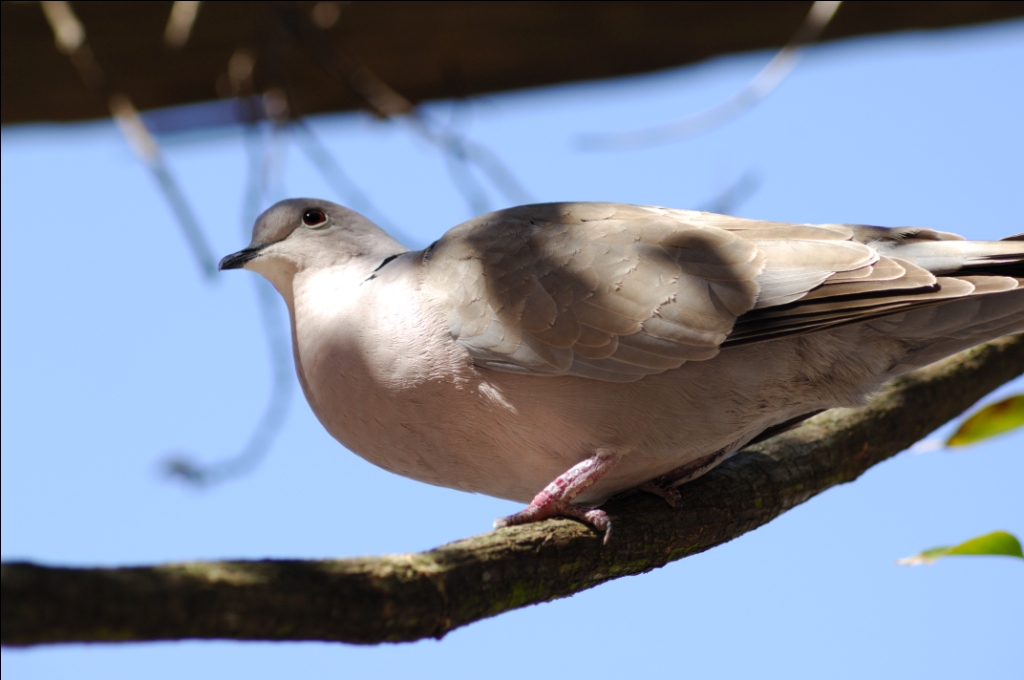
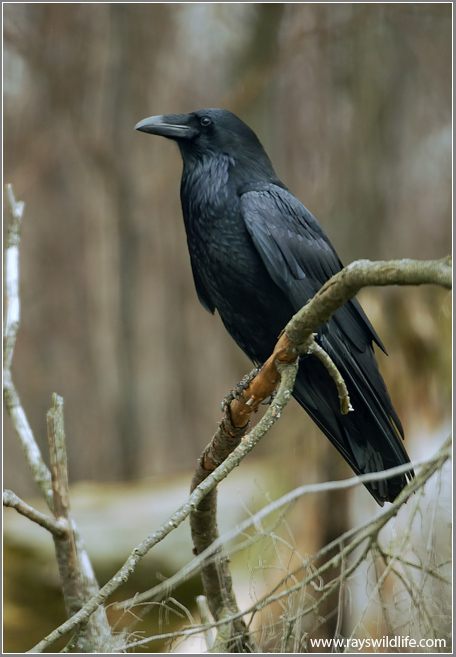


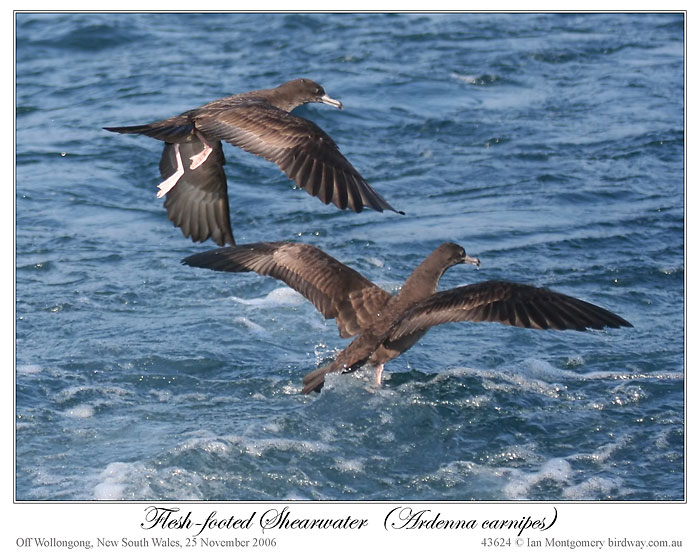


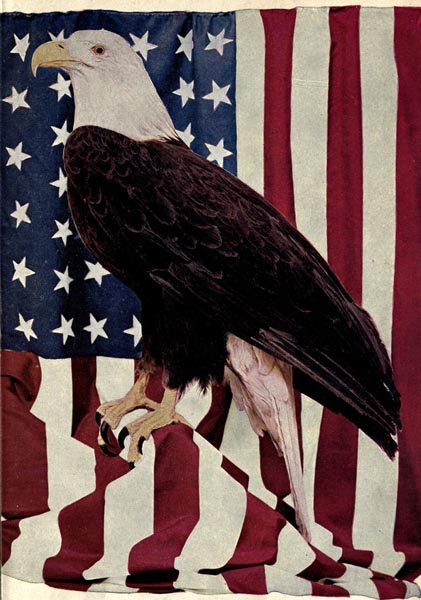

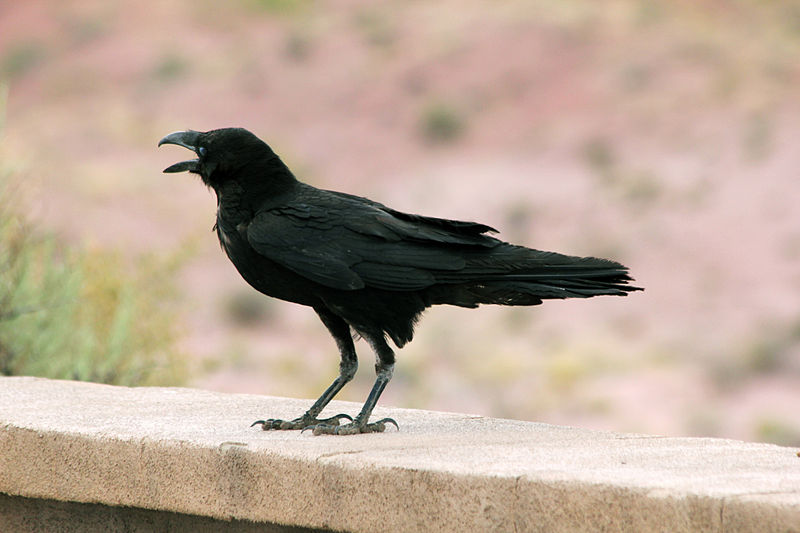

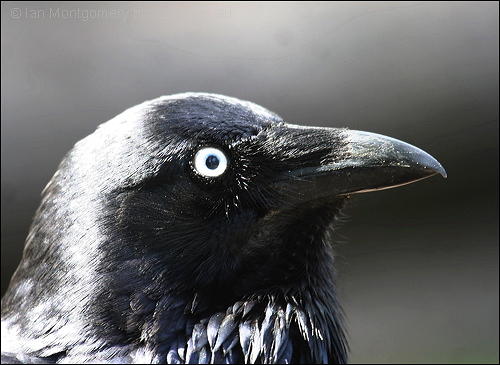
 Lee's Birdwatching Adventures Plus