Birds Helping Birds by Creation Moments

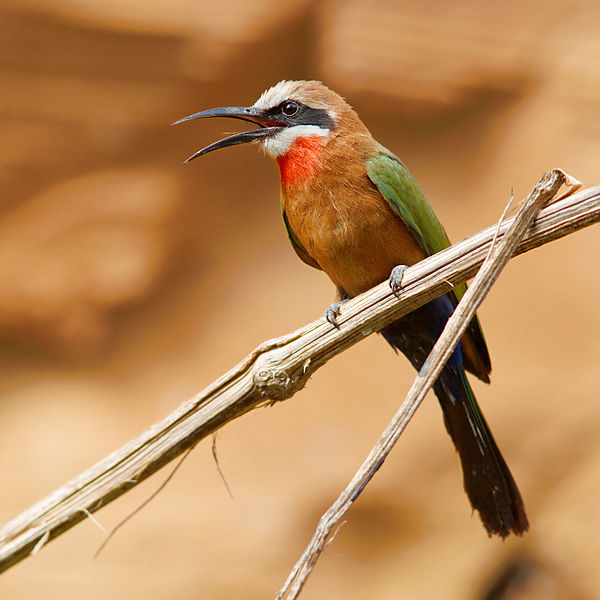
White-fronted Bee-eater (Merops bullockoides) ©WikiC

White-fronted Bee-eater (Merops bullockoides) ©WikiC

Birds Helping Birds ~ by Creation Moments

“But a certain Samaritan, as he journeyed, came where he was: and when he saw him, he had compassion on him, And went to him, and bound up his wounds, pouring in oil and wine, and set him on his own beast, and brought him to an inn, and took care of him.” (Luke 10:33-34)

Altruism – helping one another – is a real puzzle to those who explain the world of living things in terms of materialistic evolution. Evolution is supposed to work on the selfish survival-of-the-fittest principle, so there should be no reason for any creature, including man, to develop a helping attitude. In fact, there is no way to explain how the genetic code could possibly develop and pass on a trait such as altruism.

Birds helping birds Researchers have studied a bird called the white-fronted African bee-eater. Members of this species help each other, sometimes even at the sacrifice of their own life. For example, one bird will face a spitting cobra to defend another, and scientists have been puzzled to know how this altruistic trait can possibly be passed on, when it often results in death. Another common altruistic habit of the African bee-eater is that one female will put off starting her own family to help another bee-eater raise her young. Some argue that such behavior is limited to birds that are related. But they admit that even adopted orphaned bee-eaters will help their adopted parents in this way.

While it is often denied, the theory of evolution has yet to adequately explain altruism. Altruism is a demonstration of that commandment given by our Creator to “love our neighbor.”

Prayer:
Dear God, I ask that You would help me so that I would not adopt the selfish and cold behavior of so many in today’s world. Let my life be an example that draws others to You. In Jesus’ Name. Amen.

©Creation Moments

Notes:
Kathy A. Fackelmann, “Avian Altruism,” Science News, Vol.135, June 10, 1989, pp. 364-365. Photo: Courtesy of Luc Viatour. Licensed under the GNU Free Documentation 1.2 License.


Lee’s Addition:

White-fronted Bee-eater (Merops bullockoides) by Bob-Nan

White-fronted Bee-eater (Merops bullockoides) by Bob-Nan

The Bee-eaters are members of the Meropidae Family. There are 27 different species of bee-eaters. What an amazing display of the Lord’s Creation. They are a lovely family to look at.

Most species are found in Africa and Asia but others occur in southern Europe, Australia, and New Guinea. They are characterised by richly coloured plumage, slender bodies, and usually elongated central tail feathers. All have long downturned bills and pointed wings, which give them a swallow-like appearance when seen from afar. There are 26 different species of bee-eaters.

*
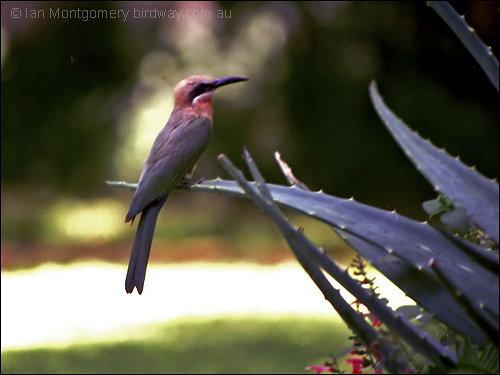
White-fronted Bee-eater (Merops bullockoides) by Ian

White-fronted Bee-eater (Merops bullockoides) by Ian

Meropidae Family

Articles Mentioning Birds From This Family:

*

Story of Jonah ~ by Mary Margaret

A friend sent me this link to a young girl telling the story of Jonah. It is amazing and she is doing all from memory. She looks as time as if she is reading, but she isn’t.

*

*

Now the word of the LORD came unto Jonah the son of Amittai, saying, Arise, go to Nineveh, that great city, and cry against it; for their wickedness is come up before me. But Jonah rose up to flee unto Tarshish from the presence of the LORD, and went down to Joppa; and he found a ship going to Tarshish: so he paid the fare thereof, and went down into it, to go with them unto Tarshish from the presence of the LORD. (Jonah 1:1-3 KJV)

*

Sunday Inspiration – Woodpeckers

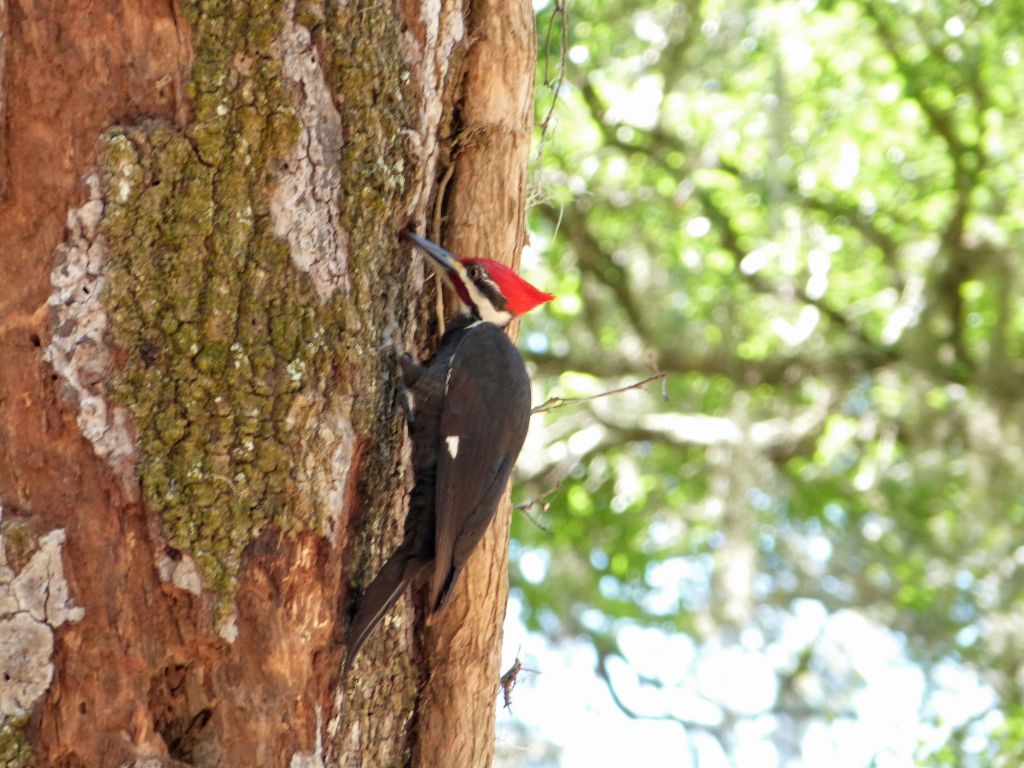
Pileated Woodpecker by Lee at Circle B

Pileated Woodpecker by Lee at Circle B

All the birds of the heavens made their nests in its boughs; Under its branches all the beasts of the field brought forth their young; And in its shadow all great nations made their home. (Ezekiel 31:6 NKJV)

The trees of the LORD are full of sap, The cedars of Lebanon which He planted, Where the birds make their nests; The stork has her home in the fir trees. (Psalms 104:16-17 NKJV)

Woodpeckers and their kind belong to the Picidae – Woodpeckers Family. There are 234 species including not only Woodpeckers, but also Wrynecks, Piculets, Flickers, Sapsuckers and Flamebacks. Again, these birds show amazing characteristics given them by their Creator. Check out some of the articles about them below.

Members of this family are found worldwide, except for Australia, New Guinea, New Zealand, Madagascar, and the extreme polar regions. Most species live in forests or woodland habitats, although a few species are known to live in treeless areas, such as rocky hillsides and deserts.

The Lord Jesus not only loves all the birds He made, but best of all, He loves us.

For God so loved the world, that he gave his only begotten Son, that whosoever believeth in him should not perish, but have everlasting life. (John 3:16 KJV)

*

This slideshow requires JavaScript.

*

*

“Jesus Loves Me” by Bonnie Standifer

This piece was written and played by Bonnie Standifer at our Orchestra Concert in March of 2013 at Faith Baptist Church. You have never heard it played this way before. Bonnie is a very gifted arranger and pianist. She is also married to the orchestra conductor.

*

Picidae – Woodpeckers Family

Sharing The Gospel

*

Articles Mentioning Birds From This Family:

*

More Sunday Inspiration

*

Interesting Things – Not So Bird-Brained

Great Blue Heron (Ardea herodias) Sleeping by Lee at Circle B

Great Blue Heron (Ardea herodias) Sleeping by Lee

NOT SO BIRD-BRAINED ~ by Creation Moments

So God created . . . every winged bird according to its kind. And God saw that it was good. (Genesis 1:21)

How do you take a much-needed nap or get a good night’s sleep when you must be alert to danger? Human beings designate people to stay awake and watch for danger when they sleep. Then, they set up warning systems.

SmileyCentral.com

Since birds are much more vulnerable to danger, God gave them the ability to do these things on a simple scale, and then He gave them one more amazing gift. Many birds are able to put half of their brain to sleep, while the other half stays awake and alert. The eye that serves the sleeping half even closes, while the eye that serves the waking half of the brain stays alert, searching for danger. After the first sleeping half is nicely rested, it wakes up, and the other half goes to sleep. Of course, these birds can also put both sides of the brain to sleep at the same time, just as we do. Whales, seals and dolphins are among the non-birds that can half-brain sleep as well.

Evidence of the clever design of this half-brain sleep ability can be seen in the fact that where two birds sleep next to each other, each bird will put the half of the brain that faces its partner to sleep. Once that half is rested, they change places, so the other half of their brain can sleep.

When Scripture tells us that God looked at His creation and declared it “good,” God’s standard for good is perfection. His ingenious design, which would allow birds to protect themselves even when sin and death entered the creation, is part of the goodness of God’s creation.

Prayer:
I thank You, Lord, that You made a creation perfect and so beautiful that even in could not completely destroy it. Amen.

Notes:
S. Milius, Half-asleep birds choose which half dozes, Science News, February 6, 1999, v.155, p.86

©Creation Moments

*

Largest Creature on Earth ~ from Creation Moments

Skeleton of a blue whale

And God created great whales, and every living creature that moveth, which the waters brought forth abundantly, after their kind, and every winged fowl after his kind: and God saw that it was good. (Genesis 1:21)

Many people think that the greatest of the dinosaurs were the largest creatures ever to live on Earth. But while a few of the very largest dinosaurs may have been longer than the blue whale, the blue whale has the largest actual body size of any creature that ever lived.

The blue whale can reach a length of 100 feet and weigh up to 170 tons. That’s about as much as a whole town of twenty-seven hundred people! It has to eat a million calories a day, which is equivalent to about 1,000 banana splits. The blue whale’s tongue weighs more than an elephant and its arteries are big enough for a man to swim through. Its heart, which has to pump the whale’s entire supply of eight tons of blood, weighs 1,000 pounds.

In addition to its great size, the whale is intelligent. Besides showing forth God’s great creative power and imagination, the whale also shows us that neither size nor other standards of human measurement give us an indication of how God places value on things. Though we human beings are not the largest, nor the only intelligent creatures on Earth, we are the only ones responsible to God for the way we live. That is why, when sin separated us from our Creator, He sent His only Son to save and restore us to Himself.

Prayer:
Heavenly Father, help me not to measure things in a worldly manner. Instead of focusing on the creation, including myself, let my focus be on You and what You have done for me. In Jesus’ Name. Amen.

Notes:

“So You Think a Dinosaur is Big.” Does God Exist? May-June, 1989. Photo: Skeleton of a blue whale, Canadian Museum of Nature, Ottawa, Ontario. Courtesy of D. Gordon E. Robertson. Licensed under the Creative Commons Attribution-Share Alike 3.0 Unported license.

©Creation Moments 2014

*

More Plus Articles

*

Peter’s Female Blackbird

Common Blackbird (Turdus merula) by Ian

Common Blackbird (Turdus merula) by Ian

I don’t suppose that, what happened some years ago, will ever happen again.

My Dutch wife and I were living in a little town called March and we made sure that various birds were fed every day from a large feeding tray in our garden. Winter was upon us, but very sadly, my wife had an accident and died about a week later in hospital.

There was a particular female blackbird who came for food, every morning, and allowed me to speak to her while only a couple of feet away. Coinciding with losing my wife, this same bird lost her mate and by the state of
his body I think a sparrow hawk got him. Unfortunately, my female blackbird refused to go to a special piece of ground which I had dug and loaded it with worms, purchased from the local fishing tackle shop. Even after I removed the dead mutilated blackbird, his female mate would go nowhere near that little plot of dug soil because her mate had sadly met his end quite nearby. I believe this precious bird knew that my wife was missing also and she seemed to stay longer, and be near me every morning.

To my great joy, one morning, this loving bird hopped behind me as I walked toward the back entrance of my bungalow. I entered my kitchen and she waited outside. Would she come in I wondered ? She knew my voice and hopped into my kitchen and waited patiently. ( I have a photo of her waiting in front of my ‘fridge.) Then I opened the ‘fridge door and gave her a few pieces of seed cake.

Every morning thereafter my bird came to my back door and came into my kitchen at my invitation. To me, it was a wonder to see a “wild” blackbird patiently waiting in front of my ‘fridge knowing about the seed cake behind that big white door, just for her.

Jesus said that ‘ unless we become like children we cannot enter the kingdom of heaven ‘ That bird sure did have a childlike faith. It taught me that once we begin to put food out for wild birds in the winter we must continue daily. Thinking of the various types of birds which visited my garden in the winter, I surmised that some had come many miles. How very sad if, some wintry day, they came only to find the table was bare ?

I moved home, some months later, and still wonder what happened to this blackbird who, I’m sure, shared the sorrow of her loss with this poor guy.

By Peter England, UK

*

*

Sunday Inspiration – Turacos

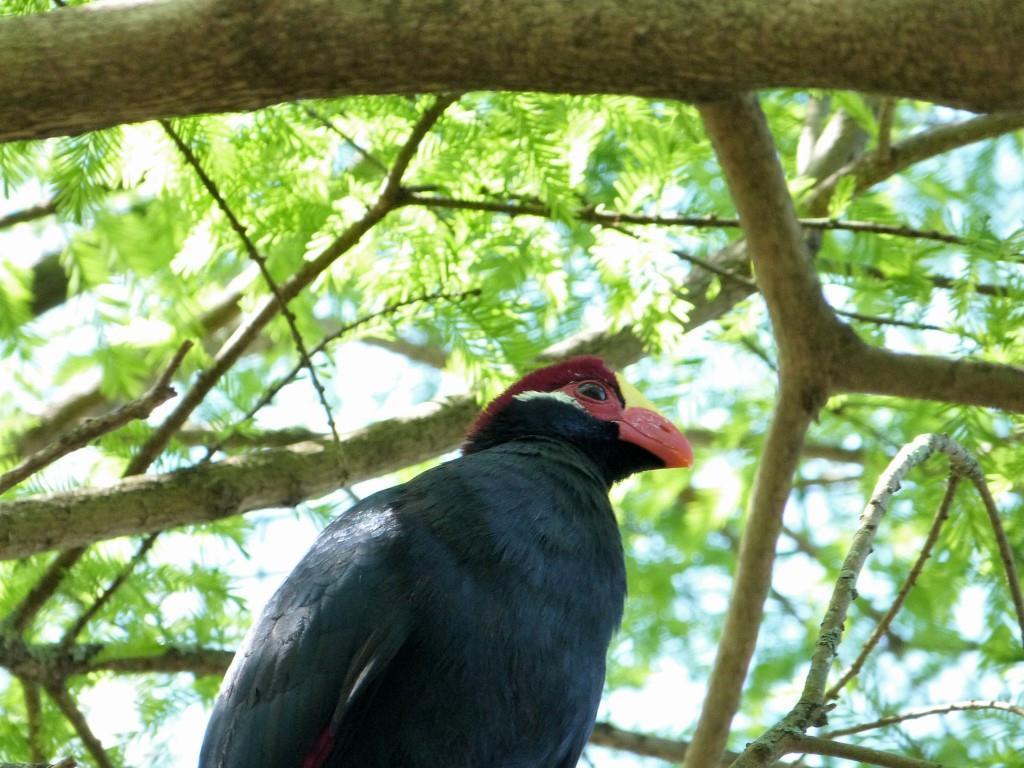
Violet Turaco (Musophaga violacea) by Lee at LPZ

Violet Turaco (Musophaga violacea) by Lee at LPZ


Then God said, “Let the waters abound with an abundance of living creatures, and let birds fly above the earth across the face of the firmament of the heavens.” (Genesis 1:20 NKJV)

The Turacos belong to the Musophagidae – Turacos Family which includes 17 Turacos, 3 Go-away-birds and 2 Plantain-eaters.

The Turacos make up the bird family Musophagidae (literally “banana-eaters”), which includes plantain-eaters and go-away-birds. In southern Africa both turacos and go-away-birds are commonly known as louries. They are semi-zygodactylous – the fourth (outer) toe can be switched back and forth. The second and third toes, which always point forward, are conjoined in some species. Musophagids often have prominent crests and long tails; the turacos are noted for peculiar and unique pigments giving them their bright green and red feathers.

The plumage of Go-away-birds and plantain-eaters is mainly grey and white. The turacos on the other hand are brightly coloured birds, usually blue, green or purple.

This slideshow requires JavaScript.

*

*

“Redeemed Medley” – by Faith Baptist Choir – 2-9-2014

See:

*

More Sunday Inspiration

*

Happy Valentine’s Day 2014

8. Bleeding Heart Pigeons

Bleeding Heart Pigeons

And thou shalt love the Lord thy God with all thy heart, and with all thy soul, and with all thy mind, and with all thy strength: this is the first commandment. And the second is like, namely this, Thou shalt love thy neighbour as thyself. There is none other commandment greater than these. (Mark 12:30-31 KJV)

Trust you are having a very Happy Valentine’s Day.

(p.s. Still struggling with computer.)

*

Having Computer Problems and Bad Weather

Brevard Zoo 120913 by Lee

Red-crested Turaco (Tauraco erythrolophus) Brevard Zoo by Lee

Then they cry unto the LORD in their trouble, and he bringeth them out of their distresses. He maketh the storm a calm, so that the waves thereof are still. Then are they glad because they be quiet; so he bringeth them unto their desired haven. Oh that men would praise the LORD for his goodness, and for his wonderful works to the children of men! (Psalms 107:28-31 KJV)

Having problems with computer and under sever weather alert. Will get a real article up soon.

*

Peter’s Crow From The Sky

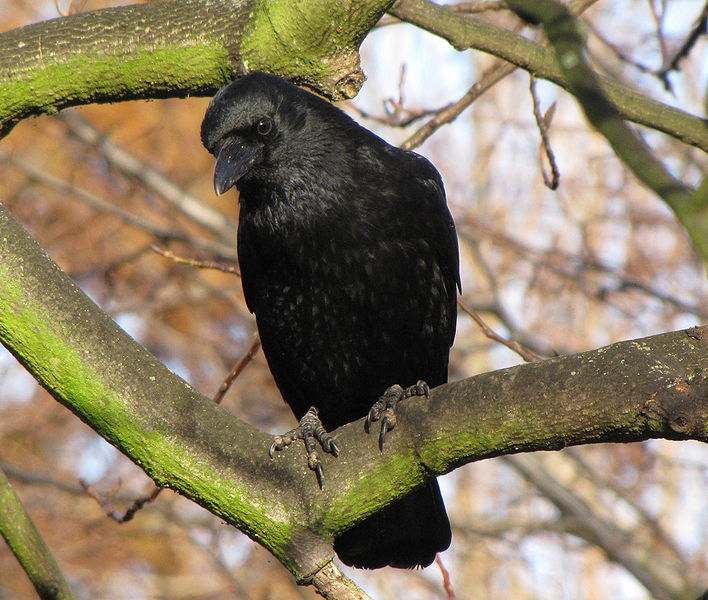
Carrion Crow (Corvus corone) Southend-on-Sea England ©WikiC

Carrion Crow (Corvus corone) Southend-on-Sea England ©WikiC

Who provideth for the raven his food? when his young ones cry unto God, they wander for lack of meat. (Job 38:41 KJV)

Here’s a true account of a bird that seemingly ‘dropped ‘ out of the sky and landed near to my feet.

How can I forget when one sunny spring morning a young crow landed exhausted at my feet whilst I was gardening. I picked him up and placed him on a ledge protruding from a large bird house. ” Wait there !! ” I told him, which seemed a bit silly because that bird was in no physical condition to go anywhere for a few days. Neither did he speak English ?

I kept feeding him and spending time talking to him until about 3 days later he hopped on to my head and allowed me to carry on doing some gardening.

Just for fun I knocked at my back door and enquired of my wife if she had seen my bird that day. It was now “my bird ” and it fluttered on to her head ( I still have the photograph ) Might I say it is a rare photo because I am told that not many Dutch women have been seen walking around with a live crow on their heads.

Having established a ” motherly ” relationship with a beautiful shiny black crow I was not really surprised when he used to fly from window to window to check if I was at home. I warned visitors who used my upstairs bathroom that my crow might try to peep in the window whilst looking for me.

It only seemed like a few weeks and my crow seemed to enjoy himself and the regular food I gave him. He must have stayed in my large bird house at night and seemed so pleased to see me every day.

One day whilst out in the garden with my new-found friend, on his feeding perch, there came the sound from above of some crows circling and making crow noises. They seemed to fly away but flew even lower as they spotted “my bird ”

I would like to put a Christian analogy to this story and say that “he heard the call from on high ” then spread his now strong wings and flew heavenward to join his family.

Sometimes I wonder why God speaks to us through His creation but I know that my Heavenly Father sees even the sparrow fall. I kinda believe that He gave ‘my bird ‘  just enough strength to make it to His bird-loving son. It was a short time of teaching and one that I’ll never forget.

ps. On another occasion I tamed a blackbird who use to walk behind me…………….

By Peter England, U.K.


Lee’s Addition:

Peter England is a retired pastor who lives in England. He is sending me some of his stories about his encounters with birds from a Christian perspective. I trust we will enjoy these.

He didn’t say what type of Crow, so this is one of the English Crows. Crows and Ravens are in the same family.

Another article by Peter:

The Whole Creation Has Been Groaning………..

*


Sunday Inspiration – Stone Birds

Bush Stone-curlew (Burhinus grallarius) by Ian

Bush Stone-curlew (Burhinus grallarius) by Ian

And the foundations of the wall of the city were garnished with all manner of precious stones. The first foundation was jasper; the second, sapphire; the third, a chalcedony; the fourth, an emerald; The fifth, sardonyx; the sixth, sardius; the seventh, chrysolite; the eighth, beryl; the ninth, a topaz; the tenth, a chrysoprasus; the eleventh, a jacinth; the twelfth, an amethyst. (Revelation 21:19-20 KJV)

Jesus saith unto them, Did ye never read in the scriptures, The stone which the builders rejected, the same is become the head of the corner: this is the Lord’s doing, and it is marvellous in our eyes? (Matthew 21:42 KJV)

And when they looked, they saw that the stone was rolled away: for it was very great. (Mark 16:4 KJV)

Siberian Stonechat (Saxicola maurus) by Nikhil Devasar

Siberian Stonechat (Saxicola maurus) by Nikhil Devasar

And he was withdrawn from them about a stone’s cast, and kneeled down, and prayed, (Luke 22:41 KJV)

For in him we live, and move, and have our being; as certain also of your own poets have said, For we are also his offspring. Forasmuch then as we are the offspring of God, we ought not to think that the Godhead is like unto gold, or silver, or stone, graven by art and man’s device. And the times of this ignorance God winked at; but now commandeth all men every where to repent: (Acts 17:28-30 KJV)

He that hath an ear, let him hear what the Spirit saith unto the churches; To him that overcometh will I give to eat of the hidden manna, and will give him a white stone, and in the stone a new name written, which no man knoweth saving he that receiveth it. (Revelation 2:17 KJV)

Limestone Leaf Warbler (Phylloscopus calciatilis) ©WikiC

Limestone Leaf Warbler (Phylloscopus calciatilis) ©WikiC

And he that sat was to look upon like a jasper and a sardine stone: and there was a rainbow round about the throne, in sight like unto an emerald. (Revelation 4:3 KJV)

Therefore thus saith the Lord GOD, Behold, I lay in Zion for a foundation a stone, a tried stone, a precious corner stone, a sure foundation: he that believeth shall not make haste. (Isaiah 28:16 KJV)

According to the grace of God which is given unto me, as a wise masterbuilder, I have laid the foundation, and another buildeth thereon. But let every man take heed how he buildeth thereupon. For other foundation can no man lay than that is laid, which is Jesus Christ. Now if any man build upon this foundation gold, silver, precious stones, wood, hay, stubble; Every man’s work shall be made manifest: for the day shall declare it, because it shall be revealed by fire; and the fire shall try every man’s work of what sort it is. (1 Corinthians 3:10-13 KJV)

*

This slideshow requires JavaScript.

*

Jesus Rolled Back The Stone from the Hyssongs’ “Expecting Miracles” Album

(Music and photos are used by permission. If copied, you must obtain permission also.)

*

More Sunday Inspiration

*

How Do You Bird Watch?

Black-bellied Whistling Ducks

Black-bellied Whistling Ducks at Circle B by Lee

Observe and consider the ravens; for they neither sow nor reap, they have neither storehouse nor barn; and [yet] God feeds them. Of how much more worth are you than the birds!
(Luke 12:24 AMP)

It would be interesting to hear from those readers who go birdwatching or watch birds, even if it is only from your window. Consider leaving comments so that we can understand that there are various methods.

As for me, my ways of birdwatching have changed over the years. First, I became more aware of the birds around me by a naturalist at a local park in south Florida. We started with simple things like not staring at a tree, but use “soft eyes” to watch for movement. After that, she showed me how to hold and adjust the binoculars. What a difference that made. Notes and a good bird book came next. The rest is history. I love birds and enjoy seeing how beautifully they were created.

Over time, I wanted to see how many birds I could get on a list. Many people like to birdwatch this way. They will go to great heights (literally) to find a new bird for their list. I would put Ian in that category. Don’t you just enjoy reading about his birdwatching adventures.

Dan searching for something to photo

Dan searching for something to photograph

Many like Dan, Ian, and our other photographers enjoy the challenge of photography. It is not always easy to get a great photo, especially when the birds don’t wait for you to get all the settings right.

Lee at Lake Morton by Dan

Lee at Lake Morton by Dan

Some like to feed the wildlife at home or a park and watch whoever shows up at that location.

Then you have every thing in between. Some enjoy going on birdwatching trips with other birders. This can be very helpful when you are just learning about the birds.

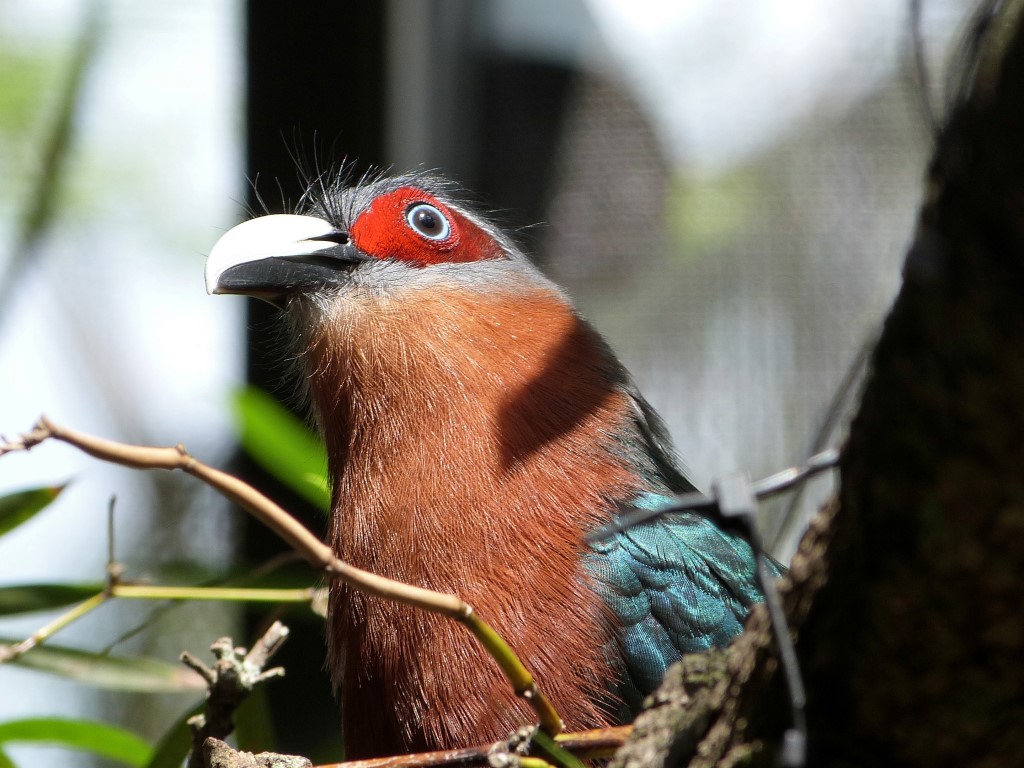
Chestnut-breasted Malkoha (Phaenicophaeus curvirostris) Palm Beach Zoo by Lee

Chestnut-breasted Malkoha (Phaenicophaeus curvirostris) Palm Beach Zoo by Lee

Today, I have mellowed somewhat. Between an issue with my feet and legs, I can no longer walk great distances. My age is also becoming a factor. I enjoy watching birds wherever they are including the Zoos. Those are easier for me to handle and actually, get to see the birds for longer periods of time and at closer ranges. That also allows me to see birds from other areas that I will never be able to get to.

I think I am actually becoming a bird “watcher.” I enjoy just seeing what they are up to or how they are put together. Like those feet I mentioned in the last article. Finding Birds in the Bible and Birds in Hymns are also pleasurable for me.

Black-bellied Whistling Duck (Dendrocygna autumnalis) Feet by Lee at PB Zoo

Black-bellied Whistling Duck Feet by Lee at PB Zoo

Is any one way of birdwatching any better than another? Not to my way of thinking. They are all fine methods and there are plenty of birds out there for all of us to enjoy.

What is your method or what gives you the most enjoyment when you are out on a “birdwatching adventure”?

*

Ian’s Bird of the Week

A J Mithra’s way of mixing birds and Scripture.

Check out our photographers down the sidebar.

Our Guest Writers

Most of the rest are my adventures plus the –

Birds in the Bible and Birds in Hymns

*