Ms. Theresa’s Thoughts – Eagles’ Wings

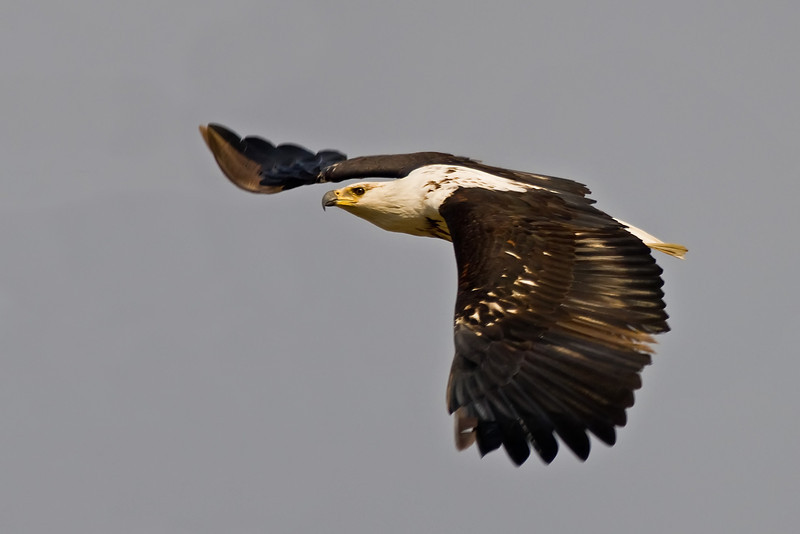
African Fish Eagle (Haliaeetus vocifer) by Africaddict

Ms. Theresa’s Thoughts – Eagles’ Wings

You have seen what I did to the Egyptians, and how I bore you on eagles’ wings and brought you to Myself. (Exodus 19:4 NKJV)

How sweet and loving is God that takes such good care of not only the birds but us as well. But the only way we are brought to God is accepting Him as our Lord and Savior.

*

Wordless Birds

*

I Just Happened ~ by Dottie Malcolm

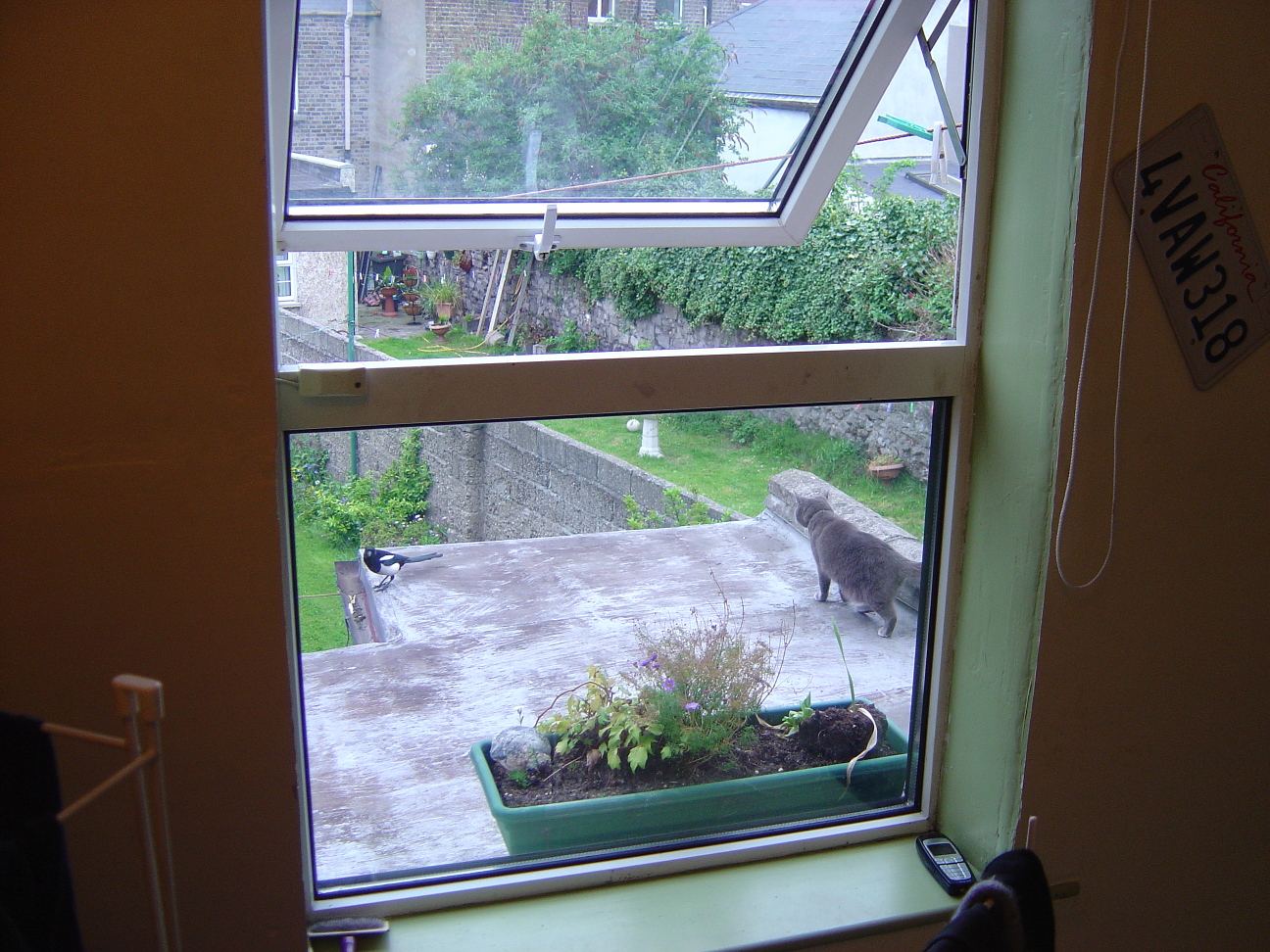
Outside A Window ©©jmason

I Just Happened ~ by Dorothy Belle Malcolm

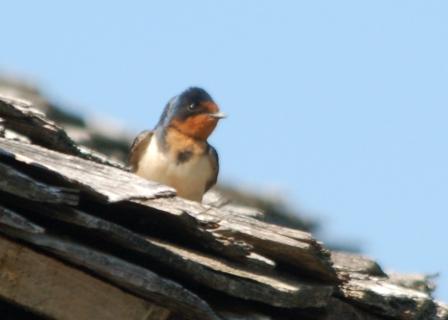
How many times have I said either out loud or to myself – “I just happened.” That seems to say it all for me when certain things occur. For instance, this spring I just happened to be looking out the family room window and saw the most beautiful bird. The colors were bright blue, red, and orange. In less than a minute it was gone. I had never seen one like it all the 30 plus years in Florida. Looking it up in a bird book the colors were described as blue-black, cinnamon belly and a reddish-brown chin. Well, yes, better than I described it. It was a Barn Swallow which I have not seen again.

Barn Swallow in Cades Cove by Dan

Barn Swallow in Cades Cove by Dan

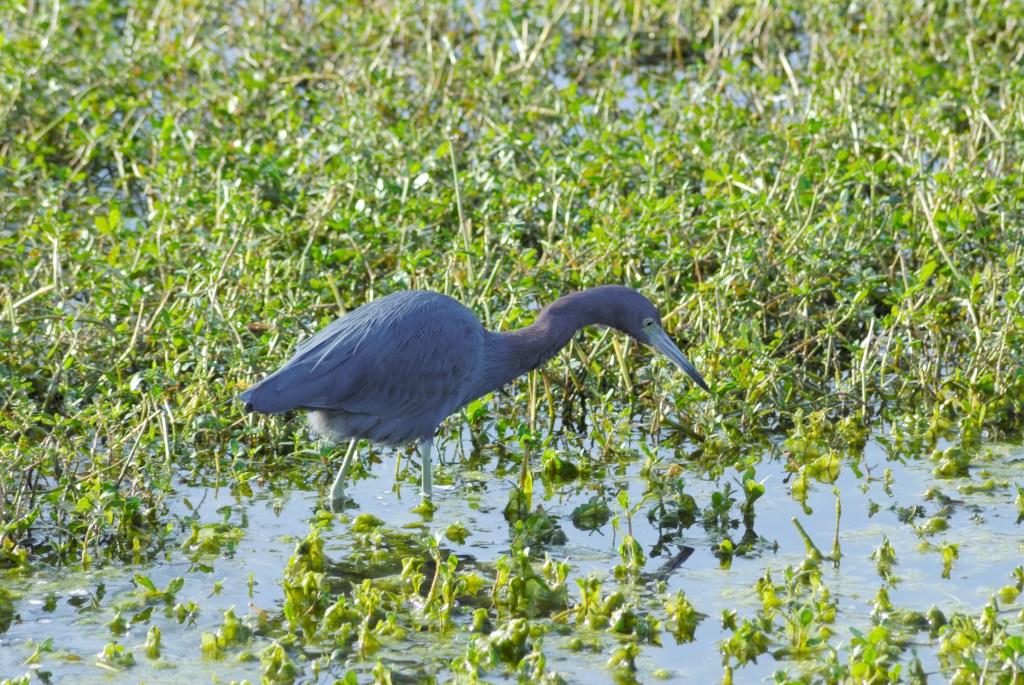
Also I had a first time visit from a non-breeding adult Little Blue Heron. Of course it was a result of “I just happened” to be looking out the same window and also had to look it up in a book.

Little Blue Heron at Lake Howard, Winter Haven, FL

Now that I think about it, maybe this particular window is proving to be a real winner for the “just happen” events. Come to think further about it, I recall seeing a pair of Orioles once.

The only thing is none of these birds have ever been seen by me again. Oh well, as long as I have the window, the book and the “I just happened,” perhaps ……

You will show me the path of life; In Your presence is fullness of joy; At Your right hand are pleasures forevermore. (Psalms 16:11 NKJV)

Other articles by Dottie:

*

How Birds Are Named

American Robin (Turdus migratorius) eating by Jim Fenton

American Robin (Turdus migratorius) eating by Jim Fenton

HOW BIRDS ARE NAMED

From ~ Color Key to North American Birds, by Frank M. Chapman

Birds have two kinds of names. One is a common, vernacular, or popular name; the other is a technical or scientific name. The first is usually given to the living bird by the people of the country it inhabits. The second is applied to specimens of birds by ornithologists who classify them.

Common names in their origin and use know no law. Technical names are bestowed under the system of nomenclature established by Linnæus and their formation and application are governed by certain definite, generally accepted rules. The Linnæan system, as it is now employed by most American ornithologists, provides that a bird, in addition to being grouped in a certain Class, Order, Family, etc., shall have a generic and specific name which, together, shall not be applied to any other animal.

Our Robin, therefore, is classified and named as follows:

CLASS AVES, Birds.

ORDER PASSERES, Perching Birds.

Suborder Oscines, Singing Perching Birds.

Family –Turdidæ Thrushes.

Subfamily Turdinæ Thrushes.

Genus, Turdus Thrushes.

Species, migratorius American Robin.

The Robin’s distinctive scientific name, therefore, which it alone possesses, is Turdus migratorius. There are numerous other members of the genus Turdus, but not one of them is called migratorius and this combination of names, therefore, applied to only one bird.

The questions Why use all these Latin terms? Why not call the bird “Robin” and be done with it? are easily answered. Widely distributed birds frequently have different names in different parts of their range. The Northern Flicker (Colaptes auratus), for instance, has over one hundred common or vernacular names. Again, the same name is often applied to wholly different birds. Our Robin (Turdus migratorius) is not even a member of the same family as the European Robin (Erithacus rubecola.) If, therefore, we should write of birds or attempt to classify them only by their common names, we should be dealing with such unfixed quantities that the result would be inaccurate and misleading. But by using one name in a language known to educated people of all countries, a writer may indicate, without danger of being misunderstood, the particular animal to which he refers. Among people speaking the same tongue, where a definite list of vernacular names of animals has been established, they can of course be used instead of the scientific names.
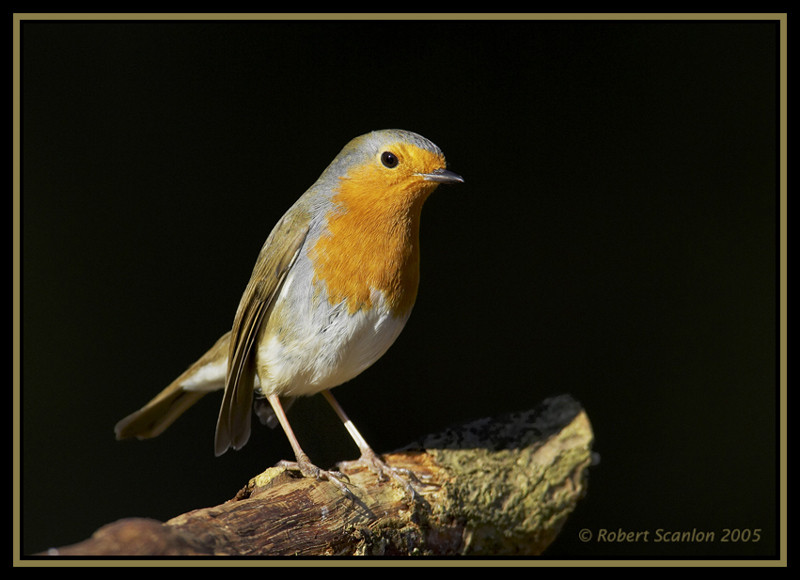
European Robin (Erithacus rubecula) by Robert Scanlon

European Robin (Erithacus rubecula) by Robert Scanlon

Such a list of North American birds has been prepared by the American Ornithologists’ Union. It furnishes a common as well as scientific name for each of our birds, and is the recognized standard of nomenclature among American ornithologists. The names and numbers of birds employed in this Color Key are those of the American Ornithologists’ Union’s ‘Check-List of North American Birds.’

It will be observed that in this ‘Check-List,’ and consequently in the following pages, many birds have three scientific names, a generic, specific, and subspecific. The Western Robin, for example, appears as Turdus migratorius propinquus. What is the significance of this third name?

In the days of Linnæus, and for many years after, it was supposed that a species was a distinct creation whose characters never varied. But in comparatively recent years, as specimens have been gathered from throughout the country inhabited by a species, comparison frequently shows that specimens from one part of its range differ from those taken in another part of its range. At intervening localities, however, intermediate specimens will be found connecting the extremes.

Generally, these geographical variations, as they are called, are the result of climatic conditions. For instance, in regions of heavy rainfall a bird’s colors are usually much darker than they are where the rainfall is light. Song Sparrows, for example, are palest in the desert region of Arizona, where the annual rainfall may not reach eight inches, and darkest on the coast of British Columbia and Alaska, where the annual rainfall may be over one hundred inches. In going from one region, however, to the other the gradual changes in climate are accompanied by gradual changes in the colors of the Song Sparrows, and the wide differences between Arizona and Alaska Song Sparrows are therefore bridged by a series of intermediates.

Variations of this kind are spoken of as geographic, racial, or subspecific and the birds exhibiting them are termed subspecies. In naming them a third name, or trinomial is employed, and the possession of such a name indicates at once that a bird is a geographic or racial representative of a species, with one or more representatives of which it intergrades.

Returning now to the Robin. Our eastern Robins always have the outer pair of tail-feathers tipped with white and, in adults, the back is blotched with black; while Robins from the Rocky Mountains and westward have little or no white on the outer tail-feathers, and the back is dark gray, without black blotches. These extremes are connected by intermediate specimens sharing the characters; of both eastern and western birds. We do not, therefore, treat the latter as a species, but as a subspecies, and consequently, apply to it a subspecific name or trinomial, Turdus migratorius propinquus, (propinquus, meaning nearly related.)

A further study of our eastern Robin shows that in the southern parts of its breeding range (the Carolinas and Georgia), it varies from the northern type in being smaller in size and much paler and duller in color; and to this second geographical variety is applied the name Turdus migratorius achrusterus, (achrusterus, meaning less highly colored).

After the recognition of western and southern races of the Robin under three names (trinomial) it would obviously be inconsistent to apply only two names (binomial) to our eastern bird, the former being no more subspecies of the latter than the latter is of the former. In other words, to continue to apply only generic and specific names to the Eastern Robin would imply that it was a full species, while the use of a trinomial for the Western or the Southern Robin shows them to be subspecies. As a matter of fact we know that there is but one species of true Robin in the United States, consequently in accordance with the logical and now generally accepted method, we apply to that species the name Turdus migratorius, and this is equally applicable to Robins from east, south or west. When, however, we learn that the Eastern Robin is not a species but a subspecies, we repeat the specific name by which it was made known and call it Turdus migratorius migratorius.

It may be asked, Why give names to these geographical races? Why not call Eastern, Western and Southern Robins by one name, Turdus migratorius, without regard to their climatic variations?

In reply, two excellent reasons may be given for the recognition of subspecies by name; first, because in some cases they differ from one another far more than do many species, when it would clearly be inadvisable to apply the same name to what are obviously different creatures. For example, it has lately been discovered by Mr. E. W. Nelson that the small, black-throated, brown-breasted, Quails or Bob-whites of southern Mexico, through a long series of intermediates inhabiting the intervening region, intergrade with the large, white-throated, black-and-white breasted, Bob-white of our northern states. It would be absurd to call such wholly unlike birds by the same name, nor could we give a full specific name to the Mexican Bob-white since at no place can we draw a line definitely separating it from the northern Bob-white. Furthermore, the use of only two names would conceal the remarkable fact of the intergradation of two such strikingly different birds; a fact of the first importance to students of the changing within species.

For much the same reason we should name those birds which show less pronounced variations, such as are exhibited by the Robin. Here we have a species in the making, and in tracing the relation between cause and effect, we learn something of the influences which create species. Thus, climate has been definitely proven so to alter a species, both in size and color that, as we have seen in the case of the Song Sparrows, marked climate changes are accompanied by correspondingly marked changes in the appearance of certain animals. In naming these animals we are, in effect, giving a ‘handle to the fact’ of their speciation by environment.

Bring out with you every living thing of all flesh that is with you: birds and cattle and every creeping thing that creeps on the earth, so that they may abound on the earth, and be fruitful and multiply on the earth.” So Noah went out, and his sons and his wife and his sons’ wives with him. Every animal, every creeping thing, every bird, and whatever creeps on the earth, according to their families, went out of the ark. (Genesis 8:17-19 NKJV)

Since it is evident that a bird may vary much or little, according to the governing conditions and its tendency to respond to them, no fixed rule can be laid down which shall decide just what degree of difference are deserving a name. It follows, therefore, that in some cases ornithologists do not agree upon a bird’s claim to subspecific rank.

In North America, however, questions of this kind are referred to a committee of seven experts of the American Ornithologists’ Union, and their decision establishes a nomenclature, which is accepted as the standard by other American ornithologists and which has been adopted in this volume.

Spotted Redshank (Tringa erythropus) by W Kwong

Spotted Redshank (Tringa erythropus) by W Kwong – Listed as a Recent Sighting – NARBA

Foreign birds of wholly accidental occurrence, most of which have been found in North America but once or twice, are included in the systematic list of North American birds, but are not described or figured in the body of the book, where their presence would tend to convey an erroneous impression of their North American status. Furthermore, records of the presence of birds so rare as these can be properly based on only the capture of specimens.

In the preparation of the following pages both author and artist have had full access to the collections of the American Museum of Natural History, and they are also glad to acknowledge their indebtedness to William Brewster of Cambridge, Massachusetts, to Robert Ridgway, Curator of Birds in the United States National Museum, and to C. Hart Merriam, Chief of the Biologic Survey, for the loan of specimens for description and illustration.

(Some editing to correct a few names and wording. Bolding is mine.)

Today, the I.O.C, which I use here on the blog, is now the International Ornithologist Union. They are trying to standardize an English Name and a Scientific Names for all the birds of the world.

The article is a little technical, but helps explain the naming process. As I have said previously, Adam had it a little easier. There were less species and subspecies. Now there are over 10,400 species and at present, 20,989 subspecies. God commanded the birds to multiply and they have been obeying. Now we have the challenge of trying to put names on all of them. Every time they grow a different colored feather, I think they name it either a new species or a subspecies. :o)

See:

Birds of the World

Birds of the Bible

Leaving the Ark

Seven by Seven

*
How To Learn A Bird’s Name

Topography of a Bird - Bluebird

Topography of a Bird – Bluebird – Color Key to NA Birds, 1912

INTRODUCTION

HOW TO LEARN A BIRD’S NAME

Out of the ground the LORD God formed every beast of the field and every bird of the air, and brought them to Adam to see what he would call them. And whatever Adam called each living creature, that was its name. (Genesis 2:19 NKJV)

“How can I learn to know the birds?” is the first question of the seeker after bird-lore. The scientist’s reply, “By shooting them and studying their structure and markings in detail,” may do for the few who, like himself, desire to know the birds scientifically; but it is emphatically not the answer to give the ninety and nine who, while they desire to secure an intimate, accurate knowledge of birds, will not gain it at the sacrifice of bird-life.

In the present volume, therefore, an attempt has been made so to group, figure, and describe our birds that any species may be named which has been definitely seen. The birds are kept in their systematic Orders, a natural arrangement, readily comprehended, but, further than this, accepted classifications have been abandoned and the birds have been grouped according to color and markings.

A key to the Orders gives the more prominent characters on which they are based; telling for example, the external differences between a Duck and a Grebe. In comparatively few instances, however, will the beginner have much difficulty in deciding to what Order a bird belongs. Probably eight times, out of ten the unknown bird will belong to the Order Passeres, or Perching Birds, when one has only to select the color section in which it should be placed, choose from among the colored figures the bird whose identity is sought, and verify one’s selection by reading the description of the bird’s characteristics and the outline of its range.

In the case of closely related species, and particularly subspecies, the subjects of range and season are of the utmost importance. Most subspecies resemble their nearest allies too closely to be identified in life by color alone, and in such cases a bird’s name is to be learned by its color in connection with its distribution and the season in which it is seen.

During the breeding period, unless one chance to be in a region where two races intergrade, subspecific names may be applied to the bird in nature with some certainty, for it is a law that only one subspecies of a species can nest in the same area; but during migrations and in the winter, when several subspecies of one species may be found associated, it is frequently impossible to name them with accuracy.

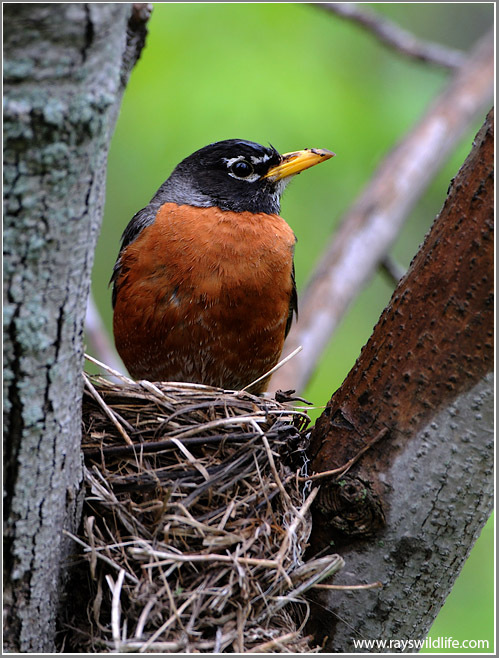
American Robin (Turdus migratorius) in nest by Ray

American Robin (Turdus migratorius) in nest by Ray

For example, during the summer one need have no hesitancy in calling the Robins of the lowlands of South Carolina the Southern Robin (Turdus migratorius achrusterus) but later, when the Northern Robins (Turdus migratorius migratorius) begin to appear, it would be difficult, if not impossible, to distinguish them in life from the resident birds.

If it were possible to impress the student, who proposes to name the bird in the bush, with the absolute necessity for careful, definite observation he would be saved many disappointing and discouraging experiences.

It is not possible to examine your bird too thoroughly. Never be satisfied with a superficial view and a general impression. Look at your bird, if you can, from several points of view; study its appearance in detail, its size, bill, crown, back, tail, wings, throat, breast, etc., and AT ONCE enter what you see in a note-book kept for that purpose. In this way, and this way alone, can you expect to compete with those who use the gun.

It does not follow, however, that because one does not collect specimens of birds one cannot study them scientifically. While the student may not be interested in the classification of birds purely from the standpoint of the systematist, he is strongly urged to acquaint himself with at least the arrangement of the Orders and Families of our birds and their leading structural characters.

To the student who desires to prepare himself for his work afield such a study may well come before he attempts to name the birds. But where the chief end in view is to learn a bird’s name, the more technical side of the subject may be deferred. In any event, it should not be neglected. This orderly arrangement of knowledge will not only be practical benefit in one’s future labors but it will bring with it that sense of satisfaction which accompanies the assurance that we know what we know.

Eastern Bluebird (Sialia sialis) by S Slayton

Eastern Bluebird (Sialia sialis) by S Slayton

As one learns to recognize bird after bird it is an admirable plan to classify systematically one’s list of bird acquaintances under their proper Orders and Families. These may be learned at once from the systematic table at the end of the book, where the numbers which precede each species are arranged serially, and hence systematically.

In some instances, as an aid to identification in the field, descriptions of birds’ notes have been included. It is not supposed that these descriptions will convey an adequate idea of a bird’s song to a person who has never heard it, but it is hoped that they may occasionally lead to the recognition of calls or songs when they are heard.

An adequate method of transcribing bird’s notes has as yet to be devised and the author realizes only too well how unsatisfactory the data here presented will appear to the student. It is hoped, however, that they may sometimes prove of assistance in naming birds in life.

As has been said before, the aim of this volume is to help students to learn the names of our birds in their haunts. But we should be doing scant justice to the possibilities of bird study if, even by silence, we should imply that they ended with the learning to know the bird. This is only the beginning of the quest which may bring us into close intimacy with the secrets of nature. The birds’ haunts and food, their seasons and times of coming and going; their songs and habits during courtship, their nest-building, egg-laying, incubating and care of their young, these and a hundred other subjects connected with their lives may claim our attention and by increasing our knowledge of bird-life, add to our love of birds.

***

The above is from the Color Key To North American Birds, 1912. Some of that information is going to be incorporated into various articles, especially the Birdwatching and Birds of the World sections.

*

Birds Vol 2 #1 – The Mallard Duck

THE MALLARD DUCK

THE MALLARD DUCK

THE MALLARD DUCK.

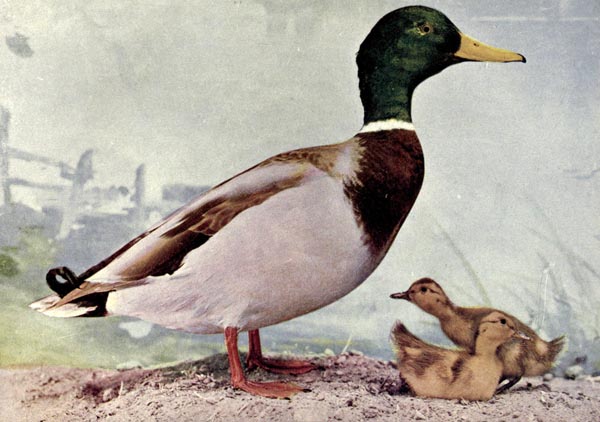
We should probably think this the most beautiful of ducks, were the Wood Duck not around.

His rich glossy-green head and neck, snowy white collar, and curly feathers of the tail are surely marks of beauty.

But Mr. Mallard is not so richly dressed all of the year. Like a great many other birds, he changes his clothes after the holiday season is over. When he does this, you can hardly tell him from his mate who wears a sober dress all the year.

Most birds that change their plumage wear their bright, beautiful dress during the summer. Not so with Mr. Mallard. He wears his holiday clothes during the winter. In the summer he looks much like his mate.

Usually the Mallard family have six to ten eggs in their nest. They are of a pale greenish color—very much like the eggs of our tame ducks that we see about the barnyards.

Those who have studied birds say that our tame ducks are descendants of the Mallards.

If you were to hear the Mallard’s quack, you could not tell it from that of the domestic duck.

The Mallard usually makes her nest of grass, and lines it with down from her breast. You will almost always find it on the ground, near the water, and well sheltered by weeds and tall grasses.

It isn’t often you see a duck with so small a family. It must be that some of the ducklings are away picking up food.

Do you think they look like young chickens?

From col. Chi. Acad. Sciences.

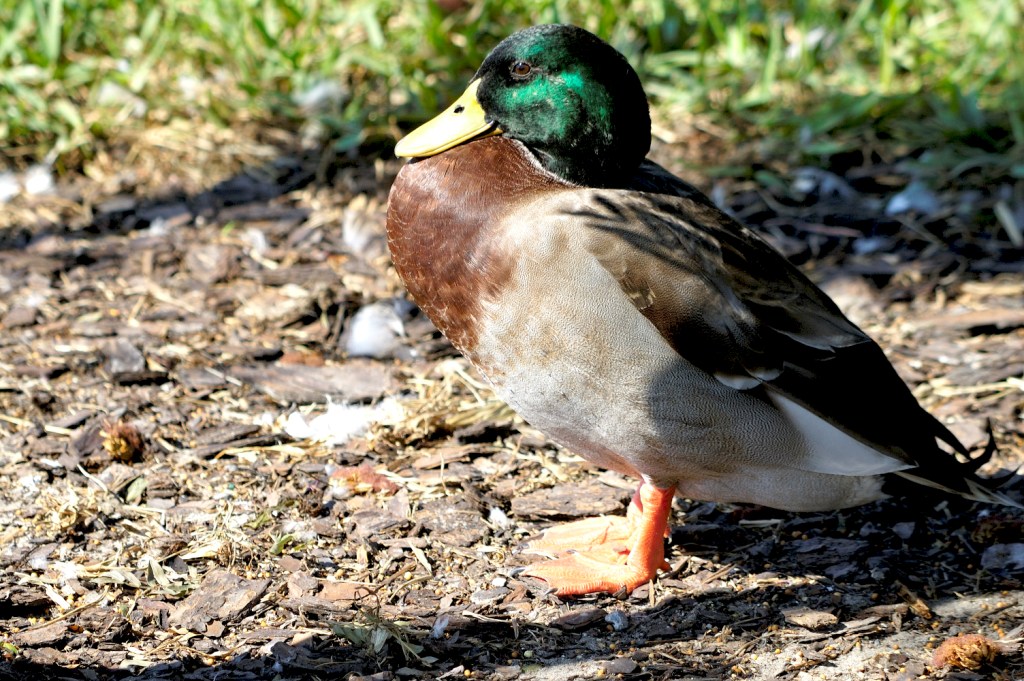
Mallard (Anas platyrhynchos) at Lake Parker By Dan'sPix

Mallard (Anas platyrhynchos) at Lake Parker By Dan’sPix


THE MALLARD DUCK.

imgt

HE Mallard Duck is generally distributed in North America, migrating south in winter to Panama, Cuba, and the Bahamas. In summer the full grown male resembles the female, being merely somewhat darker in color. The plumage is donned by degrees in early June, and in August the full rich winter dress is again resumed. The adult males in winter plumage vary chiefly in the extent and richness of the chestnut of the breast.

The Mallard is probably the best known of all our wild ducks, being very plentiful and remarkable on account of its size. Chiefly migrant, a few sometimes remain in the southern portion of Illinois, and a few pairs sometimes breed in the more secluded localities where they are free from disturbance. Its favorite resorts are margins of ponds and streams, pools and ditches. It is an easy walker, and can run with a good deal of speed, or dive if forced to do so, though it never dives for food. It feeds on seeds of grasses, fibrous roots of plants, worms, shell fish, and insects. In feeding in shallow water the bird keeps the hind part of its body erect, while it searches the muddy bottom with its bill. When alarmed and made to fly, it utters a loud quack, the cry of the female being the louder. “It feeds silently, but after hunger is satisfied, it amuses itself with various jabberings, swims about, moves its head backward and forward, throws water over its back, shoots along the surface, half flying, half running, and seems quite playful. If alarmed, the Mallard springs up at once with a bound, rises obliquely to a considerable height, and flies off with great speed, the wings producing a whistling sound. The flight is made by repeated flaps, without sailing, and when in full flight its speed is hardly less than a hundred miles an hour.”

Early in spring the male and female seek a nesting place, building on the ground, in marshes or among water plants, sometimes on higher ground, but never far from water. The nest is large and rudely made of sedges and coarse grasses, seldom lined with down or feathers. In rare instances it nests in trees, using the deserted nests of hawks, crows, or other large birds. Six or eight eggs of pale dull green are hatched, and the young are covered over with down. When the female leaves the nest she conceals the eggs with hay, down, or any convenient material. As soon as hatched the chicks follow the mother to the water, where she attends them devotedly, aids them in procuring food, and warns them of danger. While they are attempting to escape, she feigns lameness to attract to herself the attention of the enemy. The chicks are wonderfully active little fellows, dive quickly, and remain under water with only the bill above the surface.

On a lovely morning, before the sun has fairly indicated his returning presence, there can be no finer sight than the hurrying pinions, or inspiring note than the squawk, oft repeated, of these handsome feathered creatures, as they seek their morning meal in the lagoons and marshes.

Summary

MALLARD DUCK.Anas boschas. Other names: “Green-head,” “Wild Duck.” Adult male, in fall, winter, and spring, beautifully colored; summer, resembles female—sombre.

Range—Northern parts of Northern Hemisphere.

Nest—Of grasses, on the ground, usually near the water.

Eggs—Six to ten; pale green or bluish white.

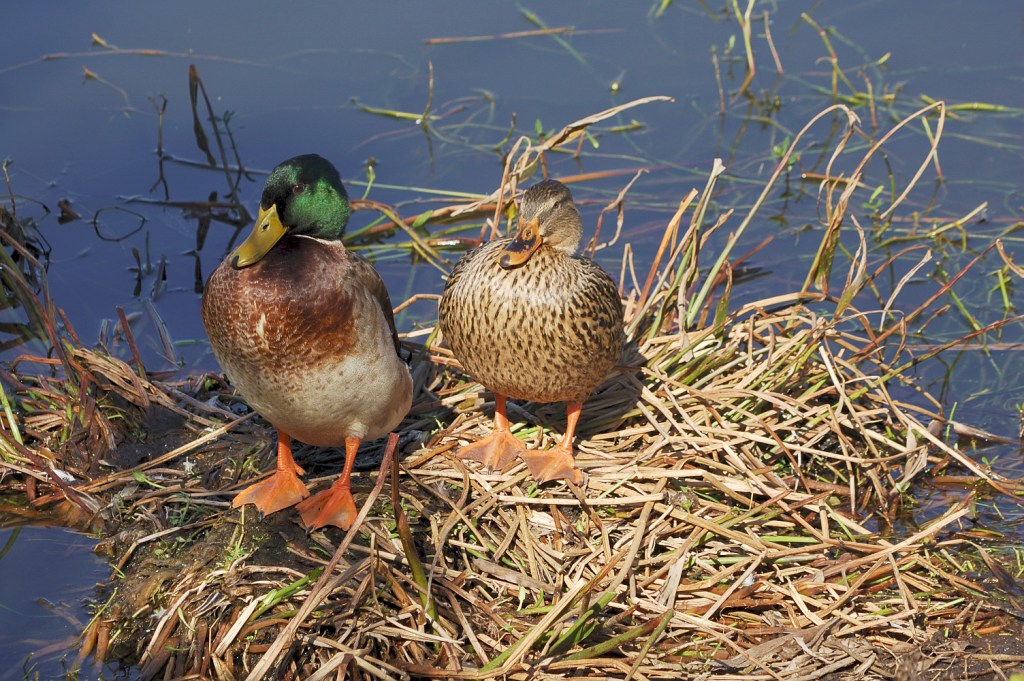
Mallard (Anas platyrhynchos) By Dan'sPix

Mallard (Anas platyrhynchos) By Dan’sPix at Lake Hollingsworth


Lee’s Addition:

And Jesus said to him, “Foxes have holes and birds of the air have nests, but the Son of Man has nowhere to lay His head.” (Matthew 8:20 NKJV)

We see Mallards all the time here in Central Florida. With over 500 lakes in Polk County, ducks, especially Mallards are quite common. A few of those lakes allow feeding and they become almost tame. Even the “Aflac” Duck (called that because of the Aflac Insurance ads) are actually a white version of the Mallard. (So I have been told.)

The Mallard (Anas platyrhynchos) belongs to the Anatidae – Ducks, Geese & Swans Family. There are 172 species in the family at present. Not all are ducks of course. The Anas genera is made up of Ducks, Teals, Wigeons, the Gadwall, Shovelers and Pintails. The whole family has Whistling Ducks, Geese and Pygmy Geese, Swans, Shelducks, Pochards, Scaups, Scoters, Eiders, Mergansers, and various other “ducks.”

Wikipedia says,The Mallard or Wild Duck (Anas platyrhynchos) is a dabbling duck which breeds throughout the temperate and subtropical Americas, Europe, Asia, and North Africa, and has been introduced to New Zealand and Australia. This duck belongs to the subfamily Anatinae of the waterfowl family Anatidae.
The male birds (drakes) have a bright green head and are grey on wings and belly, while the females are brown all over. Mallards live in wetlands, eat water plants and small animals, and are gregarious. This species is the ancestor of almost all of the breeds of domestic ducks (Aflacs etc).

The Mallard is 50–65 cm (20–26 in) long (of which the body makes up around two-thirds), has a wingspan of 81–98 cm (32–39 in), and weighs 0.72–1.58 kg (1.6–3.5 lb).

The breeding male is unmistakable, with a bright bottle-green head, black rear end and a yellowish orange (can also contain some red) bill tipped with black (as opposed to the black/orange bill in females). It has a white collar which demarcates the head from the purple-tinged brown breast, grey brown wings, and a pale grey belly. The dark tail has white borders. 

The female Mallard is a mottled light brown, like most female dabbling ducks, and has buff cheeks, eyebrow, throat and neck with a darker crown and eye-stripe. However, both the female and male Mallards have distinct purple speculum edged with white, prominent in flight or at rest (though temporarily shed during the annual summer moult).

Upon hatching, the plumage colouring of the duckling is yellow on the underside and face (with streaks by the eyes) and black on the backside (with some yellow spots) all the way to the top and back of the head. Its legs and bill are also black. As it nears a month in age, the duckling’s plumage will start becoming drab, looking more like the female (though its plumage is more streaked) and its legs will lose their dark grey colouring.

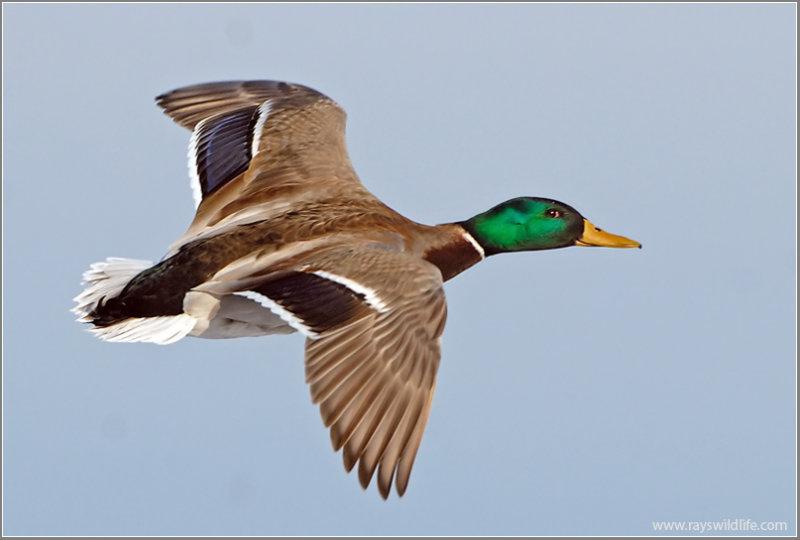
Mallard (Anas platyrhynchos) by Ray

*

Birds Illustrated by Color Photography – Revisited – Introduction

The above article is the first article in the monthly serial that was started in January 1897 “designed to promote Knowledge of Bird-Live.” These include Color Photography, as they call them, today they are drawings. There are at least three Volumes that have been digitized by Project Gutenberg.

To see the whole series of – Birds Illustrated by Color Photography – Revisited

*

(Information from Wikipedia and other internet sources)

Next Article – Bird Song – July

Previous Article – The Semi-Palmated Ring Plover

Sharing The Gospel

Links:

Anatidae – Ducks, Geese & Swans Family

Mallard – All About Birds

Mallard – Wikipedia

*


Ms. Theresa’s Thoughts – Nests

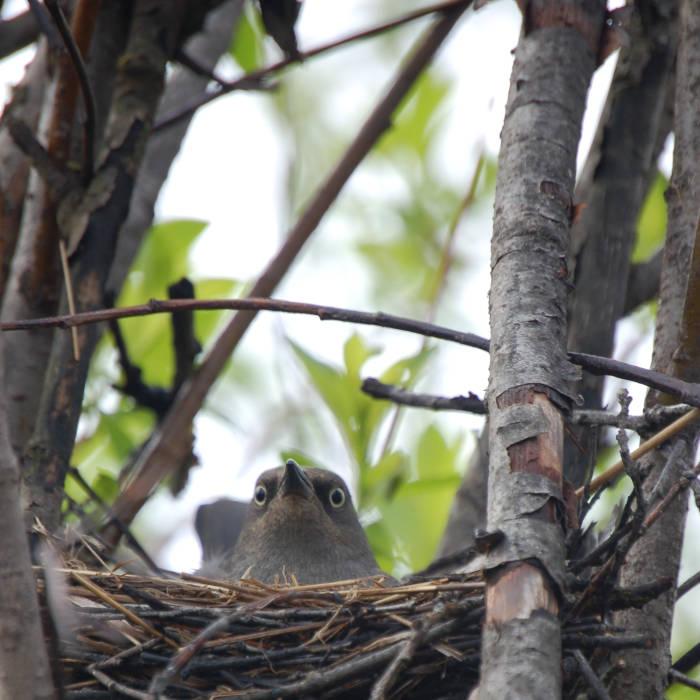
Rusty Blackbird (Euphagus carolinus) on nest ©USFWS

Rusty Blackbird (Euphagus carolinus) on nest ©USFWS

Ms. Theresa’s Thoughts – Nests

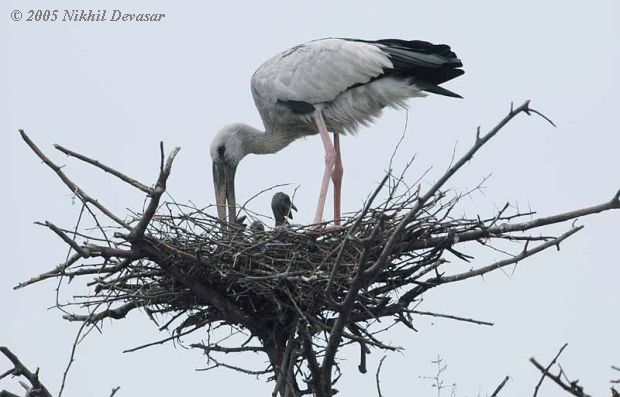
Where the birds make their nests; The stork has her home in the fir trees. (Psalms 104:17 NKJV)

How unique the wisdom God gave the birds to make their nests out of small twigs and such sort of reminds me of the Three Little Pigs Fable.

One of them built out of wood, one built out of straw and the wise one built out of bricks. Only the bricks withstood the Big Bad Wolf.

As the bird’s nest withstands all kinds of fowl (bad) weather (no pun intended), her nest stays there till her young are raised and ready to go on their own.

Asian Openbill (Anastomus oscitans) on nest by Nikhil Devasar

Asian Openbill (Anastomus oscitans) on nest by Nikhil Devasar

*

Wordless Birds

*

Birds Vol 2 #1 – The Semi-Palmated Ring Plover

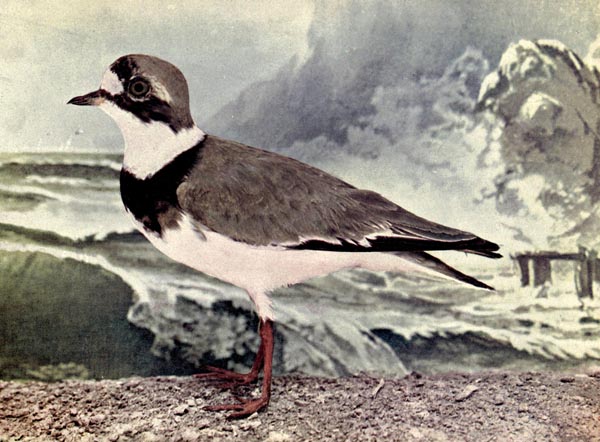
Ring Plover - Birds Illustrated by Color Photography, 1897

Ring Plover – Birds Illustrated by Color Photography, 1897

Birds Illustrated by Color Photography – Revisited

Vol 2. July, 1897 No. 1

*

THE SEMI-PALMATED RING PLOVER.

imgi

N THEIR habits the Plovers are usually active; they run and fly with equal facility, and though they rarely attempt to swim, are not altogether unsuccessful in that particular.

The Semi-palmated Ring Plover utters a plaintive whistle, and during the nesting season can produce a few connected pleasing notes. The three or four pear-shaped, variagated eggs are deposited in a slight hollow in the ground, in which a few blades of grass are occasionally placed. Both parents assist in rearing the young. Worms, small quadrupeds, and insects constitute their food. Their flesh is regarded as a delicacy, and they are therefore objects of great attraction to the sportsman, although they often render themselves extremely troublesome by uttering their shrill cry and thus warning their feathered companions of the approach of danger. From this habit they have received the name of “tell-tales.” Dr. Livingstone said of the African species: “A most plaguey sort of public spirited individual follows you everywhere, flying overhead, and is most persevering in his attempts to give fair warning to all animals within hearing to flee from the approach of danger.”

The American Ring Plover nests as far north as Labrador, and is common on our shores from August to October, after which it migrates southward. Some are stationary in the southern states. It is often called the Ring Plover, and has been supposed to be identical with the European Ringed Plover.

It is one of the commonest of shore birds. It is found along the beaches and easily identified by the complete neck ring, white upon dark and dark upon light. Like the Sandpipers the Plovers dance along the shore in rhythm with the wavelets, leaving sharp half-webbed footprints on the wet sand. Though usually found along the seashore, Samuels says that on their arrival in spring, small flocks follow the courses of large rivers, like the Connecticut. He also found a single pair building on Muskeget, the famous haunt of Gulls, off the shore of Massachusetts. It has been found near Chicago, Illinois, in July.


THE RING PLOVER.

Plovers belong to a class of birds called Waders.

They spend the winters down south, and early in the spring begin their journey north. By the beginning of summer they are in the cold north, where they lay their eggs and hatch their young. Here they remain until about the month of August, when they begin to journey southward. It is on their way back that we see most of them.

While on their way north, they are in a hurry to reach their nesting places, so only stop here and there for food and rest.

Coming back with their families, we often see them in ploughed fields. Here they find insects and seeds to eat.

The Ring Plover is so called from the white ring around its neck.

These birds are not particular about their nests. They do not build comfortable nests as most birds do. They find a place that is sheltered from the north winds, and where the sun will reach them. Here they make a rude nest of the mosses lying around.

The eggs are somewhat pointed, and placed in the nest with the points toward the center. In this way the bird can more easily cover the eggs.

We find, among most birds, that after the nest is made, the mother bird thinks it her duty to hatch the young.

The father bird usually feeds her while she sits on the eggs. In some of the bird stories, you have read how the father and mother birds take turns in building the nest, sitting on the nest, and feeding the young.

Some father birds do all the work in building the nest, and take care of the birds when hatched.

Among plovers, the father bird usually hatches the young, and lets the wife do as she pleases.

After the young are hatched they help each other take care of them.

Plovers have long wings, and can fly very swiftly.

The distance between their summer and winter homes is sometimes very great.

Summary

SEMI-PALMATED PLOVER.Ægialitis semi-palmata. Other names: “American Ring Plover,” “Ring Neck,” “Beach Bird.” Front, throat, ring around neck, and entire under parts white; band of deep black across the breast; upper parts ashy brown. Toes connected at base.

Range—North America in general, breeding in the Arctic and sub-arctic districts, winters from the Gulf States to Brazil.

Nest—Depression in the ground, with lining of dry grass.

Eggs—Three or four; buffy white, spotted with chocolate.


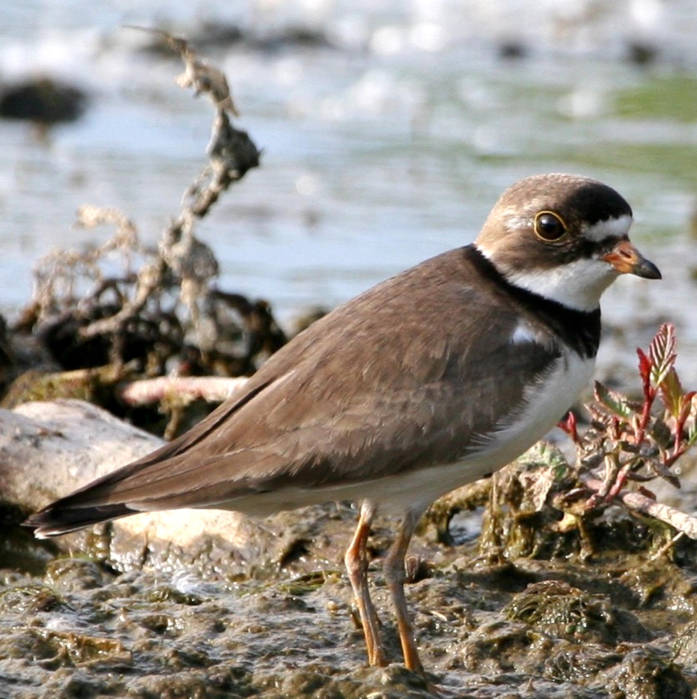
Semipalmated Plover (Charadrius semipalmatus) by S Slayton

Semipalmated Plover (Charadrius semipalmatus) by S Slayton


Call from xeno-canto.org

Lee’s Addition:

When I consider Your heavens, the work of Your fingers, The moon and the stars, which You have ordained, What is man that You are mindful of him, And the son of man that You visit him? For You have made him a little lower than the angels, And You have crowned him with glory and honor. You have made him to have dominion over the works of Your hands; You have put all things under his feet, All sheep and oxen— Even the beasts of the field, The birds of the air, And the fish of the sea That pass through the paths of the seas. O LORD, our Lord, How excellent is Your name in all the earth! (Psalms 8:3-9 NKJV)

The Semipalmated Plover (Charadrius semipalmatus) is a small plover. We see them here at our shores. Florida has lots of shoreline.
This species weighs  0.78–2.2 oz (22–63 g) and measures 5.5–7.9 in (14–20 cm) in length and 14–22 in (35–56 cm) across the wings. Adults have a grey-brown back and wings, a white belly, and a white breast with one black neckband. They have a brown cap, a white forehead, a black mask around the eyes and a short orange and black bill.

Their breeding habitat is open ground on beaches or flats across northern Canada and Alaska. They nest on the ground in an open area with little or no plant growth.
They are migratory and winter in coastal areas ranging from the United States to Patagonia. They are extremely rare vagrants to western Europe, although their true status may be obscured by the difficulty in identifying them from the very similar Ringed Plover of Eurasia, of which it was formerly considered a subspecies.
These birds forage for food on beaches, tidal flats and fields, usually by sight. They eat insects, crustaceans and worms.

Broken wing” display

This bird resembles the Killdeer but is much smaller and has only one band. The term “semipalmated” refers to its partly webbed feet. Like the Killdeer and since its nest is on the ground, it uses a “broken-wing” display to lure intruders away from the nest. (Wikipedia)

If a bird’s nest happens to be before you along the way, in any tree or on the ground, with young ones or eggs, with the mother sitting on the young or on the eggs, you shall not take the mother with the young; (Deuteronomy 22:6 NKJV)

Semipalmated Plovers belong to the Charadriidae – Plovers Family. There are 67 species that “are small to medium-sized birds with compact bodies, short, thick necks and long, usually pointed, wings, but most species of lapwing may have more rounded wings. Their bill are usually straight (except for the Wrybill) and short, their toes are short, hind toe could be reduced or absent, depending on species. Most Charadriidae also have relatively short tails, the Killdeer is the exception. In most genera, the sexes are similar, very little sexual dimorphism occurs between sexes. They range in size from the Collared Plover, at 26 grams and 14 cm (5.5 inches), to the Masked Lapwing, at 368 grams (13 oz) and 35 cm (14 inches)

Semipalmated Plover (Charadrius semipalmatus) ©USFWS

Semipalmated Plover (Charadrius semipalmatus) ©USFWS

Birds Illustrated by Color Photography – Revisited – Introduction

The above article is the first article in the monthly serial that was started in January 1897 “designed to promote Knowledge of Bird-Live.” These include Color Photography, as they call them, today they are drawings. There are at least three Volumes that have been digitized by Project Gutenberg.

To see the whole series of – Birds Illustrated by Color Photography – Revisited

*

(Information from Wikipedia and other internet sources)

Next Article – The Mallard Duck

Previous Article – The Bald-Headed Eagle

ABC’s Of The Gospel

Links:

Charadriidae – Plovers Family

Order – CHARADRIIFORMES

Semipalmated Plover – Wikipedia

Semipalmated Plover – All About Birds

*

Baby Golden Eagle Survives the Utah Wildfire

Here is an amazing video from YouTube about a Baby Golden Eagle that survived the Utah Wildfire this year.

As the fire burns the woods, And as the flame sets the mountains on fire, (Psalms 83:14 NKJV)

From YouTube

Published on Jul 8, 2012 by OptimizeSite

BigNewsStory.com – Baby Golden Eagle Survives Utah Wildfire

A baby golden eagle is recovering at a wildlife rehabilitation facility after officials say it miraculously survived a Utah wildfire last month.

Kent Keller told The Salt Lake Tribune (http://bit.ly/NKy8WO ) he feared the worst when he returned to the nest site west of Utah Lake to retrieve a leg band he had attached to the male eaglet June 1.

But the veteran Utah Division of Wildlife Resources volunteer found the burned bird alive on June 28 behind a charred tree, about 25 feet below the nest that was burned to a crisp in the 5,500-acre Dump Fire near Saratoga Springs.

“I thought there was no chance he would be alive. I was stunned when I saw him standing there,” Keller said. “I thought maybe I could rebuild the nest a little bit, but I took a good look at him and realized that was not going to happen.”

The 70-day-old eaglet had suffered burns on his talons, beak, head and wings. His flight feathers were melted down to within an inch or two of his wing and tail. He’s very underweight at just over five pounds.

Keller realized the eagle would not fly for at least a year and that the parents eventually would stop providing food. Not a stick from the nest was left after the fire sparked by target shooters swept through

“I’ve seen nests burn before, but this is the first year I have seen one burn with young in it,” he told the Tribune. “They are usually long gone and flying when fire season starts.”

After permission was secured from state and federal wildlife agencies, the Wildlife Rehabilitation Center of Northern Utah in Ogden assumed care of the eaglet this week.

“I wasn’t sure he was going to make it,” said DaLyn Erickson, executive director of the center. “He kind of had that look like he may have given up.”

But the eagle named Phoenix has since taken to eating beef heart and venison. He’s treated several times a day for his burns and seems to be gaining strength.

“He looks good now,” said Amber Hansen, a member of the center’s board of directors. “But we think if he had been there (at the nest site) another day, he probably would not have survived.”

What seems to have saved his life during the fire was the insulation offered by his down feathers and once-thick body, according to the wildlife rehabilitation center.

Officials hope the bird can be released back into the wild next year, but say it’s too early to tell about its future. Volunteers will work to keep him as wild as possible.

“It depends on how much follicle damage there is to his wings,” Hansen said. “If they are not too burned, he should be able to molt into new feathers next year and hopefully be able to fly.”

-usnews.com

Birdwatcher or Bird Collector?

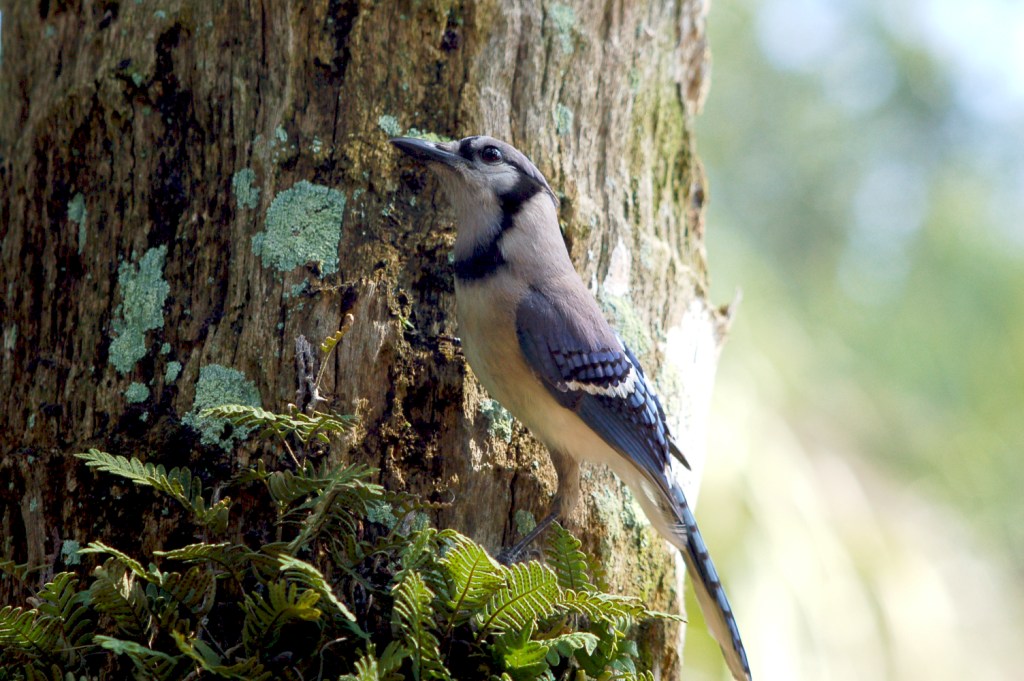
Blue Jay (Cyanocitta cristata) at Bok Tower By Dan'sPix

Blue Jay (Cyanocitta cristata) at Bok Tower By Dan’sPix

I just finished reading an article in the August 2012 issue of “BirdWatching” Magazine by Maeve Kim. It is called “Born-Again Bird-Watcher.” The title caught my interest since I am a “Born-again Christian.” The article, of course, had nothing to do with religion but was about watching birds.

She, Maeve, had progressed from being a birdwatcher that just loved to watch birds and make notes in a field notebook.

“My old field notebooks are full of exclamation points and underlinings and capital letters. “GREEN HERON at beaver pond! Glowing chestnut throat and neck! Gorgeous!”
I described everything I saw about a bird’s physical appearance, behavior, and song. Often, my notebook entries ended with questions that I hoped might be answered if I watched more birds.”

Progression went from lots of information to just a “checklist” were just seeing the bird and checking it off became the main goal. This is called a “Bird Getter” and not a bird watcher. Long interesting story short, Maeve has now gone back to “watching” the birds even common ones. It is a very good article.

Wood Duck male – Lake Morton 6-28-12 by Lee

As I have “progressed” in my own birdwatching I also have learned about “journals,” “notebooks” and “lists.” I enjoy seeing my “Life List of Birds” grow, but I try not to just want to “check them off” so the list will grow. As a Christian believing that the Lord created the birds, I enjoy watching them, their behaviors, their sounds, how they fly and eat and writing about them. I am amazed at His design and paintbrush used. How each bird was given just the right beak, feet, song, flight pattern, etc. is awesome.

She said, “True Bird-Watchers enjoy every single minute that they’re out birding. They don’t come home feeling cheated because they didn’t get a rare Dovekie. Instead, they celebrate every time they see a Black Guillemot’s (her common) red feet flashing under cold water.”

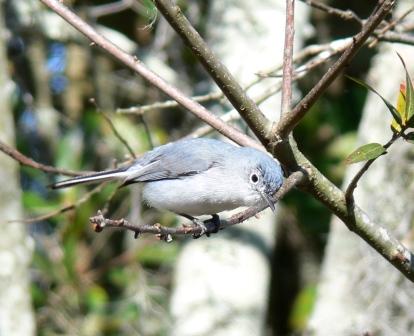
Blue-Gray Gnatcatcher at Circle B Reserve by Lee

Blue-Gray Gnatcatcher at Circle B Reserve by Lee

Every time we go to our local parks, I still enjoy watching the antics of our local common birds. May we never tire or grow weary of “only ” seeing a bird that we have seen many times before.

But now ask the beasts, and let them teach you; And the birds of the heavens, and let them tell you. “Who among all these does not know That the hand of the LORD has done this, (Job 12:7,9 NASB)

How can we learn from the birds if we don’t watch them?

See

Birdwatching

Birdwatching Tips

*