The Black-throated Sparrow – The Desert Dwellers

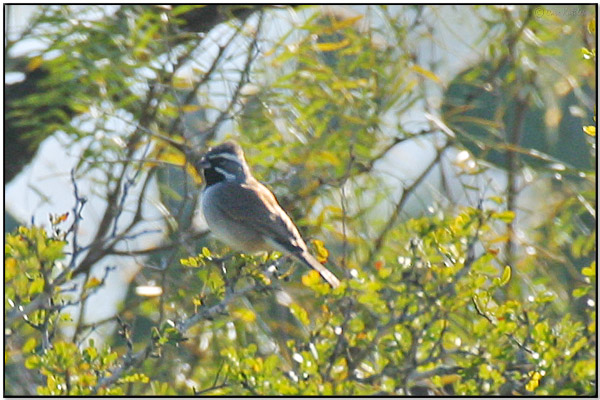
Black-throated Sparrow (Amphispiza bilineata)by Daves BirdingPix

Black-throated Sparrow (Amphispiza bilineata)by Daves BirdingPix

The Black-throated Sparrow – The Desert Dwellers ~ by a j mithra

The Black-throated Sparrow (Amphispiza bilineata) is a very distinctive small, brown bird found in open areas with scattered shrubs and trees, including deserts and semi-desert grasslands in the intermountain region in the western United States, northern Mexico, and Baja California. It is sometimes referred to as the Desert Sparrow, due to its preferred habitat of arid desert hillsides and scrub. This name usually refers to the Desert Sparrow of Africa and Asia.

  • Though this little bird chooses to dwell among the desert, it never has stopped singing has it?

Shadrach, Meshach and Abednego did just that when they were thrown into the furnace which was seven times hotter.

  • That may be the reason why the Lord who is the pillar of cloud strolled with them in the furnace that day!
  • Probably they knew the secret that our God loves to dwell among our praises.

Peter and Silas did just that when they were beaten, bruised, chained and thrown into the jail. But, still they praised and you know what happened? Their praise released not only their bondages but also of those who were with them and it also shook the jail’s floor..

  • Have you ever tried praising God in your darkest hour?

Try worshipping like Peter and Silas and you will see the light shine not just at the end of the tunnel but all around you and also over every one who is the dark around you…

I will bless the LORD at all times: his praise shall continually be in my mouth. (Psalm 34:1)
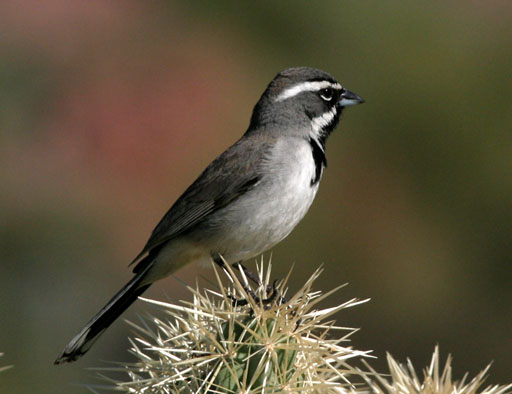
Black-throated Sparrow (Amphispiza bilineata) ©WikiC

Black-throated Sparrow (Amphispiza bilineata) ©WikiC

The Black-throated Sparrow is a small, gray sparrow that reaches a length of about 4.5-5.5 inches and has a distinctive black throat, with a bold white stripe above its eye and another down its cheek. The black tail is outlined in white except at the tips of the middle tail feathers. Juveniles, who retain this plumage into October, lack the black throat of adults and are lightly streaked.

Usually found in cactus and sagebrush deserts, especially on rocky slopes..

  • Sagebrush has bacteriostatic, astringent, and antioxidant properties.
  • Sagebrush kills bacteria, inhibits free radicals, and has anti-inflammatory and anti-carcinogenic actions, and so is most useful as a cleansing first aid wash for disinfecting wounds and skin irritations.
  • The leaves can be very useful in the kitchen as a means of protecting stored dried food from insects and rodents.

This maybe the reason for these little birds to choose a desert like place to live, since these plants grow among the dry desert slopes.

  • Don’t ever think that God has placed you in a dry desert to punish you..
  • He separates you so that you will turn into a better vessel that would glorify His name..

And I will bring the third part through the fire, and will refine them as silver is refined, and will try them as gold is tried: they shall call on my name, and I will hear them: I will say, Itis my people: and they shall say, The LORD is my God. (Zechariah 13:9)
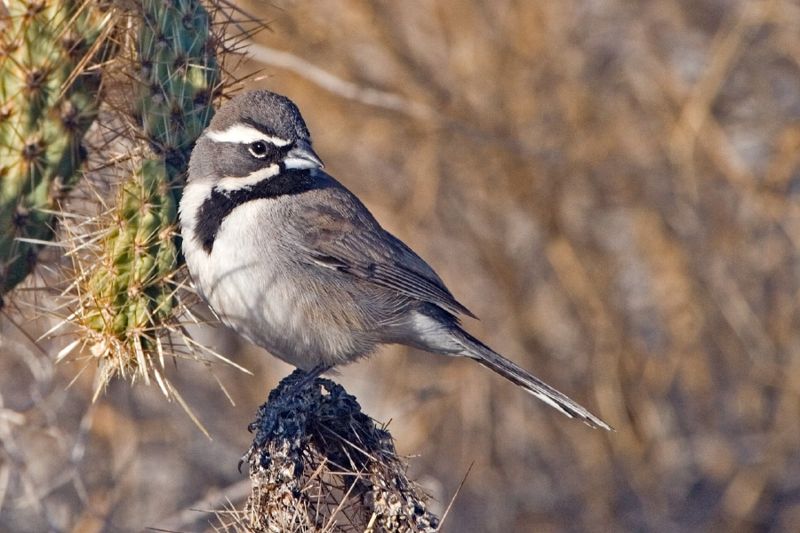
Black-throated Sparrow (Amphispiza bilineata) ©WikiC

Black-throated Sparrow (Amphispiza bilineata) ©WikiC

The Black-throated Sparrow is considered to be better adapted to this type of ecosystem than any other seed-eating bird in North America. Adapted to dry habitats, Black-throated Sparrows can survive long periods of time without supplemental water, obtaining moisture from the seeds and insects that make up their diet. In the hottest part of the summer, however, supplemental water is necessary. In the winter, seeds make up the majority of their diet. During the breeding and nestling season, insects become more important. When available, berries and other fruits, as well as fresh green shoots, are also part of their diet.

  • Do you feel that God has put you in the wrong place?
  • Remember that God has created you to be unique to live where no one else can even dream of stepping in.
  • Have you forgotten that you can do all things through Christ who strengthens you?

Humble yourselves therefore under the mighty hand of God, that he may exalt you in due time: (I Peter 5:6)

They travel in small groups, though larger groups may accumulate around sources of water in the desert.

  • Right now, you and your family may not see hope and may feel like as if you are wandering through the desert.

I just want to encourage you that God does not take us to the desert to kill us but to show us that He is still care for us.

  • If God can give water to these birds in the desert, will He not give us?
  • Well, He is still able to bring everything from nothing.
  • So, congregate as a family in the presence of the Living Water and look out for a miracle which is on its way..

He turneth the wilderness into a standing water, and dry ground into watersprings. (Psalm 107:35)

Its call is high and bell-like, and its song is a fairly simple, mechanical tinkling.

  • You don’t have to be a great singer to bring God’s presence.
  • Our God is a simple God and He prefers our worship to be just simple.
  • Remember God doesn’t look for your voice; He just wants to hear your noise.
  • The wall of Jericho came down due to the noise and not the voice of Joshua and his people.

So the people shouted when the priests blew with the trumpets: and it came to pass, when the people heard the sound of the trumpet, and the people shouted with a great shout, that the wall fell down flat, so that the people went up into the city, every man straight before him, and they took the city. (Joshua 6:20)

Yours in YESHUA,
a j mithra

Please visit us at:

Crosstree

ajmithra21

More of a j mithra’s articles – Click Here

*

Birds in Hymns – Sweet Is The Memory Of Thy Grace

American Robin (Turdus migratorius) eating by Jim Fenton

American Robin (Turdus migratorius) eating by Jim Fenton

They shall abundantly utter the memory of thy great goodness, and shall sing of thy righteousness. (Psalms 145:7 KJV)

Sweet Is The Memory Of Thy Grace

Words by Isaac Watts, The Psalms of Da­vid, 1719.

Music: Her­mann, by Ni­ko­laus Her­mann, 1560

Sweet Is The Memory Of Thy Grace

Sweet is the memory of Thy grace,
My God, my heav’nly King;
Let age to age Thy righteousness
In sounds of glory sing.

God reigns on high, but not confines
His goodness to the skies;
Through the whole earth His bounty shines,
And every want supplies.

With longing eyes Thy creatures wait
On Thee for daily food;
Thy liberal hand provides their meat,
And fills their mouths with good.

How kind are Thy compassions, Lord!
How slow Thine anger moves!
But soon He sends His pardoning word
To cheer the souls He loves.

Creatures with all their endless race
Thy power and praise proclaim;
But saints that taste Thy richer grace
Delight to bless Thy Name.


See More Birds in Hymns

Words from Net Hymnal

*

Start Birdwatching Today: Some Background Information

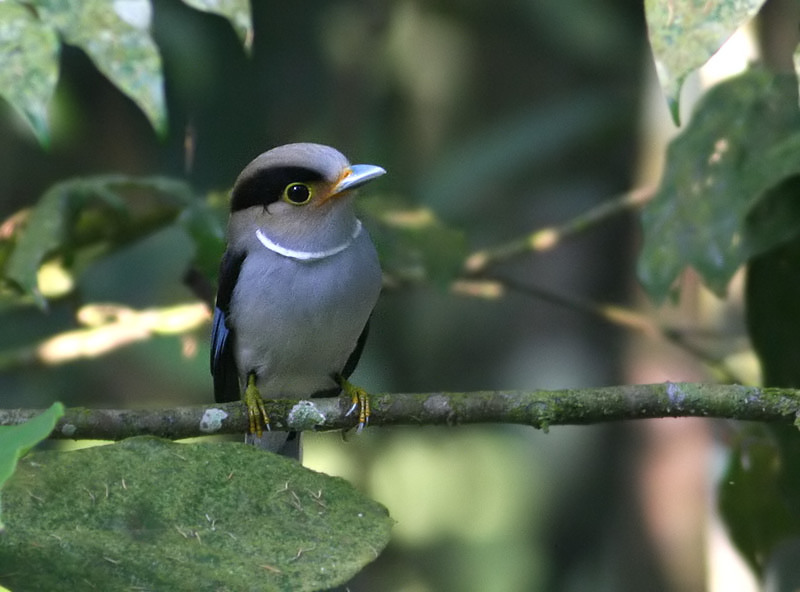
Silver-breasted Broadbill (Serilophus lunatus) by Peter Ericsson

Silver-breasted Broadbill (Serilophus lunatus) by Peter Ericsson

We know from Genesis 1 that the God created the birds, along with everything else. They were created on the fifth day. When Adam became conscience, the birds and critters were already present for him to discover and enjoy.

Then God said, “Let the waters abound with an abundance of living creatures, and let birds fly above the earth across the face of the firmament of the heavens.” So God created great sea creatures and every living thing that moves, with which the waters abounded, according to their kind, and every winged bird according to its kind. And God saw that it was good. And God blessed them, saying, “Be fruitful and multiply, and fill the waters in the seas, and let birds multiply on the earth.” So the evening and the morning were the fifth day. (Genesis 1:20-23 NKJV)

Then the LORD God brought the birds to Adam to let him give them a name.

Out of the ground the LORD God formed every beast of the field and every bird of the air, and brought them to Adam to see what he would call them. And whatever Adam called each living creature, that was its name. (Genesis 2:19 NKJV)

Psalm 111 reminds us that the things that were created are great and are to be “sought out” and enjoyed.

The works of the LORD are great, sought out of all them that have pleasure therein. His work is honourable and glorious: and his righteousness endureth for ever. He hath made his wonderful works to be remembered: the LORD is gracious and full of compassion. (Psalms 111:2-4 KJV)

Fast forward to today. If Adam was to enjoy the birds and put names on them, should we not try to discover them, enjoy them, and try to figure out what their names are?

Galah (Eolophus roseicapilla) and Dan

Galah (Eolophus roseicapilla) and Dan at Brevard Zoo

The birds are all around us, in the sky flying or gliding on the wind (currents), on the power lines, on feeders, on bushes, in trees, or singing or calling in the distant. (Sometimes they are even on cameras.)

Start birdwatching today for pleasure and realize the goodness of the Lord to us.

See series in Birdwatching section.

*

Birdwatching Trip to Circle B in March 2012

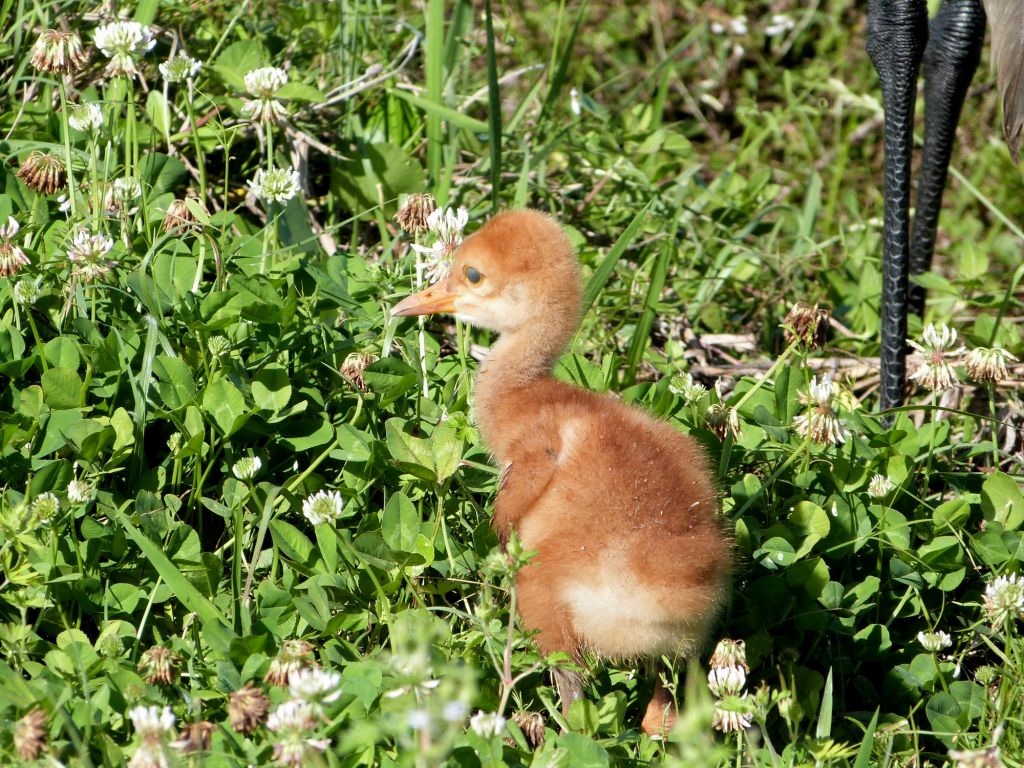
Sandhill Crane Chick at Circle B by Lee

Sandhill Crane Chick at Circle B by Lee

We had not been to Circle B recently, nor especially out to the Marsh by the windmill. Actually the windmill has lost its blades. It is a long trek out there for me, but praise the Lord, one of the workers came along with one of their vehicles and gave us a ride to the marsh. We were greeted by a group photographing Sandhill Cranes with their baby. That would have made the trip worth it alone.

Of course there were other birds awaiting our arrival. It is never boring out there. Since we had parked up by the entrance to get to the marsh, when we got out of the car and were getting our cameras and binoculars, we were greeted by the sound of a Pileated Woodpecker. When we returned, the Pileated showed off and we got some close-up shots of two of them. They were right by the pavilion and didn’t seem to mind those of us nearby.

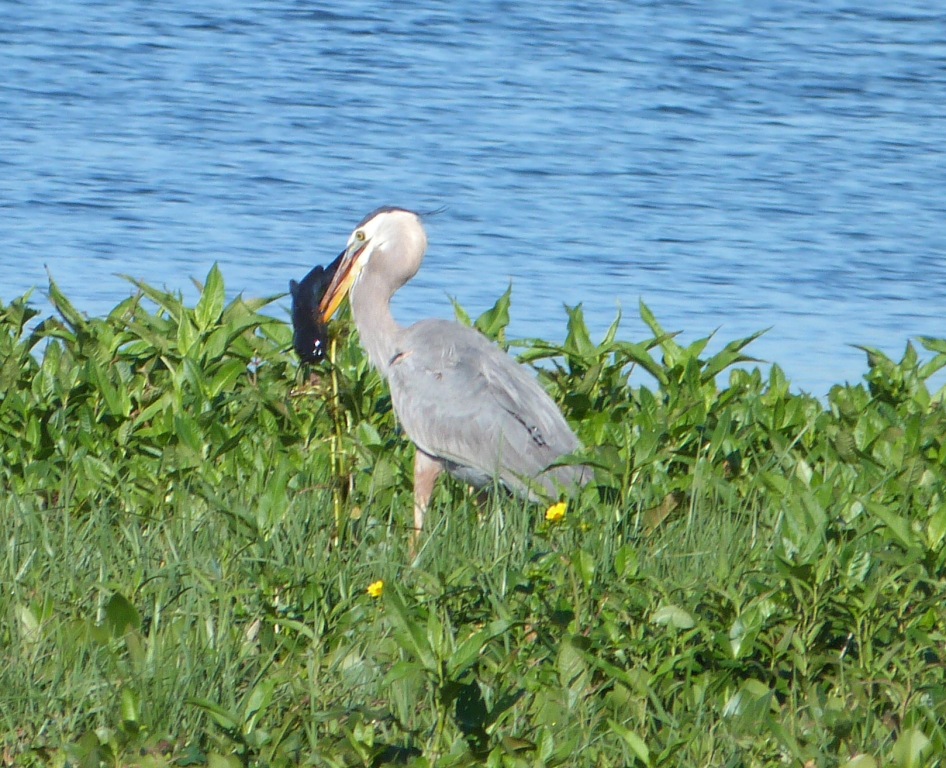
Great Blue Heron with Catfish at Circle B by Lee - cropped

Great Blue Heron with Catfish at Circle B by Lee - cropped

Another neat observation was the Great Blue Heron that caught a fish, actually a catfish. He was out from the edge a bit, but was able to zoom in on him. Took some video of it trying to kill the fish.

It is still quite dry out there as the rains have not started yet. It has been rather dry this winter. Water levels are still low.

I am including some photos and video taken out at Circle B that day. Video has segment of Great Blue with the Catfish and a close-up of the Pileated Woodpecker. Notice how he uses his tail to support himself.

This slideshow requires JavaScript.

In the beginning was the Word, and the Word was with God, and the Word was God. He was in the beginning with God. All things were made through Him, and without Him nothing was made that was made. (John 1:1-3 NKJV)

Here is the list from e-bird for that trip. (37 species total)

6
Black-bellied Whistling-Duck
2
Mallard
20
Blue-winged Teal
4
Pied-billed Grebe
5
Double-crested Cormorant
4
Anhinga
2
Great Blue Heron
1
Great Egret
1
Little Blue Heron
2
Tricolored Heron
2
Cattle Egret
7
White Ibis
5
Glossy Ibis
2
Black Vulture
4
Turkey Vulture
5
Osprey
1
Bald Eagle
1
Red-shouldered Hawk
1
American Kestrel
10
Common Gallinule
25
American Coot
3
Limpkin
3
Sandhill Crane
1
Lesser Yellowlegs
1
Laughing Gull
2
Mourning Dove
2
Red-bellied Woodpecker
2
Pileated Woodpecker
1
Blue Jay
4
Tree Swallow
1
Carolina Wren
1
Magnolia Warbler
1
Palm Warbler
1
Savannah Sparrow
1
Northern Cardinal
5
Red-winged Blackbird
10
Boat-tailed Grackle

See more Birdwatching Adventures out at Circle B Bar Reserve, Lakeland, Florida.

Wordless Birds

*

Birds Vol 1 #3 – The Black Tern

Black Tern, Mother and young with eggs, for Birds Illustrated

Black Tern, Mother and young with eggs, for Birds Illustrated

Birds Illustrated by Color Photography – Revisited

Vol 1. March, 1897 No. 3

THE BLACK TERN.

imgt

HE TERN,” says Mr. F. M. Woodruff, of the Chicago Academy of Sciences, “is the only representative of the long-winged swimmers which commonly nests with us on our inland fresh water marshes, arriving early in May in its brooding plumage of sooty black. The color changes in the autumn to white, and a number of the adult birds may be found, in the latter part of July, dotted and streaked here and there with white. On the first of June, 1891, I found a large colony of Black Terns nesting on Hyde Lake, Cook County, Illinois. As I approached the marsh a few birds were seen flying high in the air, and, as I neared the nesting site, the flying birds gave notes of alarm, and presently the air was filled with the graceful forms of this beautiful little bird. They circled about me, darting down to within a few feet of my head, constantly uttering a harsh, screaming cry. As the eggs are laid upon the bare ground, which the brownish and blackish markings so closely resemble, I was at first unable to find the nests, and discovered that the only way to locate them was to stand quietly and watch the birds. When the Tern is passing over the nest it checks its flight, and poises for a moment on quivering wings. By keeping my eyes on this spot I found the nest with very little trouble. The complement of eggs, when the bird has not been disturbed, is usually three. These are laid in a saucer shaped structure of dead vegetation, which is scraped together, from the surface of the wet, boggy ground. The bird figured in the plate had placed its nest on the edge of an old muskrat house, and my attention was attracted to it by the fact that upon the edge of the rat house, where it had climbed to rest itself, was the body of a young dabchick, or piedbilled grebe, scarcely two and one-half inches long, and not twenty-four hours out of the egg, a beautiful little ball of blackish down, striped with brown and white. From the latter part of July to the middle of August large flocks of Black Terns may be seen on the shores of our larger lakes on their annual migration southward.”

The Rev. P. B. Peabody, in alluding to his observation of the nests of the Tern, says: “Amid this floating sea of aquatic nests I saw an unusual number of well constructed homes of the Tern. Among these was one that I count a perfect nest. It rested on the perfectly flat foundation of a small decayed rat house, which was about fourteen inches in diameter. The nest, in form, is a truncated cone (barring the cavity), was about eight inches high and ten inches in diameter. The hollow—quite shallow—was about seven inches across, being thus unusually large. The whole was built up of bits of rushes, carried to the spot, these being quite uniform in length—about four inches.” After daily observation of the Tern, during which time he added much to his knowledge of the bird, he pertinently asks: “Who shall say how many traits and habits yet unknown may be discovered through patient watching of community-breeding birds, by men enjoying more of leisure for such delightful studies than often falls to the lot of most of us who have bread and butter to earn and a tiny part of the world’s work to finish?”

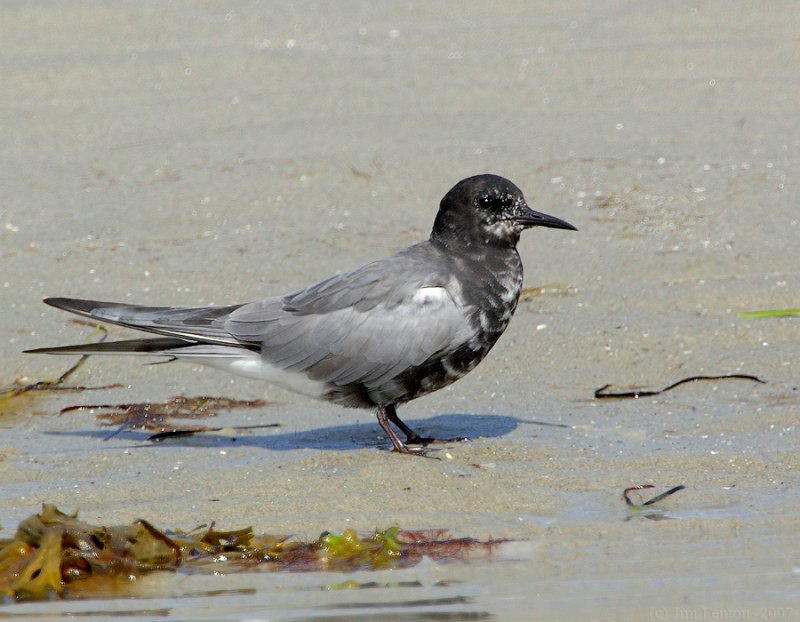
Black Tern (Chlidonias niger) by J Fenton

Black Tern (Chlidonias niger) by J Fenton


Lee’s Addition:

The Terns are in the Charadriiformes Order and the Laridae Family is part of that order. Laridaes include Gulls, Terns and Skimmers. The Tern, per se, is not a Gull, but are related and would be close in “kind.” The Birds of the Bible – Sea Gulls gives several articles that have been written here. The Sea Gull is found in the list of unclean birds given in Leviticus and Deuteronomy.

the ostrich, the short-eared owl, the sea gull, and the hawk after its kind; (Leviticus 11:16 NKJV)

“The Black Tern, Chlidonias niger, is a small tern generally found in or near inland water in Europe and North America. As its name suggests, it has predominantly dark plumage. Adult are 25 cm (9.75 in) long, with a wing span 6/1 cm (24 in), and weigh 62 g (2.2 oz). They have short dark legs and a short, weak-looking black bill, measuring 27–28 mm, nearly as long as the head. The bill is long, slender, and looks slightly decurved. The North American race, C. n. surinamensis, is distinguishable from the European form in all plumages, and is considered by some to be a separate species.

In flight, the build appears slim. The wing-beats are full and dynamic, and flight is often erratic as it dives to the surface for food; similar to other tern species.

North American Black terns migrate to the coasts of northern South America, some to the open ocean. Old World birds winter in Africa.
Unlike the “white” Sterna terns, these birds do not dive for fish, but forage on the wing picking up items at or near the water’s surface or catching insects in flight. They mainly eat insects and fish as well as amphibians.

The North American population has declined in recent times due to loss of habitat. Point Pelee National Park in Canada boasts a robust population of black terns.” (Wikipedia)

Black Tern (Chlidonias niger) by J Fenton

Black Tern (Chlidonias niger) by J Fenton

*

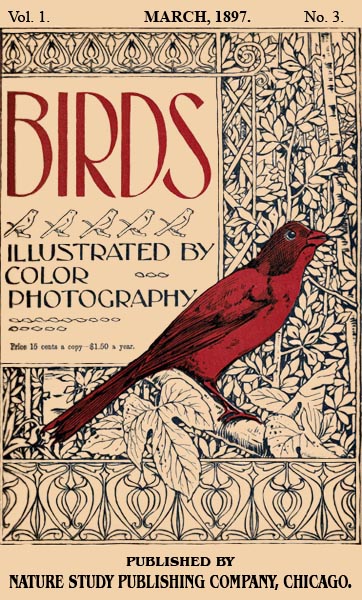
Birds Illustrated by Color Photograhy Vol 1 March 1897 No 3 - Cover

Birds Illustrated by Color Photography – Revisited – Introduction

The above article is the first article in the monthly serial for February 1897 “designed to promote Knowledge of Bird-Live.” These include Color Photography, as they call them, today they are drawings. There are at least three Volumes that have been digitized by Project Gutenberg.

To see the whole series of – Birds Illustrated by Color Photography – Revisited

*

(Information from Wikipedia and other internet sources)

Next Article – The Meadow Lark

Previous Article – The Return Of The Birds

Wordless Birds

Links:

All About Birds – Black Tern

Black Tern with eggs at nest photo – ARKive

Black Tern – Wikipedia

Ad in the Birds Illustrated by Color Photography, 1897

Ad in the Birds Illustrated by Color Photography, 1897

*

Birds Vol 1 #3 – The Return of the Birds

Eastern Bluebird (Sialia sialis) by S Slayton

Eastern Bluebird (Sialia sialis) by S Slayton

Birds Illustrated by Color Photography – Revisited

Vol 1. March, 1897 No. 3

*

THE RETURN OF THE BIRDS.

“Everywhere the blue sky belongs to them and is their appointed rest, and their native country, and their own natural home which they enter unannounced as lords that are certainly expected, and yet there is a silent joy at their arrival.”

imgt

HE return of the birds to their real home in the North, where they build their nests and rear their young, is regarded by all genuine lovers of earth’s messengers of gladness and gayety as one of the most interesting and poetical of annual occurrences. The naturalist, who notes the very day of each arrival, in order that he may verify former observation or add to his material gathered for a new work, does not necessarily anticipate with greater pleasure this event than do many whose lives are brightened by the coming of the friends of their youth, who alone of early companions do not change. First of all—and ever the same delightful warbler—the Bluebird, who, in 1895, did not appear at all in many localities, though here in considerable numbers last year, betrays himself. “Did he come down out of the heaven on that bright March morning when he told us so softly and plaintively that, if we pleased, spring had come?” Sometimes he is here a little earlier, and must keep his courage up until the cold snap is over and the snow is gone. Not long after the Bluebird, comes the Robin, sometimes in March, but in most of the northern states April is the month of his arrival. With his first utterance the spell of winter is broken, and the remembrance of it afar off. Then appears the Woodpecker in great variety, the Flicker usually arriving first. He is always somebody’s old favorite, “announcing his arrival by a long, loud call, repeated from the dry branch of some tree, or a stake in the fence—a thoroughly melodious April sound.”

Few perhaps reflect upon the difficulties encountered by the birds themselves in their returning migrations. A voyager sometimes meets with many of our common birds far out at sea. Such wanderers, it is said, when suddenly overtaken by a fog, completely lose their sense of direction and become hopelessly lost. Humming birds, those delicately organized, glittering gems, are among the most common of the land species seen at sea.

The present season has been quite favorable to the protection of birds. A very competent observer says that not all of the birds migrated this winter. He recently visited a farm less than an hour’s ride from Chicago, where he found the old place, as he relates it, “chucked full of Robins, Blackbirds, and Woodpeckers,” and others unknown to him. From this he inferred they would have been in Florida had indications predicted a severe winter. The trees of the south parks of Chicago, and those in suburban places, have had, darting through their branches during the months of December and January, nearly as many members of the Woodpecker tribe as were found there during the mating season in May last.

Alas, that the Robin will visit us in diminished numbers in the approaching spring. He has not been so common for a year or two as he was formerly, for the reason that the Robins died by thousands of starvation, owing to the freezing of their food supply in Tennessee during the protracted cold weather in the winter of 1895. It is indeed sad that this good Samaritan among birds should be defenseless against the severity of Nature, the common mother of us all. Nevertheless the return of the birds, in myriads or in single pairs, will be welcomed more and more, year by year, as intelligent love and appreciation of them shall possess the popular mind.

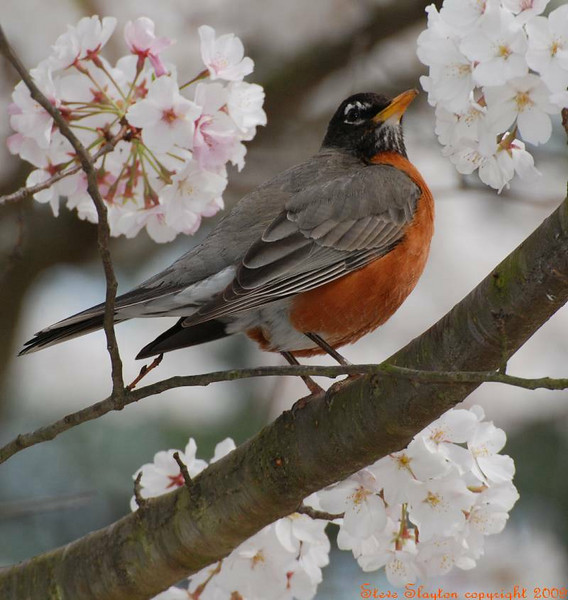
American Robin (Turdus migratorius) by S Slayton

American Robin (Turdus migratorius) by S Slayton


Lee’s Addition:

Even the stork in the heavens Knows her appointed times; And the turtledove, the swift, and the swallow Observe the time of their coming. But My people do not know the judgment of the LORD. (Jeremiah 8:7 NKJV)

This time of the year the birds head back north, at least in North America. Unfortunately they leave us here in Florida where some of them have been on their winter vacation. Birdwatching excitement slows down for us, but picks up for those of you who have been without your avian friends during the winter. Trust me, they are on the way.  We have been out watching birds several times this last week or so and the winter birds have left or are packing their bags and folding up their lounge chairs. We are getting a few of the migrants that are passing through on their way north. They land to rest and feed, then off they go again. Keep your eyes alert, northern friends, the birds are coming.

Birds Illustrated by Color Photograhy Vol 1 March 1897 No 3 - Cover

Birds Illustrated by Color Photography – Revisited – Introduction

The above article is the first article in the monthly serial for February 1897 “designed to promote Knowledge of Bird-Live.” These include Color Photography, as they call them, today they are drawings. There are at least three Volumes that have been digitized by Project Gutenberg.

To see the whole series of – Birds Illustrated by Color Photography – Revisited

*

(Information from Wikipedia and other internet sources)

Next Article – The Black Tern

Previous Article – The Crow and The Common Crow

ABC’s of the Gospel

Links:

Birds of the Bible – Migration
Interesting – Migration and Mechanics of Flight
Interesting Things – Amazing Bird Migration
The Flight of Migratory Birds by Werner Gitt
Bird Migration – Wikipedia
Birds of the Bible – Hawk Migration
Interesting Things – A Lesson from the Stork
Bar-tailed Godwit Migration – Wikipedia
Do Migratory Birds Practice Preventative Medicine?

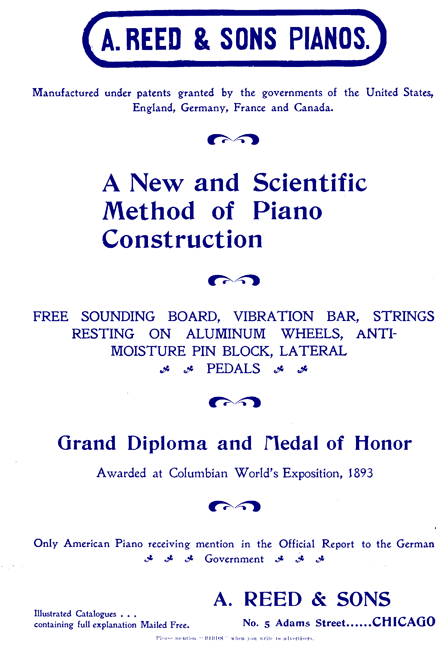
Ad in Birds Illustrated by Color Photography, 1897

Ad in Birds Illustrated by Color Photography, 1897

*

Birds Vol 1 #3 – The Crow and Common Crow

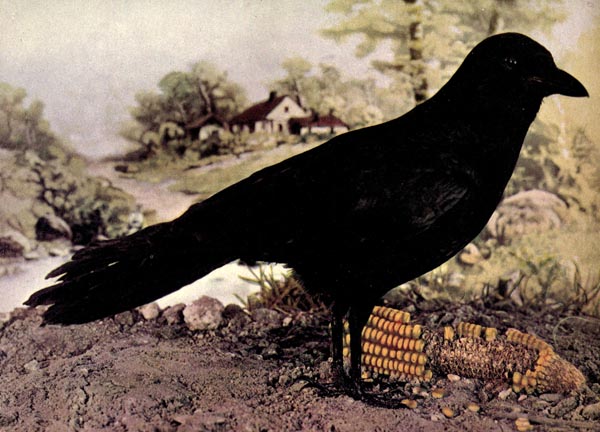
Common Crow - Birds Illustrated

Common Crow – Birds Illustrated

Birds Illustrated by Color Photography – Revisited

Vol 1. March, 1897 No. 3

*

THE CROW.

Caw! Caw! Caw! little boys and girls. Caw! Caw! Caw! Just look at my coat of feathers. See how black and glossy it is. Do you wonder I am proud of it?

Perhaps you think I look very solemn and wise, and not at all as if I cared to play games. I do, though; and one of the games I like best is hide-and-seek. I play it with the farmer in the spring. He hides, in the rich, brown earth, golden kernels of corn. Surely he does it because he knows I like it, for sometimes he puts up a stick all dressed like a man to show where the corn is hidden. Sometimes I push my bill down into the earth to find the corn, and at other times I wait until tiny green leaves begin to show above the ground, and then I get my breakfast without much trouble. I wonder if the farmer enjoys this game as much as I do. I help him, too, by eating worms and insects.

During the spring and summer I live in my nest on the top of a very high tree. It is built of sticks and grasses and straw and string and anything else I can pick up. But in the fall, I and all my relations and friends live together in great roosts or rookeries. What good times we do have—hunting all day for food and talking all night. Wouldn’t you like to be with us?

The farmer who lives in the house over there went to the mill to-day with a load of corn.

One of the ears dropped out of the wagon and it didn’t take me long to find it. I have eaten all I can possibly hold and am wondering now what is the best thing to do. If you were in my place would you leave it here and not tell anybody and come back to-morrow and finish it? Or would you fly off and get Mrs. Crow and some of the children to come and finish it? I believe I’ll fly and get them. Good-bye.

Caw! Caw! Caw!

Fish Crow (Corvus ossifragus) at Lake Morton By Dan'sPix

Fish Crow (Corvus ossifragus) at Lake Morton By Dan’sPix


THE COMMON CROW.

“The crow doth sing as merry as the lark,
When neither is attended.”


F for Birds Illustrated by Color Photography

EW birds have more interesting characteristics than the Common Crow, being, in many of his actions, very like the Raven, especially in his love for carrion. Like the Raven, he has been known to attack game, although his inferior size forces him to call to his assistance the aid of his fellows to cope with larger creatures. Rabbits and hares are frequently the prey of this bird which pounces on them as they steal abroad to feed. His food consists of reptiles, frogs, and lizards; he is a plunderer of other birds’ nests. On the seashore he finds crabs, shrimps and inhabited shells, which he ingeniously cracks by flying with them to a great height and letting them fall upon a convenient rock.

The crow is seen in single pairs or in little bands of four or five. In the autumn evenings, however, they assemble in considerable flocks before going to roost and make a wonderful chattering, as if comparing notes of the events of the day.

The nest of the Crow is placed in some tree remote from habitations of other birds. Although large and very conspicuous at a distance, it is fixed upon one of the topmost branches quite out of reach of the hand of the adventurous urchin who longs to secure its contents. It is loosely made and saucer shaped. Sticks and softer substances are used to construct it, and it is lined with hair and fibrous roots. Very recently a thrifty and intelligent Crow built for itself a summer residence in an airy tree near Bombay, the material used being gold, silver, and steel spectacle frames, which the bird had stolen from an optician of that city. Eighty-four frames had been used for this purpose, and they were so ingeniously woven together that the nest was quite a work of art. The eggs are variable, or rather individual, in their markings, and even in their size. The Crow rarely uses the same nest twice, although he frequently repairs to the same locality from year to year. He is remarkable for his attachment to his mate and young, surpassing the Fawn and Turtle Dove in conjugal courtesy.

And he lives to a good old age. Instances are not rare where he has attained to half a century, without great loss of activity or failure of sight.

At Red Bank, a few miles northeast of Cincinnati, on the Little Miami River, in the bottoms, large flocks of Crows congregate the year around. A few miles away, high upon Walnut Hills, is a Crow roost, and in the late afternoons the Crows, singly, in pairs, and in flocks, are seen on the wing, flying heavily, with full crops, on the way to the roost, from which they descend in the early morning, crying “Caw! Caw!” to the fields of the newly planted, growing, or matured corn, or corn stacks, as the season may provide.

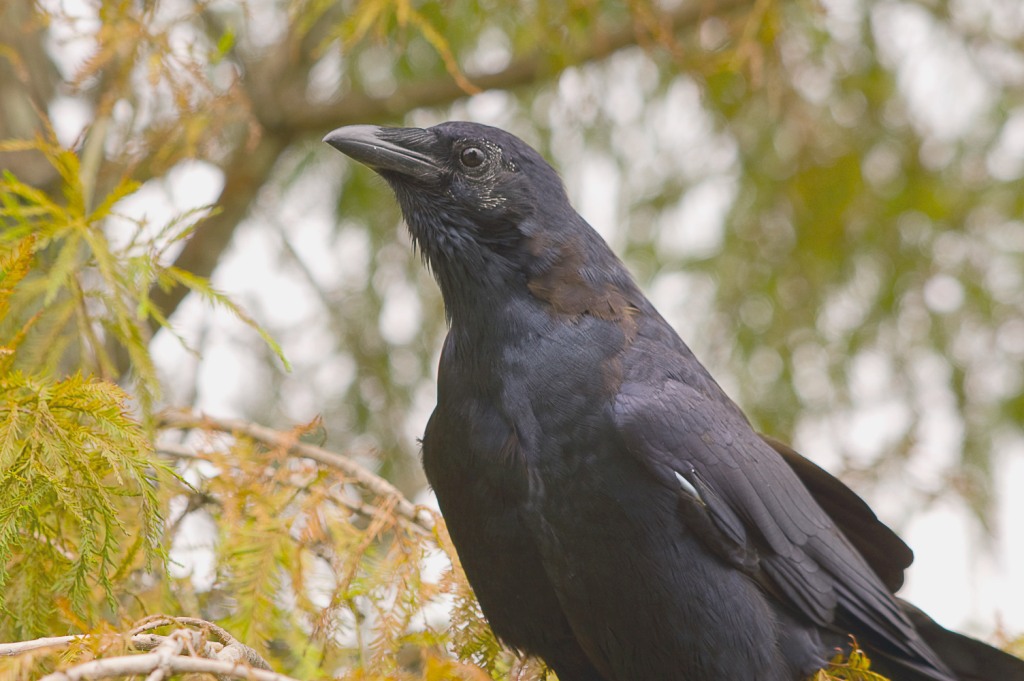
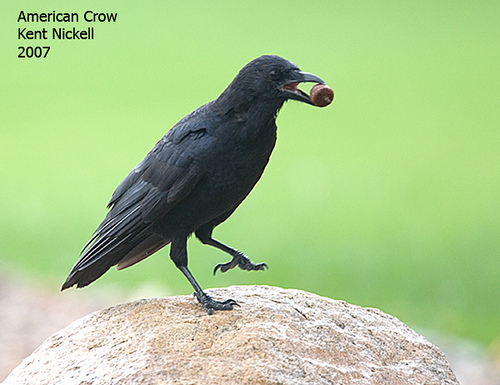
American Crow (Corvus brachyrhynchos) by Kent Nickell

American Crow (Corvus brachyrhynchos) by Kent Nickell


Lee’s Addition:

The Raven family which includes the Crows is mentioned in Scripture in the list of unclean birds in Leviticus and Deuteronomy (14:14) as “after its kind.”

every raven after its kind, (Leviticus 11:15 NKJV)

Crows form the genus Corvus in the Corvidae – Crows, Jays Family. Ranging in size from the relatively small pigeon-size jackdaws (Eurasian and Daurian) to the Common Raven of the Holarctic region and Thick-billed Raven of the highlands of Ethiopia, the 40 or so members of this genus occur on all temperate continents (except South America) and several offshore and oceanic islands (except for a few, which included Hawaii, which had the Hawaiian crow that went extinct in the wild in 2002). In the United States and Canada, the word “crow” is used to refer to the American Crow.

The crow genus makes up a third of the species in the Corvidae family. A group of crows is called a flock or, more poetically, a murder, But the term “murder of crows” mostly reflects a time when groupings of many animals had colorful and poetic names. For example, other “group” names include: an ostentation of peacocks, a parliament of owls, a knot of frogs, and a skulk of foxes.

Recent research has found some crow species capable not only of tool use but of tool construction as well. Crows are now considered to be among the world’s most intelligent animals. As a group, crows show remarkable examples of intelligence. Crows and ravens often score very highly on intelligence tests. Certain species top the avian IQ scale. Wild hooded crows in Israel have learned to use bread crumbs for bait-fishing. Crows will engage in a kind of mid-air jousting, or air-“chicken” to establish pecking order. Crows have been found to engage in feats such as sports, tool use, the ability to hide and store food across seasons, episodic-like memory,[vague] and the ability to use individual experience in predicting the behavior of environmental conspecifics.

One species, the New Caledonian Crow, has also been intensively studied recently because of its ability to manufacture and use its own tools in the day-to-day search for food. These tools include ‘knives’ cut from stiff leaves and stiff stalks of grass. Another skill involves dropping tough nuts into a trafficked street and waiting for a car to crush them open. On October 5, 2007, researchers from the University of Oxford, England presented data acquired by mounting tiny video cameras on the tails of New Caledonian Crows. It turned out that they use a larger variety of tools than previously known, plucking, smoothing, and bending twigs and grass stems to procure a variety of foodstuffs.  Recent research suggests that crows have the ability to recognize one individual human from another by facial features.

Birds Illustrated by Color Photograhy Vol 1 March 1897 No 3 - Cover

Birds Illustrated by Color Photography – Revisited – Introduction

The above article is the first article in the monthly serial for February 1897 “designed to promote Knowledge of Bird-Live.” These include Color Photography, as they call them, today they are drawings. There are at least three Volumes that have been digitized by Project Gutenberg.

To see the whole series of – Birds Illustrated by Color Photography – Revisited

*

(Information from Wikipedia and other internet sources)

Next Article – The Return Of The Birds

Previous Article – The Bobolink

Sharing The Gospel

Links:

Corvidae – Crows, Jays Family 

Crow – Wikipedia

Birds of the Bible – Ravens

*

Ad for Birds Illustrated by Color Photography, 1897

Ad for Birds Illustrated by Color Photography, 1897

*

Start Birdwatching Today – A New Series (Intro)

Northern Cardinal (Cardinalis cardinalis) - WikiC

Northern Cardinal (Cardinalis cardinalis) - WikiC

Our Assistant to the Pastor, Stephen, has asked if I would consider another series for our Church’s Blog, the Fountain. Thanks to Stephen and his assistance in getting the first “Birds of the Bible” series started, those articles and this resulting blog have grown beyond what was ever imagined. Now, we are beginning another new series.

Some of his first suggestions were like, “Birdwatching for Dummies” and I assured him that that book had already been written. The Complete Idiot’s Guide to Birdwatching has also been written. Between the two of us, we just want to encourage you to start birding today.

Okay, so I am suppose to start “birdwatching,” what is it?

“Birding”, “Birdwatching”, “Bird Watching”, “Looking at or for birds”, “Enjoying seeing birds” or whatever you want to call it, are basically the same. It amounts to watching the many wonderful birds that the Lord has created. If you observe only one bird, you are still “birding.”

The flowers appear on the earth; the time of the singing of birds is come, and the voice of the turtle is heard in our land; (Song of Solomon 2:12 KJV)

Cattle Egrets and Juvenile White Ibis at S Lake Howard

Cattle Egrets and Juvenile White Ibis at S Lake Howard

So watch for future titles like:

  • Start Birdwatching Today: Some Background Information
  • Start Birdwatching Today: Why Should I Go Outside and Stare at Birds?
  • Start Birdwatching Today: The Few Tools You Need To Be A Birdwatcher
  • Start Birdwatching Today: Where Do I Go?
  • Start Birdwatching Today: What Kind of Bird is This?
  • Start Birdwatching Today: When Should I Go?
  • Start Birdwatching Today: What is that Sound?

See the series in the Birdwatching section.

Start Birdwatching Today!

*

The Wombat’s Backward Pouch (Re-post)

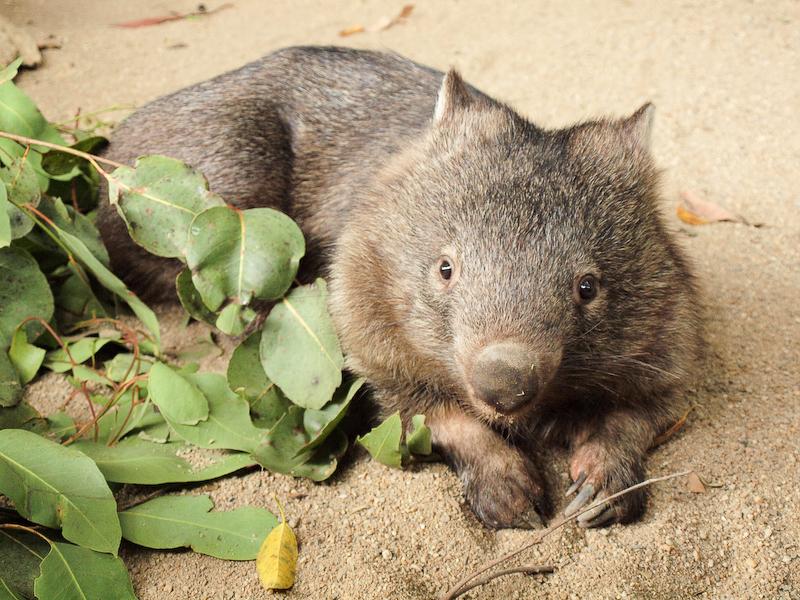
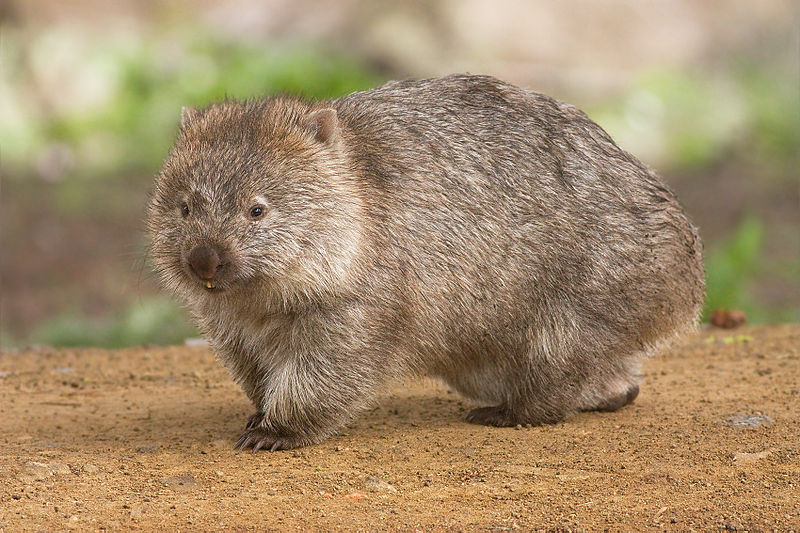
Common Wombat - Cairns CC

Common Wombat - Cairns CC

The Wombat’s Backward Pouch (Re-posted from Creation Moments)

Ephesians 2:10
For we are his workmanship, created in Christ Jesus unto good works, which God hath before ordained that we should walk in them.

Australia has many animals that are not found anywhere else in the world today. One of the most unique is the wombat, which looks like a small bear with brown fur. The wombat is a burrowing animal.

Like many of Australia’s animals, the wombat is a marsupial, having a pouch in which its prematurely born young complete their development. The pouches owned by most marsupials are open at the top toward the mother’s head. This works fine for the kangaroo and other marsupials – no one ever saw a kangaroo standing on its head.

Common Wombat (Vombatus ursinus)-Maria Island National Park

Common Wombat (Vombatus ursinus)-Maria Island National Park

But the wombat is a burrowing animal. If its pouch opened toward the mother’s head, it would very quickly fill with dirt, which wouldn’t do the young wombat inside the pouch any good. So, unlike any other marsupial, the wombat’s pouch opens toward the animal’s hind legs – it points backward!

The marsupial’s pouch is a wondrous enough invention all by itself. But this pouch is a clear case of a specialized intelligent design for a unique situation. If the wombat’s backward pouch had been produced by mutations, how would baby wombats have gotten by during the millions of years of trial and error needed to redesign the pouch? It’s easy to see the wombat’s backward pouch as a humorous hint from the Creator that human theories simply cannot replace the account of creation that He has revealed to us in the Bible!

Prayer:
Lord, I thank You that You have so carefully planned every detail of the creation for the benefit of every creature. When things don’t seem to be going well in my life, comfort me with the fact that You are still in charge and that You care about the details of my life, too. Amen.
Notes:
Major, Trevor. 1989. “The backward wombat.” Reasoning from Revelation, August. p. 3.

©Creation Moments, 2012

*

Microraptor Controversy

Microraptor by durbed

News to Note for March 17, 2012, by Elizabeth Mitchell from Answers in Genesis, has an interesting article called, “Glossy black flirt by any other name is still a bird.” It is about the Microraptor that was discovered in China. It is supposedly a “four-winged” Microraptor from the Liaoning Providence. As usual, the evolutionist are claiming that it is a transitional species that is between the dinosaur and the birds. They have found the bird to have had the “iridescent black feathers of modern birds.”

As Christians that believe the Biblical account of creation, it is impossible that that can be true. God said that the birds were created on day five and than the land animals were created on day six.

Then God said, “Let the waters abound with an abundance of living creatures, and let birds fly above the earth across the face of the firmament of the heavens.” So God created great sea creatures and every living thing that moves, with which the waters abounded, according to their kind, and every winged bird according to its kind. And God saw that it was good. And God blessed them, saying, “Be fruitful and multiply, and fill the waters in the seas, and let birds multiply on the earth.” So the evening and the morning were the fifth day. Then God said, “Let the earth bring forth the living creature according to its kind: cattle and creeping thing and beast of the earth, each according to its kind”; and it was so. And God made the beast of the earth according to its kind, cattle according to its kind, and everything that creeps on the earth according to its kind. And God saw that it was good. … So the evening and the morning were the sixth day.” (Genesis 1:20-25, 31b NKJV)

Four-winged Microraptor

“God created “every winged bird according to its kind” (Genesis 1:21) on the fifth day of Creation week. He said, “Let birds fly above the earth across the face of the firmament of the heavens” (Genesis 1:20). The next day, God made each “beast of the earth, each according to its kind” (Genesis 1:24), including dinosaurs. Birds fully equipped to fly were flying the day before dinosaurs were even created.”

“Dinosaurs did not evolve into birds. Many anatomical differences between them make such a transition impossible. No genetic mechanism enabling an organism to acquire information to evolve into a completely new kind has ever been found. No evidence of feather evolution has been found in the fossil record or in this study. But thanks to this study, artists painting pictures of the world God made about 6,000 years ago can be reasonably confident as they make these birds shine in the sunlight of that first world.”

To see the whole article – Click Here.

*

Birds Vol 1 #3 – The Bobolink

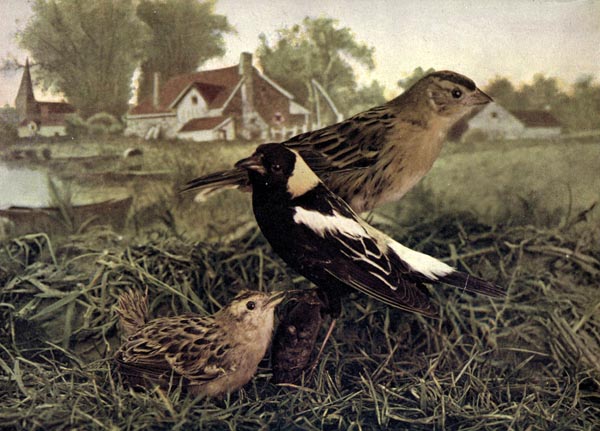
Bobolinks - for Birds Illustrated

Bobolinks – for Birds Illustrated

Birds Illustrated by Color Photography – Revisited

Vol 1. March, 1897 No. 3

*

THE BOBOLINK.

“When Nature had made all her birds,
And had no cares to think on,
She gave a rippling laugh,
And out there flew a Bobolinkon.”


imgn

O American ornithologist omits mention of the Bobolink, and naturalists generally have described him under one of the many names by which he is known. In some States he is called the Rice Bird, in others Reed Bird, the Rice or Reed Bunting, while his more familiar title, throughout the greater part of America, is Bobolink, or Bobolinkum. In Jamaica, where he gets very fat during his winter stay, he is called the Butter Bird. His title of Rice Troopial is earned by the depredations which he annually makes upon the rice crops, though his food “is by no means restricted to that seed, but consists in a large degree of insects, grubs, and various wild grasses.” A migratory bird, residing during the winter in the southern parts of America, he returns in vast multitudes northward in the early Spring. According to Wilson, their course of migration is as follows: “In April, or very early in May, the Rice Buntings, male and female, arrive within the southern boundaries of the United States, and are seen around the town of Savannah, Georgia, sometimes in separate parties of males and females, but more generally promiscuously. They remain there but a short time, and about the middle of May make their appearance in the lower part of Pennsylvania. While here the males are extremely gay and full of song, frequenting meadows, newly plowed fields, sides of creeks, rivers, and watery places, feeding on May flies and caterpillars, of which they destroy great quantities. In their passage, however, through Virginia at this season, they do great damage to the early wheat and barley while in their milky state. About the 20th of May they disappear on their way to the North. Nearly at the same time they arrive in the State of New York, spread over the whole of the New England States, as far as the river St. Lawrence, and from Lake Ontario to the sea. In all of these places they remain during the Summer, building their nests and rearing their young.”

The Bobolink’s song is a peculiar one, varying greatly with the occasion. As he flys southward, his cry is a kind of clinking note; but the love song addressed to his mate is voluble and fervent. It has been said that if you should strike the keys of a pianoforte haphazard, the higher and the lower singly very quickly, you might have some idea of the Bobolink’s notes. In the month of June he gradually changes his pretty, attractive dress and puts on one very like the females, which is of a plain rusty brown, and is not reassumed until the next season of nesting. The two parent birds in the plate represent the change from the dark plumage in which the bird is commonly known in the North as the Bobolink, to the dress of yellowish brown by which it is known throughout the South as the Rice or Reed Bird.

His nest, small and a plain one, too, is built on the ground by his industrious little wife. The inside is warmly lined with soft fibers of whatever may be nearest at hand. Five pretty white eggs, spotted all over with brown are laid, and as soon

“As the little ones chip the shell
And five wide mouths are ready for food,
‘Robert of Lincoln’ bestirs him well,
Gathering seeds for this hungry brood.”

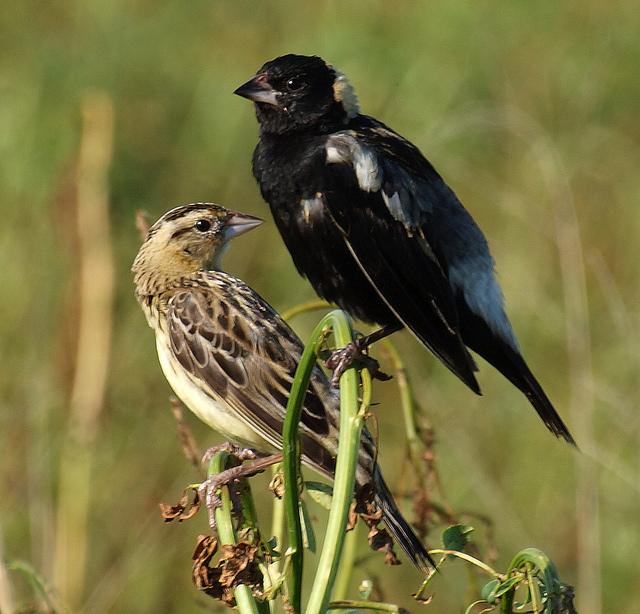
Bobolink (Dolichonyx oryzivorus) CC Pair ramendan

Bobolink (Dolichonyx oryzivorus) CC Pair ramendan

Other birds may like to travel alone, but when jolly Mr. Bobolink and his quiet little wife come from the South, where they have spent the winter, they come with a large party of friends. When South, they eat so much rice that the people call them Rice Birds. When they come North, they enjoy eating wheat, barley, oats and insects.

Mr. and Mrs. Bobolink build their simple little nest of grasses in some field. It is hard to find on the ground, for it looks just like dry grass. Mrs. Bobolink wears a dull dress, so she cannot be seen when she is sitting on the precious eggs. She does not sing a note while caring for the eggs. Why do you think that is?

Mr. Bob-Linkum does not wear a sober dress, as you can see by his picture. He does not need to be hidden. He is just as jolly as he looks. Shall I tell you how he amuses his mate while she is sitting? He springs from the dew-wet grass with a sound like peals of merry laughter. He frolics from reed to post, singing as if his little heart would burst with joy.

Don’t you think Mr. and Mrs. Bobolink look happy in the picture? They have raised their family of five. Four of their children have gone to look for food; one of them—he must surely be the baby—would rather stay with his mamma and papa. Which one does he look like?

Many birds are quiet at noon and in the afternoon. A flock of Bobolinks can be heard singing almost all day long. The song is full of high notes and low, soft notes and loud, all sung rapidly. It is as gay and bright as the birds themselves, who flit about playfully as they sing. You will feel like laughing as merrily as they sing when you hear it some day.

Bobolink (Dolichonyx oryzivorus) by J Fenton

Bobolink (Dolichonyx oryzivorus) by J Fenton


Lee’s Addition:

Even the birds in the sky know the right time to do things. The storks, doves, swifts, and thrushes know when it is time to fly to a new home. But my people don’t know what the LORD wants them to do. (Jeremiah 8:7 ERV)

The Bobolink (Dolichonyx oryzivorus) is a small New World blackbird and the only member of genus Dolichonyx. They are in the Icteridae – Oropendolas, Orioles & Blackbirds Family.

Adults are 16–18 cm (6–8 in) long with short finch-like bills. They weigh about 1 ounce (28 g).[1] Adult males are mostly black, although they do display creamy napes, and white scapulars, lower backs and rumps. Adult females are mostly light brown, although their coloring includes black streaks on the back and flanks, and dark stripes on the head; their wings and tails are darker. The collective name for a group of bobolinks is a chain.[2]
[edit]Distribution and movements

These birds migrate to Argentina, Bolivia and Paraguay. One bird was tracked flying 12,000 miles (19,000 km) over the course of the year, and up to 1,100 miles (1,800 km) in one day. They often migrate in flocks, feeding on cultivated grains and rice, which leads to them being considered a pest by farmers in some areas. Although Bobolinks migrate long distances, they have rarely been sighted in Europe—like many vagrants from the Americas, the overwhelming majority of records are from the British Isles.[citation needed] Each fall, Bobolinks gather in large numbers in South American rice fields, where they are inclined to eat grain. This has earned them the name “ricebird” in these parts. However, they are called something entirely different in Jamaica (Butterbirds) where they are collected as food, being that they are very fat as they pass through on migration.

Their breeding habitats are open grassy fields, especially hay fields, across North America. In high-quality habitats, males are often polygynous. Females lay 5 to 6 eggs in a cup-shaped nest, which is always situated on the ground and is usually well-hidden in dense vegetation. Both parents feed the young.

Bobolinks forage on, or near the ground, and mainly eat seeds and insects. Males sing bright, bubbly songs in flight; these songs gave this species its common name.

Birds Illustrated by Color Photograhy Vol 1 March 1897 No 3 - Cover

Birds Illustrated by Color Photography – Revisited – Introduction

The above article is the first article in the monthly serial for February 1897 “designed to promote Knowledge of Bird-Live.” These include Color Photography, as they call them, today they are drawings. There are at least three Volumes that have been digitized by Project Gutenberg.

To see the whole series of – Birds Illustrated by Color Photography – Revisited

*

(Information from Wikipedia and other internet sources)

Next Article – The Bobolink

Previous Article – The Japan Pheasant

Wordless Birds

Links:

Birds of the World – Woodpeckers

Flicker – Wikipedia

Woodpecker – Wikipedia

*

Birds in Hymns – Bring, O Morn, Thy Music

Warbling Vireo (Vireo gilvus) by Raymond Barlow

Warbling Vireo (Vireo gilvus) by Raymond Barlow

I am Alpha and Omega, the beginning and the ending, saith the Lord, which is, and which was, and which is to come, the Almighty. (Revelation 1:8 KJV)

Words: Will­iam C. Gan­nett, in A Chor­us of Faith, 1893.

Music: Nicaea, John B. Dykes, in Hymns An­cient and Mo­dern, 1861

Bring, O Morn, Thy Music

Bring, O morn, thy music! Night, thy starlit silence!
Oceans, laugh the rapture to the storm winds coursing free!
Suns and planets chorus, Thou art our Creator,
Who wert, and art, and evermore shalt be!

Life and death, Thy creatures, praise Thee, mighty Giver!
Praise and prayer are rising in Thy beast and bird and tree:
Lo! they praise and vanish, vanish at Thy bidding,
Who wert, and art, and evermore shalt be!

Light us! lead us! love us! cry Thy groping nations,
Pleading in the thousand tongues, but naming only Thee,
Weaving blindly out Thy holy, happy purpose,
Who wert, and art, and evermore shalt be!

Life nor death can part us, O Thou Love eternal,
Shepherd of the wandering star and souls that wayward flee!
Homeward draws the spirit to Thy Spirit yearning,
Who wert, and art, and evermore shalt be!

Most information from The Cyber Hymnal

*

YouTube by First Presbyterian Church of Berkeley, CA – Their Chancel Choir & Young Adult Choir

*

See more – Birds in Hymns

Wordless Birds

*