Sunday Inspiration – Hawks

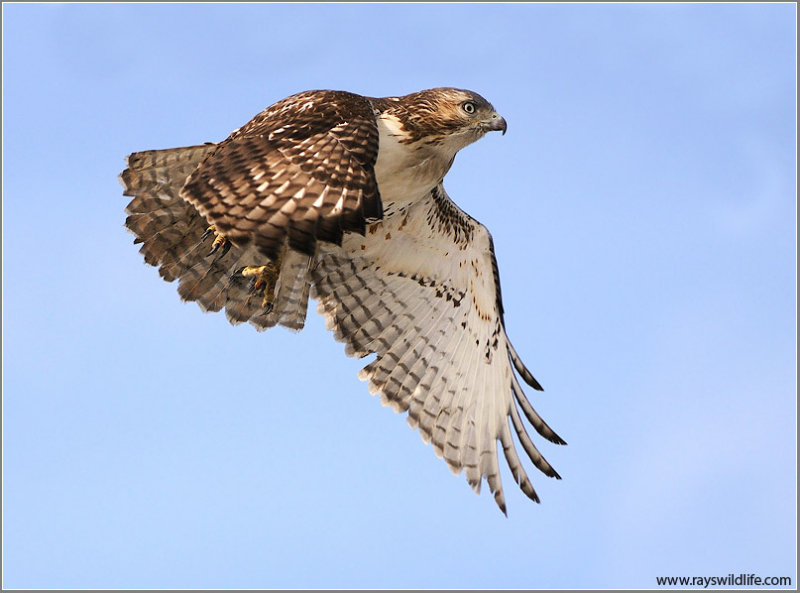
Red-tailed Hawk (Buteo jamaicensis) by Raymond Barlow

Red-tailed Hawk (Buteo jamaicensis) by Raymond Barlow

Does the hawk fly by your wisdom, And spread its wings toward the south? (Job 39:26 NKJV)

Hawks are members of the Accipitridae Family which includes the Hawks, Kites, Eagles, Vultures, plus Buzzards and other Birds of Prey. There are 256 species in the family. There are 3 or 4 references to hawks and their kinds in the Bible. Therefore they are also a Bird of the Bird.

Even though they catch live animals and are considered a bird of prey, they are beautiful creations from our Creator. Until the curse they would have been vegetarian like all the rest of creation. Unfortunately, sin entered, and now some look down on hawks, but even in that, the Lord provided for them to have the capability to catch prey as they do today.

Enjoy viewing these beautiful birds from their creator, the Lord Jesus Christ.
*

This slideshow requires JavaScript.

Does the hawk fly by your wisdom, And spread its wings toward the south? (Job 39:26 NKJV)

“I Will Pilot Thee” ~ by Dr. Richard Gregory

*

Sunday Inspirations

Birds of the Bible

Accipitridae – Kites, Hawks & Eagles Family

Hope for Hard Times

*

Interesting Things – Meerkat School

SmileyCentral.com

MEERKAT SCHOOL

“… and I will be with thy mouth, and with his mouth, and will teach you what ye shall do.” Exodus 4:15b

Behavioral researchers define teaching very specifically. First, of course, a teacher must have pupils. Then the teacher must be less efficient in doing whatever he is doing than he normally would be if he were alone, as a means of showing the pupils how to do the task. And finally, the pupils must learn the task more quickly than they would on their own.

Meerkats at the Auckland Zoo ©©Auckland_Zoo

Meerkats at the Auckland Zoo ©©Auckland_Zoo

Meerkats at the Auckland Zoo by that definition, humans, of course, are teachers. Among animals, only a species of ant meets this definition of teaching. But now researchers from the University of Cambridge in England say that meerkats also qualify as teachers. They found that experienced hunters will take young, inexperienced pups with them when they hunt. They will let the youngsters watch them as they catch prey. Of course, when they catch some small prey, the youngsters will vocally beg for a handout. However, only 35 percent of those handouts are served to the youngsters dead. The rest of the time they have to learn how to subdue the caught prey themselves. On the other hand, older, more experienced pups received already-killed handouts only 10 percent of the time. Further tests involving live and dead prey show that those given live prey could learn to subdue it in only three days.

Despite the researchers’ presupposition that teaching evolved, God is still the One that teaches the teachers.

Meerkat at LP Zoo by Lee

Meerkat at LP Zoo by Lee

Prayer:
Father, I pray that you would provide Your church with faithful teachers of the forgiveness we have in Jesus Christ. Amen.
Notes:
Science News, 7/15/06, p. 36, S. Milius, “Live Prey for Dummies.” Photo: Meerkats at the Auckland Zoo. Courtesy of Ashleigh Thompson. Licensed under the Creative Commons Attribution 2.0 Generic license.

©Creation Moments – Meerkat School, 2014.


Lee’s Additions:

Meerkat at LP Zoo by Lee

Meerkat at LP Zoo by Lee

I have always enjoy watching Meerkats and thought you might enjoy another Interesting Things blog. Lowry Park Zoo and other zoos keep them.

*

*

Sunday Inspiration – Bittern

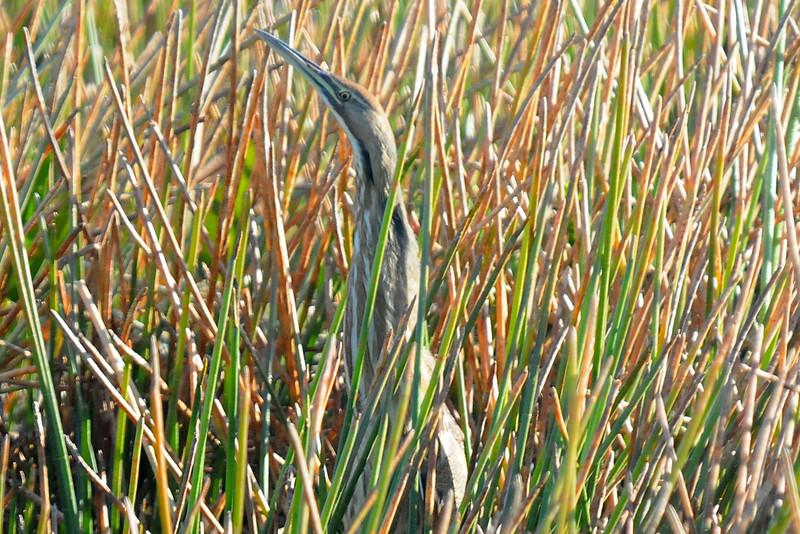
American Bittern (Botaurus lentiginosus) at Circle B by Lee

American Bittern (Botaurus lentiginosus) by Lee

The herds shall lie down in her midst, Every beast of the nation. Both the pelican and the bittern Shall lodge on the capitals of her pillars; Their voice shall sing in the windows; Desolation shall be at the threshold; For He will lay bare the cedar work. (Zephaniah 2:14 NKJV)

I enjoy “trying” to find bitterns. They can be right challenging because of the way the Lord designed them to be “hidden in plain view.” The American Bittern, at the top, landed right in front of us at Circle B last year. Otherwise, he would have blended right in and he would have been missed. Bitterns are also a Bird of the Bible.

American Bittern (Botaurus lentiginosus) by Bob-Nan

American Bittern (Botaurus lentiginosus) by Bob-Nan

Bitterns belong to the Ardeidae- Herons, Bitterns Family and most are well hidden while they search for food. “Bitterns are a classification of birds in the heron family, a family of wading birds. Species named bitterns tend to be the shorter-necked, often more secretive members of this family. Bitterns usually frequent reed beds and similar marshy areas, and feed on amphibians, reptiles, insects, and fish. Unlike the similar storks, ibises, and spoonbills, herons and bitterns fly with their necks retracted, not outstretched.” (Wikipedia)

Sunbitterns, which I added, are members of the Eurypygidae – Sunbittern Family. These comments from Woodland Park Zoo, show how their design helps hide them. “With its slow, deliberate walk on orange-colored legs and its long neck held parallel to the ground, the sunbittern resembles the sun-flecked forest interior. This spectacular frontal display is for threat or defense rather than courtship and is usually accompanied by a low hiss and bowing.”

“… they have vividly colored middle webs, which with wings fully spread show bright eyespots in red, yellow, and black. These are shown to other sunbitterns in courtship and threat displays, or used to startle potential predators. (Wikipedia)

This ability to hide brought to mind these verses:

Keep me as the apple of Your eye; Hide me under the shadow of Your wings, (Psalms 17:8 NKJV)

For in the day of trouble He will conceal me in His tabernacle; In the secret place of His tent He will hide me; He will lift me up on a rock. (Psalms 27:5 NASB)

Hide me from the secret counsel of evildoers, From the tumult of those who do iniquity, (Psalms 64:2 NASB)

Can anyone hide himself in secret places, So I shall not see him?” says the LORD; “Do I not fill heaven and earth?” says the LORD. (Jeremiah 23:24 NKJV)

*

This slideshow requires JavaScript.

*

“Hide Thou Me” – ©Rejoice! by the Hyssongs

*

Links:

*

Sunday Inspiration – Hornbills

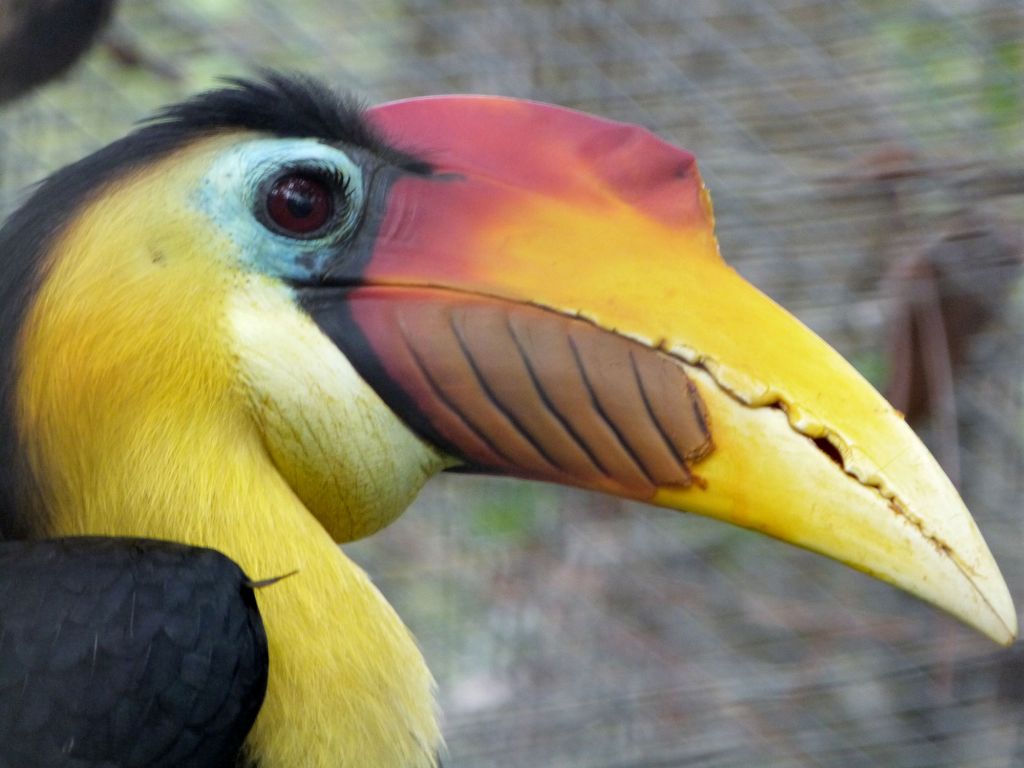
Wrinkled Hornbill (Aceros corrugatus) Brevard Zoo by Lee

Wrinkled Hornbill (Aceros corrugatus) Brevard Zoo by Lee

The God of my strength, in whom I will trust; My shield and the horn of my salvation, My stronghold and my refuge; My Savior, You save me from violence. (2 Samuel 22:3 NKJV)

The LORD is my rock and my fortress and my deliverer; My God, my strength, in whom I will trust; My shield and the horn of my salvation, my stronghold. (Psalms 18:2 NKJV)

Oh, my, what interesting group of birds the Lord’s Creative Hand created with these two Hornbill Families! They come from the Bucerotidae – Hornbills and Bucorvidae – Ground Hornbills. There are 61 hornbills in the two families.

Shout joyfully to the LORD, all the earth; Break forth in song, rejoice, and sing praises. Sing to the LORD with the harp, With the harp and the sound of a psalm, With trumpets and the sound of a horn; Shout joyfully before the LORD, the King. (Psalms 98:4-6 NKJV)

And has raised up a horn of salvation for us In the house of His servant David, (Luke 1:69 NKJV)

This slideshow requires JavaScript.

*

“I Sing The Mighty Power Of God” ~ by the ©Hyssongs

*

More:

*

Old Barns and Old People

A very good friend of mine, an “old” friend like me, just shared this with me. It is worth sharing here also.

The steps of a good man are ordered by the LORD: and he delighteth in his way. Though he fall, he shall not be utterly cast down: for the LORD upholdeth him with his hand. I have been young, and now am old; yet have I not seen the righteous forsaken, nor his seed begging bread. He is ever merciful, and lendeth; and his seed is blessed. (Psalms 37:23-26 KJV)

Enjoy!

*

YouTube by Bob Byerly

*

May you be encouraged to live for the Lord while you are young. Later on, you will be thankful.

*

Intimidating Duets – ©Creation Moments

Magpie-lark (Grallina cyanoleuca) ©©J.J. Harrison

Magpie-lark (Grallina cyanoleuca) ©©J.J. Harrison

“… and he shall rise up at the voice of the bird, and all the daughters of musick shall be brought low…” Ecclesiastes 12:4b

Precision in communication is highly important. This is especially true of the type of communication called music, whether you are talking about Mozart or magpie-larks.

Only about three percent of bird species are known to sing duets. In a duet, one mate begins singing, and the other mate begins a half second later. Among Australian magpie-larks, pairs that are newly mated usually lack that precision. However, in pairs that have been together for two years, the lag time of the duet usually varies by only a few hundredths of a second.

Researchers also discovered that this precision serves a purpose. Male magpie-larks respond to perceived threats by increasing their singing. When they played the less-precise duets to 12 pairs of other magpie-larks, the males only responded in this way seven times in five minutes. However, the more-precise duets resulted in nine responses in five minutes. In short, other magpie-larks are more intimidated by pairs that sing with precision than by those who do not. This is important in preserving an established couple’s territory from invasion by new couples.

Communication with precision is yet another fingerprint of God on the creation. In Scripture, the ultimate in precise communication, God even points us to the birds as He urges us to recognize His involvement in the creation.

Prayer:

Thank You, Father, for taking care of all Your creation and especially for sending Your Son to save me. Amen.

Notes:
Science News, 6/9/07, p. 357, S. Milius, “Scary Singing.” Photo: Female magpie-lark. Courtesy of J.J. Harrison. Licensed under the Creative Commons Attribution-Share Alike 3.0 Unported license.  ©Creation Moments 2014


Magpie-lark (Grallina cyanoleuca) by W Kwong

Magpie-lark (Grallina cyanoleuca) by W Kwong

Lee’s Addition:

By them the birds of the heavens have their home; They sing among the branches. (Psalms 104:12 NKJV)

Magpie-larks are members of the Monarchs – Monarchidae Family, which has 99 species in it. There are only two larks in this family:

Magpie-lark (Grallina cyanoleuca)
Torrent-lark (Grallina bruijnii) WorldBirds – Photos

Here is a sound recording from xeno-canto of a duet.

*

*


Bible Birds – Mighty Hand of God!

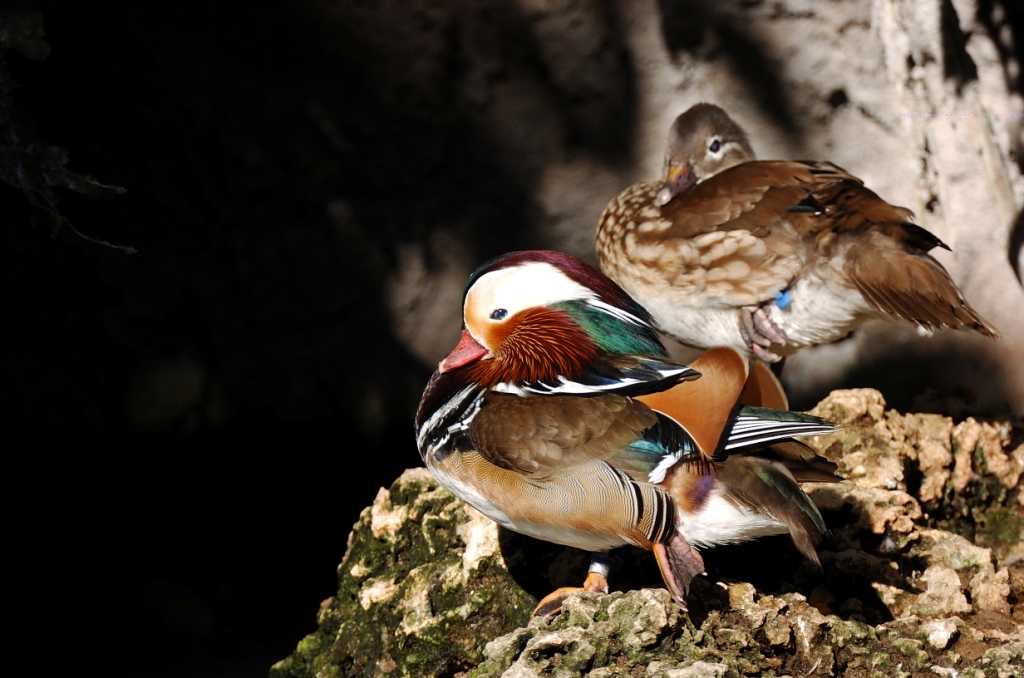
Mandarin Duck (Aix galericulata) by Dan at Zoo Miami

Mandarin Duck (Aix galericulata) by Dan at Zoo Miami

O Lord GOD, You have begun to show Your servant Your greatness and Your mighty hand, for what god is there in heaven or on earth who can do anything like Your works and Your mighty deeds? (Deuteronomy 3:24 NKJV)

What a beautiful duck. When we look around us, the Lord’s Hand is at work everywhere. Be thankful today for the Lord’s Blessing.

Brown-headed Barbet (Megalaima zeylanica) by Nikhil Devasar

Hang in there, today!

O taste and see that the LORD is good: blessed is the man that trusteth in him. (Psalms 34:8 KJV)

*

Bible Birds

*


Birds of the Bible – Mighty Hand of God

Mandarin Duck (Aix galericulata) by Dan at Zoo Miami

Mandarin Duck (Aix galericulata) by Dan at Zoo Miami

O Lord GOD, You have begun to show Your servant Your greatness and Your mighty hand, for what god is there in heaven or on earth who can do anything like Your works and Your mighty deeds? (Deuteronomy 3:24 NKJV)

What a beautiful duck. When we look around us, the Lord’s Hand is at work everywhere. Be thankful today for the Lord’s Blessing.

Brown-headed Barbet (Megalaima zeylanica) by Nikhil Devasar

Hang in there, today!

O taste and see that the LORD is good: blessed is the man that trusteth in him. (Psalms 34:8 KJV)

*

Birds of the Bible

*

Sunday Inspiration – Thirst

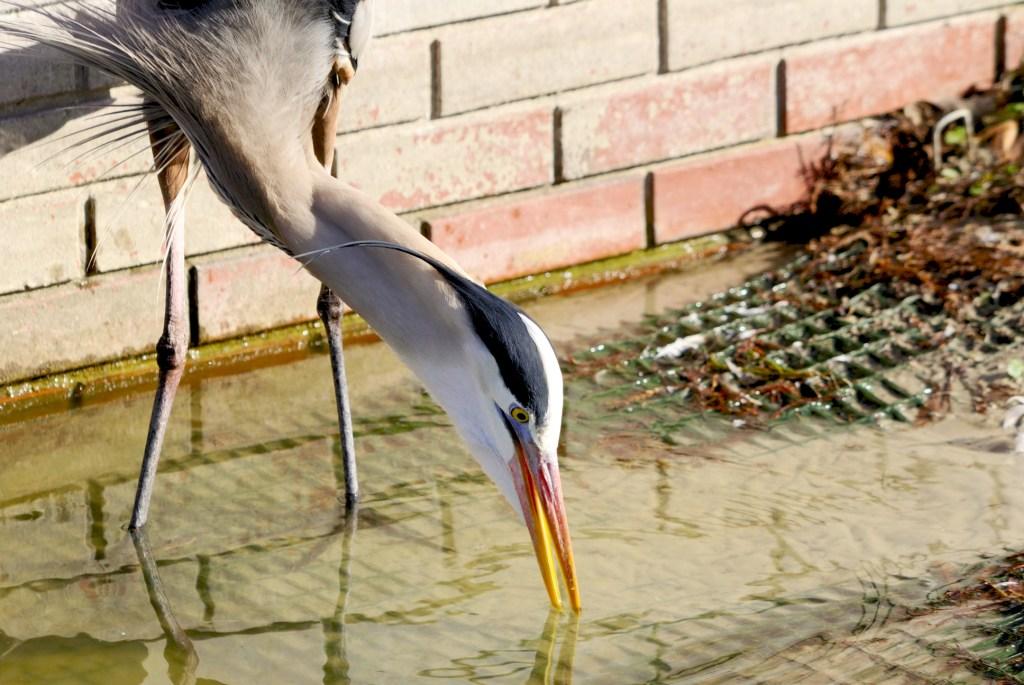
Great Blue Heron (Drinking) at Lake Morgan by Lee

Great Blue Heron (Drinking) at Lake Morgan

Jesus answered and said unto her, Whosoever drinketh of this water shall thirst again: But whosoever drinketh of the water that I shall give him shall never thirst; but the water that I shall give him shall be in him a well of water springing up into everlasting life. (John 4:13-14 KJV)

This slideshow requires JavaScript.

*

*
“Come Thou Fount Of Every Blessing” by Sean Fielder
*

More Sunday Inspiration

Gospel Message

*

Never Give Up

The steps of a good man are ordered by the LORD, And He delights in his way. Though he fall, he shall not be utterly cast down; For the LORD upholds him with His hand. I have been young, and now am old; Yet I have not seen the righteous forsaken, Nor his descendants begging bread. (Psalms 37:23-25 NKJV)

*

(From an email link)

*

Just got a notification from WordPress that today is my Sixth Anniversary here. Wow! Has it really been 6 years? Praise the Lord! Thanks all of you for the visits you have made to the blog. This blog started about 5 months earlier on another service.

1,151,195 visits and counting!

THANK YOU!!!

King Solomon and The Birds – Part 2

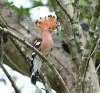
Eurasian Hoopoe (Upupa epops) by W Kwon

Eurasian Hoopoe (Upupa epops) by W Kwon

King Solomon and The Birds ~ from The Curious Book of Birds

King Solomon and The Birds – Part 2


Cur Book of Birds letter-one day when Solomon was journeying across the desert, he was sorely distressed by the heat of the sun, until he came near to fainting. Just then he spied a flock of his friends the Hoopoes flying past, and calling to them feebly he begged them to shelter him from the burning rays.

The King of the Hoopoes gathered together his whole nation and caused them to fly in a thick cloud over the head of Solomon while he continued his journey. In gratitude the wise King offered to give his feathered friends whatever reward they might ask.

For a whole day the Hoopoes talked the matter over among themselves, then their King came to Solomon and said to him,—

“We have considered your offer, O generous King, and we have decided that what we most desire is to have, each of us, a golden crown on his head.”

King Solomon smiled and answered, “Crowns of gold shall you have. But you are foolish birds, my Hoopoes; and when the evil days shall come upon you and you see the folly of your desire, return here to me and I will help you yet again.”

So the King of the Hoopoes left King Solomon with a beautiful golden crown upon his head. And soon all the Hoopoes were wearing golden crowns. Thereupon they grew very proud and haughty. They went down by the lakes and pools and strutted there that they might admire themselves in the water mirrors. And the Queen of the Hoopoes became very airy, and refused to speak to her own cousin and to the other birds who had once been her friends.

There was a certain fowler who used to set traps for birds. He put a piece of broken mirror into his trap, and a Hoopoe spying it went in to admire herself, and was caught. The fowler looked at the shining crown upon her head and said, “What have we here! I never saw a crown like this upon any bird. I must ask about this.”

So he took the crown to Issachar, the worker in metal, and asked him what it was. Issachar examined it carefully, and his eyes stuck out of his head. But he said carelessly, “It is a crown of brass, my friend. I will give you a quarter of a shekel for it; and if you find any more bring them to me. But be sure to tell no other man of the matter.” (A shekel was about sixty-two cents.)

After this the fowler caught many Hoopoes in the same way, and sold their crowns to Issachar. But one day as he was on his way to the metalworker’s shop he met a jeweler, and to him he showed one of the Hoopoes’ crowns.

“What is this, and where did you find it?” exclaimed the jeweler. “It is pure gold. I will give you a golden talent for every four you bring me.” (A talent was worth three hundred shekels.)

Now when the value of the Hoopoes’ crowns was known, every one turned fowler and began to hunt the precious birds. In all the land of Israel was heard the twang of bows and the whirling of slings. Bird lime was made in every town, and the price of traps rose in the market so that the trap-makers became rich men. Not a Hoopoe could show his unlucky head without being slain or taken captive, and the days of the Hoopoes were numbered. It seemed that soon there would be no more Hoopoes left to bewail their sad fate.

At last the few who still lived gathered together and held a meeting to consider what should be done, for their minds were filled with sorrow and dismay. And they decided to appeal once more to King Solomon, who had granted their foolish prayer.

Flying by stealth through the loneliest ways, the unhappy King of the Hoopoes came at last to the court of the King, and stood once more before the steps of his golden throne. With tears and groans he related the sad fortune which had befallen his golden-crowned race.

King Solomon looked kindly upon the King of the Hoopoes and said, “Behold, did I not warn you of your folly in desiring to have crowns of gold? Vanity and pride have been your ruin. But now, that there may be a memorial of the service which once you did me, your crowns of gold shall be changed into crowns of feathers, and with them you may walk unharmed upon the earth.”

In this way the remaining Hoopoes were saved. For when the fowlers saw that they no longer wore crowns of gold upon their heads, they ceased to hunt them as they had been doing. And from that time forth the family of the Hoopoes have flourished and increased in peace, even to the present day.


Lee’s Addition:

When pride comes, then comes dishonor, But with the humble is wisdom. (Proverbs 11:2 NASB)

Vanity means – “too much pride in oneself or in how one looks.”

Pride can mean – “a sense of one’s own value that is too high.” or “an inborn feeling of self-worth.” (One of these definitions is good and the other bad.)

Was our King of the Hoopoes showing good or bad pride? When we think too much of ourself and think we are better or nicer looking. (“Look at me, I have a gold crown.”)

You could work hard on a project and win a gold ribbon or metal for that effort. If you wore that ribbon around your neck, would your attitude about it be a good or bad pride?

Praise the LORD! Oh, give thanks to the LORD, for He is good! For His mercy endures forever. (Psalms 106:1 NKJV)

Links:
King Solomon and The Birds – Part 1

King Solomon and The Birds – Part 2

King Solomon and The Birds – Part 3


Eurasian Hoopoe (Upupa epops) by Peter Ericsson


  Hoopoes – Upupidae Family


Painted Bunting (Passerina ciris) ©©Flickr


  Bird Tales


Curious Book of Birds - Cover


  The Curious Book of Birds


Spanish Sparrow (Passer Hispaniolensis) female ©WikiC


  Wordless Birds


Great Blue Heron: Patient, Prompt, and (Rarely) Pugnacious

Great Blue Heron by Dan

Great Blue Heron

Great Blue Heron: Patient, Prompt, and (Rarely) Pugnacious

by Dr. James J. S. Johnson

Luzon Bleeding-heart by Dan

Orni-Theology

The heron family (family Ardeidae, which also includes bitterns and some egrets) and their cousins include some of my favorite long-legged wading birds:  great blue herons, green herons, grey herons, tri-colored herons, night herons, great white egrets, and cattle egrets.


Reddish-Snowys-Greats Egrets -Great Blue Heron all MacDill by Lee

Reddish-Snowys-Greats Egrets -Great Blue Heron by Lee

Their often smaller cousins (of the family Egretta) include the reddish egret, little blue heron, and the snowy egret.  Of these many regard the great blue heron (Ardea herodias) as a favorite:

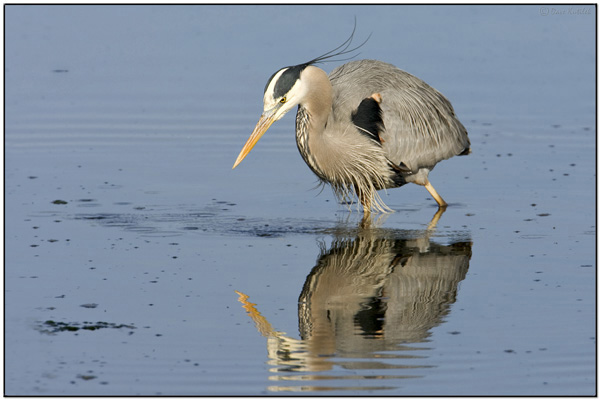
“For most of us, sightings of great blue herons are confined to a glimpse of the bird as it flies slowly and steadily overhead, wings arching gracefully down with each beat, neck bent back, and feet trailing behind.  At other times we see it on its feeding grounds, standing motionless and staring intently into shallow water, or wading with measured steps as it searches for prey.” [Quoting from “Great Blue Heron”, by Donald & Lillian Stokes, in Bird Behavior, Volume III (Little, Brown & Co., 1989), page 25.]

Great Blue Heron by Dave's Pix

Great Blue Heron by Dave’s Pix

The Holy Bible mentions “herons” twice, in Leviticus 11:19 and in Deuteronomy 14:18 (both times translating the Hebrew noun ’anaphah), in Mosaic lists of ritually “unclean” birds.   The bird’s Hebrew name is based on a verb (’anaph) meaning “to snort” or “to be angry”.  Herons can be aggressive, and their almost-violent habit of “zapping” their prey could appear to resemble an aggressor angrily striking at unsuspecting victim. The more likely behavior that matches the Hebrew name, however, is the aggressive defense of a heron’s feeding grounds:

“Defense of feeding territories is commonly seen and involves aerial chases, Frahnk-calls, and aggressive [body language] displays, such as Upright, Bill-down-upright, Bent-neck.  Fighting rarely occurs, but when it does it can be violent, with one bird landing on the back of the other and either bird stabbing the other with its bill.” [Quoting from “Great Blue Heron”, by Donald & Lillian Stokes, above, page 30.]

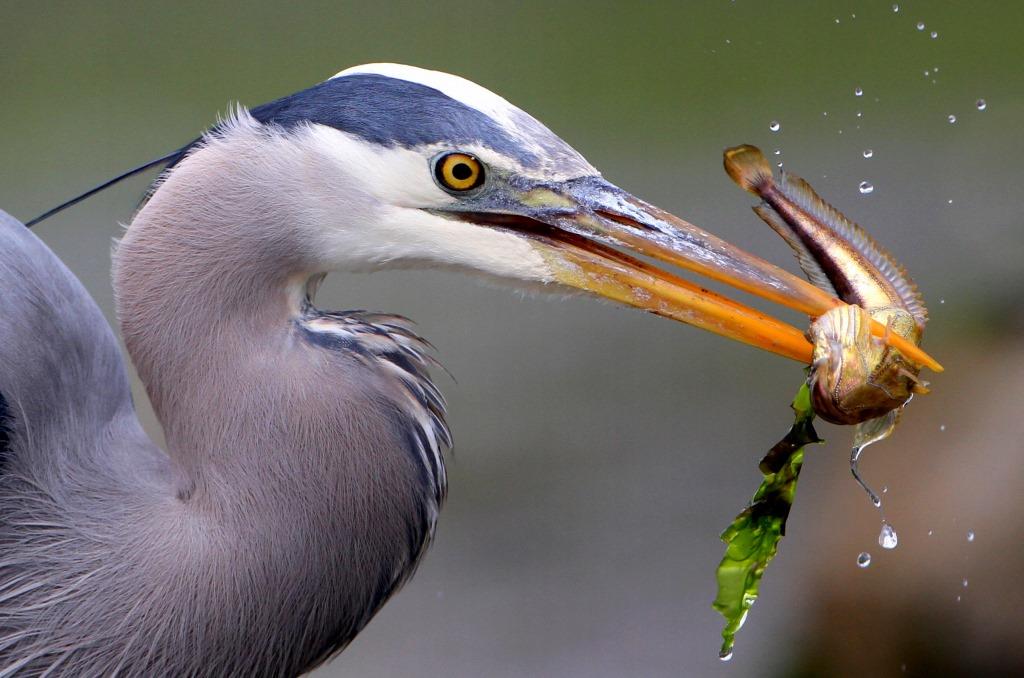
Yet do not imagine that the great blue heron is an erratic hothead that has no self-control, because its self-restraint, when seeking a meal at the shoreline of a pond, is so self-contained that the heron resembles a statue, for many minutes if necessary. Then, zap!  The statue suddenly fast-forwards his sharp beak toward a hapless fish or frog,   —  and instantly the heron is gulping down his dinner!

Great Blue Heron with fish ©© winnu on Flickr

This ability to strike like lightning, yet the choice to withhold doing so (unless the time for doing so is obvious), reminds us of the New Testament directive:  “be ye angry, and sin not” (Ephesians 4:26).

Also, in spiritual matters (Ephesians 6:12), we are exhorted to “contend earnestly” for the Biblical faith (Jude 1:3), in ways that do not involve flesh-and-blood fighting.  Such spiritual conflicts require both the patience and promptness of a sniper (or an opportunistic great blue heron)!   Yes, there may even come a time for the use of physical force, when the stakes are high enough –  remember how the Lord Jesus cleansed the Temple with a whip!  —  but most of the time our anger should be suppressed, with heron-like patience, in order to achieve the most worthy goals in life.

><> JJSJ

See:

Orni-Theology
Ardeidae- Herons, Bitterns
Birds of the Bible –  Herons
Dr. James J. S. Johnson – Guest Writer

*