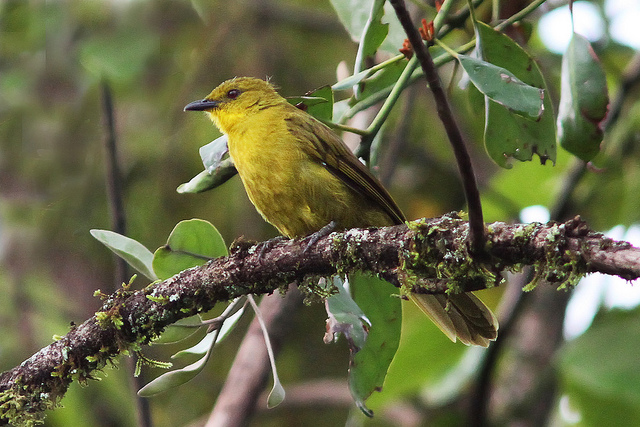
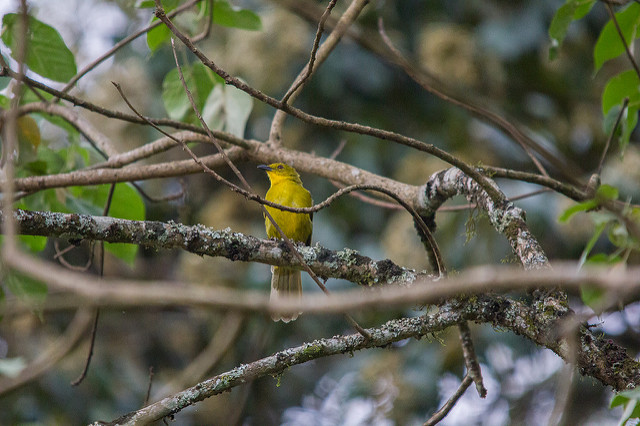
Avian And Attributes – (No) Variableness

Avian And Attributes – (No) Variableness

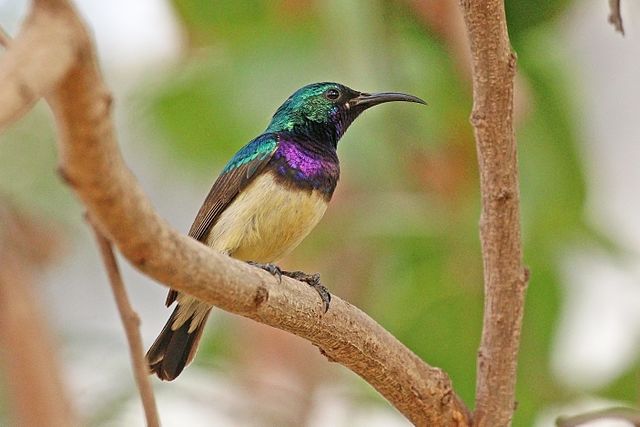
Variable Sunbird (Cinnyris venustus) Male ©WikiC

“Every good gift and every perfect gift is from above, and cometh down from the Father of lights, with whom is no variableness, neither shadow of turning.” (James 1:17 KJV)


Avian and Attributes – (No) Variableness

VA’RIABLENESS, n.
1. Susceptibility of change; liableness or aptness to alter; changeableness; as the variableness of the weather.
2. Inconstancy; fickleness; unsteadiness; levity; as the variableness of human passions.


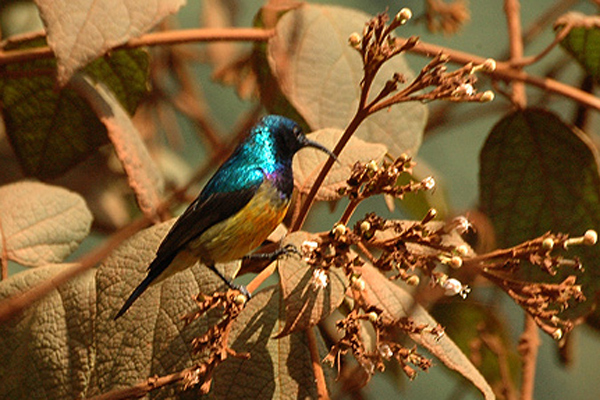
Variable Sunbird (Cinnyris venustus) by TomTarrant

Variable Sunbird

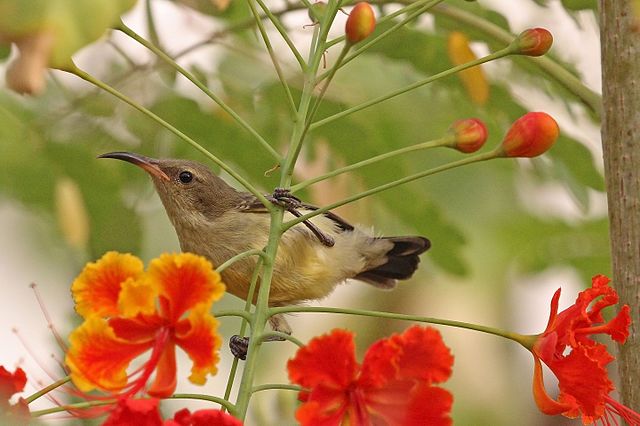
The Variable Sunbird (or yellow-bellied sunbird), Cinnyris venustus (formerly Nectarinia venusta), is a sunbird. The sunbirds are a group of small Old World passerine birds which feed largely on nectar, although they will also take insects, especially when feeding young. Flight is fast and direct on their short wings. Most species can take nectar by hovering like a hummingbird, but usually perch to feed most of the time.

The variable sunbird is a fairly common resident breeder in equatorial Africa. Two eggs are laid in a suspended nest in a tree. This species is found in open woodland and cultivation.

Variable sunbirds are small, only 10 cm long. They have medium-length thin down-curved bills and brush-tipped tubular tongues, both adaptations to their nectar feeding from their Creator.

Variable Sunbird (Cinnyris venustus) Female ©WikiC

(Variable Sunbird – Wikipedia, with editing) (Nectariniidae – Sunbirds Family)


More Avian and Attributes

Birds whose first name starts with “V”

Good News

*
[Definitions from Webster’s Dictionary of American English (1828), unless noted. Bird info from Wikipedia plus.]

Avian And Attributes – Unreprovable

Avian And Attributes – Unreprovable

Unspotted Saw-whet Owl (Aegolius ridgwayi) ©WikiC

“And you, that were sometime alienated and enemies in your mind by wicked works, yet now hath he reconciled In the body of his flesh through death, to present you holy and unblameable and unreproveable in his sight:” (Colossians 1:21-22 KJV)


Avian and Attributes – Unreproveable

Unreproveable
Col_1:22 (a) This word has a very interesting meaning for the Christian. It means that there will be no final examinations at the end of the journey. Our Lord JESUS is so effective in His work in the soul that the person is completely prepared in this life for the entrance into GOD’s presence. The Christian does not get an examination, when he dies, to see where he is going. That point is settled the moment JESUS CHRIST becomes the Lord and the Saviour of the believer.


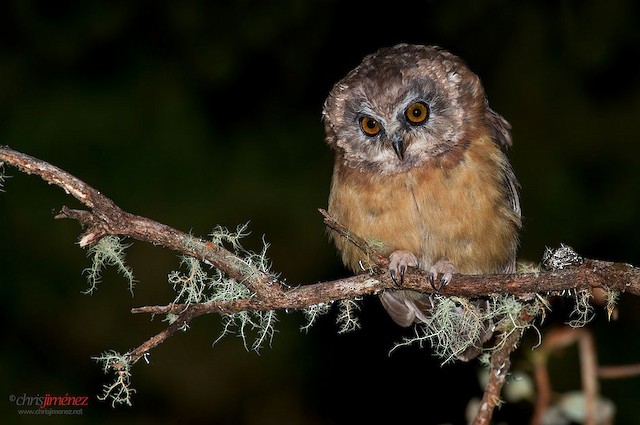
Unspotted Saw-whet Owl (Aegolius ridgwayi) Juvenile ©Chris Jimenez – Macaulay Library

Unspotted Saw-whet Owl

The unspotted saw-whet owl (Aegolius ridgwayi) is a small owl. It is a resident breeder in the highlands of Central America from southern Mexico south to western Panama, mainly above 2500 m. it has occasionally been considered conspecific with the northern saw-whet owl.

This nocturnal bird breeds in open mountain forests, in both the cloud forest and the higher oak woodland, laying its eggs in a tree hole. It takes rodents, shrews and other small mammals as its main prey, but will also feed on birds, bats and insects.

The unspotted saw-whet owl is a small, dumpy, short-tailed and broad-winged owl, 18 cm long and weighing 80 g. It is dark brown above with white markings on the wings. The underparts are unstreaked buff, becoming darker on the upper chest and facial disc. The head is large, with yellow eyes and a white-edged facial disc. The flight is fluttery and agile.

The voice of the unspotted saw-whet owl is a series of rhythmic toots. Reports of this owl at lower altitudes are invariably due to the extremely similar call of an Anotheca tree frog.

The scientific species name is for the American ornithologist Robert Ridgway.

Unspotted Saw-whet Owl (Aegolius ridgwayi) ©Knut Eisermann – Macaulay Library

(Strigidae – Owls Family) (Unspotted Saw-whet Owl – Wikipedia)

Extra

Unspotted
Jam_1:27 (b) This is a picture of the defilement which the Christian may encounter during his day’s duties as he mingles and mixes in a world filled with sin. The Lord would have us guard our lives daily lest we be contaminated by the evils that surround us.

“Pure religion and undefiled before God and the Father is this, To visit the fatherless and widows in their affliction, and to keep himself unspotted from the world.” (James 1:27 KJV)


More Avian and Attributes

Birds whose first name starts with “U”

Good News

*
[Definitions from Webster’s Dictionary of American English (1828), unless noted. Bird info from Wikipedia plus.]

Avian And Attributes – Three (in One)

Avian And Attributes – Three (in One)

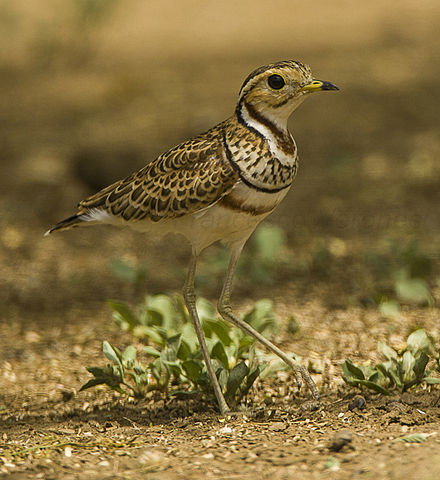
Three-banded Courser (Rhinoptilus cinctus) ©WikiC

“This is he that came by water and blood, even Jesus Christ; not by water only, but by water and blood. And it is the Spirit that beareth witness, because the Spirit is truth. For there are three that bear record in heaven, the Father, the Word, and the Holy Ghost: and these three are one.” (1 John 5:6-7 KJV)


Avian and Attributes – Three (in One)

Three [From Wilson’s Dictionary of Bible Types]
(c) The threes of the Bible represent triads of completeness.

Sometimes it is a triad of good, and sometimes of evil.

– the Trinity of Heaven is the Father, the Son and the Holy Spirit.
– the trinity of evil is the devil, the antichrist and the false prophet.
– the trinity of blessing is grace, mercy and peace.
– the trinity of wickedness is the world, the flesh and the devil.

It is interesting to note that the books of first and second Thessalonians are built largely around three-fold statements.

Chapter 1:3, “The work of faith, and labor of love, and patience of hope.”
Chapter 1:5, “in word . . . in power, and in the Holy Spirit.”
Chapter 1:9, 10, “ye turned . . . to serve . . . and to wait.”
Chapter 2:10, “Holily, justly and unblameably.”


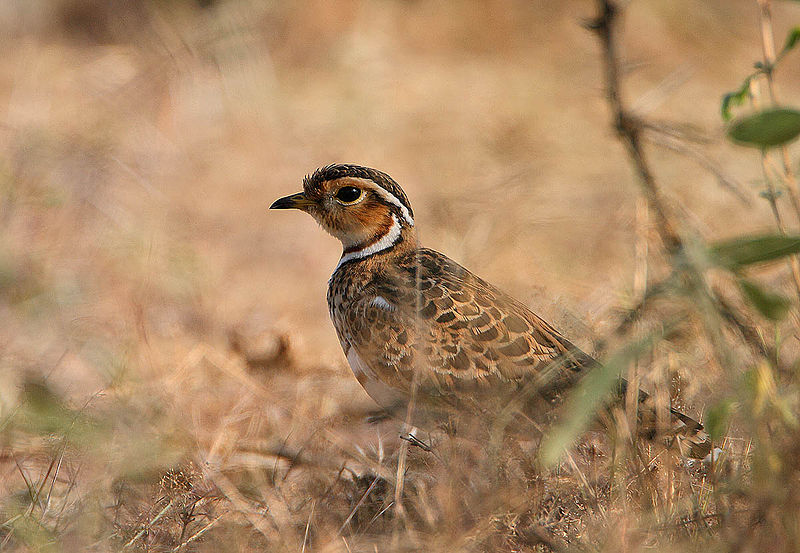
Three-banded Courser (Rhinoptilus cinctus) ©WikiC

Tree-banded Courser

The Tree-banded Courser (Rhinoptilus cinctus) is a species of bird in the Glareolidae family. It is found in Angola, Botswana, Ethiopia, Kenya, Namibia, Rwanda, Somalia, South Africa, South Sudan, Tanzania, Uganda, Zambia, and Zimbabwe.

Three-banded Courser (Rhinoptilus cinctus) F-L * M-R ©WikiC

(Three-banded Courser – Wikipedia) (Charadriidae – Plovers Family)


More Avian and Attributes

Birds whose first name starts with “T”

Good News

*
[Definitions from Webster’s Dictionary of American English (1828), unless noted. Bird info from Wikipedia plus.]

Birds Taking A Sabbath Rest? – from Creation Moments

DO BIRDS TAKE A SABBATH REST? from Creation Moments

Re-posted from Creation Moments

“And God blessed the seventh day, and sanctified it: because that in it he had rested from all his work which God created and made.” Genesis 2:3

Myles Willard is an avid bird watcher, award-winning nature photographer and long-time friend of Creation Moments. Myles has given us hundreds of breathtaking nature photos, one of which accompanies the printed transcript of today’s program at the Creation Moments website.

The reason I’m telling you about him today is because of an unexpected discovery he made while looking out the window of his home in Michigan. Each fall he meticulously tracks and logs the number of migrating warblers that stop by for a rest in the big cedar tree in his yard. After tracking the activity of over 1,500 warblers for 18 years, he was surprised to see a statistically significant dip in the number of birds stopping by that occurred on every seventh day!

Did these migrating birds have a built-in instinct that somehow made them follow the biblical principle of a Sabbath rest? We are not saying, of course, that the warblers were knowingly obeying God’s fourth commandment. However, if God worked for six days and then rested on the seventh, why would it be hard to believe that God gave these birds a cycle of six days of work followed by a seventh day of rest?

According to the account given in the book Inspired Evidence: Only One Reality, “It would seem that Myles Willard, science teacher, nature photographer and bird watcher, has found and documented such a pattern.”

Prayer:
Oh Lord, thank You for doing all the work necessary for our salvation so we can rest securely in the knowledge that – by grace through faith – we can have eternal life! Amen.
Notes:
Myles Willard, The Rest Is History, monograph, 2008. Cited in Inspired Evidence: Only One Reality by Julie Von Vett and Bruce Malone, April 29 (Search for the Truth Publications, 2012). Photo: One of Myles Willard’s superb photos. Used with permission.

©Creation Moments 2017 – Used with permission

See:

More Interesting Things from Creation Moments

*

Avian And Attributes – Song

Avian And Attributes – Song

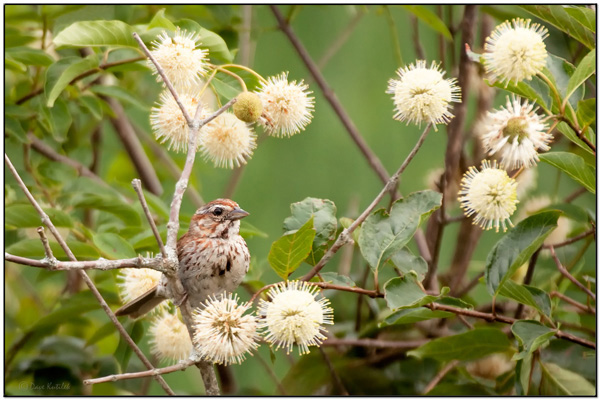
Song Sparrow in white flowers by Daves BirdingPix

Song Sparrow in white flowers by Daves BirdingPix

“The LORD is my strength and song, and he is become my salvation: he is my God, and I will prepare him an habitation; my father’s God, and I will exalt him.” (Exodus 15:2 KJV)

Behold, God is my salvation; I will trust, and not be afraid: for the LORD JEHOVAH is my strength and my song; he also is become my salvation.” (Isaiah 12:2 KJV)


Avian and Attributes – Song

SONG, n.
1. In general, that which is sung or uttered with musical modulations of the voice, whether of the human voice or that of a bird.
2. A little poem to be sung, or uttered with musical modulations; a ballad. The songs of a country are characteristic of its manners. Every country has its love songs, its war songs, and its patriotic songs.
3. A hymn; a sacred poem or hymn to be sung either in joy or thanksgiving, as that sung by Moses and the Israelites after escaping the dangers of the Arabian gulf and of Pharaoh; or of lamentation, as that of David over the death of Saul and Jonathan. Songs of joy are represented as constituting a part of heavenly felicity. [edited]

“Yet the LORD will command his lovingkindness in the daytime, and in the night his song shall be with me, and my prayer unto the God of my life.” (Psalms 42:8 KJV)


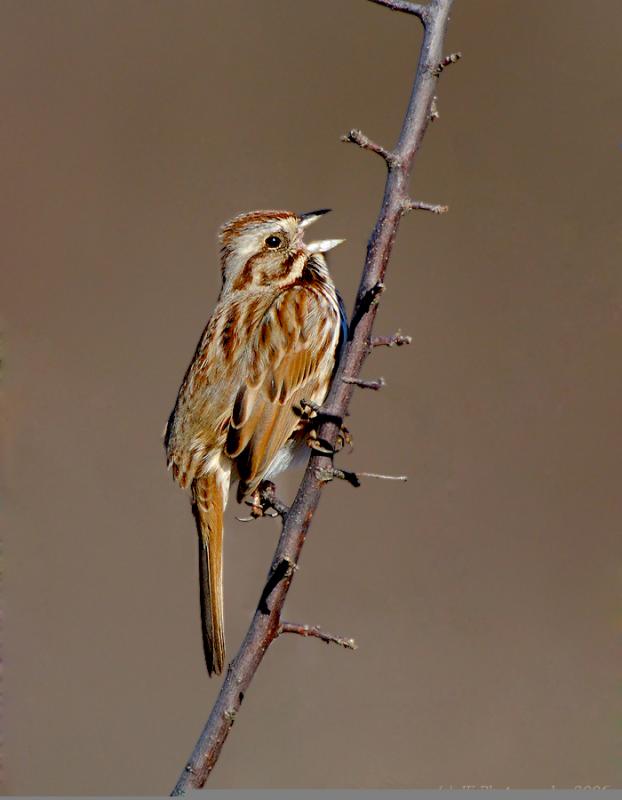
Song Sparrow (Melospiza melodia) by J Fenton

Song Sparrow

The Song Sparrow (Melospiza melodia) is a medium-sized American sparrow. Among the native sparrows in North America, it is easily one of the most abundant, variable and adaptable species.

Though a habitat generalist, the Song sparrow favors brushland and marshes, including salt marshes, across most of Canada and the United States. They also thrive in human dominated areas such as in suburbs, agricultural fields, and along roadsides. Permanent residents of the southern half of their range, northern populations of the song sparrow migrate to the southern United States or Mexico during winter and intermingle with the native, non-migratory population. The song sparrow is a very rare vagrant to western Europe, with a few recorded in Great Britain and Norway.

These birds forage on the ground, in shrubs or in very shallow water. They mainly eat insects and seeds. Birds in salt marshes may also eat small crustaceans. They nest either in a sheltered location on the ground or in trees or shrubs.

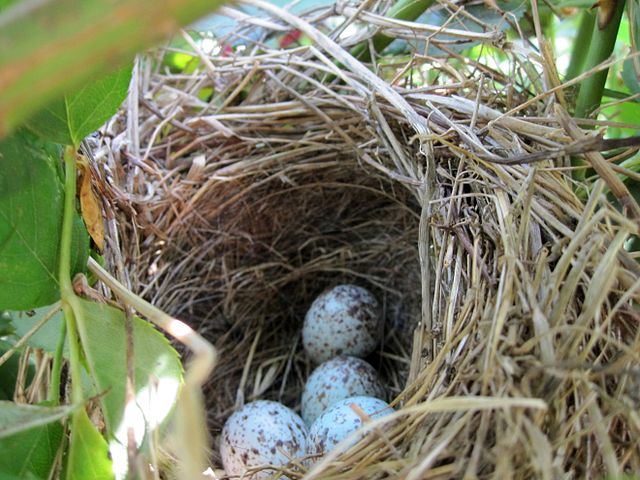
Song Sparrow (Melospiza melodia) Nest ©WikiC

The sparrow species derives it name from its colorful repertoire of songs. Enthusiasts report that one of the songs heard often in suburban locations closely resembles the opening four notes of Ludwig van Beethoven’s Symphony No. 5. The male uses a fairly complex song to declare ownership of its territory and attract females.

Singing itself consists of a combination of repeated notes, quickly passing isolated notes, and trills. The songs are very crisp, clear, and precise, making them easily distinguishable by human ears

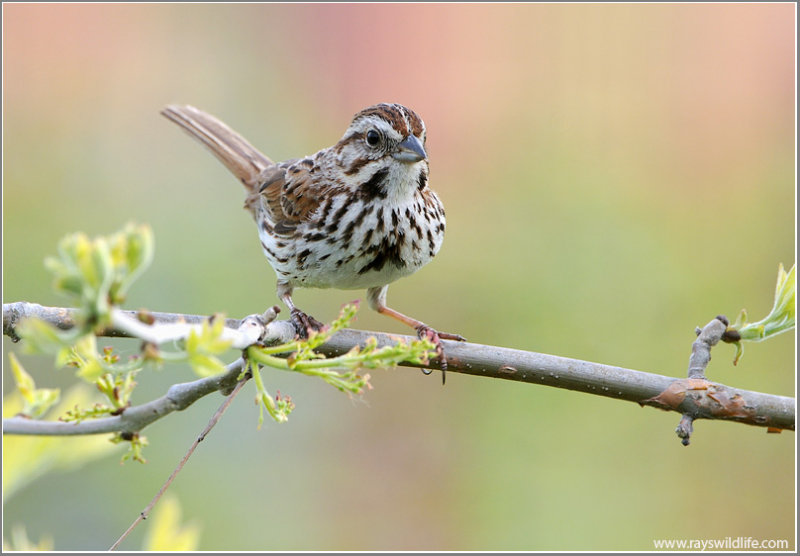
Song Sparrow by Ray

Song Sparrow by Ray

(Emberizidae – Buntings, New World Sparrows & Allies Family) (Song Sparrow – Wikipedia)


More Avian and Attributes

Birds whose first name starts with “S”

Good News

*
[Definitions from Webster’s Dictionary of American English (1828), unless noted. Bird info from Wikipedia plus.]

Avian And Attributes – Rock

Avian And Attributes – Rock

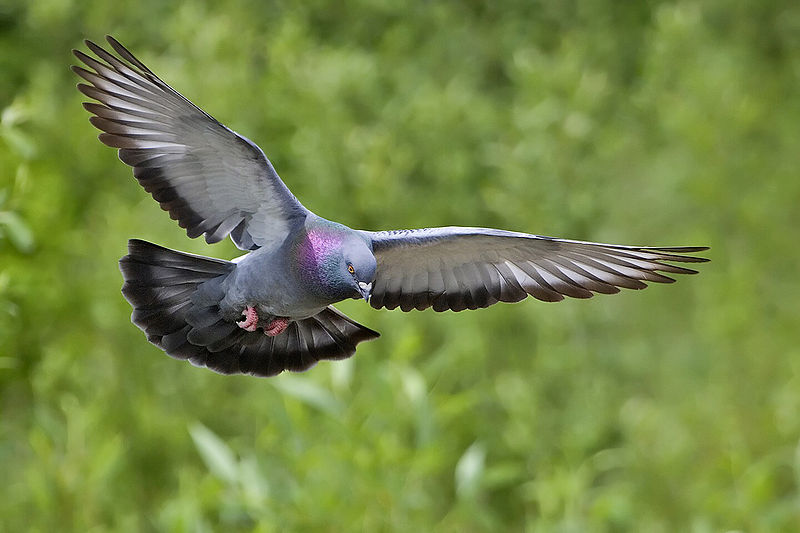
Rock Dove (Columba livia) ©WikiC

Rock Dove (Columba livia) ©WikiC

“Because I will publish the name of the LORD: ascribe ye greatness unto our God. He is the Rock, his work is perfect: for all his ways are judgment: a God of truth and without iniquity, just and right is he.” (Deuteronomy 32:3-4 KJV)

And did all drink the same spiritual drink: for they drank of that spiritual Rock that followed them: and that Rock was Christ.
(1 Corinthians 10:4 KJV)


Avian and Attributes – Rock

ROCK, n. [Gr., L. rupes, from the root of rumpo, to break or burst. If this is not the origin of rock, I know not to what root to assign it.]
1. A large mass of stony matter, usually compounded of two or more simple minerals, either bedded in the earth or resting on its surface. Sometimes rocks compose the principal part of huge mountains; sometimes hugh rocks lie on the surface of the earth, in detached blocks or masses. Under this term, mineralogists class all mineral substances, coal, gypsum, salt, &c.
2. In Scripture, figuratively, defense; means of safety; protection; strength; asylum.
The Lord is my rock. 2 Sam 22.
3. Firmness; a firm or immovable foundation. Psa 28.
Mat 7. Mat 16.
4. A species of vulture or condor.
5. A fabulous bird in the Eastern tales.

ROCK, v.t.
1. To move backward and forward, as a body resting on a foundation; as, to rock a cradle; to rock a chair; to rock a mountain. It differs from shake, as denoting a slower and more uniform motion, or larger movements. It differs from swing, which expresses a vibratory motion of something suspended.
A rising earthquake rock’d the ground.
2. To move backwards and forwards in a cradle, chair, &c.; as, to rock a child to sleep.
3. To lull to quiet.

ROCK, v.i. To be moved backwards and forwards; to reel.
The rocking town supplants their footsteps.


Rock Dove (Columba livia) ©Flickr Edward Townend

Rock Dove

The Rock Dove or Rock Pigeon (Columba livia) is a member of the bird family Columbidae (doves and pigeons). In common usage, this bird is often simply referred to as the “pigeon”.

The species include the domestic Pigeon, including the Fancy Pigeon. Escaped domestic Pigeons have raised the populations of feral Pigeons around the world.

Wild rock doves are pale grey with two black bars on each wing, while domestic and feral pigeons are very variable in colour and pattern. Few differences are seen between males and females.[6] The species is generally monogamous, with two squabs (young) per brood. Both parents care for the young for a time.

Habitats include various open and semi-open environments. Cliffs and rock ledges are used for roosting and breeding in the wild. Originally found wild in Europe, North Africa, and western Asia, pigeons have become established in cities around the world. The species is abundant, with an estimated population of 17 to 28 million feral and wild birds in Europe.

(Columbidae – Pigeons, Doves Family) (Wikipedia – Rock Dove)

Probably one of the most recognized birds around the world. It is a mentioned in Scripture, therefore making it one of the Birds of the Bible.

“And John bare record, saying, I saw the Spirit descending from heaven like a dove, and it abode upon him.” (John 1:32 KJV)

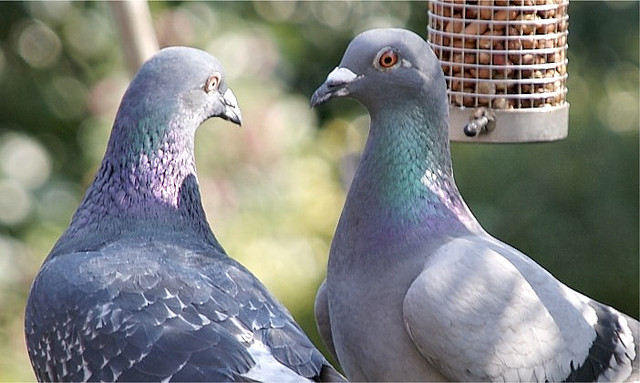
Rock Dove/Pigeon – Lake Morton by Lee


More Avian and Attributes

Birds whose first name starts with “R”

Birds of the Bible – Doves and Pigeons

Good News

*
[Definitions from Webster’s Dictionary of American English (1828), unless noted. Bird info from Wikipedia plus.]

Avian And Attributes – Quiets Our Fears

Avian And Attributes – Quiets Our Fears

Queen Carola’s Parotia (Parotia carolae) ©Drawing WikiC

“But whoso hearkeneth unto me shall dwell safely, and shall be quiet from fear of evil.” (Proverbs 1:33 KJV)


Avian and Attributes – Quiet

QUI’ET, a. [L. quietus.]
1. Still; being in a state of rest; now moving. Judg 16.
2. Still; free from alarm or disturbance; unmolested; as a quiet life.
3. Peaceable; not turbulent; not giving offense; not exciting controversy, disorder or trouble; mild; meek; contented.
The ornament of a meek and quiet spirit. 1 Pet 3., 1 Th 4.
5. Smooth; unruffled.
6. Undisturbed; unmolested; as the quiet possession or enjoyment of an estate.
7. Not crying; not restless; as a quiet child.
QUI’ET, n. [L. quies.]
1. Rest; repose; stillness; the state of a thing not in motion.
2. Tranquility; freedom from disturbance or alarm; civil or political repose. Our country enjoys quiet.
3. Peace; security. Judg 18.
QUI’ET, v.t.
1. To stop motion; to still; to reduce to a state of rest; as, to quiet corporeal motion.
2. To calm; to appease; to pacify; to lull; to tranquilize; as, to quiet the soul when agitated; to quiet the passions; to quiet the clamors of a nation; to quiet the disorders of a city or town. [Edited]


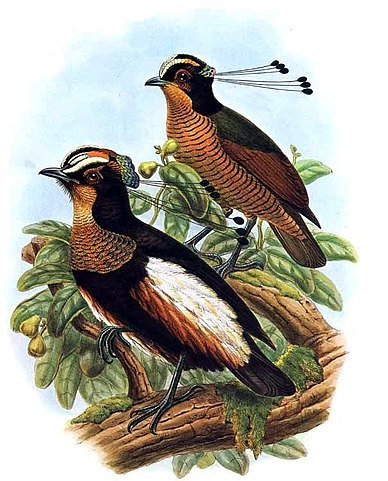
Queen Carola’s Parotia

The Queen Carola’s Parotia (Parotia carolae) also known as Queen Carola’s six-wired bird-of-paradise is a species of bird-of-paradise.

One of the most colorful Parotias, the Queen Carola’s Parotia inhabits the mid-mountain forests of central New Guinea. The diet consists mainly of fruits and arthropods. The stunning courtship dance of this species was described in detail by Scholes (2006). It is similar to that of Lawes’s Parotia, but modified to present the iridescent throat plumage and the flank tufts to best effect.

The name commemorates Queen Carola of Vasa, the wife of King Albert I of Saxony. The king was honoured with the King of Saxony bird-of-paradise.

Due to copyrights, there are currently no photos that I can use. The video is of a male Queen Carola’s Parotia showing off for the ladies. [He is definitely not “Quiet”]

[A link to a photo of the Parotia] (Paradisaeidae – Birds-of-paradise Family) (Wikipedia article)


More Avian and Attributes

Birds whose first name starts with “Q”

Good News

*
[Definitions from Webster’s Dictionary of American English (1828), unless noted. Bird info from Wikipedia plus.]

From the Archives – Interesting Things – Dragonflies

From the Archives – Interesting Things – Dragonflies

*

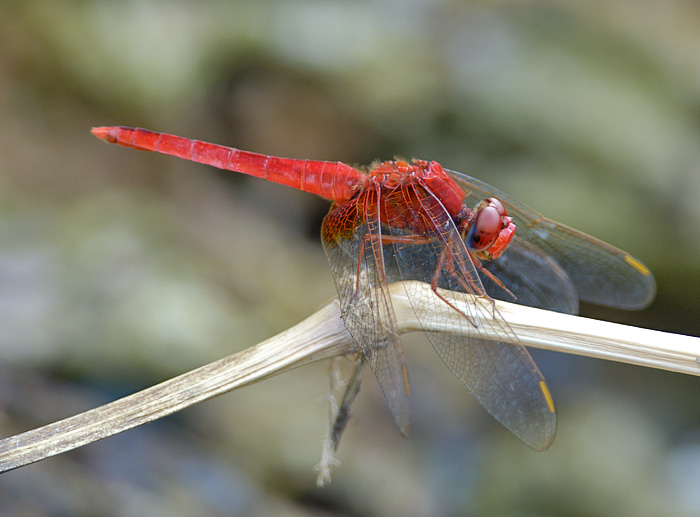
Here is an interesting video fromYouTube.com -Exploration Films about the Dragonflies. It is very interesting.

Dragonfly by Phil Kwong

Dragonfly by Phil Kwong

Learning from the Dragonfly by Creation Moments

“Scientists studying the dragonfly are learning even more secrets of flight. Our best high-performance aircraft can barely lift themselves off the ground. However, the dragonfly can lift 15 times his own weight into the air.”

The Amazing Mosquito Hawk by Creation Moments

But ask now the beasts, and they shall teach thee; and the fowls of the air, and they shall tell thee: Or speak to the earth, and it shall teach thee: and the fishes of the sea shall declare unto thee. Who knoweth not in all these that the hand of the LORD hath wrought this?
(Job 12:7-9 KJV)
More articles from Creation Moments:

100 Foot Ferns “dragonflies had wingspans of six feet”

The Pre-Flood Atmosphere “dragonflies were the size of hawks”

From Creation Ministries International:

“Dragonflies

Dragonflies are probably the most beautiful of the flying insects. There are about 4,500 different varieties. They begin their life in water, where eggs hatch into rather ugly brown nymphs. The time spent living in water varies from a few weeks to several years, but for all the varieties the day comes when the nymph suddenly has the urge to climb out of the water. It sits for a while at the top of a piece of grass until its skin splits open and out comes a dragonfly! After waiting for its wings to become firm and dry, the dragonfly flies away, its lovely colours glinting in the sunshine.

Although they are very small, dragonflies are wonderfully designed for flying. Their two pairs of wings are very light, but strengthened by a network of tiny veins, which not only carry blood fluid to keep the wings stiff, but also nerves and oxygen. Some dragonflies beat their wings 40 times in one second! Dragonflies are like tiny helicopters—they can even fly backwards! In fact, Igor Sikorsky, who first designed helicopters, for the idea from watching dragonflies.

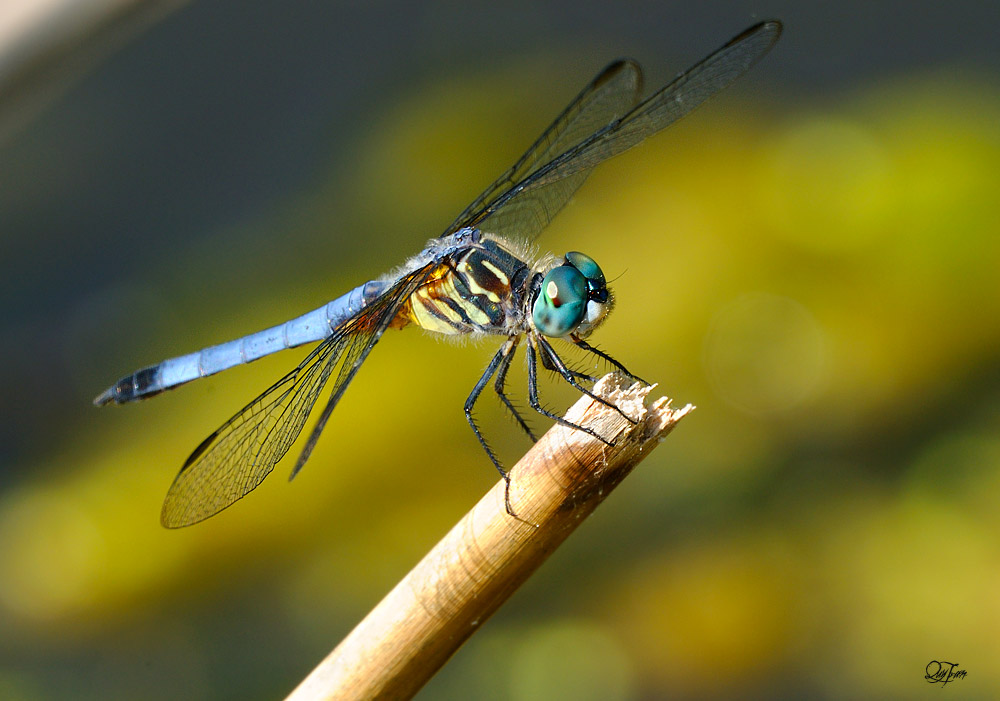
Dragonfly by QuyTran

Another wonderful thing about dragonflies is their eyes. Each pair of eyes is actually made up of as many as 30,000 separate eyes, each with its own lens! This enables the insect to see what is happening over a wide area, and spot every tiny movement without moving its head.

The supposedly oldest fossil dragonflies are just like dragonflies are now, except that they were much larger—75 centimeters (2.5 feet) from wing-tip to wing-tip! So there is no evidence that they evolved from ancestors without wings. And surely those amazing eyes did not evolve? Dragonflies are another of the many wonders of God’s creation!” From Our World (Answers for Kids.)

Astonishing acrobatics – dragonflies – by Johathan Sarfati

(Updated 4/29/09)

Dragonflies and fighter pilots – what can we learn? by Ken Ham

*
Original article
This has been the most viewed non-avian article on our blog.

Avian And Attributes – Omnipresence

Avian And Attributes – Omnipresence

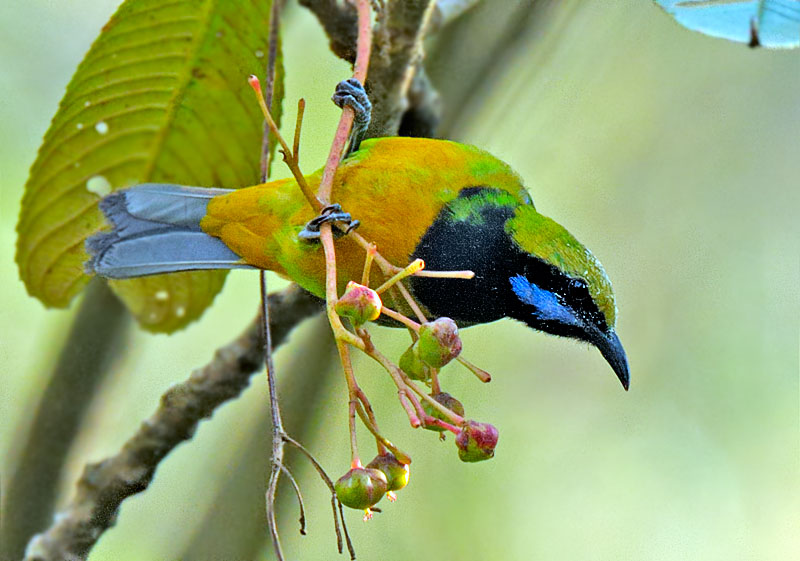
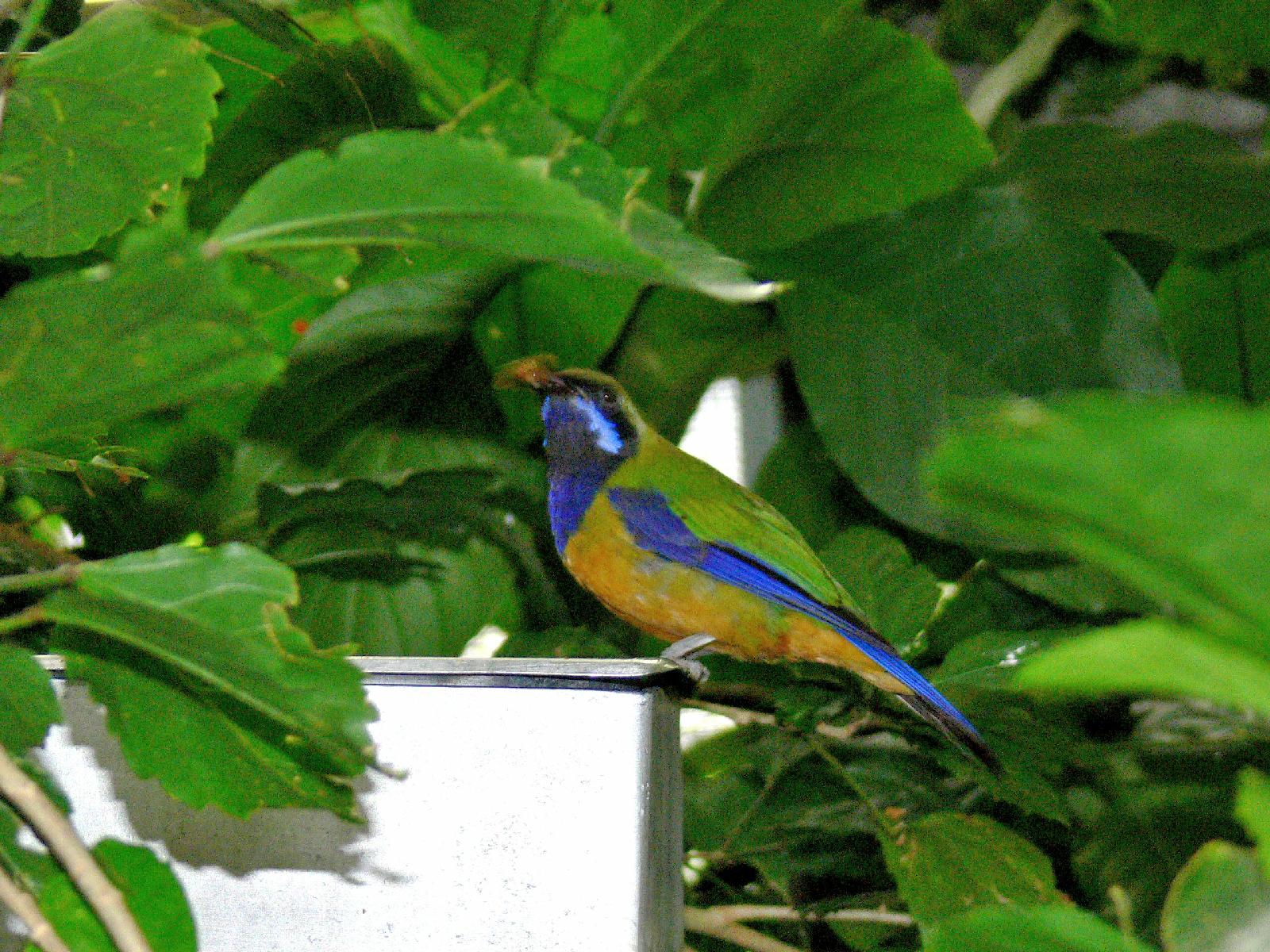
Orange-bellied Leafbird (Chloropsis hardwickii) by W Kwong

Orange-bellied Leafbird (Chloropsis hardwickii) by W Kwong

“Whither shall I go from thy spirit? or whither shall I flee from thy presence? If I ascend up into heaven, thou art there: if I make my bed in hell, behold, thou art there. If I take the wings of the morning, and dwell in the uttermost parts of the sea; Even there shall thy hand lead me, and thy right hand shall hold me.” (Psalms 139:7-10 KJV)


Avian and Attributes – Omnipresence

OMNIPRES’ENCE, n. s as z. [L. omnis, and presens, present.]
Presence in every place at the same time; unbounded or universal presence; ubiquity. Omnipresence is an attribute peculiar to God.

OMNIPRES’ENT, a. Present in all places at the same time; ubiquitary; as the omnipresent Jehovah.

“The eyes of the LORD are in every place, beholding the evil and the good.” (Proverbs 15:3 KJV)


Orange-bellied Leafbird (Chloropsis hardwickii) by Lee at Wings of Asia

Orange-bellied Leafbird (Chloropsis hardwickii) by Lee at Wings of Asia

Orange-bellied Leafbird

The Orange-bellied Leafbird (Chloropsis hardwickii) is a bird native to the central and eastern Himalayas, Yunnan and northern parts of Southeast Asia. The scientific name commemorates the English naturalist Thomas Hardwicke.

It is brightly coloured with an orange belly, a green back, a blue tail and flight feathers, and a black and blue patch over its throat and chest. It has a long, curved beak. It feeds on insects, spiders and nectar. Orange-bellied leafbirds make their nests from roots and fibers which are suspended from the edges of twigs at the end of a tree branch. They do not migrate. (Chloropseidae – Leafbirds Family) (Wikipedia)


More Avian and Attributes

Birds whose first name starts with “O”

Good News

*
[Definitions from Webster’s Dictionary of American English (1828), unless noted. Bird info from Wikipedia plus.]

From The Archives – Birds of the Bible – Eagle’s Renewal

Birds of the Bible – Eagle’s Renewal

Bless the LORD, O my soul, And forget not all His benefits: Who forgives all your iniquities, Who heals all your diseases, Who redeems your life from destruction, Who crowns you with lovingkindness and tender mercies, Who satisfies your mouth with good things, So that your youth is renewed like the eagle’s. (Psalms 103:2-5 NKJV)

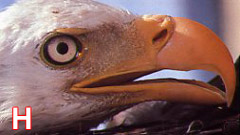
Bald Eagle (Haliaeetus leucocephalus) by AestheticPhotos

The Eagle is an interesting bird and I have written about them before. In the King James Version of the Bible, an eagle is mentioned in 34 verses. So, there will be future articles about the eagle also.

The interest of this article is the renewing of the eagle. In Psalms 103:5 (quoted above), your youth is renewed like the eagle’s. What exactly does that mean? Also, in Isaiah 40:31, strength is renewed and “shall mount up with wings as eagles.”

But they that wait upon the LORD shall renew their strength; they shall mount up with wings as eagles; they shall run, and not be weary; and they shall walk, and not faint. (Isaiah 40:31 KJV)

Many articles can be found on the internet about an eagle going off and plucking its feathers and not being able to fly for about five months. The image has even been added that the beak and claws are knocked off and then grow back during that time, giving them another 10 or so more years to their life. I have been trying to find proof of that, and am not finding it. Most Eagle authorities state that that would not happen, because the bird would die during that time with no flight feathers or beak or claws.

Bald Eagle (Haliaeetus leucocephalus)Grandfather Eagle by PastorBBC

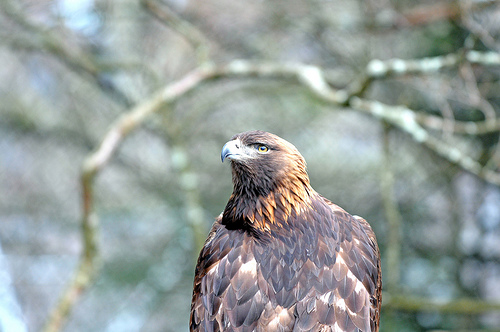
If those facts are true, then what is meant by God’s Word about the eagle? I believe God’s Word is true, so there has to be an explanation of it. From the Southwestern Bald Eagle Management I found an interesting chart that shows the different stages of plumage (feathers) as an eagle ages.  They said, “In their five year development to adulthood, bald eagles go through one of the most varied plumage changes of any North American bird. During its first four weeks of life, an eaglet’s fluffy white down changes to a gray wooly down. At about five weeks, brown and black feathers begin to grow. It becomes fully feathered at 10 weeks of age. In its first year, the mostly dark-colored juvenile can often be mistaken as a golden eagle. However, the bald eagle progressively changes until it reaches adult plumage at five years. Notice in the pictures how its dark eye lightens throughout its first four years of life until it becomes yellow. Also, see how its beak changes form gray-black to a vibrant yellow.

ald Eagle (Haliaeetus leucocephalus) by AestheticPhotos

It is believed that the darker, more mottled plumage of a young eagle serves as camouflage, while the white head and tail announce that it is of breeding age.”

That to me sounds a lot like, “So that your youth is renewed like the eagle’s.” As the eagle goes through the different stages of its life, the new feathers are graciously provided by a Creator that sees to the needs of His creation by having designed those features to renew as it matures.

The Lord provides for renewal for His children as they mature. The following verses tell of a renewed right spirit, mind, spirit of your mind, and knowledge:

Create in me a clean heart, O God; and renew a right spirit within me. (Psalms 51:10 KJV)
And be not conformed to this world: but be ye transformed by the renewing of your mind, that ye may prove what is that good, and acceptable, and perfect, will of God. (Romans 12:2 KJV)
And be renewed in the spirit of your mind; (Ephesians 4:23 KJV)
And have put on the new man, which is renewed in knowledge after the image of him that created him: (Colossians 3:10 KJV)

(Update 11/2/11) Here is another possible explaination about this topic. It might be a vulture instead of an eagle. See: http://www.thewonderofbirds.com/griffon-vulture/bible.htm)
*


*** From the Archives ***

This is the first of “From the Archives.” We have decided to look back over the years and bring back some of the most popular articles. This post has had 114 remarks so far and was originally posted on 

[We have advanced in our layout of the blog over the year. The Birds of the Bible articles were the original reason for Lee’s Birdwatching Adventures being launched.


Avian And Attributes – Kind

Avian And Attributes – Kind

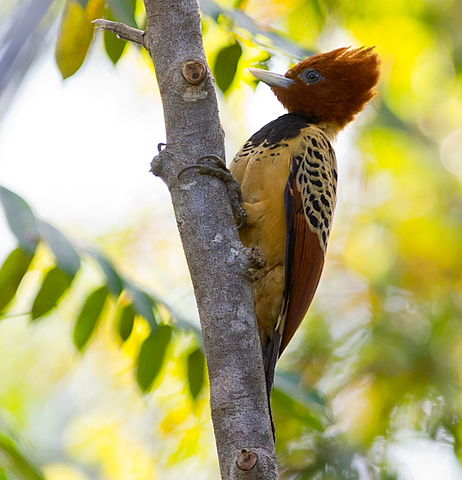
Kaempfer’s Woodpecker (Celeus obrieni) ©WikiC


Avian and Attributes – KIND

“But love ye your enemies, and do good, and lend, hoping for nothing again; and your reward shall be great, and ye shall be the children of the Highest: for he is kind unto the unthankful and to the evil.” (Luke 6:35 KJV)

KIND, a.

1. Disposed to do good to others, and to make them happy by granting their requests, supplying their wants or assisting them in distress; having tenderness or goodness of nature; benevolent; benignant.
God is kind to the unthankful, and to the evil. Luke 6:35
Be ye kind one to another, tender-hearted. Eph 4:32

And be ye kind one to another, tenderhearted, forgiving one another, even as God for Christ’s sake hath forgiven you.” (Ephesians 4:32 KJV)

2. Proceeding from tenderness or goodness of heart; benevolent; as a kind act; a kind return of favors.


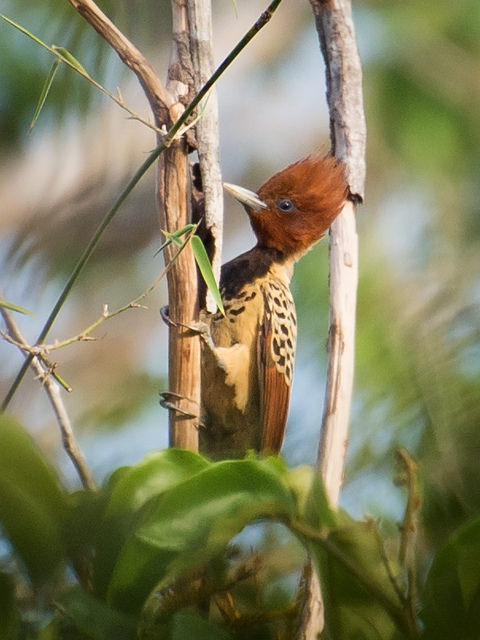
aempfer_s Woodpecker (Celeus obrieni) ©Flickr Claudlo Dlas Timm

Kaempfer’s Woodpecker

The Kaempfer’s Woodpecker (Celeus obrieni), also known as Piauí woodpecker, is a species of woodpecker from Brazil.

It has a total length of about 24 centimeters (9½ in). The head and remiges are mainly rufous-chestnut, the underparts and back are buff, the wing-coverts are barred in black and buff and the chest and tail are uniform black. The male has a red malar and mottling on its crest. For comparison, the rufous-headed woodpecker is larger and has extensive black barring on the back and underparts.

Little is known about its habitat preference, but it appears to be associated with bamboo (specifically Guadua paniculata) growing in Cerrado and babassu palm forest; very unlike the humid forest and woodland where the related rufous-headed woodpecker is found. There is no evidence to suggest that it occurs in Caatinga. Rather, the authors who proposed the common name Caatinga woodpecker and association it with the caatinga habitat mistook a place in the caatinga called Uruçuí-Una for the type locality Uruçuí, some 180 km. NNW in cerrado habitat. (Wikipedia) (Picidae – Woodpecker Family)


More Avian and Attributes

Birds whose first name starts with “K”

Good News

*
[Definitions from Webster’s Dictionary of American English (1828), unless noted. Bird info from Wikipedia plus.]

Avian And Attributes – Judge

Avian And Attributes – Judge
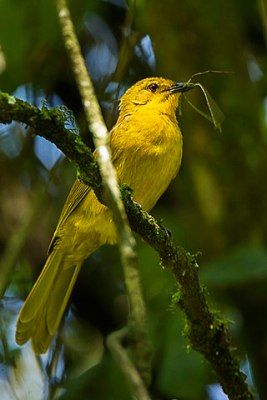
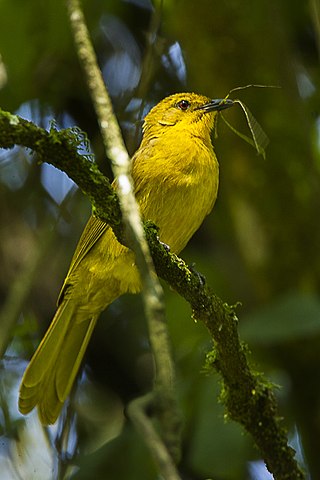
Joyful Greenbul (Chlorocichla laetissima) WikiC

“A Psalm of David. Judge me, O LORD; for I have walked in mine integrity: I have trusted also in the LORD; therefore I shall not slide.” (Psalms 26:1 KJV)


Avian and Attributes – Judge

JUDGE, n. [L. judex, supposed to be compounded of jus, law or right, and dico, to pronounce.]

1. A civil officer who is invested with authority to hear and determine causes, civil or criminal, between parties, according to his commission; as the judges of the king’s bench, or of the common pleas; judges of the supreme court, of district courts, or of a county court. The judge of a court of equity is called a chancellor.

2. The Supreme Being.

Shall not the judge of all the earth do right? Gen 18.

That be far from thee to do after this manner, to slay the righteous with the wicked: and that the righteous should be as the wicked, that be far from thee: Shall not the Judge of all the earth do right?” (Genesis 18:25 KJV)

3. One who presides in a court of judicature.

4. One who has skill to decide on the merits of a question, or on the value of any thing; one who can discern truth and propriety.

5. In the history of Israel, a chief magistrate, with civil and military powers. The Israelites were governed by judges more than three hundred years, and the history of their transactions is called the book of Judges.

JUDGE, v.i. [L. judico.]

1. To compare facts or ideas, and perceive their agreement or disagreement, and thus to distinguish truth from falsehood.

Judge not according to the appearance John 7.

3. To hear and determine, as in causes on trial; to pass sentence. He was present on the bench, but could not judge in the case.

The Lord judge between thee and me. Gen 16:5.

JUDGE, v.t. To hear and determine a case; to examine and decide.

1. To try; to examine and pass sentence on.

Take ye him and judge him according to your law. John 18.

God shall judge the righteous and the wicked. Eccl 3.

I said in mine heart, God shall judge the righteous and the wicked: for there is a time there for every purpose and for every work.” (Ecclesiastes 3:17 KJV)

2. Rightly to understand and discern.

3. To censure rashly; to pass severe sentence.

Judge not, that ye be not judged. Mat 7.

5. To rule or govern.

The Lord shall judge his people. Heb 10.

For we know him that hath said, Vengeance belongeth unto me, I will recompense, saith the Lord. And again, The Lord shall judge his people. It is a fearful thing to fall into the hands of the living God.” (Hebrews 10:30-31 KJV)

6. To doom to punishment; to punish.

I will judge thee according to thy ways. Ezek 7.
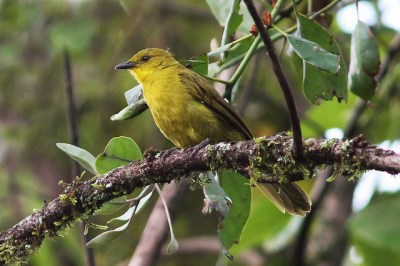

Joyful Greenbul (Chlorocichla laetissima) Flickr Dave Curtis

Joyful Greenbul

The Joyful Greenbul (Chlorocichla laetissima), or joyful bulbul, is a species of songbird in the bulbul family, Pycnonotidae. It is found in east-central Africa. Its natural habitats are boreal forests and subtropical or tropical moist montane forests. 

The bulbuls are a family, Pycnonotidae, of medium-sized passerine songbirds. Many forest species are known as greenbuls, brownbuls, leafloves, or bristlebills. The family is distributed across most of Africa and into the Middle East, tropical Asia to Indonesia, and north as far as Japan. A few insular species occur on the tropical islands of the Indian Ocean There are over 150 species in 27 genera. While some species are found in most habitats, the African species are predominantly found in rainforest whilst rainforest species are rare in Asia, instead preferring more open areas.  (Pycnonotidae – Bulbul Family)  (Wikipedia)
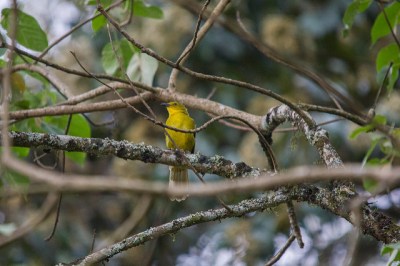
Joyful Greenbul (Chlorocichla laetissima) Flickr Peter Steward


More Avian and Attributes

Birds whose first name starts with “J”

Good News

*
[Definitions from Webster’s Dictionary of American English (1828), unless noted. Bird info from Wikipedia plus.]