Plus – Melipona Bee Defies Evolution

Melipona Bee ©WikiC

Melipona Bee ©WikiC

For by him were all things created, that are in heaven, and that are in earth, visible and invisible, whether they be thrones, or dominions, or principalities, or powers: all things were created by him, and for him: And he is before all things, and by him all things consist. (Colossians 1:16-17 KJV)

While reading an article from Sage Brush’s “The Vine Vigil” he included this video from exploration films:

To find out more about this relationship between bees and the vanilla bean plus other videos, go to:

God’s Creation – Vanilla Beans and Melipona Bees

Let them praise the name of the LORD: for he commanded, and they were created. (Psalms 148:5 KJV)

*

Just realized this little jewel has been written about before, but Sage Brush’s article is very interesting.

*

Tickle Me Tuesday – Laughing Kookaburras

Kookaburra at Brevard Zoo by Dan

Kookaburra at Brevard Zoo by Dan

…God has made me to laugh; all who hear will laugh with me. (Genesis 21:6 AMP – emphasis by me)

He will yet fill your mouth with laughter [Job] and your lips with joyful shouting. (Job 8:21 AMP)

While at the Lowry Park Zoo, we were able to hear and video the Laughing Kookaburras. They will put a smile on your face and a tickle in your heart. We have featured them before, but thought they should be featured again.

For You, O Lord, have made me glad by Your works; at the deeds of Your hands I joyfully sing. (Psalms 92:4 AMP)

Make a joyful noise to the Lord, all the earth; break forth and sing for joy, yes, sing praises! (Psalms 98:4 AMP)

and

Then were our mouths filled with laughter, and our tongues with singing. Then they said among the nations, The Lord has done great things for them. The Lord has done great things for us! We are glad! (Psalms 126:2-3 AMP)

See also:

Unless, I change my mind or someone sends me a link to some birds in a “Tickle Me” action, this will probably be the last one for now. While trying to find some videos to use or photos, I became frustrated while searching for appropriate items for this blog. Either evolution, cuss words, or innuendos were used, that I choose not to share. Call me “old-fashioned” or whatever, but we try to honor the Lord on this site.

Here are the Tickle Me Tuesday that were produced. This post will become a link on the menu under PLUS, so all of them can be found again, if you choose. Typing “Tickle Me” in the search will also bring them all back up.

Other Tickle Me Tuesday’s

*

Sunday Inspiration – Whipbirds, Wattle-eyes and Allies

As you have been viewing the Sunday Inspirations lately, we have been going through the Passerines or Passerfiormes Order in taxonomic order. So far, I have shown you 30 families, which makes us almost a forth of the way through the 125 Passerine families.

Today’s families are the Psophodidae – Whipbirds, Jewel-babblers, Quail-thrushes Family with 16 members and the Platysteiridae – Wattle-eyes, Batises Family with 33 species.

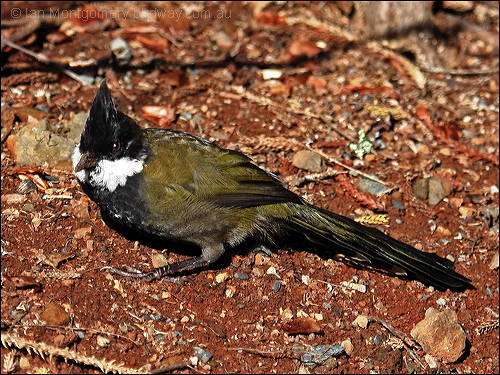
Whipbirds, Jewel-babblers, Quail-thrushes that make up the Psophodidae family are native to Australia and nearby areas. They occur in forest, generally replacing each other at different altitudes. The painted quail-thrush is also found in the forests of New Guinea.The other quail-thrushes are restricted to Australia where they are found in drier habitats, occurring in open forest, scrub and on stony ground.[8] None of the species are thought to be threatened but one subspecies of the spotted quail-thrush is possibly extinct.

The whipbirds and wedgebills are all found in Australia, occurring in a range of habitats from rainforest to arid scrub. The western whipbird is considered to be near-threatened because of habitat loss and fires while the Papuan whipbird is classed as data deficient..

They are terrestrial birds which fly fairly weakly and prefer to squat or run when disturbed. They forage on the ground feeding mainly on insects and other invertebrates.[9] In the desert, quail-thrushes also eat some seeds. They build a cup-shaped nest among shrubs or on the ground. Two or three eggs are laid.

Eastern Whipbird (Psophodes olivaceus) by Ian

Eastern Whipbird (Psophodes olivaceus) by Ian

Here is the song of the Eastern Whipbird. It sounds like someone snapping a whip.

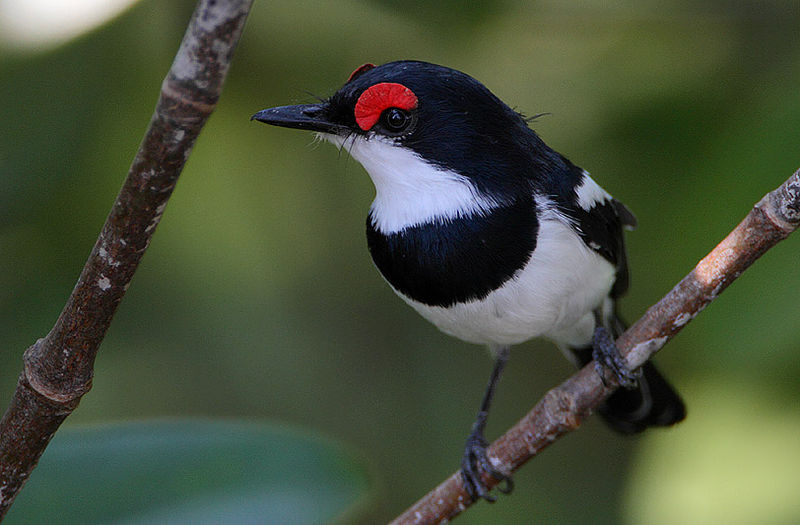
Brown-throated Wattle-eye (Platysteira cyanea) ©WikiC

Brown-throated Wattle-eye (Platysteira cyanea) Male ©WikiC

The Platysteiridae Wattle-eyes, Batises Family are a favorite of mine because of their eyes. They are a family of small stout birds living in trees, primarily of the woodlands and forests of sub-Saharan Africa. The family contains the wattle-eyes, batises and shrike-flycatchers. They were previously classed as a subfamily of the Old World flycatcher family Muscicapidae.

These insect-eating birds are found in usually open forests or bush. They hunt by flycatching, or by taking prey from the ground like a shrike. The nest is a small neat cup low in a tree or bush. The most important component of the diet of all species is insects, although spiders, millipedes and scorpions are also taken, and there are even records of small lizards being consumed.

This slideshow requires JavaScript.

For the ways of man are before the eyes of the LORD, And He ponders all his paths. (Proverbs 5:21 NKJV)

My son, give me your heart, And let your eyes observe my ways. (Proverbs 23:26 NKJV)

The humble shall see this and be glad; And you who seek God, your hearts shall live. (Psalms 69:32 NKJV)

Listen to Sean play as you watch these two beautifully created families of birds:

” Be Thou My Vision and Battle Hymn of the Republic” ~ played by Sean Fielder

Sunday Inspirations

Passeriformes Birds so far:

Birds of the World

Cinclosomatidae or Psophodidae Family – Wikipedia

Platysteiridae – Wattle-eye – Wikipedia

Good News

*

Trust in Him

Trust in Him. is from Picture My Thoughts by Myra Johnson’s blog that I follow. She always has a photo with scripture. Thanks, Myra, for encouraging us daily.

Trust In Him

Check out Picture My Thoughts frequently or better yet, follow her.

Sunday Inspiration – Variety II

We have come to some Passerine Families that only have a few members in them. You will get to see quite a few families in order to have enough birds to make a slideshow. As you know, the Lord loves variety and He gives us each different talents to use for His service. Sometimes many can do the same thing, but there are times when only a few can do a certain task. So it is with our Avian Friends today. They each have their niches to fill.

 Australian Logrunner (Orthonyx temminckii) by Tom Tarrant

Australian Logrunner (Orthonyx temminckii) by Tom Tarrant

Orthonychidae – Logrunners – The logrunners (Orthonyx) are a clade of birds which comprises three species of passerine birds endemic to Australia and New Guinea. Some authorities consider the Australian family Cinclosomatidae to be part of the Orthonychidae. The three species use their stiffened tails to brace themselves when feeding.

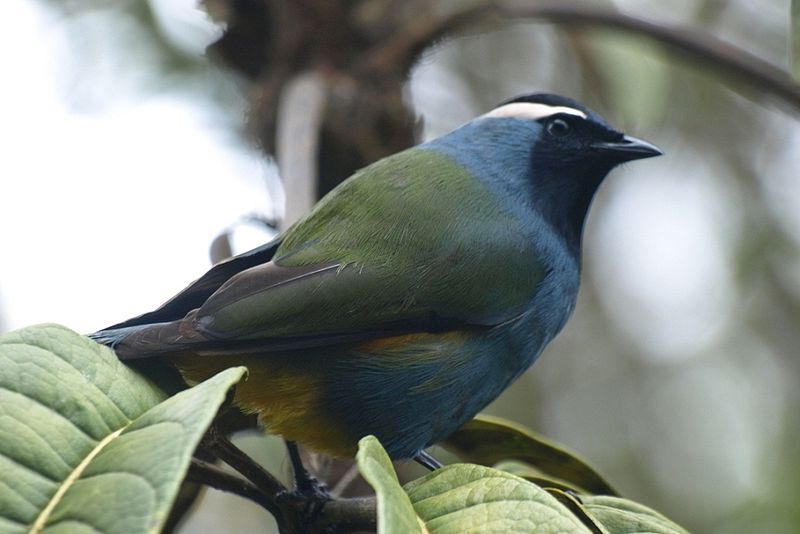
Crested Satinbird ©Jerry Oldenettel

Crested Satinbird ©Jerry Oldenettel

Cnemophilidae – Satinbirds – The satinbirds or Cnemophilines, Cnemophilidae are a group of passerine birds which consists of three species found in the mountain forests of New Guinea. They were originally thought to be part of the birds of paradise family Paradisaeidae until genetic research suggested that the birds are not closely related to birds of paradise at all and are perhaps closer to Melanocharitidae. The current evidence suggests that their closest relatives may be the cuckoo-shrikes [Campephagidae

Obscure Berrypecker (Melanocharis arfakiana) CC maholyoak

Obscure Berrypecker (Melanocharis arfakiana) CC maholyoak

Melanocharitidae – Berrypeckers, longbills The Melanocharitidae, the berrypeckers and longbills, is a small bird family restricted to the forests of New Guinea. The family contains ten species in four (sometimes three) genera. They are small songbirds with generally dull plumage but a range of body shapes.

Crested Berrypecker (Paramythia montium) ©WikiC

Crested Berrypecker (Paramythia montium) ©WikiC

Paramythiidae – Painted Berrypeckers – The painted berrypeckers, Paramythiidae, are a very small bird family restricted to the mountain forests of New Guinea. The family comprises two species in two genera: the Tit Berrypecker (Oreocharis arfaki) and the Crested Berrypecker (Paramythia montium).

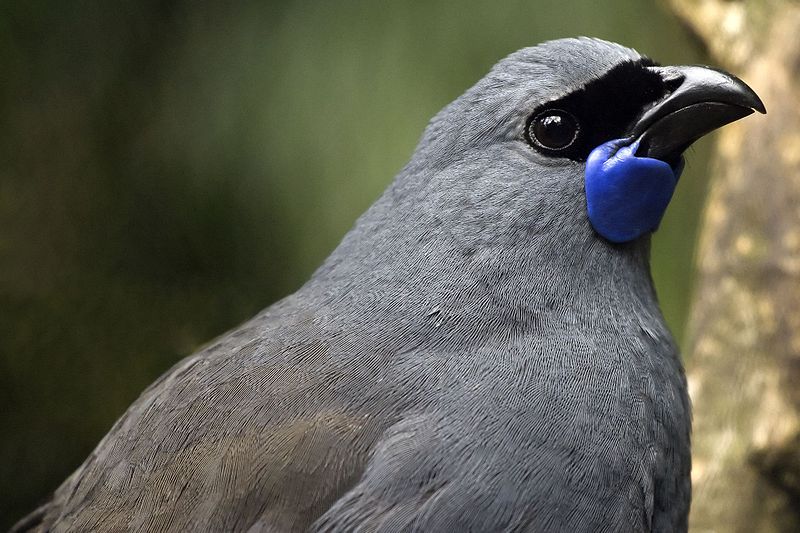
South Island Kokako (Callaeas cinereus) ©Wiki

South Island Kokako (Callaeas cinereus) ©Wiki

Callaeidae – New Zealand Wattlebirds – The small bird family Callaeidae (also named in some sources as Callaeatidae) is endemic to New Zealand. It contains three monotypic genera; of the three species in the family, only two survive and both of them, the Kokako and the Saddleback, are endangered species, threatened primarily by the predations of introduced mammalian species such as rats, mustelids and possums. A third, the Huia became extinct early in the 20th century.

Stitchbird (Notiomystis cincta) by Tom Tarrant

Stitchbird (Notiomystis cincta) by Tom Tarrant

Notiomystidae – Stitchbird – The Stitchbird or Hihi (Notiomystis cincta) is a rare honeyeater-like bird endemic to the North Island and adjacent offshore islands of New Zealand. It became extirpated everywhere except Little Barrier Island but has been reintroduced to three other island sanctuaries and two locations on the North Island mainland. Their relationships have long puzzled ornithologists, but it is now classed as the only member of its own family, the Notiomystidae.

(Family notes from Wikipedia, with editing)
.

This slideshow requires JavaScript.

“Just A Little Talk With Jesus” – Vegter Six – Together for Vi’s 90th Birthday (This was sung by some of Vi’s children and grandchildren. They had 11 children and lots and lots of grandchildren and greats, almost all of them active in church.)

Now it came to pass, as He was praying in a certain place, when He ceased, that one of His disciples said to Him, “Lord, teach us to pray, as John also taught his disciples.” (Luke 11:1 NKJV)

For the eyes of the Lord are over the righteous, and his ears are open unto their prayers: but the face of the Lord is against them that do evil.
(1 Peter 3:12 KJV)

*

(Personal note – As many of you know I spent a week in the hospital recently, for which I am thankful for your prayers for me. On that Sunday afternoon, after Dan had left, I used my Kindle or Ipad to go to my blog. I brought up the page for the all the Sunday Inspirations. I started going through them watching the bird slideshows while listening to the music. Oh, what a blessing I had watching the Lord’s Creations and listening to music about Him. I never knew when those were put together, that they in turn would be such a blessing and peaceful to me. My prayer is that when you are in need of some encouragement or just a blessing, that those blogs will bless you as much as they did me. Our Lord loves to give us peace in the midst of our problems.)

*

Sunday Inspirations

Birds of the World

Good News

*

Sunday Inspiration – Worthy

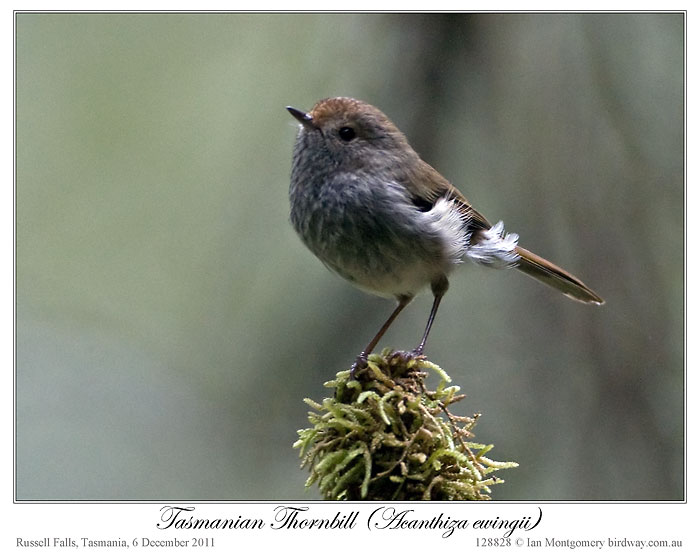
Tasmanian Thornbill (Acanthiza ewingii) by Ian 1

Tasmanian Thornbill (Acanthiza ewingii) by Ian

Whenever the living creatures give glory and honor and thanks to Him who sits on the throne, who lives forever and ever, the twenty-four elders fall down before Him who sits on the throne and worship Him who lives forever and ever, and cast their crowns before the throne, saying: “You are worthy, O Lord, To receive glory and honor and power; For You created all things, And by Your will they exist and were created.” (Revelation 4:9-11 NKJV)

There really aren’t any birds named Easter or Cross, so I decided to continue on through the Passerine Order. Actually, some of the birds in one of these families are the “Thornbills” and that is appropriate. Enjoy the Lord Creator’s avian Creations as you listen to the words and realize just how Worthy He is of our praise and honor. Happy Easter!

And they sung a new song, saying, Thou art worthy to take the book, and to open the seals thereof: for thou wast slain, and hast redeemed us to God by thy blood out of every kindred, and tongue, and people, and nation; And hast made us unto our God kings and priests: and we shall reign on the earth. And I beheld, and I heard the voice of many angels round about the throne and the beasts and the elders: and the number of them was ten thousand times ten thousand, and thousands of thousands; Saying with a loud voice, Worthy is the Lamb that was slain to receive power, and riches, and wisdom, and strength, and honour, and glory, and blessing. (Revelation 5:9-12 KJV)

This slideshow requires JavaScript.

“Worthy” ~ Faith Baptist Choir and Orchestra

*

Dasyornithidae – Bristlebirds
Pardalotidae – Pardalote
Acanthizidae – Australasian Warblers
Pomatostomidae – Australasian Babblers
Sunday Inspirations

Previous Easter Blogs:

Happy Easter
He is Risen! Happy Easter
The Creator and His Love

What A Wonderful Savior
Sunday Inspiration – Palm Birds
Happy Easter – He Is Risen

Gospel Message

*

A Restful Song

He sends the springs into the valleys; They flow among the hills. They give drink to every beast of the field; The wild donkeys quench their thirst. By them the birds of the heavens have their home; They sing among the branches. He waters the hills from His upper chambers; The earth is satisfied with the fruit of Your works. (Psalms 104:10-13 NKJV)

Thought you just might enjoy a little song and restfulness from Our Creator.

Come to Me, all you who labor and are heavy laden, and I will give you rest. Take My yoke upon you and learn from Me, for I am gentle and lowly in heart, and you will find rest for your souls. For My yoke is easy and My burden is light.” (Matthew 11:28-30 NKJV)

*

Wordless Birds

*

Sabbath Rest Invitaional – Week 5

Wanted to share this from Hanging out with God

Radical About Jesus's avatarHangin' Out With God

Today is the final “Sabbath Rest Invitational” Post. I hope these March offerings have helped you relax and let the stress go for a while. If you have a picture or text of any kind that represents rest to you, please share it on this post. Just post it on your own blog and come over here to paste the link in the “Comments” window.

Here’s my restful gift for this week:

BLUE BIRD - JOHN, KAREN HOLLINGSWORTH - CROPPED # 2BE STILL AND KNOW

“Be Still and know that I am God.”  (Psalm 46:10)

I’ve come to the end of myself, Lord.
I’ve come to the end of my road.
To the place that my strength’s too depleted
To wield the sword of Your Word.

I’ve come to the end of my struggle,
And there’s no earthly place I can turn.
But Your strength’s made perfect in weakness;
That’s one lesson, Lord, I have learned.

So reach down…

View original post 45 more words

Sunday Inspiration – Honeyeaters

Bridled Honeyeater (Lichenostomus frenatus) by Ian

Bridled Honeyeater (Lichenostomus frenatus) by Ian

How sweet are thy words unto my taste! yea, sweeter than honey to my mouth! (Psalms 119:103 KJV)

The Meliphagidae – Honeyeaters are another of our beautifully created birds in the Passerine Order to highlight. Thought about changing the sequence because of Palm Sunday, but did Palm Birds previously with Lisa Brock singing from an Easter Musical. The Words of Christ that tell of this week, and they are sweeter than honey to those of us who have accepted the Lord Jesus Christ as our Savior.

The Lord did not have to stay on the cross, but because of His Love for us, he stayed there and paid the penalty for our sins. He offers us the gift of Salvation, but we have to admit and acknowledge our sinful condition, and accept that gift. Honey is a gift from the Lord for the Honeyeaters, and they could stand and look at it all day, but they need to partake of it to do them any good. Taste comes when they accept it.

And as Moses lifted up the serpent in the wilderness, even so must the Son of man be lifted up: That whosoever believeth in him should not perish, but have eternal life. For God so loved the world, that he gave his only begotten Son, that whosoever believeth in him should not perish, but have everlasting life. For God sent not his Son into the world to condemn the world; but that the world through him might be saved. He that believeth on him is not condemned: but he that believeth not is condemned already, because he hath not believed in the name of the only begotten Son of God. And this is the condemnation, that light is come into the world, and men loved darkness rather than light, because their deeds were evil. (John 3:14-19 KJV)

This slideshow requires JavaScript.

“Blood of Jesus Medley” ~ Faith Baptist Church Choir

*

Meliphagidae – Honeyeaters
Sunday Inspiration
Beautiful Australian Birds 4 – Honeyeaters
Gospel Message

*


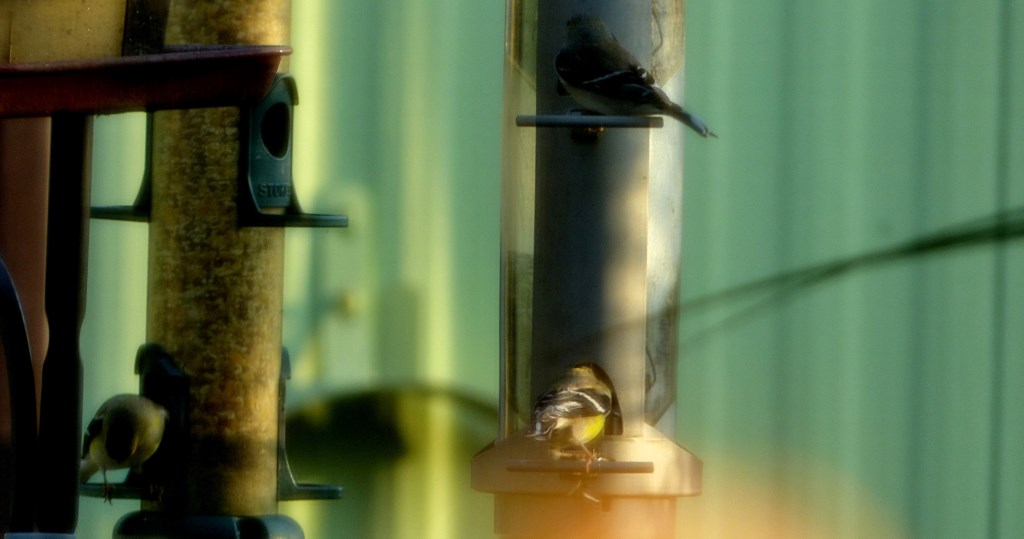
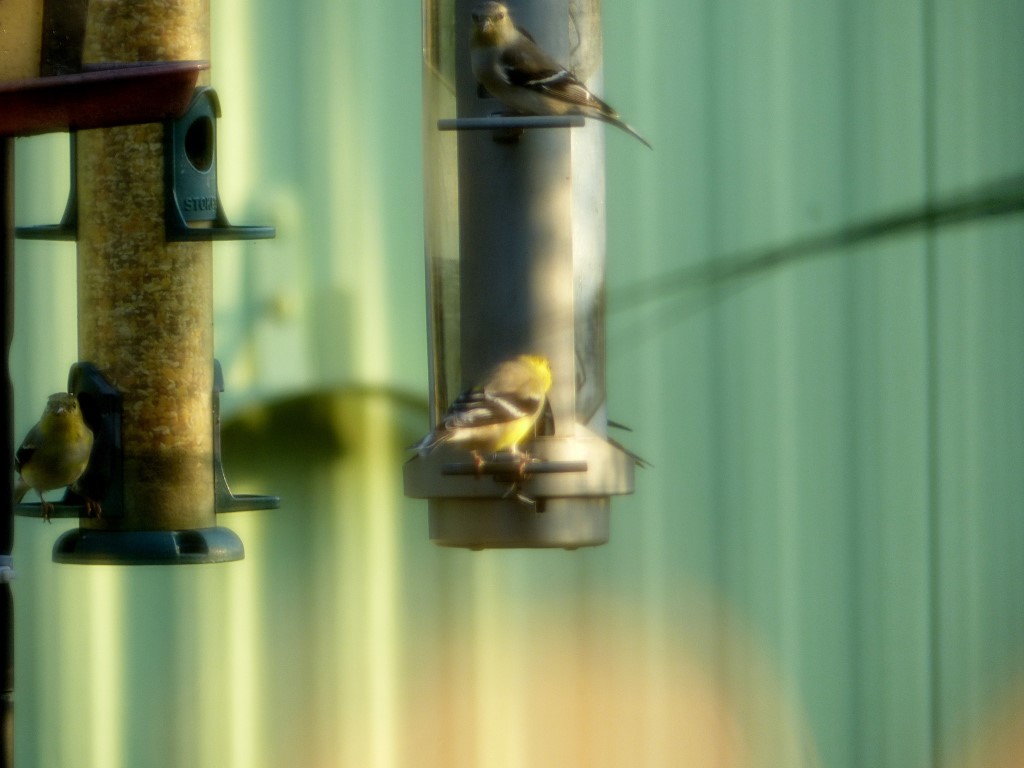
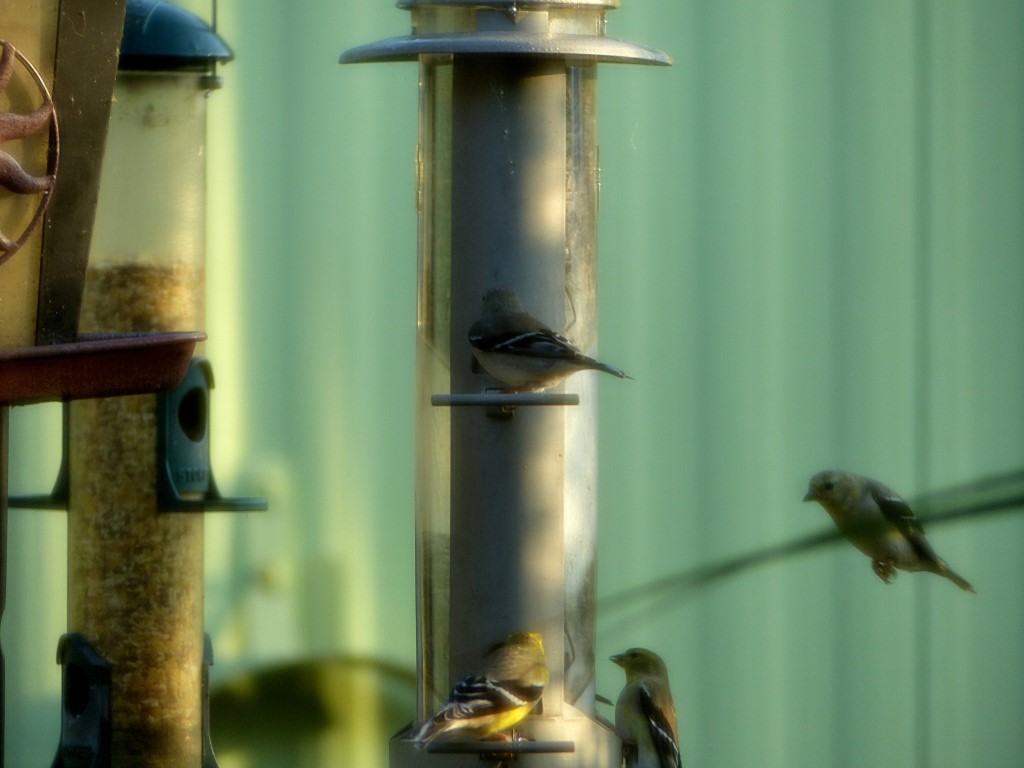
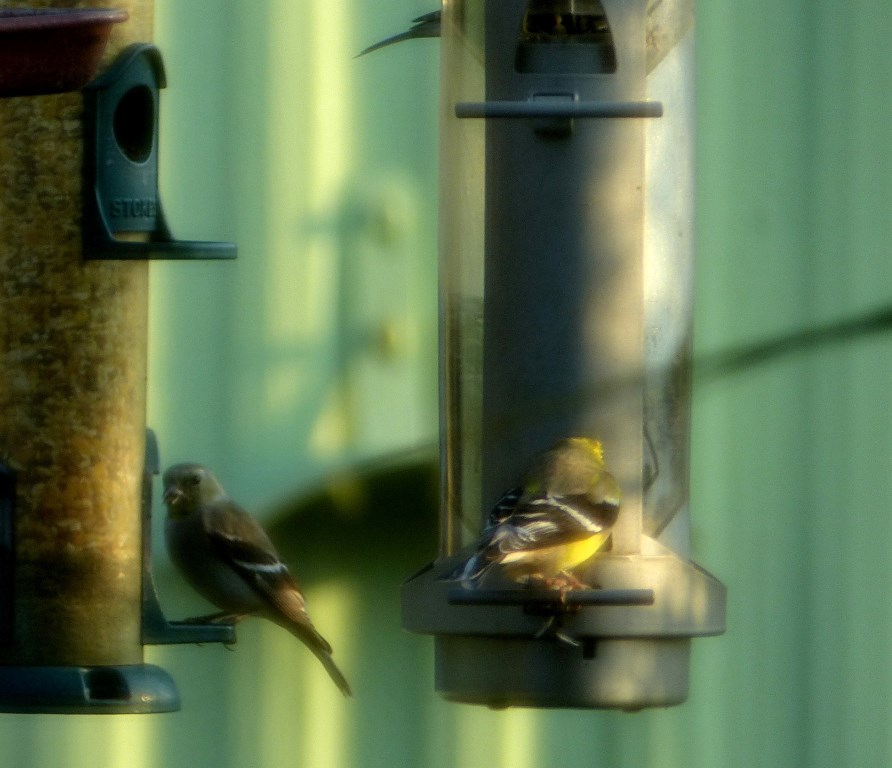
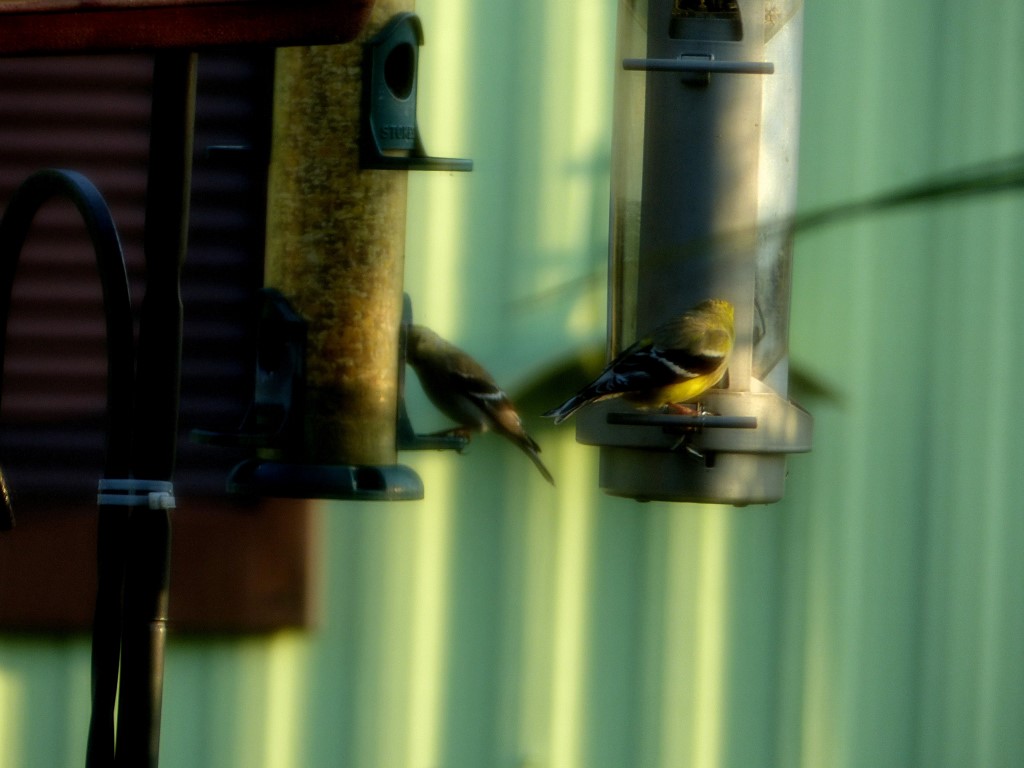
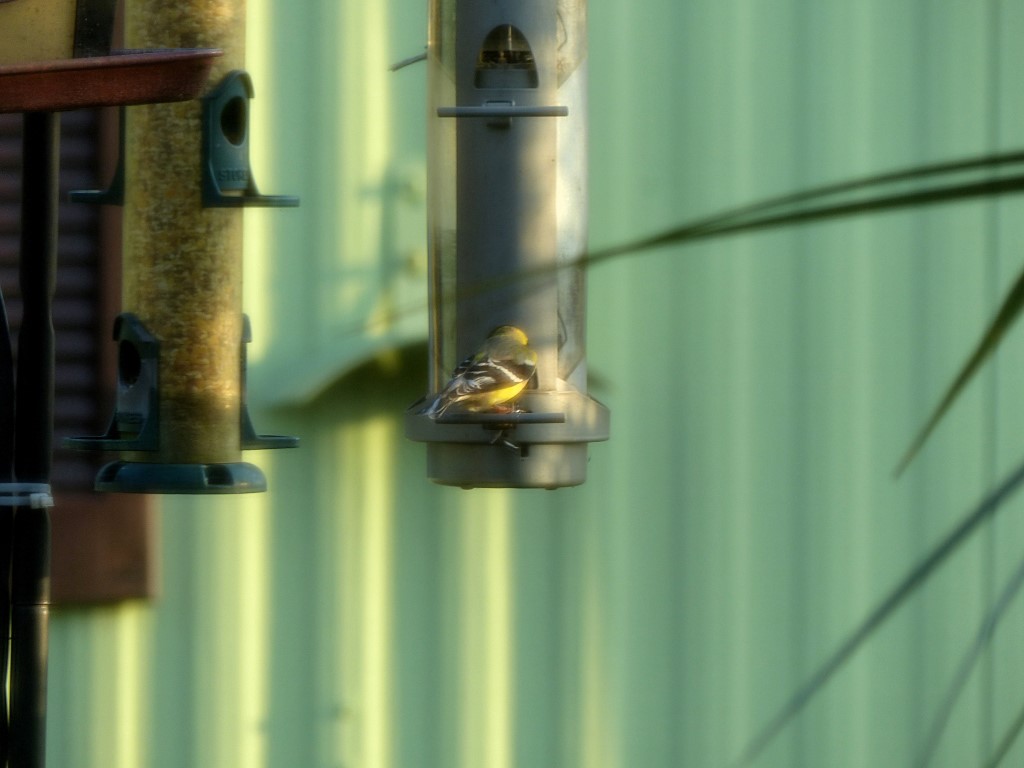
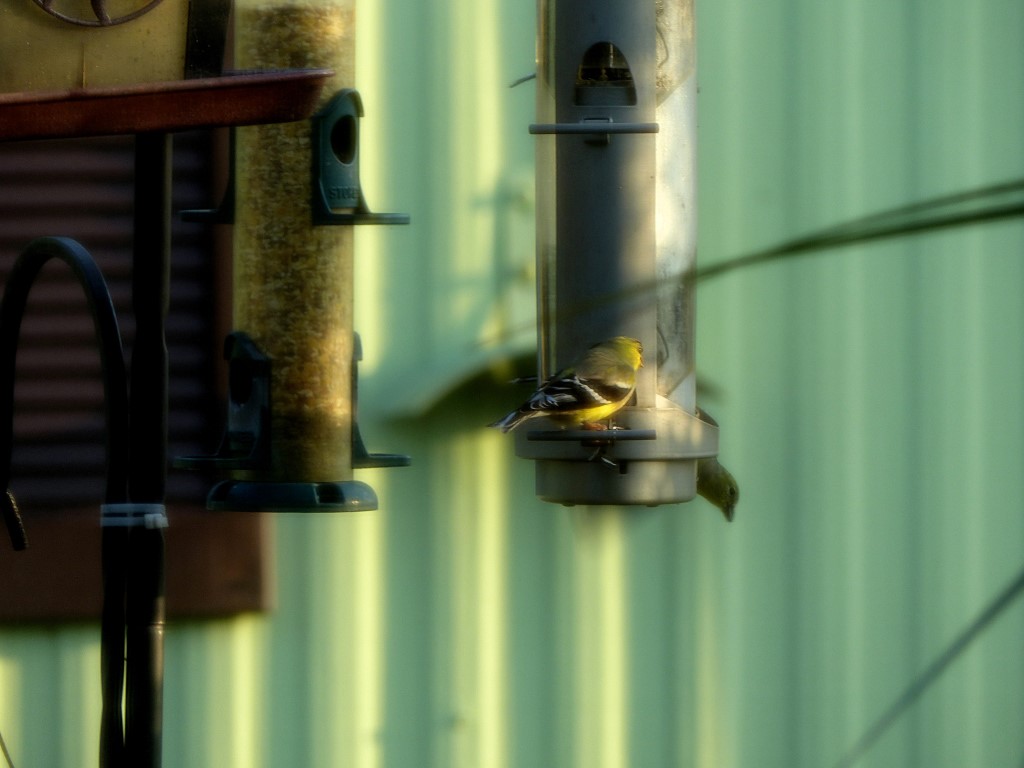
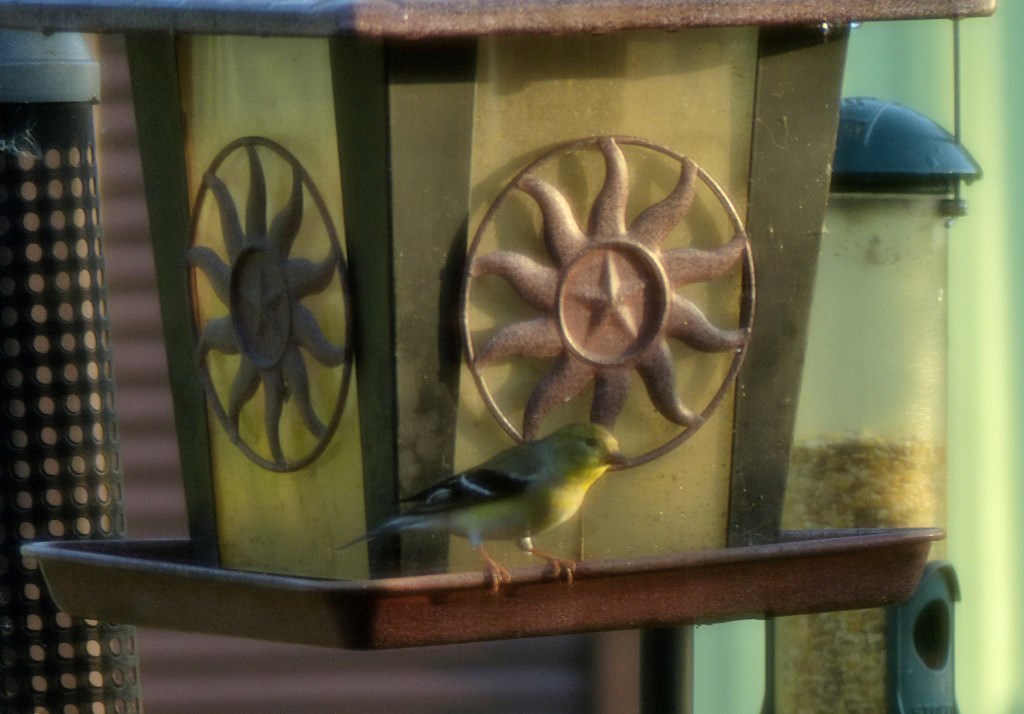
Finches at Feeder This Morning

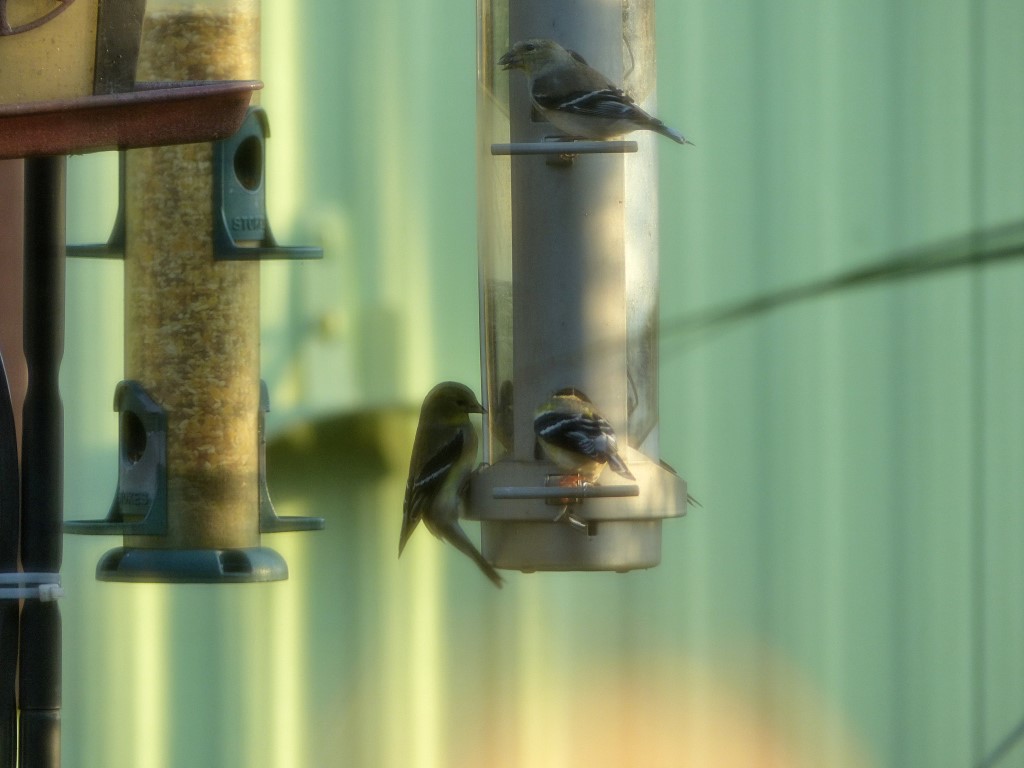
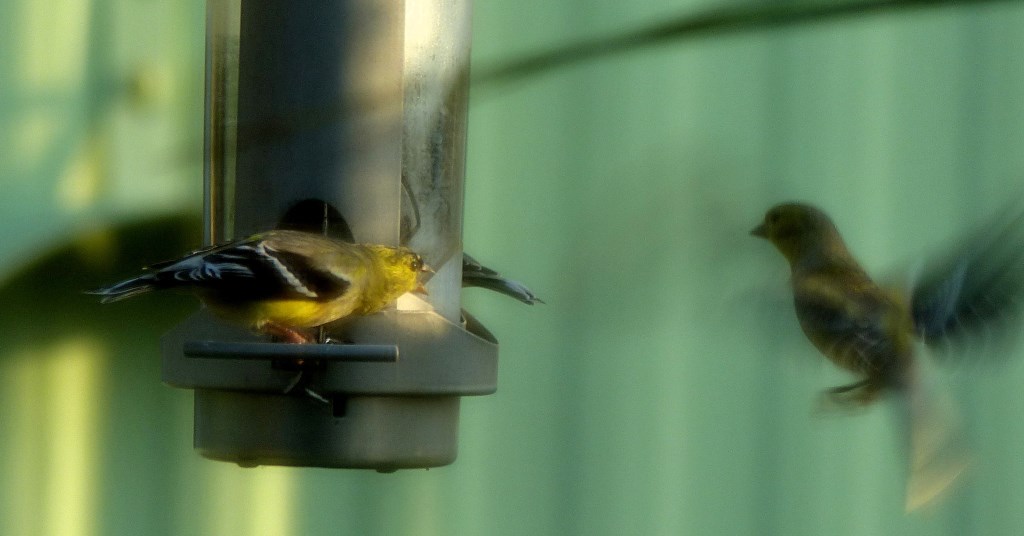
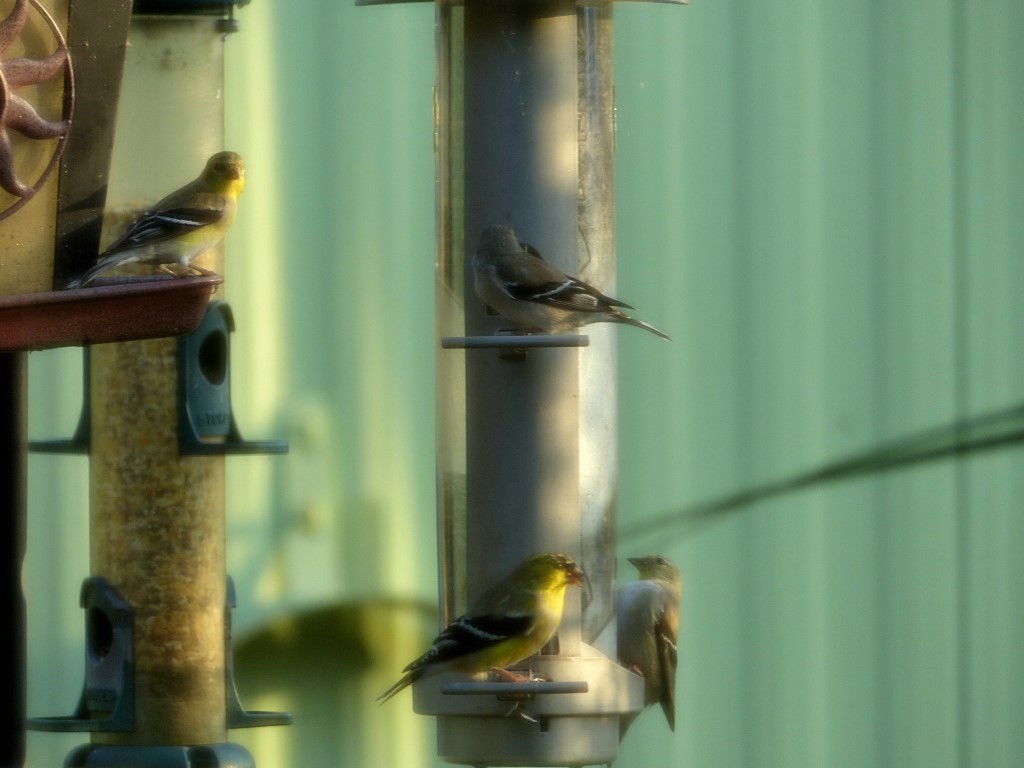
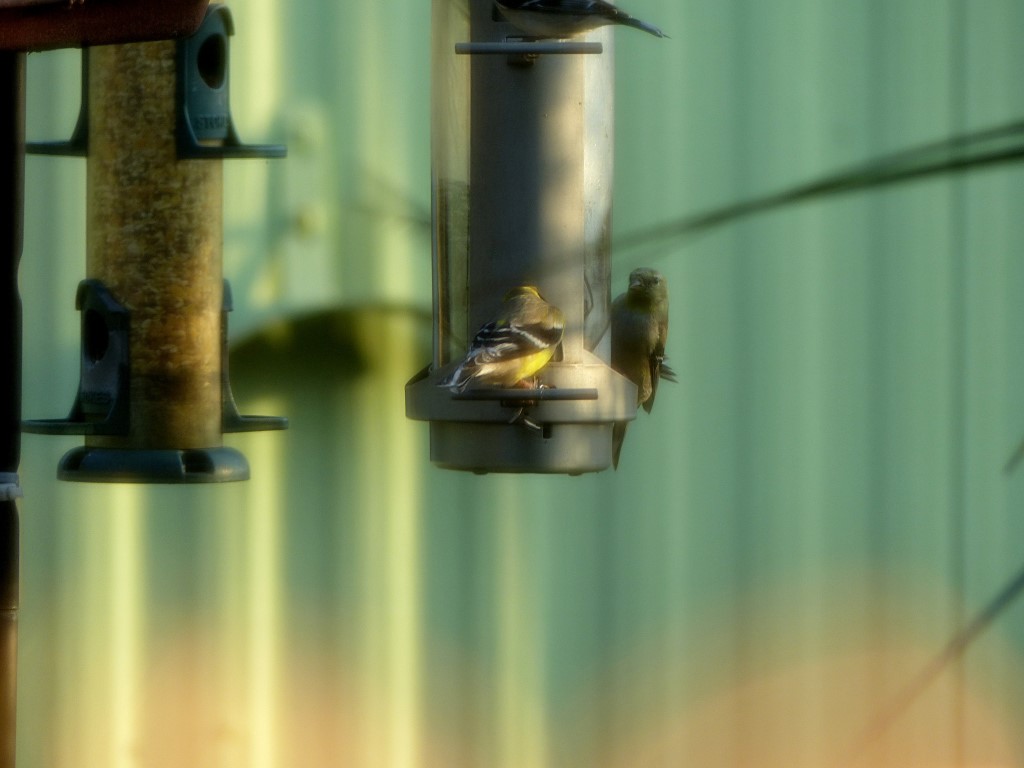
Goldfinches at Feeder

Goldfinches at Feeder

The blessing of the LORD, it maketh rich, and he addeth no sorrow with it. (Proverbs 10:22 KJV)

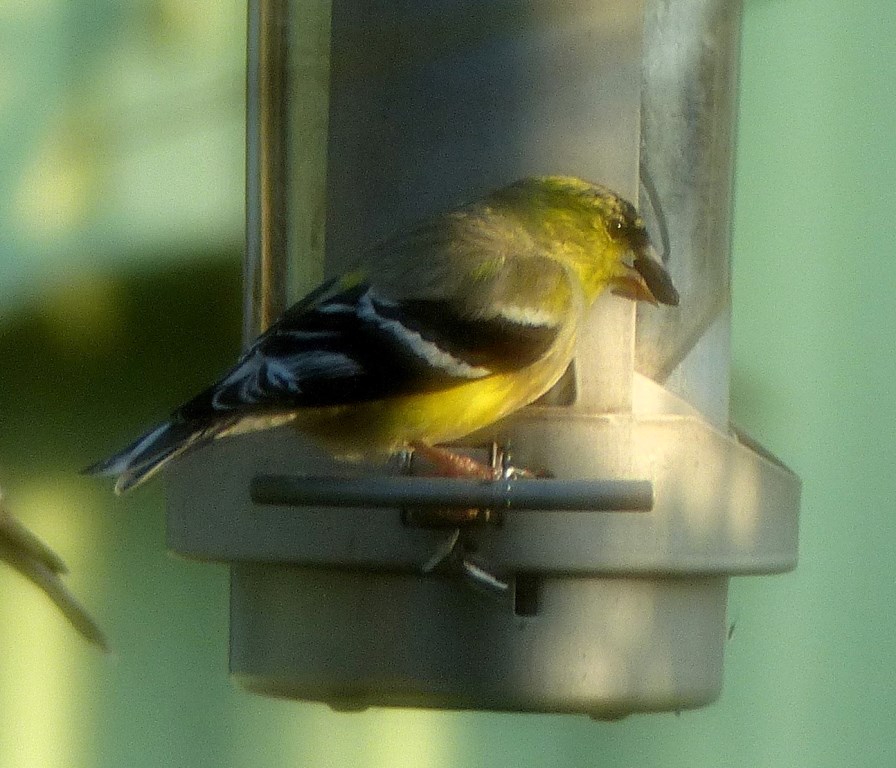
What a great surprise and blessing when I looked out the kitchen window this morning. Spotted an American Goldfinch at my feeder. Haven’t seen any in months. So it was neat to watch them. They kept coming and before long there were at least six. Went to get the camera when the first one showed up and recorded them as they kept coming in.

These photos are through the screen, so forgive the quality, but just wanted to share them with you. I have been battling another round of bronchitis, third one this winter, hence not many birdwatching adventures to report lately. They almost put me in hospital yesterday with possible pneumonia, because of a low oxygen reading. Because of this, I have not been to many of your sites lately to stop by. Your prayers are again appreciated and always welcome.

Goldfinches at Feeder - avoiding the crowd

Goldfinches at Feeder – avoiding the crowd

Wordless Birds

*

Sunday Inspiration – Australian Birds

Here are three more families of Passerine birds. Today’s three families live mostly in the Austro-Papuan (Australia, New Guinea, Paupa) vicinity.

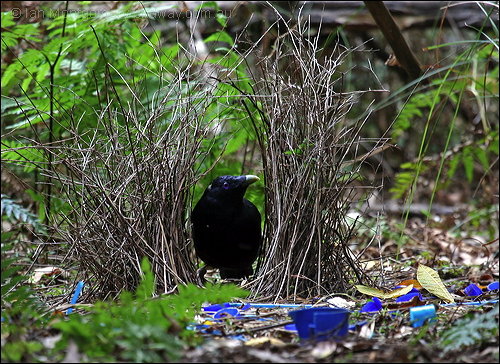
Satin Bowerbird (Ptilonorhynchus violaceus) in bower by Ian

Satin Bowerbird (Ptilonorhynchus violaceus) in bower by Ian

My son, if sinners entice you, Do not consent. (Proverbs 1:10 NKJV)

The Ptilonorhynchidae – Bowerbirds are renowned for their unique courtship behaviour, where males build a structure and decorate it with sticks and brightly coloured objects in an attempt to attract a mate.

Their diet consists mainly of fruit but may also include insects (especially for nestlings), flowers, nectar and leaves in some species. The satin and spotted bowerbirds are sometimes considered agricultural pests due to their habit of feeding on introduced fruit and vegetable crops and have occasionally been killed by affected orchardists.

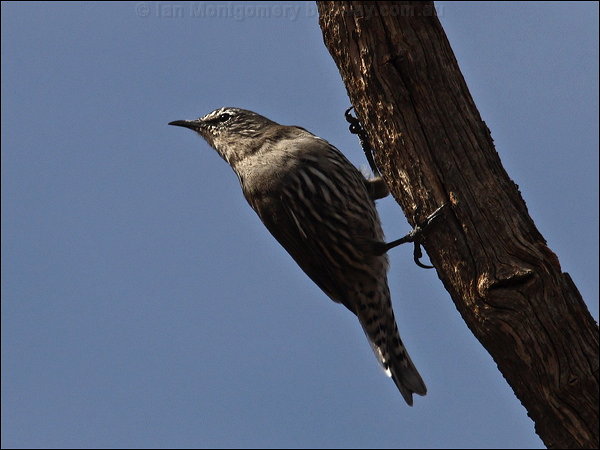
White-browed Treecreeper (Climacteris affinis) by Ian

White-browed Treecreeper (Climacteris affinis) by Ian

Let love be without hypocrisy. Abhor what is evil. Cling to what is good. (Romans 12:9 NKJV)

The Climacteridae – Australasian Treecreepers are separate from the European Treecreeper family, which will be highlighted later. As their name implies, treecreepers forage for insects and other small creatures living on and under the bark of trees, mostly eucalypts, though several species also hunt on the ground, through leaf-litter, and on fallen timber. Unlike the Holarctic treecreepers they do not use their tail for support when climbing tree trunks, only their feet.

Variegated Fairywren (Malurus lamberti) ©WikiC

Variegated Fairywren (Malurus lamberti) ©WikiC

Let them praise the name of the LORD, For He commanded and they were created. (Psalms 148:5 NKJV)

The Maluridae – Australasian Wrens are a family of small, insectivorous passerine birds endemic to Australia and New Guinea. Commonly known as wrens, they are unrelated to the true wrens of the Northern Hemisphere. The family includes 14 species of fairywren, 3 emu-wrens, and 10 grasswrens.

Malurids are small to medium birds, inhabiting a wide range of environments, from rainforest to desert, although most species inhabit grassland or scrub. The grasswrens are well camouflaged with black and brown patterns, but other species often have brilliantly coloured plumage, especially in the males. They are insectivorous, typically foraging in underbrush. They build domed nests in areas of dense vegetation, and it is not unusual for the young to remain in the nest and assist in raising chicks from later clutches.

This slideshow requires JavaScript.

“How Can I Keep From Singing” ~ Pastor Jerry Smith, Jessie and Caleb Padgett and Reagan Osborne

*

Pacific Golden Plover’s Teamwork

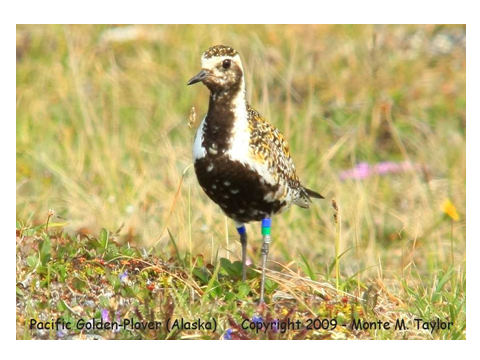
Pacific Golden Plover

Pacific Golden Plover

James J. S. Johnson

“For which of you, intending to build a tower, sitteth not down first, and counteth the cost [psêphizei tôn dapanên], whether he have sufficient to finish it?  Lest haply, after he hath laid the foundation, and is not able to finish it, all that behold it begin to mock him, saying, ‘This man began to build, and was not able to finish’.”  (Luke 14:28-30)

Imagine how inconvenient it would be for a bird to emigrate from Alaska, to Hawaii, only to run out of fuel en route, fall out of the sky from exhaustion, only to drown in the Pacific Ocean, somewhere north of Hawaii.  What a shame that would be!  And yet the Golden Plover’s pre-winter migratory mission, each year, would seem doomed from the start for that very reason – yet the little sandpiper-like migrant survives the journey on less fuel than seems possible.  How do they do it?
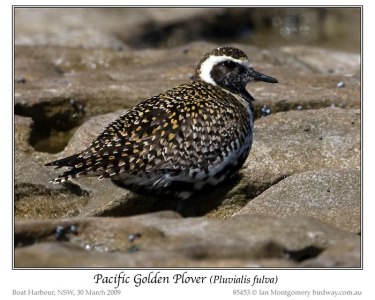
Pacific Golden Plover (Pluvialis fulva) by Ian

“The average weight of the golden plover before it leaves Alaska to fly to Hawaii is 200 grams.  It is a small bird about the size of a pigeon.  It is also a bird that does not swim!  Researchers have concluded that 70 grams of its 200 grams is burnable energy. The rate at which the bird burns fuel when flying is about one gram per hour.  This means right at 70 hours of flight is possible. Now we have a potentially disastrous situation.  The flight to Hawaii takes 88 hours of  continuous, non-stop flight!  The little bird must fly for 3 days and 4 nights without food or rest or stopping at all. Impossible! How does it do this?  The birds fly in a formation that breaks the wind, taking [~1/4] less energy to fly.  New leaders are constantly rotating in and out. Formation flight saves energy and when the birds arrive in Hawaii, they have as much as 6 grams of fuel left over.  God must have built the reserve fuel supply into the plover in case of a strong head wind along the way.   Scientists are not certain how the plovers navigate from Alaska to Hawaii and back, since there is no land under their flight path.   Utilization of earth’s magnetic field seems to be the best solution at this point.  Some have suggested that they use the sun and stars.  And how do the young birds find their way to Hawaii without an experienced adult guide, weeks after their parents have already flown back to Hawaii?  A one degree mistake in navigation over the more than 4,000 kilometer flight and the birds miss Hawaii completely!  But they never miss!”

[Quoting Dr. Jobe Martin, The Evolution of a Creationist, rev. ed. (Rockwall, TX: Biblical Discipleship Publishers, 2004), page 203, emphasis added.]
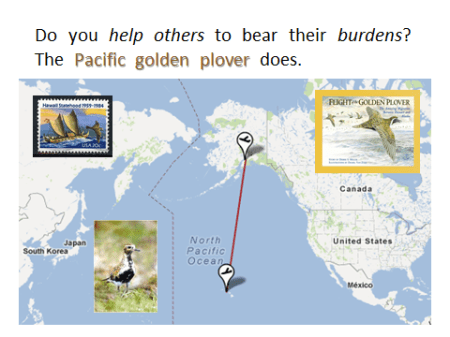
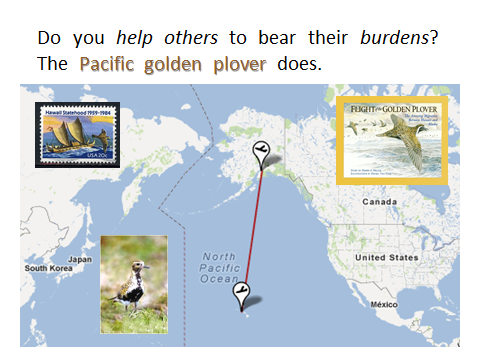
Pacific Golden Plover Map

That’s amazing!  Due to their instinctive behavior to “take turns” as “point man”, the migrating plovers use only ¾ of the food energy they would need to use if flying solo.  Birds display God’s providential programming in their anatomies and physiologies!  Why is that?  Because God carefully planned them before He created their original ancestors on Day 5 of Creation Week (Genesis 1:21).  God planned their genetics, their bio-diversity potentials and limits, their developmental biologies, and all of the bio-engineering needed to accomplish all the contingent details, —  and God has been actively participating in and regulating their lives and world ever since.

As humans we often need to plan out projects before we undertake them; we need to “count the cost” before embarking on an expensive and risky undertaking.  Yet God has already done this for the Pacific Golden Plover, to ensure its successful migrations twice a year.   And notice how God designed teamwork to be part of His plan – and that teamwork involves bearing one another’s burdens.

Bear  ye  one  another’s  burdens,  and  so fulfil  the  law  of  Christ.        (Galatians 6:2)

In sum, collaborating with teammates is usually a good idea, — so long as your colleagues are aimed at the same goal as you (see Amos 3:3.)

Dr. James J. S. Johnson has served as a lecturer (on ecology, geography, and history of Alaska) aboard 4 cruise ships visiting Alaska and the Inside Passage (Norwegian Wind, Norwegian Sky, Radiance of the Seas, and Rhapsody of the Seas).  During those trips he tried valiantly to (and did) eat lots of finfish, such as Pacific salmon and halibut, and shellfish, such as Dungeness crabs – but no Golden Plover.

*

I asked Dr. Jim to post this article because of the devotional emphasis he used. We have used the Plover before, see Incredible Pacific Golden Plover, which is all about the science and creation aspect of this remarkable Plover. Just wanted to review for you an amazing bird our Creator has created for us to learn about and from.

Orni-Theology

Incredible Pacific Golden Plover

Charadriidae – Plovers

Wordless Birds

*