Farmer’s Scarecrow Protect A Corn-Field

Hawaiian Crow (Corvus hawaiiensis) ©WikiC

Hawaiian Crow (Corvus hawaiiensis) ©WikiC

FARMER’S SCARECROW PROTECTS A CORN-FIELD
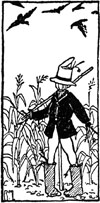
"It's a man."

“It’s a man.”

“To-night,” said daddy, “we are going to have the story of the meeting of the brownies, crows, and old Mr. Scarecrow. The crows had been giving feasts in a corn-field almost every morning bright and early before any of the big people who lived in the nearby farm-house were up. Such feasts as they did have! And one day they asked the brownies if they wouldn’t come to their next one.

“‘Caw-caw,’ said the crows together.

“‘Where are we going?’ asked one of the brownies teasingly, for they had been going around and around in circles and hadn’t reached any place.

“‘I don’t quite know,’ said Black Crown Crow, ‘it’s a question which is very hard to decide.’

“‘But we thought you had chosen a special spot,’ said one of the brownies.

“Black Crown Crow looked very sad, and his black wings seemed to droop. ‘It’s that guest I never asked. He’s causing all the trouble. How very rude it is of folks to come to a feast who aren’t invited, and to arrive before us, too. It’s very e-x-a-s-p-e-r-a-t-i-n-g!’

“‘Who is he?’ shouted the brownies, for every little while Black Crown Crow had gone ahead and then had come back. In these little trips he had seen right in the center of the corn-field a man—a real man, he thought, with a hat and a coat and trousers and boots—and carrying something which he couldn’t quite make out. It was either a great huge stick—or worse still—it was a gun. He shivered whenever he thought of that awful word gun.

“‘Caw-caw,’ again shrieked Black Crown Crow, ‘it’s a man and he has a gun—I’m sure it’s a gun. Now the rudeness of him! As if we wanted a man and a gun at our corn feast!’

“‘Oh, it was to have been a corn feast, and now the man has stopped it,’ laughed one of the brownies. ‘Well, such a joke! But to show you how nice we’ll be when we’re here ready for a party which can’t take place, we’ll give a nice party ourselves.’

“And the brownies scampered about a little grove near the corn-field, and there they made a bonfire over which they cooked some corn-meal which they had carried with them in their bags. They knew all along, ever since they’d started, where the crows wanted them to go for the feast, and they also knew that the farmer had made that scarecrow in his corn-field to frighten off Black Crown Crow and his followers.

“The brownies made a fine feast, but how they did chuckle among themselves that the pole dressed up as a man had succeeded in saving the corn for the people of the farm-house.”


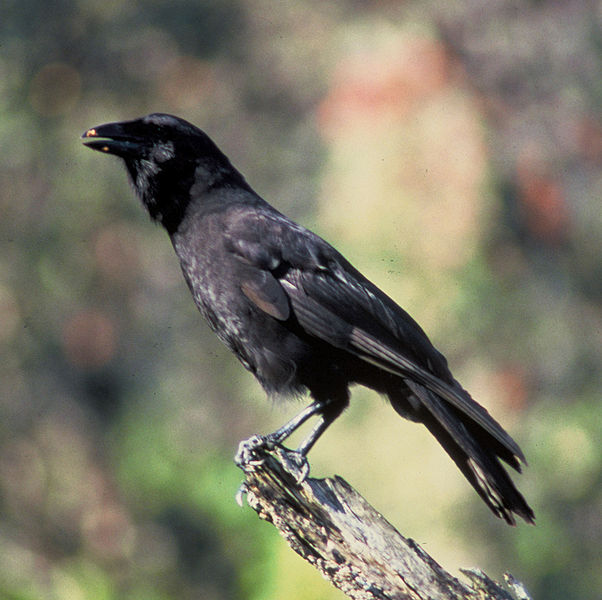
American Crow (Corvus brachyrhynchos) by Daves BirdingPix

American Crow (Corvus brachyrhynchos) by Daves BirdingPix

Lee’s Addition:

Come, you children, listen to me; I will teach you the fear of the LORD. (Psalms 34:11 NKJV)

Looks like the Brownies, helped out the “exasperated” Crows and had a good laugh at the same time. The farmer was only trying to protect his crop and the crows were only trying to eat.

What can we learn?

  • The Farmer had a right to protect his food.
  • The Crows were afraid of something that wasn’t really frightening.
  • The Crows were hungry, but maybe they were “over-eating.”
  • The Brownies were helpful and provided food for them.

Consider the ravens, for they neither sow nor reap; they have no storeroom nor barn, and yet God feeds them; how much more valuable you are than the birds! (Luke 12:24 NASB)

This verse tells us that God will provide for the Ravens (and Crows, which are in the same bird family). The Crows may need to go to another field where they can be provided for. Also, are you ever afraid of something, that isn’t really scary?

If the Lord feeds the Crows and other birds, He provides for us and also helps our fears.

From

Daddy’s Bedtime Bird Stories – Gutenberg ebooks

By

Mary Graham Bonner

With four illustrations in color by
Florence Choate and Elizabeth Curtis
Daddys Bedtime Story Images


These stories first appeared in the American Press Association Service and the Western Newspaper Union.


Many of the sketches in this volume are the work of Rebecca McCann, creator of the “Cheerful Cherub,” etc.
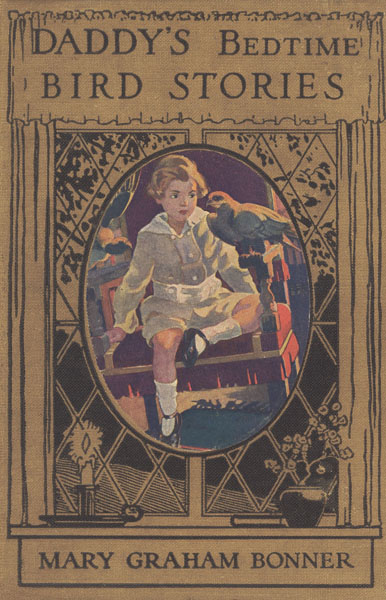
Daddy's Bedtime Bird Stories by Mary Graham Bonner - 1917

*
Daddy’s Bedtime Bird Stories by Mary Graham Bonner – 1917

*

Links:

Painted Bunting (Passerina ciris) ©©Flickr


  Bird Tales


  Daddy’s Bedtime Bird Stories


Spanish Sparrow (Passer Hispaniolensis) female ©WikiC


  Wordless Birds


*


Sunday Inspiration – Hornbills

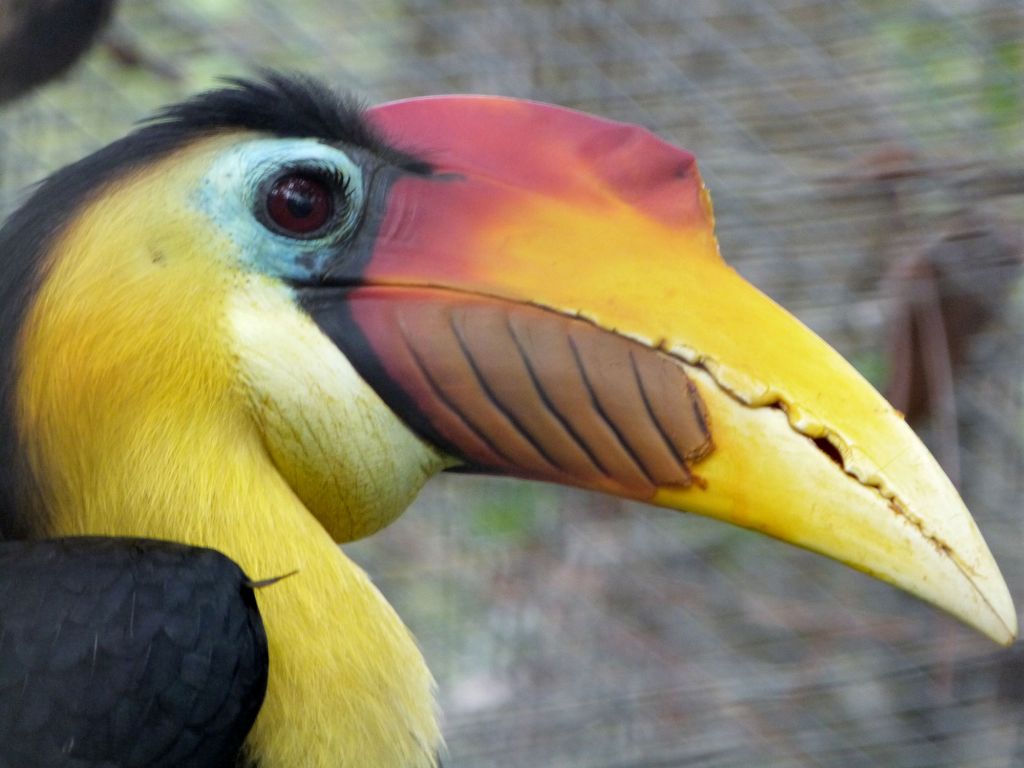
Wrinkled Hornbill (Aceros corrugatus) Brevard Zoo by Lee

Wrinkled Hornbill (Aceros corrugatus) Brevard Zoo by Lee

The God of my strength, in whom I will trust; My shield and the horn of my salvation, My stronghold and my refuge; My Savior, You save me from violence. (2 Samuel 22:3 NKJV)

The LORD is my rock and my fortress and my deliverer; My God, my strength, in whom I will trust; My shield and the horn of my salvation, my stronghold. (Psalms 18:2 NKJV)

Oh, my, what interesting group of birds the Lord’s Creative Hand created with these two Hornbill Families! They come from the Bucerotidae – Hornbills and Bucorvidae – Ground Hornbills. There are 61 hornbills in the two families.

Shout joyfully to the LORD, all the earth; Break forth in song, rejoice, and sing praises. Sing to the LORD with the harp, With the harp and the sound of a psalm, With trumpets and the sound of a horn; Shout joyfully before the LORD, the King. (Psalms 98:4-6 NKJV)

And has raised up a horn of salvation for us In the house of His servant David, (Luke 1:69 NKJV)

This slideshow requires JavaScript.

*

“I Sing The Mighty Power Of God” ~ by the ©Hyssongs

*

More:

*

Mr. Plain Sparrow Calls on Ducks

House Sparrow (Passer domesticus)

House Sparrow (Passer domesticus)

MR. PLAIN SPARROW CALLS ON DUCKS

"Would you like to join us?"

“Would you like to join us?”

“It was such a hot day yesterday,” said daddy, “that Mr. Plain Sparrow simply could not get cool. You see he never goes away in the winter and so he gets used to really cold weather. On a day as hot as it was yesterday he simply doesn’t know what to do with himself. He called himself Mr. Plain Sparrow because that was exactly what he was. He was just a plain, ordinary sparrow, and he thought it such a wise thing to call himself that—and not put on any silly frills. He prided himself on being sensible.

“‘If there’s anything in this world I hate,’ he said, ‘it’s pretending to be what a creature is not.’ And so he called himself by the name of Mr. Plain Sparrow, and his wife was Mrs. Plain Sparrow, and his children were the Plain Sparrow Children.

“‘I think,’ he said, ‘that I will take a walk or a fly to the duck pond in the park nearby. Yes, it seems to me that’s an excellent scheme. I would like to see those ducks, for they’re right smart creatures, and I like to hear their funny quack-quack talk.’

“‘What are you up to, ducks?’ he called, as he flew over the pond, and then perched on a small bush that was at one side.

“‘We’re well,’ said the ducks. ‘We’re enjoying a cooling drink between swims. Would you like to join us? It’s just tea time.’

“‘Tea time, eh?’ said Mr. Plain Sparrow. ‘And would you give a fellow a good, fat worm in place of bread and butter and cake?’

“‘Quack-quack! ha, ha!’ laughed the ducks. ‘We don’t like bread and butter and cake. But we can’t get the worm for you just now, as we’re not very good at digging on such a hot day!’

“‘Well, then, how about my digging for a couple of them, and then joining all you nice ducks when you’re ready to have your tea?’

“‘Splendid idea,’ quacked the ducks. And off went Mr. Plain Sparrow to a soft place in the earth where he thought there would be some good worms.

“Pretty soon he came back with some fine ones, and he sat on his perch and ate them, while the ducks nibbled at their food, and had drinks of pond water, which they called tea. Mr. Plain Sparrow flew down and took sips of water by the side of the pond, and in one very shallow place he had some nice showerbaths while the ducks were having swims. And before he left he told the ducks what a good time he had had, and how nice and cool he felt.

“‘Well, you’re so friendly we’re glad you came,’ quacked the ducks once again.”


House Sparrow by Nikhil Devasar

Lee’s Addition:

A man who has friends must himself be friendly, But there is a friend who sticks closer than a brother. (Proverbs 18:24 NKJV)

Here is another Bird Tale to remind us to be friendly. Even though Mr. Plain Sparrow was having a rough day, he still showed himself friendly to others around him. When things don’t go the way we want, do we become unfriendly to those around us? What should we do?

Who is the friend who sticks closer than a brother? See ABC’s of the Gospel


From

Daddy’s Bedtime Bird Stories – Gutenberg ebooks

By

Mary Graham Bonner

With four illustrations in color by
Florence Choate and Elizabeth Curtis

Daddys Bedtime Story Images


These stories first appeared in the American Press Association Service and the Western Newspaper Union.


Many of the sketches in this volume are the work of Rebecca McCann, creator of the “Cheerful Cherub,” etc.

Daddy's Bedtime Bird Stories by Mary Graham Bonner - 1917

*
Daddy’s Bedtime Bird Stories by Mary Graham Bonner – 1917

*

Links:

Painted Bunting (Passerina ciris) ©©Flickr


  Bird Tales


  Daddy’s Bedtime Bird Stories


Spanish Sparrow (Passer Hispaniolensis) female ©WikiC


  Wordless Birds


*

Rock Partridges: Lessons About Hunting And Hatching

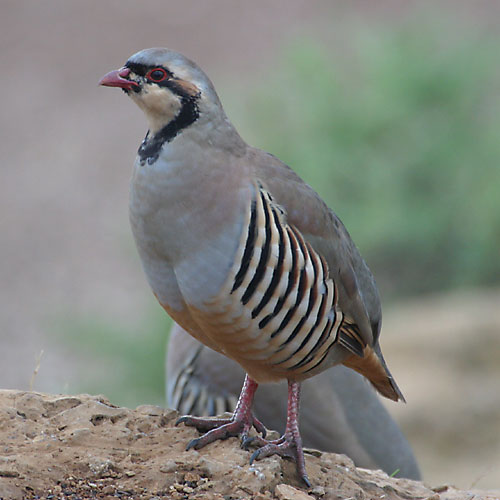
Rock Partridge (Alectoris graeca) WikiC

Rock Partridge (Alectoris graeca) WikiC

Rock Partridges: Lessons about Hunting and Hatching ~ James J. S. Johnson

Now therefore, let not my blood fall to the earth before the face of the LORD: for the king of Israel is come out to seek a flea, as when one doth hunt a partridge in the mountains. (1 Samuel 26:20 KJV)

Luzon Bleeding-heart by Dan

Orni-Theology

Rock Partridges – like other partridges – prefer to hide from people, yet their voices are quite detectable. “Rock partridges are masters of concealment and are best spotted when perched on a boulder sending out a challenge; however, when we were [in Israel] we probably heard ten for every one of which we had a glimpse” [quoting George Cansdale, All the Animals of the Bible Lands (Zondervan, 1970), pages 165-166].   Yet if we look for partridges carefully, in Scripture, we will find them mentioned twice, providing us with two lessons for our own lives (and “callings”, pardon the pun).  But, before looking at those two Bible passages, first let us consider what a “partridge” is.

 So what is a partridge?

Partridges are chicken-sized ground-dwelling birds, classified together with other “pheasant family” birds like pheasant, grouse, bobwhite, quail, junglefowl, chicken, peafowl, and ptarmigan. Specifically, partridges are categorized as fowl belonging to the order Galliformes, family Phasianidae, subfamily Perdicinae).

Partridges don’t migrate.  Partridges  — such as the Rock Partridges of the Holy Land — often nest in hilly or montane areas, in fairly dry climate zones, laying more than a dozen eggs in a minimally lined ground scrape – quite a humble nest!   This habit leaves partridge eggs quite vulnerable, for many ovivorous predators (including hungry humans – see Deuteronomy 22:6-7) hunt around the nesting grounds of partridges.  Resourceful foragers themselves, partridges routinely eat accessible ants, seeds, berries, lichen, and other low-to-the-ground vegetation.  Like other land-fowl partridges spend most of their time on the ground, hidden in ground cover, so don’t expect to see them flying around much, or perching in tree branches.

Partridges are mentioned only twice in the Old Testament (noted below), as translations of the Hebrew word qoré’ – a noun derived from the verb qara’ (meaning “to call”, “to cry”).   The Hebrew root  verb qara’ is used to describe calling out someone’s name, when you wish to speak to that person, and it is used to describe God’s actions when He “called” the light Day, the dark Night, the dry land Earth, etc. (in Genesis chapter 1).  Partridges, therefore, are “criers”, famous for their calls.  The Rock Partridge (Alectoris graeca), which seems to have been common during Bible times, is known for its “cok-cok-cokrr” call, in the arid piedmonts of Israel.

The Rock Partridge ranges “from the mountains of Lebanon in the north across the coastal plains to the dry hills of Judaea, but its range also extends westwards through Greece and all over Italy” [quoting George Cansdale, All the Animals of the Bible Lands (Zondervan, 1970), page 165].  Its Holy Land cousin, the Red-legged Partridge (Alectoris rufa), resembles the Rock Partridge from a distance, so the Bible could refer to either or both, as well as any hybrids.  Another partridge found in Israel’s desert lands is Hey’s Partridge (Ammoperdrix heyi), by the Dead Sea.

“Partridges” ae mentioned once in 1st Samuel 26:20 and once in Jeremiah 17:11.  Both verses illustrate important life lessons.

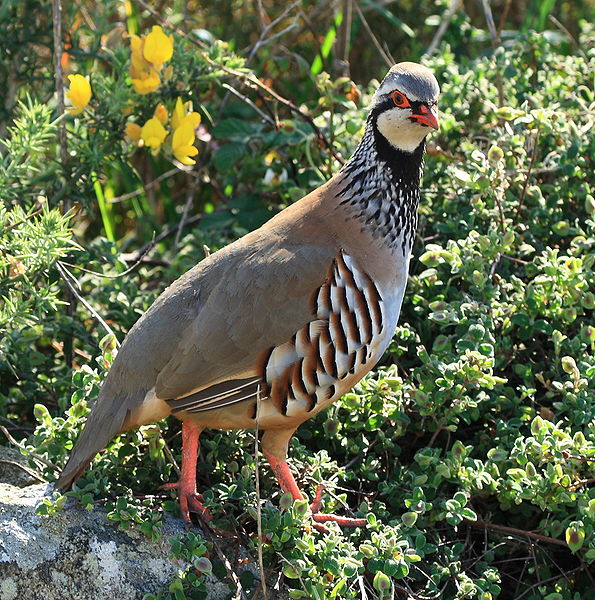
Red-legged Partridge (Alectoris rufa) ©WikiC

Red-legged Partridge (Alectoris rufa) ©WikiC

Living life on the run

As a fugitive trying to escape King Saul, David compares himself (in 1st Samuel 26:20, quoted above) to a partridge being hunted in the mountains.  Because partridges don’t fly far away, as chased ducks or geese may, hunters chase partridges in the hilly scrublands, causing the partridges to run this way and that, often wearying the partridges to the point that they became targets for whatever weapons (even sticks used for clubbing) the hunters have available.  Surely David saw such partridges in the arid wilderness scrublands he hid in, and likely David himself hunted, caught, and ate such partridges.  Because David was daily fleeing Saul’s soldiers, in the hilly wilderness  of Israel, David knew what partridges felt like, being pursued by hunters.  Yet God protected David from Saul’s evil efforts, and in God’s providence it was David, when the dust settled, who survived and reigned over Israel, not Saul.

What can we learn from David’s fugitive plight?

First, there is no good reason to surrender to one’s enemies!  When persecutors aim at innocent victims, as has been the plight of believers ever since Cain murdered Abel (Genesis 4:8-9; Matthew 23:35; Luke 11:51), we are counseled to evade persecutions when possible (Matthew 7:6 & 10:14 & 10:23; Luke 9:5 & 10:11 & 21:21; Acts 9:25 & 13:51).

Second, David’s example reminds us that God is sovereign – He will not let us die until it is the proper time for dying.  So long as God has earthly work for us to do, He will sustain us (James 4:13-15).

Rock Partridge (Alectoris graeca) ©Arthur Grosset

Rock Partridge (Alectoris graeca) ©Arthur Grosset

Don’t count your chickens (or partridges) before they hatch

Another lesson from the partridge comes from Jeremiah 17:11.  It seems that partridges have a bad reputation for being less than fully successful in hatching their eggs!  This parental deficiency is compared to the tentative gains of those who acquire wealth by unrighteous means – they will, in the end, be seen as the fools they are!  Why?  Because the wealth of this world, even if kept until death, is only transitory wealth.  It is like eggs laid in a slipshod nest, never to be successfully hatched.

Don’t invest the best of your life in the transitory things of this world  —  because the investment will be a disappointment, when life is over.  Rather, invest your time and treasure in what God values.  It is truly foolish to lay up temporal treasures, “where moth and rust doth corrupt, and where thieves break through and steal” (Matthew 6:19).  Materialistic treasures are a long-term waste of investment, to be displayed as folly in eternity (and often earlier, on earth), as “gains” wrongly gotten – because we are only stewards of the assets God entrusts to us.

Therefore, let us rather, on a daily basis, accrue (by God’s grace) “treasures in Heaven, where neither moth nor rust doth corrupt, and where thieves do not break through nor steal” (Matthew 6:20).  It’s really a matter of the heart:  “For where your treasure is, there will your heart be also” (Matthew 6:21).

(Dr. James J. S. Johnson, an apologetics professor for ICR, previously taught ornithology at Dallas Christian College.)


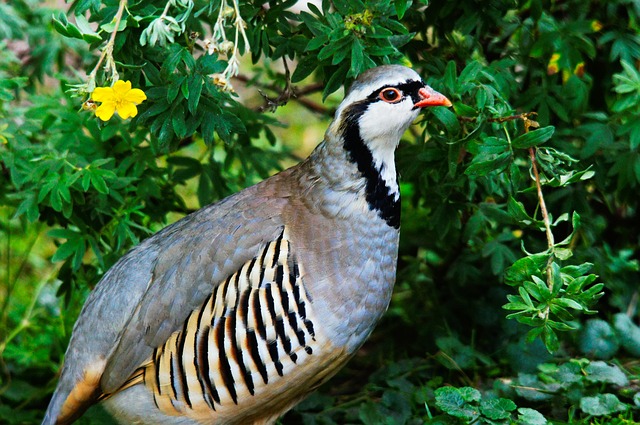
Rock Partridge (Alectoris graeca) ©Pixabay

Rock Partridge (Alectoris graeca) ©Pixabay

Lee’s Addition:

Rock Partridges belong to:

*

P.S. – As of this post, James J. S. Johnson is now one of our regular contributors to the blog. An introduction will be given soon.

*

Sunday Inspiration – “King” Birds

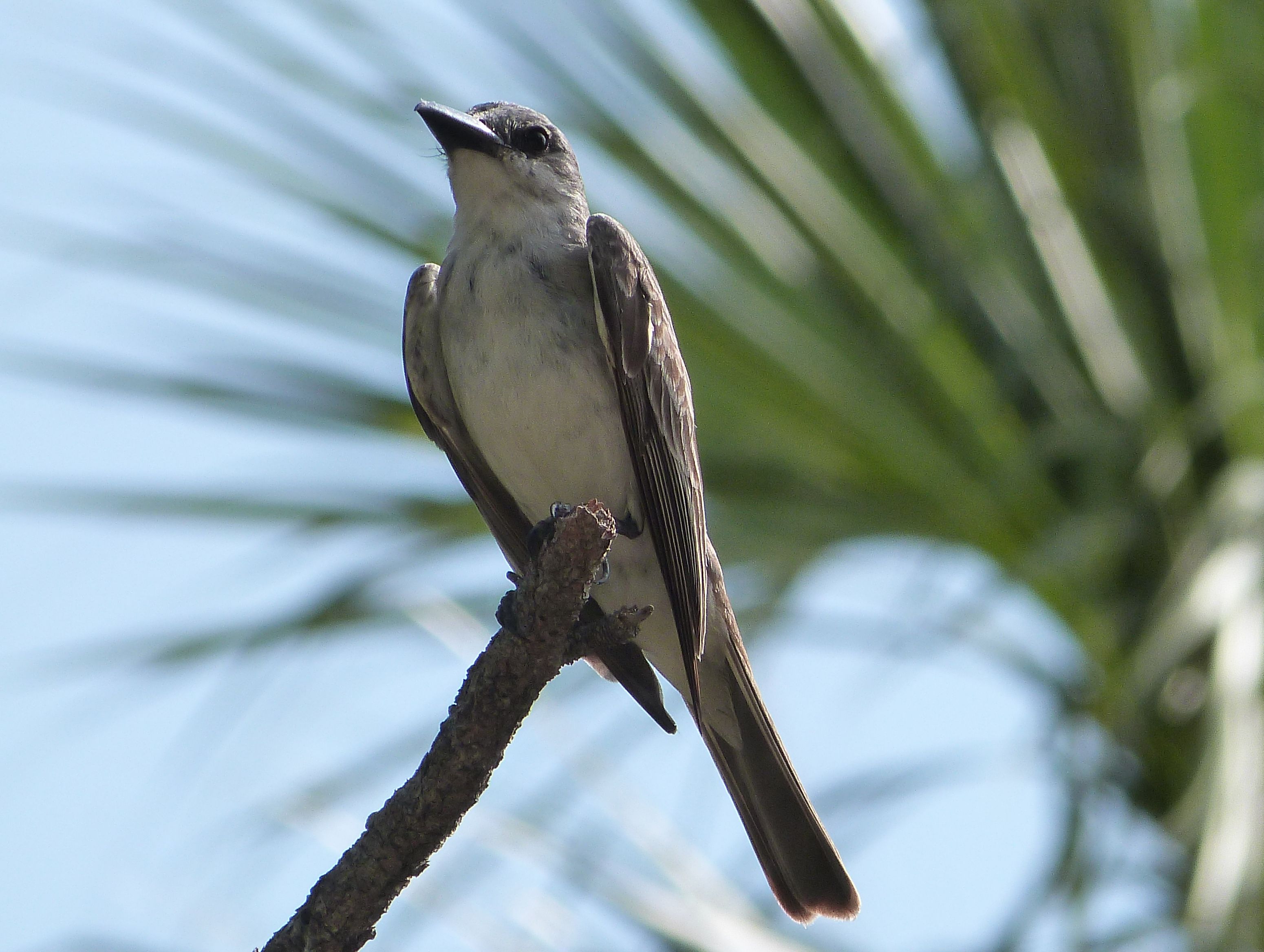
Grey Kingbird (Tyrannus dominicensis) by Lee at Honeymoon Is SP

Grey Kingbird (Tyrannus dominicensis) by Lee at Honeymoon Is SP

Rejoice greatly, O daughter of Zion! Shout, O daughter of Jerusalem! Behold, your King is coming to you; He is just and having salvation, Lowly and riding on a donkey, A colt, the foal of a donkey.
(Zechariah 9:9 NKJV)

‘TELL THE DAUGHTER OF ZION, ‘BEHOLD, YOUR KING IS COMING TO YOU, LOWLY, AND SITTING ON A DONKEY, A COLT, THE FOAL OF A DONKEY.’ ” (Matthew 21:5 NKJV)

Since writing about the Grey Kingbird last week, I have been thinking about birds that have “King” in their name. Here are some of the ones, plus many of the “King”fishers.

This slideshow requires JavaScript.

*

Both our Choir with the Orchestra and the Hyssongs did great and I couldn’t decide so here are both of them.

“The King is Coming” – Faith Baptist Choir and Orchestra. Intro by Pastor Osborne

Jesus answered, My kingdom is not of this world: if my kingdom were of this world, then would my servants fight, that I should not be delivered to the Jews: but now is my kingdom not from hence. Pilate therefore said unto him, Art thou a king then? Jesus answered, Thou sayest that I am a king. To this end was I born, and for this cause came I into the world, that I should bear witness unto the truth. Every one that is of the truth heareth my voice. (John 18:36-37 KJV)

“The King is Coming” – ©Hyssongs

*

The Gospel Message

More Sunday Inspirations

Faith Baptist Church

*

Intimidating Duets – ©Creation Moments

Magpie-lark (Grallina cyanoleuca) ©©J.J. Harrison

Magpie-lark (Grallina cyanoleuca) ©©J.J. Harrison

“… and he shall rise up at the voice of the bird, and all the daughters of musick shall be brought low…” Ecclesiastes 12:4b

Precision in communication is highly important. This is especially true of the type of communication called music, whether you are talking about Mozart or magpie-larks.

Only about three percent of bird species are known to sing duets. In a duet, one mate begins singing, and the other mate begins a half second later. Among Australian magpie-larks, pairs that are newly mated usually lack that precision. However, in pairs that have been together for two years, the lag time of the duet usually varies by only a few hundredths of a second.

Researchers also discovered that this precision serves a purpose. Male magpie-larks respond to perceived threats by increasing their singing. When they played the less-precise duets to 12 pairs of other magpie-larks, the males only responded in this way seven times in five minutes. However, the more-precise duets resulted in nine responses in five minutes. In short, other magpie-larks are more intimidated by pairs that sing with precision than by those who do not. This is important in preserving an established couple’s territory from invasion by new couples.

Communication with precision is yet another fingerprint of God on the creation. In Scripture, the ultimate in precise communication, God even points us to the birds as He urges us to recognize His involvement in the creation.

Prayer:

Thank You, Father, for taking care of all Your creation and especially for sending Your Son to save me. Amen.

Notes:
Science News, 6/9/07, p. 357, S. Milius, “Scary Singing.” Photo: Female magpie-lark. Courtesy of J.J. Harrison. Licensed under the Creative Commons Attribution-Share Alike 3.0 Unported license.  ©Creation Moments 2014


Magpie-lark (Grallina cyanoleuca) by W Kwong

Magpie-lark (Grallina cyanoleuca) by W Kwong

Lee’s Addition:

By them the birds of the heavens have their home; They sing among the branches. (Psalms 104:12 NKJV)

Magpie-larks are members of the Monarchs – Monarchidae Family, which has 99 species in it. There are only two larks in this family:

Magpie-lark (Grallina cyanoleuca)
Torrent-lark (Grallina bruijnii) WorldBirds – Photos

Here is a sound recording from xeno-canto of a duet.

*

*


Bible Birds – Mighty Hand of God!

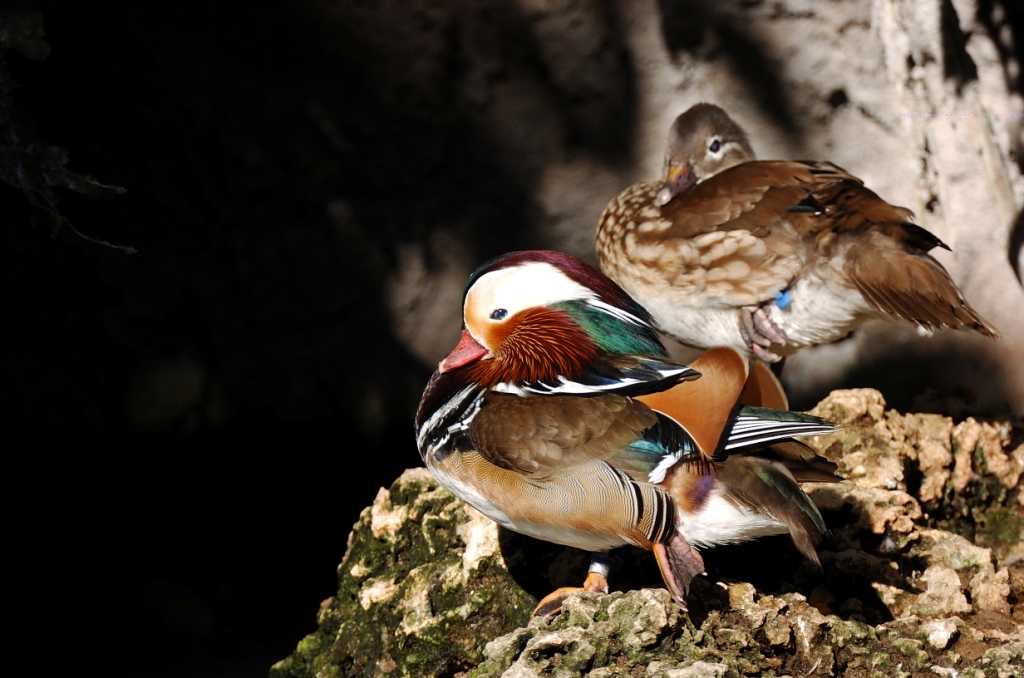
Mandarin Duck (Aix galericulata) by Dan at Zoo Miami

Mandarin Duck (Aix galericulata) by Dan at Zoo Miami

O Lord GOD, You have begun to show Your servant Your greatness and Your mighty hand, for what god is there in heaven or on earth who can do anything like Your works and Your mighty deeds? (Deuteronomy 3:24 NKJV)

What a beautiful duck. When we look around us, the Lord’s Hand is at work everywhere. Be thankful today for the Lord’s Blessing.

Brown-headed Barbet (Megalaima zeylanica) by Nikhil Devasar

Hang in there, today!

O taste and see that the LORD is good: blessed is the man that trusteth in him. (Psalms 34:8 KJV)

*

Bible Birds

*


Sneaky Roadrunner

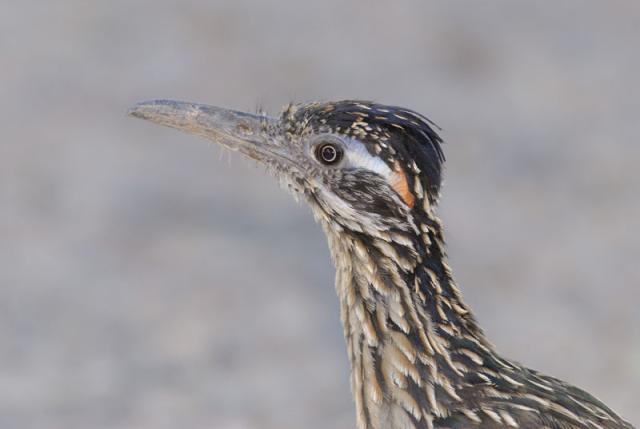
Greater Roadrunner (Geococcyx californianus) Reinier Munguia

Greater Roadrunner (Geococcyx californianus) Reinier Munguia

Sneaky Roadrunner ~ by Dr. James J. S. Johnson

There is no fear in love; but perfect love casteth out fear: because fear hath torment. He that feareth is not made perfect in love. (1 John 4:18 KJV)

Luzon Bleeding-heart by Dan

Orni-Theology

Roadrunners are unusual birds.   When you think of birds, usually you think of birds that fly.  But not roadrunners – mostly they run (up to 20 miles per hour!), or walk very quickly (“race-walking”).  But roadrunners sometimes fly short distances, if they want to escape someone.  Once I saw one fly from my home’s front yard to the roof of our house.  But a roadrunner’s usual exit strategy is to run.  But not always. Sometimes they try to be sneaky. Before recalling a memorable example of roadrunner sneakiness, however, a few fact about roadrunners should be reviewed.

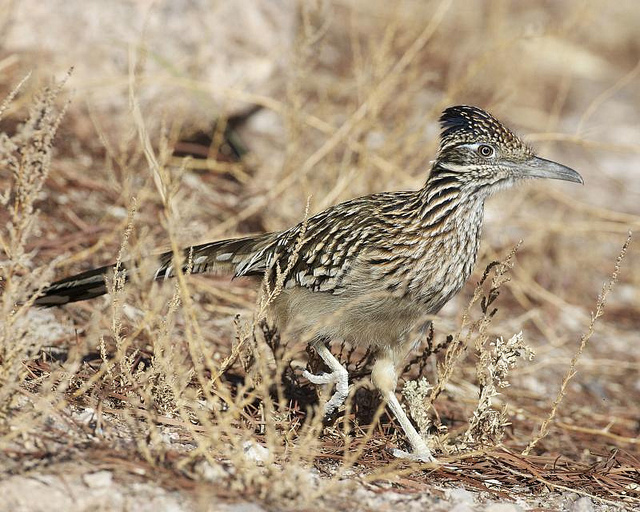
Greater Roadrunner (Geococcyx californianus) by Daves BirdingPix

Greater Roadrunner (Geococcyx californianus) by Daves BirdingPix

Roadrunners have longer legs, in proportion to their bodies, than do most birds.  Obviously God designed these roadrunners to get around on foot!  Taxonomists (i.e., those who categorize creatures into groups of common traits, by “lumping” on similarities and “splitting” on dissimilarities) classify the Greater Roadrunner (Geococcyx californianus – meaning “Californian earth-cuckoo”) as a member of the cuckoo family, birds that look like half-starved chickens with long tails.  Roadrunners thrive in desert habitats, yet these black-and-white fowl are also found living in shrub-dominated lands known for hot, dry climates, such as the western half of Texas (as well as most of Oklahoma, New Mexico, Arizona, and California).  See Roger Tory Peterson, WESTERN BIRDS (Houghton Mifflin, 3rd ed., 1990), range map 192.  Roadrunners can also be seen, though less frequently, in contiguous states, such as Kansas, Colorado, Utah, Nevada, Missouri, and Arkansas.

Greater Roadrunner (Geococcyx californianus) ©©Alan Murphy Flickr

Greater Roadrunner (Geococcyx californianus) ©©Alan Murphy Flickr

Roadrunners are not picky eaters.  Roadrunners are happy to eat bugs (insects and spiders), seeds, fruits, millipedes, centipedes, scorpions, and even small birds (and their eggs), small mammals (usually rodents like mice, rats, and voles), and small reptiles (such as lizards).  One of the more unusual insects, that roadrunners are known to eat, is the tarantula hawk wasp – an amazing spider-killing wasp that the U.S. Army named one of its “unmanned aircraft” reconnaissance units after.  [See my article at www.icr.org/article/slow-death-for-tarantula-lesson-arachnid/ — “Slow Death for a Tarantula”.]

Greater Roadrunner (Geococcyx californianus) ©©Flickr

Greater Roadrunner (Geococcyx californianus) ©©Flickr

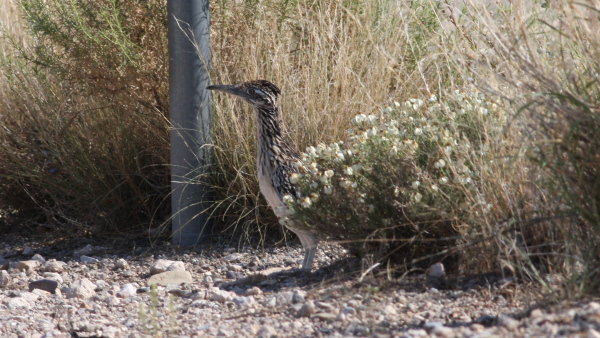
So how can a roadrunner be “sneaky”?  A few months ago I walked out of my house’s front door, and saw a roadrunner in my path.  Startled by my approach, the roadrunner skittishly scuttled around my van, which was parked in the driveway in front of my house.  So now I was standing on the north side of my van, and the roadrunner was standing on the south side of my van.

How do I know that, since I don’t have “x-ray eyes” that can see through a parked van?   As I slowly and silently crept, counter-clockwise around the west side of my van, I could see the roadrunner, standing on the south side of my blue van: he (or was it a she?) was bent over with his head turned to the southeast, with his slender bill and face aimed directly away from me.  By bending down his head, and aiming it away from where I was standing, the roadrunner must have thought that he was hiding from me, and that I could not see him – because he could not see me!  If I had impolitely startled him, then, surely it would have hurt his feelings, or his pride, because he obviously thought he really had me fooled.  So I stood silently, unmoving, for quite a while, to see if he would notice me – only about 3 feet form him – with nothing but air between us!  The roadrunner never moved, and he never turned his head to see me, so perhaps he thought I still could not see him.  Not having the heart to correct him, I slowly and silently backed up to the north side of the van, then retreated back through my front door, into my house.  To this day the roadrunner probably thinks that his bent-over, head-turned “hiding” had fooled me.

Greater Roadrunner (Geococcyx californianus) ©©thedrinkingbird Bing

Greater Roadrunner (Geococcyx californianus) ©©thedrinkingbird Bing

Then I got to thinking about how often we humans act as though we could hide ourselves from God.  When our first parents first sinned (Genesis 3:8-10) they tried to hide from God, among the trees in the Garden of Eden.  (If there had been a blue van there they might have tried to hide behind it.)  Of course, the very thought of hiding from God is silly because He is omnipresent and omniscient (Psalm 139).  But, because the Lord Jesus Christ provides us with a free redemption (John 3:16), there is no good reason to be afraid of God (Hebrews 10:19), because “perfect love casts out fear” (1st John 4:18).

Greater Roadrunner (Geococcyx californianus) ©©Nathan Davis Bing

Greater Roadrunner (Geococcyx californianus) ©©Nathan Davis Bing

Roadrunners are fun to watch – I love watching them scoot around on their fast, race-walking legs! If roadrunners only knew how kindly I regard them they would not fear me – they don’t need to sneak around to escape me.  And, because of Jesus, there is no good reason for us to try to hide from God.

(Dr. James J. S. Johnson, now apologetics professor at ICR,  previously taught ornithology at Dallas Christina College. Mrs. Thelma Bumgardner, his second-grade teacher, introduced him to creationist ornithology.)

*

*


Sunday Inspiration – Thirst

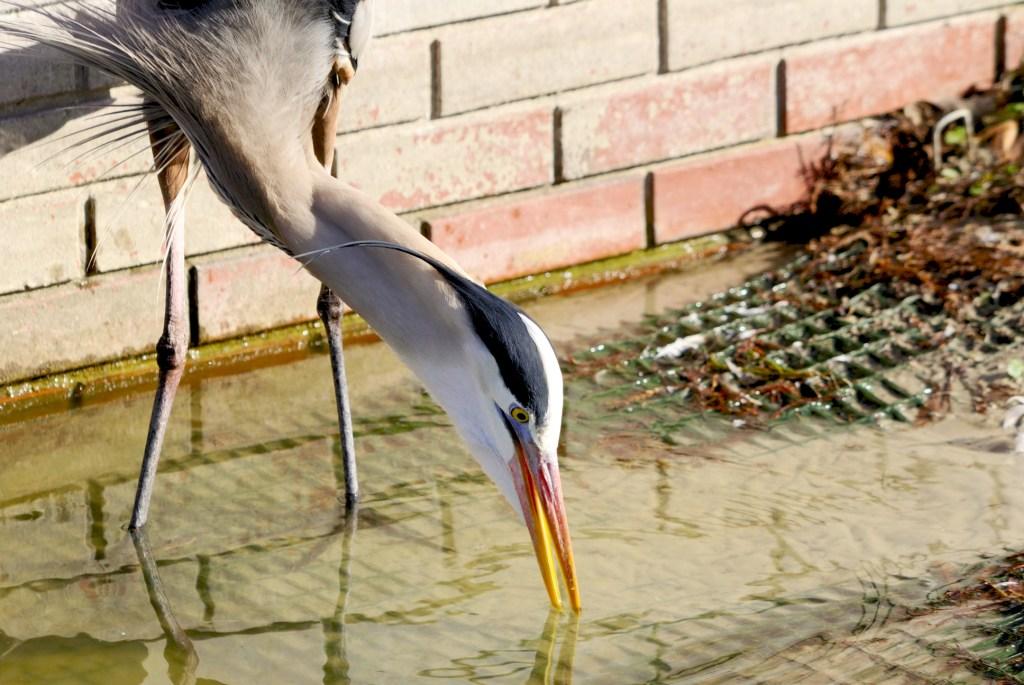
Great Blue Heron (Drinking) at Lake Morgan by Lee

Great Blue Heron (Drinking) at Lake Morgan

Jesus answered and said unto her, Whosoever drinketh of this water shall thirst again: But whosoever drinketh of the water that I shall give him shall never thirst; but the water that I shall give him shall be in him a well of water springing up into everlasting life. (John 4:13-14 KJV)

This slideshow requires JavaScript.

*

*
“Come Thou Fount Of Every Blessing” by Sean Fielder
*

More Sunday Inspiration

Gospel Message

*

King Solomon and The Birds – Part 3

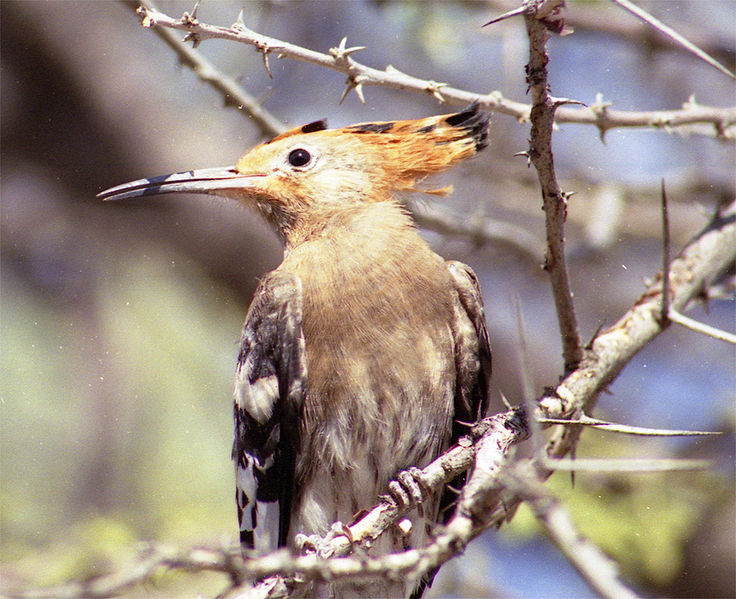
African Hoopoe (Upupa africana) ©WikiC

African Hoopoe (Upupa africana) ©WikiC

King Solomon and The Birds ~ from The Curious Book of Birds

KING SOLOMON AND THE BIRDS  – Part 3

Cur Book of Birds letter-kING SOLOMON was ever seeking to grow even wiser. The better to know the wonders of God’s world and the ways of all creatures, he undertook many journeys,—not as we ordinary poor mortals travel, in heavy wagons or clumsy boats, by dusty roads or stormy waves. It was in no such troublous ways that Solomon the all-powerful traversed space and reached the uttermost corners of the earth. Thanks to his great knowledge, he had discovered a means of locomotion compared to which the most magnificent railway coaches and the richest palanquins of Indian princes would seem poor indeed. He had caused his Genii to make a silken carpet of four leagues in extent. In the midst of this carpet was placed a magnificent throne for the royal traveler himself; and around it were seats of gold, of silver, of wood, for the multitude of persons of different rank whom he took with him. There was also no lack of the most gorgeous furniture and the necessary provisions for a king’s traveling banquet.

When all was ready Solomon was wont to seat himself upon his throne, and would command the winds to do their duty. Immediately they gently lifted the carpet and bore it rapidly through the air to the appointed spot. During the journey, above the aerial caravan fluttered a cloud of birds, who with their wings formed a splendid canopy to shield their beloved lord from the sun’s heat, as the Hoopoes had first done.

One day, while on such a journey, Solomon was shocked to feel a ray of sunlight piercing through this plumy dais (raised feathers) which overhung his head. Shading his eyes, the King glanced up and perceived that there was an opening in the canopy. One bird was missing from its post. In great displeasure Solomon demanded of the Eagle the name of the truant. Anxiously the Eagle called the roll of all the birds in his company; and he was horrified to find that it was Solomon’s favorite, the Hoopoe, who was missing. With terror he announced the bird’s desertion to the most wise King.

“Soar aloft,” commanded Solomon sternly, “and find the Hoopoe that I may punish him. I will pluck off his feathers that he may feel the scorching heat of the sun as his carelessness has caused me to do.”

The Eagle soared heavenward, until the earth beneath him looked like a bowl turned upside down. Then he poised on level wings and looked around in every direction to discover the truant. Soon he espied the Hoopoe flying swiftly from the south. The Eagle swooped down and would have seized the culprit roughly in his strong talons, but the Hoopoe begged him for Solomon’s sake to be gentle.

“For Solomon’s sake!” cried the Eagle. “Do you dare to name the King whom you have injured? He has discovered your absence and in his righteous anger will punish you severely.”

“Lead me to him,” replied the Hoopoe. “I know that he will forgive me when he hears where I have been and what I have to tell him.”

The Eagle led him to the King, who with a wrathful face was sitting on his throne. The Hoopoe trembled and drooped his feathers humbly, but when Solomon would have crushed him in his mighty fist the bird cried,—

“Remember, King, that one day you also must give an account of your sins. Let me not therefore be condemned unheard.”

“And if I hear you, what excuse can you have to offer?” answered Solomon, frowning. But this was his favorite bird and he hoped that there might be some reason for sparing him.

“Well,” said the Hoopoe, “at Mecca I met a Hoopoe of my acquaintance who told me so wonderful a tale of the marvelous Kingdom of Sheba in Arabia that I could not resist the temptation to visit that country of gold and precious stones. And there, indeed, I saw the most prodigious treasures; but best of all, O King, more glorious than gold, more precious than rare jewels, I saw Queen Balkis, the most beautiful of queens.”

“Tell me of this Queen,” said Solomon, loosening his rough grasp upon the Hoopoe. So it was, say the people, that a bird told Solomon of the great Queen whose journey to Jerusalem is described in the Bible.

The Hoopoe told of her power and glory, her riches, her wisdom, and her beauty, until Solomon sighed a great sigh and said, “It seems too good to be true! But we shall see.”

So the King wrote a letter to Balkis, bidding her follow the guidance of fate and come to the court of the wise King. This note he sealed with musk, stamped with his great signet, and gave to the Hoopoe, saying,—

“If now you have spoken truth, take this letter to Queen Balkis; then come away.”

The Hoopoe did as he was bid, darting off towards the south like an arrow. And the next day he came to the palace of the Queen of Sheba, where she sat in all her splendor among her counselors. He hopped into the hall and dropped the letter into her lap, then flew away.

Queen Balkis stared and stared at the great King’s seal upon the mysterious letter, and when she had read the brief invitation she stared and stared again. But she had heard the fame of Solomon and was eager to ask him some of her clever questions to prove his wisdom. So she decided to accept his invitation and come to Jerusalem.

She came with a great train of attendants, with camels that bore spices and treasures of gold and precious stones, gifts for the most wise King. And she asked him more questions than any woman had ever asked him before, though he knew a great many ladies, and they were all inquisitive.

But Solomon was so wise that he answered all her questions without any trouble.

And she said to him, “It was a true report that I heard of you in my own land, of your wisdom and of your glory. Only that which now I know and see is greater than what I heard. Happy are thy men and happy are thy servants who stand continually before thee and hear thy wisdom.”

And she gave the King a hundred and twenty talents of gold, which was a very rich treasure, besides great store of spices, and the most precious gifts; no one had ever seen such gifts as the Queen of Sheba gave to Solomon.

But he in turn was even more generous. For he gave to the fair Balkis all that she desired and everything she asked, because he admired so much this splendid Queen of whom the Hoopoe had first told him.

And so, the Bible says, the Queen of Sheba turned and went to her own country, she and her servants. But the People’s tales say that in later days she married Solomon and they lived happily ever after. And it was all the work of that little Hoopoe with a yellow crown, whom after that we may be sure Solomon loved better than ever.

***

Now King Solomon gave to the queen of Sheba all she desired, whatever she asked, much more than she had brought to the king. So she turned and went to her own country, she and her servants. (2 Chronicles 9:12 NKJV)

And that ends our story of King Solomon and the Birds.

See:

King Solomon and The Birds – Part 1

King Solomon and The Birds – Part 2

*

Links:

Eurasian Hoopoe (Upupa epops) by Peter Ericsson


  Hoopoes – Upupidae Family


Painted Bunting (Passerina ciris) ©©Flickr


  Bird Tales


Curious Book of Birds - Cover


  The Curious Book of Birds


Spanish Sparrow (Passer Hispaniolensis) female ©WikiC


  Wordless Birds


*

King Solomon and The Birds – Part 2

Eurasian Hoopoe (Upupa epops) by W Kwon

Eurasian Hoopoe (Upupa epops) by W Kwon

King Solomon and The Birds ~ from The Curious Book of Birds

King Solomon and The Birds – Part 2


Cur Book of Birds letter-one day when Solomon was journeying across the desert, he was sorely distressed by the heat of the sun, until he came near to fainting. Just then he spied a flock of his friends the Hoopoes flying past, and calling to them feebly he begged them to shelter him from the burning rays.

The King of the Hoopoes gathered together his whole nation and caused them to fly in a thick cloud over the head of Solomon while he continued his journey. In gratitude the wise King offered to give his feathered friends whatever reward they might ask.

For a whole day the Hoopoes talked the matter over among themselves, then their King came to Solomon and said to him,—

“We have considered your offer, O generous King, and we have decided that what we most desire is to have, each of us, a golden crown on his head.”

King Solomon smiled and answered, “Crowns of gold shall you have. But you are foolish birds, my Hoopoes; and when the evil days shall come upon you and you see the folly of your desire, return here to me and I will help you yet again.”

So the King of the Hoopoes left King Solomon with a beautiful golden crown upon his head. And soon all the Hoopoes were wearing golden crowns. Thereupon they grew very proud and haughty. They went down by the lakes and pools and strutted there that they might admire themselves in the water mirrors. And the Queen of the Hoopoes became very airy, and refused to speak to her own cousin and to the other birds who had once been her friends.

There was a certain fowler who used to set traps for birds. He put a piece of broken mirror into his trap, and a Hoopoe spying it went in to admire herself, and was caught. The fowler looked at the shining crown upon her head and said, “What have we here! I never saw a crown like this upon any bird. I must ask about this.”

So he took the crown to Issachar, the worker in metal, and asked him what it was. Issachar examined it carefully, and his eyes stuck out of his head. But he said carelessly, “It is a crown of brass, my friend. I will give you a quarter of a shekel for it; and if you find any more bring them to me. But be sure to tell no other man of the matter.” (A shekel was about sixty-two cents.)

After this the fowler caught many Hoopoes in the same way, and sold their crowns to Issachar. But one day as he was on his way to the metalworker’s shop he met a jeweler, and to him he showed one of the Hoopoes’ crowns.

“What is this, and where did you find it?” exclaimed the jeweler. “It is pure gold. I will give you a golden talent for every four you bring me.” (A talent was worth three hundred shekels.)

Now when the value of the Hoopoes’ crowns was known, every one turned fowler and began to hunt the precious birds. In all the land of Israel was heard the twang of bows and the whirling of slings. Bird lime was made in every town, and the price of traps rose in the market so that the trap-makers became rich men. Not a Hoopoe could show his unlucky head without being slain or taken captive, and the days of the Hoopoes were numbered. It seemed that soon there would be no more Hoopoes left to bewail their sad fate.

At last the few who still lived gathered together and held a meeting to consider what should be done, for their minds were filled with sorrow and dismay. And they decided to appeal once more to King Solomon, who had granted their foolish prayer.

Flying by stealth through the loneliest ways, the unhappy King of the Hoopoes came at last to the court of the King, and stood once more before the steps of his golden throne. With tears and groans he related the sad fortune which had befallen his golden-crowned race.

King Solomon looked kindly upon the King of the Hoopoes and said, “Behold, did I not warn you of your folly in desiring to have crowns of gold? Vanity and pride have been your ruin. But now, that there may be a memorial of the service which once you did me, your crowns of gold shall be changed into crowns of feathers, and with them you may walk unharmed upon the earth.”

In this way the remaining Hoopoes were saved. For when the fowlers saw that they no longer wore crowns of gold upon their heads, they ceased to hunt them as they had been doing. And from that time forth the family of the Hoopoes have flourished and increased in peace, even to the present day.


Lee’s Addition:

When pride comes, then comes dishonor, But with the humble is wisdom. (Proverbs 11:2 NASB)

Vanity means – “too much pride in oneself or in how one looks.”

Pride can mean – “a sense of one’s own value that is too high.” or “an inborn feeling of self-worth.” (One of these definitions is good and the other bad.)

Was our King of the Hoopoes showing good or bad pride? When we think too much of ourself and think we are better or nicer looking. (“Look at me, I have a gold crown.”)

You could work hard on a project and win a gold ribbon or metal for that effort. If you wore that ribbon around your neck, would your attitude about it be a good or bad pride?

Praise the LORD! Oh, give thanks to the LORD, for He is good! For His mercy endures forever. (Psalms 106:1 NKJV)

Links:

King Solomon and The Birds – Part 1

King Solomon and The Birds – Part 2

King Solomon and The Birds – Part 3


Eurasian Hoopoe (Upupa epops) by Peter Ericsson


  Hoopoes – Upupidae Family


Painted Bunting (Passerina ciris) ©©Flickr


  Bird Tales


Curious Book of Birds - Cover


  The Curious Book of Birds


Spanish Sparrow (Passer Hispaniolensis) female ©WikiC


  Wordless Birds


Great Blue Heron: Patient, Prompt, and (Rarely) Pugnacious

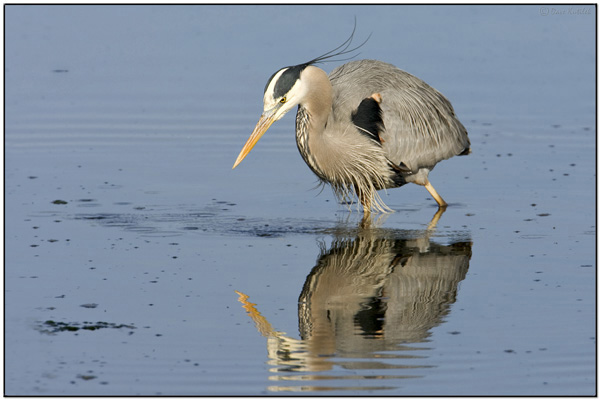
Great Blue Heron by Dan

Great Blue Heron

Great Blue Heron: Patient, Prompt, and (Rarely) Pugnacious

by Dr. James J. S. Johnson

Luzon Bleeding-heart by Dan

Orni-Theology

The heron family (family Ardeidae, which also includes bitterns and some egrets) and their cousins include some of my favorite long-legged wading birds:  great blue herons, green herons, grey herons, tri-colored herons, night herons, great white egrets, and cattle egrets.


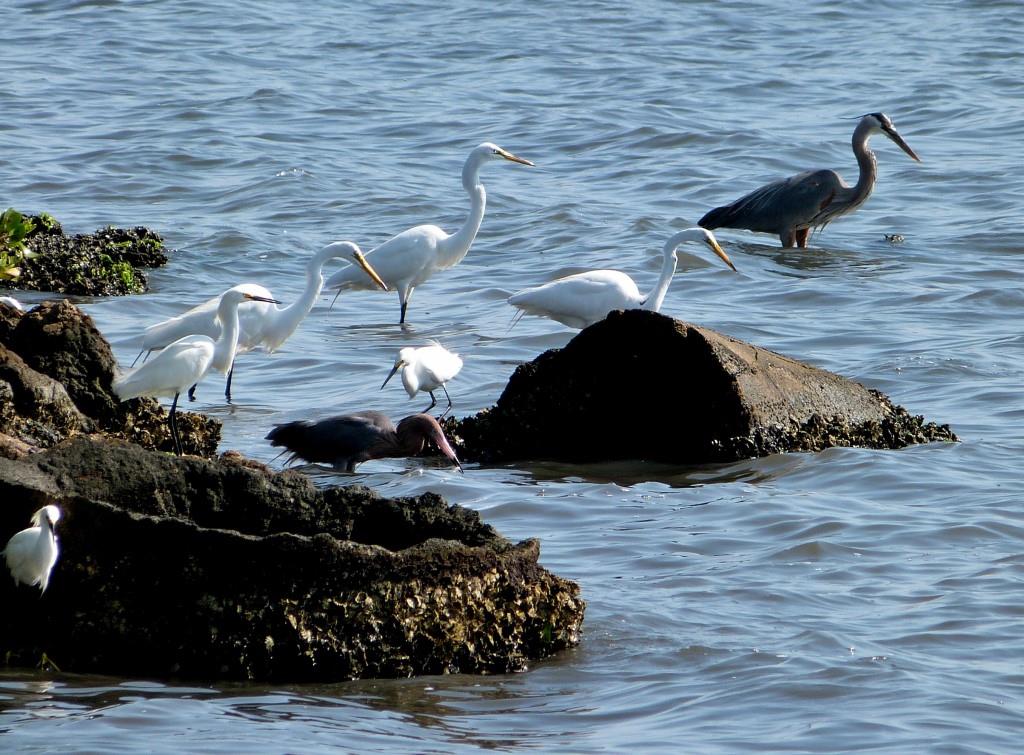
Reddish-Snowys-Greats Egrets -Great Blue Heron all MacDill by Lee

Reddish-Snowys-Greats Egrets -Great Blue Heron by Lee

Their often smaller cousins (of the family Egretta) include the reddish egret, little blue heron, and the snowy egret.  Of these many regard the great blue heron (Ardea herodias) as a favorite:

“For most of us, sightings of great blue herons are confined to a glimpse of the bird as it flies slowly and steadily overhead, wings arching gracefully down with each beat, neck bent back, and feet trailing behind.  At other times we see it on its feeding grounds, standing motionless and staring intently into shallow water, or wading with measured steps as it searches for prey.” [Quoting from “Great Blue Heron”, by Donald & Lillian Stokes, in Bird Behavior, Volume III (Little, Brown & Co., 1989), page 25.]

Great Blue Heron by Dave's Pix

Great Blue Heron by Dave’s Pix

The Holy Bible mentions “herons” twice, in Leviticus 11:19 and in Deuteronomy 14:18 (both times translating the Hebrew noun ’anaphah), in Mosaic lists of ritually “unclean” birds.   The bird’s Hebrew name is based on a verb (’anaph) meaning “to snort” or “to be angry”.  Herons can be aggressive, and their almost-violent habit of “zapping” their prey could appear to resemble an aggressor angrily striking at unsuspecting victim. The more likely behavior that matches the Hebrew name, however, is the aggressive defense of a heron’s feeding grounds:

“Defense of feeding territories is commonly seen and involves aerial chases, Frahnk-calls, and aggressive [body language] displays, such as Upright, Bill-down-upright, Bent-neck.  Fighting rarely occurs, but when it does it can be violent, with one bird landing on the back of the other and either bird stabbing the other with its bill.” [Quoting from “Great Blue Heron”, by Donald & Lillian Stokes, above, page 30.]

Yet do not imagine that the great blue heron is an erratic hothead that has no self-control, because its self-restraint, when seeking a meal at the shoreline of a pond, is so self-contained that the heron resembles a statue, for many minutes if necessary. Then, zap!  The statue suddenly fast-forwards his sharp beak toward a hapless fish or frog,   —  and instantly the heron is gulping down his dinner!

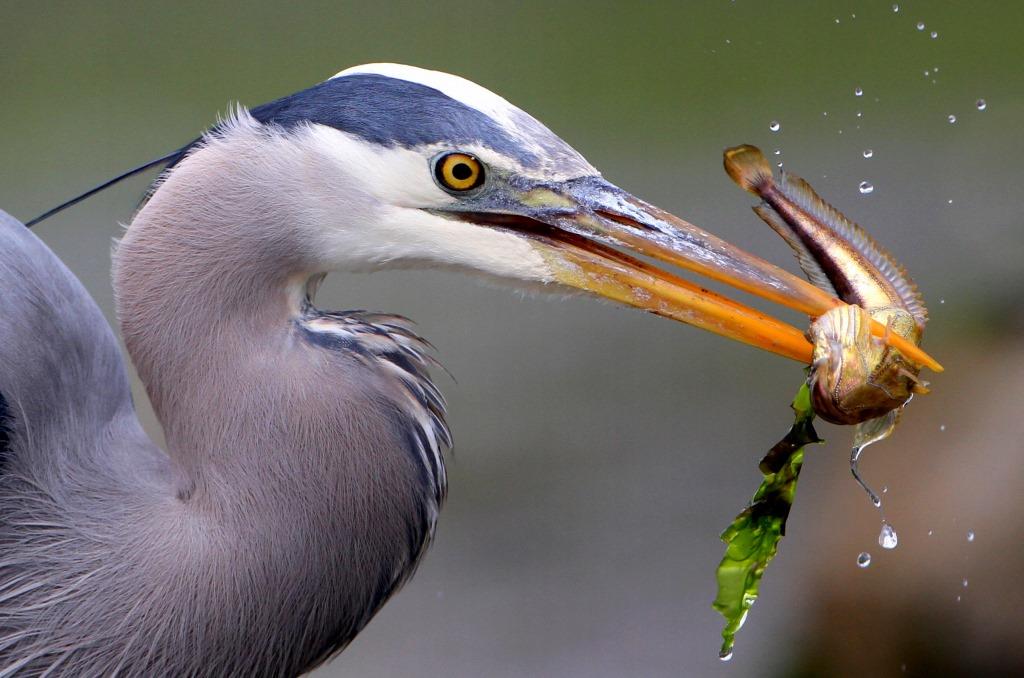
Great Blue Heron with fish ©© winnu on Flickr

This ability to strike like lightning, yet the choice to withhold doing so (unless the time for doing so is obvious), reminds us of the New Testament directive:  “be ye angry, and sin not” (Ephesians 4:26).

Also, in spiritual matters (Ephesians 6:12), we are exhorted to “contend earnestly” for the Biblical faith (Jude 1:3), in ways that do not involve flesh-and-blood fighting.  Such spiritual conflicts require both the patience and promptness of a sniper (or an opportunistic great blue heron)!   Yes, there may even come a time for the use of physical force, when the stakes are high enough –  remember how the Lord Jesus cleansed the Temple with a whip!  —  but most of the time our anger should be suppressed, with heron-like patience, in order to achieve the most worthy goals in life.

><> JJSJ

See:

Orni-Theology
Ardeidae- Herons, Bitterns
Birds of the Bible –  Herons
Dr. James J. S. Johnson – Guest Writer

*