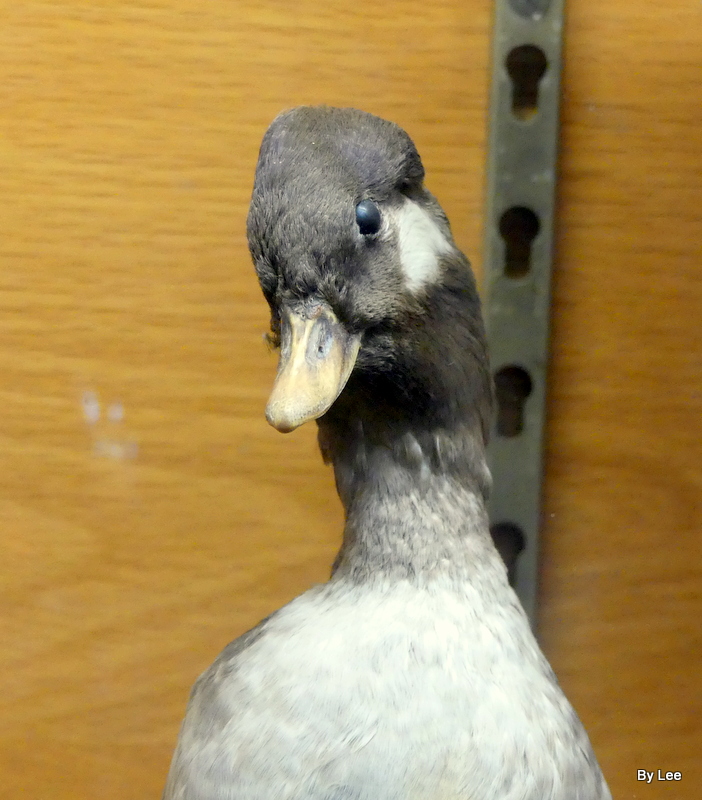
Matthew Chapter A Day – 5

Beginning of Matthew, in case you missed the first post. Matthew Chapter A Day – 1

Matthew Chapter 5 – Audio [Once started, go back to post to follow verses as he reads.] [You can have it read in other languages also.]

Matthew 5:1-48 KJV

The Sermon on the Mount
(1)  And seeing the multitudes, he went up into a mountain: and when he was set, his disciples came unto him:
The Beatitudes
(2)  And he opened his mouth, and taught them, saying,
(3)  Blessed are the poor in spirit: for theirs is the kingdom of heaven.
(4)  Blessed are they that mourn: for they shall be comforted.
(5)  Blessed are the meek: for they shall inherit the earth.
(6)  Blessed are they which do hunger and thirst after righteousness: for they shall be filled.
(7)  Blessed are the merciful: for they shall obtain mercy.
(8)  Blessed are the pure in heart: for they shall see God.
(9)  Blessed are the peacemakers: for they shall be called the children of God.
(10)  Blessed are they which are persecuted for righteousness’ sake: for theirs is the kingdom of heaven.
(11)  Blessed are ye, when men shall revile you, and persecute you, and shall say all manner of evil against you falsely, for my sake.
(12)  Rejoice, and be exceeding glad: for great is your reward in heaven: for so persecuted they the prophets which were before you.
Salt and Light
(13)  Ye are the salt of the earth: but if the salt have lost his savour, wherewith shall it be salted? it is thenceforth good for nothing, but to be cast out, and to be trodden under foot of men.
(14)  Ye are the light of the world. A city that is set on an hill cannot be hid.
(15)  Neither do men light a candle, and put it under a bushel, but on a candlestick; and it giveth light unto all that are in the house.
(16)  Let your light so shine before men, that they may see your good works, and glorify your Father which is in heaven.
Christ Came to Fulfill the Law
(17)  Think not that I am come to destroy the law, or the prophets: I am not come to destroy, but to fulfil.
(18)  For verily I say unto you, Till heaven and earth pass, one jot or one tittle shall in no wise pass from the law, till all be fulfilled.
(19)  Whosoever therefore shall break one of these least commandments, and shall teach men so, he shall be called the least in the kingdom of heaven: but whosoever shall do and teach them, the same shall be called great in the kingdom of heaven.
(20)  For I say unto you, That except your righteousness shall exceed the righteousness of the scribes and Pharisees, ye shall in no case enter into the kingdom of heaven.
Anger
(21)  Ye have heard that it was said by them of old time, Thou shalt not kill; and whosoever shall kill shall be in danger of the judgment:
(22)  But I say unto you, That whosoever is angry with his brother without a cause shall be in danger of the judgment: and whosoever shall say to his brother, Raca, shall be in danger of the council: but whosoever shall say, Thou fool, shall be in danger of hell fire.
(23)  Therefore if thou bring thy gift to the altar, and there rememberest that thy brother hath ought against thee;
(24)  Leave there thy gift before the altar, and go thy way; first be reconciled to thy brother, and then come and offer thy gift.
(25)  Agree with thine adversary quickly, whiles thou art in the way with him; lest at any time the adversary deliver thee to the judge, and the judge deliver thee to the officer, and thou be cast into prison.
(26)  Verily I say unto thee, Thou shalt by no means come out thence, till thou hast paid the uttermost farthing.
Lust
(27)  Ye have heard that it was said by them of old time, Thou shalt not commit adultery:
(28)  But I say unto you, That whosoever looketh on a woman to lust after her hath committed adultery with her already in his heart.
(29)  And if thy right eye offend thee, pluck it out, and cast it from thee: for it is profitable for thee that one of thy members should perish, and not that thy whole body should be cast into hell.
(30)  And if thy right hand offend thee, cut it off, and cast it from thee: for it is profitable for thee that one of thy members should perish, and not that thy whole body should be cast into hell.
Divorce
(31)  It hath been said, Whosoever shall put away his wife, let him give her a writing of divorcement:
(32)  But I say unto you, That whosoever shall put away his wife, saving for the cause of fornication, causeth her to commit adultery: and whosoever shall marry her that is divorced committeth adultery.
Oaths
(33)  Again, ye have heard that it hath been said by them of old time, Thou shalt not forswear thyself, but shalt perform unto the Lord thine oaths:
(34)  But I say unto you, Swear not at all; neither by heaven; for it is God’s throne:
(35)  Nor by the earth; for it is his footstool: neither by Jerusalem; for it is the city of the great King.
(36)  Neither shalt thou swear by thy head, because thou canst not make one hair white or black.
(37)  But let your communication be, Yea, yea; Nay, nay: for whatsoever is more than these cometh of evil.
Retaliation
(38)  Ye have heard that it hath been said, An eye for an eye, and a tooth for a tooth:
(39)  But I say unto you, That ye resist not evil: but whosoever shall smite thee on thy right cheek, turn to him the other also.
(40)  And if any man will sue thee at the law, and take away thy coat, let him have thy cloke also.
(41)  And whosoever shall compel thee to go a mile, go with him twain.
(42)  Give to him that asketh thee, and from him that would borrow of thee turn not thou away.
Love Your Enemies
(43)  Ye have heard that it hath been said, Thou shalt love thy neighbour, and hate thine enemy.
(44)  But I say unto you, Love your enemies, bless them that curse you, do good to them that hate you, and pray for them which despitefully use you, and persecute you;
(45)  That ye may be the children of your Father which is in heaven: for he maketh his sun to rise on the evil and on the good, and sendeth rain on the just and on the unjust.
(46)  For if ye love them which love you, what reward have ye? do not even the publicans the same?
(47)  And if ye salute your brethren only, what do ye more than others? do not even the publicans so?
(48)  Be ye therefore perfect, even as your Father which is in heaven is perfect.

Good News

Scripture: e-Sword

Photos:
Sermon on the Mount ©WikiC-Bloch
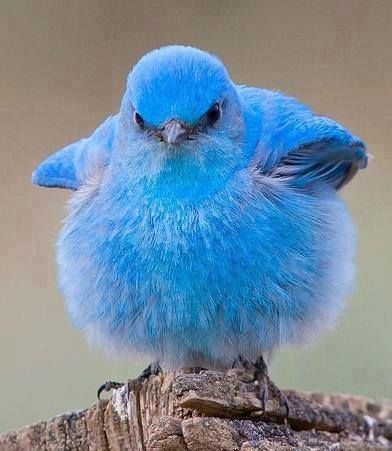
Mountain Bluebird (Sialia currucoides) ©Smediacache

Matthew Chapter A Day – 4

Beginning of Matthew, in case you missed the first post. Matthew Chapter A Day – 1

Matthew Chapter 4 – Audio [Once started, go back to post to follow verses as he reads.]
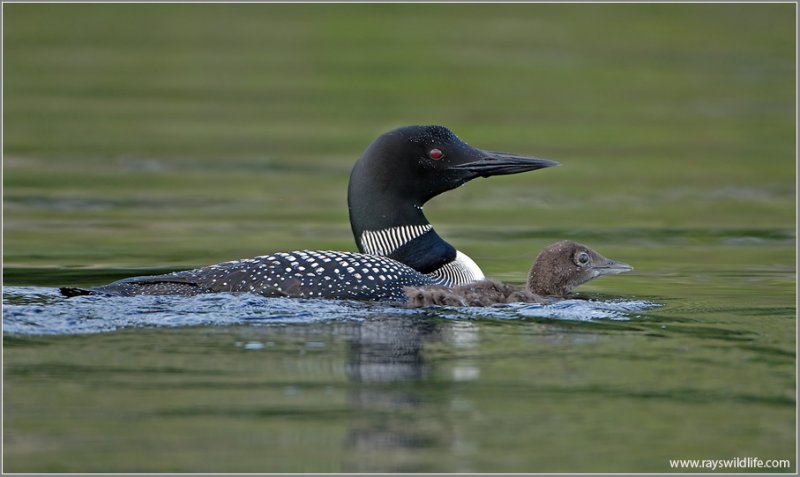
Matthew 4:1-25 KJV

The Temptation of Jesus
(1)  Then was Jesus led up of the Spirit into the wilderness to be tempted of the devil.
(2)  And when he had fasted forty days and forty nights, he was afterward an hungred.
(3)  And when the tempter came to him, he said, If thou be the Son of God, command that these stones be made bread.
(4)  But he answered and said, It is written, Man shall not live by bread alone, but by every word that proceedeth out of the mouth of God.
(5)  Then the devil taketh him up into the holy city, and setteth him on a pinnacle of the temple,
(6)  And saith unto him, If thou be the Son of God, cast thyself down: for it is written, He shall give his angels charge concerning thee: and in their hands they shall bear thee up, lest at any time thou dash thy foot against a stone.
(7)  Jesus said unto him, It is written again, Thou shalt not tempt the Lord thy God.
(8)  Again, the devil taketh him up into an exceeding high mountain, and sheweth him all the kingdoms of the world, and the glory of them;
(9)  And saith unto him, All these things will I give thee, if thou wilt fall down and worship me.
(10)  Then saith Jesus unto him, Get thee hence, Satan: for it is written, Thou shalt worship the Lord thy God, and him only shalt thou serve.
(11)  Then the devil leaveth him, and, behold, angels came and ministered unto him.
Jesus Begins His Ministry
(12)  Now when Jesus had heard that John was cast into prison, he departed into Galilee;
(13)  And leaving Nazareth, he came and dwelt in Capernaum, which is upon the sea coast, in the borders of Zabulon and Nephthalim:
(14)  That it might be fulfilled which was spoken by Esaias the prophet, saying,
(15)  The land of Zabulon, and the land of Nephthalim, by the way of the sea, beyond Jordan, Galilee of the Gentiles;
(16)  The people which sat in darkness saw great light; and to them which sat in the region and shadow of death light is sprung up.
(17)  From that time Jesus began to preach, and to say, Repent: for the kingdom of heaven is at hand.


Jesus Calls the First Disciples
(18)  And Jesus, walking by the sea of Galilee, saw two brethren, Simon called Peter, and Andrew his brother, casting a net into the sea: for they were fishers.
(19)  And he saith unto them, Follow me, and I will make you fishers of men.
(20)  And they straightway left their nets, and followed him.
(21)  And going on from thence, he saw other two brethren, James the son of Zebedee, and John his brother, in a ship with Zebedee their father, mending their nets; and he called them.
(22)  And they immediately left the ship and their father, and followed him.
Jesus Ministers to Great Crowds
(23)  And Jesus went about all Galilee, teaching in their synagogues, and preaching the gospel of the kingdom, and healing all manner of sickness and all manner of disease among the people.
(24)  And his fame went throughout all Syria: and they brought unto him all sick people that were taken with divers diseases and torments, and those which were possessed with devils, and those which were lunatick, and those that had the palsy; and he healed them.
(25)  And there followed him great multitudes of people from Galilee, and from Decapolis, and from Jerusalem, and from Judaea, and from beyond Jordan.

Good News

Photos:
Mountains from the Tuckaleechee Retreat Center Lodge by Lee
Seashore at MacDill by Dan

Matthew Chapter A Day – 3

DOVE (credit: Fanpop Wallpaper)

Beginning of Matthew, in case you missed the first post. Matthew Chapter A Day – 1

Matthew Chapter 3 – Audio [Once started, go back to post to follow verses as he reads.]

Matthew 3:1-17 KJV

John the Baptist Prepares the Way
(1)  In those days came John the Baptist, preaching in the wilderness of Judaea,
(2)  And saying, Repent ye: for the kingdom of heaven is at hand.
(3)  For this is he that was spoken of by the prophet Esaias, saying, The voice of one crying in the wilderness, Prepare ye the way of the Lord, make his paths straight.
(4)  And the same John had his raiment of camel’s hair, and a leathern girdle about his loins; and his meat was locusts and wild honey.
(5)  Then went out to him Jerusalem, and all Judaea, and all the region round about Jordan,
(6)  And were baptized of him in Jordan, confessing their sins.
(7)  But when he saw many of the Pharisees and Sadducees come to his baptism, he said unto them, O generation of vipers, who hath warned you to flee from the wrath to come?
(8)  Bring forth therefore fruits meet for repentance:
(9)  And think not to say within yourselves, We have Abraham to our father: for I say unto you, that God is able of these stones to raise up children unto Abraham.
(10)  And now also the axe is laid unto the root of the trees: therefore every tree which bringeth not forth good fruit is hewn down, and cast into the fire.
(11)  I indeed baptize you with water unto repentance: but he that cometh after me is mightier than I, whose shoes I am not worthy to bear: he shall baptize you with the Holy Ghost, and with fire:
(12)  Whose fan is in his hand, and he will throughly purge his floor, and gather his wheat into the garner; but he will burn up the chaff with unquenchable fire.


The Baptism of Jesus
(13)  Then cometh Jesus from Galilee to Jordan unto John, to be baptized of him.
(14)  But John forbad him, saying, I have need to be baptized of thee, and comest thou to me?
(15)  And Jesus answering said unto him, Suffer it to be so now: for thus it becometh us to fulfil all righteousness. Then he suffered him.
(16)  And Jesus, when he was baptized, went up straightway out of the water: and, lo, the heavens were opened unto him, and he saw the Spirit of God descending like a dove, and lighting upon him:
(17)  And lo a voice from heaven, saying, This is my beloved Son, in whom I am well pleased.

Good News

Matthew Chapter A Day – 2

Beginning of Matthew, in case you missed the first post. Matthew Chapter A Day – 1

Matthew Chapter 2 – Audio

Matthew 2:1-23 KJV

The Visit of the Wise Men
(1)  Now when Jesus was born in Bethlehem of Judaea in the days of Herod the king, behold, there came wise men from the east to Jerusalem,
(2)  Saying, Where is he that is born King of the Jews? for we have seen his star in the east, and are come to worship him.
(3)  When Herod the king had heard these things, he was troubled, and all Jerusalem with him.
(4)  And when he had gathered all the chief priests and scribes of the people together, he demanded of them where Christ should be born.
(5)  And they said unto him, In Bethlehem of Judaea: for thus it is written by the prophet,
(6)  And thou Bethlehem, in the land of Juda, art not the least among the princes of Juda: for out of thee shall come a Governor, that shall rule my people Israel.
(7)  Then Herod, when he had privily called the wise men, enquired of them diligently what time the star appeared.
(8)  And he sent them to Bethlehem, and said, Go and search diligently for the young child; and when ye have found him, bring me word again, that I may come and worship him also.
(9)  When they had heard the king, they departed; and, lo, the star, which they saw in the east, went before them, till it came and stood over where the young child was.
(10)  When they saw the star, they rejoiced with exceeding great joy.
(11)  And when they were come into the house, they saw the young child with Mary his mother, and fell down, and worshipped him: and when they had opened their treasures, they presented unto him gifts; gold, and frankincense, and myrrh.
(12)  And being warned of God in a dream that they should not return to Herod, they departed into their own country another way.

The Flight to Egypt
(13)  And when they were departed, behold, the angel of the Lord appeareth to Joseph in a dream, saying, Arise, and take the young child and his mother, and flee into Egypt, and be thou there until I bring thee word: for Herod will seek the young child to destroy him.
(14)  When he arose, he took the young child and his mother by night, and departed into Egypt:
(15)  And was there until the death of Herod: that it might be fulfilled which was spoken of the Lord by the prophet, saying, Out of Egypt have I called my son.
Herod Kills the Children
(16)  Then Herod, when he saw that he was mocked of the wise men, was exceeding wroth, and sent forth, and slew all the children that were in Bethlehem, and in all the coasts thereof, from two years old and under, according to the time which he had diligently enquired of the wise men.
(17)  Then was fulfilled that which was spoken by Jeremy the prophet, saying,
(18)  In Rama was there a voice heard, lamentation, and weeping, and great mourning, Rachel weeping for her children, and would not be comforted, because they are not.
(19)  But when Herod was dead, behold, an angel of the Lord appeareth in a dream to Joseph in Egypt,
(20)  Saying, Arise, and take the young child and his mother, and go into the land of Israel: for they are dead which sought the young child’s life.
(21)  And he arose, and took the young child and his mother, and came into the land of Israel.
(22)  But when he heard that Archelaus did reign in Judaea in the room of his father Herod, he was afraid to go thither: notwithstanding, being warned of God in a dream, he turned aside into the parts of Galilee:
(23)  And he came and dwelt in a city called Nazareth: that it might be fulfilled which was spoken by the prophets, He shall be called a Nazarene.
The Return to Nazareth
Mat 2:19  But when Herod was dead, behold, an angel of the Lord appeareth in a dream to Joseph in Egypt,
Mat 2:20  Saying, Arise, and take the young child and his mother, and go into the land of Israel: for they are dead which sought the young child’s life.
Mat 2:21  And he arose, and took the young child and his mother, and came into the land of Israel.
Mat 2:22  But when he heard that Archelaus did reign in Judaea in the room of his father Herod, he was afraid to go thither: notwithstanding, being warned of God in a dream, he turned aside into the parts of Galilee:
Mat 2:23  And he came and dwelt in a city called Nazareth: that it might be fulfilled which was spoken by the prophets, He shall be called a Nazarene.

Good News

Matthew Chapter A Day – 1

I keep seeing the suggestion to read the Bible’s Book of Matthew during the month of December, one day at a time. Even though this is two days late, here is Chapter 1. After catching up, the others will be on the correct day. You may want to listen to the Word read as you read it. Christmas time is so busy, that we forget to remember the Real Reason for the holiday season.

Like the rest of many of you, I also am busy, and will schedule these in advance. Trust you will take the time to read/listen to the Word of God and reflect on the most important gift given to man. The Lord Jesus Christ, the Saviour of the World. He is also the Creator of all these birds that we present on this blog.


Matthew Chapter 1 – Audio

The Genealogy of Jesus Christ
Matthew 1:1-25 KJV

(1)  The book of the generation of Jesus Christ, the son of David, the son of Abraham.
(2)  Abraham begat Isaac; and Isaac begat Jacob; and Jacob begat Judas and his brethren;
(3)  And Judas begat Phares and Zara of Thamar; and Phares begat Esrom; and Esrom begat Aram;
(4)  And Aram begat Aminadab; and Aminadab begat Naasson; and Naasson begat Salmon;
(5)  And Salmon begat Booz of Rachab; and Booz begat Obed of Ruth; and Obed begat Jesse;
(6)  And Jesse begat David the king; and David the king begat Solomon of her that had been the wife of Urias;
(7)  And Solomon begat Roboam; and Roboam begat Abia; and Abia begat Asa;
(8)  And Asa begat Josaphat; and Josaphat begat Joram; and Joram begat Ozias;
(9)  And Ozias begat Joatham; and Joatham begat Achaz; and Achaz begat Ezekias;
(10)  And Ezekias begat Manasses; and Manasses begat Amon; and Amon begat Josias;
(11)  And Josias begat Jechonias and his brethren, about the time they were carried away to Babylon:
(12)  And after they were brought to Babylon, Jechonias begat Salathiel; and Salathiel begat Zorobabel;
(13)  And Zorobabel begat Abiud; and Abiud begat Eliakim; and Eliakim begat Azor;
(14)  And Azor begat Sadoc; and Sadoc begat Achim; and Achim begat Eliud;
(15)  And Eliud begat Eleazar; and Eleazar begat Matthan; and Matthan begat Jacob;
(16)  And Jacob begat Joseph the husband of Mary, of whom was born Jesus, who is called Christ.
(17)  So all the generations from Abraham to David are fourteen generations; and from David until the carrying away into Babylon are fourteen generations; and from the carrying away into Babylon unto Christ are fourteen generations.

Birth of Christ from an e-mail

(18)  Now the birth of Jesus Christ was on this wise: When as his mother Mary was espoused to Joseph, before they came together, she was found with child of the Holy Ghost.
(19)  Then Joseph her husband, being a just man, and not willing to make her a publick example, was minded to put her away privily.
(20)  But while he thought on these things, behold, the angel of the Lord appeared unto him in a dream, saying, Joseph, thou son of David, fear not to take unto thee Mary thy wife: for that which is conceived in her is of the Holy Ghost.
(21)  And she shall bring forth a son, and thou shalt call his name JESUS: for he shall save his people from their sins.
(22)  Now all this was done, that it might be fulfilled which was spoken of the Lord by the prophet, saying,
(23)  Behold, a virgin shall be with child, and shall bring forth a son, and they shall call his name Emmanuel, which being interpreted is, God with us.
(24)  Then Joseph being raised from sleep did as the angel of the Lord had bidden him, and took unto him his wife:
(25)  And knew her not till she had brought forth her firstborn son: and he called his name JESUS.

Christmas Gospel Presentation

Woodpeckers in the Waterman Bird Collection

BJU Bird Collection 2018-Display Case 3 – Woodpeckers and Shorebirds

“If a bird’s nest happens to be before you along the way, in any tree or on the ground, with young ones or eggs, with the mother sitting on the young or on the eggs, you shall not take the mother with the young;” (Deuteronomy 22:6 NKJV)

The next Display case of the Waterman Bird Collection contains Woodpeckers from the Picidae family and some shorebirds from the Scolopacidae Family. [Next post]

BJU Bird Collection 2018
– Woodpeckers

This post is about the five Woodpeckers; Pileated Woodpecker (Dryocopus pileatus), Black-backed Three-toed Woodpecker [now the Black-backed Woodpecker (Picoides arcticus)], Downy Woodpecker (Dryobates pubescens), Yellow-bellied Sapsucker (Sphyrapicus varius) and a Common Flicker [now the Northern Flicker (Colaptes auratus).

Pileated Woodpecker (Dryocopus pileatus) 

BJU Bird Collection 2018 Pileated Woodpecker (Dryocopus pileatus)

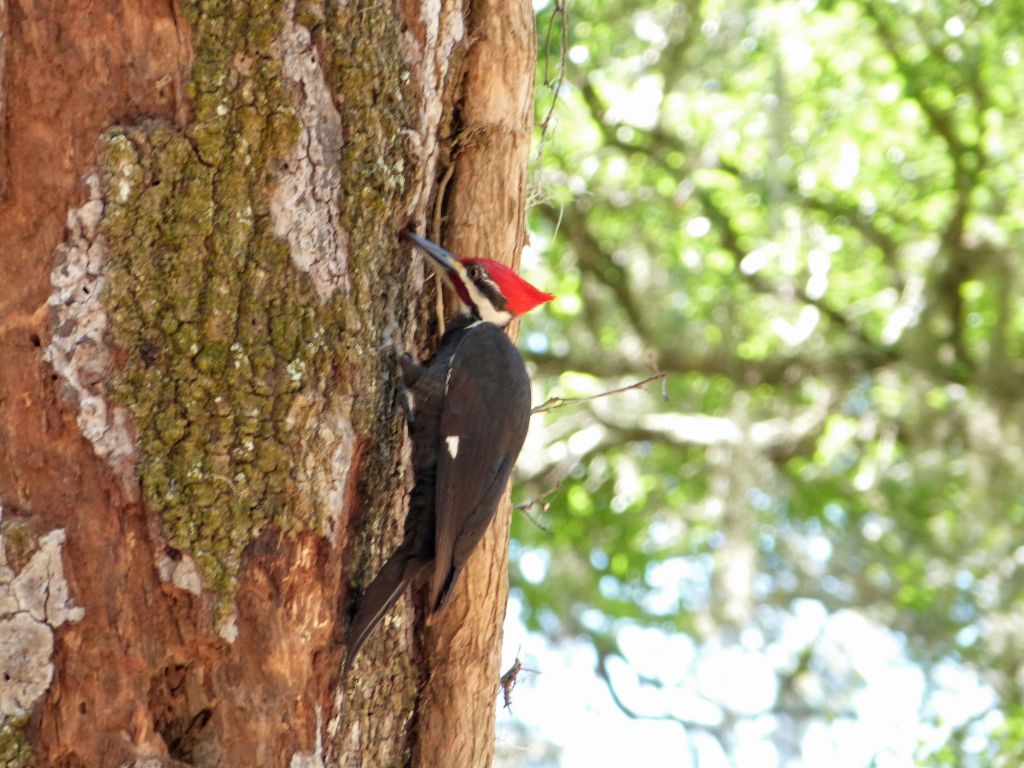
Pileated Woodpecker (Dryocopus pileatus)  “The Pileated Woodpecker is one of the biggest, most striking forest birds on the continent. It’s nearly the size of a crow, black with bold white stripes down the neck and a flaming-red crest. Look (and listen) for Pileated Woodpeckers whacking at dead trees and fallen logs in search of their main prey, carpenter ants, leaving unique rectangular holes in the wood. The nest holes these birds make offer crucial shelter to many species including swifts, owls, ducks, bats, and pine martens.”

Pileated Woodpecker by Lee at Circle B

Pileated Woodpecker by Lee at Circle B

Cool Facts – “The Pileated Woodpecker digs characteristically rectangular holes in trees to find ants. These excavations can be so broad and deep that they can cause small trees to break in half.” [Pileated Woodpecker – All About Birds]

American Three-toed Woodpecker (Picoides dorsalis)

BJU Bird Collection 2018 BJU Bird Collection Black-backed Woodpecker (Picoides arcticus)

American Three-toed Woodpecker (Picoides dorsalis) – “Found in boreal forests and montane coniferous forests across North America. Because of its choice of habitat, it is infrequently seen by most people.” “The “Three-toed Woodpecker” was split in 2003 into the American Three-toed and Eurasian Three-toed woodpeckers. The two species are nearly identical in appearance, but differ in mitochondrial DNA sequences and in voice.”

American Three-toed Woodpecker (Picoides dorsalis) by Daves BirdingPix

American Three-toed Woodpecker (Picoides dorsalis) by Daves BirdingPix

Cool Fact “Most woodpeckers have four toes on each foot. The three-toed and Black-backed woodpeckers have only three. The loss of the fourth toe may help deliver stronger blows, but at the expense of climbing ability.” [American Three-toed_Woodpecker – All About Birds]

Downy Woodpecker (Dryobates pubescens)

Downy Woodpecker (Picoides pubescens) Male – Waterman Bird Collection BJU

Downy Woodpecker (Dryobates pubescens) – “The active little Downy Woodpecker is a familiar sight at backyard feeders and in parks and woodlots, where it joins flocks of chickadees and nuthatches, barely outsizing them. An often acrobatic forager, this black-and-white woodpecker is at home on tiny branches or balancing on slender plant galls, sycamore seed balls, and suet feeders. Downies and their larger lookalike, the Hairy Woodpecker, are one of the first identification challenges that beginning bird watchers master.”

Downy Woodpecker (Picoides pubescens) Brevard Zoo by Dan

Downy Woodpecker (Picoides pubescens) Brevard Zoo by Dan

Cool Facts – “In winter Downy Woodpeckers are frequent members of mixed species flocks. Advantages of flocking include having to spend less time watching out for predators and better luck finding food from having other birds around.” [Downy Woodpecker – All About Birds]

Yellow-bellied Sapsucker (Sphyrapicus varius)

BJU Bird Collection 2018 Yellow-bellied Sapsucker (Sphyrapicus varius)

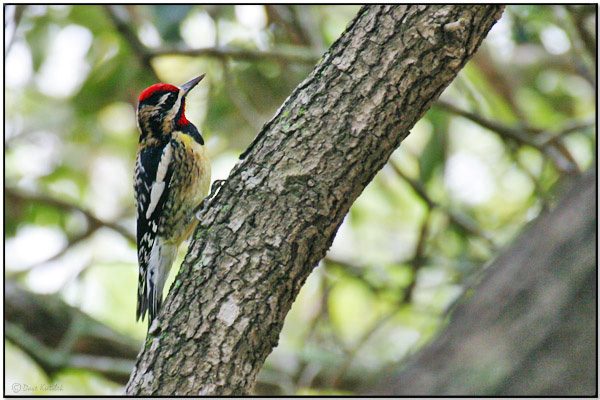
Yellow-bellied Sapsucker (Sphyrapicus varius) – “On a walk through the forest you might spot rows of shallow holes in tree bark. In the East, this is the work of the Yellow-bellied Sapsucker, an enterprising woodpecker that laps up the leaking sap and any trapped insects with its specialized, brush-tipped tongue. Attired sharply in barred black-and-white, with a red cap and (in males) throat, they sit still on tree trunks for long intervals while feeding. To find one, listen for their loud mewing calls or stuttered drumming.”

Yellow-bellied Sapsucker (Sphyrapicus varius) by Daves BirdingPix

Yellow-bellied Sapsucker (Sphyrapicus varius) by Daves BirdingPix

Cool Facts – “Yellow-bellied Sapsuckers have been found drilling sapwells in more than 1,000 species of trees and woody plants, though they have a strong preference for birches and maples.”[Yellow-bellied Sapsucker – All About Birds]

Northern Flicker (Colaptes auratus)

BJU Bird Collection 2018 Northern Flicker (Colaptes auratus)

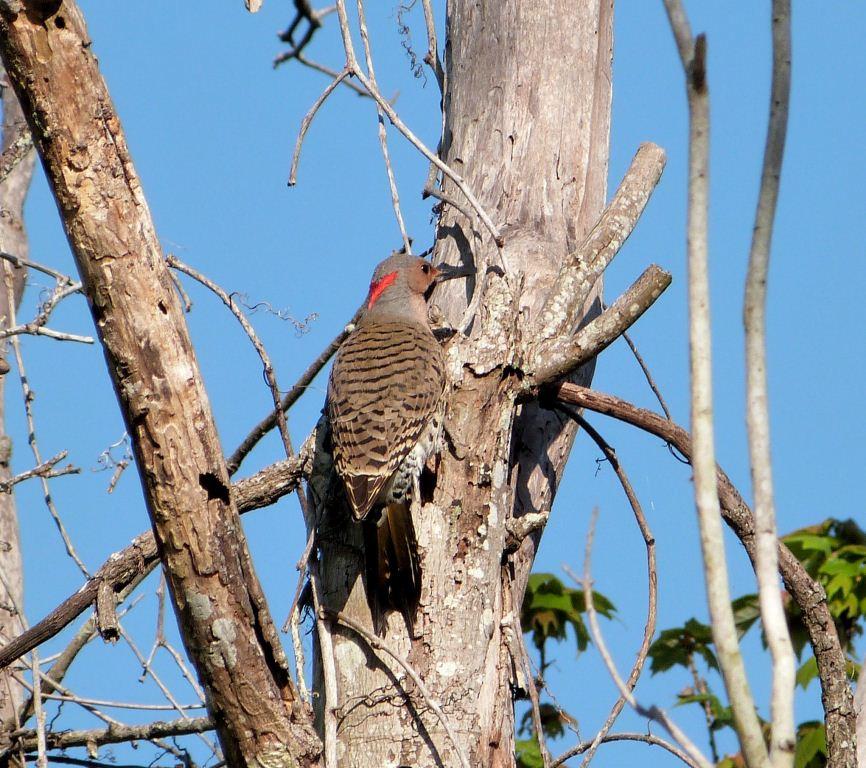
Northern Flicker (Colaptes auratus) – “Northern Flickers are large, brown woodpeckers with a gentle expression and handsome black-scalloped plumage. On walks, don’t be surprised if you scare one up from the ground. It’s not where you’d expect to find a woodpecker, but flickers eat mainly ants and beetles, digging for them with their unusual, slightly curved bill. When they fly you’ll see a flash of color in the wings – yellow if you’re in the East, red if you’re in the West – and a bright white flash on the rump.”

Northern Flicker cropped by Lee at S. Lk Howard Ntr Pk

Northern Flicker cropped by Lee at S. Lake Howard Nature Pk

Cool Fact – “Although it can climb up the trunks of trees and hammer on wood like other woodpeckers, the Northern Flicker prefers to find food on the ground. Ants are its main food, and the flicker digs in the dirt to find them. It uses its long barbed tongue to lap up the ants.” [Northern Flicker – All About Birds]

*

Picidae family

PICIFORMES Order

Some of the Previous Woodpecker Posts:

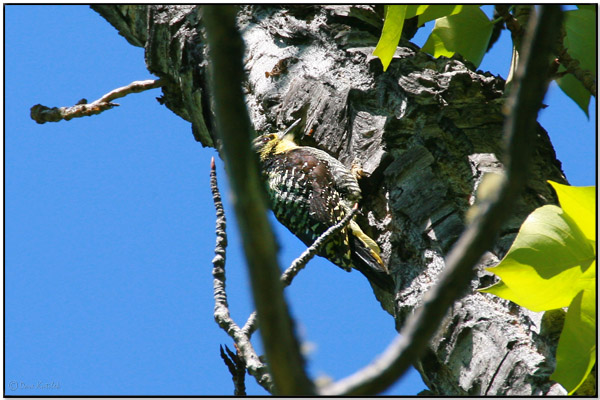
Wordless Woodpecker – Yellow-Fronted


Double Life of a Hummingbird – Creation Moments

Learn more about one of God’s most
unusual creatures by watching our video
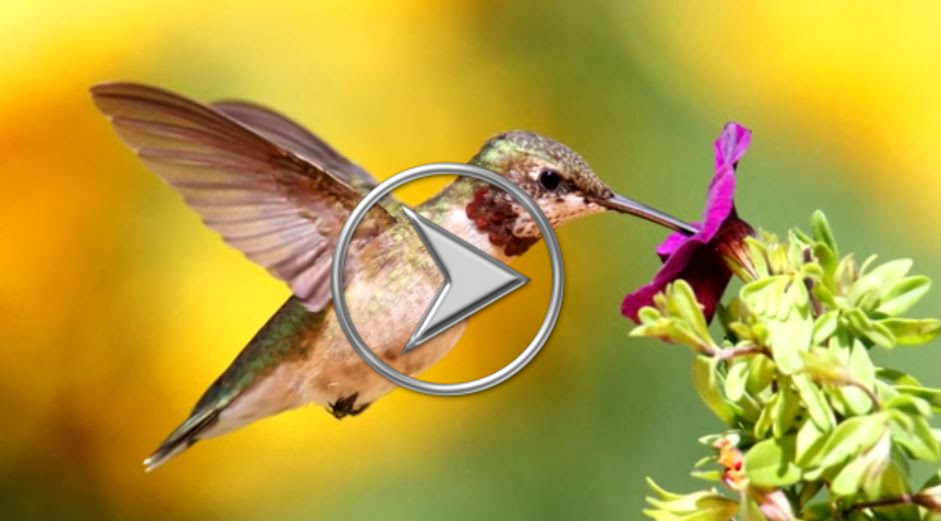
“Double Life of the Hummingbird”

Who doesn’t love the beautiful hummingbird? You’ll love them even more after viewing our “Double Life of the Hummingbird” video! That’s because you’ll learn about the unique abilities their Designer has given them. Truly, hummingbirds bear evidence of God’s creative hand!

This Week’s Creation Action Moment:

1. Watch our “Double Life of the Hummingbird” video by clicking here or on the picture above.

[Used with permission of Creation Moments]

Bible Birds – Hawk Introduction

Red-tailed Hawk (Buteo jamaicensis) by Dan (closeup)

“Does the hawk fly by your wisdom, And spread its wings toward the south? (Job 39:26 NKJV)

According to the King James Version of Scripture, the other two verses with hawk in them are:

“the ostrich, the short-eared owl, the sea gull, and the hawk after its kind;” (Leviticus 11:16 NKJV)

“the ostrich, the short-eared owl, the sea gull, and the hawk after their kinds;” (Deuteronomy 14:15 NKJV)

For more advanced reading, you can check out Birds of the Bible – Clean vs. Unclean,  Birds of the Bible – The Law Of The Birds and Deuteronomy 14:11-18 Visualized on Leesbird.com

What is a Hawk? To what Family of birds does it belong?

Harris Hawk in Training at National Aviary

Hawks are one of God’s Created Avian Wonders. The bird family of Hawks, Accipitridae, not only includes Hawks, but also Eagles, Kites, Harriers, Vultures, plus more. The Lord has given them great eyesight, hearing, and speed.

Hawks have excellent eyesight. They can see up to 8 times more clearly than the sharpest human eye. Eyesight is primarily used for hunting.

Their hearing is acute, but their sense of smell is poor.

Hawk species are known for their speed, particularly when chasing prey. During the hunt, some species of hawks can dive 240 kilometers (150 miles) per hour through the air. [Just Fun Facts]

“All hawks are almost exactly the same structurally as all other birds, and the distinguishing features that set them apart from all of the other hawks are minute. Hawks are distinguished from all other birds, especially falcons, by their broader, more rounded wings. They also have sharp, curved, hooked bills, strong feet with curved talons, and amazing sight capabilities. All hawks have uniform 20/2 vision, exactly 8 times better than a human with good eyesight! Almost all male hawks are smaller than females.” Hawks – CreationWiki [with editing]

Great Black Hawk (Buteogallus urubitinga) ©WikiC
Sharp-shinned Hawk (Accipiter striatus) ©USFWS
Short-tailed Hawk (Buteo brachyurus) ©WikiC

Hawks are in the Accipitridae Family of Kites, Hawks & Eagles and you can read more about them in the Birds of the Bible – Hawk section.
Hawks have claws which are used for catching their prey. Beware of these:

Red-tailed Hawk (Buteo jamaicensis) talons by Beedie
  • A Cooper’s Hawk captures a bird with its feet and kills it by repeated squeezing. Falcons tend to kill their prey by biting it, but Cooper’s Hawks hold their catch away from the body until it dies. [Cool Fact from All about Birds]

Hawks and the other birds in this family did not always prey (catch) other living critters. Because of sin, these avian creations from the Lord, were placed under God’s curse. One day, when that curse is removed, the birds of prey will become birds of play [with others.]

Check out All About Birds – Hawks and Falcons

See also:

Accipitriformes – Order, Accipitridae – Family (Kites, Hawks & Eagles)

ABC’s of the Gospel

Pleasant Surprise – Petrel and Crow

Leach’s Storm Petrel (Oceanodroma leucorhoa) BJU Bird Collection 2018

Just realized I didn’t post this. Again, it is a duplicate of a Waterman Bird Collection – Part II – Petrel & Crow article on the Birds of the Bible for Kids blog. [I am behind in blogging] This time it is about the Leach’s Storm Petrel and the Crow.

As promised, in Waterman Bird Collection – Part II, here are the last two birds from that display. The Leach’s Storm Petrel and the Crow will now be introduced. Many of you already have heard of a Crow, but how about a Storm Petrel? Let’s see what we can find out about these avian creations from the Creator.

BJU Bird Collection 2018 Bottom Shelf

The two birds today are the two right hand birds in the Display.

The Leach’s Storm Petrel [at the top] is starting to show a tiny bit of deterioration, but considering it’s over 100 years old, it’s not too much.

“The Leach’s Storm Petrel or Leach’s Petrel (Oceanodroma leucorhoa) is a small seabird of the tubenose order. It is named after the British zoologist William Elford Leach. The scientific name is derived from Ancient Greek. Oceanodroma is from okeanos, “ocean” and dromos, “runner”, and leucorhoa is from leukos, “white” and orrhos, “rump”.

“It breeds on inaccessible islands in the colder northern areas of the Atlantic and Pacific. It nests in colonies close to the sea in well concealed areas such as rock crevices, shallow burrows or even logs. It lays a single white egg which often has a faint ring of spots at the large end. This storm petrel is strictly nocturnal at the breeding sites to avoid predation by gulls and skuas, and will even avoid coming to land on clear moonlit nights. The largest colony of Leach’s storm petrels can be found on Baccalieu Island of eastern Canada, an ecological reserve with more than 3 million pairs of the bird.” [Wikipedia with editing]

Fun Fact: “Flies swiftly, erratically, buoyantly with 1 or 2 fast, powerful flaps followed by glides on wings held well above the horizontal and noticeably kinked; sudden changes of direction impart a bounding quality. Flutters less than other storm-petrels.” [Neotropical Birds]

Drinks salt water – Formed By Him – Sea Birds That Drink Seawater, is an interesting article about Tubenose birds.

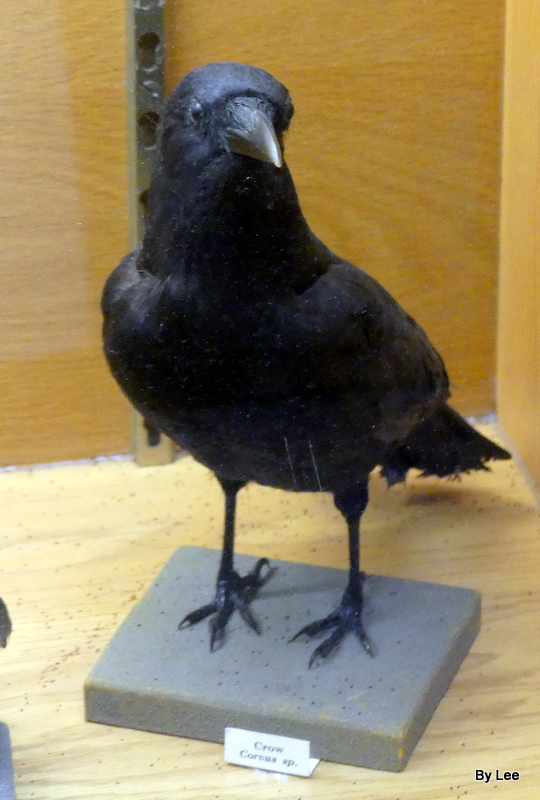
American Crow (Corvus brachyrhynchos) BJU Bird Collection 2018

The last bird in the part of the collection is a Crow. It wasn’t shown which one exactly, so we are using the American Crow.

“The American crow (Corvus brachyrhynchos) is a large passerine bird species of the family Corvidae. It is a common bird found throughout much of North America. American crows are the new world counterpart to the carrion crow and the hooded crow. Although the American crow and the hooded crow are very similar in size, structure and behavior, their calls are different. The American crow nevertheless occupies the same role the hooded crow does in Eurasia.”

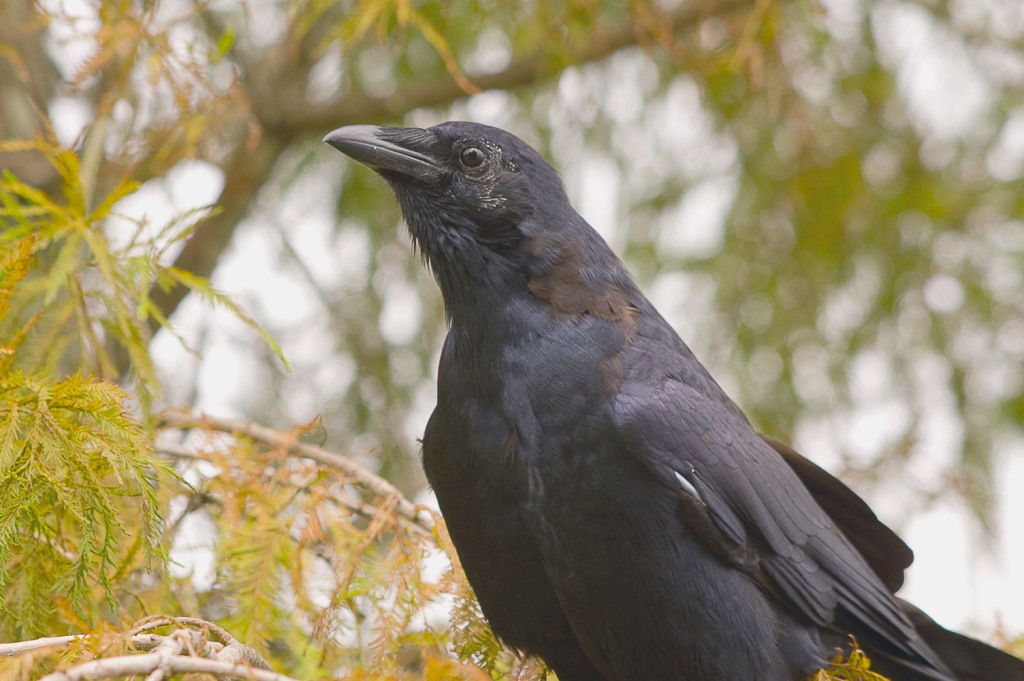
Florida Fish Crow (Corvus ossifragus) at Lake Morton By Dan’sPix

“From beak to tail, an American crow measures 40–50 cm (16–20 in), almost half of which is tail. Mass varies from about 300 to 600 g (11 to 21 oz). Males tend to be larger than females. The most usual call is CaaW!-CaaW!-CaaW!.’

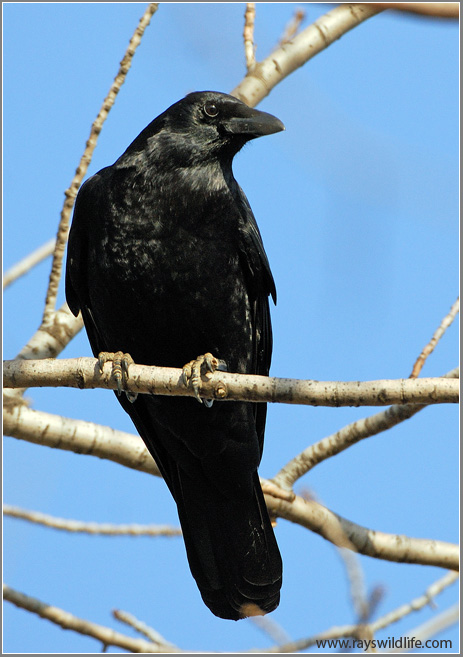
American Crow (Corvus brachyrhynchos) by Ray

“The American crow is all black, with iridescent feathers. It looks much like other all-black corvids. They can be distinguished from the common raven (C. corax) because American crows are smaller and from the fish crow (C. ossifragus) because American crows do not hunch and fluff their throat feathers when they call, and from the carrion crow (C. corone) by the enunciation of their calls.” [American Crow – Wikipedia]

A Cool Fact from American Crows – All About Birds:

  • Crows sometimes make and use tools. Examples include a captive crow using a cup to carry water over to a bowl of dry mash; shaping a piece of wood and then sticking it into a hole in a fence post in search of food; and breaking off pieces of pine cone to drop on tree climbers near a nest.

*

Here are the links to this Series:

A Pleasant Surprise At The BJU Homecoming

Pleasant Surprise II

Pleasant Surprise III


Birds of the Bible – Black-faced Ibis at Jax Zoo by Dan

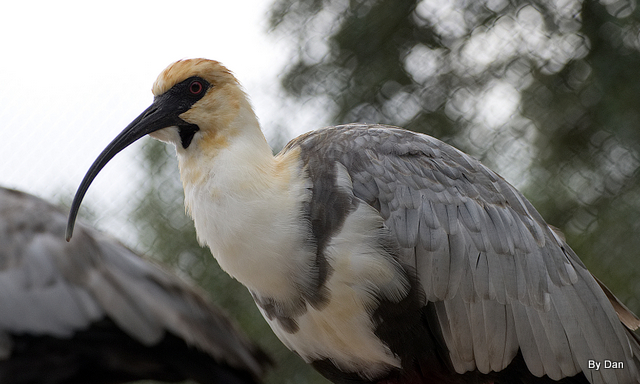
Black-faced Ibis (Theristicus melanopis) Jax Zoo by Dan

On the way to South Carolina we visited the Jacksonville Zoo. The birds were a bit damp as it had just rained. Here is one of the avian wonders that Dan captured with his camera.

and for a long time birds and hedgehogs, and ibises and ravens shall dwell in it: and the measuring line of desolation shall be cast over it, and satyrs shall dwell in it. (Isaiah 34:11 Brenton)

“The Black-faced Ibis (Theristicus melanopis) is a species of bird in the family Threskiornithidae. It is found in grassland and fields in southern and western South America. It has been included as a subspecies of the similar buff-necked ibis, but today all major authorities accept the split. The black-faced ibis also included the Andean ibis (T. branickii) as a subspecies. Some taxonomic authorities (including the American Ornithological Society) still do so.” [Wikipedia with editing]

Links:


A Pleasant Surprise – III

BJU Bird Collection 2018 Bottom Shelf

The next set of birds from the Waterman Bird Collection at BJU has five specimens. Four of these birds are found in or near water, but the Crow is not really known as a water bird. [This is a copy of the Waterman Bird Collection – Part II from Birds of the Bible for Kids]

This is the bottom shelf display under the Anatidae Family, just above them. That Family was covered in A Pleasant Surprise – II. I trust you clicked on the links provided to read more about those avian wonders.

Common Loon (Gavia immer) BJU Bird Collection 2018

Common Loon (Gavia immer) BJU Bird Collection 2018

Our big tall bird is a Common Loon. “The common loon or great northern diver (Gavia immer) is a large member of the loon, or diver, family of birds. Breeding adults have a plumage that includes a broad black head and neck with a greenish, purplish, or bluish sheen, blackish or blackish-grey upperparts, and pure white underparts except some black on the undertail coverts and vent. Non-breeding adults are brownish with a dark neck and head marked with dark grey-brown. Their upperparts are dark brownish-grey with an unclear pattern of squares on the shoulders, and the underparts, lower face, chin, and throat are whitish. The sexes look alike, though males are significantly larger and heavier than females. During the breeding season, they live on lakes and other waterways in Canada, the northern United States (including Alaska), as well as in southern parts of Greenland and Iceland. Small numbers breed on Svalbard and sporadically elsewhere in Arctic Eurasia. Common loons winter on both coasts of the US as far south as Mexico, and on the Atlantic coast of Europe.

Common Loon by Raymond Barlow

Common loons eat a wide range of animal prey including fish, crustaceans, insect larvae, mollusks, and occasionally aquatic plant life. They swallow most of their prey underwater, where it is caught, but some larger items are first brought to the surface.” Common Loon – Wikipedia

Here is just one of the Cool Facts from Common Loon – All About Birds

  • Loons are agile swimmers, but they move pretty fast in the air, too. Migrating loons have been clocked flying at speeds more than 70 mph.

Red-necked Grebe (Podiceps grisegena) BJU Bird Collection 2018

Next to the Loon is a Red-necked Grebe (Podiceps grisegena). “Like all grebes, the Red-necked is a good swimmer, a particularly swift diver, and responds to danger by diving rather than flying. The feet are positioned far back on the body, near the tail, which makes the bird ungainly on land. It dives for fish or picks insects off vegetation; it also swallows its own feathers, possibly to protect the digestive system.” Red-necked Grebes – Wikipedia

Red-necked Grebe (Podiceps grisegena) young on her wing©USFWS

Red-necked Grebe (Podiceps grisegena) young on her wing©USFWS

Here is a Cool Fact from Red-necked Grebe – All About Birds

  • The oldest recorded Red-necked Grebe was at least 11 years old when it was found in Minnesota, the same state where it had been banded.

Pied-billed Grebe (Podilymbus podiceps) BJU Bird Collection 2018

The smaller Grebe, next to the Red-necked Grebe, is a Pied-billed Grebe (Podilymbus podiceps) . They both belong to the Podicipedidae Family. Now that is a bird we see often here in Florida.

Pied-Billed Grebe at Lake Hollingsworth, Lakeland, FL by Dan

Pied-Billed Grebe at Lake Hollingsworth, Lakeland, FL by Dan

“The Pied-billed Grebes (Podilymbus podiceps) is a species of the grebe family of water birds. Since the Atitlán grebe (Podilymbus gigas) has become extinct, it is the sole extant member of the genus Podilymbus. The pied-billed grebe is primarily found in ponds throughout the Americas. Other names of this grebe include American dabchick, dabchick, Carolina grebe, devil-diver, dive-dapper, dipper, hell-diver, pied-billed dabchick, pied-bill, thick-billed grebe, and water witch.”

Pied-billed Grebes are small, stocky, and short-necked. They are mainly brown, with a darker crown and back. Their brown color serves as camouflage in the marshes they live in. They do not have white under their wings when flying, like other grebes. Their undertail is white and they have a short, blunt chicken-like bill that is a light grey color, which in summer is encircled by a broad black band (hence the name). In the summer, its throat is black.”  Pied-billed grebe – Wikipedia [with editing]

A Cool Fact about this from Pied-billed Grebe – All About Birds

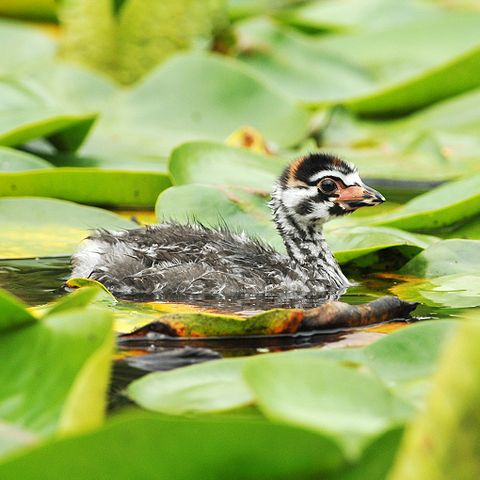
  • Pied-billed Grebe chicks typically leave the nest the first day after hatching and spend much of their first week riding around on a parent’s back. They usually spend most of their first 3 weeks on or near the nest platform.

Pied-billed Grebe (Podilymbus podiceps) chick ©WikiC

We will check out the other two birds in the display case next.

I trust you will enjoy meeting the various birds through this series. The links provided give much more information, and photos of these species.

“The works of the LORD are great, Studied by all who have pleasure in them.” (Psalms 111:2 NKJV)

Gaviidae – Loons – Family

Podicipedidae – Grebes – Family


A Pleasant Surprise – II

BJU Bird Collection 2018

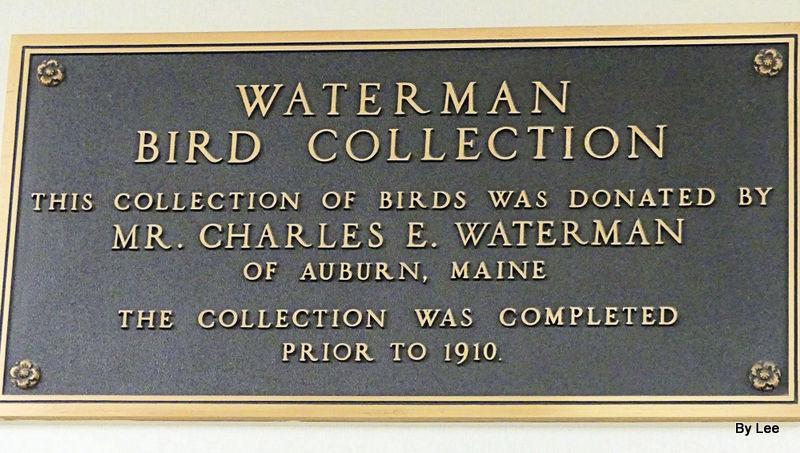
In A Pleasant Surprise At The BJU Homecoming the Waterman Bird Collection, in the Science building, was introduced. This post will start introducing you to these wonderfully preserved specimens of birds that lived over a hundred years ago.

BJU Waterman Bird Collection 2018

At first, it bothered me about the use of birds in this manner, even though many museums have displays of birds. Yet, when you look back 100 plus years, they didn’t have the technology, nor the modern color cameras or slow motion videos to capture images of them. John Audubon did excellent drawing, with detailed colors. He also studied live birds and specimens.

“John James Audubon’s Birds of America is a portal into the natural world. Printed between 1827 and 1838, it contains 435 life-size watercolors of North American birds (Havell edition), all reproduced from hand-engraved plates, and is considered to be the archetype of wildlife illustration.” Birds of America

When the Lord first created the birds, there were no specimens until sin entered. How must those first birds have appeared? Photos, movies, and even specimens would have given us quite a sight. Today, we have fossils, but they do not show the beautiful feathers and features that those original avian wonders must have been adorned with.

“So God created great sea creatures and every living thing that moves, with which the waters abounded, according to their kind, and every winged bird according to its kind. And God saw that it was good. And God blessed them, saying, “Be fruitful and multiply, and fill the waters in the seas, and let birds multiply on the earth.” So the evening and the morning were the fifth day.” (Genesis 1:21-23 NKJV)

Common Eider, Bufflehead, and Canada Goose

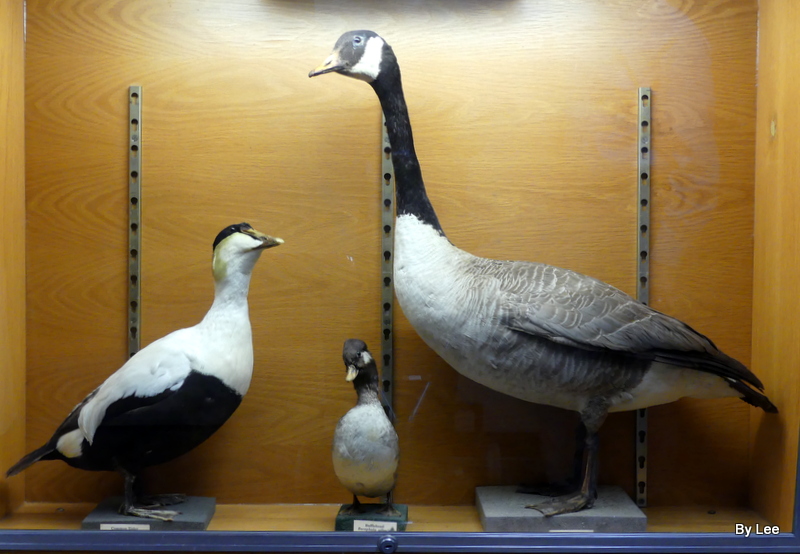
The birds in the right hand side of the display above is where we will begin. On the top shelf is an Eider, a Bufflehead and a Goose. It is nice to see them together to get a size perspective.

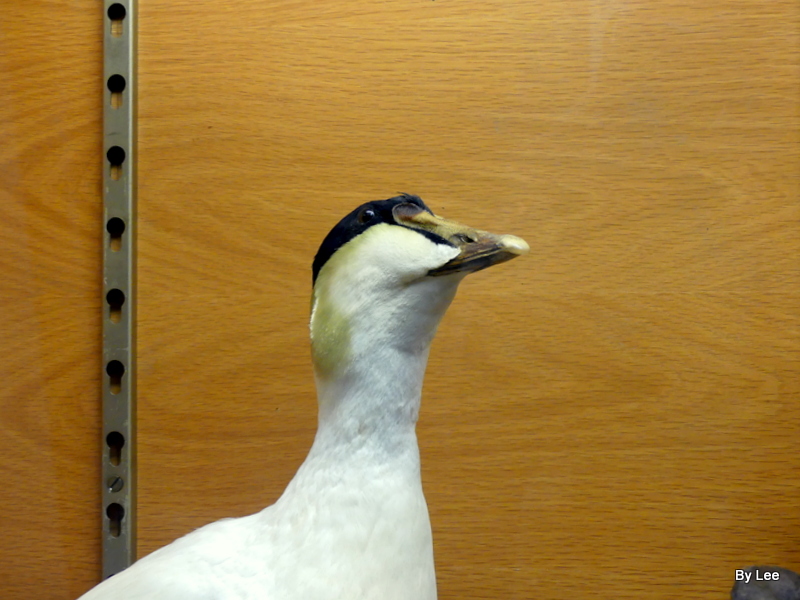
Common Eider (Somateria mollissima) BJU Bird Collection 2018

The Common Eider (pronounced /ˈaɪ.dər/) (Somateria mollissima) is a large (50–71 cm (20–28 in) in body length) sea-duck that is distributed over the northern coasts of Europe, North America and eastern Siberia. It breeds in Arctic and some northern temperate regions, but winters somewhat farther south in temperate zones, when it can form large flocks on coastal waters. It can fly at speeds up to 113 km/h (70 mph) Part of the Anatidae Family. Common Eider – Wikipedia and All About Birds

Bufflehead (Bucephala albeola) BJU Bird Collection 2018

The Bufflehead (Bucephala albeola) is a small sea duck of the genus Bucephala, the goldeneyes. This species was first described by Linnaeus in his Systema naturae in 1758 as Anas albeola.

The genus name is derived from Ancient Greek boukephalos, “bullheaded”, from bous, “bull ” and kephale, “head“, a reference to the oddly bulbous head shape of the species. The species name albeola is from Latin albus, “white”. The English name is a combination of buffalo and head, again referring to the head shape. This is most noticeable when the male puffs out the feathers on the head, thus greatly increasing the apparent size of the head.

Canada Goose (Branta canadensis) BJU Bird Collection 2018

All of these three birds are in the Anatidae Family. The photo shows how much larger the Goose is than the Bufflehead.

The Canada Goose (Branta canadensis) is a large wild goose species with a black head and neck, white cheeks, white under its chin, and a brown body. Native to arctic and temperate regions of North America, its migration occasionally reaches northern Europe. It has been introduced to the United Kingdom, New Zealand, Argentina, Chile, and the Falkland Islands. Like most geese, the Canada goose is primarily herbivorous and normally migratory; it tends to be found on or close to fresh water. Canada Goose Wikipedia and All About Birds

I trust you will enjoy meeting the various birds through this series. The links provided give much more information, and photos of these species.

“The works of the LORD are great, Studied by all who have pleasure in them.” (Psalms 111:2 NKJV)