The Louisiana and Northern Waterthrushes – The Flowing Worship and the Formal Worship..

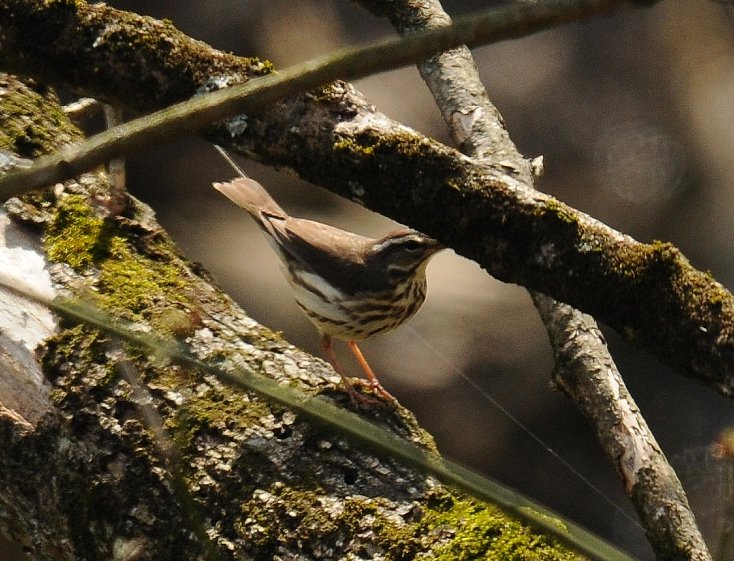
Louisiana Waterthrush (Parkesia motacilla) ©WikiC

Louisiana Waterthrush (Parkesia motacilla) ©WikiC

The Louisiana and Northern Waterthrushes – The flowing worship and the formal worship.. ~ by a j mithra

The Louisiana and Northern Waterthrushes
are very similar species
whose breeding ranges overlap slightly.
Their songs and their habitats, while similar,
differ significantly.
The pitch of the beginning notes
of the Louisiana’s song usually descend,
just as does the hilly stream
that is its preferred habitat.

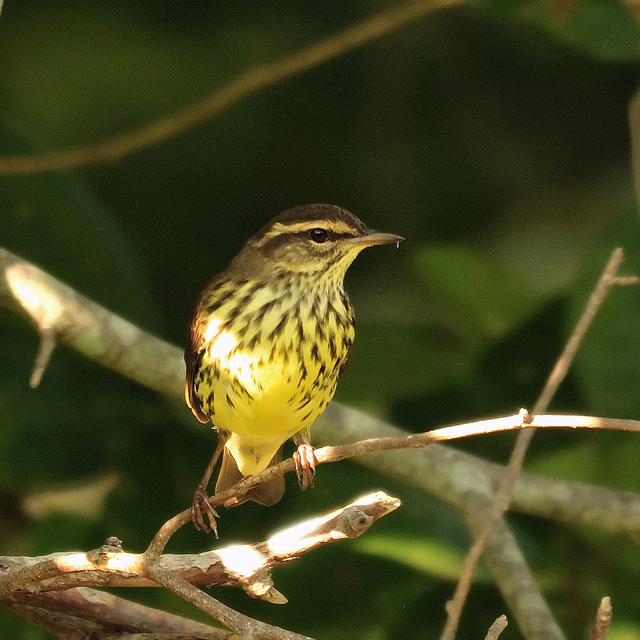
Northern Waterthrush (Parkesia noveboracensis) ©hjhipster

Northern Waterthrush (Parkesia noveboracensis) ©hjhipster

The Northern Waterthrush prefers
bogs and waters that are flat,
just as its beginning notes stay
on the same pitch.

What sort of worship life
do we lead?

  • Does worship flow from within us?

Cos, when the Living Water flows
from within us,
our worship too would flow
like the Living Water.
When our life is stagnant
our worship too would turn
stale and stagnant…
Its time for us to switch on the
Search light to check,
if we have a flowing worship
or a formal worship…
Remember,
when worship flows
blessing follows…
“Whoever believes in me,
as the Scripture has said,

Out of his heart will flow rivers of living water. (John 7:38)

Yours in YESHUA,
a j mithra

Please visit us at:
Crosstree

ajmithra21

See more of a j’s articles here:

a j mithra

Also:

Waterthrushes – Wikipedia

Northern Watherthrush –  All About Birds

Louisiana Waterthrush – All About Birds

Parulidae – New World Warblers

*

Pollinators….

Green Violetear (Colibri thalassinus) ©WikiC

Green Violetear (Colibri thalassinus) ©WikiC

Pollinators…. ~ by a j mithra

Hummingbirds and ornithophilous (bird-pollinated) flowers
were created to have a mutualistic relationship.
The flowers have nectar suited to the birds’ diet,
their color suits the birds’ vision
and their shape fits that of the birds’ bills.

The blooming times of the flowers have also been found
to coincide with hummingbirds’ breeding seasons….

The Rose of Sharon has the nectar
that suits our spiritual diet..

The Rose of Sharon has the power
to purify our soul…

The Rose of Sharon’s will
is to shape our lives for His glory…

If only we had pollinated the way
The Rose of Sharon wanted us to do,
our classmates and our colleagues.
our neighborhood and our nationhood
would not only have known Jesus,
but also would have been effective pollinators…
By the way,
are we seasonal pollinators or regulars?

And he (Jesus) said unto them, Go ye into all the world, and preach the gospel to every creature. (Mathew 16:15)

Have a blessed day!

Yours in YESHUA,

a j mithra

Please visit us at:

Crosstree

ajmithra21


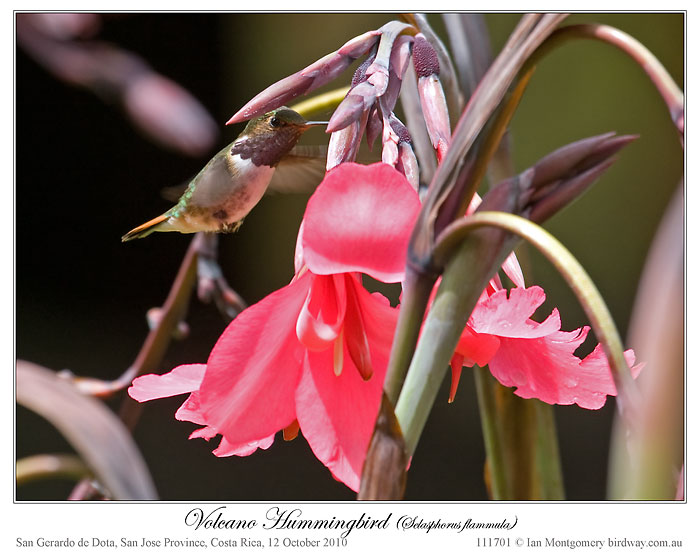
Volcano Hummingbird (Selasphorus flammula) by Ian

Volcano Hummingbird (Selasphorus flammula) by Ian

Lee’s Addition:

Ornithophily or Bird Pollination is the pollination of flowering plants by birds. The Creator created this association is derived from insect pollination (entomophily) and is particularly well developed in some parts of the world, especially in the tropics and on some island chains. The association involves several distinctive plant adaptations forming a “pollination syndrome”. The plants typically have colorful, often red, flowers with long tubular structures holding ample nectar and orientations of the stamen and stigma that ensure contact with the pollinator. Birds involved in ornithophily sre specialist nectarivores with brushy tongues, long beaks, capable of hovering flight or are light enough to perch on the flower structures. (Edited from Wikipedia)

Hummingbird – CreationWiki

Trochilidae – Hummingbirds

Hummingbirds – All About Birds

*

Birds of the Bible – Bluebirds

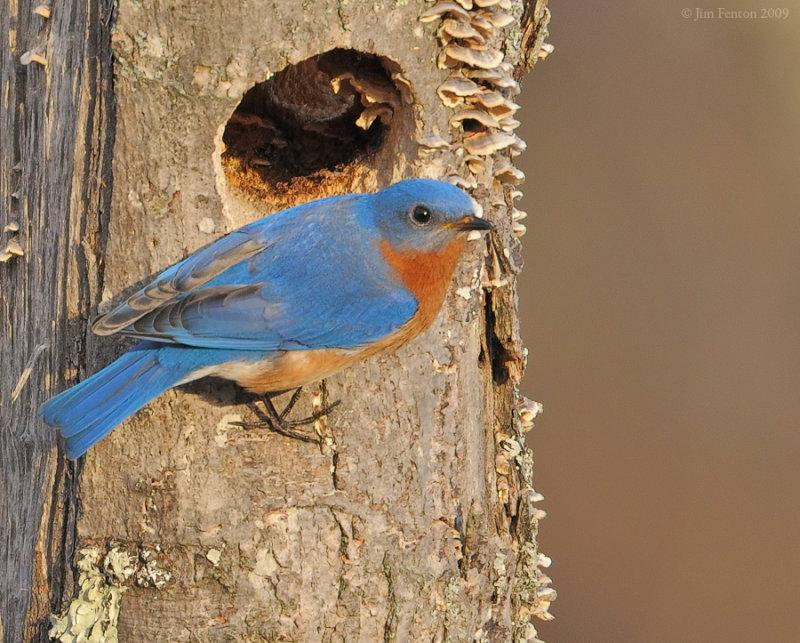
Eastern Bluebird (Sialia sialis) by J Fenton

Eastern Bluebird (Sialia sialis) by J Fenton

Cranes know when it’s time to move south for winter. And robins, warblers, and bluebirds know when it’s time to come back again. But my people? My people know nothing, not the first thing of GOD and his rule. (Jeremiah 8:7 MSG)

As far as I know, the only Version of the Bible (English) that used the word “bluebirds is the Message. It is not a version I use, but that verse makes for chance to write about the Bluebirds. In many of the other versions, “Thrush” is used. Bluebirds are in the Turdidae – Thrushes Family. There are three species; the Eastern, Western and Mountain Bluebirds. In a completely different family, the Irenidae – Fairy-bluebirds Family you will find the Asian and Philippine Fairy-bluebirds. These are not “thrushes” per se.

This verse has been written about in Birds of the Bible – Thrush and Thrushes II. It mentions that the birds know more about migration than the people know that much about God and His dominion.

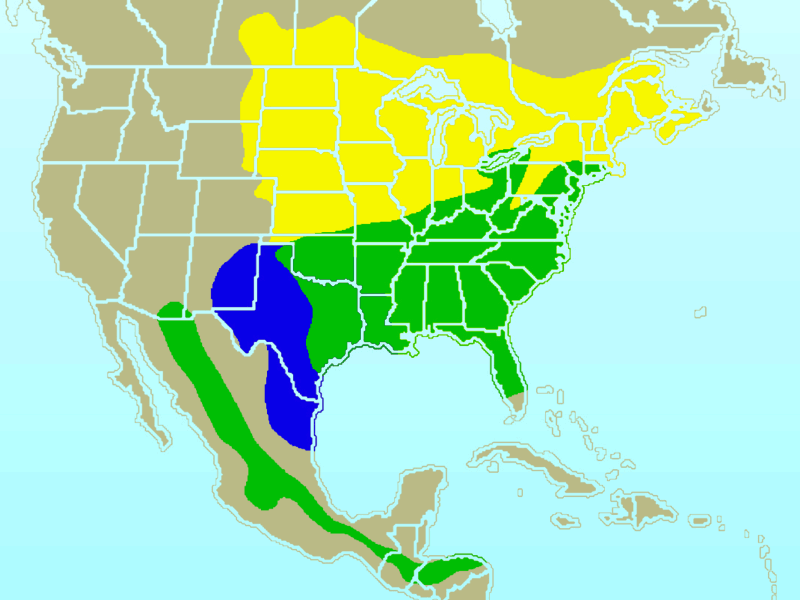
Do the Bluebirds migrate? Only the Eastern Bluebird. Here is their range map. Yellow is summer, blue – winter and green is year round. The summer breeding range extends as far north as the Pacific Northwest, British Columbia, and Montana. The northern Western Bluebirds can migrate to the southern parts of the range; southern birds are often permanent residents. The mountain bluebird is migratory. The Mountain Bluebird range varies from Mexico in the winter to as far north as Alaska, throughout the western U.S. and Canada. Northern birds migrate to the southern parts of the range; southern birds are often permanent residents. Some birds may move to lower elevations in winter.

Eastern_Bluebird-rangemap rangemap Y-Sum B-win G-yr rnd

Eastern Bluebird rangemap Y-Sum B-win G-yr rnd ©WikiC

So, not so sure that was a good choice of birds to use especially since they aren’t even anywhere near the Middle East. Nevertheless they are beautiful birds that the Lord has created for His pleasure and our enjoyment. The majority of their diet is “insects and other invertebrates. The remainder of the bird’s diet is made up of wild fruits. Favored insect foods include grasshoppers, crickets, katydids, and beetles. Other food items include earthworms, spiders, millipedes, centipedes, sow bugs and snails. (Eastern) Bluebirds are very helpful with pest control in the territory surrounding the nest.”

Mountain Bluebird (Sialia currucoides) by Daves BirdingPix

Mountain Bluebird (Sialia currucoides) by Daves BirdingPix

All three of them are cavity dwellers or nest box residents. They are all territorial and “Bluebirds can typically produce between two and four broods during the spring and summer (March through August in the Northeastern United States). Males identify potential nest sites and try to attract prospective female mates to those nesting sites with special behaviors that include singing and flapping wings, and then placing some material in a nesting box or cavity. If the female accepts the male and the nesting site, she alone builds the nest and incubates the eggs.”

“The bluebirds are a group of medium-sized, mostly insectivorous or omnivorous birds in the genus Sialia of the thrush family (Turdidae). Bluebirds are one of the few thrush genera in the Americas. They have blue, or blue and red, plumage. Female birds are less brightly colored than males, although color patterns are similar and there is no noticeable difference in size between sexes.

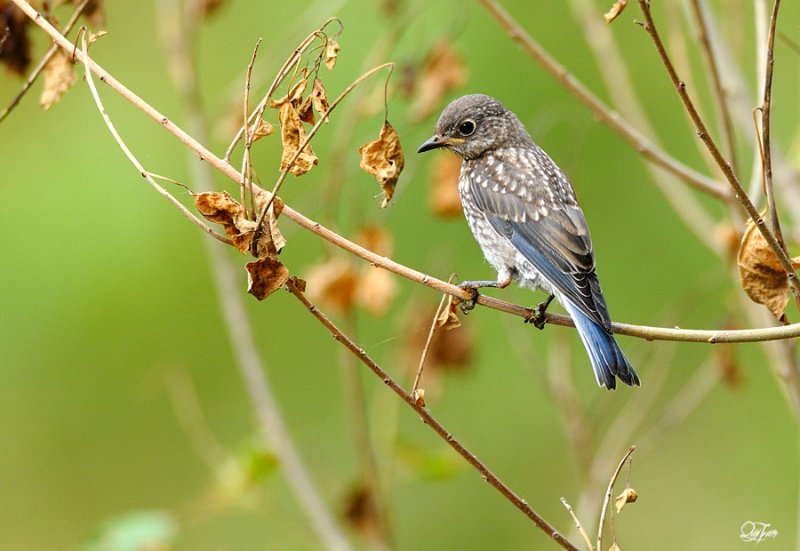
Western Bluebird (Sialia mexicana) juvenile by Quy Tran

Western Bluebird (Sialia mexicana) juvenile by Quy Tran

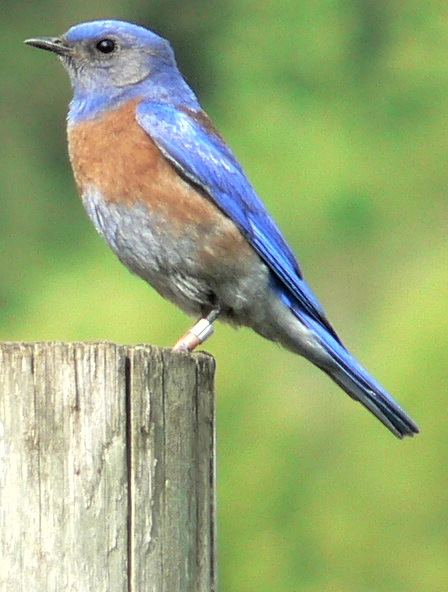
Western Bluebirds are sometimes confused with other bluebirds, however they can be distinguished without difficulty. The Western Bluebird has a blue (male) or gray (female) throat, the Eastern Bluebird has an orange throat, and the Mountain Bluebird lacks orange color anywhere on its body.

Western Bluebird (Sialia mexicana) ©WikiC

Western Bluebird (Sialia mexicana) ©WikiC

I know all the birds of the hills, and all that moves in the field is mine. (Psalms 50:11 ESV)

See:

Birds of the Bible

Birds of the Bible – Thrushes

Eastern, Western, Mountian Bluebirds – Wikipedia

Wordless Birds

*

The Eider – The Cushion Maker.. ~ Nuggets Plus

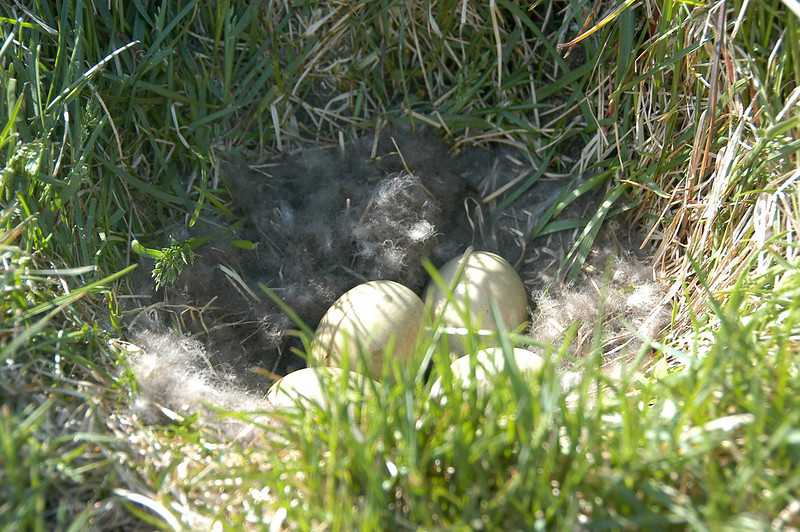
Common Eider (Somateria mollissima) nest by Bob-Nan

Common Eider (Somateria mollissima) nest by Bob-Nan

The Eider Duck – The cushion maker.. ~ by a j mithra
When constructing her nest,
a Female Eider Duck will line it
with soft down feathers
that she plucks from her own breast.
This gives the eggs
the best possible cushioning and insulation.

Nuggets Plus

Nuggets Plus

Jesus didn’t pluck His down feathers,
but, plucked Himself from heaven
and came down to give His whole life
to cushion and insulate our lives..
So that we may hatch to become
more like Him to do His will
in our lives on earth as it is in heaven..

I will both lay me down in peace, and sleep: for thou, LORD, only makest me dwell in safety. (Psalm 4:8)

Yours in YESHUA,
a j mithra

Please visit us at:

Crosstree

ajmithra21

*


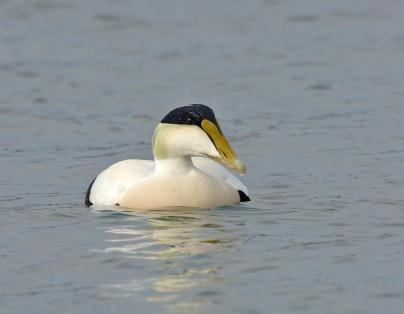
Common Eider (Somateria mollissima) by J Fenton M

Common Eider (Somateria mollissima) by J Fenton M

Lee’s Addition:

Thanks, a j, for another very thoughtful article.

*

Birdwatching – South Lake Howard Nature Park 7-28-12

Black-Crowned Night Heron at S Lk Howard

Black-Crowned Night-Heron at S Lk Howard

We spent about 25 minutes at the South Lake Howard Nature Park seeing what was around. I was trying to learn how to take photos “right-eyed” (See Anniversary and Other Things). Dan can shut one eye or the other, winking, but I can’t. I only can close the right eye. When I try to wink with the left eye, both eyes go shut. Oh, well, no one is perfect. Glad we stopped by the park to practice my new “technique.”

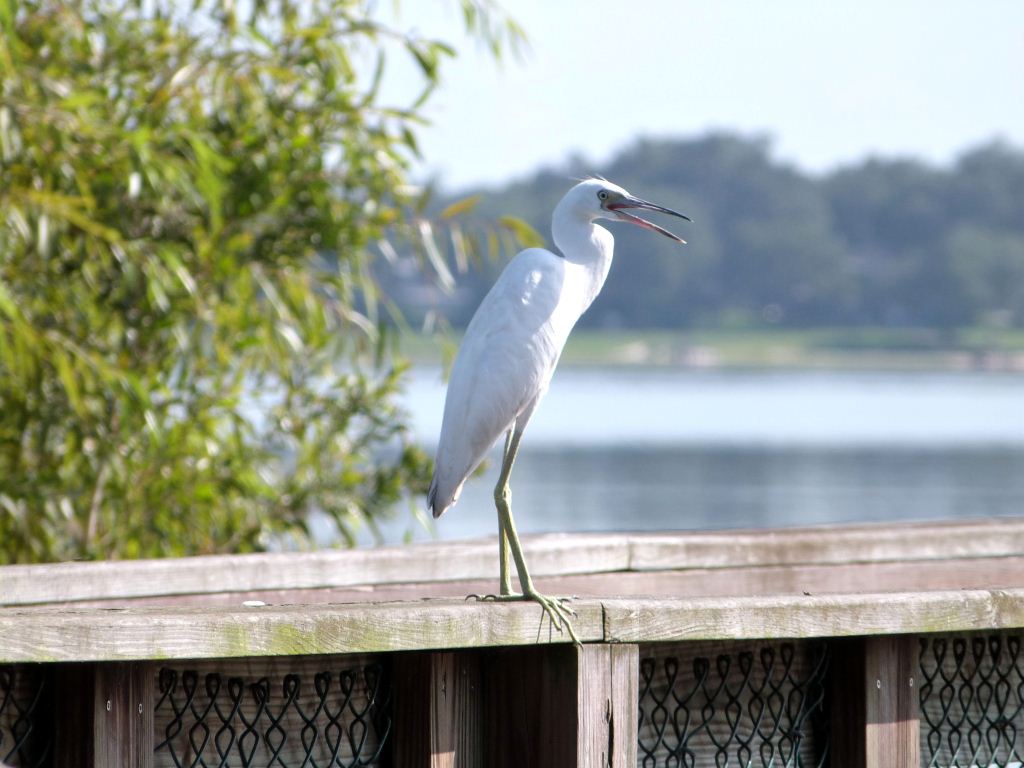
Little Blue Heron immature

Little Blue Heron immature

We were walking on the boardwalk on the Lake Howard side and spotted a Tricolored Heron and an immature Little Blue Heron. Just as we pulled up the cameras, a Black-crowned Night-Heron popped up on the rail between us and them. Wow! He was very close and we were able to get its photo. Dan kept getting closer to get better shots and the Heron just stayed there until I got too close. Most times we see a Night-Heron, they are hidden in the grass or not really visible. After he left, another Little Blue hopped up on the rail. An Anhinga was in a tree and one of the birds flew to a tree.

Red-winged Blackbird female

Red-winged Blackbird female

When we crossed the road to the pond side, we spotted a Great Blue Heron perched on a tree. The Osprey was up on the Tower checking out the normal Bald Eagles’s domain. I am including the 17 species that I turned in to the eBird.org listing service. It is a nice way to keep track of your birdwatching adventures here in America. It is only for our birds. Not sure if other countries have something like it or not.

Trust in the LORD, and do good; so shalt thou dwell in the land, and verily thou shalt be fed. Delight thyself also in the LORD; and he shall give thee the desires of thine heart. (Psalms 37:3-4 KJV)

Enjoy the Slideshow.

This slideshow requires JavaScript.

South Lake Howard Nature Park, Polk, US-FL
Jul 28, 2012 9:00 AM – 9:25 AM
Protocol: Traveling
0.5 mile(s)
17 species (+1 other taxa)
Muscovy Duck (Domestic type) 3
Great Blue Heron 1
Great Egret 3
Little Blue Heron 2
Tricolored Heron 1 Juvenile 1
Black-crowned Night-Heron 1
White Ibis 5
Black Vulture 1
Osprey 1
Common Gallinule 3
Limpkin 1
Mourning Dove 2
Monk Parakeet 4
Blue Jay 2
Fish Crow 1
Northern Mockingbird 1
Red-winged Blackbird 3
Boat-tailed Grackle 2
*

Baby Golden Eagle Survives the Utah Wildfire

Here is an amazing video from YouTube about a Baby Golden Eagle that survived the Utah Wildfire this year.

As the fire burns the woods, And as the flame sets the mountains on fire, (Psalms 83:14 NKJV)

From YouTube

Published on Jul 8, 2012 by OptimizeSite

BigNewsStory.com – Baby Golden Eagle Survives Utah Wildfire

A baby golden eagle is recovering at a wildlife rehabilitation facility after officials say it miraculously survived a Utah wildfire last month.

Kent Keller told The Salt Lake Tribune (http://bit.ly/NKy8WO ) he feared the worst when he returned to the nest site west of Utah Lake to retrieve a leg band he had attached to the male eaglet June 1.

But the veteran Utah Division of Wildlife Resources volunteer found the burned bird alive on June 28 behind a charred tree, about 25 feet below the nest that was burned to a crisp in the 5,500-acre Dump Fire near Saratoga Springs.

“I thought there was no chance he would be alive. I was stunned when I saw him standing there,” Keller said. “I thought maybe I could rebuild the nest a little bit, but I took a good look at him and realized that was not going to happen.”

The 70-day-old eaglet had suffered burns on his talons, beak, head and wings. His flight feathers were melted down to within an inch or two of his wing and tail. He’s very underweight at just over five pounds.

Keller realized the eagle would not fly for at least a year and that the parents eventually would stop providing food. Not a stick from the nest was left after the fire sparked by target shooters swept through

“I’ve seen nests burn before, but this is the first year I have seen one burn with young in it,” he told the Tribune. “They are usually long gone and flying when fire season starts.”

After permission was secured from state and federal wildlife agencies, the Wildlife Rehabilitation Center of Northern Utah in Ogden assumed care of the eaglet this week.

“I wasn’t sure he was going to make it,” said DaLyn Erickson, executive director of the center. “He kind of had that look like he may have given up.”

But the eagle named Phoenix has since taken to eating beef heart and venison. He’s treated several times a day for his burns and seems to be gaining strength.

“He looks good now,” said Amber Hansen, a member of the center’s board of directors. “But we think if he had been there (at the nest site) another day, he probably would not have survived.”

What seems to have saved his life during the fire was the insulation offered by his down feathers and once-thick body, according to the wildlife rehabilitation center.

Officials hope the bird can be released back into the wild next year, but say it’s too early to tell about its future. Volunteers will work to keep him as wild as possible.

“It depends on how much follicle damage there is to his wings,” Hansen said. “If they are not too burned, he should be able to molt into new feathers next year and hopefully be able to fly.”

-usnews.com

Wow! More Awards! Thank You

Wow! I just received another award today and I haven’t even written up my latest one before that yet. Been busy gearing up a new blog with will launch soon. Oops! That is still a “secret” for a few more days.

These are the Awards that have been given to me and links to their websites and some information about those blogs:

Creationscience4kids has just nominated me for the Reader Appreciation Award. That is a very neat site that:
“This is a site to celebrate the amazing world God made.  This site is for all of you who love to learn new things about nature and science without a bunch of big words.  This site is also to help us all understand the differences between evolutionary thinking and young earth creationist thinking.  This site believes that God spoke everything into existence in six 24 hour days as stated in Genesis 1 and that the wold that then was perished in the global flood of Noah’s day as II Peter 3:6 says.

Seasonsgirl nominated me for the Inspiring Blog Award. She is a “I am a Christian, working wife, and puppy mom living with my husband, dogs, chickens, and disabled father in Virginia. We have a dream to someday own our own small ranch with horses, cows, goats, chickens, and dogs to boot. Right now we are working to start our family.” She has been visiting my blog, and I have been to her’s where she has some really neat photos and recipes. I am not a cook, but the photos are super.

Faithrises nominated me for the Beautiful Blogger Award. “Faithrises is a place for readers to be encouraged and motivated, through stories, quotes, and biblical examples.  My name is Faith, and I hope that you will be uplifted and inspired here, as you rise above personal difficulties and challenging circumstances.”

Sandra Conner nominated me for the Genuine Blogger Award. Sandra has this to say about her three blogs in her About section; “So here I am, Sandra Conner, beginning the “About Me” article on my third blog site, My first blog “Hangin’ Out With God,” is a site devoted exclusively to things about the Lord Jesus Christ and ministry. My second, “Happy Patriot,” is a blog on which I feel free to comment on any number of subjects, but mostly on patriotic and political issues. And today, I embark on number three, Sandra Conner…By The Book.

Previous to those, two nominated this blog for the Versatile Blogger Award.

Beauty and Brains nominated me back in April for this Award. Her site, “Beauty & Brains” is a blog geared for anyone and everyone. The “beauty” posts concern themselves with makeup/fragrance reviews and tutorials. Please note I am not paid to review products. All products were purchased by me for me. The “brains” posts consist of reviews of books, music, films, or any other item of conversation.”

and Dou Dou also nominated me for the Versatile Blogger Award. She makes “Handmade Art Birds and Animal Sculptures” and is very good at them. They appear to be right small, but nice details. She also write about other topics also.

We are suppose to tell 7 random things about ourselves and then pass them on to 7-15 other worthy bloggers. Personally, I would like to nominate all those who come to this blog and my Birds of the Bible blog for an Award. I appreciate all of you who stop by and read the articles. Many of you are following the blogs and leave likes and comments. There are more than 15 who do so. So how do you choose just a few?

Not sure what I would call it, maybe something like Thank You Award, or Thanks for Stopping By Award, Thanks For Your Support Award, or Thanks for putting up with my mistakes Award, or something like that. What ever it would be, you would all be nominated for it.

The Best Award any of us could hope to get is the “Well Done the good and faithful servant” Award from Our Lord Jesus Christ.

  1. Love you all and I do pray for all the visitors that stop by.
  2. I Love the Lord and He is my personal Savior (1960)
  3. Married almost 49 years (July 1963)
  4. Love birds and watching them and learning about them
  5. Graduated College after taking 16 years to do so (1977)
  6. I am thankful for all my family and friends
  7. Don’t have a bucket list – maybe I should

Now for the nominations. (This will be hard)

For the Reader Appreciation

All who are followers of this blog, you are nominated because you are appreciated. Not sure who started that award, but I think it needs to include more readers, which I just did.

If you chose to accept it, you are suppose to tell 7 random things about yourself, link back to this page, and then nominate who you think deserve the Reader Appreciation Award, then leave a comment on their blog or send an email with a link to the page that you nominated them.

For the Inspiring Blog Award

These sites come to mind as Inspiring:

The Fountain which is from my home church and has lots of inspiring articles on it.

Hearing His Voice – Learning to hear and recognize God’s voice

Hanging’  Out With God – A site devoted to getting up close and personal with God, through knowing and believing His Word.

The Birding Bunch – Amateur ornithologists with a Christian worldview.

Postcards from Colorado –  the joy of seeing, capturing, and sharing the images of our daily surroundings

Forest Forward – The Northeast’s Wildlife Photo Blog

The Sovereign – Living holy lives in light of prophecy and the return of Christ.

*

The Other Awards were written up previously.

*

Early Singers…

*

Early Singers… ~ by a j mithra

Worm eating birds like Blackbird, Song Thrush and Robin start singing from around 4.00 am up until about 6.30 am.

They are blessed with large eyes in relation to the size of its body. These birds forage at low light and are capable of finding worms close to the surface of the ground early in the morning.

God wants us to be early risers like these worm eating birds, to wait in His presence to get spiritual food and to get directions from the Lord.
Jesus often used to get up very early in the morning and go out to pray.
  • Is that the reason He chose fishermen to be His disciples?
  • Remember, fishermen always rise early to venture into the sea to fish.
  • How often do we rise early to seek His presence?
  • These early rising worm eating birds have large eyes.
  • Do you want eyes that can see those worms that devour your blessings?
  • Do you want eyes that can see even in the darkest time?
Just rise early and God shall open your spiritual eyes wide open to see the unseen.
I love them that love me; and those that seek me early shall find me. (Proverbs 8:17)
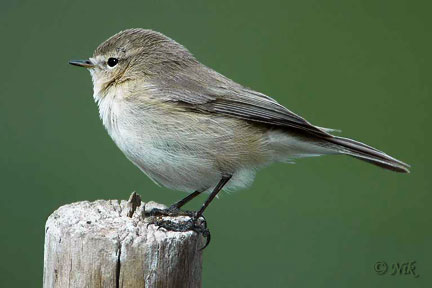
Mountain Chiffchaff (Phylloscopus sindianus) by Nikhil Devasar

Mountain Chiffchaff (Phylloscopus sindianus) by Nikhil Devasar

Wren, Chiffchaff and Black Cap are Insect eaters and they start their concert anytime from about 5.30 am.
These birds have slightly smaller eyes than the worm eaters and are more sensitive to the available light. This allows them to find darting and flying insects and spiders.
Eat the insects before it eats you.
But, how?
Do you find it difficult to get rid of all those tiny insects that nibble at your finances and blessings and your health and happiness?
  • Rise early and seek His presence and He will show you how to get rid of them.
  • Jacob wrestled with God and said that he will not leave until He blessed him..
  • It was at the break of the day that God blessed Jacob.
  • Most of God’s judgments too fell on day break.
  • The judgment of Sodom happened after day break.. (Genesis 19:15)
  • The fort of Jericho fell after day break.. (Joshua 6:15)
  • The tree that gave shelter to Jonah was consumed by God sent worms at day break.. (Jonah 4:7)
Are you waiting for God’s blessings?
  • Rise up at least before day break and receive God’s blessings before the Day of Judgment.
Want to meet God face to face and get a new name from Him?
  • Seek God before day break. That’s when God gave a new name to Jacob and
  • that’s when Jacob saw God face to face..
It is of the Lord‘s mercies that we are not consumed, because his compassions fail not.
They are new every morning: great is thy faithfulness. (Lamentations 3:22,23)
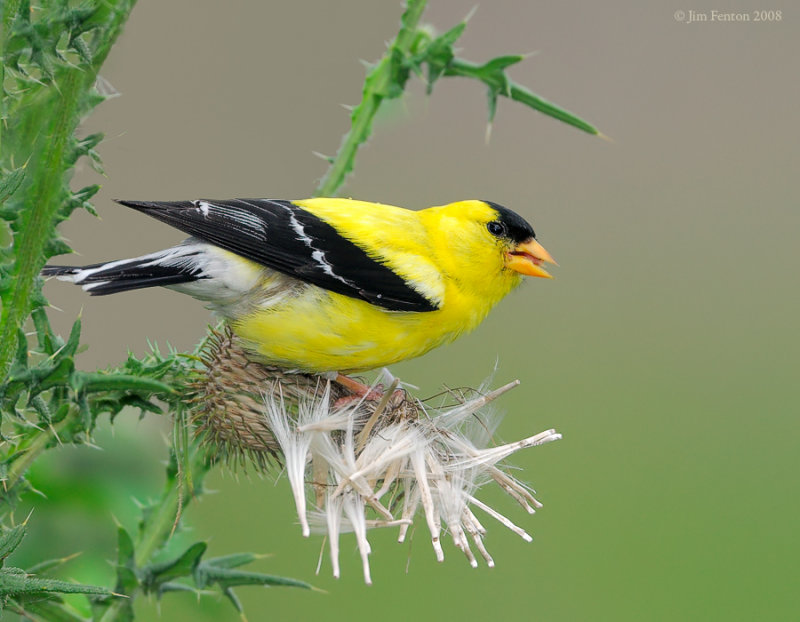
American Goldfinch (Carduelis tristis) on Thistle by Fenton

American Goldfinch (Carduelis tristis) on Thistle by Fenton

Seed eaters like Chaffinch, Goldfinch and Sparrow enter into the dawn chorus at around 6.00 am.

With smaller eyes they may need more light to look out for their food, especially when precision is required to extract small seeds.
Some of us are like these seed eaters. We need more light to look out for our food. Funny though, our God has called us to give light, but here, these seed eaters need more light to stay alive, since they have small eyes of faith.
  • They cannot see the unseen.
Someone should throw light to overcome the tight situation they are in, to show them the seed of faith.
  • What sort of seeds do we eat in the morning?
  • Do we eat seeds of doubt or seeds of faith?
  • Our fruits are determined by the seeds we eat..
And he that doubteth is damned if he eat, because he eateth not of faith: for whatsoever is not of faith is sin. (Romans 14:23)
Now the parable is this: The seed is the word of God. (Luke 8:11)
Whosoever is born of God doth not commit sin; for his seed remaineth in him: and he cannot sin, because he is born of God. (I John 3:9)
  •  Let the seed of God remain in us now and forever more..
  • Our life is shaped not by what we eat but by when we eat..
  • Remember the Manna – the word of God melts after sunrise.
So, sing early and eat early.
Have a blessed day!
Yours in YESHUA,
a j mithra

Please visit us at:

*

Nuggets Plus – The Weaver, The Caller (Ready)

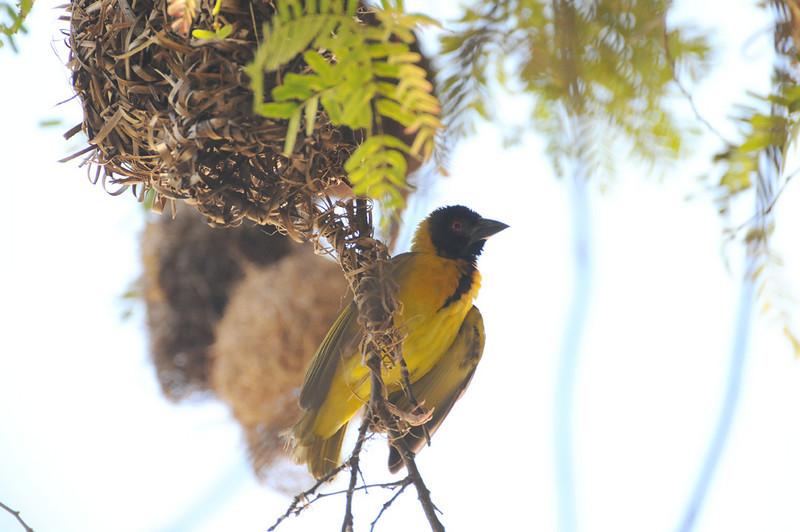
Village Weaver (Ploceus cucullatus) by Bob-Nan

Nuggets Plus – Nuggets Plus – The Weaver, The Caller

by a j mithra

Nuggets Plus

Nuggets Plus

Male weaver bird displays
partially built nest
and gives out
mating calls to passing female
with stretched wings and
hanging the nest!
JESUS stretched His hands
and hung on the cross
to call us!
Come unto me, all you that labor and are heavy laden, and I will give you rest. (Mathew 11:28)
Have a blessed day!

a j mithra

**********

See More Nuggets Plus

*

Nuggets Plus – The Dove – Weather Reporter..

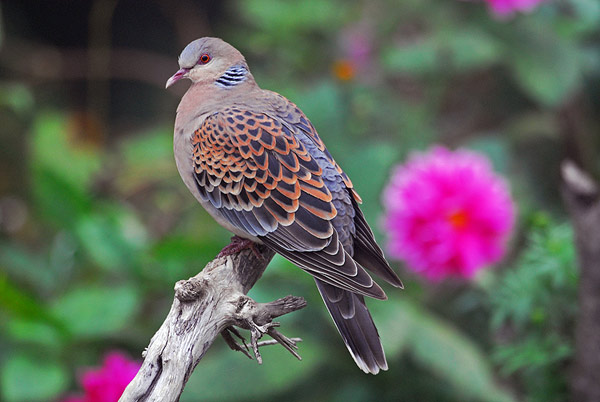
Oriental Turtle Dove (Streptopelia orientalis) by Nikhil

Oriental Turtle Dove (Streptopelia orientalis) by Nikhil

The Dove – Weather Reporter..

by a j mithra

Nuggets Plus

Nuggets Plus

Dove sent by Noah
came at dusk with an olive leaf
and Noah knew that
the flood had receded!

God sent the dove, His Holy spirit
at dusk to the upper room
to encourage us or to help us
warn about the flood of the last days?

But as the days of Noah were, so shall also the coming of the Son of man be. (Mathew 24:37)

Have a blessed day!

a j mithra

**********

See More Nuggets Plus

*

Nuggets Plus – Our Body – The Stardust

Nuggets Plus

Nuggets Plus

Nuggets Plus ~ Our body – The Stardust

by a j mithra

There are 2.5 trillion stars
in the galaxy
and
250 trillion blood vessels
in the human body!
Each vessel has life in it!
Don’t you see
how fearfully and wonderfully
God has created you?

I will praise thee; for I am fearfully and wonderfully made: marvellous are thy works; and that my soul knoweth right well. (Pslam 139:14)

Have a blessed day!

a j mithra

**********

See More Nuggets Plus

*

The Northern Wheatear – The Incredible Migrator..

Northern Wheatear (Oenanthe oenanthe) Breeding male ©WikiC

Northern Wheatear (Oenanthe oenanthe) Breeding male ©WikiC

A migratory species, the northern wheatear breeds across northern Europe, North Africa, Asia, Alaska, north-eastern Canada and Greenland. After the breeding season, it migrates to sub-Saharan Africa, where it is found across a broad belt that stretches from Mauritania and Mali through northern Nigeria, Central African Republic and Sudan, to Ethiopia and southern Somalia. It is possible that the northern wheatear is the only regularly breeding passerine of North America that migrates to wintering grounds in sub-Saharan Africa, crossing either the Atlantic Ocean or Eurasia.

With a length of about 14.5 to 15.5 centimeters and weighing just about 18 to 33 grams that would just run to about the weight of two table spoons of salt, this bird flies to places where the other song birds have never ventured.

This is another amazing example of how God uses tiny beings to finish mighty tasks.

  • If you feel that you are small, not-fit-for-anything type or useless, just take inspiration from these tiny creatures.
  • Remember, we would soon take off for the final migration to the wedding banquet of Jesus, the King of kings, who is going to fill heaven, our final destination with redeemed sinners, weak and weary, lonely and lost and those of whom the world calls good for nothing.
  • It is for this reason we need to rejoice Him at all times even during times of trouble.

Then saith he to his servants, The wedding is ready, but they which were bidden were not worthy. Go ye therefore into the highways, and as many as ye shall find, bid to the marriage. So those servants went out into the highways, and gathered together all as many as they found, both bad and good: and the wedding was furnished with guests. (Mathew 22:8-10)

Northern Wheatear (Oenanthe oenanthe) Breeding male ©WikiC

Northern Wheatear (Oenanthe oenanthe) Breeding male ©WikiC

During the breeding season, the northern wheatear is typically found around habitats with short turf, such as moors, cliff-tops,tundra and rocky fields. It uses a variety of open habitats whilst migrating, including cultivated areas and desert, as well as human settlements.

In its winter range, the northern wheatear favours short grass steppe and degraded savanna, but may also be found on cultivated land, on barren rocky hills and among coconut palms.

This bird doesn’t seem to grumble but happily strives in almost any type of land.
Are we satisfied with the place where God has kept us? Or do we grumble that God has kept us in the wrong place?
Our God never makes mistakes.
He knows whom to choose, where to keep and when to keep..
He is always right..

There is a divine purpose in keeping you in a place where you are not happy..

  • Paul and Silas where in the wrong place but still they worshipped God and you know what?
  • God turned the wrong place into the right place for the world to know the extraordinary power of God.
  • Want to see the extraordinary power of God in your life?
  • Just stop grumbling and start worshipping God in the place where God has kept you.

The lines are fallen unto me in pleasant places; yea, I have a goodly heritage (Psalm 16:6)

Northern Wheatear (Oenanthe oenanthe) ©©

Northern Wheatear (Oenanthe oenanthe) ©©

After sighting its insect prey from an elevated perch, such as a conspicuous rock, the Northern Wheatear bounds between vegetation and stones to catch its prey on the ground. It may also scoop slow low-flying insects from the air after a short run or a low jump. A largely solitary species, outside the breeding season the northern wheatear defends a small feeding territory against other wheatears .

Breeding birds tend to return to the same nesting site each year. The male arrives around one week before the female, and courtship begins soon after the arrival of the female. Breeding pairs engage in unusual courtship dances, usually in a depression in the ground, when the male flutters and glides in the air, singing constantly.

Jesus left this earth after resurrection not just to prepare a place for us but for the wedding banquet where He would make us His bride and we would be singing praises to Him forever and ever.

And after these things I heard a great voice of much people in heaven, saying, Alleluia; Salvation, and glory, and honour, and power, unto the Lord our God: (Revelation 19:1)
And I heard as it were the voice of a great multitude, and as the voice of many waters, and as the voice of mighty thunderings, saying, Alleluia: for the Lord God omnipotent reigneth. Let us be glad and rejoice, and give honour to him: for the marriage of the Lamb is come, and his wife hath made herself ready. (Revelation 19:6,7)

Once a pair bond is established, the female chooses a nest site and the pair set about constructing the nest, which is a simple unlined cup of leaves, stems, moss, lichen, feathers and hair, built on a foundation
of dried stems and grasses. The nest is usually placed in a well-sheltered rock cavity, narrow crevice, rodent burrow, hole in a wall or under stones. Between 4 and 8 eggs are incubated for 12 to 13 days. The chicks fledge at 15 to 17 days, but do not reach full independence for a further 12 or 13 days.

The Northern Wheatear makes one of the longest journeys of any small bird, crossing ocean, ice, and desert. It migrates from Sub-Saharan Africa in spring over a vast area of the northern hemisphere that includes northern and central Asia, Europe, Greenland, Alaska, and parts of Canada. In Autumn all return to Africa, where their ancestors had wintered. Arguably, some of the birds that breed in north Asia could take a shorter route and winter in south Asia; however, their inherited inclination to migrate takes them back to Africa.

Northern Wheatear (Oenanthe oenanthe leucorhoa) by BirdPhotos

Northern Wheatear (Oenanthe oenanthe leucorhoa) by BirdPhotos

Birds of the large, bright Greenland race, leucorhoa, makes one of the longest transoceanic crossings of any passerine. In spring most migrate along a route (commonly used by Wadersand Waterfowl) from Africa via continental Europe, the British Isles, and Iceland to Greenland. However, autumn sightings from ships suggest that some birds cross the North Atlantic directly from Canada and Greenland to southwest Europe (a distance of up to 2500 km).

Birds breeding in eastern Canada are thought to fly from Baffin Island and Newfoundland via Greenland, Ireland, and Portugal to the Azores (crossing 3500 km of the North Atlantic) before flying onwards to Africa. Other populations from western Canada and Alaska migrate by flying over much of Eurasia to Africa. Miniature tracking devices have recently shown that the Northern Wheatear has one of the longest migratory flights known – 30,000km (18,640 miles), from from sub-Saharan Africa to their Arctic breeding grounds. “The Alaskan birds travelled almost 15,000km (9,000 miles) each way – crossing Siberia and the Arabian Desert, and travelling, on average, 290 km per day.

“This is the longest recorded migration for a songbird as far as we know,” said Dr Schmaljohann..
Dr Schmaljohann added: “[In the past] we totally underestimated the flight capability of birds in terms of migration.”It seems that bird migration is limited by the size of the Earth. If the planet was larger, they would probably migrate even further.”

If these small birds can set a record for the longest flight,

  • flying over extreme conditions,
  • flying over an ocean and also
  • flying over one of the biggest desert,
  • how far have we traveled to share the word of God?

We find it ever so easy to give our money to send missionaries to remote places to preach the gospel, but, why we find it so difficult to even step out of our house to share the Gospel to our neighbor?

  • God does not want our money..
  • He wants us to stand in the gap for perishing souls..
  • How many of us are ready to obey to His call?

Also I heard the voice of the Lord, saying, “Whom shall I send, and who will go for us? Then said I, Here am I; send me.” (Isaiah 6:8)

Have a blessed day!

Yours in YESHUA,
a j mithra

Please visit us at:

Crosstree

ajmithra21

*

Lee’s Addition:

Wheatears are part of the Muscicapidae – Chats, Old World Flycatchers Family.

*