Babbler For Who?

Indian Scimitar Babbler (Pomatorhinus horsfieldii) ©WikiC

Indian Scimitar Babbler (Pomatorhinus horsfieldii) ©WikiC

bab·bler – ˈbab(ə)lər/ – noun

  • a person who babbles.
  • a thrushlike Old World songbird with a long tail, short rounded wings, and typically a loud discordant or musical voice.

While reading in Ecclesiastes recently, I saw the word “babbler.” Working on the Birds of the World lists, that word caught my attention. Ahh! Maybe I could write an article about the Babblers that I had seen in the list.

A serpent may bite when it is not charmed; The babbler is no different. (Ecclesiastes 10:11 NKJV)
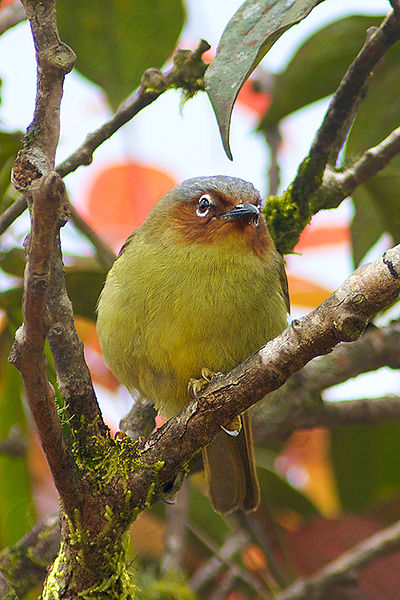
Chestnut-faced Babbler (Zosterornis whiteheadi) ©WikiC

Chestnut-faced Babbler (Zosterornis whiteheadi) ©WikiC

What I did not know is that there are seven families that have “Babbler” birds in them. There are Ground Babblers, Wren Babblers, Thrush-Babblers, Scimitar Babblers, Jewel-babblers, Hill Babblers, Tit-Babblers, a Rail-babblers and regular just plain Babblers.

Then checking for more verses on “babblers,” I found two more. The verse above and this one both have a sort of negative meaning to the word.

Whoever goes about slandering reveals secrets; therefore do not associate with a simple babbler. (Proverbs 20:19 ESV)

There is one more verse that will come later. First, what is a Babbler of the bird kind?

Rail-babbler (Eupetes macrocerus) by Peter Ericsson

Rail-babbler (Eupetes macrocerus) by Peter Ericsson

“The Old World babblers or timaliids are a large family of mostly Old World passerine birds. They are rather diverse in size and coloration, but are characterised by soft fluffy plumage. These are birds of tropical areas, with the greatest variety in Southeast Asia and the Indian subcontinent. The timaliids are one of two unrelated groups of birds known as babblers, the other being the Australasian babblers of the family Pomatostomidae (also known as pseudo-babblers).
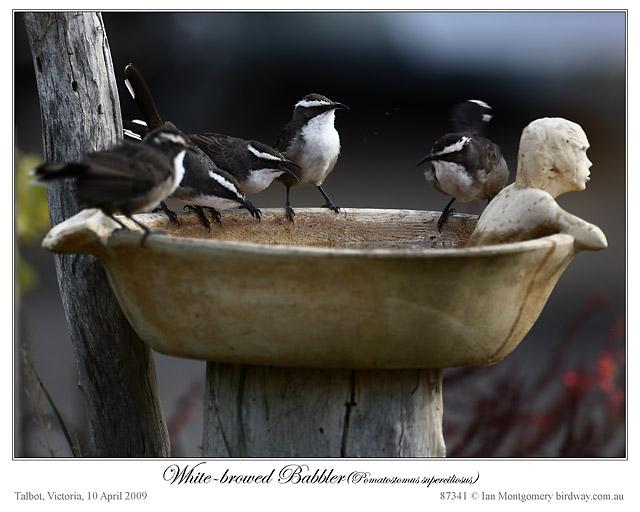
White-browed Babbler by Ian

White-browed Babbler by Ian (Australia)

Morphological diversity is rather high; most species resemble “warblers”, jays or thrushes. This group is among those Old World bird families with the highest number of species still being discovered.

Timaliids are small to medium birds. They have strong legs, and many are quite terrestrial. They typically have generalised bills, similar to those of a thrush or warbler, except for the scimitar babblers which, as their name implies, have strongly decurved bills. Most have predominantly brown plumage, with minimal difference between the sexes, but many more brightly coloured species also exist.

The systematics of Old World babblers have long been contested. During much of the 20th century, the family was used as a “wastebin taxon” for numerous hard-to-place Old World songbirds (such as Picathartidae or the wrentit). Ernst Hartert was only half-joking when he summarized this attitude with the statement that, in the passerines, (Wikipedia)

“Was man nicht unterbringen kann, sieht man als Timalien an.” (What one can’t place systematically is considered an Old World babbler)

They finally started trying to divide them into different groups and families. You will find those seven families below. Also, from the definition at the beginning, they are vocal with a “typically a loud discordant or musical voice.”
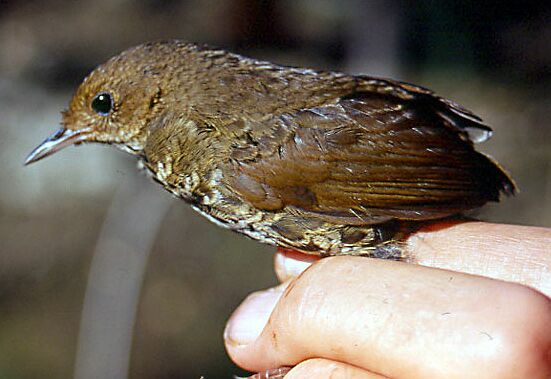
Nepal Wren-Babbler (Pnoepyga immaculata) by Nikhil Devasar

Nepal Wren-Babbler (Pnoepyga immaculata) by Nikhil Devasar

The last verse I found with “babbler” gives us a more positive emphasis. The Apostle Paul was in Athens and:

“Now while Paul waited for them at Athens, his spirit was provoked within him when he saw that the city was given over to idols. Therefore he reasoned in the synagogue with the Jews and with the Gentile worshipers, and in the marketplace daily with those who happened to be there. Then certain Epicurean and Stoic philosophers encountered him. And some said, “What does this babbler want to say?” Others said, “He seems to be a proclaimer of foreign gods,” because he preached to them Jesus and the resurrection. And they took him and brought him to the Areopagus, saying, “May we know what this new doctrine is of which you speak? For you are bringing some strange things to our ears. Therefore we want to know what these things mean.” (Acts 17:16-20 NKJV)

Are we “babblers” for the Lord like Paul? When people listen to us (or read what we write), do they hear a loud “discordant sound” or a clear “musical note”? We have no control how the words are heard. Some may consider the Words of Jesus as just another belief system in the world, while others will hear the Words as joy to their souls. We are told to tell others about Christ. So, Who do we “Babble” for?

*
Eupetidae – Rail-babbler – 1

Pellorneidae – Fulvettas, Ground Babblers – 40+ Wren Babblers, Thrush-Babbler, Scimitar Babbler, Babblers

Pnoepygidae – Wren-babblers – 5 Wren-babblers

Pomatostomidae – Australasian Babblers – 5 Babblers

Psophodidae – Whipbirds, Jewel-babblers and Quail-thrushes – 4 Jewel-babblers

Sylviidae – Sylviid Babblers – 6 Hill Babblers, Thrush-Babblers, and Babblers

Timaliidae – Babblers – 55 Scimitar Babblers, Wren-Babblers, Tit-Babblers and Babblers

Orni-Theology

Sharing The Gospel

*
Birds, But No Birdwatching

First Birds of 2015 - 1 BT Grackle

First Birds of 2015 – 1 Boat-tailed Grackle

Consider the ravens, for they neither sow nor reap, which have neither storehouse nor barn; and God feeds them. Of how much more value are you than the birds? (Luke 12:24 NKJV)

Well, we are over half way through January of 2015 and we still haven’t “gone” on a birdwatching trip. I have been seeing birds in my yard and neighborhood and on short trips to the doctor, store, or church. These have all been occasional sightings. Haven’t even kept a list, except in my head.

As I have visited some of your sites and others, your 2015 list of birds is becoming quite impressive, at least for some of you.

On New Years morning I awoke with a sore throat. I now have been dealing with my second round of bronchitis since November. (Just can’t seem to shake it.) My 2015 list of birds has been “grounded.” Can’t seem to get it off to a start. Yet, the birds seen in 2015 are growing.

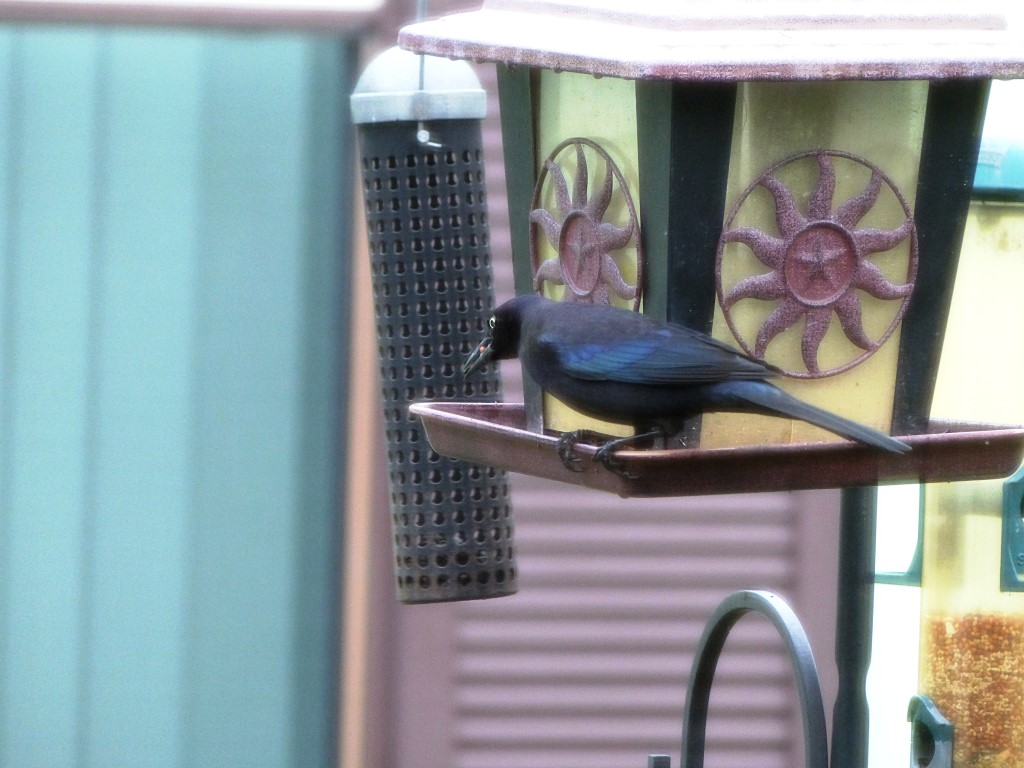
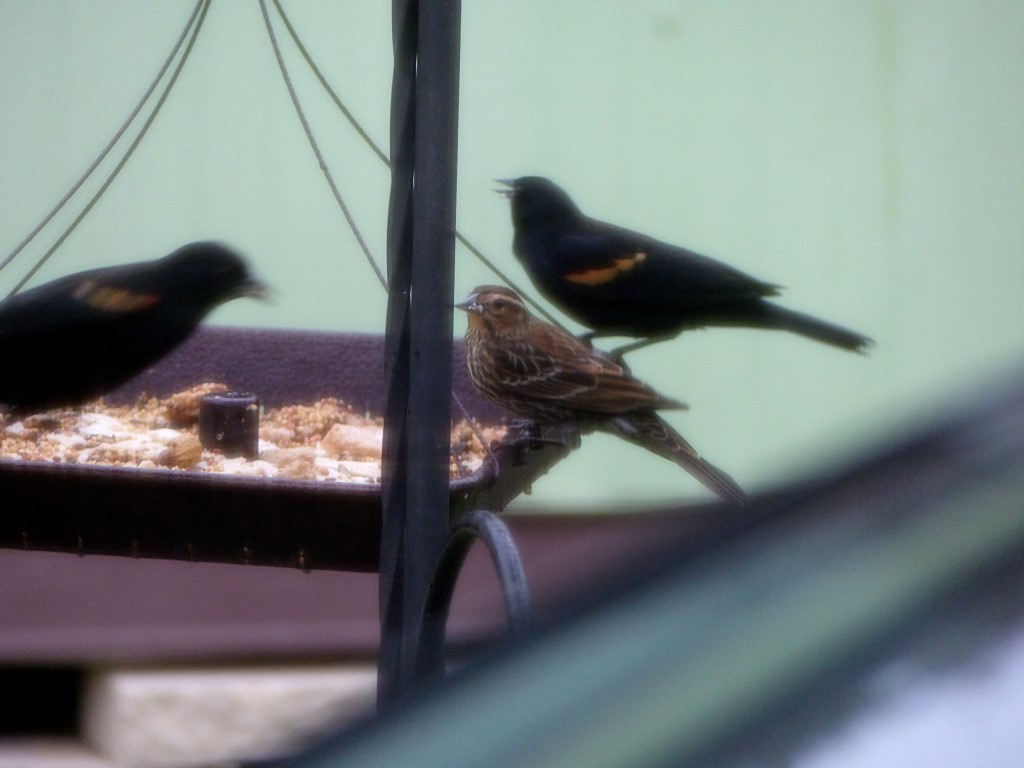
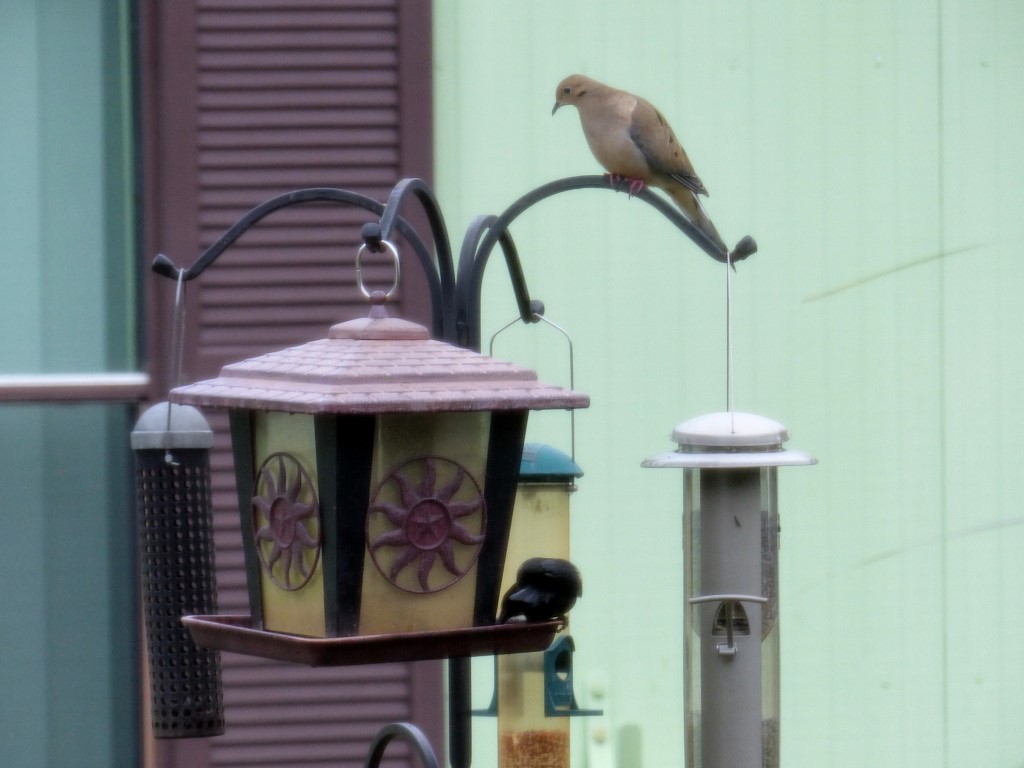
My First Bird of 2015 was a Boat-tailed Grackle that visited the feeders. Followed close behind were Mourning Doves and Red-winged Blackbirds. Woke up with a sore throat, so that was my birdwatching adventure of the new year so far. (From Birds of the Bible – Eye Hath Not Seen)

First Birds of 2015 - 1 BT Grackle-2 M Dove-3 Redwing Blkbd (19)c

First Birds of 2015 – 1 BT Grackle-2 M Dove-3 Redwing Blkbd -through kitchen window

The Grackles, Morning Doves and Red-wings started the year off. Since then the White Ibises strolled through the yard, the Downy Woodpecker checked out the tree next door (which was chopped down 2 days ago), the Sandhill Cranes walked down the street, and overhead I saw Black and Turkey Vultures flying by. With a gap between two houses across the street, I have seen the Great Egret, Great Blue Heron and some UFO fly over the pond there.

While riding we have seen a Bald Eagle, Anhingas, Double-crested Cormorants, and others. Luckily, we have over 500 Lakes in Polk County, so we pass several (on purpose) as we are out. We had to drive right by Circle B, our favorite birding spot here, on the way to the doctor. Well over 100 Vultures were resting in the trees that morning.

The Lord has been great in letting me enjoy His created critters even though in fewer numbers than I would prefer. Some times we need to slow down and just rest, I guess, and take things as they come. I am thankful to be getting better (I think) and am keeping my eyes open to enjoy what is given to me.

Every good gift and every perfect gift is from above, and cometh down from the Father of lights, with whom is no variableness, neither shadow of turning. (James 1:17 KJV)

First Birds of 2015 - 1 BT Grackle-2 M Dove-3 Redwing Blkbd (3)c

And I said, Oh that I had wings like a dove! for then would I fly away, and be at rest. (Psalms 55:6 KJV)

2015 List so far:

  • Grackles
  • Morning Doves
  • Red-winged Blackbirds
  • Downy Woodpecker
  • Sandhill Cranes
  • Great Egret
  • Great Blue Heron
  • Bald Eagle
  • Anhingas
  • Double-crested Cormorants
  • Osprey
  • Pigeons
  • Common Moorhens
  • Red-shouldered Hawk
  • Blue Jay
  • White-winged Doves
  • Eurasian Collared Doves
  • Common Nighthawk

Looking forward to doing some “real” birdwatching soon. Your prayers will be appreciated as I continue to fight bronchitis. Am starting to get “cabin fever.” Went to church a week ago when Pastor Jerry had his special day, for which I am thankful, but it caused me to re-lapse. Oh, well! It was worth it and you will get to hear more of that music in later articles.

Pastor Jerry Smith – Testimony

Sunday Inspiration – Big Mighty God

*

Sunday Inspiration – Big Mighty God

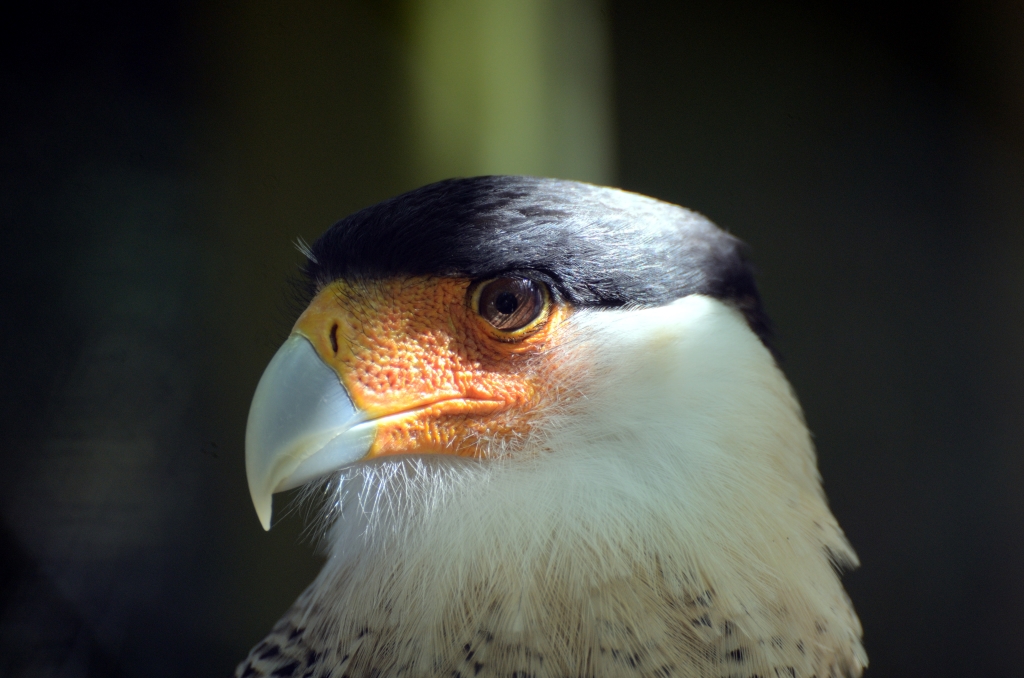
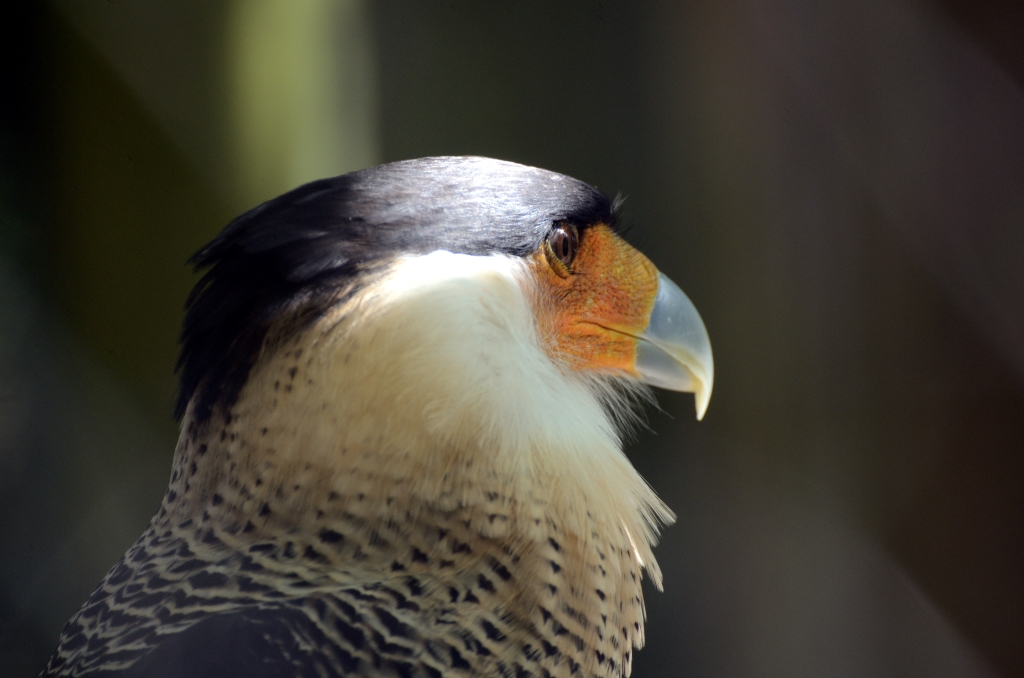
Caracara - Dan's Flamingo Gardens Photos

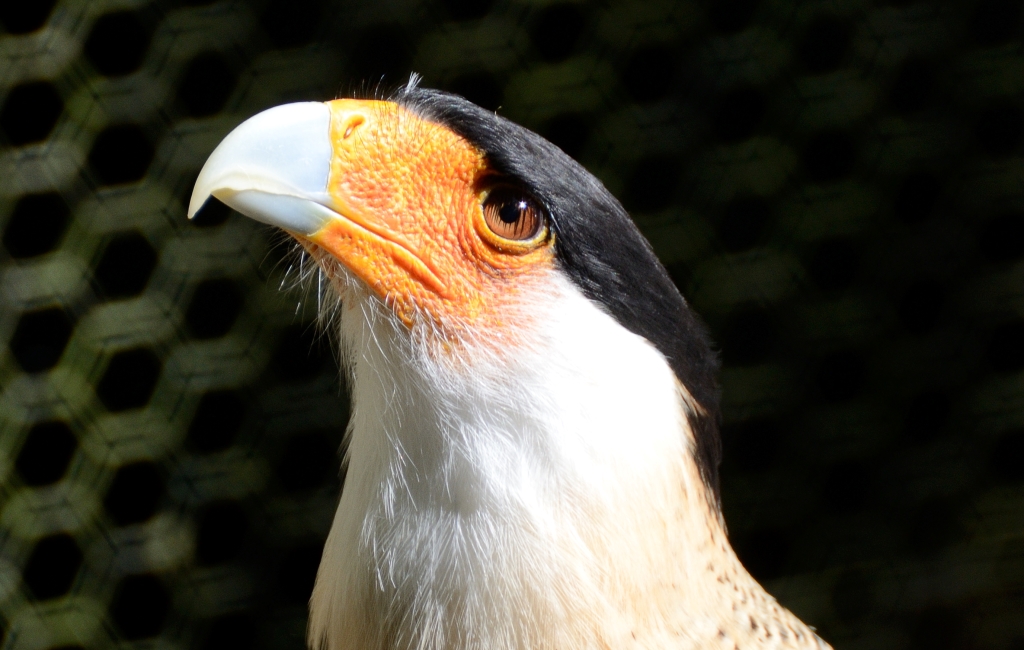
Caracara – Dan’s Flamingo Gardens Photos

“keep yourselves in the love of God, looking for the mercy of our Lord Jesus Christ unto eternal life. (Jude 1:21 NKJV)

“looking unto Jesus, the author and finisher of our faith, who for the joy that was set before Him endured the cross, despising the shame, and has sat down at the right hand of the throne of God. (Hebrews 12:2 NKJV)

Last Sunday, our Music Director of 31 years “semi” retired. The music all day was fantastic, even more so than normal. So with new music to use for the blog, today’s selection, “Big Mighty God” caused me to start formulating this blog while they were still singing it.

We do have a Big Mighty Creator that has formed all these gorgeous and not so gorgeous birds. In His wisdom, each avian creation was given just what they need to provide for themselves, find a mate, raise new generations, and sing and just be there for us to enjoy.

As you listen and watch the birds (and a few friends), I trust you realize that the Lord Jesus Christ, the Creator, has provided just as well and even better for you.

This slideshow requires JavaScript.

Click to Listen

“Big Mighty God” –  3+1 – Pastor Jerry, Reagan Osborne, Caleb & Jessie Padgett (Reagan flew in from Calif. for the special day)

*

Sunday Inspirations
Pastor Jerry Smith – Testimony
Good News

*

Longbill and Teeter – Chapter 9

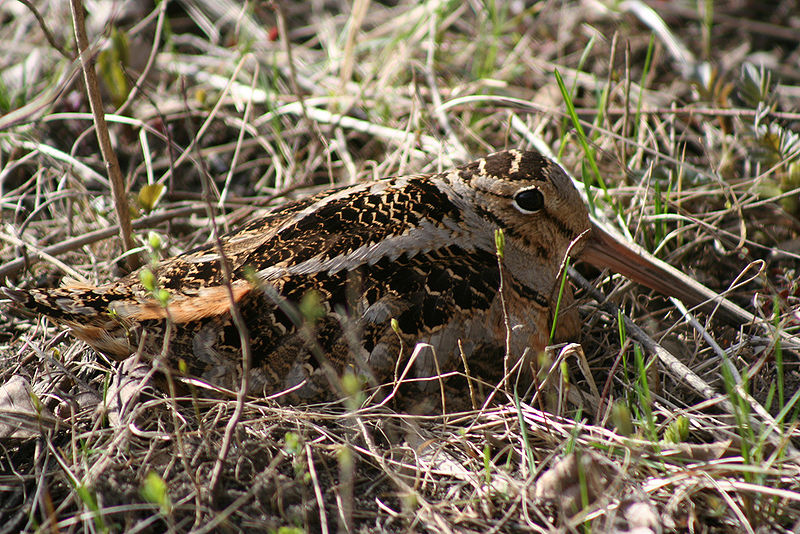
American Woodcock (Scolopax minor) ©WikiC

American Woodcock (Scolopax minor) ©WikiC

Longbill and Teeter

The Woodcock and the Spotted Sandpiper.

The Burgess Bird Book For Children

*

CHAPTER 9. Longbill and Teeter.

Listen to the story read.

From the decided way in which Jenny Wren had popped into the little round doorway of her home, Peter knew that to wait in the hope of more gossip with her would be a waste of time. He wasn’t ready to go back home to the dear Old Briar-patch, yet there seemed nothing else to do, for everybody in the Old Orchard was too busy for idle gossip. Peter scratched a long ear with a long hind foot, trying to think of some place to go. Just then he heard the clear “peep, peep, peep” of the Hylas, the sweet singers of the Smiling Pool.

“That’s where I’ll go!” exclaimed Peter. “I haven’t been to the Smiling Pool for some time. I’ll just run over and pay my respects to Grandfather Frog, and to Redwing the Blackbird. Redwing was one of the first birds to arrive, and I’ve neglected him shamefully.”

When Peter thinks of something to do he wastes no time. Off he started, lipperty-lipperty-lip, for the Smiling Pool. He kept close to the edge of the Green Forest until he reached the place where the Laughing Brook comes out of the Green Forest on its way to the Smiling Pool in the Green Meadows. Bushes and young trees grow along the banks of the Laughing Brook at this point. The ground was soft in places, quite muddy. Peter doesn’t mind getting his feet damp, so he hopped along carelessly. From right under his very nose something shot up into the air with a whistling sound. It startled Peter so that he stopped short with his eyes popping out of his head. He had just a glimpse of a brown form disappearing over the tops of some tall bushes. Then Peter chuckled. “I declare,” said he, “I had forgotten all about my old friend, Longbill the Woodcock. He scared me for a second.”

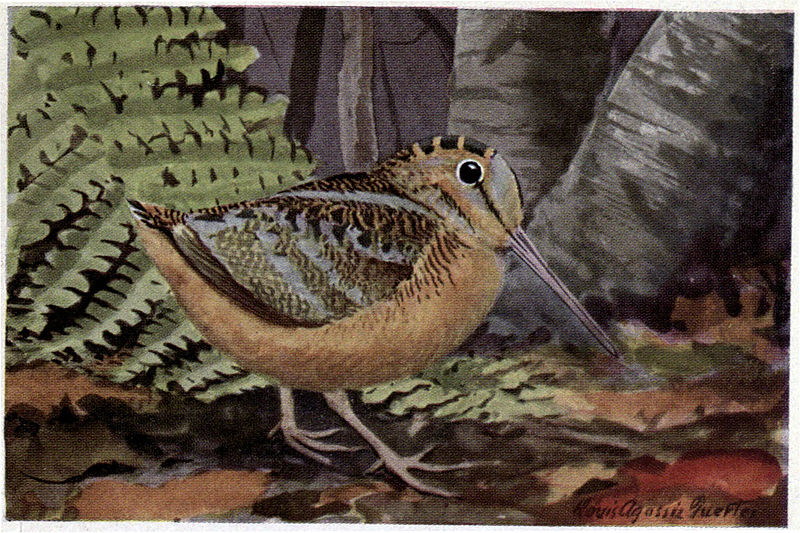
Longbill the Woodcock - Burgess Bird Book ©©

Longbill the Woodcock – Burgess Bird Book ©©

“Then you are even,” said a voice close at hand. “You scared him. I saw you coming, but Longbill didn’t.”

Peter turned quickly. There was Mrs. Woodcock peeping at him from behind a tussock of grass.

“I didn’t mean to scare him,” apologized Peter. “I really didn’t mean to. Do you think he was really very much scared?”

“Not too scared to come back, anyway,” said Longbill himself, dropping down just in front of Peter. “I recognized you just as I was disappearing over the tops of the bushes, so I came right back. I learned when I was very young that when startled it is best to fly first and find out afterwards whether or not there is real danger. I am glad it is no one but you, Peter, for I was having a splendid meal here, and I should have hated to leave it. You’ll excuse me while I go on eating, I hope. We can talk between bites.”

“Certainly I’ll excuse you,” replied Peter, staring around very hard to see what it could be Longbill was making such a good meal of. But Peter couldn’t see a thing that looked good to eat. There wasn’t even a bug or a worm crawling on the ground. Longbill took two or three steps in rather a stately fashion. Peter had to hide a smile, for Longbill had such an air of importance, yet at the same time was such an odd looking fellow. He was quite a little bigger than Welcome Robin, his tail was short, his legs were short, and his neck was short. But his bill was long enough to make up. His back was a mixture of gray, brown, black and buff, while his breast and under parts were a beautiful reddish-buff. It was his head that made him look queer. His eyes were very big and they were set so far back that Peter wondered if it wasn’t easier for him to look behind him than in front of him.

American Woodcock (Scolopax minor) on nest © USFWS

American Woodcock (Scolopax minor) on nest © USFWS

Suddenly Longbill plunged his bill into the ground. He plunged it in for the whole length. Then he pulled it out and Peter caught a glimpse of the tail end of a worm disappearing down Longbill’s throat. Where that long bill had gone into the ground was a neat little round hole. For the first time Peter noticed that there were many such little round holes all about. “Did you make all those little round holes?” exclaimed Peter.

“Not at all,” replied Longbill. “Mrs. Woodcock made some of them.”

“And was there a worm in every one?” asked Peter, his eyes very wide with interest.

Longbill nodded. “Of course,” said he. “You don’t suppose we would take the trouble to bore one of them if we didn’t know that we would get a worm at the end of it, do you?”

Peter remembered how he had watched Welcome Robin listen and then suddenly plunge his bill into the ground and pull out a worm. But the worms Welcome Robin got were always close to the surface, while these worms were so deep in the earth that Peter couldn’t understand how it was possible for any one to know that they were there. Welcome Robin could see when he got hold of a worm, but Longbill couldn’t. “Even if you know there is a worm down there in the ground, how do you know when you’ve reached him? And how is it possible for you to open your bill down there to take him in?” asked Peter.

Longbill chuckled. “That’s easy,” said he. “I’ve got the handiest bill that ever was. See here!” Longbill suddenly thrust his bill straight out in front of him and to Peter’s astonishment he lifted the end of the upper half without opening the rest of his bill at all. “That’s the way I get them,” said he. “I can feel them when I reach them, and then I just open the top of my bill and grab them. I think there is one right under my feet now; watch me get him.” Longbill bored into the ground until his head was almost against it. When he pulled his bill out, sure enough, there was a worm. “Of course,” explained Longbill, “it is only in soft ground that I can do this. That is why I have to fly away south as soon as the ground freezes at all.”

“It’s wonderful,” sighed Peter. “I don’t suppose any one else can find hidden worms that way.”

“My cousin, Jack Snipe, can,” replied Longbill promptly. “He feeds the same way I do, only he likes marshy meadows instead of brushy swamps. Perhaps you know him.”

Wilson's Snipe (Gallinago delicata) at Circle B by Dan

WWilson’s Snipe (Gallinago delicata) at Circle B by Dan

Peter nodded. “I do,” said he. “Now you speak of it, there is a strong family resemblance, although I hadn’t thought of him as a relative of yours before. Now I must be running along. I’m ever so glad to have seen you, and I’m coming over to call again the first chance I get.”

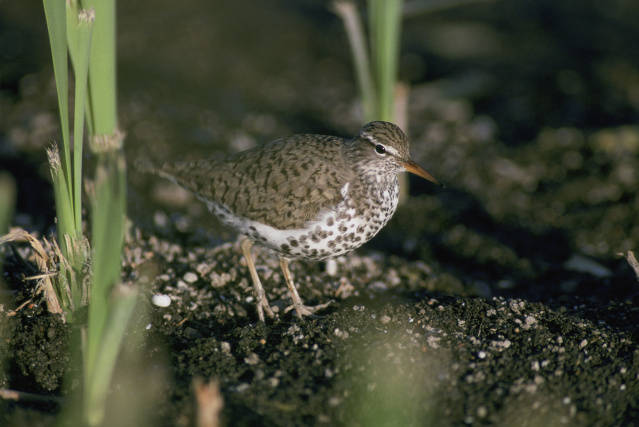
So Peter said good-by and kept on down the Laughing Brook to the Smiling Pool. Right where the Laughing Brook entered the Smiling Pool there was a little pebbly beach. Running along the very edge of the water was a slim, trim little bird with fairly long legs, a long slender bill, brownish-gray back with black spots and markings, and a white waistcoat neatly spotted with black. Every few steps he would stop to pick up something, then stand for a second bobbing up and down in the funniest way, as if his body was so nicely balanced on his legs that it teetered back and forth like a seesaw. It was Teeter the Spotted Sandpiper, an old friend of Peter’s. Peter greeted him joyously.

“Peet-weet! Peet-weet!” cried Teeter, turning towards Peter and bobbing and bowing as only Teeter can. Before Peter could say another word Teeter came running towards him, and it was plain to see that Teeter was very anxious about something. “Don’t move, Peter Rabbit! Don’t move!” he cried.

“Why not?” demanded Peter, for he could see no danger and could think of no reason why he shouldn’t move. Just then Mrs. Teeter came hurrying up and squatted down in the sand right in front of Peter.

“Thank goodness!” exclaimed Teeter, still bobbing and bowing. “If you had taken another step, Peter Rabbit, you would have stepped right on our eggs. You gave me a dreadful start.”

Spotted Sandpiper (Actitis macularius) ©USFWS

Spotted Sandpiper (Actitis macularius) ©USFWS

Peter was puzzled. He showed it as he stared down at Mrs. Teeter just in front of him. “I don’t see any nest or eggs or anything,” said he rather testily.

Mrs. Teeter stood up and stepped aside. Then Peter saw right in a little hollow in the sand, with just a few bits of grass for a lining, four white eggs with big dark blotches on them. They looked so much like the surrounding pebbles that he never would have seen them in the world but for Mrs. Teeter. Peter hastily backed away a few steps. Mrs. Teeter slipped back on the eggs and settled herself comfortably. It suddenly struck Peter that if he hadn’t seen her do it, he wouldn’t have known she was there. You see she looked so much like her surroundings that he never would have noticed her at all.

“My!” he exclaimed. “I certainly would have stepped on those eggs if you hadn’t warned me,” said he. “I’m so thankful I didn’t. I don’t see how you dare lay them in the open like this.”

Mrs. Teeter chuckled softly. “It’s the safest place in the world, Peter,” said she. “They look so much like these pebbles around here that no one sees them. The only time they are in danger is when somebody comes along, as you did, and is likely to step on them without seeing them. But that doesn’t happen often.”


Spotted Sandpiper (Actitis macularius) Eggs ©WikiC

Lee’s Addition:

“You shall hide them in the secret place of Your presence From the plots of man; You shall keep them secretly in a pavilion… (Psalms 31:20 NKJV)

“Hide me from the secret plots of the wicked,… (Psalms 64:2a NKJV)

Our Lord created these birds with a neat bills to help them feed and also great colors to help them stay hidden from danger.

These birds all belong to the Scolopacidae – Sandpipers, Snipes Family. There are 96 species in this family.

Questions to answer:

  • What is Longbill’s first reaction at danger?
  • Can you describe Longbill’s tail, neck and eyes?
  • What is special about his bill?
  • Who is Longbill’s cousin?
  • Where does he like to catch worms?
  • Who is Tweeter?
  • Why did she stop Peter Rabbit?

Links:


*

Links:

Redwing the Blackbird, Speckles the Starling - Burgess Bird Book ©©Thum


  Next Chapter Redwing and Yellow Wing


Burgess-Bird-Book-for-Children


Burgess Bird Book For Children


ABC’s Of The Gospel

*


Bird-watching Devotional Activity

Philippine Eagle-Owl (Bubo philippensis) by Bob Kaufman

Philippine Eagle-Owl (Bubo philippensis) by Bob Kaufman

“By them the birds of the heavens have their home; They sing among the branches. (Psalms 104:12 NKJV)

Myra has become a dear friend through this blog. She lives in the Philippines and enjoys birdwatching. She used some of this blog’s information several years ago for a class in birdwatching at a Christian Camp there. Now, she has written a Birdwatching Devotional and I asked if I could share it with you. Of course, no problem.

Here is an excerpt from her e-mail that tells about it.

Just want to share something I wrote.  I was in a southern province recently to cover the opening of a retreat center run by the organization I work for (http://cctmalungon.blogspot.com/).  I got to bird watch the next morning during my quiet time, and started writing a devotional activity.  I finished writing it yesterday.
I am praying the management of the retreat center will be interested in my suggestions to promote bird watching there, and hoping the attached devotional will be printed out and placed inside each room.

*

MRTC Bird-watching Devotional Activity 1

It is often easier to hear birds than to see them, so for this devotional activity, we will simply listen to the sounds they make.  Bring your Bible, a pen, and this sheet. Find a quiet, shady spot. Read Psalm 104:1 – 17, 24 – 28. Notice that the psalmist mentions birds singing among the branches (v.12).  Now close your eyes and listen to the bird sounds around you.

In the space below use tally marks (four vertical and one diagonal line like those used to score games) to make a record of the different kind of bird sounds you hear:

_

_

_

_

_

_

Which of the following sounds did you hear?

_____Chirp

_____Tweet

_____Peep

_____Warble

_____Cheep

_____Hoot

_____Whoop

_____Trill

_____Whistle

_____Squawk

_____Caw

_____Coo

These are all English words based on sounds made by birds. In the spaces below, write how some of the bird sounds sound to you.  Use your own spelling – spell them the way they sound to you!  For example, “Wit-hooooooo! Wit-hoooooooo! Wit-hooo-tu-ri-ri!

_________________________

_________________________

_________________________

_________________________

_________________________

_________________________

Now reread Psalm 104:12 & 24.  The bird sounds you heard tell us of the wisdom and the infinite creativity with which God made the world. What fun He must have had assigning birds to sing high notes and low notes, long notes and short notes, to make soft sounds or loud sounds and an endless combination of these! Some birds make lovely, melodic sounds, while others are madakdak! Imagine the bird sounds and bird songs Adam and Eve heard in the Garden of Eden. But songs and sounds are just one aspect birds. God gave them feathers of different colors; He gave them beaks and feet of different shapes and sizes for a lot of different uses.  He gave them the wonderful gift of flight.  Praise God for His wisdom!

Now reread Psalm 27 & 28, as well as Matthew 6:25 – 27.   God paid detailed attention to birds when He made them.  Up until today, our Heavenly Father feeds them. When He opens His hands “they are filled with good things.” We, His children, are so much more important to Him than birds.  Rejoice in the attention God pays to the details of your life!  Thank Him for his loving care and faithful provision.

Dear Father, thank you for the birds.  I praise you for the wisdom with which you made them.  I bow in awe and amazement at your infinite creativity. Forgive me Father when I forget that you love me more than you love the birds.  Help me to always remember that to You,  I am more valuable than they. Thank you for your care and provision, for your nearness and presence.  I love you! In Jesus Name, Amen.

Myra Gaculais del Rosario

Malungon, Sarangani – December 13, 2014

Taytay, Rizal – January 8, 2015

“O LORD, how manifold are Your works! In wisdom You have made them all. The earth is full of Your possessions—This great and wide sea, In which are innumerable teeming things, Living things both small and great. There the ships sail about; There is that Leviathan Which You have made to play there. These all wait for You, That You may give them their food in due season. What You give them they gather in; You open Your hand, they are filled with good. (Psalms 104:24-28 NKJV)


What a gorgeous place to go birdwatching.

What a gorgeous place to go birdwatching. Malungon Retreat and Community Resource Center

Lee’s Addition:

In the multitude of my thoughts within me thy comforts delight my soul. (Psalms 94:19 KJV)

One of the reasons to share this is that you or some of the Camp and Home-school groups could use it. Also, it could be a start to writing some of your own devotionals along this line.

You can download the file by clicking this link:

MRTC Bird Watching Devotional Activity 1 by Myra Gaculais del Rosario

*

Birds of the Bible – Church Camp In Philippines

*


Old Clothes and Old Houses – Chapter 8

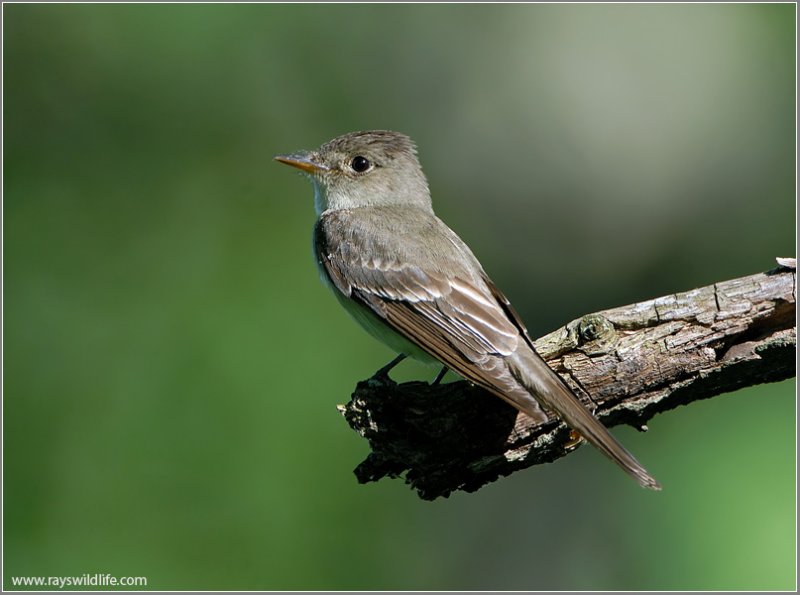
Eastern Wood Pewee (Contopus virens) by Raymond Barlow

Eastern Wood Pewee (Contopus virens) by Raymond Barlow

Old Clothes and Old Houses

The Wood Peewee and Some Nesting Places.

The Burgess Bird Book For Children

*

CHAPTER 8. Old Clothes and Old Houses.

Listen to the story read.

“I can’t stop to talk to you any longer now, Peter Rabbit,” said Jenny Wren, “but if you will come over here bright and early to-morrow morning, while I am out to get my breakfast, I will tell you about Cresty the Flycatcher and why he wants the cast-off clothes of some of the Snake family. Perhaps I should say WHAT he wants of them instead of WHY he wants them, for why any one should want anything to do with Snakes is more then I can understand.”

With this Jenny Wren disappeared inside her house, and there was nothing for Peter to do but once more start for the dear Old Briar-patch. On his way he couldn’t resist the temptation to run over to the Green Forest, which was just beyond the Old Orchard. He just HAD to find out if there was anything new over there. Hardly had he reached it when he heard a plaintive voice crying, “Pee-wee! Pee-wee! Pee-wee!” Peter chuckled happily. “I declare, there’s Pee-wee,” he cried. “He usually is one of the last of the Flycatcher family to arrive. I didn’t expect to find him yet. I wonder what has brought him up so early.”

It didn’t take Peter long to find Pewee. He just followed the sound of that voice and presently saw Pewee fly out and make the same kind of a little circle as the other members of the family make when they are hunting flies. It ended just where it had started, on a dead twig of a tree in a shady, rather lonely part of the Green Forest. Almost at once he began to call his name in a rather sad, plaintive tone, “Pee-wee! Pee-wee! Pee-wee!” But he wasn’t sad, as Peter well knew. It was his way of expressing how happy he felt. He was a little bigger than his cousin, Chebec, but looked very much like him. There was a little notch in the end of his tail. The upper half of his bill was black, but the lower half was light. Peter could see on each wing two whitish bars, and he noticed that Pewee’s wings were longer than his tail, which wasn’t the case with Chebec. But no one could ever mistake Pewee for any of his relatives, for the simple reason that he keeps repeating his own name over and over.

Wood Pewee of Birds Illustrated by Color Photography, 1897

“Aren’t you here early?” asked Peter.

Pewee nodded. “Yes,” said he. “It has been unusually warm this spring, so I hurried a little and came up with my cousins, Scrapper and Cresty. That is something I don’t often do.”

“If you please,” Peter inquired politely, “why do folks call you Wood Pewee?”

Pewee chuckled happily. “It must be,” said he, “because I am so very fond of the Green Forest. It is so quiet and restful that I love it. Mrs. Pewee and I are very retiring. We do not like too many near neighbors.”

“You won’t mind if I come to see you once in a while, will you?” asked Peter as he prepared to start on again for the dear Old Briar-patch.

“Come as often as you like,” replied Pewee. “The oftener the better.”

Back in the Old Briar-patch Peter thought over all he had learned about the Flycatcher family, and as he recalled how they were forever catching all sorts of flying insects it suddenly struck him that they must be very useful little people in helping Old Mother Nature take care of her trees and other growing things which insects so dearly love to destroy.

But most of all Peter thought about that odd request of Cresty’s, and a dozen times that day he found himself peeping under old logs in the hope of finding a cast-off coat of Mr. Black Snake. It was such a funny thing for Cresty to ask for that Peter’s curiosity would allow him no peace, and the next morning he was up in the Old Orchard before jolly Mr. Sun had kicked his bedclothes off.

Jenny Wren was as good as her word. While she flitted and hopped about this way and that way in that fussy way of hers, getting her breakfast, she talked. Jenny couldn’t keep her tongue still if she wanted to.

“Did you find any old clothes of the Snake family?” she demanded. Then as Peter shook his head her tongue ran on without waiting for him to reply. “Cresty and his wife always insist upon having a piece of Snake skin in their nest,” said she. “Why they want it, goodness knows! But they do want it and never can seem to settle down to housekeeping unless they have it. Perhaps they think it will scare robbers away. As for me, I should have a cold chill every time I got into my nest if I had to sit on anything like that. I have to admit that Cresty and his wife are a handsome couple, and they certainly have good sense in choosing a house, more sense than any other member of their family to my way of thinking. But Snake skins! Ugh!”

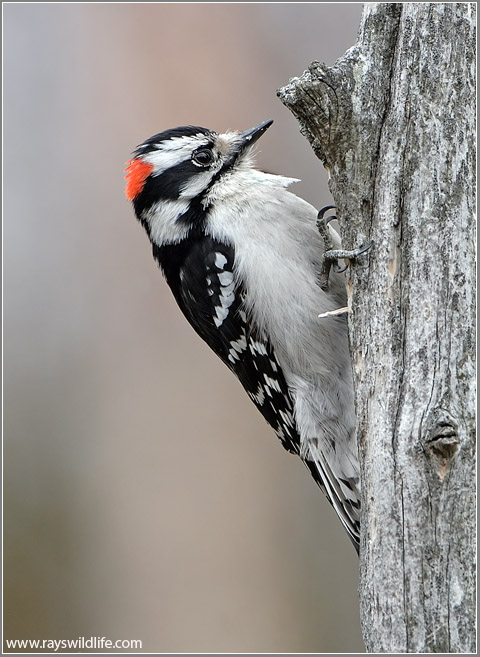
Downy Woodpecker (Picoides pubescens) by Raymond Barlow

Downy Woodpecker (Picoides pubescens) by Raymond Barlow

“By the way, where does Cresty build?” asked Peter.

In a hole in a tree, like the rest of us sensible people,” retorted Jenny Wren promptly.

Peter looked quite as surprised as he felt. “Does Cresty make the hole?” he asked.

“Goodness gracious, no!” exclaimed Jenny Wren. “Where are your eyes, Peter? Did you ever see a Flycatcher with a bill that looked as if it could cut wood?” She didn’t wait for a reply, but rattled on. “It is a good thing for a lot of us that the Woodpecker family are so fond of new houses. Look! There is Downy the Woodpecker hard at work on a new house this very minute. That’s good. I like to see that. It means that next year there will be one more house for some one here in the Old Orchard. For myself I prefer old houses. I’ve noticed there are a number of my neighbors who feel the same way about it. There is something settled about an old house. It doesn’t attract attention the way a new one does. So long as it has got reasonably good walls, and the rain and the wind can’t get in, the older it is the better it suits me. But the Woodpeckers seem to like new houses best, which, as I said before, is a very good thing for the rest of us.”

Who is there besides you and Cresty and Bully the English Sparrow who uses these old Woodpecker houses?” asked Peter.

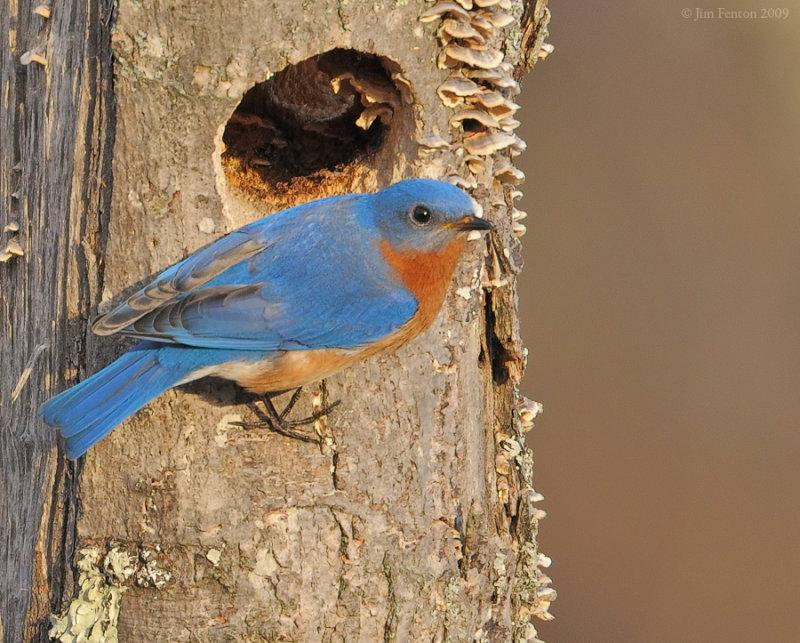
Eastern Bluebird (Sialia sialis) by J Fenton

Eastern Bluebird (Sialia sialis) by J Fenton

“Winsome Bluebird, stupid!” snapped Jenny Wren.

Peter grinned and looked foolish. “Of course,” said he. “I forgot all about Winsome.”

“And Skimmer the Tree Swallow,” added Jenny.

“That’s so; I ought to have remembered him,” exclaimed Peter. “I’ve noticed that he is very fond of the same house year after year. Is there anybody else?”

Again Jenny Wren nodded. “Yank-Yank the Nuthatch uses an old house, I’m told, but he usually goes up North for his nesting,” said she. “Tommy Tit the Chickadee sometimes uses an old house. Then again he and Mrs. Chickadee get fussy and make a house for themselves. Yellow Wing the flicker, who really is a Woodpecker, often uses an old house, but quite often makes a new one. Then there are Killy the Sparrow Hawk and Spooky the Screech Owl.”

Peter looked surprised. “I didn’t suppose THEY nested in holes in trees!” he exclaimed.

“They certainly do, more’s the pity!” snapped Jenny. “It would be a good thing for the rest of us if they didn’t nest at all. But they do, and an old house of Yellow Wing the Flicker suits either of them. Killy always uses one that is high up, and comes back to it year after year. Spooky isn’t particular so long as the house is big enough to be comfortable. He lives in it more or less the year around. Now I must get back to those eggs of mine. I’ve talked quite enough for one morning.”

“Oh, Jenny,” cried Peter, as a sudden thought struck him.

House Wren (Troglodytes aedon) by Ray

House Wren (Troglodytes aedon) by Ray

Jenny paused and jerked her tail impatiently. “Well, what is it now?” she demanded.

“Have you got two homes?” asked Peter.

“Goodness gracious, no!” exclaimed Jenny. “What do you suppose I want of two homes? One is all I can take care of.”

“Then why,” demanded Peter triumphantly, “does Mr. Wren work all day carrying sticks and straws into a hole in another tree? It seems to me that he has carried enough in there to build two or three nests.”

Jenny Wren’s eyes twinkled, and she laughed softly. “Mr. Wren just has to be busy about something, bless his heart,” said she. “He hasn’t a lazy feather on him. He’s building that nest to take up his time and keep out of mischief. Besides, if he fills that hollow up nobody else will take it, and you know we might want to move some time. Good-by, Peter.” With a final jerk of her tail Jenny Wren flew to the little round doorway of her house and popped inside.


Lee’s Addition:

“But now ask the beasts, and they will teach you; And the birds of the air, and they will tell you; (Job 12:7 NKJV)

*

  • What is Peter Rabbit still trying to find?
  • Has he found out why it is need for yet?
  • Who is our newest arrival?
  • Is he on time or early?
  • What does Pewee’s bill look like?
  • Is tail longer or shorter than his wings?
  • Can you find and name the birds listed that use tree holes?
  • Were the birds friendly and kind in this chapter?

A man who has friends must himself be friendly, But there is a friend who sticks closer than a brother. (Proverbs 18:24 NKJV)

“But now ask the beasts, and they will teach you; And the birds of the air, and they will tell you; (Job 12:7 NKJV)

Links:

*

Links:

Longbill the Woodcock - Burgess Bird Book ©©Thum


  Next Chapter (Longbill and Teeter.)


Burgess-Bird-Book-for-Children


Burgess Bird Book For Children


ABC’s Of The Gospel


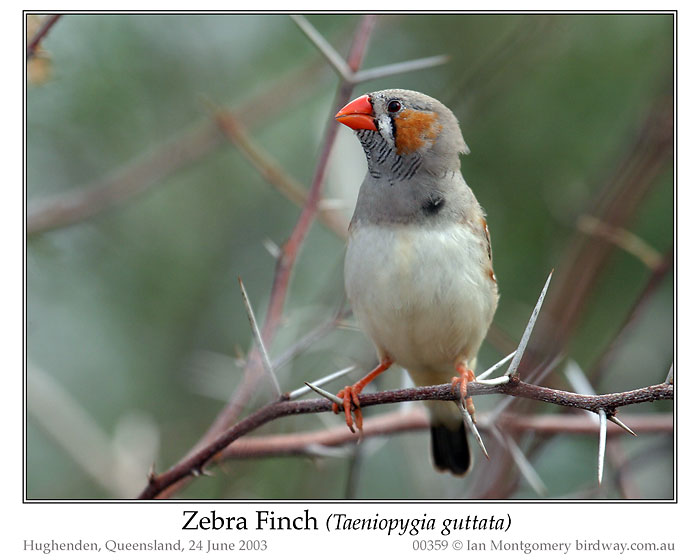
Ian’s Bird of the Week – Zebra Finch

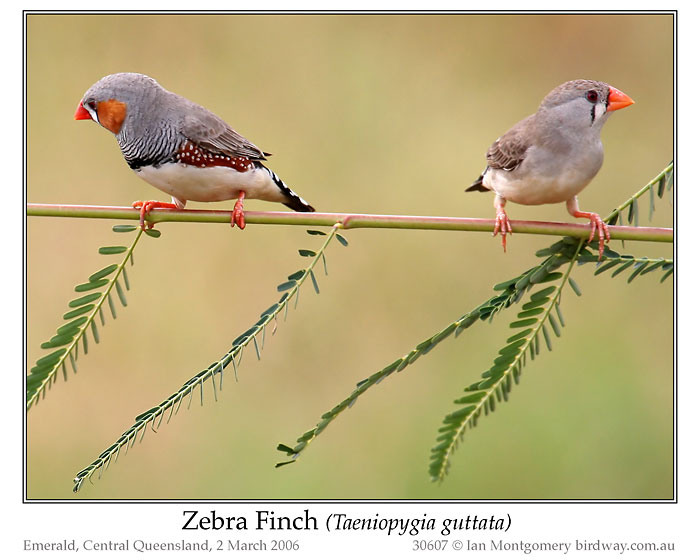
PAS-Estr Zebra Finch (Taeniopygia by Ian

Ian’s Bird of the Week – Zebra Finch ~ by Ian Montgomery

Newsletter ~ 1/12/14

Here’s a perhaps surprising omission so far from the bird of the week series, the Zebra Finch, In Australia the most widespread of the grass- or weaver-finches (family Estrildidae). It is resident almost throughout mainland Australia, avoiding only the very driest deserts (such as the Nullabor Plain and the Great Sandy Desert), Cape York and the cooler and wetter regions of southern Victoria and southern Western Australia. It is absent from Tasmania. I qualified ‘surprising omission’ with ‘perhaps’, as it’s natural to rush into print with rarer and more sought-after species, such as Gouldian Finches, and overlook the more common ones.

With a length of 10cm/4in, it is among the smallest of the 19 species of Estrildid finches found in Australia (17 naturally; 2 introduced), but the males in particular (first photo) are beautiful birds and are hugely popular all over the world. Given the rigours of their natural habitat, they are hardy birds and easy to breed. One of my favourite ways to lazily photograph birds is to sit quietly near a waterhole in dry country and see what arrives, and you can see the bird in the first photo has wet breast and flank feathers from having a dip.

PAS-Estr Zebra Finch (Taeniopygia by Ian

The second photo shows a pair drinking at the same spot. The male on the left is recognisable by its chestnut-coloured cheeks, while the female has plainer plumage, lacking the chestnut plumage on the cheeks and flanks and the stripes on the neck. She still has the stripy tail, white rump and diagnostic vertical ‘tear-drop’ stripe below the eye. This acts as camouflage by obscuring the eye and breaking up the outline of the head.

PAS-Estr Zebra Finch (Taeniopygia by IanThe third photo shows another pair at the same place. They would appear to be having a difference of opinion about something, and the body language suggests to me that the female is getting the upper hand. Most females have plain breasts, but some have a faint breast band like this one. The fourth photo shows another pair, the female having the more typical plain plumage. These two look as if they’re not on very good terms either, definitely not speaking to each other, so you won’t be surprised to hear that Zebra Finches form permanent pair bonds.

PAS-Estr Zebra Finch (Taeniopygia by IanTheir breeding cycles depend on seeding grasses and therefore on rainfall patterns. If the weather is warm enough for grasses to flower, the birds start breeding in response to rain, timing the hatching of the young with the appearance of seed. They will also feed on insects, particular when feeding young. In good conditions, the birds breed repeatedly, and the young, independent 35 days after hatching, can breed when as young as 80 days. Although the pair-bonds are permanent, Zebra Finches are very sociable, often breeding colonially and forming large flocks outside the breeding season. The bonding doesn’t prevent the females from getting on cosy terms with other males, and about 10% of clutches have two fathers (HBW).

PAS-Estr Zebra Finch (Taeniopygia by Ian

PAS-Estr Zebra Finch (Taeniopygia by Ian

Young juveniles resemble the females, but have dark bills. The bird in the fifth photo is an older juvenile male with still only patchy development of the adult plumage.

A closely related population is resident in the Lesser Sundas from Lombok to Timor. This is slightly larger, has a recognisable different song and the males have plain grey rather than striped throats and upper breast. When mixed with Australian birds on captivity, they normally avoid interbreeding unless the male plumage is painted to look like the other type or young birds have been imprinted by being reared by foster parents of the other type. Such hybrids are fertile. Even so, some authorities treat the two races as different species, the Timor and Australian Zebra Finches. ‘Zebra’ doesn’t seem to me a suitable name for the unstriped Timor one, maybe ‘Unzebra’ would be better?

Greetings
Ian

**************************************************
Ian Montgomery, Birdway Pty Ltd,
454 Forestry Road, Bluewater, Qld 4818
Tel 0411 602 737 ian@birdway.com.au
Bird Photos http://www.birdway.com.au/
Where to Find Birds in Northern Queensland: iTunesGoogle Play Kobo Books
Recorder Society http://www.nqrs.org.au


Lee’s Addition:

Thanks again Ian for showing us some more beauties. I have seen these in captivity, but it is always nice to see them where they belong – out enjoying the great outdoors.

I also appreciate Ian telling us about how to distinguish between them. That third photo might be of the male being so “overwhelmed” by her beauty that he fell back and sat down to admire her. :0)  (We really never know what a bird is thinking, do we?)

Looking at these birds can’t help but bring these verses to mind:

But he was wounded for our transgressions, he was bruised for our iniquities: the chastisement of our peace was upon him; and with his stripes we are healed. All we like sheep have gone astray; we have turned every one to his own way; and the LORD hath laid on him the iniquity of us all. (Isaiah 53:5-6 KJV)

Maybe the Lord created these birds with stripes to remind us of that fact.

The Zebra Finches are members of the Estrildidae Family which has 141 species. See:

Ian’s Estrididae Family

Estrildidae – Waxbills, Munias & Allies here

*

Sunday Inspiration – Let Everything Praise

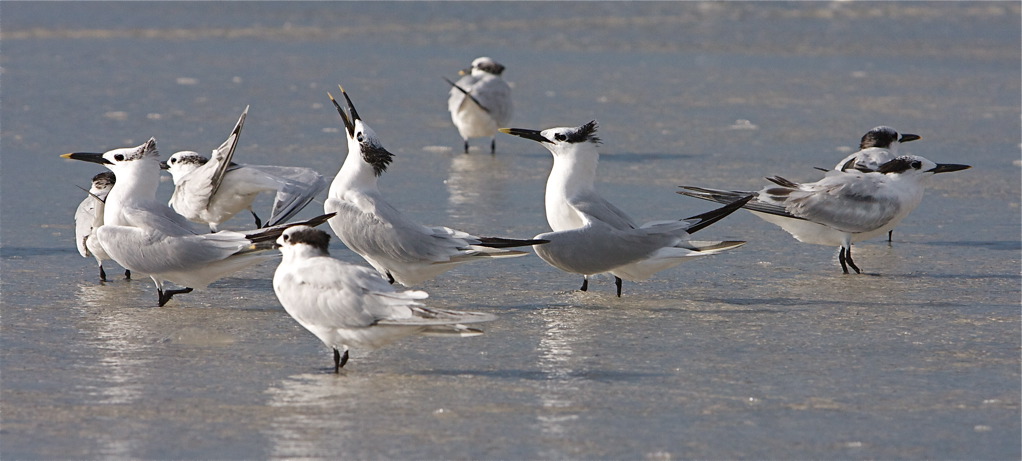
Sandwich Tern Singing (calling) By Mike Bader

Sandwich Tern Singing (calling) By Mike Bader

Let every thing that hath breath praise the LORD. Praise ye the LORD. (KJV)

Let everything that has breath and every breath of life praise the Lord! Praise the Lord! (Hallelujah!) (AMP)

Let every living creature praise the LORD. Shout praises to the LORD! (CEV)

This week the Hyssongs came to our Young At Heart (55 plus) gathering and sang for us. They did a fantastic program of song and praise to our Lord. Last year when they came, they gave me permission to use their music in these Sunday Inspirations. (They are copyrighted and need permission-please, do not copy)

I have purchased their latest CD ~ “Right Time – Right Place” and wanted to share this song, “God Is Great.” Trust you will enjoy their song, what it says, and enjoy our avian friends and some others singing their praise.

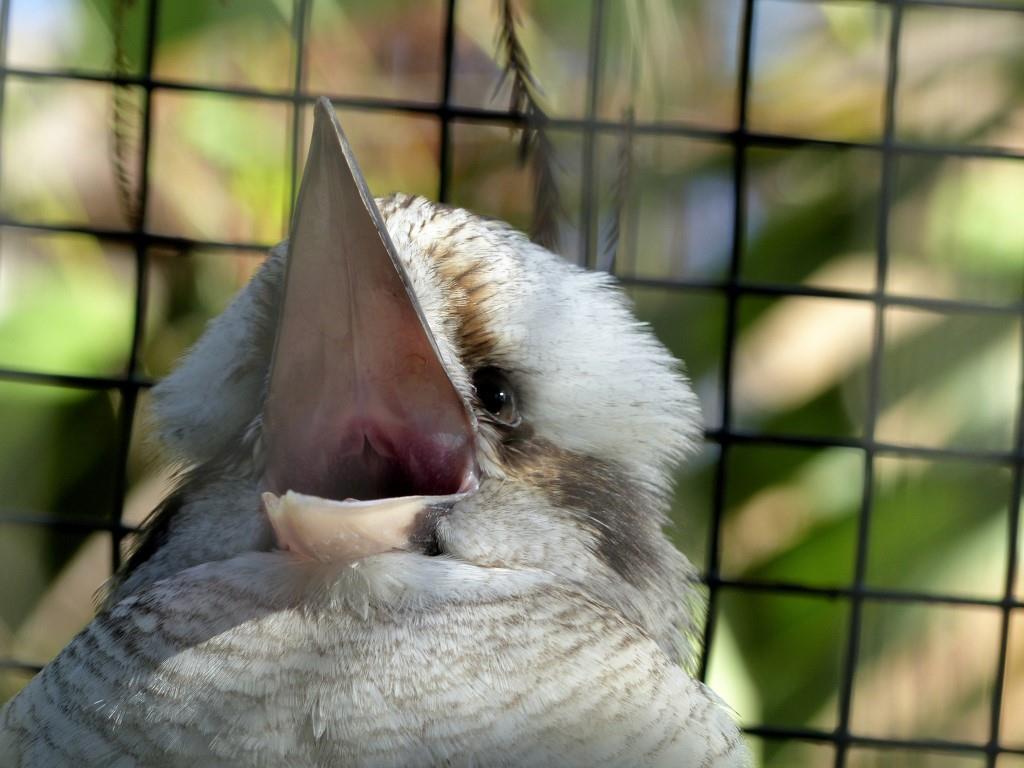
Laughing Kookabura at Lowry Park Zoo by Lee 12-26-14

Laughing Kookabura at Lowry Park Zoo by Lee 12-26-14

Here are a few quotes about Psalm 150 from two commentaries:

Let everything that has breath praise the LORD. Praise the LORD! (NKJV)

Constable – Psalms 150

The inspired poet called on every person to praise Yahweh for His powerful deeds and supreme greatness (10 times out of the 13 uses of “praise” in this psalm). This psalm serves as a final doxology, bringing the collection of psalms to a solemn and joyful conclusion.

“The conclusion of the Psalter is this extravagant summons to praise, which seeks to mobilize all creation with a spontaneous and unreserved act of adoration, praise, gratitude, and awe. There are no ‘bases’ given; no reason needs to be given.” [Note: Brueggemann, p. 167.]

Biblical Illustrator – “IV. By whom (verse 6). Here the psalmist reaches the climax in his exhortation; he has exhausted language; he can particularize no more; he rushes to the culmination; he demands a universal outburst of adoration; he calls upon all in whom the breath of life is to help swell the “hallelujah chorus!” O what a thrilling crash of melody! what a volume of perfect harmony, when animate and inanimate creation, with all creatures, rising rank upon rank, order above order, species above species, purged from corruption, delivered from all evil, and attuned to the euphony of the skies—when “everything that hath breath,” the consecrated breath Divine—“shall join in one harmonious song, and crown Him Lord of all!” (J. O. Keen, D. D.)”

This slideshow requires JavaScript.

Let everything that breathes praise Jehovah. Praise Jehovah! (LITV-TSP)

Todo lo que respira alabe á JAH. Aleluya. (SRV)

(Click to Play)

Let Everything Praise ~ “God Is Great.” ©The Hyssongs

*

Sunday Inspirations

“King” Birds

Hornbills

Bitterns

Hide Thou Me

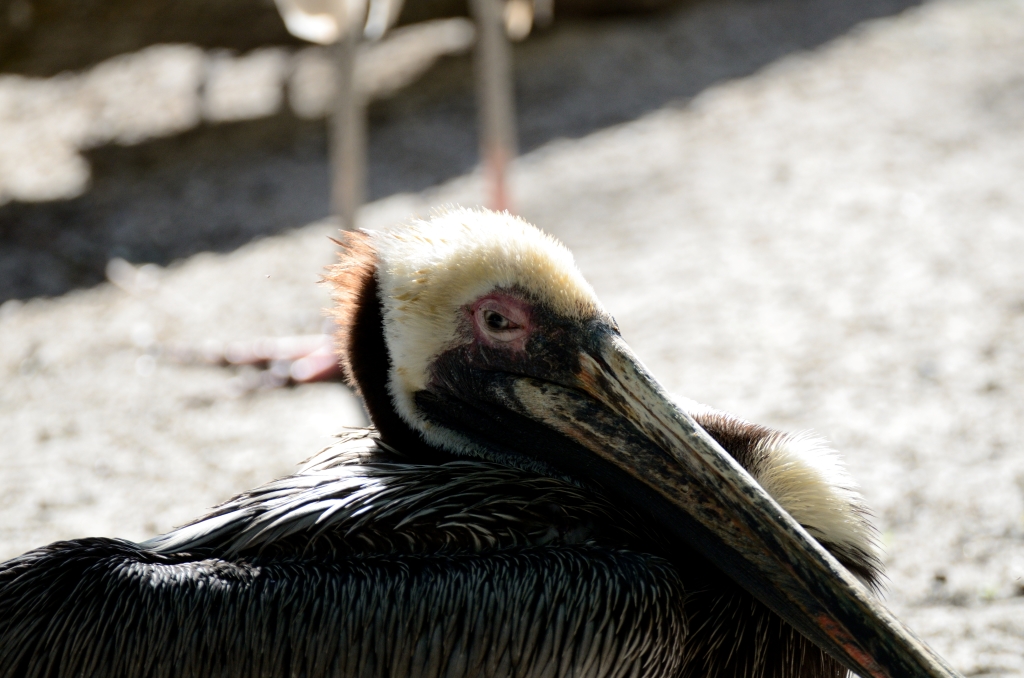
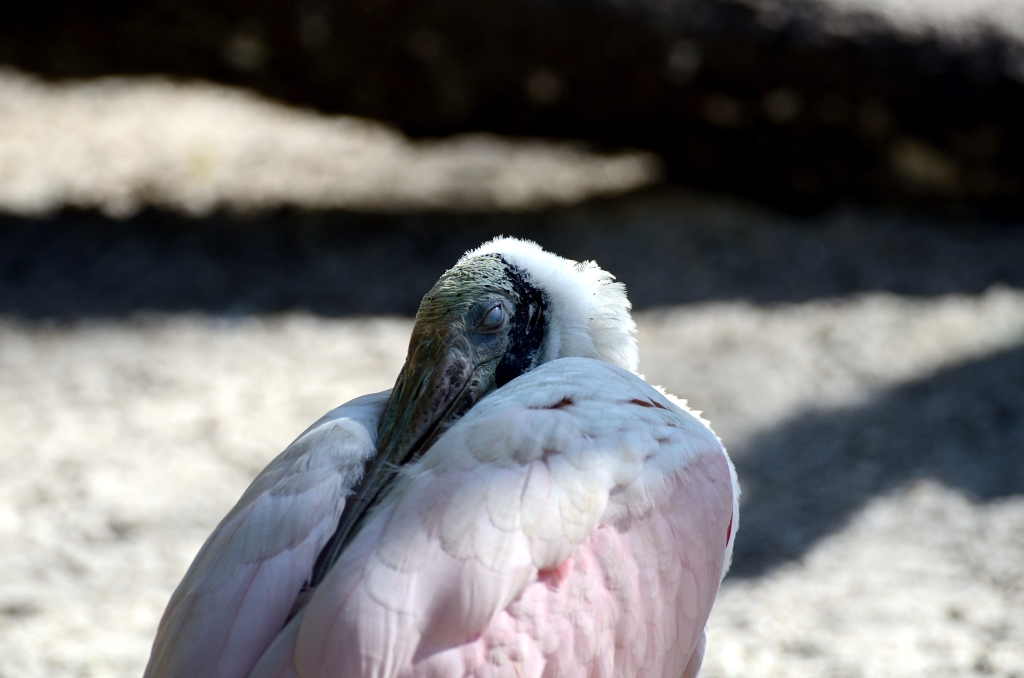
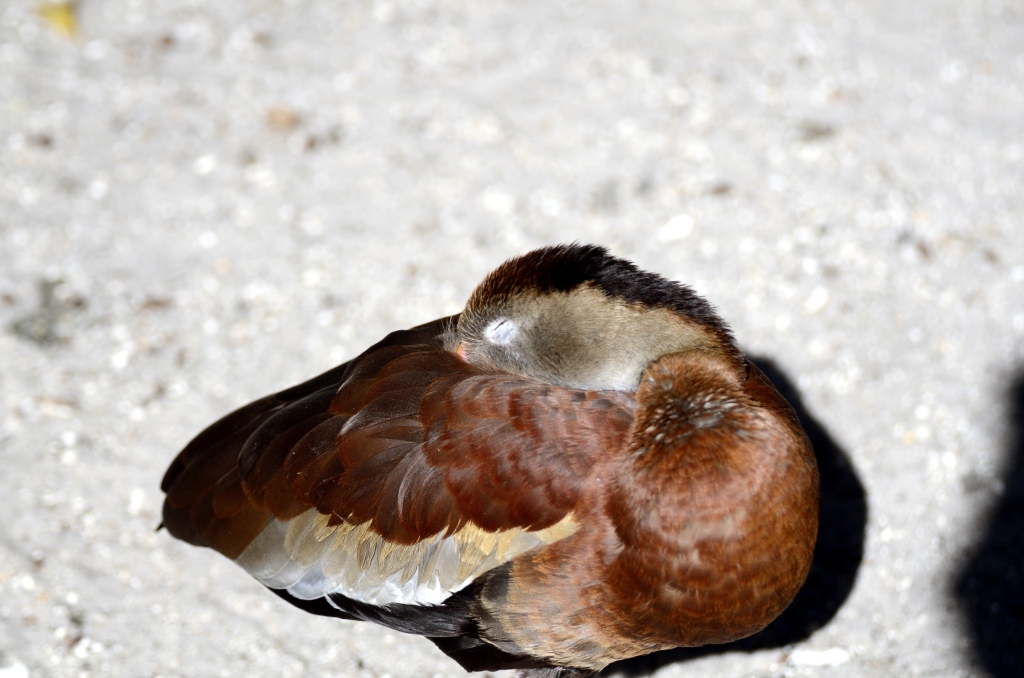
Resting

Sharing The Gospel

*


Alternative Bird Lists

Various Lists

Various Lists

“Then the LORD said to Moses, “Number every firstborn male of the sons of Israel from a month old and upward, and make a list of their names. (Numbers 3:40 NASB)

Saw this on Alternative Life List from About, which was a side-link from Keeping a Life Yard List.

“Many birders keep a life list, but the guidelines for what birds count on a life list that will be accepted by organizations or competitions can be strict. Fortunately, there are many alternative ways to keep a life list, from serious to silly, and each one adds a new dimension to enjoying the record-keeping side of birding.

Here are some of the List they suggest:

  • Geographic Lists:
  • Seasonal Lists:
  • Photographic Lists:
  • Subspecies Lists
  • Sound Lists
On Way to Lowry Pk Zoo - Crossed County line at 8:42

On Way to Lowry Pk Zoo – Crossed County line at 8:42

Then they list Silly Options For Fun Life Lists:

  • Captive Birds: (See them often)
  • Extinct Birds: (That might be a little difficult)
  • Taxidermy Birds: (Don’t do too many museums)
  • Hollywood Birds: (That might be interesting, you hear them in the backgrounds a lot)
  • Book Birds: (Yep, not too hard)
  • Dream Birds: (That would be hard if you don’t dream much – Wish Birds might be better)
  • Missed Birds: (That might be REAL easy)

I think I need to keep a Captive Bird List (my Zoos, Aviaries, Wildlife Rehabs and other places that have birds that are not free to leave.)

The Photographic Life List also sounds interesting. (I have plenty of “proof shots”)

eBird Report

eBird Report

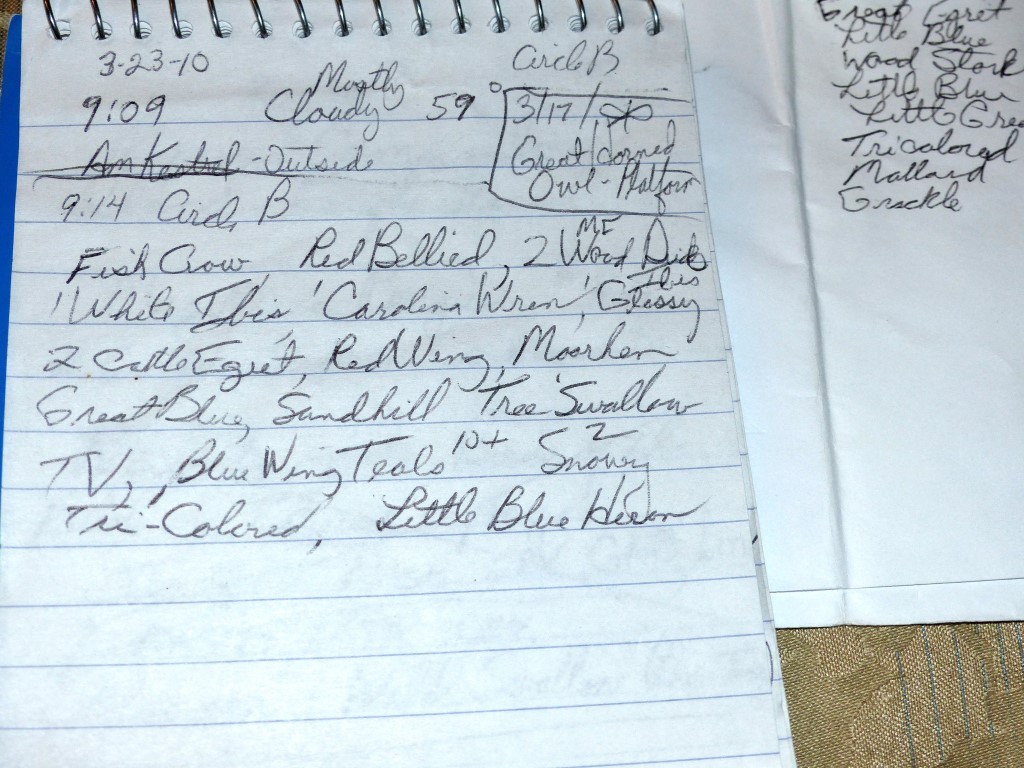
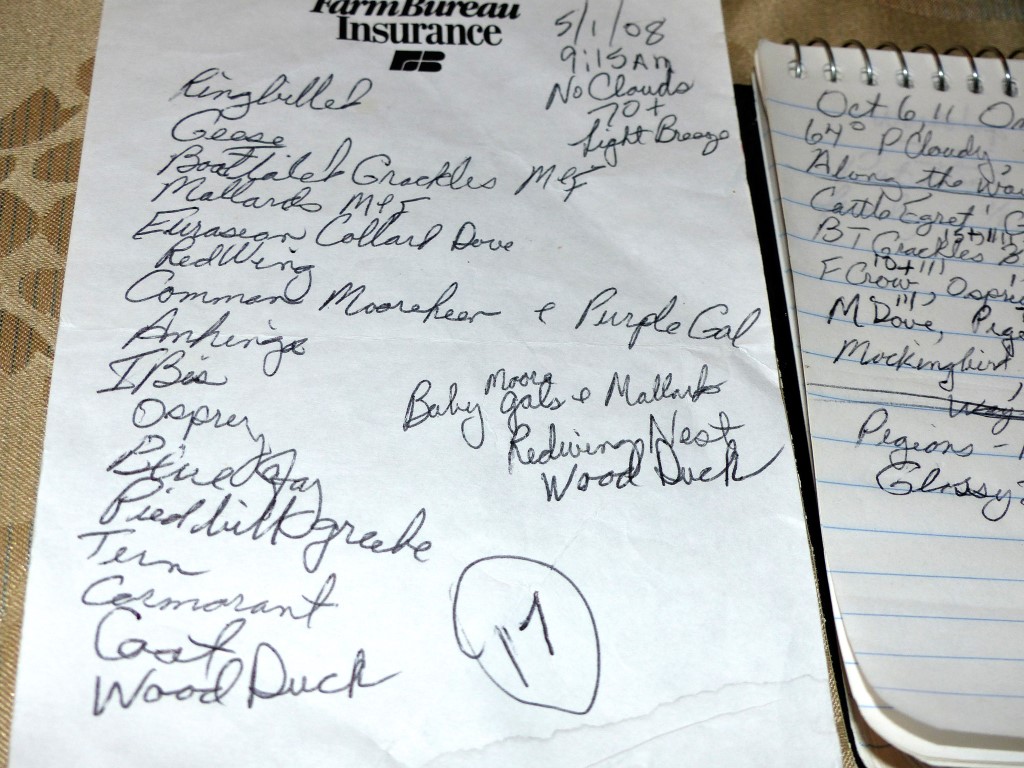
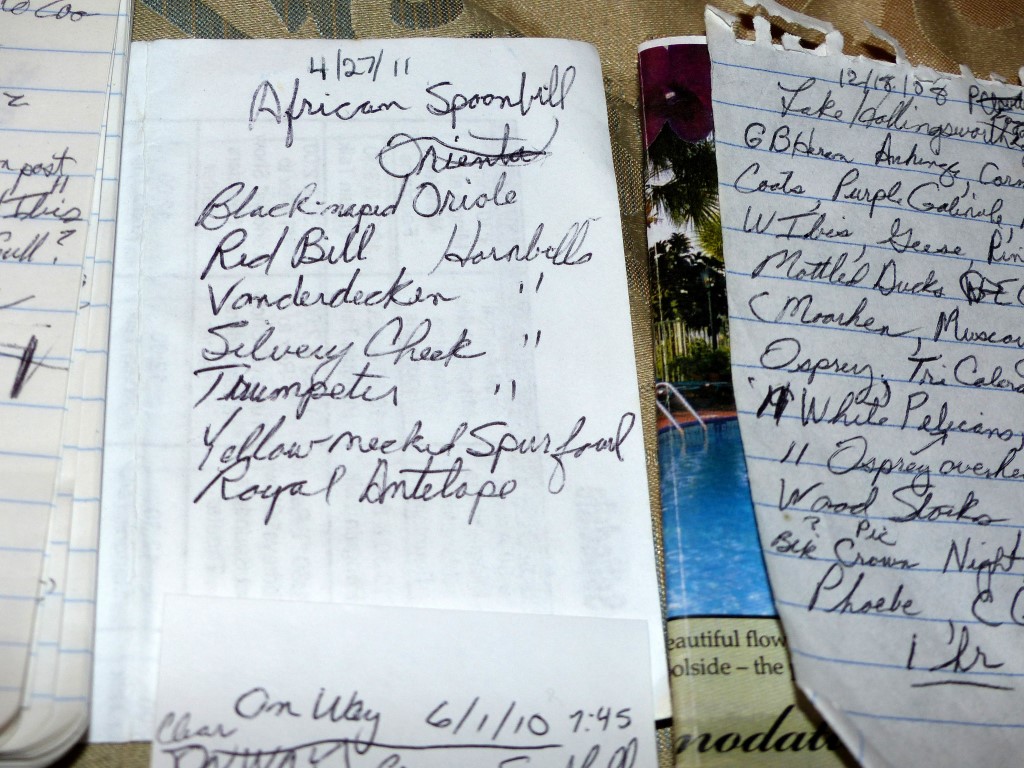
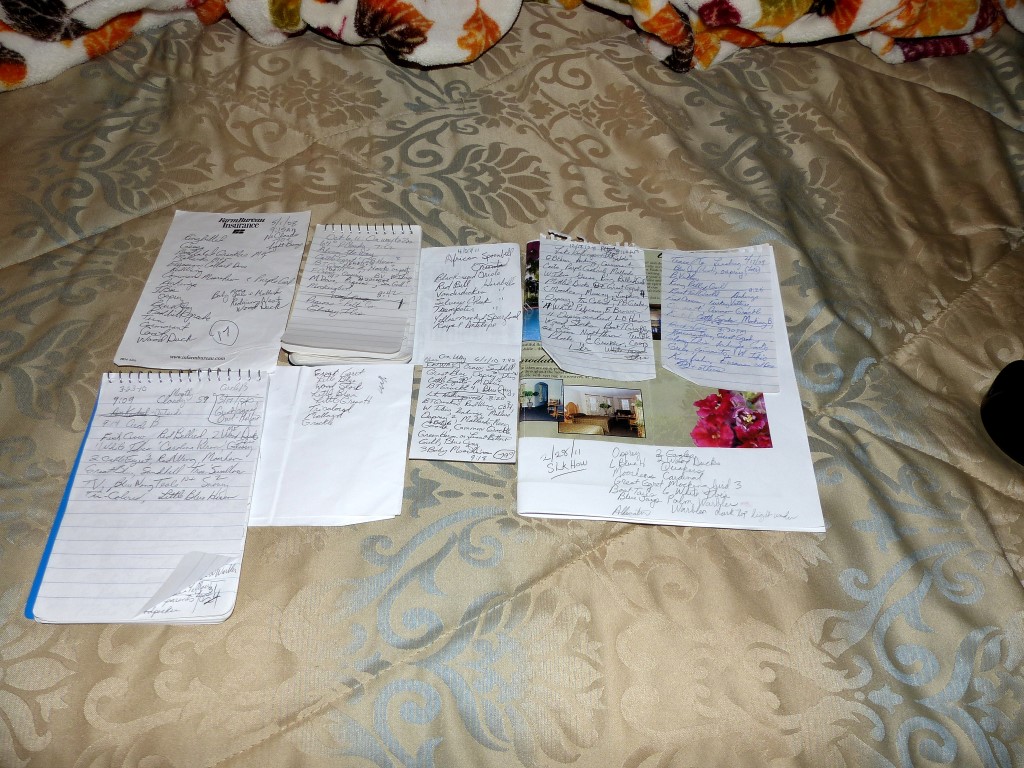
Do you keep a list of birds? I do, but am not always faithful to record them. As we go on trips, I record all the birds I see as Dan drives. I include even the county, time, temp, and whether clear, cloudy, etc. I use eBird to keep North American birds, but again, don’t always log my findings until later. (or when I re-find my notepad)

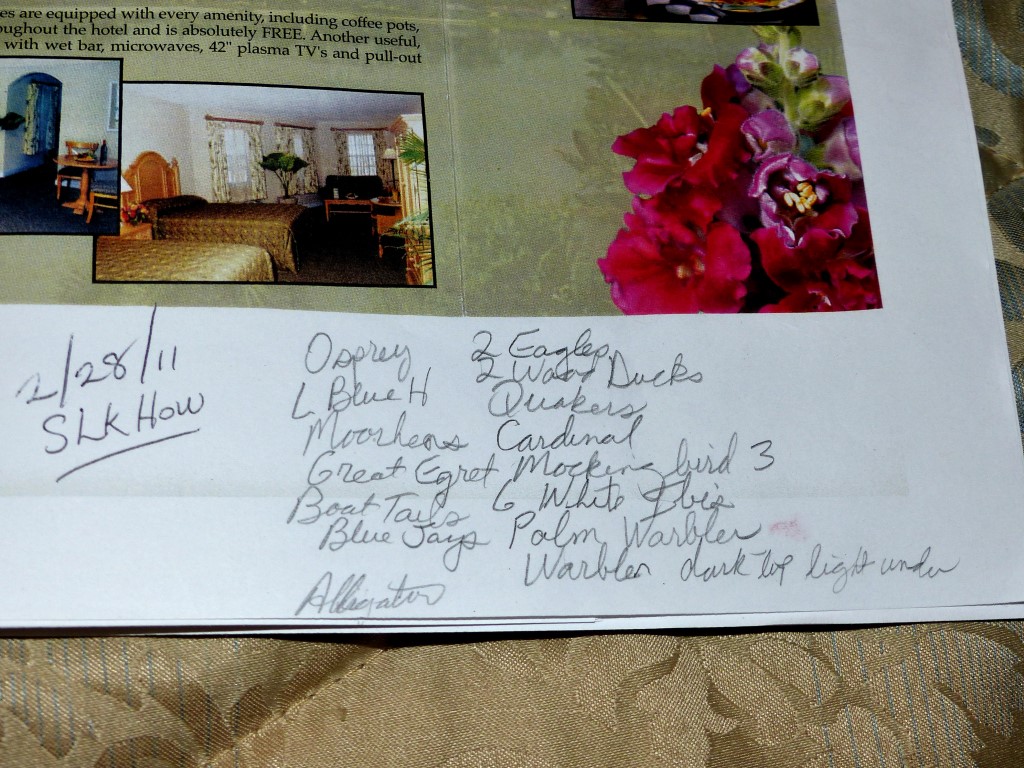
Here are photos of some list written on trips and outings. You can tell if I forgot my Notepad, I am resourceful.

My List of ALL the Birds I Have Seen is really a combination of many of these.

I have written about Birdwatching Lists before, but found that article interesting and thought you might like to see how I do some of the listing. As you can see, it is not very scientific. Sometimes I draw a marking or shape to help ID it later. Now days, I try to capture my unknowns with my camera. Easier than drawing and I get to keep my eye on the bird.

What ever way you keep a list or lists is up to each one. The main thing is to get out and enjoy the beautiful birds the Lord has created for us to enjoy. I would rather miss getting something on my list, than missing the opportunity to watch the bird as long as possible. For some birds will only give you a glimpse of itself before it dashes away.

Finding a verse to use that had the word “list” in it required me to use my e-Sword again. Looking at different versions I was able to find some The KJV used, “number of their names,” the CJV used “determine how many there are,” DRB used “shalt take the sum of them” and the CRV used probably the best for this, “Write their names on a list”

Check out some other articles we have written about this:

*
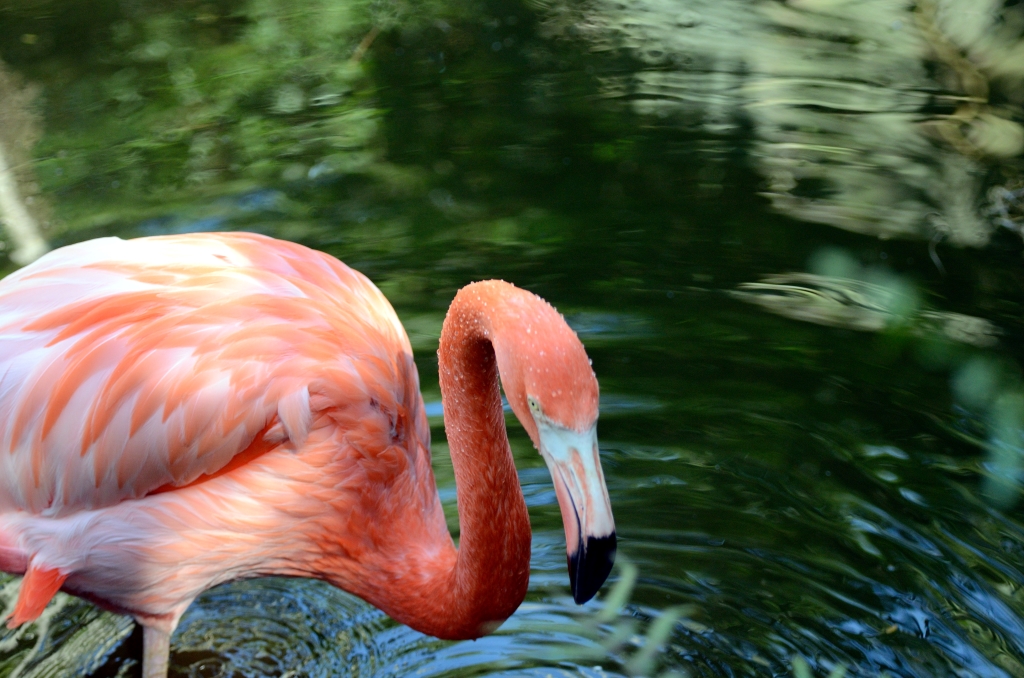
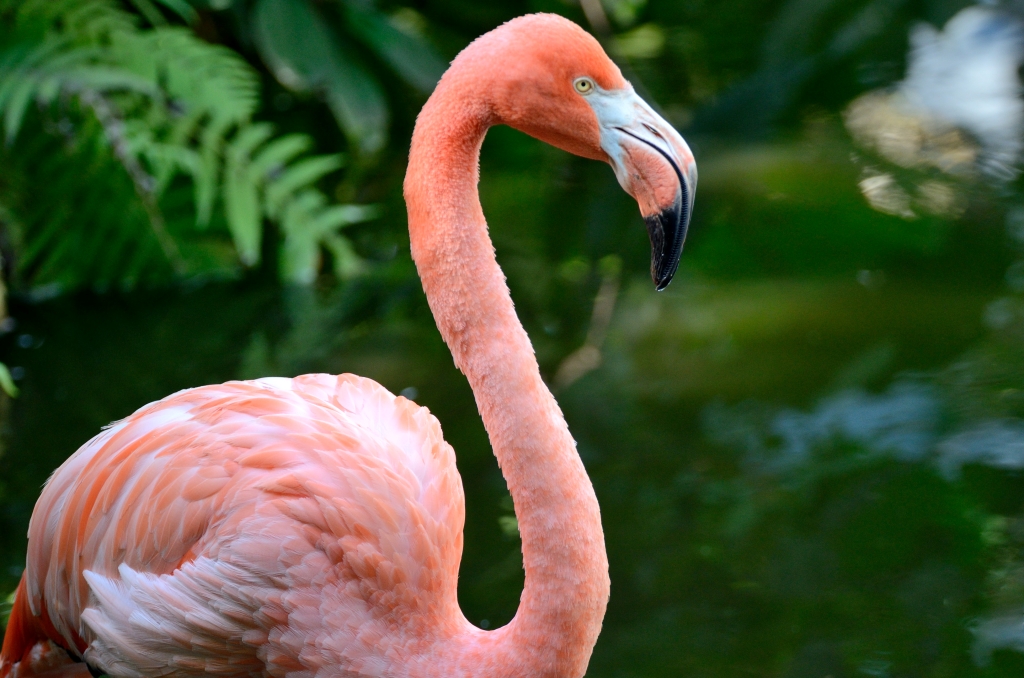
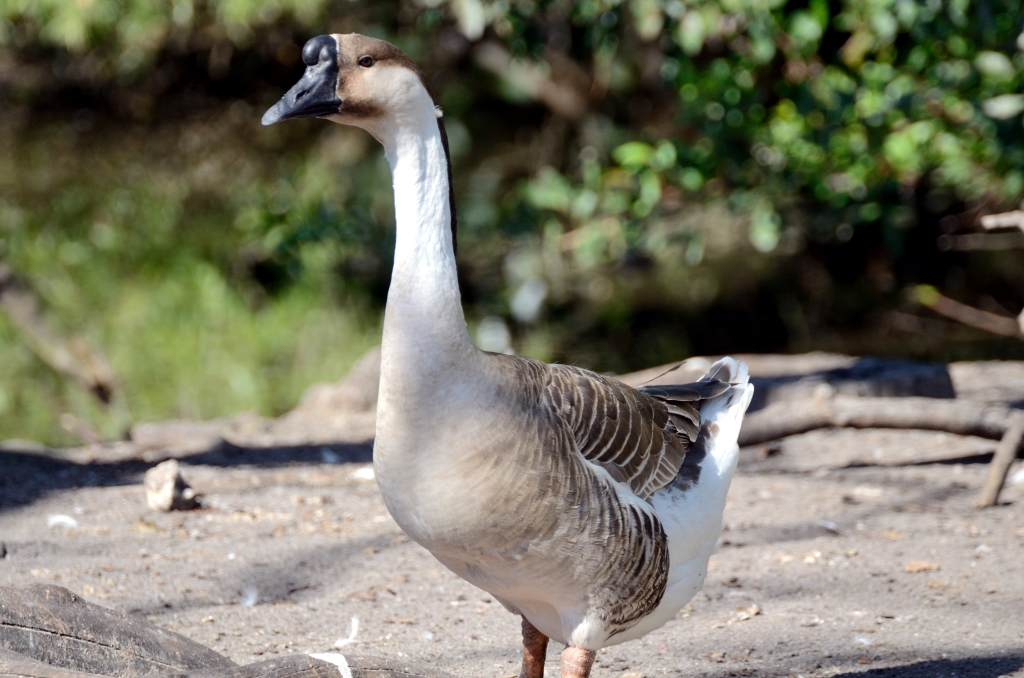
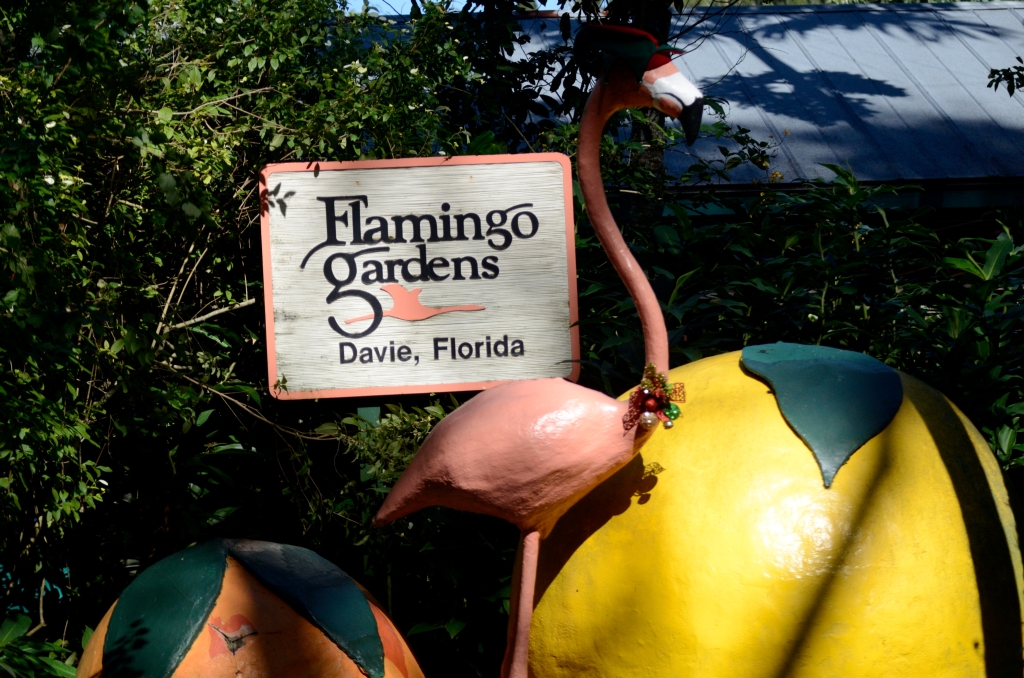
Flamingo Gardens – Dan’s Photos

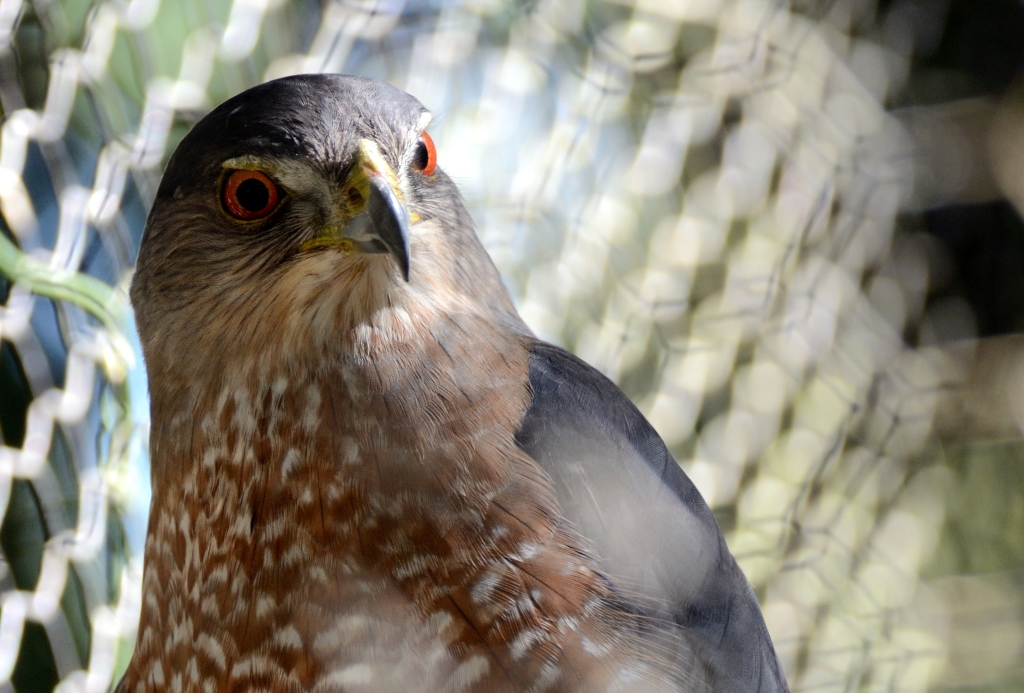
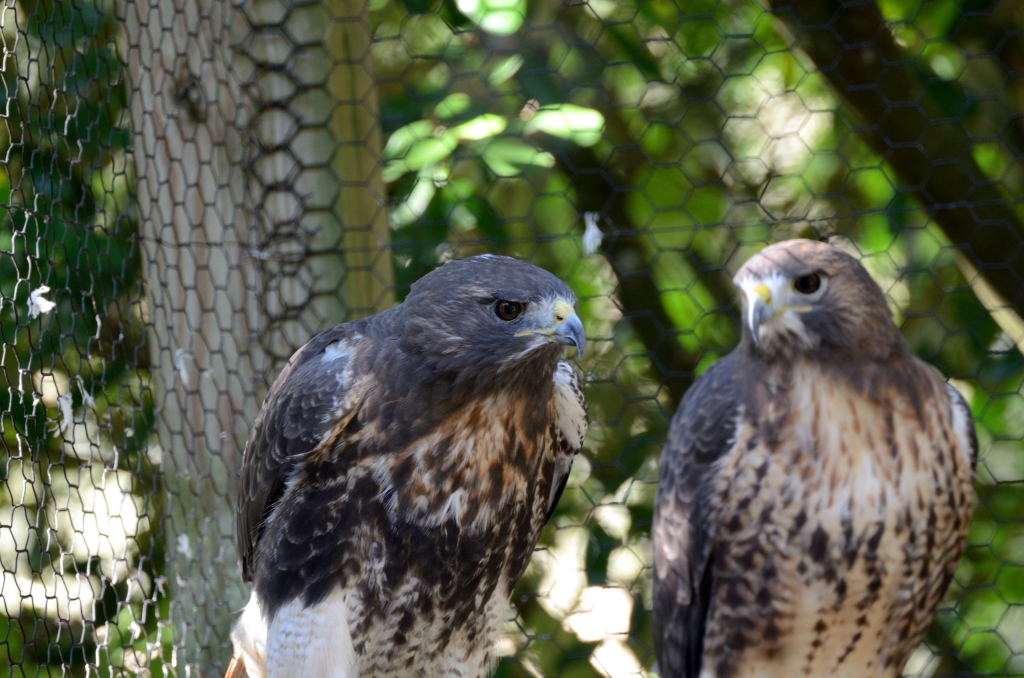
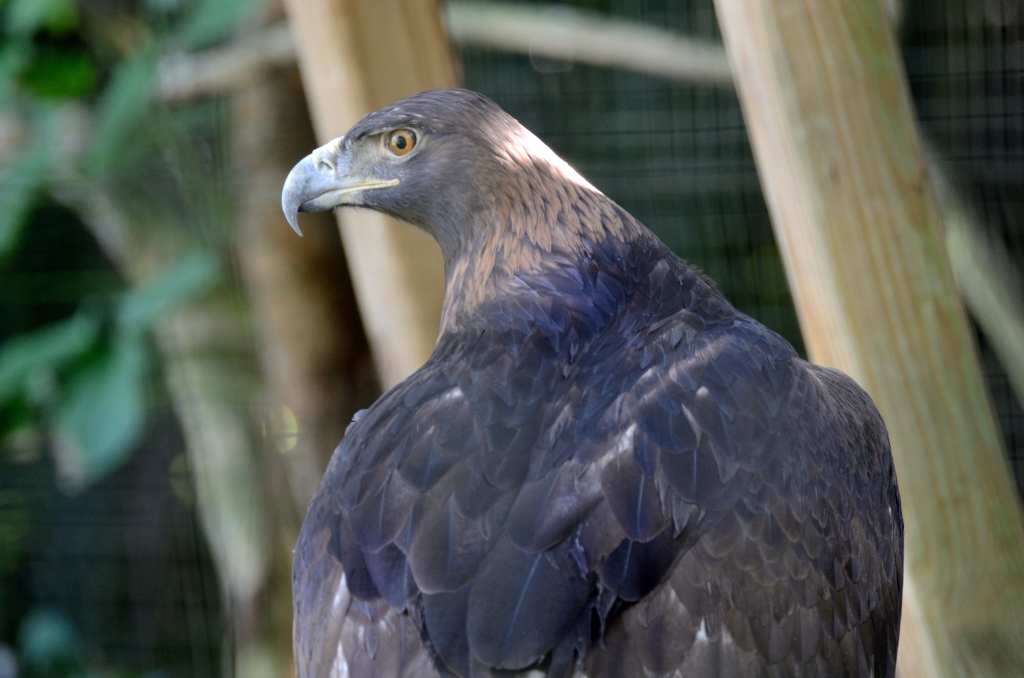
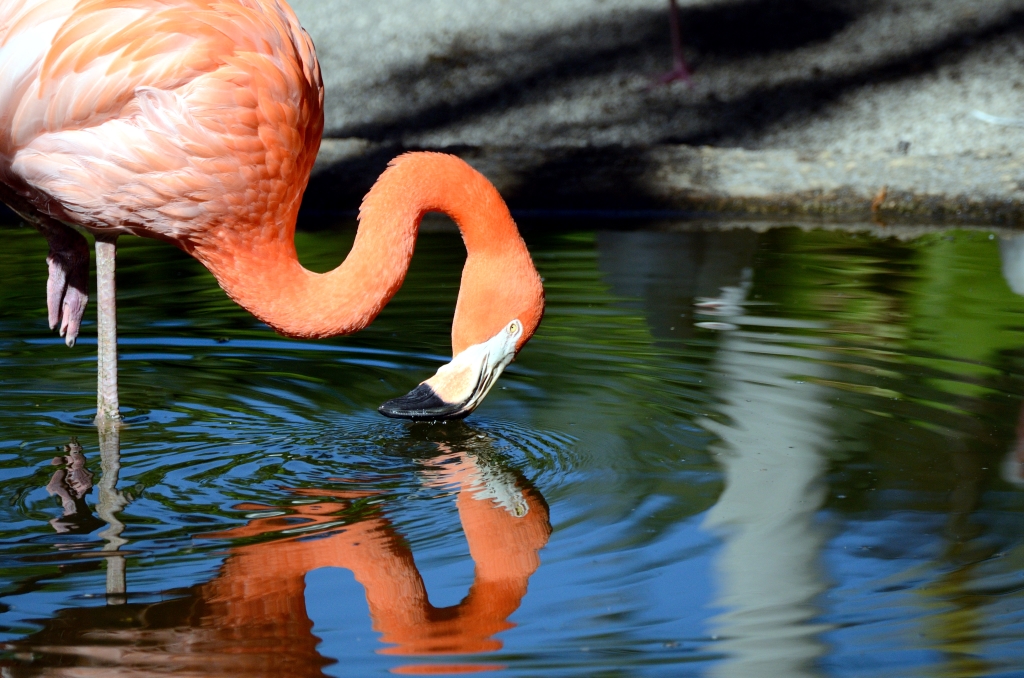
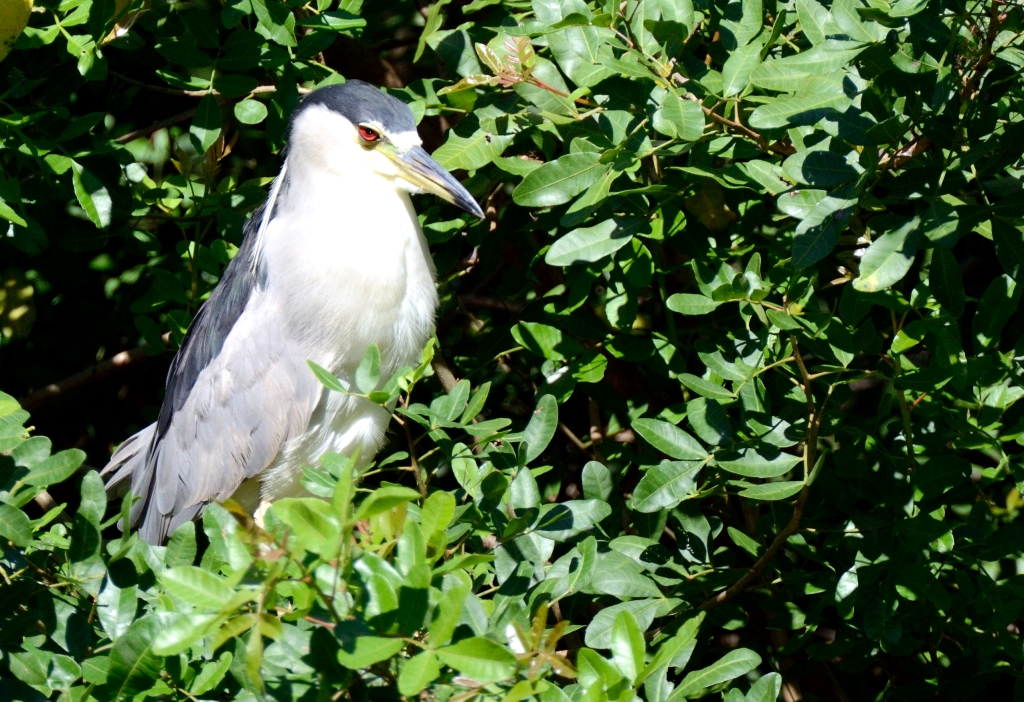
Just got copies of Dan’s photos from our trip to Flamingo Gardens in Davie, Florida. We were there a little over of a month ago, but he is busy and with the Holidays, he finally fixed them, converted them to JPG’s, gave them to me and now have something to use for a blog. You can always find his great photos at Dan’s Pix.

So, thought I would share them with you in a gallery of just his photos. I will spare you from mine, this time. I had wanted them for the Eyes of the Heart blog, but didn’t get them finished until after I posted it. Maybe I can do an “Eyes Part 2 with these eyes, hmmm?

*
“Because that which may be known of God is manifest in them; for God hath shewed it unto them. For the invisible things of him from the creation of the world are clearly seen, being understood by the things that are made, even his eternal power and Godhead; so that they are without excuse: (Romans 1:19-20 KJV)

Dan is not a professional photographer, nor am I a great birdwatcher, but we both thoroughly enjoy going out to see the Lord’s Creative hand at work.

*
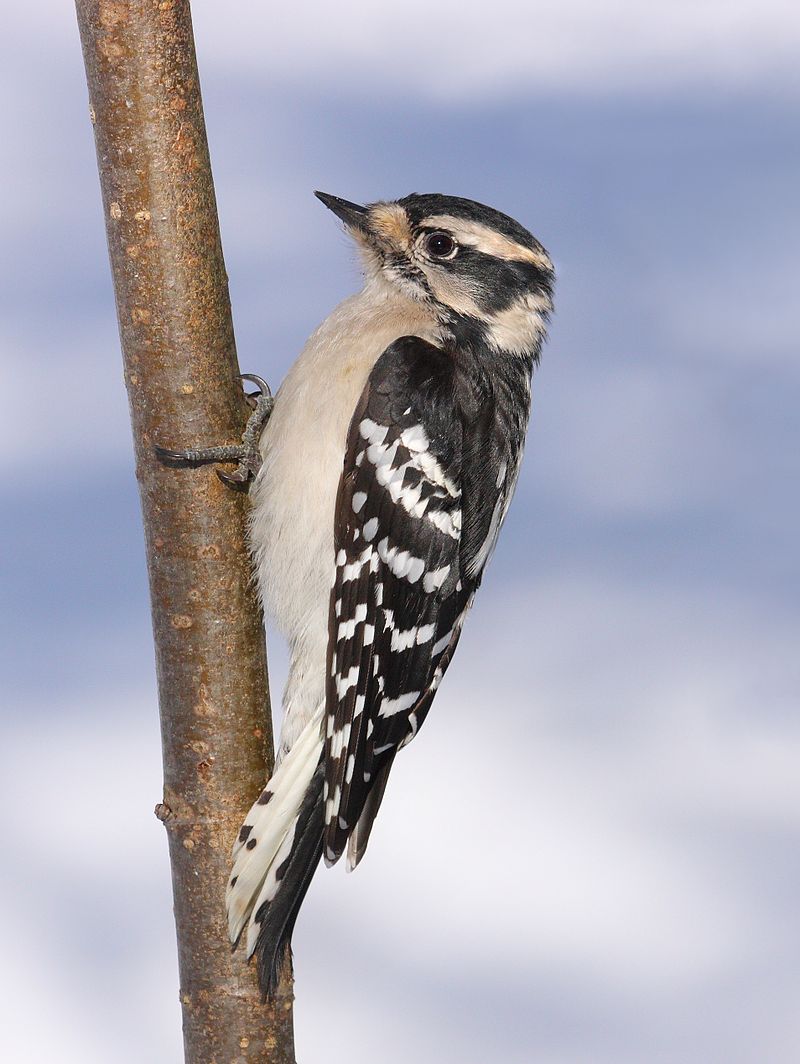
Downy Woodpecker Building A Nest

Downy Woodpecker (Picoides pubescens) by Raymond Barlow

Downy Woodpecker (Picoides pubescens) by Raymond Barlow

The trees of the LORD are full of sap, The cedars of Lebanon which He planted, Where the birds make their nests; The stork has her home in the fir trees. (Psalms 104:16-17 NKJV)

This video was mentioned in a BRDBRAIN report. That is a bird reporting service at the Univ. of South Florida. It is so interesting that I wanted to share it and also find out a little more about our little Woodpecker friend.

Downy Woodpecker (Picoides pubescens) Male ©WikiC

Downy Woodpecker (Picoides pubescens) Male ©WikiC

This video was taken by Mark Vance in Sarasota, Florida. I am glad he shared it on YouTube.

So what is a Downy Woodpecker? They are the Woodpecker that we all confuse with a Hairy Woodpecker. In the books they show you the differences, which make sense, but when out in the field, that is another story. Especially if there isn’t one of each to compare with the other. (The joys of birdwatching!)

  • Downy Woodpecker are the one with the smaller bill, about half the size of its head, whereas the Woody’s bill is as long as it head size.
  • The Downy is about 6-7 inches, and the Woody is 9-11 inches.
  • The markings are almost identical and their ranges are almost the same, except the Downy is not in the Southwest and Mexico.
  • Downy are bolder and the Woody is shier.
  • Both downy and hairy woodpeckers are cavity nesting birds, and if you are fortunate to see a nesting hole it can be a clue toward the bird’s identity. Downy woodpeckers excavate smaller, round cavities while hairy woodpeckers have larger, more oval-shaped cavities.


Downy Woodpecker (Picoides pubescens) Female-lacks red patch on back ©WikiC

Downy Woodpecker (Picoides pubescens) Female-lacks red patch on back ©WikiC

From Sibley’s Website:

Downy Woodpecker (Picoides pubescens) Female ©WikiC

Downy Woodpecker (Picoides pubescens) Female ©WikiC

From Others:

Hairy Woodpecker (Picoides villosus) by Daves BirdingPix

Hairy Woodpecker (Picoides villosus) by Daves BirdingPix

*
Martha and the Go-Kart Race

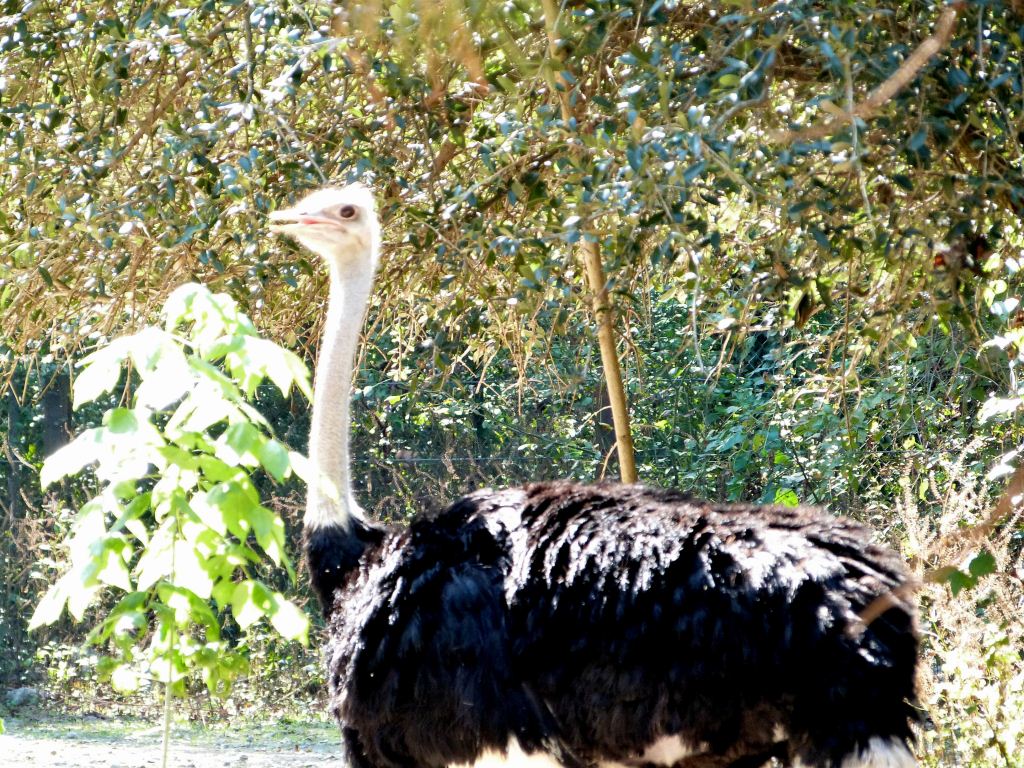
Common Ostrich (Struthio camelus) at Riverbanks Zoo SC by Lee

Common Ostrich (Struthio camelus) at Riverbanks Zoo SC by Lee

Martha and the Go-Kart Race ~ by Emma Foster

There was once an enormous ostrich named Martha who was extremely tall with a really long neck. She lived at the zoo and every day people would come there to look at her and all the strange and exotic animals. Many people came to look at Martha every day.

One day a flyer that had been left on the ground by a boy who was passing them out was blown in by the wind into Martha’s exhibit. She glanced down at the flyer. In big bold letters it said: GO-KART RACE THIS SATURDAY! The flyer went on to explain the instructions and it said that all ages were admitted. Martha decided right then and there she would enter the race.

That night, Martha sneaked out of her exhibit by climbing over the fence and sneaked into the shed in the back of the zoo. Finding some wooden boards, a hammer and nails, and a few other things, Martha set to work and eventually constructed her go-kart by Saturday.

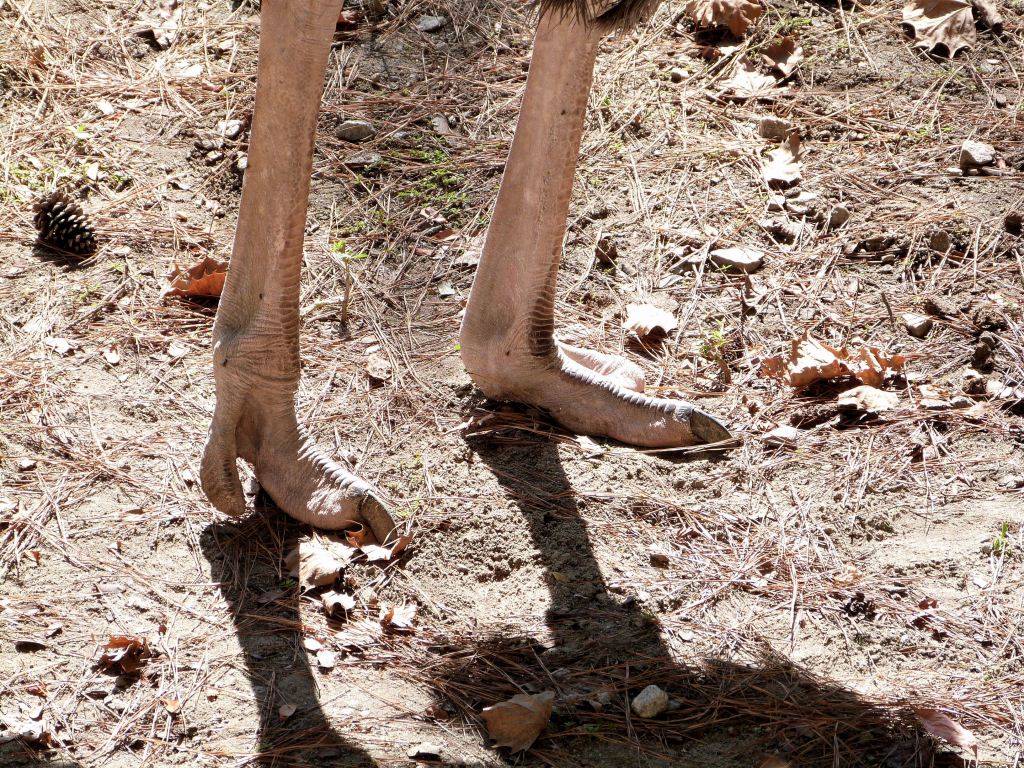
Common Ostrich (Struthio camelus) Foot at Riverfront Zoo SC by Lee

Common Ostrich (Struthio camelus) Foot at Riverfront Zoo SC by Lee

On the day of the race, Martha pushed her go-kart up to the starting line. All of the kids stared at her as she tried to get into the go-kart. It was difficult because of her long legs, but Martha eventually managed to get settled.

A man from the sideline swung a flag signaling to start the race. Martha zoomed down the road and turned a corner. After a few more turns Martha and the others drove over a bridge and eventually down a steep hill.

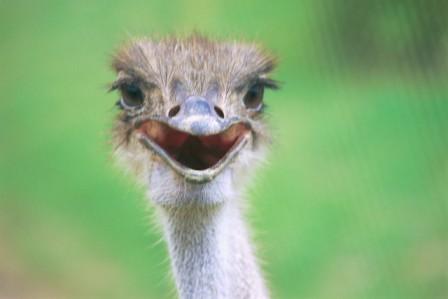
Ostrich

Ostrich

Martha spotted the finish line. She was in the lead. In a few seconds Martha crossed the finish line and won first place. Now every time someone at the zoo passed by Martha’s exhibit, they would see her first place trophy and her go-kart. The people at the zoo would always say they had never seen a better racer and the zoo keepers never figured out how she escaped from her exhibit.

The End


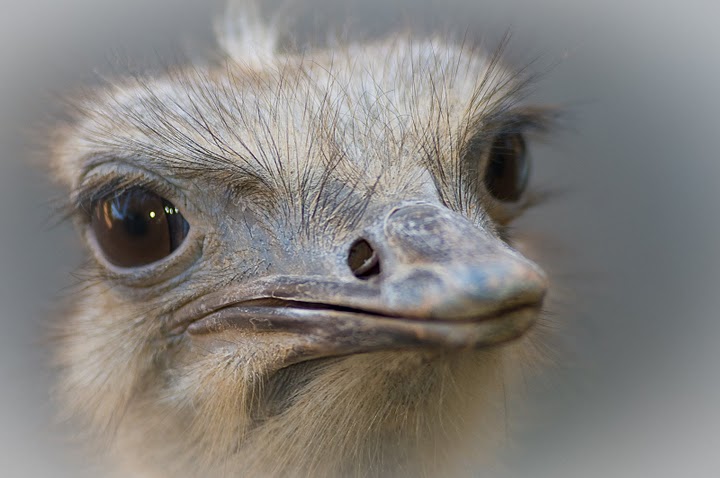
Common Ostrich (Struthio camelus) Closeup by WikiC

Common Ostrich (Struthio camelus) Closeup by ©WikiC

Lee’s Addition:

Gavest thou the goodly wings unto the peacocks? or wings and feathers unto the ostrich? (Job 39:13 KJV)

Well, our young writer has come up with another interesting Bird Tale. Emma continues to amaze me with her stories. Thanks, again, Emma. Keep up the good work. Lord Bless you as you continue to develop in wisdom and with the Lord.

See her other stories:

Also:

*