Is Evolution Simply Change? – (from Creation Moments)

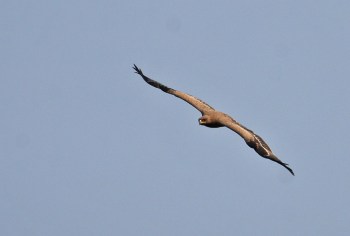
Bald Eagle maturing at Jax Zoo by Dan

Bald Eagle maturing at Jax Zoo by Dan

Is Evolution Simply Change?

(from Creation Moments)

*

“Where is the wise? where is the scribe? where is the disputer of this world? hath not God made foolish the wisdom of this world?” (1 Corinthians 1:20)

Many people think that evolution is simply any change. Developing a new breed of dog is often referred to by many people as proof for evolution. But is it really? Those who claim that the domestic breeding of crop or animal species has anything to do with evolution take their cue from Darwin, who – although he had no degree in science – made the same claims.

Cover of Michael Denton's book Evolution: A Theory in Crisis.Evolution is not simply change like what we see in domestic breeding programs. You might say that it’s easy for a creationist to say this, but let’s allow a scientist who is neither a creationist nor a Christian make the case for us. In his book Evolution: A Theory in Crisis, Dr. Michael Denton explains that evolution is in crisis for the simple reason that biology offers no evidence that evolution happens. Since science relies on evidence, he is really saying that evolution is not science at all.

Denton, who has spent much of his scientific career studying evolution, adds insult to injury by stating that “Despite more than a century of intensive effort on the part of evolutionary biologists, the major objections raised by Darwin’s critics . . . have not been met.”

In other words, evolutionary scientists have not been able to answer creationist challenges. Or, as we have been saying all along, the Bible does offer an intelligent alternative to evolution!

Prayer:
Dear Father, I thank You for those honest scientists who, even though they do not believe in Christ as their Lord and Savior, are still honest enough to identify a falsehood. Today I especially ask that You work in their hearts so that they may seek and find their Savior, Jesus Christ. In His Name. Amen.
Notes:
Photo: Cover of Michael Denton’s book Evolution: A Theory in Crisis. Published by Burnett Books, 1985.

*


Lee’s Addition:

In the beginning God created the heaven and the earth. (Genesis 1:1 KJV)

I alway enjoy the short, but Biblically truthful articles from Creation Moments. We see the birds breeding and developing subspecies, but that isn’t evolution. They are all still birds. The subspecies get split off into a different species of their own, yet when they run the DNA test, they find they all come from the same original pair of birds.

All that splitting and lumping is what keeps me busy every 3 or 4 months updating the Birds of the World lists.

See:

*

Birds of the Bible – Maturing Eagle

Bald Eagle (Haliaeetus leucocephalus) Jax Zoo by Lee

Bald Eagle (Haliaeetus leucocephalus) Maturing at Jax Zoo by Lee

Bless the LORD, O my soul: and all that is within me, bless his holy name. Bless the LORD, O my soul, and forget not all his benefits: Who forgiveth all thine iniquities; who healeth all thy diseases; Who redeemeth thy life from destruction; who crowneth thee with lovingkindness and tender mercies; Who satisfieth thy mouth with good things; so that thy youth is renewed like the eagle’s. (Psalms 103:1-5 KJV)

Last week at the Jacksonville Zoo, we saw this “rag-tag” Eagle. We found out that he is around five years old and has been going through his transition. They said that in the last two weeks he has really started to change. As you may know, Bald Eagles get their “bald” head when they mature. I have seen Eagles with an all black heads and the all white heads, but never in the process of maturing. I am glad that we were able to see him in this stage of his life.

Now for a much better photo by Dan:

Bald Eagle maturing at Jax Zoo by Dan

Bald Eagle maturing at Jax Zoo by Dan

Actually, it may be a “she.” I forgot to ask. Both male and females get the “bald” head after about five years of so.

The above verse, “so that thy youth is renewed like the eagle’s.” reminds of the Lord’s watch-care of the birds, but more importantly, over us. When I see this eagle, it reminds me of times when we mature as Christians. Sometimes we seem a little “rag-tag” in our development, but as we keep our eyes on the Lord, He helps us mature as we should.

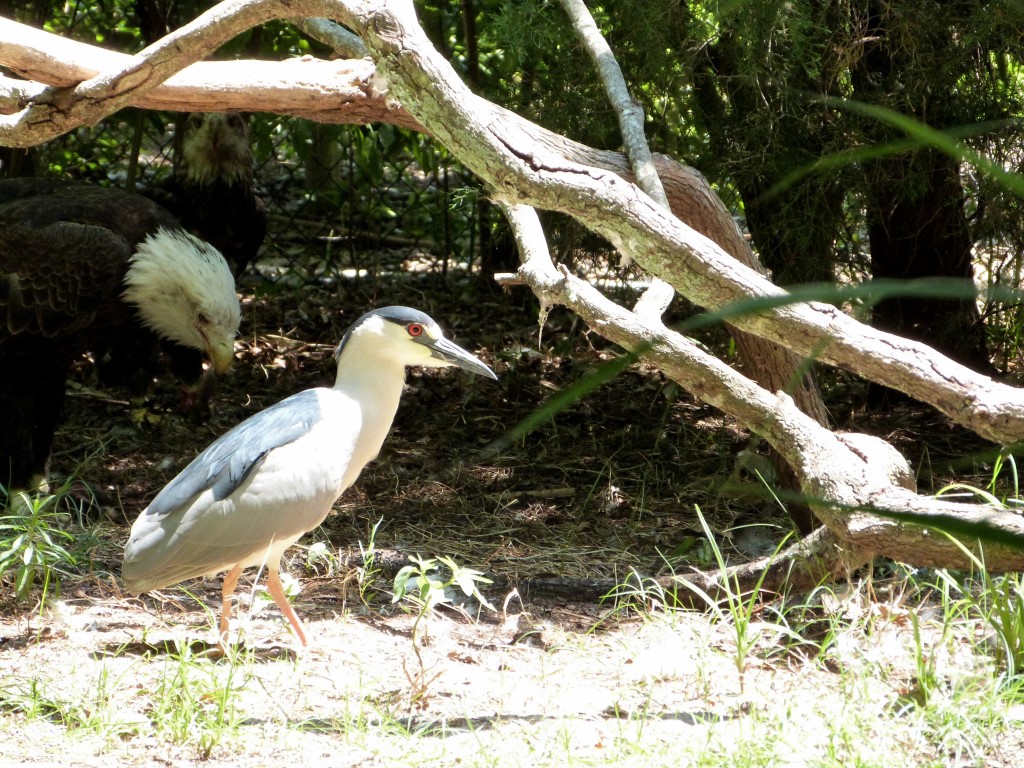
Black-crowned Night Heron (Nycticorax nycticorax) Jax Zoo by Lee

Black-crowned Night Heron (Nycticorax nycticorax) Jax Zoo by Lee

Here are some of the photos we took of the two eagles and a friendly Black-crowned Night-heron that was keeping them company. The Heron was wild and flew out later. These two Eagles were injured and can never return to the wild.

*

Also:

Changed From the Inside Out

*


Marabou Stork Chicks and Inca Tern at Jacksonville Zoo

Marabou Stork (Leptoptilos crumenifer) with chicks-Jax Zoo by Lee

Marabou Stork (Leptoptilos crumenifer) with chicks-Jax Zoo by Lee

Where the birds make their nests: as for the stork, the fir trees are her house. (Psalms 104:17 KJV)

We just got back from a trip to Jacksonville, FL and a visit to the Jacksonville Zoo. I haven’t had time to go through the photos yet, but wanted to share two of the videos.

The first one is two Marabou Stork chicks with a parent. They are not any better looking as a youngster than their parents are. We see them at the Lowry Park Zoo frequently, but never saw them with a chick.

The Marabou Stork (Leptoptilos crumeniferus) is a large wading bird in the Ciconiidae – Storks Family. It breeds in Africa south of the Sahara, in both wet and arid habitats, often near human habitation, especially waste tips. It is sometimes called the “Undertaker Bird” due to its shape from behind: cloak-like wings and back, skinny white legs, and sometimes a large white mass of “hair”. It has one of the largest wing spans of any bird. (Wikipedia)

*

*

The the second video is of an Inca Tern preening. I love those “whiskers.”

The Inca Tern (Larosterna inca) is a seabird in the Laridae – Gulls, Terns and Skimmers – Family. It is the only member of the genus Larosterna.

This uniquely plumaged bird breeds on the coasts of Peru and Chile, and is restricted to the Humboldt current. It can be identified by its dark grey body, white moustache on both sides of its head, and red-orange beak and feet.*

*

This is short because we are still unpacking. The Lord gave us a great trip and traveling mercies. I have many nice videos and photos to share. Stay tuned.

See:

Jacksonville Zoo

Bio Facts: Stork, Marabou – Jacksonville Zoo

Marabou Stork – Wikipedia

Marabou Stork – ARKive

Marabou Stork “Undertaker Bird”

Ciconiidae – Storks Family

Laridae – Gulls, Terns and Skimmers – Family

Inca Tern – Oregon Zoo

Inca Tern: The Magnificently Mustached Bird

Inca Tern – Wikipedia

*

Ian’s Bird of the Week – Chestnut-breasted Quail-thrush

Ian’s Bird of the Week – Chestnut-breasted Quail-thrush ~ by Ian Montgomery

Newsletter – 5/21/14

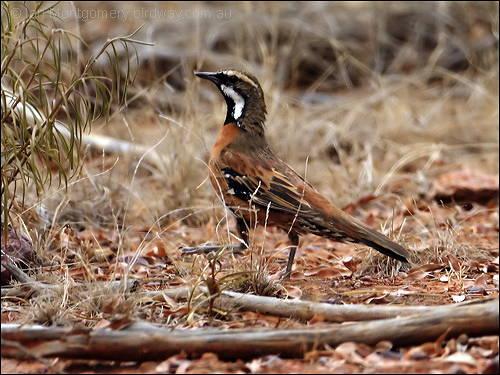
One of the specialties at Bowra is the Chestnut-breasted Quail-thrush a mainly terrestrial inhabitant of stony areas with scrubby bushes, particular mulga, in dry, but not desert, parts of western Queensland and NSW with a widely-separated population in Western Australia. It has suffered in eastern Australia from habitat clearance, but can usually be found at Bowra in an area called the Stony Ridge on the road that runs west of the homestead. This location, incidentally is also good for another specialty, Hall’s Babbler.

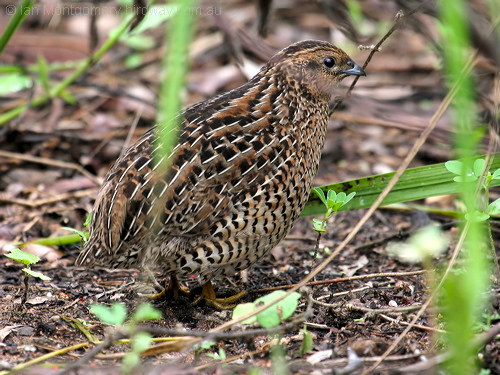
Chestnut-breasted Quail-thrush (Cinclosoma castaneothorax)  by Ian

Quail-thrushes are shy and either sit tight and flush suddenly with a quail-like whirring of their wings or run for cover. The Chestnut-breasted usually runs, but this time we unwittingly encircled this male bird which took refuge in a dead tree, the first time I’ve seen any quail-thrush do so. It looked confused rather than alarmed and wandered for a long time from branch to branch providing unusually good opportunities for photography until it hopped down onto the ground and ran away. On this occasion we saw only the brightly coloured male; females have more subdued colours, brown replacing the all the black plumage except the spotty wing coverts and rely on camouflage to escape detection when nesting on the ground. Quail-thrushes feed on both insects and seeds and there are an Australasian taxon with about four species in Australia and one in New Guinea.

Chestnut Quail-thrush by Ian

Chestnut Quail-thrush by Ian

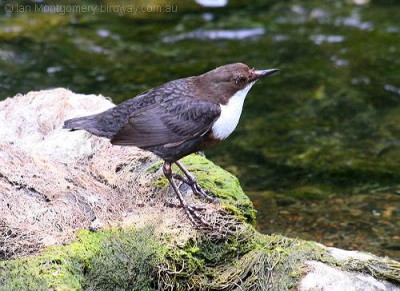
Quail-thrushes presumably get the quail part of their name from their terrestrial habits and whirring flight and the thrush part from their body shape. Cinclosoma is bird-taxonomy-speak for thrush in a confused sort of way. Confused because the Latin cinclus means thrush but derives from the Greek Kinklos a waterside bird of unknown type mentioned by Aristotle and others and though to be either an Old World Wagtail or a wader. To add to the confusion, Cinclidae refers to the Dipper family, not the thrushes, with Cinclus cinclus being the Eurasian White-breasted Dipper.


White-throated Dipper (Cinclus cinclus) by Ian

White-throated Dipper (Cinclus cinclus) by Ian


The confusion continues with actual taxonomy. The western race of the Chestnut-breasted is sometimes (IOC) treated as a separate species, the Western Quail-thrush. Meanwhile the geographically intermediate and closely-related Cinnamon Quail-thrush of central Australia desert country is sometimes split in two as well, with the Nullabor race being treated as a separate species, though it has also been lumped with the Chestnut-breasted. If that’s not enough, Birdlife International puts the Quail-thrushes in a family of their own, the Cinclosomatidae, while Birdlife Australia and the IOC lump with the Whipbirds and called them Psophodidae. (Birdlife International use to lump them and call them the Eupetidae.) I though you’d like to know! Let’s just enjoy the photos:

Greetings
Ian
**************************************************
Ian Montgomery, Birdway Pty Ltd,
454 Forestry Road, Bluewater, Qld 4818
Tel 0411 602 737 ian@birdway.com.au
Bird Photos http://www.birdway.com.au/
Recorder Society http://www.nqrs.org.au


Lee’s Addition:

The people asked, and He brought quail, And satisfied them with the bread of heaven. (Psa 105:40)

Thanks, Ian, for introducing us to another interesting bird. Your timing is perfect, as I am away from my computer for a few days.

Ian’s Bird of the Week
Odontophoridae – New World Quail Family

*

Birds of the Bible – Dove and Pigeon Distribution


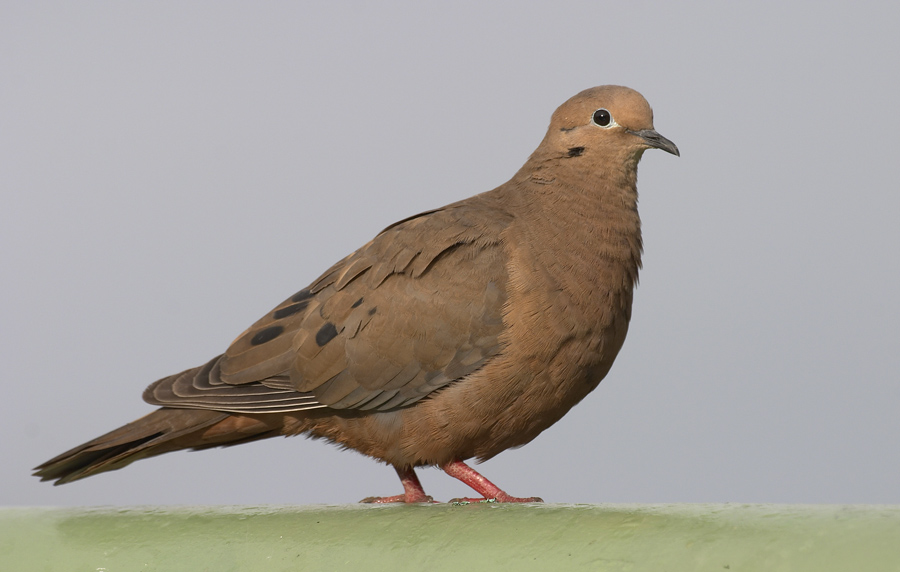
Eared Dove (Zenaida auriculata) by Robert Scanlon

Eared Dove (Zenaida auriculata) by Robert Scanlon

Also he sent forth a dove from him, to see if the waters were abated from off the face of the ground; (Genesis 8:8 KJV)

Doves and Pigeons are mentioned many times throughout Scripture. When people all over the world read about them in their Bible, they probably have an idea of what that bird looks like. Why?

“Pigeons and doves are distributed everywhere on Earth, except for the driest areas of the Sahara Desert, Antarctica and its surrounding islands and the high Arctic. They have colonised most of the world’s oceanic islands, reaching eastern Polynesia and the Chatham Islands in the Pacific, Mauritius, the Seychelles and Réunion in the Indian Ocean, and the Azores in the Atlantic Ocean.” (Wikipedia)

They appear almost everywhere. During the time of sacrifices to God, before Jesus Christ became the perfect Sacrifice for our sins; doves, turtle dove and young pigeons were accepted. Just as salvation is available to all, there were birds available, no matter where you were.

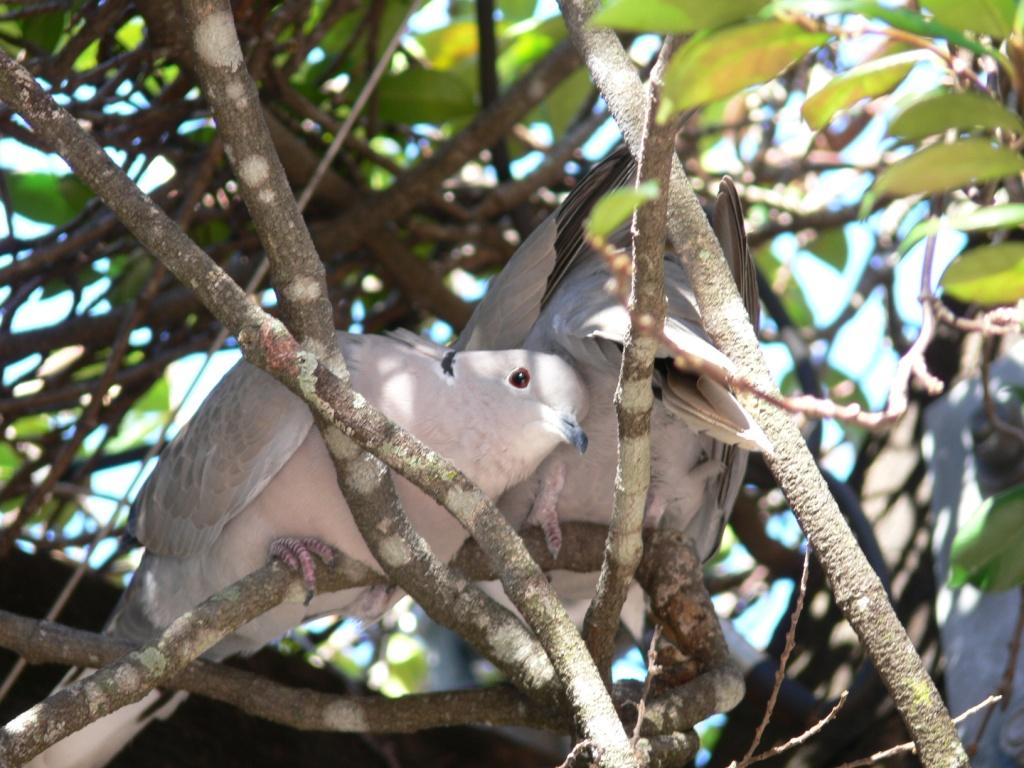
Eurasian Collared Dove (Streptopelia decaocto) by Dan

Eurasian Collared Dove (Streptopelia decaocto) by Dan

Why are they so plentiful?

“The family has adapted to most of the habitats available on the planet. These species may be arboreal, terrestrial or semiterrestrial. Various species also inhabit savannas, grasslands, deserts, temperate woodlands and forests, mangrove forests, and even the barren sands and gravels of atolls.”

Zebra Dove (Geopelia striata) by Margaret Sloan

Zebra Dove (Geopelia striata) has been widely introduced around the world – by Margaret Sloan

Are the Doves and Pigeons called by the same name? No. As they have reproduced and moved to the different areas (distribution), the number of species have grown.

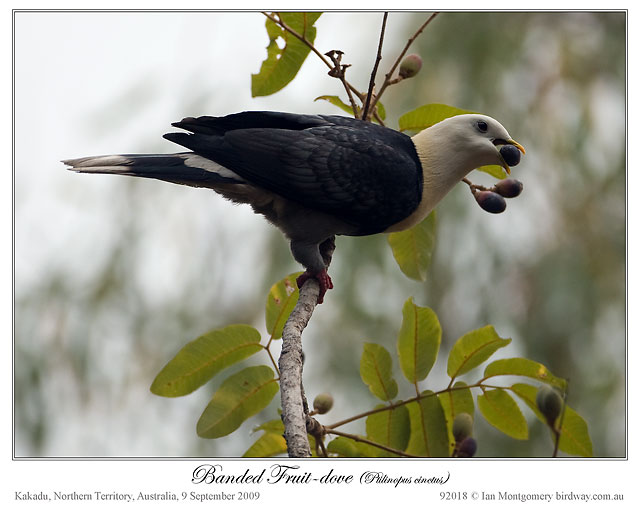
“Some species have large natural ranges. The Eared Dove ranges across the entirety of South America from Colombia to Tierra Del Fuego, the Eurasian Collared Dove has a massive (if discontinuous) distribution from Britain across Europe, the Middle East, India, Pakistan and China, and the Laughing Dove across most of sub-Saharan Africa, as well as India, Pakistan and the Middle East. Other species have a tiny, restricted distribution; this is most common in island endemics. The Whistling Dove is endemic to the tiny Kadavu Island in Fiji, the Caroline Ground-dove is restricted to two islands, Truk and Pohnpei in the Caroline Islands, and the Grenada Dove is restricted to Grenada in the Caribbean. Some continental species also have tiny distributions; for example, the Black-banded Fruit Dove is restricted to a small area of the Arnhem Land of Australia, the Somali Pigeon is restricted to a tiny area of northern Somalia, and Moreno’s Ground Dove is restricted to the area around Salta and Tucuman in northern Argentina.”

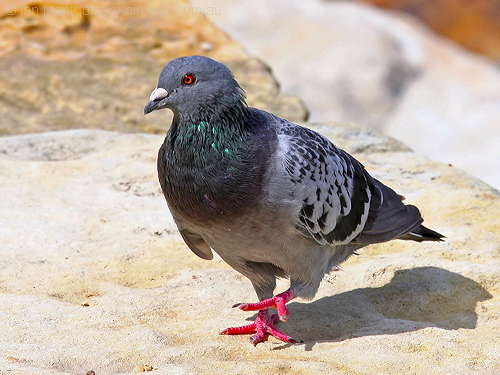
Rock Dove (Columba livia) by Ian

Rock Dove (Columba livia) by Ian

 And he said unto him, Take me an heifer of three years old, and a she goat of three years old, and a ram of three years old, and a turtledove, and a young pigeon. (Genesis 15:9 KJV)

“The largest range of any species is that of the Rock Dove or Rock Pigeon. This species had a large natural distribution from Britain and Ireland to northern Africa, across Europe, Arabia, Central Asia, India, the Himalayas and up into China and Mongolia. The range of the species increased dramatically upon domestication, as the species went feral in cities around the world. The species is currently resident across most of North America, and has established itself in cities and urban areas in South America, sub-Saharan Africa, Southeast Asia, Japan, Australia and New Zealand. The species is not the only pigeon to have increased its range due to the actions of man; several other species have become established outside of their natural range after escaping captivity, and other species have increased their natural ranges due to habitat changes caused by human activity.”

The “Pigeon” (Columba livia) is known by many names because of the different languages spoken, yet they all refer to the same bird. The scientific name,  Columba livia, refers to only that bird, no matter what they call it.

Here are some examples:

English:
Rock Pigeon
Czech:
holub skalní
German:
Felsentaube
Danish:
Klippedue
Spanish:
Paloma Bravía
Finnish:
kalliokyyhky
French:
Pigeon biset
Icelandic:
Bjargdúfa
Italian:
Piccione selvatico
Japanese:
kawarabato
Japanese:
カワラバト(ドバト)
Dutch:
Rotsduif
Norwegian:
Klippedue (Domestisert: Bydue)
Polish:
gołąb miejski
Portuguese:
Pombo-doméstico
Portuguese (Brazil):
Pombo-doméstico
Russian:
Сизый голубь
Slovak:
holub divý
Swedish:
Klippduva
Chinese:
原鸽

(Adapted from the Wikipedia’s “Columbidae” page, especially the “Distribution and Habitat” section.)

Banded Fruit Dove (Ptilinopus cinctus) by Ian

Banded Fruit Dove (Ptilinopus cinctus) by Ian

The flowers appear on the earth; The time of singing has come, And the voice of the turtledove Is heard in our land. (Song of Solomon 2:12 NKJV)

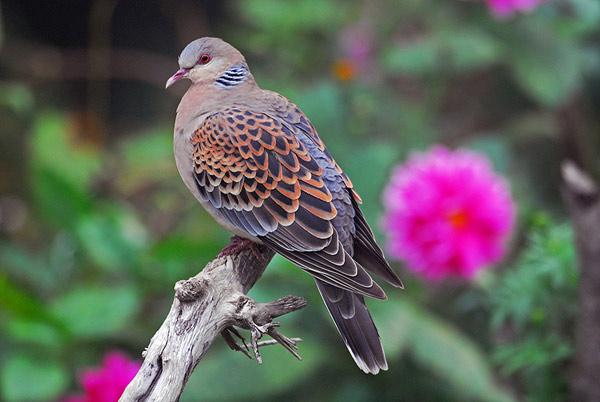
Oriental Turtle Dove (Streptopelia orientalis) by Nikhil

Oriental Turtle Dove (Streptopelia orientalis) by Nikhil

The next day John seeth Jesus coming unto him, and saith, Behold the Lamb of God, which taketh away the sin of the world. (John 1:29 KJV)

As mentioned above, if a person could not afford a lamb or ram, then Turtle Dove and Pigeons were accepted. They were plentiful and available. Since the Lord paid the ultimate sacrifice for our sin, the need to use these birds is no longer needed. As a birdwatcher, I am thankful. As a Christian, I am most thankful for the Lord’s sacrifice for my sins.

Jesus saith unto him, I am the way, the truth, and the life: no man cometh unto the Father, but by me. (John 14:6 KJV)

See:

*

Birds of the Bible – Buzzards

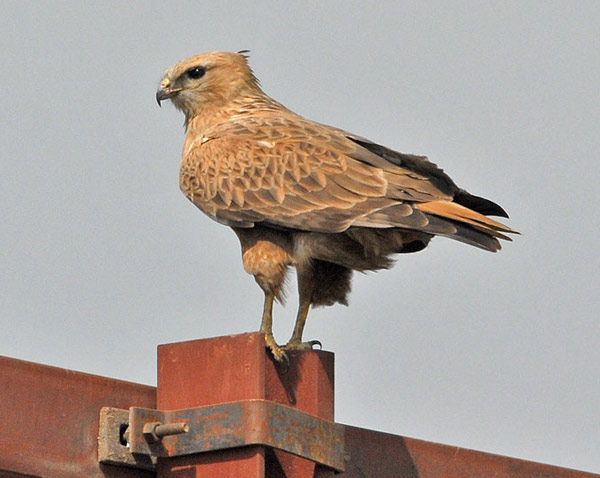
Long-legged Buzzard (Buteo rufinus) by Nikhil Devasar

Long-legged Buzzard (Buteo rufinus) by Nikhil Devasar

But these you shall not eat: the eagle, the vulture, the buzzard, (Deuteronomy 14:12 NKJV)

In Birds of the Bible – How Many Are There? II, the buzzard was mentioned. Also last week, Ian did an article on the Black-breasted Buzzard. Since realizing that this bird, the Buzzard, had not been added to the Birds of the Bible pages, I added a Buzzard and this is the first article about our forgotten avian bird.

Aren’t we glad that the Lord does not forget His Creation?

Look at the birds of the air, for they neither sow nor reap nor gather into barns; yet your heavenly Father feeds them. Are you not of more value than they? (Matthew 6:26 NKJV)

Buzzards belong to the  Accipitridae – Kites, Hawks & Eagles Family and has 28 species in this family with “Buzzard” in their name. Members of this family are known as “Birds of Prey” or “raptors” by many.

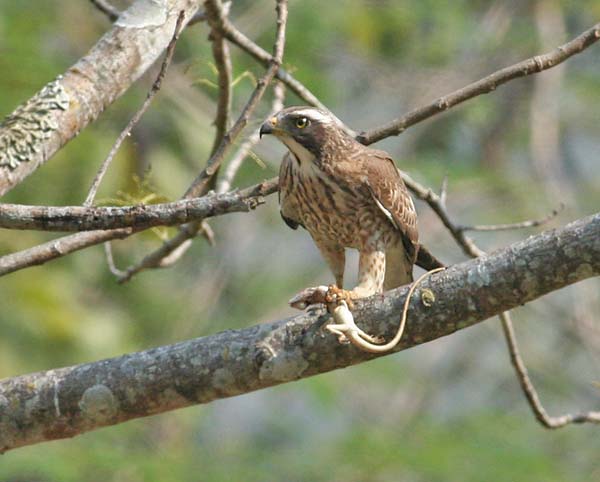
Grey-faced Buzzard (Butastur indicus) by Peter Ericsson

Grey-faced Buzzard (Butastur indicus) by Peter Ericsson

From Britannica “True buzzards, or buteos, constitute the subfamily Buteoninae of the family Accipitridae. When in flight, they can usually be distinguished from other birds of prey by their broad wings and expansive rounded tails. They fly with slow heavy wing beats and soar gracefully. The plumage of most species is essentially dark brown above and white or mottled brown below, and the tail and underside of the wings usually are barred. There is much variability of pigmentation, however, even between individuals of a single species. Buzzards customarily prey on insects and small mammals and only occasionally attack birds. The nest, in a tree or on a cliff, is substantial, built of sticks and lined with softer materials. The two to five whitish eggs are blotched with brown.”

One of several medium-sized, wide-ranging raptors with a robust body and broad wings. In particular, those in the genus Buteo. In the Old World, members of this genus are named as “buzzards”, but “hawk” is more common in North America.

In Europe, the Common Buzzard, Buteo buteo, where Buzzard is often used as a synonym. The Common Buzzard is the most known buzzard in the Old World.

In the New World Buzzard can mean:

  • A vulture, particularly the American Black Vulture and Turkey Vulture, or as a general term for vultures.
  • In parts of the United States where they are considered pest, particularly in rural areas, a derogatory term for certain birds of prey, such as the Chickenhawk (a common colloquial name referring to either the Cooper’s Hawk, the Sharp-shinned Hawk or the Red-tailed Hawk), or the Duck hawk (known elsewhere as the Peregrine Falcon).

Quotes from Britannica and Wikipedia with editing.

Another Bible verse with “buzzard” is in Leviticus:

And these you shall regard as an abomination among the birds; they shall not be eaten, they are an abomination: the eagle, the vulture, the buzzard, (Leviticus 11:13 NKJV)

Both verses, Leviticus 11:13 and Deuteronomy 14:12 are listed in the birds not to be eaten by the Israelites. Considering what they eat, I am in no hurry to eat them either.


See:

*

Birds of the Bible – How Many Are There? II

Brown Quail (Coturnix ypsilophora) by Ian

Brown Quail (Coturnix ypsilophora) by Ian

Birds of the Bible – How Many Are There? I (continued…)

As we continue in Genesis, the only other reference to birds that I have found is in Chapter 40. Joseph had been tossed in prison and in time he was joined by Pharaoh’s chief butler and his chief baker. They each have dreams and Joseph interprets them for the two men. Unfortunately the baker’s dream, which includes birds, will be killed.

And in the uppermost basket there was of all manner of bakemeats for Pharaoh; and the birds did eat them out of the basket upon my head. And Joseph answered and said, This is the interpretation thereof: The three baskets are three days: Yet within three days shall Pharaoh lift up thy head from off thee, and shall hang thee on a tree; and the birds shall eat thy flesh from off thee. (Genesis 40:17-19 KJV)

Looking at the verses in the compare mode, “birds” or “birdies” are listed by all except one. The ECB calls them the “flyers.” No matter what they are called, it was not a good day for the Chief Baker.

That brings us to the book of Exodus as the children of Israel travel through the wilderness that we meet our next named bird. The Quail. They had been complaining about only eating manna and started asking why they couldn’t have meat. So the LORD sent them quail or whatever we find they called them. I wrote about this avian critter in Birds of the Bible – Quail and in Quail II. Let’s see how the quail in translated here.

And it came to pass, that at even the quails came up, and covered the camp: and in the morning the dew lay round about the host. (Exodus 16:13 KJV)

  • Quail or quails by most versions
  • mother-quail (ABP+)
  • little birds (BBE)
Steppe Eagle (Aquila nipalensis) by Peter Ericsson

Steppe Eagle (Aquila nipalensis) by Peter Ericsson

Our next verse and named bird is in Exodus 19:4 where the LORD is telling Moses what to tell the people.

Ye have seen what I did unto the Egyptians, and how I bare you on eagles‘ wings, and brought you unto myself. (Exodus 19:4 KJV)

The power of the eagle’s wings is referred to as how He freed them from their bondage in Egypt. So now we can add the Eagle to our list of birds. There are many references to Eagles throughout God’s Word. Every version mentions “eagle’s wings” or “wings of eagles.” See the Eagle articles.

As we move on to Leviticus, our count of the birds is going to really climb as we encounter the list of the Clean and Unclean birds in Chapter 11 also lots a variety as to how those birds are translated. Before we get there, the sacrifices are mentioned of the turtledoves or young pigeons, previously covered, in Lev 1:14, 5:7, 11, 12:6, 8, and  chapters 14 and 15.

And if the burnt sacrifice of his offering to the LORD is of birds, then he shall bring his offering of turtledoves or young pigeons. (Leviticus 1:14 NKJV)

I am going to quote the KJV and NKJV for the list, then we will check out the variations:

Leviticus 11:13-19 KJV
(13) And these are they which ye shall have in abomination among the fowls; they shall not be eaten, they are an abomination: the eagle, and the ossifrage, and the ospray,
(14) And the vulture, and the kite after his kind;
(15) Every raven after his kind;
(16) And the owl, and the night hawk, and the cuckow, and the hawk after his kind,
(17) And the little owl, and the cormorant, and the great owl,
(18) And the swan, and the pelican, and the gier eagle,
(19) And the stork, the heron after her kind, and the lapwing, and the bat.

Leviticus 11:13-19 NKJV
(13) ‘And these you shall regard as an abomination among the birds; they shall not be eaten, they are an abomination: the eagle, the vulture, the buzzard,
(14) the kite, and the falcon after its kind;
(15) every raven after its kind,
(16) the ostrich, the short-eared owl, the sea gull, and the hawk after its kind;
(17) the little owl, the fisher owl, and the screech owl;
(18) the white owl, the jackdaw, and the carrion vulture;
(19) the stork, the heron after its kind, the hoopoe, and the bat.

Can you see the differences already? That is just two translations, let’s see what the others reveal. So far we now have added; ossifrage, ospray, kite, night hawk, cuckow, hawk, little owl, cormorant, great owl, swan, pelican, gier eagle, stork, heron, lapwing, falcon, ostrich, short-eared owl, sea gull, fisher owl, screech owl, white owl, jackdaw, carrion vulture, hoopoe.

Levitus 11: 13 –

  • griffin (ABP+) (DRB) griffon vulture (NET),  
  • gier-eagle (ASV) (BBE) (RV),
  • Goshauke (Bishops) (Geneva) (Tyndale),
  • sea-eagle (Brenton) (Darby),
  • buzzards (ERV) (NAS77) (NASB) (UKJV),
  • bearded vulture and black vulture (ESV) (GW) (HCSB) (LITV) (MKJV)(WEB R) black and great vulture (JPS)
  • cormoraunte and kyte (Tyndale)

Some list them all in one verse:

(CEV) Eagles, vultures, buzzards, crows, ostriches, hawks, sea gulls, owls, pelicans, storks, herons, hoopoes, and bats are also disgusting, and you are forbidden to eat any of them.
(GNB) You must not eat any of the following birds: eagles, owls, hawks, falcons; buzzards, vultures, crows; ostriches; seagulls, storks, herons, pelicans, cormorants; hoopoes; or bats.

The next two verses are easier. Verse 14 has all birds of prey: (KJV)  “And the vulture, and the kite after his kind; ”

  • vulture – “whole species of falcon” (AMP)
  • kite
  • crows (ABP+)
  • buzzards (CJB) (GW) (NRSV)
  • falcon (Darby) + others
  • hawk (ECB)
  • red kite (ISV)
  • red kites and all kinds of black kites (NIrV) (NIV) (WEB (R))
One last verse for now: “every raven of any kind,” (Leviticus 11:15 ESV)
  • black birds, (ERV)
  • crows (GW) (NET)
Ravens, Blackbirds and Crows are all in the same family. No problem there.

In our list below, I doubled up the obvious birds that are in the same family like the owls and vultures.

Our list of Birds of the Bible so far:

Also mentioned:

  • Swooper (Gen 15:11)
  • Flyers (Gen 40:19) (Lev 11:13)

I am only listing what the different versions have written. I am neither approving or disapproving those versions.

For now, that is enough. To be continued in Part III.

Wordless Birds

Disclaimer About Bible Version Usage

*

Birds of the Bible – How Many Are There? I

Chihuahuan Raven (Corvus cryptoleucus)Raven (Corvus corax) by Kent Nickell

Northern Raven (Corvus corax) by Kent Nickell

The list of the Birds of the Bible varies according to which version of the Bible you use. We have discussed this in other articles, but don’t think I ever actually listed them all. An article from Birding and the Bible says there are 29 and then questions 2 of them, the Glede and the Ossifrage, adding the Swift, his lists is 28 or 29.
The sidebar here has links to 33 pages of Bible Birds. There are a few more I am considering adding. After this study, I may find even more. I am going to write this as I do my research using my e-Sword program (free). Currently, I have quite a few versions of the Scriptures loaded and want to see what is listed. (Disclaimer About Bible Version Usage) Let’s get started.

The very first reference to birds or fowls, is in Genesis 1:21. That is where God created “every winged fowl after his kind” (KJV) or ” every winged bird according to its kind” (NKJV). Most agree with, “And God saw that it was good.” Here are some of the other ways of stating it:

  • “winged creature feathered  according to type.” (ABP+)
  • “every creature that flies with wings according to its kind,” (Brenton)
  • “every kind of bird that flies in the air.” (ERV)
  • ” all kinds of birds.” (GNB)
  • “He created every kind of bird that flies.” (NIrV)

So basically, all agree that the birds or fowls were created after their kind or type on the fifth day (1:23) and that God saw that it was good. That right there includes all the major families of birds, some have become extinct, some which interbred within their kinds, etc. until today we now have over 10,000 named species of birds. (Birds of the World)

In Genesis 1:25 God said, “Let us make man in our image, after our likeness: and let them have dominion” over birds, etc. The term his is given as “dominion over”, “have rule over”, “power over” (GNB), “be masters over” (ISV), “So they can be responsible for” (MSG).

Then in Genesis 2:20, Adam named the birds that the LORD God brought to him. The version all agree that they are birds or fowls or the air or heavens.

In chapter 3, Adam and Eve sin against God and we all come under the judgement including the critters, birds included. By chapter 6, things are so bad that the LORD tells Noah to bring two of every kind of critter into the Ark and then in 6:20, the birds are again mentioned. They are to be preserved in pairs of sevens. Again, no specific named bird is mentioned throughout chapter 6 or 7.

Eurasian Collared Dove (Streptopelia decaocto) by Lee

During and after the Flood, then we finally here of specific named birds. The first bird named in the Bible is the Raven. Noah opened the window of the ark and “sent forth a raven” and it flew back and forth “until the waters were dried up from off the earth.” (KJV) Other than spelling differences, they all agree on the Raven. The same is true of verse 8 where the Dove was released. The Dove kept coming back until the waters were totally dried up. The third time it was released, it did not return.

So now we have 2 Birds of the Bible – the Raven and the Dove.

The next reference to birds is in 9:2 where the birds now have a fear of humans placed on them. They, the birds, are told to multiply and fill the earth and are given a covenant or promise by God that the earth would never be destroyed by a worldwide flood again. Gen 9:10-17 – the Rainbow.

And the fear of you and the dread of you shall be upon every beast of the earth, and upon every fowl of the air, upon all that moveth upon the earth, and upon all the fishes of the sea; into your hand are they delivered. (Genesis 9:2 KJV)

King Vulture Brevard Zoo 120913 by Lee

King Vulture Brevard Zoo by Lee

In Genesis 15:9 we find the next birds, a Turtledove, young pigeon and in 15:11, the vultures. Two are sacrificed birds, the other is coming to take from the alter.

So He said to him, “Bring Me a three-year-old heifer, a three-year-old female goat, a three-year-old ram, a turtledove, and a young pigeon.” Then he brought all these to Him and cut them in two, down the middle, and placed each piece opposite the other; but he did not cut the birds in two. And when the vultures came down on the carcasses, Abram drove them away. (Genesis 15:9-11 NKJV)

Let’s see how these birds are given in the various translations. “dove” several, “turtle” (DRB), “mourning dove” (GW), “even a nestling” (LITV), and “young bird” (YLT). Most are in agreement with spelling differences from the old English of some of the translations.

Verse 11 has: birds of prey, birds, fowls, large birds (DRB), swoopers (ECB), Vultures (GNB, MSG, NKJV), and ravenous birds (YLT). Never heard of “swoopers”, so I guess that one doesn’t count. What you think? They all realize that some birds came swooping down trying to get at the sacrifice, but Abram drove them away.

Our list of Birds of the Bible so far:

Also mentioned:

  • Swooper (Gen 15:11)

For now, that is enough. To be continued in Part II.

Birds of the Bible

Wordless Birds

*

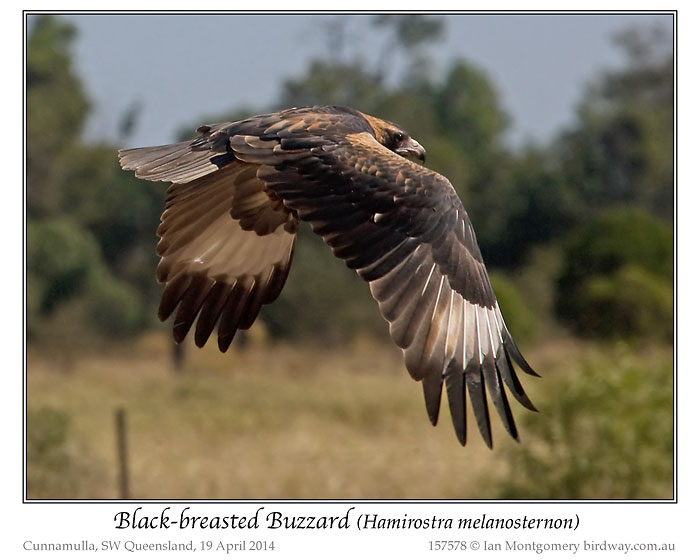
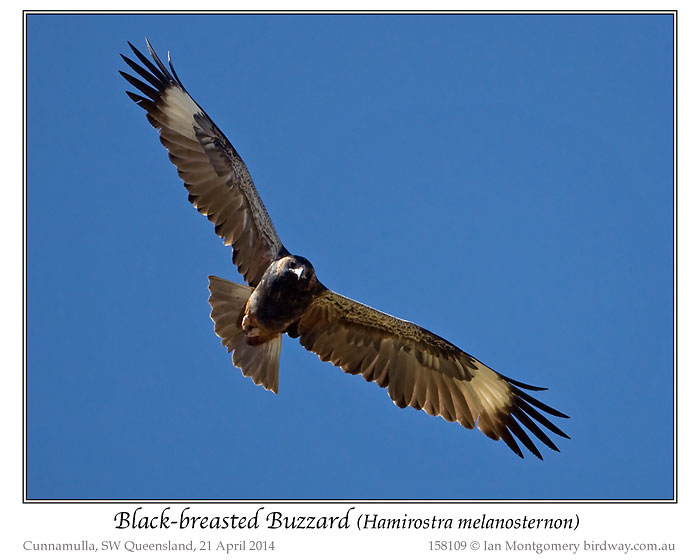
Ian’s Bird of the Week – Black-breasted Buzzard

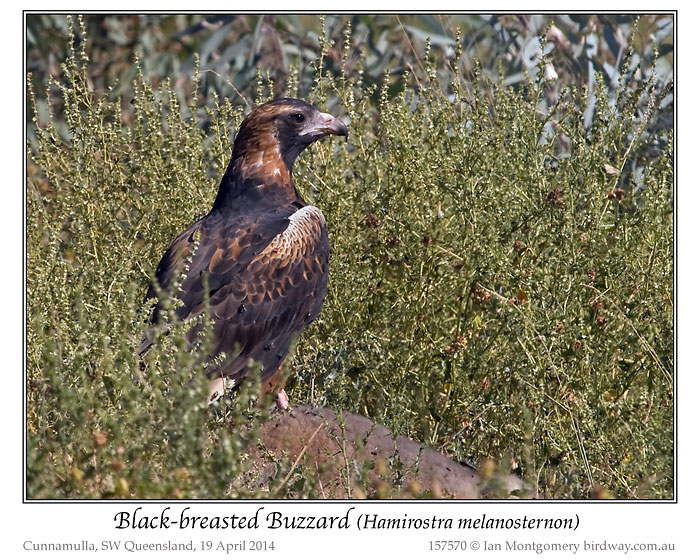
Black-breasted Buzzard (Hamirostra melanosternon) by Ian

Ian’s Bird of the Week – Black-breasted Buzzard ~ by Ian Montgomery

Newsletter ~ 5/8/14

I went to Bowra Station near Cunnamulla, SW Queensland, to meet some birding pals from Victoria for Easter. Cunnamulla is almost exactly half-way between Bluewater and Melbourne by the shortest inland route (2,532km Bluewater-Melbourne CBD) and Bowra is an AWC reserve, famous for its dry country birds and wildlife. I returned with an intractable bout of flu which has left me horizontal for 2 weeks, but I am now much better and able to tackle long-neglected tasks like the Bird of the Week. So, here is something worth waiting for, one of the less-well known endemic Australian raptors, the Black-breasted Buzzard.

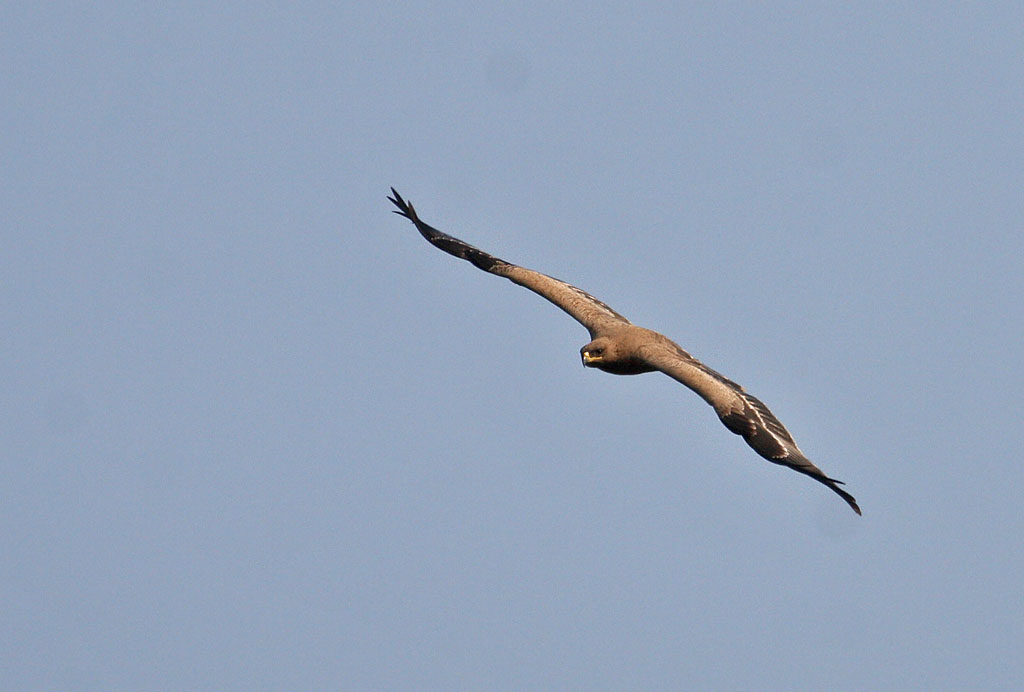
At the end of the drive from Bluewater to Bowra, I saw this raptor perched on road-kill – the euphemism used here for run-over native wildlife – near the entrance to Bowra, thought ‘that’s not a Black Kite’, turned the car round and picked up my camera to take the first photos of the trip. Reluctant to leave lunch behind, it tolerated my approach for about 30 seconds before flying away into the afternoon sunshine, second photo. In both photos, you can see the long, hooked bill that gives it its generic name (hamus is the Latin for hook), reddish crown and nape and the beginnings of it eponymous black-breast. In flight, you can see the characteristic white wing patches on the middle of the first six primary flight feathers, probably its best field mark and the complete absence of barring on the wing and tail feathers.

Black-breasted Buzzard (Hamirostra melanosternon) by Ian

This was the first time I’d seen a Black-breasted Buzzard either close up or perched. Mostly, one sees them singly and infrequently in flight soaring in the open skies of the drier parts of Australia. They’re common enough to have an official status of ‘Least Concern’ but uncommon enough to give me a thrill each time I see one. Apart from concerns of rarity, they’re impressive birds in their own right, being, I have just discovered, the third largest Australian raptor with a wingspan to 1.5m/5ft and an expert at soaring.

Two days later, we stopped for lunch at this dam at the far end of the property, about 15km/10 miles away from the entrance. A Black-breasted Buzzard soared high above us and then came round and flew overhead for a closer look, fourth photo. Comparing the pattern of wear on the flight feathers, indicates that this was the same individual. In this photo, the black breast of the adult bird is obvious as are the rusty flanks. Apart from dark blotches on the wing linings, the lack of barring is also apparent.

Black-breasted Buzzard (Hamirostra melanosternon) by Ian

Black-breasted Buzzards are known to feed on carrion and live prey, but their speciality is the eggs of large ground-nesting birds such as Brolgas, Bustards and even Emus. The latter have tough eggs which even that hooked beak would have trouble penetrating so, amazingly, these birds use stones to break them, dropping them from either a standing position or in flight. Though they are thought to belong to a rather ancient Australasian lineage of raptors this use of tools elevates them globally to the top of the class, sharing this position with the Egyptian Vulture which also throws stones at eggs. The Black-breasted Buzzard is the sole member of its genus (monotypic) and its closest relative is though to be the Square-tailed Kite, another monotypic, uncommon Australian endemic with dubious, gastronomic tastes, in its case nestlings. This ancient lineage is thought include a third Australian endemic, the Red Goshawk, and several New Guinea species including the long-tailed buzzards and perhaps the New Guinea Harpy Eagle. This just goes to show how indiscriminately common names like buzzards, goshawks, kites and eagles are applied to raptors.

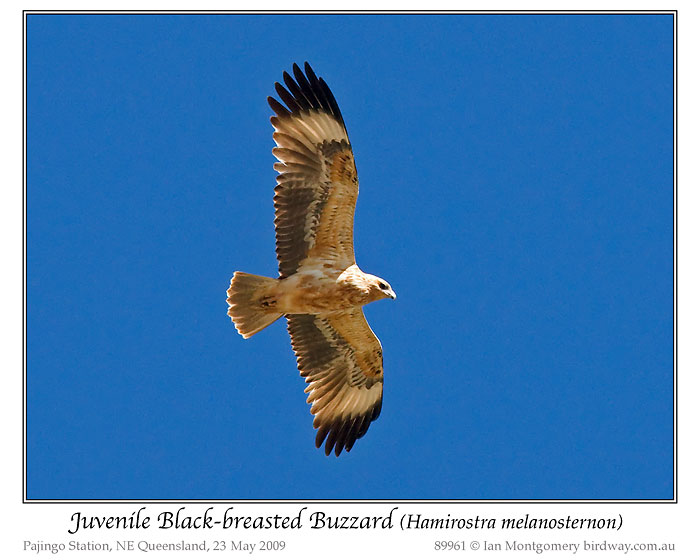
Black-breasted Buzzard (Hamirostra melanosternon) juvenile by Ian

The last photo shows a juvenile Black-breasted Buzzard photographed at a joint pre-merger Birds Australia and Townsville BOCA outing to a dry country station called Pajingo, south of Charters Towers in 2009. As you can see the juvenile lacks the black breast of the adult, though pale patch on the wing is very similar. At the time, we unanimously agreed that this was a pale morph Little Eagle. I posted it at such on the Birdway website and it wasn’t until last year that the error was brought to my attention. This is what Steve Debus, one of the Australian experts on raptors said: “the image shows virtually no typical light-morph Little Eagle characters, such as the pale ‘M’, or the barring on flight feathers (including primary ‘fingers’) and tail, feathered legs etc.” and other points made were the long, slender bill of the Black-breasted Buzzard and the ‘chunkier’ head of the Little Eagle. Good to know.

Best wishes
Ian

**************************************************
Ian Montgomery, Birdway Pty Ltd,
454 Forestry Road, Bluewater, Qld 4818
Tel 0411 602 737 ian@birdway.com.au
Bird Photos http://www.birdway.com.au/
Recorder Society http://www.nqrs.org.au


Lee’s Addition:

But these you shall not eat: the eagle, the vulture, the buzzard, (Deuteronomy 14:12 NKJV)

What a neat bird, but I agree with the verse. Don’t think I would care to eat a buzzard, especially after it eats “road-kill”  The colors on this Buzzard are really neat and would help it stay disguised until it is too late for its prey.

The Black-breasted Buzzard is a member of the Accipitridae – Kites, Hawks & Eagles Family.  Out of the 256 species in the family, 28 of them are Buzzards.

I just realized that I have not had any articles in the Birds of the Bible for Buzzards. Will have to make a page for them. Stay tuned.

See:

*


Lesson From The Bird’s Nest

*

A week ago, we went to Lake Morton in Lakeland for half hour or so. Several of the Swans were sitting on nest and a Peking Duck or a White Mallard was working on her nest. She kept adding twigs and grass to the nest and then walked away.

Have you ever watched a bird build or work on a nest? They add the “walls” and a “floor” and some birds like Weavers, make a “roof” over their nest.

As I watched the bird working on her nest, it reminded me of what was going on at our house. As I mentioned last week, our house was in “disarray” while our “spare” bedroom and two other areas were being worked on. Many spare rooms become a collection of “stuff.” (At least our is)

Behold, the days come, that all that is in thine house, and that which thy fathers have laid up in store until this day, shall be carried to Babylon: nothing shall be left, saith the LORD. (Isaiah 39:6 KJV)

This was a warning to the Israelites. We all know that there are good things put in “store.”

Upon the first day of the week let every one of you lay by him in store, as God hath prospered him, that there be no gatherings when I come. (1 Corinthians 16:2 KJV)

Laying up in store for themselves a good foundation against the time to come, that they may lay hold on eternal life. (1 Timothy 6:19 KJV)

Back to our nest. This verse: “Even the stork in the sky knows her appointed seasons, and the dove, the swift and the thrush observe the time of their migration. But my people do not know the requirements of the LORD.” (Jeremiah 8:7 NIV)

Another lesson we can learn from our birds. They do not load their nest with stuff. Some add colorful threads now and then, but there are no hat racks or closets with different feathers hanging. They do not have to decide what color feather they to wear today. No cooking utensils to worry about. No suitcase ready to pack when it become time to migrate. When it is time to go, they go.

American Robin (Turdus migratorius) with youngstersby Raymond Barlow

American Robin (Turdus migratorius) with youngstersby Raymond Barlow

Must be a lesson there. I am a bit of a pack-rat and it has been interesting around here lately. Especially when all did not go as planned. A mix-up caused a delay, so the disarray has continued longer than expected. Now that the floor is finally completed, I am trying to de-clutter some as “things” are returned to the “spare” room. At least the computer is back up and running. Yeah!

Yep! The birds have the right idea. Lord bless you all as you face your challenges. Maybe the birds will have a hint to help you also.

*

Wordless Birds

*


Sunday Inspiration – Jays and Cousins


Florida Scrub Jay (Aphelocoma coerulescens) by Dan

Florida Scrub Jay (Aphelocoma coerulescens) by Dan

And he sent forth a raven, which went forth to and fro, until the waters were dried up from off the earth. (Genesis 8:7 KJV)

Yesterday’s Birds of the Bible – Eurasian Jay? gave the idea for today’s Sunday Inspiration. Blue Jays are a favorite of mine, even though they can be a pest to other birds. Their warning cries of predators help offset their”peskiness.”

The Corvidae – Crows, Jays Family contains not only Jays and Crows,, but also Magpies, Treepies, Bushcrows, Nutcrackers, Choughs, Piapiac, Jackdaws,  Rook and Ravens. One of these is a Bird of the Bible; see – Birds of the Bible Raven.

The family has some plain birds, but the Lord has created many with beautiful colors like our Blue Jay and the Eurasian Jay. He designed them just the way He planned for the places they are to occupy. He love them all and know when any of them fall.
The Lord has “designed” us just the way He trusts we will serve Him. Some of us love his bird creations and want to share them and His Love for them and us. Some of you were give other likes and interests that He wants used.

*

This slideshow requires JavaScript.

*

A Psalm of David. Bless the LORD, O my soul: and all that is within me, bless his holy name. (Psalms 103:1 KJV)

“Bless The Lord Oh My Soul” by Sean Fielder

*

More:

Sunday Inspirations

Assurance: The Certainty of Salvation

*

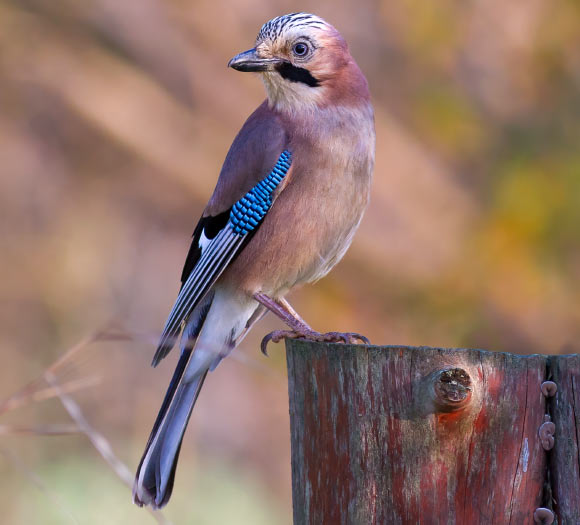
Birds of the Bible – Eurasian Jay?

Eurasian Jay (Garrulus glandarius) ©© Pierre Dalous

Eurasian Jay (Garrulus glandarius) ©© Pierre Dalous

One generation shall praise Your works to another, And shall declare Your mighty acts. (Psalms 145:4 NKJV)

A new commandment I give to you, that you love one another; as I have loved you, that you also love one another. By this all will know that you are My disciples, if you have love for one another.” (John 13:34-35 NKJV)

How can an Eurasian Jay be a Bird of the Bible? Many times I have quoted the verse, in Job 12:17, about learning from the birds and now we have another bird we can learn from.  Focusing On Wildlife had an interesting article, Male Eurasian Jays Surprise Ornithologists.

Some quotes from the article:”The ability to disengage from our own desire to cater to someone else’s wishes is thought to be a unique feature of human cognition.” In their study, long story short, the male and female were fed different diets separate from each other. The male could watch the female eat, and when they were finally placed together, he would pick out her favorite food to get to her, even though his favorite was also there. “However, when the female’s desire differed from the male’s, then he took his partner’s wishes into account, often feeding her the food that she desired. This ability to ascribe to another individual an internal life-like one’s own and at the same time understand that the other’s internal, psychological states might differ from one’s own is called state-attribution.” “As humans, we ‘put ourselves into someone else’s shoes’ in order to respond to what the other person wants. Although we are biased by our own current desires,…”

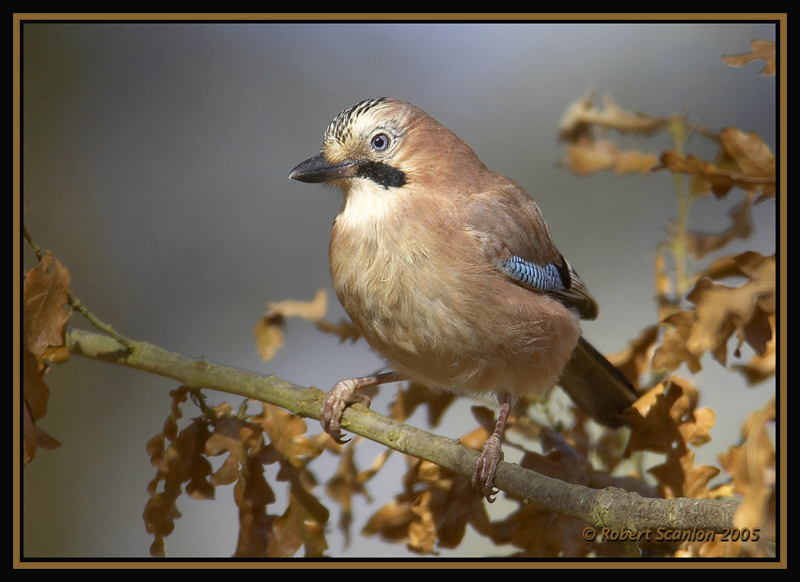
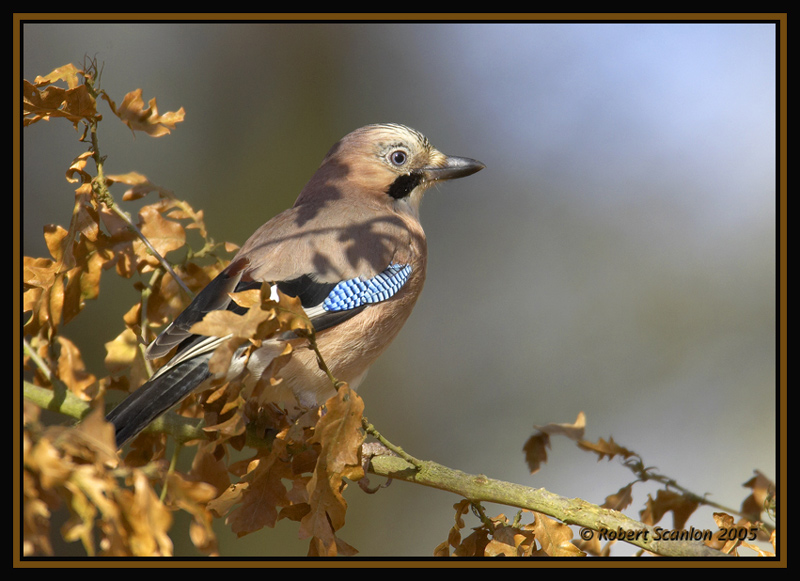
Eurasian Jay (Garrulus glandarius) by Robert Scanlon

Eurasian Jay (Garrulus glandarius) by Robert Scanlon

This is My commandment, that you love one another as I have loved you. (John 15:12 NKJV)

Be kindly affectionate to one another with brotherly love, in honor giving preference to one another; (Romans 12:10 NKJV)

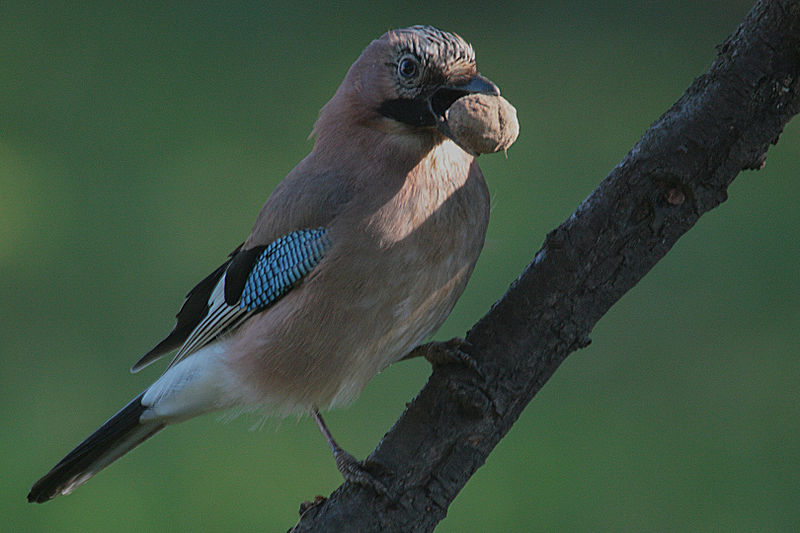
Eurasian Jay (Garrulus glandarius) ©WikiC

Eurasian Jay (Garrulus glandarius) ©WikiC

Therefore let us pursue the things which make for peace and the things by which one may edify another. (Romans 14:19 NKJV)

For you, brethren, have been called to liberty; only do not use liberty as an opportunity for the flesh, but through love serve one another. (Galatians 5:13 NKJV)

PAS-Corv Eurasian Jay (Garrulus glandarius)2 by Robert Scanlon

And may the Lord make you increase and abound in love to one another and to all, just as we do to you, so that He may establish your hearts blameless in holiness before our God and Father at the coming of our Lord Jesus Christ with all His saints. (1 Thessalonians 3:12-13 NKJV)

Therefore comfort each other and edify one another, just as you also are doing. (1 Thessalonians 5:11 NKJV)

The verses on this page should help us remember how we are supposed to put others first in our lives.

Is the Eurasian Jay a Bird of the Bible? I think so. How about you? Let us learn his lesson.

Eurasian Jay (Garrulus glandarius) by Nikhil Devasar

Eurasian Jay (Garrulus glandarius) by Nikhil Devasar

And let us consider one another in order to stir up love and good works, (Hebrews 10:24 NKJV)

Since you have purified your souls in obeying the truth through the Spirit in sincere love of the brethren, love one another fervently with a pure heart, (1 Peter 1:22 NKJV)

The Eurasian Jay (Garrulus glandarius) is a species of bird occurring over a vast region from Western Europe and north-west Africa to the Indian Subcontinent and further to the eastern seaboard of Asia and down into south-east Asia. Across its vast range, several very distinct racial forms look very different from each other, especially when forms at the extremes of its range are compared.

The bird is called jay, without any epithets, by English speakers in Great Britain and Ireland. It is the original ‘jay’ after which all others are named. (Wikipedia with editing)

The Jays belong to the Corvidae – Crows, Jays Family. There are 130 species in this family.

Eurasian Jay (Garrulus glandarius) ©WikiC

Eurasian Jay (Garrulus glandarius) ©WikiC

Finally, all of you be of one mind, having compassion for one another; love as brothers, be tenderhearted, be courteous; (1 Peter 3:8 NKJV)

Be hospitable to one another without grumbling. (1 Peter 4:9 NKJV)

Beloved, if God so loved us, we also ought to love one another. (1 John 4:11 NKJV)

See Also:

*