The First Birds of 2014

American White Ibis (Eudocimus albus) 1st Birds of 2014 by Lee

American White Ibis (Eudocimus albus) 1st Birds of 2014 by Lee

About 8:30 am I was sitting at our table and caught a glimpse of some white birds landing in the front yard. Looking out, I saw 22 American White Ibises. Yeah! My first birds sighted in 2014. I went back in and after a while decided to get my camera. Three had left, but 19 were left. Here are some photos and a video I made of them.

Oh, sing to the LORD a new song! Sing to the LORD, all the earth. (Psalms 96:1 NKJV)

For the Athenians, all of them, and the foreign residents and visitors among them spent all their leisure time in nothing except telling or hearing something newer than the last– (Acts 17:21 AMP)

American White Ibis (Eudocimus albus) 1st Birds of 2014 by Lee

American White Ibis (Eudocimus albus) 1st Birds of 2014 by Lee

The photos are blurred around their heads, but when you watch the video, you will see why. Their heads are bobbing constantly as they probe for goodies out of my neighbor’s and my yard. They had originally landed in our yard on the right. By the time I got the camera, they had worked their way next door. I figured that I would do good to get a photo. But! They turned around and worked their way back to our yard.

As you can tell it was drab and drizzling rain. It was also cool and I was standing out in my bare feet and my pajamas. What we won’t do to get that 1st sighting and photo of a bird in a new year.

Boat-tailed Grackle (Quiscalus major) 2nd Bird of 2014 by Lee

Boat-tailed Grackle (Quiscalus major) 2nd Bird of 2014 by Lee

I kept hearing a Boat-tailed Grackle in the tree, so decided to get his photo. So he was #2 and as I looked through the lens, there was #3 behind him. That is an Eurasian Collared Dove. Not to be left out, #4 landed on that tree. A male Red-bellied Woodpecker.

Eurasian Collared Dove (Streptopelia decaocto) Red-bellied Woodpecker (Melanerpes carolinus) 3rd and 4th Birds of 2014 by Lee

Eurasian Collared Dove and Red-bellied Woodpecker 3rd and 4th Birds of 2014 by Lee

There you have my first birds of 2014
1. American White Ibis (Eudocimus albus)
2. Boat-tailed Grackle (Quiscalus major)
3. Eurasian Collared Dove (Streptopelia decaocto)
4. Red-bellied Woodpecker (Melanerpes carolinus)

How about you? 

Also, if there are any photographers that would like to share photos with the blog on a regular basis, contact me at Lee@Leesbird.com. I am always eager to have photos available for showing the birds as we write about them. A link and credit are given to you.

This slideshow requires JavaScript.

*

*

2014′s First Bird Seen

*

2014’s First Bird Seen

Sandhill Crane (Grus canadensis) Lake June-in-Winter S Pk

Sandhill Crane (Grus canadensis) Lake June-in-Winter S Pk

Happy New Year!

What was the first bird you saw in 2014? I am taking a survey and will publish the results in a few days.

My last birds seen in 2013 were 10 Sandhill Cranes and then just before dark I saw a Downy Woodpecker. It is still 2013 as this is being posted. I will add my first bird in the morning.

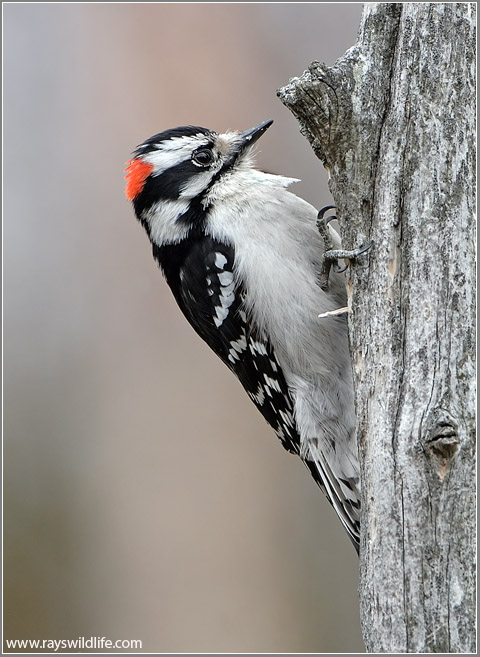
Downy Woodpecker (Picoides pubescens) by Raymond Barlow

Downy Woodpecker (Picoides pubescens) by Raymond Barlow

*

*

ON THE first day of the seventh month [on New Year’s Day of the civil year], you shall have a holy [summoned] assembly; you shall do no servile work. It is a day of blowing of trumpets for you [everyone blowing who wishes, proclaiming that the glad New Year has come and that the great Day of Atonement and the Feast of Tabernacles are now approaching]. (Numbers 29:1 AMP)

*

You might want to leave a comment just in case the survey doesn’t work. It’s a new attempt on my part. Leave bird and country.

*

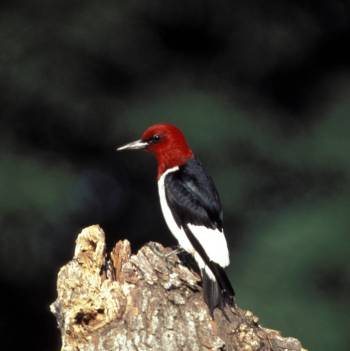
A Red-headed Cousin (Red-headed Woodpecker)

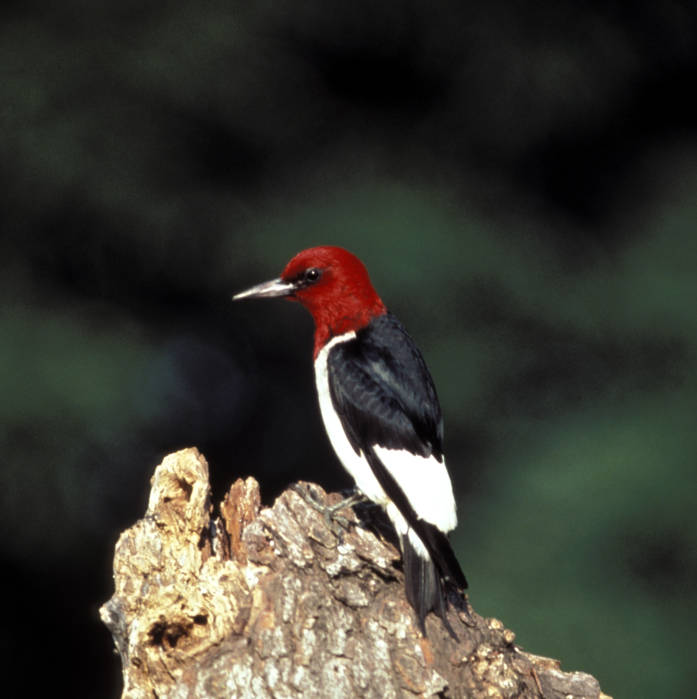
Red-headed Woodpecker (Melanerpes erythrocephalus) ©USFWS

Red-headed Woodpecker (Melanerpes erythrocephalus) ©USFWS

IX

A RED-HEADED COUSIN

Besides his half-brothers, the narrow-fronted and ant-eating woodpeckers, the Carpenter has a numerous family of cousins,—the red-headed, the red-bellied, the golden-fronted, the Gila, and the Lewis’s woodpeckers. These all belong to one genus, and are much alike in structure, though totally different in color. Most of them are Western or Southwestern birds, but one is found in nearly all parts of the United States lying between the Hudson River and the Rocky Mountains, and is the most abundant woodpecker of the middle West. This well-known cousin is the red-headed woodpecker, the tricolored beauty that sits on fence-posts and telegraph poles, and sallies out, a blaze of white, steel-blue, and scarlet, a gorgeous spectacle, whenever an insect flits by. He is the one that raps so merrily on your tin roofs when he feels musical.

So named from being found along the Gila River.

In many ways the red-head, as he is familiarly called, is like his carpenter cousin. Both indulge in long-continued drumming; both catch flies expertly on the wing; and both have the curious habit of laying up stores of food for future use. The Californian woodpecker not only stores acorns, but insect food as well. But though the Carpenter’s habits have long been known, it is a comparatively short time since the red-head was first detected laying up winter supplies.

The first to report this habit of the red-head was a gentleman in South Dakota, who one spring noticed that they were eating young grasshoppers. At that season he supposed that all the insects of the year previous would be dead or torpid, and certainly full-grown, while those of the coming summer would be still in the egg. Where could the bird find half-grown grasshoppers? Being interested to explain this, he watched the red-heads until he saw that one went frequently to a post, and appeared to get something out of a crevice in its side. In that post he found nearly a hundred grasshoppers, still alive, but wedged in so tightly they could not escape. He also found other hiding-places all full of grasshoppers, and discovered that the woodpeckers lived upon these stores nearly all winter.

But it is not grasshoppers only that the red-head hoards, though he is very fond of them. In some parts of the country it is easier to find nuts than to find grasshoppers, and they are much less perishable food. The red-head is very fond of both acorns and beechnuts. Probably he eats chestnuts also. Who knows how many kinds of nuts the red-head eats? You might easily determine not only what he will eat, but what he prefers, if a red-headed woodpecker lives near you. Lay out different kinds of nuts on different days, putting them on a shed roof, or in some place where squirrels and blue jays would not be likely to dare to steal them, and see whether he takes all the kinds you offer. Then lay out mixed nuts and notice which ones he carries off first. If he takes all of one kind before he takes any of the others, we may be sure that he has discovered his favorite nut. Such little experiments furnish just the information which scientific men are glad to get.
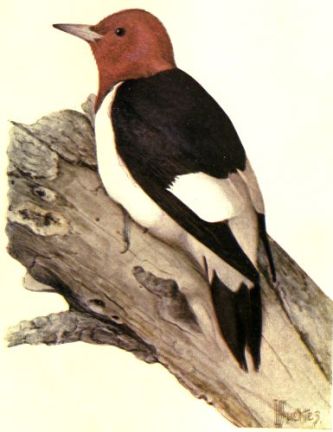
Red-headed Cousin

It is well known that the red-head is very fond of beechnuts. Every other year we expect a full crop of nuts, and close observation shows that the red-heads come to the North in much larger numbers and stay much later on these years of plenty than on the years of scanty crops. Lately it has been discovered that they not only eat beechnuts all the fall, but store them up for winter use. This time the observation was made in Indiana. There, when the nuts were abundant, the red-heads were seen busily carrying them off. Their accumulations were found in all sorts of places: cavities in old tree-trunks contained nuts by the handful; knot-holes, cracks, crevices, seams in the barns were filled full of nuts. Nuts were tucked into the cracks in fence-posts; they were driven into railroad ties; they were pounded in between the shingles on the roofs; if a board was sprung out, the space behind it was filled with nuts, and bark or wood was often brought to cover over the gathered store. No doubt children often found these hiding-places and ate the nuts, thinking they were robbing some squirrel’s hoard.

In the South, where the beech-tree is replaced by the oak, the red-heads eat acorns. I should like to know whether they store acorns as they do beechnuts. Are chestnuts ever laid up for winter? How far south is the habit kept up? Is it observed beyond the limits of a regular and considerable snowfall? That is, do the birds lay up their nuts in order to keep them out of the snow, or for some other reason?

It remains to be discovered if other woodpeckers have hoarding-places. We know that the sapsucker eats beechnuts, and the downy and the hairy woodpeckers also; that the red-bellied woodpecker and the golden-winged flicker eat acorns; and I have seen the downy woodpecker eating chestnuts, or the grubs in them, hanging head downward at the very tip of the branches like a chickadee. It may be possible that some of these lay up winter stores.

*

This is Chapter XI from The Woodpeckers book. Our writer, Fannie Hardy Eckstorm, wrote this in 1901. There are 16 chapters, plus the Forward, which are about the Woodpecker Family here in America. All the chapters can be found on The Woodpeckers page. I added photos to help enhance the article. In 1901, photography was not like today.

Woodpeckers belong to the Picidae – Woodpeckers Family.
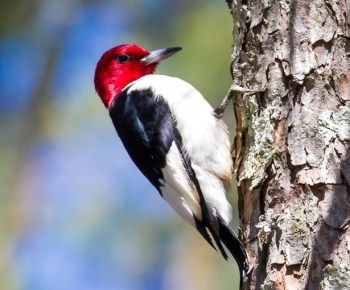

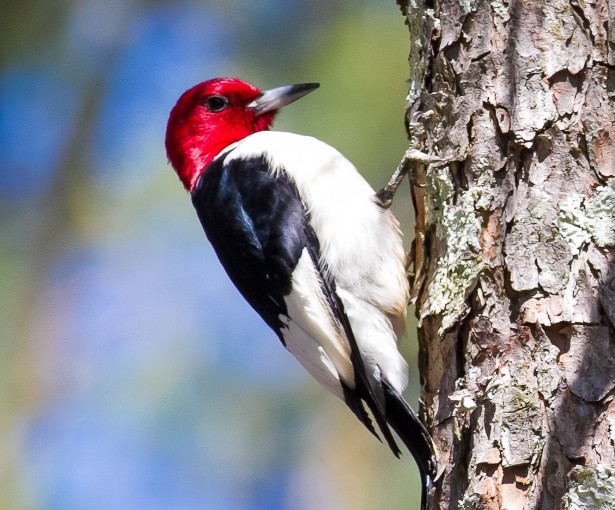
Red-headed Woodpecker (Melanerpes erythrocephalus) ©Bing

Red-headed Woodpecker (Melanerpes erythrocephalus) ©Bing

Lee’s Addition:

Come now, and let us reason together, saith the LORD: though your sins be as scarlet, they shall be as white as snow; though they be red like crimson, they shall be as wool. (Isaiah 1:18 KJV)

He answered and said unto them, When it is evening, ye say, It will be fair weather: for the sky is red. And in the morning, It will be foul weather to day: for the sky is red and lowring. O ye hypocrites, ye can discern the face of the sky; but can ye not discern the signs of the times? (Matthew 16:2-3 KJV)

The Red-headed Woodpecker (Melanerpes erythrocephalus), which belongs to the Picidae – Woodpeckers Family, is a small or medium-sized woodpecker from temperate North America. Their breeding habitat is open country across southern Canada and the eastern-central United States.

The Red-headed Woodpecker was one of the many species originally described by Linnaeus in his 18th-century work Systema Naturae. The specific epithet is derived from the Ancient Greek words erythros ‘red’ and kephalos ‘head’.

Adults are strikingly tri-colored, with a black back and tail and a red head and neck. Their underparts are mainly white. The wings are black with white secondary remiges. Adult males and females are identical in plumage. Juveniles have very similar markings, but have an all grey head.

These birds fly to catch insects in the air or on the ground, forage on trees or gather and store nuts. They are omnivorous, eating insects, seeds, fruits, berries, nuts, and occasionally even the eggs of other birds. About two-thirds of their diet is made up of plants. They nest in a cavity in a dead tree, utility pole, or a dead part of a tree. They lay 4 to 7 eggs in early May which are incubated for two weeks. Two broods can be raised in a single nesting season. (Wikipedia with editing)

**

Interesting Bird Facts about the Red-headed Woodpecker

  • It has the greatest G-force (acceleration due to gravity): beak of red-headed woodpecker hitting bark at 20.9 km/h (13 mph). (Internet)
  • The Red-headed Woodpecker has many nicknames, including half-a-shirt, shirt-tail bird, jellycoat, flag bird, and the flying checker-board. (All About Birds)

*

*

Birds of the Bible – American Bittern

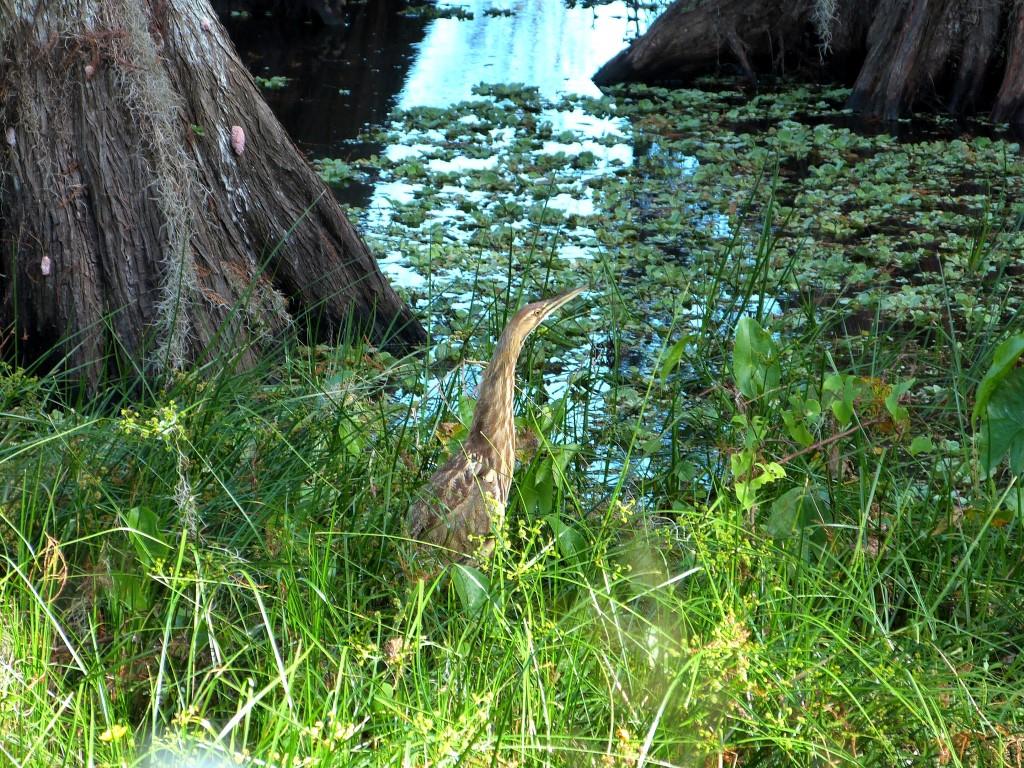
American Bittern (Botaurus lentiginosus) by Lee

American Bittern (Botaurus lentiginosus) by Lee

The Bittern is found in the KJV in three verses of Scripture. Some versions translate it differently. But for the sake of this article, here are those verses:

I will also make it a possession for the bittern, and pools of water: and I will sweep it with the besom of destruction, saith the LORD of hosts. (Isaiah 14:23 KJV)

But the cormorant and the bittern shall possess it; the owl also and the raven shall dwell in it: and he shall stretch out upon it the line of confusion, and the stones of emptiness. (Isaiah 34:11 KJV)

And flocks shall lie down in the midst of her, all the beasts of the nations: both the cormorant and the bittern shall lodge in the upper lintels of it; their voice shall sing in the windows; desolation shall be in the thresholds: for he shall uncover the cedar work. (Zephaniah 2:14 KJV)

We were out at Circle B Bar Reserve just before Christmas and spotted an American Bittern. They are quite evasive and not spotted often, at least by me. That protection reminds me of several verses:

Keep me as the apple of the eye, hide me under the shadow of thy wings, (Psalms 17:8 KJV)

Deliver me, O LORD, from mine enemies: I flee unto thee to hide me. (Psalms 143:9 KJV)


This slideshow requires JavaScript.

Bitterns are members of the Ardeidae – Herons, Bitterns Family. “Although common in much of its range, the American Bittern is usually well-hidden in bogs, marshes and wet meadows. Usually solitary, it walks stealthily among cattails or bulrushes. If it senses that it has been seen, the American Bittern becomes motionless, with its bill pointed upward, causing it to blend into the reeds. It is most active at dusk. More often heard than seen, this bittern has a call that resembles a congested pump.

Like other members of the heron family, the American Bittern feeds in marshes and shallow ponds, dining on amphibians, fish, insects and reptiles.

This bittern winters in the southern United States and Central America. It summers throughout Canada and much of the United States. As a long-distance migrant, it is a very rare vagrant in Europe, including Great Britain and Ireland. This bird nests in isolated places with the female building the nest and the male guarding it. Two or three eggs are incubated by the female for 29 days, and the chicks leave after 6–7 weeks.” (From Wikipedia)

Identification Tips: (USGS)

  • Length: 23 inches Wingspan: 45 inches
  • Medium-sized wading bird
  • Dark brown upperparts
  • Underparts streaked brown and white
  • Black malar streak
  • Yellow bill with dark culmen
  • Black primaries and secondaries
  • Sometimes “freezes” with neck held upwards
  • Immatures similar to adults but lack the malar streak

American Bittern sounds from Cornell

*

*

The Winter Wrens’ Dew-drop Baths

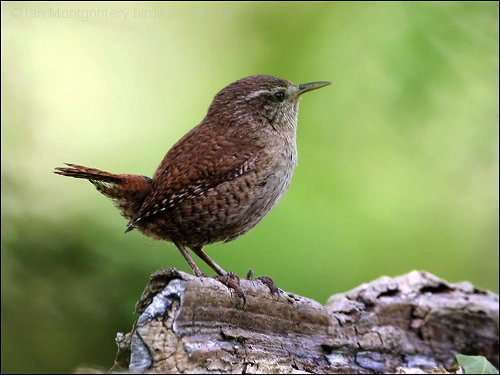
Winter Wren (Troglodytes troglodytes) by Ian

Winter Wren (Troglodytes troglodytes) by Ian

THE WINTER WRENS’ DEW-DROP BATHS

“The winter wren is really with us during the summer too,” said daddy. “But he is too shy to be near us. We can only hear him sing sometimes. When winter comes, though, he goes to people for protection and picks up the crumbs they give him.

“Yesterday he was sitting on a snow-berry bush with a tiny companion. The snow-berry bushes are full and leafy, and in the spring and summer are covered with very tiny pink blossoms. In the autumn and winter they are covered with little berries which look as if they had been made out of snow.

“‘Oh, how I dread the winter!’ said the tiny wren. ‘Just imagine how dreadful it would be if no one put any bread crumbs out for us, or no dog left us some of his dinner on a back porch.’

“‘Now,’ said Mr. Brown Wren, ‘you mustn’t think of such sad thoughts. You always [p.11]do! Someone will look after us. And maybe we’ll find a few spiders now and then in the cracks, and then well have a regular feast.’

“The next day they were back again on the snow-berry bush, and the day was much warmer. Now the wrens love to bathe above all things! Even in the winter they will go through a little sheet of ice and get into the cold, cold water underneath. For they must get their baths! And in the spring, when the tiny wrens are brought forth from their mossy nests, the first lesson they have is of bathing in some nearby brook.

“But this day it was early in the morning, the snow-berry bush was covered with dew-drops and the wrens were delighted.

“‘The sun will drive them away soon. Let’s take them while we get the chance,’ whispered Mr. Brown Wren.

“‘Yes, yes,’ said his small companion. ‘We will soon have to bathe when it is so cold. Let us have a good warm bath first.’

“And then those two little brown wrens took the dew-drops in their beaks, and dropped each one in turn on their feathers. [p.12]Then they got under some leaves full of dew-drops and shook them down over their little feathered bodies.

“After they were well covered with the dew-drops they began to shake all over just as every bird does when he takes a bath. And back they went to take another bath when this one was over. For they seemed to enjoy their last warm bath so much!

“Finally they had bathed enough, and the sun appeared strong as could be, and shining very hard. They perched still on the branches of the snow-berry bush and bathed now in the hot sun. Soon their little feathers were quite dry and they began to sing.

“And truly I think their song was one of gladness because of their dew-drop baths!”


Winter Wren (Troglodytes troglodytes) by Ian

Winter Wren (Troglodytes troglodytes) by Ian

Lee’s Addition:

My message shall drop as the rain, my speech shall distil as the dew, as the light rain upon the tender grass, and as the showers upon the herb. (Deuteronomy 32:2 AMP)

By His knowledge the depths were broken up, And clouds drop down the dew. (Proverbs 3:20 NKJV)

And who do you think is the father of rain and dew, (Job 38:28 MSG)

Another Bird Tales

From

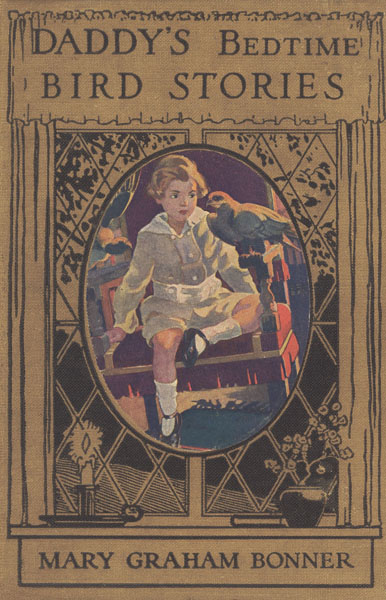
Daddy’s Bedtime Bird Stories – Gutenberg ebooks

By

Mary Graham Bonner

With four illustrations in color by
Florence Choate and Elizabeth Curtis

Daddys Bedtime Story Images


These stories first appeared in the American Press Association Service and the Western Newspaper Union.


Many of the sketches in this volume are the work of Rebecca McCann, creator of the “Cheerful Cherub,” etc.

Daddy's Bedtime Bird Stories by Mary Graham Bonner - 1917

*
Daddy’s Bedtime Bird Stories by Mary Graham Bonner – 1917

*

Links:

Painted Bunting (Passerina ciris) ©©Flickr


  Bird Tales


  Daddy’s Bedtime Bird Stories


Spanish Sparrow (Passer Hispaniolensis) female ©WikiC


  Wordless Birds


Winter Wren (Troglodytes troglodytes) by Ian


  Troglodytidae – Wrens Family


*

Christmas Birds – Ornaments 2013

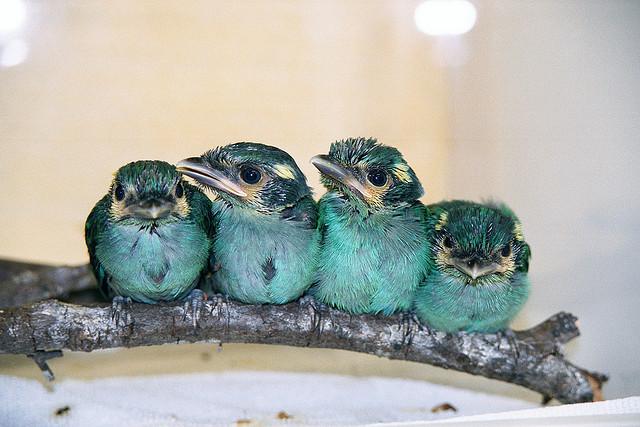
Long-tailed Broadbill (Psarisomus dalhousiae) babies ©WikiC coracii

Long-tailed Broadbill (Psarisomus dalhousiae) babies ©WikiC coracii

Here are the last of the Christmas Birds. The colors and designs would be pretty in ornaments. But most of all, they are superb examples of the Lord’s omniscient creative designs.

He was in the world, and the world was made by him, and the world knew him not. He came unto his own, and his own received him not. But as many as received him, to them gave he power to become the sons of God, even to them that believe on his name:.. And the Word was made flesh, and dwelt among us, (and we beheld his glory, the glory as of the only begotten of the Father,) full of grace and truth. (John 1:10-12, 14 KJV)

*

This slideshow requires JavaScript.

Whose adorning let it not be that outward adorning of plaiting the hair, and of wearing of gold, or of putting on of apparel; But let it be the hidden man of the heart, in that which is not corruptible, even the ornament of a meek and quiet spirit, which is in the sight of God of great price. (1 Peter 3:3-4 KJV)

*

Music to listen to while viewing the photos. “Ring The Bells” – Men’s Quartet – Faith Baptist 2012

*

See the original article – Christmas Birds – Ornaments

The Christmas Birds 2013 so far:

*

Christmas Birds – Silver and Gold 2013

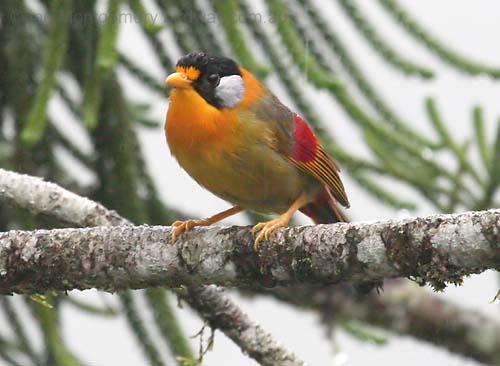
Silver-eared Mesia (Leiothrix argentauris) by Ian

Silver-eared Mesia (Leiothrix argentauris) by Ian

This time the Silver and Gold are both found on the birds. When the Lord created all the beautiful and colorful birds, He did not lack using variety.

Receive my instruction, and not silver; and knowledge rather than choice gold. (Proverbs 8:10 KJV)

How much better is it to get wisdom than gold! and to get understanding rather to be chosen than silver! (Proverbs 16:16 KJV)

*

This slideshow requires JavaScript.

*

knowing that you were not redeemed with corruptible things, like silver or gold, from your aimless conduct received by tradition from your fathers, but with the precious blood of Christ, as of a lamb without blemish and without spot. He indeed was foreordained before the foundation of the world, but was manifest in these last times for you (1 Peter 1:18-20 NKJV)

Joy To The World played by the Faith Baptist Orchestra 2012

The Christmas Birds 2013 so far:

*

Who Paints The Leaves?

*

(I know, I kind of took a few liberties with the photos. This was one of the harder challenges.)

*

Christmas Birds – Gold 2013

Golden Tanager (Tangara arthus goodsoni) ©BirdPhotos.com

Golden Tanager (Tangara arthus goodsoni) ©BirdPhotos.com

Hope you have been enjoying the updated Christmas Birds. This is another new one to the series. Gold is in the names of birds and their goldish-yellow colors are plentiful.

When they had heard the king, they departed; and, lo, the star, which they saw in the east, went before them, till it came and stood over where the young child was. When they saw the star, they rejoiced with exceeding great joy. And when they were come into the house, they saw the young child with Mary his mother, and fell down, and worshipped him: and when they had opened their treasures, they presented unto him gifts; gold, and frankincense, and myrrh. (Matthew 2:9-11 KJV)

*

This slideshow requires JavaScript.

*

Then entered in those Wise Men three,
Full reverently upon the knee,
And offered there, in His presence,
Their gold and myrrh and frankincense.

Noel, Noel, Noel, Noel,
Born is the King of Israel.

The Christmas Birds 2013 so far:

*

Wordless Birds

*

Christmas Birds – Silver 2013

Silver-breasted Broadbill (Serilophus lunatus) by Peter Ericsson

Silver-breasted Broadbill (Serilophus lunatus) by Peter Ericsson

This year I am adding Silver Birds to our collection of Christmas Birds. Grey and white sometimes look like silver when in certain light. Some of them are also used.

The words of the LORD are pure words: as silver tried in a furnace of earth, purified seven times. Thou shalt keep them, O LORD, thou shalt preserve them from this generation for ever. (Psalms 12:6-7 KJV)

*

This slideshow requires JavaScript.

saying, “Where is He who has been born King of the Jews? For we have seen His star in the East and have come to worship Him.”
(Matthew 2:2 NKJV)

*

Listen to Silver Star by Horatio R. Palmer (1834-1907) as you view the slideshow. I have inserted the words to this song at the bottom. Never heard it before, but the words are great.

The Christmas Birds 2013 so far:

*

Silver Star

On the brow of night there shines a silver star,
And the wise men gaze on its heav’nly rays,
Till they find the King, whose throne they sought afar,
In the Babe of Bethlehem.

Refrain

Silver star, holy light,
Shine afar, o’er the night,
Till the world shall come where the young Child lay,
And enter the gates of the newborn day.

’Tis the lamp of God high hanging in the air,
And it guides our feet thro’ the royal street;
There is sweet soul-rest for those who seek it there,
From the Babe of Bethlehem.

Refrain

Silver star, holy light,
Shine afar, o’er the night,
Till the world shall come where the young Child lay,
And enter the gates of the newborn day.

Bring your gifts of gold, of frankincense and myrrh,
For the King we own is on David’s throne;
Let the holy Child your best affections stir;
’Tis the Babe of Bethlehem.

Refrain

Silver star, holy light,
Shine afar, o’er the night,
Till the world shall come where the young Child lay,
And enter the gates of the newborn day.

*

Christmas Birds – Green 2013

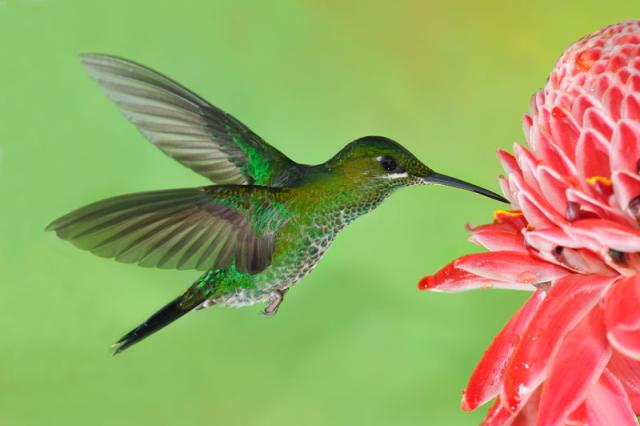
Green-crowned Brilliant (Heliodoxa jacula) Reinier Munguia

Green-crowned Brilliant (Heliodoxa jacula) Reinier Munguia

This is the second set of Christmas Birds. This time the Green Birds are featured. Hope you enjoyed the Christmas Birds – Red.

Again the Lord created these birds and colored them for their protection and to show off to their mates. There are many more that could be shown, but you may want to find some yourself.

Have you not known? Have you not heard? The everlasting God, the LORD, The Creator of the ends of the earth, Neither faints nor is weary. His understanding is unsearchable. (Isaiah 40:28 NKJV)

*

This slideshow requires JavaScript.

*

Here is the Music as Choir Entered for the Cantata (looped)

*

See the original Christmas Birds – Green

The Christmas Birds 2013 so far:

*

*

Christmas Birds – Red 2013

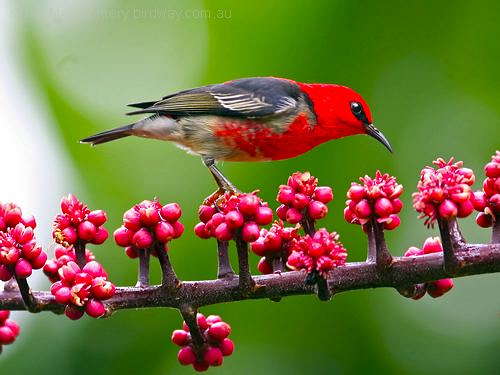
Scarlet Myzomela (Myzomela sanguinolenta) by Ian

Scarlet Myzomela (Myzomela sanguinolenta) by Ian

Now that Christmas is just over a week away, it’s time to see some of the birds that have “traditional” Christmas colors. Today’s color will be birds that have some sort of red on them. Other colors will be shown during the week. I have added new photos this year and some new colors later in the week.

When the Lord created the birds (fowls), He used many different colors, most for the protection of the bird (to blend in) or for display to attract a mate (to stand out).

We trust you enjoy the photos and that you are blessed as you consider the bird’s Creator, Who came to earth as a babe in a manger, so that He might redeem us from our sin. “All things were made through him, and without him was not any thing made that was made. (John 1:3)

But made himself of no reputation, and took upon him the form of a servant, and was made in the likeness of men: And being found in fashion as a man, he humbled himself, and became obedient unto death, even the death of the cross. (Philippians 2:7-8 KJV)

*

This slideshow requires JavaScript.

Come now, and let us reason together, saith the LORD: though your sins be as scarlet, they shall be as white as snow; though they be red like crimson, they shall be as wool. (Isaiah 1:18 KJV)

Music to listen to while viewing the photos from Birds In Christmas Hymns – Thou Didst Leave Thy Throne

*

See the original Christmas Birds – Red

The Christmas Birds 2013 so far:

*

The Brave Brown Sparrows In Winter

Sparrow on Branch ©©Bing

Sparrow on Branch ©©Bing

THE BRAVE BROWN SPARROWS IN WINTER

One Bird Seemed to be the Leader.

One Bird Seemed to be the Leader.

“You know,” said daddy, “I saw such a strange thing to-day in the city.”

“Tell us about it,” said Jack.

“What was it?” asked Evelyn, who was always interested in whatever daddy had to say.

“Well,” continued daddy, “in a tree in the park lots and lots of little sparrows were roosting. It was, of course, a perfectly bare tree without a leaf on it, and they were huddled together, keeping each other warm.

“I watched them for quite a time. There was one sparrow who looked the leader. He did most of the chirping and was apparently telling all the others what they must do and giving all sorts of directions. He chirped almost constantly for ten minutes, and then he flew down from the tree and hopped along the ground. He picked up crumb after crumb, and then when he had as many as he could carry in his beak he flew up in the tree again and left them on a branch where there was a kind of hole in which to put them. He was evidently showing all the other birds just what to do, for in a minute or two any number of them flew down to the ground and began to pick up crumbs.

“It was wonderful to see how many they could find, for I myself could hardly see any, and all the time he kept chirping to the others and telling them what to do.

“This kept up for some time, for the birds would fly back and forth, just picking up goodies and then putting them up in the tree. Meantime a lot of other birds who had stayed up in the tree were fixing them on the branch and dividing them all evenly.”

“Didn’t they eat any of them?” asked Evelyn.

“Yes. After quite awhile they all flew back to the tree again, and once more they huddled together and had the most marvelous meal. You see, it was their dinner time, and they all had it together at the same time to make it more sociable. From all the cries of joy and the noise I fancy they were having a pretty good time of it and enjoying themselves immensely. In fact, I think they almost forgot how cold it was.”

“I think it’s wonderful,” said Evelyn, “how well the birds can look after themselves, for it must be pretty hard sometimes, especially in the winter.”

“Yes,” said daddy, “it is, but these birds seemed so happy together and to be having such a good time. After dinner was over they all chased each other from one tree to another in the park and played tag and had a beautiful time. So I think really birds and animals are smart and brave to be able to look after themselves and their little ones so well.”


Sparrows in snow ©©Bing

Sparrows in snow ©©Bing


Lee’s Addition:

We enjoyed being together, and we went with others to your house, our God. (Psalms 55:14 CEV)

But do not forget to do good and to share, for with such sacrifices God is well pleased. (Hebrews 13:16 NKJV)

*

Another Bird Tales

From

Daddy’s Bedtime Bird Stories – Gutenberg ebooks

By

Mary Graham Bonner

With four illustrations in color by
Florence Choate and Elizabeth Curtis

Daddys Bedtime Story Images


These stories first appeared in the American Press Association Service and the Western Newspaper Union.


Many of the sketches in this volume are the work of Rebecca McCann, creator of the “Cheerful Cherub,” etc.

Daddy's Bedtime Bird Stories by Mary Graham Bonner - 1917

*
Daddy’s Bedtime Bird Stories by Mary Graham Bonner – 1917

*

Links:

Painted Bunting (Passerina ciris) ©©Flickr


  Bird Tales


  Daddy’s Bedtime Bird Stories


Spanish Sparrow (Passer Hispaniolensis) female ©WikiC


  Wordless Birds


*

House Sparrow (Passer domesticus)
  Emberizidae – Buntings, New World Sparrows & Allies


*