One is Enough ~ by Dottie Malcolm

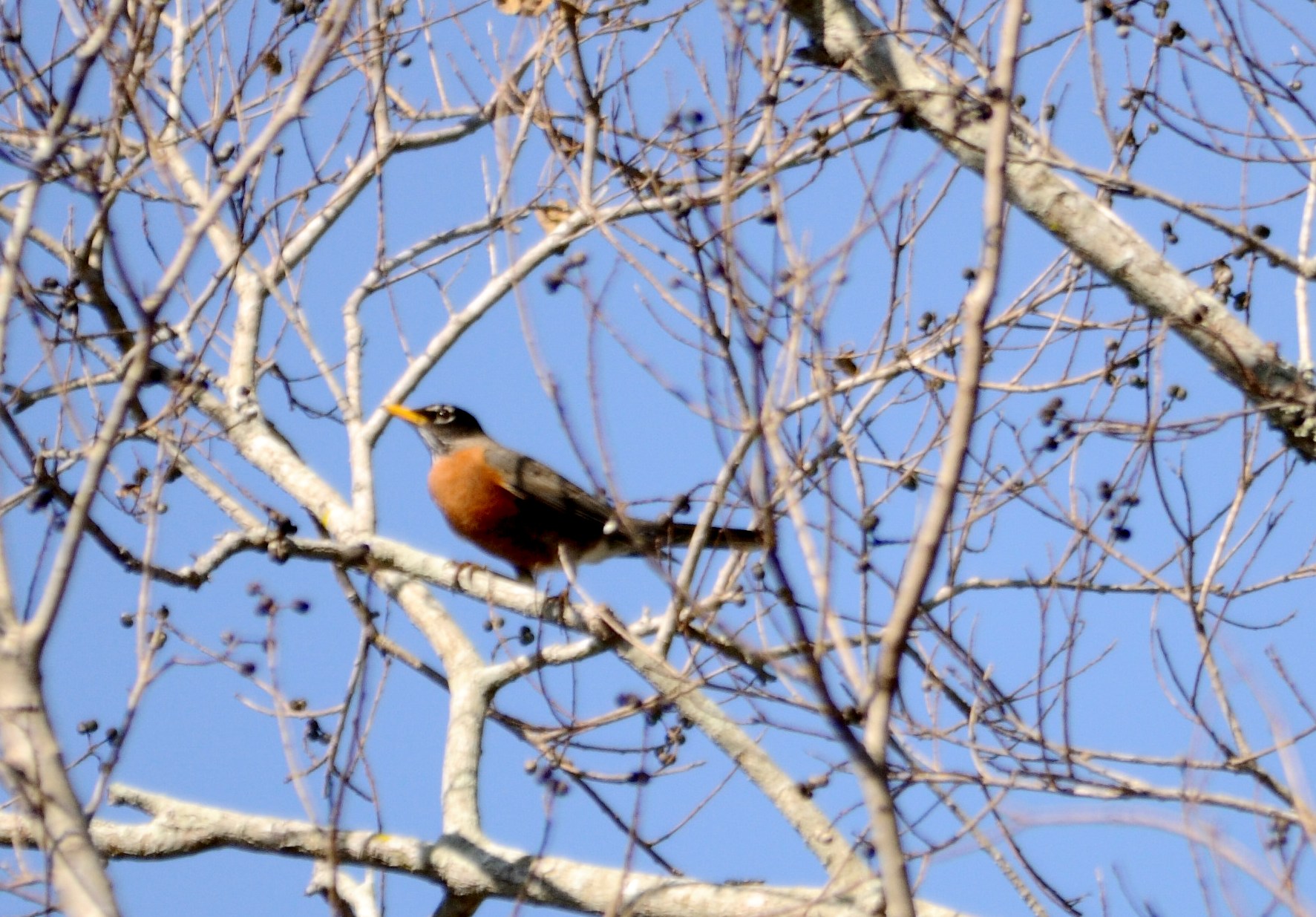
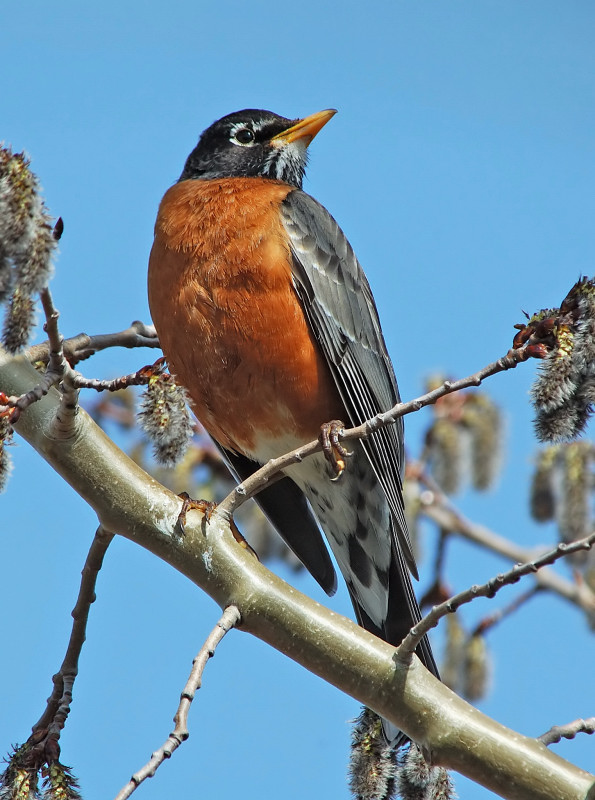
American Robin by Dan at Lake Howard

American Robin by Dan

“One is Enough” ~ by Dorothy “Dottie” Belle Malcolm

Having just returned home from a house cleaning job, my mind wasn’t about birds, but the greeting I would get from my dog Ruby. She was her usual happy, jumpy, self – anticipating a doggy treat for being left home alone.

I was not happy to find her soaking wet. This meant I had not closed the door well to the shower room and she had spent her time there during my absence. It would have been OK except my shower drips continuously – (yes, I do have a plan to have it checked out.) And this is a dog who hated to be showered! Figure that.

So anyway, I told her I needed to check the mail. And yes, she knows what this means. She ran outdoors and as we headed for the mailbox I heard a very familiar sound. We had startled a robin! Oh joy! I carefully began looking for it and found it was still hanging around a flower bed.

I don’t remember who I thanked first, the robin for being in my yard, or the Lord for sending it there!

It is the first and so far the only one I have seen in my yard this year. Recalling the year my yard was filled with them in Feb. 2010 and had told them they were all welcome back, put paid no return visits.

Having at least one, made my day. I’m not hard to please. I do hope to see it again, but if not, I’m happy anyway.

Every time I look out the window on this beautiful spring day, I will have a spirit of thanksgiving. Being able to enjoy God’s Creation is a great blessing.

One Robin is enough.

Dot Malcolm

(Feb 15, 2013)

Be glad in the LORD and rejoice, you righteous; And shout for joy, all you upright in heart! (Psalms 32:11 NKJV)


American Robin (Turdus migratorius)by Raymond Barlow

American Robin)by Raymond Barlow

Lee’s Addition:

What a great event. Dottie handed this to me Saturday morning at our annual Volunteer’s Breakfast. All those who volunteer around church are treated to a meal prepared by our Pastors and staff. Dottie has been a faithful Primary Sunday School teacher for years. Reading this story, I can see why they all love her and enjoy her teaching so much. Thank you, Dottie.

See her other articles:

*

Ian’s Bird of the Week – Tasmanian Native-hen

Ian’s Bird of the Week – Tasmanian Native-hen ~ by Ian Montgomery

Newsletter ~ 2-14-13

The last edition featured the Tasmanian endemic, the Yellow Wattlebird. A former colleague of mine, Gary, who comes from Tasmania, sent me the following recipe from this priceless book by Tasmanian author Marjorie Bligh, and I thought it might interest you, at the risk of putting you off your food.

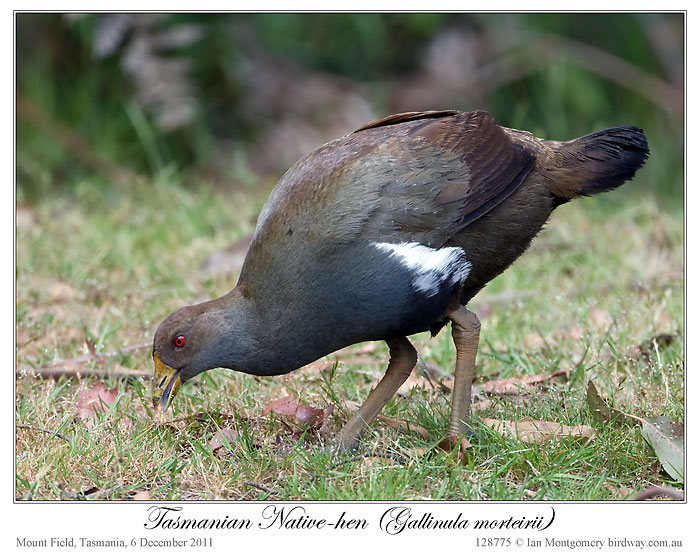
Tasmanian Nativehen (Tribonyx mortierii) by Ian 1

Marjorie Bligh

Wattle Birds

>“Brush each bird with warm butter after plucking them. (Do not clean birds in any other way; their insides are left intact.) Tie a thin slice of fat bacon over each breast. Put in a fry pan (electric) on a wire grid and cook slowly for 5 to 6 hours. Take off wire grid after 3 to 4 hours and cook in the fat that has dripped off them. Baste often. Serve on buttered toast.”

I Googled Marjorie Bligh and sent this reply to Gary:

Did you know that Marjorie Bligh is the subject of a new book entitled: Housewife Superstar: The Very Best of Marjorie Bligh? She sounds quite a woman.

How’s this for praise:

I don’t think Edna has admired anyone as much as she admires Marjorie Bligh’Barry Humphries

Would you like another Tasmanian endemic for next week’s bird?

Gary, not one to resist throwing down the gauntlet, replied: Yes […] would be especially pleased if you could manage the local endemic sub-species of emu.

Emu

Emu

This ‘restoration’ by John Keulemans was the best I could do as the request arrived about 160 years too late. So, failing that, here is another flightless Tasmanian endemic, the Tasmanian Native-hen.

Tasmanian Nativehen (Tribonyx mortierii) by Ian 3

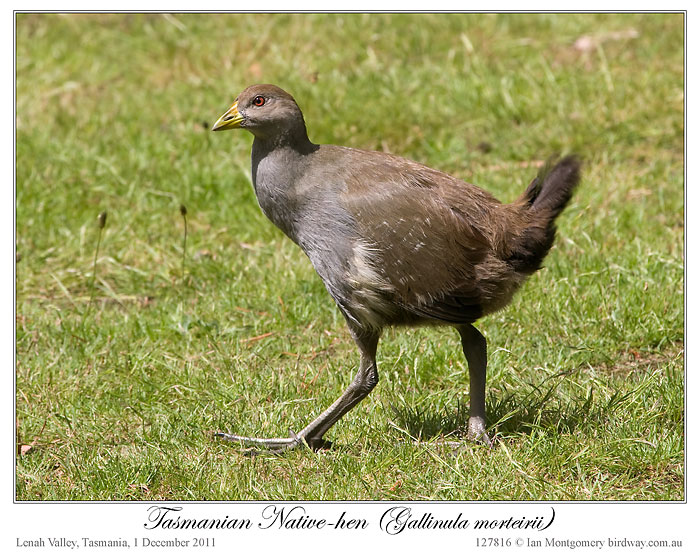
Tasmanian Nativehen (Tribonyx mortierii) by Ian

The bird in the photo is an adult with the characteristic slaty-blue breast, chestnut upper-parts and tail. Unlike the Emu, Tasmanian Native-hens remain quite common in eastern and northern Tasmania where there is plenty of suitable grassy habitat. In pre-historic times they also occurred on the mainland but like the Thylacine and the Tasmanian Devil became extinct relatively recently, perhaps as a result of the introduction of dingos.

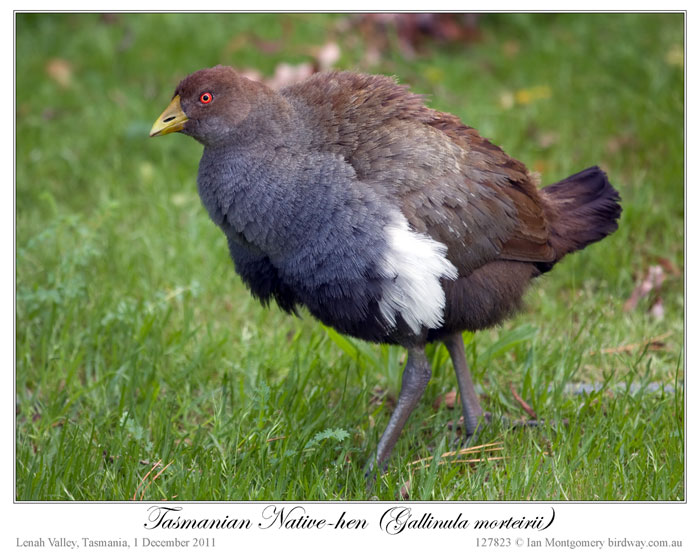
Tasmanian Nativehen (Tribonyx mortierii) by Ian 4

Tasmanian Nativehen (Tribonyx mortierii) by Ian

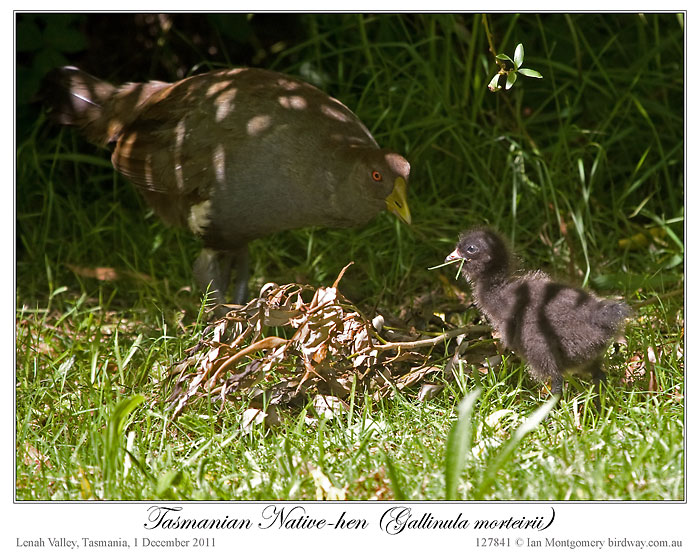
They are large – up to 50 cm/20 in in length – flightless members of the family Rallidae (which includes moorhens, coots, rails and crakes). Although they can’t fly, they can swim well and can dive to escape from predators. Like other members of the family, the chicks are black and fluffy and active as soon as they are hatched. The third photo shows a young chick under the watchful eye of an adult, already grazing on the young shoots of grass and herbs that are the staple diet of the species. They also eat seeds, invertebrates and small frogs.

Tasmanian Nativehen (Tribonyx mortierii) by Ian 5

Tasmanian Nativehen (Tribonyx mortierii) by Ian

The bird in the fourth photo is a sub-adult, and has not yet achieved the full colouration of adult birds.

Tasmanian Nativehen (Tribonyx mortierii) by Ian 6

Tasmanian Nativehen (Tribonyx mortierii) by Ian

I’d always assumed that Native-hens got their name from their appearance. The Wattle Bird recipe has set me wondering whether the name had more to do with taste!

Best wishes,

Ian

**************************************************
Ian Montgomery, Birdway Pty Ltd,
454 Forestry Road, Bluewater, Qld 4818
Tel 0411 602 737 ian@birdway.com.au
Check the latest website updates:
http://www.birdway.com.au/#updates


Lee’s Addition:

Of all clean birds you may eat. (Deuteronomy 14:11 AMP)

I guess we could add this bird to the “clean birds,” but not sure about cooking it with all its innards. The Tasmanian Nativehen is a member of the Rallidae – Rails, Crakes & Coots Family. The only other Nativehen is the Black-tailed one. See all of Ian’s Rallidae Family.

I trust you are enjoying the Newsletters that Ian sends out and lets me post here are the blog. He is quite a photographer and does a lot of traveling to find interesting birds to share. Thank you, Ian.

Check out all the Bird of the Week articles by Ian. He lives down in Australia.

*

Birdwatching at the Jacksonville Zoo by Dan’s Pix

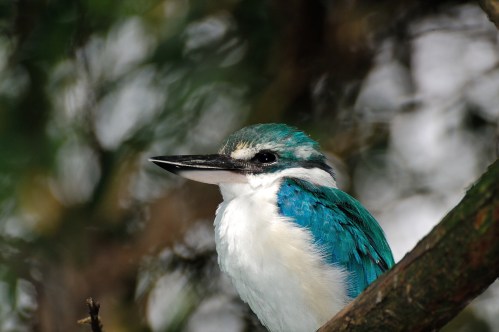
 White-collared Kingfisher by Dan's Pix

Collared Kingfisher by Dan’s Pix

As soon then as they were come to land, they saw a fire of coals there, and fish laid thereon, and bread. Jesus saith unto them, Bring of the fish which ye have now caught. Jesus saith unto them, Come and dine. And none of the disciples durst ask him, Who art thou? knowing that it was the Lord. (John 21:9-12 KJV)

We went on a trip last year and we stopped by the Jacksonville Zoo on the way. Dan recently posted his favorite photos of the zoo on his webpage, Dan’s Pix. I place my photos up on line right away, but he takes time to get them just right before they are posted. That is why his are so much better and the fact that he uses much better photography gear than I do.

I trust you will enjoy them.

Dan at Work at Jacksonville Zoo

Dan at Work at Jacksonville Zoo

Feel free to check out his other great photos – Dan’s Pix home page.

*

Video of 39 Species of Bird-of-paridise by Lab of Ornithology

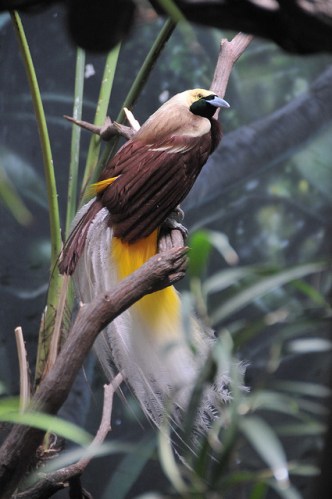
Lesser Bird-of-paradise (Paradisaea minor) ©©

Lesser Bird-of-paradise (Paradisaea minor) ©©

Which doeth great things past finding out; yea, and wonders without number. (Job 9:10 KJV)

Here is a  video of 39 species of Bird-of-Paridise by Lab of Ornithology. They just released it and thought you might enjoy seeing them. There are more YouTubes of them also at Cornell Lab of Ornithology.

Bird-of-Paradise belong to the Paradisaeidae – Birds-of-paradise Family.

*

Enjoy!

*

*

Birds of the Bible – Names Study – Plover

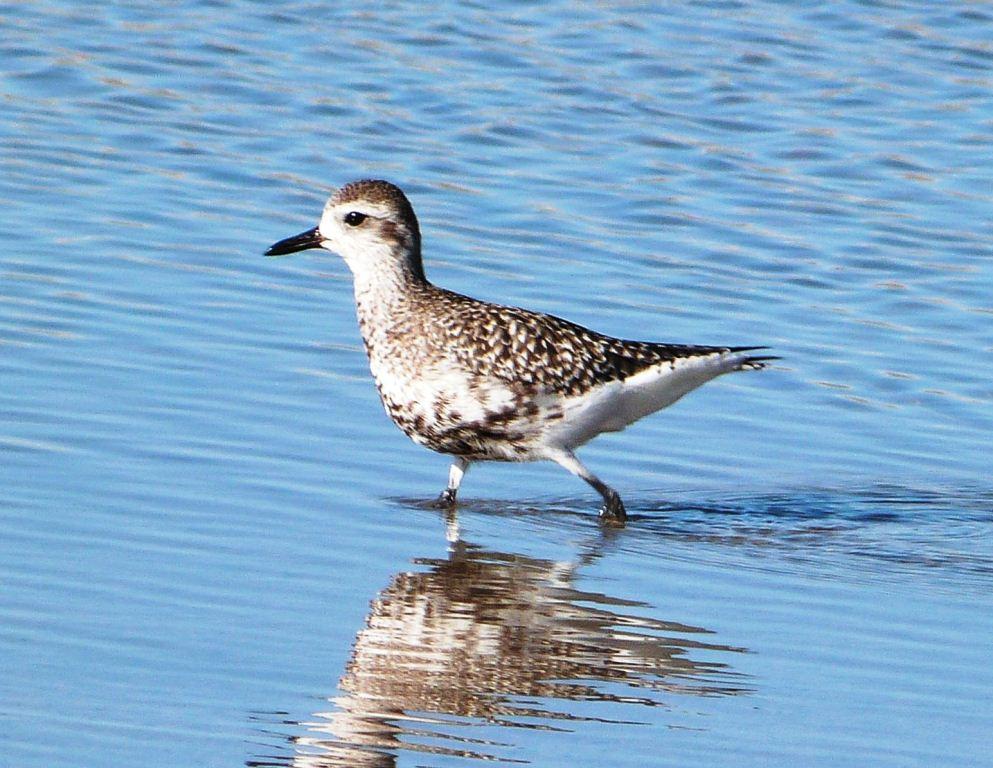
American Golden Plover (Pluvialis dominica) at National Aviary by Lee

American Golden Plover (Pluvialis dominica) at National Aviary by Lee

From the article on Kosher Animals that we have been looking at with our Bird Name Study, the Plover is listed. I haven’t added a page for this bird so far, so let’s see what we can learn about this bird.

Under the Birds section they give a list of birds from the Septuagint and that is where we find the plover listed:

“The Septuagint versions of the lists are more helpful, as in almost all cases the bird is clearly identifiable:

charadrios (plover)”

They show that it appears in the LXX in Deuteronomy 14:18 and in Leviticus 11:19. Of course I can’t read it, but here it is from the LXX-BYZ on my e-Sword.

Deu 14:18 kaiG2532 CONJ pelekana N-ASM kaiG2532 CONJ charadrion N-ASM kaiG2532 CONJ taG3588 T-APN omoiaG3664 A-APN autoG846 D-DSM kaiG2532 CONJ porphuriona N-ASM kaiG2532 CONJ nukterida N-ASF

I do see the word charadrion in it though. Looking at my database of birds from IOC Version 3.2, the CHARADRIIFORMES Order came up. That is the Shorebirds and Allies Order. The Plover is definitely in that group. The Plovers are in the Charadriidae Family. The Plovers are there and also the Lapwings. Yet, checking the compare mode of all the Bible versions loaded, the Plover is not in any other translation. (at least in my English versions that I can read)

That bird is either translated as Lapwing or Hoopoe. This is going to take some more digging. I have already written about both of those birds.

The KJV+ uses H1744

And the stork, H2624 and the heron H601 after her kind, H4327 and the lapwing, H1744 and the bat. H5847 (Deuteronomy 14:18 KJV+)

H1744
דּוּכּיפת
dûkı̂yphath
doo-kee-fath’
Of uncertain derivation; the hoopoe or else the grouse: – lapwing.
Strong’s Hebrew and Greek Dictionaries

*

The BTSCTVM (which combines Brown Driver Briggs, Thayers, the KJV Concordance, and Strong’s TMV) has:

– Original: דּוּכּיפת
– Transliteration: Duwkiyphath
– Phonetic: doo-kee-fath’
– Definition:
1. unclean bird (probably hoopoe)
– Origin: of uncertain derivation
– TWOT entry: 414
– Part(s) of speech: Noun Feminine

– Strong’s: Of uncertain derivation; the hoopoe or else the grouse: – lapwing.
Total KJV Occurrences: 2
• lapwing, 2
Lev_11:19; Deu_14:18

From what is above, there is really no need to make a new Plover page. Since Plovers and Lapwings are in the same family, Charadriidae and many of the Scriptures say frequently, “their kind,” that is exactly what they are. “Same Kinds” (Oh, no! Did you notice they threw the “grouse” into that last definition. Later.)

We have also written about the Hoopoe, which is a totally different Order and Family.

Black-bellied Plover - Ft DeSoto 11-22-12 Thanksgiving by Lee

Black-bellied Plover – Ft DeSoto 11-22-12 Thanksgiving

Plovers are a widely distributed group of wading birds belonging to the subfamily Charadriinae. There are about 40 species in the subfamily, most of them called “plover” or “dotterel”. The closely related lapwing subfamily, Vanellinae, comprises another 20-odd species.

Plovers are found throughout the world, and are characterised by relatively short bills. They hunt by sight, rather than by feel as longer-billed waders like snipes do.

They feed mainly on insects, worms or other invertebrates, depending on habitat, which are obtained by a run-and-pause technique, rather than the steady probing of some other wader groups.

The plover group of birds has a distraction display subcategorized as false brooding, pretending to change position, to sit on an imaginary nest site.

A group of plovers may be referred to as a stand, wing, or congregation. A group of dotterels may be referred to as a trip. (Wikipedia)

Northern Lapwing (Vanellus vanellus) by Nik

Northern Lapwing (Vanellus vanellus) by Nikhil Devasar

The versions of the Bible that list the Lapwing are: AKJV, Bishops, ECB, IAV, KJV, TRC, Tyndale, UKJV, Webster and the YLT.

Here is a very interesting version of Deut. 14:16:

The bittern, and the charadrion, every one in their kind: the houp also and the bat. (Deuteronomy 14:18 DRB)

That version actually mentions the Charadrion and the “houp,” which is the Hoopoe.

If you look through the birds in the Charadriidae Family you will find that the Lord was gracious and omniscient in his creative design of those species. I trust you never tire of studying God’s Word.

In your studies about the birds and other topics in the Bible, don’t forget one of the most important verses:

For God so loved the world, that he gave his only begotten Son, that whosoever believeth in him should not perish, but have everlasting life. (John 3:16 KJV)

*
See:
Birds of the Bible

Gospel Message
*

Ian’s Bird of the Week – Yellow Wattlebird

Yellow Wattlebird (Anthochaera paradoxa) by Ian 1

Yellow Wattlebird (Anthochaera paradoxa) by Ian 1

Ian’s Bird of the Week – Yellow Wattlebird ~ by Ian Montgomery

Newsletter ~ 1/31/13

I was going to use some recent photos of the Little Wattlebird as the bird of the week, but then I found that no Wattlebird has featured as BotW so we may as well start with the most spectacular, the Yellow Wattlebird, endemic to Tasmania where it replaces the Red Wattlebird of southern mainland Australia.

Not only is it the largest of the 4 species of Wattlebird but with a length of 37-45cm/14-18in it is the largest member of the Honeyeater family (Meliphagidae) easily out-classing the largest Friarbird the Helmeted (32-37cm). It also has much longer wattles than it cousin the Red Wattlebird. (Neither the Little nor the closely-related Western Wattlebird have wattles.)

Yellow Wattlebird (Anthochaera paradoxa) by Ian 2

Yellow Wattlebird (Anthochaera paradoxa) by Ian 2

It is reasonably common in its native Tasmania, except along the west coast, and also occurs on King Island in Bass Strait. It feeds mainly on nectar but will also take insects and feed on fruit in orchards. The bird in the third photo is probing under bark for insects or grubs.

Yellow Wattlebird (Anthochaera paradoxa) by Ian 3

Yellow Wattlebird (Anthochaera paradoxa) by Ian 3

All the wattlebirds are very noisy and the Yellow is no exception. Pizzey and Knight describe its call as ‘harsh, gurgling, guttural like coughing/vomiting’ and you can’t get much less flattering than that. Some non-birding friends of mine called Wattlebirds near their holiday cottage ‘Yobbo-birds’ (either Red or Little), which appealed to me and, given that two of the species don’t have wattles, seems to me a much better name. So, herewith the Yellow Yobbobird

Best wishes

Ian
**************************************************
Ian Montgomery, Birdway Pty Ltd,
454 Forestry Road, Bluewater, Qld 4818
Tel 0411 602 737 ian@birdway.com.au
Check the latest website updates:
http://www.birdway.com.au/#updates


Lee’s Addition:

I know all the birds of the mountains, And the wild beasts of the field are Mine. (Psalms 50:11 NKJV)

What an interesting looking bird. I love those wattles hanging down. Wonder if they get in the way or he swings them to attract a mate? When you check out Ian’s Meliphagidae family page you will see that he has really been busy photographing those in that family. He has at least 70 birds listed. Wow! At present there are 184 species and he has 70 of them.

See:

More of Ian’s Bird of the Week Newsletters

Meliphagidae – Honeyeaters  – Here

*

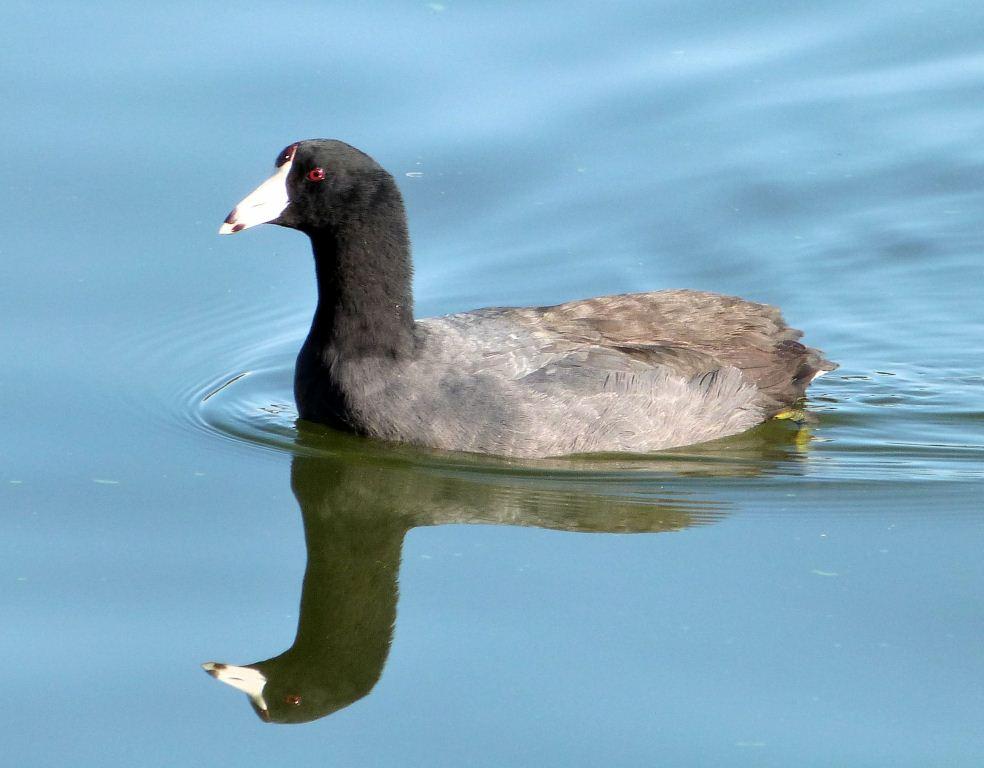
Birdwatching – American Coot

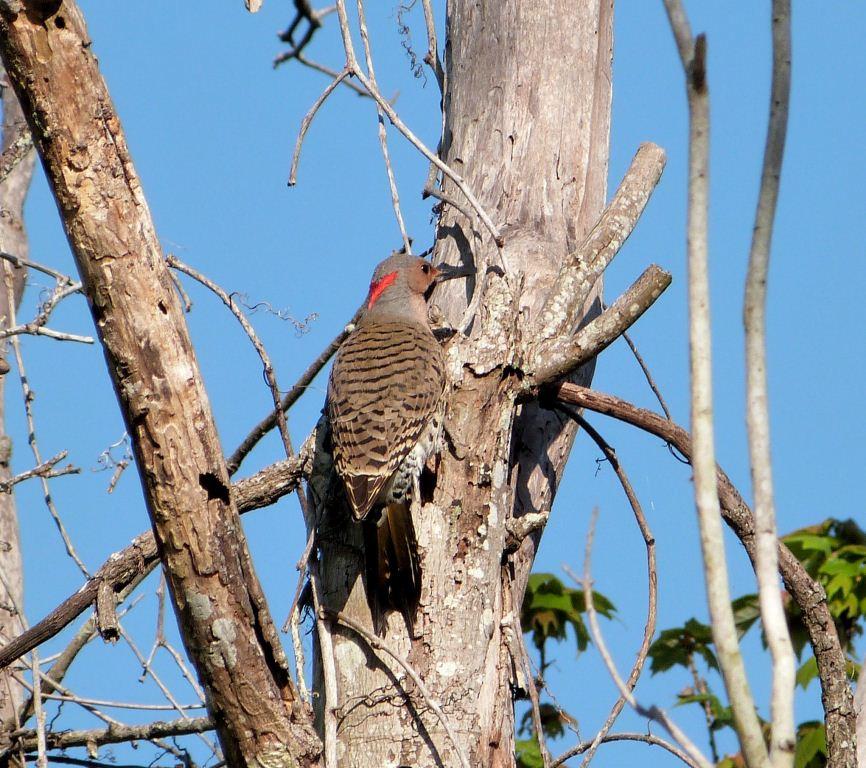
Northern Flicker cropped

Northern Flicker at S. Lake Howard by Lee

Dan and I went birdwatching last week at South Lake Howard Nature Park here in Winter Haven. We just stopped by on the way home from an errand. Captured a Northern Flicker with the camera, but the video is of the Coot’s feet. I have trying to get a photo of them because they are so different from other bird’s feet. Their feet are not webbed, but sort of flattened out. We only see them down here in the winter. See the Wikipedia information below. Apparently it helps them walk on the land, but it seems that a soft soil just under the water would be “squishy” and that may help their footing. Isn’t it neat how the Lord, in Him wisdom, provided for them in such a way.

O LORD, how manifold are your works! In wisdom have you made them all; the earth is full of your creatures. (Psalms 104:24 ESV)

The American Coot (Fulica americana) is a bird of the Rallidae – Rails, Crakes & Coots Family. Though commonly mistaken to be ducks, American Coots come from a distinct family. Unlike ducks, Coots have broad lobes of skin that fold back with each step in order to facilitate walking on dry land. They live near water, typically inhabiting wetlands and open water bodies in North America. Groups of these black-feathered, white-billed birds are called covers or rafts. The oldest known Coot lived to be 22 years old.

The American coot is a migratory bird that occupies most of North American. They live in the Southwestern United States, Mexico, and the pacific coast year round, and only occupy the northeastern regions during the summer breeding season. In the winter they can be found as far south as Panama. They generally build floating nests and lay 8-12 eggs per clutch. American coots eat primarily algae and other aquatic plants but they do eat animals (both vertebrates and invertebrates) when available.

Much research has been done on the breeding habits of American Coots. Studies have found that mothers will preferentially feed offspring with the brightest plume feathers, a characteristic known as chick ornaments. American coots are also susceptible to conspecific brood parasitism, and identify which offspring are theirs and which are from parasitic females.

The American Coot measures 13–17 in (34–43 cm) in length and 23–28 in (58–71 cm) across the wings. Adults have a short thick white bill and white frontal shield, which usually has a reddish-brown spot near the top of the bill between the eyes. Males and females look alike, but females are smaller. Juvenile birds have olive-brown crowns and a gray body. They become adult-colored around 4 months of age

The American Coot has a variety of repeated calls and sounds. Male and female Coots make different types of calls to similar situations. Male alarm calls are “puhlk” while female alarm calls are “poonk”. Also, stressed males go “puhk-cowah” or “pow-ur” while females call “cooah”

See the Sounds page of All About Birds for the American Coot.

American Coots are found near water—reed-ringed lakes and ponds, open marshes, and sluggish rivers. They prefer freshwater environments, but may temporarily live in saltwater environments during the winter months.

The American Coot’s breeding habitat extends from marshes in southern Quebec to the Pacific coast of North America and as far south as northern South America. Birds from temperate North America east of the Rocky Mountains migrate to the southern United States and southern British Columbia. It is often a year-round resident where water remains open in winter. The number of birds that stay year-round near the northern limit of the species’ range seems to be increasing.

Autumn migration occurs from August to December, with males and non-breeders moving south before the females and juveniles. Spring migration to breeding ranges occurs from large February to mid-May, with males and older birds moving North first. There has been evidence of birds travelling as far north as Greenland and Iceland. It is a rare but regular vagrant to Europe. The American Coot is a highly gregarious species, particularly in the winter, when its flocks can number in the thousands. The picture below is just of one group of hundreds at Viera Wetlands that day (2012)

American Coot (Fulica americana) at Viera Wetlands by Lee

American Coot (Fulica americana) at Viera Wetlands by Lee

The American Coot can dive for food but can also forage and scavenge on land. It is omnivorous, eating plant material, arthropods, fish, and other aquatic animals. Its principal source of food is aquatic vegetation, especially algae. During breeding season, Coots are more likely to eat aquatic insects and mollusks—which constitute the majority of a chick’s diet.

The American Coot is a prolific builder and will create multiple structures during a single breeding season. It nests in well-concealed locations in tall reeds. There are three general types of structures: display platforms, egg nests and brood nests. Egg nests are typically 12 inches in diameter with a 12-15 inch ramp that allows the parents to enter and exit without tearing the sides of the nests. Coots will often build multiple egg nests before selecting one to lay their eggs in. Brood nests are nests that are either newly constructed or have simply been converted from old egg nests after the eggs hatch. They are simply larger egg nests. Egg and brood nests are actually elaborate rafts, and must be constantly added to in order to stay afloat. Females typically do the most work while building.

Females deposit one egg a day until the clutch is complete. Eggs are usually deposited between sunset and midnight. Typically, early season and first clutches average two more eggs than second nesting and late season clutches. Early season nests see an average of 9.0 eggs per clutch while late clutches see an average of 6.4 eggs per clutch. There is an inverse relationship between egg weights and laying sequence, wherein earlier eggs are larger than eggs laid later in the sequence. It is possible to induce a female Coot to lay more eggs than normal by either removing all or part of her clutch. Sometimes, a female may abandon the clutch if enough eggs are removed. Coots, however, do not respond to experimental addition of eggs by laying fewer eggs.

Incubation start time in the American Coot is variable, and can begin anywhere from the deposition of the first egg to after the clutch is fully deposited. Starting incubation before the entire clutch has been laid is an uncommon practice among birds. Once incubation starts it continues without interruption. Male and female Coots share incubation responsibility, but males do most of the work during the 21-day incubation period. Females will begin to re-nest clutches in an average of six days if clutches are destroyed during incubation.

Hatch order usually follows the same sequence as laying order. Regardless of clutch size, eight is the typical maximum size of a brood. Egg desertion is a frequent occurrence among Coots because females will often deposit more than eight eggs. Brood size limits incubation time, and when a certain number of chicks have hatched the remaining eggs are abandoned. The mechanism for egg abandonment has not yet been discovered. Food resource constraints may limit the number of eggs parents let hatch, or the remaining eggs may not provide enough visual or tactile stimulation to elicit incubation behavior. An American Coot can be forced to hatch more eggs than are normally laid. These additional offspring, however, suffer higher mortality rates due to inadequacy in brooding or feeding ability.

American Coot (Fulica americana) by Lee at Lk Morton

American Coot (Fulica americana) by Lee at Lk Morton

The American Coot, unlike other parasitized species, has the ability to recognize and reject conspecific parasitic chicks from their brood. Parents aggressively reject parasite chicks by pecking them vigorously, drowning them, preventing them from entering the nest, etc. They learn to recognize their own chicks by imprinting on cues from the first chick that hatches. The first-hatched chick is a reference to which parents discriminate between later-hatched chicks. Chicks that do not match the imprinted cues are then recognized as parasite chicks and are rejected.

Chick recognition reduces the costs associated with parasitism, and Coots are one of only three bird species in which this behavior has been observed. This is because hatching order is predictable in parasitized Coots—host eggs will reliably hatch before parasite eggs. In other species where hatching order is not as reliable, there is a risk of misimprinting on a parasite chick first and then rejecting their own chicks. In these species, the cost of accidentally misimprinting is greater than the benefits of rejecting parasite chicks.

The first evidence for parental selection of exaggerated, ornamental traits in offspring was found in American Coots. Black American Coot chicks have conspicuously orange-tipped ornamental plumes covering the front half of their body that are known as “chick ornaments” that eventually get bleached out after six days. This brightly colored, exaggerated trait makes Coot chicks more susceptible to predation and does not aid in thermoregulation, but remains selected for by parental choice. These plumes are not necessary for chick viability, but increased chick ornamentation increases the likelihood that a chick will be chosen as a favorite by the parents. Experimental manipulation of chick ornamentation by clipping the bright plumes have shown that parents show clear preferences for ornamented chicks over non-ornamented ones.

The American Coot is fairly aggressive in defense of its eggs and, in combination with their protected nesting habitat, undoubtedly helps reduce losses of eggs and young to all but the most determined and effective predators. American Crows, Black-billed Magpies and Forster’s Tern can sometime take eggs. Mammalian predators (including red foxes, coyotes, skunks and raccoons) are even less likely to predate coot nests, though nests are regularly destroyed in usurpation by muskrats. Conversely, the bold behavior of immature and adult coots leads to them falling prey with relative regularity once out of the breeding season. Regular, non-nesting-season predators include Great Horned Owls, Northern Harriers, Bald Eagles, Golden Eagles, American alligators, bobcats, Great Black-backed and California Gulls. In fact, Coots may locally comprise more than 80% of the Bald Eagle diet.

In culture – On the Louisiana coast, the Cajun word for coot is pouldeau, from French for “coot”, poule d’eau – literally “water hen”. Coot can be used for cooking; it is somewhat popular in Cajun cuisine, for instance as an ingredient for gumbos cooked at home by duck hunters.

(From Wikipedia and All About Birds with editing)

See also:

Birdwatching Trips

Rallidae – Rails, Crakes & Coots Family

American Coot – What Bird

American Coot – All About Birds

American Coot – Wikipedia

Birds of the World

*

Birdwatching Behavior – Illustration

American Robin (Turdus migratorius) eating by Jim Fenton

American Robin (Turdus migratorius) eating by Jim Fenton

“A few years ago my mom began feeding the birds on a regular basis in our backyard. At first, some of the birds were greedy. They weren’t sure if there would be enough food to go around. The starlings were especially mean, which doesn’t surprise anyone familiar with birds. They would attack the robins, cardinals, and sparrows that came to get a taste. This situation continued for several months until one day there was a noticeable change in the bird’s behavior.

After years of regular feeding from the unlimited supply, the birds appeared to be less greedy with the food. Now they were feeding at their leisure—realizing there would be more food when their current supply was finished. Then, last month, something even more remarkable happened. After all these months of hording, greed, and then cautiously enjoying, the birds began to demonstrate a nobler characteristic. They began calling for one another at mealtime.

Today, when the seed is spread for the birds, one will call for the others to share what they’ve discovered. The greed is less frequent. The jealous pecking is rare. The trees seem fuller these days with the joy of satisfaction from birds that have learned to share. The music of multiple species fills the air. Now they know the supply is unlimited. And as far as their appetite is concerned, it’s inexhaustible.

Just this morning, I noticed a sparrow feeding right beside a starling. Miracles never cease.

Why can’t this happen in the church?

God’s grace is inexhaustible and we ought to be calling other sinners to the fount where we’ve found refreshment and renewal.”

Charles K. Grant (An Illustration from SermonCentral.com)

All the earth will worship You, And will sing praises to You; They will sing praises to Your name.” Selah. Come and see the works of God, Who is awesome in His deeds toward the sons of men. (Psalms 66:4-5 NASB)

*

Ian’s Bird of the Week – Channel-billed Cuckoo

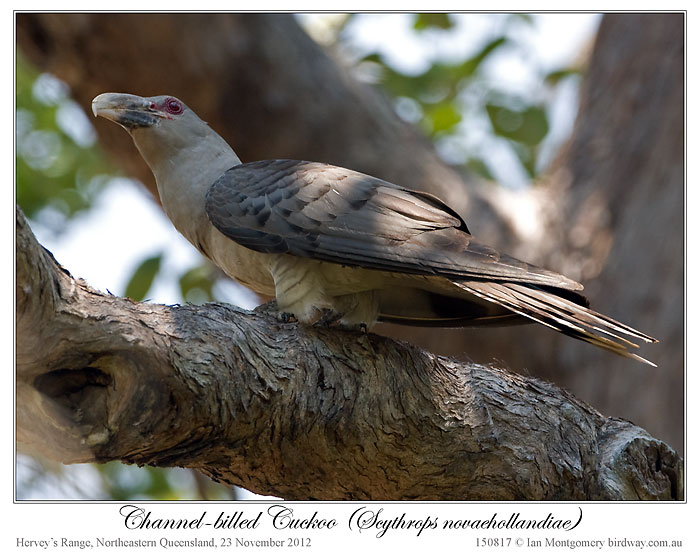
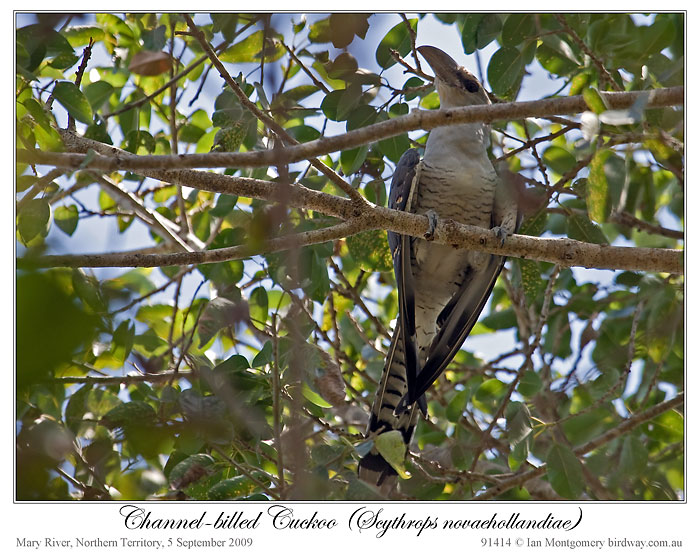
Channel-billed Cuckoo (Scythrops novaehollandiae) by Ian

Channel-billed Cuckoo (Scythrops novaehollandiae) by Ian 1

Ian’s Bird of the Week – Channel-billed Cuckoo ~ by Ian Montgomery

Newsletter ~ 1-21-13

Last week, sorry fortnight, we had the Little Bronze-Cuckoo, the smallest Australian Cuckoo. Here is the Channel-billed Cuckoo, the largest parasitic cuckoo in Australia, and the world for that matter, with a length to 65cm/26in and a weight exceeding 900g/2lbs. (Coucals, such as the Pheasant Coucal , to 75cm, are larger and are now included in the Cuckoo family, but are not parasitic.)

The bird in the first photo is an adult, distinguishable by the grey back (no buff patches) and the red eye and facial skin. The genus name Scythrops means ‘angry eye’ in Greek. The second photo shows a juvenile and you can see the buff patches on the wing, head and throat, though the grey facial skin looks as if it is beginning to acquire the red colour of the adult. This photo was taken in April when the birds would about to migrate to New Guinea.

Channel-billed Cuckoo (Scythrops novaehollandiae) by Ian

Channel-billed Cuckoo (Scythrops novaehollandiae) by Ian 2

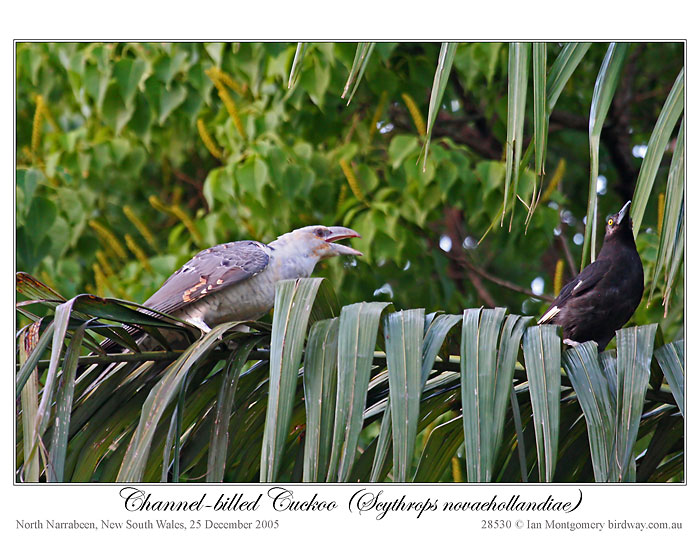
Channel-billed Cuckoos lay their large eggs in the nests of Currawongs, Crows, Ravens, Magpies and even Sparrowhawks. The third photo, which appeared as the bird of the week in 2005, shows a very demanding chick with a very nerve-wracked looking foster parent Pied Currawong in the Sydney Metropolitan Area. The adult Cuckoos may break the eggs of the host bird but the chicks do not usually evict the eggs or chicks. Instead they out-compete them for food.

Channel-billed Cuckoo (Scythrops novaehollandiae) by Ian

Channel-billed Cuckoo (Scythrops novaehollandiae) by Ian 3

Channel-bills are mainly migratory, though some are though to remain in the Northern Territory throughout the winter. The juvenile in the fourth photo was being fed by Torresian Crow foster parents in the Top End in early September, so it would have hatched in July.

Channel-billed Cuckoo (Scythrops novaehollandiae) by Ian

Channel-billed Cuckoo (Scythrops novaehollandiae) by Ian 4

Typically of Cuckoos, Channel-bills are quite shy and usually remain hidden in foliage but their loud trumpeting calls give them away. They do fly in the open, particular before dusk and look very striking – their long tails and long pointed wings look rather raptor-like, though the large bill doesn’t, and they are often likened to flying crosses.

Best wishes
Ian

**************************************************
Ian Montgomery, Birdway Pty Ltd,
454 Forestry Road, Bluewater, Qld 4818
Tel 0411 602 737 ian@birdway.com.au
Check the latest website updates:
http://www.birdway.com.au/#updates


Lee’s Addition:

And the owl, and the night hawk, and the cuckoo, and the hawk after his kind, (Deuteronomy 14:15 KJV)

The Cuckoos are in the Cucuilidae Family and are also one of the Birds of the Bible, listed in the Unclean Birds.


See:

Ian’s Cuckoos, Coucals & Allies

Cucuilidae – Cuckoo Family

Birds of the Bible – Cuckoo

*

Birds of the Bible – Names of Birds Study Introduction

Bald Eagle (Haliaeetus leucocephalus)  by AestheticPhotos

Bald Eagle (Haliaeetus leucocephalus) by AestheticPhotos

There have been several articles here about the Names of the Birds. See:

Now we are going to look at the Names of the Birds from another angle. I received this comment on the Clean vs Unclean blog.

Lee, my search on the topic of clean and unclean birds led met to a Wikipedia article and I discovered that when you look at the Hebrew words (found in the Masoretic text) for the names of various unclean birds, they sound like descriptions, ex. “bone breaker”, “plunger”, “one who darts”, and even “vomiting”. So perhaps the reason we don’t have “clear rules” listed (something I’ve wondered for a long time) is because the traits and characteristics were there all along, but not knowing Hebrew, we had no idea. Anyway, check it out   http://en.wikipedia.org/wiki/Kosher_animals#Birds

It is a very interesting article and will take some digging to discover some more insight into these birds and how they are named. If you have been following this blog, you know that it has been curious to me how the different versions of the Bible have given different names for the birds. Maybe we can solve some of those mysteries. It won’t be done in one article. That is for sure.

First let’s look at some highlights from the Wikipedia article (with editing).

*********************
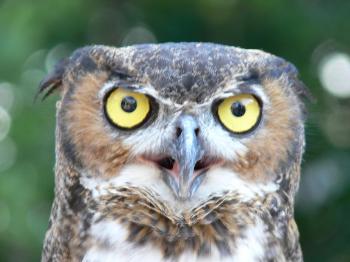
Great Horned Owl - Lowry Pk Zoo by Lee

Great Horned Owl – Lowry Pk Zoo by Lee

Birds

In regard to birds, no general rule is given, and instead Leviticus 11:13-19 and Deuteronomy 14:11-18 explicitly list the prohibited birds: The masoretic text lists the birds as:

  • nesher
  • peres (bone breaker)
  • ozniyah (feminine form of oz, meaning strong)
  • ra’ah ([that which] darts, in the sense of rapid)
  • ayyah
  • oreb
  • bat yaanah (daughter of howling)
  • tahmas ([one who] scratches the face)
  • shahaf ([one which] atrophies)
  • netz
  • kos (cup)
  • shalak (plunger)
  • yanshuf (twilight)
  • tinshemet (blower/breather)
  • qa’at (vomiting)
  • racham (tenderness/affection)
  • hasidah (devoted)
  • anafah ([one which] sniffs sharply, in the sense of anger)
  • dukifat
  • atalef

The list in Deuteronomy has an additional bird, the dayyah, which seems to be a combination of da’ah and ayyah, and may be a scribal error; the Talmud regards it as a duplication of ayyah. This, and the other terms are vague and difficult to translate, but there are a few further descriptions, of some of these birds, elsewhere in the Bible:

  • The ayyah is mentioned again in the Book of Job, where it is used to describe a bird distinguished by its particularly good sight.
  • The bat yaanah is described by the Book of Isaiah as living in desolate places, and the Book of Micah states that it emits a mournful cry
  • The qa’at appears in the Book of Zephaniah, where it is portrayed as nesting on the columns of a ruined city; the Book of Isaiah identifies it as possessing a marshy and desolate kingdom.
  • The septuagint versions of the lists are more helpful, as in almost all cases the bird is clearly identifiable:
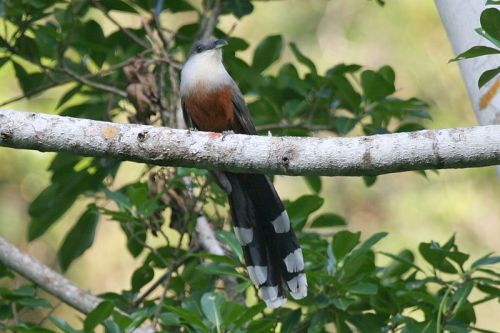
Chestnut-bellied Cuckoo (Coccyzus pluvialis) ©WikiC

Chestnut-bellied Cuckoo (Coccyzus pluvialis) ©WikiC

  • aeton (eagle)
  • grypa (ossifrage)
  • haliaetos (sea-eagle)
  • gyps (vulture)
  • ictinia (kite)
  • corax (raven)
  • stouthios (ostrich)
  • glaux (owl)
  • laros (gull)
  • hierax (hawk)
  • nycticorax (night raven)
  • cataractes (cormorant)
  • porphyrion (“purple [thing]”)
  • cycnos (swan)
  • ibis
  • pelican
  • charadrios (plover)
  • herodios (heron)
  • epops (hoopoe)
  • nycturia (bat)
  • meleagris (guineafowl)

Although the first ten of the birds identified by the Septuagint seem to fit the descriptions of the masoretic text, the ossifrage (Latin for bone breaker) being a good example, the correspondence is less clear for most of the remaining birds; it is also obvious that the list in Leviticus, or the list in Deuteronomy, or both, are in a different order in the Septuagint, compared to the masoretic text. Attempting to determine the correspondence is problematic; for example, the pelican may correspond to qa’at (vomiting), in reference to the pelican’s characteristic behaviour, but it may also correspond to kos (cup), as a reference to the pelican’s jaw pouch. An additional complexity arises from the fact that the porphyrion has not yet been identified, and classical Greek literature merely identifies a number of species that are not the porphyrion, including the peacock, grouse, and robin, and implies that the porphyrion is the cousin of the kingfisher; from these meagre clarifications, the porphyrion can only be identified as anything from the Lilac-breasted Roller, Indian Roller, or Northern Carmine Bee-eater, to the flamingo.

During the Middle Ages, classical descriptions of the hoopoe were mistaken for descriptions of the lapwing, on account of the lapwing’s prominent crest, and the hoopoe’s rarity in England, resulting in lapwing being listed in certain bible translations instead of hoopoe; similarly the sea eagle has historically been confused with the osprey, and translations have often used the latter bird in place of the former. Because strouthos (ostrich) was also used in Greek for the sparrow, a few translations have placed the sparrow among the list. In Arabic, the Egyptian Vulture is often referred to as rachami, and therefore a number of translations render racham as gier eagle, the old name for the Egyptian Vulture.

Variations arise when translations follow other ancient versions of the Bible, rather than the Septuagint, where they differ. Rather than vulture (gyps), the Vulgate has milvus, meaning Red Kite, which historically has been called the glede, on account of its gliding flight; similarly, the Syriac Peshitta has owl rather than ibis. Other variations arise from attempting to base translations primarily on the masoretic text; these translations generally interpret some of the more ambiguous birds as being various different kinds of vulture and owl. All of these variations mean that most translations arrive at a list of 20 birds from among the following (links are to articles already written here):
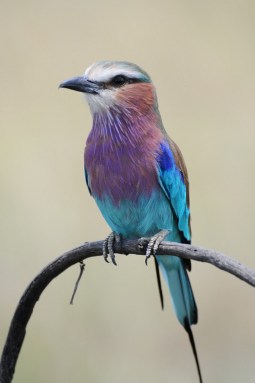
Lilac-breasted Roller (Coracias caudatus) by Bob-Nan

Lilac-breasted Roller (Coracias caudatus) by Bob-Nan

The fruit bat, a frugivorous vegetarian species of bat, eating some fruit

Despite being listed among the birds by the bible, bats are not birds, and are in fact mammals. Most of the remaining animals on the list are either birds of prey or birds living on water, and the majority of the latter in the list also eat fish or other seafood. The Septuagint’s version of the list comprehensively lists most of the birds of Canaan that fall into these categories. The conclusion of modern scholars is that, generally, ritually unclean birds were those clearly observed to eat other animals.

Although it does regard all birds of prey as being forbidden, the Talmud is uncertain of there being a general rule, and instead gives detailed descriptions of the features that distinguish a bird as being ritually clean. The Talmud argues that clean birds would have craws, an easily separated double-skin, and would eat food by placing it on the ground (rather than holding it on the ground) and tearing it with their bills before eating it; however, the Talmud also argues that only the birds in the biblical list are actually forbidden – these distinguishing features were only for cases when there was any uncertainty in the bird’s identity

Origin

The earliest rationalistic explanations of the laws against eating certain birds focused on symbolic interpretations; the first indication of this view can be found in the 1st century BC Letter of Aristeas, which argues that this prohibition is a lesson to teach justice, and is also about not injuring others. Such allegorical explanations were abandoned by most Jewish and Christian theologians after a few centuries, and later writers instead sought to find medical explanations for the rules; Nachmanides, for example, claimed that the black and thickened blood of birds of prey would cause psychological damage, making people much more inclined to cruelty.

However, other cultures treated the meat of certain carnivorous birds as having medical benefits, the Romans viewing Owl meat as being able to ease the pain of insect bites, for example; conversely, modern scientific studies have discovered very toxic birds such as the Pitohui, which are neither birds of prey nor water birds, and therefore the biblical regulations allow them to be eaten. Laws against eating any carnivorous birds also existed in Vedic India and Harran, and the Egyptian priests also refused to eat carnivorous birds.

Modern practical considerations

Due to the difficulty of identification, religious authorities have restricted consumption to specific birds for which Jews have passed down a tradition or permissibility from generation to generation. Birds for whom there has been a tradition of their being kosher include: the sparrow, pigeon, turtle dove, quail, the European and Middle Eastern partridges, the pheasant, ducks, geese, chickens, guineafowl among others. As a general principle, scavenging birds such as vultures and birds of prey such as hawks and eagles (which eat carrion when they find it) are not kosher. Turkey does not have a tradition, but because so many Orthodox Jews have come to eat it and it possesses the simanim (signs) required to render it a kosher bird, an exception is made, but with all other birds a Mesorah (tradition) is required.

Birds such as songbirds, which are consumed as delicacies in many societies, may be kosher in theory, but are not eaten in kosher homes as there is no tradition of them being eaten as such. Pigeons and doves are known to be kosher based on their permissible status as sacrificial offerings in the Temple. Likewise, though swans are kosher in theory if kosher-slaughtered, there is no Jewish tradition of eating them. (from Wikipedia)

***********

Second,  Study is not necessarily a weariness as Ecclesiastes 12:12 says,

And further, by these, my son, be admonished: of making many books there is no end; and much study is a weariness of the flesh. (KJV)

but we should study and even enjoy digging into God’s Word.

Study to shew thyself approved unto God, a workman that needeth not to be ashamed, rightly dividing the word of truth. (2 Timothy 2:15 KJV)

I am going to use my e-Sword program. If you have not used it, it is free and very useful. It has the KJV+ as part of it and it list the Greek and Hebrew words with their definitions. Will you join me in studying about the bird names in the languages of the Bible. Join me as we look at these words and compare them to the birds. Don’t let those weird-looking words scare you. You might find that learning to study about birds, might help you carry the method into studying more of God Word.

Look for future articles in this series.

P.S. A Lilac-breasted Roller is new to me. I can’t wait to find out the connection there.
*

Birds of the Bible

*
Bible Birds – Cranes I

Sarus Crane (Grus antigone) by Lee at Wings of Asia

Sarus Crane (Grus antigone) by Lee at Wings of Asia

The 15 species of Cranes worldwide are: Black Crowned, Black-necked, Brolga, Demoiselle, Eurasian, Grey Crowned, Hooded, Red-Crowned, Sandhill, Sarus(tallest flying bird-6’ tall), Siberian, Wattled, White-naped, and the Whooping Crane (tallest N. American flying bird-5’ tall). The Cranes belong to the Gruidae – Cranes Family.

Cranes are tall birds from 3 to 6 feet tall, with wingspans over 6 feet. The tallest Crane is the Sarus and the shortest is the Demoiselle. They fly with their neck straight out and their long legs trailing. They chatter and call when flying. We have plenty of Sandhill Cranes here in Central Florida walking around the neighborhoods. They seem pretty tame sometimes and will eat out of your hand. They were bringing a small flock of Whooping Cranes to Florida every fall that followed an Ultra Light Aircraft from Wisconsin. We have a few non-migratory Whooping Cranes in the area that I have seen in a cow field off US 27.

Sandhill Cranes and Babies in yard

Sandhill Cranes and Babies in yard

There are only two verses in the Bible that mention the Crane.

Cranes migrate by following known paths taught them by their parents, or substitutes. Migrating birds know when and where to go and when to come. When God created them, He put that information in them.

Like a crane or a swallow, so did I chatter: I did mourn as a dove: mine eyes fail with looking upward: O LORD, I am oppressed; undertake for me. (Isaiah 38:14 KJV)

“So did I chatter – … The idea here is doubtless that of pain that was expressed in sounds resembling that made by birds – a broken, unmeaning unintelligible sighing; or quick breathing, and moaning. ” Barnes Commentary

Yea, the stork in the heaven knoweth her appointed times; and the turtle and the crane and the swallow observe the time of their coming; but my people know not the judgment of the LORD. (Jeremiah 8:7 KJV)

“The instinct of the migratory birds leads them with unfailing regularity to return every spring from their winter abodes in summer climes (Song of Solomon 2:12); but God’s people will not return to Him even when the winter of His wrath is past, and He invites them back to the spring of His favor.” Jameison, Faussett, and Brown Commentary

As you watch the following video notice that the two Bible verses are being demonstrated. Notice the chattering as they fly about and also that they are heading out for their migration to warmer climates. Migration means travel to another area. Usually here in America, the birds go south in the winter and then return north in the spring as it warms back up. This is God’s way of protecting birds that cannot survive in the cold.

Sandhill Cranes(grey) at the Plate River and some Whooping Cranes (white)

See:

On Our Main Site See:

*

Absolutely Amazing Videos of Eagle Receiving A New Beak

How long will the land have grief, and the plants of all the land be dry? because of the sins of the people living in it, destruction has overtaken the beasts and the birds; because they said, God does not see our ways. (Jeremiah 12:4 BBE)

Because of someone shooting a Bald Eagle, which is against the law, this bird was seriously injured.

Below are two video explaining what happened to Beauty, the Bald Eagle, and how they came to make a new beak for her. Enjoy.

*

*

Eagles are one of the Birds of the Bible and are in the Accipitridae – Family (Kites, Hawks & Eagles)

*

Wordless Birds

*