Interesting Things – The Amazing Camel and It’s Creator

What an amazing animal! God did some very special engineering from the git-go! None of this “grocery store” new and improved nonsense. He got it entirely right the first time.

The Amazing Camel and It’s Creator

(From Moody Press)

If you ever doubted that God exists, Meet the Very Technical, Highly Engineered Dromedary Camel.

When I’m hungry, I’ll eat almost anything-A leather bridle, a piece of rope, my master’s tent, Or a pair of shoes.

My mouth is so tough a thorny cactus doesn’t bother it. I love to chow down grass and other plants That grow here on the Arabian desert.

I’m a dromedary camel, the one-hump kind That lives on hot deserts in the Middle East.

My hump, all eighty pounds of it, Is filled with fat-my body fuel-not water as some people believe. My Mighty Maker gave it to me because He knew I wouldn’t always be able to find food As I travel across the hot sands. When I don’t find any chow, my body automatically Takes fat from the hump, feeds my system, And keeps me going strong. This is my emergency food supply.

If I can’t find any plants to munch, my body uses up my hump. When the hump gets smaller, it starts to tip to one side. But when I get to a nice oasis and begin to eat again, My hump soon builds back to normal.

I’ve been known to drink twenty-seven gallons of water in ten minutes. My Master Designer made me in such a fantastic way that In a matter of minutes all the water I’ve swallowed Travels to the billions of microscopic cells that make up my flesh.

Naturally, the water I swallow first goes into my stomach. There thirsty blood vessels absorb and carry it to every part of my body. Scientists have tested my stomach and found it empty Ten minutes after I’ve drunk twenty gallons.

In an eight hour day I can carry a four hundred pound load A hundred miles across a hot, dry desert And not stop once for a drink or something to eat. In fact, I’ve been known to go eight days without a drink, But then I look a wreck. I lose 227 pounds, my ribs show through my skin, And I look terribly skinny. But I feel great! I look thin because the billions of cells lose their water. They’re no longer fat. They’re flat.

Normally my blood contains 94 percent water, just like yours. But when I can’t find any water to drink, The heat of the sun gradually robs a little water out of my blood. Scientists have found that my blood can lose up to 40 percent of its water, and I’m still healthy.

Doctor’s say human blood has to stay very close to 94 percent water. If you lose 5 percent of it, you can’t see anymore; 10 percent, you can’t Hear and you go insane; 12 percent, your blood is as thick as molasses And your heart can’t pump the thick stuff. It stops, and you’re dead.

But that’s not true with me. Why? Scientists say my blood is different. My red cells are elongated. Yours are round. Maybe that’s what makes the difference.

This proves I’m designed for the desert, Or the desert is designed for me. Did you ever hear of a design without a Designer?

After I find a water hole, I’ll drink for about ten minutes And my skinny body starts to change almost immediately. In that short time my body fills out nicely, I don’t look skinny anymore, And I gain back the 227 pounds I lost.

Even though I lose a lot of water on the desert, My body conserves it too. Way in the beginning when my intelligent Engineer made me, He gave me a specially designed nose that saves water. When I exhale, I don’t lose much. My nose traps that warm, moist air from my lungs And absorbs it in my nasal membranes.

Tiny blood vessels in those membranes take that back into my blood. How’s that for a recycling system? Pretty cool, isn’t it. It works because my nose is cool. My cool nose changes that warm moisture in the air From my lungs into water.

But how does my nose get cool? I breath in hot dry desert air, And it goes through my wet nasal passages. This produces a cooling effect, and my nose stays as much as 18 degrees cooler than the rest of my body.

I love to travel the beautiful sand dunes. It’s really quite easy, because My Creator gave me specially engineered sand shoes for feet. My hooves are wide, and they get even wider when I step on them. Each foot has two long, bony toes with tough, leathery skin between my soles, are a little like webbed feet.

They won’t let me sink into the soft, drifting sand. This is good, because often my master wants me to carry him one hundred miles across the desert in just one day. (I troop about ten miles per hour.)

Sometimes a big windstorm comes out of nowhere, bringing flying sand with it. My Master Designer put special muscles in my nostrils that close the openings, keeping sand out of my nose but still allowing me enough air to breathe.

My eyelashes arch down over my eyes like screens, keeping the sand and sun out but still letting me see clearly. If a grain of sand slips through and gets in my eye, the Creator took care of that too. He gave me an inner eyelid that automatically wipes the sand off my eyeball just like a windshield wiper.

Some people think I’m conceited because I always walk around with my head held high and my nose in the air.

But that’s just because of the way I’m made. My eyebrows are so thick and bushy I have to hold my head high to peek out from underneath them. I’m glad I have them though. They shade my eyes from the bright sun.

Desert people depend on me for many things. Not only am I their best form of transportation, but I’m also their grocery store. Mrs. Camel gives very rich milk that people make into butter and cheese. I shed my thick fur coat once a year, and that can be woven into cloth. A few young camels are used for beef, but I don’t like to talk about that.

For a long time we camels have been called the “ships of the desert” because of the way we sway from side to side when we trot. Some of our riders get seasick.

I sway from side to side because of the way my legs work. Both legs on one side move forward at the same time, elevating that side. My “left, right left, right” motion makes my rider feel like he is in a rocking chair going sideways.

When I was six months old, special knee pads started to grow on my front legs. The intelligent Creator knew I had to have them. They help me lower my 1000 pounds to the ground.

If I didn’t have them, my knees would soon become sore and infected, and I could never lie down. I’d die of exhaustion.

By the way, I don’t get thick knee pads because I fall on my knees. I fall on my knees because I already have these tough pads. Someone very great thought of me and knew I needed them. He designed them into my genes.

It’s real difficult for me to understand how some people say I evolved into what I now am. I’m very technical, highly engineered dromedary camel. Things like me don’t just happen.

They’re planned on a drawing board by Someone very brilliant, Someone very logical.

John 1:1 says,
“In the beginning was the Word.
And the Word was with God,
and the Word was God.”
The Word means “logical, intelligent One.”

(Received in an e-Mail, but found it on the Lakeside Church of Christ website. Not sure who to give the credit to. Could not find it on the Moody site. We do know the ultimate credit goes to – The Creator.)

Birds of the Bible – Cuckoo III

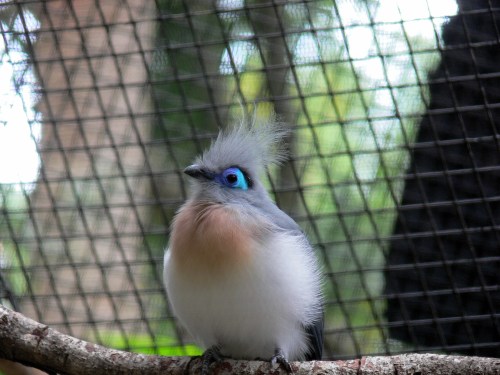
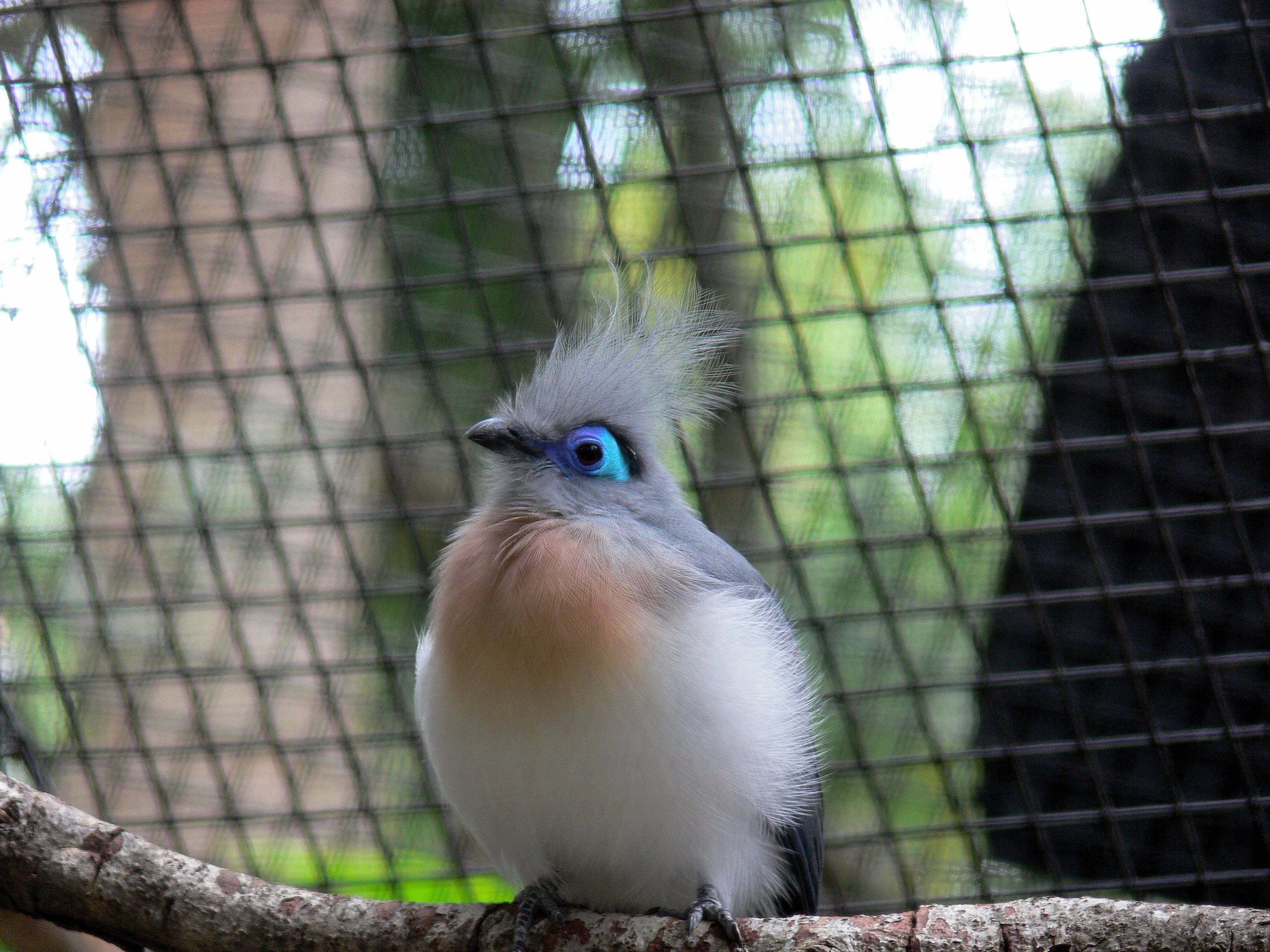
Crested Coua (Coua cristata) by Lee LPZ

Crested Coua (Coua cristata) by Lee Lowry Park Zoo

And the owl, and the night hawk, and the cuckow, and the hawk after his kind, (Leviticus 11:16 KJV)

What an interesting Family to which the Cuckoo belongs. Having posted Ian’s Bird of the Week – Little Bronze Cuckoo yesterday, I worked on the Cuckoo – Cuculidae Family to find some more photos. There are a few missing photos, but some of them are of endangered or rarely seen birds. There are some interesting species and some beautiful one also. The Coua genus have the most beautiful eyes. They remind me of the Egyptian Eyes on statues and paintings. We get to see the Crested Coua every time we go over to the Lowry Park Zoo in Tampa. We have to photograph through the mesh, but this one of my better attempts. (See Above) Click through these links and you will see some of the Lord’s Creative Hand at work.

Crested Coua (Coua cristata) by Lee at LowryPkZoo – *LLABS*
Verreaux’s Coua (Coua verreauxi) IBC
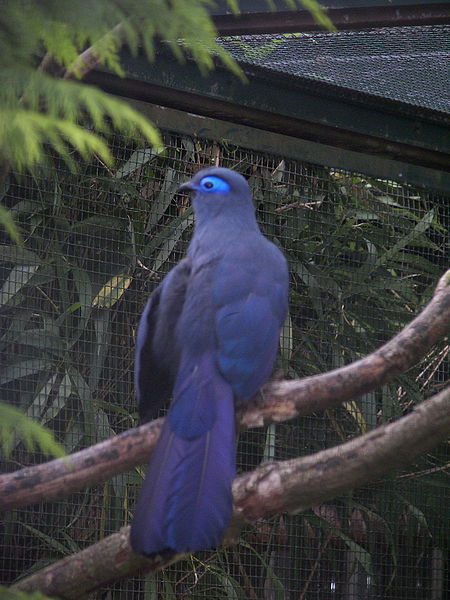
Blue Coua (Coua caerulea) ©WikiC
Red-capped Coua (Coua ruficeps) IBC
Red-fronted Coua (Coua reynaudii) IBC
Coquerel’s Coua (Coua coquereli) IBC
Running Coua (Coua cursor) IBC
Giant Coua (Coua gigas) WikiC
Red-breasted Coua (Coua serriana) IBC

Aren’t they amazing? Wow! At least I think they are.

In Birds of the Bible – Cuckoo II it was explained how Leviticus 11:16 and Deuteronomy 14:15 uses Cuckow, Cuckoo, Sea-gull, Sea-hawk in the different versions. I have since added several more Bible Translations to my e-Sword program, so lets see if anything new shows up. The “cuckow” is in the AKJV, “sea gull” in the AMP, the “coockowe” in the Bishops, CJB calls it the “seagull”, Geneva has “seameaw”, the Tyndale calls it a “cocow” and UKJV the “cuckoo.” Seems that it is still split between the same birds. Thus they get to be one of our Birds of the Bible to study.

As mentioned before, it gives us a chance to learn about the many birds that we are blessed with and a reason to concentrate on this family. Notice that both references mention after their kind:

And the owl, and the night hawk, and the cuckow, and the hawk after his kind, (Deuteronomy 14:15 KJV)

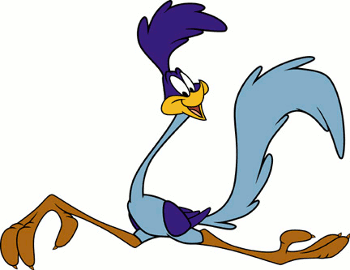
The whole family of the Cuculidae includes not only the Cuckoo, but also the Ani, Roadrunner, Ground, Bronze, Coucal, Coua, Malkoha, Koel, Bronze Cuckoo, Long-tailed Cuckoo, Hawk-Cuckoo, Drongo-Cuckoo, and Lizard Cuckoos. Most in America are familiar with the Roadrunner if by no other way than by Wile E Coyote who is always chasing the Roadrunner in the Looney Tune Cartoons.

Wile E Coyote  - Looney Tunes ”©WikiC

Wile E Coyote – Looney Tunes ”©WikiC

Roadrunner - Looney Tunes ”©WikiC

Roadrunner – Looney Tunes ”©WikiC

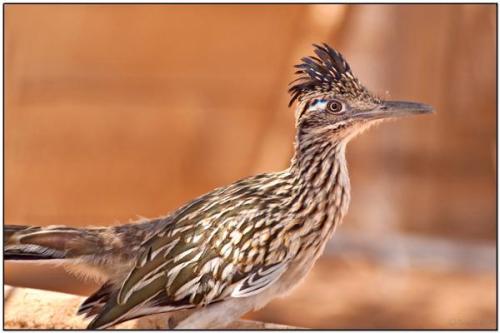
Here is a real Roadrunner:

Greater Roadrunner (Geococcyx californianus) by Daves BirdingPix

Greater Roadrunner (Geococcyx californianus) by Daves BirdingPix

Notice the Eyes even on a Roadrunner. Roadrunners are fast-running birds that have  long tails and a crests. The birds are found in southwestern United States and Mexico. They range from 18-22 in. (46-56 cm) from the beak to the tail. Speeds of up to 20 miles per hour (32 km/h) have been reported. They can fly, but prefer to sprint instead.

More about this family later. Thought you might enjoy seeing some more of our Birds of the Bible that are here to enjoy and be blessed by from the Hand of the Lord.

See also:

Sharing The Gospel

*

Your First Bird Sighted in 2013 – Please Comment

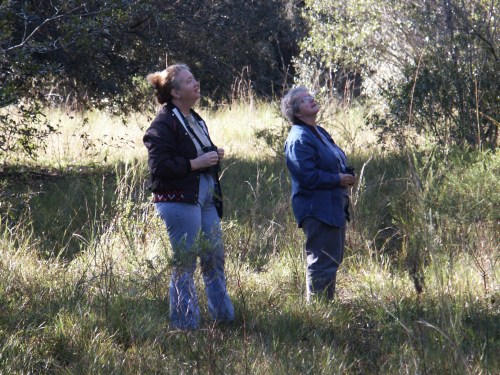
Marian (Naturalist at Avon Park Range) and Lee 2004

Marian (Naturalist at Avon Park Range) and Lee 2004

I beseech you therefore, brethren, by the mercies of God, that you present your bodies a living sacrifice, holy, acceptable to God, which is your reasonable service. And do not be conformed to this world, but be transformed by the renewing of your mind, that you may prove what is that good and acceptable and perfect will of God. (Romans 12:1-2 NKJV)

Well here we are at the end of 2012 and the beginning of 2013. Wow! What a fast year, now we get to renew ourselves and start afresh with a new list of birds for the year.

What will it be? The first one you sight. Will it be an old familiar friend or something new to you? Let us know what you see. Please leave a comment and tell us your first bird of 2013. You might even tell us your last bird of 2012. As I write this, it is only 9:00 am on Dec 31st, but some of you around the world are all ready celebrating the new year.

When you leave your bird sighted, tell us at least where you are, even if it is only your country. If you don’t see Comments on the page, click the Leave a Comment at the end of the article and it will take you to the full article.

I am excited to read about your first (and last) birds from around the world. I will post mine as soon as I spot them in the morning.

HAPPY NEW YEAR AND LORD BLESS YOU!

Wordless Birds

*

Birds of the Bible – Roseate Spoonbill

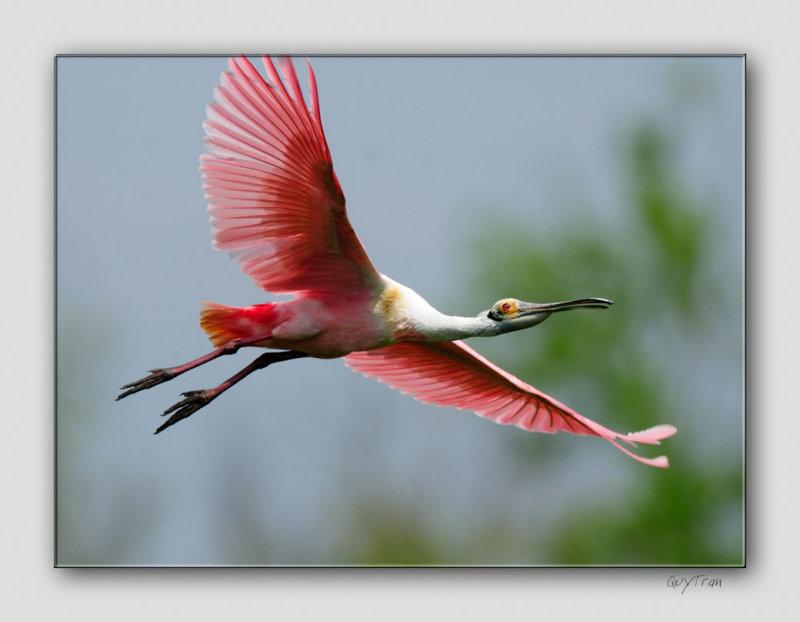
Roseate Spoonbill (Platalea ajaja) by Quy Tran

Roseate Spoonbill (Platalea ajaja) by Quy Tran

Birds of the Bible – Roseate Spoonbill

The Roseate Spoonbill is a member of the Threskiornithidae – Ibises, Spoonbills Family. We see them quite often in this area, especially in the Fall and Winter time.  I am always thrilled when we come upon them in our birdwatching adventures. Their cousins, Ibises, are a Bird of the Bible.

Then God said, “Let the waters abound with an abundance of living creatures, and let birds fly above the earth across the face of the firmament of the heavens.” So God created great sea creatures and every living thing that moves, with which the waters abounded, according to their kind, and every winged bird according to its kind. And God saw that it was good. And God blessed them, saying, “Be fruitful and multiply, and fill the waters in the seas, and let birds multiply on the earth.” So the evening and the morning were the fifth day. (Genesis 1:20-23 NKJV)

Since the Lord created all the birds, this is one of His neater creations, at least in my opinion. Their spoon-shaped bill is sort of unique to the birds. There are actually five other Spoonbills besides the Roseate.

The Roseate Spoonbill is 28–34 in (71–86 cm) long, with a  47–52 in (120–133 cm) wingspan and a weigh 2.6–4.0 lb (1.2–1.8 kg). The legs, bill, neck and spatulate bill all appear elongated. Adults have a bare greenish head (“golden buff” when breeding) and a white neck, back, and breast (with a tuft of pink feathers in the center when breeding), and are otherwise a deep pink. The bill is grey. There is no significant sexual dimorphism.

Like the American Flamingo, their pink color is diet-derived, consisting of the carotenoid pigment canthaxanthin. Another carotenoid, astaxanthin, can also be found deposited in flight and body feathers. The colors can range from pale pink to bright magenta, depending on age and location. Captive Spoonbill are fed their normal diets, plus some include juices made from carrots.

Unlike herons, spoonbills fly with their necks outstretched. They alternate groups of stiff, shallow wingbeats with glides.

Spoonbills feeding in a pond by the school. Cloudy day. Not the best, but you can see their eating behavior. Taken by me.

This species feeds in shallow fresh or coastal waters by swinging its bill from side to side as it steadily walks through the water, often in groups. The spoon-shaped bill allows it to sift easily through mud. It feeds on crustaceans, aquatic insects, frogs, newts and very small fish ignored by larger waders. In the United States a popular place to observe Roseate Spoonbills is “Ding” Darling National Wildlife Refuge in Florida. (Also at Circle B Bar Reserve as you can see by the list below of some of my sighting on e-Bird) Roseate Spoonbills must compete for food with Snowy Egrets, Great Egrets, Tricolored Herons, and American White Pelicans.

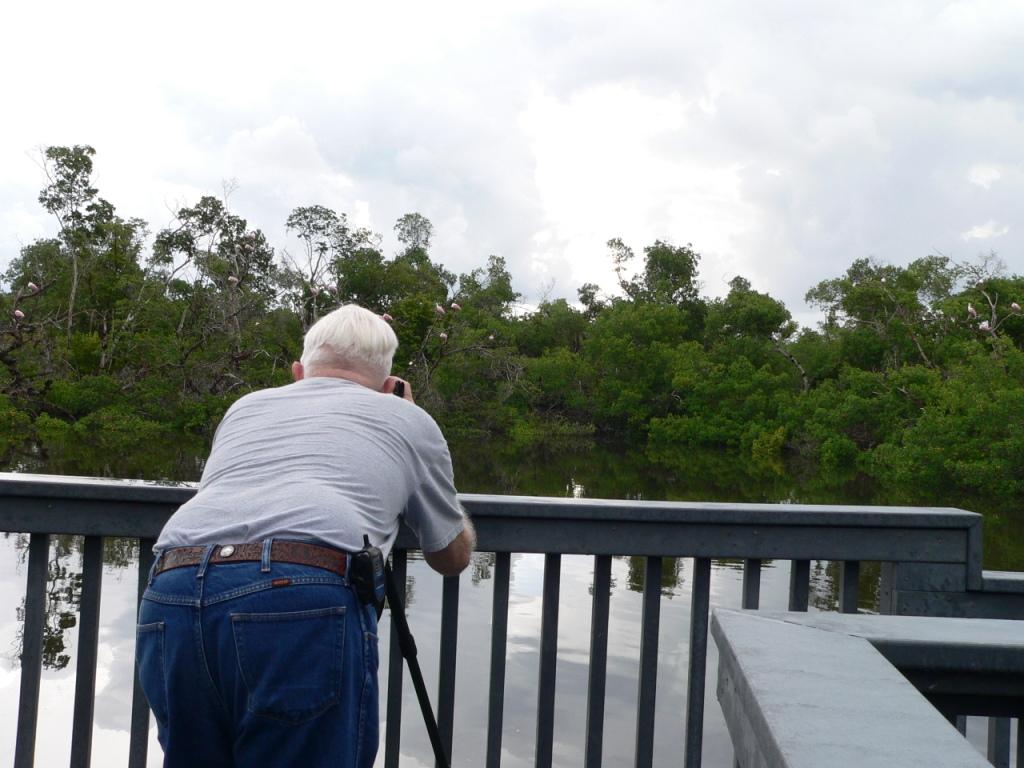
We came upon a group of them roosting at Ding” Darling National Wildlife Refuge. It was the first time I had seen that many in one place and so close to us.

Enlarge - Count at least 20 Spoonbills

Roseate Spoonbills at Ding Darling NWR – Dan at work.

The Roseate Spoonbill nests in shrubs or trees, often mangroves, laying 2 to 5 eggs, which are whitish with brown markings. Immature birds have white, feathered heads, and the pink of the plumage is paler. The bill is yellowish or pinkish.

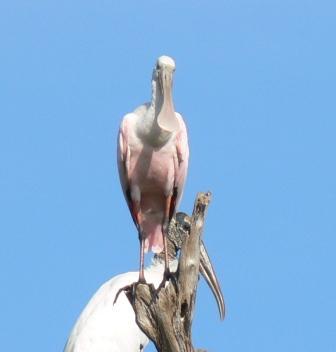
Here is one I caught in a tree at Circle B Bar Reserve:

Roseate Spoonbill and Wood Stork by Lee

Roseate Spoonbill and Wood Stork by Lee

What prompted writing about one of the bird friends I always enjoy seeing, is an article about the Roseate Spoonbill in one of my latest additions of BirdWatching. It’s a great magazine and I am not condemning it. I am used to “reading around the evolutionary influences” in articles about birds. But I was offended by this remark, “It’s hard not to look at the Roseate Spoonbill in the Everglades and think, ‘What happened here:’ Amid the herons and cormorants, the spoonbill seems like an evolutionary hiccup, a failed experiment.

One, the Roseate Spoonbill is far from an “evolutionary hiccup!” It hasn’t evolved, it was created by a loving all knowing Creator, that knew exactly what He was doing. Two, it definitely was not a “failed experiment.” The way the bill is designed and the sensitivity of its touch is amazing. The Lord promised to provide for all His creatures as well as His own people. Nor are we “hiccups.” We are all created by him, but there are differences and varieties in the birds just as there is in our talents and abilities.

I know all the birds of the mountains, And the wild beasts of the field are Mine. (Psalms 50:11 NKJV)

Look at the birds of the air, for they neither sow nor reap nor gather into barns; yet your heavenly Father feeds them. Are you not of more value than they? (Matthew 6:26 NKJV)

All the birds of the heavens made their nests in its boughs; Under its branches all the beasts of the field brought forth their young; And in its shadow all great nations made their home. (Ezekiel 31:6 NKJV)

(Wikipedia and other internet resources consulted)

See:

Birds of the Bible

Birds of the Bible – Ibises

Bible Birds – Ibises

Birds of the Bible – Isaiah 34:11

Birds of the World – Threskiornithidae – Ibises, Spoonbills

World – Life Observations – Roseate Spoonbill

  Location Date
1 Roseate Spoonbill Corpus Christi 8-Nov-01
2 Roseate Spoonbill Circle B Bar Reserve 9-Feb-07
3 Roseate Spoonbill Viera Wetlands 20-Nov-07
4 Roseate Spoonbill Merritt Island NWR–Black Point Wildlife Dr. 22-Nov-07
5 Roseate Spoonbill Circle B Bar Reserve 10-May-08
6 Roseate Spoonbill Lake John Rookery 15-May-08
7 Roseate Spoonbill J. N. Ding Darling NWR 15-Jul-08
8 Roseate Spoonbill Circle B Bar Reserve 1-Nov-08
9 Roseate Spoonbill 6 Circle B Bar Reserve 28-Nov-08
10 Roseate Spoonbill 16 Merritt Island NWR–Black Point Wildlife Dr. 20-Jan-09
11 Roseate Spoonbill 3 Circle B Bar Reserve 24-Feb-09
12 Roseate Spoonbill 4 Circle B Bar Reserve 10-Mar-09
13 Roseate Spoonbill 15 Circle B Bar Reserve 24-Oct-09
14 Roseate Spoonbill 15 Circle B Bar Reserve 23-Dec-09
15 Roseate Spoonbill 5 Hillsborough 4-Feb-10
16 Roseate Spoonbill 1 MacDill AFB 31-Jan-11
17 Roseate Spoonbill 1 Lake Parker Park 7-Jan-12
18 Roseate Spoonbill 3 Circle B Bar Reserve 16-Jan-12
19 Roseate Spoonbill 2 Picnic Island Beach 24-Jan-12
20 Roseate Spoonbill 1 Lake Hollingsworth 26-Jan-12
21 Roseate Spoonbill 3 MacDill AFB 16-Aug-12
22 Roseate Spoonbill 3 Circle B Bar Reserve 10-Nov-12

*

Ian’s Bird of the Week – Mistletoebird

 Mistletoebird (Dicaeum hirundinaceum) by Ian 1

Mistletoebird (Dicaeum hirundinaceum) by Ian 1

Ian’s Bird of the Week – Mistletoebird ~ by Ian Montgomery

Newsletter ~ 12/23/12

As an ex-pat, I’ve never really got used to a hot Christmas in Australia. Here we sing carols about open sleighs, holly and ivy and the shops decorate their windows with fake snow, but it all seems a little contrived when the temperature is 31.4ºC/88.5ºF, the average maximum daily temperature for December in Townsville. We do, however, have mistletoe – lots of of growing on Eucalyptus trees – and, even better, Mistletoebirds, so I’ve chosen it as our Christmas bird of the week. It has featured as bird of the week before (August 2003 and June 2004) but originality is not a conspicuous feature of Christmas.

What were you doing under the Mistletoe on Christmas Day 2007? I was photographing the male Mistletoebird in the first photo gorging on a luscious Christmas lunch of Mistletoe berry. They’re tiny birds (9.5-11cm/3.75-4.3in) but have huge appetites, mistletoe berries not being very nutritious but they do the mistletoe a service by depositing rapidly-digested seed-containing excreta on the branches of the host trees. They’ll also eat the fruit of other plants (the fruits in photos 2 and 3 are not mistletoe), nectar and insects.

Mistletoebird (Dicaeum hirundinaceum) by Ian 2

Mistletoebird (Dicaeum hirundinaceum) by Ian 2

The males are striking with their Christmassy red breasts and vents, and blackish-blue iridescent backs and the specific name hirundinaceum means ‘swallow-like’, Hirunda being the generic name for typical swallows. The females (third photo) are a more subtle grey, but have reddish vents.

Mistletoebird (Dicaeum hirundinaceum) by Ian 3

Mistletoebird (Dicaeum hirundinaceum) by Ian 3

Mistletoebirds build exquisite pouch-shaped hanging nests and the fourth photo shows the young take after their parents in continually wanting food. Their nests are similar to those of Sunbirds and they are often placed in the same family Nectarinidae. Mistletoebirds are actually Flowerpeckers (Dicaeum) and are sometimes put in their own family, the Dicaeidae.

Mistletoebird (Dicaeum hirundinaceum) by Ian 4

Mistletoebird (Dicaeum hirundinaceum) by Ian 4

Being so unChristmassy here, I find that it sneaks up me un-noticed. Last year, all my Christmas cards arrived late, so my New Year Resolution was to not send any more and the money saved is going to the Australian Wildlife Conservancy, which I think has the best record for conservation and reserve management in Australia. So, I wish you an electronic Very Peaceful Christmas and a Lovely New Year. Just remember the Mistletoebird and its appetite when you contemplate the third helping of Christmas pudding tomorrow!

Ian

**************************************************
Ian Montgomery, Birdway Pty Ltd,
454 Forestry Road, Bluewater, Qld 4818
Tel 0411 602 737 ian@birdway.com.au
Check the latest website updates:
http://www.birdway.com.au/#updates


Lee’s Addition:

How appropriate is Ian’s photos of a neat little bird that loves Mistletoe. Thanks, Ian, and Merry Christmas to you also.

The Mistletoebird belongs to the Dicaeidae – Flowerpeckers Family. Also Ian’s Birdway photos for Dicaeidae, Nectariniidae & Promeropidae.

See more Ian’s Bird of the Week articles

*

Birds in Christmas Hymns – The Day The Christ-Child’s Tender Eyes (Re-post)

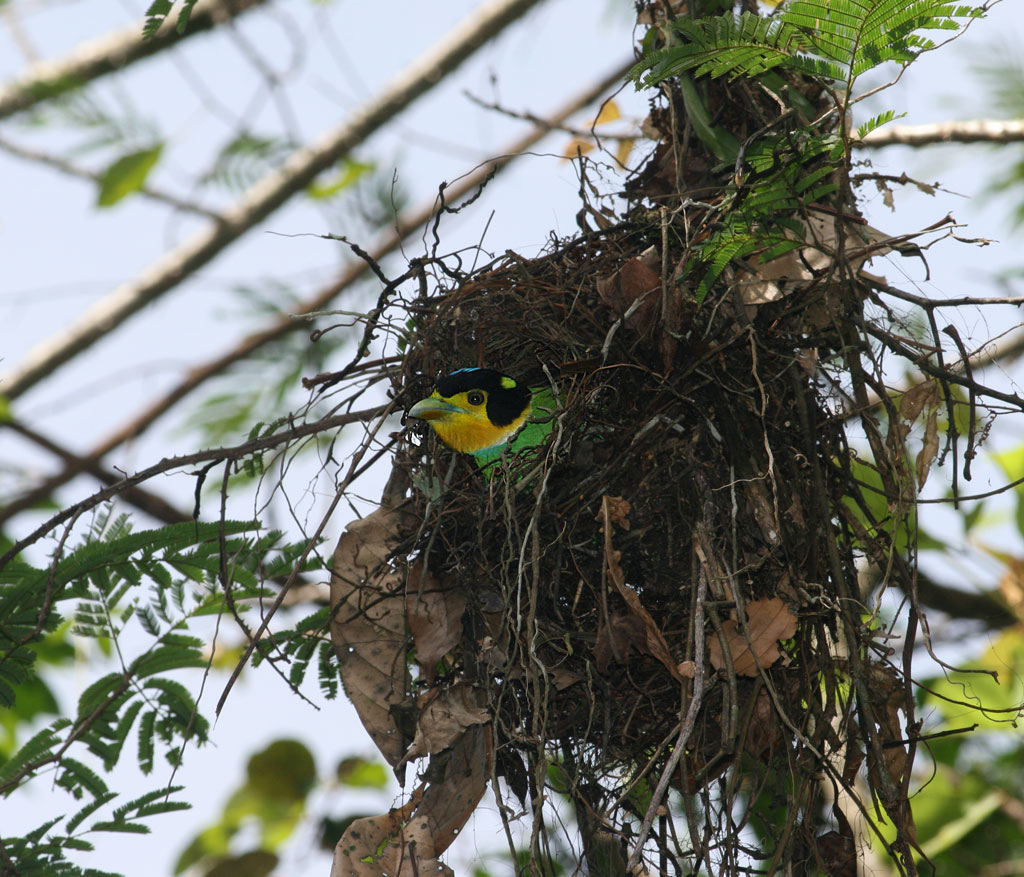
Long-tailed Broadbill (Psarisomus dalhousiae) in nest by Peter Ericsson

Long-tailed Broadbill (Psarisomus dalhousiae) in nest by Peter Ericsson

And when they were come into the house, they saw the young child with Mary his mother, and fell down, and worshipped him: and when they had opened their treasures, they presented unto him gifts; gold, and frankincense, and myrrh. (Matthew 2:11 KJV)

Words by May R. Smith (1842-1927).

Music: St. Pe­ters­burg, at­trib­ut­ed to Dmi­tri S. Bort­ni­an­sky (1751-1825), 1825

Birds in Christmas Hymns

Birds in Christmas Hymns

The Day The Christ-Child’s Tender Eyes

The day the Christ-child’s tender eyes
Unveiled their beauty on the earth,
God lit a new star in the skies
To flash the message of His birth;
And wise men read the glowing sign,
And came to greet the Child divine.

Low kneeling in the stable’s gloom,
Their precious treasures they unrolled;
The place was rich with sweet perfume;
Upon the floor lay gifts of gold.
And thus adoring they did bring
To Christ the earliest offering.

I think no nimbus wreathed the head
Of the young King so rudely throned;
The quilt of hay beneath Him spread
The sleepy kine beside Him owned;
And here and there in the torn thatch
The sky thrust in a starry patch.

Oh, when was new-born monarch shrined
Within such canopy as this?
The birds have cradles feather lined;
And for their new babes princesses
Have sheets of lace without a flaw,
His pillow was a wisp of straw!

He chose this way, it may have been,
That those poor mothers, everywhere,
Whose babies in the world’s great inn
Find scanty cradle-room and fare,
As did the Babe of Bethlehem,
May find somewhat to comfort them.

Mute Swan on Nest at Lake Morton

Mute Swan on Nest at Lake Morton by Dan

May Riley Smith (1842-1927) – Smith at­tend­ed the Tra­cey Fe­male In­sti­tute in Ro­ches­ter, and the Col­le­gi­ate In­sti­tute in Brock­port, New York. She mar­ried Al­bert Smith of Spring­field, Il­li­nois, in 1869; they were liv­ing in New York state in 1910. Her works in­clude:

The Gift of Gen­ti­ans, 1882
The Inn of Rest, 1888
Sometime and Other Po­ems, 1892

Dmi­tri S. Bort­ni­an­sky (1751-1825) – Bortniansky’s mu­sic­al ca­reer be­gan in the church choir. As a young man, he stu­died with Bal­das­sare Ga­lup­pi (il Bur­a­nel­lo) in St. Pe­ters­burg. In 1769, Bort­ni­an­sky fol­lowed Ga­lup­pi to Ita­ly (with the help of a sti­pend from Rus­sian Emp­ress Ca­ther­ine) to work in op­era. His pro­duct­ions in­clud­ed Cre­on­te (1776), Al­cide (1778), and Quin­to Fa­bio (1778). Af­ter re­turn­ing to Rus­sia, he be­came mas­ter of the court choir in St. Pe­ters­burg. In 1796, he was ap­point­ed di­rect­or of the czar’s court cha­pel and a coun­cilor of state. In ad­di­tion to his other du­ties, he com­posed li­tur­gi­cal mu­sic, and wrote op­er­as with French texts: La fête du seign­eur (1786), Le fau­con (1786), and Le fils-ri­val (1787). Af­ter his death, his work spread to Prus­sia, where his mu­sic ap­peared in Alt­preuß­ische Agen­de (Old Prus­sian Agen­da) in 1829. His tune St. Pe­ters­burg/Wells is a tra­di­tion­al clos­ing piece for the Groß­er Zap­fen­streich (cer­e­mon­i­al tat­too) in Ger­man mil­i­tary mu­sic.

*

More Birds in Hymns

See ~ Wordless Birds

Most information from The Cyber Hymnal – The Day The Christ-Child’s Tender Eyes

*

Update on Version 3.2 and Eye

Image

Sumatran Laughingthrush by Lee at Zoo Miami

“Look at the birds of the air, that they do not sow, nor reap nor gather into barns, and yet your heavenly Father feeds them. Are you not worth much more than they? (Matthew 6:26 NASB)

I am still working a little behind the scenes on the IOC Version 3.2 update. My eye surgery has slowed me down somewhat. With the new families that were added (see Updating to IOC Version 3.2 Underway ) I am making quite a few changes. Because of those families, I am working backwards to make room for the new pages.

Also, my eye surgery went well for a week, then when I got up from a nap last Thursday, my vision was blurred. After two visits to the Doctor, they say all is well, that something floated across inside. So far it is still there a week later. Right now, my vision is less than before the surgery. So, I have not been writing as many articles as normal. Continue to keep my in your prayers. They have definitely been felt.

Red-tailed Laughingthrush (Trochalopteron milnei) and Black-throated in forefront by Lee

Red-tailed Laughingthrush (Trochalopteron milnei) and Black-throated in forefront by Lee

While working on the Leiothrichidae – Laughingthrushes Family, I was enjoying remembering our visit to Zoo Miami this year. Those Laughingthrushes are sort of fun to watch. They hop around instead of walking. We were able to see the Sumatran (Black and White), Black-throated and the Red-tailed Laughingthrushes. I call the Sumatran “Joe Cool.”  We have also seen the Red-faced Liocichla at the Riverbanks Zoo SC and the Red-billed Leiothrix (Leiothrix lutea) by Dan at National Aviary PA

Here are the Families Updated to IOC 3.2 Version from Laughingthrush to Grosbeaks, Saltators & Allies:

  • Out of date – removed

See all the Birds of the World

*

Ian’s Bird of the Week – Powerful Owl

Powerful Owl (Ninox strenua) by Ian 1

Powerful Owl (Ninox strenua) by Ian 1

Ian’s Bird of the Week – Powerful Owl  ~ by Ian Montgomery

Newsletter – 12/9/2012

My apologies again for a tardy bird of the week, so here is something special. Well, special for me, anyway, as it has been a serious bogey bird for me. All addicted birders and bird photographers have their bogeys, in the sense of ‘an evil or mischievous spirit, a cause of annoyance or harassment’ usually a species that is invisible to the victim or hides whenever the victim is around.

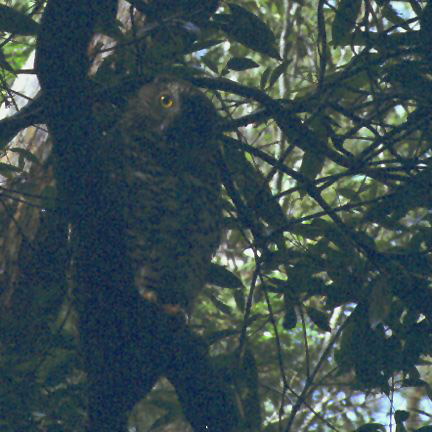
Powerful Owls first cast an evil spell on me on 11 February 1999 when one in Pennant Hills Park made my film camera malfunction so that the entire film was hopelessly underexposed – you can see the wicked gleam in its eye below. As soon as I picked up the film from the chemist the following day, I went back to Pennant Hills Park but the owl was no longer there or no longer visible.

Powerful Owl (Ninox strenua) by Ian 2

Powerful Owl (Ninox strenua) by Ian 2

Shortly after that I moved from Sydney and switched to digital photography (nowadays we take instant photographic feedback for granted). Since then, whenever I’ve visited Sydney I’ve looked for Powerful Owls in all their usual haunts – Pennant Hills Park, Mitchell Park, Beecroft, Warriewood, Royal Botanic Gardens, Royal National Park, etc. – without success.

Powerful Owl (Ninox strenua) by Ian 3

Powerful Owl (Ninox strenua) by Ian 3

Last Tuesday I gave a talk on parrots to Birding NSW in Sydney and inquired about POs. Yes, one had been seen in its favourite tree, the White Fig, near the entrance to Government House the previous Saturday. I went there on Wednesday and searched the tree for at least 20 minutes but the owl remained invisible until I decided to leave. Delighted with its success, it let its guard down, the spell weakened and I got the briefest visual sensation, like a shimmering mirage, of a barred tail. Powerful Owls are big 60-65cm/24-26in in length, it was then quite visible from the ground and not very high up, so a spell is the only explanation.

Powerful Owl (Ninox strenua) by Ian 4

Powerful Owl (Ninox strenua) by Ian 4

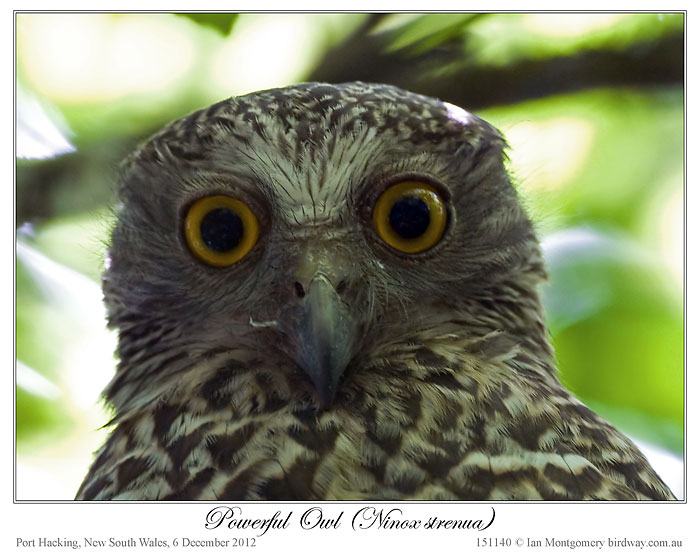
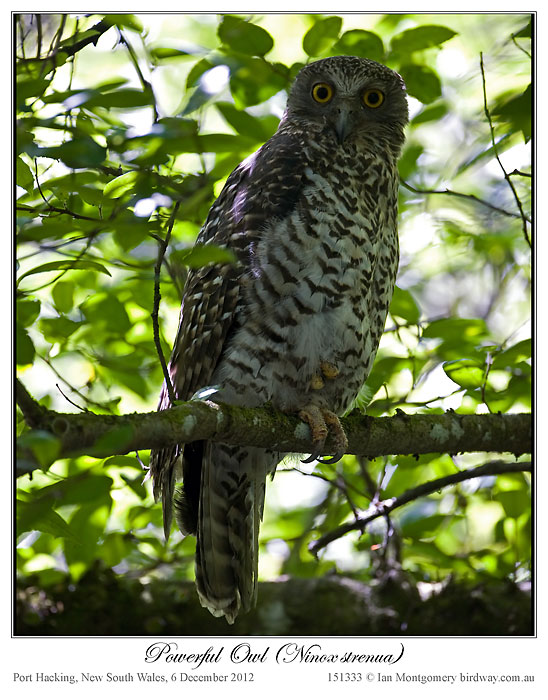
The next day, I went birding with Madeleine Murray and we abandoned plans to look for the owl (they’re quite visible to her) and went instead to Port Hacking, south of Sydney, where, lo and behold, we found another one, or to be more accurate Mad found it after I’d walked straight past it as the spell hadn’t entirely dissipated – it normally does so quite quickly after it has been broken once.

Powerful Owl (Ninox strenua) by Ian 5

Powerful Owl (Ninox strenua) by Ian 5

The Powerful Owl is the largest of the Hawk Owls (genus Ninox) and exceeded in size only by the world’s largest owls such as the Grey Grey and the larger Eagle Owls. It is found in eastern and southeastern Australia usually within 200km of the coast from central Queensland to eastern South Australia. It has large territories ranging in size from 3-15 square kilometres so it is nowhere common and is listed as Vulnerable. However, it seems to be quite tolerant of selective logging and can survive in patchy forests. It feeds mainly on arboreal mammals such as possums, but will also take flying foxes (fruit bats) and roosting birds.

Best wishes
Ian

**************************************************
Ian Montgomery, Birdway Pty Ltd,
454 Forestry Road, Bluewater, Qld 4818
Tel 0411 602 737 ian@birdway.com.au
Check the latest website updates:
http://www.birdway.com.au/#updates
**************************************************
Lee’s Addition:

Glad you sent us a Bird of the Week, Ian. I was starting to worry about you, that maybe you were sick or something. The wait was worth it because this is a beautiful Owl. I am glad you are no longer under this bird’s “evil spell on” you.

The Powerful Owl is part of the Strigidae – Owl Family. To see more photos of them, check out Ian’s photos and our Family page here:

Typical or Hawk Owls – Ian’s Birdway

Strigidae – Owl Family

*

Updating to IOC Version 3.2 Underway

Orange-billed Sparrow (Arremon aurantiirostris) by Michael Woodruff

Orange-billed Sparrow (Arremon aurantiirostris) by Michael Woodruff – Emberizidae Family

I deleted this info because it was out of date and causing 404 errors. See

Birds of the World Families

for most up to date links.

Dapple-throat (Arcanator orostruthus) ©WikiC

Dapple-throat (Arcanator orostruthus) ©WikiC

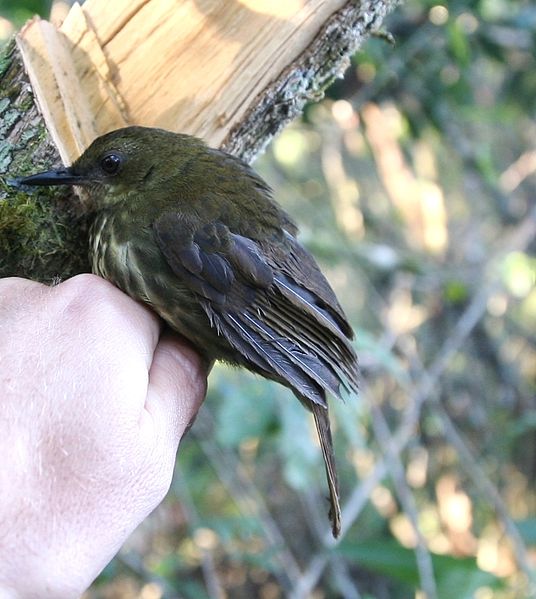
I was adding new photos to it and here is a neat one I came across. Isn’t he cool? Looks like he has glasses on.

He does great things past finding out, Yes, wonders without number. (Job 9:10 NKJV)

“Can you search out the deep things of God? Can you find out the limits of the Almighty? (Job 11:7 NKJV)

He has made everything beautiful in its time. Also He has put eternity in their hearts, except that no one can find out the work that God does from beginning to end. (Ecclesiastes 3:11 NKJV)

Oh, the depth of the riches both of the wisdom and knowledge of God! How unsearchable are His judgments and His ways past finding out! (Romans 11:33 NKJV)

White-rimmed Brush-finch ©Dusan M Brinkhuizen

White-rimmed Brush-finch ©Dusan M Brinkhuizen


Wordless Birds

*

Ian’s Bird of the Week – (Southern Cassowary) and Solar Eclipse

Southern Cassowary and Solar Eclipse by Ian 1

Southern Cassowary and Solar Eclipse by Ian 1

Ian’s Bird of the Week – (Southern Cassowary) and Solar Eclipse

by Ian Montgomery

Newsletter 11-14-12

It’s unusual for my primary photographic goal on a trip to be other than a bird, but birds this week in northern Queensland have been overshadowed – pun intended – by yesterday’s solar eclipse. Residents of the Townsville district had to face the difficult decision on whether to remain here where the probability of clear skies was great but be satisfied with a 96% eclipse or travel to Cairns where the weather forecast was cloudy but the eclipse was total.

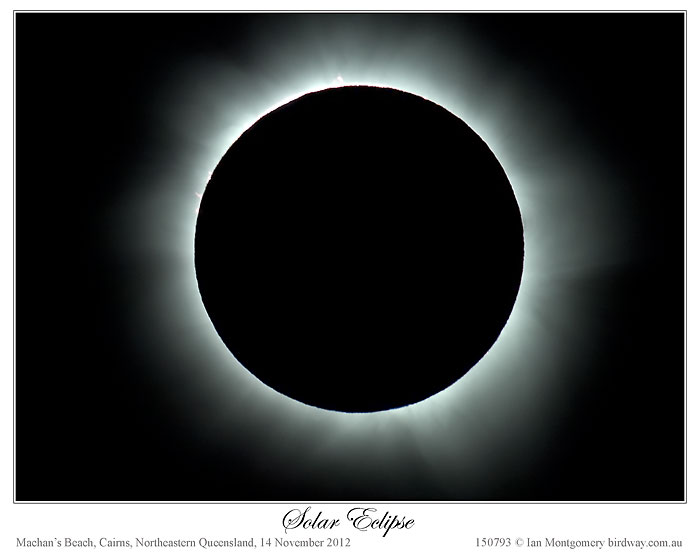
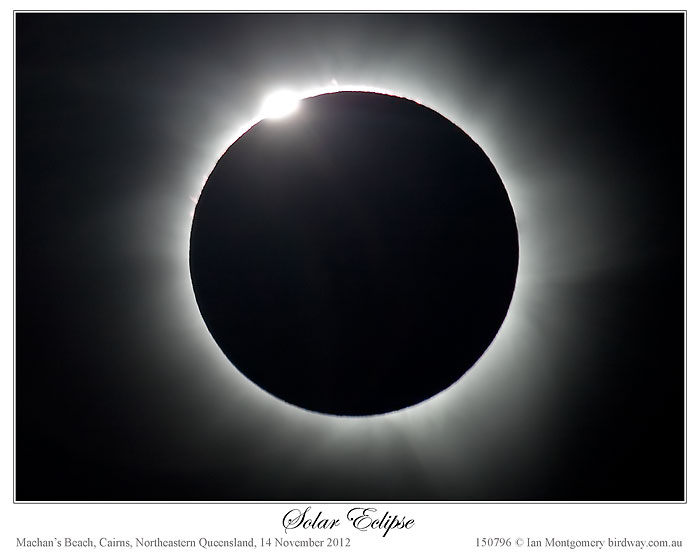
Despite misgivings about the weather, we went to Cairns and in the end it was a close call. We awoke at 5:30am – totality was due at 6:38 – to an unpromising looking sunrise followed by a shower of rain and then headed off to the beach, equipped with solar spectacles and umbrellas. Just before totality, a cloud obscured the sun and the first photo was taken seconds before it was due, at 6:37’37”, according to my iPhone. The suspense was riveting until the cloud moved aside like a slow theatre curtain to reveal a total eclipse in all its glory and all the onlookers cheered. The second photo was taken, not with the iPhone, exactly 40 seconds later.

Southern Cassowary and Solar Eclipse by Ian 2

Southern Cassowary and Solar Eclipse by Ian 2

As well as the corona surrounding the sun, only ever visible from earth during total eclipse, you can see several solar flares between 9 and 10 o’clock and near 12 o’clock. The third photo was taken another 7 seconds later, at 8:38’24”, and the sun is already reappearing producing the ‘diamond ring’ effect. This happens when a relatively tiny portion of the sun – a Baily’s bead – is visible through an irregularity on the surface of the moon – a mountain valley or a crater.

Southern Cassowary and Solar Eclipse by Ian 3

Southern Cassowary and Solar Eclipse by Ian 3

For the photographically-minded, I was unsure what exposure to use and whether automatic exposure would be correct, so I used ‘bracketing’, taking 3 photos with exposures ranging from 1 stop below to 1 above the set exposure and adjusting the set exposure based on the results of the first photos. I got the best results at -2.7 stops, f5.6 at 1/100 and 1/125sec at ISO 100. I used a tripod.

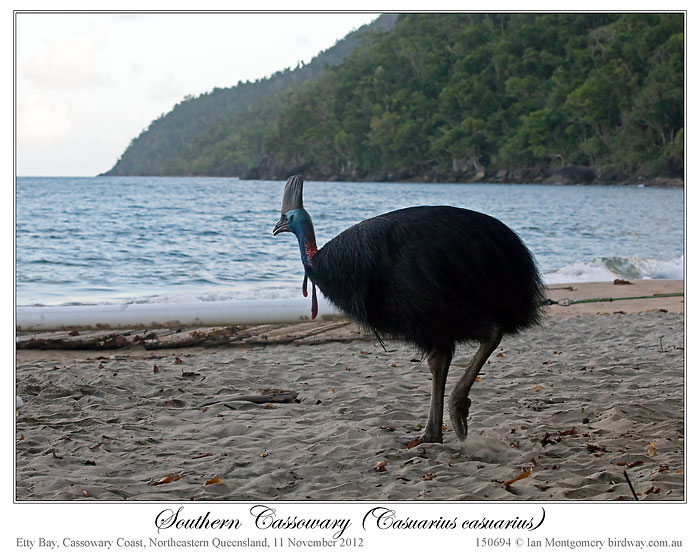
On the way to Cairns we spent a night at Etty Bay on the ‘Cassowary Coast’, the name of the local government region that covers Mission Beach and Innisfail. Etty Bay is, I think, the best place to see Cassowaries, as at least one regular patrols the camping and picnic area looking for scraps of food. The Cassowary Coast has the following logo, and I wanted to take a photo of a Cassowary that emulated the sign (which emulates a Cassowary).

Southern Cassowary and Solar Eclipse by Ian 4

Southern Cassowary and Solar Eclipse by Ian 4

Cassowaries don’t normally frequent beaches, but this one has clearly found that it’s worth checking for scraps.

Southern Cassowary and Solar Eclipse by Ian 5

Southern Cassowary and Solar Eclipse by Ian 5

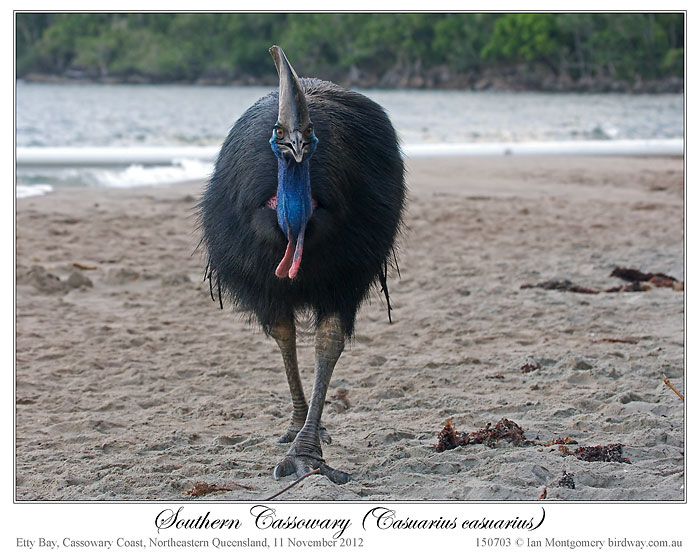
The one in the second photo might make a good poster for a qualified welcome to the Cassowary Coast!

Southern Cassowary and Solar Eclipse by Ian 6

Southern Cassowary and Solar Eclipse by Ian 6

The Southern Cassowary featured as bird of the week in 2006. Here is one of the photos that I used then, also taken at Etty Bay, for those of you who have joined the list since then.

Southern Cassowary and Solar Eclipse by Ian 7

Southern Cassowary and Solar Eclipse by Ian 7

Best wishes
Ian

**************************************************
Ian Montgomery, Birdway Pty Ltd,
454 Forestry Road, Bluewater, Qld 4818
Tel 0411 602 737 ian@birdway.com.au
Check the latest website updates:
http://www.birdway.com.au/#updates


Lee’s Addition:

What great photos of the eclipse and the Cassowary to add to the delight. Thanks, Ian.

That second photo is a perfect catch of the Solar Eclipse. Wow!

He appointed the moon for seasons; The sun knows its going down. (Psalms 104:19 NKJV)

See:

Ian’s Southern Cassowary page for more of his great photos.

Casuariidae – Cassowaries Family

Cassowary – Wikipedia

*

Birds of the Bible – God Blessed Them

Osprey Family by Phillip Simmons

And God blessed them, saying, “Be fruitful and multiply, and fill the waters in the seas, and let birds multiply on the earth.”
(Genesis 1:22 NKJV)

And God H430 blessed H1288 them, saying, H559 Be fruitful, H6509 and multiply, H7235 and fill H4390 (H853) the waters H4325 in the seas, H3220 and let fowl H5775 multiply H7235 in the earth. H776 (Genesis 1:22 KJV+)

I have written before on this verse, but really never looked into this aspect of it. I knew He had told them to multiply and be fruitful, but I missed the “blessing” part. The Lord didn’t just create the birds and then leave them on their own. He cared about them and “blessed” them. Below is the definition of Strong’s Hebrew word and then Thayer’s Greek word for Blessing or Blessed.

Strong – H1288

בּרך
bârak
baw-rak’
A primitive root; to kneel; by implication to bless God (as an act of adoration), and (vice-versa) man (as a benefit); also (by euphemism) to curse (God or the king, as treason): – X abundantly, X altogether, X at all, blaspheme, bless, congratulate, curse, X greatly, X indeed, kneel (down), praise, salute, X still, thank.

Thayer – G2127

εὐλογέω
eulogeō
Thayer Definition:
1) to praise, celebrate with praises
2) to invoke blessings
3) to consecrate a thing with solemn prayers
3a) to ask God’s blessing on a thing
3b) pray God to bless it to one’s use
3c) pronounce a consecratory blessing on
4) of God
4a) to cause to prosper, to make happy, to bestow blessings on
4b) favoured of God, blessed
Part of Speech: verb

Let’s see what some of the commentaries have to say about the birds being blessed by God:

(Chuck Smith) – “But we get the more complex life forms that sort of are a little independent. They’re not rooted, they’re not grounded, they are mobile, and the various cycles that God has created, the whole process is just so marvelous indeed. The water, teeming with life, and then the air, and the many, many kinds of birds and the variety of birds that God has created. And those instinctive abilities in the birds!

American Golden Plover (Pluvialis dominica) at National Aviary by Lee

American Golden Plover (Pluvialis dominica) at National Aviary by Lee

I’m always fascinated by that little bird in Hawaii that goes up into the Aleutian chain in order to mate. During the summer, they take off from Hawaii and they fly all the way up into Alaska where they mate. They build their nests, they lay the eggs, they hatch their young. And then with the coming of winter, they don’t want to spend winter in Alaska — and who can blame them. And you have to almost envy them, spending their winters in Hawaii. They take off over the thousands of miles without suitcases, without spare gas tanks, without compasses or navigational equipment. And they come and fly right into Hawaii, sometimes they get into severe storms, one-hundred, two-hundred mile an hour winds that blow them off course, but somehow they find their way right in. You say, “oh, they remember the way they flew out.”

How do they reckon? Some think they have some kind of device that tunes on the magnetic field of the earth. I don’t know. But, really, they’re not following the same path, so that argument’s sort of shot down, because, really, the parents decide to leave for Hawaii before the kids are able to fly that far. So, the parents fly off to Hawaii, leaving their kids in Alaska! But, it doesn’t seem to matter, cause a couple of weeks later, their kids take off and they fly right to Hawaii. Never been there before, yet somehow, God has built into this little bird that kind of instinct; and that’s a bird brain. And it’s not a very big kind of a computer. Talk about microsystems!

Oh, the wisdom of God, the wisdom of God. How thrilling to be able to see the design in nature, all testifying of the wisdom of the God that I serve. I’m so glad that I serve Him. I’m so glad that I know Him. Such a glorious God, so wise; all of these created life forms. Now, He created also the mammals, the great whales. He created the animals, the domesticated-type animals, all after their own kind.

And the evening and the morning were the fifth day.”

American Robin (Turdus migratorius) in nest by Ray

American Robin (Turdus migratorius) in nest by Ray

(John Gill) – “Genesis 1:22

And God blessed them,…. With a power to procreate their kind, and continue their species, as it is interpreted in the next clause, saying, be fruitful, and multiply, and fill the waters in the seas: and these creatures do multiply exceedingly, and vast quantities there are of them in the mighty waters, though the consumption of some sorts of them is very great. Our English word “fish” is derived from the Hebrew word פוש, “fush”, which signifies to multiply and increase:

and let fowl multiply in the earth; as they did, and continue to do to this day.”

(Matthew Henry) – “2. The blessing of them, in order to their continuance. Life is a wasting thing. Its strength is not the strength of stones. It is a candle that will burn out, if it be not first blown out; and therefore the wise Creator not only made the individuals, but provided for the propagation of the several kinds; God blessed them, saying, Be fruitful and multiply, Gen_1:22. God will bless his own works, and not forsake them; and what he does shall be for a perpetuity, Ecc_3:14. The power of God’s providence preserves all things, as at first his creating power produced them. Fruitfulness is the effect of God’s blessing and must be ascribed to it; the multiplying of the fish and fowl, from year to year, is still the fruit of this blessing. Well, let us give to God the glory of the continuance of these creatures to this day for the benefit of man. See Job_12:7, Job_12:9. It is a pity that fishing and fowling, recreations innocent in themselves, should ever be abused to divert any from God and their duty, while they are capable of being improved to lead us to the contemplation of the wisdom, power, and goodness, of him that made all these things, and to engage us to stand in awe of him, as the fish and fowl do of us.”

(Haydock Commentary) – “Genesis 1:22

Blessed them, or enabled them to produce others. — Multiply: the immense numbers and variety of fishes and fowls is truly astonishing.”

(K & D) – “As animated beings, the water animals and fowls are endowed, through the divine blessing, with the power to be fruitful and multiply. The word of blessing was the actual communication of the capacity to propagate and increase in numbers.”

(John Wesley) – “Observe, 2, The blessing of them in order to their continuance. Life is a wasting thing, its strength is not the strength of stones; therefore the wise Creator not only made the individuals, but provided for the propagating of the several species, Gen_1:22. God blessed them, saying, Be fruitful, and multiply – Fruitfullness is the effect of God’s blessing, and must be ascribed to it; the multiplying of the fish and fowl from year to year, is still the fruit of this blessing here.”

Painted Bunting (Passerina ciris) ©©Flickr

Painted Bunting (Passerina ciris) ©©Flickr

Oh that men would praise the LORD for his goodness, and for his wonderful works to the children of men! (Psalms 107:31 KJV)

The Lord not only blessed the birds, but provided them with the instinct and DNA to be able to reproduce and adapt to the changing conditions. Those that have not been able or suffered disasters be they natural or man-made have become extinct. The “kinds” have produced great varieties (over 10,400 species) that we enjoy as we study and view the different families. While He blessed the birds, in turn, we are blessed because we are able to enjoy the vast variety of these avian creations. Praise the Lord!

Birds of the Bible

Birds of the World

Bird of the Week

*

Ian’s Bird of the Week – Common Redshank

Common Redshank (Tringa totanus) by Ian 1

Common Redshank (Tringa totanus) by Ian 1

Ian’s Bird of the Week – Common Redshank ~ by Ian Montgomery

Newsletter – 11-1-12

Here’s one for the wader enthusiasts: the Common Redshank, well ‘common’ in Eurasia and rather rare in Australia. It occurred to me when I was photographing these birds in Ireland in September, that, for birders, the appeal of a particular species is very dependent on location. Common Redshanks are noteworthy in Australia (I remember looking quite hard before finding one in Broome) but perhaps a nuisance in Ireland because they’re ubiquitous, nervous and noisy and often put more unusual waders to flight when you least want them to.

The one in the first photo is foraging at low tide in the harbour at Carlingford Lough, an attractive bay between the Republic and Northern Ireland on the east coast and overlooked on the northern side by the Mourne Mountains. The two in the second photo are feeding in the mudflats in the estuary of the River Boyne some distance downstream from where the famous Battle of the Boyne took place in 1690. The bird on the right has just taken a tiny crab.

Common Redshank (Tringa totanus) by Ian 2

Common Redshank (Tringa totanus) by Ian 2

The birds in the first two photos are in non-breeding plumage. Some wader species undergo spectacular colour changes when breeding, but in the Common Redshank the markings just become more pronounced, as in the third photo, taken in Portugal in the month of June some years ago.

Common Redshank (Tringa totanus) by Ian 3

Common Redshank (Tringa totanus) by Ian 3

The bright red legs, or shanks, make this a relatively easy wader to identify. It’s ringing call is also distinctive and it shows a characteristic wing pattern in flight with white panels on the rear edge of the wing, as in the fourth photo, quite different from the wing bar or plain wing of most waders.

Common Redshank (Tringa totanus) by Ian 4

Common Redshank (Tringa totanus) by Ian 4

The generic name Tringa is from the ancient Greek trungas ‘a thrush-sized bird mentioned by Aristotle, not further identified, but taken by later authors to be a sandpiper, a wagtail or a dipper‘. That’s equivalent to saying that this fruit is either an orange, a pineapple or a banana. And totanus comes from the Italian name totano for a Redshank. Sometimes the derivation of scientific names is informative, sometimes less so.

Best wishes
Ian

**************************************************
Ian Montgomery, Birdway Pty Ltd,
454 Forestry Road, Bluewater, Qld 4818
Tel 0411 602 737 ian@birdway.com.au
Check the latest website updates:
http://www.birdway.com.au/#updates


Lee’s Addition:

The birds of the air, And the fish of the sea That pass through the paths of the seas. (Psalms 8:8 NKJV)

What a neat little bird. I especially like the 3rd photo showing the red, hence, Redshank. Thanks again, Ian.

Redshanks do belong to the Scolopacidae – Sandpipers, Snipes Family. See his Scolopacidae family photos also.

Common Redshanks in breeding plumage are a marbled brown color, slightly lighter below. In winter plumage they become somewhat lighter-toned and less patterned, being rather plain greyish-brown above and whitish below. They have red legs and a black-tipped red bill, and show white up the back and on the wings in flight.

(Sound from xeno-canto.org)

See Also:

Ian’s Bird of the Week Newsletters

Common RedshankTringa – ARKive

Common Redshank – Naturia

Common Redshank (Tringa totanus) – Ocean Wanderers Guide

Scolopacidae – Sandpipers, Snipes Family

Scolopacidae – Birdway (Ian’s)