Birds Vol 1 #2 – The Kingfisher – The Lone Fisherman

Kingfisher – Birds Illustrated by Photography 1897

Birds Illustrated by Color Photography – Revisited

Vol 1. February, 1897 No. 2

*

THE KINGFISHER.

Dear Children:

I shall soon arrive from the south. I hear that all the birds are going to tell stories to the boys and girls.

I have never talked much with children myself for I never really cared for people. They used to say that the dead body of a Kingfisher kept them safe in war and they said also that it protected them in lightning.

Even now in some places in France they call us the moth birds, for they believe that our bodies will keep away moths from woolen cloth.

I wish that people would not believe such things about us. Perhaps you cannot understand me when I talk. You may think that you hear only a child’s rattle.

Listen again! It is I, the Kingfisher. That sound is my way of talking. I live in the deep woods. I own a beautiful stream and a clear, cool lake. Oh, the little fish in that lake are good enough for a king to eat! I know, for I am a king.

You may see me or some of my mates near the lake any pleasant day. People used to say that we always brought pleasant weather. That is a joke. It is the pleasant weather that always brings us from our homes. When it storms or rains we cannot see the fish in the lake. Then we may as well stay in our nests.

My home once belonged to a water rat. He dug the fine hall in the gravel bank in my stream. It is nearly six feet long. The end of it is just the kind of a place for a nest. It is warm, dry and dark. In June my wife and I will settle down in it. By that time we shall have the nest well lined with fish bones. We shall put in some dried grass too. The fish bones make a fine lining for a nest. You know we swallow the fish whole, but we save all the bones for our nest.

I shall help my wife hatch her five white eggs and shall try in every way to make my family safe.

Please tell the people not to believe those strange things about me and you will greatly oblige,
A neighbor,
The Kingfisher.


THE KINGFISHER.

The Lone Fisherman.

imgtHE American species belongs to the true group of Kingfishers. It occupies the whole continent of North America and although migrating in the north, he is a constant resident of our southern states. The belted Kingfisher is the only variety found along the inland streams of the United States. Audubon declares that “belted” should apply only to the female, however.

Like most birds of brilliant plumage, the Kingfisher prefers a quiet and secluded haunt. It loves the little trout streams, with wooded and precipitous banks, the still ponds and small lakes, ornamental waters in parks, where it is not molested, and the sides of sluggish rivers, drains and mill-ponds.

Here in such a haunt the bird often flits past like an indistinct gleam of bluish light. Fortune may sometimes favor the observer and the bird may alight on some twig over the stream, its weight causing it to sway gently to and fro. It eagerly scans the shoal of young trout sporting in the pool below, when suddenly it drops down into the water, and, almost before the observer is aware of the fact, is back again to its perch with a struggling fish in its beak. A few blows on the branch and its prey is ready for the dexterous movement of the bill, which places it in a position for swallowing. Sometimes the captured fish is adroitly jerked into the air and caught as it falls.

Fish is the principal food of the Kingfisher; but it also eats various kinds of insects, shrimps, and even small crabs. It rears its young in a hole, which is made in the banks of the stream it frequents. It is a slatternly bird, fouls its own nest and its peerless eggs. The nesting hole is bored rather slowly, and takes from one to two weeks to complete. Six or eight white glossy eggs are laid, sometimes on the bare soil, but often on the fish bones which, being indigestible, are thrown up by the bird in pellets.

The Kingfisher has a crest of feathers on the top of his head, which he raises and lowers, especially when trying to drive intruders away from his nest.

The plumage is compact and oily, making it almost impervious to water. The flesh is fishy and disagreeable to the taste, but the eggs are said to be good eating. The wings are long and pointed and the bill longer than the head. The voice is harsh and monotonous.

It is said that few birds are connected with more fables than the Kingfisher. The superstition that a dead Kingfisher when suspended by the throat, would turn its beak to that particular point of the compass from which the wind blew, is now dead. It was also supposed to possess many astonishing virtues, as that its dried body would avert thunderbolts, and if kept in a wardrobe would preserve from moths the woolen stuffs and the like contained in it.

Under the name of “halcyon,” it was fabled by the ancients to build its nest on the surface of the sea, and to have the power of calming the troubled waves during its period of incubation; hence the phrase “halcyon days.”

A pair of Kingfishers have had their residence in a bank at the south end of Washington Park, Chicago, for at least three seasons past. We have watched the Kingfisher from secluded spots on Long Island ponds and tidal streams, where his peculiar laughing note is the same as that which greets the ear of the fisherman on far inland streams on still summer days.

Belted Kingfisher (Megaceryle alcyon) by Daves BirdingPix


Lee’s Addition:

Another of my favorite birds. I think most of them are, but the Belted Kingfisher is a real challenge to photograph. They must sense that your camera is on. Dan says that many photographers call it the “Devil Bird” because it is so hard to photo. See http://jimt.zenfolio.com/p703966915 by James Thiel and another photographer at http://www.flickr.com/photos/johnklos/3049270990/.

I think of them as having a short squatty neck and a long beak. Actually the Laughing Kookaburra is in the Kingfisher family, the Kingfishers – Alcedinidae Family. The article mentioned that the Belted Kingfisher is the only one in the U. S., but there are actually two more; the Ringed and the Green Kingfishers that are found in south Texas. We have seen all three of them.

The Kingfisher – Alcedinidae family has a total of 95 members. Many of them are very colorful and again show the Lord’s Creative Hand at work. He has provided them with just the right kind of beak to snatch their meals with and even given them the ability to see their prey in the water. The distortion water gives is compensated for them.

And Jesus, walking by the sea of Galilee, saw two brethren, Simon called Peter, and Andrew his brother, casting a net into the sea: for they were fishers. And he saith unto them, Follow me, and I will make you fishers of men. (Matthew 4:18-19 KJV)
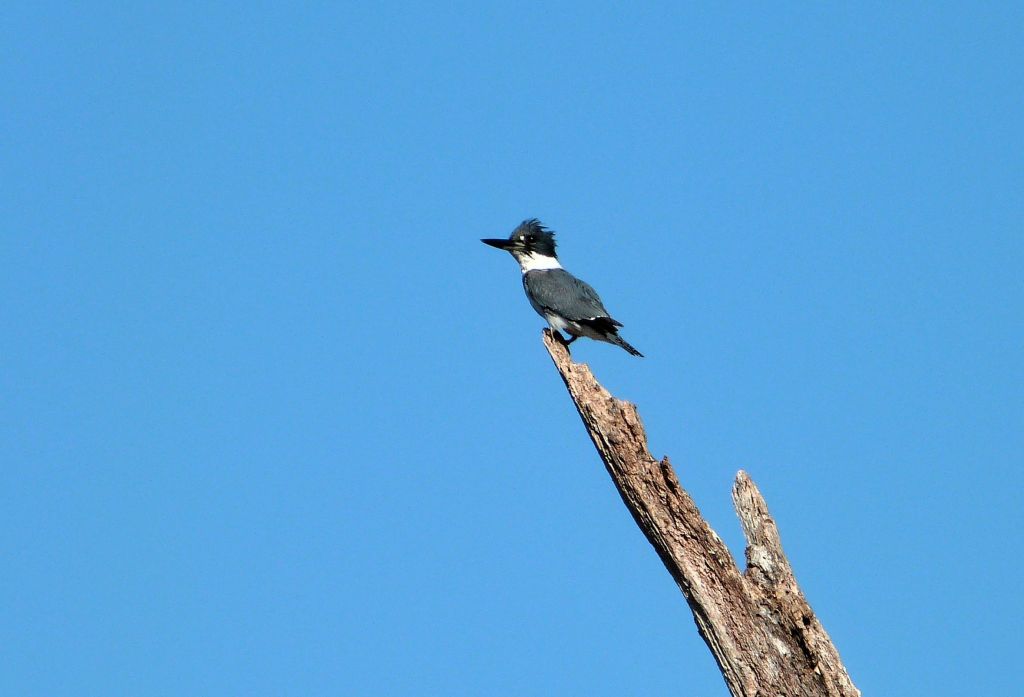
Belted Kingfisher (Megaceryle alcyon) by Lee Circle B

Belted Kingfisher (Megaceryle alcyon) by Lee Circle B

In January, I was able for the first time to get some photos of the Belted Kingfisher. Two of them were showing off and forgot someone was watching. They can hover over the water, keeping their head steady and watch for their prey. It is amazing to watch them do that. (Birdwatching Adventure – Circle B Bar Reserve – 1/16/12)
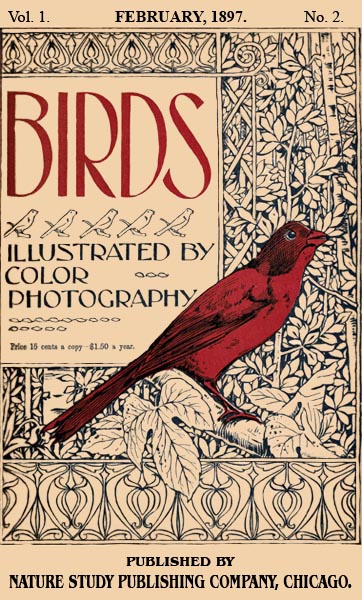
Birds Illustrated by Color Photograhy Vol 1 February 1897 No 2 - Cover

Birds Illustrated by Color Photograhy Vol 1 February 1897 No 2 – Cover

Birds Illustrated by Color Photography – Revisited – Introduction

The above article is the first article in the monthly serial for February 1897 “designed to promote Knowledge of Bird-Live.” These include Color Photography, as they call them, today they are drawings. There are at least three Volumes that have been digitized by Project Gutenberg.

To see the whole series of – Birds Illustrated by Color Photography – Revisited

*

(Information from Wikipedia and other internet sources)

Next Article – The Red Wing Black Bird – The Bird Of Society

Previous Article – The American Robin – The Bird Of The Morning

Wordless Birds

Links:
 

Ian’s Bird of the Week – Auckland and Campbell Islands Teal

Auckland Teal (Anas aucklandica) Male by Ian 1

Auckland Teal (Anas aucklandica) Male by Ian 1

Ian’s Bird of the Week  – Auckland and Campbell Islands Teal

by Ian Montgomery

Newsletter ~ 2/16/12

The almost predator-free nature of the Sub-Antarctic Islands before the Europeans and their pests arrived is well illustrated by the existence of two closely-related flightless ducks on the Auckland and Campbell Islands. The first photo shows a male Auckland Islands Teal on Enderby Island – now their main stronghold – in the Auckland Islands group.

You can see how short the wings are, extending only two thirds of the way along the body instead of to the base of the tail as in their flying relatives the Chestnut Teal of Australia and the Brown Teal of New Zealand. This male is in breeding plumage and has greenish iridescence on the head and subtly beautiful barring on the flanks.

Auckland Teal (Anas aucklandica) Female by Ian 2

Auckland Teal (Anas aucklandica) Female by Ian 2

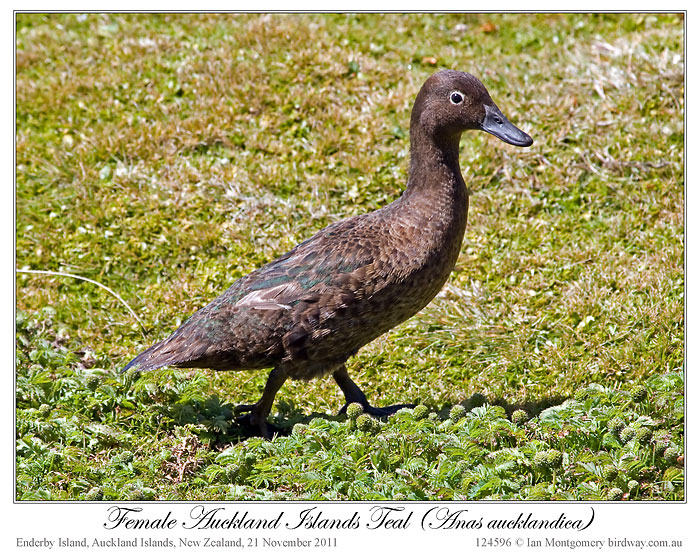
Females (and juveniles and eclipse-plumaged males) have more subdued colours and lack the green sheen on the head. The white eye-ring of both sexes is shared with the Brown Teal of New Zealand but not the Chestnut Teal of Australia. The third photo shows another female going for a stroll. Note the slightly drooping tail and upright stance, both characteristic of the two flightless species.

Auckland Teal (Anas aucklandica) Female by Ian 3

Auckland Teal (Anas aucklandica) Female by Ian 3

As you can probably judge from the photos, the teal were very confiding showing no alarm when closely approached. I had to retreat from the male to get it in focus – the lens I was using has a minimum focus distance of 1.8m/5.9ft, not usually an issue with wild birds! The first two photos were taken on one of the few bodies of freshwater on Enderby Island. Their more usual habitat is along the coast. We saw some in sheltered pools on a rock platform and they feed mainly on invertebrates and algae found in both attached and beach-stranded seaweed.

Campbell Teal (Anas nesiotis) by Ian 4

Campbell Teal (Anas nesiotis) by Ian 4

The fourth photo shows a vocal male Campbell Islands Teal on salt water near the landing wharf of that island. It’s very similar in appearance to the Auckland Islands Teal and both species were until recently treated as races of the flight-worthy Brown Teal of mainland New Zealand. Recent studies suggest that the the Brown Teal and Sub-Antarctic Teals were the product of separate colonisation events by the Australian Chestnut Teal, which occurs in New Zealand only as a rare vagrant.

The Sub-Antarctic Teals have suffered badly from the introduction of mammalian pests, particularly pigs, cats and rats (mice seem to affect them less). The Auckland Islands Teal is extinct on the main Auckland Island, but survives on six neighbouring island pig-less and cat-less island. The population is estimated at 600-2,000 individuals, appears stable, is classified as Vulnerable, and the New Zealand government is planning to eliminate pigs and cats from Auckland Island which will permit reintroduction of the Teal.

The Campbell Islands Teal was though to be extinct but a population of about 20 were rediscovered on nearby Dent Island in 1975, raising its status to Critically Endangered and the world’s rarest duck. A captive breeding program followed, leading to the establishment of a feral population on predator-free Codfish Island near Stewart Island in 1999 and 2000. Following the elimination of rats on Campbell Island, 50 birds were released there in 2005 and 55 in 2006. Successful breeding occurred in 2006. The total population, captive and wild, is now thought to be over 200 and its status has been downgraded to merely Endangered.

You can read the full story here http://terranature.org/tealcampbell_island.htm . It’s great to read a successful conservation story at a time of increasingly frequent bad news about wild populations.

Links to Ian’s Photos:

Aukland Islands Teal
Campbell Islands Teal
Chestnut Teal

Best wishes
Ian

Ian Montgomery, Birdway Pty Ltd,
454 Forestry Road, Bluewater, Qld 4818
Phone: 0411 602 737 +61-411 602 737
Preferred Email: ian@birdway.com.au
Website: http://birdway.com.au


Lee’s Addition:

That last Teal looks happy and “bushy eyed.” They must havee happy ducks and teals down there. Must be that lack of pigs and cats!

The Teals belong to the Anatidae – Ducks, Geese & Swans Family. There are 165 species in 48 genus including the Teals, Ducks, Shovelers, Wigeons, Pintails, Swans, Geese,  Pochards, Scaups, Eiders, Mergansers and all their allies. “Anatidae is the biological family of birds that includes ducks, geese and swans. The family has a cosmopolitan distribution, occurring on all the world’s continents except Antarctica and on most of the world’s islands and island groups. These are birds that can swim, float on the water surface, and in some cases dive in at least shallow water.” (Wikipedia)

And God blessed them, saying, “Be fruitful and multiply, and fill the waters in the seas, and let birds multiply on the earth.” (Genesis 1:22 NKJV)

*

Formed By Him – Camouflaged Nest

Was sent a link to this fantastic video of how birds camouflage their nests by BBC Wildlife. This shows some of the great instinct and capabilities given to the birds by their Creator.

All the birds of the heavens made their nests in its boughs; Under its branches all the beasts of the field brought forth their young; And in its shadow all great nations made their home. (Ezekiel 31:6 NKJV)

Trust will enjoy this as well.

*

*

Another parable He put forth to them, saying: “The kingdom of heaven is like a mustard seed, which a man took and sowed in his field, which indeed is the least of all the seeds; but when it is grown it is greater than the herbs and becomes a tree, so that the birds of the air come and nest in its branches.” (Matthew 13:31-32 NKJV)

See also:

Wordless Birds

*

P.S. I know this is a short post, but last night I just discovered that the Slide.Com, which I used for many slideshows on various blogs, is closing. That means I have tons of work to do behind the scenes while I fix all of those and use another slideshow program. Watch out for dust!

Updated 2 Hours later: Just finished one with the new style Slideshow. I kind of like the new style. What do you think?

Formed by Him – Silver Birds

*

*

Birdwatching Trip to Viera Wetlands – February 2-3, 2012

Alligator on bank at Viera Wetlands

Alligator on bank at Viera Wetlands

We enjoyed our visit to Viera Wetlandslast week. Good thing we went then, because we are both sick this week. (Not from the trip.) But we are on the mend. “The wetlands are a popular site for birders, photographers, and eco-tourists.  The entire wetland system is accessible by automobile, making the site popular among those who find the rigors of hiking trails and summer temperatures daunting.  Even better, viewing the site from one’s automobile serves to screen visitors from birds and widlife, enhancing the experience.” They have 4 Cells and a Lake which have a berm around them. You drive on the berm and that gets you right up to the birds. (If they cooperate)

This was not our first visit to the wetlands, but it is 100 miles from home, so it is not something we do frequently. Other than a few different birds we have almost the same ones right here at the Circle B Bar Reserve (only 4 miles from home).

Here is a list of the birds turned in to eBird for the two days we visited the wetlands:

Hooded Merganser (Lophodytes cucullatus) with Hood up by Lee

Hooded Merganser (Lophodytes cucullatus) with Hood up

Mottled Duck
Blue-winged Teal
Northern Shoveler
Ring-necked Duck
Hooded Merganser
Pied-billed Grebe
Wood Stork
Double-crested Cormorant
Anhinga Viera Wetlands
Great Blue Heron
Great Egret
Snowy Egret
Little Blue Heron
Tricolored Heron
White Ibis
Glossy Ibis
Black Vulture
Turkey Vulture
Osprey
Northern Harrier
Crested Caracara

Savannah Sparrow (Passerculus sandwichensis) by Lee at Viera Wetlands

Savannah Sparrow (Passerculus sandwichensis) by Lee at Viera Wetlands

Common Gallinule
American Coot
Limpkin
Sandhill Crane
Caspian Tern
Royal Tern
Belted Kingfisher
Fish Crow
Purple Martin
Tree Swallow
House Wren
European Starling
Palm Warbler
Yellow-rumped Warbler
Savannah Sparrow
Red-winged Blackbird
Eastern Meadowlark
Boat-tailed Grackle

39 total birds seen that I can identify. If I include the rest of the birds spotted there in Brevard County including the wild birds at the Zoo and Beach, then the count goes to 52. The additional birds include the Brown Pelican, Black and Turkey Vultures, Red-shouldered Hawk, Eurasian Collared Dove, Mourning Dove, Red-bellied and Downy Woodpeckers, Pine Warbler, Northern Cardinal and Brown-headed Cowbird. Other than the Caracara, Sanderling, and Ruddy Turnstone, I have seen the rest in Polk County, where we live.

Does that mean, I wouldn’t go back, NO WAY! I love going over there to the Wetlands because every time you go, there are different birds waiting for you to discover them. That is what birdwatching is all about. Also, Brevard County has the Merritt Island Wild Life Refuge and other great birding places.

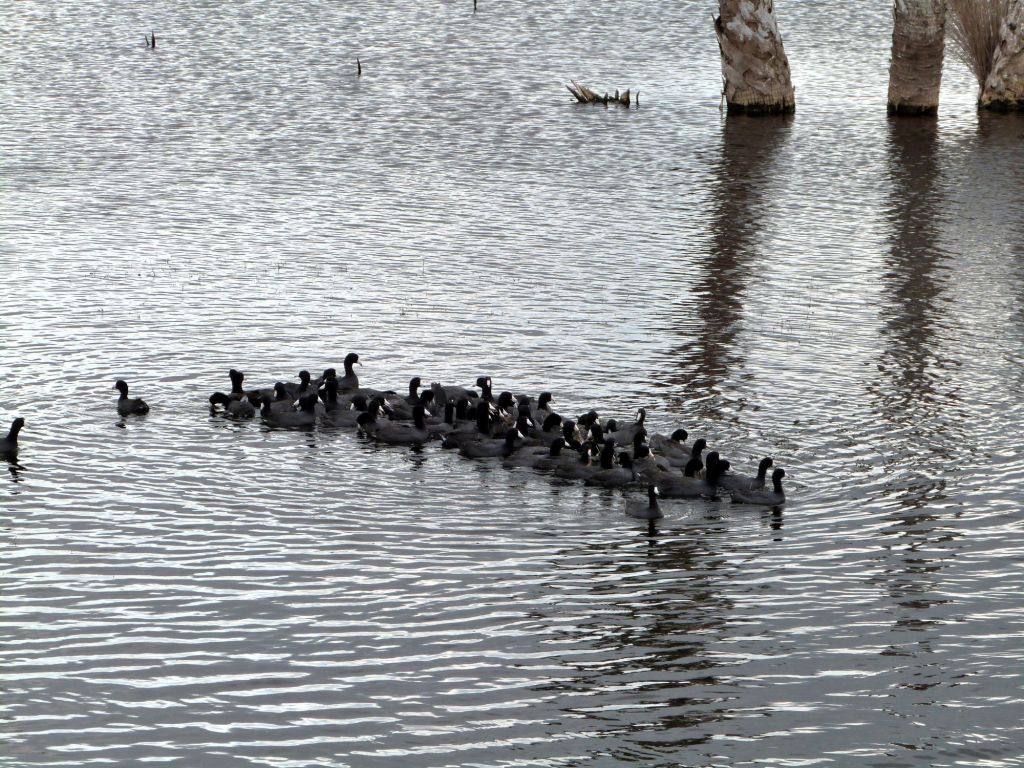
There had to be well over 1,000 American Coots out there. What amazed me was how they would all huddle together in long streams of them. This was just one of the smaller groups. Some were hundred of Coots long.

American Coots at Viera Wetlands

American Coots at Viera Wetlands

I am not sure what this Coot did, but it appears the Northern Shovelers are escorting him out of their area.

Coot Surrounded by Shovelers at Viera Wetlands

Coot Surrounded by Shovelers at Viera Wetlands

Managed to get a close-up of a Boat-tailed Grackle sitting on a sign.

Boat-tailed Grackle (Quiscalus major) at Viera by Lee

Boat-tailed Grackle (Quiscalus major) at Viera by Lee

It seemed a little dryer than on previous visits. Looks like they could use some rain. It does make an effect on what birds are present by the water levels. Was a great visit.

I know all the birds of the mountains, And the wild beasts of the field are Mine. (Psalms 50:11 NKJV)

*

Birds Vol 1 #2 – The Red-headed Woodpecker

Red-headed Woodpecker (Melanerpes erythrocephalus) - Birds Illustrated

Red-headed Woodpecker (Melanerpes erythrocephalus) – Birds Illustrated

Birds Illustrated by Color Photography – Revisited

Vol 1. February, 1897 No. 2

*

THE RED HEADED WOODPECKER.

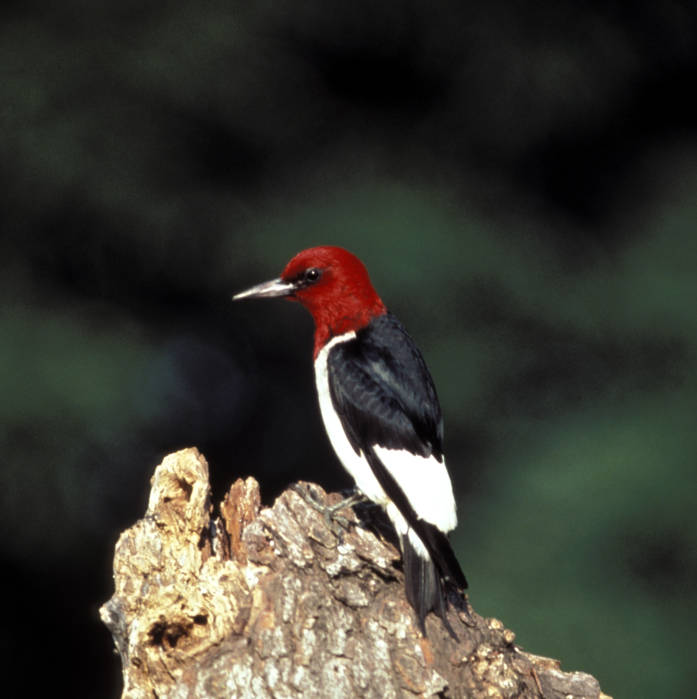
imgpERHAPS no bird in North America is more universally known than the Red Headed Woodpecker. He is found in all parts of the United States and is sometimes called, for short, by the significant name of Red Head. His tri-colored plumage, red, white and black, glossed with steel blue, is so striking and characteristic, and his predatory habits in the orchards and cornfields, and fondness for hovering along the fences, so very notorious, that almost every child is acquainted with the Red Headed Woodpecker. In the immediate neighborhood of large cities, where the old timber is chiefly cut down, he is not so frequently found. Wherever there is a deadening, however, you will find him, and in the dead tops and limbs of high trees he makes his home. Towards the mountains, particularly in the vicinity of creeks and rivers, these birds are extremely numerous, especially in the latter end of summer. It is interesting to hear them rattling on the dead leaves of trees or see them on the roadside fences, where they flit from stake to stake. We remember a tremendous and quite alarming and afterwards ludicrous rattling by one of them on some loose tin roofing on a neighbor’s house. This occurred so often that the owner, to secure peace, had the roof repaired.

They love the wild cherries, the earliest and sweetest apples, for, as is said of him, “he is so excellent a connoisseur in fruit, that whenever an apple or pear is found broached by him, it is sure to be among the ripest and best flavored. When alarmed he seizes a capital one by striking his open bill into it, and bears it off to the woods.” He eats the rich, succulent, milky young corn with voracity. He is of a gay and frolicsome disposition, and half a dozen of the fraternity are frequently seen diving and vociferating around the high dead limbs of some large trees, pursuing and playing with each other, and amusing the passerby with their gambols. He is a comical fellow, too, prying around at you from the bole of a tree or from his nesting hole therein.

Though a lover of fruit, he does more good than injury. Insects are his natural food, and form at least two thirds of his subsistence. He devours the destructive insects that penetrate the bark and body of a tree to deposit their eggs and larvae.

About the middle of May, he begins to construct his nest, which is formed in the body of large limbs of trees, taking in no material but smoothing it within to the proper shape and size. The female lays six eggs, of a pure white. The young appear about the first of June. About the middle of September the Red Heads begin to migrate to warmer climates, travelling at night time in an irregular way like a disbanded army and stopping for rest and food through the day.

The black snake is the deadly foe of the Red Head, frequently entering his nest, feeding upon the young, and remaining for days in possession.

“The eager school-boy, after hazarding his neck to reach the Woodpecker’s hole, at the triumphant moment when he thinks the nestlings his own, strips his arm, launches it down into the cavity, and grasping what he conceives to be the callow young, starts with horror at the sight of a hideous snake, almost drops from his giddy pinnacle, and retreats down the tree with terror and precipitation.”

Red-headed Woodpecker (Melanerpes erythrocephalus) ©USFWS

Red-headed Woodpecker (Melanerpes erythrocephalus) ©USFWS


THE DRUMMER BIRD

My dear girls and boys:

The man who told me to keep still and look pleasant while he took my picture said I might write you a letter to send with it. You say I always keep on the other side of the tree from you. That is because someone has told you that I spoil trees, and I am afraid that you will want to punish me for it. I do not spoil trees. The trees like to have me come to visit them, for I eat the insects that are killing them. Shall I tell you how I do this?

I cling to the tree with my strong claws so sharply hooked. The pointed feathers of my tail are stiff enough to help hold me against the bark. Then my breast bone is quite flat, so that I may press close to the tree. When I am all ready you hear my r-r-rap—just like a rattle. My head goes as quickly as if it were moved by a spring. Such a strong, sharp bill makes the chips fly! The tiny tunnel I dig just reaches the insect.

Then I thrust out my long tongue. It has a sharp, horny tip, and has barbs on it too. Very tiny insects stick to a liquid like glue that covers my tongue. I suppose I must tell you that I like a taste of the ripest fruit and grain. Don’t you think I earn a little when I work so hard keeping the trees healthy?

I must tell you about the deep tunnel my mate and I cut out of a tree. It is just wide enough for us to slip into. It is not straight down, but bent, so that the rain cannot get to the bottom. There we make a nest of little chips for our five white eggs.

I should like to tell you one of the stories that some boys and girls tell about my red head. You will find it on another page of the book. Now I must fly away to peck for more bugs.

Your loving friend,
Woodpecker.

Red-headed Woodpecker (Melanerpes erythrocephalus) by Daves BirdingPix

Red-headed Woodpecker (Melanerpes erythrocephalus) by Daves BirdingPix


Lee’s Addition:

If a bird’s nest happens to be before you along the way, in any tree or on the ground, with young ones or eggs, with the mother sitting on the young or on the eggs, you shall not take the mother with the young; (Deuteronomy 22:6 NKJV)

Not much to add to this one. The writer has told much about this Woodpecker. They are part of the Picadae Family in the Piciformes Order. Most woodpeckers are heard before they are found. They are either making their calls or you can hear them chipping away at the trees or “metal.”

Birds Illustrated by Color Photograhy Vol 1 February 1897 No 2 - Cover

Birds Illustrated by Color Photograhy Vol 1 February 1897 No 2 – Cover

Birds Illustrated by Color Photography – Revisited – Introduction

The above article is the first article in the monthly serial for February 1897 “designed to promote Knowledge of Bird-Live.” These include Color Photography, as they call them, today they are drawings. There are at least three Volumes that have been digitized by Project Gutenberg.

To see the whole series of – Birds Illustrated by Color Photography – Revisited

* (Information from Wikipedia and other internet sources)

Next Article – Mexican Mot Mot

Previous Article – The Swallow-Tailed Indian Roller

ABC’s of the Gospel

Links:
Red-headed Woodpecker – Wikipedia

Here are some more ads from the Birds Illustrated:

Birds Illustrated Ad - Feb

Birds Illustrated Ad – Feb

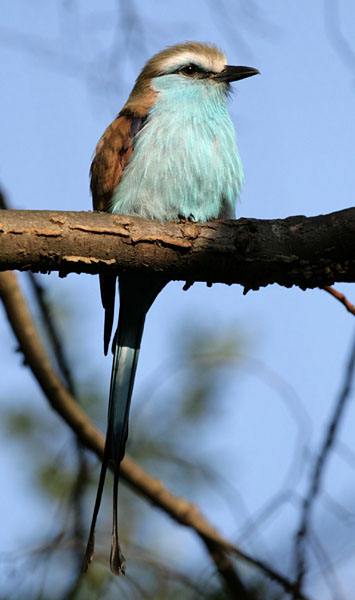
Birds Vol 1 #2 – The Swallow-tailed Indian Roller (Lilac-breasted, Racket-tailed or Abyssinian)

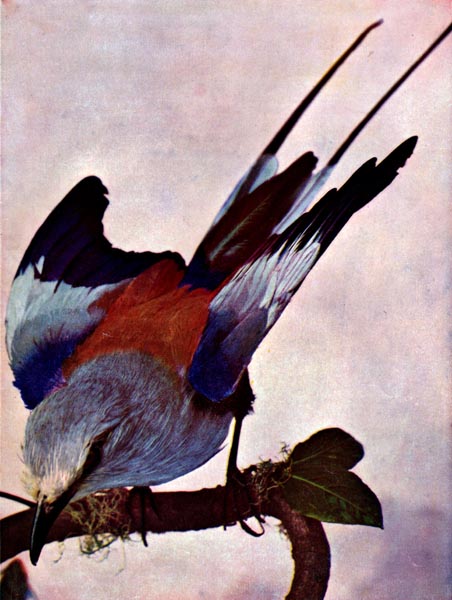
Swallow-tailed Indian Roller for Birds Illustrated by Color Photography - Vol 1-2

Swallow-tailed Indian Roller for Birds Illustrated by Color Photography – Vol 1-2

Birds Illustrated by Color Photography – Revisited

Vol 1. February, 1897 No. 2

*

THE SWALLOW-TAILED INDIAN ROLLER.

imgsWALLOW-TAILED Indian Rollers are natives of Northeastern Africa and Senegambia, and also the interior of the Niger district. The bird is so called from its way of occasionally rolling or turning over in its flight, somewhat after the fashion of a tumbler pigeon. A traveller in describing the habits of the Roller family, says:

“On the 12th of April I reached Jericho alone, and remained there in solitude for several days, during which time I had many opportunities of observing the grotesque habits of the Roller. For several successive evenings, great flocks of Rollers mustered shortly before sunset on some dona trees near the fountain, with all the noise but without the decorum of Rooks. After a volley of discordant screams, from the sound of which it derives its Arabic name of “schurkrak,” a few birds would start from their perches and commence overhead a series of somersaults. In a moment or two they would be followed by the whole flock, and these gambols would be repeated for a dozen times or more.

“Everywhere it takes its perch on some conspicuous branch or on the top of a rock, where it can see and be seen. The bare tops of the fig trees, before they put forth their leaves, are in the cultivated terraces, a particularly favorite resort. In the barren Ghor I have often watched it perched unconcernedly on a knot of gravel or marl in the plain, watching apparently for the emergence of beetles from the sand. Elsewhere I have not seen it settle on the ground.

“Like Europeans in the East, it can make itself happy without chairs and tables in the desert, but prefers a comfortable easy chair when it is to be found. Its nest I have seen in ruins, in holes in rocks, in burrows, in steep sand cliffs, but far more generally in hollow trees. The colony in the Wady Kelt used burrows excavated by themselves, and many a hole did they relinquish, owing to the difficulty of working it. So cunningly were the nests placed under a crumbling, treacherous ledge, overhanging a chasm of perhaps one or two hundred feet, that we were completely foiled in our siege. We obtained a nest of six eggs, quite fresh, in a hollow tree in Bashan, near Gadara, on the 6th of May.

“The total length of the Roller is about twelve inches. The Swallow-tailed Indian Roller, of which we present a specimen, differs from the Europeon Roller only in having the outer tail feathers elongated to an extent of several inches.”


Lee’s Addition:

Then God said, “Let the waters abound with an abundance of living creatures, and let birds fly above the earth across the face of the firmament of the heavens.” (Genesis 1:20 NKJV)

Currently there is not a bird named the Swallow-tailed Indian Roller. Looking at the “photograph,” it appears to be either the Lilac-breasted, Racket-tailed or Abyssinian Roller. Those three have the long tails, “swallow-tail” and they all have black beaks which is typical of the Coracias Genus of the Rollers. The Coraciidae – Rollers family has two Genus, the Coracias and the Eurystomus, which has various colored beaks. None of the three exactly match that drawing, but they are close and in the same family.

”

The rollers are an Old World family, Coraciidae, of near passerine birds. The group gets its name from the aerial acrobatics some of these birds perform during courtship or territorial flights. Rollers resemble crows in size and build, and share the colourful appearance of kingfishers and bee-eaters, blues and pinkish or cinnamon browns predominating. The two inner front toes are connected, but not the outer one.

They are mainly insect eaters, with Eurystomus species taking their prey on the wing, and those of the genus Coracias diving from a perch to catch food items from on the ground, like giant shrikes.

Lilac-breasted Roller (Coracias caudatus) by BirdingPix

Lilac-breasted Roller (Coracias caudatus) by BirdingPix

According to Wikipedia, “the Lilac-breasted Roller (Coracias caudatus) is a member of the roller family of birds. It is widely distributed in sub-Saharan Africa and the southern Arabian Peninsula, preferring open woodland and savanna; it is largely absent from treeless places. Usually found alone or in pairs, it perches conspicuously at the tops of trees, poles or other high vantage points from where it can spot insects, lizards, scorpions, snails, small birds and rodents moving about at ground level. Nesting takes place in a natural hole in a tree where a clutch of 2–4 eggs is laid, and incubated by both parents, who are extremely aggressive in defence of their nest, taking on raptors and other birds. During the breeding season the male will rise to great heights, descending in swoops and dives, while uttering harsh, discordant cries. The sexes are alike in coloration. Juveniles do not have the long tail feathers that adults do. It is also the national bird of Botswana.”

Racket-tailed Roller (Coracias spatulatus) ©WikiC

Racket-tailed Roller (Coracias spatulatus) ©WikiC

“The Racket-tailed Roller (Coracias spatulatus) is a species of bird in the Coraciidae family. It is found in Angola, Botswana, Democratic Republic of the Congo, Malawi, Mozambique, Namibia, South Africa, Swaziland, Tanzania, Zambia, and Zimbabwe.

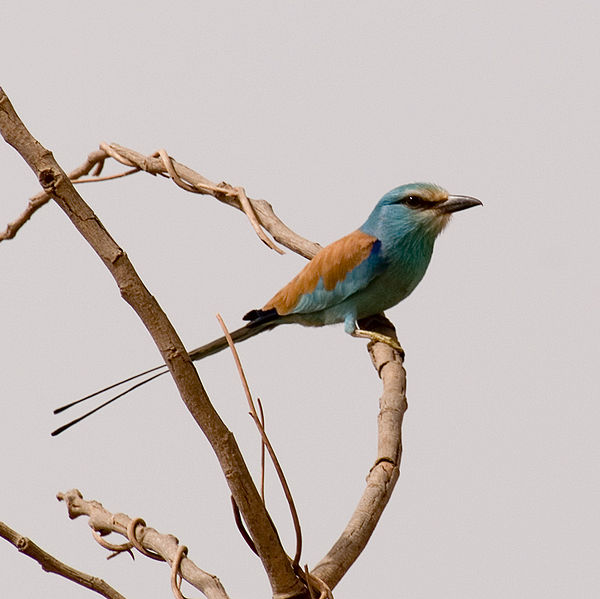
Abyssinian Roller (Coracias abyssinicus) ©WikiC

Abyssinian Roller (Coracias abyssinicus) ©WikiC

The Abyssinian Roller, Coracias abyssinicus, is a member of the roller family of birds which breeds across tropical Africa in a belt south of the Sahara, known as the Sahel. It is resident in the southern part of its range, but northern breeding populations are short-distance migrants, moving further south after the wet season.

Abyssinian Roller is striking in its strong direct flight, with the brilliant blues of the wings contrasting with the brown back and the long tail streamers trailing behind.

This is a common bird of warm open country with some trees, and has adapted to farmland and human habitation. These rollers often perch prominently on trees, posts or overhead wires, like giant shrikes, whilst watching for the large insects and rodents on which they feed. They will dash into the smoke of a forest fire for disturbed invertebrates. They are fearless, and will dive and roll at humans and other intruders.

The display of this bird is a lapwing-like display, with the twists and turns that give this group its English name. It nests in a scantily lined hole in a tree or building, and lays 3-6 eggs.

The call of Abyssinian Roller is a harsh crow-like gak sound, or a screeched aaaargh.

Birds Illustrated by Color Photograhy Vol 1 February 1897 No 2 - Cover

Birds Illustrated by Color Photograhy Vol 1 February 1897 No 2 – Cover


Birds Illustrated by Color Photography – Revisited – Introduction

The above article is the first article in the monthly serial for February 1897 “designed to promote Knowledge of Bird-Live.” These include Color Photography, as they call them, today they are drawings. There are at least three Volumes that have been digitized by Project Gutenberg.

To see the whole series of – Birds Illustrated by Color Photography – Revisited

*

(Information from Wikipedia and other internet sources)

Next Article – The Red Headed Woodpecker and The Drummer Bird

Previous Article – The Blue Jay

Gospel Message

Links:
Wikipedia – Lilac-breasted Roller–Racket-tailed Roller –Abyssinian Roller

They even had ads in the Birds Illustrated by Color Photography.

Singer Pianos Ad

Singer Pianos Ad

*

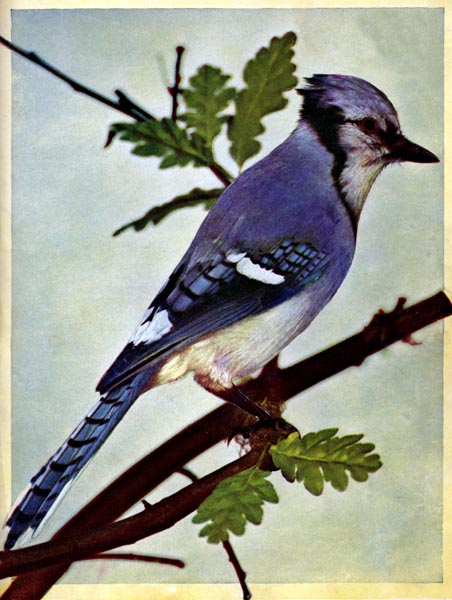
Birds Vol 1 #2 – The Blue Jay

Blue Jay (Cyanocitta cristata)

Blue Jay (Cyanocitta cristata)

Birds Illustrated by Color Photography – Revisited

Vol 1. February, 1897 No. 2

*


THE BLUE JAY.

imgd

URING about three-fourths of the year the American Jay is an extremely tame, noisy and even obstrusive bird in its habits. As the breeding season approaches he suddenly becomes silent, preparing the nest in the most secluded parts of his native forests, and exercising all his cunning to keep it concealed. He is omniverous but is especially fond of eggs and young birds. The Jay may be regarded as eminently injurious though in spring he consumes a number of insects to atone for his sins of stealing fruit and berries in autumn. He is a professional nest robber, and other birds are as watchful of him as is a mother of her babe. He glides through the foliage of the trees so swiftly and noiselessly that his presence is scarcely suspected until he has committed some depredation. The Robin is his most wary foe, and when the Jay is found near his nest will pursue him and drive him from the neighborhood. He is as brave as he is active, however, and dashes boldly in pursuit of his more plainly attired neighbors who venture to intrude upon his domain.

The Jay has a curious antipathy toward the owl, perching on trees above it and keeping up a continual screeching. Some years ago an Ohio gentleman was presented with a magnificent specimen of the horned owl, which he kept for a time in a large tin cage. In favorable weather the cage was set out of doors, when it would soon be surrounded by Jays, much in the manner described of the Toucan, and an incessant screeching followed, to which the owl appeared indifferent. They would venture near enough to steal a portion of his food, the bars of his cage being sufficiently wide apart to admit them. On one occasion, however, he caught the tail of a Jay in his claws and left the tormentor without his proud appendage.

The Jay remains with us throughout the year. He is one of the wildest of our birds, the shyest of man, although seeing him most. He makes no regular migrations at certain seasons, but, unless disturbed, will live out his life close to his favorite haunts. His wings show him to be unfitted for extended flight.

Jays are most easily discovered in the morning about sunrise on the tops of young live oaks. Their notes are varied. Later in the day it is more difficult to find them, as they are more silent, and not so much on the tree tops as among the bushes.

The Jays breed in woods, forests, orchards, preferring old and very shady trees, placing their nests in the center against the body, or at the bifurcation of large limbs. The nest is formed of twigs and roots; the eggs are from four to six.

Blue Jay at Bok Tower by Dan's Pix

Blue Jay II at Bok Tower by Dan’s Pix


THE BLUE JAY.

Something glorious, something gay,
Flits and flashes this-a-way!
’Thwart the hemlock’s dusky shade,
Rich in color full displayed,
Swiftly vivid as a flame—
Blue as heaven and white as snow—
Doth this lovely creature go.
What may be his dainty name?
“Only this”—the people say—
“Saucy, chattering, scolding Jay!”


Lee’s Addition:

Look at the birds of the air, for they neither sow nor reap nor gather into barns; yet your heavenly Father feeds them. Are you not of more value than they? (Matthew 6:26 NKJV)

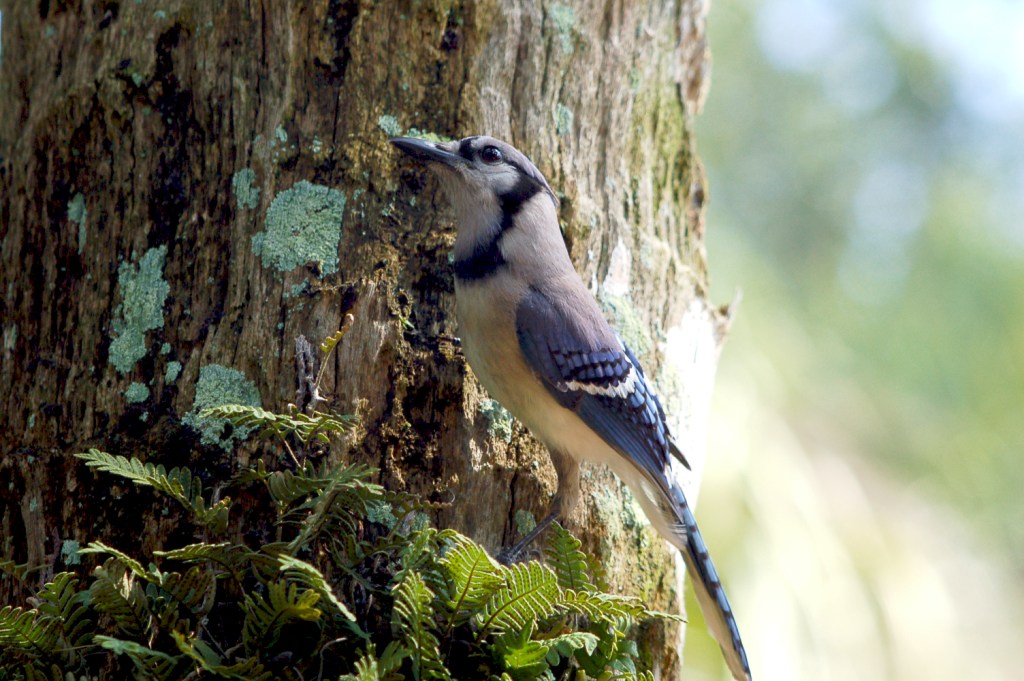
The Blue Jay (Cyanocitta cristata) is a passerine bird in the family Corvidae, native to North America. It is resident through most of eastern and central United States and southern Canada, although western populations may be migratory. It breeds in both deciduous and coniferous forests, and is common near and in residential areas. It is predominately blue with a white breast and underparts, and a blue crest. It has a black, U-shaped collar around its neck and a black border behind the crest. Sexes are similar in size and plumage, and plumage does not vary throughout the year. Four subspecies of the Blue Jay are recognized.

The Blue Jay mainly feeds on nuts and seeds such as acorns, soft fruits, arthropods, and occasionally small vertebrates. It typically gleans food from trees, shrubs, and the ground, though it sometimes hawks insects from the air. It builds an open cup nest in the branches of a tree, which both sexes participate in constructing. The clutch can contain two to seven eggs, which are blueish or light brown with brown spots. Young are altricial, and are brooded by the female for 8–12 days after hatching. They may remain with their parents for one to two months before leaving the nest.

Blue Jay (Cyanocitta cristata) by Daves BirdingPix

Blue Jay (Cyanocitta cristata) by Daves BirdingPix

The bird’s name derives from its noisy, garrulous nature, and it sometimes also called a “jaybird”.

Blue Jay (Cyanocitta cristata) from xeno-canto.org – Call

The Blue Jay measures 22–30 cm (9–12 in) from bill to tail and weighs 70–100 g (2.5–3.5 oz), with a wingspan of 34–43 cm (13–17 in). There is a pronounced crest on the head, a crown of feathers, which may be raised or lowered according to the bird’s mood. When excited or aggressive, the crest may be fully raised. When frightened, the crest bristles outwards, brushlike. When the bird is feeding among other jays or resting, the crest is flattened to the head.

Its plumage is lavender-blue to mid-blue in the crest, back, wings, and tail, and its face is white. The underside is off-white and the neck is collared with black which extends to the sides of the head. The wing primaries and tail are strongly barred with black, sky-blue and white. The bill, legs, and eyes are all black. Males and females are nearly identical.
As with other blue-hued birds, the Blue Jay’s coloration is not derived from pigments but is the result of light interference due to the internal structure of the feathers;[citation needed] if a blue feather is crushed, the blue disappears as the structure is destroyed. This is referred to as structural coloration.

Blue Jays have strong black bills used for cracking nuts and acorns, and for eating corn, grains and seeds, although they also eat insects such as beetles, grasshoppers, and caterpillars.

*

Birds Illustrated by Color Photograhy Vol 1 February 1897 No 2 - Cover

Birds Illustrated by Color Photograhy Vol 1 February 1897 No 2 – Cover

Birds Illustrated by Color Photography – Revisited – Introduction

The above article is the first article in the monthly serial for February 1897 “designed to promote Knowledge of Bird-Live.” These include Color Photography, as they call them, today they are drawings. There are at least three Volumes that have been digitized by Project Gutenberg.

To see the whole series of – Birds Illustrated by Color Photography – Revisited

*

(Information from Wikipedia and other internet sources)

Next Article – The Swallow-Tailed Indian Roller

Previous Article – Vol 1 #1 – The Golden Oriole

Wordless Birds

Links:
Xeno-canto.org

Wikipedia – Blue Jay

*

They even had ads in the Birds Illustrated by Color Photography.

Bicycle and Pen Ad

*

Ian’s Bird of the Week – Kea

Kea (Nestor notabilis) by Ian #1

Kea (Nestor notabilis) by Ian #1

Ian’s Bird of the Week – Kea ~ by Ian Montgomery

Newsletter ~ 1/26/12

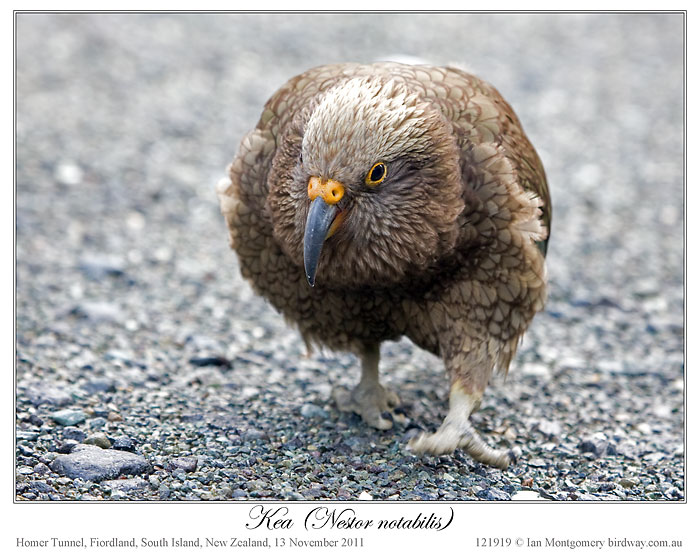
If you park near the entrance to the Homer Tunnel on the way to Milford Sound in Fiordland on the South Island of New Zealand, you are likely to be approached by one of these interesting-looking parrots.

‘Friendly-looking chap’, you might think, ‘I wonder what he’s after? Just saying Hello? Some food maybe?’. Wrong. This one, the Kea, has a one-track mind, and is only interested in destruction, or more specifically dismantling your vehicle.
Kea (Nestor notabilis) by Ian #2

Kea (Nestor notabilis) by Ian #2

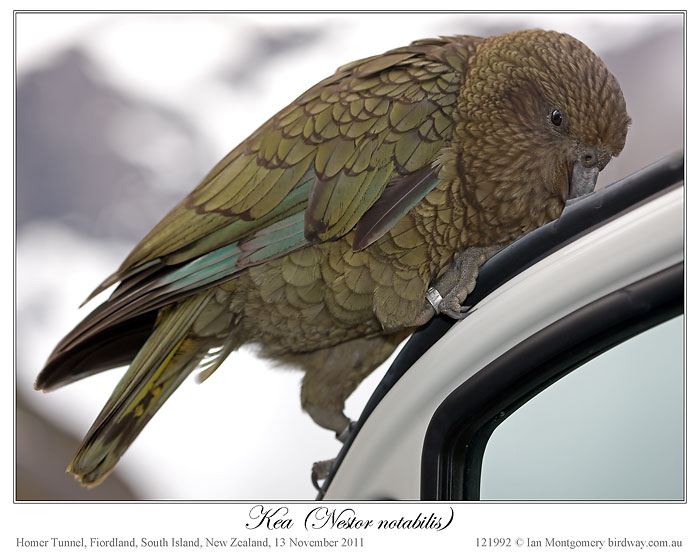
Quick as a flash, it and his pals will check it out for weak spots and set to work – this one with yellow cere, lower mandible and eye-ring is a juvenile delinquent (yes, that’s snow in the background, these are tough birds). Let’s see if we can rip the roof off.

Kea (Nestor notabilis) by Ian #3

Kea (Nestor notabilis) by Ian #3

Oh well, the roof was stronger than it looked. How about the braking light above the back door, this has some promising cracks.

Kea (Nestor notabilis) by Ian #4

Kea (Nestor notabilis) by Ian #4

Meanwhile, this hardened criminal (this is an adult bird) has learnt that the rubber is more vulnerable and attacks the lining of the front door.
Kea (Nestor notabilis) by Ian #5

Kea (Nestor notabilis) by Ian #5

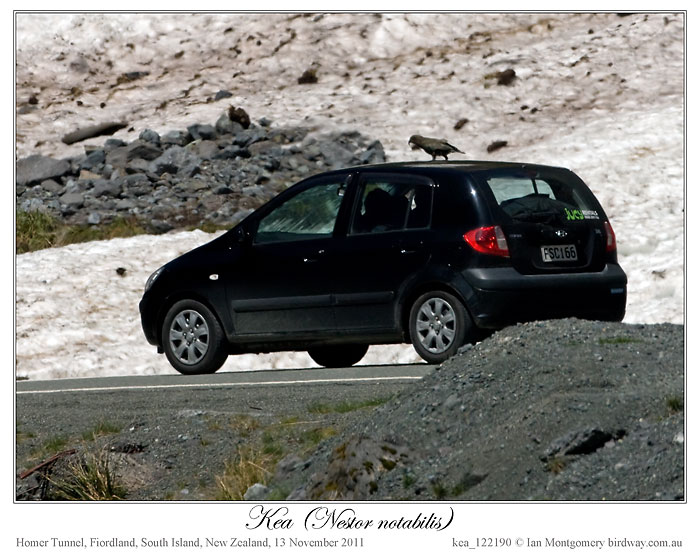
And don’t think you can get rid of us by just driving off. We’ll hang on grimly until we get blown off by the breeze.

Kea (Nestor notabilis) by Ian #6

Kea (Nestor notabilis) by Ian #6

Keas have the reputation of being playful, but the intensity and obsessiveness of their attacks looked anything like a game to me and more like a compulsion. In fact, their attacks did no noticeable damage even though I parked the camper there for some time so that I could look for the Rock Wrens (Bird of the Week #438). According to my field guide ‘the worst offending birds are caught and transferred to distant sites or taken into captivity’. Sounds familiar.

At one time, Keas were supposed to kill sheep, and the resulting bounty led to their persecution and decline. They have been fully protected since 1986 and the population is recovering.
Keas are quite large birds, 46cm/18in in length and weighting up to 1Kg/2.2lbs. They and their relatives the Kaka and the Kakapo comprise a taxonomically distinct lineage of New Zealand parrots not closely related to any others and usually placed either in their own family (IOC) or sub-family (Birdlife International). While the flightless Kakapo is critically endangered and the subject of an intensive rescue mission http://www.kakaporecovery.org.nz/ , the Kea is quite common in Alpine areas of the South Island and the Kaka occurs in the forests of both islands, though I failed to find it on this trip. It’s good to leave something for the next visit.
Best wishes
Ian
—

Ian Montgomery, Birdway Pty Ltd,
454 Forestry Road, Bluewater, Qld 4818
Phone: 0411 602 737 +61-411 602 737
Preferred Email: ian@birdway.com.au
Website: http://birdway.com.au


Lee’s Addition:

Sounds like you might want to keep an eye on your personal property around those birds! It is amazing how much the birds vary in their habits and diets. Every time Ian writes about his encounters with the various birds, it’s always different and interesting. Keep up the great birding, Ian, we enjoy your encounters with our avian friends around the world.

I know all the birds of the mountains, And the wild beasts of the field are Mine. (Psalms 50:11 NKJV)

See Ian’s Cockatoos & Allies and his Parrots & Allies, which are part of the Strigopidae Family. Those parrots along with the Cockatoos – Cacatuidae and Parrots – Psittacidae Families make up the Psittaciformes Order.

*

Redhead at Lake Morton – 1-20-12

*

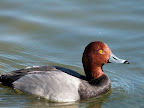
Saturday we headed over to Lakeland for some errands and took the cameras along. We stopped by Lake Morton to see who was there. Turned out to be quite a few interesting birds and got our third “Life Bird” of the year. This time I even was able to video it. There was a couple feeding the birds cracked corn and bread. They had quite a menagerie around them. They came from all over the Lake and we just stood there and photographed away. In amongst the Ring-necked Ducks was this Redhead. We searched all the birds, but he was the only Redhead to be found.

“The Redhead (Aythya americana) is a medium-sized diving duck, 14.5 in (37 cm) long with an 33 in (84 cm) wingspan.
The adult male has a blue bill, a red head and neck, a black breast, yellow eyes and a grey back. The adult female has a brown head and body and a darker bluish bill with a black tip.

The breeding habitat is marshes and prairie potholes in western North America. Loss of nesting habitat has led to sharply declining populations.

Females regularly lay eggs in the nests of other Redheads or other ducks, especially Canvasbacks. Redheads usually take new mates each year, starting to pair in late winter.

Following the breeding season, males go through a molt which leaves them flightless for almost a month. Before this happens, they leave their mates and move to large bodies of water, usually flying further north.

They overwinter in the southern and north-eastern United States, the Great Lakes region, northern Mexico and the Caribbean.

These birds feed mainly by diving or dabbling. They mainly eat aquatic plants” (Wikipedia)

For every kind of beast and bird, of reptile and creature of the sea, is tamed and has been tamed by mankind. (James 3:7 NKJV)

The people feeding these birds were practically proving this verse. Even the Great Blue Heron has come out to feed in the past.

Here is a list of all the birds I listed with eBird.org for 1-20-2012 at Lake Morton.

My Lake Morton List

Mute Swan 20 (Not even counting ones on north side of lake)
Black Swan 1
Muscovy Duck (Domestic type) 5
Mallard (Domestic type) 30 (Also at least 7 White Pekin type ducks)
Redhead 1

Ring-necked Duck 15


Ruddy Duck 1


American White Pelican 3
Great Blue Heron 1
Great Egret 2
White Ibis 18
Turkey Vulture 1
Bald Eagle 1


American Coot 40
Limpkin 2
Ring-billed Gull 10
Rock Pigeon 5
Tree Swallow 10
Boat-tailed Grackle 11

See also:

The whole Lake Morton Album

Redhead (duck) – Wikipedia

Sharing The Gospel

*

Birdwatching Adventure – Circle B Bar Reserve – 1/16/12

Sora (Porzana carolina) by Lee at Circle B

Sora (Porzana carolina) by Lee at Circle B

Dan and I went over to Circle B Bar Reserve on Monday, January 16th. We had a great time birding and we got to view a “Life Bird.” (This one is for real.) See the photo above. “Life Birds” are what you call a bird species the first time you see one. We now have 3 life birds this year. The Sora seen here is the second one for the year. The first one was a Hooded Grebe on Saturday. and I spotted a third one today, a Redhead, at Lake Morton.

The Sora is a bird in the Rails, Crakes & Coots – Rallidae Family. They are 7.9-9.8 in (20-25 cm) and weigh about 1.4-4 oz (49-112 g). So they are not a large bird. I found it among the Common Gallinule and that is what help me realize that it was different and smaller. Been looking for a Sora for months out at Circle B. Knew they were there, just never found one.

Belted Kingfisher (Megaceryle alcyon) by Lee Circle B

Belted Kingfisher (Megaceryle alcyon) by Lee Circle B

Another highlight of our trip was finding 2 Belted Kingfishers, close-up and personal. They are hard to photograph, but this time they were showing off right in front of us. They were hovering and then diving for their food. Was great to watch them. They are in the Kingfisher – Alcedinidae Family. They are medium sized, actually we both were surprised they are as large as they are. They always appear to have a very short squatty neck. They are 11–13.8 in (28–35 cm), weigh 4.9–6 oz (140–170 g) and have a 19-22 in (48-58cm) wingspan.

Belted Kingfisher (Megaceryle alcyon) by Lee Circle B

Belted Kingfisher (Megaceryle alcyon) by Lee Circle B

Let all those who seek You rejoice and be glad in You; And let those who love Your salvation say continually, “Let God be magnified!” (Psalms 70:4 NKJV)

We also spotted several Alligators.

Here is the list that I turned in to eBird.org:

37 species total

Black-bellied Whistling-Duck 20
Mottled Duck 2
Ruddy Duck 2
Double-crested Cormorant 2
Anhinga 1
Great Blue Heron 2
Great Egret 3
Little Blue Heron 2
Cattle Egret 15
Turkey Vulture 50
Osprey 1
Northern Harrier 1
Common Gallinule 10
American Coot 20
Sandhill Crane 6
Killdeer 1
Mourning Dove 5
Tree Swallow 30
Northern Mockingbird 1
Palm Warbler 3
Yellow-rumped Warbler 1
Boat-tailed Grackle 5

Wordless Birds

*

Ian’s Bird of the Week – Paradise Shelduck

Paradise Shelduck (Tadorna variegata) by Ian 1

Paradise Shelduck (Tadorna variegata) by Ian 1

Ian’s Bird of the Week – Paradise Shelduck ~ by Ian Montgomery

Newsletter – 1/16/12

Shelducks are all rather splendid, so this one has to be particularly fine to earn the moniker ‘Paradise’. Interestingly, it is the white-headed female that is, I think, the more striking as in the first photo of a female having a drink (of salt water!) at Milford Sound.

Paradise Shelduck (Tadorna variegata) by Ian 2

Paradise Shelduck (Tadorna variegata) by Ian 2

The second photo shows the same bird stretching her wing to show us the gorgeous emerald green secondary flight feathers. Like all Shelducks, these are large ducks, averaging 63cm/25in in length and the males, averaging 1,700g/3.7lbs, are larger than the females, 1,400g/3.1lbs.
Paradise Shelduck (Tadorna variegata) by Ian 3

Paradise Shelduck (Tadorna variegata) by Ian 3

Meanwhile her mate, who has a dark brown head and finely patterned wing coverts, decides it’s time to go for a swim.
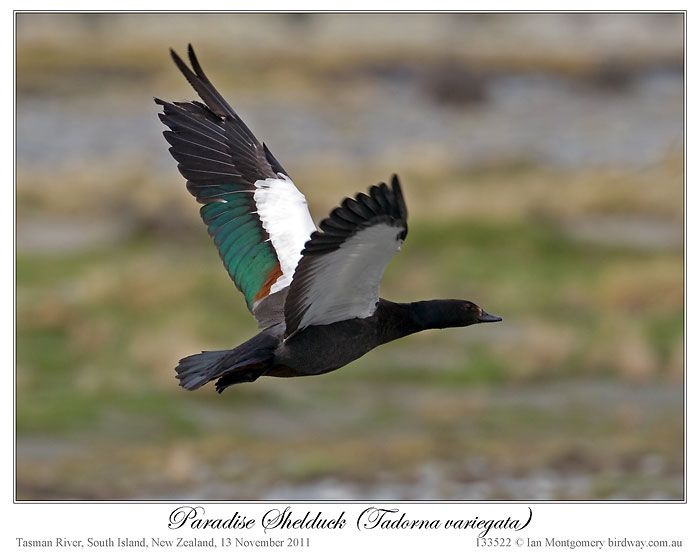
The males have the same black, emerald green and white wing pattern as the female as shown by this male flying along a river in the Waitaki Valley.
Paradise Shelduck (Tadorna variegata) by Ian 4

Paradise Shelduck (Tadorna variegata) by Ian 4

Unlike most other avian species where the female is more colourful, such as Buttonquails and Cassowaries, here there is no switching of gender roles: the female incubates the eggs while the male vigorously defends the territory from predators. Paradise Shelducks maintain pair bonds from one year to the next returning to the same territory. They are partial to both high country riverbeds and farmland and the population has benefitted from the clearing of land for pasture since European settlement.
The Paradise Shelduck is a New Zealand endemic, though a flock of 5 spent arrived on Lord Howe Island in March 1950 and remained for over a month so it is included in the official Australian list.
Best wishes
Ian
—

Ian Montgomery, Birdway Pty Ltd,
454 Forestry Road, Bluewater, Qld 4818
Phone: 0411 602 737 +61-411 602 737
Preferred Email: ian@birdway.com.au
Website: http://birdway.com.au


Lee’s Addition:

What a neat looking bird. Both the male and the female have such a clean look about them. Shelducks are part of the Anatidae – Ducks, Geese, and Swans Family. They are all in the Tadorna Genus which includes 6 Shelducks. We do not have Shelducks established here in the U.S.

And God blessed them, saying, “Be fruitful and multiply and fill the waters in the seas, and let birds multiply on the earth.” (Genesis 1:22 ESV)

See Ian’s Shelducks on his Birdway website.

Australian Shelduck

Paradise Shelduck

Common Shelduck

Radjah/Raja Shelduck

*

Birdwatching Adventure for January 7, 2012

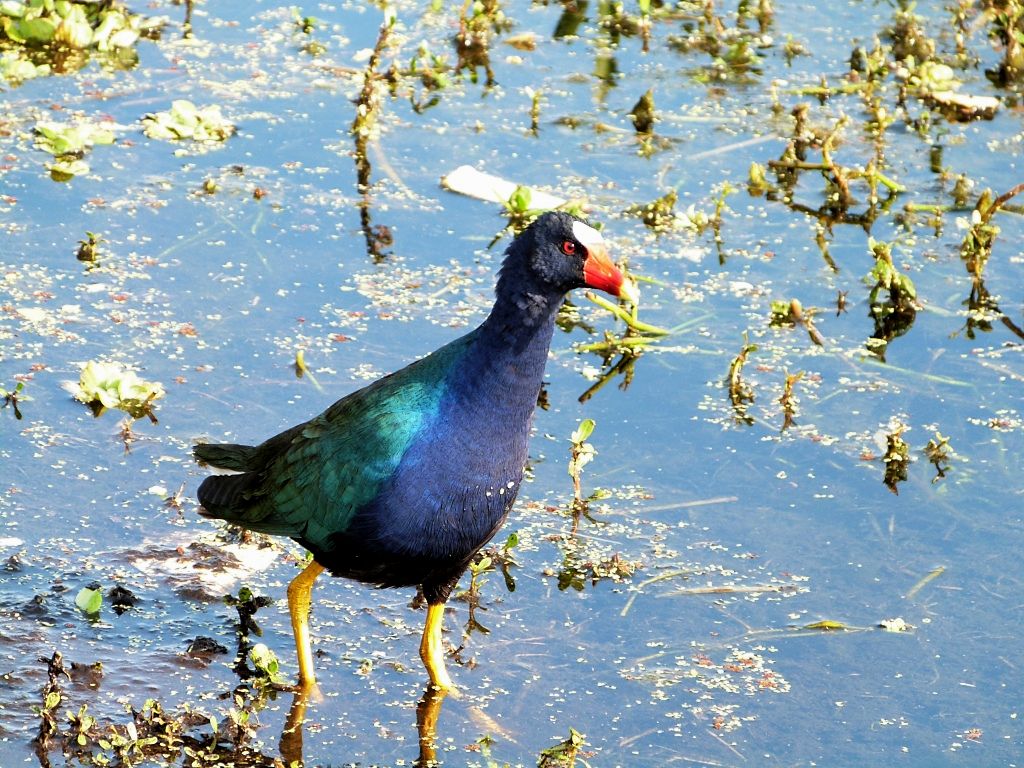
Purple Gallinule by Lee at Lake Parker 1-7-12

Purple Gallinule by Lee at Lake Parker 1-7-12

In the last 10 days, Dan and I have finally been able to go birdwatching. We have had three birding trips right here in Polk County.

Twice we went up to Lake Parker Park in Lakeland. We went on the 7th and again on the 14th of January. The 7th was our 1st adventure of 2012. Here is a list of what I turned in to ebird.org which is a listing service that was launched in 2002 by the Cornell Lab of Ornithology and National Audubon Society to track birds. Here is the list for the January 7, 2012:

Comments: Along shore on way to park and in park
26 species (+1 other taxa)
Mallard (Domestic type) 8
Ring-necked Duck 3
Pied-billed Grebe 4
Double-crested Cormorant – Immature 4
Anhinga 5
Great Blue Heron 2
Great Egret 2
Snowy Egret 3
Cattle Egret 1
White Ibis 10
Glossy Ibis 4
Roseate Spoonbill 1
Turkey Vulture 1
Osprey 4
Red-shouldered Hawk 1
Purple Gallinule 3
Common Gallinule 5
American Coot 7
Ring-billed Gull 20
Caspian Tern 1
Belted Kingfisher 1
Downy Woodpecker 1
Blue-gray Gnatcatcher 5
Palm Warbler 1
Pine Warbler 3
Yellow-rumped Warbler 2
Boat-tailed Grackle 20
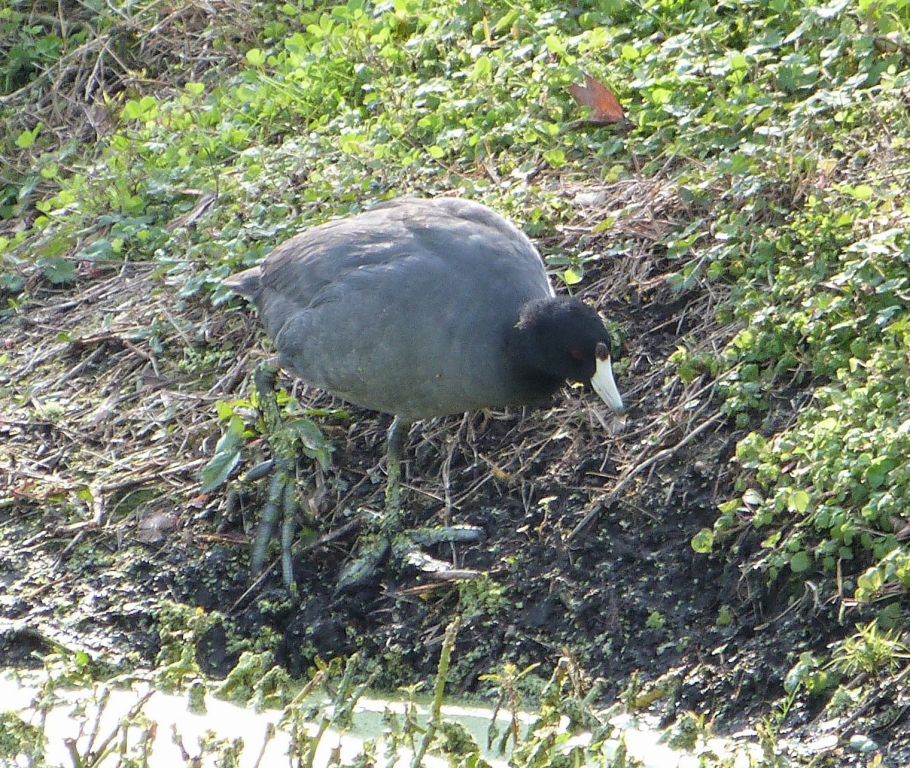
American Coot showing feet by Lee LPkr

American Coot showing feet by Lee LPkr

American Coots have an amazing foot structure. It’s not what you would expect but has lobed toes rather than webbed feet. Photos of foot on Google Search

Which doeth great things past finding out; yea, and wonders without number. (Job 9:10 KJV)

I also turned in the birds I saw coming and going to the park, which is 10 miles from our house:
9 species
Black Vulture 5
Turkey Vulture 10
Sandhill Crane 3
Rock Pigeon 4
Eurasian Collared-Dove 10
Mourning Dove 1
Fish Crow 50
Boat-tailed Grackle 5
House Finch 2
Palm Warbler cropped by Lee LPP

Palm Warbler (Mistaken Pipit) by Lee LPP

All in all, it was a great birding day. The highlight was getting a new bird for my life list of birds seen. (Update This Pipit turned out to be a Palm Warbler, NOT a life bird: We spotted an American Pipit along the shore before we arrived at the park.) We stopped because Dan had spotted a Roseate Spoonbill. The county had a fair sized alligator pinned up right there also.

Last year I saw 2 “life birds” but it took all year to find them. I am writing this on the 17th and I already have 2  to tell you about, but I will save those for the next articles.
*