***
THOU DIDST HIDE THY FACE
***
“LORD, by thy favour thou hast made my mountain to stand strong: thou didst hide thy face, and I was troubled.” (Psalms 30:7 KJV)
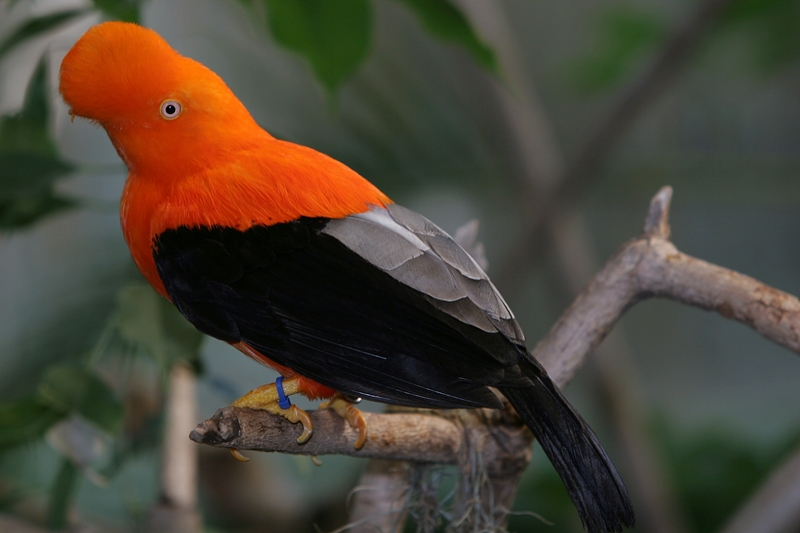
Andean Cock-of-the-rock (Rupicola peruvianus) by SanDiegoZoo
*
*
“LORD, by thy favour thou hast made my mountain to stand strong: thou didst hide thy face, and I was troubled.” (Psalms 30:7 KJV)
Andean Cock-of-the-rock (Rupicola peruvianus) by SanDiegoZoo
*
*

“Yea, the sparrow hath found an house, and the swallow a nest for herself, where she may lay her young, even thine altars, O LORD of hosts, my King, and my God.” (Psalms 84:3 KJV)
Barn Swallow by Dan Taken in a cabin in Smokies
*
*
“Withhold not good from them to whom it is due, when it is in the power of thine hand to do it.” (Proverbs 3:27 KJV)
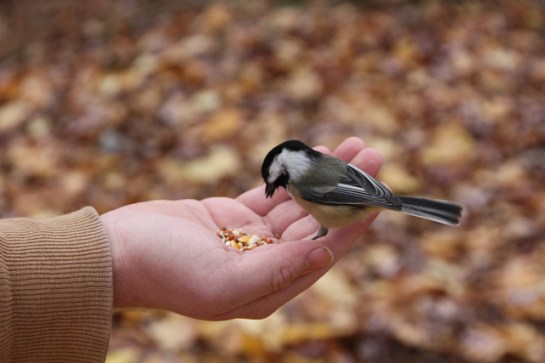
Chickadee Eating From Hand ©Flickr Ted Sakshaug
*
*
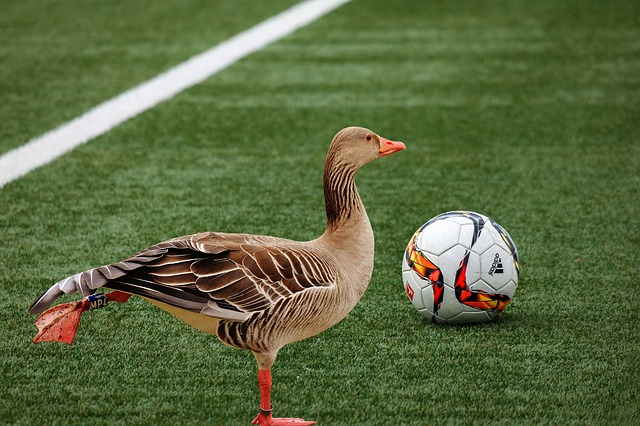
Goose with Soccer Ball ©Pixabay (Pete’s Friend)
Once there was a duck named Pete who was taking his usual morning route around the pond in which he lived. It was Saturday and the weather was cool and breezy. On this morning Pete noticed a large group of people gathered inside a huge patch of soft green grass. Most of the people were children and they all wore matching colored uniforms.
Pete grew curious and decided to flap up and peer through the fence to see what was going on. All around Pete people were cheering as the children ran back and forth with some kind of black and white ball. At one point, Pete watched one of the children kick the black and white ball into a small net and he listened to everyone cheer ecstatically. A man wearing a black and white-striped shirt blew a whistle loudly and the team members who wore the same green uniform as the boy who scored the goal ran back to the bench cheering. Apparently, whatever game they were playing was over and Pete guessed that the green team had won something.
Pete became very interested in this game and how it worked. He decided to stay and watch another game to understand the rules. The more Pete watched from the sidelines the more interesting the game became. Eventually, he realized that the name of the game was soccer, the black and white ball was called a soccer ball, and the players could not touch the ball with their hands.
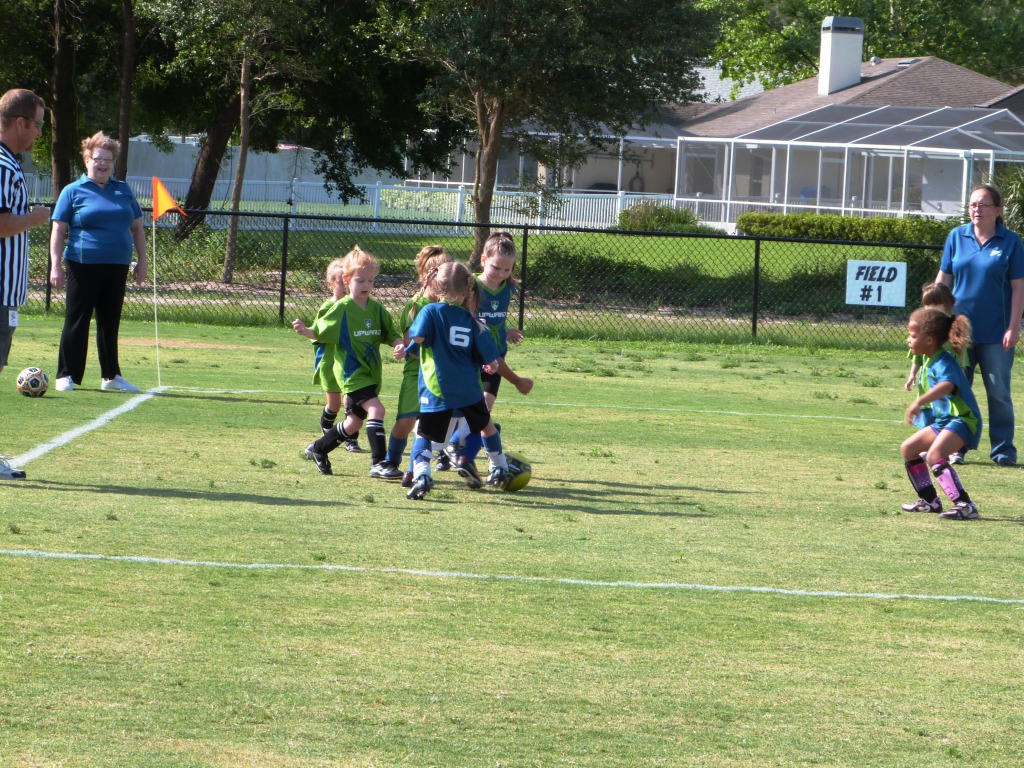
Upward Soccer 4-5 yr olds.
As Pete looked around, carefully taking in every detail, he noticed a shed that stood near the edge of the field. Glancing inside, Pete found an assortment of cones, soccer balls, and uniforms. Pete automatically decided to get into the spirit of things and pulled a green uniform out of a box and put it on. Shoving his head into the shirt, Pete wriggled and pushed his head through one of the arm sleeves. This seemed to work, but he found it difficult. Despite this difficulty, he made sure not to touch the ball with his wings just like the players.
Eventually, Pete waddled out of the shed in his green uniform with the soccer ball. He attempted to kick it again but only succeeded in rolling it onto the middle of the field. Pete flew after it to try to bring the ball back. Suddenly the referee blew his whistle and stopped the game. Embarrassed, Pete kicked the ball as best he could off the field. All of the players, however, were impressed that Pete was able to kick it so well because he was a duck. Since the team with green uniforms was short a player they were able to convince the referee to let Pete play even though his uniform was not quite right. The referee called Pete over, and Pete happily flapped back onto the field to finish the game.
Pete did his best to waddle back and forth and catch up with the other players. Every now and then he was able to kick the ball to another player. The game was tied because each team had scored one goal.
As time began to run out and there were only a few minutes left, one of the players suddenly passed the ball to Pete. Because Pete was close to the other team’s goal he quickly waddled down the field with the ball, trying not to fly.

Once Pete reached the goal he did his best to kick the ball. He kicked the ball as hard as he could and was surprised when the ball sailed over the goalie’s head into the net. The entire crowd cheered for Pete because he had helped the green team win the game. Pete had never been so happy until that moment when he scored the goal, and the team was very grateful that Pete had been there to help them. From then on, Pete watched every single game that the people played, and always wore the green uniform he had found in the shed just in case the green team was short a player.
“… to be ready to every good work,” (Titus 3:1b KJV)
Lee’s Addition:
Another great story from Emma Foster. I felt since our Duck Pete was small, he may have played with our youngest Upper Soccer team.
You might enjoy these videos I found to help show off Emma’s Soccer Duck.
*
*
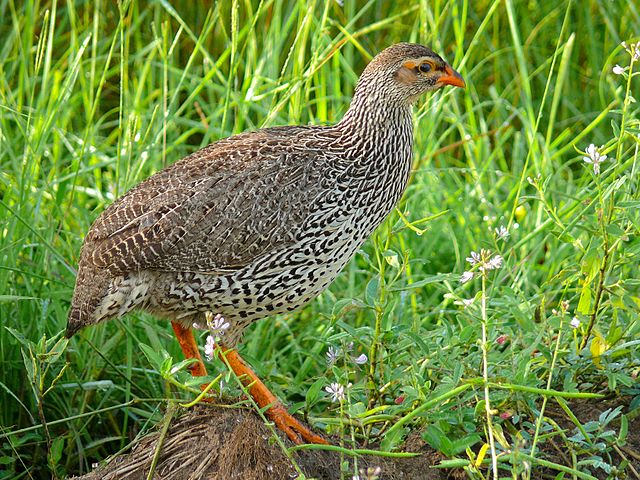
“If my step hath turned out of the way, and mine heart walked after mine eyes, and if any blot hath cleaved to mine hands;” (Job 31:7 KJV)
Heuglin’s Francolin (Pternistis icterorhynchus) ©WikiC
*
*

“And white robes were given unto every one of them; and it was said unto them, that they should rest yet for a little season, until their fellow-servants also and their brethren, that should be killed as they were, should be fulfilled.” (Revelation 6:11)
Name and Credit for Bird Photo ©AllAboutBirds – DR Franz
*
*
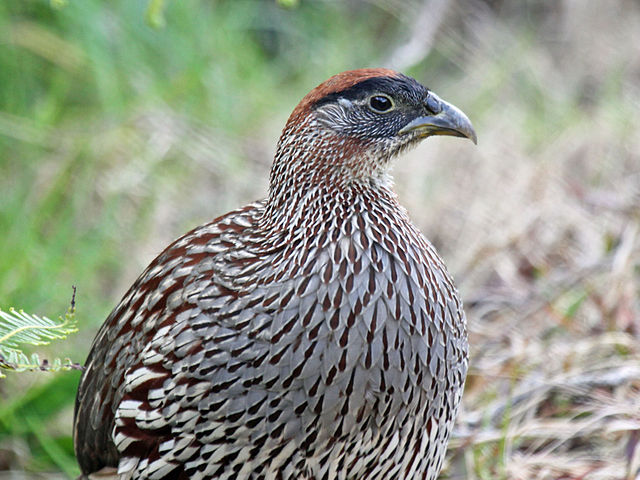
Erckel’s Francolin (Pternistis erckelii) ©WikiC
“Of fowls also of the air by sevens, the male and the female; to keep seed alive upon the face of all the earth.” (Genesis 7:3 KJV)
This Sunday’s section of the Pheasants and allies – Phasianidae Family has 32 Francolins and 8 Spurfowl contained in 5 genera.
“Francolins are birds that traditionally have been placed in the genus Francolinus, but now commonly are divided into multiple genera (see Taxonomy), although some of the major taxonomic listing sources have yet to divide them. The francolins’ closest relatives are the junglefowl, long-billed partridge, Alectoris and Coturnix. Together this monophyletic clade may warrant family status as the Gallusinidae.
When all are maintained in a single genus, it is the most diverse of the Galliformes, having by far the most members. Francolins are terrestrial (though not flightless) birds that feed on insects, vegetable matter and seeds. Most of the members have a hooked upper beak, well-suited for digging at the bases of grass tussocks and rootballs. They have wide tails with fourteen retrice feathers. Most species exhibit spurs on the tarsi.”
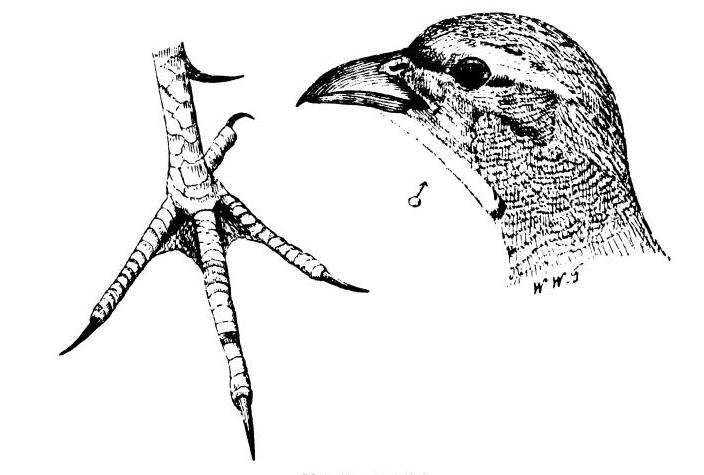
Grey Francolin (Francolinus pondicerianus) ©WikiC Spurs of the male
“Of the approximately 40 living species, the natural range of five (comprising the genus Francolinus) are restricted to Asia, while the remaining genera are restricted to Africa. Several species have been introduced to other parts of the world, notably Hawaii.” (Wikipedia, with editing)
The Francolinus genre is: Black Francolin (Francolinus francolinus), Painted Francolin (Francolinus pictus), Chinese Francolin (Francolinus pintadeanus), Grey Francolin (Francolinus pondicerianus), and the Swamp Francolin (Francolinus gularis).
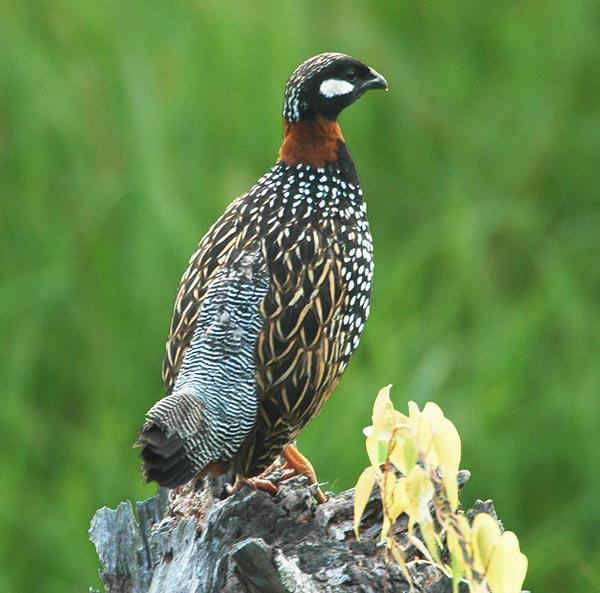
Black Francolin (Francolinus francolinus) by Nikhil Devasar
The four Peliperdix species are the Latham’s Francolin (Peliperdix lathami), Coqui Francolin (Peliperdix coqui), White-throated Francolin (Peliperdix albogularis), and the Schlegel’s Francolin (Peliperdix schlegelii)
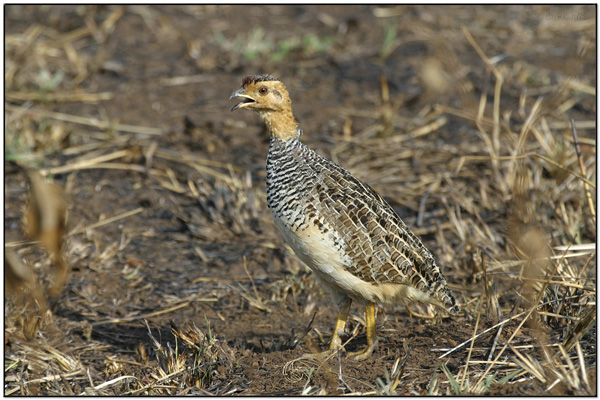
Coqui Francolin (Peliperdix coqui) by Dave’s BirdingPix
The next seven belong in the Scleroptila genre. The Ring-necked Francolin (Scleroptila streptophora), Grey-winged Francolin (Scleroptila afra), Red-winged Francolin (Scleroptila levaillantii),
Finsch’s Francolin (Scleroptila finschi), Shelley’s Francolin (Scleroptila shelleyi), Moorland Francolin (Scleroptila psilolaema), and the Orange River Francolin (Scleroptila gutturalis).
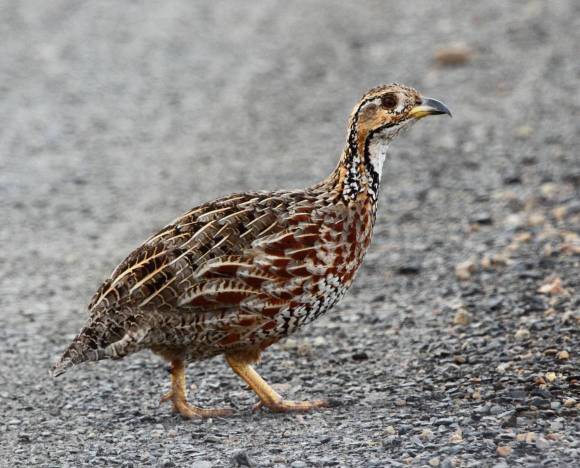
Shelley’s Francolin (Scleroptila shelleyi) ©WikiC
The lone Crested Francolin (Dendroperdix sephaena) is the one in its genre.
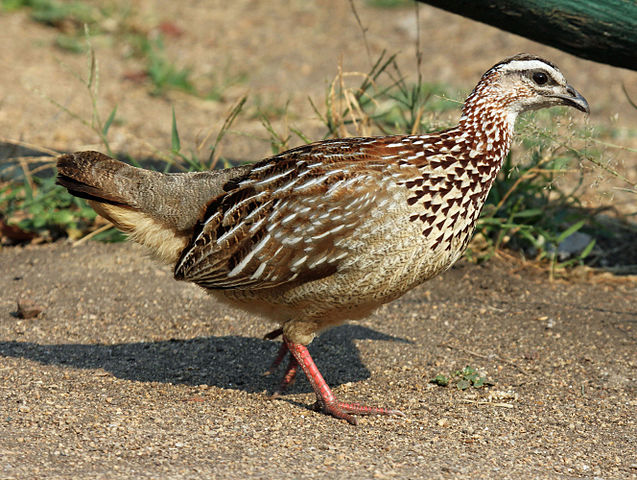
Crested Francolin (Dendroperdix sephaena) ©WikiC
The Pternistis has two names of birds in its genera. The Francolins and the Spurfowls. ” Its 23 species range through Sub-Saharan Africa. They are commonly known as francolins or spurfowl but are closely related to jungle bush quail, Alectoris rock partridges and Coturnix quail. The species are strictly monogamous, remaining mated indefinitely. They procure most of their food by digging. Partridge-francolins subsist almost entirely on roots, beans of leguminous shrubs and trees, tubers, seed, feasting opportunistically on termites, ants, locusts, flowers and fruit.
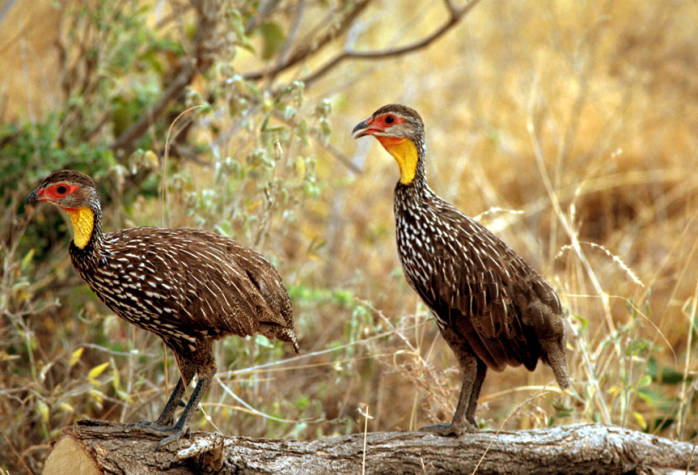
Yellow-necked Spurfowl (Pternistis leucoscepus) ©USFWS
Scaly Francolin (Pternistis squamatus), Ahanta Francolin (Pternistis ahantensis), Grey-striped Francolin (Pternistis griseostriatus), Hildebrandt’s Francolin (Pternistis hildebrandti), Double-spurred Francolin (Pternistis bicalcaratus), Heuglin’s Francolin (Pternistis icterorhynchus), Clapperton’s Francolin (Pternistis clappertoni), Harwood’s Francolin (Pternistis harwoodi), Swierstra’s Francolin (Pternistis swierstrai), Mount Cameroon Francolin (Pternistis camerunensis), Handsome Francolin (Pternistis nobilis), Jackson’s Francolin (Pternistis jacksoni), Chestnut-naped Francolin (Pternistis castaneicollis), Djibouti Francolin (Pternistis ochropectus), Erckel’s Francolin (Pternistis erckelii), Hartlaub’s Spurfowl (Pternistis hartlaubi), Red-billed Spurfowl (Pternistis adspersus), Cape Spurfowl (Pternistis capensis), Natal Spurfowl (Pternistis natalensis), Yellow-necked Spurfowl (Pternistis leucoscepus), Grey-breasted Spurfowl (Pternistis rufopictus), Red-necked Spurfowl (Pternistis afer), and Swainson’s Spurfowl (Pternistis swainsonii).
“I know all the fowls of the mountains: and the wild beasts of the field are mine.” (Psalms 50:11 KJV)
“Hiding in the Shadow of the Rock” ~ Dr. Richard Gregory
*
Sunday Inspiration – Pheasants and Allies I
Sunday Inspiration – Pheasants and Allies II
Pheasants and allies – Phasianidae
*
Just thought you might enjoy watching this from Bellamoonnature.
“As an eagle stirreth up her nest, fluttereth over her young, spreadeth abroad her wings, taketh them, beareth them on her wings:” (Deuteronomy 32:11 KJV)
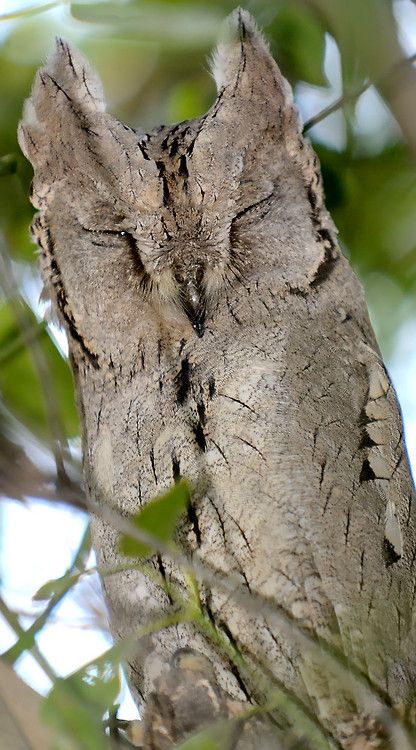
“And there sat in a window a certain young man named Eutychus, being fallen into a deep sleep; and as Paul was long preaching, he sunk down with sleep, and fell down from the third loft, and was taken up dead.” (Acts 20:9)
Napping Pallid Scops Owl by Yogesh Bhandarkar From Pinterest
*
*

“A froward man soweth strife: and a whisperer separateth chief friends. (Proverbs 16:28)
Peach-faced Lovebird, shot in Shanghai Zoo (Whispering Lovebirds) ©Feng Wei
*
*
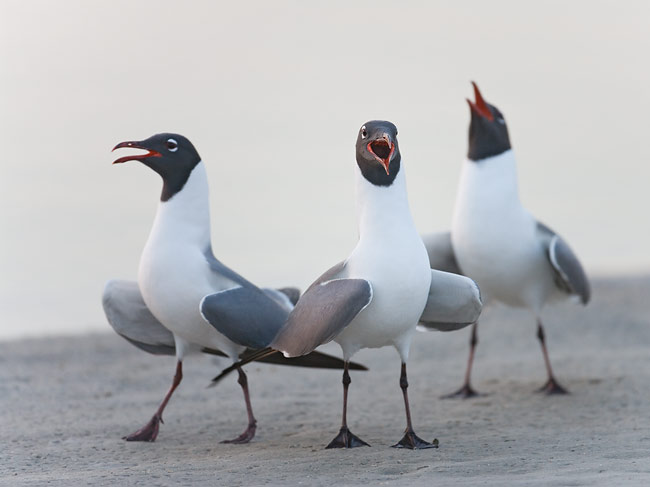
“There are certain Jews whom thou hast set over the affairs of the province of Babylon, Shadrach, Meshach, and Abednego; these men, O king, have not regarded thee: they serve not thy gods, nor worship the golden image which thou hast set up. (Daniel 3:12)
Laughing Gull (Leucophaeus atricilla) displaying ©Birdsasart
*
*

“This he said, not that he cared for the poor; but because he was a thief, and had the bag, and bare what was put therein.” JOHN 12:6
Frigatebird©Sciencealert
*
*
 Lee's Birdwatching Adventures Plus