Walter the Directionally Challenged Goose, Part 2

Walter the Directionally Challenged Goose, Part 2

by Emma Foster
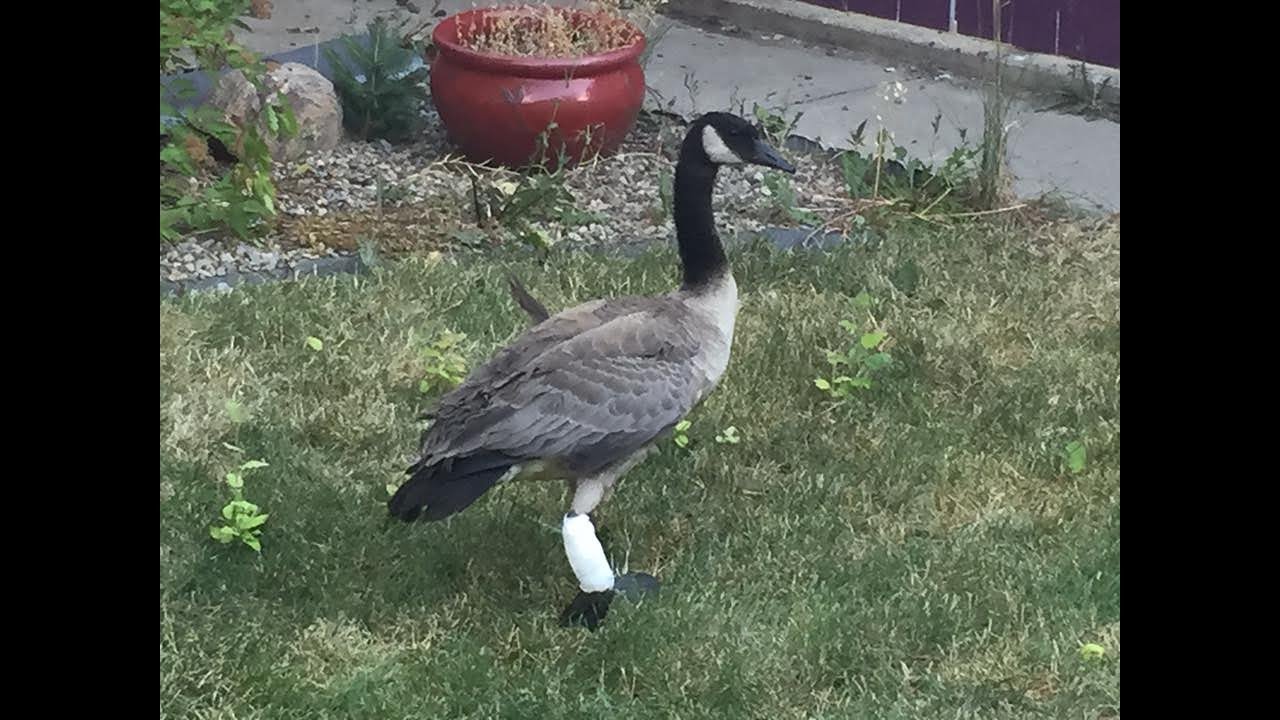
Walter with injured foot, in Part 1

Walter the goose didn’t have to worry about flying south for the winter now that he lived at the veterinary clinic. Whenever winter returned, Walter was safe and warm inside the clinic, and during the summer he could walk outside and explore. However, Walter made sure to stay close to the clinic so he wouldn’t get lost. He was still directionally challenged.

One summer day Walter was walking around by the garage at the veterinary clinic. A truck drove up and parked in front of the garage. Walter had to quickly waddle out of the way to avoid getting run over, but when he was a good distance away he noticed a trailer attached to the back end of the truck. Inside the trailer was a small horse.
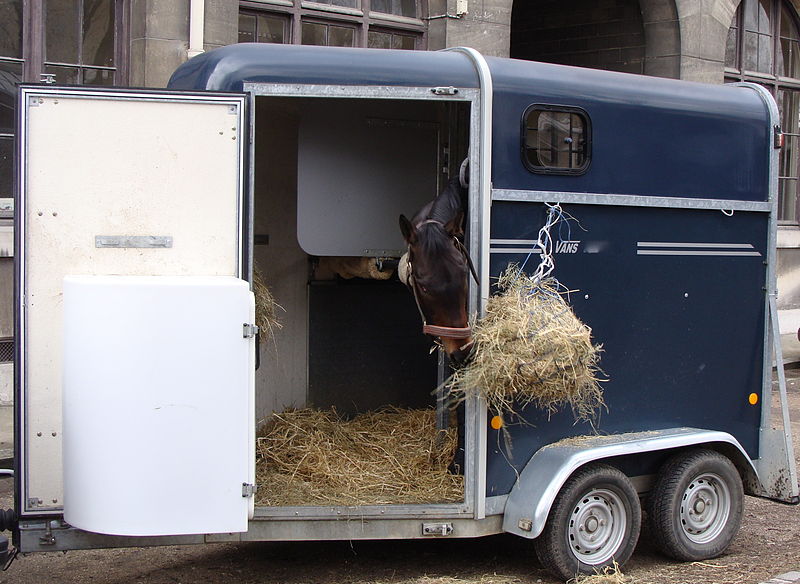
Horse in Trailer ©WikiC

The horse looked out the window when Walter approached the trailer. Walter had seen many different kinds of animals during his short time at the vet, but he had never seen a horse before. When Walter craned his neck to see inside, he could tell that the horse was nervous. Every now and then, Walter needed to come into the rooms to calm the other animals down, since they were nervous about being at the vet. Walter asked the horse his name to help him not feel so nervous. The horse said that his name was Angus. He also mentioned that he didn’t know why he was there, but this was his first time at the vet without his mother.

Walter sat by the trailer while the vets came out and Angus was brought out of the trailer. Angus became so nervous that he bolted, jumping a fence and running into the fields. Walter flapped after him, determined that his new friend would overcome his fear.
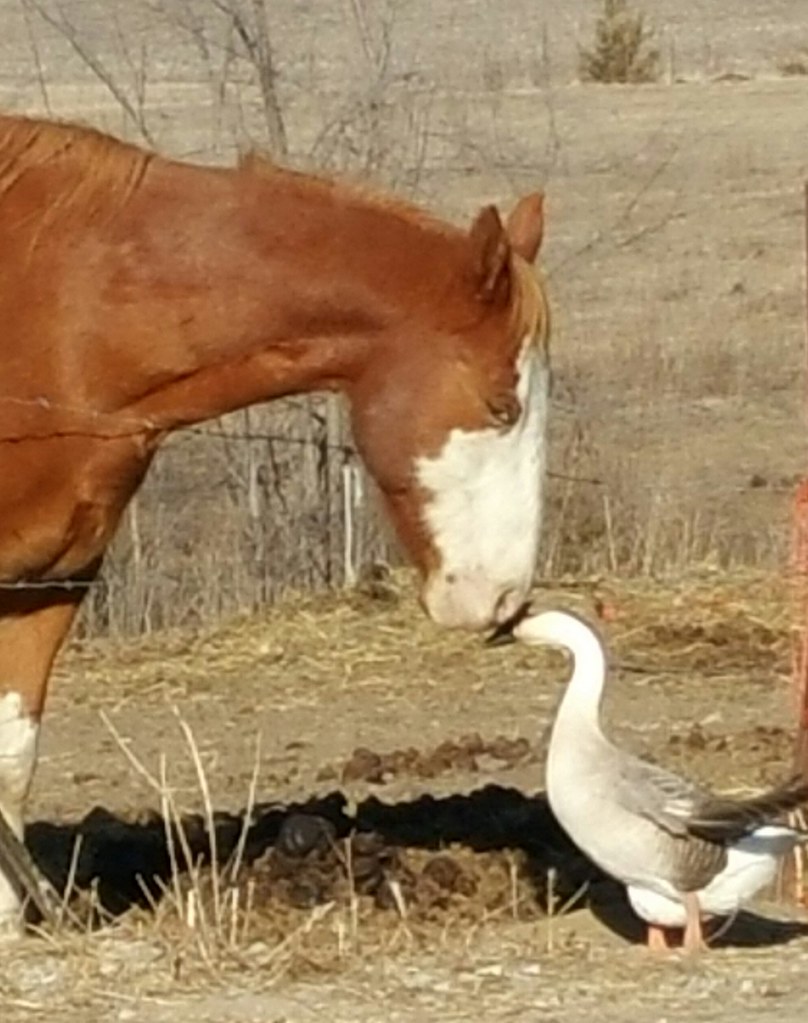
A Goose and her horse ©Flickr Lisa Donahoo

A Goose and her horse ©Flickr Lisa Donahoo

Walter flew over a small field and a patch of trees. By then, the vets and Angus’s owner were far behind. Walter searched for a long time, turning in different directions before resting on a tree stump to see where he was. To his surprise, when he looked ahead, he noticed the veterinary clinic! He had gone in circles, since he was so directionally challenged.

Deciding to go back the other way, Walter flew in the opposite direction, took a right, then landed in another field that he had never been in before. Walter sat in the brush and thought, but he did not give up. Suddenly he realized that the tall grass around him was moving a little. Walter crouched down, but Angus pulled his head over the grass and looked down at him. Angus had seen him land in the field. Walter explained that he had been looking for Angus, but he had gotten lost. Angus decided that, if Walter could fly around looking for him and not give up or become afraid, he didn’t have to be afraid about being at the vet for a checkup. He knew Walter would be right there with him.
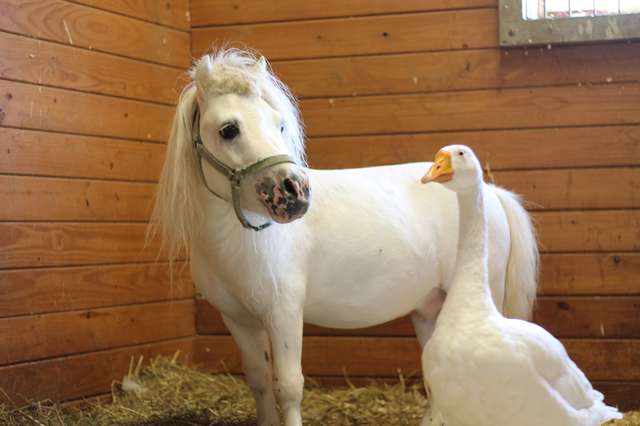
Mini Horse and Friend

Walter flapped up onto Angus’s back, and Angus trotted back to the clinic, where Angus’s owner and the vets had been waiting for them. They were all extremely glad that they had both returned. Walter stood by Angus the entire time he received his checkup. Angus was very healthy. He did have to receive a few shots, but Walter assured him they weren’t that bad. When Angus’s checkup was over, Angus had to say goodbye to Walter. Walter hoped that he would see Angus again soon, but only for a checkup.


Lee’s Addition:

“Therefore encourage one another and build up one another, just as you also are doing.” (1 Thessalonians 5:11 NASB)

We met Walter in Walter the Directionally Challenged Goose.  Walter seems to have found his permanent home and a mission to be a encourager. I love Emma’s stories, but it becomes challenging to illustrate these adventures. So forgive the different types of geese and horses.

What I did find is a very interesting story about a real horse and goose. This is not to take away from Emma’s Story, but to show that it could be more true than she thought.

“A man who has friends must himself be friendly, But there is a friend who sticks closer than a brother.” (Proverbs 18:24 NKJV)
See All of Emma’s Stories

Backyard Birding – Maybe Part III

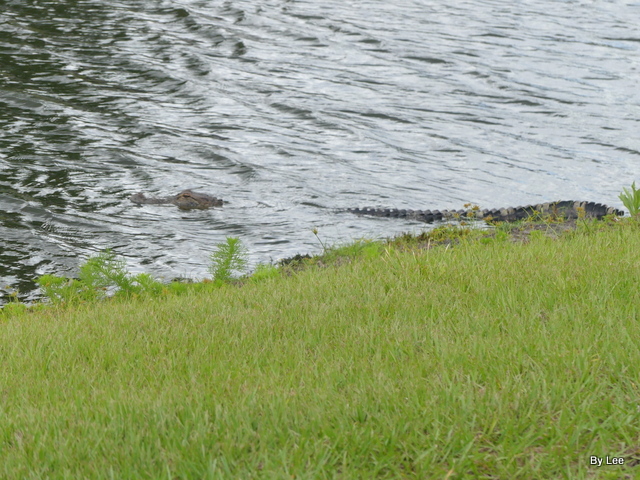
Gator and Sandhill Cranes 05-20-20 by Lee

Gator and Sandhill Cranes 05-20-20 by Lee

“Ponder the path of your feet, And let all your ways be established.” (Proverbs 4:26 NKJV)

In Backyard Birding – Maybe Part I and Part II, I referred to our gator that hangs out at the edge of our backyard. Here is the video I promised.

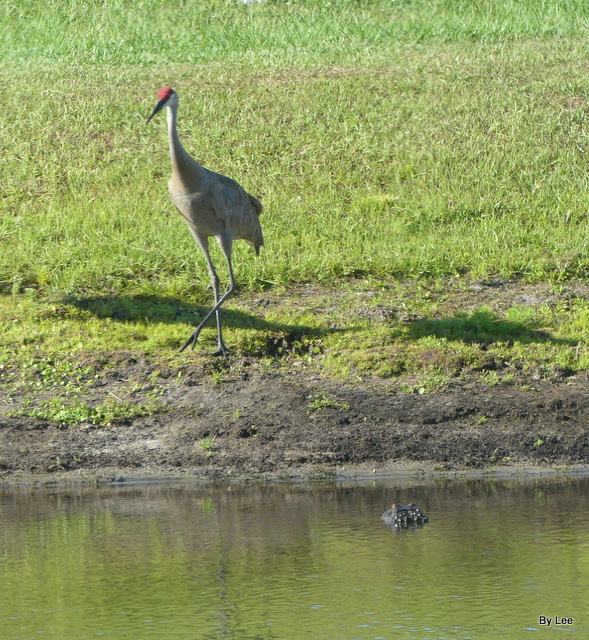
The two Sandhills had been on our back lanai and we had shooed them off. They went down to the water at the end of our yard and started teasing the gator. They jumped up a few times and just looked at him. Then they flew across to the other bank, and that is where I captured this on video.

[I thought I knew how to kill parts of the sound, but it killed it all. So I left the sound on. We were eating our breakfast when all of this was occurring. I was sitting in my chair filming this.]

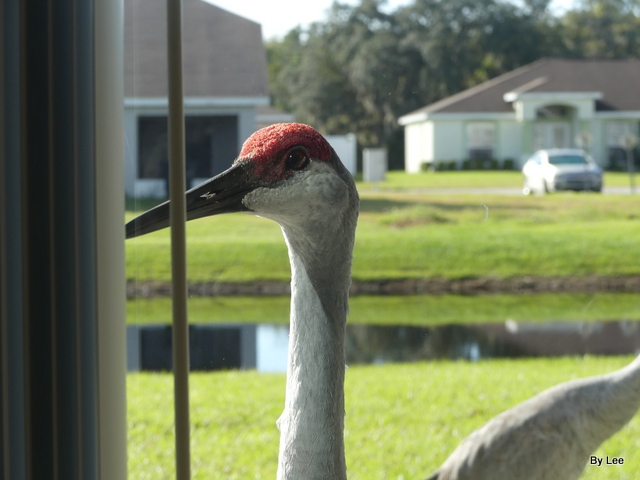
From the following articles, it is obvious that Sandhill Cranes are quite common here in central Florida. They are fun to watch, except when the peck on the back sliding door.

Sandhill Cranes ousidet window Coventry by Lee

Sandhill Cranes ousidet window Coventry by Lee

“Yea, the stork in the heaven knoweth her appointed times; and the turtle and the crane and the swallow observe the time of their coming; but my people know not the judgment of the LORD.” (Jeremiah 8:7 KJV)

“Sandhill Cranes mate for life, choosing their partners based on dancing displays. Displaying birds stretch their wings, pump their heads, bow, and leap into the air.” [All About Birds – Sand Hill Cranes]

More about Cranes:

Backyard Birdwatching – Maybe Part II

Old Bench for Backyard Birdwatching

Old Bench for Backyard Birdwatching

Our gator adventure has been keeping me from using my bench, but we still have lots of birds to watch. Just from a safer distance. In Backyard Birdwatching – Maybe, I explained why I haven’t used my bench too much yet. The talk of the neighborhood, “our own gator,” brings visitors to the water. As I mentioned before, we don’t get to see it most of the time because of the embankment.

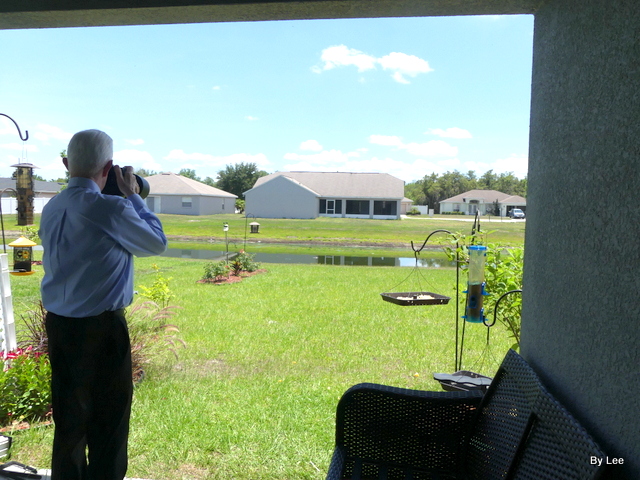
When he [or she] moves more to the middle of the water, then we get to see it. When we came home from church, Sunday (5-17), there he was. We both grabbed our cameras, which we now keep at the table by the door. Here is what I saw:

Dan taking a photo of the gator and me taking of photo of him.

Dan taking a photo of the gator and me taking of photo of him.

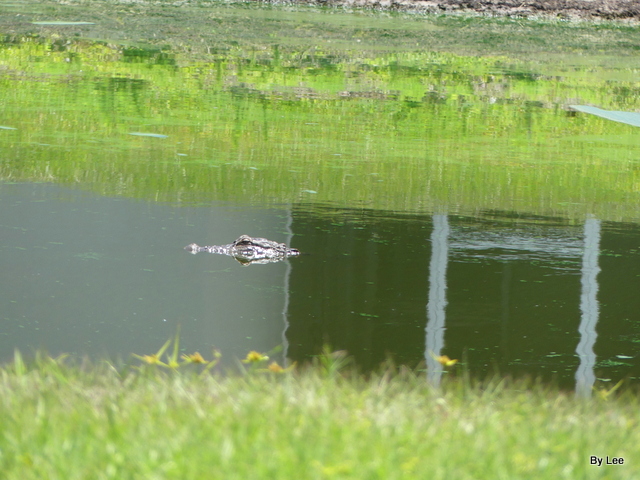
Then I zoomed in on what he was taking a photo of:

What Dan Was Photographying by Lee 5-17-20

What Dan Was Photographying by Lee 5-17-20

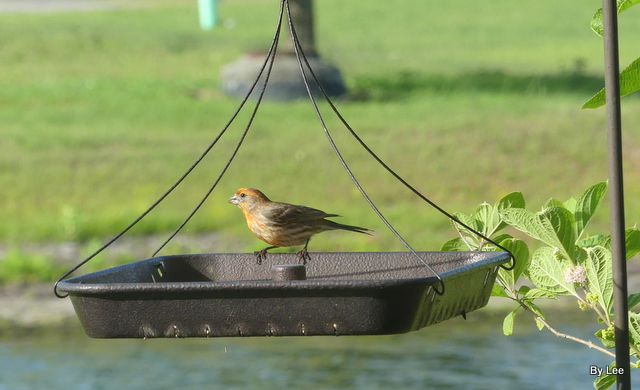
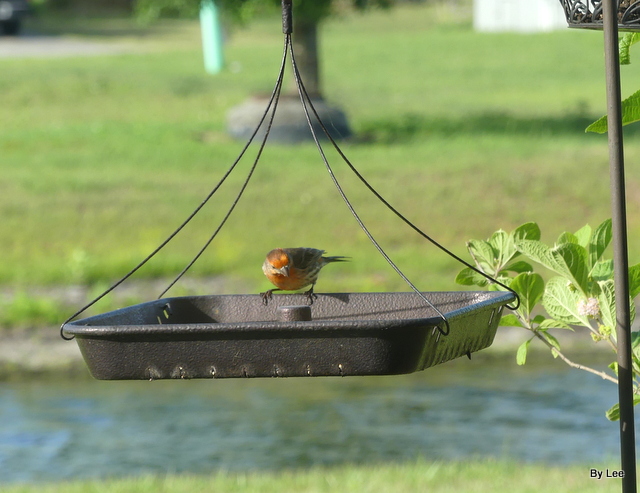
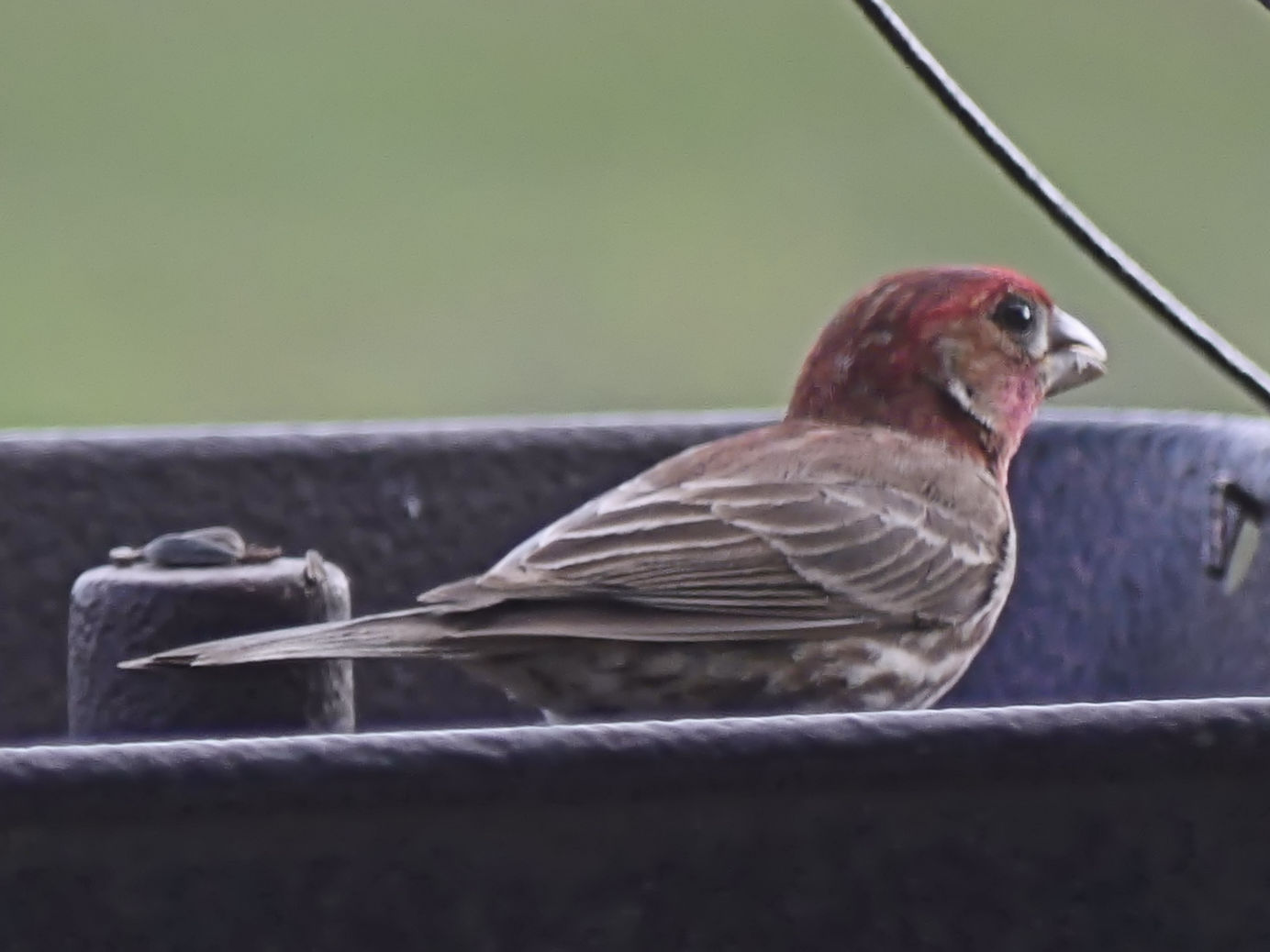
We still have that Variant House Finch stopping by. He feeds at the feeder up by the door. Much safer there. The sun was shining brightly, and it made him almost glow. Here a few I took a few days ago:

Variant House Finch 5-14-20

Variant House Finch 5-14-20

Variant House Finch 5-14-20

Variant House Finch 5-14-20

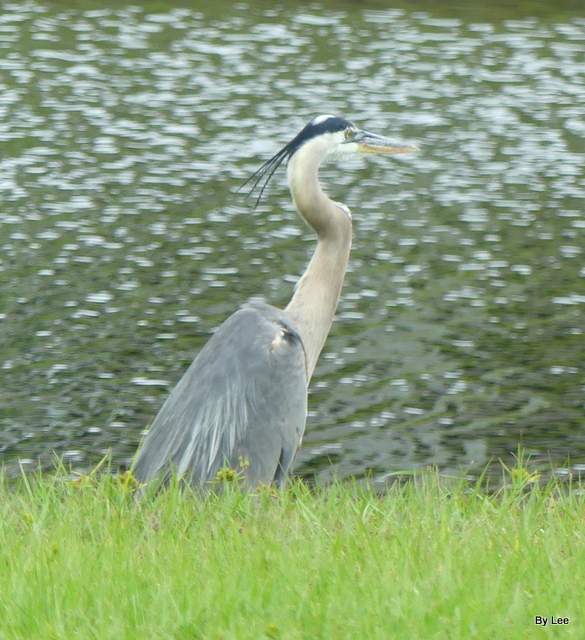
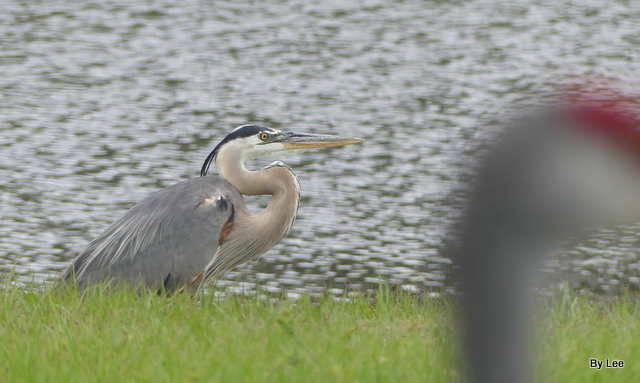
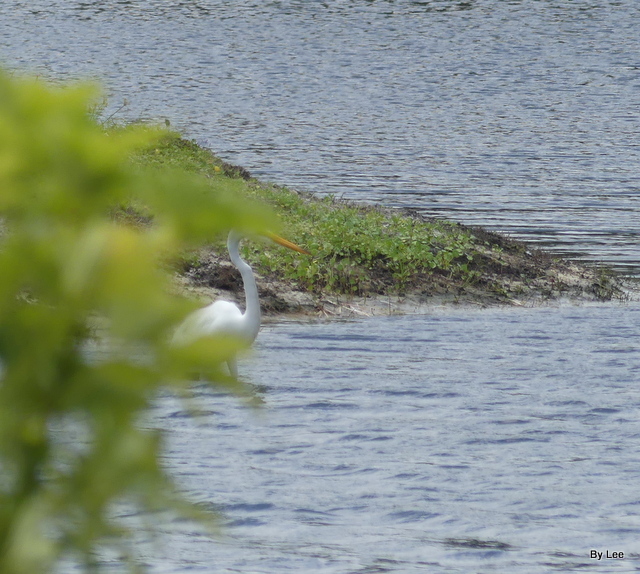
Also recently, the three species I mentioned in the first post, we spotted though the door on May 16th. Here are a few more closeups:

Great Blue Heron close up

Great Blue Heron close up

“And the stork, the heron after her kind, and the lapwing, and the bat.” (Leviticus 11:19 KJV) – Don’t Eat List

Great Blue Heron with neck bent in S

Great Blue Heron with neck bent in S – Sandhill Crane in foreground

Great Egret 5-16-20

Great Egret 5-16-20

I know these are not the greatest photos, but I sure do enjoy seeing so many interesting birds to watch, and even the alligator. Stay tuned for a video I shot this morning.

Backyard Birdwatching – Maybe

Birds of the Bible – Herons

Birds of the Bible – Cranes

Wordless Birds


Backyard Birdwatching – Maybe

Old Bench for Backyard Birdwatching

Old Bench for Backyard Birdwatching

Recently, we laid a few blocks down in the backyard so that I [we] could use our old bench. My goal was to be able to watch some of the numerous birds that stop or fly by. Needless to say, the bench needs a little TLC [tender love and care] This was taken May 14th.

I grabbed my camera and took a few photos, thinking I’d start a new series called: Backyard Birdwatching. Real original, right?

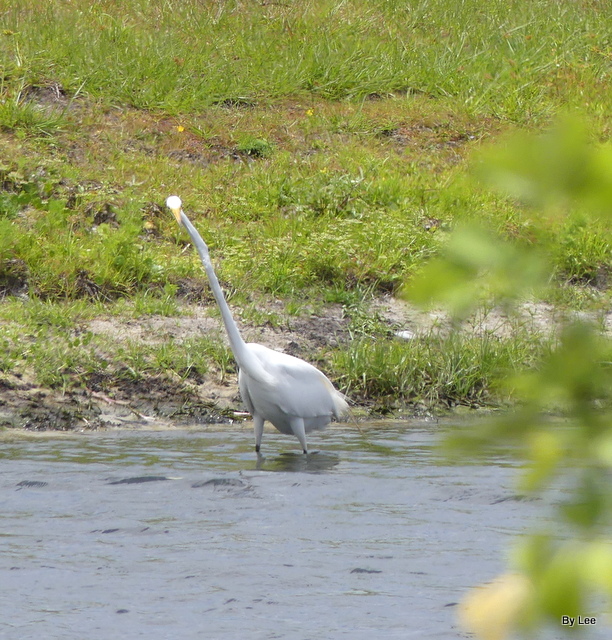
Great White Egret - First bird spotted from bench 05-14-20

Great White Egret – First bird spotted from bench 05-14-20

Had to wait for him to get in the clear.

Great White Egret finally in the clear 05-14-20

Great White Egret finally in the clear 05-14-20

I took a few photos and then the next day, decided that plan may be put on hold for awhile. Why? Hang on.

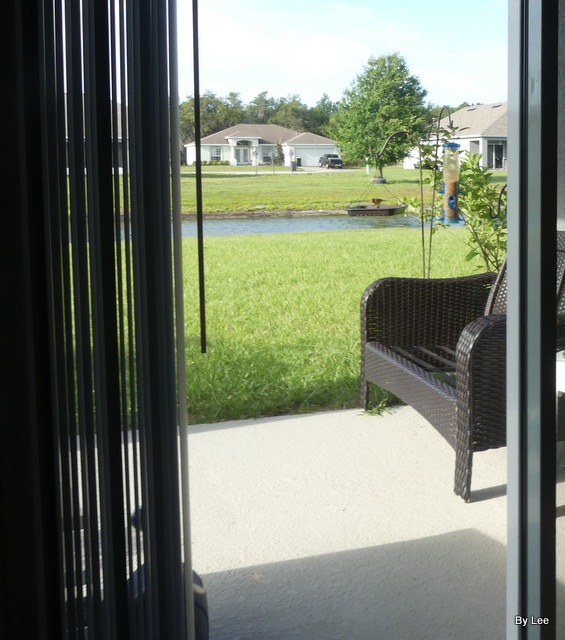
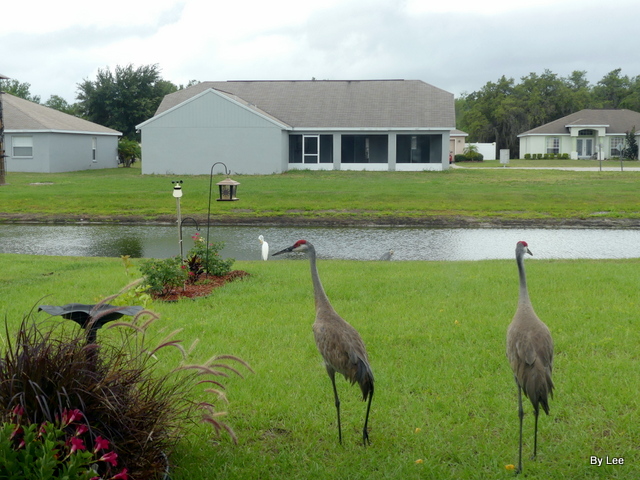
On the 16th, I was able to capture three different species through our door. We were having breakfast when they all appeared. A Great Blue Heron and Great Egret by the water’s edge and the two pesky Sandhill Cranes.

Three species from our door 05-16-20

Three species from our door 05-16-20

Why was I shooting through the door instead of from my bench? Well, this dude showed up the 15th.

Alligator Taken from my neighbor's yard. 05-16-20

Alligator Taken from my neighbor’s yard. 05-16-20

This Alligator is at the end of our yard. Because of the incline by the bank, we don’t get to see him often. So, I went to my neighbor’s yard and took this. She was with me, so if I had to waddle away fast, she could help me. Our neighbor, from across the water, told us that he comes and has layed on our bank at about 6 or 7 every morning for that last few days. Yikes!!

Needless to say, I have not been using my bench, yet!!

“Of the birds after their kind, of animals after their kind, and of every creeping thing of the earth after its kind, two of every kind will come to you to keep them alive.” (Genesis 6:20 NKJV)

We know that at least two of each kind of birds and creeping things were kept alive in the ark. I wonder if the alligators were on board, or swimming? Never thought about that before. Have you?

More later. We had a great view of this gator and the two Sandhill cranes today. Stay turned!

Ian’s Bird of the Moment – Island Thrush

When preparing editions of the Irregular Bird, I enjoy researching the natural history of the species in question. However, as anyone who goes on such a quest on the internet would know, this often proves to be a bit of a rabbit hole leading in unpredictable directions and taking up lots of time.

island_thrush_39679_pp.jpg
Such was the case this time round as I had decided, given our current travel-free situation, to take us on a trip to Christmas Island with photos of about ten of the most interesting species. This led me down endless rabbit holes and the weeks ticked by. One of these that I found particularly interesting, biogeographically and taxonomically, was the Island Thrush and, unlike most of the others, it hasn’t featured previously as an Irregular Bird, or Bird of the Week as it was in 2006.
island_thrush_39685_pp.jpg
This rather smart thrush is one of the typical thrushes comprising the genus Turdus, the members of which are widespread throughout Eurasia, Africa and the Americas and includes such well-known species as the Common Blackbird, the Song and Mistle Thrushes of Eurasia and the American Robin. The Island Thrush is about the same size as the Common Blackbird, to which it is closely related and is also a fine songster with a similar flutey song (listen to it here https://www.xeno-canto.org/204160).
island_thrush_39675_pp.jpg
This particular subspecies erythropleurus (meaning red-sided, or literally red-ribbed) is endemic to Christmas Island and was originally described as a full species Turdus erythropleurus by Sharpe in 1887. Subsequently it was found to be a race of the Island Thrush which is widespread but local through Southeast Asia from Sumatra and the Philippines and tropical Australasia and Oceania as far east as Samoa. Christmas Island is indicated by the brown arrow on the map below.
Island_thrush_distribution.jpg
The first race of the species was described by Latham in 1801. He called it the Grey-headed Blackbird, Turdus poliocephalus (polios is Greek for grey). It occurred only on Norfolk Island (horizontal black arrow on the map) and is now extinct, while another ‘species’ the Vinous-tinted Blackbird Turdus vinitinctus, also now extinct, was described on Lord Howe Island (vertical black arrow). The Christmas Island race is the sole surviving one on Australia territory.
mathews_1928_p27.jpg
You may be struck by the different plumages of the various races, so it isn’t surprising that they were originally treated as different species. The colour plate above was created by the Danish artist Henrik Gronvold, and published in this book, below, an appendix to the Birds of Australia, by Gregory Mathews in 1928. 
mathews_1928.jpg
In fact, all the various populations of the Island Thrush differ greatly from each other in appearance. Below, stolen from Guy Dutson’s Birds of Melanesia, are two other races, one completely black (efatensis on Efate, an island of Vanuatu) and the other with a white head (albifrons on Erromango, another island of Vanuatu). In some race, the sexes are similar, in others they are different and the plumages of the juveniles are quite variable too. In fact the Island Thrush’s main claim to fame is that it is globally the most variable species of bird with nearly 50 subspecies. DNA studies show that the subspecies  appear to be all closely related with one exception: the northernmost one on Taiwan, niveiceps, is considered a candidate for elevation to species rank.
birds_of_melanesia_dutson_7653.jpg
The variability and wide range of the Island Thrush is paradoxical from the point of view of biogeography. On the one hand, varability and divergent subspecies indicates isolation with a lack of genetic flow among populations, i.e. the birds don’t move between islands. On the other hand, the wide range suggests that the Island Thrush is or was very good at getting from one place to another. This apparent contradiction is another mystery waiting to be solved.
turdus_poliocephalus_vinitinctus.jpg
John Gould also illustrated the Vinous-tinted Blackbird on Lord Howe. Like the Grey-headed nominate race of Norfolk Island, the sexes were similar so the browner bird in the plate presumably represents a juvenile. In the background are the two high mountains on Lord Howe, Mount LIdgbird (left) and the flat-topped Mount Gower. This species was quite common until a shipwreck introduced rats to the island in 1918 with fatal consequences for this ground-nesting bird.
mt_lidgbird_mt_gower_lord_howe_3184_900-ps.jpg
Here are the two mountains on Lord Howe in 2013, photographed from the other side of the island from the John Gould illustration. So, we did sort of do a trip even if we ended up on Lord Howe instead of Christmas Island. I will prepare the rest of the photos for a trip to Christmas Island and try not to get too diverted by avian rabbit holes.
 
Spending a lot of time in isolation has given me the opportunity to work on the website not only adding birds and mammals from the trip to Brazil and Chile last year (about 120 species at last count), but also digging up neglected photos of other wildlife from earlier trips. If you are interested in checking these out, you can do so via the thumbnails on the Recently Added Photos page: http://www.birdway.com.au/recent_additions.php.
 
Greetings and stay safe,
Ian

Ian Montgomery,
454 Forestry Road, Bluewater, Qld 4818
Phone: 0411 602 737 +61-411 602 737
Preferred Email: ian@birdway.com.au

Recorder Society http://www.nqrs.org.au


Lee’s Addition:

I am always grateful when I get the surprise Birds of the “Moment” from Ian. When he used to do the Bird of the Week, they were very regular. Now, I love being surprised by Ian. [He is becoming almost as “off-schedule” as I am.] At any rate, what a beautiful and neat looking Thrush. Thanks, Ian for sharing another avian wonder with us.

“Even the stork in the sky Knows her seasons; And the turtledove and the swift and the thrush Observe the time of their migration; But My people do not know The ordinance of the LORD.” (Jeremiah 8:7 NASB)

Birds of the Bible – Thrushes

Ian’s Birds of the Week/Moment

McGuffey’s Reader – 1st Grade Lessons LVI and LVII

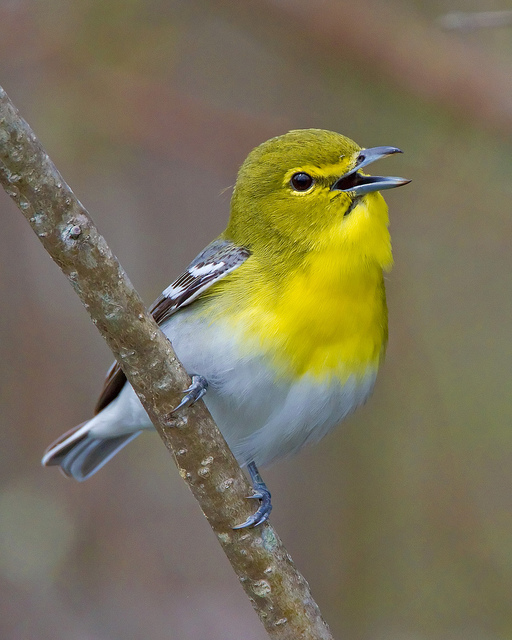
Yellow-throated Vireo (Vireo flavifrons) singing ©nebirdsplus

Yellow-throated Vireo (Vireo flavifrons) singing ©nebirdsplus

These lessons start off with words, then the story. You can practice writing with the Slate Work.

“The flowers appear on the earth; the time of the singing of birds is come, …” (Song of Solomon 2:12a KJV)

LESSON LVI.

strong round dry bill worked

sends claws flit God spring

“How does the bird make the nest so strong, Willie?”

“The mother bird has her bill and her claws to work with, but she would not know how to make the nest if God did not teach her. Do you see what it is made of?”

“Yes, Willie, I see some horse-hairs and some dry grass. The old bird must have worked hard to find all the hairs, and make them into such a pretty, round nest.”

“Shall we take the nest, Rose?”

“Oh no, Willie! We must not take it; but we will come and look at it again, some time.”

Verdin (Auriparus flaviceps) Building Nest 1 ©Earle Robinson

SLATE WORK.

[Illustration: Script Exercise:]

God made the little birds to sing,
And flit from tree to tree;
‘Tis He who sends them in the spring
To sing for you and me.


LESSON LVII.

feathers a go’ fly worm crumb feed’ing

ug’ly off feed brown guess things

Grey Jay (Perisoreus canadensis) Feeding at Nest WikiC

Grey Jay (Perisoreus canadensis) Feeding at Nest WikiC

“Willie, when I was feeding the birds just now, a little brown bird flew away with a crumb in its bill.”

“Where did it go, Rose?”

“I don’t know; away off, somewhere.”

“I can guess where, Rose. Don’t you know the nest we saw some days ago?
What do you think is in it now?”

“O Willie, I know! Some little brown birds. Let us go and see them.”

“All right; but we must not go too near. There! I just saw the old bird fly out of the bush. Stand here, Rose. Can you see?”

“Why, Willie, what ugly little things! What big mouths they have, and no feathers!”

“Keep still, Rose. Here comes the old bird with a worm in her bill. How hard she must work to feed them all!”


McGuffey’s First Grade Reader

The Wordless Book

Laughing Is Good For The Soul

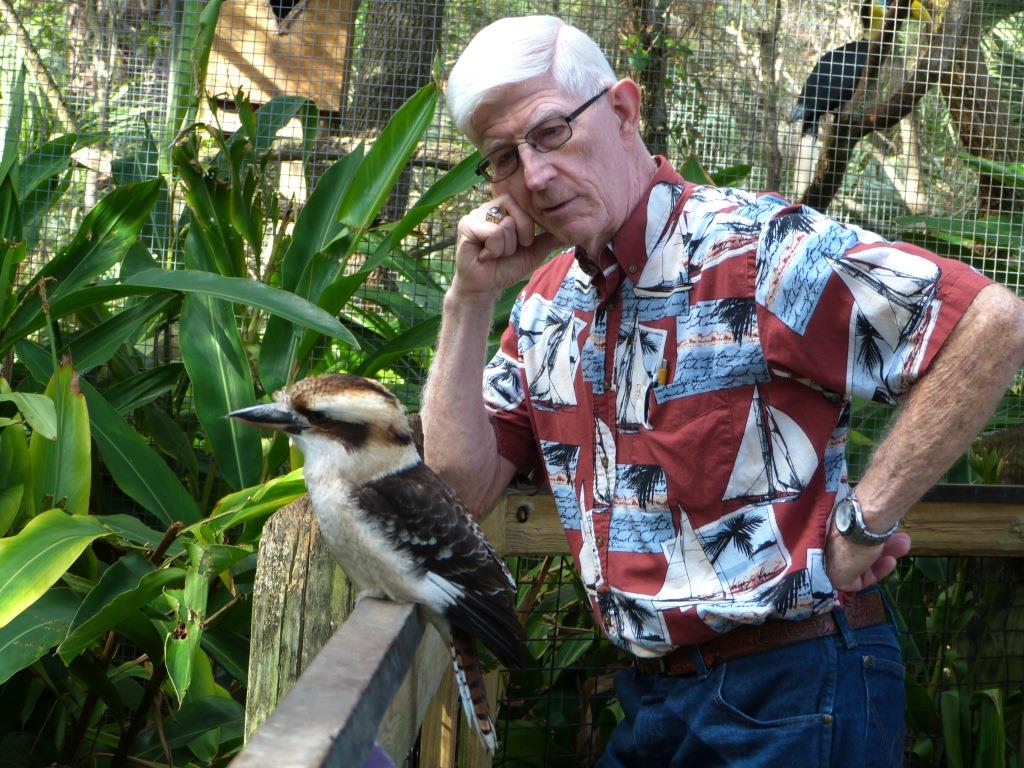
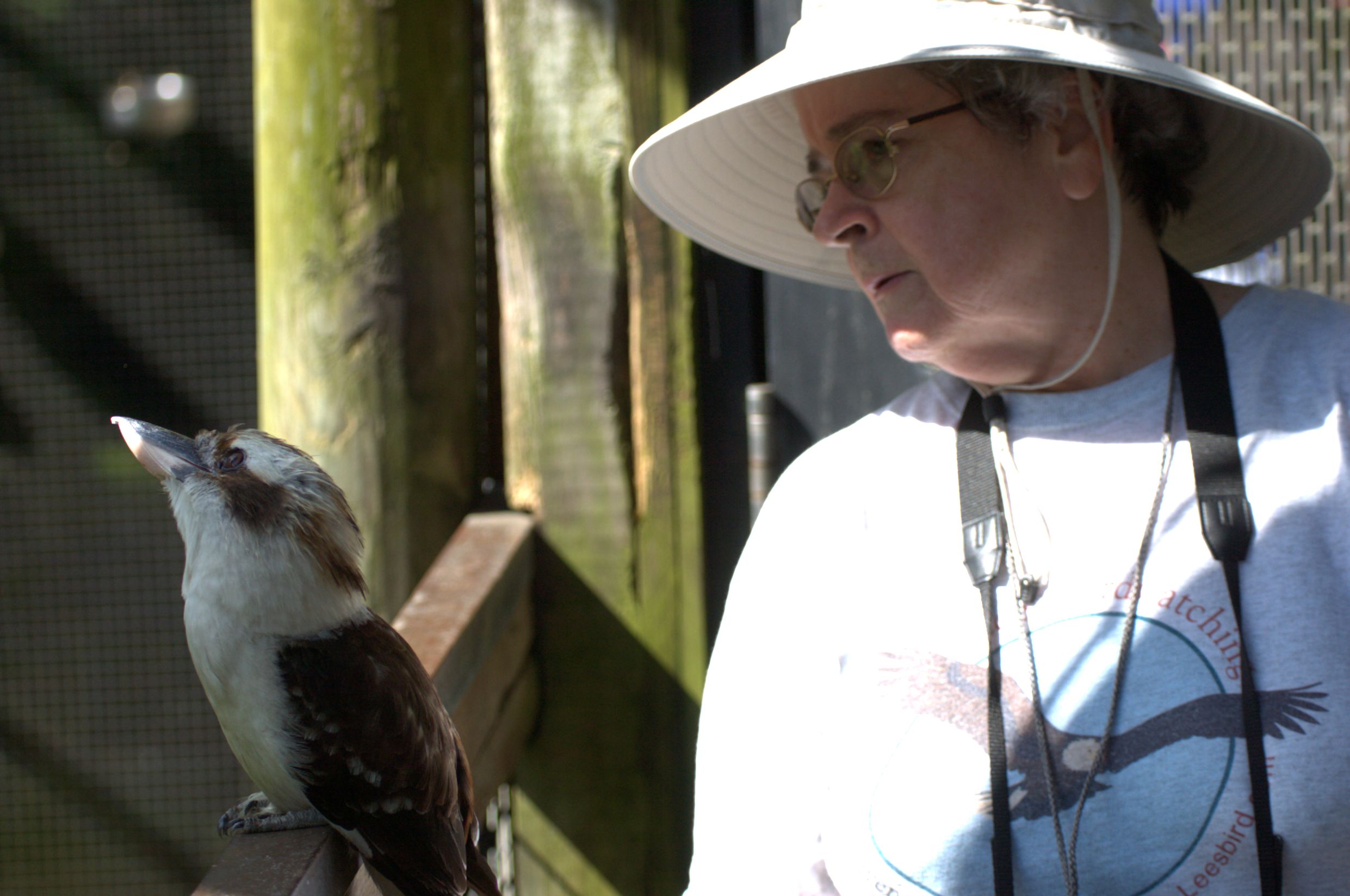
Kookaburra Lowry Park Zoo 12-31-15 by Lee

Laughing Kookaburra Lowry Park Zoo 12-31-15 by Lee

A friend sent me a message with a Kookaburra video. and was wondering if this is a Kookaburra. In response, I reminded her of these previous articles here. We all need to laugh and let off some of our pent up boredom, fustration, idleness, loneliness, or just Need A Good Laugh for our soul’s Well-being.

A merry heart maketh a cheerful countenance: but by sorrow of the heart the spirit is broken. (Proverbs 15:13 KJV)

Meet Merlin, from the Orlando Sea World:

Here are some of the articles from the past with these good-natured birds:

Kookaburra – Chattery Birds With A Merry Heart – 2010

Ian’s Bird of the Week – Laughing Kookaburra -2011

Kookaburra Encounter – 2014

Tickle Me Tuesday Revived – Laughing Kookaburras – 2019

Kingfishers And Kookaburras – From Creation Moments – 2020

Kookaburra at Brevard Zoo by Dan

Laughing Kookabura Brevard Zoo

Laughing Kookabura Brevard Zoo

Lee and Kookaburra at Brevard Zoo by Dan

Have a great day, and may you keep a smile on your face and in your heart.


Interesting Visitor To Our Feeder

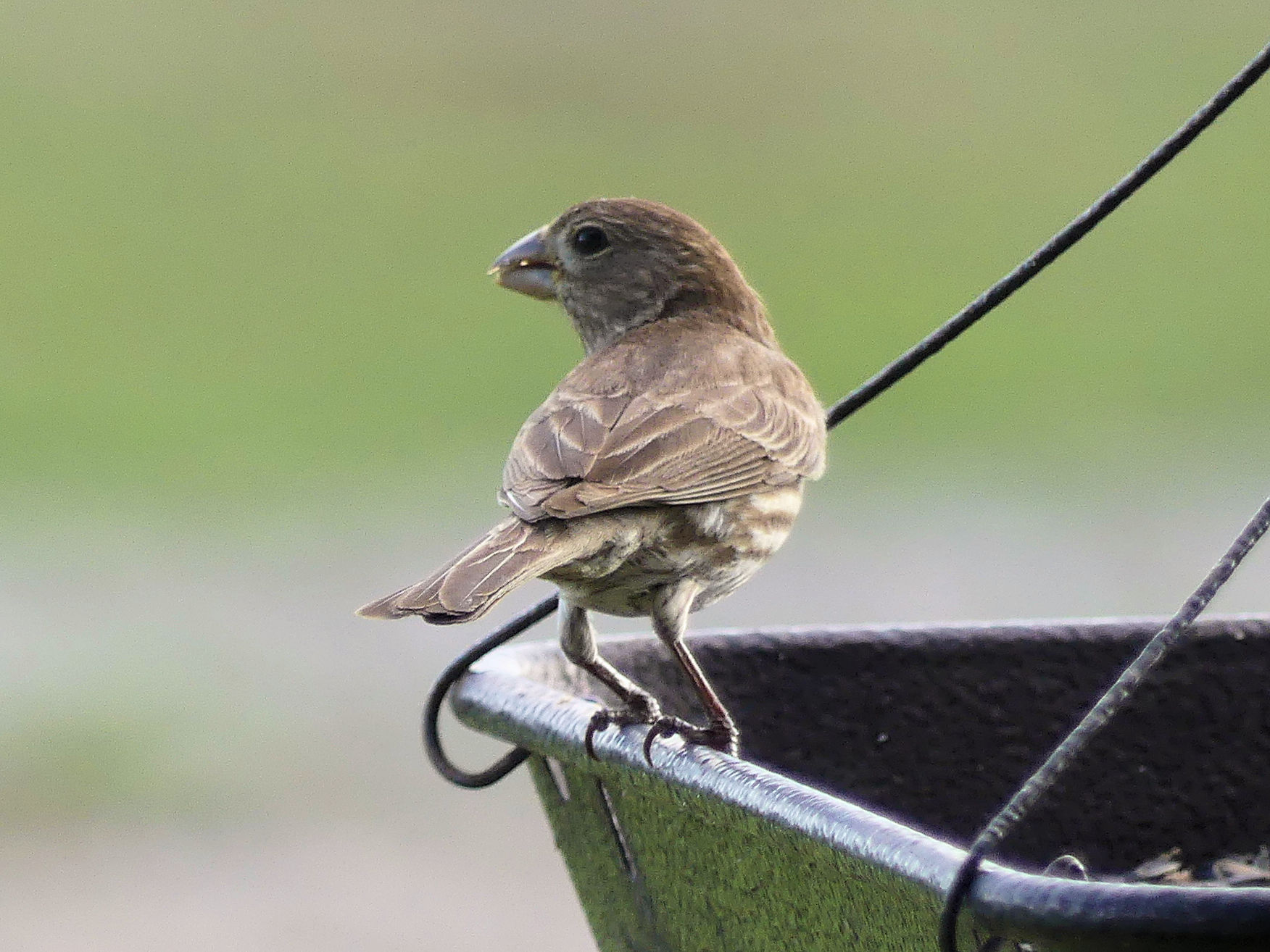
House Finch on Feeder by Lee

House Finch on Feeder by Lee

Do you know what a House Finch looks like? We have been fortunate to have several families of these Finches visit our bird feeders lately. It is always enjoyable to have these little birds come by for breakfast, lunch, or dinner. In fact, these little flying avian wonders come by for snacks also. In other words, keep your eye on the feeders.

You can check out the Identification of House Finches as All About Birds – House Finch ID

When a Finch with a different color lands on your feeder, you get excited and question yourself, “What is this?” This happened lately, and out came the bird guides and a search of the internet bird sites, like All About Birds and others.

This eye opener landed on our feeder last week:

Varient House Finch on Feeder by Lee

Variant House Finch on Feeder by Lee

Varient House Finch on Feeder by Lee

Variant House Finch on Feeder by Lee

“He gives to the beast its food, And to the young ravens [or Finches] that cry.” (Psalms 147:9 NKJV)

Varient House Finch on Feeder by Lee

Variant House Finch on Feeder by Lee

What happened to this fellow? Apparently, diet or what the bird eats, affects its color. “Male House Finches are generally red, but under certain certain circumstances they may be orange or yellow instead. Different subspecies may show color variations, but differences in color are also attributed to diet.” From this article, I Saw A House Finch That Was Orange Or Yellow Instead Of Red.

“Who provides food for the raven [or Finch], When its young ones cry to God, And wander about for lack of food?” (Job 38:41 NKJV)

Keep your eyes open while bird watching. You never know what might show up! Stay Tuned!

Who Paints The Leaves?


Today’s Visitor To The Feeder – House Finch

Male House Finch 3-28-20 by Lee

Well, as we all stay home and keep our distances, what is there to do? Like many of you, it seems that the chores around the house seem to take up more time. Cooking, especially seems more time consuming. An occasional meal out, saves time, but, that isn’t happening. At least around here.

We have pretty well stayed close to home. Drive through McDonald’s was a treat.

Thankfully, the birds have not changed their behavior and keep stopping by for free handouts. Today’s visitors were a pair of House Finches. They just started stopping by recently.

Female House Finch 3-28-20 by Lee

“You shall take with you seven each of every clean animal, a male and his female; two each of animals that are unclean, a male and his female; also seven each of birds of the air, male and female, to keep the species alive on the face of all the earth.” (Genesis 7:2-3 NKJV)

I also had a “baby dinosaur” stop by. Actually, it is some sort of chameleon or lizard. I have no idea.

Baby Dinosaur - Chamilian or Lizard by Lee 3-28-20

Baby Dinosaur – Chameleon or Lizard by Lee 3-28-20

Baby Dinosaur - Chamilian or Lizard by Lee 3-28-20

Baby Dinosaur – Chameleon or Lizard by Lee 3-28-20

There have be a few other stopping by and giving us something to do. Stay Tuned!


Ian’s Bird of the Whatever – Bare-faced Curassow

The Irregular Bird, formerly Bird of the Moment, formerly Bird of the Week, #600: Bare-faced Curassow
[This is how Ian titled his email. He is celebrating his 600 article. That is quite a milestone. Congratulations, Ian, Keep them coming. They are always so interesting.]
Bird number 600 after 18 years is a bit of a landmark, so here is something suitably celebratory: the best dressed award for the South American trip: the Bare-faced Curassow. They also win the worst named award as I have to think every time I write it so I don’t say ‘assed’ but that’s probably a reflection on me, not the species.
The most beautiful bird award went to the Hyacinth Macaw#592; the most interesting went to the Sunbittern#591; the most spectacular went to the Andean Condor#593; the most beautiful mammal award went predictably to the Jaguar which also featured briefly in #592; the most unusual mammal to the Armadillo;  the least elegant went to the Collared Peccary; the most amusing and ugliest went to the Capybara, and the most delightful to the Giant Otter; the most beautiful lizard went to the Green Iguana; and the most beautiful snake went to the Yellow Anaconda.
If you can think of any categories I’ve left out let me know and I’ll see what I can do in the next Irregular Bird. A former colleague of mine, the world expert on the different pelagic behaviour of right- and left-footed thongs/jandals/flipflops recently called it Bird of the Undefined Time, which I like very much and set me thinking, but I’m going to settle on The Irregular Bird.
bare_faced_curassow_203516_pp.jpg
The Curassows also won the best hairstyle award so I’ll deal with that first. The male’s is all black, quite original in a dapper and restrained sort of way, very suitable for evening dress/tuxedo. The female couldn’t resist a two-tone look, also restrained and very dignified. I think the black curly tip on a white base is gorgeous and the little black fringe/bang is the perfect finishing touch. Both have the suitably haughty look of famous models and you might be surprised to find that this male is married to this female: it could be an interesting household with two prima donnas, even before any kids come along.
bare_faced_curassow_203186_pp.jpg
Here’s the male in his dinner jacket/tuxedo on the way to the Rio Claro masked ball. He’s wearing a special yellow face mask which doesn’t cover his eyes. It’s partially for epidemiological reasons but fame is important to him and he wants everyone to recognised him and know that he too was invited to this special event. Very suave and practising his red carpet walk, but he doesn’t really need to as he naturally has the sort of elegant, pouty walk that is widely admired by on the cat-walk.
bare_faced_curassow_202985_pp.jpg
The female is wearing a tan-coloured silk ball gown with a brownish black cape and train. Both of these are hand embroidered with stripes consisting of thousands of large pearls and diamonds. Consequently they’re rather heavy and she hopes she doesn’t trip or fall on the way and is secretly looking forward to discarding them with a flourish in front of the cameras of the paparazzi. She’s walking past the resort swimming pool on the way to the ballroom. Those of you familiar with Australian flora will recognised the trunk of the tree and the leaves on the ground as belonging to a rare species of Eucaplyptus specially imported at great expense from a boutique nursery in Humpty Doo, 40km from Darwin in the Northern Territory, a small town better known by ordinary folk for its barramundi (an over-rated freshwater fish with a wonderful name). The climate there is similar to that in the Pantanal, hot and dry for much of the year with a very wet wet season.
bare_faced_curassow_203196_pp.jpg
Masked balls can lead to unexpected results and this mother Curassow is paying the price. She sadly remembers the party times well, don’t we all, but is quite fond of her two chicks. She’s pleased to have both a daughter (centre foreground) and a son, trying to hide under mother’s skirts in the background on the left. He is already sporting a yellow face mask like his dad, is developing a precocious crest and wearing a black waistcoat, unbuttoned to show off his tan. Curassows are vegans naturally, and these ones are looking for the seeds of some super-food they’ve been told about. They also visit salt-licks as they believe that it’s makes their plumage very lustrous. It also leads to high blood pressure but they are young and don’t worry about such matters.
bare_faced_curassow_202135_pp.jpg
Bare-faced Curassows range through central Brazil, eastern Bolivia, most of Paraguay and northern Argentina. Like the rest of us they are regarded as Vulnerable, suffering from hunting by left-wing elements, and are extinct in Rio de Janeiro as they found the Carnival much too vulgar and moved to the provinces particularly the Pantanal in Mato Grosso, a well-known retreat for the rich and famous.
Like all news now whether official or on social media, subject this article to the scrutiny of your b*llsh*t meter.
Stay safe, practise acceptance (very difficult I know) and keep cheerful,
Ian
PS Here is the only prize winner that hasn’t yet made it to the website. I must rectify that today. They’re king of the Iguanas, very large to 2 metres long, perfect for social distancing, with a noble heritage having been described by Carl Linnaeus in 1758 during the reign of Louis XV and when the United States were still British colonies. Like Louis XIV and Bare-faced Curassows, they’re into extravagant balls. This one is lounging on a freshwater beach on a sunny day near the fashionable resort of Porto Jofre in the Southern Pantanal, improving its green tan.
green_iguana_205307-pp.jpg


Ian Montgomery,
454 Forestry Road, Bluewater, Qld 4818
Phone: 0411 602 737 +61-411 602 737
Preferred Email: ian@birdway.com.au

Recorder Society http://www.nqrs.org.au

Lee’s Addition:

See my comments above, plus we have posted quite a few of those 600 articles here. Ian gave me permission years ago to use these newsletters. Thank, Ian. And for the great photos of birds you have shared with us.
“Bring out with you every living thing of all flesh that is with you: birds and cattle and every creeping thing that creeps on the earth, so that they may abound on the earth, and be fruitful and multiply on the earth.” (Genesis 8:17 NKJV)
“I know all the birds of the mountains, And the wild beasts of the field are Mine.” (Psalms 50:11 NKJV)

Ian’s Bird of the Week, Moment, Whenever

Ian Montgomery Offers Free eBooks During Pandemic

Diary of a Bird Photographer, Vol 2 by Ian Montgomery

Just received an email from Ian Montgomery, Ian’s Bird of the Week, who is offering free downloads of his three eBooks. This is only being offered for a short time.

Here is his email:

Given the strange times we live in now, I’m thinking of all the other people isolated at home and looking for things to do. I’ve decided to make all my eBooks free for the time being.
Two of these are Diary of a Bird Photographer, Volumes 1 and 2, which are compilations of the Bird of the Week/Moment from #1 to #341, and #342 to #585, respectively, i.e. from 2002 to 2009 and 2010 to 2018.
The third is guide Where to Find Birds in North-east Queensland. This is a guide to the more than 400 species of birds that occur in this region and the 200 or so locations in which to look for them, and there are about 700 bird photos, and 200 of locations.
All the books is comprehensively indexed so you can jump around all over the place. If your stuck at home, and even if you’re not, you can take a virtual bird tour of NE Queensland at zero cost in Where to Find Birds in North-east Queensland – much better than having to worry about to getting home after your trip. Maybe you could use it to teach your kids about the joys of bird watching.
Given the current pandemic, Ian has decided to give his ebooks free to anyone interested in nature. If you already now about ebook formats such as pdfs, epub and mobi, then go straight to the Birdway Store on the Payhip website where I’ve made the books available for download.
If you’re a bit vague about ebook formats, go first to the Quick Guide to eBooks, check it out to see which one is best or you and then got to the Birdway Store on the Payhip website which you can do from that page.
None of the books is copyright protected, so you can distribute them as you wish.
birdway_store_on_payhip_400_free.jpg
Happy reading and happy virtual travelling,
Stay safe,
Ian


Ian Montgomery,
454 Forestry Road, Bluewater, Qld 4818
Phone: 0411 602 737 +61-411 602 737
Preferred Email: ian@birdway.com.au

Recorder Society http://www.nqrs.org.au

Lee’s Addition:

I followed his links and was able to download all three ebooks.
Thanks, Ian, for giving us something to do while we are staying close/in our homes.
“Who has put wisdom in the mind? Or who has given understanding to the heart?” (Job 38:36 NKJV)

Bird of the Moment – Red-legged Seriema

Of the birds that we wanted to see in Brazil, this one, the Red-legged Seriema proved the most difficult. Like the Greater Rhea (#598), this is mainly a bird of dry, grassy habitats such as the Cerrado rather than the flood-prone Pantanal. So we hoped to find it at our last lodge, Piuval Lodge in the northern end of the Pantanal just south of Poconé. Even there, we resorted to the help of a local guide, attached to the Lodge, who found one within five minutes of departing from the Lodge. This was the only one we saw, despite further trips through the reserve there.
red_legged_seriema_206336_pp.jpg
Seriemas are unusual birds. There are only two remaining species, this one and the Black-legged Seriema (Chunga burmeisteri) South American, remnants apparently of a much larger clan known from a few fossils. The Red-legged has quite a wide range through Brazil south of the Amazon basin, Paraguay, eastern Bolivia, eastern Uruguay and north-eastern Argentina. The range of the Black-legged partially overlaps that of the Red-legged but maiinly farther west, still east of the Andes, from southern Bolivia through western Paraguay to central northern Argentina. Despite their remnant status, both are reasonably common in suitable open habitat and classified as of ‘Least Concern’.
red_legged_seriema_206348_pp.jpg
The Red-legged is the larger species, with a length of 75-90cm and weighing 1.5-2.3kg. Both are mainly terrestrial, though they are capable of short bursts of flight, and will often perch in bushes and small trees, where they build their nests. Both species are predatory, feeding on small reptiles such as snakes and lizards, and large insects, but will also feed on seeds. Both are very vocal and join in the morning chorus, though we had listened in vain for the distinctive song of the Red-legged. This is a ‘calm series of nasal, well-separated, and accentuated “hah-hah” notes, lilting up and then down again’, according to Ber van Perlo in his Birds of Brazil, though the recording in his app sounds like a very distressed and lonely puppy, and ‘calm’ is not an adjective I’d have chosen.
hackett_fig_4.jpg
Naturally, as you’ve guessed by now, one of the reasons I was keen to see and photograph it was to fill a taxonomic hole in the species on the Birdway website. Until the advent of DNA analysis, the correct placement of the Seriemas was put in the too-hard basket, which in those days for land birds was in its own family, Cariamidae, in the Crane order, Gruiformes. Cranes were known to be of an ancient lineage, so Gruiformes was a bit of a taxonomic dumping ground for such problem groups, ‘GRU’ in the diagram above. That all changed in 2008 with this landmark DNA study by Hackett et al. which revolutionised the understanding of the relationships among major groups of birds.
Perhaps most strikingly, the Parrots were shown to be a sister clade to the Passerines, or perching birds, and the Falcons and Caracaras were separated from the other diurnal predators, such as Hawks, Eagles and Vultures. I’ve highlighted the relevant relationships in the diagram above. Interestingly the Seriemas were an early offshoot of the group that gave rise to the Falcons, Parrots and Passerines. Other studies since have supported these findings and the Seriemas have been elevated to their own order the Cariamiformes. The Passerine order contains half of all extant bird species, 5,000 or so out of 10,000, so the Seriemas have great status in the overall scheme of things with an order to themselves.
secretarybird_janelle_morano.jpg
I couldn’t help to see a certain resemblance to Bustards in size, form and habit, but perhaps the Secretarybird of Africa is the closest analogue. I’ve seen this species in pre-digital days in Zimbabwe but I haven’t photographed it, so I’ve taken the liberty of including this splendid photo by Janelle Morano which is published in the Cornell online Birds of the World and the related Macaulay Library: Secretarybird.
If you return to the Hackett diagram you’ll see that the Secretarybird is a relative of the hawks and eagles: it is the sole member of one family – Sagitariidae – of the four that make up the order Accipitriformes, the others being the Cathartidae (new world vultures) the Pandionidae (ospreys) and Accipitridae (all the other hawks and eagles). Given the similarities and the relationships to different groups of diurnal predators, the Seriemas and Secretarybird would seem to be a very elegant example of convergent evolution.
So far, I’ve resisted the temptation of mentioning IT, the current crisis. I will however say that I wasn’t intending to be prophetic when I said that the New Year had got off to a bumpy start with the Australian bushfires, and later that the taxonomic puzzle of the Ratites was Gaia’s revenge on Homo not so sapiens. Maybe Gaia has turned to self-defence in the way she knows best. I’m largely isolating at home, given the warnings to older people, so I hope to do more work on the website and have more birds of the moment.
Greetings and stay safe,
Ian


Ian Montgomery,
454 Forestry Road, Bluewater, Qld 4818
Phone: 0411 602 737 +61-411 602 737
Preferred Email: ian@birdway.com.au

Recorder Society http://www.nqrs.org.au

Lee’s Addition:

Ian has shared one of the birds we have seen at the Lowry Park Zoo many times. Always enjoy seeing them.
And, Ian like many of us around the world, is sticking close to home. Maybe it will be a good time to clean up some of our photos, and write about them, just as he is doing.
Stay tuned!
“I know all the birds of the mountains, And the wild beasts of the field are Mine.” (Psalms 50:11 NKJV)