Sunday Inspiration – Flamingo Gardens

Birds at Flamingo Gardens by Lee 2014

Birds at Flamingo Gardens by Lee 2014

When Jesus had spoken these words, he went forth with his disciples over the brook Cedron, where was a garden, into the which he entered, and his disciples. And Judas also, which betrayed him, knew the place: for Jesus ofttimes resorted thither with his disciples. (John 18:1-2 KJV)

…Did not I see thee in the garden with him? (John 18:26 KJV)

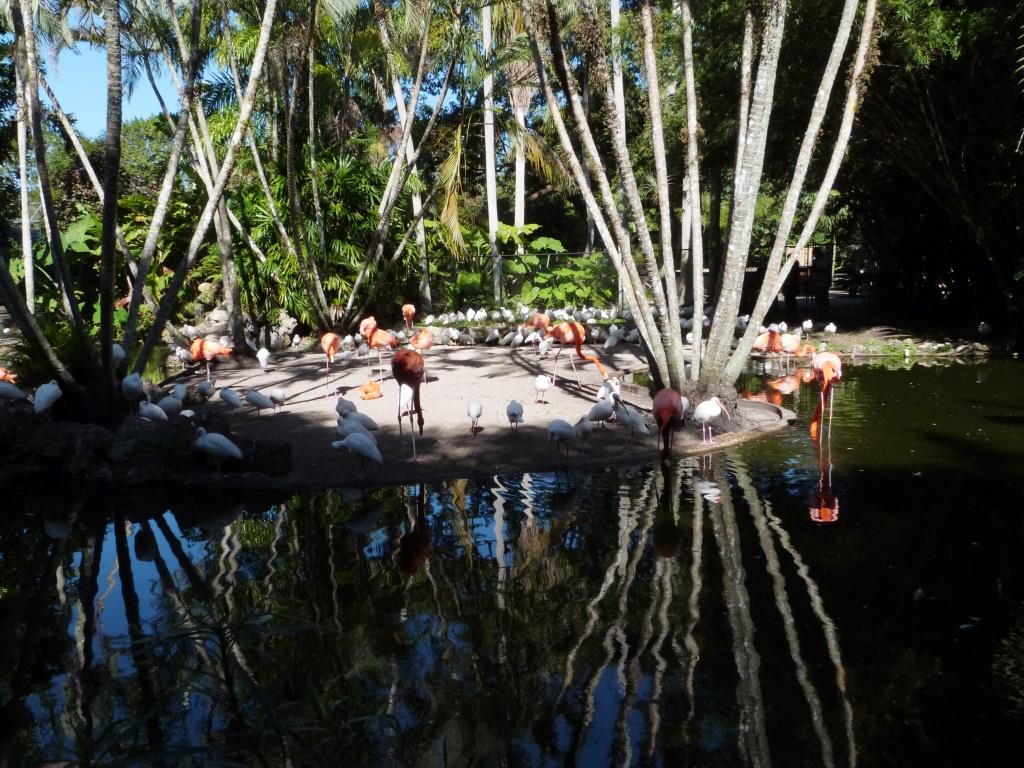
Dan and I stopped at Flamingo Gardens in Davie, Florida in November. Realized I haven’t said anything about it and decided to share some of the photos taken then.

We were there many years ago when they first opened. We lived in the area at the time. Flamingo Garden has grown and is a very delightful place to visit. They have an aviary which contains Florida native birds. Many have been injured and cannot be released to the wild again.

Please enjoy some of the sights as you listen to our orchestra play In “The Garden”. (Click arrow below the slideshow)

This slideshow requires JavaScript.


“In The Garden” ~ Faith Baptist Orchestra with Flute Solo by Lauren D

*

Sunday Inspirations

Flamingo Gardens

Gideon

*

Birds of the Bible – Eye Hath Not Seen

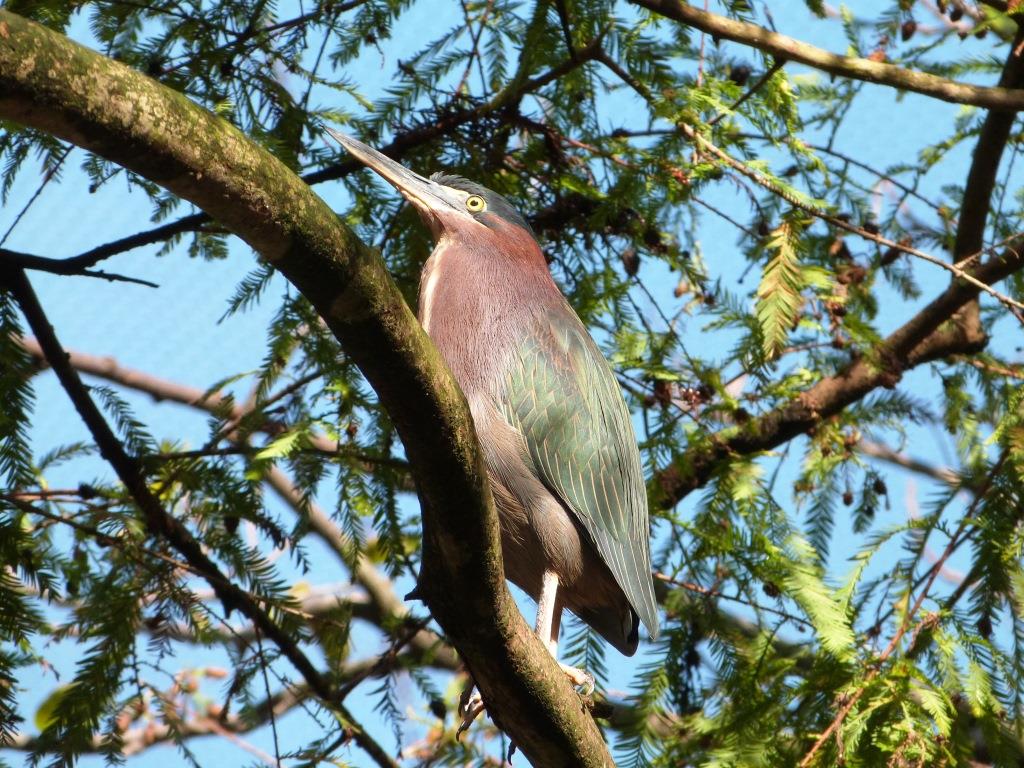
Green Heron at Flamingo Gardens by Lee 2014

Green Heron at Flamingo Gardens by Lee 2014

But as it is written, Eye hath not seen, nor ear heard, neither have entered into the heart of man, the things which God hath prepared for them that love him. But God hath revealed them unto us by his Spirit: for the Spirit searcheth all things, yea, the deep things of God. (1 Corinthians 2:9-10 KJV)

We see all the world around us and see all the magnificent birds the Lord has created, yet they are nothing compared to what “God hath prepared for them that love him” I trust that you do love God and have accepted His Son as your Savior. Then, you will see what has been revealed and what will yet be revealed.

For now, let’s enjoy what we can see of the Lord’s Creative Hand at work.

O LORD, how manifold are thy works! in wisdom hast thou made them all: the earth is full of thy riches. (Psalms 104:24 KJV)

Some of the birds we saw in 2014:

This slideshow requires JavaScript.

P.S. My First Bird of 2015 was a Boat-tailed Grackle that visited the feeders. Followed close behind were Mourning Doves and Red-winged Blackbirds. Woke up with a sore throat, so that was my birdwatching adventure of the new year so far.

*

Good News

*


Ian’s Bird of the Week – Collared Kingfisher

Ian’s Bird of the Week – Collared Kingfisher ~ by Ian Montgomery

Newsletter ~ 12-30-14

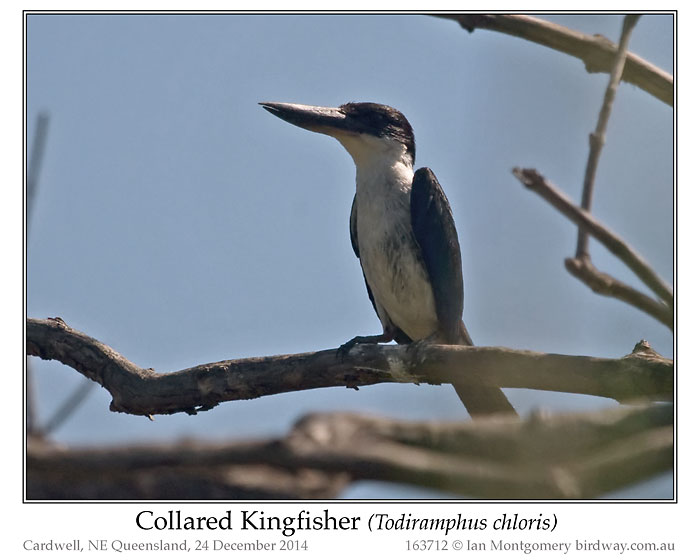
The first photo shows a present from Santa that I want to share, taken late in the afternoon on Christmas Day: a Collared Kingfisher This species is the only one of the ten Kingfishers and Kookaburras normally found in Australia that hasn’t featured as bird of the week. It’s a close relative of the Sacred Kingfisher, but larger with a much heavier bill. In Australia it is almost exclusively a dweller of mangroves and feeds mainly on crustaceans such as crabs with a carapace width up to 2cm: hence the shell-crunching beak, it’s best field mark.

Common Kingfisher (Alcedo atthis) by Ian

Because of its preference for mangroves and because it’s not very common, I’ve found it a difficult species to photograph in Australia. Often the only access to mangroves is on boardwalks, so you can’t get close to anything that’s not close to the boardwalk and, even if you can, you usually can’t get an uninterrupted view in the dense vegetation. In fact, the only tolerable Australian photo that I had was one I took in Darwin in 2004 where there is a walking track into mangroves from Tiger Brennan Drive.


Common Kingfisher (Alcedo atthis) by IanWhen I pass through Cardwell travelling north towards Innisfail and Cairns, I always stop there as it’s a lovely place where the highway runs along the beach front with views of Hinchinbrook Island and a convenient 90 minutes from home. There’s a rest area at the southern end of town close to a patch of mangroves that regularly produces interesting birds. It was badly damaged by cyclone Yasi four years ago, but is now recovering and the path through the mangroves from the rest area to Port Hinchinbrook has been restored.

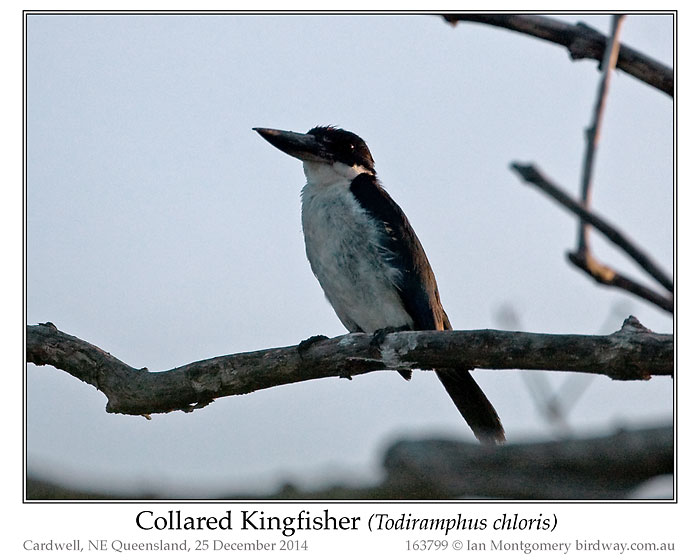
In early November, I saw a Collared Kingfisher perched in the open on a dead mangrove near the rest area; it was low tide and the bird was presumably looking for dinner on the mudflat. I didn’t get a photo of it – camera malfunction – but looked again on Christmas Eve on the way north and heard and then found one on a different perch in the middle of the mangroves. I got only the quick, back-lit, get-it-before-it-flies-away shot, second photo, before it did exactly that and I didn’t see it again.

Common Kingfisher (Alcedo atthis) by Ian

I returned home on Christmas Day and had another look, as the tide was going out and I hope that this would attract the bird into a more open position for a late feed. Just before I was about to give up, I heard the bird calling and found it perched near the beach. I got some distant shots, but when I approached it it flew over my head and returned to exactly the same back-lit spot where it had been on Christmas Eve. If you compare photos two and three, you can see from the guano stains on the branch that it is only a couple of centimetres apart on the two occasions. Clearly a bird of habits. This time, it tolerated my approach, and allowed me to leave the path, squelch through the mangroves and get around behind it where I took the first photo. Austral

Common Kingfisher (Alcedo atthis) by Ian

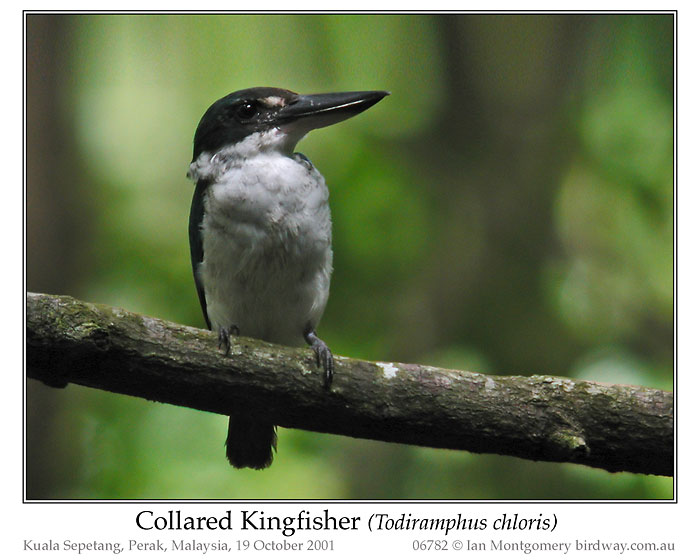
I’ve qualified some comments with ‘in Australia’. This species also ranges quite widely through Asia, and in some places it is found in many other habitats including suburban gardens and forested areas along rivers. I had no trouble photographing three in the space of week in Singapore and Malaysia, fourth photo, in 2001. These Asian birds belong to different races from the Australian ones and their taxonomy is very confused, with about 50 subspecies being currently recognized. The Malaysian and Australian races have white underparts but some others, particular those in the Pacific Islands east of New Guinea are quite buff, and some taxonomists think they should be transferred to the Sacred Kingfisher. The calls vary by location too. In Australia the usual contact call is a distinctive two note ‘kek KEK’, with the emphasis on the second one.

I hope Santa brought you what you wanted too.
Happy New Year!

Ian

**************************************************
Ian Montgomery, Birdway Pty Ltd,
454 Forestry Road, Bluewater, Qld 4818
Tel 0411 602 737 ian@birdway.com.au
Bird Photos http://www.birdway.com.au/


Lee’s Addition:

“And Jesus, walking by the sea of Galilee, saw two brethren, Simon called Peter, and Andrew his brother, casting a net into the sea: for they were fishers. And he saith unto them, Follow me, and I will make you fishers of men. And they straightway left their nets, and followed him.” (Matthew 4:18-20 KJV)

It is always enjoyable to happen upon a bird that is not always easy to find. Of course, when you bring out a camera, you never know if they will stay long enough to get a photo or not. Personally, for me, they seem to scatter. I am glad Ian was able to capture this beautiful Kingfisher’s photo.

You can see Ian’s Kingfisher photos here:

Collared Kingfisher

Sacred Kingfisher

Whole Kingfisher Family

and also enjoy many of his adventures here:

Ian’s Bird of the Week

Kingfishers – Alcedinidae – Whole Family

*

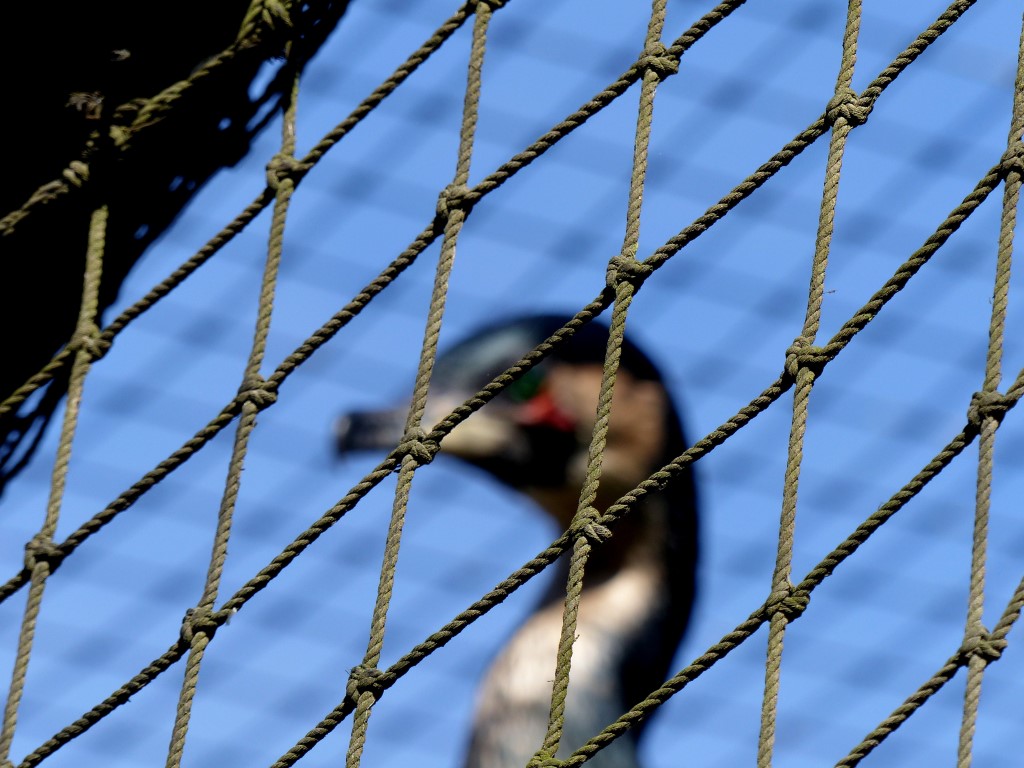
Latest Challenge of Zoo Photography

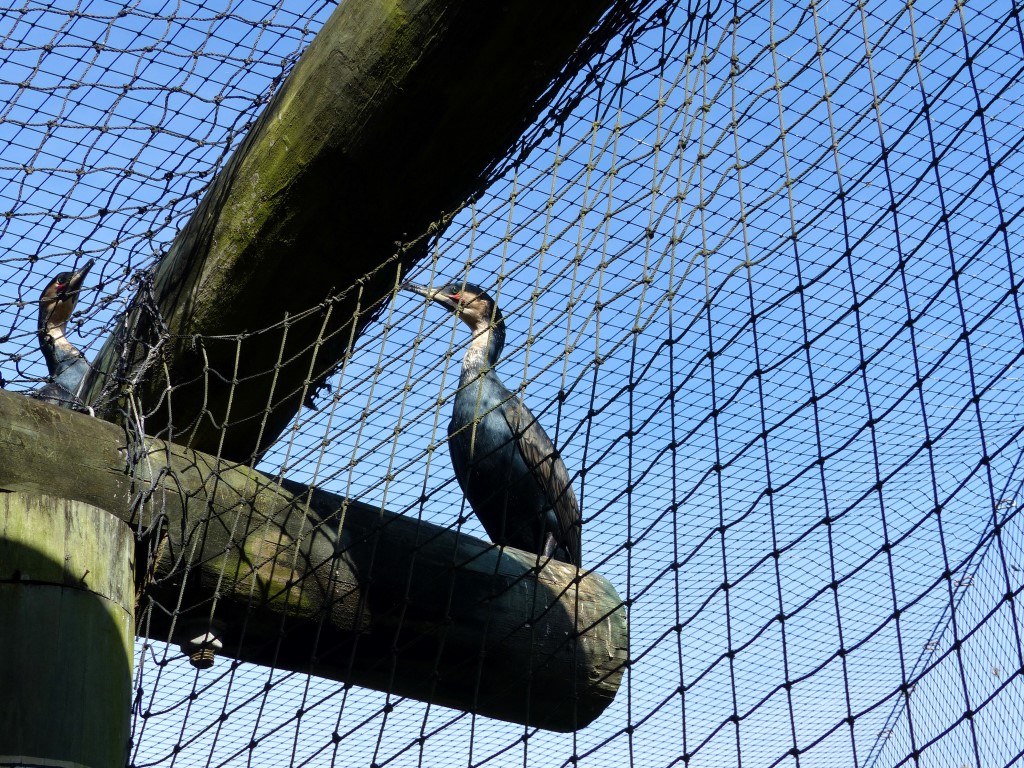
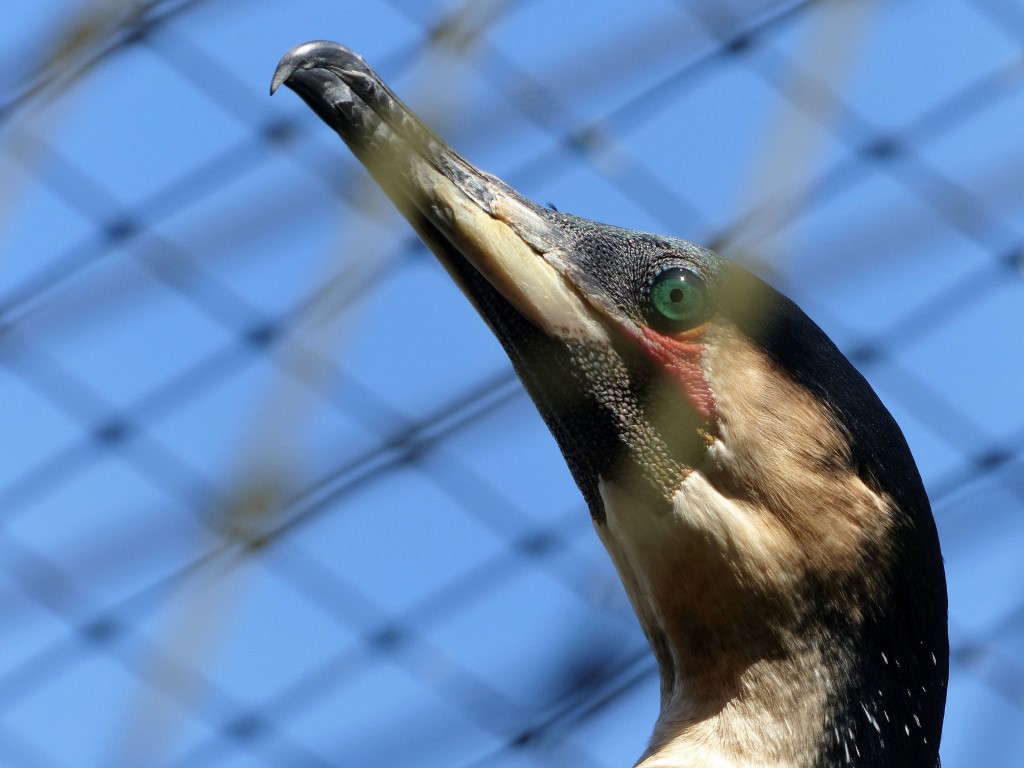
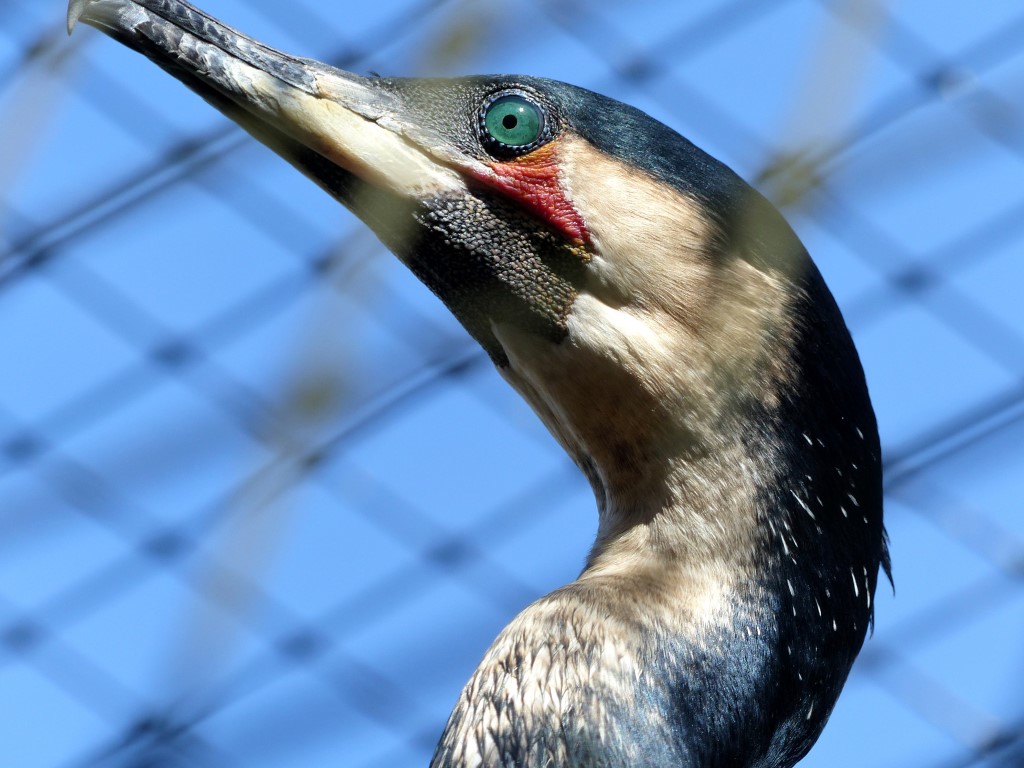
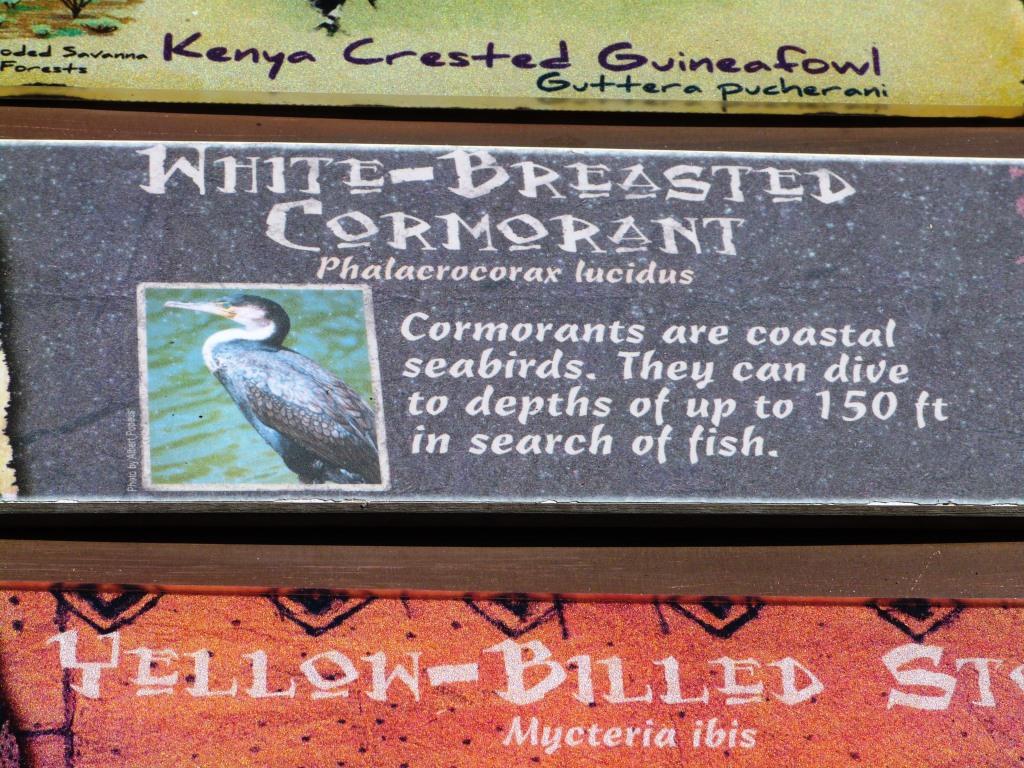
White-breasted Cormorants at Lowry Park Zoo 12-26-14 by Lee

 But the cormorant and the bittern shall possess it; the owl also and the raven shall dwell in it: and he shall stretch out upon it the line of confusion, and the stones of emptiness. (Isaiah 34:11 KJV)

With my new Panasonic Lumix FZ200 camera in hand, off we went to Lowry Park Zoo the day after Christmas. I was itching to try out the 600 zoom compared to my 450 on the FZ47. I was content with the older camera, because as I have said before, I am a birdwatcher, not a photographer. I don’t know an “F-stop” from a “bus stop”. I shoot in Program mode.

That aside, I use the camera often, probably more than binoculars. Why? Maybe I am a little bit of a photographer because I like to see the birds when I get home. Many times I keep my bad shots because they are at least “proof shots” that I really did see the bird or to help ID it later. I leave the real good shots for Dan to take.because he knows what a “F-stop” is.

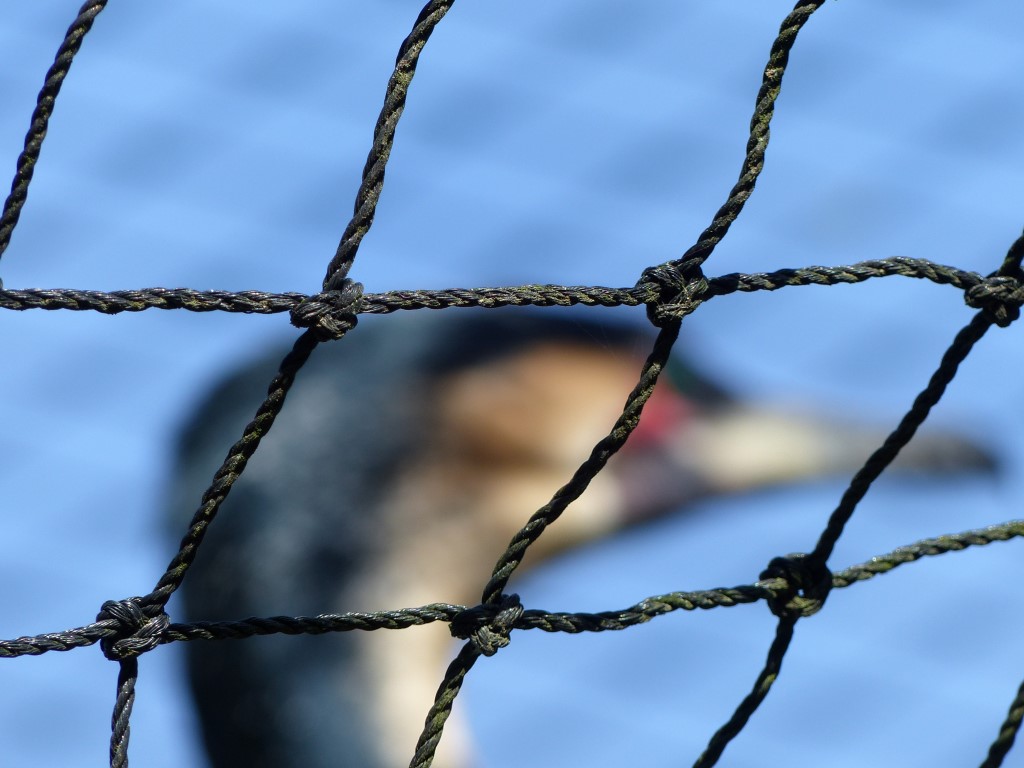
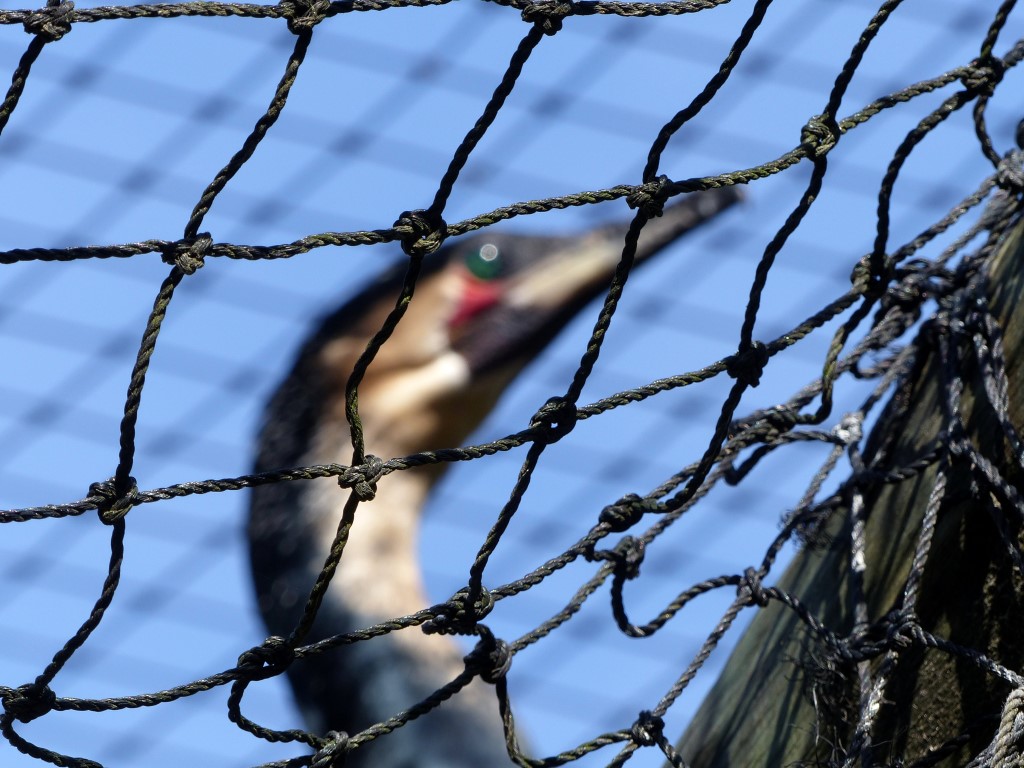
First Attempt - See the neat knots?

First Attempt – See the neat knots?

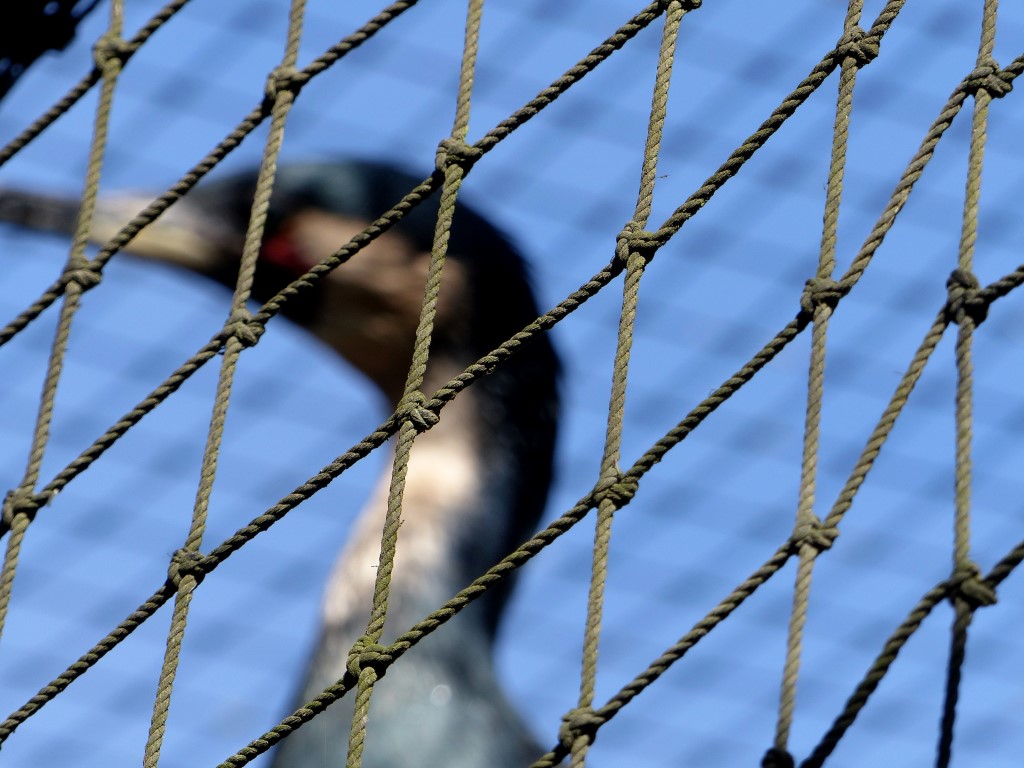
Back to my challenge. Taking photos at a Zoo can be quite challenging to say the least. Especially for “program mode” photographers. For some reason, zoos like to keep something between you and the birds, unless you are in an aviary with them. That “something” is usually a fence, bars, netting, or something to try to shoot through. They seem to like to keep their birds safe. :)

Another Attempt - Nice knots!

Another Attempt – Nice knots!

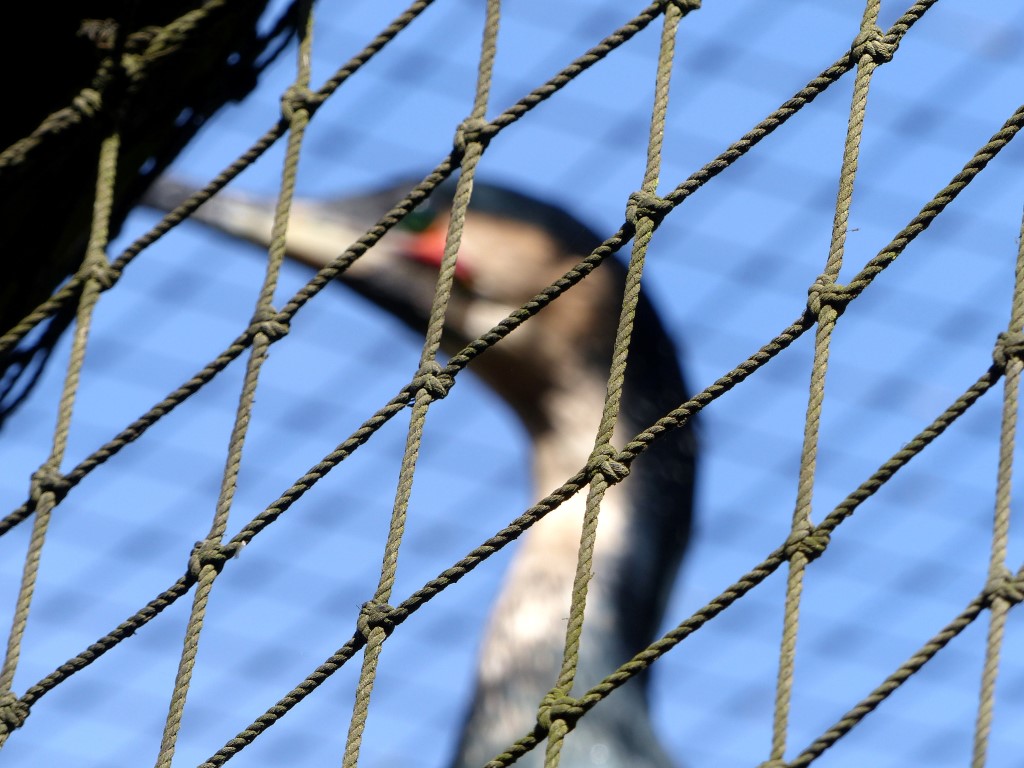
I tried again,

Nope - Not yet!

Nope – Not yet!

I backed out the zoom and tried to find the other one.

There he is

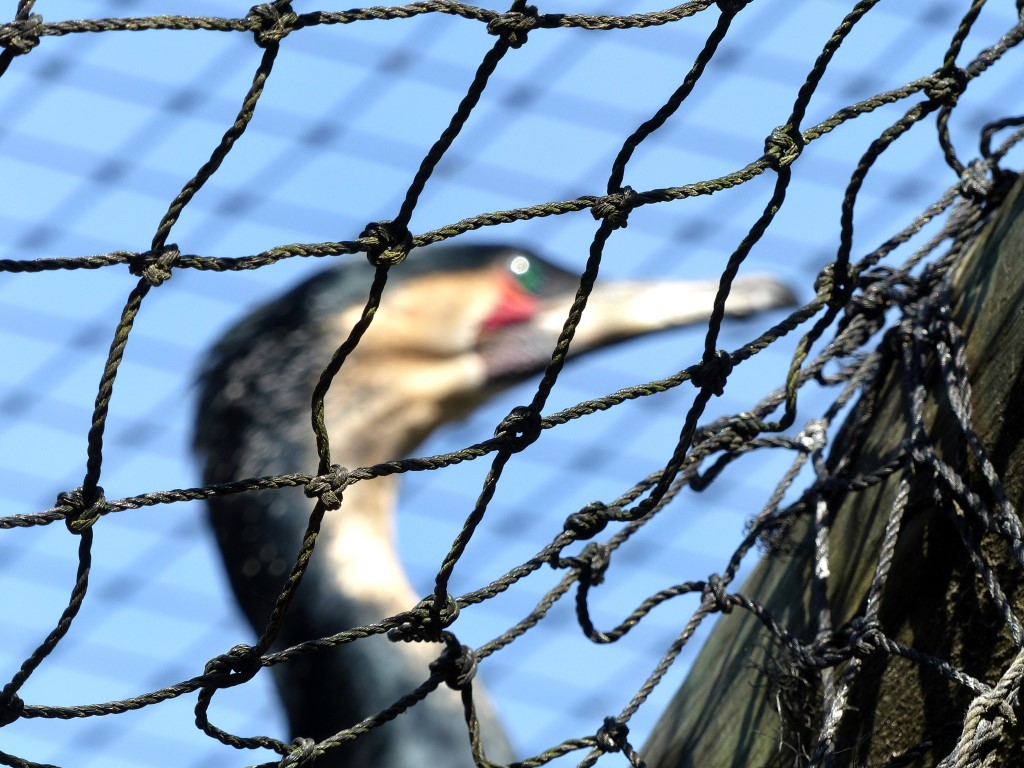
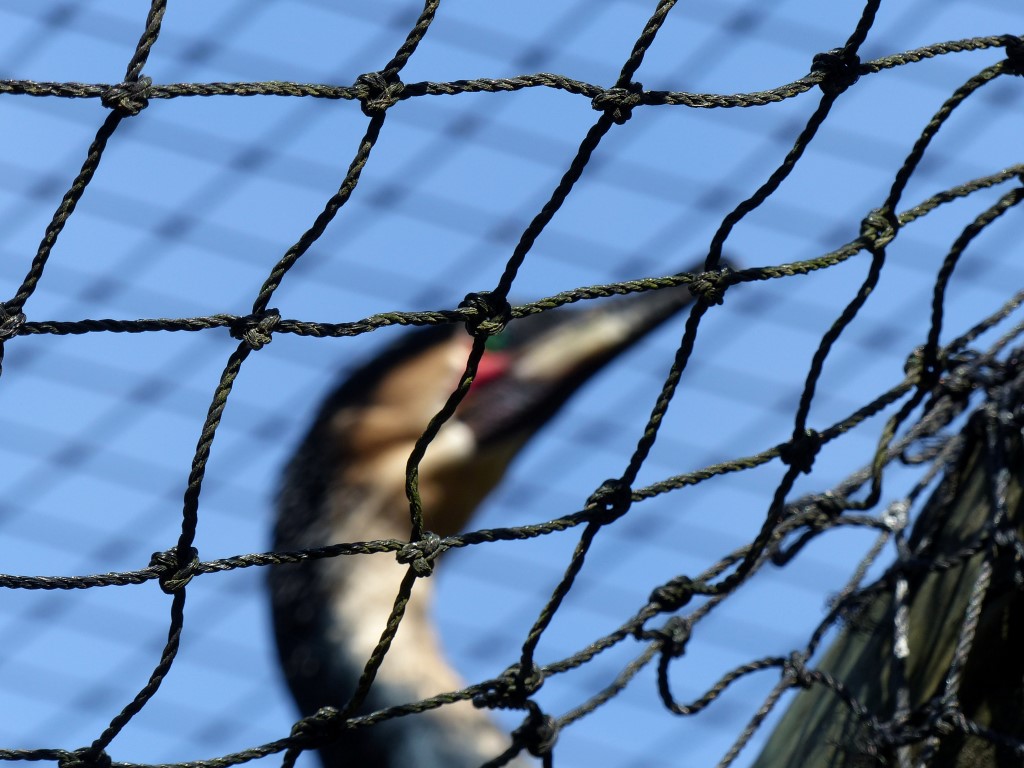
Different color netting, but same blurry bird photo.

Yuk!

Yuk!

Then, I finally got through the netting enough to see that beautiful bird.

Look at that beauty!

Look at that beauty!

Wow!

I got through the netting.

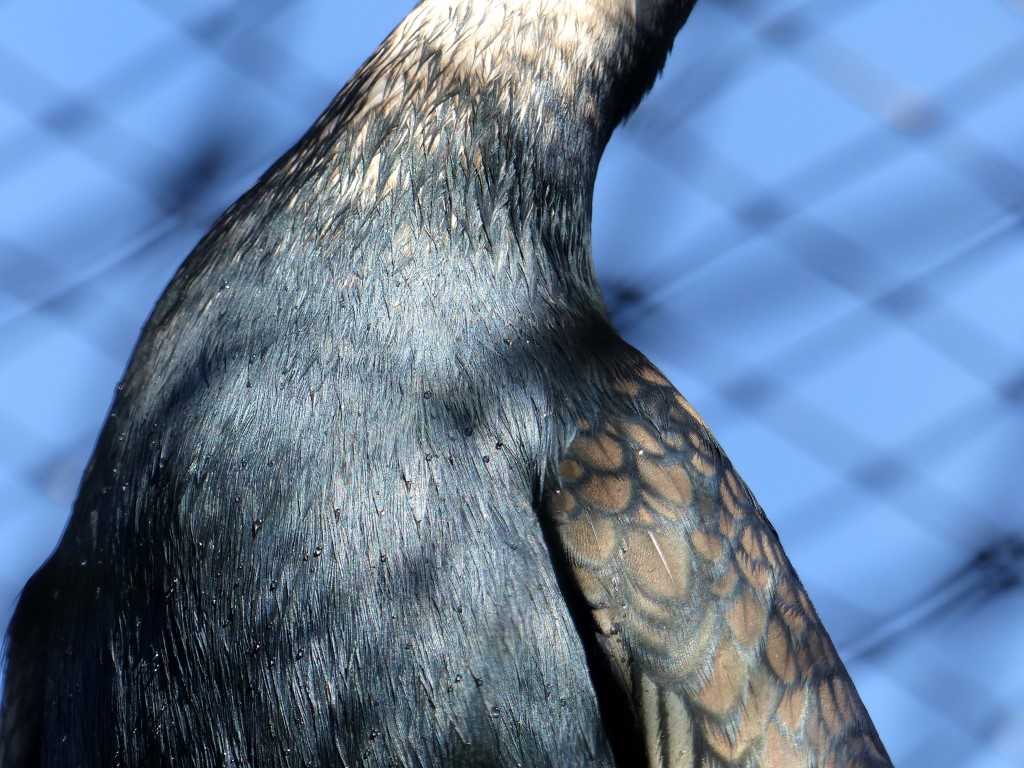
Even got the chest and some feather design.

Yeah! I got through

Yeah! I got through

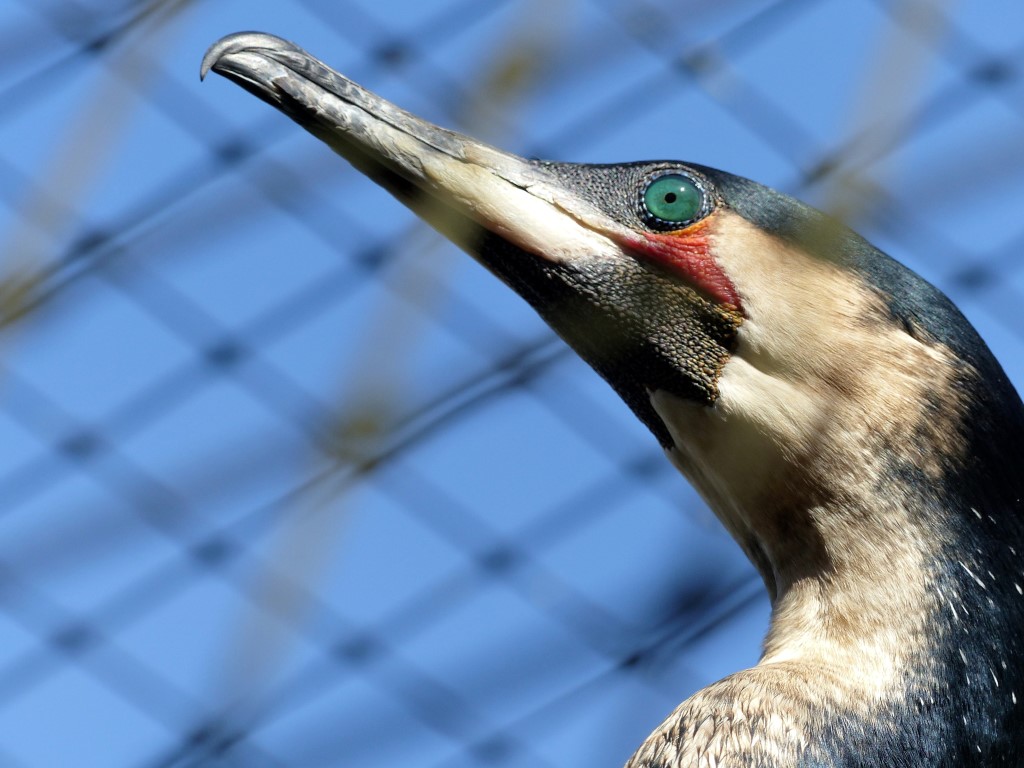
Look at those eyes!

What pretty green eyes

What pretty green eyes

Our Creator gave the White-breasted Cormorants a beautiful eye color and overall neat appearance. Just this one encounter, trying to get a photo takes you through a wide range of emotions; frustration, wanting to give up, then determination and joy when you can finally see the bird clear. Reminds me of what I have been reading in Ecclesiastes.

To everything there is a season, A time for every purpose under heaven: …A time to weep, And a time to laugh; A time to mourn, And a time to dance; A time to cast away stones, And a time to gather stones; …A time to gain, And a time to lose; A time to keep, And a time to throw away (blurry photos); …A time to love, And a time to hate; …What profit has the worker from that in which he labors? I have seen the God-given task with which the sons of men are to be occupied. He has made everything beautiful in its time. Also He has put eternity in their hearts, except that no one can find out the work that God does from beginning to end. I know that nothing is better for them than to rejoice, and to do good in their lives, and also that every man should eat and drink and enjoy the good of all his labor—it is the gift of God. (Ecclesiastes 3:1-13 NKJV)

Enjoy all the photos of the cormorants and even some from a previous trip:

The white-breasted cormorant (Phalacrocorax lucidus) is much like the widespread great cormorant and if not a regional variant of the same species, is at least very closely related. It is distinguished from other forms of the great cormorant by its white breast and by the fact that subpopulations are freshwater birds. Phalacrocorax lucidus is not to be confused with the smaller and very different endemic South Australian black-faced cormorant, which also is sometimes called the white-breasted cormorant.

*

Birdwatching Trips

Lowry Park Zoo

White-breasted Cormorant – Wikipedia

White-breasted Cormorant – Dallas Zoo

Wordless Birds

*

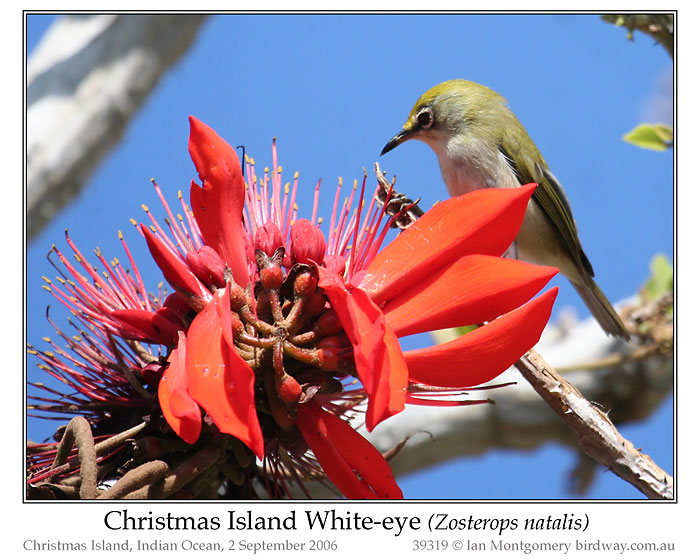
Ian’s Bird of the Week – Christmas Island White-eye

Christmas Island White-eye (Zosterops natalis) by Ian

Ian’s Bird of the World – Christmas Island White-eye ~ by Ian Montgomery

Newsletter ~ 12/23/14

Here is a Christmas Island endemic to celebrate the festive season appropriately. It’s not the most spectacular bird but all the other birds with ‘Christmas’ in the name that I’ve photographed have already featured as bird of the week.
Happily, it’s quite partial to posing beside spectacular flowers, first and third photos and its endemic status gives it special significance. The first two photos were taken at the Christmas Island Resort on the eastern side of the island, – that’s Christmas Island in the Indian Ocean, not Christmas Island (Kirimati part of Kiribati) in the Pacific. The resort used to be a casino for Indonesian high-rollers, opened by an enterprising entrepreneur in 1993 following the closure in 1981 of the three licensed Indonesian casinos in Jakarta, a mere one hour away by private jet. It closed in 1998, a victim of the Asian financial crisis and was empty when we visited it in 2006. It has recently reopened as an ordinary resort, promoting more socially acceptable activities such as honeymoons and bird watching.

The White-eye is quite abundant on the island. The third photo was taken in the grounds of Government House, where the Governor used to live. It was also empty in 2006, the Administrator choosing to live in more democratic surroundings. Government House is just across the bay from Flying Fish Cove and it is good for bird watching. If I were Administrator, I would prefer to live there. There is supposed to be a small population persisting in the Cocos (Keeling) Islands, introduced between 1885 and 1900, but there is disagreement between Handbook of Birds of the World and BirdLife International as to where it survives (Horsburgh Island or around the settlement on West Island, respectively).

Anyway, below is my best wishes for Christmas and New Year. I’m avoiding ‘Merry’ as it suggests drunkeness and ‘Prosperous’  as it seems a bit greedy, so interpret the message how it accords best with you.

I think the bird on the left is a Grey Heron as it has a crest and the one on the right a White Stork  a well-loved bird in Strasbourg. We did go looking for them in a park in early October where they occur, but they had already left for the winter and we had to wait until we got to the Pyrenees before we caught up with any:

Greetings
Ian
**************************************************
Ian Montgomery, Birdway Pty Ltd,
454 Forestry Road, Bluewater, Qld 4818
Tel 0411 602 737 ian@birdway.com.au
Bird Photos http://www.birdway.com.au/
Where to Find Birds in Northern QueenslandiTunesGoogle Play Kobo Books
Recorder Society http://www.nqrs.org.au

Lee’s Addition:

“But as it is written, Eye hath not seen, nor ear heard, neither have entered into the heart of man, the things which God hath prepared for them that love him. (1 Corinthians 2:9 KJV)

This was a pleasant surprise article from Ian. Wasn’t expecting one so soon. How appropriate though. I especially love that first picture.

White-eyes are members of the Zosteropidae – White-eyes Family. There are 128 species that make up the family, of which 96 are White-eyes.

*

*

Sunday Inspiration – Humbleness of The Creator

Birth of Christ (from an e-mail-source unknown)

“Let this mind be in you, which was also in Christ Jesus: Who, being in the form of God, thought it not robbery to be equal with God: But made himself of no reputation, and took upon him the form of a servant, and was made in the likeness of men: And being found in fashion as a man, he humbled himself, and became obedient unto death, even the death of the cross. Wherefore God also hath highly exalted him, and given him a name which is above every name: That at the name of Jesus every knee should bow, of things in heaven, and things in earth, and things under the earth; And that every tongue should confess that Jesus Christ is Lord, to the glory of God the Father.”(Philippians 2:5-11 KJV)

The Creator, of all the birds we like to feature here, humbled Himself to come in sinless flesh, to die for us. resurrect Himself, and provide Salvation for us. Don’t let that important point be lost in all the activities of Christmas.

We here, at the blog, trust you have a very Merry Christmas and enjoy seeing some of His Created birds as you listen to the music.

This slideshow requires JavaScript.

*
“Now when Jesus was born in Bethlehem of Judaea in the days of Herod the king, behold, there came wise men from the east to Jerusalem, Saying, Where is he that is born King of the Jews? for we have seen his star in the east, and are come to worship him”. (Matthew 2:1-2 KJV)

“The fear of the LORD is the beginning of wisdom: a good understanding have all they that do his commandments: his praise endureth for ever.” (Psalms 111:10 KJV)

“Wise Men Still Seek Him” – Pastor Jerry, Jessie, Caleb and Choir – FBC

(From our Christmas Program last Sunday night)

*

*

Sunday Inspiration – Christmas Birds

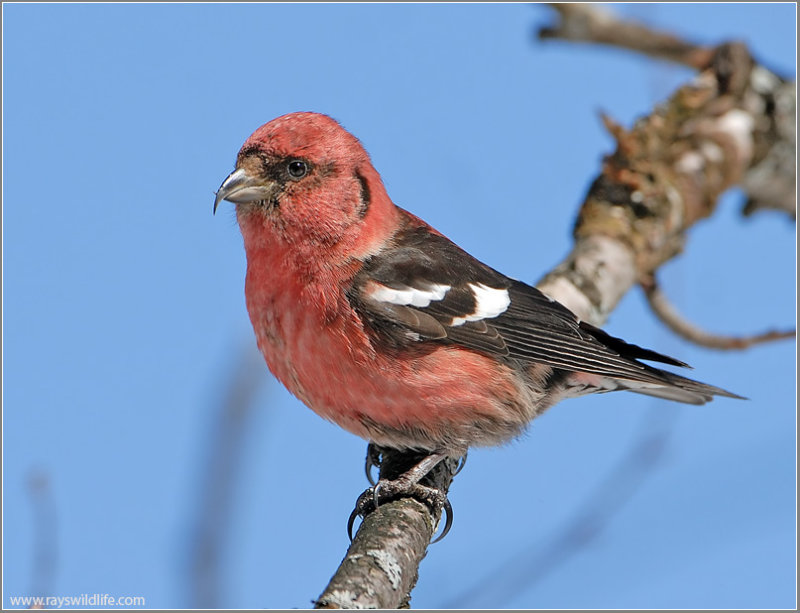
Two-barred Crossbill (Loxia leucoptera)(White-winged) by Raymond Barlow

Two-barred Crossbill (Loxia leucoptera)(White-winged) by Raymond Barlow

Now when Jesus was born in Bethlehem of Judaea in the days of Herod the king, behold, there came wise men from the east to Jerusalem, Saying, Where is he that is born King of the Jews? for we have seen his star in the east, and are come to worship him. (Matthew 2:1-2 KJV)

Today I am doing something a little different. Instead of a song, there is a short Christmas message from my pastor. This was given during the Camel Lot Christmas Musical that we had in 2012. It applies for today, as well. Listen to Pastor Nathan Osborne III as you watch some of the Lord Jesus Christ’s creation among the birds.

The birth of the Jesus, His death on the cross and His resurrection are all a part of Christmas.

This slideshow requires JavaScript.

Our Pastor at the Christmas Camel Lot Musical – 2012

*

(Started adding Christmas colored birds, but then added newer photos from this year.)

Sunday Inspirations

Some Previous Christmas Articles

*

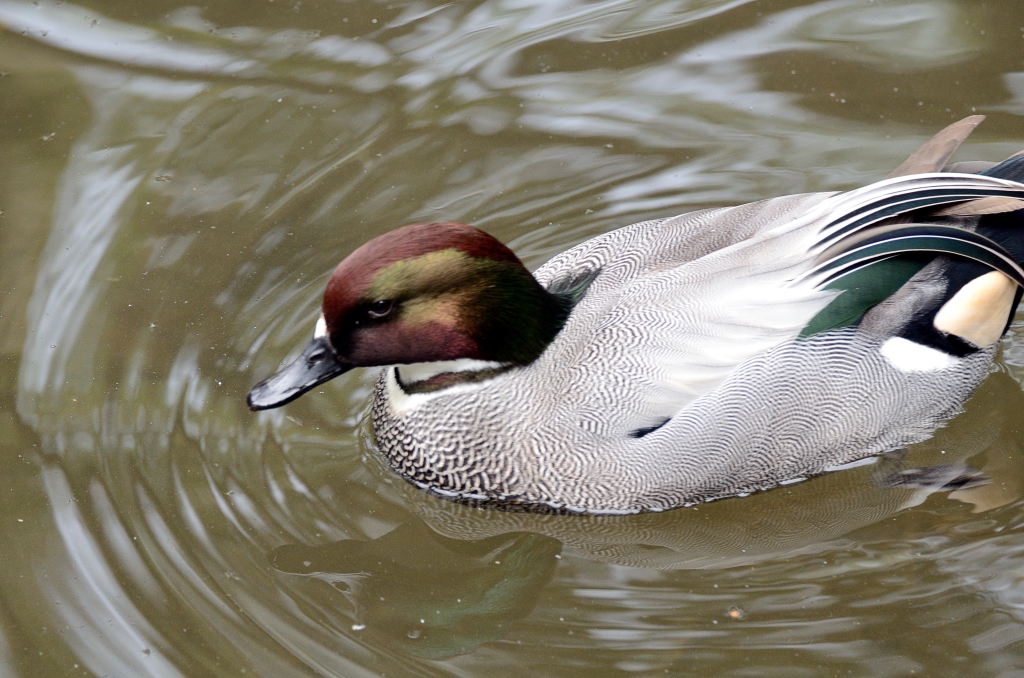
Falcated Duck at Zoo Miami

Falcated Duck (Anas falcata) by Dan at ZM

Falcated Duck (Anas falcata) by Dan at ZM

While we were on our latest visit to the Wings of Asia Aviary at Zoo Miami, the Falcated Duck caught my attention. We have seen it before, because there are photos of them, but for some reason, it was just another duck then. The sun caught its iridescent head and I started looking closer this time. Wings of Asia has one male and one female at this time.

These Falcated Duck (Teal) are just one more example of the variety and beauty the Lord gave His creatures when they were created.

All things were made by him; and without him was not any thing made that was made. (John 1:3 KJV)

Apparently when the male wears his breeding plumage, that green really shines.

Falcated Duck (Anas falcata) ©WikiC

Falcated Duck (Anas falcata) ©WikiC

I tried to get photos of his beautiful feathers at the back, but my photos aren’t the best, but maybe you can catch some of the great beauty that the Lord gave these Falcated Ducks.

Falcated Duck (Anas falcata) at Wings of Asia by Lee

Falcated Duck (Anas falcata) at Wings of Asia by Lee

Falcated Ducks are mainly from Asia and belong to the Anatidae – Ducks, Geese and Swans Family. By the way, “falcate” means “curved or hooked like a sickle.” (Wordsmith)

Males and females have similar lengths at 19-21.5 in (46 to 53 cm.) Their weight can range from 422 to 770 grams, with males weighing more than their female counterparts. Wingspans range from 31-36 in (79 to 91 cm). The breeding male is unmistakable. Most of the body plumage is finely vermiculated grey, with the long sickle-shaped tertials, which give this species its name, hanging off its back. The large head is dark green with a white throat, and a dark green collar and bronzed crown. The vent region is patterned in yellow, black and white.

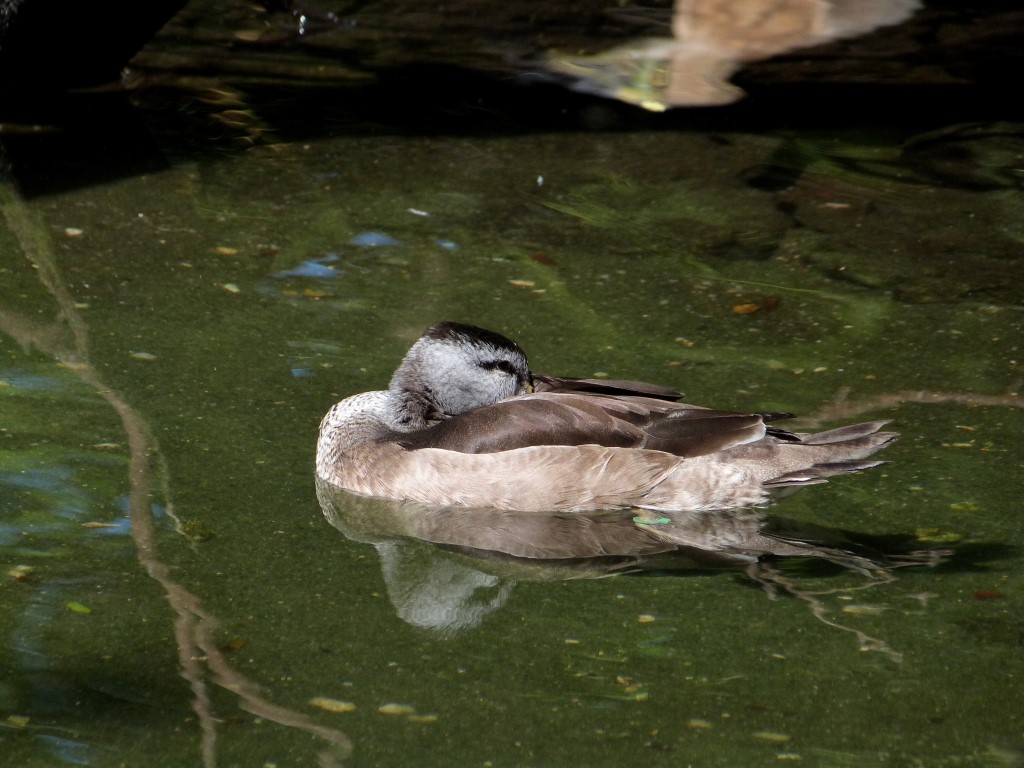
Falcated Duck (Anas falcata) Female ©WikiC

Falcated Duck (Anas falcata) Female ©WikiC

The female falcated duck is dark brown, with plumage much like a female wigeon. Its long grey bill is an aid to identification. The eclipse male is like the female, but darker on the back and head. In flight both sexes show a pale grey underwing. The blackish speculum is bordered with a white bar on its inner edge. Young birds are buffer than the female and have short tertials. Juveniles have plumage similar to females of the species.

The Anas falcata are known to have very striking and beautiful sickle feathers. This is in comparison with many other birds like swams and geese.

Medium dabbling duck with long black and white tertial feathers extending over black rump. Body white, black, gray in finely-scaled pattern. The crested iridescent head is green and purple-brown. White throat has black ring; black tail and black-green speculum are edged in white.

Breeds and winters in southeastern Asia but strongly migratory. Birds seen in North America beyond Alaska may be escaped captives from private collections or wild birds. Favors wetlands, lakes, ponds, rivers, estuaries, and marshes. Near-threatened in the wild. Most U.S. sightings occur between Pacific and Californian coasts, Baja peninsula, Mexico, India, and Canada. (From internet sources including WhatBird and Wikipedia)

Here’s a short clip I took of him washing his feathers at Zoo Miami.

This slideshow requires JavaScript.

In 2011 a Falcated Duck family showed up at the Colusa Natiional Wildlife Refuge. Rare visitors from their normal range. It brought the photographers to catch the rare glimpse of these beautiful birds. Watch this video to see them in action,

*

Falcated Duck – Audubon

Falcated Duck – WhatBird

Falcated Duck – Wikipedia

Birds of the World – Anatidae – Ducks, Geese and Swans

Wordless Birds

*

Sunday Inspiration – Resting

Caribbean Dove (Leptotila jamaicensis) ©WikiC

Caribbean Dove (Leptotila jamaicensis) ©WikiC

But the dove found no rest for the sole of her foot, and she returned unto him into the ark, for the waters were on the face of the whole earth: then he put forth his hand, and took her, and pulled her in unto him into the ark. (Genesis 8:9 KJV)

And the work of righteousness shall be peace; and the effect of righteousness quietness and assurance for ever. And my people shall dwell in a peaceable habitation, and in sure dwellings, and in quiet resting places; (Isaiah 32:17-18 KJV)

Therefore my heart is glad, and my glory rejoiceth: my flesh also shall rest in hope. (Psalms 16:9 KJV)

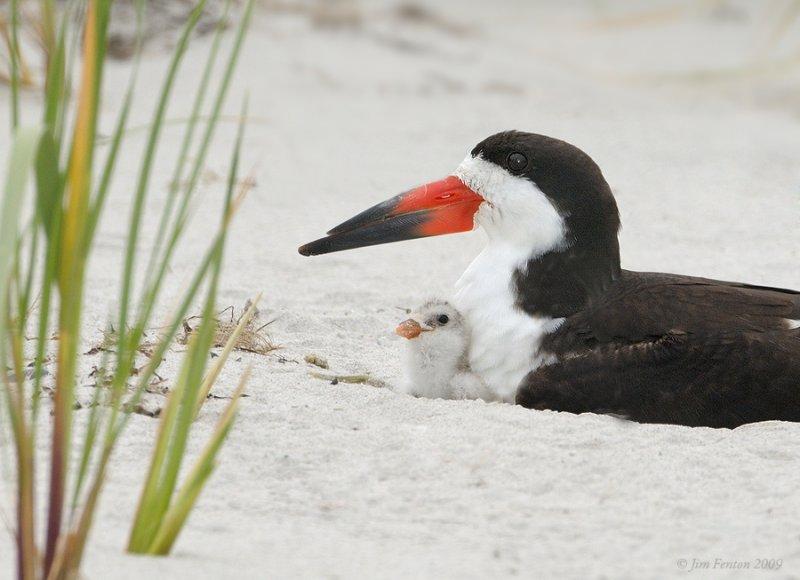
Black Skimmer (Rynchops niger) by J Fenton

Black Skimmer (Rynchops niger) by J Fenton

And I said, Oh that I had wings like a dove! for then would I fly away, and be at rest. (Psalms 55:6 KJV)

Return unto thy rest, O my soul; for the LORD hath dealt bountifully with thee. (Psalms 116:7 KJV)

Come unto me, all ye that labour and are heavy laden, and I will give you rest. Take my yoke upon you, and learn of me; for I am meek and lowly in heart: and ye shall find rest unto your souls. (Matthew 11:28-29 KJV)

Are we resting like we should, knowing that God Is In Control?

*

This slideshow requires JavaScript.

“God’s Still In Control” ~ ©Hyssongs

*

More Sunday Inspirations

Hope for Hard Times

Is There a God?

*

Birds of Asia – Cotton Pygmy Goose

Cotton Pygmy Goose (Nettapus coromandelianus) at Wings of Asia by Lee

Cotton Pygmy Goose (Nettapus coromandelianus) at Wings of Asia by Lee

 And he spake of trees, from the cedar tree that is in Lebanon even unto the hyssop that springeth out of the wall: he spake also of beasts, and of fowl, and of creeping things, and of fishes. (1 Kings 4:33 KJV)

Let me introduce you to another interesting avian friend from His Creator’s Hand. This is the Cotton Pygmy Goose or Cotton Teal (Nettapus coromandelianus) which is a small perching duck that breeds in Pakistan, India, Bangladesh, southeast Asia and south to northern Australia.

Small individuals of this species are the smallest waterfowl on earth, at as little as 5.6 oz (160 g) and 10 in (26 cm). White predominates in this bird’s plumage. Bill short, deep at base, and goose-like.

Cotton Pygmy Goose (Nettapus coromandelianus) PB Zoo by Lee

Male in breeding plumage is glossy blackish green crown, with white head, neck, and underparts; a prominent black collar and white wing-bar. Rounded head and short legs. In flight, the wings are green with a white band, making the male conspicuous even amongst the huge flying flocks of the lesser whistling duck, which share the habitat. Female paler, without either black collar and only a narrow or nonexistent strip of white wing-bar. In non-breeding plumage (eclipse) male resembles female except for his white wing-bar. Flocks on water bodies (jheels), etc.

The call is a peculiar clucking, uttered in flight

It is largely resident, apart from dispersion in the wet season, but Chinese birds make long-distance migrations to winter further south. It nests in tree holes, laying 8–15 eggs. The nesting season is July to September (SW. monsoon). Its nest is a natural hollow in a tree-trunk standing in or near water, sometimes lined with grass, rubbish and feathers. The eggs, are ivory white.

Cotton Pygmy Goose (Nettapus coromandelianus) at Wings of Asia by Lee

Cotton Pygmy Goose (Nettapus coromandelianus) at Wings of Asia by Lee

This is an abundant species in Asia, although the slightly larger Australian race appears to be declining in numbers.

Found on all still freshwater lakes (jheels), rain-filled ditches, inundated paddy fields, irrigation tanks, etc. Becomes very tame on village tanks wherever it is unmolested and has become inured to human proximity. Swift on the wing, and can dive creditably on occasion.[citation needed] Found in ponds and lakes in southern Pakistan . However numbers are declining and it is definitely endangered.

Its food is chiefly seeds and vegetable matter, especially water lilies; also insects, crustaceans, etc. (From Wikipedia with editing)

I enjoyed watching this female Pygmy Goose floating and took a short video of her.

I just made a page for  Zoo Miami and the Wings of Asia under the Birdwatching Trips. There are most of the articles that have been written about our visits to the Zoo, but especially to the Wings of Asia Aviary. That is where we spend most of our time. This last trip was our fourth visit down to Miami to see those amazing birds.

*

This slideshow requires JavaScript.

*

Cotton Pygmy Goose – Wikipedia

Cotton Pygmy Goose – Ducks of the World

Birds of the World

Birdwatching Trips

Zoo Miami and the Wings of Asia

Wordless Birds

*

Bird of the Week – Bonelli’s Eagle

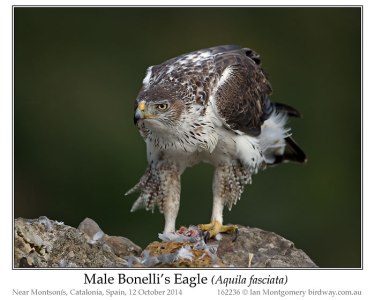
Bonelli's Eagle (Aquila fasciata) by Ian

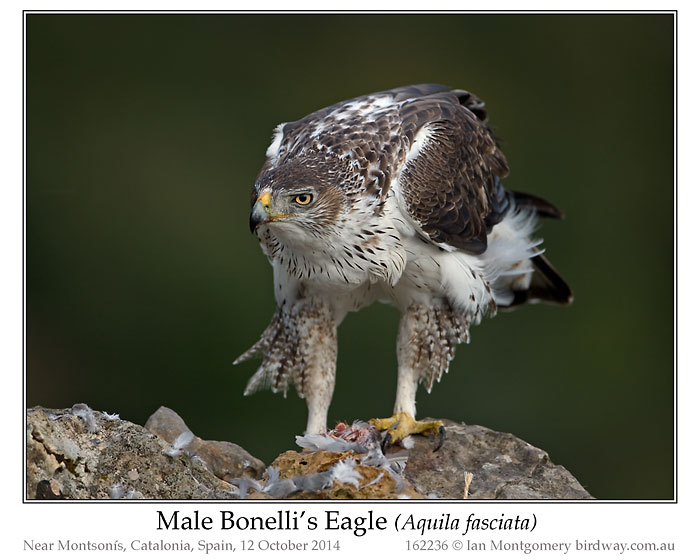
This is the last in this series of raptor photos from the Pyrenees: Bonelli’s Eagle taken at another feeding station managed by Birding in Spain. Like last week’s Northern Goshawk feral pigeons from a local council culling programme are used to attract the eagles. It’s brown and white plumage reminded me rather of the similarly sized Osprey particular that of the male, first photo, which is paler than the female. In size it has a length of up to 73cm/28in, a wingspan to 180cm/71in and weights up to 2.4kg/5.3lbs. That makes it much smaller than most of the other Aquila eagles, such as the Golden and Wedge-tailed but larger than the Little Eagle of Australia.

View From The Hide in Spain by Ian

View From The Hide in Spain by Ian

There the resemblance to ospreys ends, as Bonelli’s Eagle is found in hilly or mountainous country in warm regions and eats mammals and birds – in Spain it eats mainly rabbits and partridges. The second photo shows the view from the hide. The stone wall on the left is where the food is tied in place, as is done with the goshawks to prevent them from carrying the food away. The bird arrived quite promptly after set up: you can see in the first photo that the reflection of the sun in its eye is just above the horizon.

Bonelli's Eagle (Aquila fasciata) by Ian

The third photo is another one of the male with the remains of a pigeon. On the back just below the neck a white spot is visible – this is a diagnostic feature of adult Bonelli’s Eagles and fairly conspicuous in flight though the birds arrived and departed so quickly from the rocky ridge in front of the hide that I didn’t get any decent flight shots.
Bonelli's Eagle (Aquila fasciata) by Ian

They were fast eaters too. The fourth photo was taken 25 minutes after the third: very little of the pigeon remains and the crop of the bird is quite full. The adult goshawk also took about half an hour to demolish a pigeon, but the immature goshawk took the best part of two hours and remained long after the adult had left. Despatching prey at speed would appear to be a skill that takes raptors a bit of practice. Both these photos show the feathered legs or ‘boots’, characteristic of ‘true’ eagles. They’re not exclusive to eagles though. The goshawks had impressive trousers too as do some falcons such as the Brown Falcon of Australia.

Bonelli's Eagle (Aquila fasciata) by Ian

Once fed, the male seemed more aware of what was going on around it and in the fifth photo is peering at the hide, presumably in response to the sound of the camera shutter.

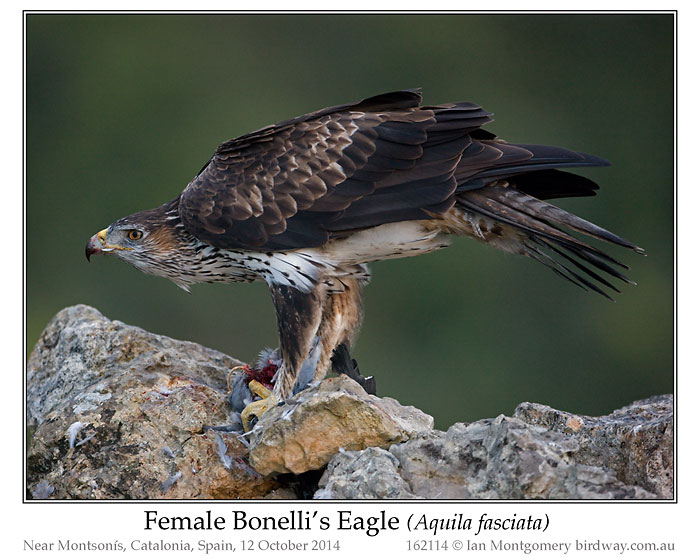
Meanwhile, the female, sixth and seventh photos, was getting stuck into the other pigeon. She was a fine-looking bird too, larger than the male, with hazel eyes and identifiable by much stronger streaks on the breast. The female had much darker trousers, seventh photo, but I don’t know whether that’s generally the case or peculiar to this bird.
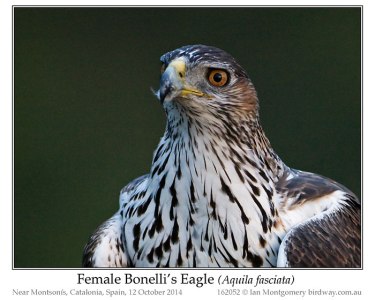
Bonelli's Eagle (Aquila fasciata) by Ian Female

Bonelli’s Eagle is widely but sparsely distributed through southern Europe, northern Africa, parts of the Middle East, South and Southeastern Asia as far east as Timor. The European population is about 900 pairs, of which about 700 are in Spain. They are sedentary, keeping to their large home ranges throughout the year. Satellite tracking in Spain has shown an average home range of 200sq km/77sq miles with a core range of about 45sq km/17 sq miles.

Bonelli's Eagle (Aquila fasciata) by Ian Female

The generic name ‘fasciata’ comes from the Latin fascia meaning stripe, band or sash. It’s usually used in birds to refer to horizontal bands or barring but maybe Veillot, the taxonomist responsible, was referring to the barring on the ‘trousers’ rather than the streaks on the breast. Veillot, Jean Pierre that is, was an important French avian taxonomist, 1748-1831, who extended the three-level Linnaean classification of order-genus-species into order-tribe-family-genus-species in his Analyse d’une nouvelle Ornithologie Elémentaire (1816). Franco Andrea Bonelli was, unsurprisingly, an Italian ornithologist 1784-1830 and discovered both this eagle and Bonelli’s Warbler in 1815. He worked at the Natural History Museum in Paris 1810-11 before returning to Italy to take up the position of Professor of Zoology at the University of Turin. Interestingly, he published his main works in French.

What would we do without Wikipedia?
Greetings
Ian

**************************************************
Ian Montgomery, Birdway Pty Ltd,
454 Forestry Road, Bluewater, Qld 4818
Tel 0411 602 737 ian@birdway.com.au
Bird Photos http://www.birdway.com.au/
Recorder Society http://www.nqrs.org.au


Lee’s Addition:

They are passed away as the swift ships: as the eagle that hasteth to the prey. (Job 9:26 KJV)

Their horses also are swifter than the leopards, and are more fierce than the evening wolves: and their horsemen shall spread themselves, and their horsemen shall come from far; they shall fly as the eagle that hasteth to eat. (Habakkuk 1:8 KJV)

What an amazing set of photos of this magnificent Eagle. Thanks again, Ian, for sharing these fantastic glimpses of the Bonelli’s Eagle. Pretty fast eaters, it appears.

This Eagle is a member of the Accipitridae – Kites, Hawks and Eagles Family and a Bird of the Bible also. Eagles are mentioned over thirty times in the Bible, plus they are included in the various “birds of prey” verses.

*

Ian’s Bird of the Week

Ian’s Eagle Family pages

Accipitridae – Kites, Hawks and Eagles Family

Birds of the Bible – Eagle

*
Here I Am

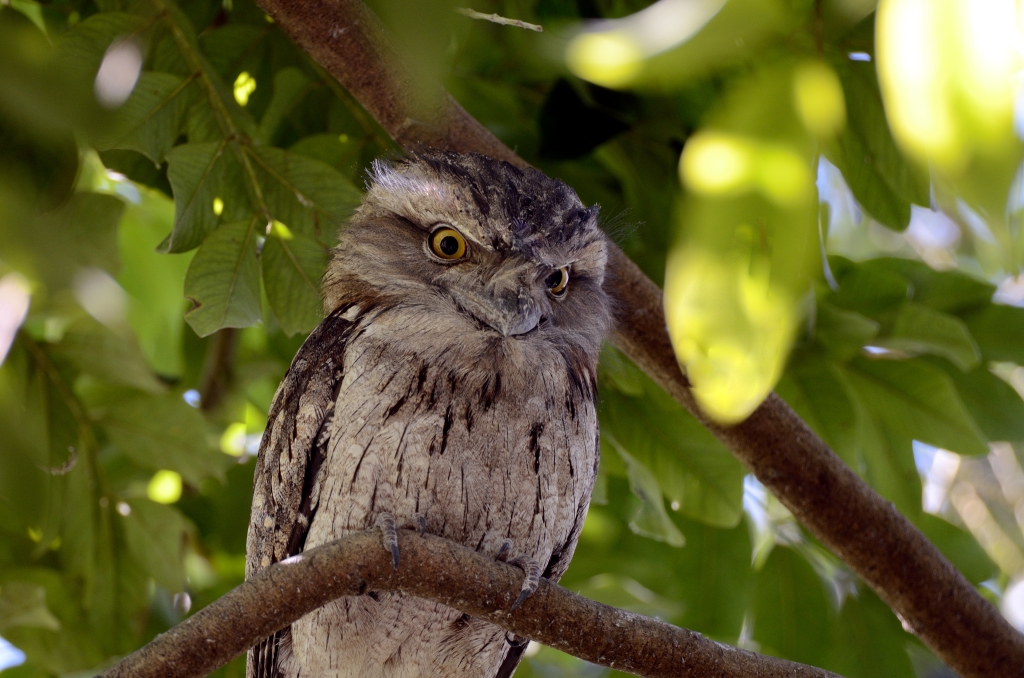
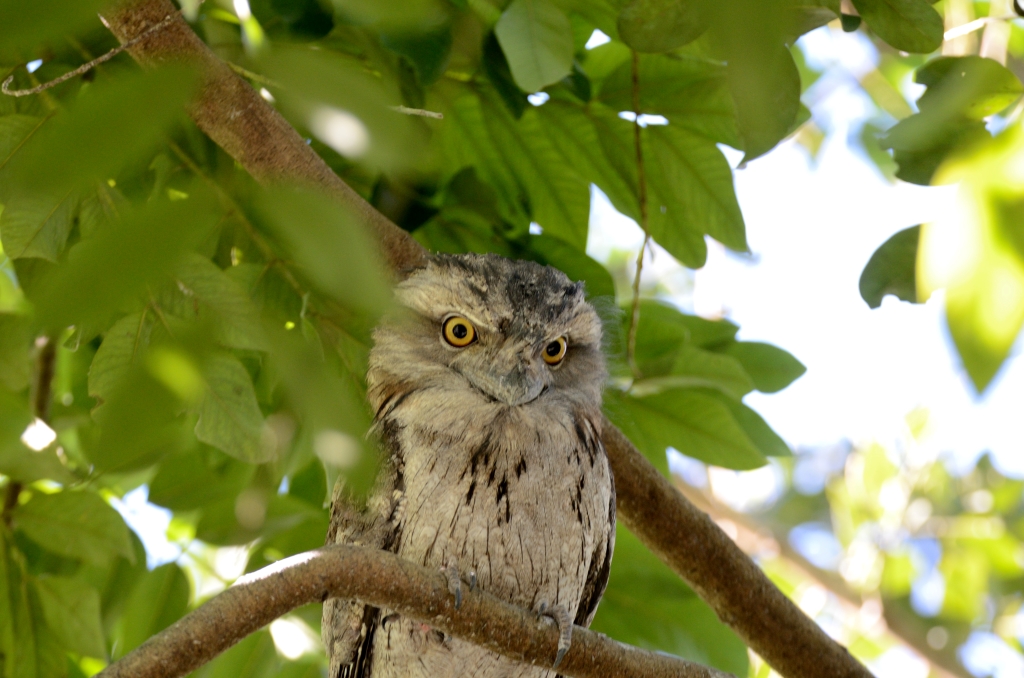
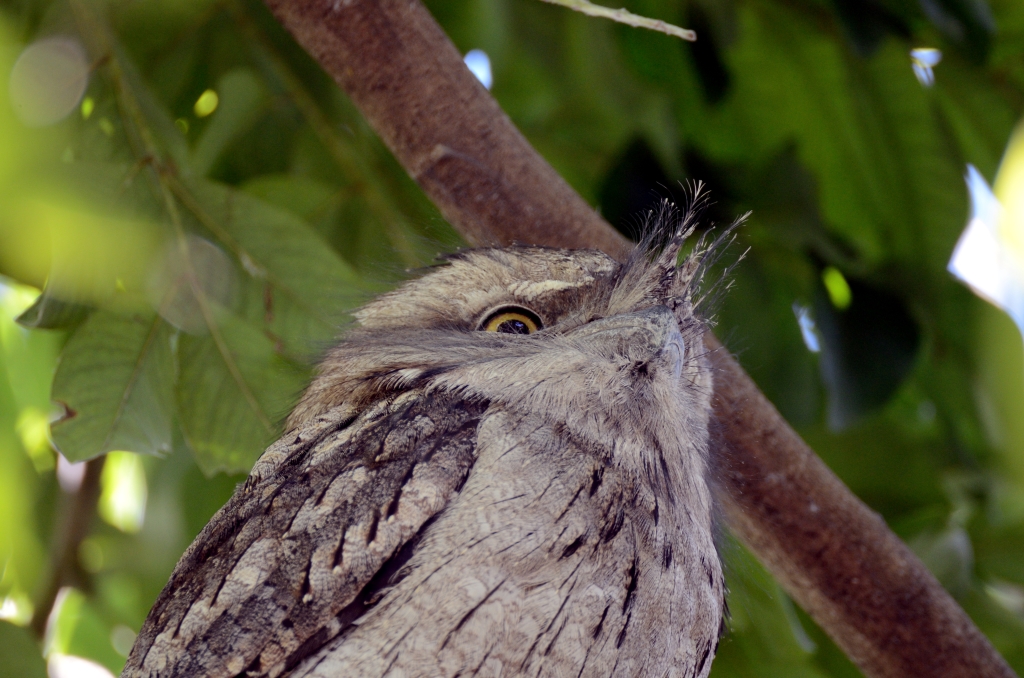
Tawny Frogmouth at Wings of Asia by Dan

Tawny Frogmouth at Wings of Asia by Dan

“Hide not thy face from me in the day when I am in trouble; incline thine ear unto me: in the day when I call answer me speedily. (Psalms 102:2 KJV)

Dan and I just returned from a three-day birdwatching adventure. With almost 1,000 photos and videos to sort, name, and clean-up, I’ll have plenty to post.

The Tawny Frogmouth (Podargus strigoides) is becoming a favorite of mine, because they are so hard to find. The Lord has given them such camouflage and an ability to freeze when threatened, they are a challenge. We were fortunate this time while visiting the Wings of Asia aviary at Zoo Miami. By following the feeder, that enjoys the birds as much as just working there, he helped us find the new Tawny Frogmouth. They now have two of them. This new one is more active and alert. Could it be that the feeder had a cup with 4 mice in it?

Tawny Frogmouth at Wings of Asia by Dan

Tawny Frogmouth at Wings of Asia by Dan

We actually saw Tawny with his eyes open and I even got a short video of him opening that mouth that gives them their name.

I have written about this bird before, Zoo Miami’s Wings of Asia – Wow! – I, seeing this one, forces me to write again. They belong to the Podargidae – Frogmouths Family which has 16 species of Frogmouths.

Masters of Camouflage Related to Oilbirds, Whip-poor-wills, and Nighthawks, the Tawny Frogmouth’s excellent camouflage covering makes it look like dried leaves. When frightened, the bird freezes in plosition and, with its cryptic colorations, looks like broken bramches.” (Amazing Bird Facts and Trivia, p 135) Isn’t the Lord’s Wisdom fantastic?

Tawny Frogmouth at Wings of Asia by Dan

Tawny Frogmouth at Wings of Asia by Dan

Another book, (National Geographic, Bird Coloration, p 150-151). says this: “Some birds hide not by being hard to discern, but by appearing not to be birds. The birds that best mimic inanimate objects are found in two groups of distantly related nightjars, the potoos in the Neotropics and the frogmouths in tropical Asia and Australia. Species in both of these groups hunt flying insects at night and rest during the day. Potoos and frogmouths use a strategy to hide during the day that differs … They hide conspicuously in view. The strategy…is to look exactly like an extension of a branch on which the bird sit.”

“Deliver me, O LORD, from mine enemies: I flee unto thee to hide me. (Psalms 143:9 KJV)

Tawny Frogmouth at Wings of Asia by Dan

Tawny Frogmouth at Wings of Asia by Dan

“They are named for their large flattened hooked bills and huge frog-like gape, which they use to capture insects. Their flight is weak. Their longer bristles which may exist to protect the eyes from insect prey.  Tawny frogmouths are large, big-headed birds that can measure from 13 to 21 in (34 to 53 cm) long….stocky and compact with rounded wings and short legs. They have wide, heavy olive-grey to blackish bills that are hooked at the tip and topped with distinctive tufts of bristles. Their eyes are large, yellow, and frontally placed, a trait shared by owls” (Wikipedia)

This slideshow requires JavaScript.

*
This video is of two segments. The keeper tried to get him to come down and then we came back a second time. Several photographers were waiting to get a photo of him coming down, but I guess this calls for another excuse to visit the Wings of Asia.

*

Podargidae – Frogmouths Family

Zoo Miami’s Wings of Asia – Wow! – I

Wings of Asia Aviary

Zoo Miami

Sunday Inspiration – Hide Thou Me

*