***
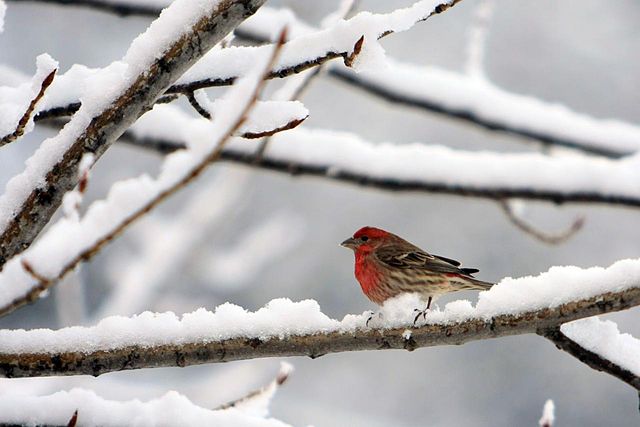
HER HOUSEHOLD ARE CLOTHED WITH SCARLET
***
“She is not afraid of the snow for her household: for all her household are clothed with scarlet.” (Proverbs 31:21 KJV)
House Finch in Snow ©WikiC
*
*
“She is not afraid of the snow for her household: for all her household are clothed with scarlet.” (Proverbs 31:21 KJV)
House Finch in Snow ©WikiC
*
*

“And he took the cup, and when he had given thanks, he gave it to them: and they all drank of it.” (Mark 14:23 KJV)
Twenty Hummingbirds at Feeder
*
*
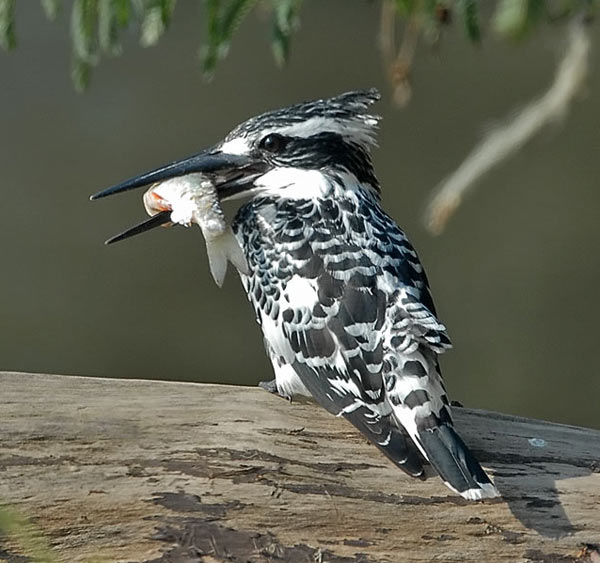
“Simon Peter saith unto them, I go a fishing. They say unto him, We also go with thee. They went forth, and entered into a ship immediately; and that night they caught nothing.” (John 21:3 KJV)
Pied Kingfisher (Ceryle rudis) by Nikhil Devasar
*
*

“The hearing ear, and the seeing eye, the LORD hath made even both of them.” (Proverbs 20:12 KJV)
Crested Guineafowl (Guttera pucherani) ©WikiC
*
*
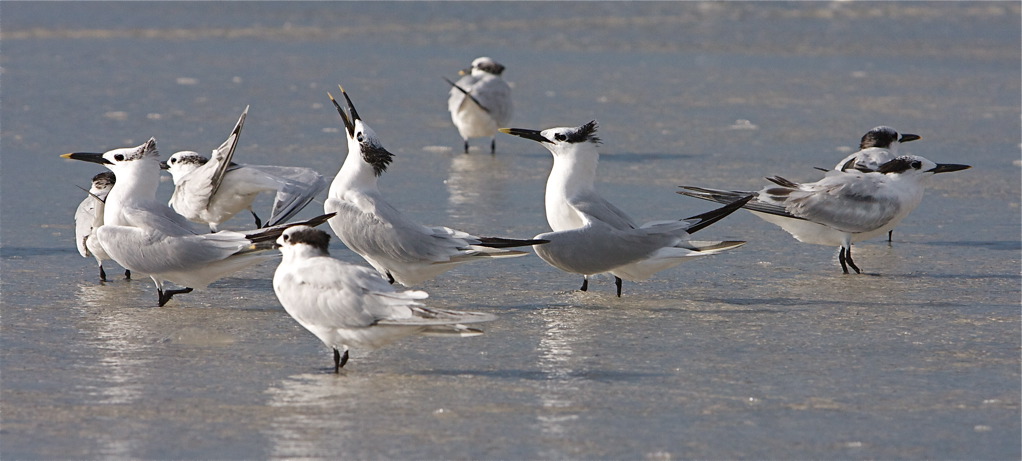
“Sing out the honor of His name; Make His praise glorious.” (Psalms 66:2 NKJV)
Sandwich Tern Singing (calling) By Mike Bader
*
*
Newsletter – 2/6/2017
I’ve chosen an owl this time because I want to talk about a beautiful book called The Enigma of the Owl. A complimentary copy of it arrived recently by air from the UK, because I supplied a photo of a Rufous Owl. I’ll come back to the book and the Rufous Owl in a moment, but first, here is the Brown Wood Owl, which, unlike the Rufous Owl, hasn’t ever featured as bird of the week.
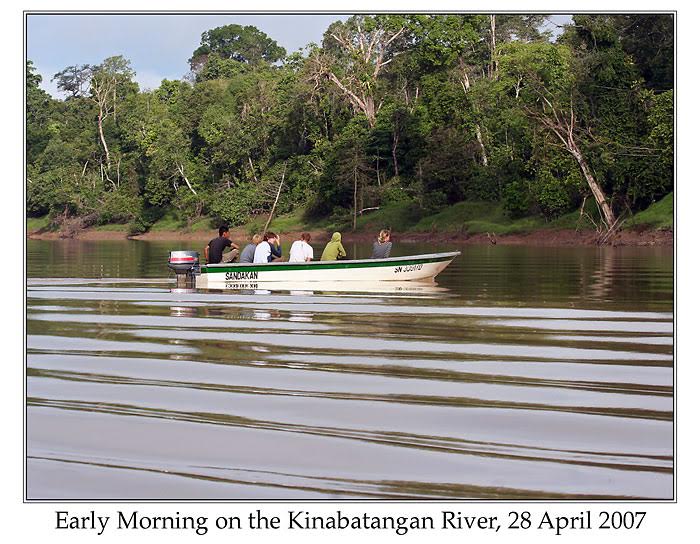
In 2007 I spent several days at an unashamedly spartan wildlife outfit called Uncle Tan’s Wildlife Adventures in near the Kinatabangan River in Sabah, Malaysian Borneo. One doesn’t go there for the facilities – the best shower we had was during a monsoonal downpour when everyone repaired outside with soap and shampoo – but for the wonderful wildlife. There were regular wildlife-spotting boat trips by day and by night on the river and lots of interesting animals, including Orang Utans in the jungle near the camp. My main target was, successfully, the Buffy Fish Owl but we also came across the Brown Wood Owl in the forest between the camp and the river.
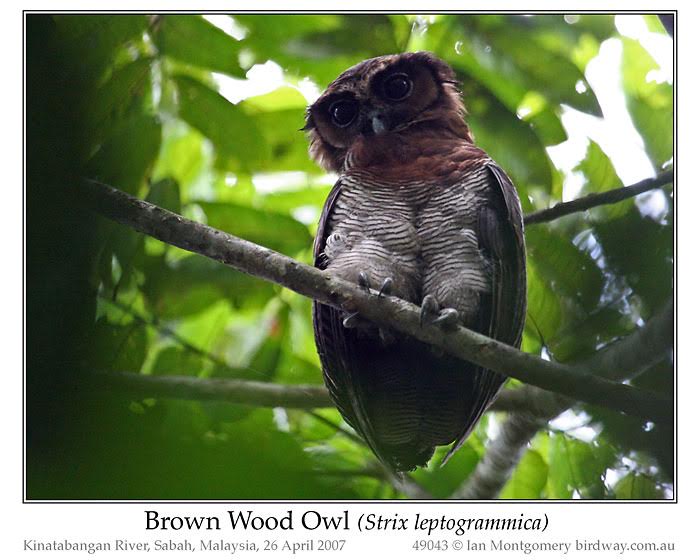
This is a medium to large owl, 40-55cm/16-22in in length, a member of the globally widespread genus Strix which includes the well-known Tawny Owl of Europe, the Barred and Spotted Owls of North America and other representatives in Africa and South America but not Australia. The specific name leptogrammica means fine-lined and refers to the elegant barred underparts.
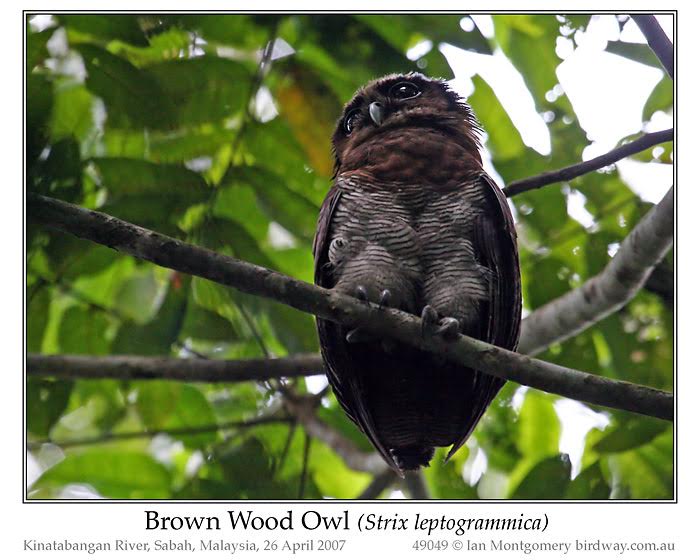
We came across the Brown Wood Owl twice. The first two photos are of the same individual, but the second one is of another bird three days later.
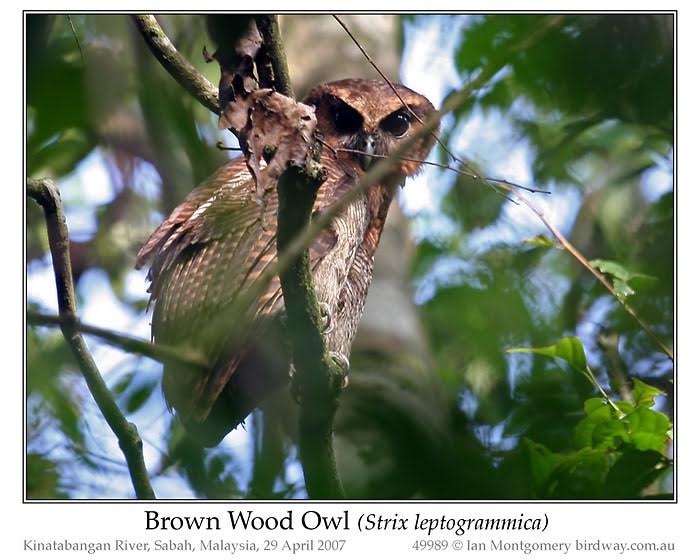
These three photos illustrate some of the difficulties of photographing owls. Most are nocturnal, many are shy (the Brown Wood Owl in particular prefers undisturbed forest and avoids areas of human habitation), so you need to be lucky to find them at their roosting sites. Roosting owls are prime targets for mobbing by other birds, so they often roost in hollows or in dense vegetation. In woodland, a bird in an unusually clear visible position like the first one here is often back-lit, while the second bird is well-lit but partially obscured by branches and leaves. I say this not just to make excuses but to express my admiration for many of the wonderful photos in The Enigma of the Owl.
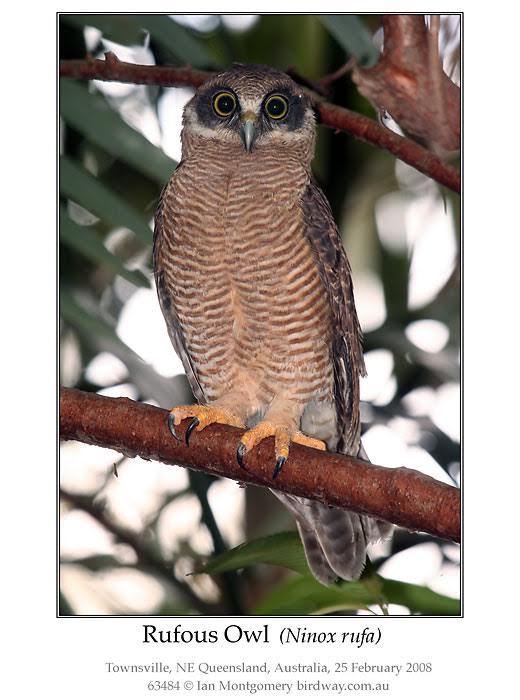
So I’m happy to have had this photo of a Rufous Owl selected for inclusion in the book. The bird in the photo was the immature member of a family of three that roosted regularly for a while in 2008 in an easily accessible spot behind the Black Hawk Memorial in the Palmetum, one of the three botanic gardens in Townsville. The Memorial honours 18 Australian servicemen killed when two Black Hawk helicopters collided in Townsville in 1996.
The general introduction to the book covers the taxonomy, physiology (visual and auditory), life-style and significance to humans of owls. The remainder of the book consists of detailed treatment of 80 of the approximately global 250 species of owls, with thorough natural histories of each species and about 200 spectacular photos, mostly covering a whole page and sometimes two pages. The 80 species are organised into chapters by region: North America; Central & South America; Eurasia; Africa; Southern Asia and Australasia; and Oceanic Islands. Each regional chapter has its own introduction.
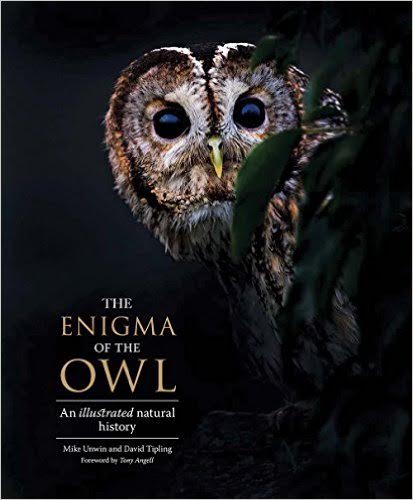
This is a terrific book and I highly recommend it. The UK edition is ₤32 and the US edition is $40 fantastic value for a large hard cover book of this quality. There isn’t an Australian edition but Italian, Japanese, French and German editions will be published later this year. My only quibble is that I think it would be better organised taxonomically rather than geographically, but that reflects my taxonomic and evolutionary tastes. That said, the taxonomic cover is very broad: there are representatives of all the important genera (about 22 out of about 27) and the missing ones are either obscure or fairly closely related to other ones already in the book.
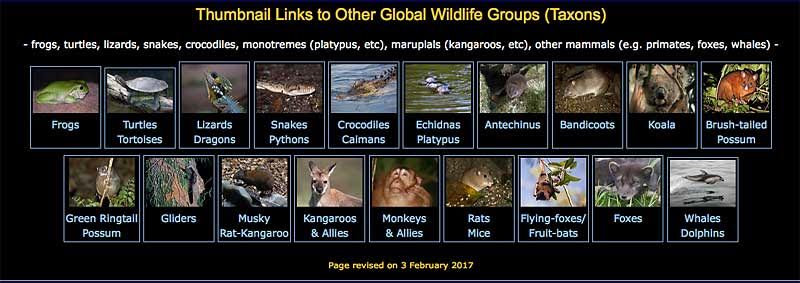
Back at the website, I have recently added global and Australasian thumbnails to all the non-bird taxonomic groups of ‘other wildlife’ to make them easier to find: http://www.birdway.com.au/global_wildlife_tn.php and http://www.birdway.com.au/aus_wildlife_tn.php.
Greetings
Ian
**************************************************
Ian Montgomery, Birdway Pty Ltd,
454 Forestry Road, Bluewater, Qld 4818
Tel 0411 602 737 ian@birdway.com.au
Bird Photos http://www.birdway.com.au/
Recorder Society http://www.nqrs.org.au
Lee’s Addition:
Another neat looking Owl and what an adventure just to get their photos. I am glad that Ian shares his many birds that he works so hard to photograph. We sit back in our easy chairs and sometimes forget what it takes to come up with these photographs from our photographers. Thanks again, Ian, for sharing with us.
*
Ian’s Bird of the Week Newsletters
*
“Now this is the main point of the things we are saying: We have such a High Priest, who is seated at the right hand of the throne of the Majesty in the heavens,” Hebrews 8:1 NKJV)
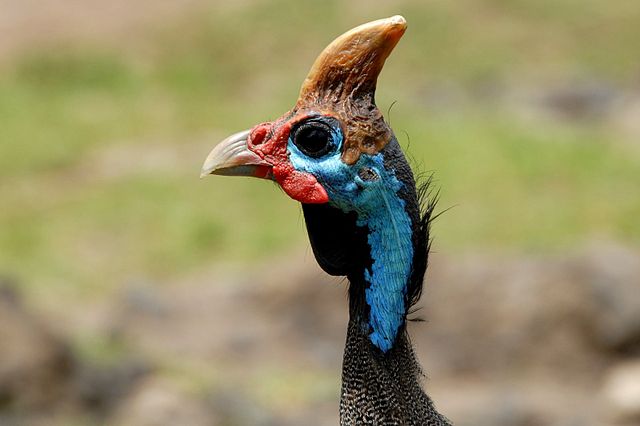
Helmeted Guineafowl (Numida meleagris) ©WikiC
*
*
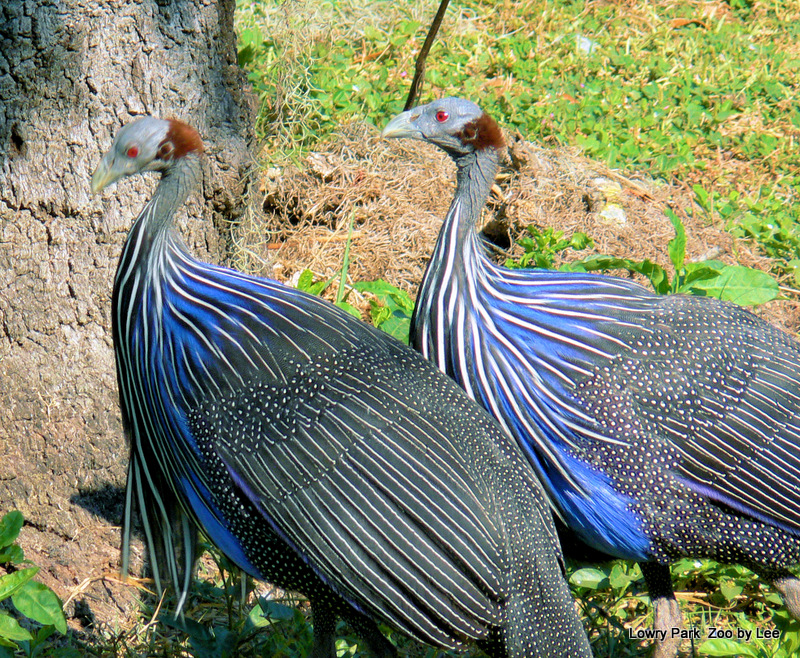
Vulturine Guineafowl (Acryllium vulturinum) by Lee
“Every beast, every creeping thing, and every fowl, and whatsoever creepeth upon the earth, after their kinds, went forth out of the ark.” (Genesis 8:19 KJV)
Several Sundays ago, we started introducing you to the Galliformes Order. You have seen the Megapodes Family, the Chachalacas, Curassows and Guans Family, and today, you get to meet the members of the Guineafowl Family. The family name is Numididae, and there are four genera for only six species. They are all from the African continent.
The guineafowl (sometimes called guineahen) are a family of birds that are native to Africa, but the Helmeted Guineafowl has been domesticated, and both feral and wild-type birds have been introduced elsewhere.
This family of insect and seed-eating, ground-nesting birds resemble partridges, but with featherless heads, though both members of the genus Guttera have a distinctive black crest, and the Vulturine Guineafowl has a downy brown patch on the nape. Most species of guineafowl have a dark grey or blackish plumage with dense white spots, but both members of the genus Agelastes lack the spots (as do some domestic variants of the Helmeted Guineafowl). While several species are relatively well known, the Plumed Guineafowl and the two members of the genus Agelastes remain relatively poorly known. These large birds measure from 40–71 cm (16–28 inches) in length, and weigh 700–1600 (grams) or 1.5-3.5 (pounds)
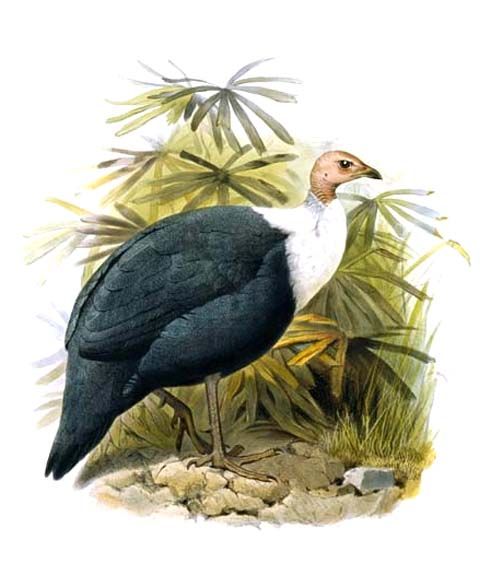
White-breasted Guineafowl (Agelastes meleagrides) ©DrawingWikiC
The White-breasted Guineafowl (Agelastes meleagrides) is a medium-sized, up to 45 cm long, terrestrial bird of the guineafowl family. It has a black plumage with a small, bare red head, white breast, long black tail, greenish brown bill and greyish feet. The sexes are similar, although the female is slightly smaller than the male. They are distributed in subtropical West African forests of Côte d’Ivoire, Ghana, Guinea, Liberia and Sierra Leone. The diet consists mainly of seeds, berries, termites and small animals.

Black Guineafowl (Agelastes niger) ©Drawing WikiC
The Black Guineafowl, (Agelastes niger), is a member of the guineafowl bird family. It occurs in humid forests in Central Africa where it is often heard but seldom seen. It is a medium-sized black bird with a bare pink head and upper neck. Little is known of its behaviour because it has been little studied. It is usually found in pairs or small groups and is a shy, elusive bird of the forest floor. It occurs in primary and secondary growth woodland, favouring parts with thick undergrowth but sometimes venturing out onto adjacent cultivated lands. It feeds on invertebrates such as ants, termites, millipedes and beetles, and also small frogs, seeds, berries and shoots. The nesting habits of this species are not known but the eggs are pale reddish brown, sometimes shaded with yellow or purple.
Helmeted Guineafowl (Numida meleagris) ©WikiC
The Helmeted Guineafowl (Numida meleagris) is a large (53–58 cm) bird with a round body and small head. They weigh about 1.3 kg. The body plumage is gray-black spangled with white. Like other guineafowl, this species has an unfeathered head, in this case decorated with a dull yellow or reddish bony knob, and red and blue patches of skin. The wings are short and rounded, and the tail is also short. Various sub-species are proposed, differences in appearance being mostly a large variation in shape, size and colour of the casque and facial wattles.
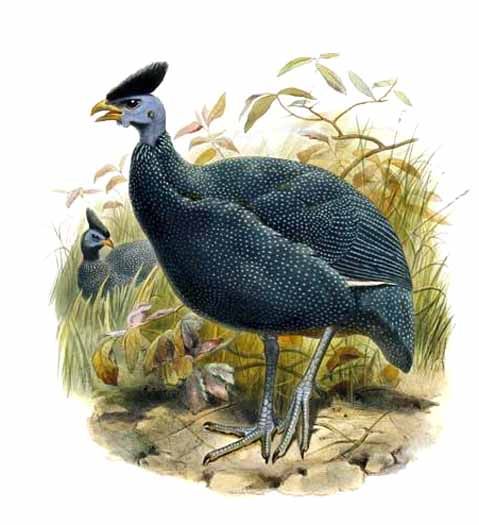
Plumed Guineafowl (Guttera plumifera) ©Drawing WikiC
The Plumed Guineafowl (Guttera plumifera) is a member of the guineafowl bird family. It is found in humid primary forest in Central Africa. It resembles some subspecies of the crested guineafowl, but has a straighter (not curled) and higher crest, and a relatively long wattle on either side of the bill. The bare skin on the face and neck is entirely dull grey-blue in the western nominate subspecies, while there are a few orange patches among the grey-blue in the eastern subspecies schubotzi.
Crested Guineafowl(Guttera pucherani) ©WikiC
The Crested Guineafowl (Guttera pucherani) is a member of the Numididae, the guineafowl bird family. It is found in open forest, woodland and forest-savanna mosaics in Sub-Saharan Africa. The plumage is overall blackish with dense white spots. It has a distinctive black crest on the top of its head, the form of which varies from small curly feathers to down depending upon subspecies, and which easily separates it from all other species of guineafowl, except the plumed guineafowl. The names “crested” and “plumed” are often misapplied across the species.
The species is monogamous with probable strong and long-lasting pair bonds. Courtship feeding is common, the author having seen a captive male run 5–10 metres to the hen to present some particular morsel. The nest is a well-hidden scrape in long grass or under a bush; eggs vary from nearly white to buff and a clutch is usually around 4 or 5.
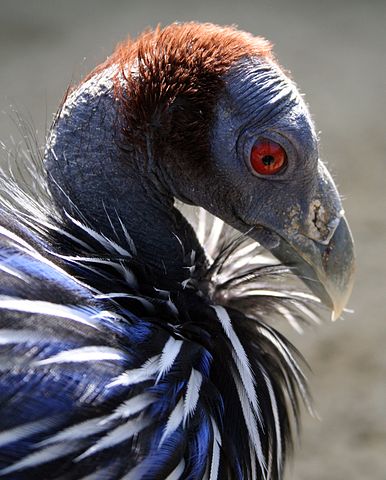
Vulturine Guineafowl (Acryllium vulturinum) ©WikiC
The Vulturine Guineafowl (Acryllium vulturinum) is the largest extant species of guineafowl. Systematically, it is only distantly related to other guineafowl genera. Its closest living relative, the white breasted guineafowl, Agelastes meleagrides inhabit primary forests in Central Africa. It is a member of the bird family Numididae, and is the only member of the genus Acryllium. It is a resident breeder in northeast Africa, from southern Ethiopia through Kenya and just into northern Tanzania.
The vulturine guineafowl is a large (61–71 cm) bird with a round body and small head. It has a longer wings, neck, legs and tail than other guineafowl. The adult has a bare blue face and black neck, and although all other guineafowl have unfeathered heads, this species looks particularly like a vulture because of the long bare neck and head.
The slim neck projects from a cape of long, glossy, blue and white hackles. The breast is cobalt blue, and the rest of the body plumage is black, finely spangled with white. The wings are short and rounded, and the tail is longer than others in the family Numididae.
Domesticated Guineafowl, sometimes called pintades or gleanies, are a family of birds originating from Africa, related to other game birds such as the pheasants, turkeys and partridges; they have a long history of domestication, mainly involving the helmeted guineafowl. (Most information from Wikipedia, with editing)
“Behold the fowls of the air: for they sow not, neither do they reap, nor gather into barns; yet your heavenly Father feedeth them. Are ye not much better than they?” (Matthew 6:26 KJV)
“Don’t Give Up” ~ ©The Hyssongs (Used With Permission of the Hyssongs)
*
GALLIFORMES – Fowl, Quail, Guans, Currasows, Megapodes
Sunday Inspiration – Galliformes Order Overview
Sunday Inspiration – Megapodiidae Family
Sunday Inspiration – Chachalacas
Sunday Inspiration – Curassows
Guineafowl Family
*
“Lay not up for yourselves treasures upon earth, where moth and rust doth corrupt, and where thieves break through and steal: But lay up for yourselves treasures in heaven, where neither moth nor rust doth corrupt, and where thieves do not break through nor steal:” (Matthew 6:19-20 KJV)
Video – Wood Stork Stealing Young Alligators Food at Gatorland by Lee 2/3/17
*
*
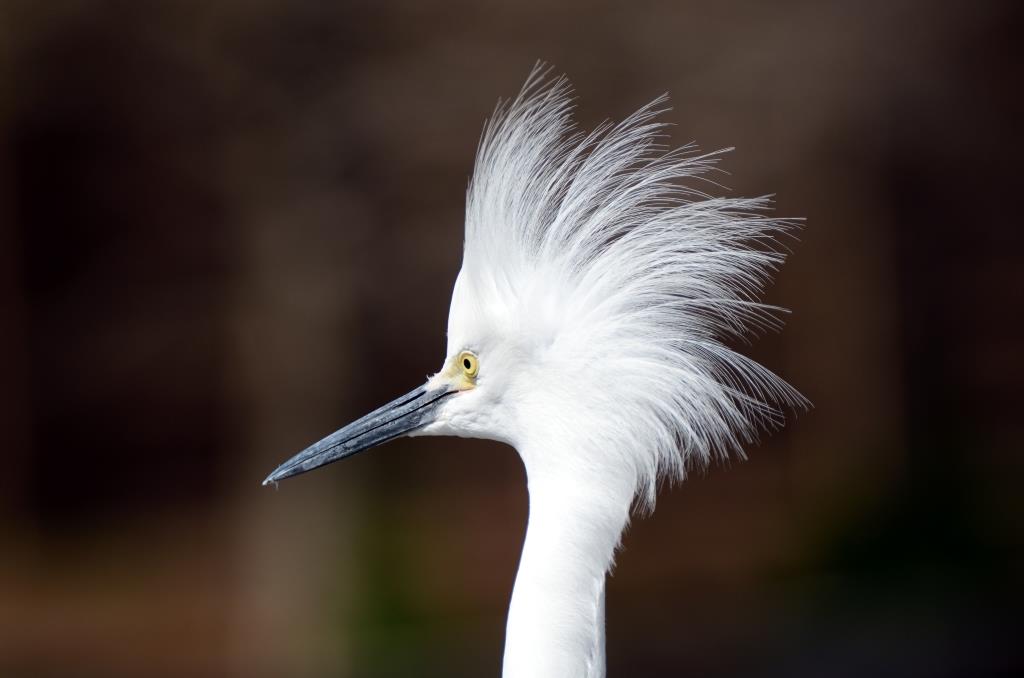
“What time I am afraid, I will trust in thee.” (Psalms 56:3 KJV)
Snowy Egret in Breeding Plumage at Gatorland by Dan
*
*
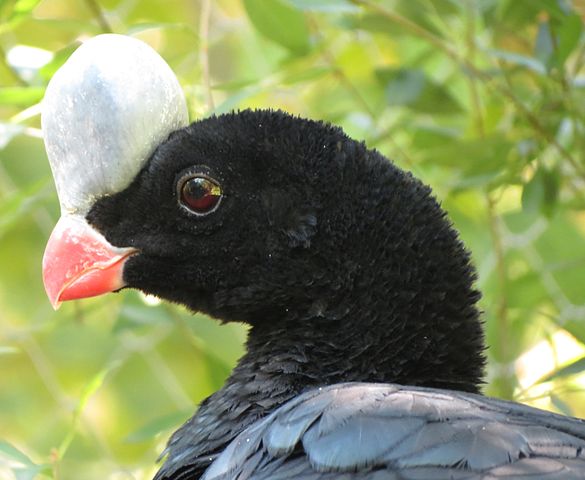
“But my faithfulness and my mercy shall be with him: and in my name shall his horn be exalted.” (Psalms 89:24 KJV)
Helmeted Curassow (Pauxi pauxi pauxi) Northern – Peggy ©WikiC Denveri Zoo
*
*
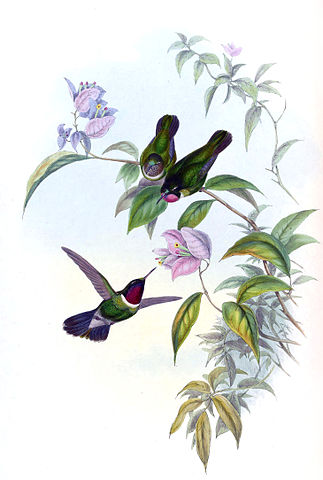
Longuemare’s Sunangel (Heliangelus clarisse) ©Drawing WikiC
The blog has been updated. All the new birds have been added, the indexes and pages are up to date. [I trust] Working behind the scenes on these blogs can be interesting at time. If the efforts put forth can assist you in finding a certain bird, then the task will have been worth it.
The Longuemare’s Sunangel was a subspecies of the Amethyst-throated Sunangel, which has now been raised to full species status. This is just one of the new additions. See The Newest I.O.C. Updates – Version 7.1.
Colossians reminds us in several verses to do our best. That has been a goal of our blog here to provide the most accurate information we can obtain. The Lord Created these marvelous flying wonders for us to observe, read and learn about, and we want to do it the best we can.
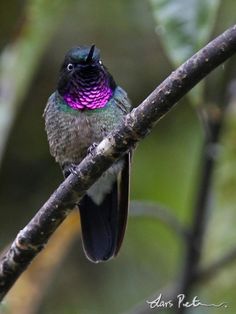
Longuemare’s Sunangel (Heliangelus clarisse) ©Pinterest
“And whatsoever ye do in word or deed, do all in the name of the Lord Jesus, giving thanks to God and the Father by him.” (Colossians 3:17 KJV)
“And whatsoever ye do, do it heartily, as to the Lord, and not unto men;” (Colossians 3:23 KJV)
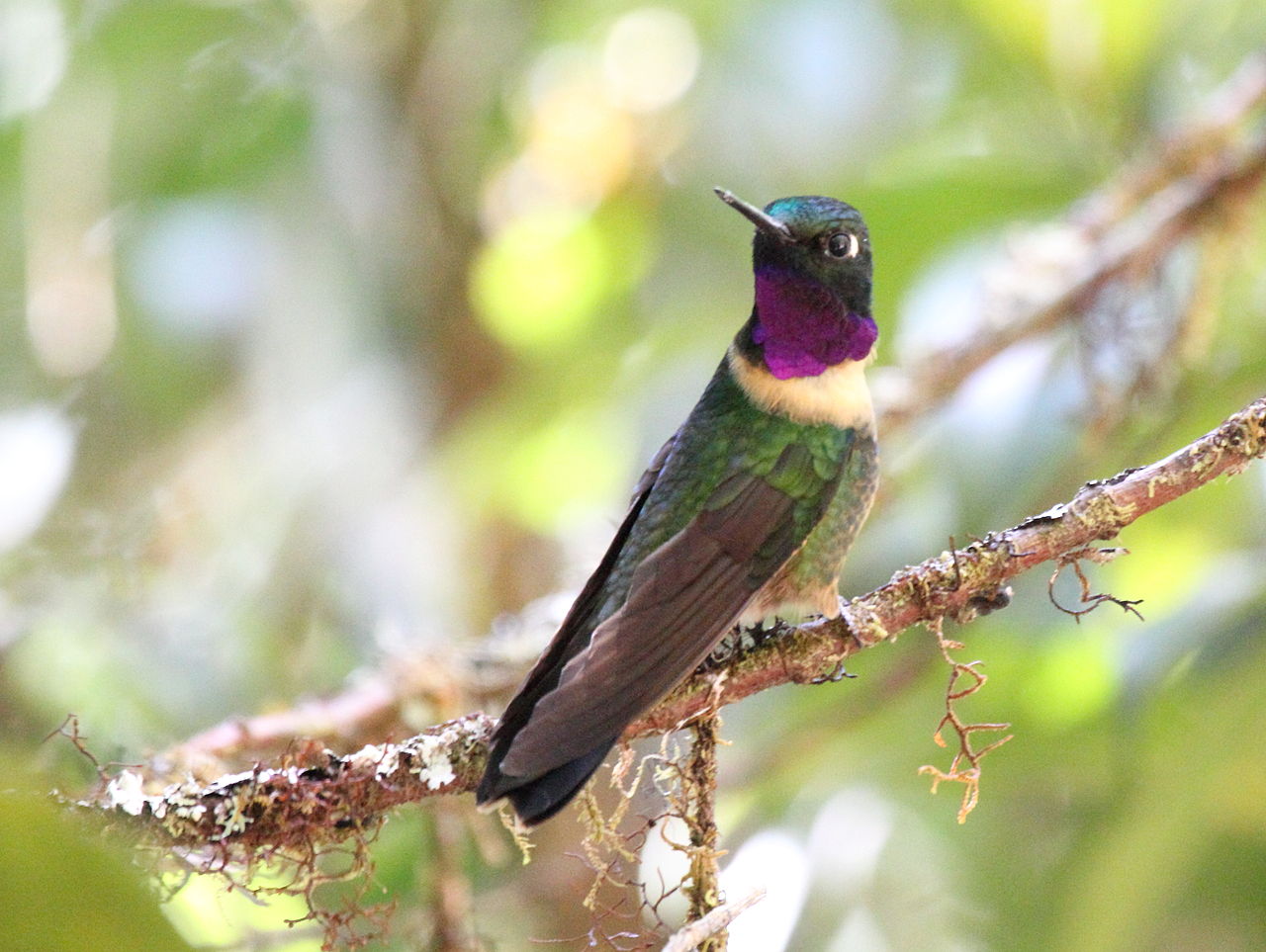
Amethyst-throated Sunangel (Heliangelus_amethysticollis) ©WikiC
*
 Lee's Birdwatching Adventures Plus