Birds Of The Bible – Gull With A Broken Wing

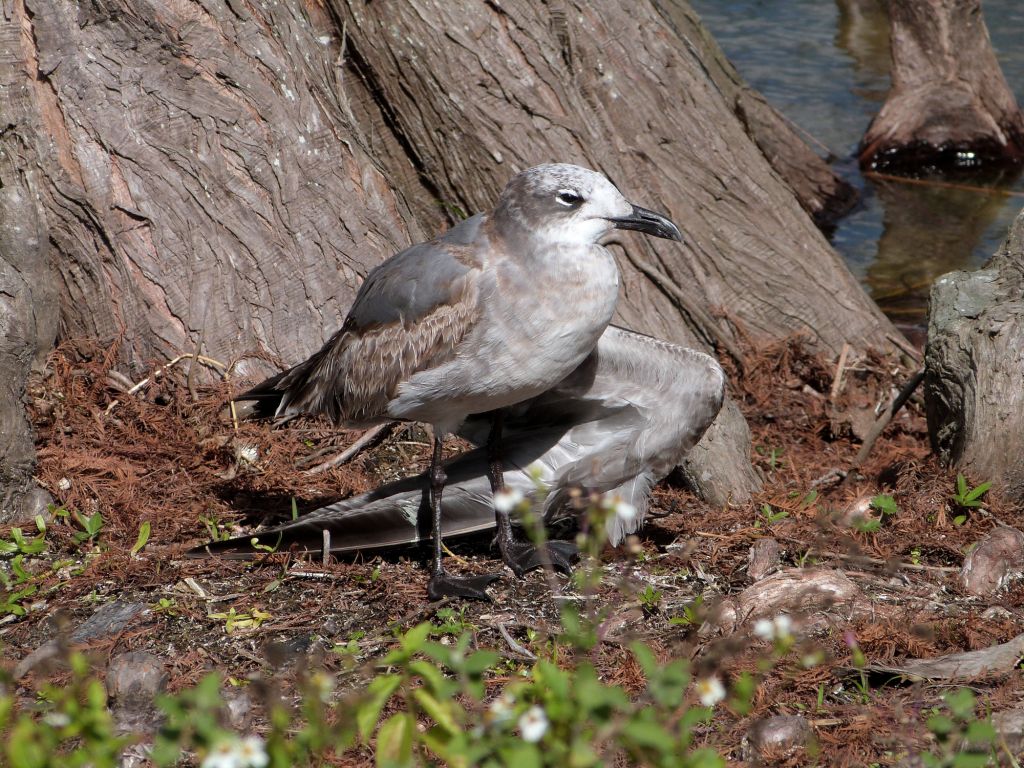
Laughing Gull Imm injured wing

Laughing Gull Imm injured wing

Are not two sparrows sold for a farthing? and one of them shall not fall on the ground without your Father. (Matthew 10:29 KJV)

Yesterday, Dan and I went to Lake Hollingsworth in Lakeland, FL for a little birdwatching and to just enjoy the day. It was around 77 degrees and a few clouds were hanging out. Just another beautiful day from the Lord. After walking as far as I could, we turned around and retraced our steps back along the southern shore of the lake.

My legs are doing much better, praise the Lord, but I still have issues. I stopped to rest a minute and spotted a Laughing Gull along the shore. Something in its appearance didn’t seem right, so I got up to investigate. (They have benchs along the way.) What I found was that the Gull had a wing hanging down and I assume it was broken. It appears to be an immature Laughing.

Laughing Gull Imm injured wing

Laughing Gull Imm injured wing

The bird walked up by the tree and kept dragging it’s wing as you can see in the third photo.

Laughing Gull Imm injured wing

Laughing Gull Imm injured wing

I know that verse has been many used times here with the Birds of the Bible articles, but it still applies so well. That verse popped into my thoughts while observing the Gull’s situation. The verse mentions the Sparrow, but all birds were created by the Lord and it applies to them as well. I do not believe that He is only aware of just Sparrows that fall. God is ever-present, all-knowing, and all-powerful, so how could God NOT KNOW?

We know that verse was used to encourage those being persecuted (v.23) to not fear, knowing that the Father is aware of what they were experiencing. They did not need to worry about someone who could destroy their soul. (v.28) The passage goes on to reassure them that they are more valuable than sparrows or birds.

Fear ye not therefore, ye are of more value than many sparrows. (Matthew 10:31 KJV)

Not sure if Gulls “worry.” but that immature bird was in a very precarious situation. Without that wing he (or she) was very vulnerable to what could happen to it. There was a Red-shouldered Hawk flying by and I believe that that might be the tree it landed in when we went by the first time. I was trying to get its photo, but it flew off. I didn’t notice the Gull then. When we noticed the bird on the way back, the Hawk was still flying in the area.

The Bible Knowledge Commentary says this about verse 31: “for their (the persecuted) Father was truly concerned for them and aware of their circumstances. He is aware of the death of a sparrow which is worth so little. Two sparrows were sold for a mere penny (assarion, a Gr. copper coin worth about 1/16 of a Roman denarius, a day’s wages). God the Father also knows the number of hairs on a person’s head (Mat_10:30). The apostles were instructed not to fear for they, being far more valuable to God than sparrows, were seen and known by Him. ”

Believer’s Bible Commentary: “10:30, 31 The same God who takes a personal interest in the tiny sparrow keeps an accurate count of the hairs of the head of each of His children. A strand of hair is of considerably less value than a sparrow. This shows that His people are of more value to Him than many sparrows, so why should they fear?”

Whosoever therefore shall confess me before men, him will I confess also before my Father which is in heaven. But whosoever shall deny me before men, him will I also deny before my Father which is in heaven. (Matthew 10:32-33 KJV)

We should not be afraid to tell others about the Saving Grace of the Lord Jesus Christ, nor that we believe that God is the Self-Existent, All-Knowing, All-Powerful, Ever-Present, Loving (He gave His Son to die for our sins.), Creator of the world and all these birds, critters, and us.

What will be the fate of the Laughing Gull? I have no clue, but God already knows all about its situation, but better yet, He knows all out us and our situations and circumstances. He cares and wants us to put our trust in Him.

Sharing The Gospel

And wisdom and knowledge shall be the stability of thy times, and strength of salvation: the fear of the LORD is his treasure. (Isaiah 33:6 KJV)

See more Birds of the Bible

*

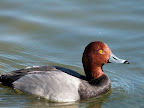
Redhead at Lake Morton – 1-20-12

*

Saturday we headed over to Lakeland for some errands and took the cameras along. We stopped by Lake Morton to see who was there. Turned out to be quite a few interesting birds and got our third “Life Bird” of the year. This time I even was able to video it. There was a couple feeding the birds cracked corn and bread. They had quite a menagerie around them. They came from all over the Lake and we just stood there and photographed away. In amongst the Ring-necked Ducks was this Redhead. We searched all the birds, but he was the only Redhead to be found.

“The Redhead (Aythya americana) is a medium-sized diving duck, 14.5 in (37 cm) long with an 33 in (84 cm) wingspan.
The adult male has a blue bill, a red head and neck, a black breast, yellow eyes and a grey back. The adult female has a brown head and body and a darker bluish bill with a black tip.

The breeding habitat is marshes and prairie potholes in western North America. Loss of nesting habitat has led to sharply declining populations.

Females regularly lay eggs in the nests of other Redheads or other ducks, especially Canvasbacks. Redheads usually take new mates each year, starting to pair in late winter.

Following the breeding season, males go through a molt which leaves them flightless for almost a month. Before this happens, they leave their mates and move to large bodies of water, usually flying further north.

They overwinter in the southern and north-eastern United States, the Great Lakes region, northern Mexico and the Caribbean.

These birds feed mainly by diving or dabbling. They mainly eat aquatic plants” (Wikipedia)

For every kind of beast and bird, of reptile and creature of the sea, is tamed and has been tamed by mankind. (James 3:7 NKJV)

The people feeding these birds were practically proving this verse. Even the Great Blue Heron has come out to feed in the past.

Here is a list of all the birds I listed with eBird.org for 1-20-2012 at Lake Morton.

My Lake Morton List

Mute Swan 20 (Not even counting ones on north side of lake)
Black Swan 1
Muscovy Duck (Domestic type) 5
Mallard (Domestic type) 30 (Also at least 7 White Pekin type ducks)
Redhead 1

Ring-necked Duck 15


Ruddy Duck 1


American White Pelican 3
Great Blue Heron 1
Great Egret 2
White Ibis 18
Turkey Vulture 1
Bald Eagle 1


American Coot 40
Limpkin 2
Ring-billed Gull 10
Rock Pigeon 5
Tree Swallow 10
Boat-tailed Grackle 11

See also:

The whole Lake Morton Album

Redhead (duck) – Wikipedia

Sharing The Gospel

*

Birdwatching Adventure – Circle B Bar Reserve – 1/16/12

Sora (Porzana carolina) by Lee at Circle B

Sora (Porzana carolina) by Lee at Circle B

Dan and I went over to Circle B Bar Reserve on Monday, January 16th. We had a great time birding and we got to view a “Life Bird.” (This one is for real.) See the photo above. “Life Birds” are what you call a bird species the first time you see one. We now have 3 life birds this year. The Sora seen here is the second one for the year. The first one was a Hooded Grebe on Saturday. and I spotted a third one today, a Redhead, at Lake Morton.

The Sora is a bird in the Rails, Crakes & Coots – Rallidae Family. They are 7.9-9.8 in (20-25 cm) and weigh about 1.4-4 oz (49-112 g). So they are not a large bird. I found it among the Common Gallinule and that is what help me realize that it was different and smaller. Been looking for a Sora for months out at Circle B. Knew they were there, just never found one.

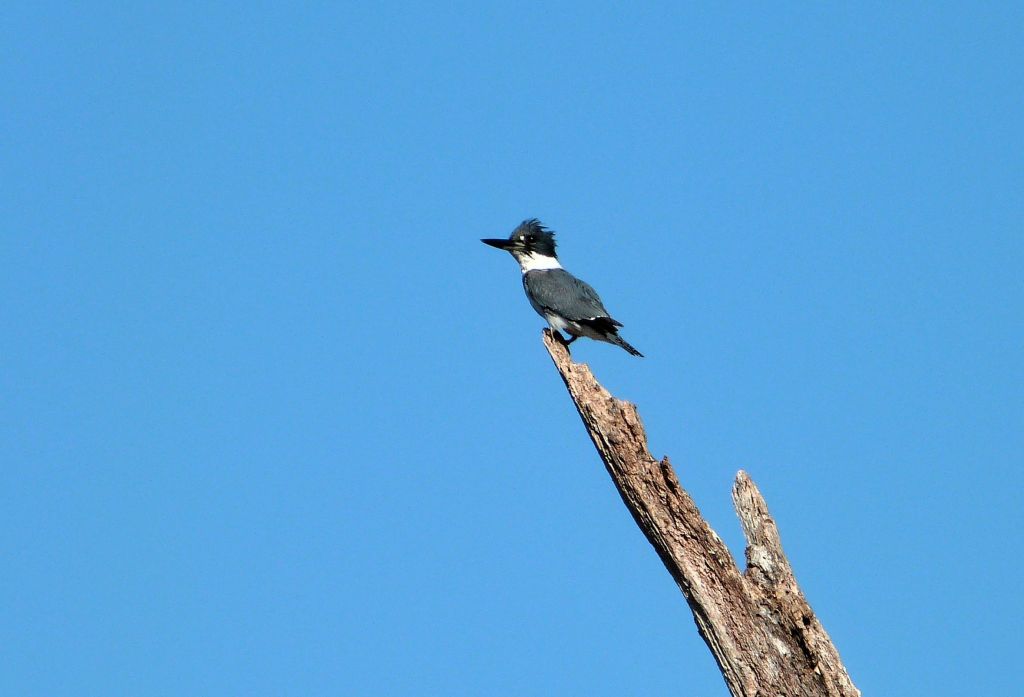
Belted Kingfisher (Megaceryle alcyon) by Lee Circle B

Belted Kingfisher (Megaceryle alcyon) by Lee Circle B

Another highlight of our trip was finding 2 Belted Kingfishers, close-up and personal. They are hard to photograph, but this time they were showing off right in front of us. They were hovering and then diving for their food. Was great to watch them. They are in the Kingfisher – Alcedinidae Family. They are medium sized, actually we both were surprised they are as large as they are. They always appear to have a very short squatty neck. They are 11–13.8 in (28–35 cm), weigh 4.9–6 oz (140–170 g) and have a 19-22 in (48-58cm) wingspan.

Belted Kingfisher (Megaceryle alcyon) by Lee Circle B

Belted Kingfisher (Megaceryle alcyon) by Lee Circle B

Let all those who seek You rejoice and be glad in You; And let those who love Your salvation say continually, “Let God be magnified!” (Psalms 70:4 NKJV)

We also spotted several Alligators.

Here is the list that I turned in to eBird.org:

37 species total

Black-bellied Whistling-Duck 20
Mottled Duck 2
Ruddy Duck 2
Double-crested Cormorant 2
Anhinga 1
Great Blue Heron 2
Great Egret 3
Little Blue Heron 2
Cattle Egret 15
Turkey Vulture 50
Osprey 1
Northern Harrier 1
Common Gallinule 10
American Coot 20
Sandhill Crane 6
Killdeer 1
Mourning Dove 5
Tree Swallow 30
Northern Mockingbird 1
Palm Warbler 3
Yellow-rumped Warbler 1
Boat-tailed Grackle 5

Wordless Birds

*

Birdwatching Adventure for January 7, 2012

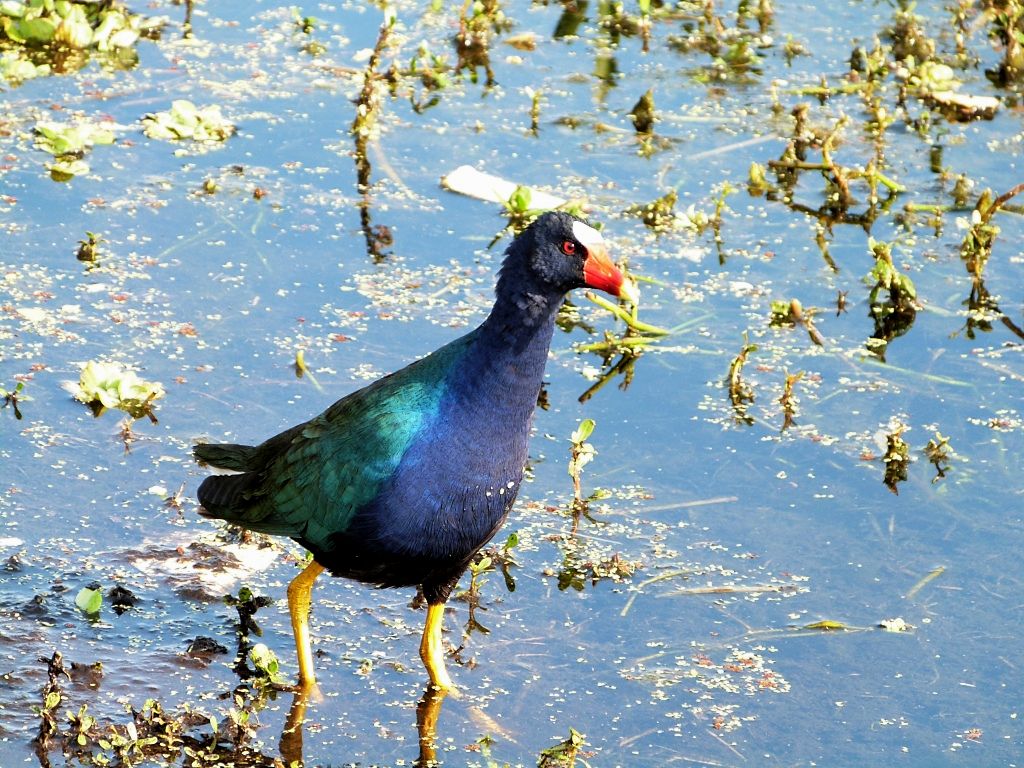
Purple Gallinule by Lee at Lake Parker 1-7-12

Purple Gallinule by Lee at Lake Parker 1-7-12

In the last 10 days, Dan and I have finally been able to go birdwatching. We have had three birding trips right here in Polk County.

Twice we went up to Lake Parker Park in Lakeland. We went on the 7th and again on the 14th of January. The 7th was our 1st adventure of 2012. Here is a list of what I turned in to ebird.org which is a listing service that was launched in 2002 by the Cornell Lab of Ornithology and National Audubon Society to track birds. Here is the list for the January 7, 2012:

Comments: Along shore on way to park and in park
26 species (+1 other taxa)
Mallard (Domestic type) 8
Ring-necked Duck 3
Pied-billed Grebe 4
Double-crested Cormorant – Immature 4
Anhinga 5
Great Blue Heron 2
Great Egret 2
Snowy Egret 3
Cattle Egret 1
White Ibis 10
Glossy Ibis 4
Roseate Spoonbill 1
Turkey Vulture 1
Osprey 4
Red-shouldered Hawk 1
Purple Gallinule 3
Common Gallinule 5
American Coot 7
Ring-billed Gull 20
Caspian Tern 1
Belted Kingfisher 1
Downy Woodpecker 1
Blue-gray Gnatcatcher 5
Palm Warbler 1
Pine Warbler 3
Yellow-rumped Warbler 2
Boat-tailed Grackle 20
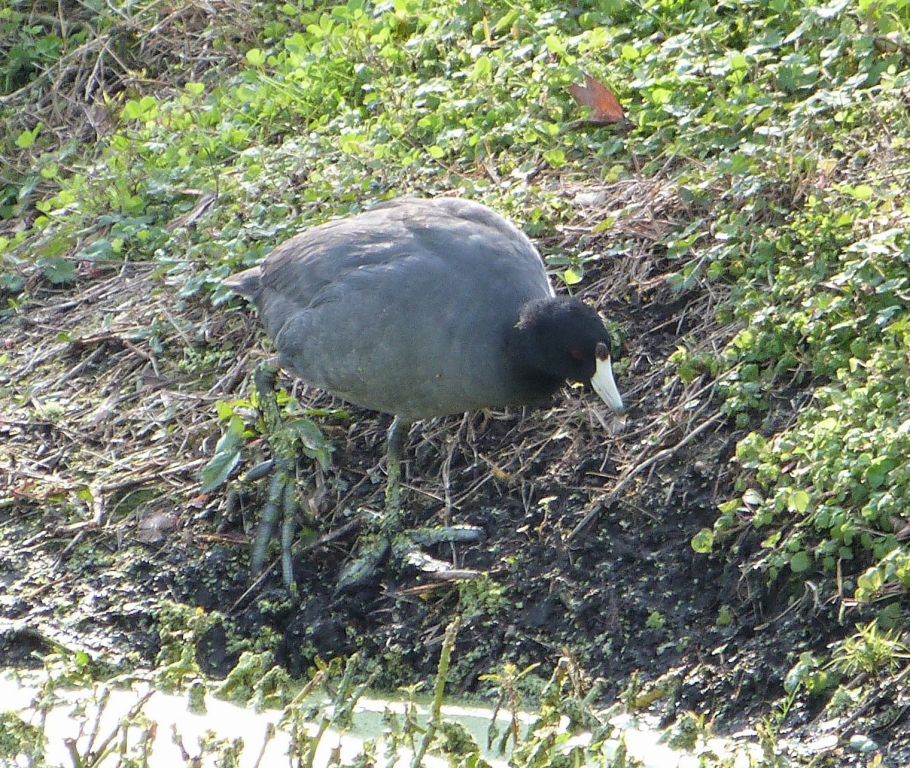
American Coot showing feet by Lee LPkr

American Coot showing feet by Lee LPkr

American Coots have an amazing foot structure. It’s not what you would expect but has lobed toes rather than webbed feet. Photos of foot on Google Search

Which doeth great things past finding out; yea, and wonders without number. (Job 9:10 KJV)

I also turned in the birds I saw coming and going to the park, which is 10 miles from our house:
9 species
Black Vulture 5
Turkey Vulture 10
Sandhill Crane 3
Rock Pigeon 4
Eurasian Collared-Dove 10
Mourning Dove 1
Fish Crow 50
Boat-tailed Grackle 5
House Finch 2
Palm Warbler cropped by Lee LPP

Palm Warbler (Mistaken Pipit) by Lee LPP

All in all, it was a great birding day. The highlight was getting a new bird for my life list of birds seen. (Update This Pipit turned out to be a Palm Warbler, NOT a life bird: We spotted an American Pipit along the shore before we arrived at the park.) We stopped because Dan had spotted a Roseate Spoonbill. The county had a fair sized alligator pinned up right there also.

Last year I saw 2 “life birds” but it took all year to find them. I am writing this on the 17th and I already have 2  to tell you about, but I will save those for the next articles.
*

Birds of the Bible – Robbing The Nest

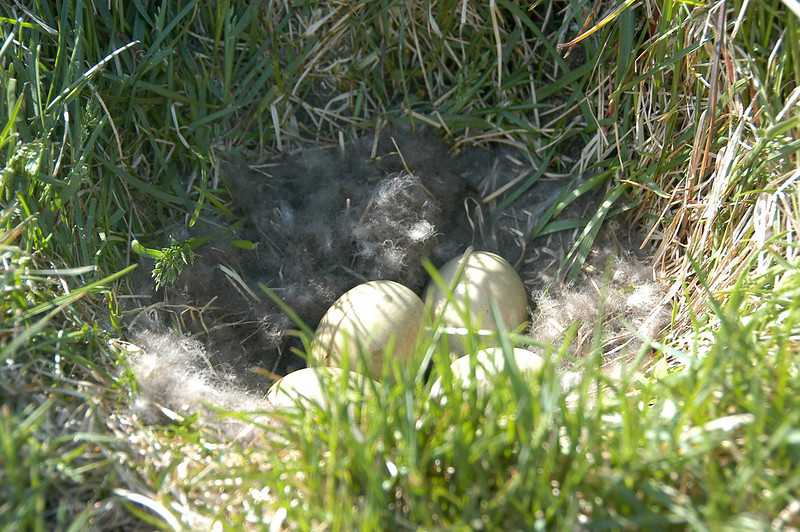
Common Eider (Somateria mollissima) nest by Bob-Nan

Common Eider (Somateria mollissima) nest by Bob-Nan

My hand has found like a nest the wealth of the peoples; and as one gathers eggs that have been forsaken, so I have gathered all the earth; and there was none that moved a wing or opened the mouth or chirped.” (Isaiah 10:14 ESV)

Now here is an interesting passage in Scripture. Came across it the other day in my reading. Hadn’t found it in my Bible searches with my e-Sword because no actual bird is mentioned.

Chapter 10 of Isaiah tells, by way of prophesy, how God was punishing Israel for their sins by using Assyria’s wrath as a tool.

Ah, Assyria, the rod of my anger; the staff in their hands is my fury! Against a godless nation I send him, and against the people of my wrath I command him, to take spoil and seize plunder, and to tread them down like the mire of the streets. (Isaiah 10:5-6 ESV)

Also stated “Are not my commanders all kings?” in verse 8 and “As my hand has reached to the kingdoms of the idols, whose carved images were greater than those of Jerusalem and Samaria, shall I not do to Jerusalem and her idols as I have done to Samaria and her images?” in 10 and 11.

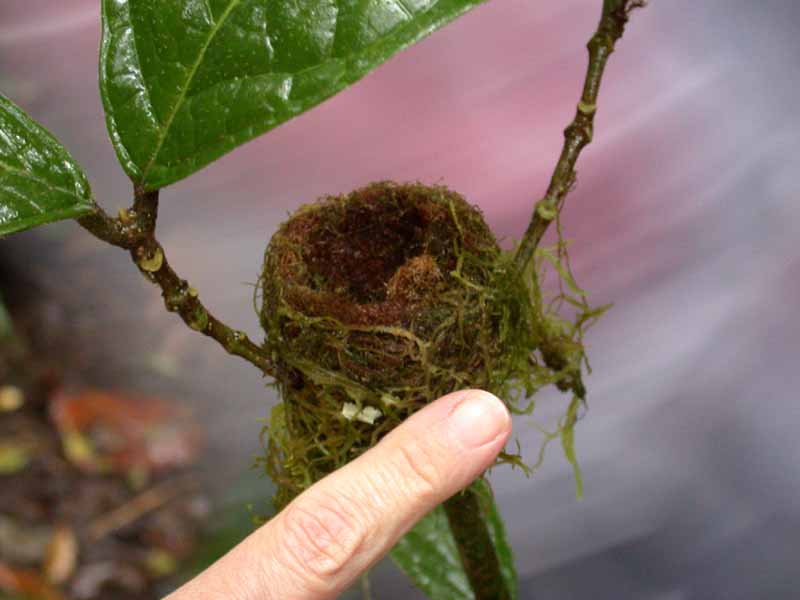
Hummingbird nest by Bob-Nan

So the Lord uses Assyria to punish Jerusalem, but the King becomes boastful and full of pride. He, the king of Assyria, states that he has done it, by his strength, and his wisdom, and plunders their treasures. (Isaiah 10-12-13)

Then the king makes the remark about robbing the nest of it’s eggs (the wealth and riches of the captured people) as easy as from a nest where the bird is not there to protect it.

“and there was none that moved a wing” is referring to how normally a bird would defend its nest and be flying about attacking the egg thief.

“opened the mouth or chirped.” Under normal conditions, the birds would be quite vocal if their nest was being robbed.

And I have put my hands on the wealth of the peoples, as on the place where a bird has put her eggs; and as a man may take the eggs from which a bird has gone, so I have taken all the earth for myself: and not a wing was moved, and not a mouth gave out a sound. (Isaiah 10:14 BBE)

Those two phrases would be like today if a country was attacked and no army came out to defend or the news media and governmental officials were not there making a vocal condemnation or complaints.

But the chapter goes on to state that the king, country, servant, or whomever, should not think they are the one doing the work, but realize they are being used by some power greater than their self.

Will the axe say high-sounding words against him who is using it, or the blade be full of pride against him who is cutting with it? As if a rod had the power of shaking him who is using it, or as if a stick might take up him who is not wood. (Isaiah 10:15 BBE)

The LORD had to punish the people of Jerusalem because if He didn’t get rid of the sin and idolatry, then the whole nation would have to be destroyed. Thankfully, there was a remnant that was to be saved. That remnant would eventually bring forth the Lord Jesus Christ, through the Davidic line when He came in bodily form.

Horned Lark (Eremophila alpestris) nest w eggs by Nikhil Devasar

Horned Lark (Eremophila alpestris) nest w eggs by Nikhil Devasar

What’s to be learned? Birds shouldn’t desert their nest? I think it goes deeper than that.

We should be careful of pride, arrogance, thinking more highly of our self than we should, etc. What we have and are comes from God. When things in our current history are not going the way we think it should, we have to realize that God is in control. Sometimes He uses bad things and people to accomplish His Will.

*

Pardon The Dust

King Penguin (Aptenodytes patagonicus) 6 by Ian

King Penguin (Aptenodytes patagonicus) 6 by Ian

Update 1/14/12 I am releasing the “sticky” part and letting this flow with the rest of the blog. Looks like they got most of it fixed and the great people at WordPress are working to keep their host up and running.

Update 1/13/12 WordPress just put a fix on the site tonight. I will leave this up until tomorrow to see if it stays fixed or I find any other problems.

Lee

Please forgive the posts at the present. I just became aware of a change they made at WordPress.com, which is where this site is hosted. They made a revision to their software and it has knocked many of the photos here out of whack!

I knew I was seeing something weird for the last week or so when I went back to view older posts. Some of my pictures are not centered but off to the right, have letters flowing through them, are hugh, etc. They have been notified, and I have been making changes as I discover them. I am having to change them manually. The problem is that there are over 1,000 pages and over 1,000 posts on this site. Most with more than one photo. Many, many posters on WordPress are being affected. Especially those of us using photos.

To make improvements, sometimes things happen that they didn’t plan on. Be patient, they and I am working on correcting this.

I am not at ease, nor am I quiet; I have no rest, for trouble comes.” (Job 3:26 NKJV)

“Man who is born of woman Is of few days and full of trouble. (Job 14:1 NKJV)

The LORD also will be a refuge for the oppressed, A refuge in times of trouble. (Psalms 9:9 NKJV)

Then they cried out to the LORD in their trouble, And He delivered them out of their distresses. (Psalms 107:6 NKJV)

King Penguin (Aptenodytes patagonicus) 7 by Ian

King Penguin (Aptenodytes patagonicus) 7 by Ian

From – Ian’s Bird of the Week – King Penguin

PS If anyone finds a post with photo problems, please leave a comment on that post. It will help me get this problem fixed.

*

Birds Vol 1 #1 – The Golden Pheasant

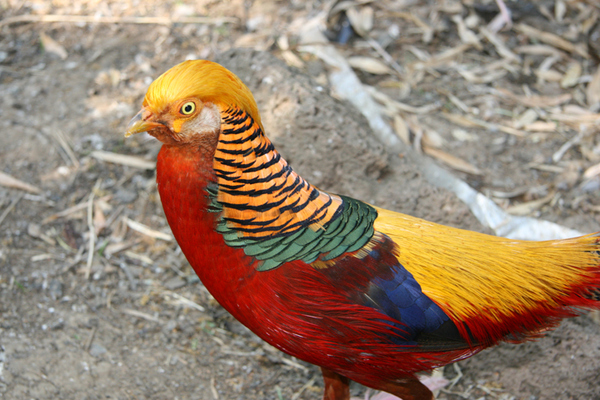
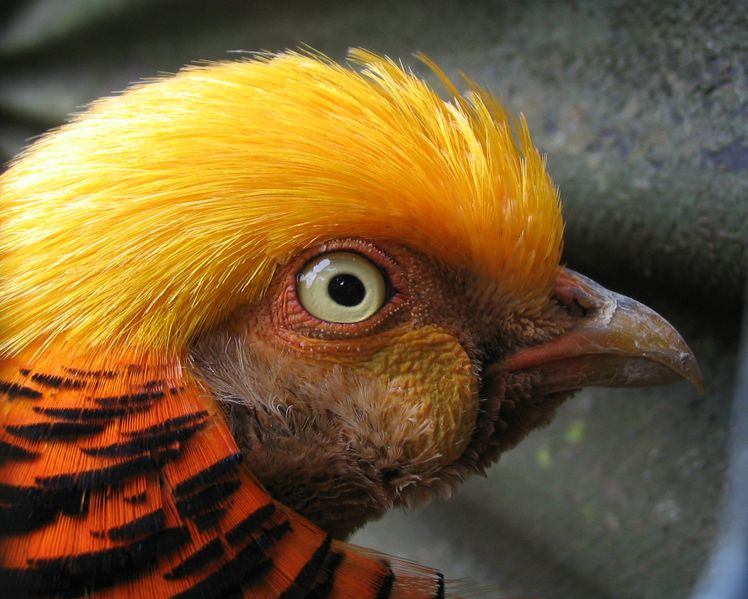
Golden Pheasant (Chrysolophus pictus)

Golden Pheasant (Chrysolophus pictus)

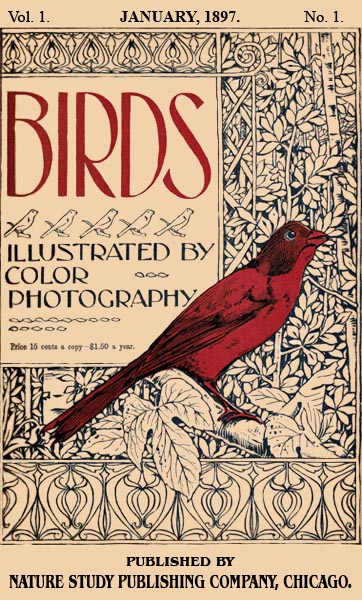
Birds Illustrated by Color Photography – Revisited

Vol 1. January, 1897 No. 1

*

THE GOLDEN PHEASANT

They call me the Golden Pheasant, because I have a golden crest. It is like a king’s crown. Don’t you think my dress is beautiful enough for a king?

See the large ruff around my neck. I can raise and lower it as I please.

I am a very large bird. I am fourteen inches tall and twenty-eight inches long. I can step right over your little robins and meadow larks and blue jays and not touch them.

Sometimes people get some of our eggs and put them under an old hen. By and by little pheasants hatch out, and the hen is very good to them. She watches over them and feeds them, but they do not wish to stay with her; they like their wild life. If they are not well fed they will fly away.

I have a wife. Her feathers are beginning to grow like mine. In a few years she will look as I do. We like to have our nests by a fallen tree.

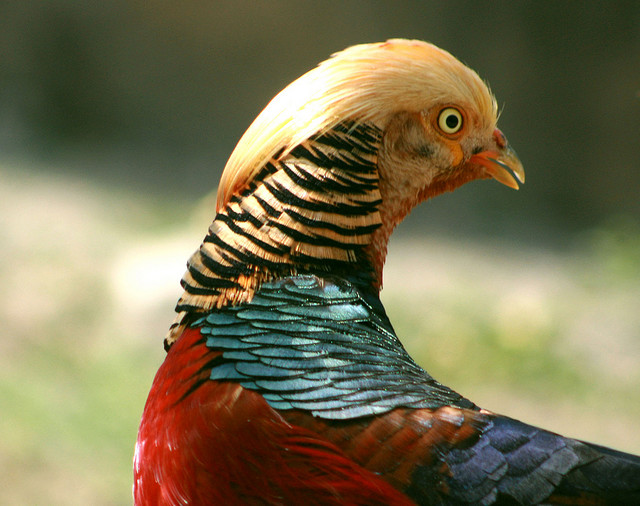
Golden Pheasant (Chrysolophus pictus) WikiC

Golden Pheasant (Chrysolophus pictus) WikiC


imgt

HE well-known Chinese Pheasant, which we have named the Golden Pheasant, as well as its more sober-colored cousin, the Silver Pheasant, has its home in Eastern Asia.

China is pre-eminently the land of Pheasants; for, besides those just mentioned, several other species of the same family are found there. Japan comes next to China as a pheasant country and there are some in India.

In China the Golden Pheasant is a great favorite, not only for its splendid plumage and elegant form, but for the excellence of its flesh, which is said to surpass even that of the common pheasant. It has been introduced into Europe, but is fitted only for the aviary.

For purposes of the table it is not likely to come into general use, as there are great difficulties in the way of breeding it in sufficient numbers, and one feels a natural repugnance to the killing of so beautiful a bird for the sake of eating it. The magnificent colors belong only to the male, the female being reddish brown, spotted and marked with a darker hue. The tail of the female is short. The statement is made, however, that some hens kept for six years by Lady Essex gradually assumed an attire like that of the males.

Fly-fishers highly esteem the crest and feathers on the back of the neck of the male, as many of the artificial baits owe their chief beauty to the Golden Pheasant.

According to Latham, it is called by the Chinese Keuki, or Keukee, a word which means gold flower fowl.

Golden Pheasant (Chrysolophus pictus) Male ©© NotMicroButSoft

Golden Pheasant (Chrysolophus pictus) Male ©© NotMicroButSoft


“A merry welcome to thee, glittering bird!
Lover of summer flowers and sunny things!
A night hath passed since my young buds have heard
The music of thy rainbow-colored wings—
Wings that flash spangles out where’er they quiver,
Like sunlight rushing o’er a river.”


Lee’s Addition:

What a beautiful bird. I am glad in 2012 that birds are not used for their feathers as much as they were back in the 1800’s. I’ve noticed in the first articles how the birds mentioned are either caged, captive, eaten or their feathers used for hats and other uses. Man was given dominion over the animals and are allowed to eat them, but I still like to see them out and about freely flying.

For You meet him with the blessings of goodness; You set a crown of pure gold upon his head. (Psalms 21:3 NKJV)

Now when He had taken the scroll, the four living creatures and the twenty-four elders fell down before the Lamb, each having a harp, and golden bowls full of incense, which are the prayers of the saints. (Revelation 5:8 NKJV)

The Golden Pheasant or “Chinese Pheasant”, (Chrysolophus pictus) is a gamebird of the order Galliformes (gallinaceous birds) and the family Phasianidae. It is native to forests in mountainous areas of western China but feral populations have been established in the United Kingdom and elsewhere.

The adult male is 35.4-41.3 in (90–105 cm) in length, its tail accounting for two-thirds of the total length. It is unmistakable with its golden crest and rump and bright red body. The deep orange “cape” can be spread in display, appearing as an alternating black and orange fan that covers all of the face except its bright yellow eye, with a pinpoint black pupil.

Golden Pheasant (Chrysolophus pictus) ©WikiC

Golden Pheasant (Chrysolophus pictus) ©WikiC

Males have a golden-yellow crest with a hint of red at the tip. The face, throat, chin, and the sides of neck are rusty tan. The wattles and orbital skin are both yellow in colour, and the ruff or cape is light orange. The upper back is green and the rest of the back and rump are golden-yellow in colour. The tertiaries are blue whereas the scapulars are dark red. Another characteristic of the male plumage is the central tail feathers which are black spotted with cinnamon as well as the tip of the tail being a cinnamon buff. The upper tail coverts are the same colour as the central tail feathers. Males also have a scarlet breast, and scarlet and light chestnut flanks and underparts. Lower legs and feet are a dull yellow.

The female (hen) is much less showy, with a duller mottled brown plumage similar to that of the female Common Pheasant. She is darker and more slender than the hen of that species, with a proportionately longer tail (half her 60–80 cm length). The female’s breast and sides are barred buff and blackish brown, and the abdomen is plain buff. She has a buff face and throat. Some abnormal females may later in their lifetime get some male plumage. Lower legs and feet are a dull yellow.

Both males and females have yellow legs and yellow bills.

Despite the male’s showy appearance, these hardy birds are very difficult to see in their natural habitat, which is dense, dark young conifer forests with sparse undergrowth. Consequently, little is known of their behaviour in the wild.

They feed on the ground on grain, leaves and invertebrates, but roost in trees at night. While they can fly, they prefer to run: but if startled they can suddenly burst upwards at great speed, with a distinctive wing sound.

The Golden Pheasant is commonly found in zoos and aviaries, but often as impure specimens that have the similar Lady Amherst’s Pheasant in their lineage. (Wikipedia)

Birds Illustrated by Color Photograhy Vol 1 January 1897 No 1 - Cover

Birds Illustrated by Color Photography – Revisited  – Introduction

The above article is the third article in the monthly serial that was started in January 1897 “designed to promote Knowledge of Bird-Live.” These include Color Photography, as they call them, today they are drawings. There are at least three Volumes that have been digitized by Project Gutenberg.

To see the whole series of – Birds Illustrated by Color Photography – Revisited 

*

(Information from Wikipedia and other internet sources)

Next Article – The Australian Grass Parrakeet

Previous Article – Mandarin Duck

Links:

Phasianidae – Pheasants, Fowl & Allies
Galliformes Order
Golden Pheasant – Wikipedia
Golden Pheasant – ARKive

Gospel Presentation

*

Birds of the Bible – Demoiselle Crane

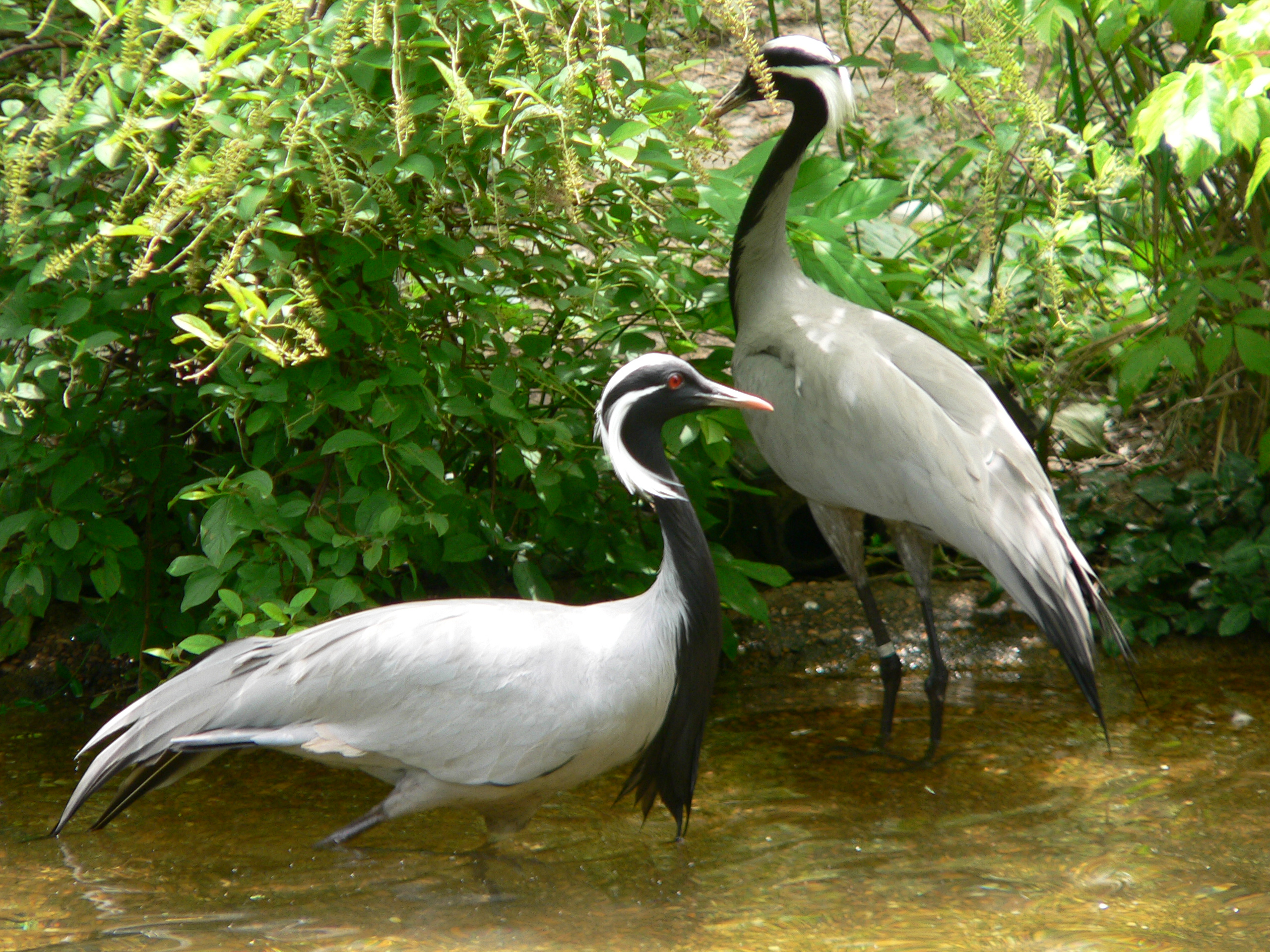
Demoiselle Crane (Grus virgo) by Lee LPZoo 12-28-2011

Demoiselle Crane (Grus virgo) by Lee LPZoo 12-28-2011

“The Demoiselle Crane (Anthropoides virgo), is a species of crane that breeds in Central Asia and winters in India, with a few found in Cyprus and eastern Turkey as well. The crane annually migrates to Africa and South Asia in winter. The bird is symbolically significant in the culture of North India and Pakistan, where it is known as the koonj.

It has a loud trumpeting call, higher-pitched than the Common Crane. Like other cranes it has a dancing display, more balletic than the Common Crane, with less leaping, but with calling, bowing and head-bobbing.

Call – Demoiselle Crane (Grus virgo) from Xeno-canto.org

Like a crane or a swallow, so did I chatter: I did mourn as a dove: mine eyes fail with looking upward: O LORD, I am oppressed; undertake for me. (Isaiah 38:14 KJV)

*

*
Demoiselle Cranes have to take one of the toughest migrations in the world. In late August through September, they gather in flocks of up to 400 individuals and prepare for their flight to their winter range. During their migratory flight south, Demoiselles fly like all cranes, with their head and neck straight forward and their feet and legs straight behind, reaching altitudes of 16,000-26,000 feet (4,875-7,925 m). Along their arduous journey they have to cross the Himalayan mountains to get to their over-wintering grounds in India, many die from fatigue, hunger and predation from birds such as eagles. Simpler, lower routes are possible, such as crossing the range via the Khyber Pass. However, their presently preferred route has been hard-wired by countless cycles of migration (placed in them by their creator). At their wintering grounds, Demoiselles have been observed flocking with Common Cranes, their combined totals reaching up to 20,000 individuals. Demoiselles maintain separate social groups within the larger flock. In March and April, they begin their long spring journey back to their northern nesting grounds.

In Khichan, Rajasthan in India, villagers feed the Cranes on their migration and these large congregations have become an annual spectacle.

Yea, the stork in the heaven knoweth her appointed times; and the turtle and the crane and the swallow observe the time of their coming; but my people know not the judgment of the LORD. (Jeremiah 8:7 KJV)

Watch this amazing video of them crossing the Himalayan mountains by AZPanorama:

*

When the Lord created the Crane kind, they were programmed for future variations like this Demoiselle Crane. They act like many other birds that pretend they are injured. This helps them lead the preying bird or animal away to protect their young. The Demoiselles also are the smallest cranes.  They have shorter toes and bills than other cranes which allows them to travel on ground that is hard and dry. The shorter bills aid in their choice of food. Their survival is being provided by their Designer and Creator.

Our verses:

Isaiah 38:14

Geneva Bible Translation Notes – I was so oppressed with sorrow, that I was not able to utter my words, but only to groan and sigh.

CC Commentary – 14.) – As a crane, or a swallow. Hezekiah cannot satisfy himself in explaining the severity of his anguish. He now says that he was reduced so low that he could not utter an articulate voice, but muttered some confused sound, like persons who are almost at the point of death. Hence it is evident that his distress was excruciating; for the severity of the pain took away his voice, and his voice, he says, stuck in his throat; nothing was heard but indistinct groans.
Such is the import of these metaphors of “the crane and the swallow,” which the Prophet employs. Still it is certain that this indistinct sound of the voice is nevertheless heard by God; though all our senses are oppressed by pain, and our throat is choked by grief, still God beholds our hearts and listens to godly sighs, which will be even more powerful than plain and direct words, provided that the Spirit is present, who produces in us those “groanings that cannot be uttered,” of which Paul speaks. (Rom_8:26.) There is no believer who does not feel that in prayer, when his heart is oppressed by any heavy sorrow, he either stammers or is almost dumb.

Bible Knowledge Commentary – b. Hezekiah’s song of thanksgiving (Isa_38:9-20)
(1) Hezekiah’s statement about his condition.
After he was healed Hezekiah wrote a song to express his thanks to God. His illness came, he said, in the prime of his life. Death was referred to figuratively as having gates through which a person entered (cf. Job_38:17; Psa_9:13; Psa_107:18). His statement that in death he would not… see the Lord does not mean he had no hope of heaven. It probably means that he would no longer have the benefit of enjoying God’s blessings in this life. He would be without friends (Isa_38:11) as his house (his body) was dismantled. By death he would be cut… off like a cloth being cut from a weaver’s loom. He had hoped he would get well (Isa_38:13) but he got worse (Isa_38:13-14). His illness was as if God were a lion breaking all his bones, a figure of speech depicting his deep inner anguish. In some way his cries of pain were like the sound of a bird and his mourning like the doleful sound of a dove (cf. Isa_59:11; Nah_2:7). Hezekiah realized that this experience should humble him because God had brought on this illness.

Demoiselle Crane (Grus virgo) Memphis Zoo by Dan

Demoiselle Crane (Grus virgo) Memphis Zoo by Dan

Jeremiah 8:7

Bible Believer’s Commentary – 8:1-7 – …Unlike those who fall and rise again, who sin and repent, Judah refused to return to Jehovah. As far as the law was concerned, the people compared unfavorably with the stork, the turtledove, the swift, and the swallow, which are obedient to their appointed laws of migration.

CC Commentary – Here again Jeremiah condemns the shameful insensibility of the people, — that they had less wisdom than birds, not endued with reason and understanding. He then says, that the Jews were more foolish than cranes, swallows, and storks. He no doubt deeply wounded the feelings of the people by so severe a reproof; but it was necessary thus sharply to reprehend the despisers of God; for it appears evident by these words, that they were become exceedingly hardened in their vices. No wonder, then, that the Prophet declares that they were more silly than cranes and swallows.

Kelly Commentary – Moreover, the prophet was to remonstrate with the people of Jerusalem on their perpetual and unrepentant backsliding (Ver. 4-6), more heedless than familiar birds, great or small, which attend to their fit times, yet with all assumption of wisdom. (Ver. 7, 8.) But what wisdom is in those who reject the word of the Lord? Their covetousness and perfidious neglect of the true interests of Israel must meet with due retribution at His hands.

Geneva Bible Translation Notes – He accuses them in that they are more ignorant of God’s judgments, than these birds are of their appointed seasons to discern the cold and heat.

Adam Clarke’s Commentary – The stork in the heaven – The birds of passage know the times of their going and return, and punctually observe them; they obey the dictates of nature, but my people do not obey my law.

P.S. I have to share an incident that happened while I was teaching 4th grade in a Christian School. On a Friday, I had forgotten to write up the weekly Bible Quiz so I quickly put 5 Essay Questions on the board. We had been discussing King Hezekiah that week so one of the questions was “Tell me about King Hezekiah.” Well, while grading the papers, I almost fell out of my chair laughing. One of my students had told all about how he had been sick and that the Lord had – (here’s the verse – “Isaiah 38:8 Behold, I will bring again the shadow of the degrees, which is gone down in the sun dial of Ahaz, ten degrees backward. So the sun returned ten degrees, by which degrees it was gone down.”). My student went on to say that because the sun dial went back an hour, “that is why we now have Daylight Savings time.” Oh, the pleasures of teaching!

The Crane Family, Gruidaes, has 15 species. They are one of 6 families in the Gruiformes (Cranes, Rails, Coots and allies) Order.

See:

Birds of the Bible – Cranes

Birds of the Bible – Cranes I

Birds of the Bible – Cranes II

Gruidae – Cranes

Sharing the Gospel

*


“Wings of Life” from YouTube

This was taken from TedTalks.com and was received by me in an e-mail. It is FANTASTIC!

I do not know the story behind the video, but I see God’s mighty creation at work in helping plants be pollinated. The photography is phenomenal.

The flowers appear on the earth; the time of the singing of birds is come, and the voice of the turtle is heard in our land; (Song of Solomon 2:12 KJV)

The grass withereth, the flower fadeth: but the word of our God shall stand for ever. (Isaiah 40:8 KJV)

Today is also National Bird Day.

http://nationalbirdday.com/

*

Study Shows Bird Species Change Fast – Re-post

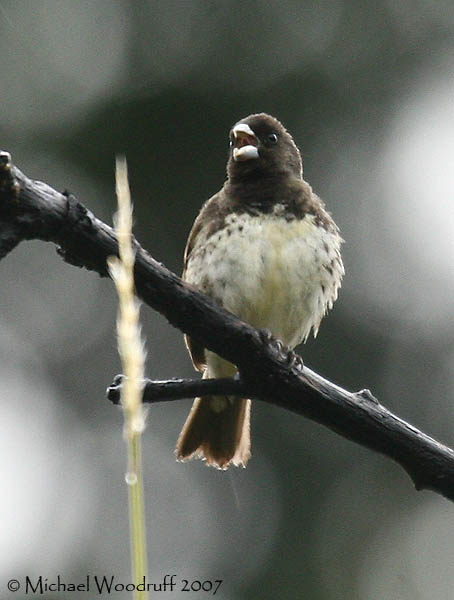
Yellow-bellied Seedeater (Sporophila nigricollis) by Michael Woodruff

Yellow-bellied Seedeater (Sporophila nigricollis) by Michael Woodruff

Study Shows Bird Species Change Fast
by Brian Thomas, M.S. *

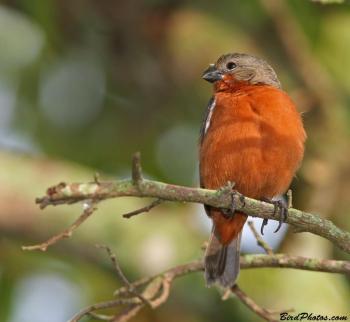
“Biologists recently found that feather colors and songs vary among some species within the South American genus Sporophila, also known as seedeater birds. But strangely, they did not find any genetic differences in the form of species-specific DNA markers. Do these variations fit any evolutionary pattern?

The researchers published their species comparisons in the Proceedings of the Royal Society B. In their report, they wrote, “Taken together, we suggest that this is a compelling example of an extremely rapid, recent and ongoing continental radiation, with species diverging in male plumage [feather] coloration patterns and song.”

Ruddy-breasted Seedeater (Sporophila minuta) ©BirdPhotos.com

Ruddy-breasted Seedeater (Sporophila minuta) ©BirdPhotos.com

“Lead author of the seedeater study and graduate biology student Leonardo Campagna said in a Queen’s University press release, “One of Darwin’s accomplishments was to show that species could change, that they were not the unaltered, immutable products of creation.”5

But nowhere does the Bible say that species cannot change! Instead, it seems that they would have to change—within the limits of their own interbreeding kind—in order to fulfill God’s command in Genesis 1 for His living creatures to fill the earth and its many changing environments.

And God blessed them, saying, “Be fruitful and multiply, and fill the waters in the seas, and let birds multiply on the earth.” (Genesis 1:22 NKJV)

Darwin insisted that animals slowly change between kinds. In contrast, seedeater birds have shown that they rapidly changed within their kind. Despite Campagna’s touting of Darwin’s “accomplishments,” these birds display programmed variation, not evolution.”

…. See the complete article in Institute of Creation Research” – Study Shows Bird Species Change Fast

*

Birds of the World – Thraupidae – Tanagers and Allies

Wordless Birds

*

That’s a Fact – Evolution In Action & On The Origin of Dogs

Here is an interesting video from the Institute of Creation Research. Thought I’d share it.

*

*

Then God saw everything that He had made, and indeed it was very good. So the evening and the morning were the sixth day. (Genesis 1:31 NKJV)

Also an interesting article about the Origin of Dogs. Love those dogs as well as birds. Here’s an excerpt.

“On the Origin of Dogs
by Brian Thomas, M.S. *

Overall, there are more dogs than children in American and British households.1 Dogs have become a huge part of humans’ lives. How and when did they get here?

Chromosomes show that “the domestic dog, Canislupus familiaris, is a grey wolf.” Additional DNA studies provide “strong evidence” that all dog breeds descended from a wolf population that was domesticated in southern East Asia. Dogs, wolves, coyotes, and foxes can interbreed, so they represent the created dog kind. Over 230 dog breeds have been defined in the 4,300 or so years of post-Flood history.

In his 300 B.C. book Historiae Animalium, Aristotle listed the dog separately from the wolf and fox. But University of Otago archaeologist Helen Leach wrote that “systematic breeding only emerged within the past 300 years.”

Over 200 breeds were produced in only 300 years? That doesn’t fit with evolution’s theory of gradual change, in which new features are supposedly favored by natural selection over vast time periods. A recent experiment proved that dogs most likely changed in just a few generations through pre-designed genetic programming and intentional breeding……

To see the rest of the article – Origin of Dogs

From Acts & Facts – January 2012

Sharing The Gospel

*

Birds Vol 1 #1 – The Mandarin Duck

Mandarin Duck

Mandarin Duck

Birds Illustrated by Color Photography – Revisited

Vol 1. January, 1897 No. 1

*

THE MANDARIN DUCK.

A Letter from China.

Quack! Quack! I got in just in time.

I came as fast as I could, as I was afraid of being whipped. You see I live in a boat with a great many other ducks.

My master and his family live in the boat too. Isn’t that a funny place to live in?

We stay in all night. Waking up early in the morning, we cry Quack! Quack! until we wake the master.

He gets up and opens the gate for us and out we tumble into the water. We are in such a hurry that we fall over each other. We swim about awhile and then we go to shore for breakfast.

There are wet places near the shore where we find worms, grubs, and roots. When evening comes the master blows a whistle. Then we know it is time to come home.

We start as soon as we hear it, and hurry, because the last duck in gets a whipping. It does not hurt much but we do not like it, so we all try to get home first.

I have web feet, but I perch like other birds on the branches of the trees near the river.

My feathers are beautiful in the sunlight. My wife always sits near me. Her dress is not like mine. It is brown and grey.

From May to August I lose my bright feathers, then I put on a dress like my wife’s.

My master’s family are Chinese, and they are very queer. They would not sell me for anything, as they would not like to have me leave China.

Sometimes a pair of us are put in a gay cage and carried to a wedding. After the wedding we are given to the bride and groom.

I hear the master’s whistle again. He wants me to come in and go to bed. Quack! Quack! Good bye!

Mandarin Duck (Aix galericulata) by S Slayton

Mandarin Duck (Aix galericulata) by S Slayton

THE MANDARIN DUCK.

imga1

MORE magnificently clothed bird,” says Wood, “than the male Chinese Mandarin Duck, can hardly be found, when in health and full nuptial plumage. They are natives of China and Japan, and are held in such high esteem by the Chinese that they can hardly be obtained at any price, the natives having a singular dislike to seeing the birds pass into the possession of Europeans.”

Though web-footed, the birds have the power of perching and it is a curious sight to watch them on the branches of trees overhanging the pond in which they live, the male and female being always close together, the one gorgeous in purple, green, white, and chestnut, and the other soberly appareled in brown and grey. This handsome plumage the male loses during four months of the year, from May to August, when he throws off his fine crest, his wing-fans, and all his brilliant colors, assuming the sober tinted dress of his mate. The Summer Duck of America bears a close resemblance to the Mandarin Duck, both in plumage and manners, and at certain times of the year is hardly to be distinguished from that bird.

The foreign duck has been successfully reared in Zoological Gardens, some being hatched under the parent bird and others under a domestic hen, the latter hatching the eggs three days in advance of the former.

“The Chinese,” says Dr. Bennett, “highly esteem the Mandarin Duck, which exhibits, as they think, a most striking example of conjugal attachment and fidelity. A pair of them are frequently placed in a gaily decorated cage and carried in their marriage processions, to be presented to the bride and groom as worthy objects of emulation.”

“I could more easily,” wrote a friend of Dr. Bennett’s in China to whom he had expressed his desire for a pair of these birds, “send you two live Mandarins than a pair of Mandarin Ducks.”

Concerning their attachment and fidelity to one another, Dr. Bennett recites the following:

“Mr. Beale’s aviary at Maceo one day was broken open and the male bird stolen from the side of its mate. She refused to be comforted, and, retiring to the farthest part of the aviary, sat disconsolate, rarely partaking of food, and giving no attention to her soiled and rumpled plumage. In vain did another handsome drake endeavor to console her for her loss. After some time the stolen bird was found in the quarters of a miserable Chinaman, and at once restored to its mate. As soon as he recognized his abode he began to flap his wings and quack vehemently. She heard his voice and almost quacked to screaming with ecstasy, both expressing their joy by crossing necks and quacking in concert. The next morning he fell upon the unfortunate drake who had made consolatory advances to his mate, pecked out his eyes and so injured him that the poor fellow died in the course of a few days.”

According to Schrenck, this species appears in the countries watered by the Amoor about May, and departs again at the end of August; at this season it is always met with in small or large flocks, which are so extremely shy that they rarely come within gunshot. Whilst on the wing these parties crowd closely together in front, the birds in the rear occupying a comparatively free space.
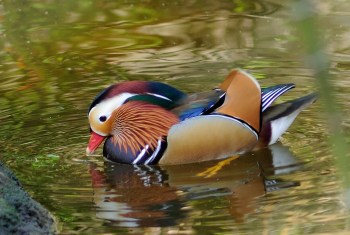
Mandarin Duck (Aix galericulata) LPZoo by Dan

Mandarin Duck (Aix galericulata) LPZoo by Dan


Lee’s Addition:

The Mandarin Duck is in the Anatidae – Ducks, Geese & Swans Family of the Answeriformes Order.  Along with the Wood Duck, these ducks just amaze me in their creation. When the Lord created them, He must have had a very neat paint brush. They are so gorgeous! Every time I see them they almost bring tears to my eyes.

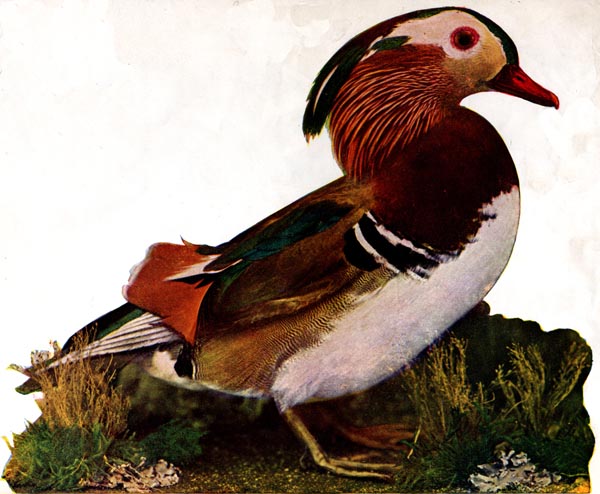
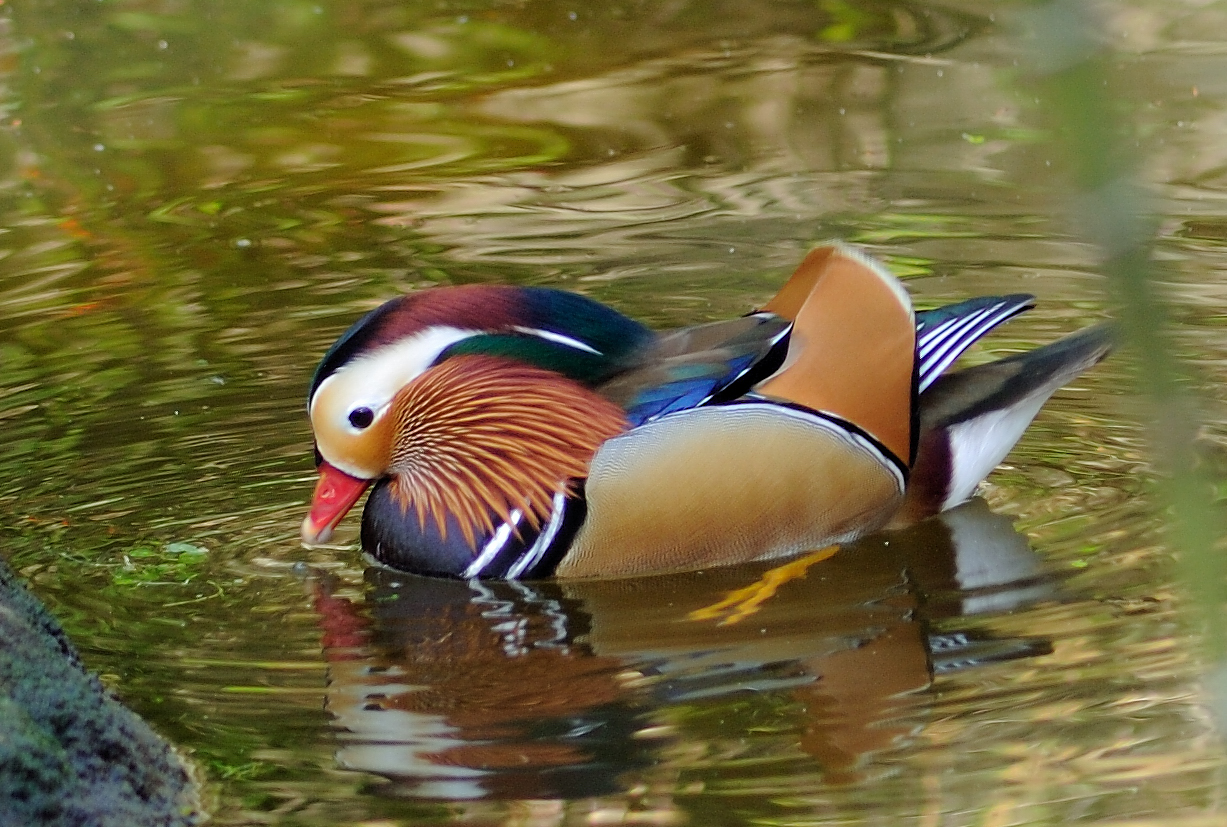
The Mandarin Duck (Aix galericulata), or just Mandarin, is a medium-sized perching duck, closely related to the North American Wood Duck. It is 16-19 in (41–49 cm) long with a 25.5-29.5 in (65–75 cm) wingspan.

The adult male is a striking and unmistakable bird. It has a red bill, large white crescent above the eye and reddish face and “whiskers”. The breast is purple with two vertical white bars, and the flanks ruddy, with two orange “sails” at the back. The female is similar to female Wood Duck, with a white eye-ring and stripe running back from the eye, but is paler below, has a small white flank stripe, and a pale tip to its bill. The Mandarin ducklings are almost identical in look to Wood ducklings, and appear very similar to Mallard ducklings. The ducklings can be distinguished from Mallard ducklings because the eye-stripe of Mandarin ducklings (and Wood ducklings) stops at the eye, while in Mallard ducklings it reaches all the way to the bill.

Unlike other species of ducks, most Mandarin drakes reunite with the hens they mated with along with their offsprings after the eggs have hatched and even share scout duties in watching the ducklings closely. However, even with both parents securing the ducklings, most of them do not survive to adulthood.

Mandarins may form small flocks in winter.

Mandarin Ducks, which are referred to by the Chinese as Yuan-yang (simplified Chinese: 鸳鸯; traditional Chinese: 鴛鴦; pinyin: yuān yāng), where yuan() and yang() respectively stand for male and female Mandarin Ducks.

In traditional Chinese culture, Mandarin Ducks represent a life-time couple, unlike many other species of ducks. Hence they are frequently featured in Chinese art and are regarded as a symbol of conjugal affection and fidelity.

But now ask the beasts, and they will teach you; And the birds of the air, and they will tell you; (Job 12:7 NKJV)

A Chinese proverb for loving couples uses the Mandarin Duck as a metaphor: “Two mandarin ducks playing in water” (simplified Chinese: 鸳鸯戏水; traditional Chinese: 鴛鴦戲水; pinyin: yuān yāng xì shuǐ). The Mandarin Duck symbol is also used in Chinese weddings, because in traditional Chinese lore they symbolize wedded bliss and fidelity.

Because the male and female plumages of the Mandarin Duck are so unalike, yuan-yang is frequently used colloquially in Cantonese to mean an “odd couple” or “unlikely pair” – a mixture of two different types of same category. For example,yuanyang (drink) and yuan-yang fried rice.
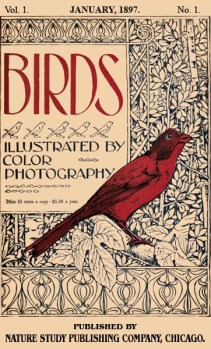
Birds Illustrated by Color Photograhy Vol 1 January 1897 No 1 - Cover

Birds Illustrated by Color Photography – Revisited – Introduction

The above article is the third article in the monthly serial that was started in January 1897 “designed to promote Knowledge of Bird-Live.” These include Color Photography, as they call them, today they are drawings. There are at least three Volumes that have been digitized by Project Gutenberg.

To see the whole series of – Birds Illustrated by Color Photography – Revisited

*

(Information from Wikipedia and other internet sources)

Next Article – The Golden Pheasant

Previous Article – The Resplendent Trogon (Quetzal)

Links:

Photos of Mandarin Ducks

Mandarin Duck – Wikipedia

Birds of the World – Anatidae – Ducks, Geese & Swans

Wordless Birds

*