According to Birds and Bloom magazine site, there are Birds of the Month.
“You’ve probably heard of birth month gemstones and birth month flowers, but have you heard of birth month birds? It might come as a surprise to learn every month of the year has not only a representative jewel and flower, but also a bird. From owls to ravens, here are the birds that represent everyone’s birthdays.”
More from Birds and Bloom:
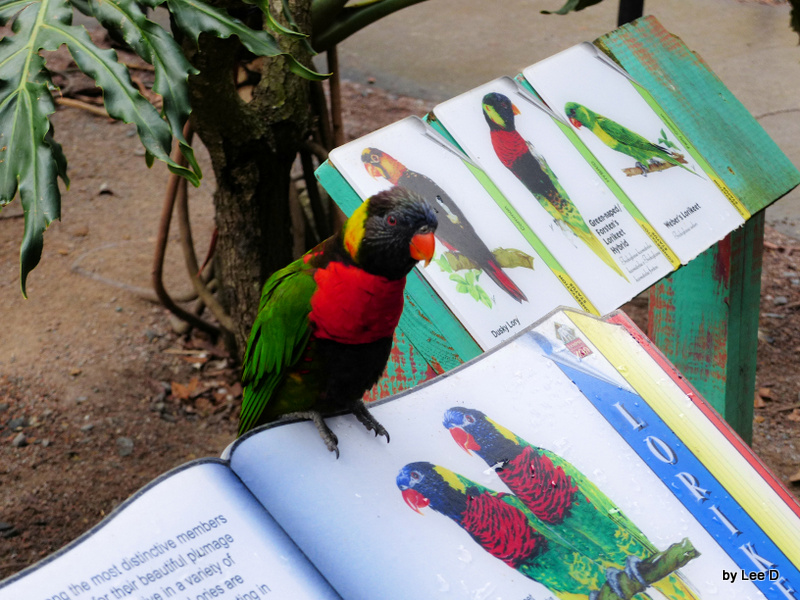
Spunky, smart, colorful and filled to the brim with personality, parrots always inspire smiles. While they’re perhaps most recognizable for sitting on pirates’ shoulders, there are more than 350 types of parrots in the world—and plenty of them live in the wild.
“I love this this bird because every single time my shutter would snap, he would pose. I took this picture at the Henry Doorly Zoo in Omaha, Nebraska,” says Katelyn Cheek.
Red-winged Parrot (Aprosmictus erythropterus) by Ian
Salmon-crested Cockatoo (Cacatua moluccensis) at Parrot Mtn by Lee
The rainbow shall be in the cloud, and I will look on it to remember the everlasting covenant between God and every living creature of all flesh that is on the earth.” (Genesis 9:16 NKJV)
Did you know that there is a bird assigned to each month like they do stones? I was not aware of these for birds. September, which is my birthday month has a Saphire. I’ll reveal September’s when we get to that post.
According to Birds and Bloom magazine site, there are Birds of the Month.
“You’ve probably heard of birth month gemstones and birth month flowers, but have you heard of birth month birds? It might come as a surprise to learn every month of the year has not only a representative jewel and flower, but also a bird. From owls to ravens, here are the birds that represent everyone’s birthdays.”
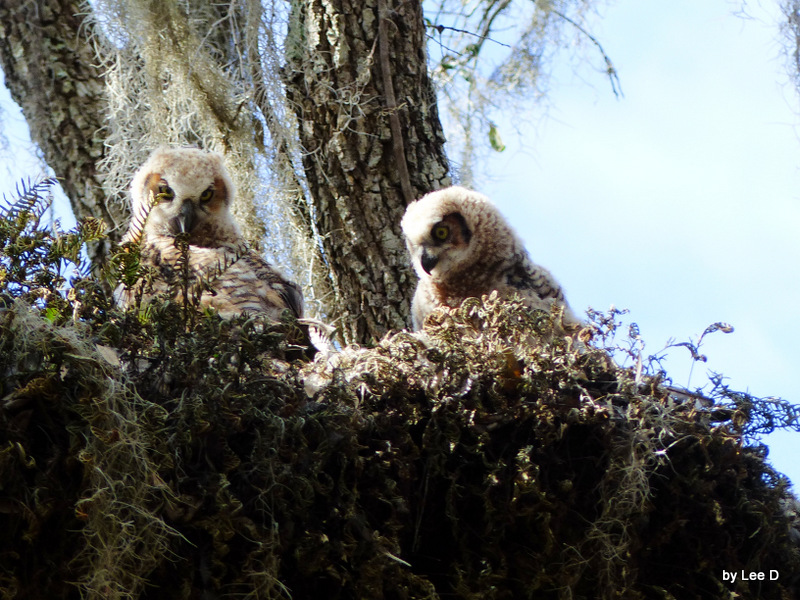
Great Horned Owl Youngsters at Circle B Bar Reserve by Lee
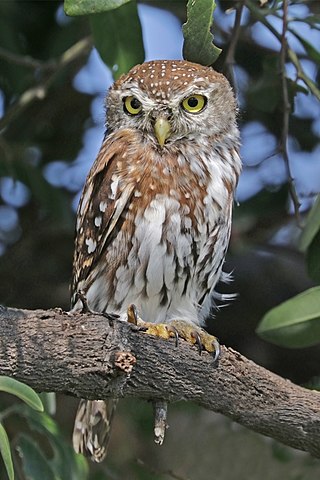
“January: Owl
Wise and formidable, owls preside over the woods at night. They’re commonly seen as a symbol of smarts, with great horned owls showing up on many a graduation card. Identify these January birth month birds by their large eyes, rounded heads and hooked beak. Listen for their hooting when the skies grow dark.”
They didn’t say which kind, so here are some of the articles we have done about Owls:
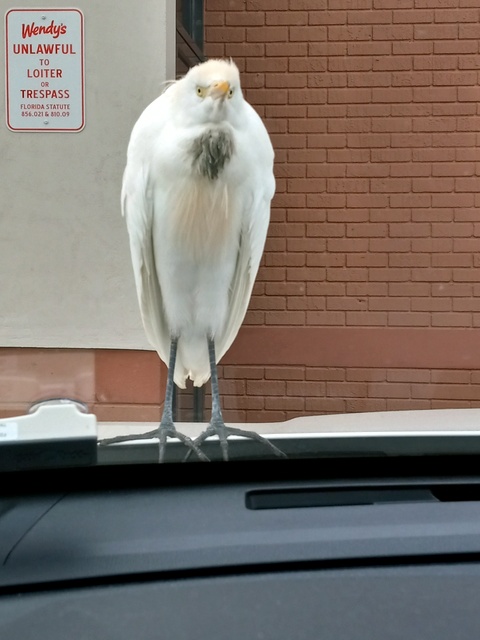
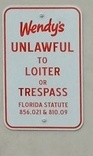
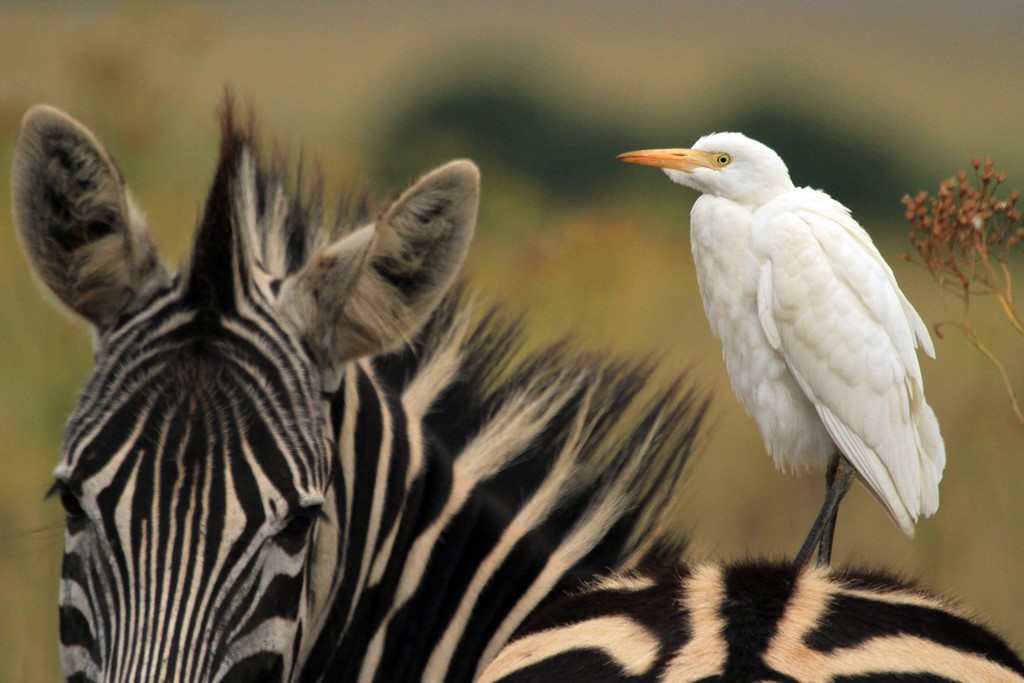
Adventurous Cattle Egret outside Wendy’s. When I pulled up to go into Wendy’s yesterday, this adventurous Cattle Egret decided to check my window. Later, as we were leaving, I noticed him riding on a man’s truck as he drove off. When the driver sped up, he finally hopped off.
If you notice the sign on the wall behind him/or her, it is Loitering.
Egret on Car in front of Wendy’s – no trespassing
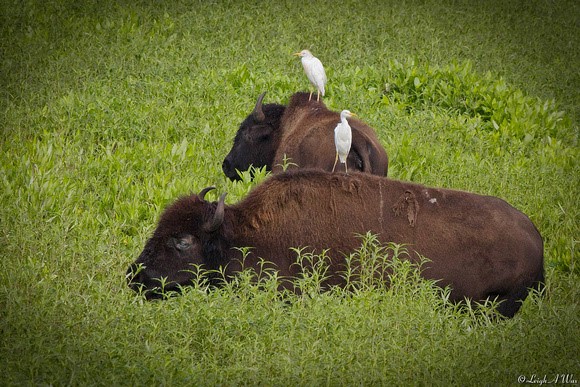
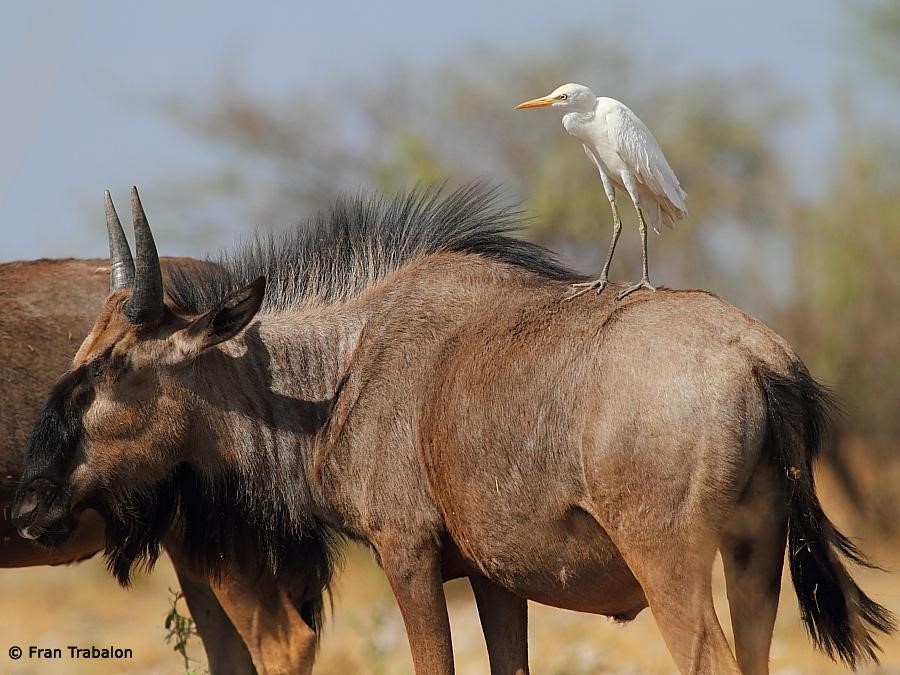
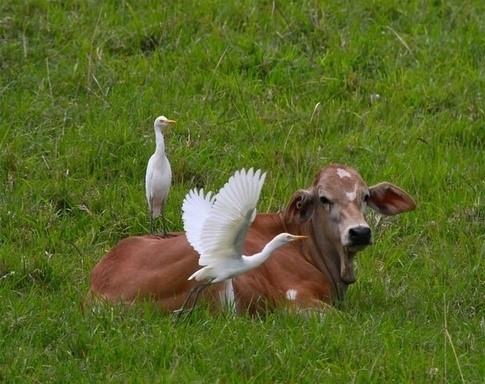
We have written about these Cattle Egrets before, but this was a very close encounter. They love to ride on cattle or whatever critter they can catch a ride on and try to find food. Here are a few of previous photos of Cattle Egrets.
“Look at the birds of the air, for they neither sow nor reap nor gather into barns; yet your heavenly Father feeds them. Are you not of more value than they?” (Matthew 6:26 NKJV)
Sharp-shinned Hawk (Accipiter striatus) by Daves BirdingPix
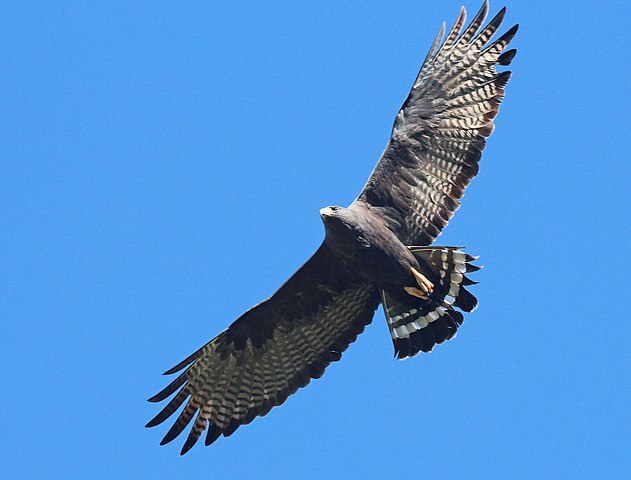
The other day while I was filling my gas tank, I looked up and spotted a Hawk flying overhead. He (or she) kept flying back and forth slowly. I have no clue as to what kind of hawk it was, but wondered which verses mentions the hawk? We have written about hawks many times here on the blog, and know it is one of the Birds of the Bible.
Job 39:26 is a great verse that asks a very thought-provoking question.
“Doth the hawk fly by thy wisdom, and stretch her wings toward the south?” (KJV)
I have Bible Gateway loaded on my computer and brought up that verse and asked to show all the various Bible versions. Looking through the various ways of asking or questioning God about His hawks was interesting. As I read through the various versions, it makes us realize how little we know about The Creator’s Wisdom.
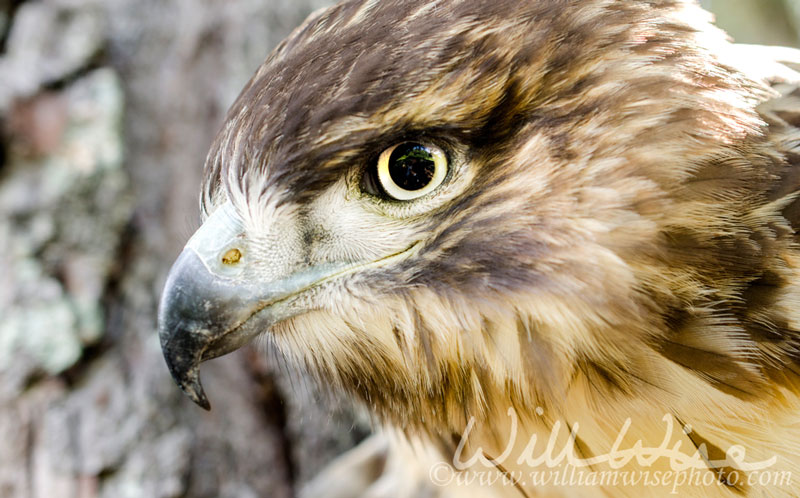
Raptor Bird of Prey, Juvenile Red Tailed Hawk profile, William Wise
“Was it through your know-how that the hawk learned to fly, soaring effortlessly on thermal updrafts? Did you command the eagle’s flight, and teach her to build her nest in the heights, Perfectly at home on the high cliff face, invulnerable on pinnacle and crag? From her perch she searches for prey, spies it at a great distance. Her young gorge themselves on carrion; wherever there’s a roadkill, you’ll see her circling.”
“Whether an hawk spreading abroad his wings to the south, beginneth to have feathers by thy wisdom? (Be it by thy wisdom that a hawk haveth feathers, and spreadeth his wings towards the south?)”
I’m very thankful that the Lord instructs the Hawks do spread their wings and come down here to Florida!! Especially in the winter!!
Our Black-bellied Whistling Ducks have shown up again this winter just like previous years. I’ve written about them many times, but I am always glad when they return each winter. I searched through some previous post about them and found this one from 2011. I especially like the verse quoted, “”I will instruct thee and teach thee in the way which thou shalt go: I will guide thee with mine eye.” (Psalms 32:8 KJV)” That verse means a lot as I am learning to adjust to my current situation. See Time To Find and Watch Birds Again. I trust you enjoy this older post again.
Black-bellied Whistling Ducks feeding 6/11 by Lee
Birdwatching and Blessings – 6/11/21
This morning our Whistling Duck pair came looking for food, as is becoming their routine. Dan was planning to mow the grass today, so the food dishes were empty and stacked on the patio. So, I put one close by and gave them some food.
Church Signs:
God likes it when you smile, but he loves it when He is the reason!
The will of God will never take you to where the grace of God will not protect you.
Truths To Consider:
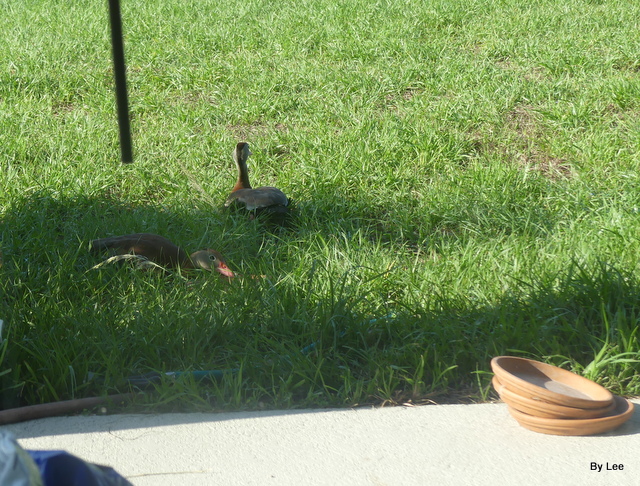
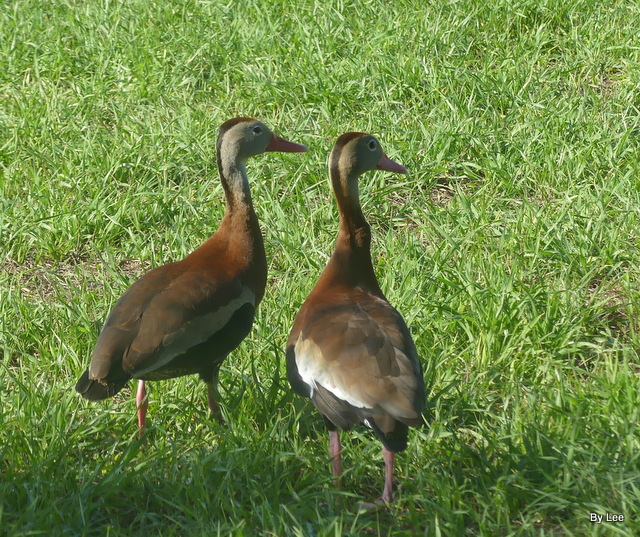
Black-bellied Whistling Ducks looking to see if they should go that way. 6/11
“I will instruct thee and teach thee in the way which thou shalt go: I will guide thee with mine eye.” (Psalms 32:8 KJV)
Black-bellied Whistling Ducks maybe asking or deciding which way to go. 6/11
“And they said unto him, Ask counsel, we pray thee, of God, that we may know whether our way which we go shall be prosperous.” (Judges 18:5 KJV)
Decisions! Decisions! Always best when the Lord is involved in seeking answers.
I haven’t been active here for several months. So, it’s time to start writing posts again. An explanation is due to those of you who follow this blog.
On October 17th, the love of my life went to heaven. “To be absent from the body is to be present with the Lord.” The Lord chose to take Dan on to be with him. Dan developed a brain bleed 10 days earlier and never regained consciousness.
Since Dan was our main photographer, I’ll either repost previous favorite photos or use other photographers. So, bear with me as I try to get back in the “Birding Saddle”, so to say.
This is Birdwatching really close
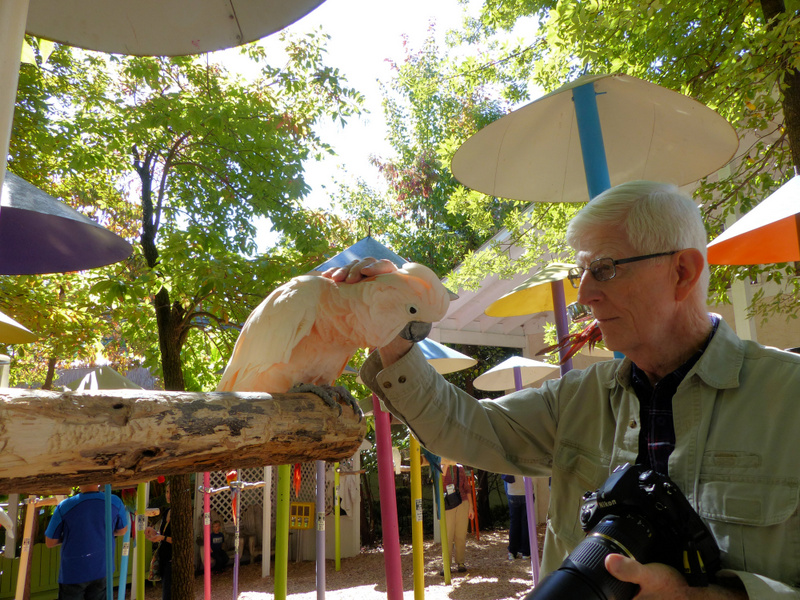
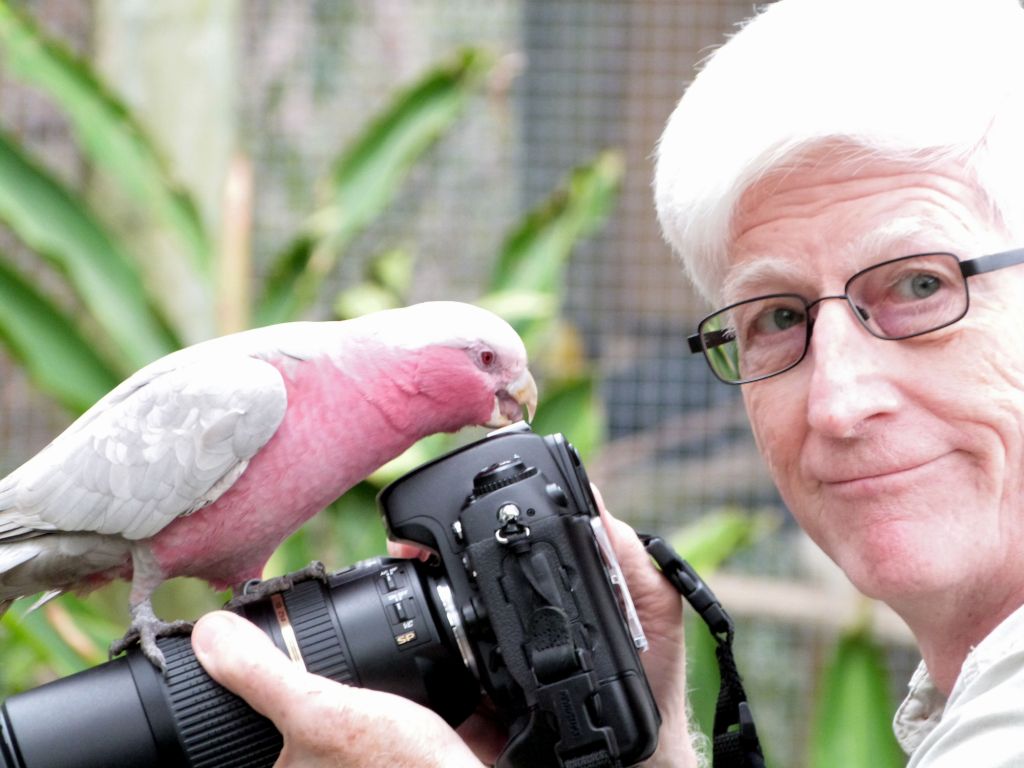
Galah (Eolophus roseicapilla) and Dan by Lee
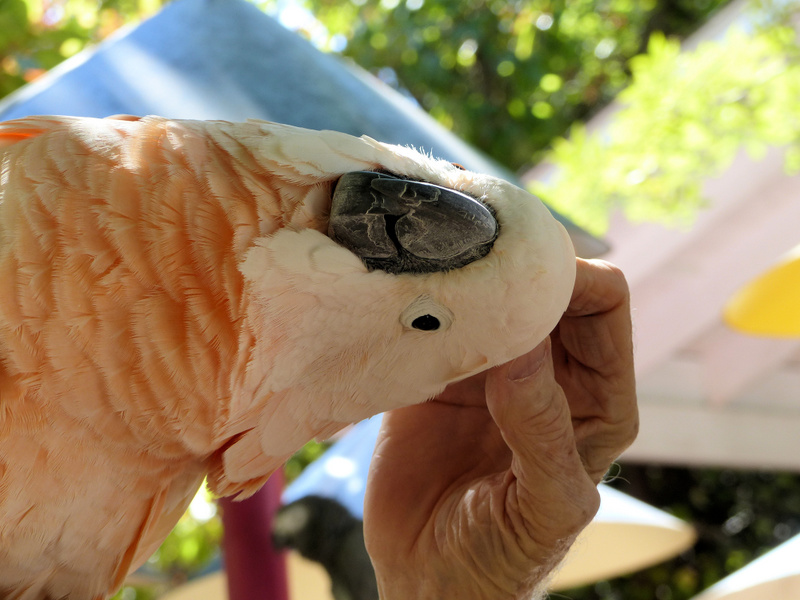
These last two pictures are my favorites as I caught the mischievous Galah checking out Dan’s camera and then Dan’s expression as he looked at me.
As for Dan, I’ll see him later. He, like me, accepted the Lord as his personal Savior when he was a youngster.
“For God so loved the world that He gave His only begotten Son, that whoever believes in Him should not perish but have everlasting life.”
(John 3:16 NKJV)
Have you accepted Him?
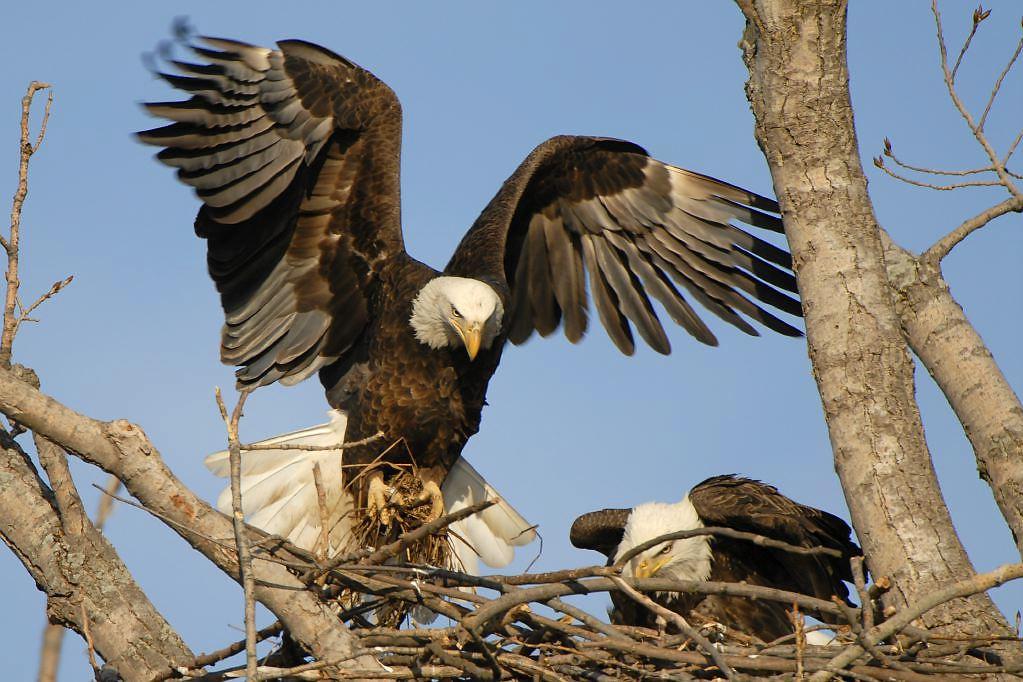
Bald Eagle (Haliaeetus leucocephalus) by AestheticPhotos
“As an eagle stirs up its nest, Hovers over its young, Spreading out its wings, taking them up, Carrying them on its wings,”
(Deuteronomy 32:11 NKJV)
Bald Eagles (from the above article)
“Although Benjamin Franklin once disparaged (possibly in jest) the bald eagle’s “bad moral character,” America’s national bird upholds a high standard for family life by (mostly) remaining faithful. Following a kamikaze courtship ritual in which two birds lock talons and tumble end-over-end until they nearly hit the ground, the male and female settle into a period of domestic bliss marked by dad’s willingness to undertake incubation and feeding duties. The “divorce” rate for these birds is less than 5%, according to scientists. And while they spend large chunks of the year alone, bald eagles mark their fidelity with a shared long-term commitment to nest building: One such home put together by an eagle couple in Florida was found to measure 9.5 feet long and 20 feet deep. It holds the record for the largest bird’s nest ever documented.” (The largest bird’s nest was built by a pair of bald eagles (Haliaeetus leucocephalus), and possibly their successors, near St Petersburg, Florida, USA and measured 2.9 m (9 ft 6 in) wide and 6 m (20 ft) deep. It was examined in 1963 and was estimated to weigh more than two tonnes (4,409 lb).)
Bald Eagle (Haliaeetus leucocephalus) by Aesthetic Photos
Atlantic Puffins
Atlantic Puffins by Bill Boothe, MD in the Isle of Mull Scotland
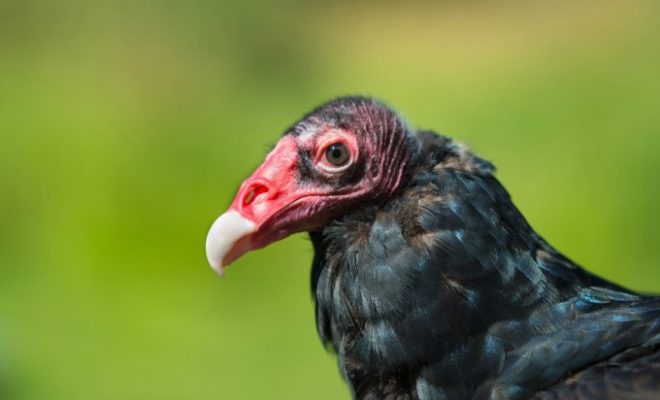
Ever since I posted the Lee’s Four Word Thursday – Vulture’s Eye, I have been curious about their eyes. Do they really have great vision? Is this verse in Job 28:7 the only reference to their eyes? The search began with that verse. Only the KJV, DRB versions use the word Vulture. (My E-sword versions). The other translations use Falcon, Hawk, and Kite. Apparently, all of the birds have great vision and are great hunters.
“There is a path which no fowl knoweth, and which the vulture’s eye hath not seen:” Job 28:7 KJV
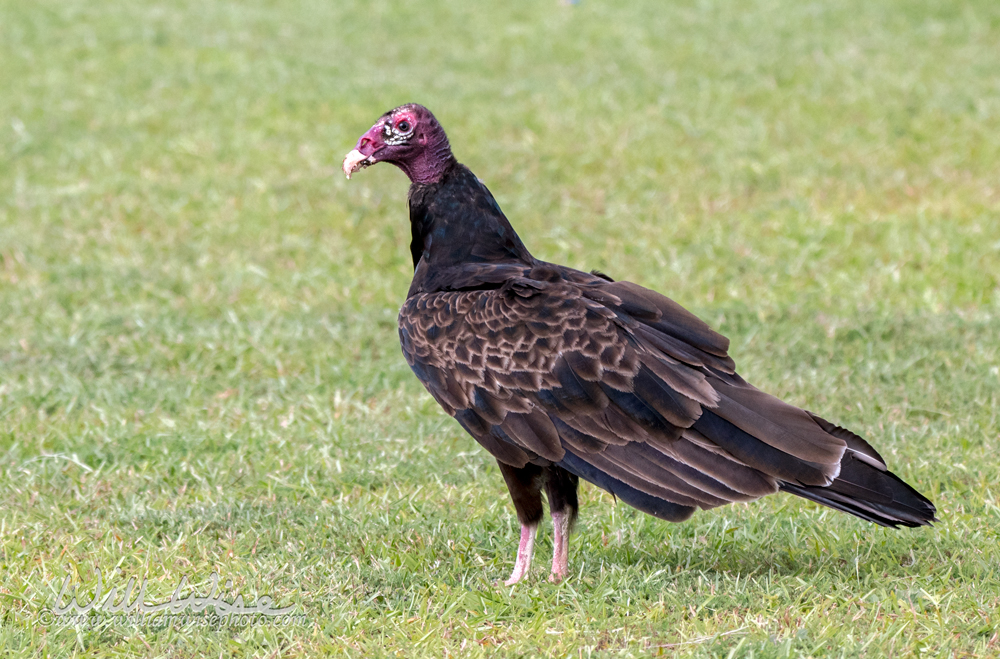
Turkey Vulture; Walton County, Georgia by William Wise
The Lord has provided these Vultures with great vision to enable them to find food, and actually help clean the landscape. If He can provide for the Birds of the Air, I know He can provide for us.
“I will instruct thee and teach thee in the way which thou shalt go: I will guide thee with mine eye.” (Psalms 32:8 KJV)
The song by Dr. Richard Gregory, “Hiding in the Shadow of the Rock”. I am reposting it for an encouragement and comfort to all those suffering today from the devastating damage from Hurricane Helene. There are many all through Florida, Geogia, North and South Carolina, plus a few other states. They could use our many prayers.
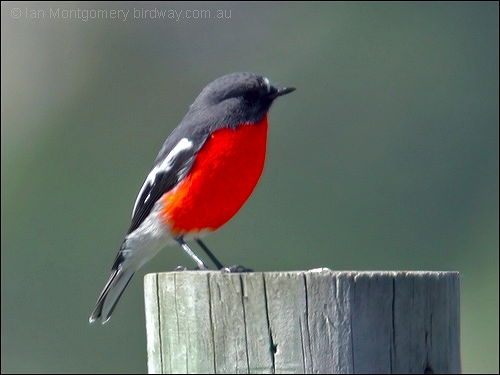
The Robins are all endemic to Australasia: New Guinea, Australia, New Zealand and numerous Pacific Islands as far east as Samoa. For want of an accurate common name, the family is often called the Australasian robins. There are 46 members presently. They are not related to our American Robin.
Flame Robin by Ian
Most species have a compact build with a large, rounded head, a short, straight bill, and rounded wingtips. They occupy a wide range of wooded habitats, from subalpine to tropical rainforest, and mangrove swamps to semi-arid scrubland. All are primarily insectivorous, although a few supplement their diet with seeds. Hunting is mostly by perch and pounce, a favoured tactic being to cling sideways onto a treetrunk and scan the ground below without moving.
They have long-term pair-bonds and small family groups. Most members practice cooperative breeding, with all family members helping defend a territory and feed nestlings. Nests are cup-shaped, usually constructed by the female, and often placed in a vertical fork of a tree or shrub. Many species are expert at adding moss, bark or lichen to the outside of the nest as camouflage, making it very difficult to spot, even when it is in a seemingly prominent location.
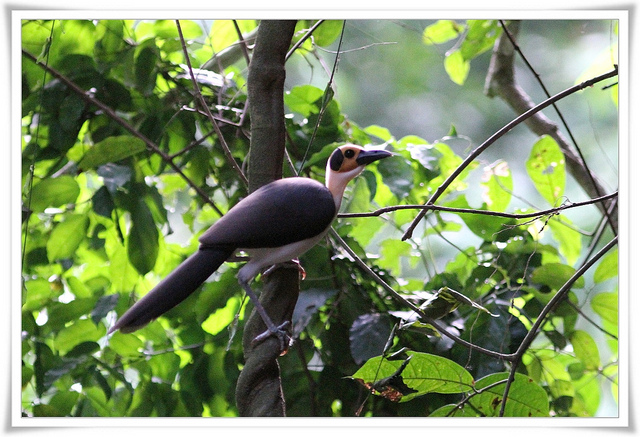
White-necked Rockfowl (Picathartes gymnocephalus) cc Ross@Texas
The White-necked and Grey-necked Rockfowls are the only members of the Picatharitidae family. They are also called “bald crows’ and are found in the rain-forests of tropical west and central Africa. They have unfeathered heads, and feed on insects and invertebrates picked from damp rocky areas. Both species are totally non-migratory, being dependent on a specialised rocky jungle habitat.
They are large (33–38 centimetres (13–15 in) long) passerines with crow-like black bills, long neck, tail and legs. They weigh between 200–250 grams (7.1–8.8 oz). The strong feet and grey legs are adapted to terrestrial movement, and the family progresses through the forest with long bounds on the ground. The wings are long but are seldom used for long flights. Rockfowl are generalized feeders, taking a wide range of invertebrate prey.
He is the Rock, His work is perfect; For all His ways are justice, A God of truth and without injustice; Righteous and upright is He. (Deuteronomy 32:4 NKJV)
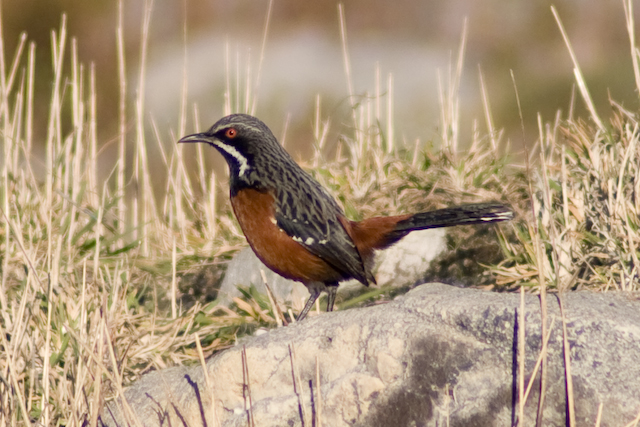
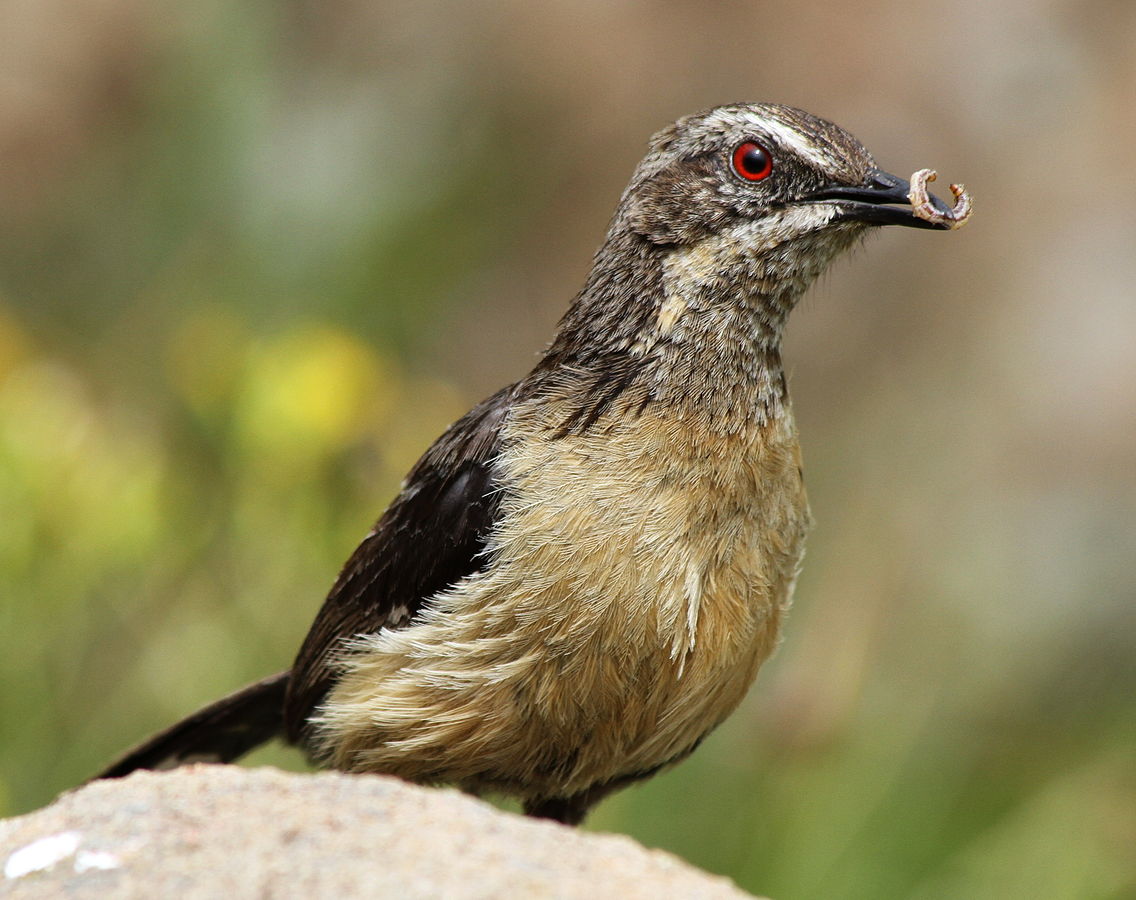
The Rockjumpers are medium-sized insectivorous or omnivorous birds in the genus Chaetops, which constitutes the entire family Chaetopidae. The two species, the Cape Rockjumper,, and the Drakensberg Rockjumper, are endemic residents of southern Africa. The Cape Rockjumper is a resident of the West Cape and SW East Cape, and the Orange-breasted (or Drakensberg) Rockjumper is distributed in the Lesotho highlands and areas surrounding this in South Africa. These are birds with mostly brown and red plumage. Both with long, white tipped black tails, black throats, broad white submoustachial lines, rufous or orange bellies and rumps and grey and black patterned backs and wings.[The iris is red and the bills and legs are black. Their wings are very small and they do not fly very often. They spend most of their lives running and jumping among rocks and grasses while hunting insects.
Rail-babbler (Eupetes macrocerus) by Peter Ericsson
The Rail-babbler or Malaysian Rail-babbler (Eupetes macrocerus) is a strange, rail-like, brown and pied inhabitant of the floor of primary forest in the Malay Peninsula and Sumatra (the nominate subspecies macrocerus), as well as Borneo (ssp. borneensis), distantly related to African crow-like birds. Its population has greatly decreased, however, it is locally still common in logged forest or on hill-forest on slopes. The species is poorly known and rarely seen, in no small part due to its shyness.
Each will be like a hiding place from the wind, a shelter from the storm, like streams of water in a dry place, like the shade of a great rock in a weary land. (Isaiah 32:2 ESV)
“And the LORD God prepared a plant and made it come up over Jonah, that it might be shade for his head to deliver him from his misery. So Jonah was very grateful for the plant. But as morning dawned the next day God prepared a worm, and it so damaged the plant that it withered.” (Jonah 4:6-7 NKJV)
Jonah was angry and the Lord kept showing him compassion in this chapter. I am very thankful that the Lord shows us compassion.
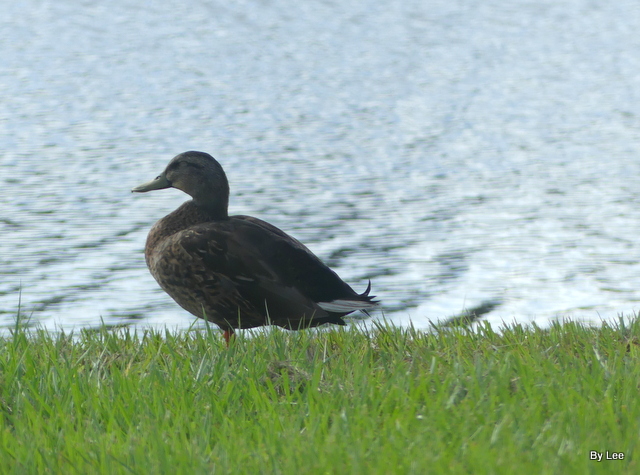
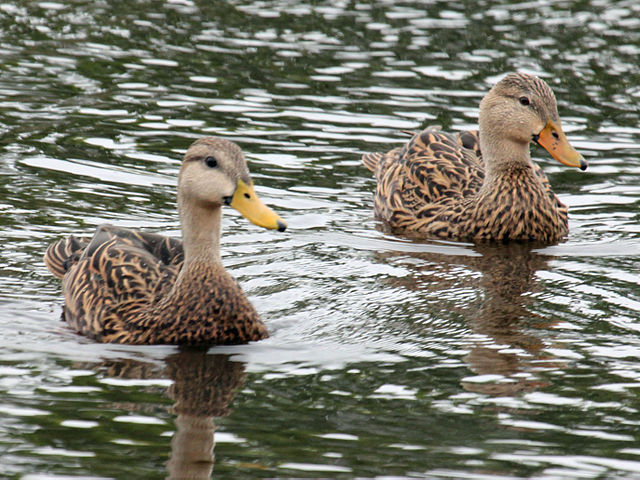
While eating supper, a couple of Mottled Ducks came up in the yard looking for food. Normal situation as many ducks and other birds come to the feeders. Yet, this is the first Mottled Duck this fall. They migrate down for the winter and we were surprised to see them already.
Working on the Birdwatching Thru the Bible series for posts gave me an idea. Wonder if I could start with a known bird, a.k.a. Mottled Duck, and find a reference to them in the Bible? Sort of reverse Birds of the Bible.
After searching for “Duck” and other birds of that sort, Quess what? NO RESULTS! Then I went to All About Birds – Mottled Duck to check its scientific name.
Not to be detoured, I went back to the scriptures, and sure enough, they are in there.
“So God created great sea creatures and every living thing that moves, with which the waters abounded, according to their kind, AND EVERY WINGED BIRD ACCORDING TO ITS KIND. And God saw that it was good. And God blessed them, saying, “Be fruitful and multiply, and fill the waters in the seas, and let birds multiply on the earth.” So the evening and the morning were the fifth day.” (Genesis 1:21-23 NKJV)
Notice it said they were to “Be fruitful and multiply.” Come this winter when the “snowbirds” or “winter visiting birds” come down, we will notice their fruitfulness.
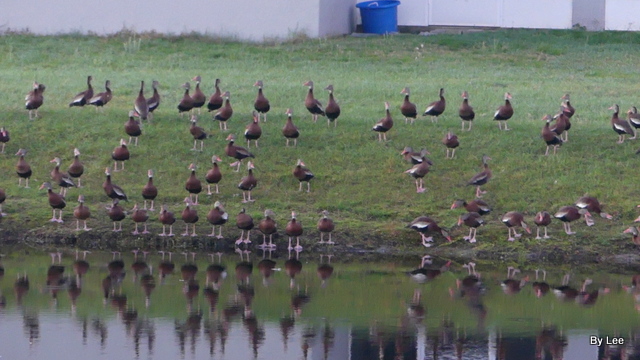
Black-bellied Whistling Ducks across the pond in winter.
Is there a “correct” way to go birdwatching in the Bible? I doubt it. You can start with a verse in the Bible that talks about a specific bird or see a bird and try to find it mentioned in the Bible. Either way, you will discover the Great Creator of birds and His many promises to them and to us.










 Lee's Birdwatching Adventures Plus