Hummingbird Video Making from NATURE

Thought you might enjoy this video that a friend told me about. It is loaded with great shots of hummers. They belong to the Trochilidae Family of the Apodiformes Order. There are over 330 members in the family.

O LORD, how manifold are thy works! in wisdom hast thou made them all: the earth is full of thy riches. (Psalms 104:24 KJV)

*

Interesting Things – “Darwin’s Finches” – No Proof of Evolution

SmileyCentral.com

“Darwin’s Finches” – No Proof of Evolution

Genesis 1:21 So God created… every winged bird according to its kind. And God saw that it was good.

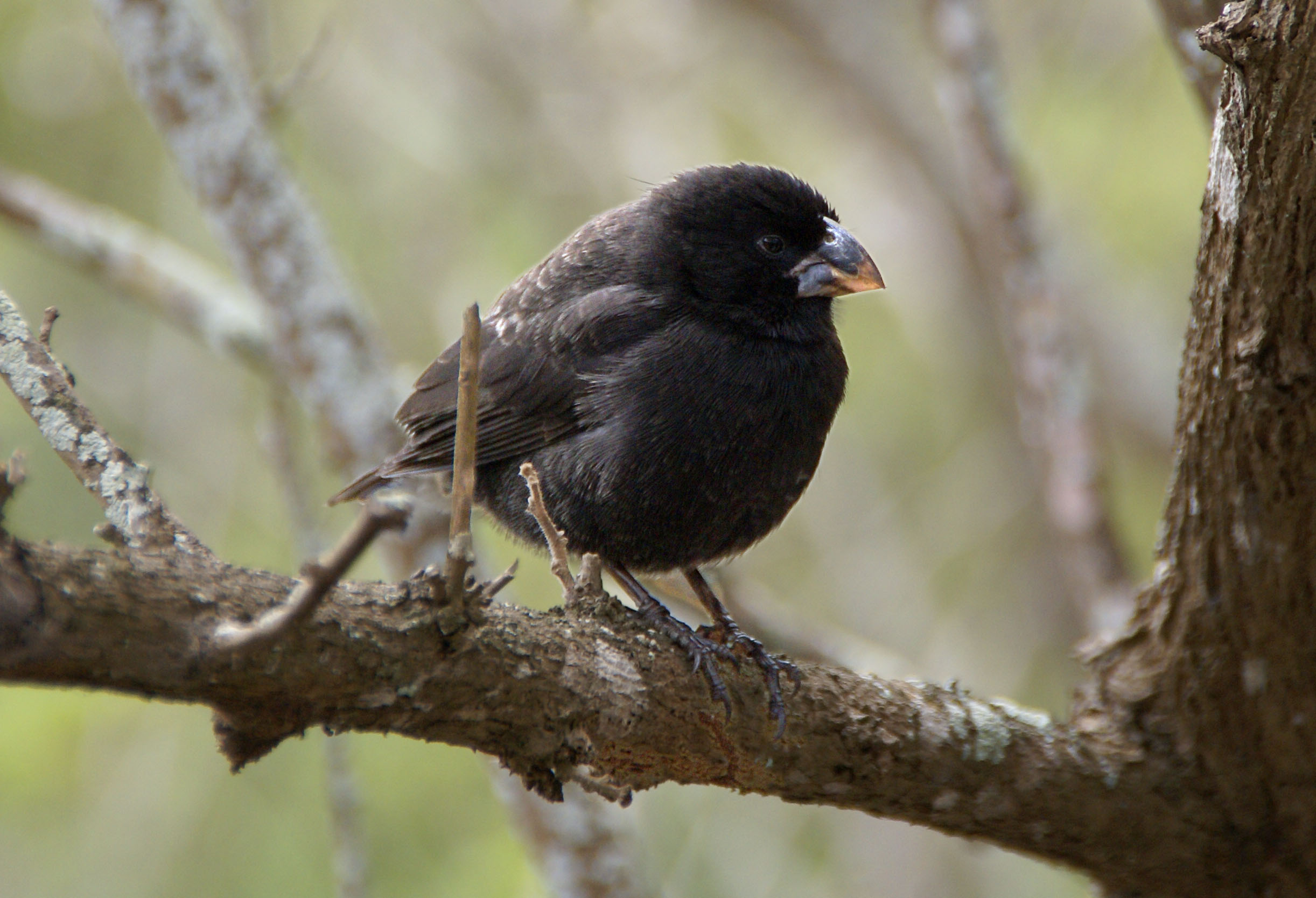
Medium Ground Finch (Geospiza fortis) by ©Wiki

Medium Ground Finch (Geospiza fortis) by ©Wiki

During his visit to the Galapagos Islands, Charles Darwin saw that each island was populated by a little finch. These birds were all very similar; yet, from one island to another there were some differences in the size and shape of the beak. Darwin reasonably concluded that in the distant past a pair of these birds had been blown 600 miles from the mainland and had since multiplied and spread. The environment on each island was slightly different, and the birds had developed specialized beaks to exploit the different food sources. It seemed to Darwin that here was a unique example of evolution in action where 13 different species had arisen from just one mating pair. A species is defined by the ability to reproduce; thus, a sterility barrier separates one species from another. Textbooks use Darwin’s finches to claim that new species have been produced, demonstrating evolution in action. However, the facts are that at least six of these different birds are known to interbreed and thus by definition are not new species at all but simply varieties within a single species. Moreover, DNA studies reveal very little difference between any of these birds, and there is no evidence of new genetic material, which is essential if evolution actually took place. Darwin’s finches offer no support for evolution. However, they do support the Bible when it teaches that, like every other creature, the birds have simply reproduced “after their own kind.” God has so designed His Creation that while it is possible for creatures to adapt perfectly to individual environments, there is still stability of the basic “kind.”

Prayer:
Dear Father, I thank You for Your Word that tells me of salvation. Amen.
Notes:
Creation Matters, (CRS), pp. 5-6, “Quiz.”
Copyright (C) 2010 Creation Moments, Inc


“Darwins Finches” are part of the Tanagers and Allies-Thraupidae Family in the Passeriformes Order.

See also:

Galapagos: Showcase for Creation

*

Birds of the Bible – Cranes II

Sandhill Crane (Grus canadensis) with 2 juveniles by Lee

Sandhill Crane (Grus canadensis) at Lake Ashton by Lee

Last evening we were with our friends at Lake Ashton in Winter Haven, FL and they gave us a tour of the wildlife there. This time of the year there are numerous Sandhill Crane families around. We saw several young Sandhills as we were being shown around. We took some photos and also got video of two adult Sandhill Cranes giving a duet. Thought that sounded like a good topic for this weeks Birds of the Bible.

The crane is mentioned twice in the Bible and one has to do its migration.

Yea, the stork in the heaven knoweth her appointed times; and the turtle and the crane and the swallow observe the time of their coming; but my people know not the judgment of the LORD. (Jeremiah 8:7 KJV)

The second mention of the Crane has to do with its voice.

Like a crane or a swallow, so did I chatter: I did mourn as a dove: mine eyes fail with looking upward: O LORD, I am oppressed; undertake for me. (Isaiah 38:14 KJV)

As you will see and hear by the video I took of the two cranes doing their duet, you can hear a bit of “chatter.”

We are lucky here in Central Florida to see the Sandhill Cranes quite frequently and occasionally a Whooping Crane.

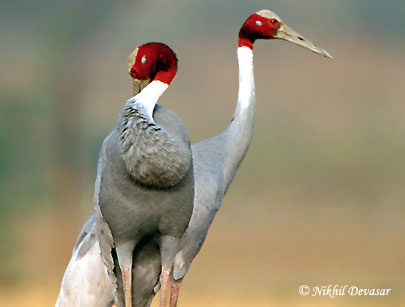
Sarus Crane (Grus antigone) by Nikhil Devasar

Sarus Crane (Grus antigone) by Nikhil Devasar

Around the world there are 15 crane species in the Gruidae Family of the order Gruiformes. The cranes are the Grey Crowned, Black Crowned, Demoiselle, Blue, Wattled, Siberian, Sandhill, Sarus, Brolga, White-naped, Common, Hooded, Whooping, Black-necked, and Red-crowned.

Cranes are large, long-legged and long-necked birds  Unlike the similar-looking but unrelated herons, cranes fly with necks outstretched, not pulled back. Cranes live on all continents except Antarctica and South America.

They are opportunistic feeders that change their diet according to the season and their own nutrient requirements. They eat a range of items from suitably sized small rodents, fish, amphibians, and insects, to grain, berries, and plants.

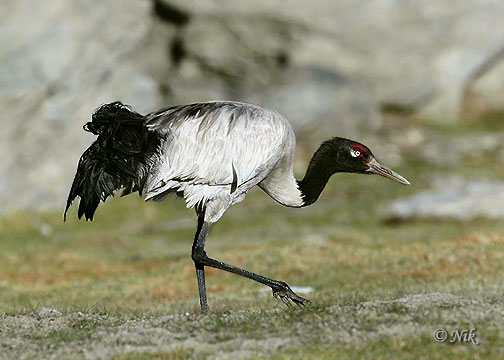
Black-necked Crane (Grus nigricollis) by Nikhil Devasar

Black-necked Crane (Grus nigricollis) by Nikhil Devasar

Most have elaborate and noisy courting displays or “dances”. While folklore often states that cranes mate for life, recent scientific research indicates that these birds do change mates over the course of their lifetimes (Hayes 2005), which may last several decades. Cranes construct platform nests in shallow water, and typically lay two eggs at a time. Both parents help to rear the young, which remain with them until the next breeding season.

Some species and populations of cranes migrate over long distances; others do not migrate at all. Cranes are gregarious, forming large flocks where their numbers are sufficient.

See:

Birds of the Bible – Cranes
Birds of the Bible – Cranes I
Birds of the Bible – Demoiselle Crane
Wordless Birds

*


Louisiana Weeps….

Louisiana Weeps…  – Video by a j mithra

With all the oil that is leaking into the Gulf of Mexico, at this point, Louisiana is taking a direct hit. a j mithra, who lives in India and has seen the destruction of their birds has made the following video. He told me he wept while making the video. Since he is one of our writers, I am posting it here also.

It is hard to watch not only the birds, but all of the wildlife and the people who are being harmed by this oil spill. Our hearts and prayers go out to those whose lives are being so greatly affected. Unfortunately, we are all under the curse and this is just one more example of it. One this is certain, this oil spill did not catch God by surprise.

For I reckon that the sufferings of this present time are not worthy to be compared with the glory which shall be revealed in us. For the earnest expectation of the creature waiteth for the manifestation of the sons of God. For the creature was made subject to vanity, not willingly, but by reason of him who hath subjected the same in hope, Because the creature itself also shall be delivered from the bondage of corruption into the glorious liberty of the children of God. For we know that the whole creation groaneth and travaileth in pain together until now. And not only they, but ourselves also, which have the firstfruits of the Spirit, even we ourselves groan within ourselves, waiting for the adoption, to wit, the redemption of our body. (Romans 8:18-23 KJV)

*

Interesting Things – Birds With a Memory to Envy

Birds With a Memory to Envy

Who provideth for the raven his food? when his young ones cry unto God, they wander for lack of meat. (Job 38:41)

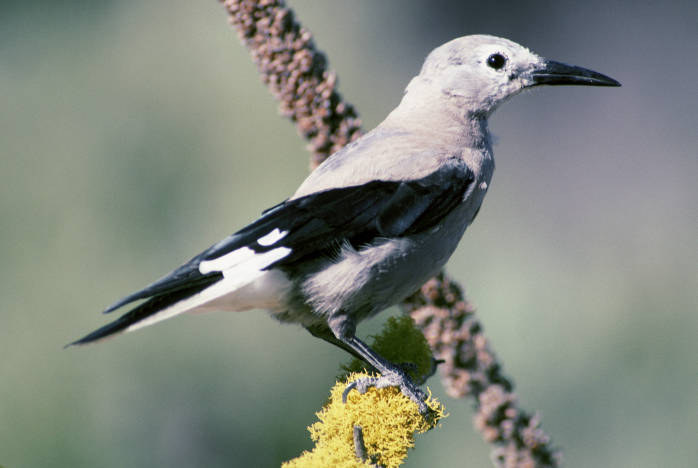
Clark's Nutcracker (Nucifraga columbiana) ©USFWS

Clark's Nutcracker (Nucifraga columbiana) ©USFWS

The shy bird, called Clark’s nutcracker, collects food during the growing season and stores it for the cold winter months. In one year, a bird will store between 22,000 and 33,000 seeds in as many as 2,500 locations, which can be more than ten miles apart. But does the little bird remember where he put all those seeds?

Biologists tracked the activity of Clark’s nutcrackers in the San Francisco Peaks in northern Arizona. A small army of researchers tracked the birds’ seed gathering and storing activities. One of the first things they discovered was that the birds quickly figured out that they were being observed. Some refused to store food when researchers were watching them. Others faked storing seeds when they were watched. Back in the lab, researchers studied the storing activity of Eurasian nutcrackers. After the birds stored seeds in a large sand floor, the birds were removed. Then the seeds they stored were dug up. When the birds were allowed to return, they quickly discovered that their seeds had been stolen, so they refused to store any more seeds. In the end, researchers concluded that the nutcrackers recover as many as two-thirds of their stored seeds within 13 months.

The remarkable memory of these little birds is their gift from God that enables them to be fed all year around.

Prayer: Father, I thank You because You are gracious and generous, not just to the birds, but also to me. Amen.

From Creation Moments©2010 – References: Science News, 2/14: 2004, pp. 103-105, Susan Milius, “Where’d I Put That?”


The Clarke’s and Eurasian Nutcrackers are part of the Corvidae Family of Crows, Jays, and Allies. The Passeriformes Order they are in has at present 123 Families (IOC 2.4).

Wordless Birds

*

The Blue-footed Booby – The Stupid Fellas

The Blue-footed Booby – The stupid fellas  ~  by a j mithra
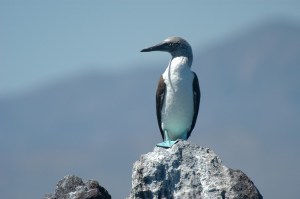
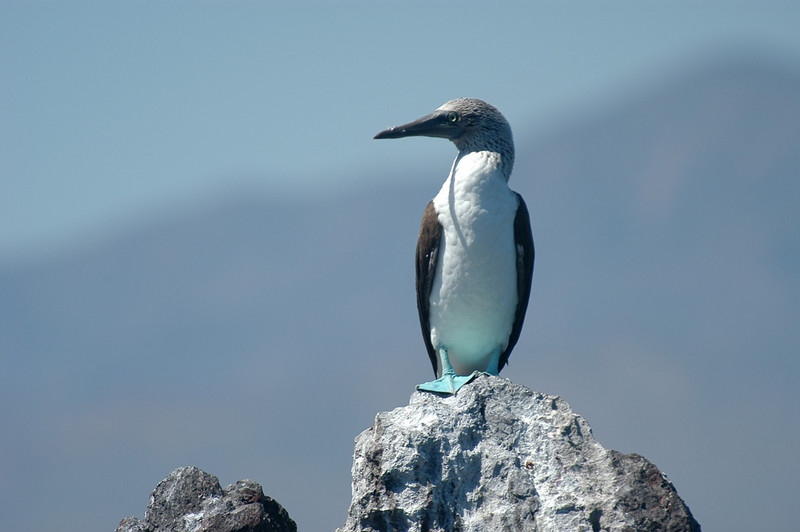
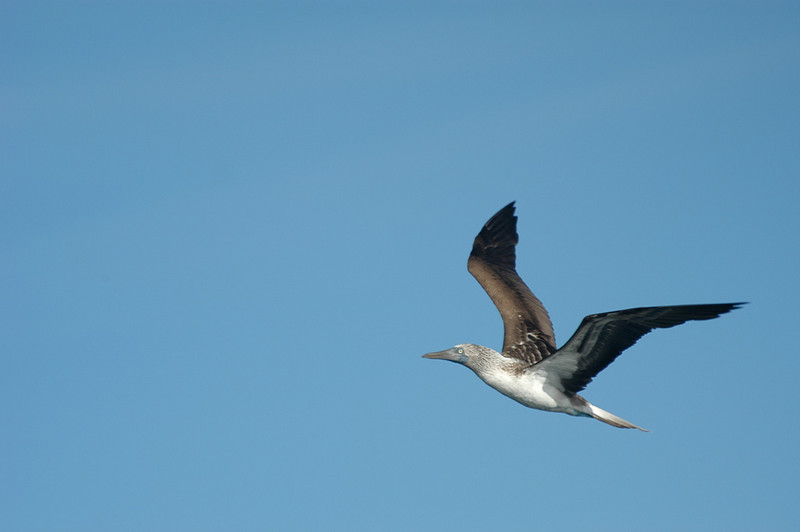
Blue-footed Booby (Sula nebouxii) by Bob-Nan

Blue-footed Booby (Sula nebouxii) by Bob-Nan

The Blue-footed Booby (Sula nebouxii) is a bird in the Sulidae family which comprises species of long-winged sea birds… The natural breeding habitat of the Blue-footed Booby is tropical and subtropical islands off the Pacific Ocean most famously, the Galapagos Ecuador…

Blue-footed Boobies are distributed among the continental coasts of the eastern Pacific to the Galapagos Islands and California…

Blue-footed boobies are possibly one of the world’s most fearless birds! Indeed, lacking any instincts for fear and being quite clumsy on land make them easy prey for other animals. When Spanish settlers first encountered blue-footed boobies, they were amused by how easy it was to hunt these birds…

This is because the Blue-footed Booby is clumsy on the land. To make their point clear, Spanish settlers named this bird “bobo” which means “stupid fellows.”

If people call you “stupid”, just praise the Lord… For, God chooses the fools and the weak instead of the wise and the strong…

But God hath chosen the foolish things of the world to confound the wise; and God hath chosen the weak things of the world to confound the things which are mighty; (1Corinthians 1:27)

The booby’s eyes are placed on either side of their bill and oriented towards the front. They have excellent binocular vision. The Blue-footed Booby has permanently closed nostrils specialized for diving. They breathe through the corners of their mouths. When God created these birds, He knew that they need to dive deep for survival.. That is the reason that He took so much care in placing the eye at the right place and the closed nostrils , so that it does not drown…  Close up of a Blue-Footed Booby

Each one of us are different in size and structure and shortcomings.. But, when God created us, He had a definite plan.. Do you think that God would’ve chosen Moses if he was not stammering? Do you think God would’ve chose Rahab if she was not a harlot?

God changed their shortcomings into their strength to glorify His name… That is because their trust was in God.. If we trust God, He can change our weakness into our strength…

And he said unto me, My grace is sufficient for thee: for my strength is made perfect in weakness. Most gladly therefore will I rather glory in my infirmities, that the power of Christ may rest upon me. (2 Corinthians 12:9)
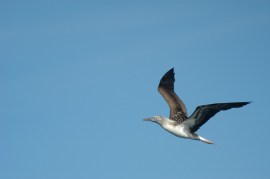
Blue-footed Booby (Sula nebouxii) by Bob-Nan

Blue-footed Booby (Sula nebouxii) by Bob-Nan

When blue-footed boobies are ready to breed, they carry out many interesting rituals. First, a male blue-footed booby parades around his nest area. The parade is anything but ordinary – just in case a female blue-footed booby fails to notice how attractive he is, the male blue-footed booby raises each of his blue feet in a slow, deliberate stepping motion.  Alternatively, if he is flying over his territory and encounters a potential mate, he flashes his blue feet at her as he lands. These male birds show off their blue feet to attract their female mates..

But, our Lord Jesus Christ turned ugly on the cross to show how much He loves us.. Can you not see His nail-pierced bleeding feet which came in search of us? So many time His presence has hovered over us, but, how much have we felt it?

For he shall grow up before him as a tender plant, and as a root out of a dry ground: he hath no form nor comeliness; and when we shall see him, there is no beauty that we should desire him. (Isaiah 53:2)

Then, both male and female blue-footed boobies point their long beaks toward the sky, tilt their wings around, and give their mating calls. The male blue-footed booby also makes a high-piping whistle noise.

During the courtship, they also pick up small stones or twigs as building materials for their nests, but, strangely, they undo their nests later on just about the time that the female blue-footed booby is ready to lay eggs. They are not a seasonally reproducing species but are opportunistic in their breeding..

The Blue-footed Booby is a monogamous animal although they do have the potential to be bigamous. They reunite at their breeding grounds…

We too are going to unite soon with the Lord…  Jesus is on His way to take His bride and to live with her forever and ever…  Is the bride ready for takeoff?

For now we see through a glass, darkly; but then face to face: now I know in part; but then shall I know even as also I am known. (1 Corinthians 13:12)
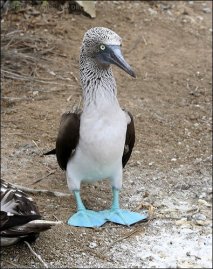
Blue-footed Booby (Sula nebouxii) by Ian

Blue-footed Booby (Sula nebouxii) by Ian

The Blue-footed Booby is strictly a marine bird and their only need for land is to breed, which they do along rocky coasts. They nest on bare black lava in a small dip in the ground. The female will turn to face the sun throughout the day so the nest is surrounded by excretion. The female Blue-footed Booby lays two or three eggs. Both male and female take turns incubating the eggs, while the non-sitting bird keeps a watch.

Since the Blue-footed Booby does not have a brooding patch, a patch of bare skin on the underbelly, it uses its feet to keep the eggs warm. Blue-foots are one of only two species of booby that raise more than one chick.

You may think that you do not have resources, like other to realize your dreams… But, all things are possible with God..

These female birds do not have a brooding patch, but still, they raise chicks with their feet and that too they raise more than one chick…

You may feel that you do not have beauty or talent or riches or influence to make your dreams happen…  When you have Jesus as your everything, nothing is impossible….

And he said, The things which are impossible with men are possible with God. (Luke18:27)
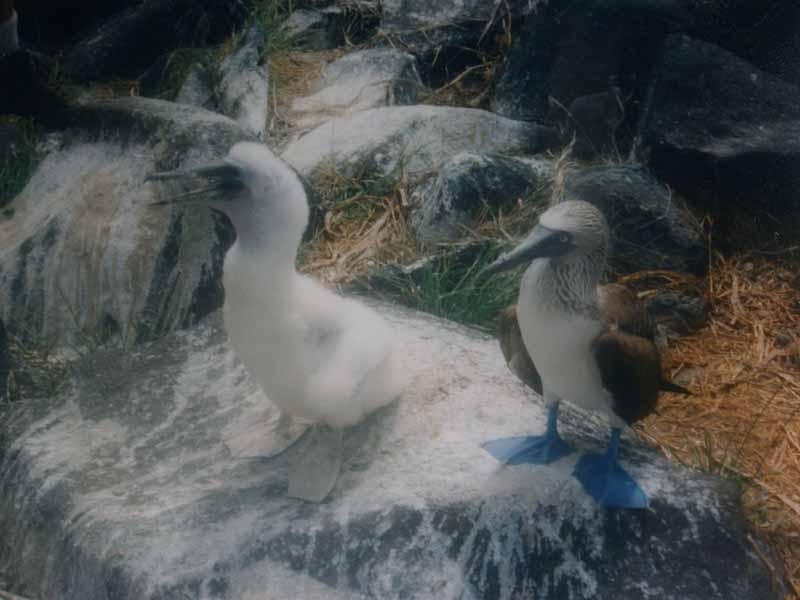
Blue-footed Booby (Sula nebouxii) larger chick by Bob-Nan

Blue-footed Booby (Sula nebouxii) larger chick by Bob-Nan

Blue-foots are one of only two species of booby that raise more than one chick. The males is specialized in diving in shallow waters. They must be fed frequently, so the adults constantly hunt for fish. The chicks feed off the regurgitated fish in the adult’s mouth. If the parent Blue-footed Booby does not have enough food for all of the chicks, it will only feed the biggest chick, ensuring that at least one will survive.

Blue-footed Boobies are specialized fish eaters feeding on school fish like sardines, anchovies, mackerel, flying fish, squid and offal. It dives into the ocean, sometimes from a great height, and swims underwater in pursuit of its prey. It hunts singly, in pairs or in larger flocks. They travel in parties of 12 or so to areas of water with large schools of small fish. When the lead bird sees a fish shoal in the water, it will signal the rest of the group and they will all dive together to catch the fish.

Like these birds, we as believers and church builders need to learn to dive together into the Living water..

These birds signals to the rest of the group when it sees a shoal of fish..

How many of us signal our co-workers when we see a blessing?

Please read 1 Kings Chapter 7, verse from 3…

You will know how God used four lepers to deliver his people from the enemies… How they shared the good news and signaled the others about the blessing which God had kept in store for them…

Surprisingly, individuals do not eat with the hunting group, preferring to eat on their own, usually in the early morning or late afternoon. They will point their bodies down like an arrow and dive into the water. Plunge diving can be done from heights of 33–100 ft and even up to 330 ft (100 m). These birds hit the water around 60 mph (97 km/h) and can go to depths of 82 ft (25 m) below the water surface. The prey is usually eaten while the bird is still under water. Males and females fish differently which could contribute to the reasons that blue foots, unlike other boobies raise more than one young.

The male is smaller and the tail is larger for its body which enables the male to fish in shallow areas instead of just deep waters. The tail can flatten out easier enabling him to change direction in the shallow water. The female is larger and can carry more food. The food is then regurgitated to the young. The males feed the young for the first part of the incubation period. This is done because the males can bring back food quicker than the female. When the demand for more food takes over the female provides the food to the young… These female birds are larger and carry more food…

Even our bridegroom Jesus Christ wants us to do more than what He had done… That is why He says,

Verily, verily, I say unto you, He that believeth on me, the works that I do shall he do also; and greater works than these shall he do; because I go unto my Father. (John 14:12)

Now never ever say that you can’t do this or can’t do that… We have been called to say that I can do all things through Christ that strengthens me, and also to do greater things than what Jesus did…

HALLELUJAH!!!!!!

Have a blessed day!

Your’s in YESHUA,
a j mithra

Please visit us at: Crosstree


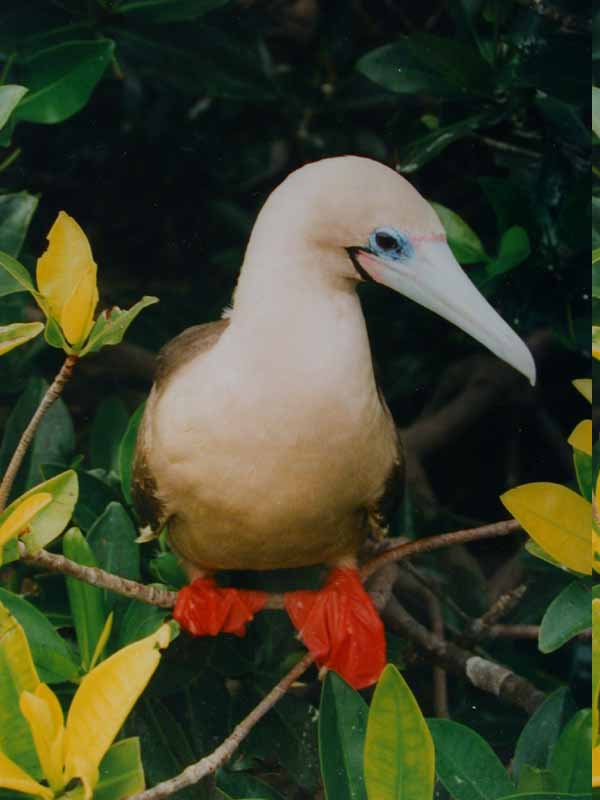
Red-footed Booby (Sula sula) by Bob-Nan

Red-footed Booby (Sula sula) by Bob-Nan

Lee’s Addition:
Boobies are part of the Sulidae Family of Gannets and Bobbies in the Pelicaniformes Order. There are actually 7 Boobies.
Abbott’s Booby
Blue-footed Booby
Brown Booby
Masked Booby
Nazca Booby
Peruvian Booby
Red-footed Booby

Interesting Things – Birds Making Music?

Do Birds Truly Make Music?

The flowers appear on the earth; the time of singing has come, and the voice of the turtledove is heard in our land. (Song of Solomon 2:12)

The Bible speaks of bird calls as songs, as most of us do. However, evolutionary theory has led some scientists to say that we are merely assigning human meanings to the calls of birds. They say that the bird calls have nothing to do with real music.

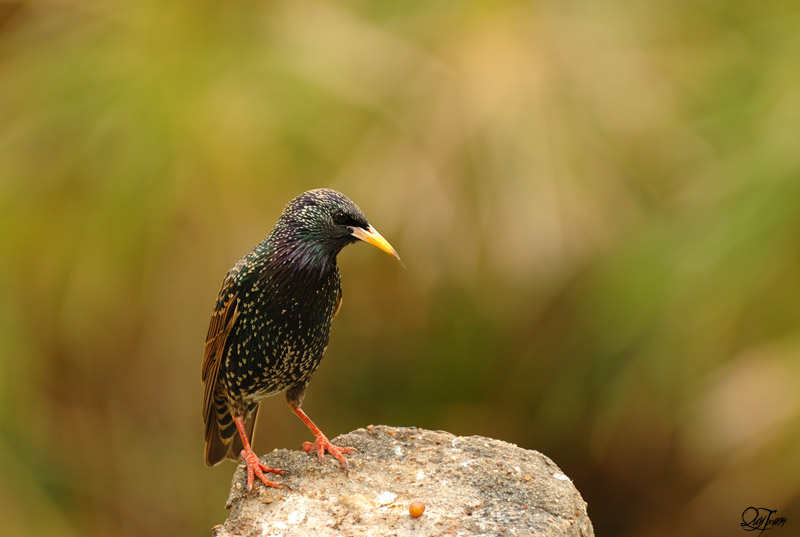
Common Starling (Sturnus vulgaris) by Quy Tran

Common Starling (Sturnus vulgaris) by Quy Tran

Ornithologists have known for some time that bird songs use the same musical scales as our music. Decades ago it was noted that some of Beethoven’s work could be heard from the European blackbird. The music was the same as the opening rondo of Beethoven’s “Violin Concert in D, Opus 61.” Since these birds pass their songs from generation to generation, Beethoven could have gotten the lilting music from the forefathers of today’s European blackbird! The songs of some species, like the song sparrow, follow the form of a sonata, beginning with a strong theme, then the theme is musically played with, and for a finish, the original theme is then repeated.

Song Sparrows song by Chris Parrish (xeno.canto.org)

Mozart had a starling as a pet. Once, having heard Mozart play his “Piano Concerto in C Major,” the starling not only imitated it, but changed the sharps to flats! Mozart exclaimed, “That was beautiful!” When the starling died, Mozart held an elaborate funeral for it. Eight days later he wrote “A Musical Joke,” which contains the same elaborate structure found in starling song.

A Musical Joke by Mozart

Do birds make true music, as the Bible says? Contrary to what some evolutionists say, Beethoven and Mozart certainly thought they did.

Prayer: Lord, I thank You for the gift of music, and I await the music of heaven. Amen.

From (Creation Moments©2010) References: Science News, 4/15/00, pp. 252-254, “Music without Borders.”


Birds of the Bible – Names of Birds II

White-tailed Hawk (Buteo albicaudatus) by Daves BirdingPix

White-tailed Hawk (Buteo albicaudatus) by Daves BirdingPix

In the first Names of Birds, I covered the English names of birds. This time the scientific names are going to be looked at, especially the second one. (The first part of the scientific name is the bird’s genus or group) “Birds normally have a scientific name and a common name. The scientific name is usually Latin-bases and is agreed upon by biologists across the world. The common name will vary by region, culture, and language.” (birding.com) No matter what the bird is called in different countries or by different ornithology groups, the scientific name refers to one specific bird. Birds do migrate many miles and spend time in many countries. This naming system helps keep from having the same bird counted numerous times in lists.

As I have worked with the list of the Birds of the World, I have observed similarities in the naming of the birds. For instance, “alba” is the second part of all of these birds–Western Great Egret, White Cockatoo, Sanderling, White Tern, White Wagtail, African Spoonbill, Phoenix Petrel, Western Barn Owl. Could you figure out what color they all are?

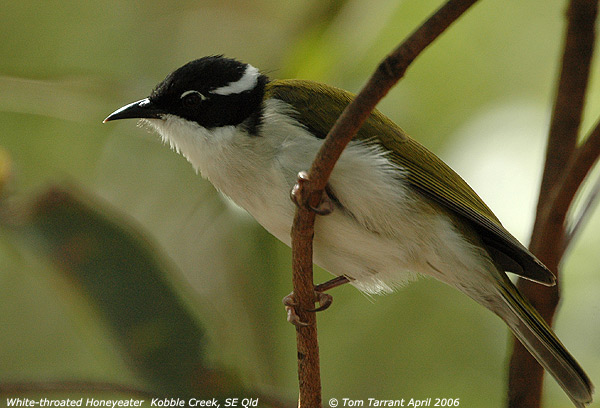
White-throated Honeyeater (Melithreptus albogularis) by Tom Tarrant

White-throated Honeyeater (Melithreptus albogularis) by Tom Tarrant

How about “albicauda“–White-tailed Shrike-Tyrant, White-tailed Blue Flycatcher, White-tailed Lark, White-tailed Hawk? Or “albogularis“–White-throated Jacamar, Rufous-banded Honeyeater, White-throated Pewee, White-throated Canary, White-throated Laughingthrush, White-throated Screech Owl, White-throated Honeyeater, White-throated Francolin, White-throated Caracara, White-throated Treerunner, White-spotted Fantail, White-throated Seedeater, White-throated Kingbird, White-chested White-eye? That last group was not all “white-throated,” in name, but they have white throats.

We know that Adam named the birds and other critters as the Scripture tells us:

Out of the ground the LORD God formed every beast of the field and every bird of the air, and brought them to Adam to see what he would call them. And whatever Adam called each living creature, that was its name. So Adam gave names to all cattle, to the birds of the air, and to every beast of the field. But for Adam there was not found a helper comparable to him. (Genesis 2:19-20 NKJV)

Blue-throated Bee-eater (Merops viridis) by Ray

Blue-throated Bee-eater (Merops viridis) by Ray

Did Adam use scientific names? I doubt it. Adam didn’t have to go though all this. Today the ornithologist (those who study birds) use this method of naming along with a common name in whatever language they speak.

Thought you might find it interesting to see some of the species’ second scientific names:
Colors:
albus/alba, white; cf albino, ater/atra, matt black, brachy-, short (Greek), brunne-, brown, caeruleus, blue, canus, grey, chloro-, green or yellow (Greek), cinerea-, grey or ash-coloured; cf cinders, crocus, cyan, blue, erythro-, red (Greek), flava, yellow, fuscus/fusca, dusky, guttatus, speckled or spotted, haema-, blood-red (Greek); cf haemoglobin, leuco-, white (Greek), lineatus, lined or striped, livia, blue-grey, longi-, long, luteus/lutea, yellow, major, greater, mega-, great (Greek), melas, black (Greek); cf melanistic, minor, lesser, niger/nigra, glossy black; cf negro, punctatus, spotted; cf punctuation, pusilla, tiny, rosea, rosy, ruber, red, rufus/rufa, red, striatus/striata, striped, versicolor, many-collored, varied, viridis, green, albogularis – White-throated
Countries:
abyssinicus, africana, americana, angolensis, antarctica,
Characteristics:
cauda, tail, –cephalus, head (Greek), –ceps, capped, headed, cilla, tail, collis, neck,  cristatus, crested, dactyl, finger or toe (Greek), frons, front, i.e. forehead, –gularis, throat, –ops, eye, –opsis, face, ptera, wing (Greek), –rhynchos, bill (Greek), –rostris, bill, torquatus, collared

Names are important and have meaning. Christ was named long before He was born. It was foretold.

Now all this was done, that it might be fulfilled which was spoken of the Lord by the prophet, saying, Behold, a virgin shall be with child, and shall bring forth a son, and they shall call his name Emmanuel, which being interpreted is, God with us. (Matthew 1:22-23 KJV)
After this manner therefore pray ye: Our Father which art in heaven, Hallowed be thy name.  (Matthew 6:9 KJV)
And in his name shall the Gentiles trust. (Matthew 12:21 KJV)
And Jesus came and spake unto them, saying, All power is given unto me in heaven and in earth. Go ye therefore, and teach all nations, baptizing them in the name of the Father, and of the Son, and of the Holy Ghost: Teaching them to observe all things whatsoever I have commanded you: and, lo, I am with you alway, even unto the end of the world. Amen.
(Matthew 28:18-20 KJV)

(Some information from Scientific bird names explained)

Birdwatching at Lake Hollingsworth-June 1st

Birdwatching at Lake Hollingsworth-June 1st

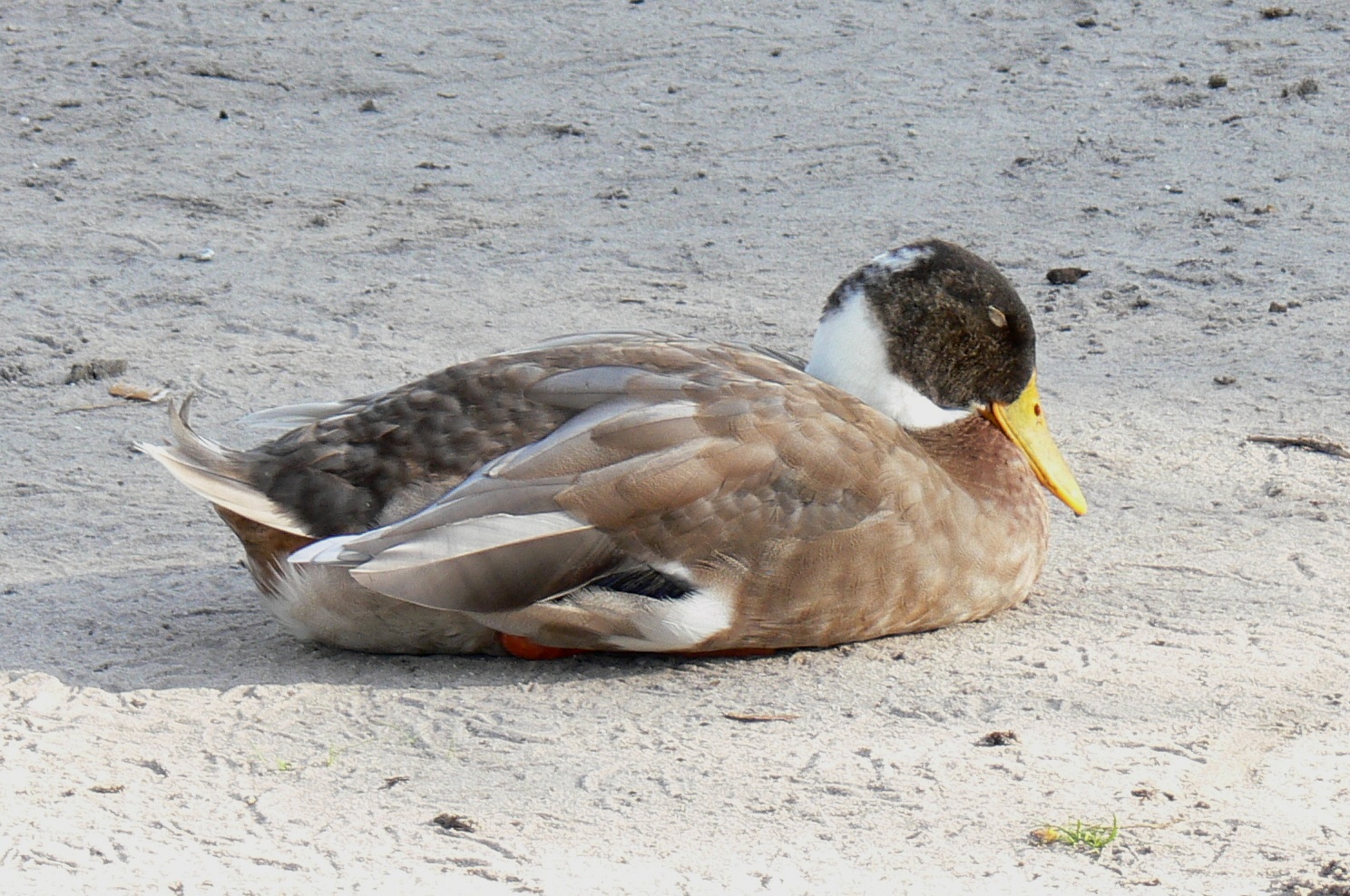
Lake Hollingsworth Mallard

Lake Hollingsworth Mallard

Dan and I finally got a chance to go birdwatching on Tuesday. It is the first time in awhile since we have been out and about here in Polk County, FL. We loaded the cameras, binocular, and of course something to feed the critters with. The only place around here we do that is at Lake Hollingsworth and Morton in Lakeland. So we chose Lake Hollingsworth as our main destination.

As we ride, I start my list of what we see. On the ride over there I spotted Fish Crows, Sandhill Cranes, a Great Blue Heron, some Ospreys at their nest, a White Ibis, about 20 Cattle Egrets checking out some cows, two Mourning Doves, four Boat-tailed Grackles and a Blue Jay. If we saw nothing at the lake, I would have been content with those.

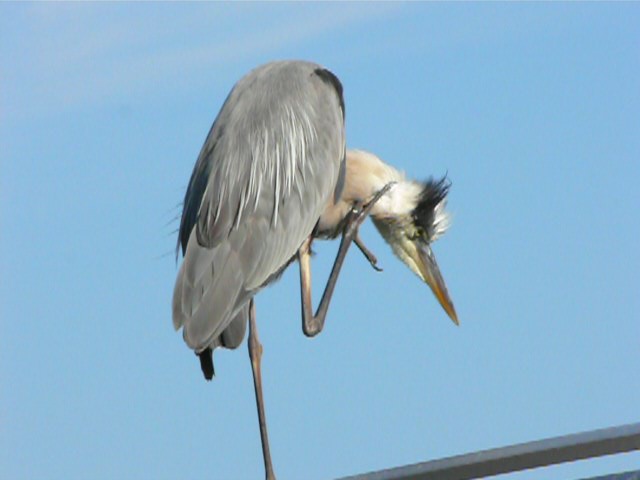
Great Blue Heron at Lake Hollingsworth

Great Blue Heron at Lake Hollingsworth

We spent about an hour looking around and feeding the gang. It was around 79° and mostly clear. A nice day. Near the parking lot is where the hungry beggars hang out. Waiting! I was surprised to see most of them snoozing. Pull out treats, and they come alive. After feeding the Mallards, White Ibises, Boat-tailed Grackles and a Gull, I did a short walk (legs weren’t working good) to the little dock where we watched a Great Blue Heron preening. I kept getting closer and closer, but he kept right on and only looked at me once. I got several videos of him.

We also observed a Green Heron for some time. Don’t see them out and about like this one. Looking at his coloration, we think he is most likely a juvenile.

The rest of the birds spotted were Red-winged Blackbirds, Common Grackles, Anhingas, Ospreys, Blue Jays, and Common Moorhens with three babies. On the way back at the parking lot, six Geese were protecting a gosling.

Green Heron Lake Hollingsworth

Green Heron Lake Hollingsworth

We decided to do lunch in Bartow, but had some spare time before they opened so went to the Mary Holland Park there. 86° by then. It is a small park but we managed to see – Boat-tailed Grackles, Opreys, Cardinals, Blue Jay, Great Egret, Mourning Dove, three White Ibises, heard a Red-Shouldered Hawk and a Red-bellied Woodpecker.

All together we spotted or heard 22 species. Not bad for an easy birdwatching adventure. Trust you have a great adventure the next time you are out enjoying God’s birds that He has created.

So God created great sea creatures and every living thing that moves, with which the waters abounded, according to their kind, and every winged bird according to its kind. And God saw that it was good. (Genesis 1:21 NKJV)

[

*

This slideshow requires JavaScript.

*

Birds of the Bible – The Bat?

And the stork, the heron after her kind, and the lapwing, and the bat. All fowls that creep, going upon all four, shall be an abomination unto you. (Leviticus 11:19-20 KJV) and
And the stork, and the heron after her kind, and the lapwing, and the bat. (Deuteronomy 14:18 KJV)

Townsends Big-eared Bat from Wikipedia

These verses show up at the end of the list of “unclean birds.” I have heard people say or write that since the Bat is not a bird, that make the Scriptures incorrect and not true. Let’s look at this a little closer. For one thing, the following verses go on to mention “fowls that go upon all fours” and other critters that are not birds. “Fowl” in the Bible refers to being covered with wings and that includes birds, bats, insects, and others that fly.

Here is what some of the commentators say about these verses.

Gill – “and the bat; a little bird which flies in the night, Aben Ezra says; Kimchi (s) describes it a mouse with wings, which flies in the night, and we sometimes call it the “flitter mouse”; it is a creature between a fowl and a beast; and, as Aristotle says (t), it partakes of both, and is of neither; and it is the only fowl, as Pliny (u) observes, that has teeth and teats, that brings forth animals, and nourishes them with milk. It is a creature so very disagreeable, that one would think almost there was no need of a law to forbid the eating of it; and yet it is said by some to be eatable, and to be eaten, as Strabo (w) affirms, yea, to be delicious food. It is asserted (x), that there is a sort of them in the east, larger than ordinary, and is salted and eaten–that there are bats in China as large as pullets, and are as delicate eating.”

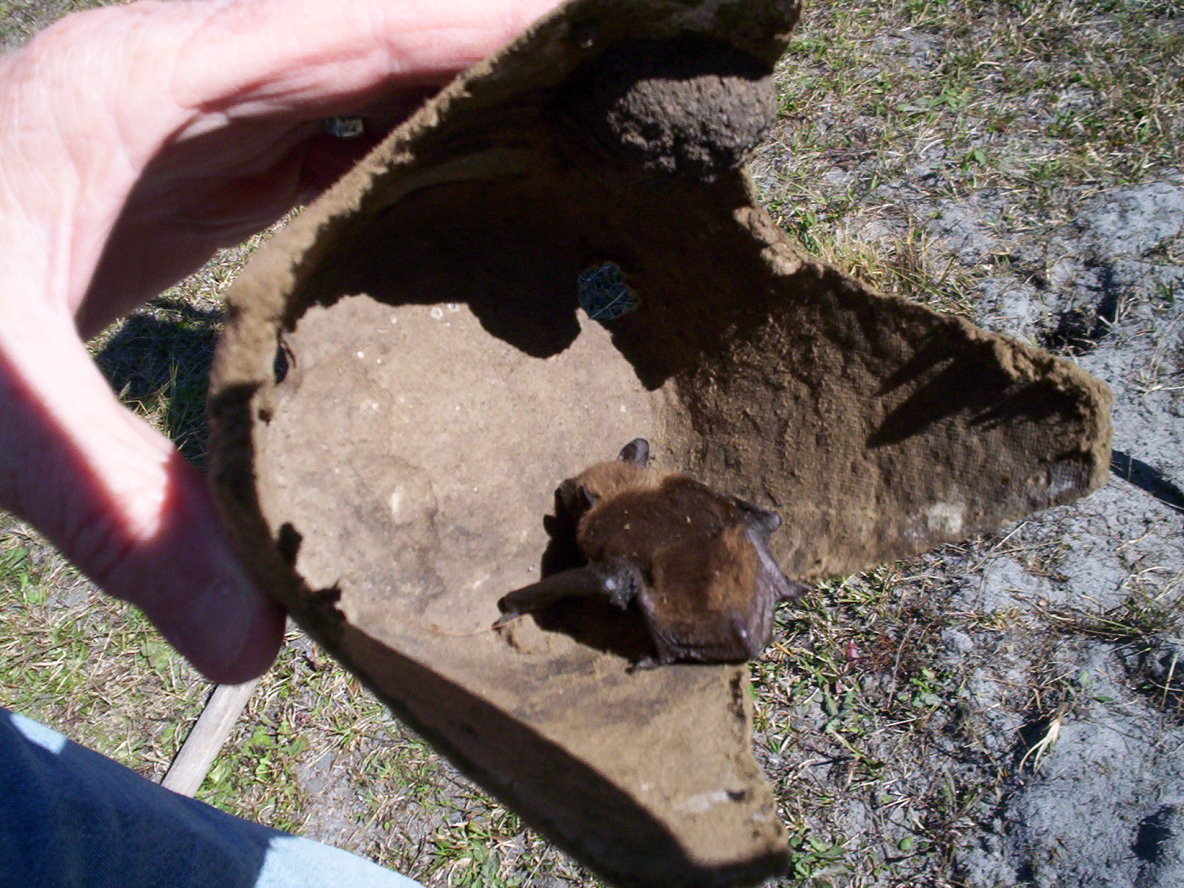
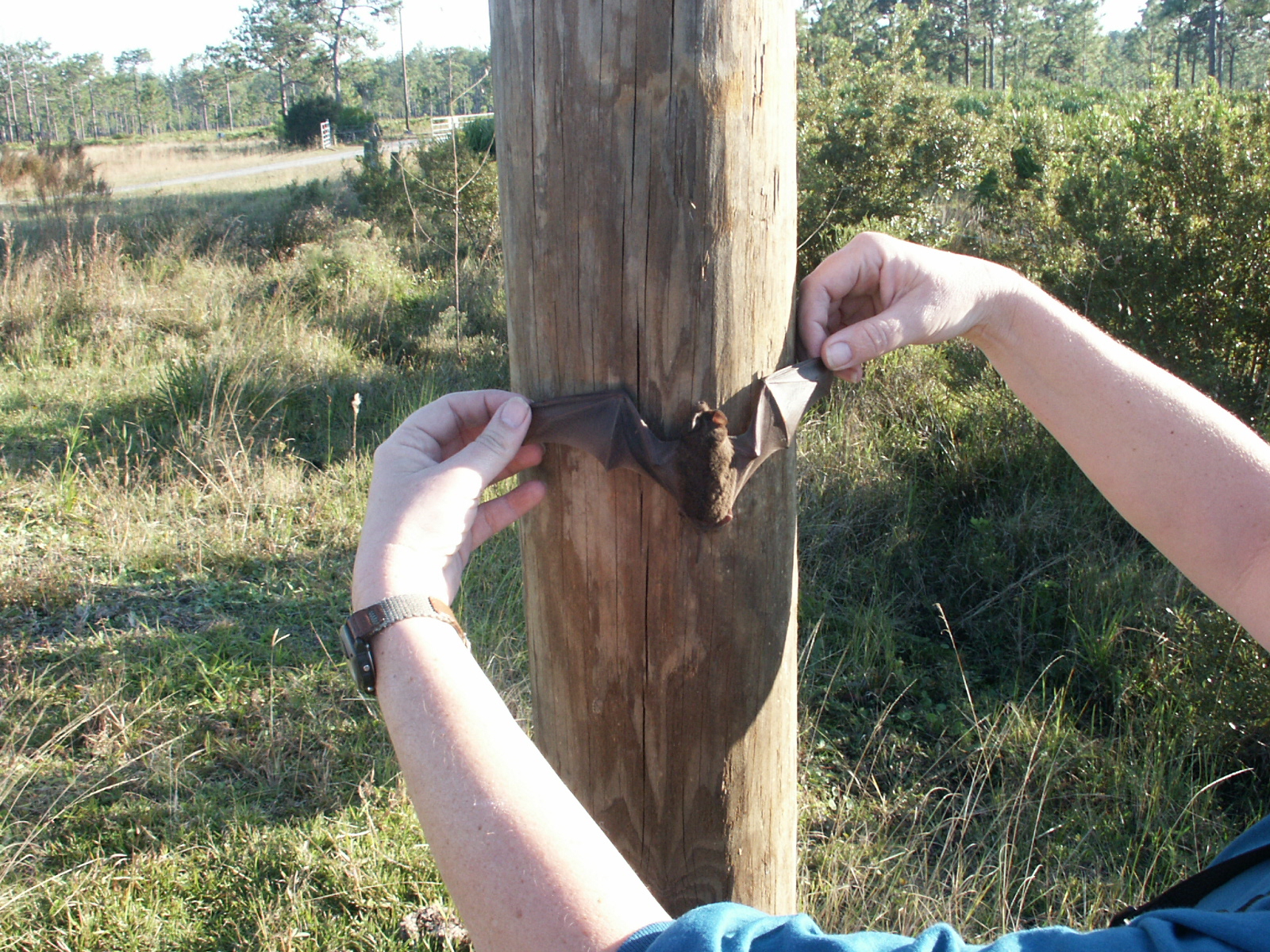
Dan holding a bat at Avon Park AF Range

Clarke – “The bat – עטלף  atalleph, so called, according to Parkhurst, from עט  at, to fly, and עלף  alaph, darkness or obscurity, because it flies about in the dusk of the evening, and in the night: so the Septuagint νυκτερις, from νυξ, the night; and the Vulgate vespertilio, from vesper, the evening. This being a sort of monster partaking of the nature of both a bird and beast, it might well be classed among unclean animals, or animals the use of which in food should be avoided.” “Lev 11:20  All fowls that creep – Such as the bat, already mentioned, which has claws attached to its leathern wings, and which serve in place of feet to crawl by, the feet and legs not being distinct; but this may also include all the different kinds of insects, with the exceptions in the following verse.”
JFB – “the bat — the great or Ternat bat, known in the East, noted for its voracity and filthiness.” Lev 11:20  All fowls that creep, etc. — By “fowls” here are to be understood all creatures with wings and “going upon all fours,” not a restriction to animals which have exactly four feet, because many “creeping things” have more than that number. The prohibition is regarded generally as extending to insects, reptiles, and worms.”

Here are some interesting facts about the bat (not a bird) from Wikipedia:

1) Bats are flying mammals in the order Chiroptera (pronounced /kaɪˈrɒptərə/). The forelimbs of bats are webbed and developed as wings, making them the only mammals naturally capable of true and sustained flight. By contrast, other mammals said to fly, such as flying squirrels, gliding possums and colugos, glide rather than fly, and only for short distances. Bats do not flap their entire forelimbs, as birds do, but instead flap their spread out digits, which are very long and covered with a thin membrane or patagium. Chiroptera comes from two Greek words, cheir (χείρ) “hand” and pteron (πτερόν) “wing.”

Fruit Bat at Avon Park AF Range

2) There are about 1,100 bat species worldwide. About seventy percent of bats are insectivores. Most of the rest are frugivores, or fruit eaters. A few species feed from animals other than insects. Bats are present throughout most of the world and perform vital ecological roles such as pollinating flowers and dispersing fruit seeds. Many tropical plants depend entirely on bats for the distribution of their seeds.
3) Bats range in size from Kitti’s Hog-nosed Bat measuring 29–33 mm (1.14–1.30 in) in length and 2 g (0.07 oz) in mass,[4] to the Giant Golden-crowned Flying-fox, which has a wing span of 1.5 m (4 ft 11 in) and weighs approximately 1.2 kg (3 lb).
4) Bat echolocation is a perceptual system where ultrasonic sounds are emitted specifically to produce echoes. By comparing the outgoing pulse with the returning echoes the brain and auditory nervous system can produce detailed images of the bat’s surroundings. This allows bats to detect, localize and even classify their prey in complete darkness. At 130 decibels in intensity, bat calls are some of the most intense airborne animal sounds.
5) The finger bones of bats are much more flexible than those of other mammals. One reason is that the cartilage in their fingers lacks calcium and other minerals nearer the tips, increasing their ability to bend without splintering. The cross-section of the finger bone is also flattened compared to the circular cross section that human finger bones have, and is very flexible. The skin on their wing membranes has more elasticity and so can stretch much more than other mammals. The wings of bats are much thinner than those of birds, so bats can manoeuvre more quickly and more accurately than birds. It is also delicate, ripping easily. However the tissue of the bat’s membrane is able to regrow, such that small tears can heal quickly.
6) The teeth of microbats resemble insectivorans. They are very sharp to bite through the hardened armor of insects or the skin of fruit.
7) Mammals have one-way valves in veins to prevent the blood from flowing backwards, but bats also have one-way valves in arteries.
8) One species of bat has the longest tongue of any mammal relative to its body size. This is beneficial to them in terms of pollination and feeding their long narrow tongues can reach deep into the long cup shape of some flowers. When their tongue retracts, it coils up inside their rib cage.

God has graciously created the Bat to fulfill its role in doing His will. He has given it exactly what it needs. To some, it may seem a contradiction, but to those of us who believe in creation, there is no conflict.

Below is something we read recently from Comments on Here and Hereafter by Bob Jones, Sr., p. 79-80.

“The animals and fowls decided to have a battle, so the story goes. The animals lined up one one side and the fowls on the other. In the crowd was a little bat. The animals came upon the bat, and he dropped his wings, showed his teeth and said, ‘I am an animal.’ the fowls came upon the bat. He stretched his wings and said, ‘I am a fowl.’ I have known people like the bat. Whatever crowd they are in, that is what they are. They are like the chameleon. They are colored by their surroundings. God’s people, instead of being affected by their surroundings, should affect their surroundings. A good, consecrated Christian who will be faithful to his trust will have some influence upon his environment.”

Dodo Bird – Not A Failure

Dodo (Raphus cucullatus) Extinct by Wikipedia

Dodo (Raphus cucullatus) Extinct by Wikipedia

The dodo (Raphus cucullatus) was a flightless bird endemic to the Indian Ocean island of Mauritius. Related to pigeons and doves, it stood about a meter (3 feet) tall, weighing about 20 kilograms (44 lb), living on fruit, and nesting on the ground.

The dodo has been extinct since the mid-to-late 17th century.[1] It is commonly used as the archetype of an extinct species because its extinction occurred during recorded human history and was directly attributable to human activity.

The dodo bird … an example of survival of the fittest

*

Birds of the Bible – Hair Like Eagles’ Feathers

That very hour the word was fulfilled concerning Nebuchadnezzar; he was driven from men and ate grass like oxen; his body was wet with the dew of heaven till his hair had grown like eagles’ feathers and his nails like birds’ claws. (Daniel 4:33 NKJV)

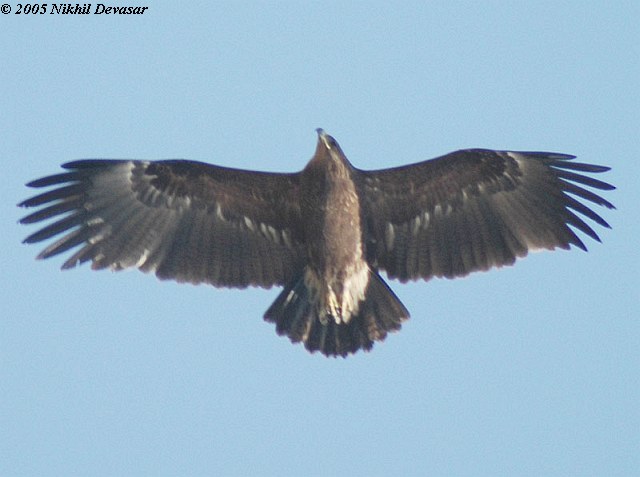
Greater Spotted Eagle (Aquila clanga) by Nikhil

Greater Spotted Eagle (Aquila clanga) by Nikhil

I have wanted to include this verse in a Birds of the Bible article, but just never got to it. Last night our pastor mentioned this verse again in his message and I decided to use it for this weeks blog. Plus, Dan is teaching the Book of Daniel in our Sunday School class.

Many times the birds mentioned in the Bible are listed as “clean or unclean” or as an “object lesson” to teach some truth. This time the mention of Eagle feathers and birds’ claws are used as a description of a man’s appearance and there is a lesson to be learned here.

So, who was this man? It is actually a very important king, King Nebuchadnezzar of Babylon. The information about the King is found throughout the book of Daniel. To make the story short, the king had a dream and wanted an interpretation of that dream. Not only did he want his dreams interpreted, but he wanted the interpreter to tell him what the dream was about. The wise men and others told the king that was impossible, so the king commanded to kill them. Daniel prayed to God that He would reveal the dream and it’s interpretation to him so he could tell it to the King. God answered that prayer and Daniel was able to reveal it to King Nebuchadnezzar.

Long nails like a bird's claws

Long nails like a bird’s claws

King Nebuchadnezzar was the first world ruler and God had given the king great power. Later on, the king’s pride takes over and he thinks he has made this kingdom and does not give God the credit. He even has a great statue made of himself and demands that all fall down and worship him.

Back to making this short. In Daniel chapter 4 the king has another dream and Daniel (Belteshazzar) prays for revelation and again interprets the dream. Daniel 4:9 to 4:18 tells the dream. (Birds are mentions several times in it.) Then Daniel interprets the dream in Daniel 4:19-33. Basically, the Most High is going to let the king learn humility and get rid of the pride that he has.

The king spoke, saying, “Is not this great Babylon, that I have built for a royal dwelling by my mighty power and for the honor of my majesty? (Daniel 4:30 NKJV)

For seven years will his kingdom be departed from him. He will be out in the field, “eating grass like oxen” and “until you know that the Most High rules in the kingdom of men, and gives it to whomever He chooses.” It is during this time that his hair will grow like “eagles’ feathers and his nails like birds’ claws.”

Did King Nebuchadnezzar learn his lesson?

And at the end of the time I, Nebuchadnezzar, lifted my eyes to heaven, and my understanding returned to me; and I blessed the Most High and praised and honored Him who lives forever: For His dominion is an everlasting dominion, And His kingdom is from generation to generation. All the inhabitants of the earth are reputed as nothing; He does according to His will in the army of heaven And among the inhabitants of the earth. No one can restrain His hand Or say to Him, “What have You done?” At the same time my reason returned to me, and for the glory of my kingdom, my honor and splendor returned to me. My counselors and nobles resorted to me, I was restored to my kingdom, and excellent majesty was added to me. Now I, Nebuchadnezzar, praise and extol and honor the King of heaven, all of whose works are truth, and His ways justice. And those who walk in pride He is able to put down. (Daniel 4:34-37 NKJV)